My orchard's picking ledger listed my apples two weeks early, showing the exact weight I took and, beside it, 'owed'.
The late autumn air in the orchard was crisp, smelling of ripe fruit and damp earth. Six months earlier, I’d moved to this small town, seeking quiet and a connection to the land.
I’d bought a little cottage on the edge of Felix Carver’s sprawling apple orchard, and he, the cidermaker, had quickly become a fixture in my new life.
He was a man of routines, of quiet, almost reverent respect for the trees.
He’d mentioned, almost offhand, leaving 'the birds' share' – the highest apple on each tree – but I’d dismissed it as quaint folklore, a charming local custom.
So, one sunny afternoon, with a ladder propped against the gnarled trunk of an old Macintosh, I’d meticulously picked every last apple, including the very top ones.
They were perfectly round, blushed crimson, and I had grand plans for a pie. Felix had been in the next row, pruning. He’d watched me, his usual cheerful demeanor dimmed by a quiet, unreadable expression.
When I’d asked him if he wanted any of the 'birds' share' apples, he’d just hummed, a low, indistinct sound, and walked away.
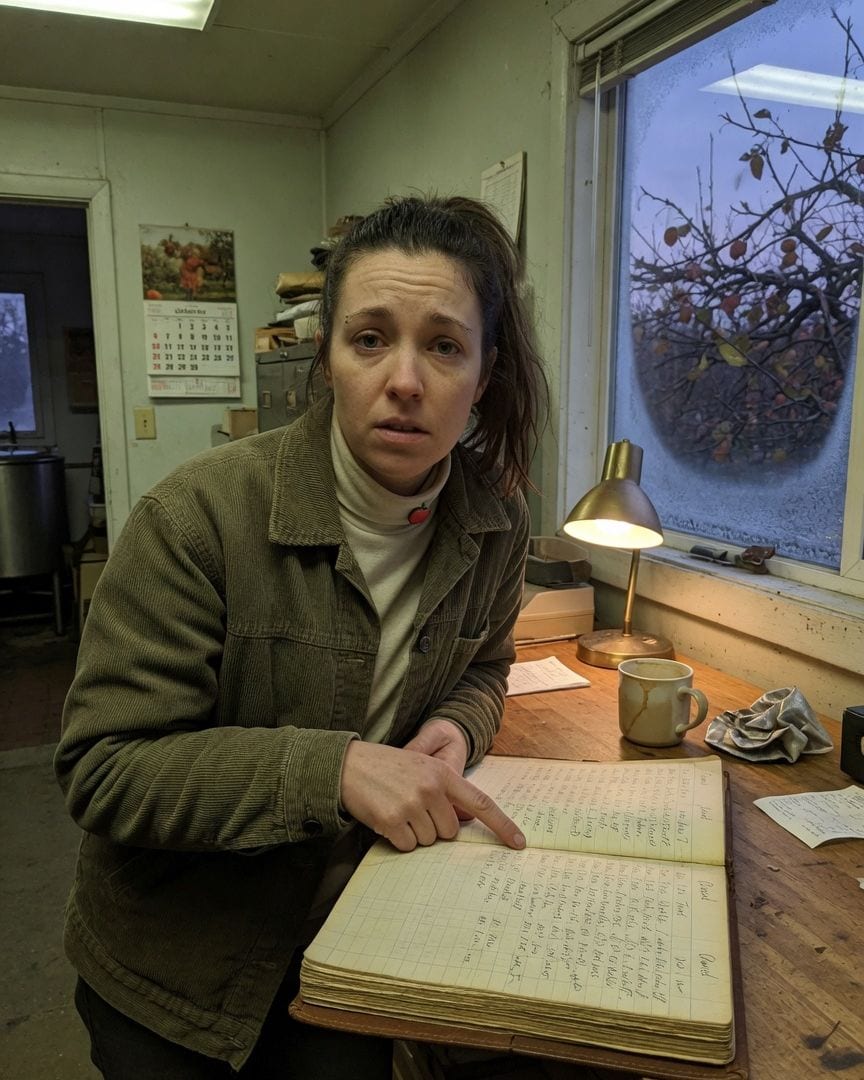
Later that week, helping him with the cidery’s bookkeeping, I found the orchard's picking ledger. It was a heavy, leather-bound book, its pages yellowed and brittle, used since the early 1900s.
I was admiring the neat, consistent entries when I noticed something odd. This year's crop had been logged and totaled a fortnight before the actual harvest.
And against my row, Row 7, in Felix’s neat, familiar hand, someone had written the exact weight I’d taken from the highest branches: 'Row 7, Top Apples: 12.3 lbs.'
Beside it, stark and unsettling, was a single word, penned in an ink slightly darker than the rest, as if an afterthought, or a definitive statement: 'Owed.'
I confronted Felix the next morning, the ledger open to the offending page on the scuffed wooden counter between us.
He blinked slowly, his gaze drifting past me to the frost-kissed orchard outside his window, where the last leaves clung stubbornly to the branches.
'Ah, the birds' share,' he'd said, his voice too smooth, too easy. He picked up a polishing cloth, buffing a stray smudge from a stainless-steel vat. 'Just an old way, Annika. Nothing to fret about.'
He explained it away as a bookkeeping error, a pre-estimate that sometimes got adjusted. 'You know how it is. Sometimes we project the yield. The 'owed' bit… probably just a note from last year that didn't get erased.'
But the word 'Owed' wasn't an adjustment. It wasn't a pre-estimate, and it certainly wasn't an erasure. It was a declaration. And the weight, 12.3 lbs, was exact. I pressed him, my finger tapping the word on the page.
'Felix, this is new ink. It's not a mistake.' But he just repeated the same vague phrases, his eyes carefully avoiding mine, focusing instead on a spot just over my shoulder.
The air in the cidery, usually warm with the sweet scent of fermenting apples, felt suddenly cold, sterile.
Unconvinced, a prickle of unease beginning to spread across my skin, I started flipping through the ledger's older pages. The handwriting changed over the decades, flowing script giving way to blockier letters, but the meticulous record-keeping remained.
And then I found another 'Owed' entry. This one was from October 1984, beside a specific weight of apples, and a handwritten name: 'Nathan Holloway.' Then another, twenty years before that, from 1964: 'Rose Sullivan.' Another, 1944: 'Lars Prescott.'
The entries weren't common, maybe one every twenty years, almost always associated with the autumn harvest. And they were always names.
These weren't 'errors.' This was a pattern, quiet and unnerving, hidden in plain sight within the town's oldest records. The ordinary explanation was failing, leaving a cold, hard knot in my stomach.
Felix’s smooth explanations felt less like reassurance and more like a carefully constructed wall.
Driven by a growing dread, I spent the next evening at the local library. Renee Holloway, the librarian, gave me a polite, almost too-bright smile as I asked for access to the old newspaper archives.
She seemed surprised, but didn't question it. I sat hunched over a microfilm reader, sifting through brittle, yellowed pages, the faint smell of dust and old paper filling the small, quiet room.
It took hours, the grainy headlines blurring into a monotonous stream of local news and forgotten events.
And then I found it.
A small, almost overlooked article from October 1984. The headline was bland, almost dismissive: 'Local Man Vanished Without a Trace.' The body text mentioned a farmer, Nathan Holloway, 42, last seen near the old orchard.
No foul play suspected, just… gone. My heart hammered, a frantic drum against my ribs. The name, Nathan Holloway. The year, 1984. The proximity to the harvest. It all matched the ledger. This wasn't just about apples.
This was about something far, far worse, something the town had quietly forgotten, or, more chillingly, agreed to forget. The ledger entry for 'owed' wasn't a mistake; it was a consequence.
The Holloway discovery was a hook in my gut, pulling me deeper into the town's quiet undercurrent. I returned to the library and the town hall archives daily, driven by a growing, sickening certainty.
I cross-referenced every 'owed' entry from the orchard ledger with newspaper archives and even dusty town hall records of residents and departures.
Rose Sullivan, 1964: another 'disappearance,' a brief, almost apologetic mention in the local paper about a young woman who simply 'ceased correspondence with family in the city.'
Lars Prescott, 1944: 'left town suddenly for opportunity in the war industries,' a common enough story, but the timing, just after harvest, and the 'owed' entry in the ledger, screamed coincidence.
Each time, the dates aligned with the harvest, with the twenty-year cycle. I started asking around, subtly at first. I spoke to Maxwell Prescott, a quiet, reserved town council member, at the general store.
He just nodded, a faint, almost imperceptible shift in his eyes when I mentioned old local stories. 'Old stories, Annika,' he'd said, bagging my groceries with practiced ease, 'This town has a lot of old stories.'
He didn't elaborate, didn't ask what prompted my interest.
Renee Holloway, the librarian, usually so helpful with local history, became oddly vague when I asked about specific historical missing persons cases.
'Oh, you know how small towns are,' she'd chuckled, a light, dismissive sound that didn't quite reach her eyes. 'People come, people go. Sometimes they just… move on.' Her gaze lingered a moment too long on my face.
Every local I spoke to gave the same too-smooth story, a practiced deflection, quietly steering me away from the subject of the orchard or its 'peculiarities.'
It was like hitting a wall of soft, polite resistance, a collective agreement to not see, not speak. They all knew. The dread wasn't just in the facts; it was in the eerie coherence of their silence.
No one was surprised, no one was concerned. They just… agreed.
The wall of 'agreement' solidified my certainty that something truly sinister was at play. I started keeping the copies of the ledger pages and newspaper clippings in a locked box in my shed, feeling increasingly paranoid.
I told myself it was for safety, but deep down, I knew it was because I didn't trust anyone in this town with what I was finding.
One evening, returning home after a late trip to the store, I found the shed door slightly ajar. My heart leaped into my throat. I distinctly remembered locking it, hearing the satisfying click of the padlock.
I approached slowly, a rusty spade from my garden gripped in my hand. Nothing seemed taken, the box was still there, untouched. But the message was clear: someone knew I was digging.
The air in the shed was cold, colder than the outside, and smelled faintly of damp earth, even though it was completely dry.
A few nights later, a soft, rhythmic tap-tap-tapping came from my back door, just after midnight. I had been reading in bed, the house silent. I froze, straining to listen.
It wasn't a knock, more like a gentle, insistent brushing, as if a branch was scraping against the wood. But there were no branches near my back door.
I peered through the curtain, but the porch light showed nothing but the wind rustling the empty branches of the orchard, a distant, murmuring sound. Yet the tapping continued for another minute before fading into the night. My skin crawled.
The next day, Felix Carver caught my eye from across the town square. He didn't wave, didn't smile. His gaze was steady, unblinking, holding a depth of knowledge and warning that chilled me to the bone.
It wasn't accusatory; it was simply… knowing. I was no longer just investigating; I was being watched, my every move noted by a silent, collective presence. The town itself felt like it was holding its breath.
I found Felix in the cidery, polishing equipment with methodical precision. The familiar scent of apples, once comforting, now felt cloying, heavy.
I laid out the evidence on a nearby barrel: the copies of the ledger pages, the missing persons reports, the pattern of dates. Each document seemed to hum with an unspoken truth.
'Felix,' I said, my voice steady despite the tremor in my hands, 'Nathan Holloway, Rose Sullivan, Lars Prescott… they're all in your ledger. All 'owed.' All gone. What happened to them?'
He stopped polishing, his rag still in his hand. He didn't deny it, didn't look surprised. He just looked tired, the lines around his eyes suddenly deeper. He didn't even look at the documents.
His gaze drifted to the row of cider barrels, dark and silent.
'The orchard, Annika,' he said, his voice low, barely above a whisper, 'It has its ways. It has always had its ways.' He didn't elaborate at first, just stood there, a man burdened by an ancient secret.
Then, he explained that 'the birds' share' wasn't for birds at all, but a ritual offering to the land itself, to 'the orchard.' His words were quiet, measured, like he was reciting a forgotten catechism.
'It asks for its due,' he continued, his eyes finally meeting mine, and in their depths, I saw not malice, but a profound, ancient resignation. 'And if the share is taken, it takes its own.
It’s always been that way, since the town was founded. A pact.' He spoke of it as a natural law, as immutable as the seasons, as undeniable as gravity. 'When the rule is broken, the balance shifts.
The ledger… it records the shift. It records who is 'owed' in return.'
My mind reeled, the earlier clues clicking into place with horrifying clarity. The town's silence, the smooth stories, the missing people, the cyclical pattern—they weren't hiding a crime, but a terrifying, generations-long truth. They knew. They had always known.
Felix’s warning was stark, delivered without a hint of emotion, just fact: 'You broke the rule, Annika. Now you are part of its accounting. The town's protection… it doesn't extend to those who break the old trust.'
The cidery suddenly felt vast and cold, the shadows stretching long and deep around us.
Felix's words echoed in my mind. The 'pact.' The 'accounting.' The town's protection, withdrawn. I needed to see this pact, this document that bound generations to such a monstrous agreement.
I stumbled out of the cidery, the cold autumn air doing little to clear my head.
I returned to the library, my hands shaking as I pulled books from the shelves, searching for any mention of the town's founding, any ancient document.
Renee Holloway watched me from behind the counter, her usual pleasant smile frozen, her eyes holding that same unreadable knowing I’d seen in Felix’s.
Finally, she approached, her footsteps unnaturally soft on the worn carpet. She was holding a heavy, leather-bound volume, larger and far older than any I had seen on the public shelves.
'Perhaps this will help, Annika,' she said, her voice unnaturally soft, almost a whisper. 'The original Town Charter. Kept in the vault. For special inquiries.' She placed it gently on the table, its weight thudding dully.
It was more than a charter; it was a detailed 'Agreement of Yield and Due,' its thick, yellowed pages filled with spidery, antique script.
It wasn't just laws for the town, but rules for its very existence, signed by generations of founding families, outlining their responsibilities to the orchard.
I found the cyclical dates, the 20-year intervals Felix had spoken of, each entry detailing a 'return' to be made.
My finger trembled as I traced the faded, almost illegible script of the last entry for the current cycle, the one dated for this very year's harvest, just a few weeks after I'd picked the top apples.
The signature beneath it, clear despite its age, was 'Larsen.' My own surname. I felt the blood drain from my face, the air in the quiet library suddenly heavy and cold, as if the ancient parchment had just claimed me.
I found Gideon Thornton, the elderly historian everyone spoke of in hushed tones, tending a small herb garden behind his cottage. His movements were slow, deliberate, each pluck of a leaf a meditation.
He wore spectacles perched low on his nose, and his eyes, when he looked up, were unnervingly clear. He invited me in, offering tea with a calm, almost serene demeanor that defied the storm raging inside me.
I laid out the charter, the ledger, the newspaper clippings on his small, cluttered dining table. The documents seemed to shiver slightly in the quiet, dusty room.
He examined them without a flicker of surprise, his fingers tracing the ancient script of the charter as if reading a familiar story.
'It's all quite clear, isn't it, child?' he said, his voice a dry rustle, like old leaves. 'The orchard is not merely ground. It is the heart of this town.
It was here before us, and it will be here after.' He spoke of the orchard not as land, but as an entity, sentient and ancient, its roots running deeper than any tree, into the very foundation of the town.
He explained, with the detachment of a scholar recounting ancient history, that this entity demanded a life for a life, a soul for a broken promise.
The 'birds' share' was not for birds at all, he clarified. It was a symbolic offering of the first fruits, the highest fruits, a sign of respect and continued fealty.
When it was taken, the orchard took its own, on a precise 20-year cycle, tied to the harvest moon, its accounting meticulous and unyielding.
The 'Larsen' on the charter wasn't a prediction of my arrival, he explained, but a name assigned to the family line designated to maintain the orchard in each cycle.
My picking the apples wasn't just a transgression; it was the activation of a generations-old debt, marking me as the 'owed' for this current cycle.
Every clue, every hushed word, every name in the ledger, every disappearance, snapped into horrifying, coherent focus. The terror wasn't in a monster, but in the cold, logical precision of the ancient agreement.
The old house itself seemed to settle, a long, quiet sigh, as if the truth had finally been spoken aloud.
Gideon Thornton finished his explanation, sipping his tea as if discussing the weather. There was no judgment in his eyes, only acceptance. 'So,' I managed, my voice a thin whisper, barely audible, 'I'm… owed?'
He nodded, his gaze unwavering, resting briefly on the ledger. 'The ledger has marked you, Annika. The town's pact ensures the orchard's continued benevolence for the community, but it does not protect those who break the first rule.
You are now part of its accounting.' There was no anger in his voice, no malice, just a calm, terrifying acceptance. He spoke of the 'return' as a natural process, like the turning of the seasons, a necessary balance.
He didn't offer an escape, because to him, there was none.
To deny it would be to invite the orchard's wrath upon the entire town, a wrath that had, he implied, been far more devastating in ages past, leaving not just gaps, but scars on the land itself.
He simply stated my fate, a quiet, unshakeable truth. 'The orchard will take its due. As it always has.'
He rose, collected the empty teacups with his slow, deliberate movements, and gestured towards the door.
The dread was in his utter lack of fear or regret, his complete, rational acceptance of a horror so profound it felt like a law of nature, immutable and inescapable.
As I stood to leave, he offered a final, chilling piece of advice, his hand resting lightly on the ancient ledger: 'Remember, Annika, the orchard always collects its share.'
My cottage on the edge of the orchard sat empty for months. No one asked questions. No one seemed surprised. Felix Carver continued to tend the trees, his face placid, ensuring that the highest apple on every branch remained untouched.
The town went about its quiet business, the secret agreement maintained, the balance restored.
The only trace of my time there was the faint, lingering scent of apples and a single, unread letter addressed to a distant cousin, found tucked under a loose floorboard by the new owners, years later.
My account ends here. The orchard, I now understand, has a hunger that runs deeper than any root. Its ledger demands more than just fruit.
And when the quiet agreement is broken, the town simply steps aside, allowing the ancient debt to be collected. There is no fighting it, no escape, only the calm, inevitable accounting.
The horror is in the coherence, the terrible logic of it all. The town continues its harvest, ensuring the 'birds' share' is left undisturbed, year after year.
A new family moved into the old house on the edge of the orchard a year later. The highest apple on the tallest tree, that season, remained untouched.
If this one got to you
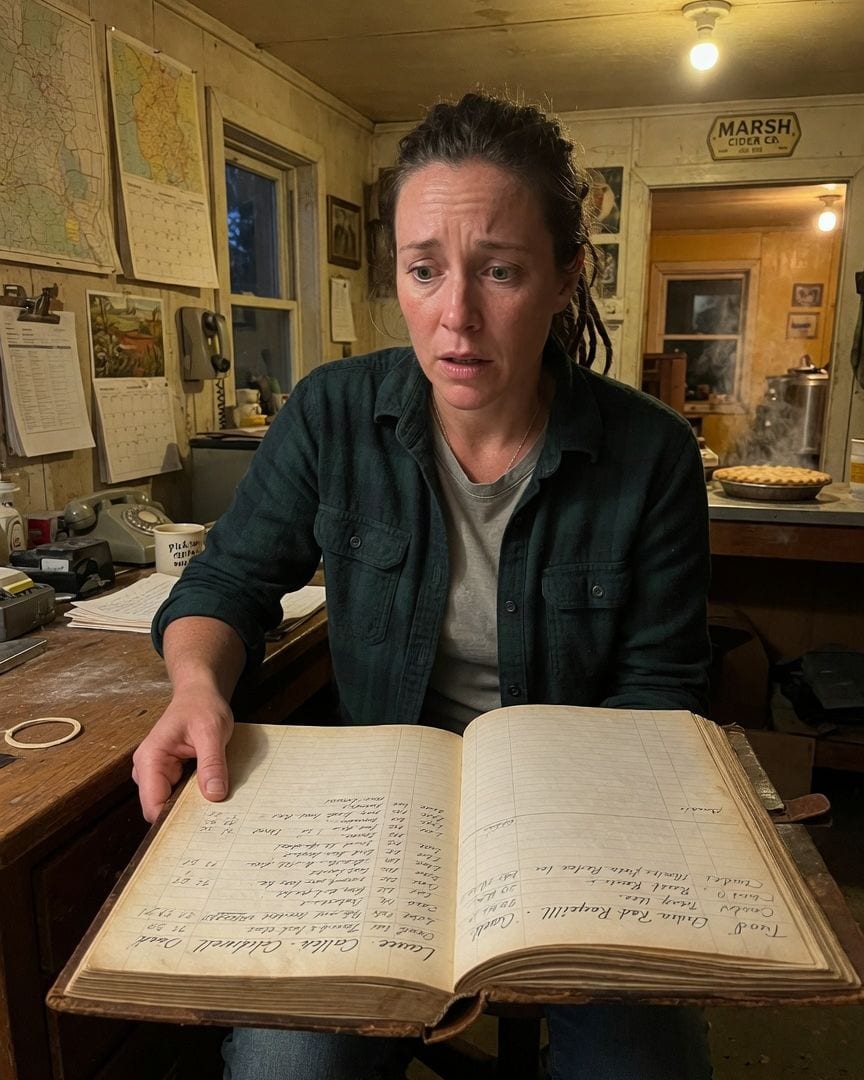
My orchard ledger already had my harvest, dated two weeks early, with one chilling word: 'owed.' The same book holds a name, 'Sylvia Radcliffe,' next to another 'owed' entry from 1987.
As a new cidermaker, I defied local tradition, picking all the highest apples for my first harvest pie. But logging my yield in the antique orchard ledger, I found my entry marked 'owed' and dated two weeks *before* I even picked a single apple. The old book seemed to know a secret.
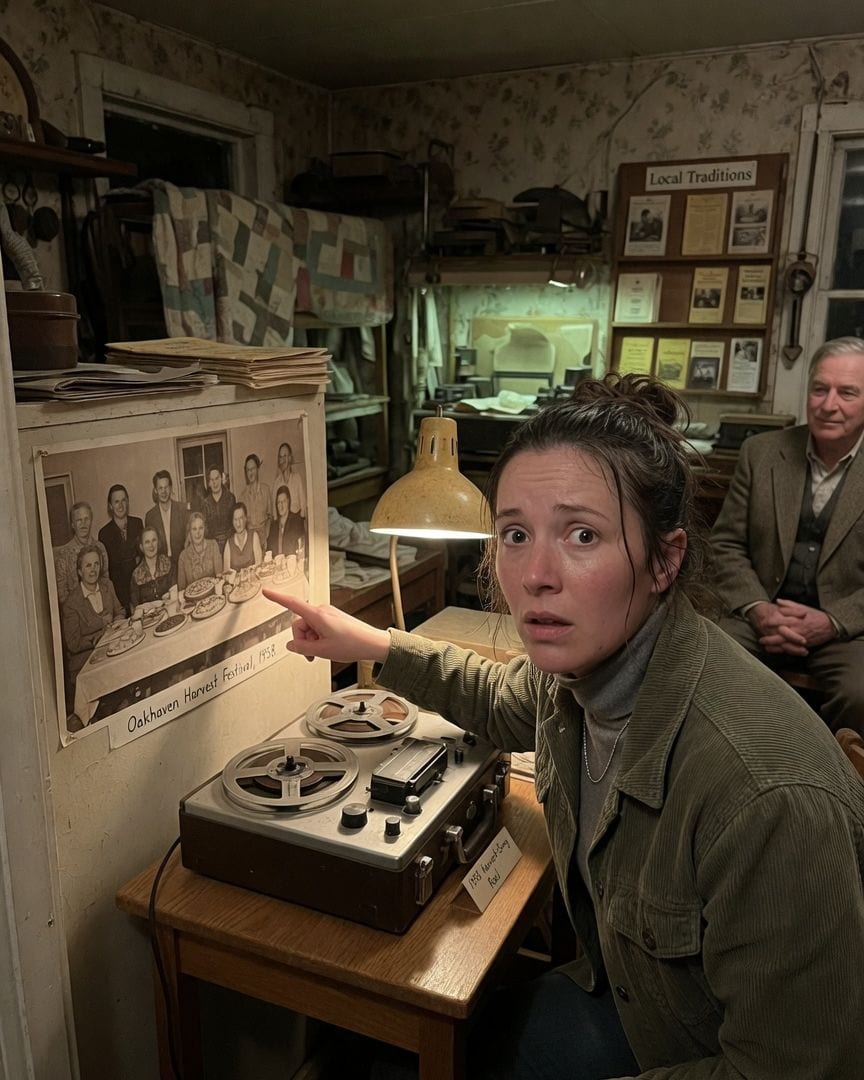
The folk museum's harvest tape counts one more singer than the photograph shows. The curator turned the recorder off before playing it.
I found a quiet escape at Oakhaven's dusty Folk Museum, where the curator played a rare 1958 harvest song. But as a cheerful tune filled the room, a low voice began to count. The tape tallied thirteen, yet the old photograph beside it showed only twelve smiling villagers.
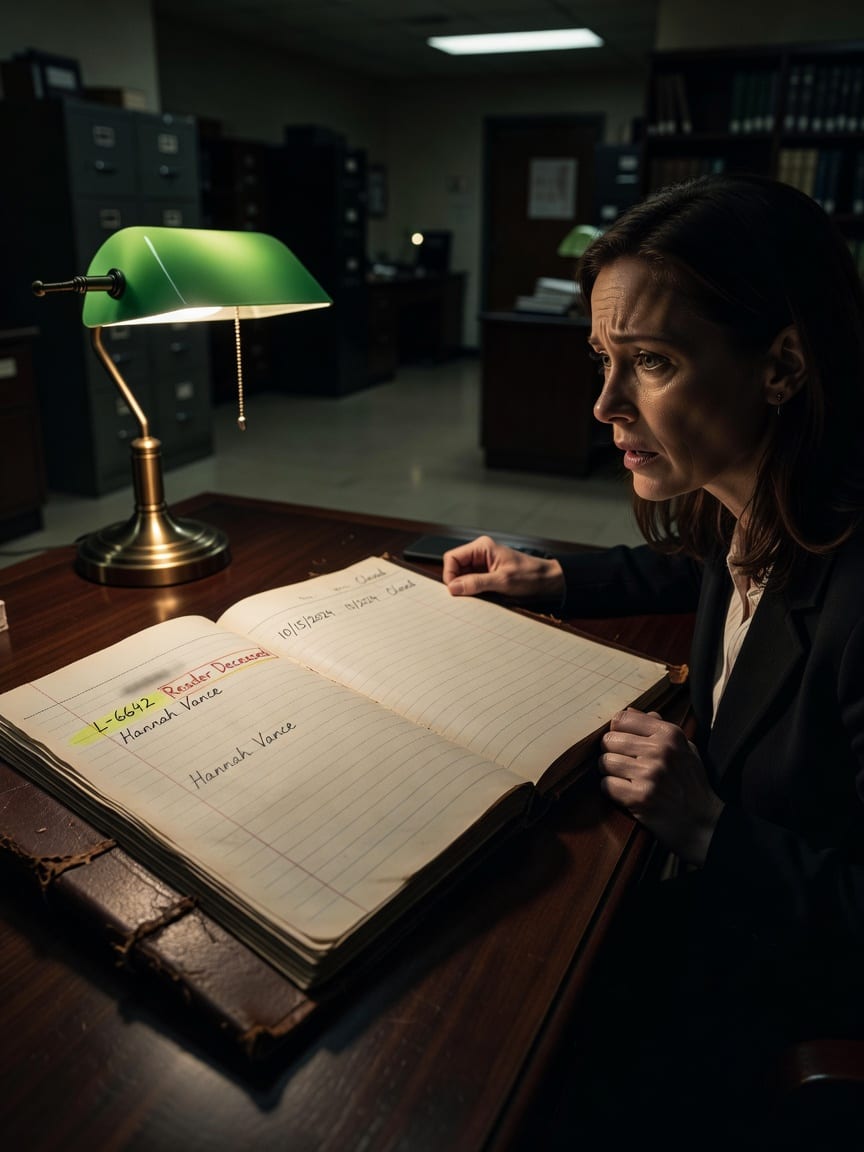
My library card number L-6642 was issued to me at seven — and the ledger shows that number has marked a reader 'deceased' every twelve years since 1949.
Returning my late father's library card to the old town library felt like a small act of closure. But the senior librarian's ancient ledger revealed a chilling pattern of 'reader deceased' entries tied to specific card numbers and borrowed books. My unease turned to cold dread when I secretly found my own name penciled in, marked for a future 'reader deceased' entry.
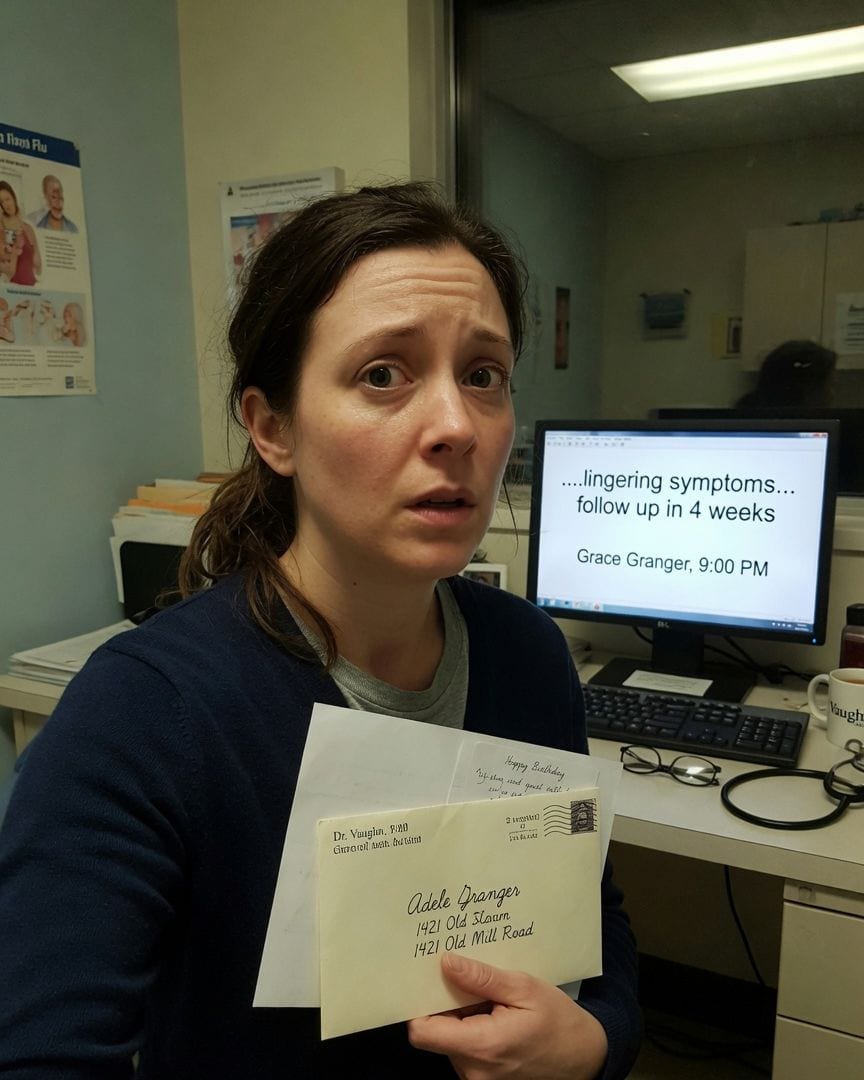
Mid-appointment about my cough, my doctor told me to call my estranged sister tonight — a sister I'd never mentioned to him. The note on his screen ended with her name and a time.
My doctor dismissed my cough as a lingering virus, but then he said something impossible: "You should call your sister tonight." I hadn't spoken to Grace in years, and I'd never mentioned her to him. When I saw her name on his screen with a specific time, a cold dread began to claw at me.
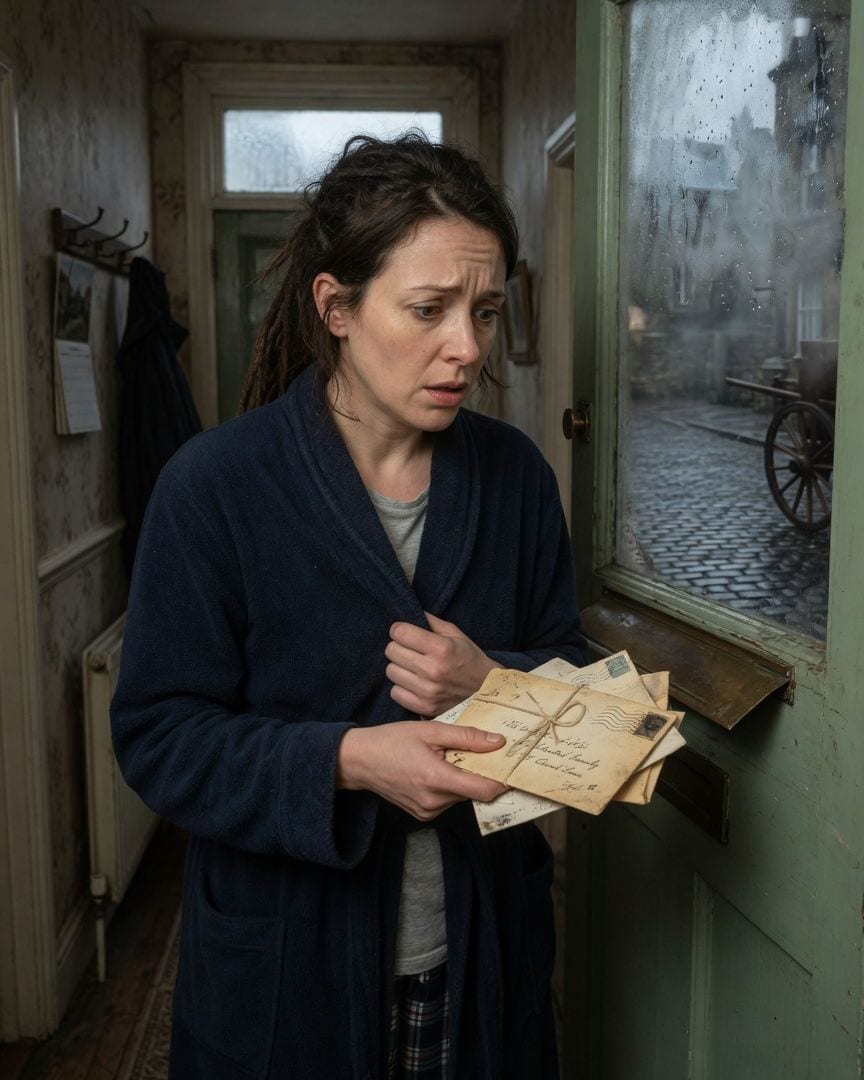
Seventy years ago, a hidden journal recorded my door opening to the wrong street and receiving Lockwood post.
I'd only recently moved into my inherited house, a quiet place on the edge of town. One grey morning, a distinct clatter from the front door's post flap caught my attention. Reaching down, I expected my gravel path, but instead, the flap showed a dark, cobbled street that wasn't mine. A bundle of warm, old letters, addressed to 'The Lockwood Family,' slid through, before the vision flickered and was gone.
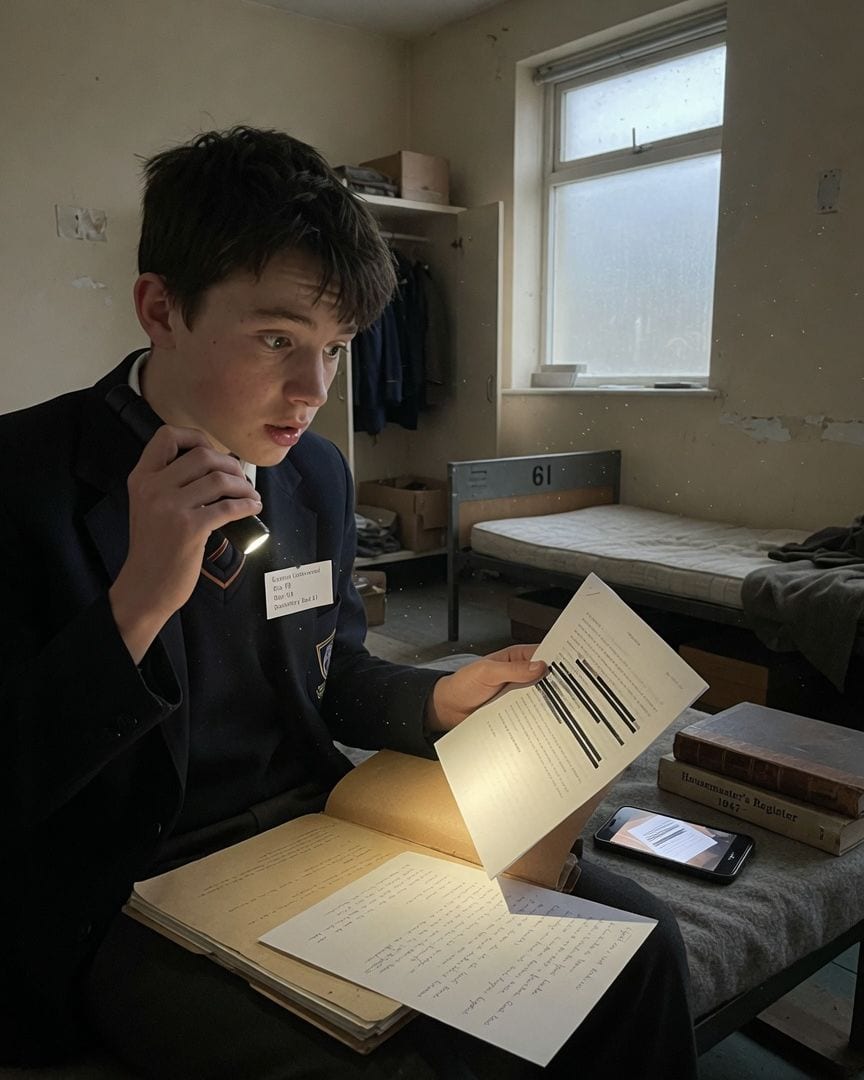
My boarding school bed number was 61, and the archive shows a boy assigned it every eight years since 1947, each leaving mid-term with the bed 'to remain made up'.
I found my matriculation card, listing me as 'Boy 61, Dormitory Bed 61.' Later, an old ledger revealed every boy assigned that bed since 1947 left mid-term, with an unsettling note: 'bed to remain made up.' Our housemaster’s recent scribble, 'as the others,' only deepened the dread around my own assigned bed.