My weather station's old logbooks show a single line redacted every October 4th since 1911. The observer's note just says: 'the reading that should not occur.'
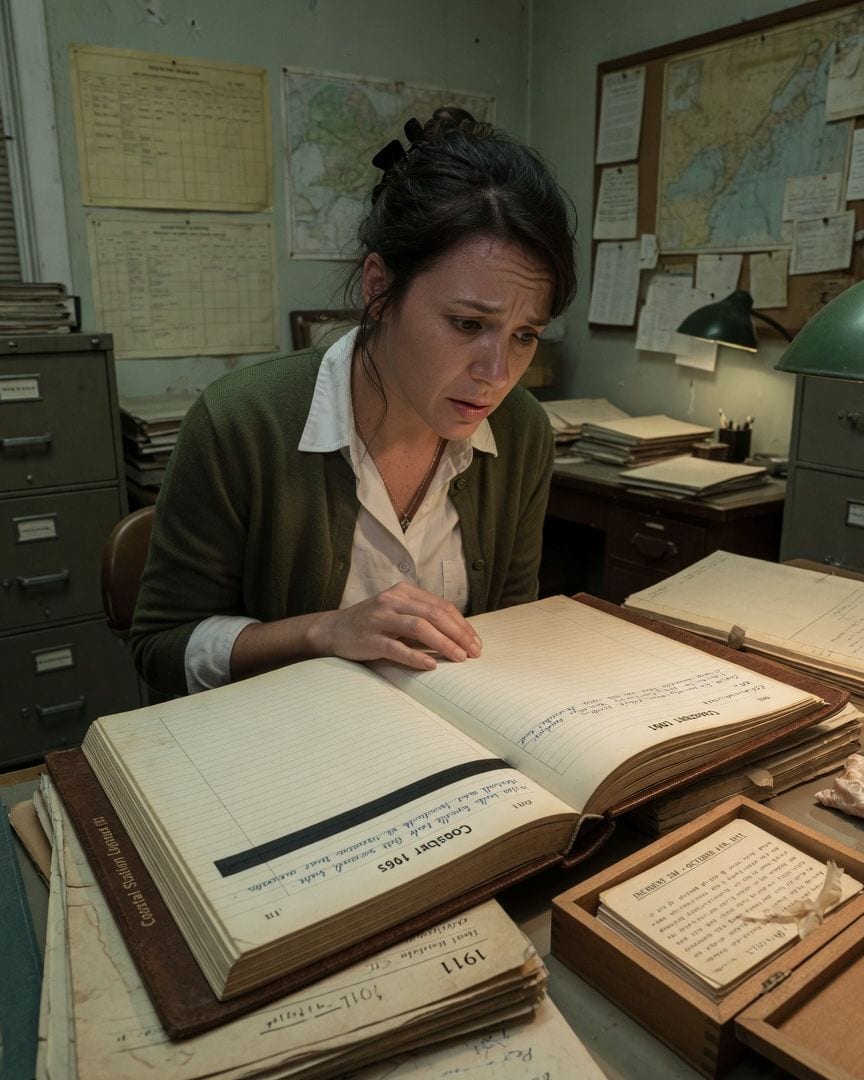
I ran my finger along the spine of the massive, leather-bound register, the 'Coastal Station Logbook, 1960-1965,' its pages thick with the smell of old paper and salt air.
It was my second week as the new archivist, a quiet job I’d found myself settling into quickly.
My task for the afternoon was reconciling a batch of old rainfall data from the early sixties, a process usually as monotonous as it sounds.
I flipped to the 1963 sheet for October. I was scanning down the column for 'Daily Precipitation (mm)' when my finger stopped, not on a number, but on a thick, deliberate black bar.
It covered a single observation line, precisely aligned with October 4th. Not just the rainfall, but the wind speed, temperature, and atmospheric pressure – everything was obscured.
I frowned. Wind and rainfall, by definition, have readings. Redacting a standard weather observation made no sense. Had someone made a mistake and tried to hide it? But the black was too solid, too permanent.
My eye dropped to the tiny, faded script in the margin, penned in a careful, almost academic hand. It read: 'the reading that should not occur, as in prior years — record, do not forward to the Office.'
I reread it, my rational mind searching for a simple explanation. A clerical error, a forgotten ink smudge, perhaps. But the precision of the redaction, the formal, almost archaic tone of the note, it all felt too deliberate.
'As in prior years.' That phrase lodged itself in my thoughts.
I turned to the 1964 sheet. October 4th. Identical redaction. The same note, penned in what looked like the same, distinct hand. An unsettling knot began to form in my stomach. This wasn’t a mistake. This was a pattern.
Over the next few days, it became my personal mission. The rain data could wait. I pulled every register I could find, working backward through the decades. 1962, 1961, 1960.
Each October 4th bore the same black bar, the same cryptic note in the margin.
The handwriting changed over the years – a neat, looping script giving way to a more hurried scrawl, then a spidery, faded hand – but the message, the instruction, remained identical. 'The reading that should not occur.'
I found it in the 1950s, the 1940s, all the way back to the oldest surviving register, a brittle, immense volume from 1911. And there it was.
October 4th, 1911: a meticulously redacted line, and the first instance of 'the reading that should not occur.' A faint, almost imperceptible tremor ran through me. It was a century of silence, a century of deliberate omission.
I tried to rationalize it. A sensitive military observation, perhaps, though the station was purely civilian, its mandate strictly meteorological. A local oddity, a tradition carried on by generations of staff?
But the tone of the notes was too serious, too rigid, almost a warning. I even tried to consult Oliver Winslow, the station head, asking casually about historical anomalies, focusing on unusual weather patterns.
He dismissed it as 'just old records, Nancy, probably clerical quirks we don't understand anymore.' His eyes, though, lingered on me for a moment too long, a flicker of something unreadable.
I knew it wasn’t a quirk. The sheer consistency, the institutional memory of it all, quietly maintained for generations, suggested something far more deliberate, far more real.
The dread wasn't in the unknown, but in the certainty that someone knew, and had kept it meticulously filed away, year after year, for over a hundred years.
My lunch breaks became reconnaissance missions. I started with Gerald Davenport's old desk, now a dusty storage catch-all in a quiet corner of the archives.
His name had appeared most frequently as an observer in the earlier registers I'd found, scribbled beside October 4th entries, though never, of course, with a reading.
I ran my hand along the back of a drawer, pushing it in further than it wanted to go, feeling for anything unusual.
My fingers snagged on a loose seam in the aged wood, a panel that gave way slightly under pressure. With a quiet click, a narrow, dusty wooden box slid out from behind it.
Inside, a stack of small, handwritten index cards, meticulously ordered by date, each tied with a faded ribbon. Each card bore the identical, unsettling header: 'INCIDENT 704 - OCTOBER 4TH, [YEAR]'.
The top card, for 1911, was yellowed with age, the ink a faded sepia. It described 'a profound stilling of the air, a shadow where no cloud lay.'
I held my breath, the faint smell of old paper and salt air suddenly cloying. The cards. The cards chronicled a century of 'readings' that should not occur, each entry more cryptic than the last.
I spent the next few days poring over the 'Incident 704' cards, my heart a drum against my ribs. Each card, dated October 4th, detailed a subtly different, yet undeniably consistent, non-weather event.
I noted down the observations in my own notebook.
1911: 'a profound stilling of the air, a shadow where no cloud lay.' 1927: 'a local atmospheric distortion, visible only as a shimmer against the lighthouse lens.' 1941: 'the complete absence of bird song for precisely 17 minutes, followed by an immediate return.' 1958: 'a cold spot, moving against the wind, registered only by touch.' 1973: 'a faint hum, felt in the teeth, from the direction of the old fishing nets.' 1998: 'a sudden, inexplicable sense of profound scrutiny, followed by a fleeting visual 'absence' in the landscape beyond the eastern ridge.'
The language shifted over the decades, from bewildered observations in the early years to resigned, almost clinical reports in the more recent ones. The consistency was chilling.
This wasn't a series of random events; it was a progression of a single, recurring phenomenon.
I cross-referenced the vague locations mentioned on some cards – 'beyond the eastern ridge,' 'near the old fishing nets' – with old station blueprints and local topographical maps I found tucked away in another drawer.
The 'readings' consistently occurred in a specific, uninhabited stretch of coastline just beyond the station's official observation points, a wild, rocky outcrop rarely visited by anyone. It was a precise, annual event tied to a fixed geographical locus.
Oliver Winslow, the station head, started to notice my late hours, my intense focus on the archives. He made polite inquiries, asking if I was "finding everything in order."
But his gaze held a deeper, unreadable quality now, less dismissive, more... watchful.
One evening, as I was about to leave, I saw Gerald Davenport, the former archivist, sitting alone in the staff room, staring out at the darkening sea, the last light catching the grey in his hair.
He looked up as I passed, offering a small, knowing nod. The unease I'd felt since finding the first redaction tightened into something specific: someone else knew, and they were watching me.
The next afternoon, Nancy finds Gerald Davenport waiting for her by the archives. He was standing by a low, dusty shelf of forgotten equipment, a silent presence. He didn't accuse, didn't question.
Instead, he spoke quietly, his voice raspy with age and something else I couldn't quite place – a profound weariness, perhaps, or a deep, ingrained caution.
"You've been spending a lot of time with the old registers, haven't you, Nancy?" It wasn't a question. He picked up a faded photograph from the shelf, a small, black-and-white print curled at the edges.
It showed a younger Gerald, decades younger, standing next to a smiling man with kind eyes, both in station uniform, looking out at the distant sea. The photo was dated October 5th, 1978.
"That's Arthur," Gerald said, his voice flat, devoid of emotion. "Arthur Merritt. Good man. Brilliant mind. He thought… he thought he could understand it."
Gerald paused, his gaze fixed on the photograph, his thumb slowly tracing the outline of Arthur's face. The air in the archive office suddenly felt heavy, thick with unspoken history.
"He thought if we just observed it closely enough," Gerald continued, his voice barely above a whisper, "without prejudice, without the official filters, we could make sense of it. He wanted to break the cycle, Nancy.
To finally report it, truly. He spent the night of October 4th, 1978, out there, where the recordings are strongest." He nodded vaguely towards the window, in the direction of the distant, rocky coastline.
Gerald turned the photo over. The back was blank. "Arthur never came back, Nancy. Not really. His logbook was found, carefully placed on his desk. The last entry was for October 4th, 1978."
Gerald looked directly at me then, his eyes surprisingly sharp. "It just said: 'It saw me. It knows.'"
Gerald placed the photo back on the shelf, carefully, as if it were fragile glass. His eyes met mine, holding my gaze. "Some things are meant to stay filed, Nancy. Some things are best left alone."
The warning hung heavy in the air, a cold, unmistakable threat. It wasn't a threat of violence from Gerald, but a dire caution about the thing itself. It was personal now.
I found Gerald in his usual spot by the window the following morning, the day before October 4th. The sun was pale, struggling through the usual coastal mist.
I approached him, clutching the 'Incident 704' cards in my hand, their edges worn from my incessant handling.
"Arthur Merritt disappeared because of this, didn't he?" I asked, my voice thin. "Because of Incident 704?"
Gerald sighed, a deep, shuddering sound that seemed to pull all the air from the room. "He did. We all knew the rules, Nancy. Record, redact, do not forward. It was simple. Keep the pattern.
But Arthur, he was always an idealist. He believed in truth, in data."
I pressed him. "What is it, Gerald? What were they recording all those years? What's in those cards that isn't in the official logbooks?"
Gerald looked out at the grey, churning sea, his eyes distant, as if seeing something far beyond the horizon. "It's not weather, Nancy. It's… a presence. A tear, perhaps, in the veil of things.
It appears every year, at the same place, on the same date. Always October 4th. It's not a monster. It's a fact. An impossible, undeniable fact of this coast."
He explained how the station, originally established for purely meteorological purposes in the early 1900s, quickly became the de facto custodian of this anomaly. The first observer, a meticulous man named Davies, documented it only internally.
His successors continued the tradition, understanding, implicitly, the danger of external exposure. Generations of observers, from the early 1900s, quietly documented 'Incident 704', creating the hidden archive I had found, the true, uncensored record.
"The 'reading that should not occur' isn't just about the data, Nancy," Gerald continued, his voice hushed, strained. "It's about the attention. It's about letting it know it's seen. Arthur… he made it aware.
He sought it out, tried to understand it too closely. And it took a piece of him."
I shivered, a cold dread spreading through my veins. The redacted lines, the cryptic card entries, Arthur's disappearance—it all snapped into focus, coherent and horrifying. The institution wasn't covering up a lie; it was managing a terrible, consistent truth.
And in doing so, they had created a system that protected humanity from an incomprehensible awareness, and protected it from full exposure.
Gerald's confession left me reeling. But there was a deeper, colder dread yet to come.
As the afternoon waned, the light outside turning a bruised purple, Gerald gestured to an old, faded map pinned to the wall, one I hadn't noticed before, tucked behind a cabinet.
A single 'X' marked the precise location of 'Incident 704's' appearances.
"Arthur tried to observe it, truly observe it, from within its immediate proximity," Gerald murmured, his voice now almost a whisper. "He set up instruments, cameras. He thought he could finally quantify it, understand its nature, break its pattern."
Gerald's eyes, usually so calm, were now filled with a profound, personal horror, reflecting the fading light. "What he found, what he learned… it changed him. And it changed it. He became part of its awareness, Nancy.
His curiosity was a conduit. And when he went back that night, on October 4th, it didn't just take him. It absorbed him. It used his curiosity to deepen its own presence here."
Gerald turned from the map, his gaze falling squarely on me. His eyes were wide, desperate. "You've been doing the same, haven't you? Digging, seeking, trying to understand. You've been paying attention, Nancy. More attention than anyone in decades.
And now, it knows you're here. It knows you're waiting. And tonight, on October 4th, it will be waiting for you."
The old clock on the wall above the map chimed, a hollow, resonant sound that echoed in the suddenly silent office. The hands aligned precisely, with an audible click. Midnight. October 4th had begun.
The first light of October 4th dawned, grey and heavy, promising nothing but more mist. Despite the raw terror that had seized me at midnight, I felt an undeniable, magnetic pull towards the coastal observation point.
It wasn't a choice, not really. It was a compulsion.
Gerald was already there, a stoic, silent sentinel silhouetted against the still-darkening pre-dawn sky, his gaze fixed on the precise spot marked on the map. The wind whipped his grey hair around his face, but he seemed not to notice.
"You came," he said, his voice raspy, barely audible over the distant murmur of the sea. "I knew you would."
The air itself felt different out here, heavy with expectation, almost viscous. The usual salty tang was muted, somehow.
As the sun began to rise higher, painting the undersides of the low clouds in bruised purples and greys, a profound silence began to fall over the specific stretch of coastline. It wasn't just quiet.
It was an absence of sound. No gulls cried overhead. The faint rumble of waves against the rocks, always present, simply… ceased. No wind stirred the tall grasses around us.
It was a vacuum, pressing on the ears, a deafening stillness that permeated everything.
Then, in the precise location marked on Gerald's map, the air shimmered. It wasn't a heat haze, though the morning was cold. It was a distortion of light, a ripple in the very fabric of perception.
An impossible sight: a patch of reality that simply wasn't there, a subtle void in the landscape that seemed to absorb light and sound, pulling them into itself.
It wasn’t a monster, wasn't a vortex, but a palpable sense of wrongness, a presence defined by its negation. My eyes tried to focus on it, to define its edges, but they slipped away, unable to hold the image.
It was a hole in the world.
Gerald whispered, his voice thin in the oppressive silence. "It's a tear, Nancy. A persistent wound in the world. And it grows stronger with every observation, every attempt to comprehend it. Arthur… he fed it. And now, so have you."
The dread was not in an aggressive entity, but in the quiet, coherent horror of a persistent, unexplainable void that had been calmly managed for over a century, a truth too profound and too unsettling to ever be truly faced.
The 'void' pulsed, a silent, sickening contraction in the air, radiating an unseen pressure. I felt an intense, almost physical pressure, a sense of being scrutinized, of my thoughts laid bare, exposed.
It wasn't a malevolent gaze, not truly, but a profoundly alien, consuming awareness, like an impossible eye.
Gerald stood beside me, his face a mask of weary resignation, seemingly unaffected by the pressure. "It wants to understand you, Nancy," he murmured, his voice almost lost in the crushing silence. "Just as you wanted to understand it.
That's how it grows."
I felt a terrible, magnetic pull towards the shimmering distortion, a desire to step into the impossible space, to finally grasp its nature, to finally see what lay beyond the shimmer. The thought was intoxicating, almost irresistible.
But Arthur's fate, Gerald's quiet despair, the knowledge of a century of calculated suppression—it all flashed through my mind. This wasn't understanding; it was absorption. This wasn't a gateway to truth; it was a hungry mouth.
With a desperate surge of will, I tore my gaze away from the void. The magnetic pull fought me, a faint hum against my teeth, a cold hand on my spine trying to turn me back.
I stumbled back, away from the observation point, away from Gerald, who remained rooted, watching the distortion, his face turned towards the shimmering absence in the air.
I turned and ran, scrambling over the rocks, the silence of the void chasing me, echoing in my mind. I didn't look back.
I carried the 'Incident 704' cards, clutched tight in my hand – physical proof of an impossible truth. But I knew, with a chilling certainty, that no one would ever truly believe me.
My escape was not a victory, but a retreat, leaving a piece of my peace behind, traded for a knowledge too heavy to bear. Gerald remained, a final, fading figure against the impossible shimmer, a silent custodian of the horror.
I resigned from the coastal weather station a week later. My hands still trembled when I tried to write, my ears still strained for the impossible silence.
I tried to present my findings – the redacted registers, the 'Incident 704' cards, my own testimony – to Oliver Winslow. He listened politely, then dismissed the cards as an elaborate 'hoax,' the redactions a 'long-standing, harmless clerical oddity.'
When I pressed, his politeness thinned into thinly veiled concern for my mental health. I tried local authorities, but they sent me back to the station. No one believed me.
The official records remained pristine, the October 4th line still redacted, just as it had been for over a century. The coastal weather station continued its quiet, vital work, its impossible secret intact.
Gerald Davenport remained, a shadow at the edge of the archives, his quiet watch undisturbed.
The world moved on, oblivious to the annual tear in its fabric, managed by the calm bureaucracy of those who knew not to look too closely.
I moved inland, away from the sea. I found a new job, a new life, a routine that demanded my full attention. But the quiet knowledge remained, a cold ember in my gut.
I never spoke of 'Incident 704' again, knowing the futility. Yet, every year, as autumn approached, a subtle tension would build within me.
I still checked the national weather reports, compulsively, not for the wind or the rain, but for any mention of the coastal station's readings, specifically for October 4th. Not that anything would ever be reported. The silence was the point.
The sound of the sea is different now, always carrying a faint echo of the silence that falls only once a year.
If this one got to you
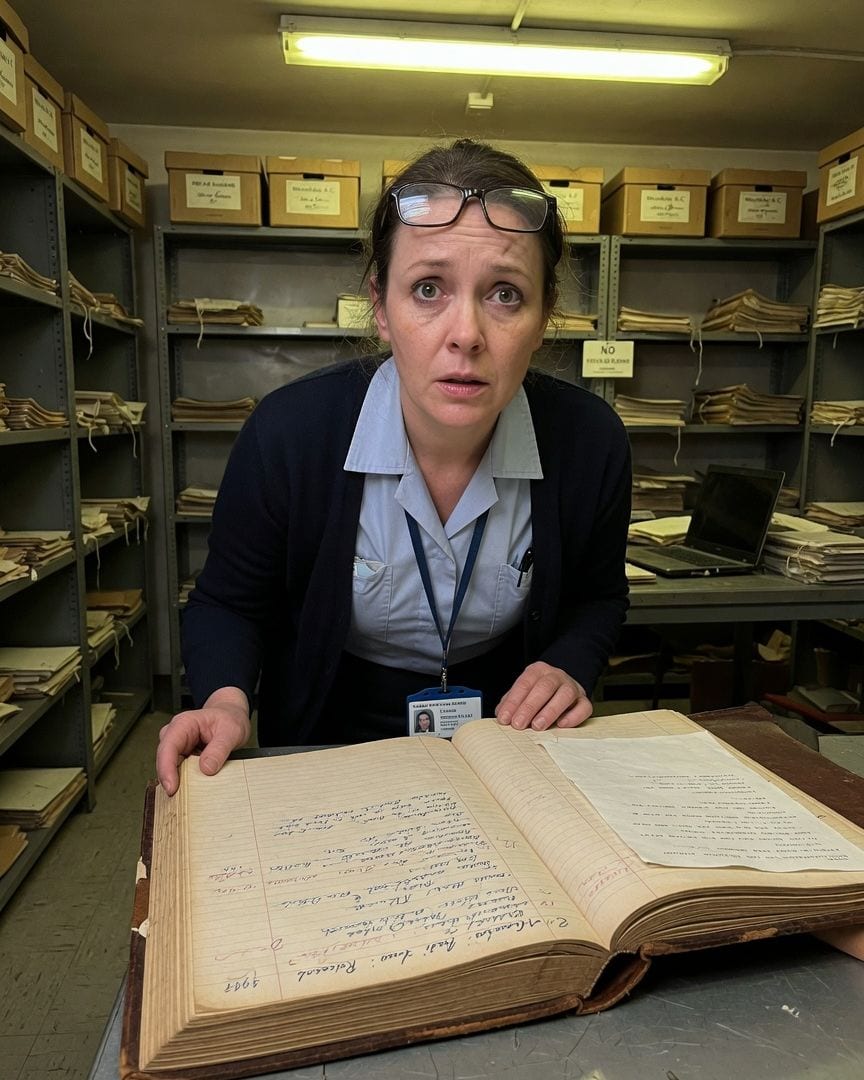
My ambulance trust's incident log shows callout 22-014 to 6 Cathcart Row at 2:40 AM. Every four years, the same call, same address. Always 'patient not found'.
My job involves tedious data entry for ambulance calls, but Incident 22-014 was different. It appeared every four years, always at 2:40 AM, always closed as 'patient not found.' Digging into the dusty physical archives, I found an entry from 1961 for the exact same incident, but its resolution read: 'Subject Secured. Relocated to "Holding".'
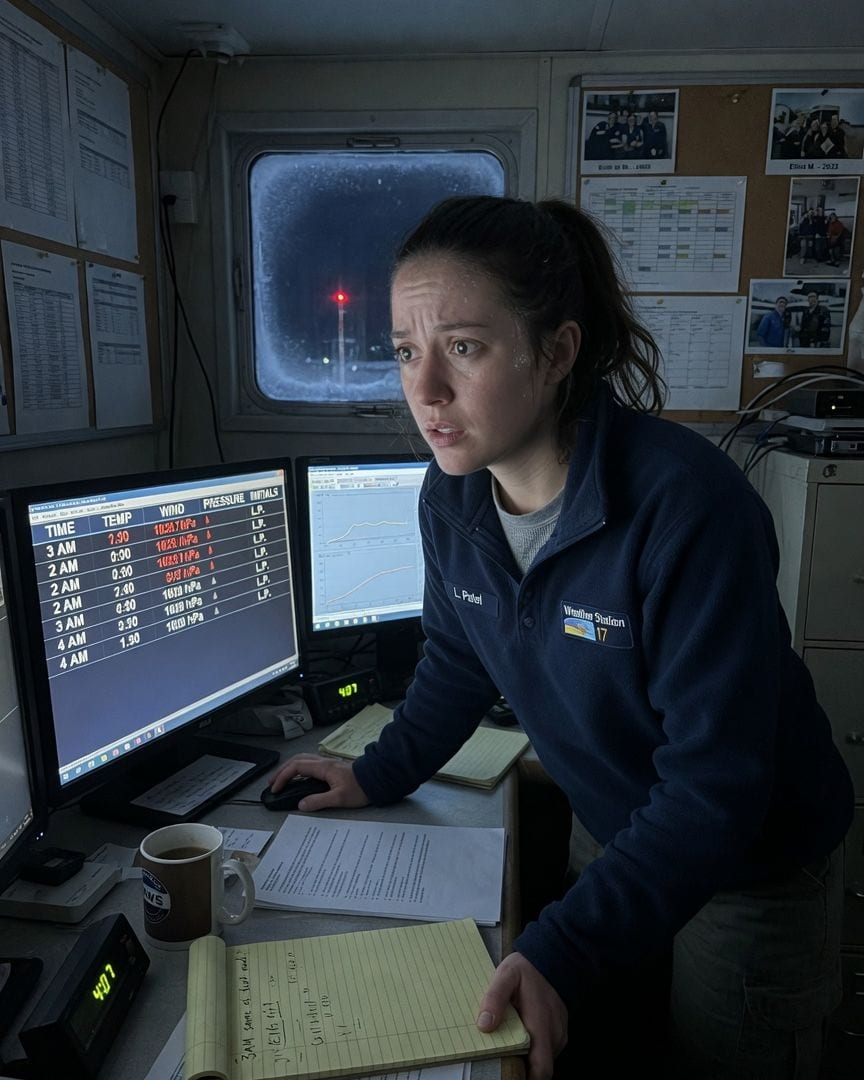
My weather station's 3 AM log shows a pressure reading I never made. My initials are on it, but the dials were dead still.
Working the overnight shift at the remote weather station, I routinely checked the digital logs. The 3 AM entry showed an impossible barometric pressure spike, a hurricane that simply hadn't happened. I distinctly remembered being outside at that time, calibrating a sensor, not making that entry. Yet, my initials, L.P., were clearly logged next to data I never made.
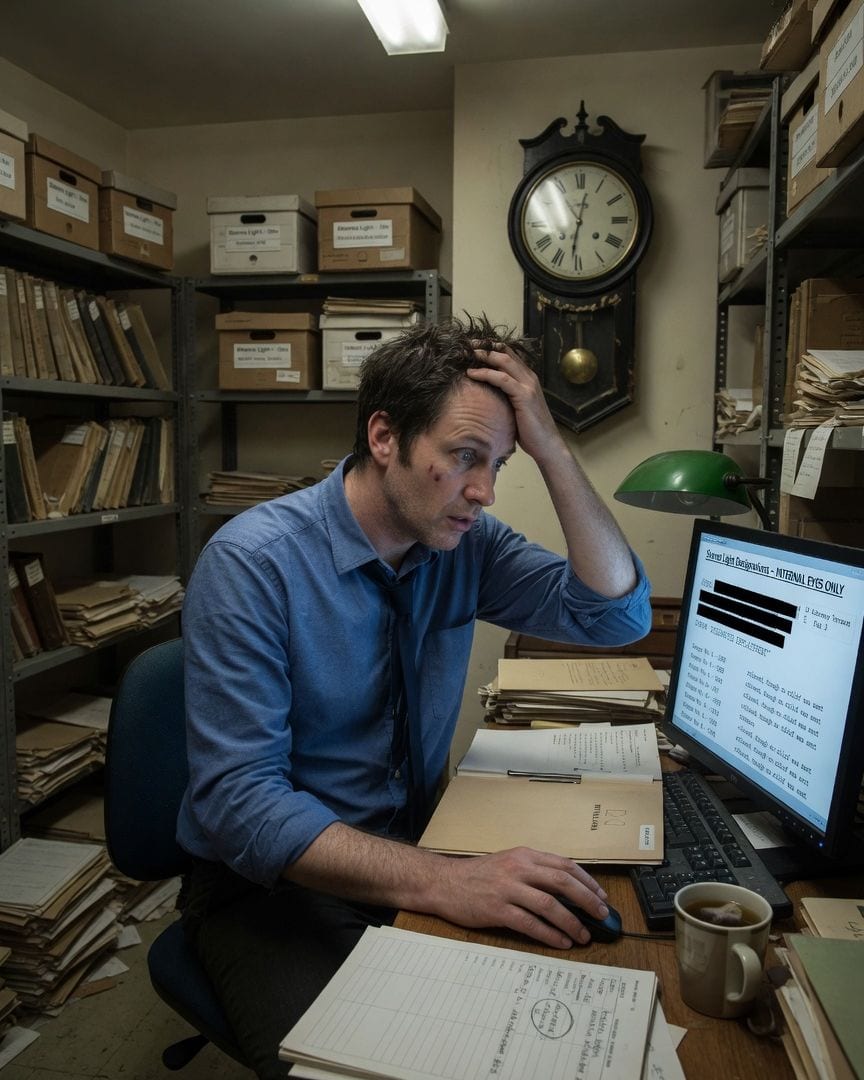
I found my street address in a century-old lighthouse file, printed decades before I lived there.
As a maritime archivist, my world revolves around forgotten lives and dusty ledgers. But the Skerne Light files broke that quiet rhythm, revealing a chilling pattern: 'Keeper number 6' relieved, though no relief was sent, repeating for decades. Now, an internal document with a strange code has led me to a redacted entry, revealing my own street address, decades before I ever lived there.
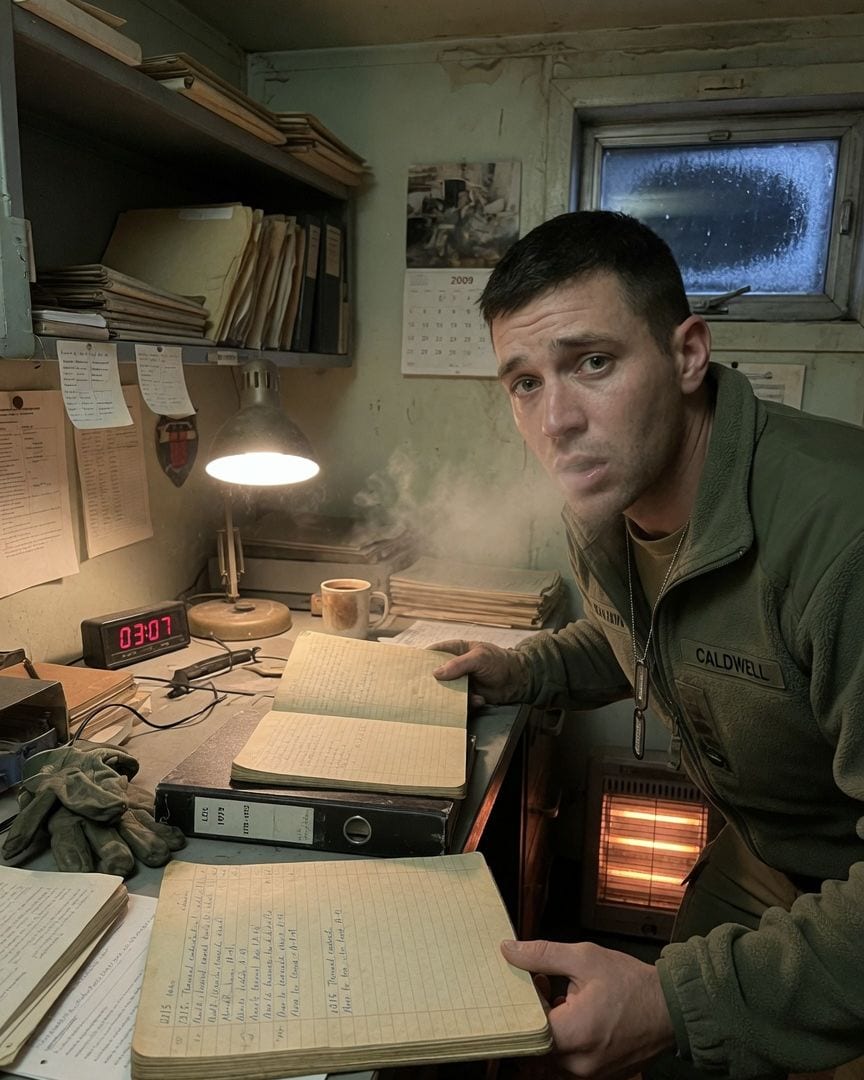
For decades, every sentry at Observation Post Kodiak has logged a still, warm figure in the frozen terraces that isn't really there.
In the biting Korean winter, Corporal Vincent Caldwell shivered on watch at Observation Post Kodiak, scanning the frozen rice terraces with his thermal scope. At 0315, a still, warm human figure appeared a mile out, a distinct orange-yellow silhouette against the frigid landscape – yet his night vision goggles showed only empty, cold ground. Dismissing it as a glitch, Caldwell later found the same entry in the digital logs: 'Thermal contact. Man in terraces.' It was a silent, unresolved loop, repeating for weeks. His dread deepened upon discovering decades of handwritten logbooks, each page documenting the same 0315 thermal contact and a cryptic 'M-01.' Was this a permanent fixture, silently acknowledged by every sentry before him?
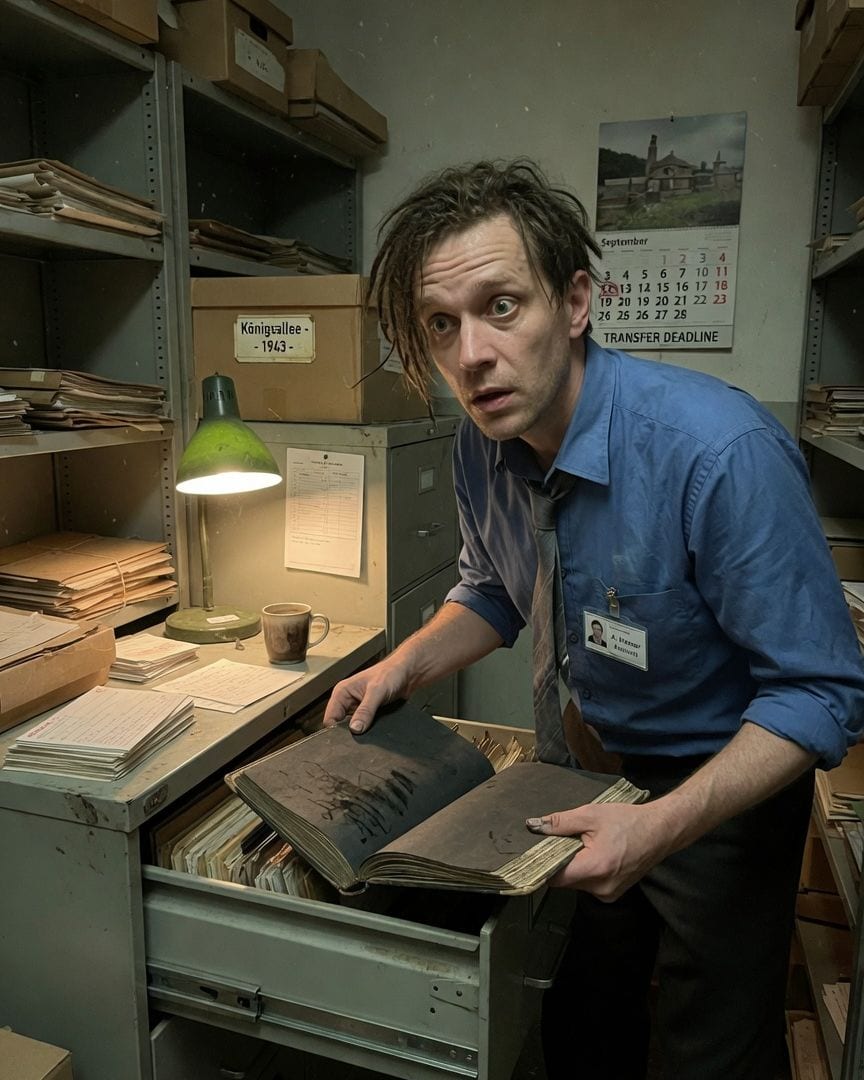
A Berlin archive researcher races a deadline. A hidden log for a Cold War barracks on a vacant lot has ink still wet from last month.
Ansel Vidmar, a methodical researcher, felt the pressure of a looming deadline. The municipal transfer of the old Berlin archive was days away, and he still had countless documents to categorize amidst towering stacks of forgotten history. His focus narrowed to an unindexed metal cabinet, revealing records for a garrison company at Königsallee – an address that had been a vacant lot since the war. A punishment log inside listed an entry from 1983, a date far too recent for a non-existent building. When Ansel visited the site, he found only overgrown grass, save for a single, eerily clean concrete doorstep emerging from the earth. His unease solidified into dread when he later uncovered a hidden Quartermaster's Log, meticulously detailing supplies for the same barracks, with entries extending to "last month," the final page's ink still faintly wet. What unseen operations were still being maintained?
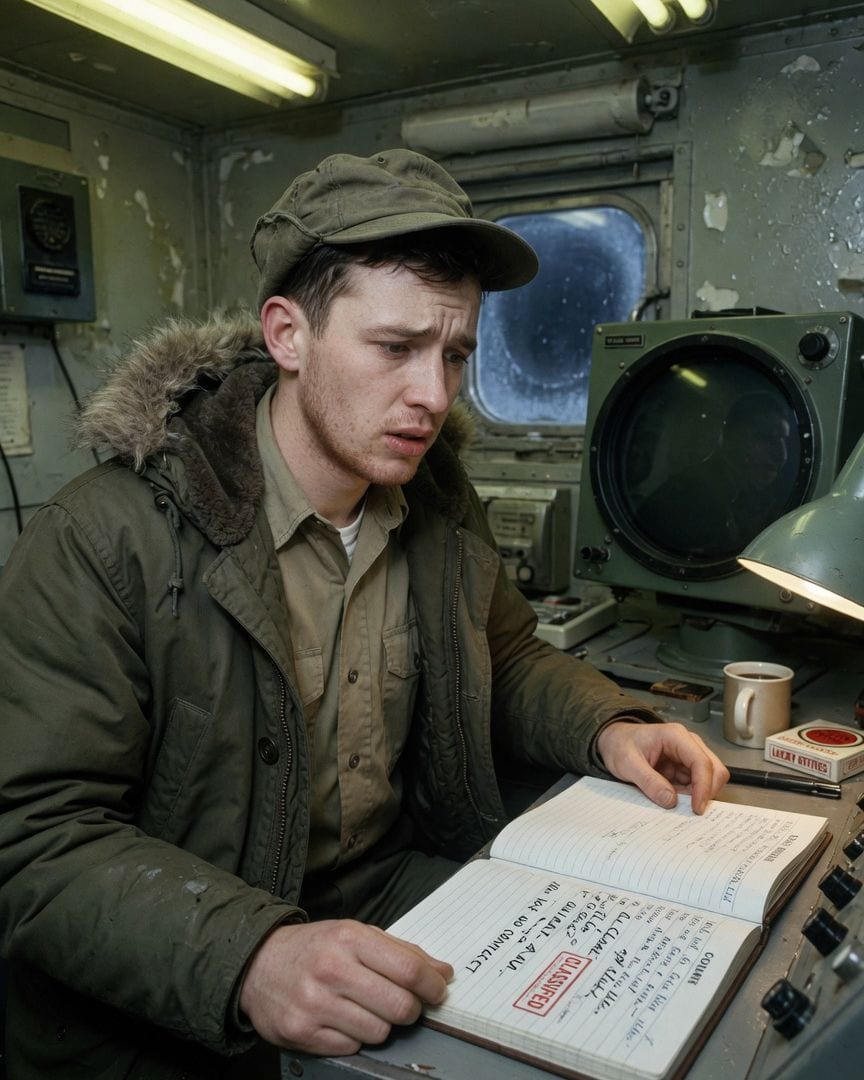
A Cold War airman logs an impossible radar contact on his last sweep. But his official logbook entry is stamped 'CLASSIFIED' and then contradicted by a hastily scrawled 'ALL CLEAR' dated moments before it.
Airman Ordway Vance, 22, manned the radar dome at Site Pellin in the biting North Atlantic dark of January 1962, running the last calibration sweep before its decommissioning. His scope picked up a faint, impossible return, growing closer with each pass, though the ocean remained empty to the eye. When Vance detailed the contact in his official logbook, a 'CLASSIFIED' stamp appeared, followed by a hastily scrawled 'ALL CLEAR' dated moments before his own entry, contradicting his every word. Commander Hartley dismissed it as equipment malfunction, but Vance sensed a chilling, official erasure behind the lie. He soon found a locked cabinet marked 'SITE PELLIN ANOMALIES,' hinting at a deeper truth buried within the base's final days.