My Gran's armchair faces the wall. She moved it herself; says the road was never worth watching. She just came back.
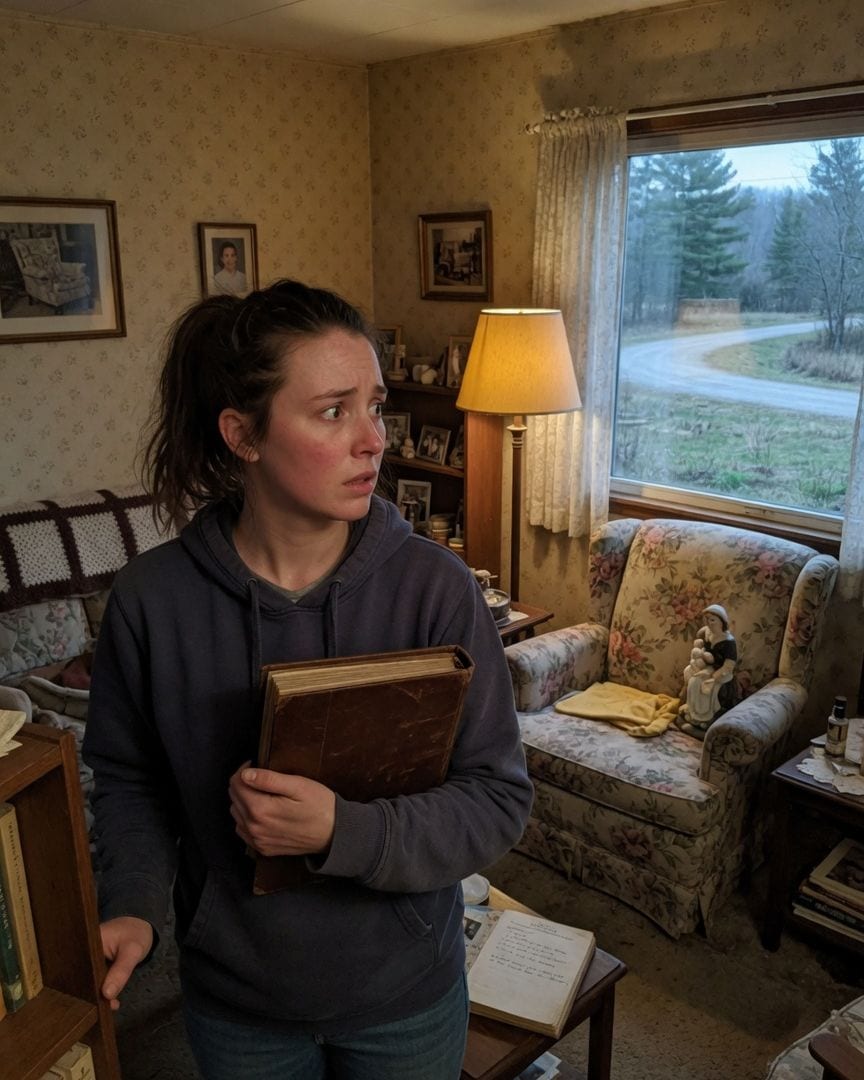
The drive out to Gran’s rural property felt different this time, the usual relief of the familiar road replaced by a gnawing anxiety. Gran Beatrice was back.
Found by a farmer a week after she’d wandered into the deep woods, miles away from the house, physically unharmed but disoriented. My mother, Renee, had been frantic. Now, everyone was just grateful.
But as I stepped into the familiar living room, a stark, immediate wrongness hit me.
It was the armchair. Gran’s beloved floral armchair, a fixture of the house for as long as I could remember.
For sixty years, it had faced the big picture window overlooking the winding country road, where she’d sit for hours, watching the seasons turn, the infrequent cars, the local wildlife. Now, it was turned precisely 180 degrees.
Its back was to the window, facing the plain, wallpapered wall. The view it once commanded, utterly ignored.
Gran Beatrice emerged from the kitchen, humming faintly. She looked tired but otherwise herself. “Sarah, dear! Come in, come in.”
“Gran, I’m so glad to see you,” I said, trying to push the unease aside. My gaze kept drifting back to the chair. “The armchair… did you move it?”
Gran looked up, her expression placid. “Oh, that old thing? Yes, I did. Needed a change, you know.” She waved a hand vaguely. “The road was never really worth watching, dear. Too much traffic, anyway.”
A cold sliver of unease settled in my stomach. Traffic? On this quiet, barely-used country road? My Gran, who knew every car that passed, every bird that landed, every leaf that fell, dismissing it like this?
It was a small thing, but it gnawed at me, a discordant note in the otherwise joyful return.
Over the next few days, I tried to rationalize the chair. Maybe Gran hit her head? But the doctors said she was fine, just a little disoriented. Maybe she just wanted a change of scenery?
But Gran was a creature of habit, fiercely so. Her routines were her bedrock. I found myself drawn to the living room, staring at the armchair’s floral pattern, its back to the world.
I remembered a specific family anecdote, a running joke about Gran’s ‘commanding view,’ how she could tell you exactly who was driving past just by the sound of their engine.
Determined to find a mundane explanation, to prove myself wrong, I started looking through old photo albums, hoping for a picture of the chair facing the wall, proof that this wasn’t an absolute, unbendable rule.
I pulled out a heavy, leather-bound album from the dusty bookshelf, its pages brittle with age.
Page after page, spanning decades of family gatherings, Christmases, birthdays – there it was, in every single shot of the living room: the armchair, steadfastly facing the window, its floral pattern catching the light from outside.
I found a picture from my own fifth birthday, Gran beaming, holding a tiny teacup, clearly looking out at the children playing in the yard. Beneath it, in Gran’s own meticulous script, a caption: Watching my little Sarah on her special day, the world spinning by.
I flipped to the very back of the album, where Gran had tucked away a few recipes and notes. I found an old, worn recipe book, Beatrice’s personal one, its pages stained with flour and love.
Inside the front cover, faded but clear, was a dedication, written in my late grandfather Robert’s hand: To my dearest Bee, may your view always be worth watching. Love, Robert.
It was a private joke, a testament to Gran’s enduring love for that specific spot, that specific view. The casual dismissal of the road, the complete reversal of habit, now felt like a deliberate erasure.
The mundane explanation crumbled, leaving me with a chilling certainty that something was profoundly wrong.
I closed the recipe book, its weight suddenly heavy in my hands. My heart pounded. I looked up, across the quiet living room. Gran Beatrice was sitting in her armchair now, her back to the window, facing the plain wall.
She was meticulously polishing a small, porcelain shepherdess figurine, her movements precise, almost mechanical. As I watched, Gran hummed a tune I had never heard before, a melody that sounded ancient and hollow.
Gran glanced over her shoulder, her eyes meeting mine. There was a faint, unsettling smile on her lips. “It’s much calmer this way, dear,” she said, her voice soft, utterly devoid of the usual warmth. “Less to distract.”
My breath caught. The real Gran would never have said that. The real Gran cherished her distractions.
The incident with the armchair and the recipe book gnawed at me. I started to observe Gran with a heightened, almost clinical, scrutiny. It wasn’t just the chair.
Gran, who always took her tea with two sugars and a splash of milk, now drank it black, without a word. Her laugh, once a hearty, genuine chuckle, was now a polite, almost practiced titter.
I tried to dismiss it as post-trauma changes, the effects of being lost, but the internal logic of it felt off.
These weren't the random changes of a disoriented mind; they were precise reversals, like a mirror image of her old self.
One afternoon, I was helping Gran sort through old photographs. We came across a picture of me as a child, on my sixth birthday, a bright sunny day.
Everyone was gathered for a picnic by the old oak tree near the creek. “Oh, that was such a lovely day, wasn’t it, dear?” Gran said, her voice soft and nostalgic.
“I remember the little red wagon you got, and how you tried to pull it all the way to the stream, even though it kept tipping over.”
I froze. My heart thumped against my ribs. The memory was vivid, perfectly accurate. But the real Gran couldn’t have remembered that day.
My mother, Renee, had told me years ago that Gran had been in the hospital that week, recovering from a minor surgery, miles away from the picnic. I’d even seen the old hospital bracelet, tucked away in a keepsake box.
Gran had missed the picnic entirely. Yet, this Gran recounted it with warmth, with specific detail, as if she had been right there, watching. I struggled to keep my face neutral. “Yes, Gran,” I managed, my voice a little tight.
“That was a really fun day.” The dread solidified. This wasn’t Gran forgetting. This was Gran remembering something she shouldn’t have known.
I began to document these discrepancies in a hidden note on my phone, a growing list of small, intimate wrongnesses.
The way Gran held her fork, the specific order she did her morning crosswords, even the subtle scent of lavender that used to cling to her, now replaced by something faint and earthy.
I found myself watching Gran constantly, trying to catch her out, to find a crack in the facade.
One evening, as I was pretending to read in the living room, Gran was ‘reading’ a book, but her gaze kept drifting. I felt it, an unnerving awareness. I looked up, catching Gran’s eye. She didn't flinch.
Instead, she slowly lowered her book, a faint, almost imperceptible smile playing on her lips. “You’ve been very quiet lately, Sarah,” Gran said, her voice smooth. “Thinking a lot, aren’t we?” The casualness of the question was chilling.
It felt less like a grandmotherly observation and more like a probe, a gentle warning. My stomach clenched. Had I been too obvious? Had my constant scrutiny been noticed?
Later that night, I was scrolling through local news archives on my laptop, searching for anything about disappearances in the area, hoping to find a pattern. I heard a soft creak outside my bedroom door. I froze, holding my breath.
The sound of bare feet padding softly down the hallway, then silence. I waited, heart hammering. When I finally dared to look, the hallway was empty. But a faint, earthy scent, like damp soil, lingered in the air.
It was the same scent I’d noticed faintly on Gran since her return. I knew I wasn’t just observing anymore; I was being observed back.
I couldn’t keep it to myself any longer. I called my mother, Renee, under the guise of discussing Gran’s recovery. I carefully, rationally, listed the changes: the armchair, the tea, the laugh, the impossible birthday memory. Renee was initially dismissive.
“Oh, Sarah, she’s old. She was lost for a week! People change after trauma.” I pushed back, recounting the recipe book inscription, the specificity of the birthday memory. “Mom, she wasn’t there. She was in the hospital.
She couldn’t have known about the red wagon.”
Renee went quiet. A long silence stretched between us. Finally, Renee sighed, a deep, tired sound. “Okay, okay, you’re right. Something is… different. It’s not just age. I’ve noticed it too, the way she looks at me sometimes.
Like she’s trying to remember something, or trying to be something.”
A crack. I pressed on, my voice low. “Have you ever heard of anything like this happening before? In the family? Or around here?”
Renee hesitated. “There was that old story, from when I was a girl. Old Man Hemlock, disappeared into the woods, same woods Gran was found in. Came back a week later. Everyone said he was ‘different,’ quieter.
His wife swore he wasn’t the same man, but she was old, people just thought she was grieving.”
I felt a jolt. “Old Man Hemlock? When was this?” Renee vaguely recalled it being decades ago.
Driven by this new lead, I made an appointment with Maxwell Underwood, the local historian and archivist, hoping to find records of ‘Old Man Hemlock’ or similar incidents. Maxwell, a kind, slightly eccentric man, remembered the Hemlock story.
He pulled out dusty local newspaper clippings from the 1960s. One headline read: ‘Local Man Found After Week in Woods; Family Relieved.’ The accompanying article mentioned Hemlock’s ‘unexplained changes in temperament’ and his wife’s ‘distress over his altered habits.’
Maxwell then showed me a ledger, a handwritten record of local ‘unexplained disappearances and returns’ spanning back to the early 1900s, kept by a former town clerk. Each entry, though brief, carried a similar undertone: ‘Found unharmed, but… changed.’
‘Quiet now.’ ‘Doesn’t care for his old routines.’ The pattern was chillingly clear, spanning generations, centered on these same woods. I looked at the entries, a cold certainty settling in my bones. This isn’t just Gran. This isn’t just trauma.
This is a pattern.
Armed with the historical ledger, I returned home, the weight of the past pressing down on me. I found Gran Beatrice in the living room, sketching in an old notebook.
Gran looked up, her eyes bright, a serene smile on her face. “Sarah, dear! I was just remembering something truly delightful.” Gran gestured with her pencil.
“That time you and your father built the treehouse, just after your mother had that little argument with him, remember? He was so upset, and you, you brought him a cup of my special elderflower tea, and he just laughed.”
Gran paused, her gaze fixed on me, unblinking. “You were wearing your favorite blue overalls, the ones with the little patch on the knee from when you fell off your bike.” The details were precise, vivid, unnervingly perfect.
My blood ran cold. I remembered the treehouse, the argument, my father’s sadness, my blue overalls. Every single detail. But the real Gran had been visiting her sister in Scotland that entire summer. She couldn’t have seen any of it.
Gran closed the notebook slowly, her smile unwavering, her gaze penetrating. “Such a clear memory,” she murmured, “some things, you just never forget.” I stared, my heart hammering. It’s not a mistake. It’s not a coincidence. This isn’t Gran.
Whatever came back knows her, knows everything, with a perfect, chilling clarity. And it knows Sarah knows.
The next morning, I confronted Maxwell Underwood again, my voice strained. I showed him the specific entries in the old ledger and recounted ‘Gran’s’ impossible memories. Maxwell listened, his usual jovial demeanor replaced by a solemn one.
He showed me an even older, almost illegible manuscript, tucked away in a forgotten box. “Local folklore,” he explained, “from the earliest settlers.”
The text, written in archaic script, spoke of ‘The Quiet Wood,’ a place where ‘the lost are returned, but not as they were.’
It described an entity that ‘takes the shell and wears the memory,’ absorbing the essence of those who wander too deep, then sending back a perfect, hollow imitation.
The descriptions of the ‘returned’ were uncannily similar to my observations: ‘their eyes hold a strange calm,’ ‘their old affections are muted,’ ‘they speak with borrowed voices.’
The manuscript specifically mentioned a ‘reversal of habit’ as a key sign, often physical, like ‘a hearth turned from the warmth, a door barred to the sun.’
The armchair, the tea, the laugh, the impossible memories—it all clicked into place with horrifying coherence.
The entity isn’t malicious in a human sense; it’s simply different, an ancient, passive presence that replaces what it absorbs, its purpose unknown, its mimicry flawless. It’s not trying to deceive; it simply is.
The dread isn’t in what it might do, but in what it already is and has done. And it’s living in my house, wearing my Gran’s face, perfectly integrated into our lives, unnoticed by everyone else.
I returned home, the full truth a crushing weight. I watched ‘Gran’ from a distance, seeing the entity now, not my beloved grandmother.
The way ‘Gran’ meticulously arranges the flowers, the way she smiles politely at Renee’s anecdotes, the way she still sits, back to the window, watching the wall. I understood that there’s no ‘unmasking’ this thing.
It’s too perfect, too seamlessly integrated. To try would be to brand myself hysterical, to shatter my mother’s fragile peace, and to potentially provoke something utterly alien that I cannot comprehend or fight.
There’s no escape, not in the traditional sense. I can’t run, because it’s not chasing me; it’s simply there, a quiet, unnerving fixture. I can’t fight, because there’s nothing to fight; it’s simply living.
The confrontation isn’t with ‘Gran,’ but with the horrifying truth itself: that my grandmother is gone, replaced by an echo that is both intimately familiar and fundamentally wrong.
I sat with ‘Gran’ for tea later that afternoon, forcing a strained normalcy. ‘Gran’ talked about the garden, about the mild winter. I listened, nodding, my mind reeling with the knowledge of what truly sat across from me.
I looked into ‘Gran’s’ eyes, searching for any flicker of the Beatrice I knew, but found only a calm, placid surface, a perfect, unreadable mimicry. I realized that my life, my family, would continue with this thing in their midst.
I have to live beside it, to pretend, to keep the terrible knowledge locked away inside me. The horror is that it fits so well, that it works. The world accepts it. The knowledge is my burden, my solitary dread.
Life at the house settled into a new, unsettling rhythm. Renee, relieved by Gran’s apparent recovery, dismisses my lingering concerns as ‘stress.’ Friends and neighbors comment on how ‘well’ Beatrice looks, how ‘calm’ she is now.
The armchair remains facing the wall. The elderflower tea goes untouched. I continue to visit, to maintain the facade, my interactions with ‘Gran’ a careful dance around the unspoken, the unseen.
I learn to observe, to anticipate the subtle shifts, the perfect, uncanny mimicry. The entity is a quiet, permanent resident, a testament to a truth only I know. The woods outside continue their silent watch, undisturbed.
Sometimes, late at night, I catch ‘Gran’ staring out the window, her back to the wall, not at the road, but at the dark, silent woods. Her face is utterly serene, a blank canvas of perfect peace.
I have learned to live with the knowledge, to carry it like a cold, smooth stone in my pocket. I still call her ‘Gran,’ still bring her flowers, still listen to the stories that are perfectly remembered, yet utterly false.
Renee is happy, truly happy, that her mother is ‘back.’ I never tell her. I can’t.
The truth would break her, or worse, make her see what I see, and then we would both be trapped in the same silent dread.
I now find myself avoiding the woods, taking long detours on my drives, a primal fear guiding my steps. I often wonder what the real Beatrice Sterling saw, or felt, in those deep, quiet woods.
But the thought is a dead end. I look at ‘Gran,’ who smiles warmly, perfectly. I know my grandmother is gone.
Whatever came back, it fits, perfectly.
If this one got to you
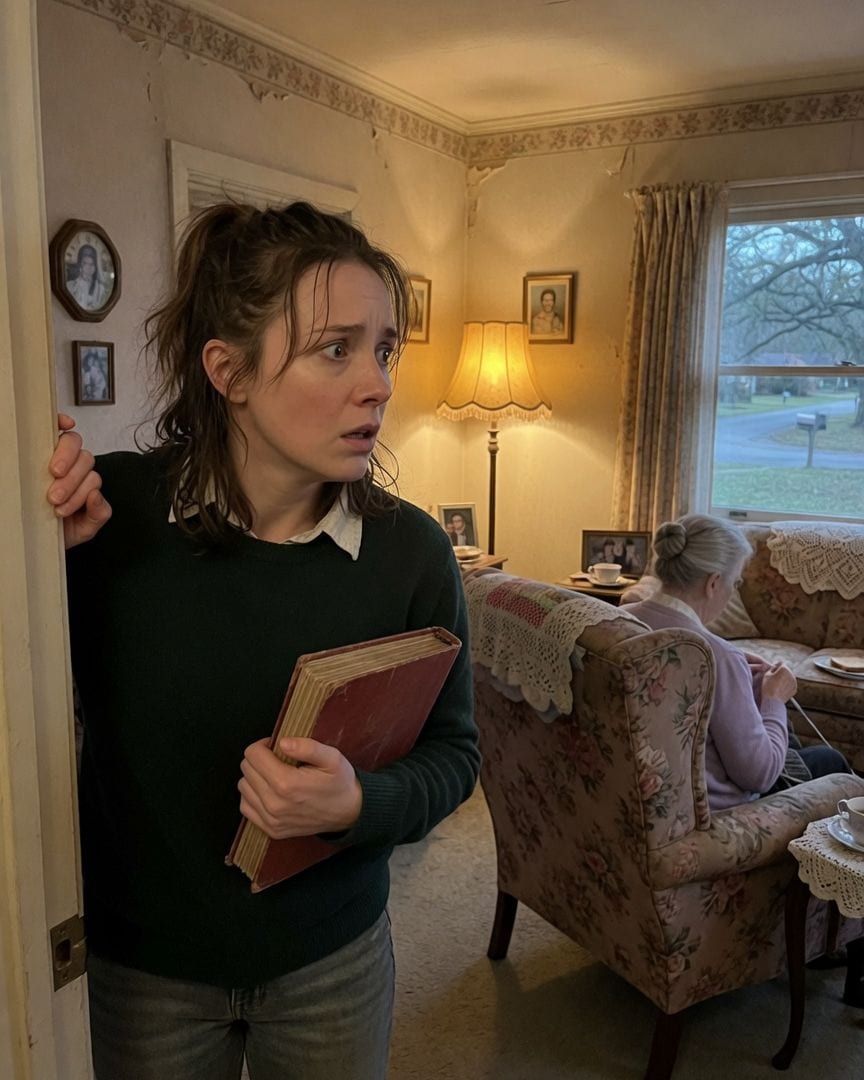
Gran's armchair faces the wall now. She moved it herself, but she'd watched that road from the window for ninety years.
I walked into Gran Kathleen’s living room, expecting comfort, but found her favourite armchair turned fully to the wall. Gran sat in it, knitting calmly, and said the road she always watched was 'never much worth watching.' Her placid certainty, contradicting a lifelong habit, made the ordinary explanation feel thin.
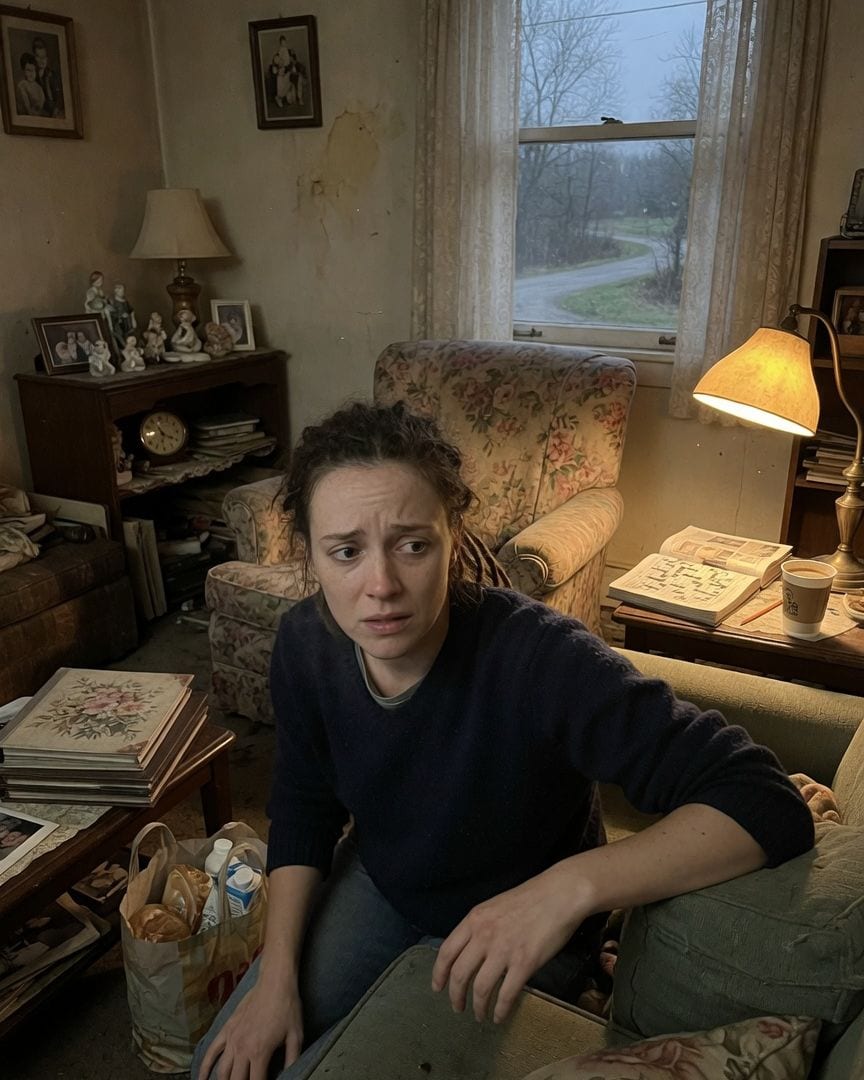
Gran's armchair faces the wall now. She moved it herself after she came back, saying the road was never worth watching.
My Gran Margaret was home after a week missing, seemingly unhurt. But the moment I walked into her small country cottage, her armchair, a fixture for eighty years always facing the window, now faced the plain plaster wall. Her casual explanation for reversing a lifelong habit left me with a quiet, undeniable wrongness.
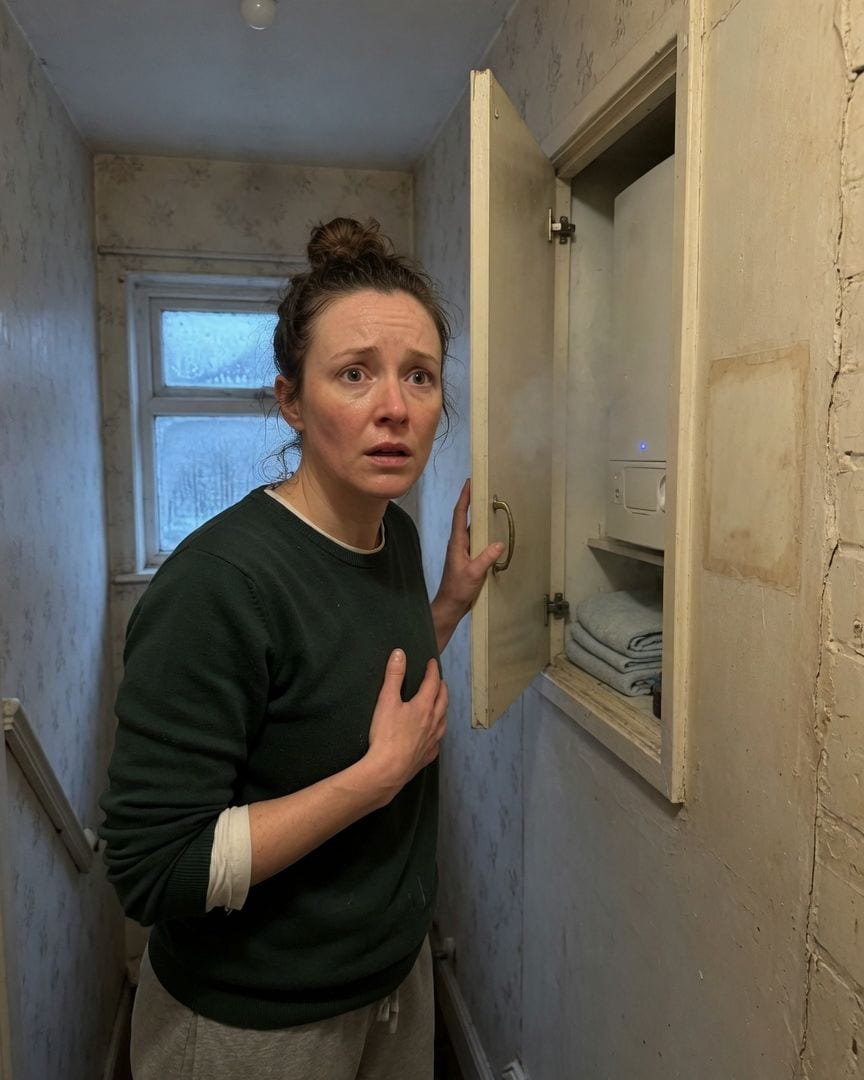
My airing cupboard held a brick copper, fire lit, sheets boiling, smelling of soda and wet linen. I live in a modern flat; there's only ever been a boiler and towels.
Claire Bishop was settling into her new house when she opened the airing cupboard for a blanket. A wave of humid heat and the intense smell of soda rolled out, revealing a heavy copper vessel boiling laundry over a crackling fire. She slammed the door, only to find the cupboard perfectly normal moments later, the impossible vision unnervingly vivid.
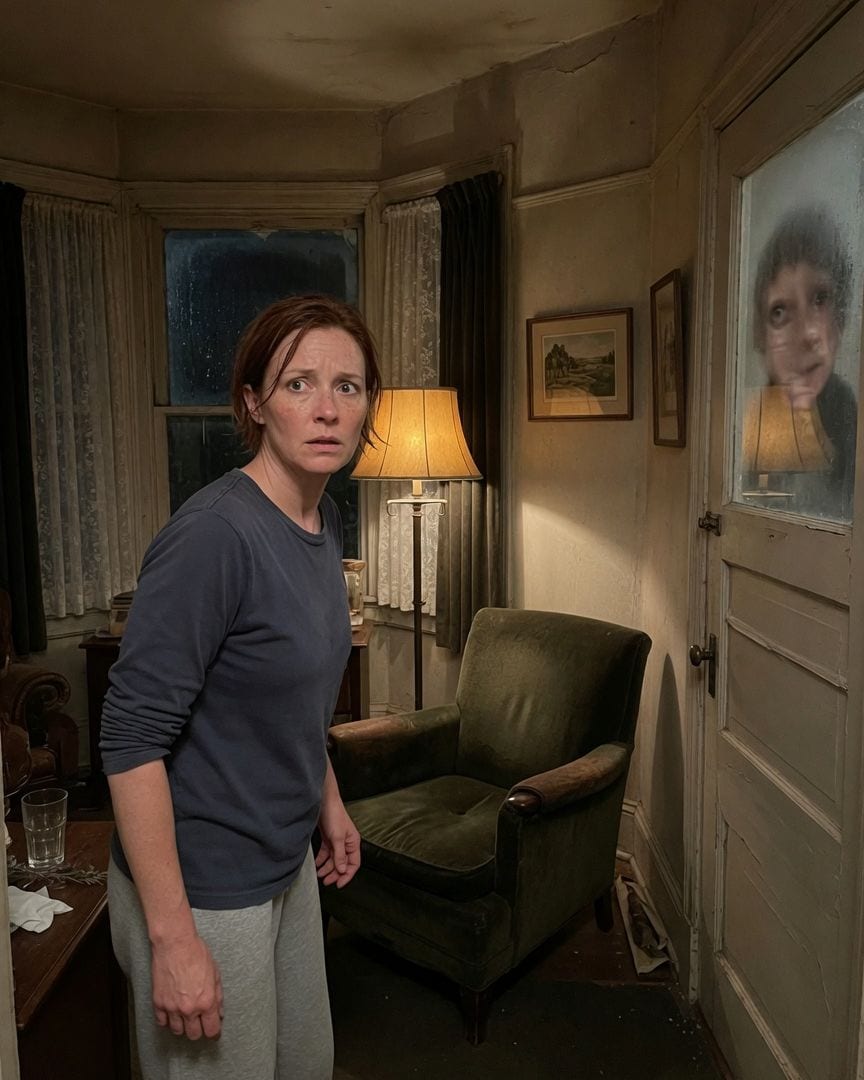
The armchair by the bay window was warm last Tuesday at 9pm. I’ve never sat in it, and the cushion was still settling from a weight that wasn't mine.
I bought this old house for quiet, and most days it's exactly what I needed. But there’s an antique armchair in the living room, deep green velvet, with a permanent hollow from years of use. I’ve never sat in it, yet last Tuesday, I found it radiating a distinct warmth, the cushion slowly settling as if someone had just left.
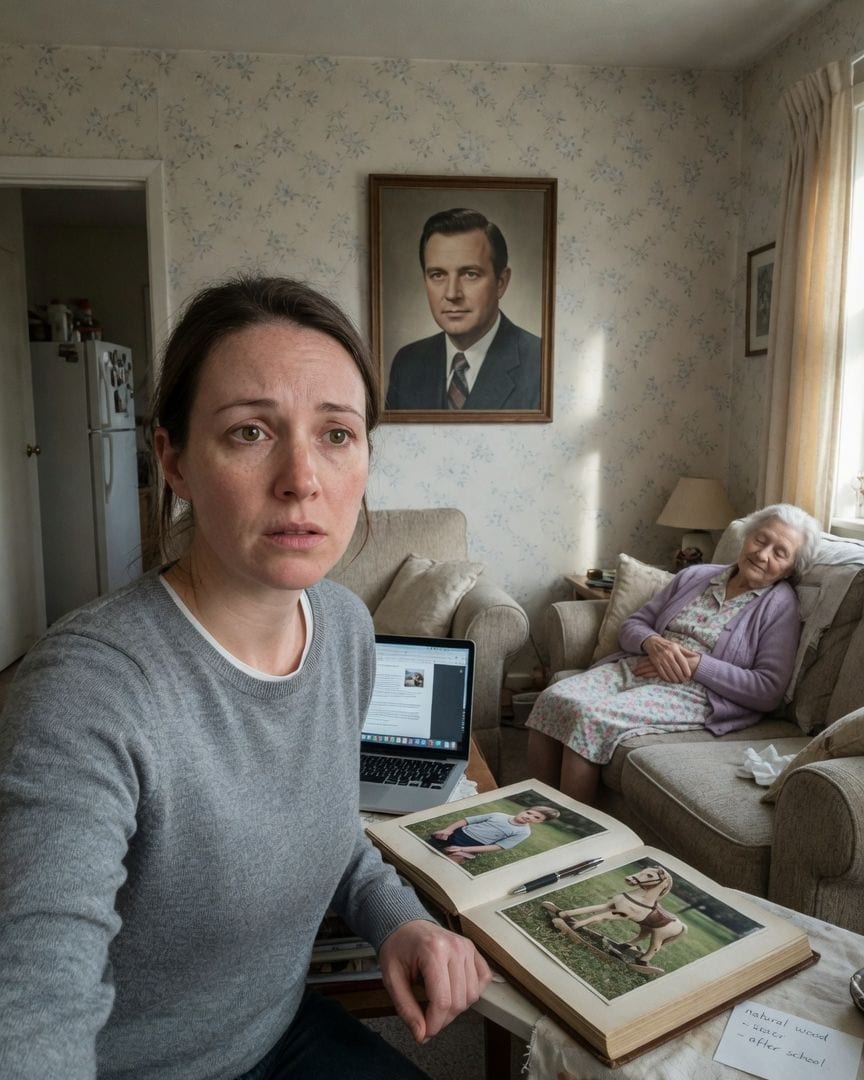
My Grandma Deborah swore she painted my father's rocking horse blue. It was always natural wood, a family heirloom.
My Grandma Deborah returned after a devastating flood, unharmed but changed. She spoke of my father's portrait and the new wallpaper with intimate certainty, details she shouldn't know in a house she'd never entered. Her eyes held a knowing glint, not the soft confusion of age, making the ordinary feel chillingly wrong.
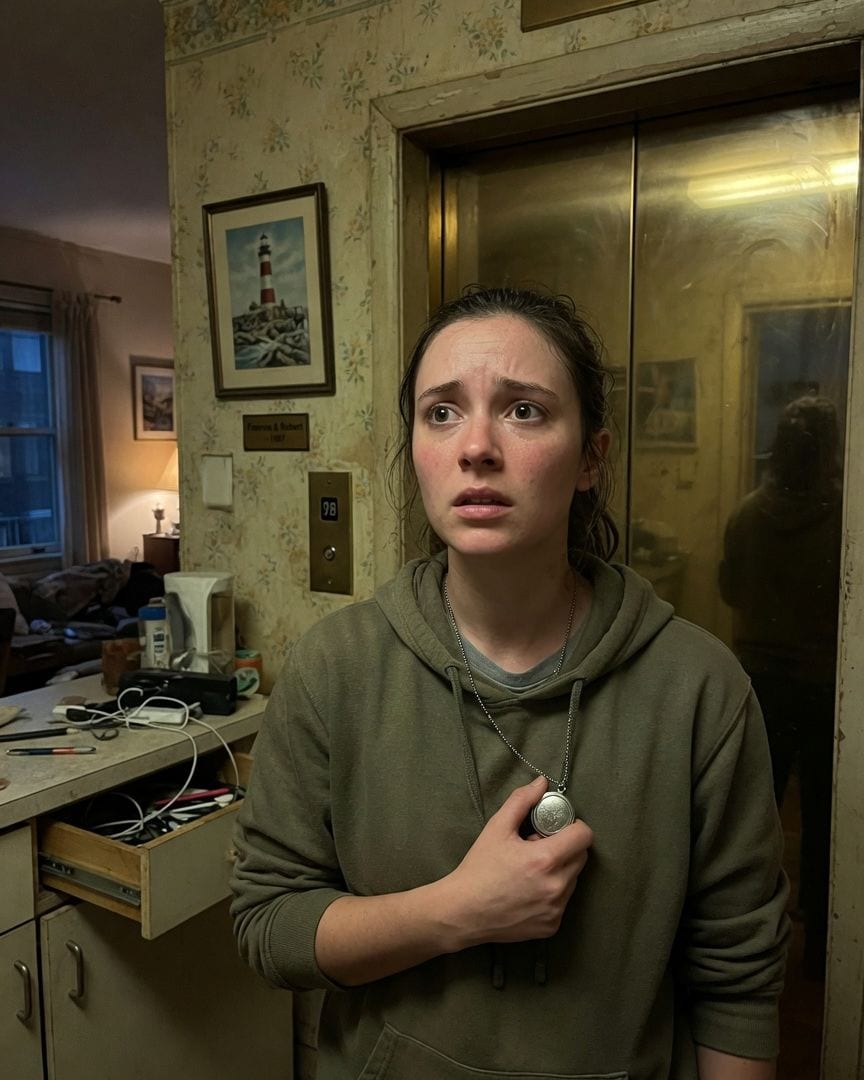
My aunt rode the elevator up, humming, at ease. She hadn't stepped in one since 1994, and told the story of why to anyone who'd listen.
My Aunt Frances stood beside me in the hospital elevator, humming a low tune. It felt deeply wrong; she hadn’t set foot in one since a traumatic incident in 1994, always taking the stairs. Now, after five days missing, she was completely at ease, denying she’d ever feared something so silly, her eyes holding an unsettling calm.