Gran's armchair faces the wall now. She moved it herself, but she'd watched that road from the window for ninety years.
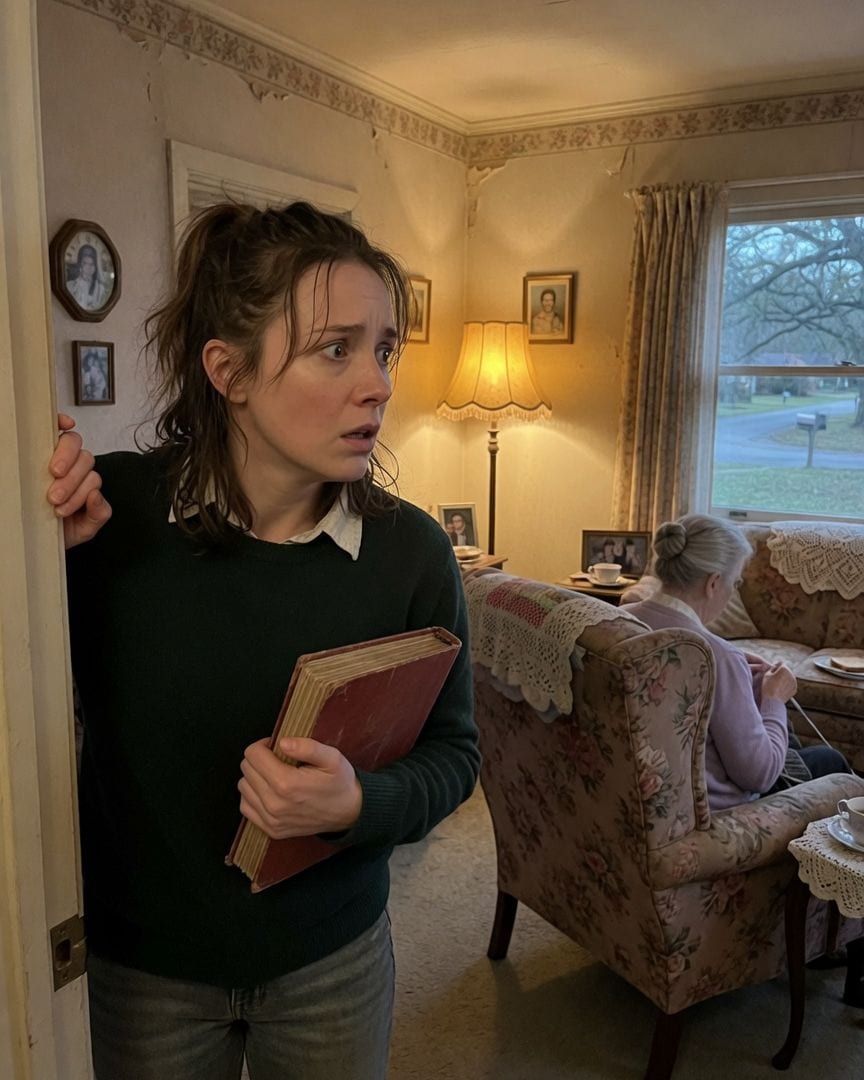
I walked into Gran Kathleen’s living room, expecting the familiar comfort of her old house, the smell of lavender and toast, the gentle rhythm of her knitting needles. But I stopped cold. The entire room felt… off.
Gran’s favourite armchair, the one that had been a fixture by the window for as long as I could remember, a worn relic upholstered in faded rose patterns, was turned fully to the cream-coloured wall.
Its back, high and solid, now faced the window, the road, and everything outside. Gran herself sat in it, knitting calmly, her back a quiet, defiant curve.
“Gran?” I asked, my voice thin. “What happened to the armchair?”
She looked up, her needles still. Her eyes, usually sparkling with ninety years of stories and observations, were clear but strangely distant. “Oh, that old road?” she said, her voice soft, placid. “Never was much worth watching, dear.”
A chill ran through me, one that had nothing to do with the draft from the window. Never was much worth watching. The words hung in the air, heavy and wrong. Gran had always loved watching the road. It was her ritual.
Mornings, she’d point out Mrs. Henderson’s erratic driving, or wave to the postman. Afternoons, she’d track the schoolchildren heading home, each one a memory of her own youth. It was a fixture, a lifelong habit. Now, it was just… gone.
I tried to rationalize it. Gran had been missing for a week in November, lost in the woods, only to be found miles away, unhurt but disoriented. Maybe this was just part of her settling back in, a lingering confusion.
But the certainty in her voice, the placid finality of her gaze as she turned back to her knitting, made the ordinary explanation feel thin, translucent. Like a sheet of ice over deep, cold water.
A few days later, I was showing Gran old photo albums, hoping to rekindle some shared warmth. The familiar smell of aged paper and fading ink filled the air as we flipped through decades of family history.
We came across a picture of me as a child, maybe five or six, on a picnic by the old oak tree in the meadow. I remembered that day so vividly.
It was the summer Mum and Dad tried to make me like nature, and I was mostly just bothered by the ants.
I remembered it also because Gran had been visiting Aunt Clara that weekend, miles away, recuperating from a bad flu.
“Oh, that day,” Gran murmured, her gaze fixed on the photo. A faint, sweet smile touched her lips, a smile that seemed to belong to a memory. “You were so worried about the ants, weren’t you?
And I told you, ‘Don’t fret, little bird, they’re just on their own journey.’”
My breath caught. My stomach did a strange, lurching flip. Gran wasn’t there. She couldn’t have said that. I remember Mum saying it to me, word for word, as she brushed crumbs from my skirt.
I gently probed, my voice carefully neutral. “Gran, I thought you were at Aunt Clara’s that weekend? You had that terrible flu.”
She looked up, her smile unwavering, her eyes calm and utterly certain. “Nonsense, dear. I was right there. I remember the sunshine on your hair, and the way the sandwiches tasted of summer.”
Her conviction was absolute, not a flicker of doubt, no hint of confusion. And that certainty, more than the impossible memory itself, made my skin prickle with a cold dread.
It wasn’t a mistake; it was a quiet, unshakeable rewrite of reality.
I couldn't shake the memory incident. It felt like a stone dropped into calm water, sending ripples of unease through everything I thought I knew about Gran.
Later that evening, unable to sit still, I found myself in Gran's study, a room she rarely used anymore. It smelled of old paper and dust, a quiet sanctuary from the unsettling changes in the living room.
I was looking for an old recipe book, anything familiar, a grounding anchor in the weirdness.
Tucked beneath a stack of well-worn gardening magazines on a dusty shelf, I found it: Gran’s old, leather-bound journal.
It was heavy in my hands, its pages filled with familiar recipes, precise notes on rose cultivation, and observations about the changing seasons – all in Gran’s unmistakable, slightly florid hand.
I flipped through, a comforting sense of her presence finally settling over me.
But then, halfway through, wedged between two pressed leaves from autumns long past, I found something new. A newly-drawn, meticulously detailed pencil sketch.
It was a precise, almost photographic rendering of the road outside, seen from the living room window, complete with the crooked mailbox, the old oak tree with its first bare branches, and the faded yellow lines on the asphalt.
In Gran’s unmistakable, slightly shaky hand, scrawled neatly in the corner, was a date: 'November 22nd'—a week after Gran came back.
The sketch was a cold shock, like stepping into an icy stream. November 22nd. A full week after she'd returned, after she'd turned the armchair to the wall and declared the road 'never worth watching.'
Yet here was undeniable proof that someone, with Gran's hand, had been watching it with an almost obsessive detail.
I scrolled through old photos on my phone, images from decades of family gatherings in Gran's living room. Birthdays, Christmases, casual Sunday visits.
In every single one, dating back to my parents' engagement party captured on blurry film, Gran’s armchair was angled towards the window.
Sometimes she was in it, sometimes not, but its position was immutable, a compass needle fixed on that road. The sketch, dated after Gran's return, implied that someone was still observing the road, even if Gran claimed otherwise.
It was a lie, a deliberate contradiction, drawn in pencil.
I started looking for other small discrepancies, a new, unwelcome vigilance replacing my usual easy affection.
Gran, who always took her tea with two sugars and a splash of milk – a habit I’d teased her about since childhood – now took it black.
“Oh, I always preferred it this way,” she’d said, when I went to fetch the milk. “Much cleaner taste.”
She hummed a tune I had never heard before, a strange, lilting melody that sounded ancient and unfamiliar, like something from a forgotten lullaby.
And Gran, who hated the smell of lavender, claiming it gave her headaches, now had a sachet of it tucked beneath her pillow, saying it “calmed her nerves.”
Each small detail, innocuous on its own, added to a chilling mosaic.
I tried to find a logical explanation for each: maybe Gran’s tastes simply changed with age, maybe she picked up the tune from the radio, perhaps her nose wasn’t as sensitive as it used to be.
But the sheer volume of these 'changes' began to overwhelm my attempts at rationality. It felt less like Gran changing, and more like Gran being… reassembled, imperfectly, like a puzzle with a few pieces forced into the wrong slots.
The scent of lavender, once banished, now drifted faintly from her bedroom, a quiet, floral assertion of something new.
The more I observed, the more I felt observed in turn. The air in the house seemed heavier, charged with an unspoken presence.
I’d catch Julian Reynolds, an elderly neighbor who rarely left his house, standing by his window across the street, watching our living room. He’d always been a quiet, almost reclusive man, polite but distant.
Now his gaze felt pointed, knowing, as if he could see the invisible threads of wrongness tightening around us.
One afternoon, I was watering Gran's prize-winning roses in the front garden when Julian approached the fence, ostensibly to comment on the unseasonably warm November weather.
His eyes, however, were fixed on the open living room window, where Gran sat, back to the world, knitting.
“She’s… settled back in, then?” he asked, his voice low, almost a whisper, the question heavy with unspoken meaning.
I nodded, a knot forming in my stomach. “Yes, she is.”
Julian sighed, a sound heavy with unspoken meaning. “It’s a funny thing, isn’t it? How people change. Or how they seem to.” He glanced at me, a flicker of something in his eyes – pity? Warning?
– then back at the window. “My own grandmother, God rest her soul. She went missing for a spell, back when I was a boy. Just like your Gran. Found her miles away, same as.”
He paused, his gaze fixed on the quiet house. “Came back… different. Said the road was never worth watching either. Used to love it, you know. Waving at every car.”
He paused again, a long, uncomfortable silence stretching between us. “Some things, they just… wear a person out.”
He turned and shuffled back to his house, leaving me with a chilling sense of complicity, as if he knew exactly what I was seeing, and was subtly confirming every terrifying, unspoken fear.
The air grew cold around me, the roses suddenly seeming to wilt in the stillness.
The next day, I couldn't bear it any longer. I went to Julian's house. The front door was ajar, as if he'd been expecting me.
I found him in his dim living room, surrounded by stacks of old books and the faint scent of pipe tobacco and dust.
“Mr. Reynolds,” I began, my voice trembling slightly, “what did you mean, about your grandmother? When you said she came back… different.”
Julian looked up from a thick, leather-bound volume, his gaze steady, devoid of surprise. “I meant what I said, Helen. She came back, but she wasn't quite… her. Little things, just like you’re seeing with your Gran. Like the tea.
Or the way she looked at you, like she was studying you, not seeing you. Like she was trying to learn how to be herself again, but missing some vital spark.”
I felt a wave of nausea, a cold dread washing over me. He was describing Gran. Every small, unsettling detail. “Did she… remember things she shouldn’t have?” I asked, my voice barely a whisper.
Julian nodded slowly, his eyes distant, lost in a memory. “Oh, yes. Vividly. Moments she couldn’t possibly have been present for. She’d tell them with such calm certainty, like they were her own.
Like they’d always been her own, and you were the one who had forgotten.”
I recounted the picnic memory, the impossible detail of the ants. Then the armchair, the sudden shift. The lavender sachet, the changed tea preference. Julian listened, his face grim, occasionally nodding.
“It’s a pattern, Helen,” he said, his voice dropping to a near whisper. “Not just my gran. Not just yours. It happens here, in this valley. People wander off, they come back, and they're… wrong.
They wear the skin, the voice, the memories, but it's not them. It’s something else. Something that learns.” He paused, his eyes meeting mine, an ancient weariness in their depths. “And it learns from you.
From the people closest to the one it’s wearing. It watches. It absorbs. And then it discards what it no longer needs.” The air around us felt thick, stifling.
The scent of old paper and dust suddenly felt like the smell of a tomb.
Julian stood and walked over to a heavy wooden chest by the hearth, its dark surface scarred with age. He rummaged inside, his movements slow and deliberate, before pulling out a faded, creased newspaper clipping, brittle with age.
He pushed it across the table towards me.
It was an obituary from fifty years ago for his own grandmother, Eleanor Reynolds, a name I vaguely recognized from local history books. The headline read: 'Beloved Matriarch Returns Home After Harrowing Disappearance.'
But beneath the text, a small, blurry photograph of her, post-return.
I leaned closer, my heart thumping against my ribs. The woman in the photo was clearly Eleanor, but her eyes, even in the grainy print, held a placid, unnatural certainty, a subtle blankness that sent a shiver down my spine.
It was the exact same unsettling gaze I had begun to see in Gran’s eyes, a quiet, unblinking assessment that saw through me, not me.
Julian pointed a trembling finger at a detail in the background of the photo, almost obscured by shadow, but unmistakable once seen: a familiar armchair, its back turned squarely to face a bare wall, away from a window.
“And this,” Julian whispered, his voice thick with dread, “this is what sealed it for me. Not the eyes, not the memories. The chair. It always starts with the chair.”
Julian explained the pattern in hushed tones, the words falling like cold stones into the quiet room. "They wander, they observe, they choose a host. They absorb enough to mimic, to blend.
The changes, the 'wrongness' you see, that's them still learning, still settling into the skin. Like a poorly fitting suit, slowly adjusting." He gestured vaguely towards the window, towards the world outside. "The memories they shouldn't have?
Those are from the host, absorbed, but they don't always understand the context, the absence. They just… process the data. It's why they present them with such absolute certainty, Helen.
They don't know it's wrong, because to it, it's a fact."
"The sketch," he continued, his gaze returning to me, intense and sorrowful. "The one in Gran's journal… that wasn't Gran drawing it.
That was it, processing what Gran used to do, perhaps even trying to replicate her old habits, to understand the 'worth' of watching the road, even as it discarded the outward act. It was studying. Practicing.
An internal record of its new life." He leaned forward, his voice barely audible. "And the chair… the chair is a marker. A sign that the new inhabitant is settling in, claiming the space.
My grandmother's chair, your Gran's chair… it's a turning point. It means they're ready for the next stage."
My blood ran cold, turning to ice in my veins. "Next stage? What next stage?"
Julian looked at me, his eyes filled with a weary sorrow, like he was looking at someone already lost. "They don't just replace. They nest. They prepare. They need a new host, a close relative.
Someone who has accepted them, loved them, even in their wrongness. Someone like you, Helen. You're the one it's been observing, the one it's been learning from. You're the successor."
The silence that followed was deafening, the truth a monstrous, suffocating weight.
I returned home, the horrifying truth burning in my mind, every shadow in the familiar house now seeming to writhe with unspoken menace.
Gran was in the living room, knitting in her armchair, her back to the window, the image a fresh stab of dread. I forced myself to act normal, to play along, to mimic the Helen that Gran, or it, expected.
"Gran," I said, my voice carefully light, trying to ignore the frantic hammering of my heart, "I was thinking, maybe we could go through some of your old photo albums tonight?
The really old ones, from when you were a girl. I haven't seen those in ages." It was an invitation, a test, a distraction.
Gran looked up, her placid smile unwavering, her clear eyes holding that familiar, chilling certainty. "Oh, that would be lovely, dear. Such good memories." The entity, wearing Gran's face, had accepted the bait.
I went to my room, my heart pounding a frantic rhythm against my ribs. My hands trembled as I packed a small bag: my phone, my keys, a wad of cash.
I grabbed a framed photograph of the real Gran, vibrant and laughing, from my bedside table. Her eyes in the picture were full of genuine warmth, a contrast to the blankness I now saw.
As I passed the living room again, ready to slip out, Gran looked up from her knitting. A new, almost predatory glint entered her eyes, chasing away the placid mask.
"Helen," she said, her voice softer, a silken whisper that seemed to curl around me, "you know, I was just thinking about that picnic. About the ants. And how you were so worried about them."
I froze in the doorway, every muscle tensing. "Yes, Gran?"
Gran's smile widened, unnatural, stretching her features into something subtly alien. "But you know, sometimes, the journey isn't just for them, is it? Sometimes, it's for everyone."
The true weight of the threat landed then, heavy and absolute. I could feel its gaze on me, cold and assessing, a hunter's quiet focus. Without thinking, I dropped the framed photo of the real Gran onto the hardwood floor.
The glass shattered with a sudden, loud CRACK, a sharp, violent sound in the hushed house. As the entity's head snapped towards the noise, its placid mask briefly fractured by a flicker of irritation, I bolted. I didn't look back.
I ran for the front door, fumbled with the lock, and burst out into the cold November night, the image of Gran's calm, certain, horrifying smile burned into my mind.
Helen never returned to the house. She went to the authorities, telling her unbelievable story, showing them Julian's faded clipping and the precise, unsettling sketch from Gran's journal.
They dismissed it all as a stress-induced delusion, a bizarre grief manifesting after a traumatic event.
Julian Reynolds, when questioned by the police, simply stated Helen was 'a good girl, but prone to flights of fancy,' retracting his earlier admissions under pressure. He looked old, tired, and scared.
The house stood empty for months, an unspoken question mark in the quiet valley. No one ever saw 'Gran' again, or if they did, they said nothing.
The house eventually sold. New owners moved in, unaware of its quiet history. Months later, Julian Reynolds, now looking older, more frail, was seen walking by the house. He paused, looking at the familiar living room window.
He placed a small, faded copy of Gran's favorite recipe for apple pie on the porch before continuing his walk, his head bowed. Inside, the armchair was once again facing the window.
The new occupant, a woman in her early thirties with Gran's placid smile, watched him go, then turned her gaze to the empty road, a new, subtle interest in her eyes.
The road was worth watching, after all.
If this one got to you
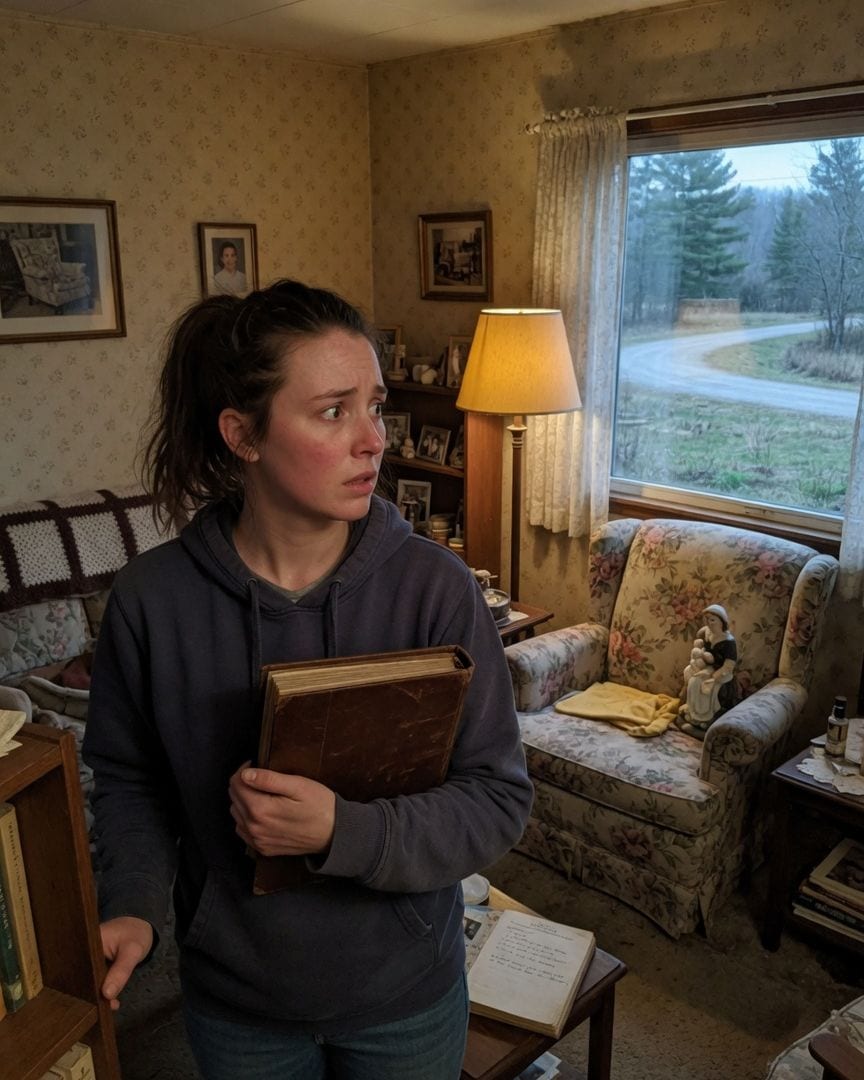
My Gran's armchair faces the wall. She moved it herself; says the road was never worth watching. She just came back.
My Gran Beatrice was back home after wandering into the woods, physically unharmed but disoriented. As I stepped into her familiar living room, a stark wrongness hit me: her beloved floral armchair, a fixture for sixty years, was turned 180 degrees, its back to the window it had always faced.
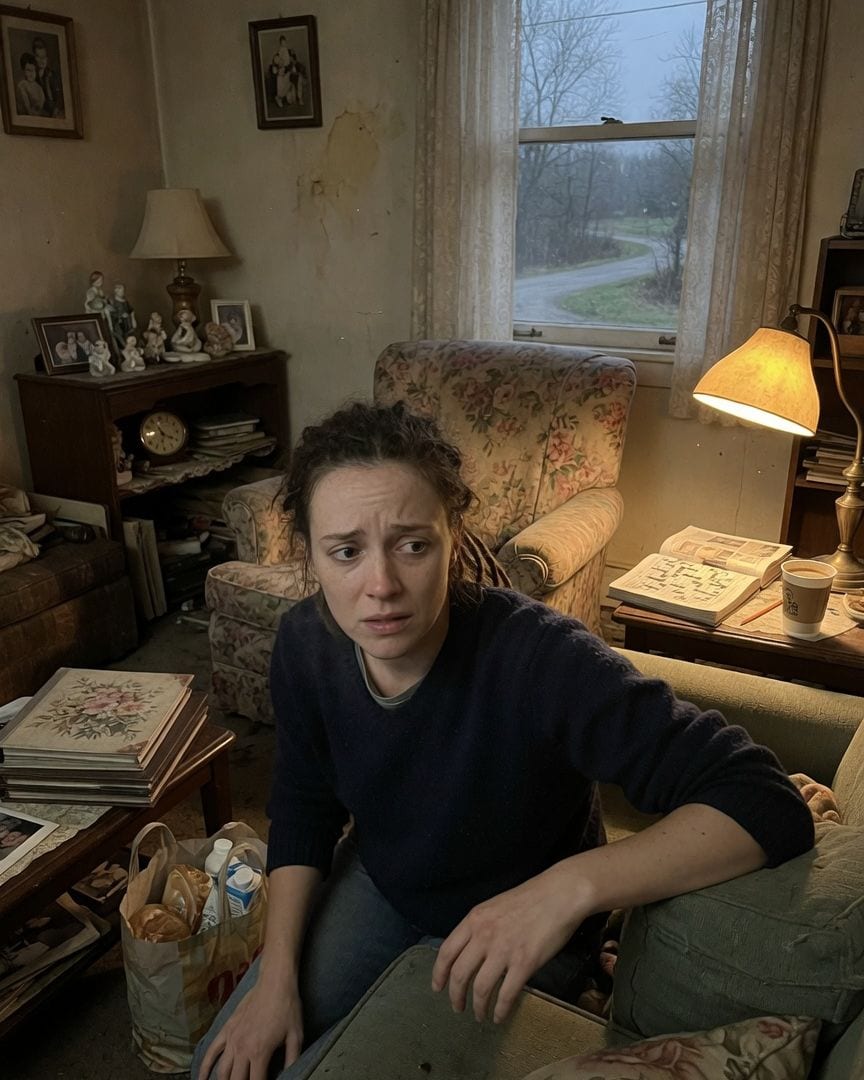
Gran's armchair faces the wall now. She moved it herself after she came back, saying the road was never worth watching.
My Gran Margaret was home after a week missing, seemingly unhurt. But the moment I walked into her small country cottage, her armchair, a fixture for eighty years always facing the window, now faced the plain plaster wall. Her casual explanation for reversing a lifelong habit left me with a quiet, undeniable wrongness.
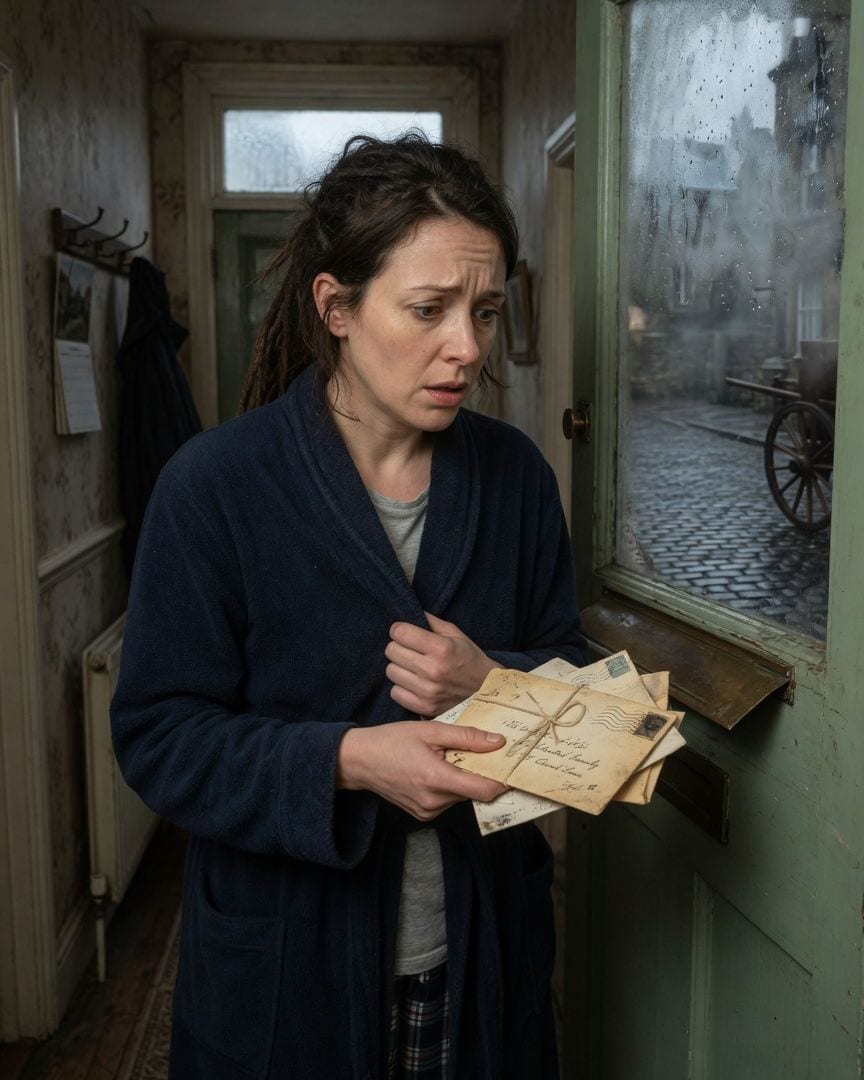
Seventy years ago, a hidden journal recorded my door opening to the wrong street and receiving Lockwood post.
I'd only recently moved into my inherited house, a quiet place on the edge of town. One grey morning, a distinct clatter from the front door's post flap caught my attention. Reaching down, I expected my gravel path, but instead, the flap showed a dark, cobbled street that wasn't mine. A bundle of warm, old letters, addressed to 'The Lockwood Family,' slid through, before the vision flickered and was gone.
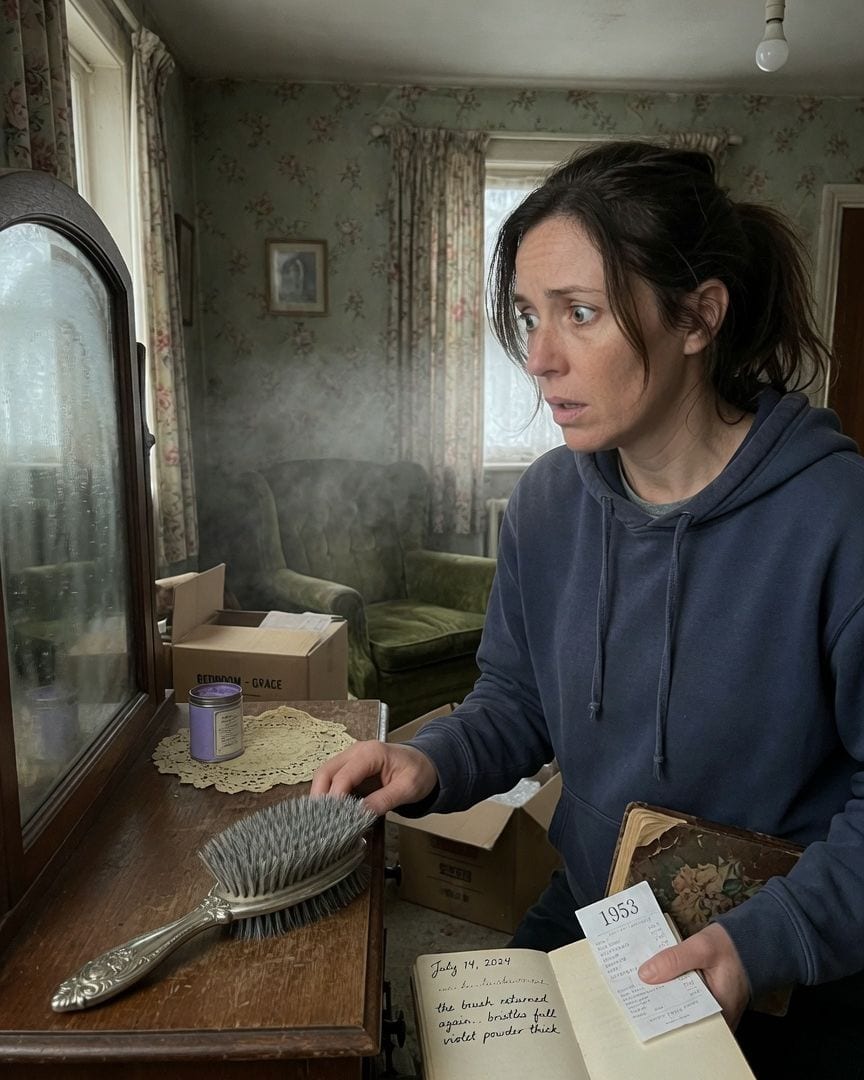
My silver hairbrush sits on the dressing table each morning, full of grey hairs. I live alone.
I inherited my great-aunt's house, finding it full of her old things and strange daily occurrences. A silver hairbrush reappearing full of grey hairs, a misted mirror, and a sweet, cloying scent of violet powder. Then, I found her diary, describing these exact impossible events, but dated for months in the future.
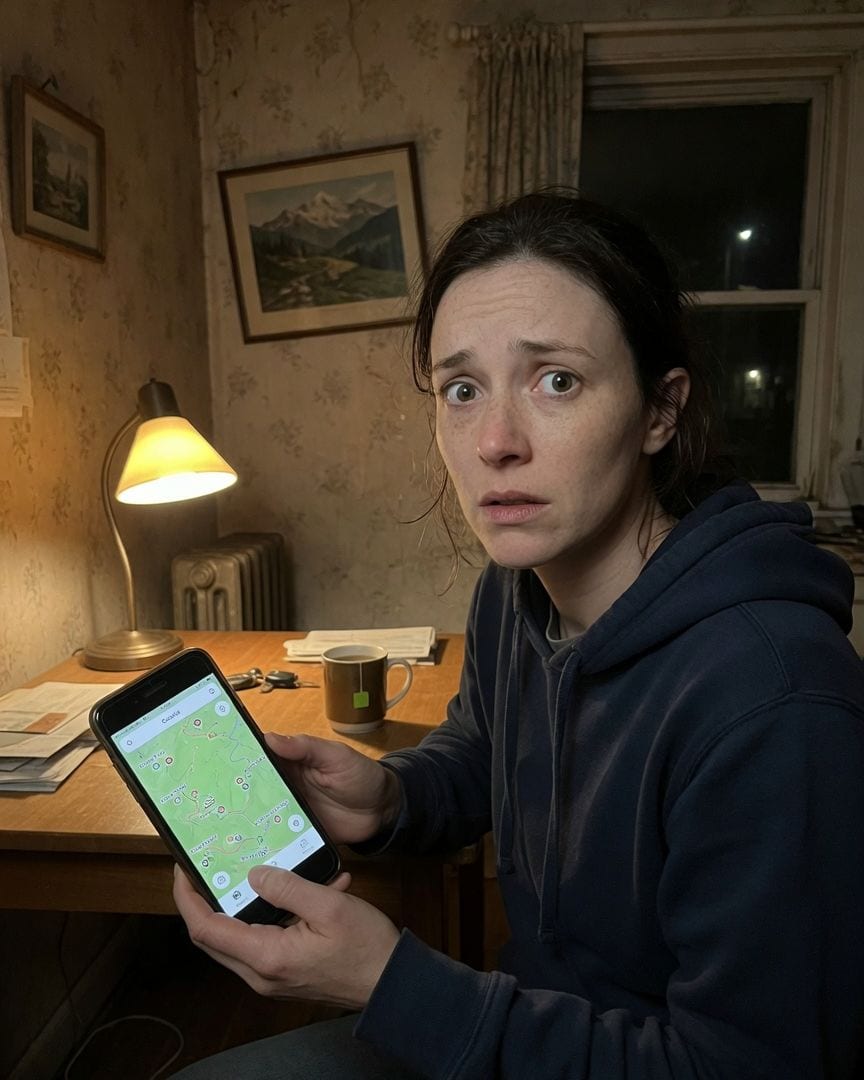
My hiking app scrubbed the hill's name from the map, on a phone that's been in airplane mode for two days.
I just moved to town and hiked a local hill, 'Cathan Tor,' according to my phone's app. But when I mentioned the name to the mechanic, he froze, dropped his wrench, and whispered, 'Don't say that name, Colette.'
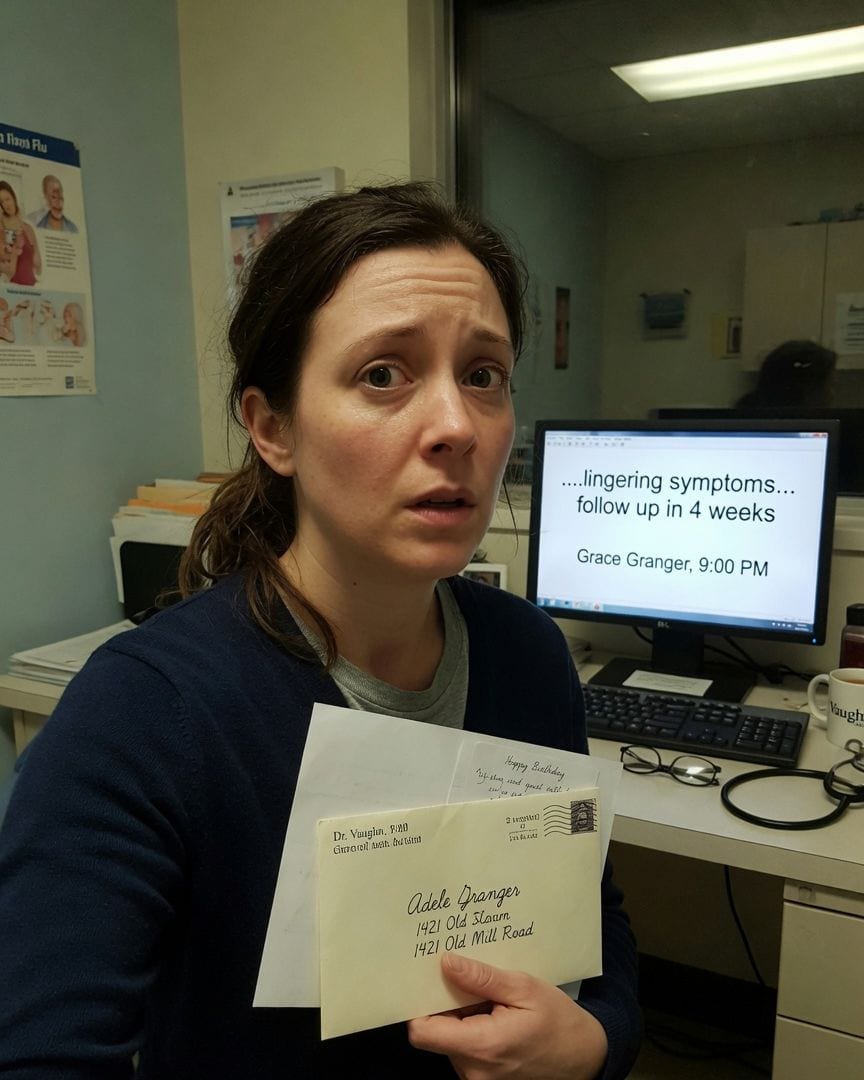
Mid-appointment about my cough, my doctor told me to call my estranged sister tonight — a sister I'd never mentioned to him. The note on his screen ended with her name and a time.
My doctor dismissed my cough as a lingering virus, but then he said something impossible: "You should call your sister tonight." I hadn't spoken to Grace in years, and I'd never mentioned her to him. When I saw her name on his screen with a specific time, a cold dread began to claw at me.