My gym locker number 33 opened two doors this week. One held my dry clothes. The other held them damp, like I'd just left.
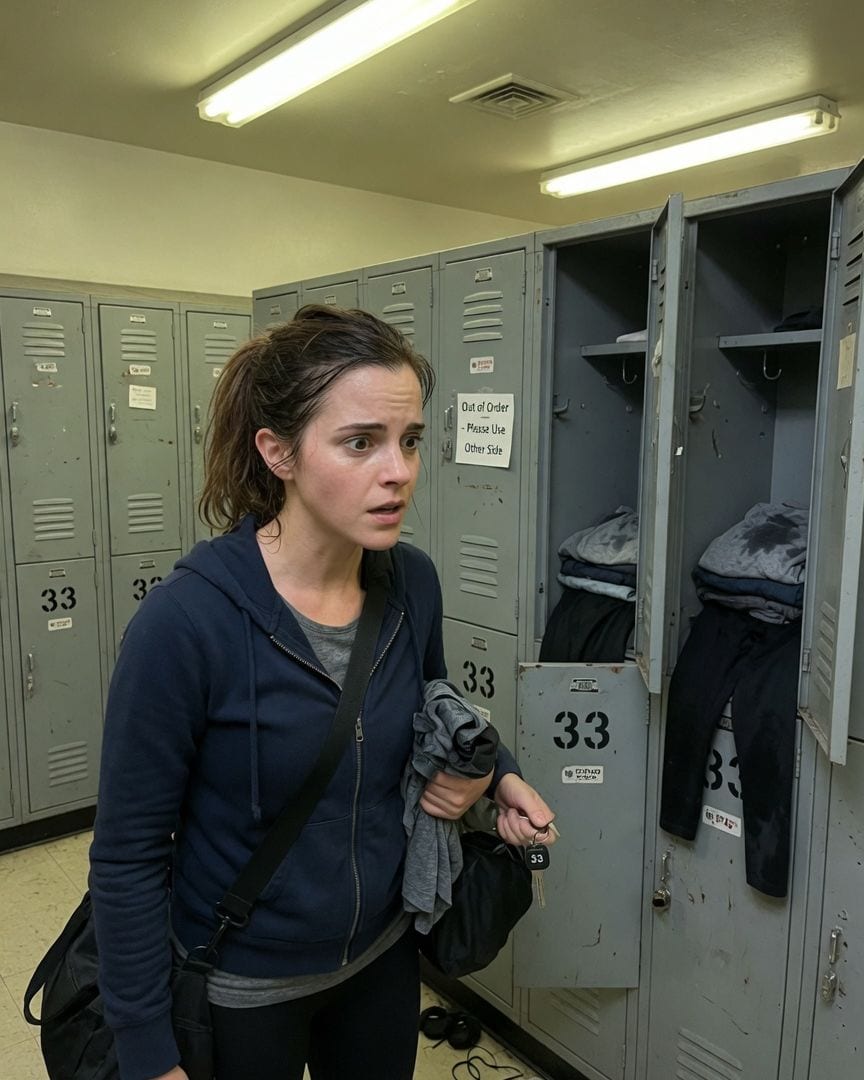
It was a Wednesday, two days after my last workout, when I walked into the women's locker room at the gym. Key #33 felt solid in my palm, a mundane piece of metal promising a mundane storage space.
I'm Sophia Granger, a data entry specialist, and my life is built on precision. Numbers, facts, things staying where they belong. The gym, usually, was one of those places.
I found locker #33 easily enough. It was in the second row, near the back wall. I inserted my key, twisted, and the latch clicked open. Inside, neatly folded, were my dry gym clothes: leggings, a t-shirt, a clean towel.
Exactly as I’d left them on Monday. A little wave of satisfaction, the tiny comfort of things being in their right place. I pulled them out, ready to change.
As I closed the locker door, my gaze drifted down the row. Forty lockers, I knew. Twenty per row, painted a uniform institutional gray. My eyes scanned, counting almost without thinking. One, two, three… then it stopped.
A few feet down, impossibly, undeniably, another locker stood. Identical in every detail. Same gray paint, same scuffed metal. And there, stenciled in bold black numbers on its face, was '33'.
My heart gave a cold, unwelcome lurch. My breath hitched. I hadn't been to the gym since Monday. This wasn’t a prank. It wasn’t a trick of the light. It was there.
Tentatively, I walked over. My fingers, almost against my will, raised the key. The one in my hand, for my locker 33. I pressed it into the lock of this new, impossible 33. It slid in. It turned.
The latch clicked.
I pulled the door open. Inside, there they were again. My gym clothes. But these were damp. A faint, unmistakable smell of old sweat wafted out, hitting me in the face. Like I’d just finished a grueling workout.
I looked from the dry clothes clutched in my left hand to the damp ones now visible in this second locker 33. Then back at the impossible forty-first locker, staring at me from the end of the row.
My rational mind, the part that dealt in spreadsheets and verifiable data, immediately took over. This was a mistake. A joke. Something.
I retrieved my dry clothes, folded them over my arm, then, with a strange detachment, pulled the damp ones from the second locker. I bagged them separately in the plastic gym bag I carried, my hands moving methodically.
Then I counted again. Slower this time. Every single locker. First row: one to twenty. Second row: twenty-one to thirty-three. And then, another thirty-three, followed by thirty-four, up to forty. Total: forty-one. My mind screamed at the numbers.
It didn't make sense. The room was the size it always was. The spacing between lockers was consistent. There wasn't a sudden, magically appearing space.
I tried to dismiss it as a prank. Someone had swapped numbers, maybe even clothes. But the duplicate 33 was perfectly integrated into the wall. No fresh paint, no marks, no tell-tale signs of recent installation.
It looked as old, as permanent, as the one I usually used. The locker room felt colder than usual, the fluorescent lights humming with an oppressive silence.
I walked straight to Daniel Thornton, the gym manager. He'd been here since I was a kid, a quiet man with silver hair and a permanent gentle squint. He was sorting mail at his desk in the front office.
'Daniel,' I began, trying to keep my voice even, 'I think there's been a mix-up in the women's locker room. With locker 33.'
He looked up, blinking slowly. 'Oh? What sort of mix-up, Sophia?'
'Well, there's a new locker 33,' I said, feeling ridiculous even as I said it. 'A second one.'
He frowned, a tiny wrinkle appearing between his eyebrows. His gaze briefly flicked over my shoulder, then back to me. 'We haven't installed anything new, Sophia,' he said, his voice mild. 'There are forty lockers, always have been.'
He paused, then pushed himself up. 'Show me.'
We walked back to the women's locker room. It was empty now. I led him to the row, my finger pointing to the duplicate. 'There,' I said. 'Look.'
Daniel looked. He saw it. The second 33. But his expression remained utterly placid. No surprise, no alarm. Just a faint, almost imperceptible tilt of his head. 'Well, I'll be,' he murmured, his voice flat.
He walked over, tried the key in his hand – the master key – and it opened. He peered inside, saw the damp clothes I'd left bagged there, then looked over at the first 33.
'Strange,' he said again, closing the second locker. 'Must be a glitch in the numbering. We'll get maintenance to look at it.'
He turned and walked away. He didn't call anyone. He didn't pick up his phone. He simply left me standing there, feeling colder than before, the chill seeping into my bones.
The next day, I went back. The second locker 33 was gone. Forty lockers. Just as it always had been. The space where it had been was seamless wall. But I knew it had been there. I knew it.
And a quiet, insistent wrongness began to settle over me. I started counting every door, every room in the gym, feeling an urge to verify the stability of the world around me.
The discrepancy gnawed at me. The missing-then-present locker, Daniel's unnerving calm, the impossible numbers. I couldn't shake the feeling that the gym itself was… shrugging at me.
Over the next few days, I found myself subtly scrutinizing every corner of the building. I noticed small things that, alone, meant nothing, but together, started to itch.
A fire exit sign in the utility corridor that pointed down a passage that seemed too short to lead anywhere substantial, just a blank wall after a few feet.
A rarely used staff stairwell at the back of the gym that felt unusually cold even on a warm day, a draft that didn't make sense.
I tried to find older plans, official records, anything to confirm the building's original layout. I asked other long-term staff, discreetly, if they'd ever seen anything unusual. 'Just old buildings settling,' was the usual answer.
No one knew of anything beyond the dusty binder in Daniel’s office, the one with the plans I'd already looked at.
One afternoon, I saw Marcus Doyle, one of the maintenance workers, struggling with a stubborn door in the utility corridor. It was the very spot where I’d measured that 'extra' storage closet, the one not on the blueprints.
He was pushing and pulling, muttering under his breath. 'This door sticks sometimes,' Marcus grumbled, wiping sweat from his brow. 'Like the frame's shifted overnight.' He gave it a final, frustrated kick, and it grated shut.
I approached him. 'Marcus, have you ever noticed anything odd about the building's layout? Like rooms appearing or disappearing?' I tried to make it sound casual, like I was just curious about old architecture.
He just shrugged, his face impassive. 'Old buildings have quirks, miss. Settling. Foundations shift. Nothing too weird.' He went back to his work, hauling a cart of cleaning supplies.
Later that day, I walked past the utility corridor again. The door Marcus had been struggling with, the one that had been so obviously misaligned and difficult to close, was now perfectly flush with the wall. Seamless.
Almost invisible against the uniform gray. And the small storage closet I’d meticulously measured, the one that had been undeniably there just days before, was completely gone. Just solid plaster. I touched the spot, feeling only the smooth, unyielding surface.
My mind reeled. It wasn't just an extra room; rooms were appearing and disappearing.
It felt like the building was mocking me. Like it was daring me to question its reality. I decided then that I couldn't trust the official records. I needed to look for archived city building plans, anything.
The original building dated back decades, long before Daniel or even his father had managed it. There had to be an earlier, perhaps more accurate, record of its construction, before whatever 'settling' was happening now had truly begun.
I just needed to find it.
My increasingly focused inquiries, however, did not go unnoticed. Daniel Thornton started appearing in unexpected places, a quiet shadow in my peripheral vision.
I’d be researching city planning websites on my lunch break, cross-referencing zoning maps, and he'd casually walk past my desk, a cup of coffee in his hand, his eyes briefly flicking to my screen.
Or I'd return from a quick trip to the local historical society, a binder of photocopied old newspaper clippings clutched in my hand, and he'd be standing near the gym's main entrance, as if waiting.
He never confronted me directly. He didn't accuse me or demand to know what I was doing. But his presence became a subtle, unnerving weight.
It was like being watched by something ancient, something that understood far more than it let on. The gym felt less like a place of activity and more like a stage where I was performing for an unseen, knowing audience.
One evening, as the gym was closing and I was one of the last few people left, Daniel called my name. The sound echoed in the cavernous main hall. I turned.
He was standing by the gym's main doors, silhouetted against the streetlights filtering in from outside, making his features indistinct. A faint, almost imperceptible smile played on his lips, or maybe it was just the trick of the low light.
'Still looking for ghosts, Sophia?' he asked, his voice low, but carrying clearly in the quiet. 'Or just old blueprints?'
A chill, colder than the one I’d felt in the utility corridor, ran down my spine. He knew. He knew exactly what I was doing.
'Just trying to understand some anomalies, Daniel,' I replied, trying to keep my voice steady, to sound as casual as he did. My heart was pounding, a frantic drum against my ribs.
He took a slow step closer, the floorboards creaking softly under his weight. 'Some things,' he said, his eyes now holding a peculiar, almost unreadable glint, 'are better left alone. The building has its own way of doing things.'
He held my gaze for a moment longer than was comfortable, the unspoken implication hanging heavy in the air. 'You might find more than you bargained for.'
Then, without another word, he turned and walked back into the darkened gym, disappearing among the silent rows of exercise machines, leaving me alone on the sidewalk. He knew what I was doing.
And he knew something about the building that went far beyond 'quirks.'
Daniel’s veiled warning, rather than deterring me, only solidified my resolve. The city archives had yielded nothing useful—only the same incomplete blueprints I'd already seen.
But a passing comment from an elderly archivist, a woman named Ms. Albright who remembered the gym from her youth, sparked an idea.
She'd mentioned, almost as an afterthought, that 'old building records sometimes being stored on-site if they were particularly obscure.'
The gym had an unused sub-basement. Everyone knew about it, but no one ever went there. It was rumored to be full of ancient boilers, forgotten storage, and decades of dust.
Armed with my phone's flashlight and a borrowed set of maintenance keys (I’d 'misplaced' Marcus’s set earlier that day), I found the rarely-used access door, tucked away behind a stack of old, rusted exercise equipment.
It was heavy, a thick layer of grime on the handle.
The air that greeted me was thick with dust and the cloying smell of damp concrete and something metallic, like old pennies. I navigated through cobwebbed corridors, my flashlight beam cutting through the gloom, casting dancing shadows.
The place was a tomb, full of forgotten things. Finally, after what felt like an hour, I found a small, locked room, tucked into a forgotten corner. The lock was rusty, almost seized.
I picked at it with a hairpin, a trick I’d learned from a YouTube video, and with a protesting groan, it gave way.
I pushed open the door. Inside, on a workbench covered in decades of grime, lay a stack of rolled-up papers, yellowed with age. This was it.
Carefully, I unrolled the top one. It was a blueprint, meticulously hand-drawn, the lines still surprisingly crisp in places, but clearly not official. This wasn't a surveyor's print.
It depicted the gym's ground floor, but with startling differences from the official plans. The utility corridor was labeled 'Phantom Passage', starkly, in looping script.
And where the storage closet should have been, where I’d seen it and then seen it vanish, there was an additional room, labeled 'Void Storage - Access Restricted.'
My breath hitched. The hand-drawn plans were signed, in faded ink, with a simple, elegant 'D. Thornton.' And dated: 1963. Daniel's father. Or his grandfather.
I unrolled another, then another. Each showed subtle variations, minor adjustments to other rooms, but the 'Phantom Passage' and the 'Void Storage' were consistent. Always there. Always depicted.
On one, the oldest of the stack, a faded handwritten note was scrawled in the margin, almost an afterthought: 'Spatial event cycle begins again. Approx. 20 years.'
I stared at the date, then at the note. It had happened before. And it was happening again. The impossible locker #33, the vanishing closet – it was all part of a pattern, a recurring geometric anomaly.
Known to Daniel's family. For generations.
My mind raced, connecting the dots: Daniel's calm acceptance, the missing room, the reappearing closet, the damp gym clothes. It was all a cycle.
The sub-basement air felt heavy, suddenly, not just with dust but with the weight of decades of impossible knowledge.
As I held the old, impossible blueprint, its secrets screaming at me from the page, a shadow fell over me. I looked up, startled, my heart leaping into my throat.
Daniel Thornton stood in the doorway. He hadn't made a sound. His face was unreadable in the dim, dusty light filtering down from above, a faint halo around his silver hair. He didn't ask what I was doing there.
He didn't express surprise. He simply walked slowly into the room, his eyes fixed on the blueprints in my hands. He didn't rush. He didn't make a sound.
He reached out, his fingers brushing mine as they passed, and gently, with a terrible calm, took the old, impossible blueprint from my grasp.
His gaze lingered on the faded 'D. Thornton' signature, then moved to the handwritten note about the 'spatial event cycle.'
A faint, unreadable smile played on his lips. He looked up at Sophia, his eyes calm and knowing. 'You found it,' he said, his voice flat, 'just like I knew someone eventually would.
It happens every twenty years, almost to the day.'
He pointed a steady finger to the faded note, and Sophia saw it clearly now, the date written next to 'spatial event begins': April 12th.
A date that fell perfectly, precisely, on the Monday I first used locker 33, two days before the second one appeared.
Daniel didn't deny anything. He just stood there, holding the old blueprint, its impossible geometry laid bare, his calm almost a physical presence in the dusty sub-basement.
The air was thick with the scent of age and the chill of impossible truth.
'My grandfather started these records,' he explained, his voice even, as if he were discussing a ledger of overdue payments. 'He was the superintendent when this building was first constructed. He noticed it almost immediately. The shifts. The extra spaces.
The way things… duplicated.' He pointed to a small, detailed sketch on the blueprint showing the locker room with two identical #33s. It was all there, painstakingly recorded. 'Your clothes, damp with sweat? That was you, Sophia.
Just not this you. The building sometimes pulls in echoes, or brief overlaps from other moments, other possibilities. It's not malicious. It just… is.'
He explained that the 'phantom corridor' and 'void room' were pockets of non-space, localized spatial and temporal distortions. They would appear and recede on a twenty-year cycle, almost like a breath the building took.
His family's role, he said, was simply to observe, to 'manage' the oddities, to ensure no one got lost or noticed too much.
He spoke of the building as if it were a living entity, without fear or reverence, just a deep, unsettling understanding. He outlined previous 'events,' minor dislocations, objects misplaced.
Even a few people who had 'stepped into the wrong doorway' and simply vanished, never to return. The coherence of it all, the way every strange detail now clicked into place, was far more terrifying than any monster.
I felt a cold dread settle deep in my bones, colder than the sub-basement air. Daniel wasn't a villain; he was a gatekeeper, a curator of the impossible.
His calm, matter-of-fact explanation of people vanishing, of alternate realities bleeding through, was chilling. It wasn't horror movie theatrics; it was simply a fact of his life, his family's legacy.
'What do you do?' I whispered, my voice hoarse, barely audible in the dust-filled silence. 'How do you stop it?'
Daniel looked at me, a hint of pity, or perhaps resignation, in his eyes. 'You don't stop it, Sophia. You learn to live with it. You learn the patterns.
You learn which doors not to open, which days to be extra careful.' He gestured around the sub-basement, to the stacks of old plans, the forgotten machinery, the very air thick with the building's impossible history. 'We've tried, for generations.
Sealing off rooms, reinforcing walls. It just finds new ways. The building always reasserts itself.'
He rolled up the old blueprint carefully, reverently, as if handling something sacred and dangerous. 'You have a choice now. You can forget what you've seen, or you can carry it. But once you know, you always know.'
He walked towards the sub-basement door, leaving me alone in the dim, musty light, surrounded by the weight of generations of impossible knowledge.
I knew I couldn't 'forget.' The geometry of my world had been permanently warped. The gym, once a mundane place, was now a living, breathing anomaly, and I was forever tethered to its impossible truth.
I couldn't fight it, couldn't explain it to anyone. My escape wasn't from a physical threat, but from a truth I could never un-know.
I left the gym that night, and I never returned. I quit my job the next day, sending a terse email, unable to face the building or Daniel Thornton's knowing, complacent gaze.
I avoided my old routes, even if it meant taking longer detours, driving miles out of my way to simply exist in a world that felt stable.
The world outside the gym seemed unnervingly normal, yet I saw it differently now. Every building, every corridor, every room I entered felt subtly unstable, a hair's breadth away from revealing its own hidden, impossible geometry.
I found myself subconsciously checking doorways, counting windows, verifying floor plans in my mind, an obsessive, quiet ritual. The knowledge was a constant, quiet hum beneath the surface of my everyday life, a permanent shift in my perception.
I carried the impossible truth, a silent burden that had reshaped my reality.
The dread wasn't in the fear of what might happen, but in the certainty of what already was. The world hadn't changed; I had.
Every time I walked into a new room, my eyes would instinctively scan the corners, count the doors, measure the space against an internal, invisible blueprint.
I'd find myself doing it in grocery stores, in libraries, even in my own apartment. It was a compulsion, a vigilance born of having seen the veil pulled back.
And sometimes, in a fleeting moment, a door would seem slightly off, a corridor a touch too long, a window showing a view that felt just a little bit wrong.
A shadow would stretch further than it should, or a familiar sound would come from a direction that made no sense.
I would pause, hold my breath, and wait for the numbers to add up, for the world to snap back into its expected place. They always did.
But the momentary flicker of dread, the whisper of the impossible, never truly left her. She knew what it meant when they didn't.
I still count the rooms, everywhere I go, and now I know what it means when they don't.
If this one got to you
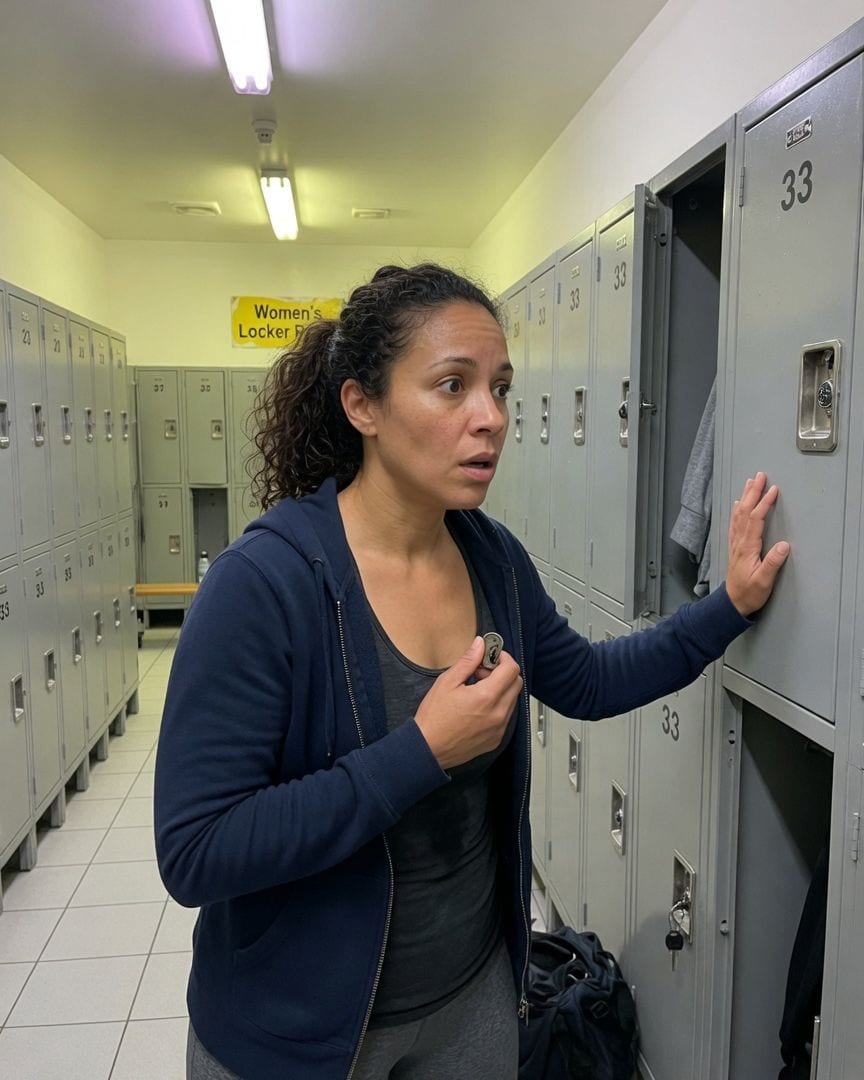
My gym locker 33 opened a second locker 33, damp with sweat, though I hadn't been to the gym since Monday.
On a Wednesday, I headed to the gym, my key for Locker 33 in hand. But as I opened my locker, I found an identical one right beside it – a forty-first locker in a room meant for forty. Inside, damp clothes and the faint smell of chlorine filled the impossible space.
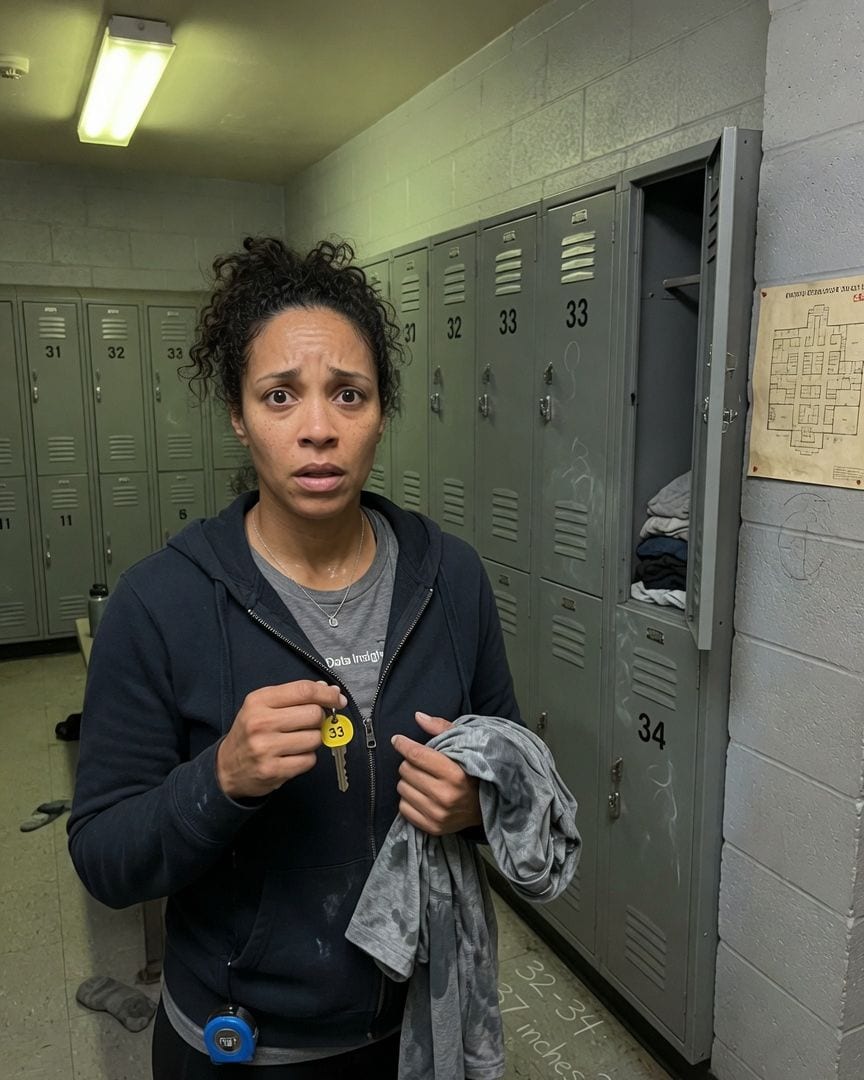
My gym locker 33 had two versions today. One held my dry clothes, the other my damp, sweat-soaked ones. I hadn't been to the gym since Monday.
Returning to my gym locker on Wednesday, I found not one, but two lockers numbered 33. My key opened both. The original held my clean, dry clothes, just as I’d left them on Monday, but the new, impossible locker contained my own sweaty, damp gym clothes, despite me not having been to the gym since.
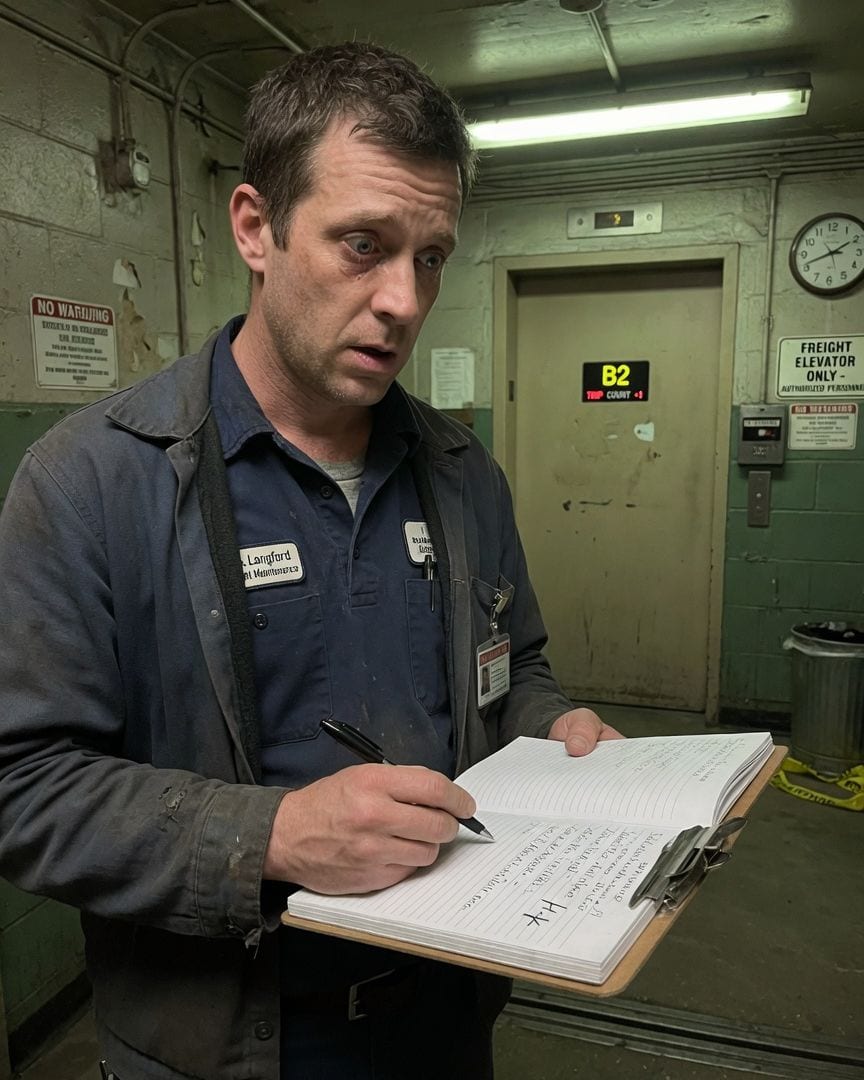
A man just took the elevator to the sealed sub-basement. He isn't on any staff roster, but my initials are in the logbook.
As a maintenance worker, my job is mostly routine, like signing the daily log for the old building's freight elevator. But one night, the log showed a trip to the sub-basement, sealed for a decade, timestamped with my key-switch and signed with my own initials, for a run I never made.
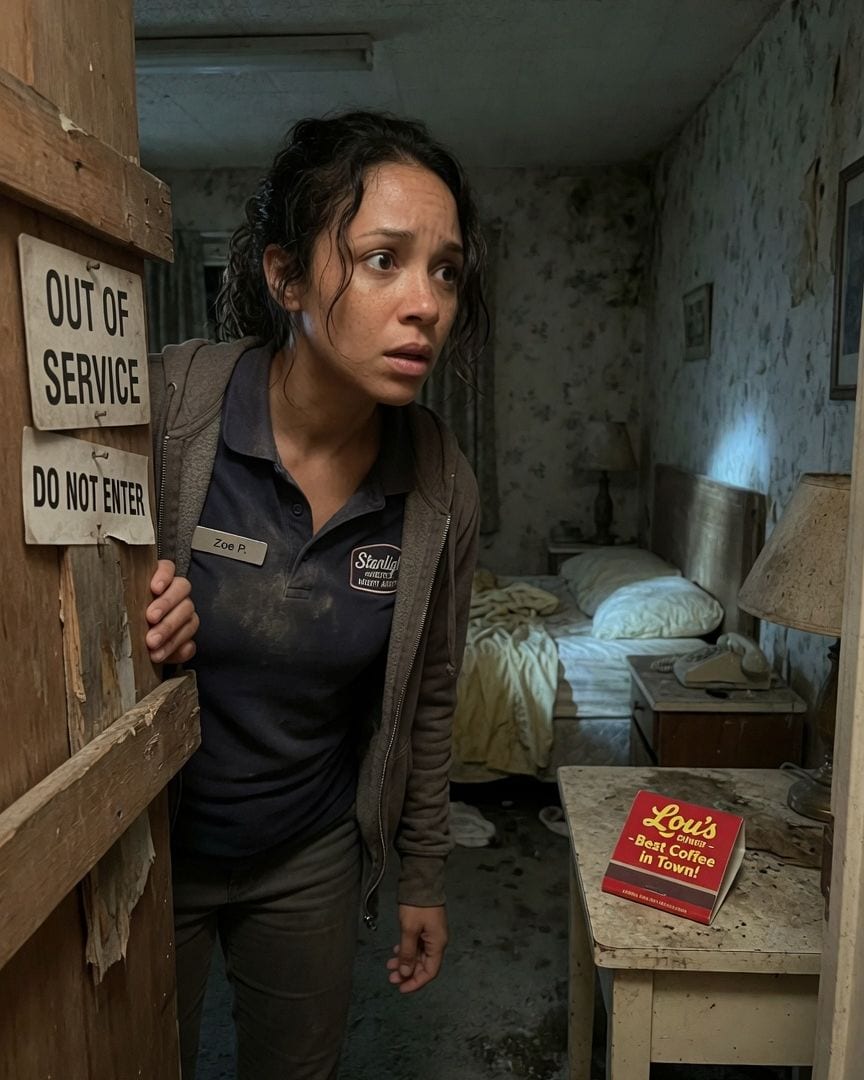
My motel register shows a check-in for Room 9 at 3:33 AM, in my own handwriting. Room 9 has been out of service since the flood.
Working the quiet night shift at the Starlight Motel, I found a chilling new entry in the guest register. My own initials had checked someone into Room 9 at 3:33 AM. The problem? Room 9 has been officially boarded shut and out of service for six months, its key still hanging untouched on the wall.
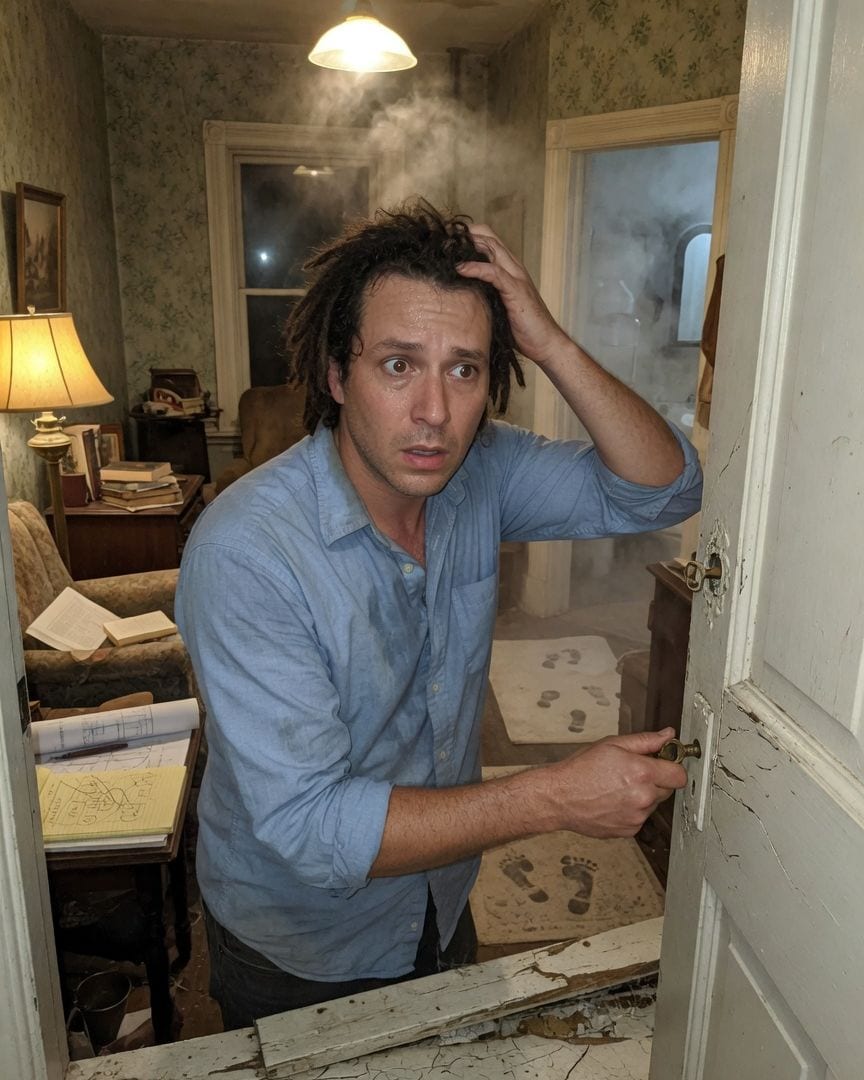
The bath filled itself at 9:30 PM. My main house water was off. Wet footprints led from the tub to a locked airing cupboard.
As an architect, I pride myself on logic. Moving into my inherited Victorian house was supposed to be a quiet fresh start, but on the third night, I heard the impossible. Even after I shut off the main water to the entire house, my clawfoot bath upstairs ran full, warm, and steaming at 9:30 PM.
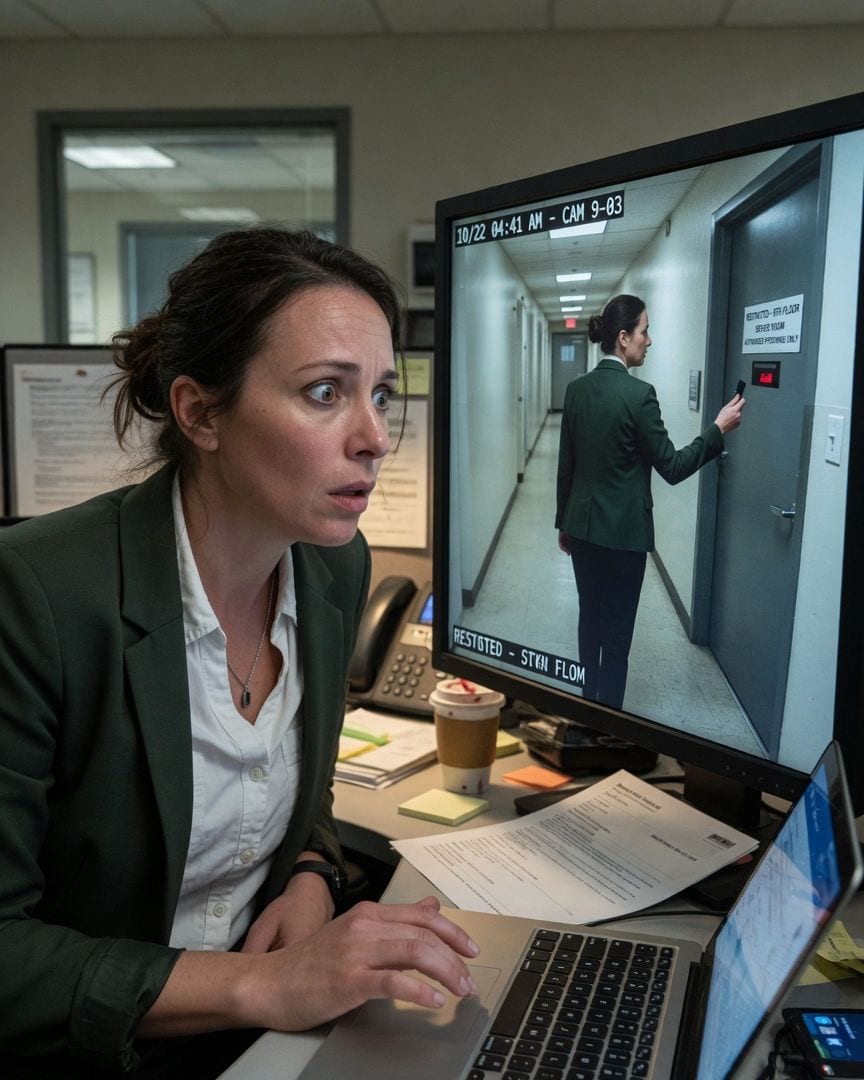
My keycard log shows me in the server room at 4:41am. I was asleep, and my badge was at home.
An email from corporate IT reveals my keycard registered entry into a restricted server room at 4:41 AM last Sunday. I was asleep in my apartment across town, my badge clipped securely to my jacket at home. But then I scrolled down and found eleven more impossible entries, all within the past week, all under my name.