My gym locker 33 had two versions today. One held my dry clothes, the other my damp, sweat-soaked ones. I hadn't been to the gym since Monday.
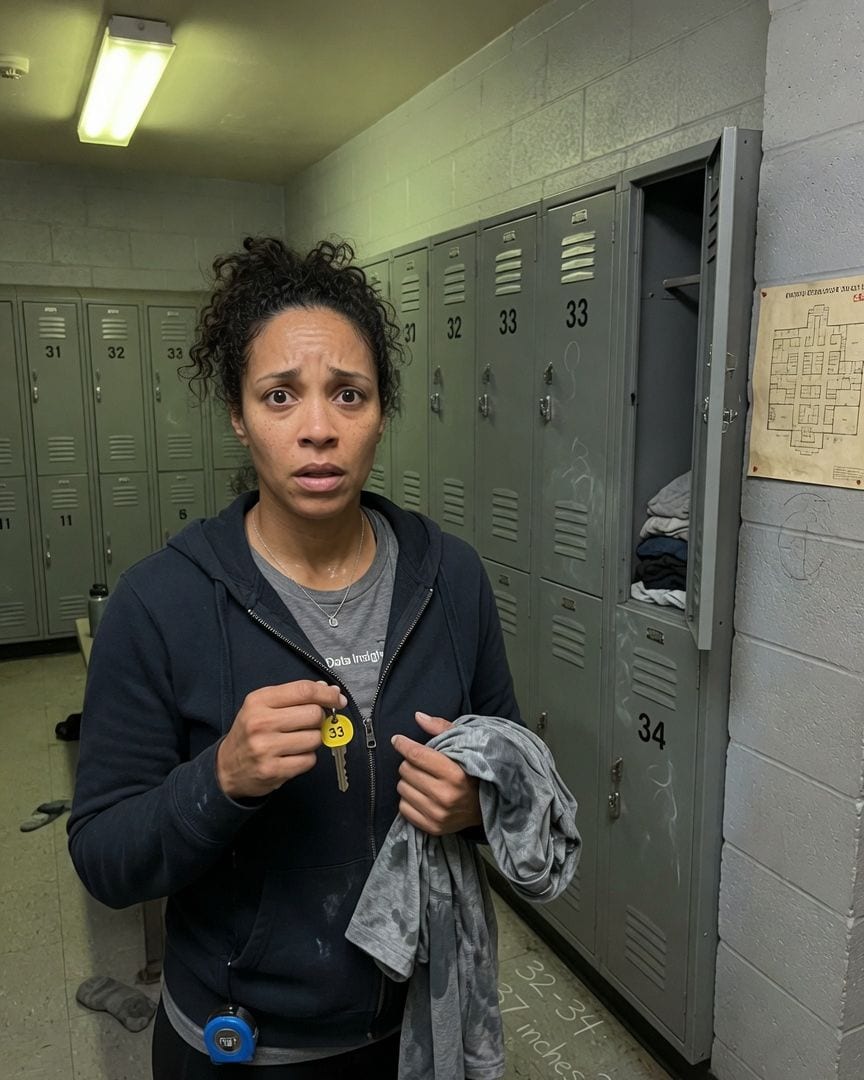
My gym locker room has forty lockers, twenty to a row, all identical grey metal. On Monday, my key, number 33, opened its door perfectly. My dry gym clothes, neatly folded, waited inside.
Wednesday, I returned, key in hand, and something was subtly, terrifyingly wrong.
There were forty-one lockers. A new one, wedged between 32 and 34, was also numbered 33. My key, still in my hand, opened it. Inside, my gym clothes lay crumpled, damp with sweat, smelling faintly of chlorine.
They were definitely my clothes, the grey leggings, the stretched-out t-shirt, even the specific brand of sports bra.
But my other locker 33, the original, was still there, a few feet down, and inside it, my dry clothes, exactly as I’d left them on Monday.
I hadn't been to the gym since Monday. The last thing I did on Monday was put my clean clothes in my locker, planning to use them Wednesday. I checked the calendar on my phone.
No, I hadn’t forgotten a workout. I hadn’t accidentally come in on Tuesday. This was Wednesday.
I counted them again. Forty-one lockers. Two 33s. The numbers refused to reconcile.
I’m a data analyst. My job is to find patterns, to make numbers make sense. This… this was an error. A glitch. A prank, maybe? But who would bother? And how? The lockers were heavy, bolted to the floor.
You couldn't just slide one in. I spent the next hour in the locker room, pacing, counting, measuring.
The new locker 33 was identical in every way, down to the same faint scuff marks near the bottom, yet it occupied space that simply hadn't existed on Monday. It was impossible.
I checked the gym’s floor plan, a faded fire escape diagram near the entrance. It clearly showed forty lockers, numbered sequentially. My finger traced the wall where the extra locker appeared. The diagram showed no room for it.
I pulled out my phone, took photos, used a measuring app to confirm the dimensions of the locker bank. The wall where the extra locker appeared was now a foot longer than the plan indicated. A full foot.
That’s an entire locker’s width.
Later that evening, the gym quiet, I returned, armed with a tape measure. I started from the far end of the room, meticulously measuring each locker's width, marking the cumulative distance on the floor with chalk.
Each time, when I reached the section between 32 and 34, my measurements would add up to an extra foot, an extra locker's worth of space, exactly where the second 33 now stood.
The diagram was wrong, or the room was. Every rational check I performed only deepened the impossibility, a cold, quiet dread settling in my gut.
I tried to convince myself it was a construction error, a forgotten corner, but the locker felt too new, too perfectly placed. Too extra.
I decided to check the utility corridors behind the locker room, thinking perhaps a storage closet had been converted, even though the plans showed a solid wall there.
The next morning, I found it. Tucked away in a dimly lit utility corridor that ran directly behind the locker room, a corridor not even hinted at on the official fire escape plan, was a small, unpainted wooden door.
It was flush with the cinder block wall, almost invisible, completely unmarked. No handle, just a simple brass knob, tarnished and cold. It wasn't on any diagram, I’d never seen it, and it clearly shouldn't be there.
As I reached for the knob, a distinct chill radiated from the wood, even though the corridor was warm, almost stuffy. I twisted the knob slowly.
The door opened inward with a soft groan, revealing a short, dark landing, no more than three feet deep, ending abruptly in a solid, unpainted wall. The air was stale, motionless, and heavy, like a forgotten breath.
It felt like a space that belonged in another building entirely, a geometric impossibility, staring back at me from the gloom.
I didn't step onto the landing. The sheer wrongness of it halted me, a visceral recoiling from a space that simply shouldn't be. I backed away, heart hammering, then quickly closed the door, the soft click echoing in the quiet corridor.
It wasn't just an extra locker. It was a whole extra space.
The next day, I tried to find official building blueprints. The gym was part of a larger complex, 'Radcliffe Plaza,' managed by Nathan Galloway.
Nathan, a man in his late fifties with an unnervingly calm demeanor, listened to my questions about 'discrepancies in the locker room layout' with a polite, almost practiced smile. He sat behind a surprisingly sparse desk, his hands folded.
He assured me that old buildings often had 'quirks' and that any plans would be outdated. His answers were too smooth, too rehearsed, like he’d given them a thousand times before. A boilerplate response.
I tried to describe the unmarked door, but he cut me off, mentioning 'structural integrity' and 'tenant privacy' in the same breath, a subtle but firm dismissal.
Dismissed, but not deterred, I turned to online archives. I needed objective proof. I found old photographs of Radcliffe Plaza, some dating back to the 70s.
I meticulously compared them, zooming in on architectural details, the number of windows on the west facade, the roofline. There were subtle inconsistencies.
A window that appeared in one photo was bricked up in another from a later year, only to reappear in a drawing from a decade after that.
The building itself seemed to shift, subtly, across time, like a poorly edited film. I started keeping a daily log of the locker room, not just counting, but measuring the precise location of the 'extra' locker 33.
It wasn't always there, but when it was, it was always in the same spot, always the same impossible foot of space, always between 32 and 34. Always 33.
My digging didn't go unnoticed. I started seeing Nathan Galloway more often. Not in his office, but in the gym.
He’d be walking past the locker room entrance, or lingering near the water fountain just as I finished my workout, his gaze lingering a little too long, just on the periphery of my vision.
It was never a direct stare, just an awareness, a subtle weight. One afternoon, I found a small, folded note tucked under my car's windshield wiper. It was printed on heavy, cream-colored paper, no sender, no address.
Just five words: 'Some things are better left unmeasured. For your own equilibrium.'
The phrase 'equilibrium' struck me. Nathan had used it. My dread escalated from abstract geometry to a cold, personal danger.
I felt a prickle on my neck every time I was in the gym, a sense of being watched, not by Nathan, but by something far more pervasive.
The locker room itself seemed to respond to my scrutiny, to my intrusion. One day, the extra locker 33 was gone, the wall returned to its original length, perfectly normal, as if I’d imagined the whole thing.
The next, it was back, but this time, the original locker 33, the one that held my dry clothes, had a faint, almost invisible scratch on its door, a mark that hadn't been there before, but perfectly matched a scuff on the other 33 from days ago.
It felt less like a random glitch and more like a deliberate, intelligent game. I was no longer just observing; I was being observed, and whatever was doing it was responding.
I decided to confront Nathan directly. There was no point in polite inquiries anymore. I caught him in the building’s administrative office, a small, sterile space with a single potted plant that looked perpetually thirsty.
I laid out my findings: the inconsistent floor plans, the shifting building facade in old photos, the impossible locker. Nathan listened, his expression unreadable, his calm composure unwavering.
'Ms. Harrington,' he said, his voice level, 'you're a data analyst. You understand that perception can be subjective. Buildings settle. Plans are rarely perfect.'
'Not by a foot, Mr. Galloway, and not with windows appearing and disappearing,' I countered, pushing a printout of the fire plan across his desk, highlighting the unmarked door’s location.
'And certainly not with two identical lockers, one with my damp clothes, when I haven't been here.' My voice trembled slightly, despite my best efforts to keep it steady.
Nathan sighed, a slow, deliberate exhalation. The first real crack in his façade. 'Very well. There are… peculiar aspects to this building. It's old. It has a history. The original owners, Radcliffe Properties, were… eccentric.
They believed in maintaining a certain… structural equilibrium. They had protocols.' He paused, meeting my gaze. 'Sometimes, minor spatial anomalies occur. We monitor them. We manage them.'
He pulled a slim, heavily redacted folder from a locked drawer beneath his desk, the sound of tumblers clicking unnervingly loud in the quiet room. 'This is an internal report. 'Spatial Drift Event, Q3 1998.'
You'll see, it mentions a temporary, localized geometric distortion affecting a service area adjacent to the then-new gym.'
I snatched the folder. The document was mostly blacked out with thick black marker, but I saw terms like 're-alignment zone' and 'containment protocols.' It was real. 'What does 're-alignment' mean?' I demanded, my heart racing.
Nathan leaned back, a faint, unsettling smile touching his lips, a smile that didn't reach his eyes. 'It means sometimes, a space, or even a moment, needs to be… adjusted. For the greater stability of the whole. For equilibrium.'
The words clicked into place, the earlier clues re-meaning themselves with a chilling clarity. The damp clothes, the anonymous note about 'equilibrium,' the shifting building.
Nathan wasn't just a manager; he was a guardian of this impossible place, a curator of impossible geometry.
Nathan’s redacted document was infuriatingly vague, a tantalizing glimpse behind a curtain that remained mostly drawn. I knew I needed more.
I returned to the archives, digging deeper, cross-referencing names I’d glimpsed in the redacted file with old property records, anything I could find connected to 'Radcliffe Properties.'
I spent days, fueled by coffee and a growing sense of dread, the chill from that unmarked door a constant phantom touch on my hand.
My friend Bridget called, worried about my sleepless nights and my obsession, but I couldn't explain it to her, not yet.
Finally, in a dusty box labeled 'Radcliffe Properties: Legacy Assets' in the city's obscure public records department, tucked away behind microfilm reels and brittle deeds, I found it: a thick, leather-bound ledger, clearly an internal record, marked 'Anomalous Event Log – 1978-2005.'
It was unredacted, handwritten in precise, looping script, and smelled of age and mildew. My hands trembled as I opened it. Page after page detailed 'spatial shifts,' 'temporal echoes,' and 'subject integrations.'
The entries were chillingly precise, tracking events in the building for decades.
And then I saw it. My own name. 'Penelope Harrington,' listed alongside several others under 'Affected Subjects.'
The dates beside her name stretched back not just years, but over a decade, long before I’d ever stepped foot in Radcliffe Plaza, long before I even lived in this city.
Each entry noted 'Event: Minor Spatial Re-alignment' or 'Subject Iteration Observed.' The ledger wasn't just about the building's impossible geometry; it was about her. It was about me.
I hadn't stumbled into an anomaly; I had been a part of it, always, an unwitting participant in a pattern that had been repeating, shifting, and observing me for years.
I confronted Nathan in his office again, the heavy ledger clutched in my hands, my name highlighted on one of its yellowed pages. My voice was shaking, but it was firm.
'My name,' I stated, pushing the book across his desk, my finger pointing to the entry. 'This ledger says I've been 'affected' for ten years. What does that mean?'
Nathan leaned back, his calm facade finally cracking into something weary, almost resigned. The corners of his eyes crinkled with what looked like ancient fatigue. 'It means, Ms. Harrington, that the anomaly isn't just about the building.
It's about its inhabitants. The geometry here… it's not stable. It creates ripples. Echoes. Sometimes, it duplicates spaces, sometimes moments, sometimes even people. Your damp clothes? They belonged to another Penelope, another timeline, who did visit the gym that day.
It's a localized spacetime distortion, creating parallel iterations, shifting timelines within the building's sphere of influence.'
He explained that Radcliffe Properties wasn't just an eccentric owner; it was an organization founded decades ago specifically to monitor and 'manage' the anomaly. They'd discovered that certain individuals, 'Affected Subjects,' were particularly susceptible to these shifts.
'And some,' Nathan added, his gaze holding mine with a profound, unsettling knowledge, 'like myself, after prolonged exposure, after experiencing enough re-alignments, become… integrated. We understand the patterns. We help maintain the equilibrium.
It's the only way to prevent a catastrophic collapse, a full temporal-spatial unraveling of the entire area.'
Every planted clue, every impossible measurement, every shifting photograph, the damp clothes in locker 33, the unmarked door, the 'equilibrium' note – it all clicked into place, forming a coherent, horrifying pattern.
The dread wasn't in the unknown, but in the terrible, logical coherence of it all. My entire life, woven into something I thought I'd just discovered.
Nathan stood up, walking to a large, framed photograph of the original Radcliffe Plaza, taken in the late 1960s, its façade clean and unblemished by the shifts I'd seen in other photos. 'I was on that list, too, Ms. Harrington.
My first 're-alignment' was in '82. I saw my own reflection in a window that shouldn't have been there, older, wearing a uniform I didn't recognize.
Then, a few days later, the window was gone, and I found myself in a different role, doing work I didn't quite remember starting.' He turned to me, his eyes holding a deep, ancient sadness. 'You have a choice, Penelope.
Continue to fight it, to try and escape, and risk being permanently re-aligned – shifted into a timeline where you never existed, or where you're fundamentally altered, lost to yourself. Or you can accept it. Become integrated.
Help us maintain the stability. You're rational, analytical. You understand patterns. We need people like you.'
The choice was not a choice. The horror was not a monster, but a system, a pattern that consumed.
I felt the weight of the ledger in my hands, the echoes of my name on its pages, a record of my own recurrences.
I saw the damp gym clothes, the extra locker, the shifting walls of my life, now revealed as the true structure of my existence. I realized I had never truly been outside of it.
Nathan extended a hand, not in greeting, but in invitation. His fingers were long and pale. 'We need to fill a position. Monitoring the gym's localized shifts. It's a good office, quiet, with a view of the locker room.
You'll be able to keep a close eye on things.'
He gestured to a small, almost invisible door in the corner of his office, one I hadn't noticed before, camouflaged perfectly against the wall, a door that surely led to a space not on any blueprint.
The impossible geometry wasn't just outside; it was here, in this office, in this offer. The choice was made for me, decades ago. It always had been.
Penelope Harrington's former colleagues at the data firm noticed her absence. Her phone number was disconnected after a week. Bridget Yates, her friend, tried to visit her apartment, but it was empty, a 'For Rent' sign already in the window.
Nathan Galloway remained at Radcliffe Plaza, calm and efficient as ever, his face etched with its familiar, quiet weariness.
The gym locker room continued its subtle, impossible shifts, sometimes forty lockers, sometimes forty-one, the second 33 appearing and disappearing with uncanny regularity.
The institution continued its quiet work, maintaining the delicate balance of a building that refused to be static. Bridget Yates often wondered what happened to her friend.
Sometimes, she even saw Penelope at the old gym, always in a manager's uniform, always busy, always with that faint, wrong little smile.
If this one got to you
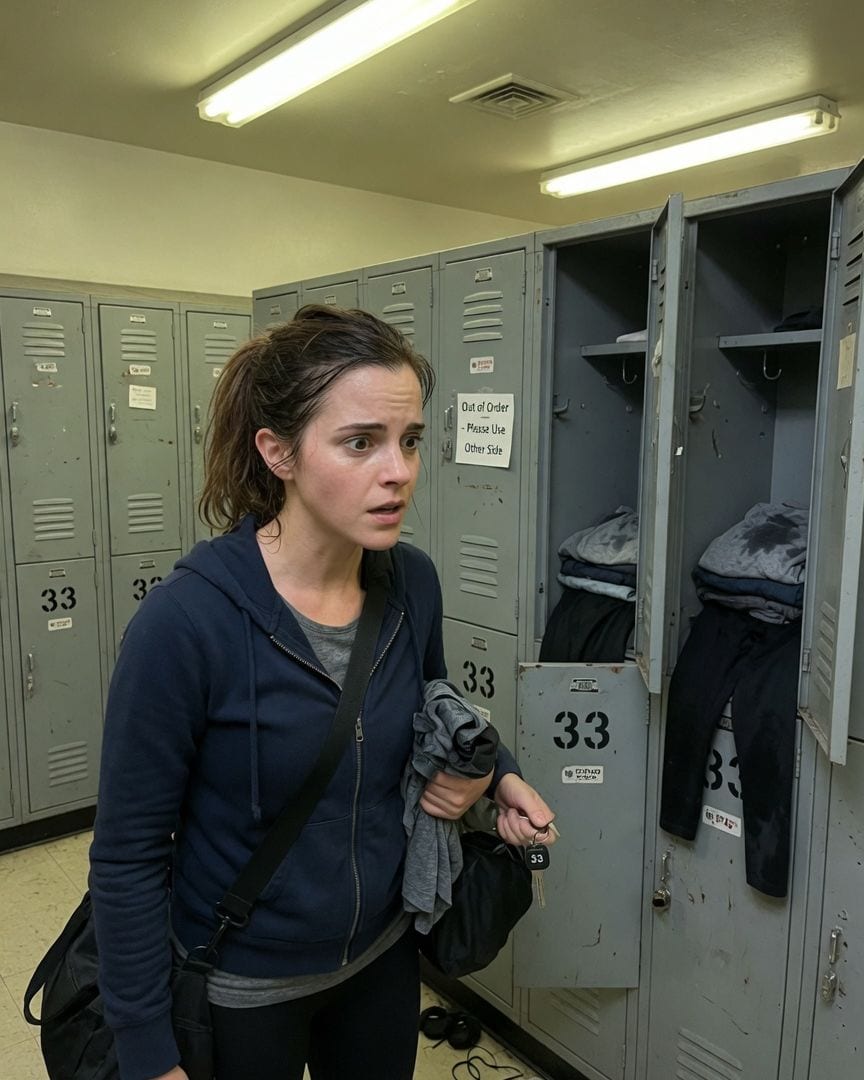
My gym locker number 33 opened two doors this week. One held my dry clothes. The other held them damp, like I'd just left.
I'm Sophia Granger, a data entry specialist, and my world is built on verifiable precision. But during a routine gym visit, I found not one, but *two* locker #33s in the women's room. My key opened both, but the second held my own damp, sweat-soaked clothes, as if I'd just finished a workout I never did.
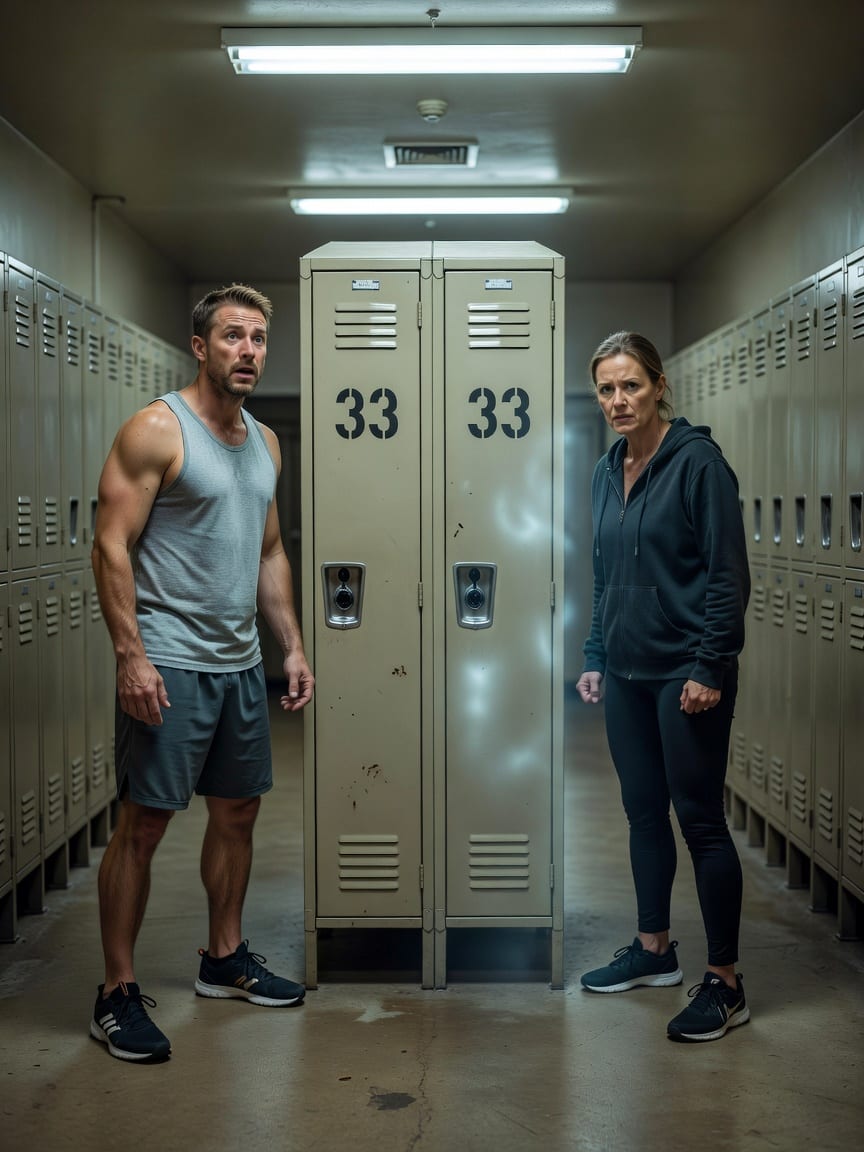
My gym locker room grew a forty-first locker, holding my damp, sweaty clothes, though I hadn't been to the gym in days.
I've used locker 33 at Iron & Grit for years, a small, reliable part of my routine. But when I went back on Wednesday, a second locker 33 stood there, an impossible duplicate. Inside, I found my specific gym clothes, damp and smelling of chlorine, as if I'd just finished a workout I never did.
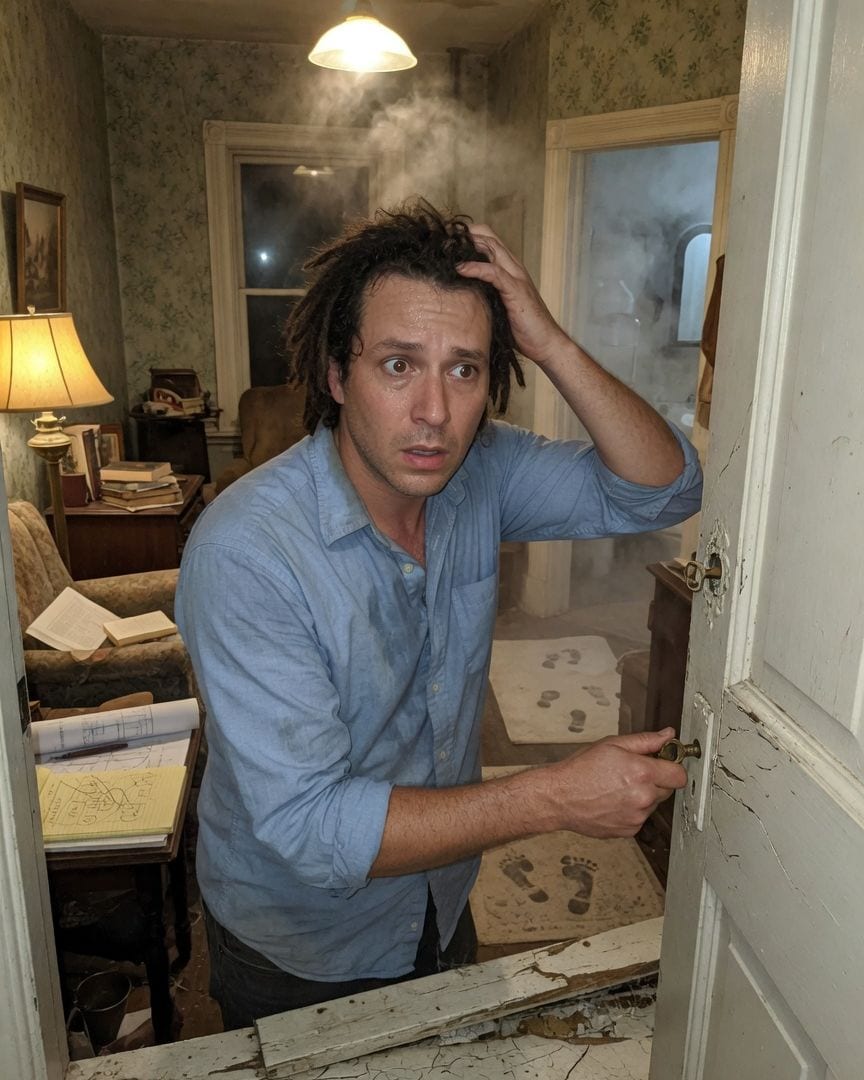
The bath filled itself at 9:30 PM. My main house water was off. Wet footprints led from the tub to a locked airing cupboard.
As an architect, I pride myself on logic. Moving into my inherited Victorian house was supposed to be a quiet fresh start, but on the third night, I heard the impossible. Even after I shut off the main water to the entire house, my clawfoot bath upstairs ran full, warm, and steaming at 9:30 PM.
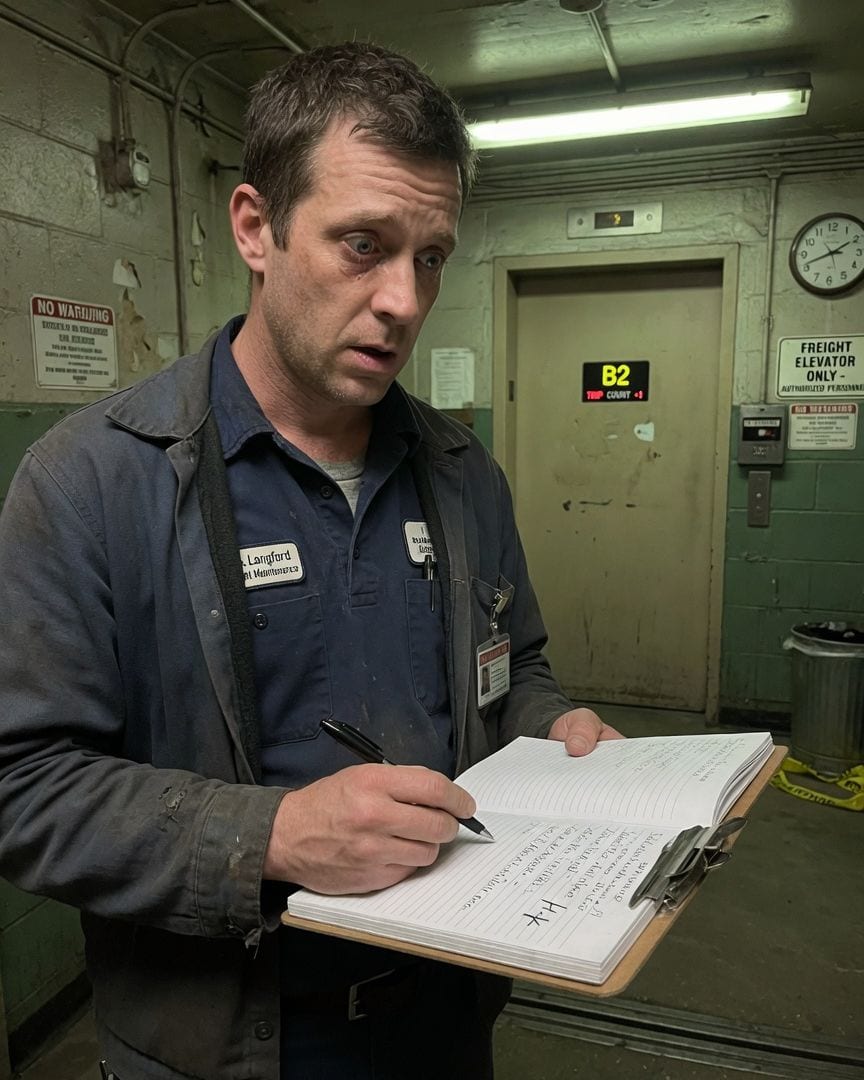
A man just took the elevator to the sealed sub-basement. He isn't on any staff roster, but my initials are in the logbook.
As a maintenance worker, my job is mostly routine, like signing the daily log for the old building's freight elevator. But one night, the log showed a trip to the sub-basement, sealed for a decade, timestamped with my key-switch and signed with my own initials, for a run I never made.
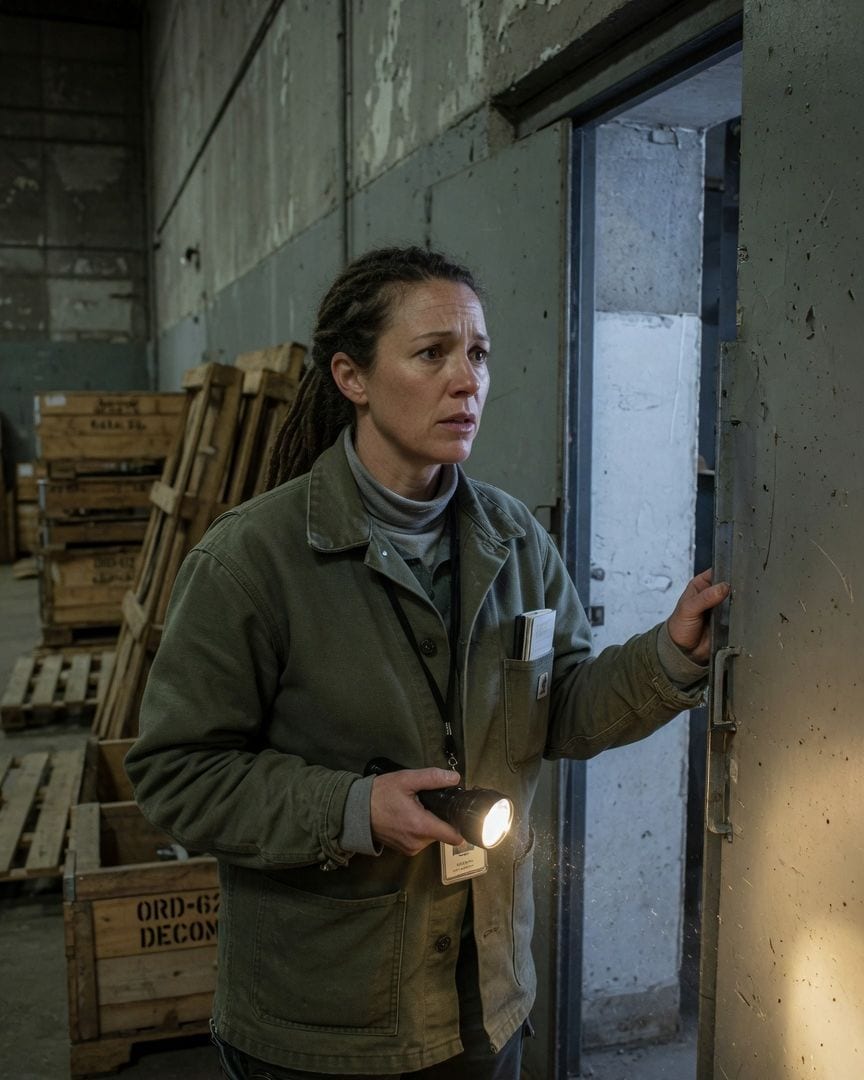
An inventory specialist sought a missing Cold War footlocker for 89 men. She found 89 metal containers marked 'PROCESSED' in a hidden room.
Halcyon Reeve, a meticulous inventory specialist, prided herself on the perfect records of the vast Sweetgrass ordnance depot. But one blank space on a 1962 ledger gnawed at her: a missing footlocker for 89 men, when only 16 were ever assigned. Her search led her back to the silent, cavernous warehouse, where she uncovered a cleverly disguised access panel. Behind it, a hidden room, unnaturally cold and sterile, held not the missing footlocker, but 89 identical metal containers, each chillingly marked 'PROCESSED'.
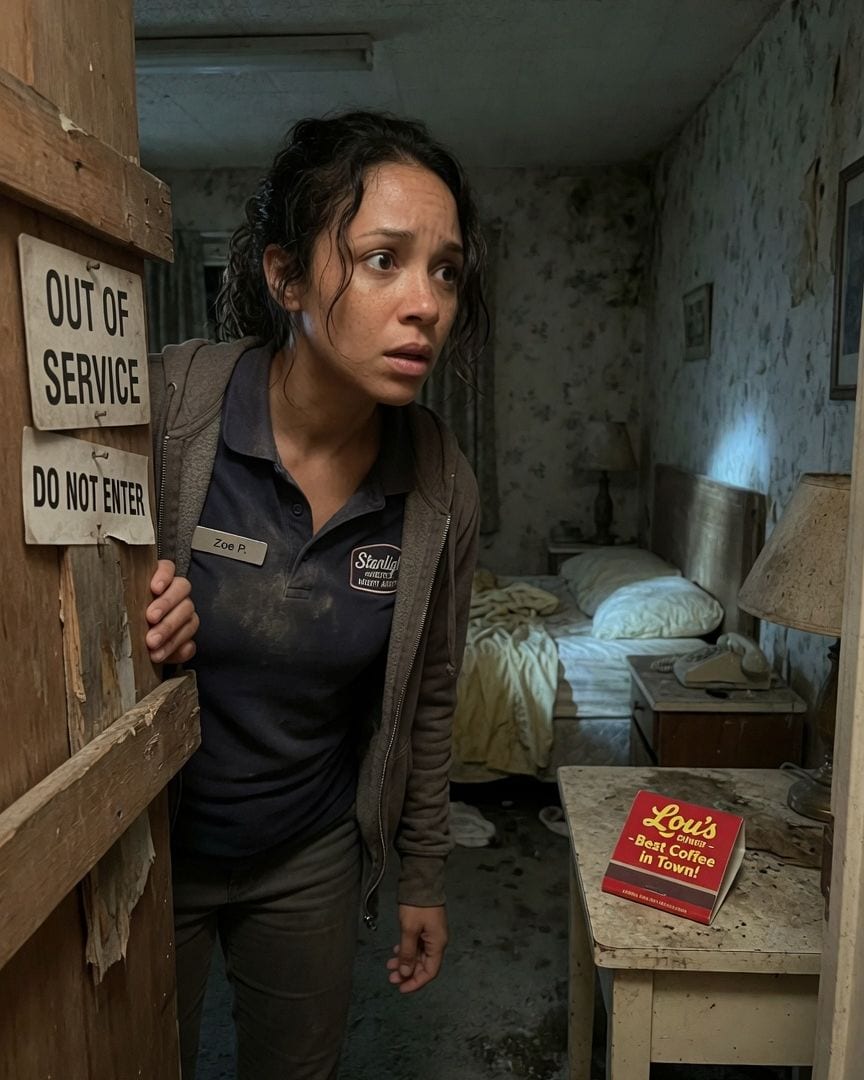
My motel register shows a check-in for Room 9 at 3:33 AM, in my own handwriting. Room 9 has been out of service since the flood.
Working the quiet night shift at the Starlight Motel, I found a chilling new entry in the guest register. My own initials had checked someone into Room 9 at 3:33 AM. The problem? Room 9 has been officially boarded shut and out of service for six months, its key still hanging untouched on the wall.