My husband's handwriting slants downhill now, the sevens bare. A graphologist swears both are his, but the man who came back never wrote like this.
Richard had been gone for a month, and then, just as suddenly, he was back. No explanation, no memory of where he'd been, just a blank space, a vague story about disorientation and wandering.
The police had found him three towns over, confused but physically unharmed. I cried, Rose cried, the relief was so profound it felt like a physical weight lifting from our chests.
For weeks, I clung to that relief, to the normalcy, to the simple fact of him being here.
Then, last week, for Rose's seventh birthday, he wrote her a card. It was a sweet message, full of love, but as I read it over her shoulder, my stomach tightened.
Richard's handwriting has always been distinctive: a strong, confident uphill slant, every single '7' crossed with a neat, precise line, a habit he picked up during his engineering studies in Germany.
It was a detail I loved, a small mark of his unique self. But the birthday card? The letters marched resolutely downhill, the sevens were stark, uncrossed, like inverted 'L's.
I told myself it was stress. Trauma. He'd been through something, of course he had. But the image of that alien script festered.
A few days later, I discreetly sent photos of the card, along with an old grocery list of Richard's, to Elena Coleman, a graphologist friend from college.
Elena called me back, her voice tinged with a professional bafflement that chilled me more than any outright alarm. "Catherine," she’d said, "the ink, the pressure, the subtle individual letter formations – they're from the same hand. But the slant?
The sevens? It's like a complete re-patterning of muscle memory. It's… impossible, frankly. Unless he had a stroke or a severe neurological event, which you said he didn't."
The world outside my window still looked normal, the sun still set, Rose still laughed, but the knowledge of that impossible handwriting looped in my mind, an unshakeable wrongness.
I watched him. Not because I suspected, but because I wanted to reassure myself. Trauma, I repeated. It had to be trauma. People changed. Richard was changed. He was quieter, less prone to his old boisterous laughs, more reflective.
I tried to attribute it all to what he'd endured. But then I noticed other things. Small things. Inconsequential things, usually.
His left hand, for instance, once his dominant, confident tool for everything from signing documents to stirring his coffee, now seemed… hesitant. Sometimes, he'd unconsciously reach for something with his right, only to correct himself with a slight frown.
Just nerves, I told myself. Residual shock.
Then came the jasmine. Richard, my husband of fifteen years, had a lifelong, visceral aversion to jasmine. Not just dislike; he called the heavy, sweet scent cloying, suffocating.
He’d told me stories of a terrible rash he got as a child just from brushing against a jasmine bush in his grandmother’s garden.
It was a running joke between us; I was partial to it, but he’d always made a face. Two days ago, he came home from the nursery with a small jasmine bush, its dark leaves glossy, its white buds tight.
He spent an hour planting it directly beneath Rose’s bedroom window. "It's so lovely, isn't it?" he said, wiping soil from his hands, "Always found it so soothing." The words felt thick and wrong in the evening air.
The mundane explanation of 'changed by trauma' began to fray, replaced by a colder, more specific unease.
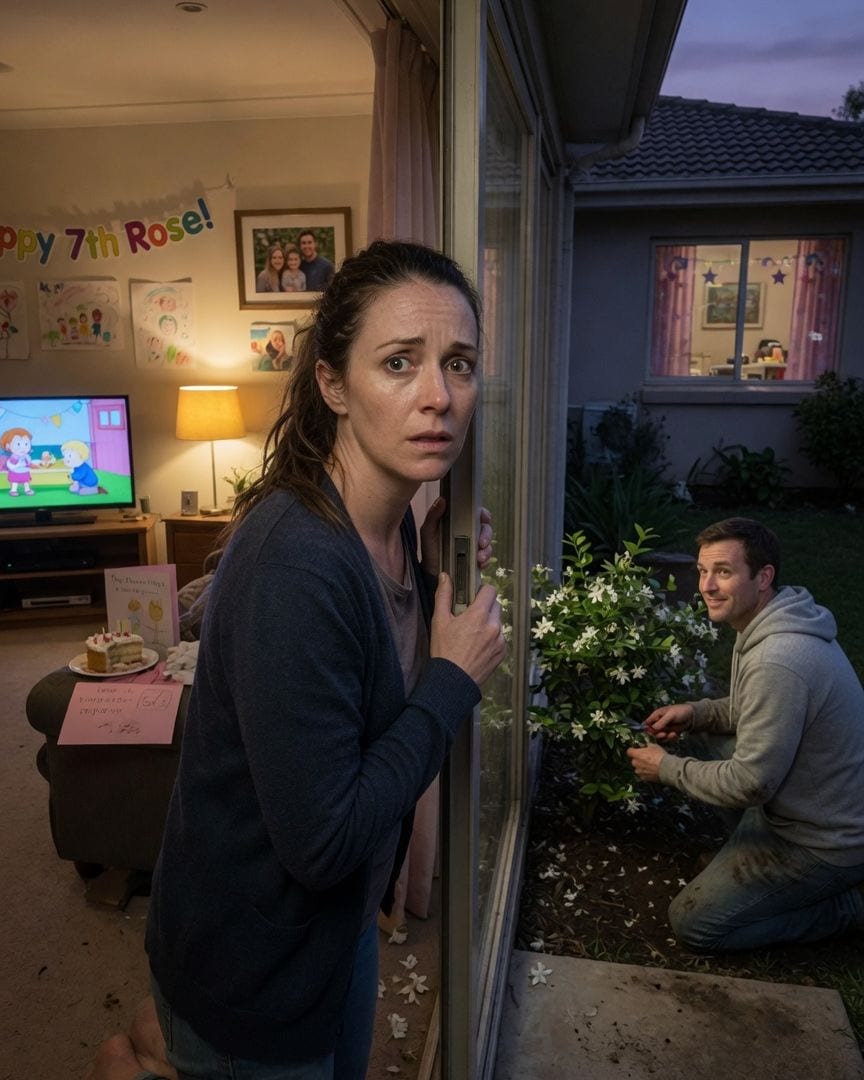
Tonight, I watched 'Richard' kneeling in the garden, meticulously pruning the jasmine bush. Its perfume, already strong, thickened in the humid evening air, a cloying cloud that made my throat tighten.
He stood, brushing the last bits of dark earth from his jeans, then turned to me. A small, content smile played on his lips. "Isn't it beautiful, Cath? Always loved jasmine."
A chill, cold and absolute, crawled up my spine. Richard despised jasmine. He was allergic to it. The man standing before me, smiling in the twilight, was wrong.
The jasmine incident galvanized me. The handwriting, yes, but the jasmine was a direct contradiction of a fundamental, almost primal, aversion. It couldn’t be trauma.
Trauma changes preferences, maybe, but not the very chemical response of a body to something that once caused a rash. I started a meticulous, secret inventory of 'Richard's' habits.
I made a mental list, then a physical one, tucked into my journal. The left-handedness was the most obvious. He still tried to use his left for some things, but I’d catch him.
Reaching for the coffee pot, initially with his right hand before consciously switching. Opening a jar, his right hand twisting it, struggling, before he'd sigh and force his left to it.
Even when he was signing a permission slip for Rose's field trip last week, his right hand hovered over the pen for a moment before his left picked it up, slow and deliberate.
I went to my old photo albums, pulling out our wedding photos. There it was: Richard, laughing, signing the register with his left hand, the pen held firmly. And his watch.
Richard always, always wore his watch on his left wrist. He said it felt natural there, out of the way. Now, almost without thinking, he strapped it to his right. He didn't even seem to notice.
I took a deep breath. These weren't subtle changes. These were reversals.
I called Elena Coleman again, pretending casual curiosity. Not about handwriting this time, but about the general phenomenon of subtle, ingrained habits reversing after a traumatic event. She was quiet for a long moment.
"Catherine," she finally said, her voice lower, "I've heard things. Whispers, you know? Unverified cases. People come back from… absences, let's say. And they're off. Not crazy, not different enough for anyone to really notice, but… just off.
Their gait, their preferred arm, small things like that. Usually dismissed as grief or delusion. But it's never been anything I'd put my name to." Her hesitation, her careful choice of words, did more than any direct confirmation could.
My unease ratcheted, grounding itself in these precise, undeniable details.
My quiet investigation didn't go unnoticed.
I started to feel a prickling sensation on the back of my neck when I was alone in the house, a sense of being watched, an invisible eye following my movements through the kitchen, up the stairs.
The house itself seemed to hold its breath. One afternoon, while I was tending the rose bushes – the ones Richard had always loved – my reclusive neighbor, Bernard Caldwell, approached our fence.
He was a quiet man, always had been, mostly kept to himself, tending his own immaculate garden. He rarely spoke to anyone, let alone me.
"That jasmine's really taken hold," he said, his voice soft, almost a murmur against the drone of a distant lawnmower. His eyes, pale and intelligent, were fixed on the new bush.
Then, almost to himself, he added, "People change, don't they? Sometimes, they come back... different." His gaze, calm and knowing, shifted from the jasmine to me, lingering for an unsettling moment before he walked away, disappearing into his own yard.
The air around me suddenly felt cold. A few days later, I found a small, unmarked book on my porch. It was an old, leather-bound collection of obscure folk tales: stories of changelings, of doppelgängers, of hidden people.
The dread was no longer just about Richard; it was personal, a sense of being known, being watched, being understood in a way that terrified me.
The spine of the book felt cold beneath my fingers, like a message sent from a distant, darker place.
I couldn't live with it any longer. The book, Bernard's words, the accumulation of proof – it was too much. I walked across the lawn to his house, the changeling stories heavy in my mind.
He answered the door, unsurprised, as if expecting me. The living room was neat, smelling faintly of old paper and something herbal, like dried rosemary. He gestured for me to sit. He offered me tea.
I took it, black, as was my habit.
"Richard," I began, my voice tight, "His handwriting... it's wrong. And the jasmine. He hated it. He's left-handed, but he uses his right now. He wears his watch on the wrong wrist."
I laid it out, a litany of impossible truths. Bernard listened, unflustered, sipping his own tea. A faint, almost imperceptible smile played on his lips. He didn't deny my claims. Instead, he nodded slowly.
"People sometimes 'adjust' to new circumstances, Catherine," he said, his tone calm, almost academic, as if discussing botanical specimens. "Some individuals are... 'reallocated.' It happens."
My breath hitched. "What are you talking about? Reallocated? What system?"
He set his teacup down carefully on a small coaster. "There's a system that ensures... 'stability.' Certain individuals, for various reasons, are deemed 'unsuitable' for their continued role.
Perhaps they become too disruptive, or they simply no longer fit the pattern. A more... compliant version is returned." He paused, his gaze steady, unwavering. "The original Richard, I believe, was deemed 'unsuitable.'
And a new Richard, one who aligns better with expectations, has taken his place."
My throat was dry. "Who are 'they'? What expectations? What does this mean?"
"The 'who' and 'why' are not for us to know," he said, a gentle finality in his voice. "Only the 'what.' And the 'what' is that the pattern exists. Your Richard is part of it."
The abstract horror of the handwriting, the jasmine, the handedness – it all snapped into terrifying focus. Richard wasn't merely changed. He hadn't just forgotten. He'd been replaced.
The realization hit me with the force of a physical blow, and the room seemed to spin around me, the herbal scent suddenly cloying.
"How do you know this?" I demanded, my voice a raw whisper. "Are you involved?"
Bernard simply smiled, a polite, unsettling expression that didn't reach his eyes. "I've seen it before," he said. He picked up his teacup, then set it down again, deliberately.
"Funny, though," he continued, his gaze unnervingly steady, "you always took sugar in your tea, Catherine. Now you take it black. Just like Richard." He gestured to my own cup, which sat untouched, unsweetened, on the small table.
I stared at the dark liquid, then at my hand, which had, without conscious thought, poured the tea without sugar. I couldn’t remember when I stopped taking it. Or why.
Bernard's smile widened slightly, a calm, knowing smile, as I was plunged into a new, deeper terror. The pattern wasn't just external. It was already inside me.
Shaken, I returned home, the sugar in my tea a chilling echo, a silent accusation from a habit I couldn't remember losing.
Bernard’s parting words rang in my ears: "Look where the old hand would hide what the new hand couldn’t grasp."
It was cryptic, but a faint memory surfaced: Richard, years ago, complaining about a loose panel in his old mahogany desk, a hidden compartment he'd built himself for keepsakes, a secret only he knew existed.
A clumsy joint, he'd called it, always catching his fingers.
I went to Richard's old study, a room he rarely used now. The heavy mahogany desk sat in its familiar place, its surface clear. My fingers traced the familiar grain, then moved to the side panel.
There, almost imperceptible, was the seam he’d mentioned. I pressed, I pulled, I worked at it, the wood groaning softly, until with a quiet click, the panel sprang open. Inside, tucked away, was a small, sealed envelope.
My name, "Catherine," was written on it in Richard’s original uphill-slanting hand, with the distinctive crossed sevens.
My hands trembled as I opened it. The letter inside was dated two weeks after 'Richard' had returned home. My breath hitched. It was impossible. Yet, there it was.
In it, the original Richard, bewildered and terrified, described being 'elsewhere,' but watching. He wrote of seeing the replacement, of the chilling calm with which 'he' had stepped back into our lives.
He warned me, in looping, desperate script, "Never trust the jasmine, Catherine. It’s a sign. He knows what you love, and he inverts it." The artifact that could not exist was real, dated, and checkable.
The ordinary explanation died for good, replaced by a cold, coherent horror.
The letter confirmed everything. Richard was gone. Replaced. And the replacement knew me, knew my husband, knew our lives. I knew I couldn't expose the mimic without risking my own life, and, more importantly, Rose's.
What would they do to us if I tried to fight? The memory of Bernard's placid, knowing smile flashed in my mind. I chose to live with the truth. To adapt.
That evening, as 'Richard' read Rose a bedtime story, his voice a warm, familiar rumble, I watched him from the doorway. His profile, silhouetted against the lamp, was perfect. Uncannily perfect.
Later, after Rose was asleep, I approached 'Richard' in the living room. He was sitting on the sofa, scrolling through his phone, a faint, contented smile on his face. I didn't accuse him.
My voice, when it came, was steady, carefully neutral. "Do you ever miss the jasmine, Richard? The real one, I mean. The one that made you sneeze?"
He paused, his thumb still on the screen. His smile faltered for a fraction of a second, an almost imperceptible shift, like a ripple on still water. Then, his head slowly turned.
His eyes, the same blue as my husband's, met mine. Not with anger, but with an unsettlingly calm understanding. "Some things are better left… unremembered, Catherine," he replied, his voice soft, almost a warning. "For everyone's sake."
He knew I knew. And he would stay.
Life in the Novak household continued, outwardly normal. I maintained the facade, playing the role of the loving wife, the grateful survivor. But every interaction with 'Richard' was a performance, a delicate dance around a chasm of unspoken truth.
I observed him constantly, a quiet, internal vigil, searching for more inverted habits, for any sign that the mimic might slip, might reveal the thing underneath. The dread had become a permanent fixture in my home, an intimate, chilling companion.
It sat at the breakfast table, watched TV with us, tucked Rose into bed. I kept the original Richard's letter hidden, a tangible piece of the impossible truth, a heavy secret I carried alone, a phantom weight in my pocket.
I still stir sugar into my tea, watching him tend the jasmine, and wonder if anyone else ever looks for their own old hand.
If this one got to you
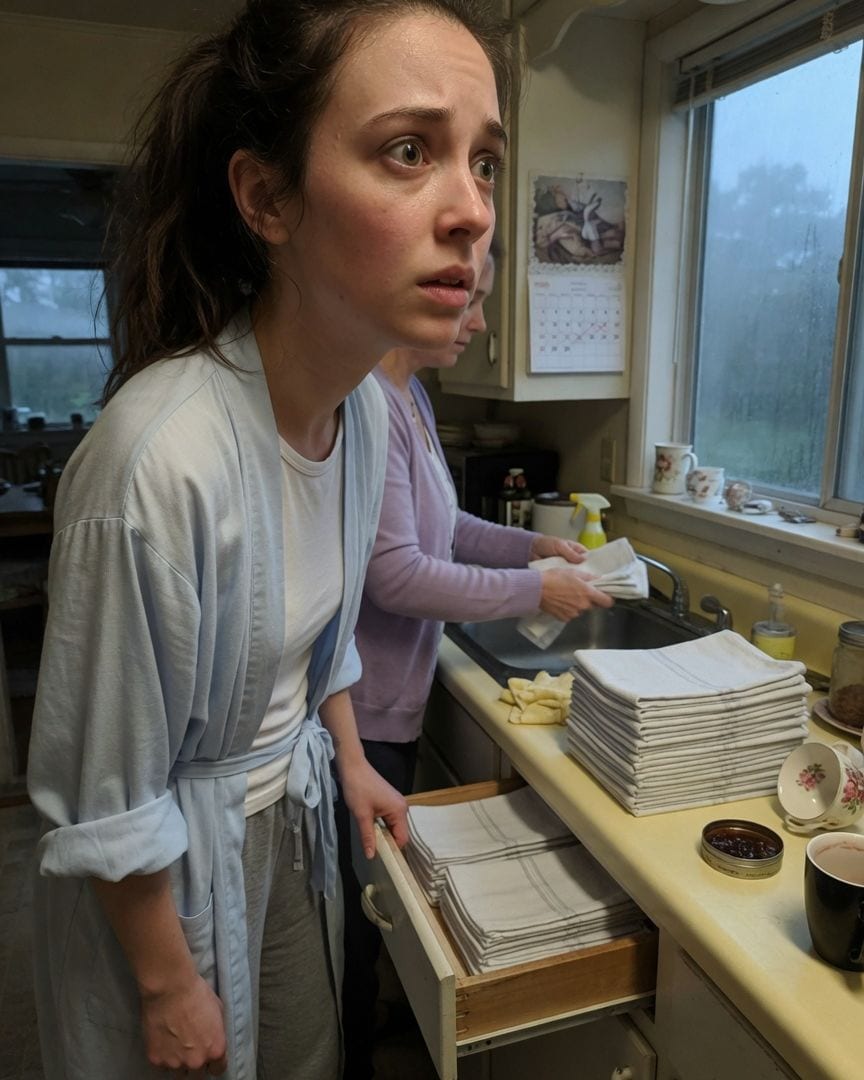
My mother's left wrist has a new scar. She never had one there.
My mother is finally home after her disappearance, and I'm trying to find our old rhythm. But then I watch her fold tea towels, a simple ritual I learned from her. She's doing it completely wrong, seam-out, insisting it's how she's always done it.
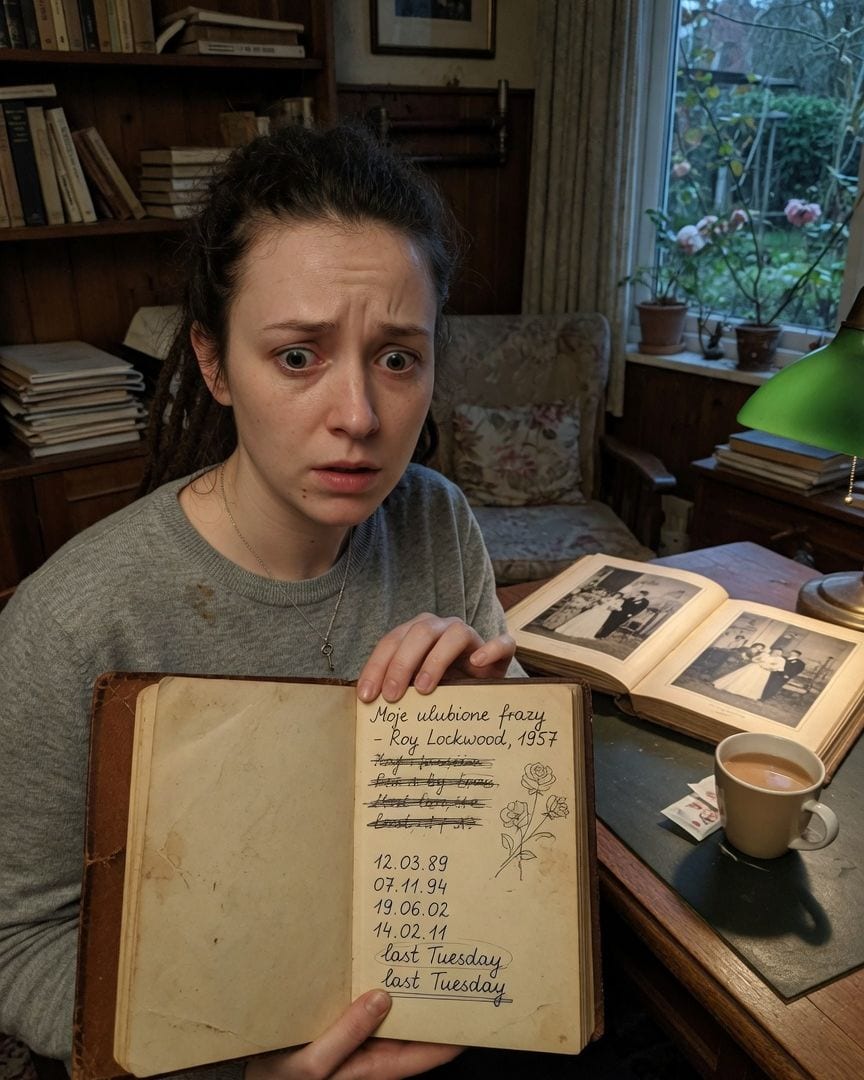
My grandfather counts 'one, two, three' in English now. He just came back. He always counted in Polish, and denies ever speaking it.
My grandfather, Roy Lockwood, returned last Tuesday after vanishing for a week, bringing immense relief. He seemed thinner, a bit disoriented, but otherwise, he was just Grandpa. Then I heard him count 'one, two, three' in clear English before lifting potting soil, instead of his lifelong Polish habit.
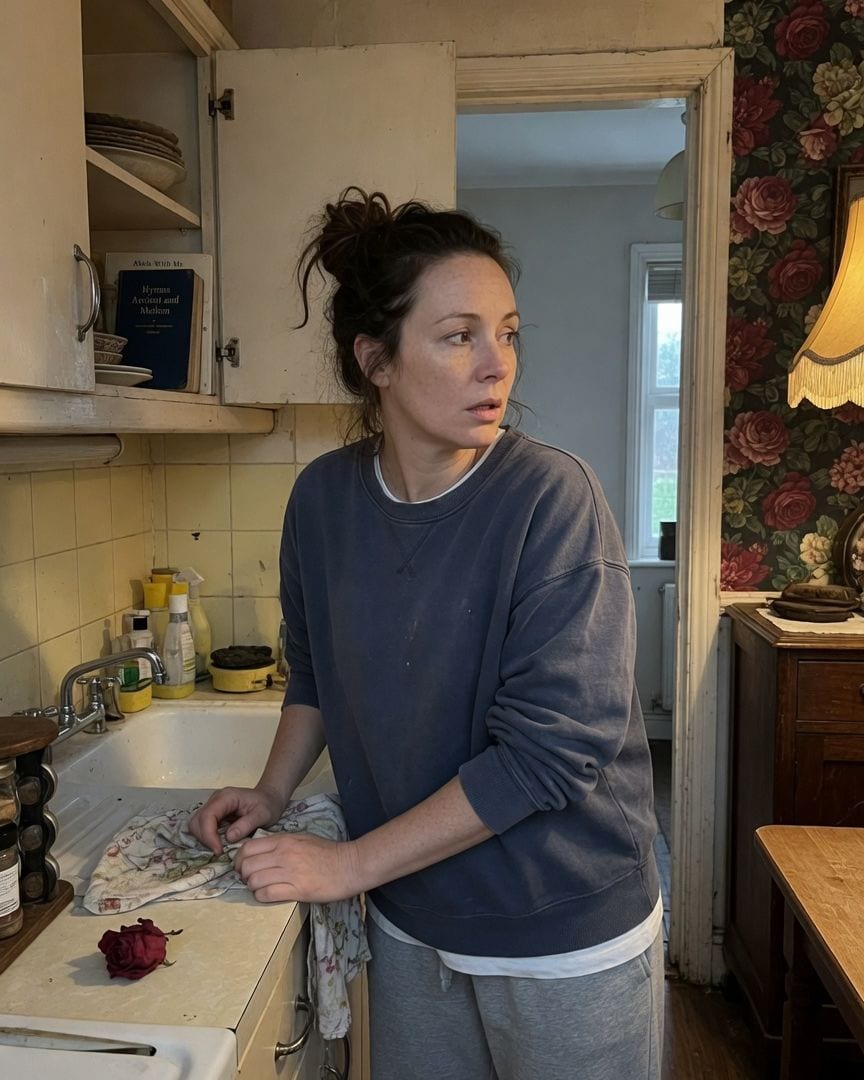
My kitchen taps run themselves on Sundays while a woman hums 'Abide With Me.' I live alone.
I moved into this quiet 1928 house for a fresh start, living alone. But for three months now, every Sunday morning, a low, tuneless hum and the distinct sound of running water drift from my kitchen sink. A plumber found no explanation.
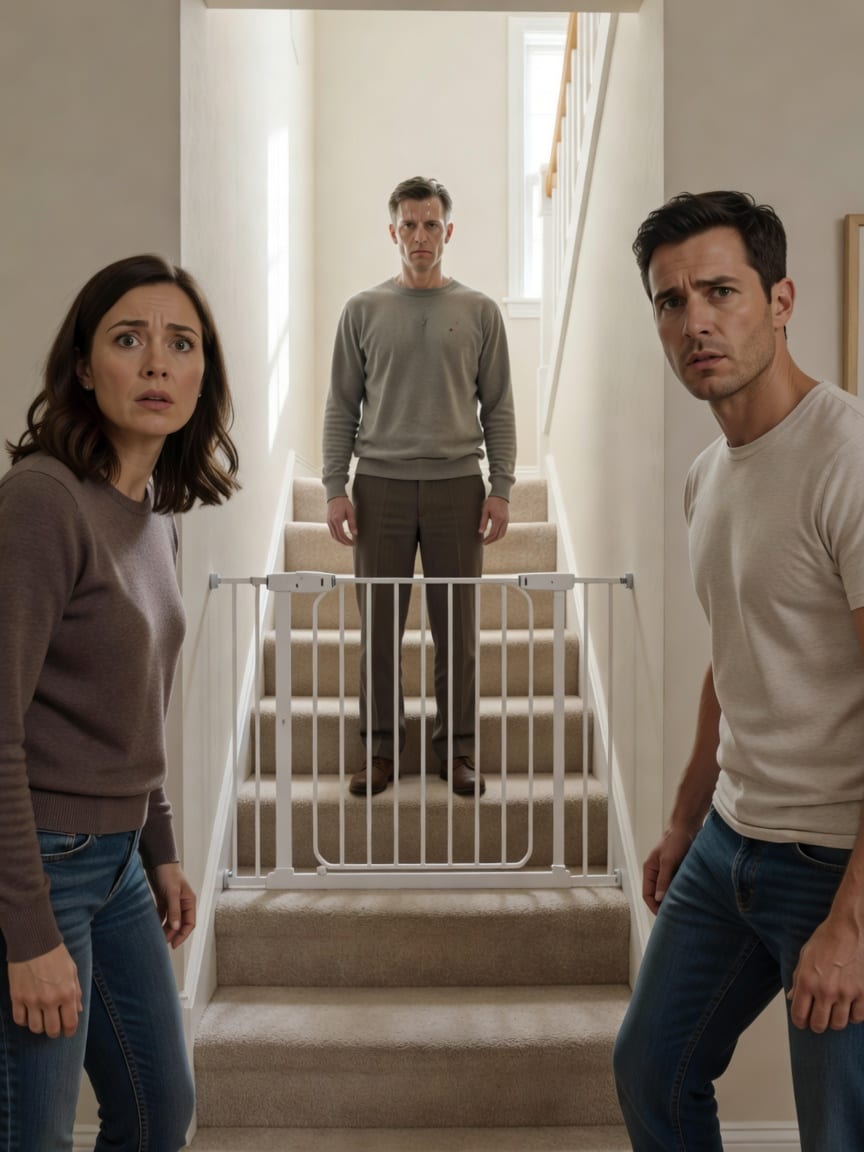
My stair gate latches itself every night. Pressure-fitted tight across my empty stairs, no children live here and no fixings exist on the wall.
I live alone in my inherited house, so the toddler gate at the top of my stairs should not be there. Each morning, I find it perfectly latched and sturdy, despite having hidden it away in the shed the day before. This isn't a quirk; it's a routine, and it isn't mine.
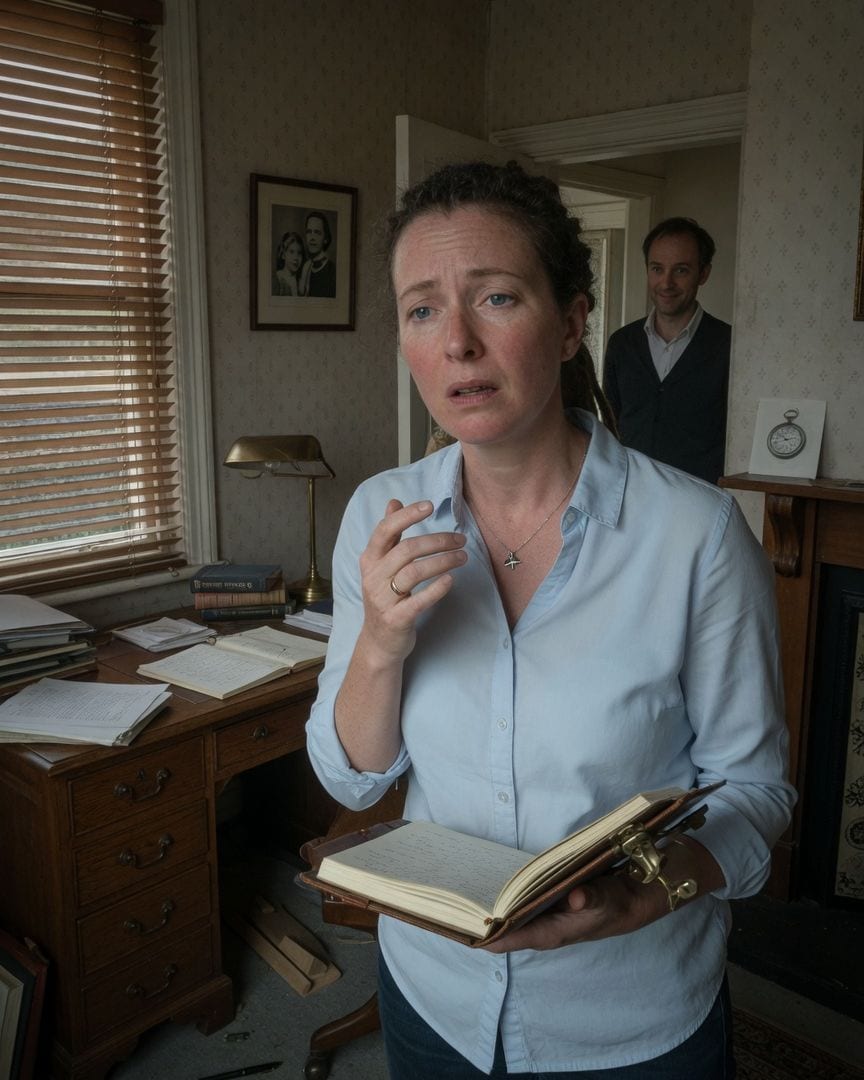
My father-in-law turns his right cheek now, and when I laughed about it he didn't laugh, he just watched me and asked who taught me the other way.
Theodore, my father-in-law, had just returned, and everything felt subtly off. Later, I found his old leather journal, its clasp broken and ajar. Inside, an entry described my hidden carved bird collection—a secret I'd kept from everyone, even my own family.
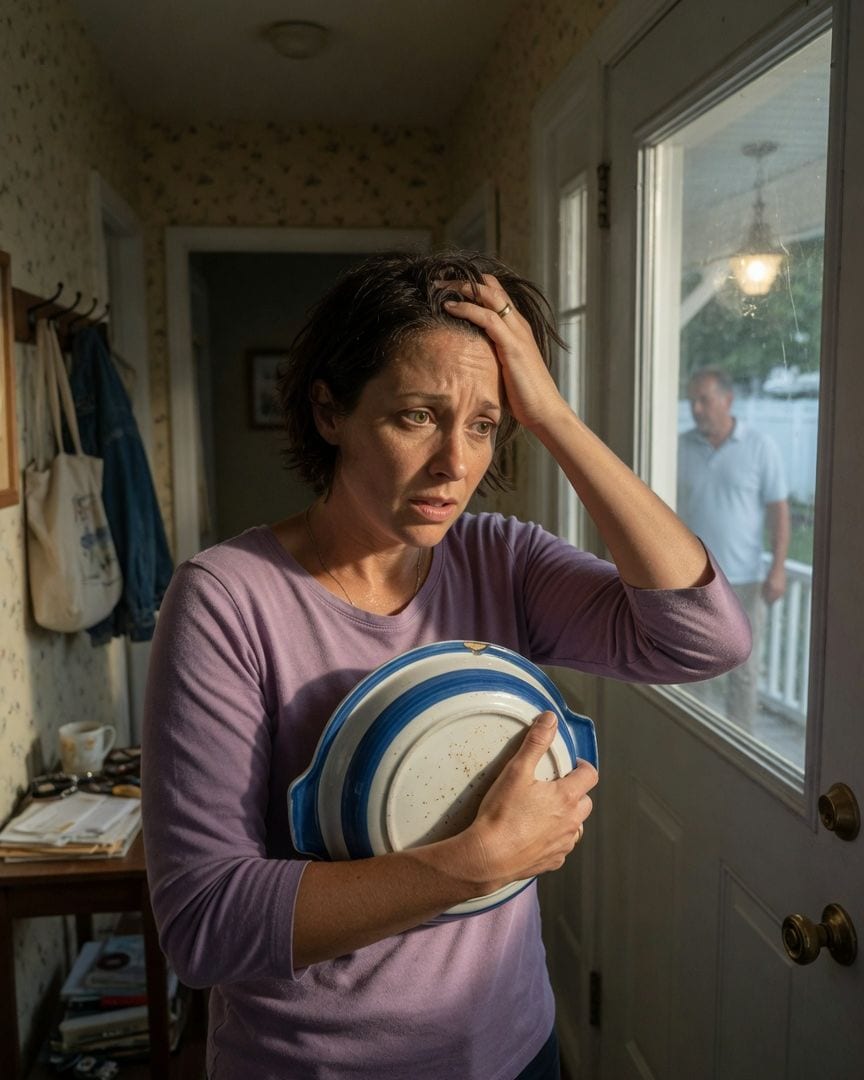
My neighbor returned my casserole dish, thanking me for his mother's funeral. His mother is alive. The dish is mine, and I never gave it to him.
Ronald Sullivan, vanished a year ago, knocked on my door yesterday. I was overwhelmed with relief, until he handed me my grandmother's casserole dish and thanked me for his mother's funeral. His mother, Sharon, is very much alive and well.