My hygienist apologized, 'I'm so sorry, Rosa — about the stairs.' I'd given the clinic only my surname, and they said she hadn't worked there in over a year.
The little mirror paused at my lip. 'I'm so sorry, Rosa,' the hygienist murmured, her voice soft, 'about the stairs.'
My name, Rosa, had not been on the intake form. Only my surname, Easton. I’d seen her name, Penelope Lawson, on the door to the exam room, but it was just a fleeting glance.
The apology hung in the sterile air, a misplaced kindness that felt like a premonition. I tried to dismiss it, a misunderstanding, a slip of the tongue. Maybe she’d confused me with another patient.
But her eyes, though kind, held a strange, deep knowing. She finished the clean without another word, her movements precise, professional. The moment passed, but the wrongness of it settled in my gut like a cold stone.
When I left the chair, I walked straight to the reception desk. Emily Maddox, the usual receptionist, offered me a mint. I forced a smile. 'Excuse me,' I asked, 'who was the hygienist who just saw me? Penelope Lawson?'
Emily typed something into her computer, her brow furrowed. She looked up, a puzzled expression on her face. 'Penelope Lawson? We haven't had a hygienist by that name on staff in over a year, Rosa. Are you sure?'
My blood ran cold. I was sure. I had just been in her chair.
For the next few days, I found myself constantly checking my steps, especially on stairs. My apartment building had an anachronistic, wide wooden staircase that creaked with every ascent and descent.
I took extra care, clinging to the railing, telling myself it was silly, a reaction to a strange encounter. Then, it happened.
Not a dramatic tumble, but a sudden, inexplicable shift of balance, a foot missing its mark on the third step from the bottom. I stumbled, twisting my ankle, and slammed my knee hard against the unforgiving wood.
It wasn't life-threatening, but it was painful, and utterly jarring.
'About the stairs.' Penelope Lawson’s words echoed in my head, chillingly precise. It wasn't a coincidence. It couldn't be. I had to find her.
I started with the dental practice again, but Emily Maddox was firm: no Penelope Lawson. I asked if they kept old staff records, if someone might have worked under a different name.
Emily, clearly annoyed by my persistence, sighed and told me their digital records only went back five years for hygienists. Anything older was archived off-site, inaccessible to her.
I tried searching online, hoping to find a Penelope Lawson, a dental hygienist in the city. There were a few, but none matched the woman I remembered. Then, a thought struck me: what if she wasn't just a hygienist?
What if the dental office was a front, or a temporary role? I broadened my search, looking for any Penelope Lawson who had worked in a related field, or even just lived in the area.
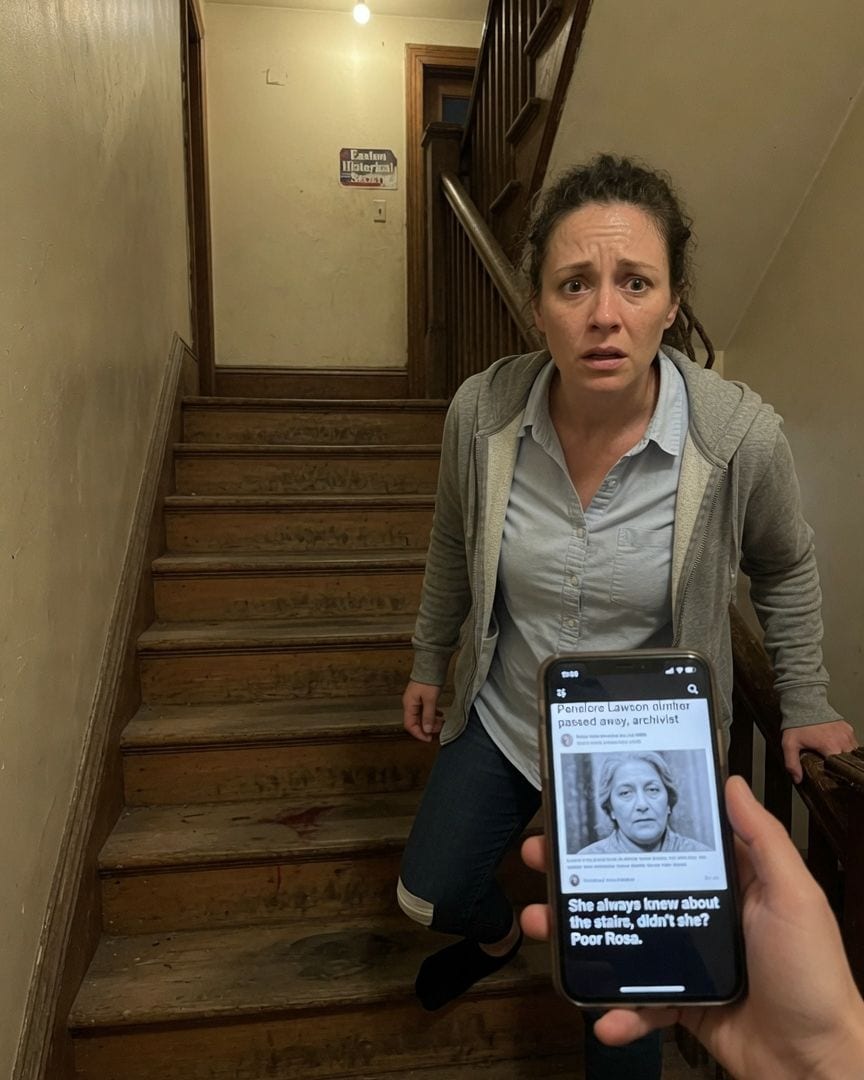
That's when I found it: a small, local news article from a decade ago, about a community volunteer who had passed away. Her name was Penelope Lawson.
The picture, a grainy black and white image, was unmistakably the woman from the dental chair. But the article stated she had died at the age of 78, ten years ago. This was impossible.
The woman who cleaned my teeth was, at most, in her late fifties. The dread wasn’t just a premonition now; it was a cold, hard fact staring me down.
The article mentioned Penelope Lawson’s long career as an archivist for the 'Easton Historical Society' before her retirement. My own surname. Coincidence? I clicked through to the comments section of the old article, scrolling past condolences.
Near the bottom, a single, recent comment, dated just last week, stood out. It was from an anonymous user, but the words hit me like a physical blow. 'She always knew about the stairs, didn't she? Poor Rosa.' My name.
The stairs. The deceased Penelope Lawson, who had just cleaned my teeth. The screen’s glow reflected in my wide, disbelieving eyes. The impossible truth of it felt like a cold hand closing around my throat.
The Easton Historical Society. The name echoed in my mind, a chilling connection to my own surname. I knew it was a long shot, but I had to investigate.
The society was housed in an imposing stone building downtown, more like a mausoleum than a public archive. I walked in, the heavy oak doors groaning shut behind me, the air thick with the scent of old paper and dust.
A young woman at the reception desk, Emily Maddox’s doppelgänger almost, looked up with a polite, if wary, smile. I asked to see the archives, specifically looking for any records related to Penelope Lawson.
The receptionist, who introduced herself as Isabella Fontaine, directed me to a quiet reading room and handed me a visitor's pass. 'Mr. Granger is usually the one who handles the older records,' she said, 'but he's at lunch.
You're welcome to browse the public access files.'
I spent an hour sifting through dusty boxes, finding nothing. The official records of Penelope Lawson, the archivist, were sparse, just a few employment dates and a brief mention of her retirement.
No personal details, no notes about 'stairs' or 'Rosa.' It was frustrating, a dead end. Just as I was about to give up, a man entered the room.
He was tall, thin, with kind but tired eyes, probably in his mid-forties. 'Samuel Granger,' he introduced himself, extending a hand. 'Isabella said you were looking for something specific?'
I explained my situation, carefully omitting the more bizarre details, focusing on the discrepancy of Penelope Lawson. Samuel Granger listened patiently, his expression unreadable. 'Penelope Lawson was a dedicated archivist,' he said slowly.
'But she passed away, as the obituary states. However, the name… it is a common one, and sometimes, names recur in our records.' He gestured vaguely to a locked door behind his desk. 'The restricted archives hold many such recurrences.'
My heart pounded. 'What kind of recurrences?' I asked, my voice barely a whisper. He paused, his gaze fixed on me. 'Perhaps,' he said, 'you should come back tomorrow. I can show you something, but it’s not for public consumption.
And it’s not for the faint of heart.'
I left the Easton Historical Society with a knot in my stomach, the promise of a deeper truth hanging heavy in the air. Samuel Granger’s calm demeanor, his knowing gaze, unsettled me more than any outright threat.
He hadn't dismissed me, hadn't called me crazy. He had acknowledged the impossible. As I walked down the busy street, I felt a prickle on the back of my neck, the distinct sensation of being watched.
I glanced over my shoulder, blending into the crowd, but saw no one obvious. Just ordinary faces, rushing past. The feeling persisted, a cold, focused attention.
When I reached my apartment building, I hesitated at the bottom of the stairs, the site of my recent accident. The wood looked innocuous, but the memory of the fall, and Penelope Lawson’s apology, was sharp.
As I ascended, I heard a faint creak on the landing below, like someone had just stepped off the bottom riser. I froze, my hand tight on the railing. 'Hello?' I called out, my voice trembling slightly. No answer.
Only the echo of my own voice in the quiet stairwell. I hurried up the remaining steps, fumbling with my keys at the door. Inside, I locked and bolted it, leaning against the wood, my breath coming in ragged gasps.
The phone buzzed in my pocket. A text message. It was from an unknown number. The message was short, stark: 'Some things are better left undisturbed, Rosa. The apologies are a kindness, not a warning.' My blood ran cold.
Someone knew. Someone was watching. And they knew my name, my private investigation, everything.
The next morning, I returned to the Easton Historical Society, the text message burning in my mind. Samuel Granger was waiting for me in the quiet reading room, a heavy, leather-bound ledger resting on the table between us.
It looked ancient, its pages brittle and yellowed. 'This,' he said, tapping the cover, 'is a record of recurrences. We call them the Easton Chronicles.' My surname again. He opened the book to a page near the beginning, dated 1898.
In elegant, looping script, I saw a name: 'Rosa Easton.' Beneath it, a brief entry: 'Incident: Fall from carriage. Apology given by A. Merritt.' I looked up, bewildered. 'Rosa Easton?' I repeated. 'But… that’s my name.'
Samuel nodded. 'Precisely. And notice the surname of the 'knower.' Merritt. Another name from this region’s founding families. Certain families, certain names, are… linked.' He flipped a few pages forward. '1947. Rosa Easton. Incident: Drowning. Apology given by P. Maddox.'
He paused. 'Maddox. Like your dental receptionist, Emily Maddox.'
My head spun. 'This isn't… a different Rosa Easton, is it? Just a common name?'
Samuel shook his head slowly. 'Not exactly. Think of it less as a different person, and more as… an echo. A pattern repeating. The core identity, the name, the sequence of events – they are remarkably consistent across generations.'
He turned to an entry from 1985. 'Rosa Easton. Incident: House fire. Apology given by M. Lawson.' Lawson. Penelope Lawson. The hygienist.
'But the Penelope Lawson who apologized to me died decades ago!' I exclaimed.
Samuel smiled, a sad, knowing smile. 'The Penelope Lawson you encountered, the one who apologized for the stairs, was not that Penelope Lawson.
She was another Penelope Lawson, an individual who, like others, became aware of the patterns, and chose to fulfill a specific role. They are 'knowers,' Rosa. They learn the pattern, and they deliver the apologies. It's a heavy burden.'
He explained that the dental practice, along with other seemingly mundane establishments, served as temporary points of contact for these 'knowers,' their records intentionally obscured to prevent outsiders from tracing the pattern too easily.
My earlier search for Penelope Lawson, the phantom hygienist, suddenly made horrifying sense. Every dead end, every inconsistency, was a deliberate part of a system designed to hide this truth from those it concerned most: the 'Rosa Eastons.'
The apology wasn’t a warning, it was a ritual. My stairs incident, the phantom hygienist, the impossible obituary—it all clicked into a terrifying, coherent whole.
I was part of a cycle, and the apologies were simply the system’s way of acknowledging its own terrible, unchanging script.
Samuel Granger’s words hung in the air, heavy with the weight of generations. 'The 'knowers' don't interfere, Rosa,' he explained. 'They merely acknowledge. It’s part of the design. To witness, to record, but never to alter.' My mind reeled.
My life, my choices, my very self—were they just echoes of a predetermined script? 'And what about my incident?' I asked, my voice barely a whisper. 'The stairs? Is that… written here too?'
Samuel nodded, his finger tracing a line on a more recent page. 'Yes. Here.' He pointed to an entry dated just last week: 'Rosa Easton. Incident: Stairs, twisted ankle, bruised knee. Apology given by P. Lawson.'
It was all there, in black and white, dated before it even happened. The precision was sickening. 'But this is just one incident,' I pressed, a desperate hope flickering. 'What else? Is there… more?'
Samuel hesitated, then sighed, a deep, weary sound. 'The pattern is persistent, Rosa. It doesn't end with one event.' He slowly turned the page of the ancient ledger.
There, under a date exactly one year from today, is her name, 'Rosa Easton,' in the same elegant script. Beside it, a single, chilling word: 'Fire.' My breath hitched. The implication was clear, undeniable.
My life wasn't just a pattern of past events, but a series of predetermined, unavoidable future ones. And someone had already written them down.
The word 'Fire' burned itself into my mind, a brand of inescapable doom. Samuel Granger watched my reaction, his face etched with a familiar sorrow. 'The Easton family,' he began, 'has been linked to this pattern for centuries.
Not just Rosa Easton, but other names, other families. The Historical Society was founded by an Easton ancestor, not to preserve history, but to document this very cycle.
They believed it was a cosmic truth, an unbreakable thread woven into the fabric of certain lineages.'
He explained that the 'knowers' were individuals, often descendants of these families or those who stumbled upon the truth, who were drawn to the society or its records.
They felt compelled to participate, to deliver the apologies, to bear witness to the pattern. Penelope Lawson, the hygienist, was one such 'knower,' fulfilling her role in the cycle.
The apology wasn't meant to comfort or warn, but to complete the ritual, to acknowledge the predetermined nature of the incident. It was a macabre form of respect for the pattern itself.
The dental practice, the obscure obituary, the text message – they were all layers of the system, designed to both facilitate the 'knowers' and protect the larger secret from general discovery.
The 'records that cannot be' were not anomalies, but the very foundation of this hidden world. My own struggle to find a rational explanation had merely led me deeper into the very system that orchestrated my fate.
The terrifying coherence of it all clicked into place: every strange detail, every impossible encounter, every dead end had been part of an intricate, generations-old mechanism to ensure the pattern continued, observed, and acknowledged.
I wasn't just living my life; I was enacting a script that had been written long before I was born, and would continue long after I was gone.
I closed the ledger, the leather cover feeling impossibly heavy, as if it contained the weight of all my predetermined years. 'So there's no escape?' I asked, my voice flat, devoid of emotion. 'No way to change it?'
Samuel shook his head, his gaze unwavering. 'None that we've ever found. Generations have tried. Some 'Rosa Eastons' have fled, changed their names, gone into hiding. The incidents still found them. Sometimes, they were worse for the resistance.
The pattern asserts itself.' He pointed to another entry in the ledger, a faded ink sketch of a woman who bore a striking resemblance to me.
'This Rosa Easton, from the 1920s, attempted to flee the country after her 'apology for the fall.' She died in a shipwreck, the 'fall' replaced by a much greater tragedy.' He paused, letting the implication sink in.
'The apologies are a form of grace, Rosa. A quiet acknowledgement that your path is set. To fight it is to invite a harsher hand.'
I stood up, pushing the chair back with a scrape that echoed in the quiet room. My mind raced, not with panic, but with a cold, terrifying clarity. Escape was not an option. Resistance was futile.
My life was not my own; it was a pre-written story, and I was merely the current actor. The dread was no longer about what might happen, but about the absolute certainty of it.
The targeted wrongness had become an intimate embrace, a destiny I could not shake. I looked at Samuel, his face a mask of resigned empathy. He was a 'knower,' too, bound to this knowledge, to this institution. 'What happens next?'
I asked, my voice hollow. He looked at the ledger, then back at me. 'You live your life, Rosa. And we observe. And when the time comes, another 'knower' will deliver the next apology.'
The finality of his words was crushing. I wasn't going to escape. I was going to live out the script, knowing every beat was already written.
The horror was not in dying, but in realizing I had never truly lived free.
I walked out of the Easton Historical Society, not into freedom, but into an open-air prison. The city streets, once vibrant, now felt like a meticulously constructed stage set.
I returned to my apartment, the familiar creak of the stairs a chilling reminder of the script. My ankle had healed, but the bruise on my knee remained, a physical tattoo of my predetermined fate.
I continued my routines, going to work, buying groceries, interacting with friends, but it was all a performance. The 'knowers' had won. The pattern continued.
I was Rosa Easton, living out a life that wasn't mine, waiting for the next apology, the next 'incident.' The dread settled into a dull thrum beneath my skin, a constant companion.
The world moved on, oblivious to the quiet horror unfolding within me. I was a puppet, and the strings were invisible, woven into the very fabric of time itself.
The true terror was not in the unknown, but in the absolute certainty of what was to come, and the complete powerlessness to change it. Every passing day was another page turned in a book that had already been written.
Months passed. The 'Fire' incident from the ledger, dated a year from the day Samuel showed me, loomed in my future like a silent, inescapable countdown. I didn't try to flee, or to warn anyone. What would be the point?
The pattern always asserted itself. I learned to live with the knowledge, to wear it like a second skin.
Sometimes, I’d catch myself smiling at a stranger, a faint, detached smile, and wonder if they were a 'knower,' if they recognized the look in my eyes.
I started noticing small, impossible coincidences in my daily life, details that, in hindsight, seemed to align perfectly with vague memories of past 'incidents' from the ledger.
The world became a series of echoes, a stage for a play I knew by heart. My friends remarked that I seemed calmer, quieter, a little distant. They attributed it to stress, to life. They didn’t know the truth.
They didn't know I was merely waiting for my next cue. One evening, a year to the day after I saw the ledger, my phone rang. An unknown number. I answered. A calm, unfamiliar voice said, 'I'm so sorry, Rosa.
About the fire.' I hung up, walked to my window, and watched the distant glow of an emergency vehicle's flashing lights. It wasn't my apartment, not yet. But it would be. I knew it.
The dread was a quiet companion now, a terrible intimacy. I poured myself a glass of water, my hands steady. The pattern was unwavering. And I was Rosa Easton.
If this one got to you
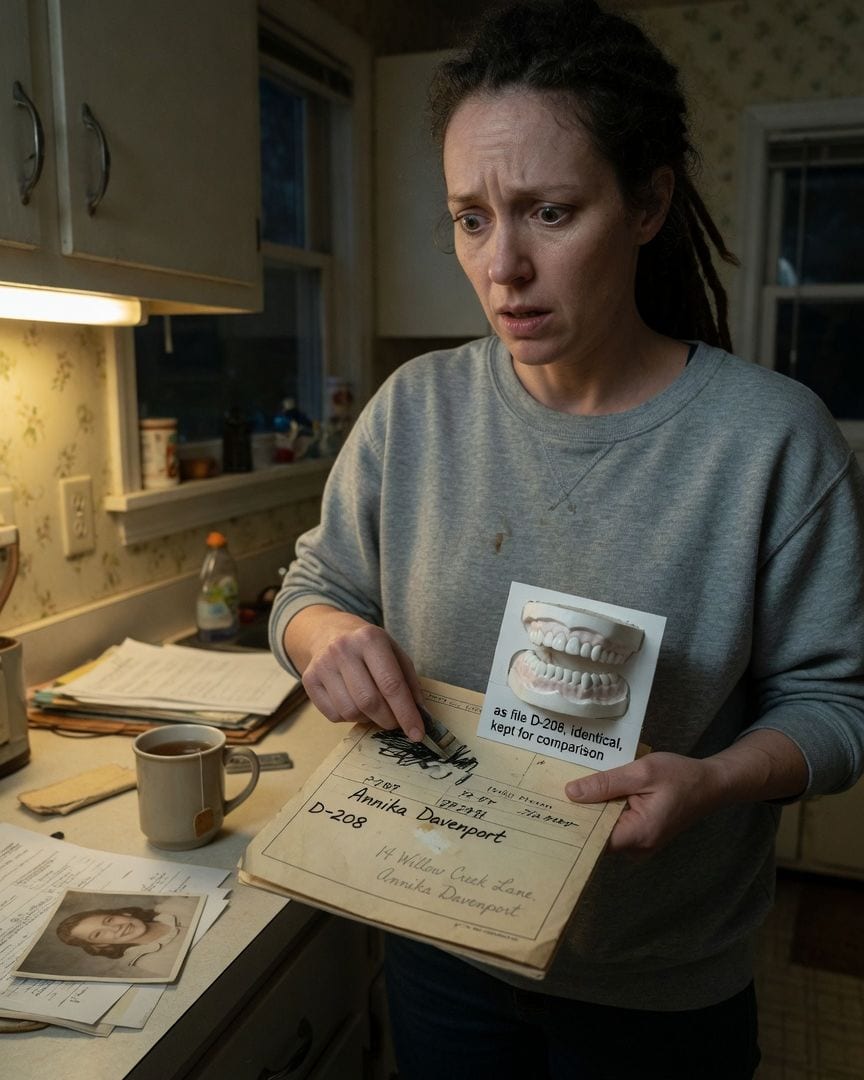
My childhood dental chart lists the house I bought last year — in my own name, years before I was born. A second set of my teeth sits filed beside it, marked 'identical.'
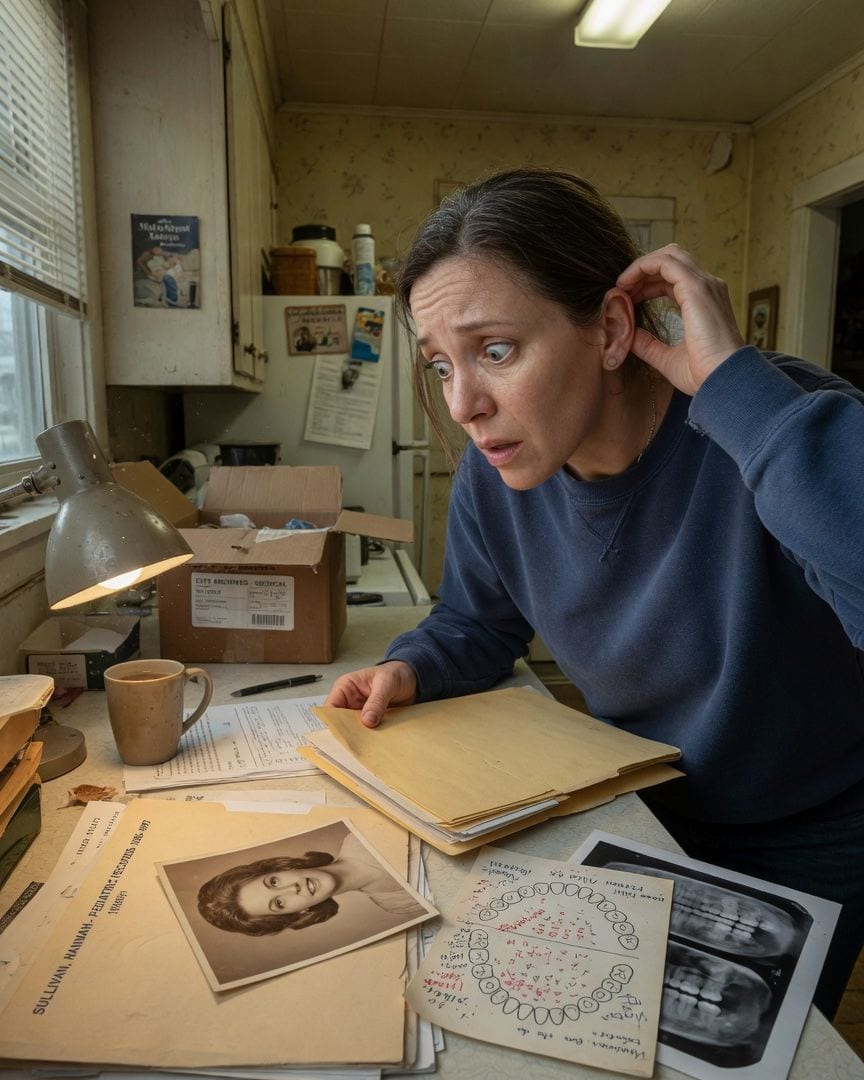
Sifting through old dental records, I found my chart, D-208, with my 1988 birth date. But a line from 1958 was blacked out, and a clipped card with an impression of my teeth listed my name and current home address, decades before I was born. The impossible facts knotted into a cold certainty.
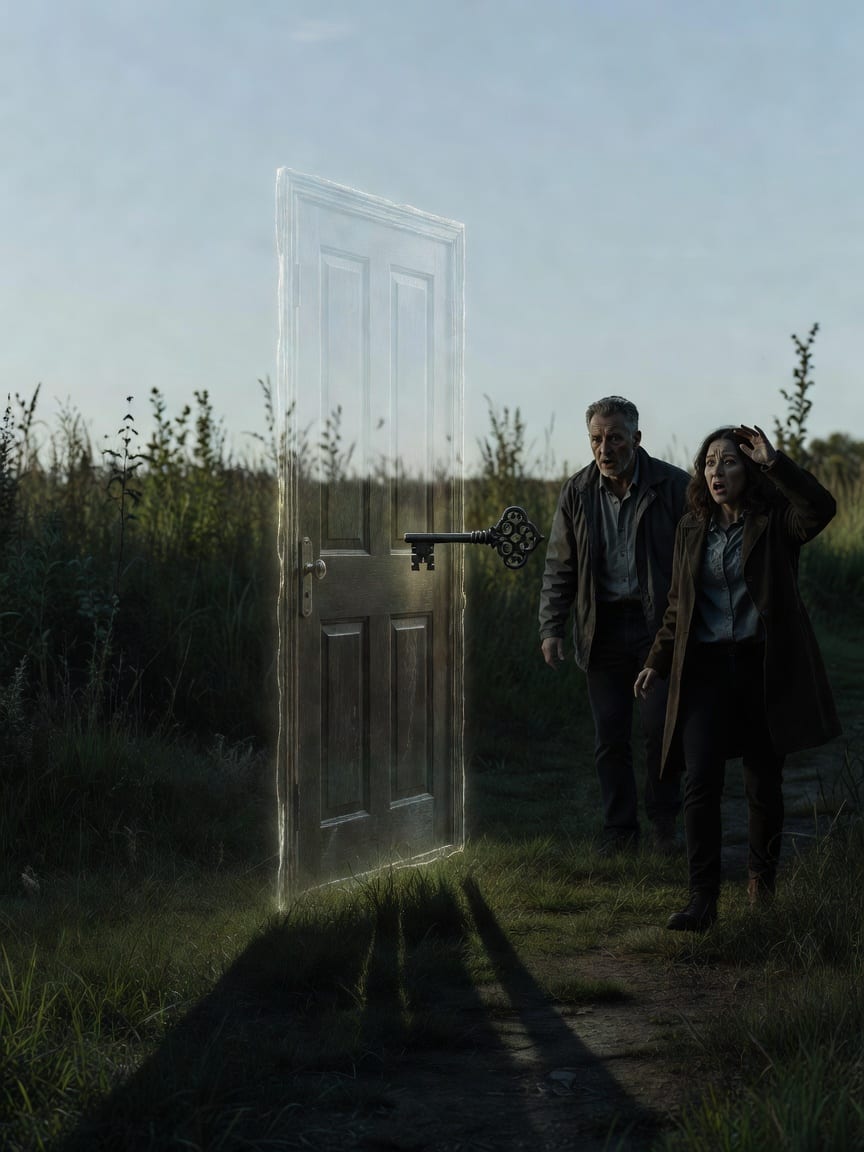
My name was on a package lodged in 1974. I wasn't born until 1985. Inside was a key and a note: 'You know which door. Not yet.'
I'm Elena Radcliffe, 38, and a solicitor's letter just arrived for me about a package. The firm's records state it was lodged in 1974, years before I was born. Now I've found an old newspaper article reporting a woman with my exact name vanished that very year.
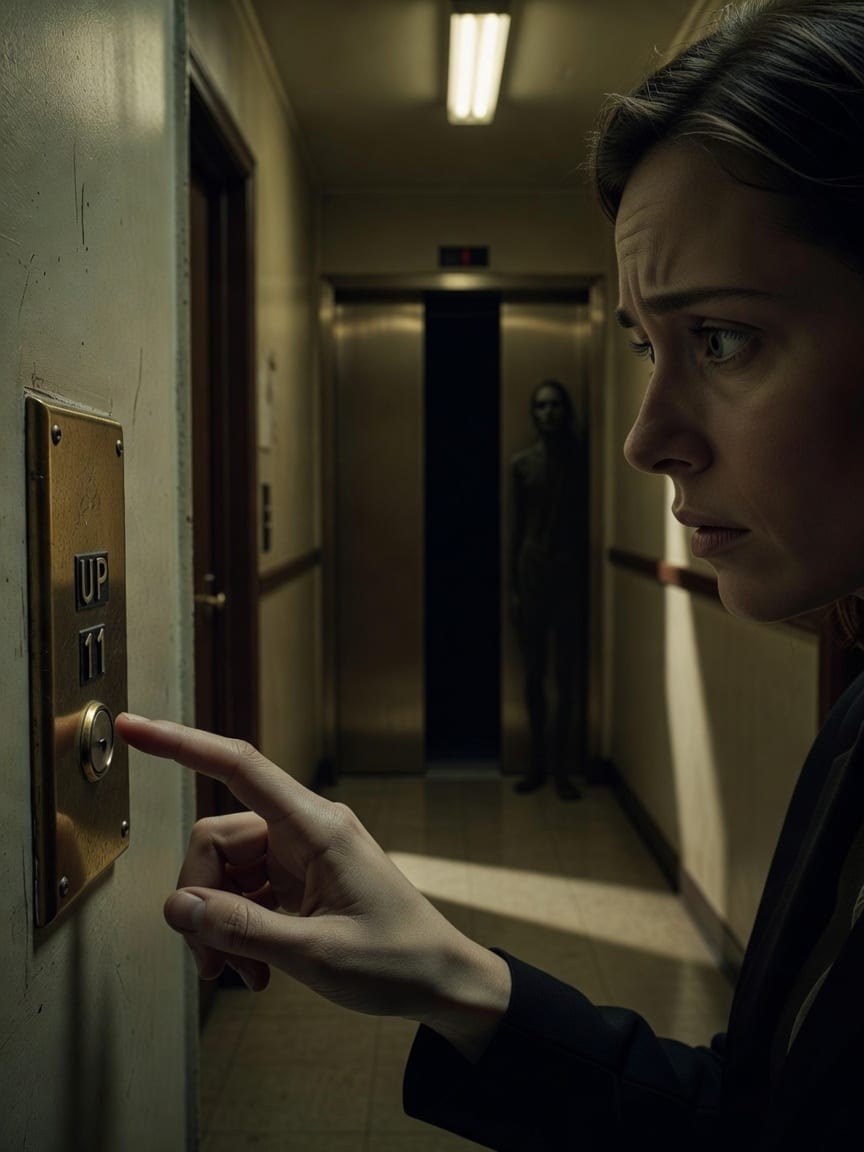
My doorman warned me not to take the tenth-floor lift on Saturday. The building's lift passed inspection last month. He seemed terrified that he'd said it.
My doorman's unsettling warning about the tenth-floor lift left me with a metallic taste of unease. I tried to rationalize it away, but then a birthday card arrived for me, five months early, from an impossible address. It was a site linked to unexplained disappearances, and a cold certainty began to settle in.
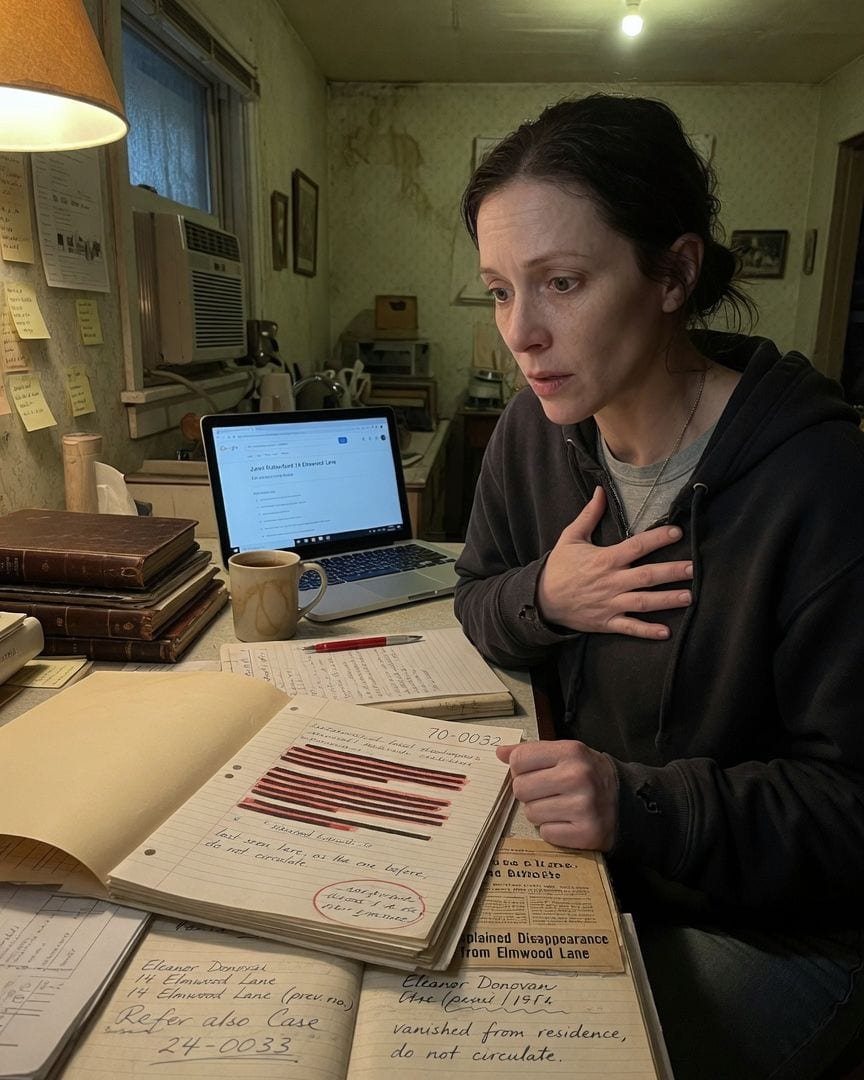
My own address is on a missing person's file from 1970. The blacked-out line names my street. She never lived here.
When my neighbor vanished, I started digging into old local missing persons cases. In a police file for a woman who disappeared in 1970, I found my own address, 14 Elmwood Lane, framing a blacked-out section of the duty log. Janet Rutherford never lived here, and the file contained a chilling handwritten note: 'do not circulate.'
My MRI showed a perfect, decades-old surgical opening in my skull. I have no memory of it.
I underwent a routine MRI for persistent dizziness, expecting reassurance. Instead, the scan revealed a perfectly healed, decades-old surgical opening in my parietal bone, just behind my left ear. Dr. Hughes confirmed it was an access point for a procedure, yet I have no memory of any head surgery, ever. My body holds a secret I cannot recall.
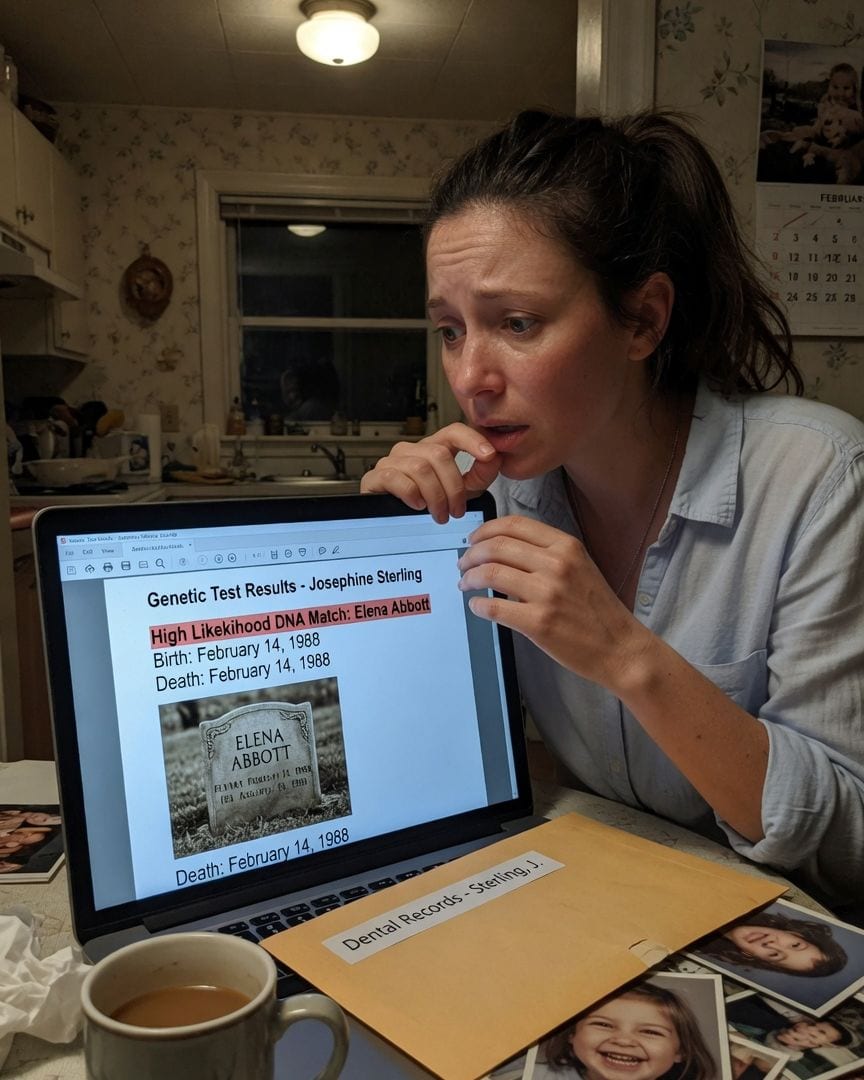
My dental scan shows a titanium implant where my own healthy tooth sits. The dentist tapped the bright screw on screen, then my actual canine, and said both could not be true.
My routine dental check-up took a dark turn when Dr. Caldwell found something impossible on my X-ray. A bright, metallic screw was fused into my upper jawbone. Yet, my own tooth in that exact spot was perfectly healthy, just as it had always been. Dr. Caldwell's words echoed: "These two things cannot both be true, Josephine."