My kitchen hums an old hymn every Sunday morning. The taps run themselves, and I live alone.
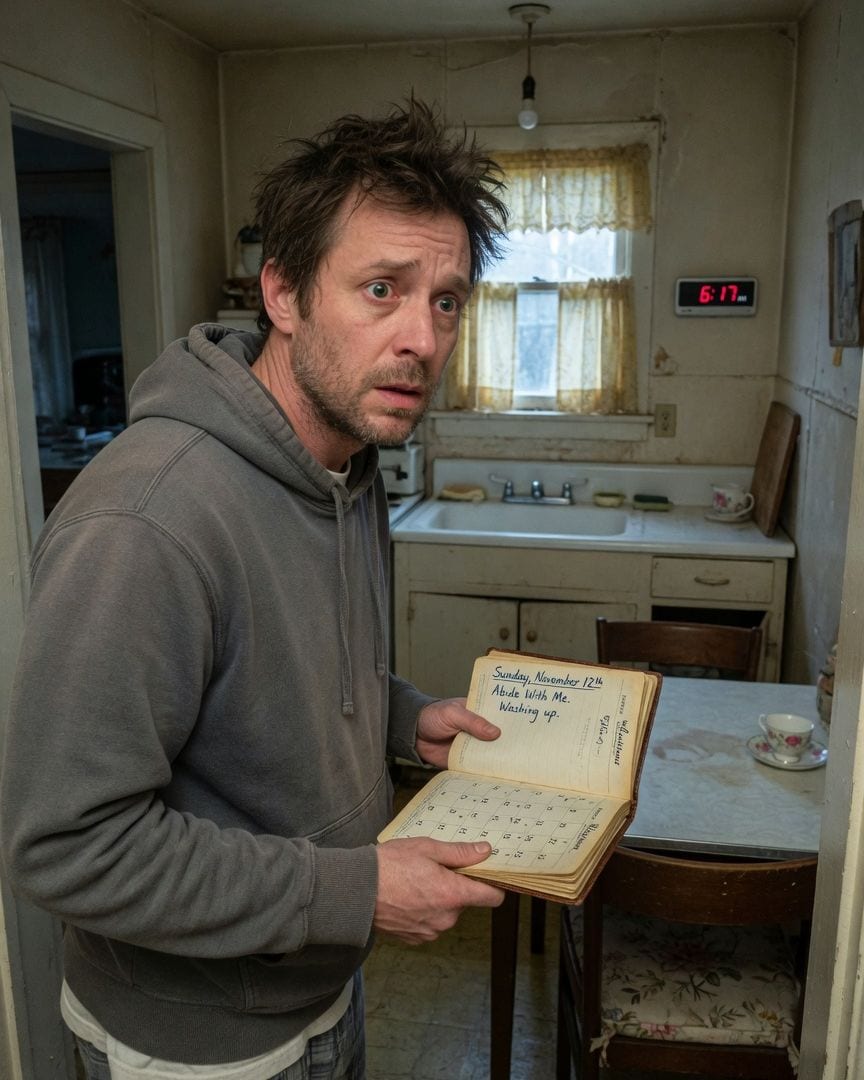
Every Sunday morning at precisely 6:15 AM, the kitchen comes alive with a soft, low hum.
It’s always the same tune, 'Abide With Me,' a woman’s voice, not quite singing, more like a gentle, focused murmur as she moves around the room.
I’ve looked up the hymn online, played it back on my phone, just to be sure. It’s unmistakable.
The sound is always accompanied by the distinct groan of the old taps turning on, a gush of water, then a minute later, silence.
The taps turn off, the hum fades, and when I finally drag myself out of bed and into the kitchen, the sink is always perfectly dry.
The house is mine now, inherited from a distant relative I barely knew, and I live alone.
There’s a particular worn spot on the linoleum in front of the sink, a shallow depression that catches the morning light, as if someone stood there every day for decades.
And an old wooden chair, pushed into the kitchen table, has a slight but distinct indentation on its cushion, as though someone sat there daily.
I’ve tried to convince myself it’s drafts, old pipes, my own imagination playing tricks in a new, unfamiliar place, but the timing is too precise, the hymn too clear.
The routine never varies, a quiet, domestic ritual that unfolds without me, and without a body.
My rational mind fought hard. I checked the plumbing for timers, examined the windows for hidden vents, even left a bowl of water in the sink one Sunday, only to find it overflowing onto the counter after the 'event.'
No, the taps weren't just running; they were used. There was even a faint, clean smell of soap some mornings, though the soap dish was always empty.
The house, an old two-story with a small, cramped kitchen, felt like it was holding its breath between these incidents. One afternoon, while scrubbing at a persistent stain near the sink's worn spot, my sponge snagged on something loose.
It was a kickboard, secured by rusty nails that had given way. Behind it, in the dusty cavity, I found a small, ceramic teacup, a delicate floral pattern I hadn’t seen anywhere else in the house.
It was inverted, as if someone had hastily hidden it. Beside it, wrapped in yellowed tissue paper, was a small, leather-bound book. Not a diary, but a calendar, its cover embossed with the year 1973.
My heart gave a strange thump. I knew the house had been empty for a few months before I moved in, and the last occupant, Dorothy Harlow, had passed away late last year. This calendar was from decades ago.
I pulled it out, the brittle pages threatening to crumble, and found it meticulously filled with daily entries, mostly mundane: 'Groceries,' 'Library,' 'Call Sylvia.' But on Sundays, one entry was consistent, written in a spidery, elegant hand: 'Abide With Me.
Washing up.' My breath hitched. The same hymn. The same routine. It wasn’t a glitch. It was a memory.
The calendar was a tangible link, too specific to ignore. I flipped through the brittle pages, past the mundane appointments, past the careful records of weather and small household tasks.
The hand grew shakier towards the later months of 1973, the entries more sparse, sometimes just a single word. Then, I found it.
A page torn from the back, tucked into October, with a single, looping signature at the bottom: 'Dorothy Harlow.' Below it, scrawled in a different, fainter ink, almost erased, were the words: 'It starts again.'
I stared, the blood draining from my face. This calendar, left behind, wasn't just a record of her life. It was a message. A warning. I felt a cold dread settle in, deeper than any draft or faulty pipe.
The house wasn't just remembering; it was repeating. My fingers brushed against the brittle, paper-thin pages. I looked down.
The date at the top of the open page read "Sunday, November 12th," and beneath it, in shaky blue ink, "Abide With Me. Washing up."
The calendar became my anchor, confirming the routines I'd been experiencing. I spent hours poring over its delicate pages, cross-referencing dates with local obituaries for the name Dorothy Harlow. It was a dead end.
The Dorothy Harlow who owned the house until last year, the one I inherited it from, was born in 1934, making her too young to have kept a calendar from 1973. This Dorothy was someone else, someone older.
I started digging deeper into the house's history, visiting the local historical society. The archivist, Paul Foster, a man with tired eyes and an air of perpetual distraction, was less than helpful.
He had records for the house, of course, but nothing about previous occupants before the Dorothy Harlow I knew, beyond a generic 'various families.'
When I mentioned the 1973 calendar and the name Dorothy Harlow, he grew visibly uncomfortable, shuffling papers and mumbling about privacy laws. His evasiveness only fueled my suspicion.
I started leaving the house every Sunday before 6:15 AM, just to break the cycle, but the hum and the running taps still happened, confirmed by a cheap voice recorder I left hidden in a cupboard.
It wasn't about me being there; it was about the house's schedule. I tried talking to the oldest neighbors, Mrs. Henderson from two doors down, a woman who’d lived on the street for sixty years.
She remembered the 'other' Dorothy Harlow, the one who lived there for decades before passing in the late 70s. 'A quiet woman,' she’d said, 'kept to herself, always humming as she did her washing up.'
She even mentioned the hymn, 'Abide With Me,' as Dorothy’s favorite, and how Dorothy always stood at the sink, then sat at 'her chair' for tea. The pieces were starting to fit, but the fit was horrifying.
The calendar, the humming, the worn floor – it was all Dorothy’s life, playing out, decades after she was gone.
My persistent inquiries at the historical society seemed to have stirred something. Paul Foster started appearing at odd times, 'just passing by' my house, or making unexpected calls to 'check if I needed any help settling in.'
His polite concern felt like surveillance. One afternoon, I found a small, almost imperceptible scratch on the lock of my back door, like someone had tried to pick it.
Nothing was missing inside, but the message was clear: someone knew I was digging. The next day, a plain, unmarked envelope appeared in my mailbox. Inside was a single, faded photograph of my house, taken decades ago.
On the back, in shaky, unfamiliar handwriting, were the words: 'Some things are better left undisturbed.' It wasn't a threat, but a warning, a plea.
I felt a chill that had nothing to do with the draft from the old windows. Someone, perhaps Paul, perhaps someone else entirely, was watching me, observing my investigation.
They knew about the house, about Dorothy, about whatever pattern I was unknowingly stepping into. The hunt had turned.
I was no longer just a curious resident; I was a marked player in a game I didn't understand, and the rules were being dictated by forces I couldn't see, only feel.
Driven by the warning, I confronted Paul Foster directly. I walked into the historical society, the faded photograph clutched in my hand. He was at his desk, pretending to catalogue old newspapers.
"Mr. Foster," I said, my voice sharper than I intended, "I need to know everything about this house. And about the Dorothy Harlow who lived there in the seventies." He flinched, his face paling.
"I've told you, Ms. Brooks, our records..." "Your records are incomplete, or deliberately withheld," I cut him off, sliding the photograph across his desk.
He stared at it, then at me, a flicker of something, fear or resignation, in his eyes. "Who sent you this?" he whispered. "I don't know," I replied, pressing, "but someone knows I'm asking questions.
And someone knows about the routines. The hum. The taps." His shoulders slumped. He finally looked up, his gaze meeting mine, and I saw a deep weariness there.
"Dorothy Harlow lived in that house from 1950 until her death in 1978," he began, his voice low. "She was a widow, alone for many years. She kept to a very strict schedule.
Neighbors reported hearing her humming 'Abide With Me' every Sunday morning as she did her washing up, right up until... well, until she stopped being seen." He paused, taking a shaky breath. "She died in the house. Alone.
They found her a week later." He pulled out a dusty file, its corners dog-eared. "Her will stipulated the house be sold 'as is,' with no further inquiry into its history." He slid a brittle newspaper clipping across the table.
It was a small obituary, confirming her death. "The house retains... certain echoes," Paul said, his voice barely audible. "Like an old phonograph, playing the same worn groove." The words hit me like a physical blow.
It wasn't just a memory; it was a recording, playing on a loop. Every detail I’d experienced, every sound, every worn spot – it wasn't a ghost, but the house itself, meticulously replaying a life that had ended there.
The truth about Dorothy Harlow was a cold knot in my stomach. The house was a reliquary of routine, a stage for a final, solitary performance. But why me? Why now?
I pressed Paul for more, for anything that might explain why the house had chosen me, or if it was just random. He resisted, citing confidentiality, but his eyes kept flicking to a locked drawer in his desk.
"There's nothing else, Ms. Brooks. Just... local folklore." I didn't believe him. I left, but I didn't go home. I returned to the historical society late that night, a credit card jimmying the lock on the back door.
The office was dark, silent. I found Paul's desk, and the locked drawer. It took me ten minutes, my heart hammering, but it gave way with a soft click. Inside, nestled beneath innocuous property deeds, was a slim, leather-bound folder.
Its cover was blank. My fingers were just brushing against the first page when the fluorescent lights flickered on above me. Paul Foster, his face pale and grim, stood in the doorway, his shadow falling over the open drawer.
He didn't shout, didn't even raise his voice. He just walked slowly to the desk, pulled out a single, yellowed sheet of paper from the folder, and slid it across the table towards me.
It was a typed memo from 1974, marked "Confidential – Residential Anomalies," detailing "recurrent domestic manifestations" at my address, including specific routines and the "disappearance" of the then-occupant, a Beatrice Langford.
Paul's eyes met hers, a silent, terrible apology in their depths.
Paul didn't shout. He just sighed, a sound heavy with decades of unspoken burden. "You weren't supposed to find that," he said, his voice devoid of anger, just profound sadness. "No one is."
He stepped into the room, closing the door behind him. "This isn't just about Dorothy, Lydia. Or Beatrice, or Sylvia. This house... it's a convergence point. A place where certain energies, certain deeply ingrained patterns, become permanent."
He explained that the historical society wasn't just about preserving the past; it was also about managing certain 'anomalies' that cropped up in the town's oldest properties.
His grandfather had started the 'Residential Anomalies' file, passed down through generations of his family.
The house, he said, had a roughly fifty-year cycle, a period during which it would 'activate,' drawing in an occupant who would eventually be absorbed into its fabric.
"It's not malicious, not in the way you think of a ghost," Paul clarified, picking up one of the logbooks. "It's more like a deep-seated memory, a recording.
When an occupant lives a solitary life, especially if they die alone within its walls, their final, most consistent routines become imprinted.
The house plays them back, over and over, until the next cycle begins, and a new 'memory' is laid down." He pointed to a note in the 1924 logbook. "Sylvia Marsh, like Dorothy, hummed 'Abide With Me' on Sundays.
It seems to be a recurring motif, a kind of signature for the house's retentions." Every clue clicked into place: the hymn, the worn spots, the calendar.
It wasn't a haunting; it was a horrifying, repeating mechanism, and I was the next subject.
The truth was a lead weight in my gut. I wasn't being haunted; I was being drawn into a recurring pattern, a part of the house's living memory.
Paul explained that they had tried, in the past, to intervene, to cleanse the house, to warn new occupants. "It never works," he said. "The pattern always reasserts itself.
We learned that the best we can do is monitor, document, and try to ensure the house doesn't remain vacant for too long, as that seems to accelerate the next cycle." His words were chillingly pragmatic.
There was no ghost to fight, no curse to break, just a cold, indifferent cycle. I looked at the files, at the names – Dorothy, Beatrice, Sylvia – and saw my own name, waiting to be written in.
I couldn't stay. I knew that with a certainty that transcended fear. I couldn't become another echo. The next morning, I called a real estate agent. I didn't care about the market, about making a profit; I just needed out.
Paul, with a quiet solemnity, helped me navigate the sale, ensuring the house went to a buyer who was, as he put it, 'unlikely to notice the subtle rhythms.'
It felt like a betrayal, a passing of the burden, but I had no other choice. I packed only what was essential, leaving behind most of the furniture, the appliances, the things that had absorbed my own nascent routines.
As I locked the front door for the last time, I thought of the worn spot by the sink, the hum that would continue. I was escaping, but the house had already left its mark.
Its memory was now, irrevocably, a part of my own.
The house sold quickly, to a young, boisterous family with three children, the kind of vibrant energy that Paul Foster believed might disrupt the established patterns, at least for a while.
I moved into a small, anonymous apartment across town, deliberately choosing a modern building with no history, no echoes. I still saw Paul occasionally, a silent nod exchanged, a shared secret hanging between us.
He never asked how I was, and I never offered. The only thing I kept from the house was Dorothy's 1973 calendar, tucked away in a locked box.
A tangible reminder of the truth, of the quiet, insidious horror of coherence. I tried to settle into a new routine, but every Sunday morning, a phantom hum resonated in my mind, a low, familiar tune.
The memory of the house, of its cold, indifferent cycle, clung to me like a shroud.
I've installed smart home devices, motion sensors, cameras, in my new apartment. Not for security, but for reassurance. To prove to myself that when the taps run, I turned them on.
To confirm that the only sounds are the ones I make. But the vigilance is exhausting. Sometimes, in the quietest moments, I catch myself humming 'Abide With Me,' a tune I barely knew before.
It's a low, unconscious murmur, just like Dorothy's. I stop abruptly, my heart racing, and force myself to hum something else, anything else. The house is gone, but its memory lingers, not just in the calendar, but in me.
I am free of its walls, but not of what I learned there. The quiet of my new kitchen is a different kind of burden now.
If this one got to you
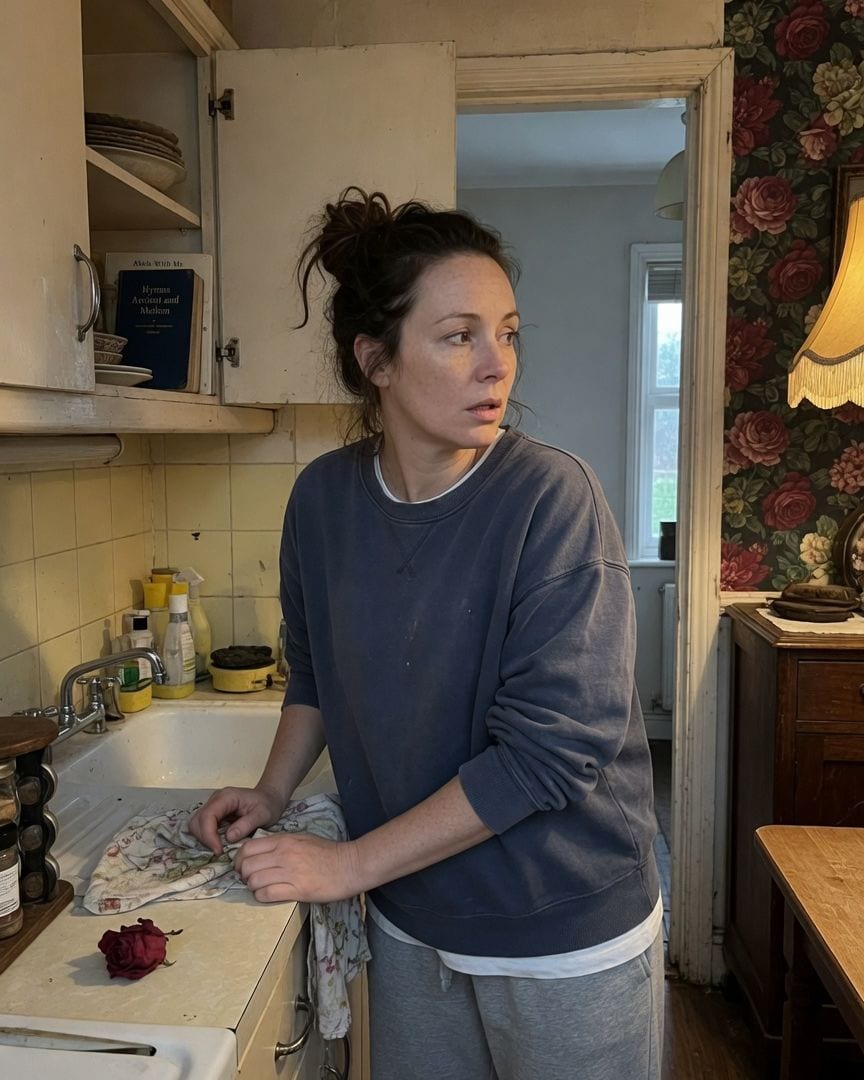
My kitchen taps run themselves on Sundays while a woman hums 'Abide With Me.' I live alone.
I moved into this quiet 1928 house for a fresh start, living alone. But for three months now, every Sunday morning, a low, tuneless hum and the distinct sound of running water drift from my kitchen sink. A plumber found no explanation.
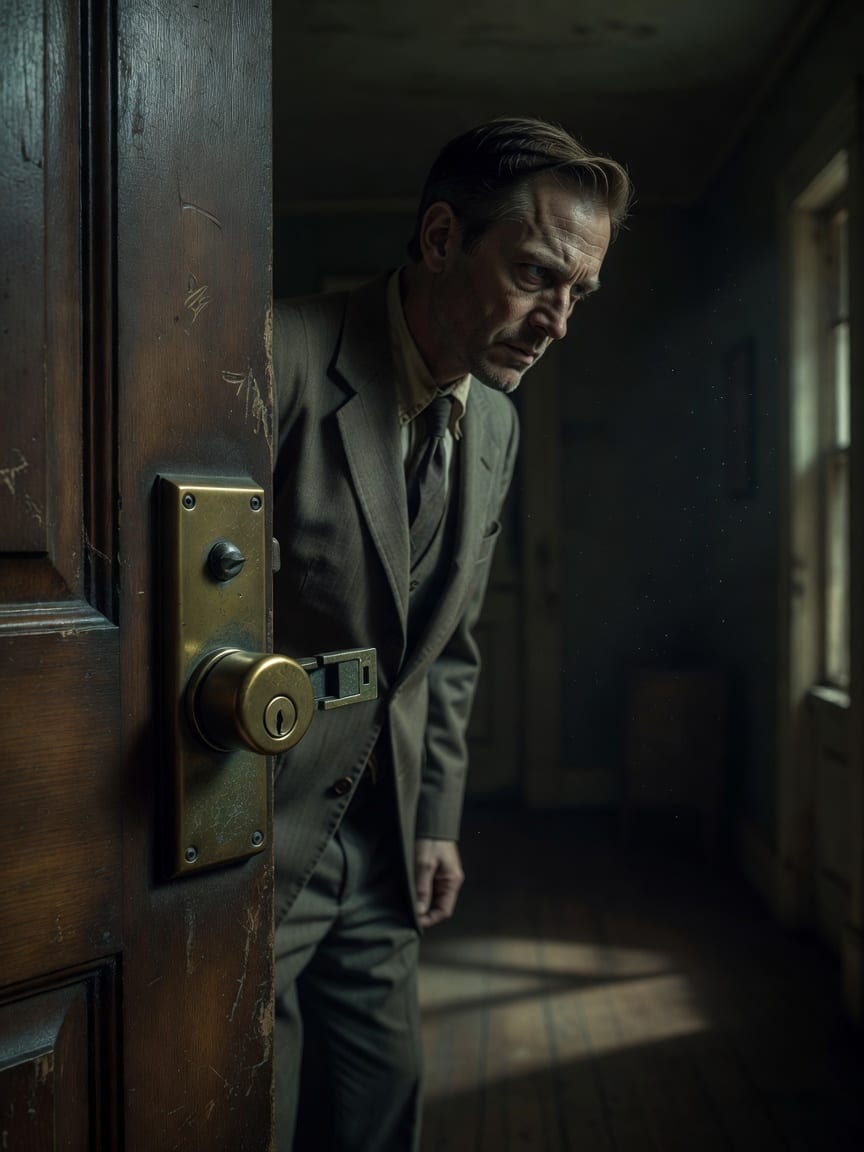
My deadbolt clunks shut from inside every night, long after I'm asleep. I live alone, and I've never heard it drawn back.
Inheriting Great-Aunt Lydia's house felt like a fresh start, until the nightly clunk of the deadbolt from downstairs started. I live alone, but every evening, the front door locks itself from the inside. Now, I’ve found Lydia’s meticulously kept calendar, with a 7 PM 'Deadbolt Check' written for tonight, a year after she died.
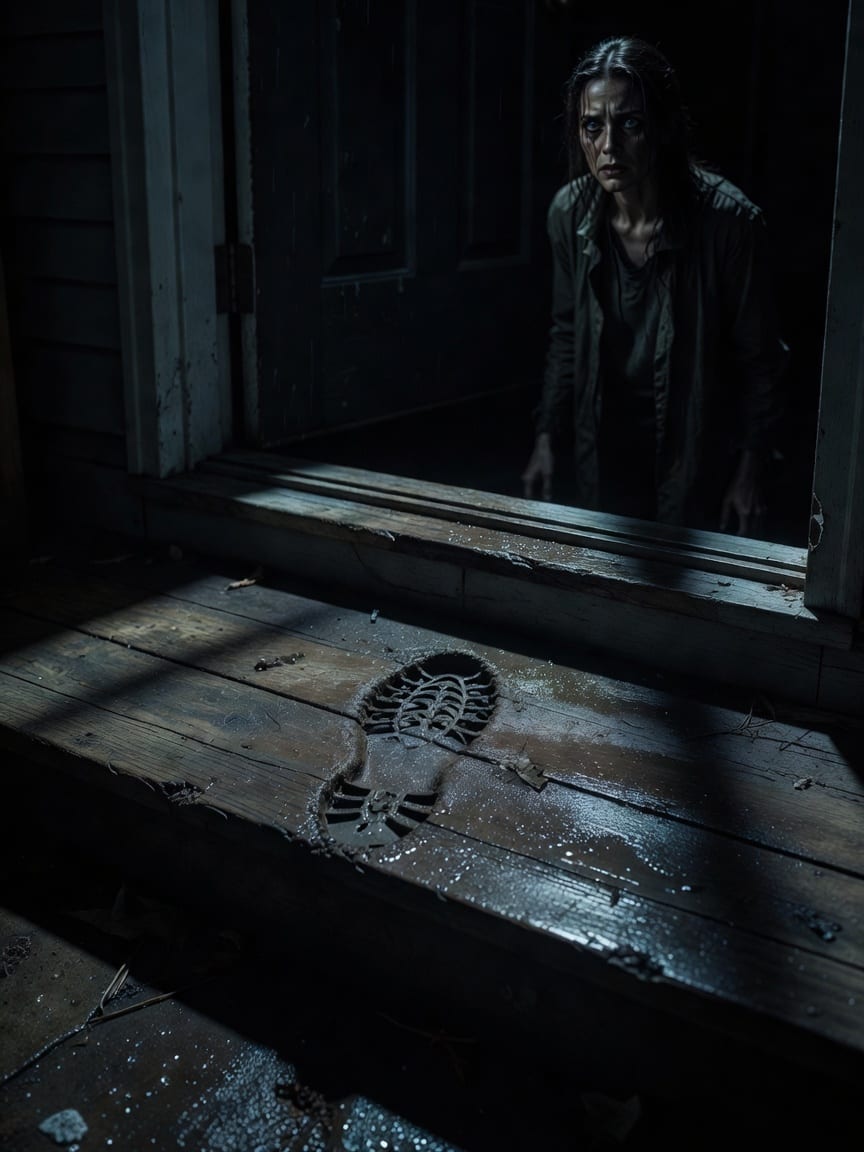
My landlord's only rule: never let the outside tap run after sundown. Last week it dripped. This morning, wet bootprints ringed the back step from the tap to my door, all the same size. The tap was off.
We'd just settled into Waterside House, with its strange landlord rule about the outside tap. After the washer broke, I found perfect, wet bootprints leading from the tap to our back door, but the tap was cranked completely off, tighter than I could manage.
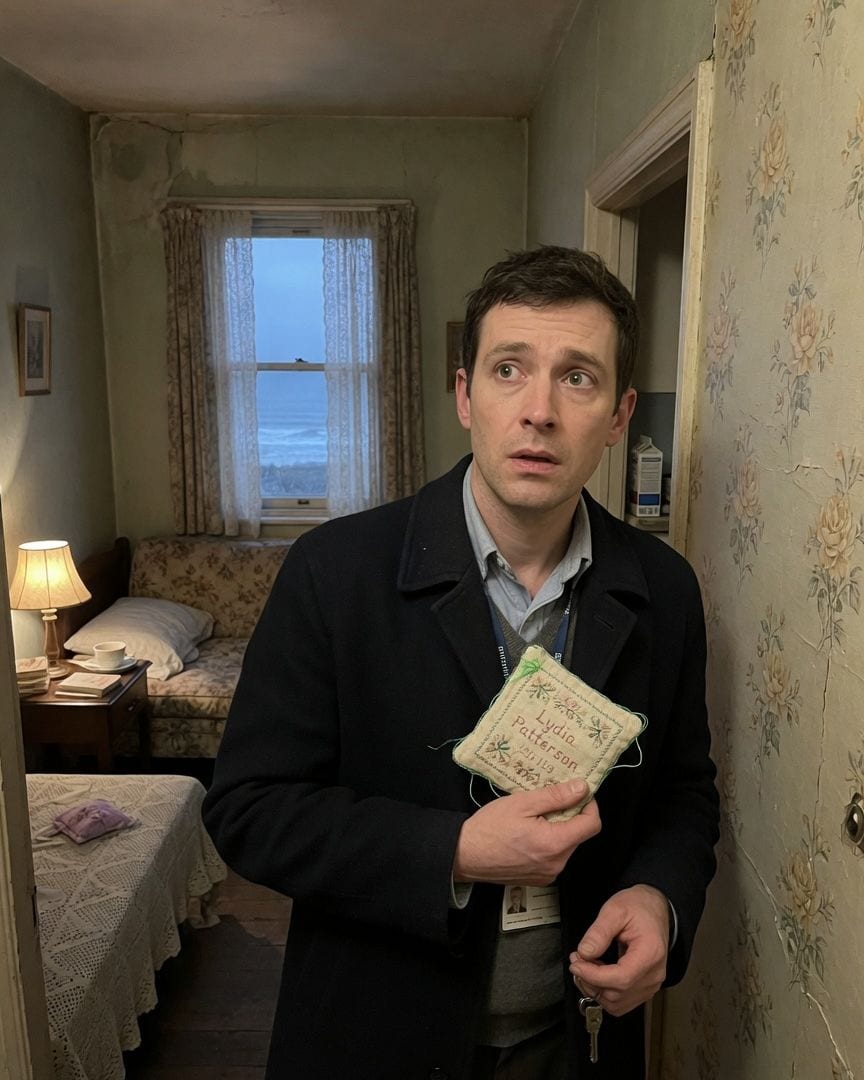
The 'empty' almshouse I was auditing wasn't empty. I heard a bare foot *thump-thump* from next door.
My new charity role involves auditing the supposedly 'empty' almshouse units. But from the unexplained activity outside to a fresh carton of milk inside, something is deeply wrong. Then, in one unit, I found a dead woman's sampler with a jarringly new thread, and heard bare feet thumping next door.
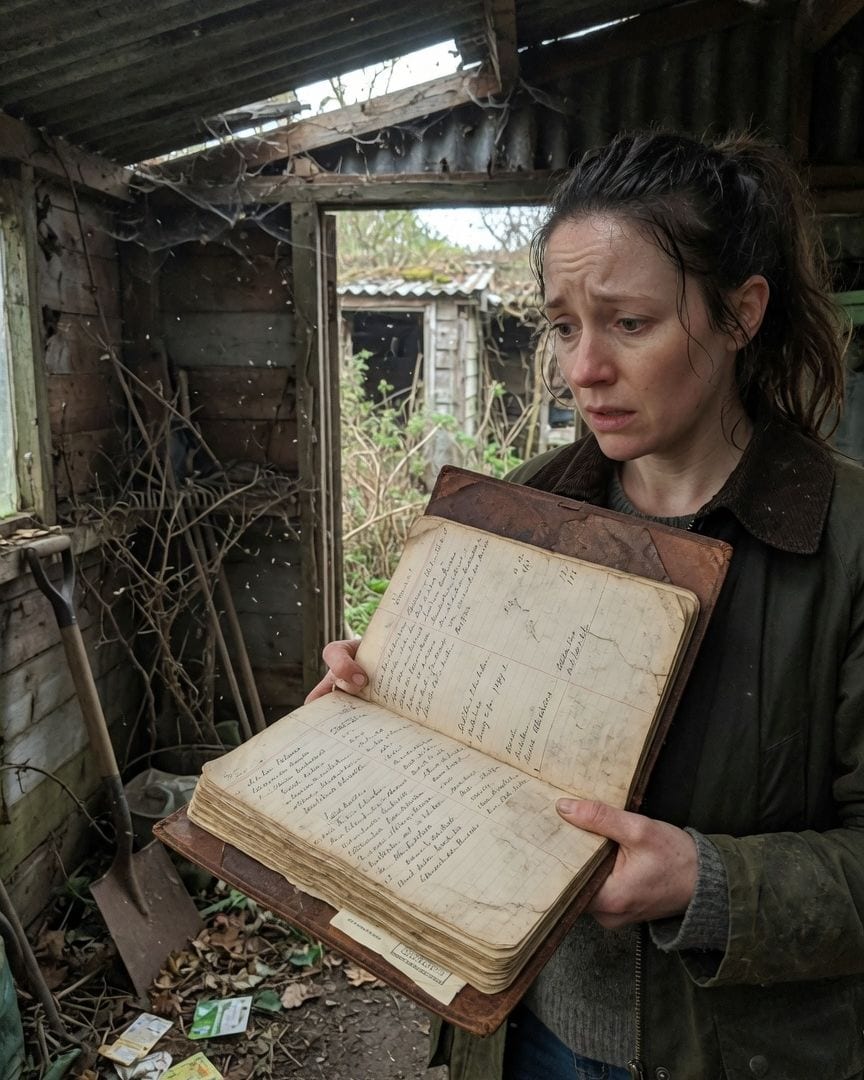
My mailbox holds my own obituary, updated weekly. The postmark reads Cold Ashby allotments, where there's only a standpipe and sheds.
Every Wednesday, a crisp white envelope arrives, containing my own obituary. It's mailed from the desolate Cold Ashby Allotments, a place with no post office, and each week a new, accurate detail of my life is added, leaving only the death date chillingly blank.
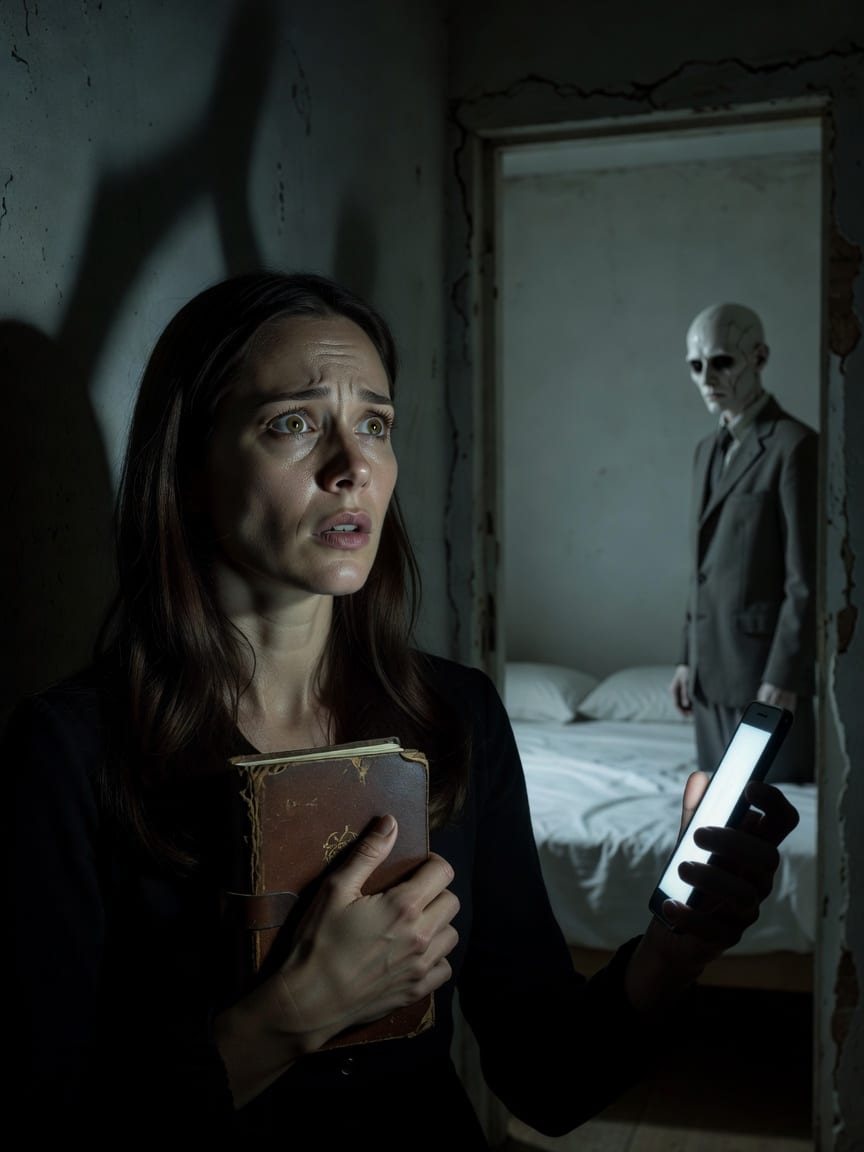
Behind a plastered-over doorway, I found a room. Papered, carpeted, and furnished with a made bed, sealed for decades. The air was dead still, but the bed wasn't dusty. My council tax bill only lists five rooms.
I'm Claire, an architect, meticulously planning my new Victorian terrace renovation. But when I uncovered a hidden room behind a wall, everything I knew about time and decay shattered. The bed was perfectly made, the air still, yet there was no dust, only an unnerving cold.