My mailbox holds my own obituary, updated weekly. The postmark reads Cold Ashby allotments, where there's only a standpipe and sheds.
The envelope arrived, crisp and white, exactly as it had for the last five weeks. Wednesdays. Always Wednesdays. It sat on my kitchen table, a silent, stark interruption to the usual bills and junk mail.
My hand trembled slightly as I picked it up, feeling the specific, thick weight of the paper. There was no return address. Just my name, "Annika Whitaker," in an elegant, almost calligraphic script I didn't recognize.
And the postmark. Every week, the same blurred, black stamp: 'Cold Ashby Allotments.'
I knew Cold Ashby allotments. Everyone did. It wasn’t a place anyone lived. Just a desolate stretch of land on the edge of town, overgrown and mostly abandoned.
A few ramshackle sheds, barely standing, their corrugated iron roofs rattling in the wind. And a single, lonely standpipe, rusted and leaking. No houses, no shops, certainly no postboxes or proper postal sorting facilities.
It was the kind of place local kids dared each other to visit at night.
Inside the envelope, as always, was a single sheet of paper. Cream-colored, heavy stock. And on it, printed in the same formal script as the address, my own obituary.
"Annika Whitaker, born May 14, 1992."
My birthdate was correct, down to the day. My heart hammered against my ribs. Each week, a new line was added, a new detail. The first one had just been my name and birthdate.
Then, "Daughter of Eleanor and Robert Whitaker." Then, "Beloved sister to Liam Whitaker." It was unsettlingly accurate. This week, a new line: "A passionate gardener, known for her vibrant dahlias."
My dahlias were, in fact, the only thing I truly managed to keep alive in my small city garden.
But the second date, the one that should mark the end of a life, remained a stark, chilling blank space.
I tried to tell myself it was a prank. A sick, elaborate joke. But who would know these specific details? And who would go to such incredible lengths, week after week, to mail something from a derelict field?
My rational mind scrambled for an ordinary explanation – a high-tech printer, a coordinated effort, a very determined eccentric.
But the sheer consistency, the impossible details, the desolate postmark… it left a cold, spreading void where common sense should have been. Each new line only deepened the impossible puzzle, solidifying a dread that felt too precise to be random.
Driven by that quiet, persistent dread, a hollow ache that had been growing in my stomach for weeks, I found myself driving towards the Cold Ashby allotments a few days later.
It was a Tuesday, the day before the next letter would inevitably arrive. The sky was grey, heavy with unspoken rain.
As I pulled up to the gate, little more than two rusted poles and a length of barbed wire, the wind immediately whipped across the empty expanse, rattling the corrugated iron of the few ramshackle sheds.
It was exactly as I remembered it – bleak, desolate, silent save for the wind. No houses, no mailboxes, nothing to suggest a postal service ever operated here.
I walked among the overgrown plots, where weeds had long since reclaimed what little order there once was.
The silence was profound, broken only by the mournful creak of rusty hinges on a distant shed, or the rustle of dry weeds under my boots.
I scanned the sheds, trying to imagine where a postman, even a rogue one, might collect mail. There was nothing. No drop-off box, no obvious point of origin.
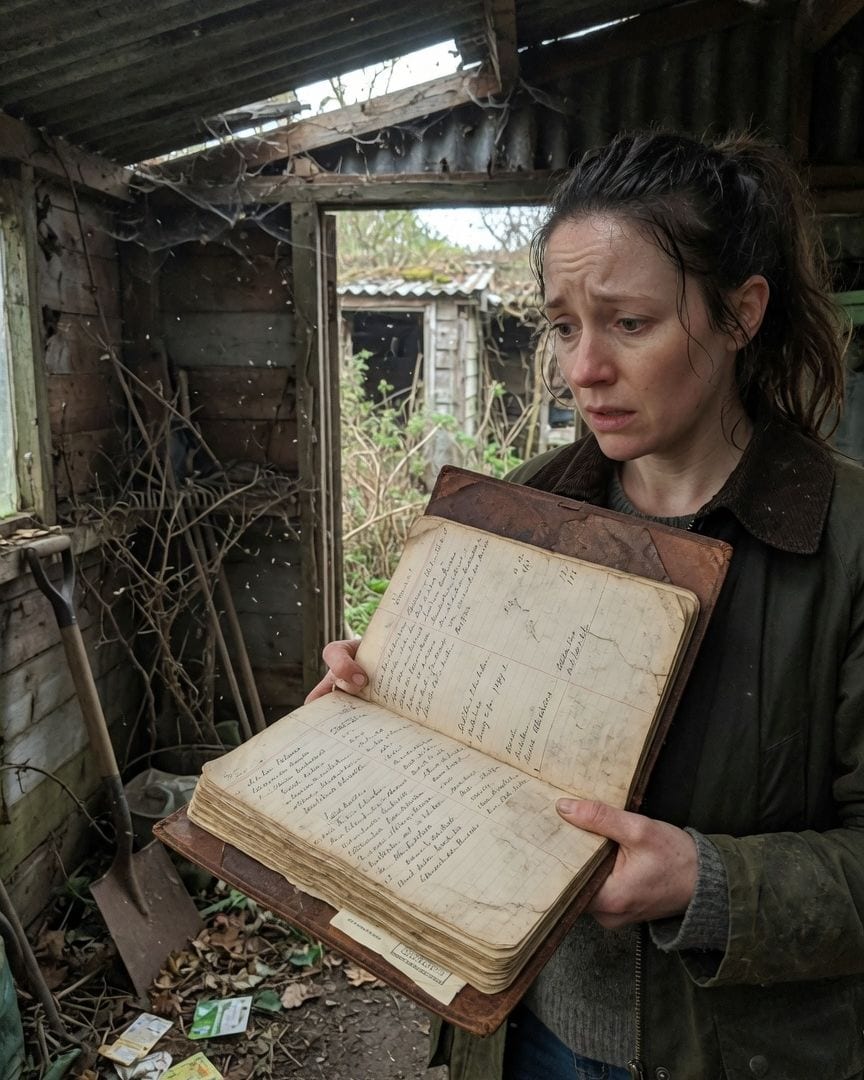
Then, I saw it. One shed, more dilapidated than the others, stood half-hidden by a tangle of thorny bushes. Its door, a patchwork of rotting wood and rusted metal, hung slightly ajar, swaying barely perceptibly in the wind.
A dark, rectangular gap beckoned.
A faint, inexplicable compulsion drew me towards it. The air around the shed felt colder, heavier, than the rest of the field. I pushed the door open further, its groan a long, drawn-out complaint.
Inside, it was thick with dust and cobwebs, the air stale and earthy. Streaks of weak daylight filtered through cracks in the roof, illuminating motes dancing in the gloom.
In a corner, beneath a pile of ancient, rusted gardening tools – a spade with a broken handle, a tangled rake – I found it.
A heavy, leather-bound ledger. Its cover was scarred and faded, the leather cracked like old skin. Its pages, when I gently lifted the cover, were yellowed and brittle, smelling faintly of mildew and damp earth.
My hands trembled, a sudden, icy certainty washing over me.
The meticulous, looping script filled page after page with names and dates. A litany of lives, listed with an unnerving, formal precision. I flipped through them, my breath catching in my throat. 'Arthur Peterson, born 1912.' 'Elara Jenkins, born 1905.'
Old names, old dates, decades gone.
And there, halfway down a page dated '1965,' was my own.
'Annika Whitaker,' followed by 'Born: May 14, 1992.'
The second date, like on my weekly obituaries, was a stark, empty line.
My breath hitched, a cold knot tightening in my chest. My name. My exact birthdate. Meticulously recorded in faded ink on a page dated 1965. Decades before I was born. Decades before my parents had even met.
The ledger, heavy and ancient in my hands, felt impossibly solid, undeniably real. The blank second date on the page stared back at me, a silent, terrifying echo of the letters I received every Wednesday.
My logical mind, desperate for an explanation, stumbled and fell, leaving me exposed to a dread that was no longer abstract, but utterly, terrifyingly personal. I stood frozen, the impossible coherence of it all pressing down on me.
Back home, the ledger became my obsession. I spread it out on my kitchen table, pages open to my own chilling entry, surrounded by a scatter of the recent obituaries.
For days, I barely slept, pouring over every page, every name. I researched Cold Ashby allotments online, scoured local historical archives, even visited the town hall to look at old council records.
The land had been council-owned since the early 1970s, designated specifically as public allotments.
There was no record of private ownership predating that, no mention of any house or building that could have housed a postal service, let alone a permanent resident. No formal postbox had ever existed on the site.
Everything I found only deepened the impossibility.
I started at the local post office, a small, bustling place just off the high street. I spoke with the longest-serving clerks, describing the postmark, the unusual nature of the deliveries.
They remembered the allotments, of course, but insisted no regular mail deliveries went there. "Just to the surrounding residential areas," one woman, Brenda, told me, "never actually to the allotments themselves. No addresses, you see."
I was about to give up, my shoulders slumping, when an older clerk, Sylvia Vance, looked up from her sorting tray. She wore thin-rimmed glasses perched on her nose, and her grey hair was pulled back in a neat bun.
"Cold Ashby, you say? And… unusual deliveries?" Her voice was softer than Brenda's, thoughtful. "Well, there was Walter Sutton. Retired now, God bless him, must be near seventy. He worked the Cold Ashby route for over forty years.
Knew every hedgerow, every barking dog, every address. Had an almost photographic memory for deliveries, and a keen eye for local eccentrics."
She paused, then added, almost to herself, "He always did say the allotments had a… unique sort of mail."
My heart gave a sudden, hard thump. "Walter Sutton?" I asked, trying to keep my voice even. "Do you have his contact details?"
Sylvia hesitated, her brow furrowing slightly. "He's a private man, Walter is. But… if it's about the Cold Ashby route, maybe." She rummaged through a dusty drawer beneath the counter, eventually pulling out a worn address book.
She scribbled a number on a small, pink slip of paper, her hand moving slowly, as if she were reluctantly handing over something precious.
My hand trembled as I took it, the possibility of a tangible lead both a profound relief and a terrifying prospect.
I thanked her, my voice barely a whisper, and walked out into the cold afternoon air, clutching the slip of paper like a lifeline.
The phone rang, a slow, deliberate cadence, each ring ratcheting my anxiety higher, a frantic beat in my ears.
Walter Sutton answered on the third ring, his voice surprisingly clear and calm for an older man. There was a gentle, almost lilting quality to his tone. "Sutton," he said simply.
"Mr. Sutton?" I started, trying to keep my voice steady, professional. "My name is Annika Whitaker. I got your number from Sylvia Vance at the post office. I'm calling about the Cold Ashby allotments."
I explained my situation, carefully omitting the more unsettling details about the weekly obituaries, focusing instead on the peculiarity of the postmark.
"I've been receiving letters postmarked from there, and I can't understand how mail could originate from such a desolate place. Sylvia said you might have some insight, having worked the route for so long."
Walter chuckled softly, a dry, rustling sound. "Ah, the allotments," he said, a distinct note of familiarity, almost fondness, in his tone. "Yes, I remember those specific deliveries quite well."
My heart pounded, a frantic drum in my chest. "You do?"
"Indeed," he confirmed. "For a very long time." He paused, and then, without me prompting, he asked, "What was your name again, dear?"
"Annika Whitaker," I supplied, my voice barely a whisper, waiting, tense.
A longer pause this time, filled only with the faint crackle of the phone line. Then Walter said, his voice even calmer, "Annika. Yes, I remember your letters. Always on Wednesdays, weren't they?"
My breath caught in my throat. He knew. How could he possibly know? I hadn't mentioned the frequency, only the postmark.
Before I could ask, he continued, his voice taking on a strangely descriptive quality. "Cream-colored envelopes, distinctively so. And the script on the address, a faint, almost calligraphic hand. Not quite cursive, not quite print.
And the paper… always felt a bit heavier than standard. Good quality stock, for such an unusual sender."
He kept talking, describing details I had never mentioned to anyone. Details that perfectly matched not just my recent obituaries, but every single important letter I’d received my entire life.
Birthday cards from forgotten relatives that had an odd, formal script. School reports that somehow always felt a little heavier than others. University acceptance letters.
Even a card from my grandmother after she'd passed, found in her belongings, that had the same distinctive paper. A cold dread, far deeper than I'd felt before, seeped into my very bones.
He knew. He had always known. I felt utterly exposed, as if he could see me, not just hear me, across the telephone line.
I pressed him, my voice barely a whisper. "How did you know, Mr. Sutton? How could you have known about my letters, the color, the script, the Wednesdays?"
Walter's calm remained unshaken. In fact, it seemed to deepen, his tone becoming almost pedagogical, as if explaining something utterly mundane. "The allotments, Annika, aren't just land. They're a collection point for certain declarations."
He spoke the word 'declarations' with a quiet emphasis. He explained that the letters weren't from anyone, in the conventional sense. They simply appeared.
Always for someone, always on a Wednesday, in a small, unmarked slot on the side of the most dilapidated shed – the very shed I had found, the one with the ledger.
"I simply collected them as part of my route," he stated, as if it were the most mundane thing in the world. "They were there, so I delivered them. No return address, no sender, just a name and an address.
My job was to ensure they reached their recipient." He paused, and I could hear a faint sigh. "I never believed they were a prank. They were too consistent, too precise.
And they began appearing for certain individuals from the very day they were born, sometimes even before."
He then revealed the ledger. "I started keeping it myself," he said, "taking over from the previous postman, a fellow named Thomas. He showed me the shed, the slot, the old book.
Told me it was important to keep track of the names for whom these 'declarations' appeared. A record, you see, of who was... marked."
He confirmed that when he found my very first 'declaration' letter, the one announcing my birth, he had logged 'Annika Whitaker' in the ledger, with my birthdate, just as he'd been instructed. "Thomas said it was always the same.
Born, and then the declaration would appear for them. Sometimes just a simple message, sometimes… more."
The pieces clicked into place with horrifying precision. The ledger, the shed, the specific unmarked slot, the postmark, the Wednesday deliveries, the unearthly knowledge of my own life details. It all fit.
A pattern too complete, too meticulous, to be accidental. It wasn't a prank. It was a system. And I was part of it.
I felt a terrible, cold certainty settle over me as Walter Sutton's words connected every impossible dot. The ledger, the shed, the Wednesday deliveries – it was all part of a system he had quietly, dutifully maintained for decades.
He wasn't some eccentric old man; he was a custodian, a silent conduit for something ancient and unfathomable. I thought I understood the full, terrifying scope of it now.
The obituaries, the blank second date… it was all part of this. The final declaration.
I was about to end the call, my hand numb around the phone, overwhelmed by the sheer, cold fact of it all.
But then, as if sensing my departure, Walter added, almost as an afterthought, his voice still unnervingly calm, "You know, Annika, the 'second date' on your most recent letters… it's almost filled in."
The words hung in the air, a final, chilling drop of ice into my already frozen heart. His tone was utterly casual, as if discussing the weather, but the implication was a direct, personal threat. A deadline.
Annika's blood ran cold. The phone grew heavy and slick in my hand, its plastic cold against my palm. He wasn't just an observer.
He was a knowing participant, and her own 'second date' was no longer a distant, abstract possibility, but an imminent, terrible reality.
"What do you mean, 'almost filled in'?" I demanded, my voice cracking, raw with a terror that had finally broken through my rational defenses. "What is this 'transition'? What happens to these people?"
Walter remained unflustered, his voice a steady, calm current in the storm of my fear. "It's not death, Annika, not in the way you understand it. Not a violent end, or even an illness."
He explained that the 'declarations' appearing at the allotments marked a 'transition,' a departure from their old lives. He had delivered letters for many individuals over his decades on the route, he said, always culminating in a final, completed declaration.
These people, he explained, didn't die violently or dramatically; they simply 'departed' from their old lives, their presence quietly ceasing. "One day," he said, "they're just… no longer here.
Their records remain, their past is intact, but their future simply stops. They move on, into whatever form the system has prepared for them."
He revealed that the allotments were connected to a much older, deeper 'system' that governed certain lives, and he was merely the latest in a long line of 'custodians' who ensured the declarations were delivered.
He had no power to stop it, only to witness and facilitate the delivery. The empty second date, he calmly reiterated, was when my transition would be complete. He said he understood the fear, but there was no fighting it.
It was simply the way of things.
To underscore his words, he mentioned, "I found a final, completed obituary—the second date filled in—addressed to someone else, at the allotments just last week. A Mr. Timothy Jones. Lived just down from you, actually.
You won't see him around anymore." The pattern was absolute, the coherence terrifying. It wasn't just my story. It was happening, had been happening, to others.
Numb with terror, I tried to fight back, to argue against this pre-ordained fate. "Why me?" I pleaded, my voice raw, breaking. "Why my family? What did we do?"
Walter remained impassive, his gaze, even through the phone, felt profoundly deep and sad.
He explained that my family line had a deep, forgotten connection to the land of the allotments, an ancient agreement or a root that tied them inexorably to the 'system' manifesting through the site.
"It's not a choice, Annika," he stated, his voice soft but firm. "Merely a pattern. An inherited fate, if you like. Some families are simply… marked."
He told me he would be at the allotments on that final Wednesday, as always, to collect the very last letter, whether I came or not. The final declaration. A quiet obligation.
I heard the sound of a plastic rustle on the other end of the line, then Walter spoke again. "I have something here for you, Annika. It just arrived this morning."
He paused, and the words were like a physical blow. "It's your latest weekly obituary."
A moment later, he said, "I'll leave it at your front door, by the rose bush. It has to be delivered, you understand."
I don't remember ending the call. I simply found myself standing at my own front door, as if summoned. There, tucked neatly by my struggling rose bush, was another crisp, white envelope. Identical to all the others.
With trembling fingers, I tore it open. The second date was now only three days away.
"You can try to run, Annika," Walter's voice echoed in my head, a profound, sad understanding in his tone. "But the declaration is already made. The system is absolute."
I stared at the new letter, its impending date a physical weight in my hand. I turned and walked back inside, the terrible truth anchoring me to a fate I couldn't outrun.
I didn't run. The quiet certainty of Walter's words had extinguished any hope of escape. My logical mind, once so keen to find explanations, had simply collapsed under the weight of the impossible truth. There was no fighting it.
There was no escape. I spent the next three days in a haze, settling my affairs with a detached calm. It felt less like preparing for a trip, and more like preparing for an empty stage.
I made sure my bills were paid, my plants watered, a note left for the delivery driver to cancel future orders. I sent a final, cryptic message to Quentin, my colleague and friend: 'I'm sorry, I have to go.
It's not what you think.' There were no goodbyes, no explanations I could offer. The world continued around me, oblivious to the quiet, inexorable countdown unfolding in my own life.
I felt myself already slipping away, a phantom limb of my former self, awaiting the final, definitive cut.
On the final Wednesday, under a sky as grey and indifferent as my own future, I drove to the Cold Ashby allotments. Walter Sutton was already there, a solitary figure by the dilapidated shed, just as he had promised.
He stood, quiet and patient, a dark coat pulled tight against the wind. He offered a small, sad smile as I approached, a look of profound, ancient understanding in his eyes.
He didn't speak. He simply turned to the side of the shed, to the small, unmarked slot I now knew so well. His movements were slow and deliberate, practiced. He reached in and pulled out a final, crisp envelope.
He handed it to me.
I took it. My name, Annika Whitaker, on the front. And below it, the dates. May 14, 1992 – Today. The second date on my obituary was now filled in, complete.
I looked at him, at the quiet sorrow in his eyes. Then at the envelope in my hand. Then at the empty field beyond the sheds.
The empty field beyond the sheds stretched out, and I knew, with absolute certainty, that I was already gone.
If this one got to you
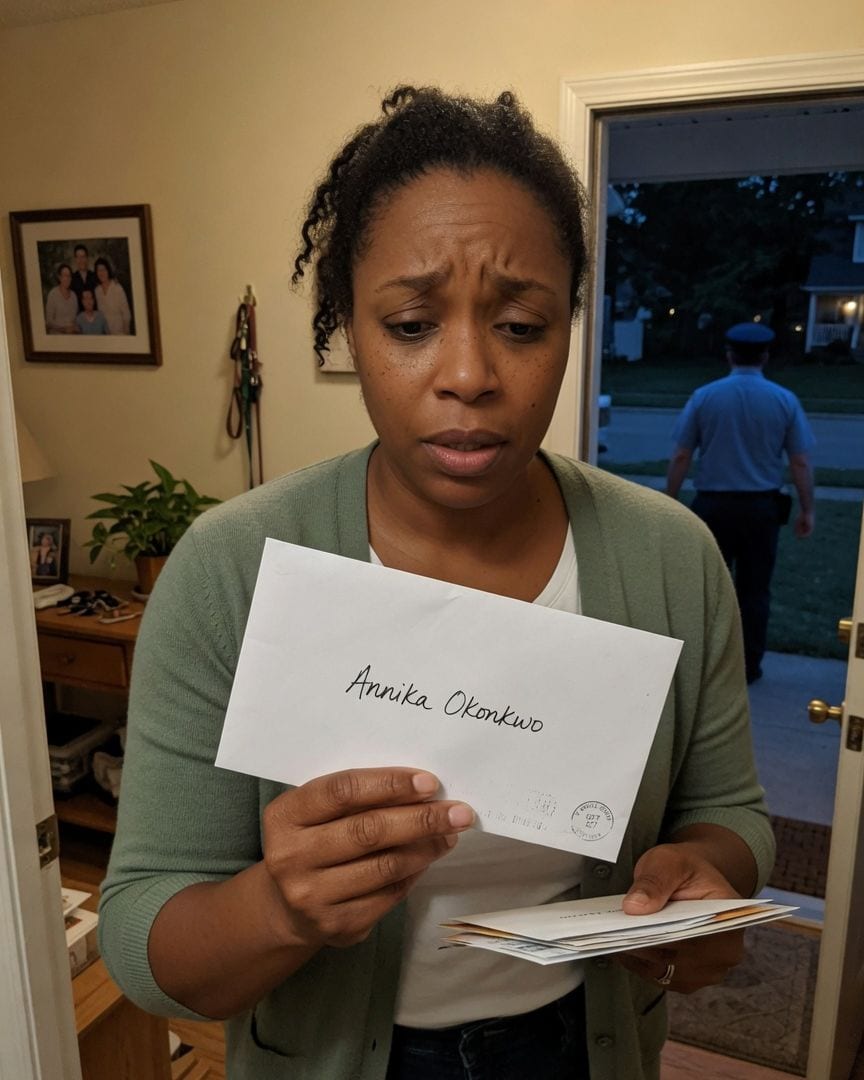
My postman apologised, then disowned the letter with my name.
My postman, Dave, delivered the usual mail, but then strangely swore he never carried one plain white envelope. Addressed to me in an elegant hand, it stood out from the bills. The real dread began when I saw its postmark: 14 Maple Street, a vacant lot where a house burned down fifteen years ago.
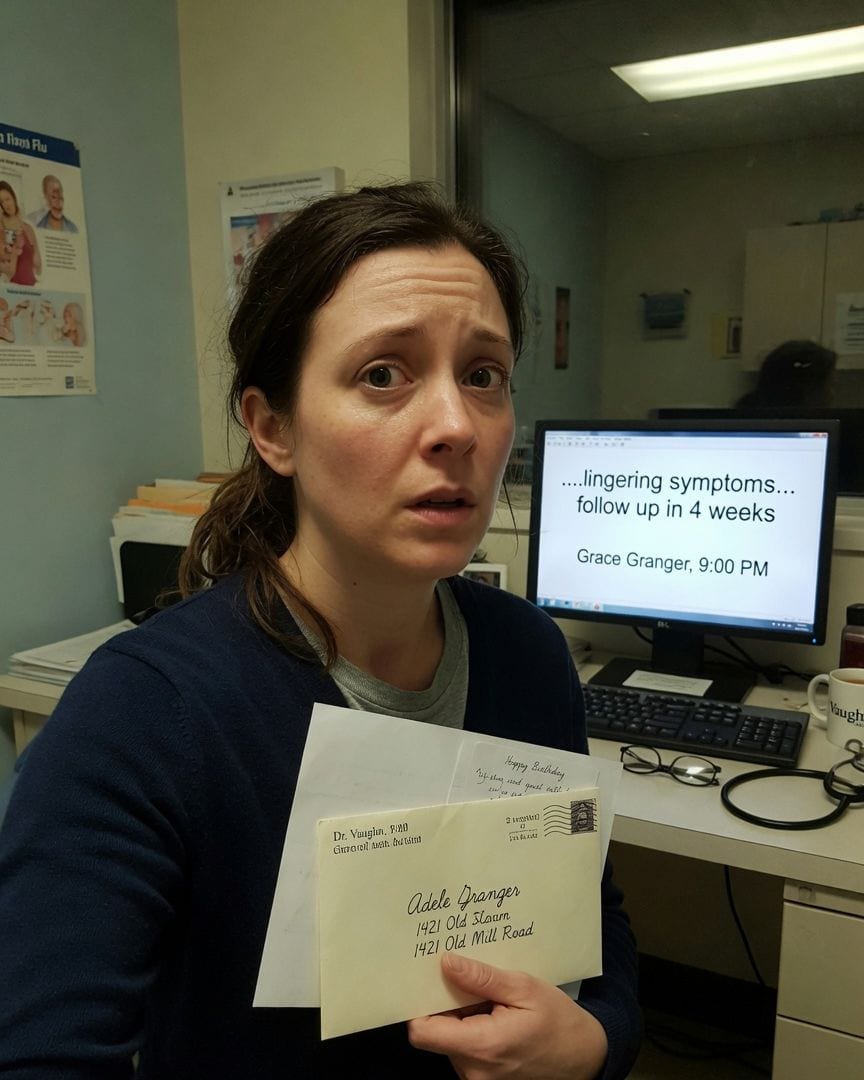
Mid-appointment about my cough, my doctor told me to call my estranged sister tonight — a sister I'd never mentioned to him. The note on his screen ended with her name and a time.
My doctor dismissed my cough as a lingering virus, but then he said something impossible: "You should call your sister tonight." I hadn't spoken to Grace in years, and I'd never mentioned her to him. When I saw her name on his screen with a specific time, a cold dread began to claw at me.
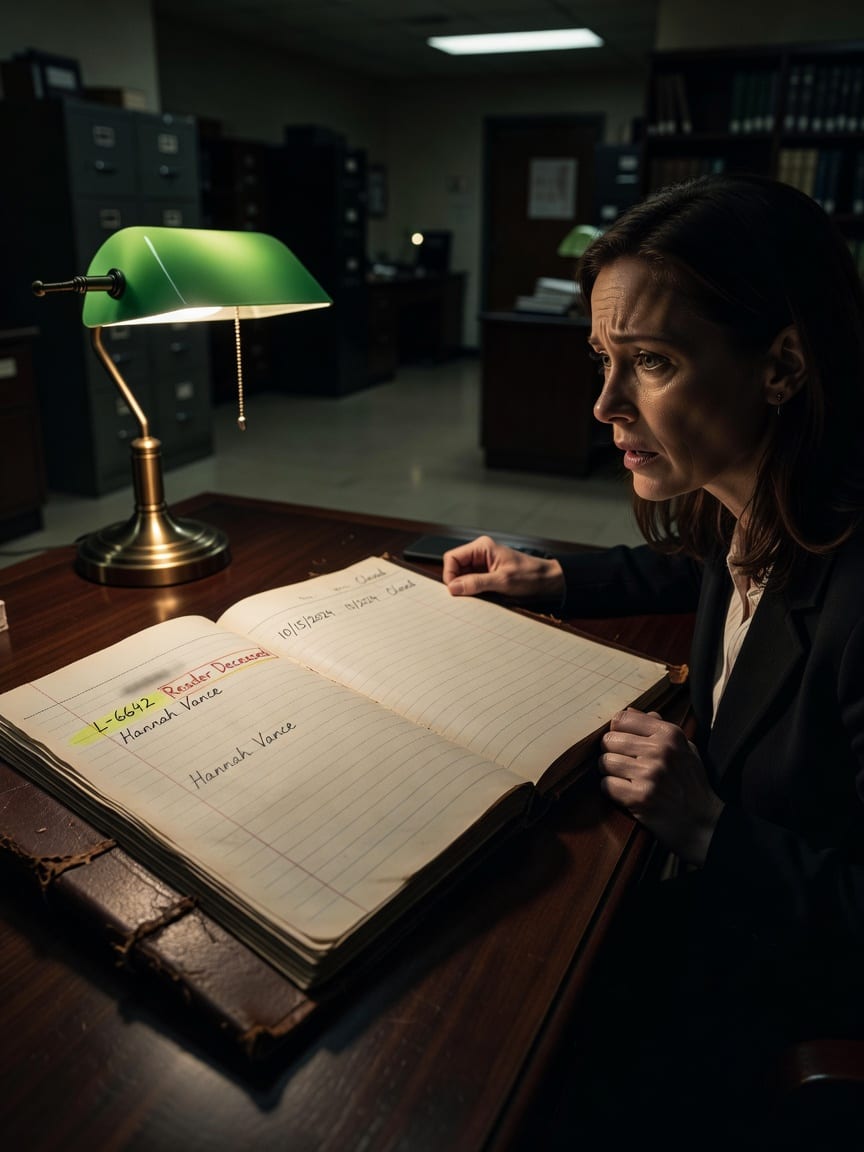
My library card number L-6642 was issued to me at seven — and the ledger shows that number has marked a reader 'deceased' every twelve years since 1949.
Returning my late father's library card to the old town library felt like a small act of closure. But the senior librarian's ancient ledger revealed a chilling pattern of 'reader deceased' entries tied to specific card numbers and borrowed books. My unease turned to cold dread when I secretly found my own name penciled in, marked for a future 'reader deceased' entry.
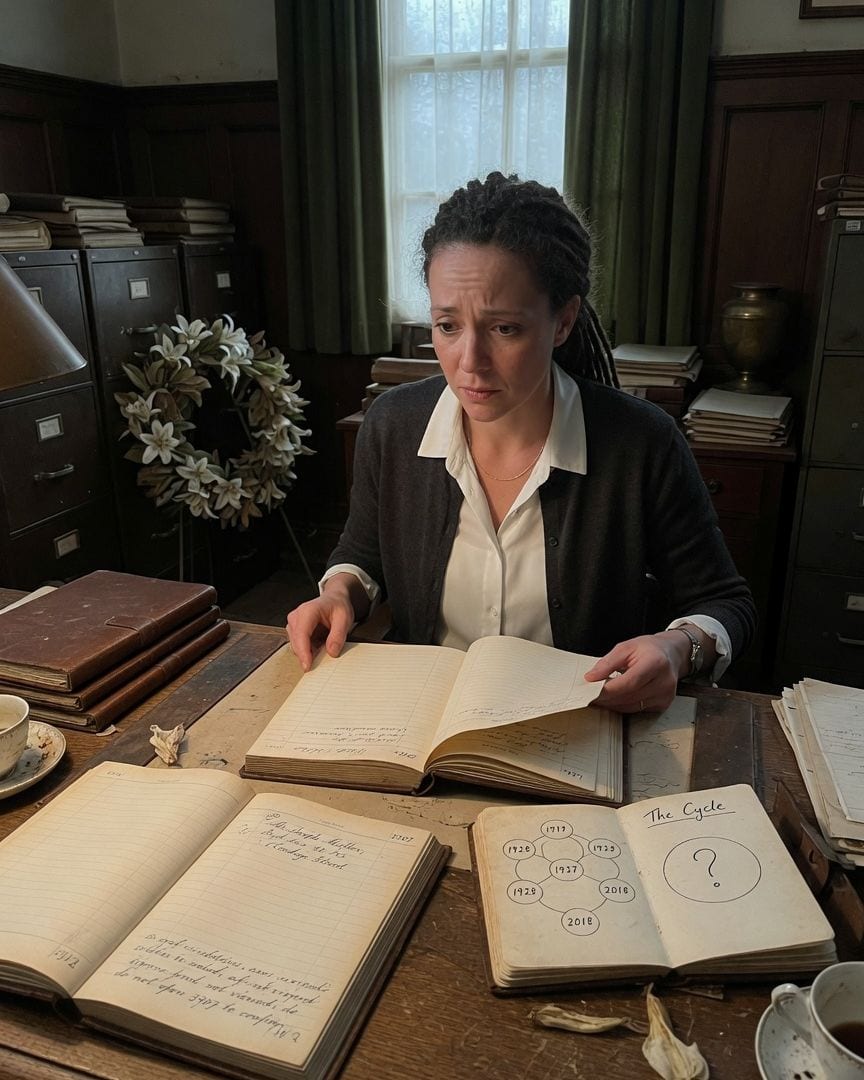
Our funeral ledger records my family name, same age, buried on Cordage Street every nine years since 1919. My great-grandfather's note: 'do not open 3907.'
Reviewing my great-grandfather Joseph’s old ledgers at the Ingram Funeral Firm, I stumbled upon a recurring anomaly. The same burial order for a Joseph Muller, age 45, residing at our family home, 14 Cordage Street, appeared every nine years across decades of records. Each entry, identical, carried the unsettling instruction: 'coffin sealed, not viewed.'
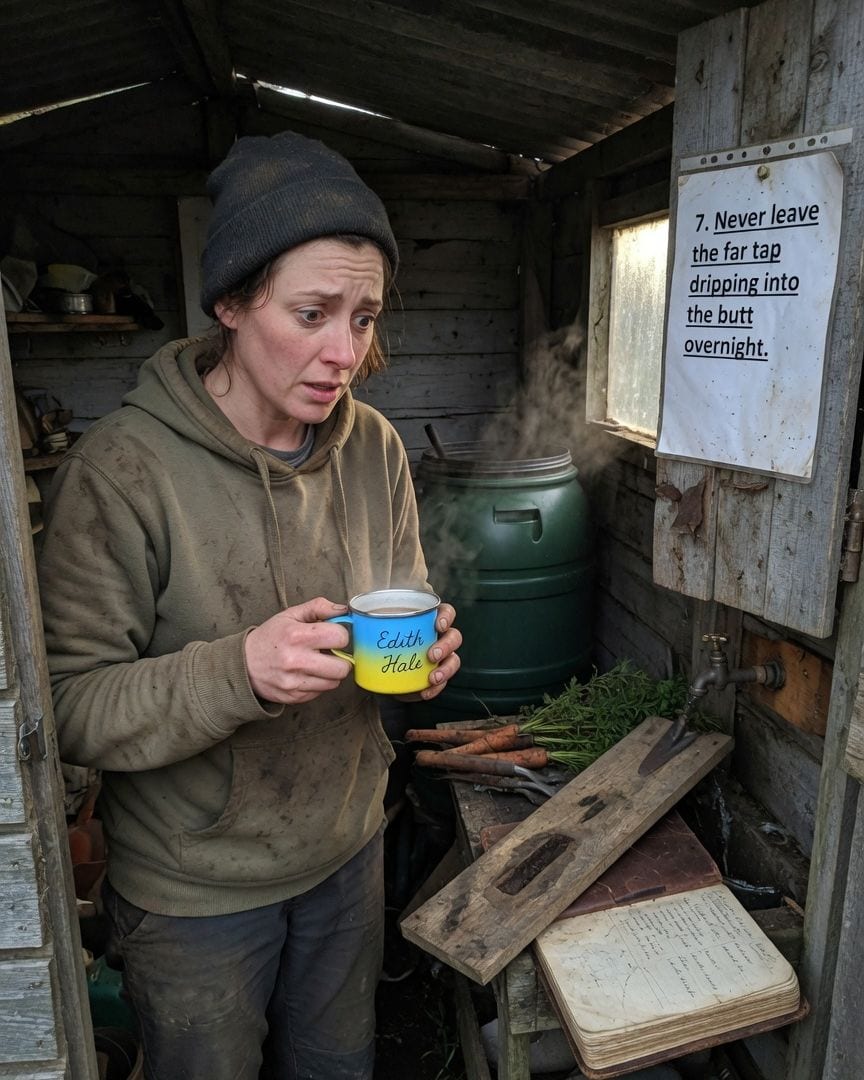
The one night I left the tap dripping, my allotment water butt was full to the brim and warm to the touch — with a child's unrusted tin cup floating on top.
Moving to Blackwood, I hoped my allotment would be a fresh start. But the shed's rulebook warned, 'Never leave the far tap dripping.' One morning, my water butt was full and steaming, an unnerving warmth rising from it. Inside, a child's tin cup floated, unrusted, etched with the name 'Edith Hale'.
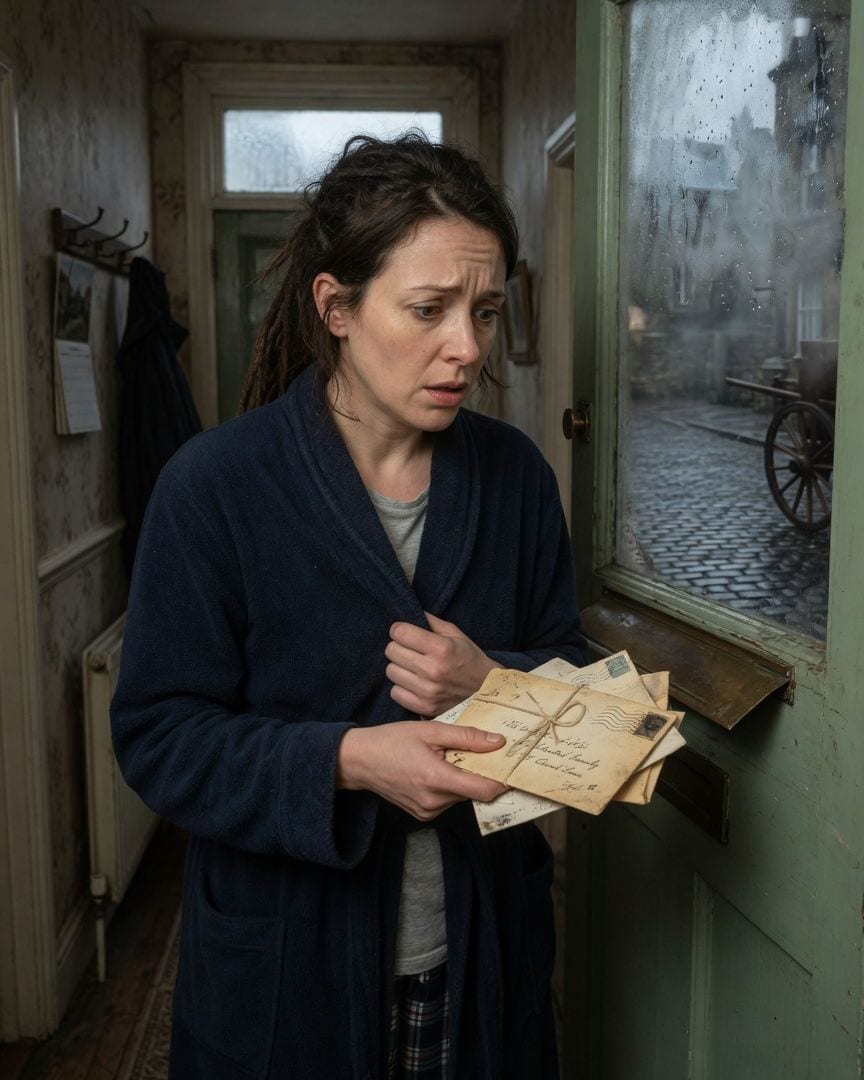
Seventy years ago, a hidden journal recorded my door opening to the wrong street and receiving Lockwood post.
I'd only recently moved into my inherited house, a quiet place on the edge of town. One grey morning, a distinct clatter from the front door's post flap caught my attention. Reaching down, I expected my gravel path, but instead, the flap showed a dark, cobbled street that wasn't mine. A bundle of warm, old letters, addressed to 'The Lockwood Family,' slid through, before the vision flickered and was gone.