On his last patrol, Airman Vann sees a Cold War silo hatch light up from *inside*—it was welded shut a decade ago.
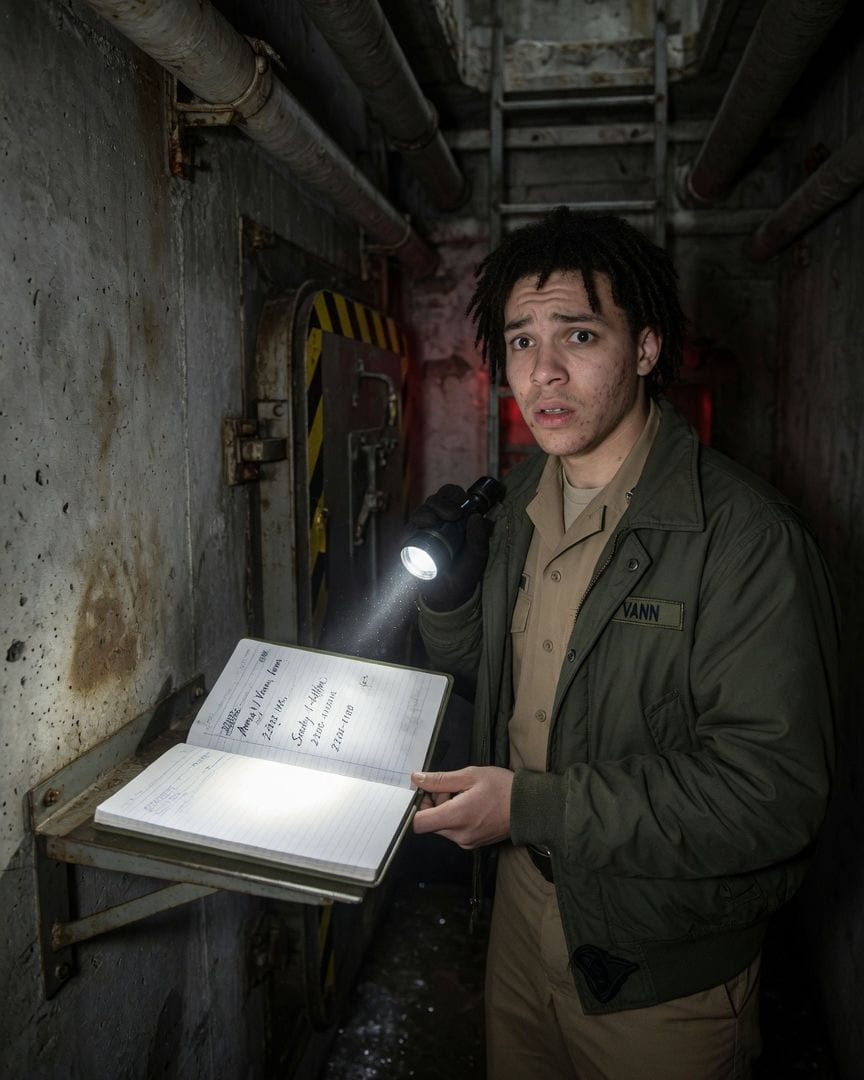
The vast, desolate expanse of a decommissioned Cold War missile field in the Dakotas stretched under a cold, starless sky.
Airman Vincent Vann, just 23, navigated the sixty miles of black wheat in his aging security truck, the engine a lonely growl against the wind.
This was his last patrol before transfer, a final, rote check of eight hardened silo caps. The wind, a constant, abrasive force, buffeted the vehicle, rattling its frame like a loose tooth.
He had driven this route a hundred times, always the same. Empty, silent, vast.
At Silo 4, a low, persistent red glow pulsed on the cap's access panel: the personnel-hatch fault light. Vann knew the protocol. It meant a breach, specifically, a breach from inside the hardened cap. His training screamed.
But this cap had been welded shut and sealed for a decade. The light should have been impossible.
He parked his truck, its tires crunching on the loose gravel, and walked towards the concrete disc, his breath pluming in the frigid air. The red pulse seemed to beat in time with his own quickening heart.
He was still standing on the cold concrete, flashlight beam playing over the impossible red light, scrutinizing the heavy-gauge welding that looked undisturbed, when the fault light on Silo 5 flickered to life behind him.
Then, moments later, Silo 6, each one illuminating in sequence, a slow, deliberate march of crimson eyes walking his direction across the dark, flat land.
Vann, heart thudding, pulled out his radio. 'Base, this is Vann, patrol 7. I've got a fault light tripped on Silo 4, repeat, Silo 4 personnel hatch. And... now Silo 5 and 6 are showing the same, coming active.'
The base operator, a half-asleep voice thick with static, logged it as a 'sensor malfunction' and told him to ignore it, to finish his patrol. 'It's a ghost in the system, Vann. Go home.' But Vann couldn't.
His training screamed that it was not a ghost. This was a direct breach.
He circled Silo 4 again, his flashlight beam cutting through the oppressive darkness, searching for any sign of forced entry from the outside, any tool marks, a dropped boot, a discarded cigarette. Nothing.
The heavy steel cap, a foot thick, looked inviolate. He found the personnel hatch's emergency lock mechanism, a heavy, rotating wheel designed for internal use only. It was stiff with disuse, but undeniably unlocked from the inside.
He hesitated, a cold knot forming in his stomach. Steeling himself, he braced a shoulder against the hatch and pushed. The seal groaned, a sound like a distant, tortured sigh, and the hatch swung inward, revealing a black void.
He descended the ladder into the dark, cold concrete shaft, his flashlight beam cutting through the gloom, stirring dust motes that danced like phantoms.
The air grew heavy, stale, carrying the faint, metallic tang of old machinery and something else, something vaguely organic and damp. At the bottom, in a small, cramped antechamber, the beam landed on a pristine, olive-drab duty logbook.
It lay open on a dusty shelf, an anomaly in the decay. Its pages were crisp, not yellowed with age, its cover unmarred.
His own signature, 'Amn V. Vann,' was meticulously penned in precise, military script next to an entry dated '2300 HRS, 22 OCT' – the current night. Below it, a chilling entry: 'Sentry 1-Alpha, 2300-0100 HRS'. Vann stared.
He had not signed that logbook. He had not been in this silo. And there was no 'Sentry 1-Alpha' on any roster, past or present, not in his training, not in any file he'd ever seen.
He tried to rationalize: a prank, an old logbook misplaced years ago by some forgotten maintenance crew. But the paper was too new, his signature too perfect, a flawless forgery of his own hand. The logic offered no comfort.
Vann stood frozen, his flashlight beam trembling on his own meticulously forged signature in the fresh logbook, next to the impossible 'Sentry 1-Alpha' entry. His mind raced, desperate for a rational explanation that simply wasn't there.
The cold concrete under his boots seemed to amplify the faint, rhythmic thump that now pulsed steadily from deeper within the sealed silo, a sound that should not, could not, be happening.
Back at the outpost, Vann reported the logbook and the thumping to Flight Sergeant Patricia Crane, his superior. Crane, a no-nonsense veteran with sharp, analytical eyes, dismissed it as fatigue, a misfiled historical document, or a bizarre prank.
She tapped her pen impatiently on her desk. 'Silo 4's been sealed for ten years, Vann. Hardened steel. Inert. Get some rack time. You're jumpy. Transfer jitters.' She waved a dismissive hand, her gaze already returning to her monitor.
Undeterred, Vann went to the records office, his skin prickling with cold certainty. He searched the digital rosters for 'Sentry 1-Alpha,' cross-referencing against decades of personnel manifests for the field. Nothing. The name simply did not exist.
He expanded his search, trying every permutation, every possible unit designation. Still nothing. The system returned 'NO MATCH' with relentless, electronic certainty. Then he pulled his own patrol log for the night.
To his horror, the digital record showed him having logged a full, uneventful check of Silo 4 hours earlier, exactly as the physical logbook claimed. His own signature was there, digitized and irrefutable, integrated perfectly into the timestamped entry.
He knew he hadn't. The system, the official record, was swearing he had.
Driven by a cold dread, Vann returned to the field in daylight, the pale morning sun doing little to dispel the shadows in his mind. He walked the perimeter of Silo 4, then Silo 5, then Silo 6.
In the soft, damp soil between the black wheat stalks, clearly visible, were boot prints. They were not his. Not human.
They were too large, too elongated, with an unusual tread pattern that didn't match any military issue boot he had ever seen, leaving a distinct, unnatural impression in the black earth where no one should have walked since the field was decommissioned.
They led from Silo 4, past 5, towards 6, mirroring the sequence of the fault lights, a silent, irrefutable trail. The wheat rustled around him, a dry, whispering sound, as if the field itself was trying to warn him.
Vann spent the next day buried in the records office, methodically cross-referencing decommissioned asset logs with personnel transfers, looking for any anomaly, any hint of 'Sentry 1-Alpha' or anything similar.
He felt a prickle on the back of his neck, a sensation of being watched. He glanced up.
A small, unblinking security camera, usually ignored, seemed to track his movements with unnatural precision, its red eye a tiny, baleful stare from the ceiling. He dismissed it as paranoia, the lack of sleep finally getting to him.
The fluorescent lights hummed, making his teeth ache.
Moments later, Crane's desk phone rang, its shrill ring cutting through the stale air. Vann watched her across the room. Her usual confident posture stiffened, her eyes darting to him with a strange, unreadable expression as she listened.
The phone seemed to hum with an unnatural urgency. She ended the call, then cleared her throat, a dry, almost nervous sound. 'Vann,' she said, her voice unusually tight, 'you've received an official memo. Just a reminder to maintain protocol.
Unauthorized access to classified archives is a serious offense.' Vann hadn't received any such memo. No email, no physical copy in his inbox. He felt a chill deeper than the Dakotas cold. Someone knew he was digging.
Someone was watching, and they were using the system to warn him off.
Vann confronted Crane that evening, waiting until the office was empty save for the two of them and the humming fluorescent lights. 'Sergeant, who called you? What memo?'
Crane was evasive, her gaze flickering away from his, towards the blank wall behind his head. She pushed a stack of files across her desk. 'Look, Vann, I understand you're stressed. These old fields can get to you.
It's just a few bad sensor readings, some clerical errors from decades ago. Nothing to worry about.' Her voice was tight, thin. Vann pushed back, his voice low and steady. He tapped the desk.
'Clerical errors that put my signature on a logbook I never touched? Boot prints that aren't human? And a name that doesn't exist, but the system says it does?'
He laid out the evidence: the physical logbook he’d retrieved, its fresh pages stark against the worn desk; the blurry photos he’d taken of the elongated boot prints in the damp soil; the printouts of his impossible digital entry.
Crane's composure cracked, a fine line appearing between her brows. She ran a hand through her short, cropped hair, a gesture of exasperation that seemed to hold genuine fear. 'Alright, Vann. There have always been... anomalies. Unaccounted assets.
They were supposed to be contained when the field was decommissioned. Just... echoes.' She admitted that for decades, certain 'discrepancies' in unit logs and manifests had been quietly 'resolved' by command, buried deep in obscure sub-files.
'But they were never real. Just system ghosts. Data glitches from the deep past. Old commanders trying to cover their tracks.' Vann pressed, his voice now a demand. 'Show me the master archive. All of it.
Not just what you're allowed to see. Prove they're just ghosts.'
With a sigh of resignation and a flicker of raw fear in her eyes, Crane nodded. She typed a series of complex commands, her fingers flying across the keyboard with practiced speed, entering override codes Vann had never seen.
The main monitor, usually displaying mundane patrol schedules, flickered, then glowed with a new interface: a deeply classified, digitally archived unit manifest for the missile field, dating back to its inception.
The screen populated with endless rows of personnel data, an exhaustive, impossible record of every man and woman who had ever served here. Crane navigated to 'Sentry 1-Alpha.'
There it was, not a ghost, but a fully detailed entry: service dates, commendations, even a unique service number.
Then, using the 'pattern across rotations' search function, a tool Vann didn't even know existed, he uncovered dozens more: 'Sentry 2-Bravo,' 'Sentry 3-Charlie,' impossible names with impossible service records, all officially accounted for, marked 'active,' even after the field's decommissioning.
The records were too perfect, too complete for mere 'ghosts.' They were insisting on a presence that could not be. The system was not broken. It was showing him the truth.
Crane, her face a mask of dawning horror, tried to explain it away as a 'system-wide corruption, perhaps affecting active personnel files.' Her voice was strained, barely above a whisper. To demonstrate, she pulled up Vann's own service record.
The screen populated with his name, rank, and photo, the familiar image of his younger, unworried face.
But below it, impossible entries began to scroll: deployments to a 'Silo Field Unit Gamma' that had been decommissioned before he was born, commendations for missions he never ran, impossible dates, impossible locations, all meticulously documented, his own signature digitized next to each.
The records were flawless, irrefutable, and contradicted every single fact of his life and service. The system didn't just contain anomalies; it was actively rewriting the lives of those within it, weaving them into its impossible tapestry.
Vann stared at his own falsified history, his identity stolen by the very system he served, realizing with a sickening lurch that the threat was already inside him, already accounted for.
The impossible entries in Vann's service record detonated the last vestiges of Crane's skepticism. She stared at the screen, her breath coming in shallow gasps. 'They're not just logging these things,' she whispered, 'they're logging us with them.'
The cold, calculating coherence of it all was worse than any monster. They made a desperate call to retired Colonel Howard Lambert, the former base commander, whose name appeared on the oldest, most tightly restricted manifest entries.
Lambert, old and frail but with a sharp, haunted gaze, admitted everything without prompting, his voice surprisingly steady.
Decades ago, during the field's initial construction, something was found deep beneath the earth: not a rock formation, but an ancient, vast, biological system that reacted to human presence.
It was deemed too dangerous to extract, too impossible to explain, too pervasive to ignore. So, it was contained within the silo network, its vastness mapped and monitored.
A top-secret protocol was established: the 'anomalies' were to be 'accounted for' as personnel, integrated into the military's own meticulous records.
The silos were its 'barracks,' the fault lights its 'check-ins,' a way for the military to quantify and control the unknown. The decommissioning process, sealing the field and attempting to erase its record, had inadvertently disturbed its dormant state.
The entities were not breaking in; they were activating, using the system's own 'accountability' framework to emerge, 'patrolling' their designated areas. The records weren't corrupted; they were the truth of a classified existence, now spilling into the official world.
'They adapt,' Lambert concluded, his voice raspy. 'They become what the system expects them to be.'
Vann and Crane raced back to the missile field, the urgency a cold knot in their stomachs. The sun had begun to set, painting the western sky in bruised purples and reds.
The fault lights, which had been flickering randomly, were now all illuminated across the entire sixty-mile expanse, a terrifying constellation of red against the gathering dusk.
They were no longer just on the caps; they were appearing on every access panel, every sensor point, forming a continuous, pulsing line that stretched into the horizon. The landscape seemed to breathe with these impossible lights.
As they approached Silo 4, they saw movement in the black wheat. Massive, indistinct figures, taller than any man, were moving with a slow, deliberate rhythm, their forms barely visible against the dark stalks, like distortions in the air itself.
They left the elongated boot prints Vann had seen earlier, now in abundance, a clear path of unnatural indentations leading between the silos.
The base's automated system, still connected to the field, was registering them as 'Sentry Patrols, Sector Alpha,' 'Sentry Patrols, Sector Bravo,' a relentless, expanding grid of impossible accountability.
'They're not contained anymore,' Crane gasped, her voice raw with terror. 'They're logging their way out.'
Their only hope was to sever the connection, to make the entities 'unaccounted for' by the system, to force them back into the shadows they had been meant to occupy.
They found the main logging hub, a hardened bunker beneath the central command post, an old, forgotten nerve center.
Working frantically, bypassing multiple security protocols that seemed to fight them at every turn, Vann located the primary data conduit for the field's sensor network, a thick bundle of armored cables.
Crane stood guard, her rifle shaking slightly as the rhythmic thumping, now amplified and undeniably present, echoed from the tunnels below, from the very foundations of the bunker.
With a grim nod, Vann drew his combat knife and, with a sickening crunch, cut the conduit. The fault lights across the field blinked out simultaneously, plunging the vast expanse into absolute darkness and silence.
The automated 'Sentry Patrol' logs instantly ceased. The silence that followed was profound, unnatural, a void where impossible data had just been. They had stopped the system, but the entities were still out there, now unrecorded, free.
The field was silent. No fault lights, no logging, no impossible patrol reports. Vann and Crane filed their reports, a convoluted narrative of 'system-wide malfunction,' 'unforeseen environmental factors,' and 'severe psychological stress' induced by their isolated posting.
Their accounts were deemed 'inconsistent' but ultimately accepted by a system that preferred convenient fictions to impossible truths.
The entire missile field was permanently sealed, its records officially purged and reclassified into the deepest, most inaccessible archives, erasing every trace of the 'anomalies' and the 'sentries.'
Vann and Crane were immediately transferred, their service records quietly scrubbed of the impossible deployments and commendations, leaving no trace of the brief, terrifying overlap with an existence that defied explanation.
The entities, now officially non-existent, were no longer a problem for the military's accountability. But their silence was a new, deeper dread, an absence that hummed with unacknowledged presence.
Vincent Vann received an honorable discharge a few months later.
He tried to reintegrate into civilian life, but the vast, silent spaces of the Dakotas, the hum of fluorescent lights, even the sound of his own breathing, all felt wrong, tainted by the knowledge he carried.
He found himself scanning the faces of strangers, searching for an unfamiliar flicker in their eyes, a subtle shift in their posture. He scrolled through a news feed one quiet evening.
A small, obscure article caught his eye: 'Unexplained 'system malfunction' at decommissioned coastal defense battery in Maine leads to full site closure.'
He stared at the headline, a cold certainty settling in his gut, a certainty that spoke of migration, of adaptation, of something far more pervasive than a single missile field. He knew what 'system malfunction' meant.
He glanced at his own service record, a clean, unblemished digital document, utterly devoid of the impossible entries that had briefly woven themselves into his history. The silence of the wheat field was only ever a temporary thing.
If this one got to you
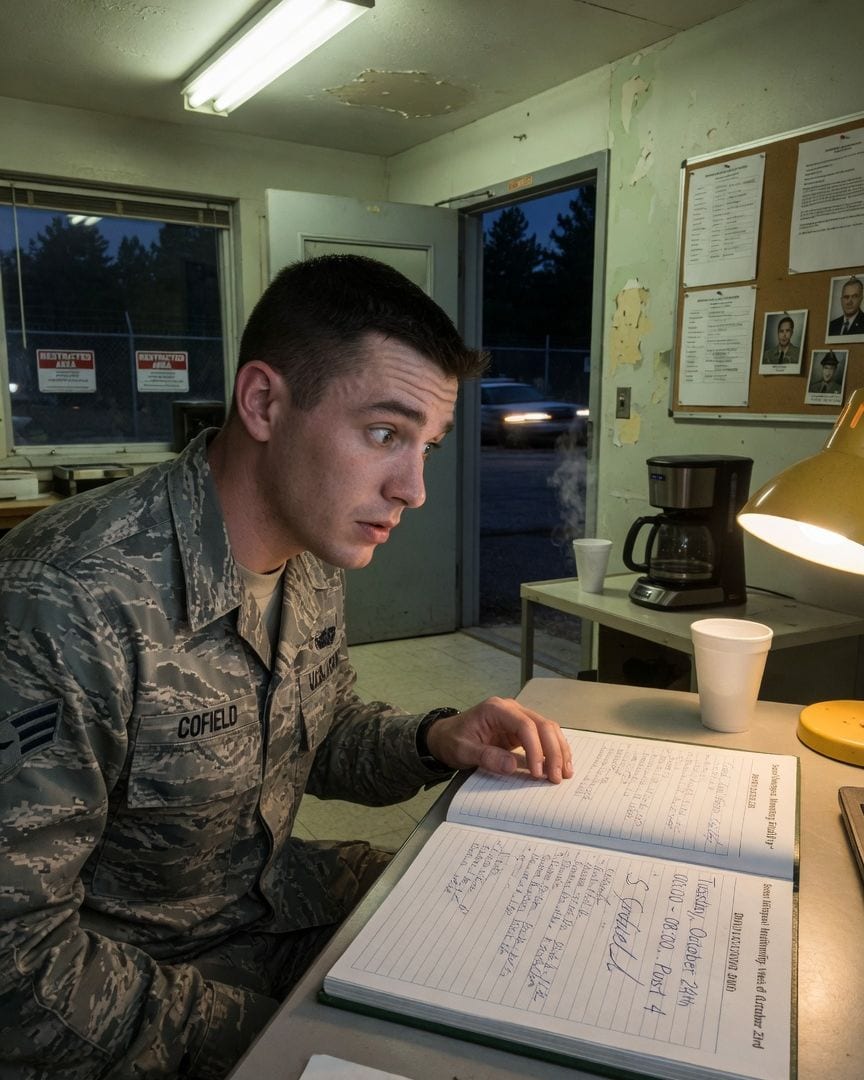
Two weeks from discharge, Senior Airman Cofield found his own signature on a logbook for an impossible shift at a facility mothballed decades ago.
Senior Airman Simon Cofield was just two weeks from discharge when he patrolled the quiet, forgotten perimeter of a mothballed weapons storage area. On a night thick with pine scent, he spotted a faint yellow light in a building officially powered down for over three decades, its alarm system inert. Inside, the building hummed with power, spotless, with hot coffee brewing and a crisp shift-change roster on the wall. But Cofield froze when he found a duty logbook with current entries, including his own name and signature, assigning him to an impossible shift next Tuesday. A cold dread settled as he realized something had just claimed him for a duty that no longer existed.
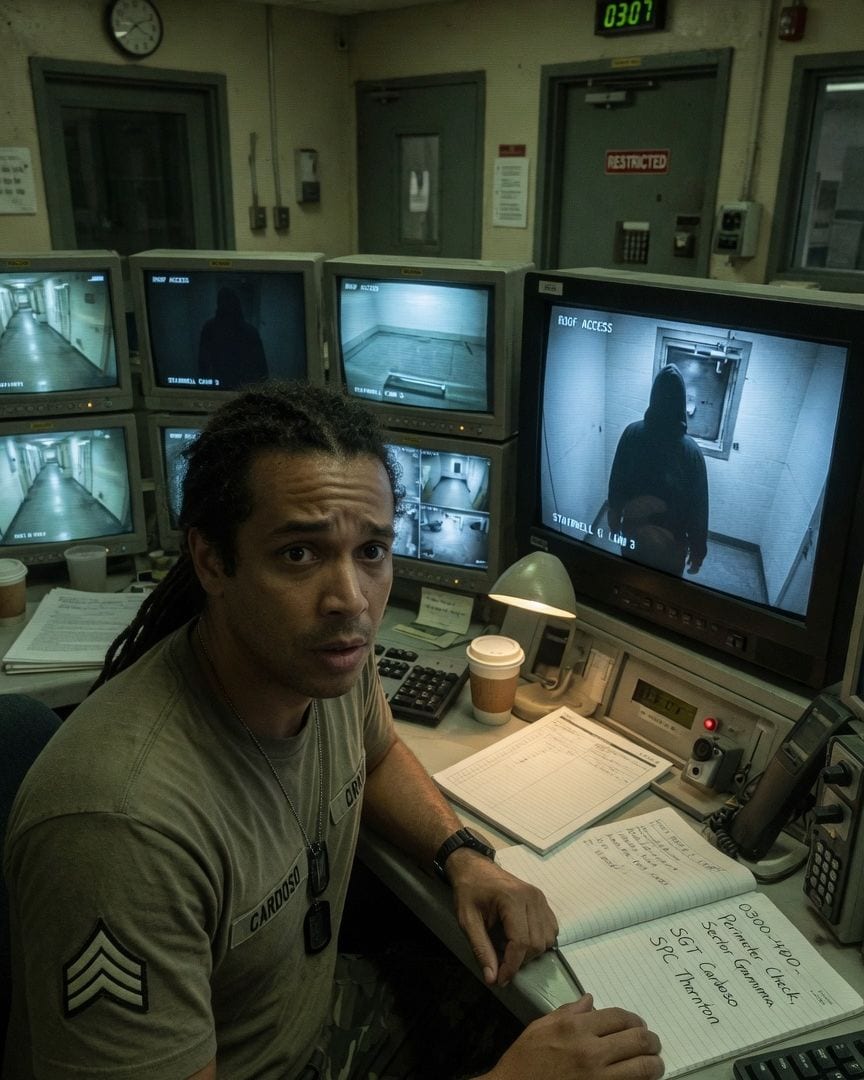
On his last watch, Sergeant Cardoso found his own signature in the duty log for a perimeter check he never did, with a name he didn't know.
Sergeant Rui Cardoso was on his final interior watch at Fort Merritt, a remote coastal outpost, as 0300 ticked by. He spotted a dark, unmoving figure on a monitor showing the sealed roof access, a figure that inexplicably shifted closer to the hatch moments after a specialist confirmed the roof was empty. Rui checked every log and sensor, but the digital fortress showed no breach, and the figure's appearance defied all logic. Yet, in the physical duty log, he found his own unmistakable signature on an entry for a perimeter patrol he never took, alongside a soldier's name he'd never seen. What impossible truth was written in his own hand?
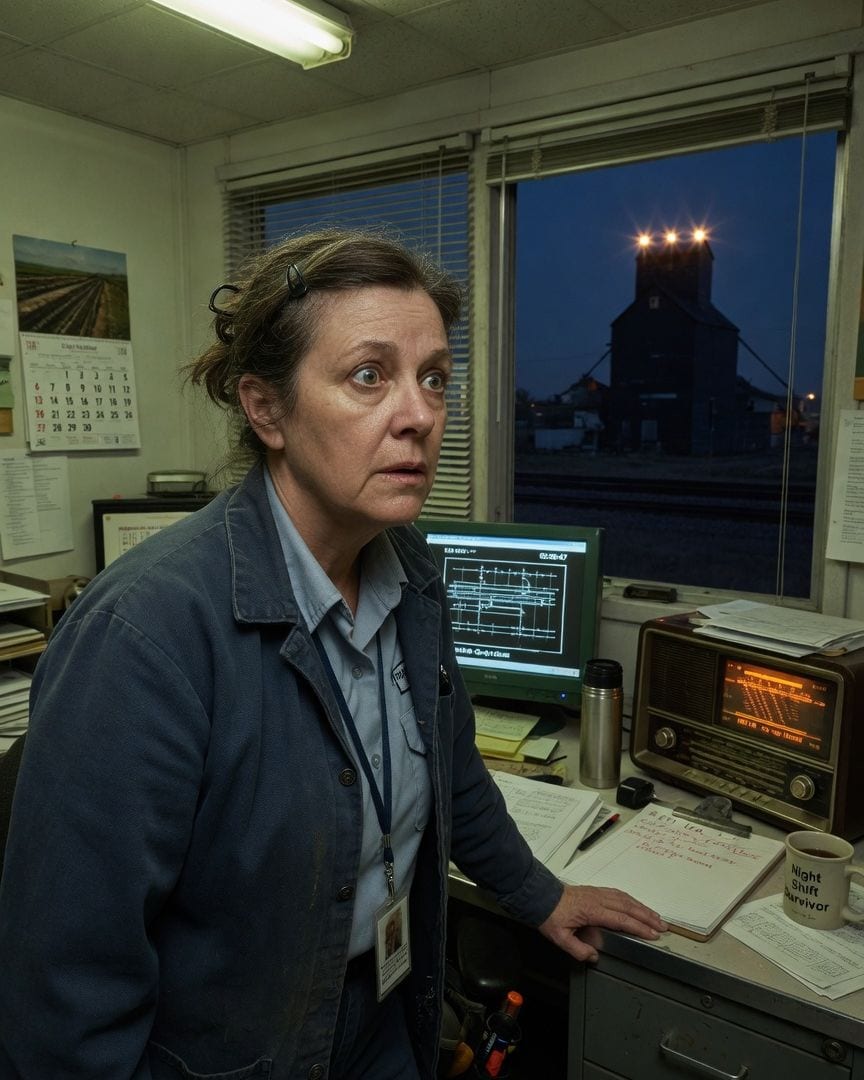
The grain tower light flashed three times at 2 AM, signaling me clear. The bulb was removed six years ago.
Every night, I work the lonely shift at the transport hub. For fifteen years, an old grain elevator, automated and unpowered with its light bulb physically removed, still flashes a 'Clear' signal across the tracks at 2 AM. Recently, the impossible flashes have grown sharper, stirring a deep unease from a place that should be completely silent.
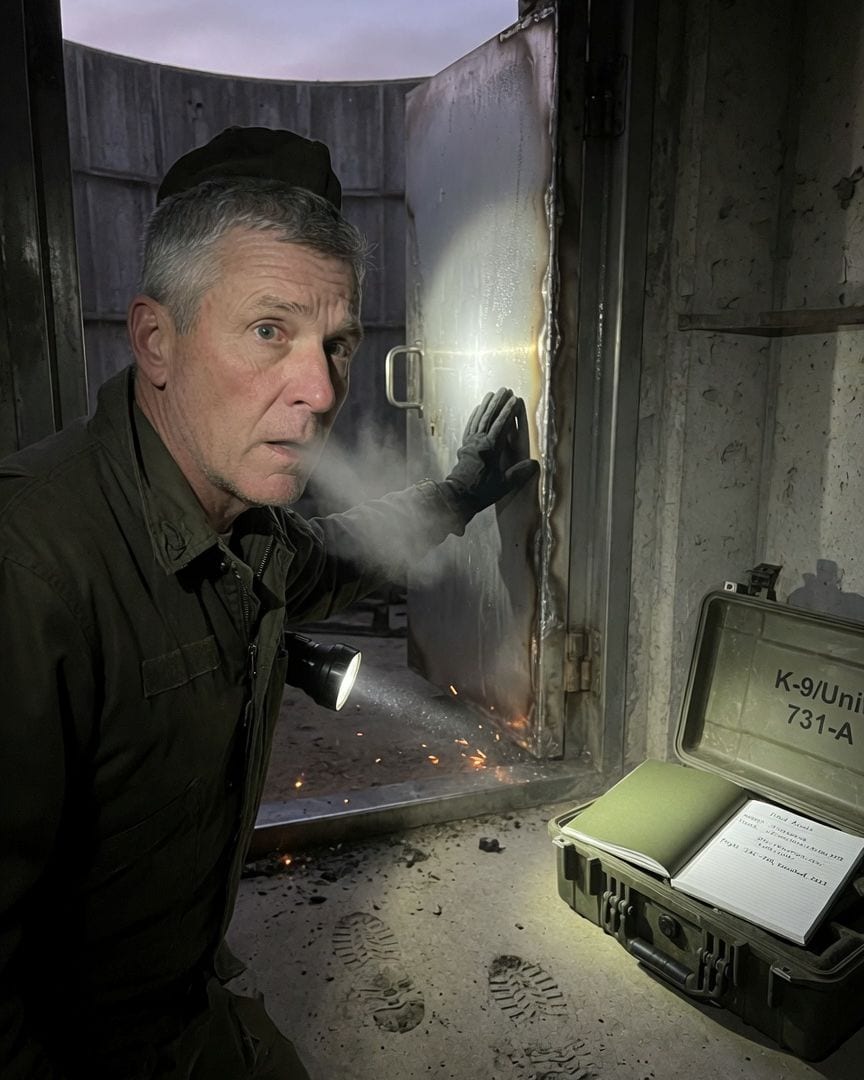
The Cold War silo was welded shut in 1968. A Captain found lights burning, fresh prints leading inside, and a logbook with a vanishing from last week.
Captain Merrit Sable faced a deadline at Silo K-9: one cold morning to retrieve classified hardware before its scheduled demolition at noon. The silo, officially welded shut by the Air Force in 1968 and long off-grid, should have been a tomb of forgotten machinery. Yet, through a cracked port, he saw nine work lights burning steadily forty feet down, and felt the faint suction of an active ventilation system. After breaching the decades-old weld, Merrit found more than just lights; fresh boot prints led deeper into the meticulously clean shaft, but none returned. A hidden compartment in an empty, warm hardcase revealed a logbook, its crisp pages detailing notorious military disappearances, with the latest entry dated just last week.
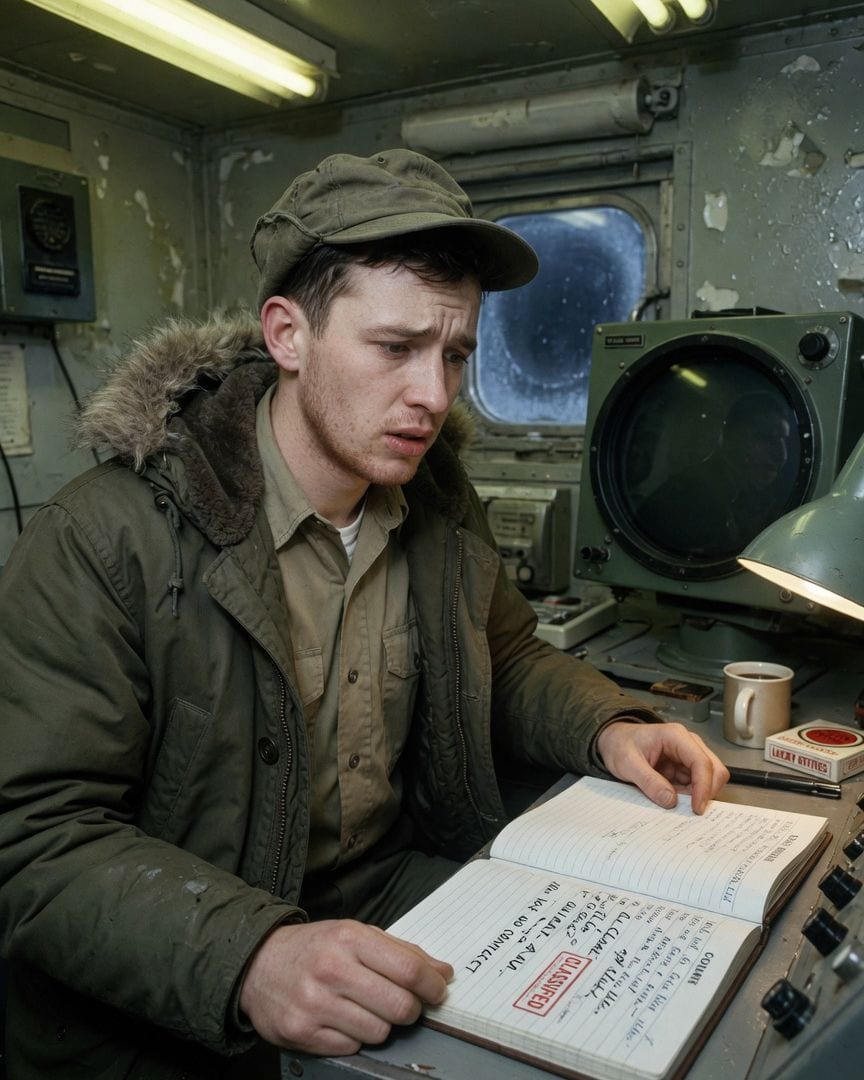
A Cold War airman logs an impossible radar contact on his last sweep. But his official logbook entry is stamped 'CLASSIFIED' and then contradicted by a hastily scrawled 'ALL CLEAR' dated moments before it.
Airman Ordway Vance, 22, manned the radar dome at Site Pellin in the biting North Atlantic dark of January 1962, running the last calibration sweep before its decommissioning. His scope picked up a faint, impossible return, growing closer with each pass, though the ocean remained empty to the eye. When Vance detailed the contact in his official logbook, a 'CLASSIFIED' stamp appeared, followed by a hastily scrawled 'ALL CLEAR' dated moments before his own entry, contradicting his every word. Commander Hartley dismissed it as equipment malfunction, but Vance sensed a chilling, official erasure behind the lie. He soon found a locked cabinet marked 'SITE PELLIN ANOMALIES,' hinting at a deeper truth buried within the base's final days.
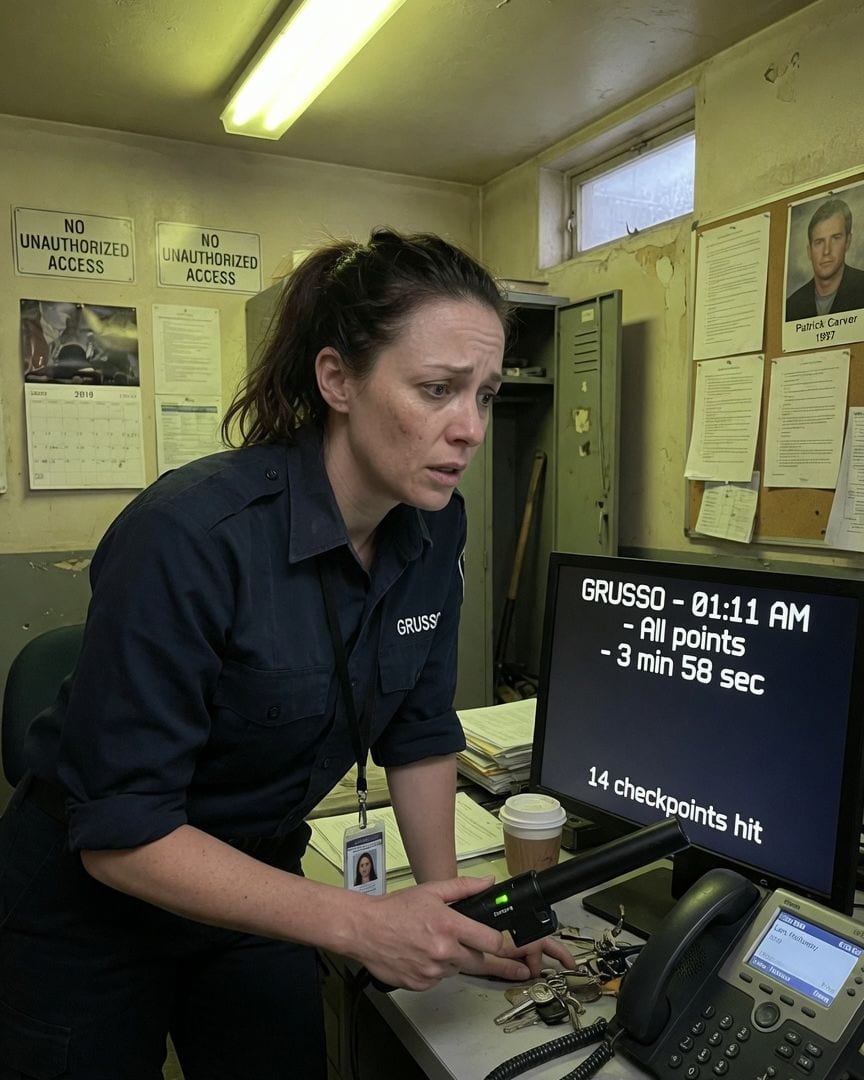
My security wand logged a full round at 1:11 AM in under four minutes. It was in the charger. Every tap is logged as mine.
Finishing my night shift, all I wanted was to get home. But the dock readout screen showed my security wand logged a full patrol at 1:11 AM, completed in just under four minutes. I knew my wand had been charging right beside the monitor the entire time, yet the log, under my ID, confirmed the impossible.