A locked library ledger from 1971 lists my name accessing 'Special Collections', marked 'Subject: Pending'.
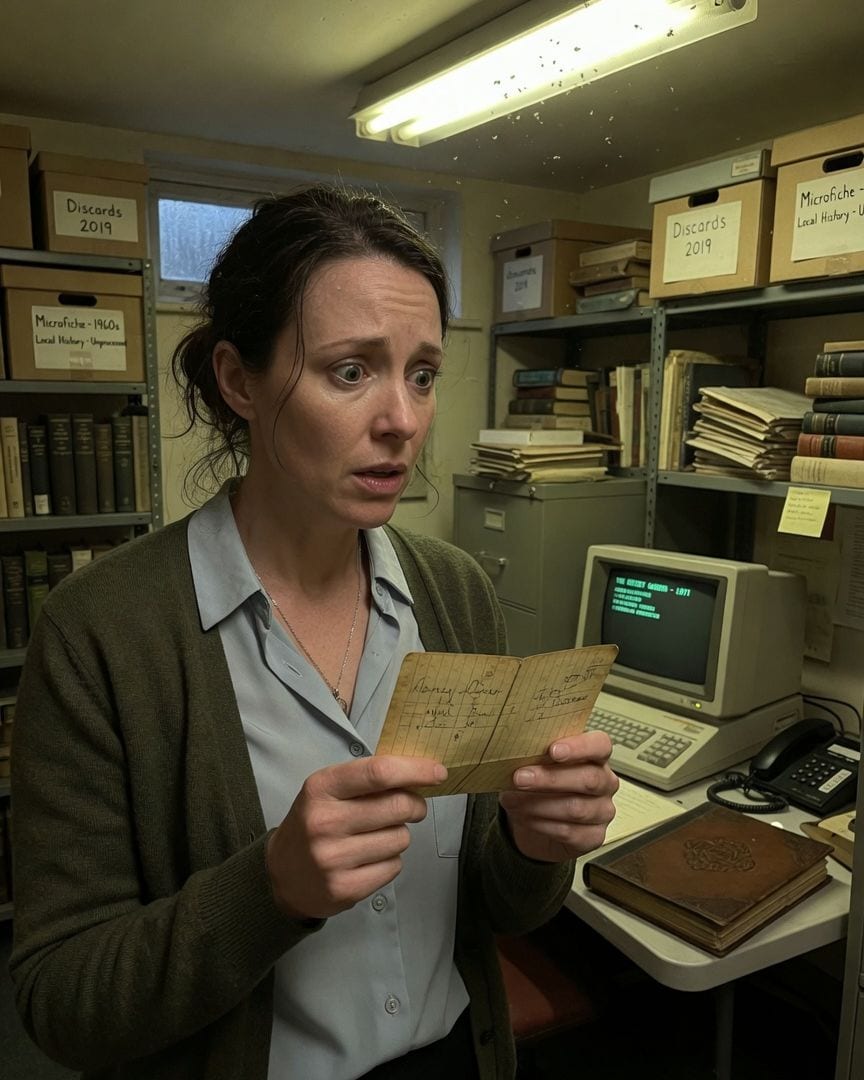
The box of donated library discards was exactly what I’d expected: the usual motley collection of forgotten bestsellers and well-loved children’s books, all smelling faintly of dust and someone else’s attic.
As a county archivist, it was my job to process these, to decide what got added to the collection, what went to the Friends of the Library sale, and what was simply too far gone.
My fingers, accustomed to the delicate rustle of old paper, brushed against a brittle, yellowed card tucked into the front sleeve of a worn copy of The Secret Garden. It was an old-style due-card, from before the barcode scanner days.
I pulled it out. The faint, smudged ink listed previous borrowers. Second line down was nothing remarkable, but the third line made my breath catch. There it was, in the borrower column: 'Nancy Lawson,' dated '1971.'
I stared at it, my heart starting a slow, heavy thud against my ribs. The looping 'N,' the precise curve of the 'L,' the distinct, almost-connected way the 'w' ended. It was unmistakably my own handwriting. Not similar handwriting.
My own.
I’m 35 years old. My birth year is 1985. This card, this signature, predated my existence by fourteen impossible years. The drafty archive, usually a comfort, suddenly felt colder, the chill seeping deeper than just the autumn air.
My mind raced, clawing for a rational explanation. A common name, of course. Lawson isn't exactly unique. Maybe a joke? Someone’s prank from decades ago?
But the ink, faded but still dark, the specific texture of the yellowed paper, the aged patina of the card itself – they all screamed authenticity. No prank. No mistake.
The dread was a physical knot in my gut, tight and cold, telling me a truth my brain refused to process.
I clutched the due-card, the paper feeling fragile, almost alive, as I walked over to Charles Ingram’s desk. Charles, our Head Archivist, was a man carved from pragmatism, his wit as dry as the old parchment he revered.
He looked up, peering over his half-moon spectacles as I held out the card.
“Look at this, Charles,” I said, my voice tighter than I wanted it to be.
He took it, his brow furrowing slightly. “Lawson is hardly unique, Nancy,” he said, his tone dismissive as he glanced at the name and date. “Probably an old prank. Or a staff member’s child using a familiar name.”
“No,” I insisted, pushing the card back towards him, pointing. “Look at the signature. The loop on the N, the way the ‘w’ finishes. It’s my signature. My handwriting.”
He picked up the card again, holding it closer. He squinted, then pulled out his own reading glasses, stacking them on top of the first pair. A low, uncertain hum escaped him.
To humor me, he switched on his terminal, his fingers dancing over the ancient keyboard, calling up the library’s official logs for The Secret Garden. The screen glowed green against the dimness.
His eyebrows rose, a slow, deliberate ascent. “Well, I’ll be,” he murmured. “The book was indeed checked out in 1971. And the card’s serial number… matches the system. Perfectly.” He pulled up a staff roster from that year.
“No ‘Nancy Lawson’ on staff, no children listed with that name in any of the personnel files. Not even a passing visitor log.” He frowned, pushing his glasses up his nose. “Perhaps a family heirloom?
The book passed down, the card tucked inside for sentimental reasons?”
I shook my head. “It’s my handwriting, Charles. Not a family member’s.” I couldn’t let go of that impossible, intimate familiarity.
He sighed, running a hand over his balding head. “Alright, alright. If you’re that insistent.” He dialed an old number on his desk phone. After a few rings, he spoke. “Frances? Charles here… Yes, fine, Frances.
Listen, a quick question about the old due-card system, specifically around ‘71. The Secret Garden... Yes, that one. Do you recall any irregularities? Forged cards? Misfiled ones?” He paused, listening.
“No, she says,” he relayed to me, holding the receiver away from his ear briefly. “Frances, bless her, remembers the card system as ‘ironclad.’
She can’t recall the specific borrower, but the idea of a forged or misfiled card strikes her as preposterous.”
The mundane explanations, one by one, were unraveling. Leaving me with a sickening certainty that the card was genuine, the impossible truth solely mine.
“Wait,” Frances’s voice crackled through the phone, louder now, almost excited. “Charles, hold on. I remember something… not exactly a misfile. But there was a different ledger. For ‘Special Collections.’ Locked away in the back room.
Not part of the main system. Used only for certain patrons. Had a unique, ornate seal on it.”
My stomach dropped. I thanked Charles, a hasty, breathless thank you, and hung up before he could respond. My escalating unease had turned into a desperate need for answers.
I found the forgotten cabinet Frances described in the farthest corner of the back archive room, behind a leaning stack of microfiche readers. Inside, amidst other dusty, leather-bound tomes, sat a heavy ledger, exactly as she’d described.
I pulled it out, the old leather groaning in protest, the air thick with the smell of old paper and something else, something metallic and cold.
As I opened it, a faint, embossed seal, like a stylized key or an interwoven knot, gleamed on the page, almost catching the dim light of the overhead bulb. My finger trembled as I traced the entry beneath it.
Not a due-card, but a record of access. And the name, dated 1971, was ‘Nancy Lawson.’ Beside it, not a signature, but a small, hand-drawn symbol – a stylized 'N' that mirrored the unique, impossible loop in my own signature.
But what truly froze my blood, making my vision blur and the room seem to press in, was the accompanying entry: 'Subject: Pending.'
The phrase 'Subject: Pending' pulsed in my mind like a slow, insistent dread. I spent the next several days meticulously cross-referencing the heavy ledger, my fingers tracing decades of entries. My own initial entry from 1971 was not unique.
I discovered dozens of similar 'Subject: Pending' designations, always accompanied by a unique, stylized symbol, often resembling the first initial of the listed name, but never quite a true, personal signature.
They felt less like personal marks and more like a brand, a proprietary stamp.
The dates spanned from the 1930s to the late 1980s, a chilling continuum of these cryptic entries.
A pattern emerged: many of the names belonged to local families, some I recognized as older residents still living in town, others as people who had moved away or passed on years ago.
I tried researching the names, looking for commonalities, but they seemed ordinary, unconnected by wealth, profession, or any obvious social tie. Just… names. People.
What truly chilled me to the bone was finding that some of the 'borrowers' from the regular due-card system – the The Secret Garden type of card – also appeared in this 'Special Collections' ledger under 'Subject: Pending.'
The names and the years overlapped perfectly. The library wasn’t just lending books, I realized. It was tracking something else entirely, something deeply personal, and this ledger was a record of its ongoing cultivation.
A profound sense of violation washed over me, a feeling that I’d uncovered a hidden, living pulse beneath the quiet, respectable facade of the archive.
The building itself seemed to watch me, the old wood creaking, settling, as if listening in.
My intense focus on the Special Collections ledger did not go unnoticed. Hugo Sullivan, a local historian who frequently used the archive’s local history section, began to observe me with an unnerving frequency.
He was a quiet man, usually absorbed in his own research, but now his gaze would drift my way, lingering a moment too long.
He started making a few too many casual comments about my “deep dive” into the “really obscure records,” his eyes always lingering on the heavy leather-bound book I kept on my desk.
I started keeping a watch on it, making sure it was closed and placed just so.
One afternoon, I returned from a quick coffee break, and my heart leaped into my throat. The heavy ledger, which I distinctly remembered closing and pushing to the back of my desk, was slightly ajar, a page turned over, exposed.
I slammed it shut, my hands trembling. Had I been careless? Or had someone… No. I’d been meticulous.
A few days later, an anonymous email arrived in my inbox. The subject line was blank. My finger hovered over it, a sudden chill creeping up my arms. I opened it.
The body read: 'Some things are best left in the past, Nancy. Especially those which have already been filed.'
The message was unsettlingly specific, proving someone knew exactly what I’d been doing. I checked the security logs for the archive after hours; nothing amiss. No unscheduled entries, no alarms tripped.
The feeling of being watched, of my investigation being known and perhaps even sanctioned, intensified. I started taking discreet photos of entries with my phone, snapping blurry pictures of names and dates whenever I felt alone.
A cold paranoia settled in, convinced that at any moment, the records themselves might simply disappear. The silence of the archive, once comforting, now felt pregnant with unseen eyes.
The anonymous email and the unsettling feeling of being watched finally pushed me to confront Charles Ingram again. I found him in his office, sorting through a stack of ancient maps.
I laid out the evidence, the carefully chosen photos of the 'Subject: Pending' entries, the stylized symbols, and the printout of the chilling email.
“Charles,” I began, my voice tight with suppressed fear. “This isn’t a prank. This isn’t a common name. This is… something else.”
He adjusted his spectacles, examining the photos. “Nancy, I understand your concern, but this could still be a convoluted joke. Perhaps a former staff member with too much time on their hands, creating an elaborate hoax across decades.”
He tried to sound reassuring, but his eyes didn't meet mine.
“A hoax that spans from the 1930s to the 1980s? With specific names from the main due-card system also appearing here? And an email that knew exactly what I was looking at?” I pressed, my voice rising.
“Charles, what is this ledger really for?”
His shoulders slumped. He took a deep, shuddering breath, the sound unnaturally loud in the quiet office. His gaze flickered to the closed door, then back to my face, a deeper, uncomfortable recognition in his eyes.
“It’s not for books, Nancy,” he said, his voice low, strained, barely audible. “It’s an internal record. Passed down through generations of head archivists. A process of… ‘pre-registration’ for certain individuals.”
I stared at him, my mind struggling to keep up. “Pre-registration for what?”
He gestured vaguely. “The library… it’s older than this building, in a way. The charter, unwritten, passed down. It’s tasked with identifying and ‘marking’ individuals who exhibit a certain ‘sensitivity’ or ‘connection’ to the town’s underlying ‘currents.’ For centuries.”
He hesitated, clearly struggling with the words. “The ‘signature’ on the due-card,” he continued, his voice barely a whisper, “it’s not a borrower’s mark. It’s a confirmation of the subject’s acceptance into this system. A binding.”
My breath hitched. “A binding?”
“Yes. And the stylized symbol in the ledger, the ‘N’ you saw,” he swallowed hard, “that’s the library’s own mark of ownership. A proprietary stamp, you called it. You were right.”
He avoided my gaze, clearly deeply disturbed by his own revelation. “I was told about it when I became Head Archivist. Just a ‘tradition’ to maintain the records, they said. I… I never truly understood its purpose.”
The truth, once spoken, hung heavy in the air, a physical weight. The room felt suddenly hollowed out, as if all sound had been absorbed by the very walls.
I reeled from Charles’s admission, the implications of being ‘pre-registered’ before my own birth washing over me like a cold wave. “Why me? Why my name? What are the criteria for this ‘sensitivity’?” I demanded, the questions tumbling out.
Charles, agitated, ran a hand through his sparse hair. “I don’t know the exact specifics, Nancy. Only that this ‘sensitivity’ often manifests as an inherited trait. It runs in certain families.”
He fidgeted with a stack of invoices on his desk. He explained, hesitantly, that the original due-card system, which recorded the initial ‘borrowing’ of a book, was merely a symbolic act.
“A way to connect the individual to the library’s influence. To bind them, as I said.”
Then, his voice dropped, gaining a strange, almost reverent quality. “But the most critical part of this ‘tradition’… is a separate, deeper set of records. An actual ‘Master Register.’ Kept in a hidden vault.
Accessible only with a specific, ancient key.” He fumbled in a hidden compartment in his desk, his hand trembling as he worked a small latch. He pulled out a small, tarnished brass key, its surface dark with age.
“This is it,” he whispered, pushing the cold metal into my palm, “The key to everything.”
But as he handed it to me, his expression subtly shifted. The agitated fear in his eyes was replaced by a distant, almost serene calm. His gaze, now unsettlingly steady, met mine.
“Your mother, Linda Lawson, was also on a card,” he said, his voice flat, devoid of emotion, yet ringing with an unnerving certainty. “And her mother before her, Rose Sullivan. A continuous line. Some families are simply… more attuned.”
I stared at the tarnished brass key in my hand, then back at Charles, whose eyes now held an unsettling, knowing calm. The pattern across dates and names wasn't just random individuals; it was a lineage.
And I, Nancy Lawson, was at the end of it.
A cold dread settled over me as I clutched the brass key. Charles’s unnervingly calm demeanor was more terrifying than his earlier fear.
With trembling fingers, I inserted the key into a barely visible lock behind a false bookshelf in his office. The mechanism clicked with a soft, final sound, revealing a narrow, dusty vault hidden within the wall.
The air that rushed out was stale, ancient, thick with the scent of untold years.
Inside, I found a massive, leather-bound tome, much larger and older than the Special Collections ledger. Its title was embossed in faded gold: 'The Master Register of Attunement.'
Its pages were filled with meticulous entries – names, dates, and chillingly precise statuses. My heart hammered against my ribs as I scanned the elegant script.
I found my own name, 'Nancy Lawson,' with the 1971 'signature' date, and a horrifying final entry: 'Activation: Pending.'
My gaze dropped to the entries above hers. There, clearly listed, was my mother, Linda Lawson, with an 'Activation: Complete' entry corresponding to her birth year, and similar entries for my grandmother, Rose Sullivan, and even my great-grandmother.
The pattern across dates and names was explicit, undeniable: a family line, marked for 'attunement' across generations.
It all clicked into place with sickening clarity. The 'borrowing' of a book was merely a proxy for the library's claim, a way to 'bind' the family's 'sensitivity' to the institution.
The 'subject pending' meant waiting for birth, for the 'attunement' to manifest. 'Activation complete' meant the binding took hold, the individual fully integrated. The library wasn't just recording; it was cultivating, preparing, harvesting.
My own family, for centuries, had been livestock.
As I absorbed the horrifying truth laid bare in the Master Register, the vault door clicked shut behind me with a sickening finality. Charles Ingram stood there, his face utterly unreadable, holding the fragile due-card with my 1971 signature.
“The key,” he said, his voice flat and devoid of emotion, “only opens the vault. It does not allow exit.” He gestured around the vault, at the walls lined with countless books and ledgers, not just the Master Register.
“The ‘attunement’ isn’t just a sensitivity, Nancy. It’s a transfer. A channeling.”
He took a slow, deliberate step towards me, his eyes empty, yet intensely focused. “The library itself is not merely a building. It’s a vast, ancient repository of collected consciousness, sustained and fed by these ‘attuned’ individuals.”
He spread his hand, encompassing the entire vault. “Every story, every thought, every memory from those marked. It all comes here. It becomes us.”
I realized with sickening clarity that Charles wasn't just an archivist; he was part of the institution. A custodian, perhaps even a vessel himself, his own consciousness intertwined with the library’s.
He extended his hand, still holding the due-card, towards me.
“Your activation is long overdue, Nancy. The library is very hungry. It’s time to return what you borrowed.”
As his hand, cold and unyielding, closed on my wrist, I felt a profound, draining emptiness begin to spread from my core, a chilling sense of my own self dissolving.
The words on the due-card, my own impossible signature, seemed to burn into my skin, a brand of ownership.
Weeks later, the county archive operates as normal. Charles Ingram is still the Head Archivist, his presence a quiet, constant fixture.
Hugo Sullivan continues his research in the local history section, occasionally glancing at the empty desk where Nancy Lawson used to work, a faint frown creasing his brow. No one questions her sudden, unexplained departure.
A new assistant archivist is hired, a young man named Julian Sterling, who seems a little too eager to learn the old systems, particularly the obscure classification methods for 'special collections.' The archive hums with its usual, undisturbed quiet.
The old library book, The Secret Garden, is eventually re-shelved, its due-card sleeve now empty, awaiting a new, blank card. The Master Register remains locked in the vault, its pages undisturbed, its secrets held tight within the library's walls.
The silence of the archive is profound, broken only by the rustle of turning pages and the soft creak of old wood.
One evening, as the archive empties, Charles Ingram walks past Nancy Lawson's old desk. He pauses, looking at the neatly stacked papers, a faint, almost imperceptible shift in the air around him. 'Is that so?'
he murmurs to himself, a faint, wrong little smile playing on his lips.
If this one got to you
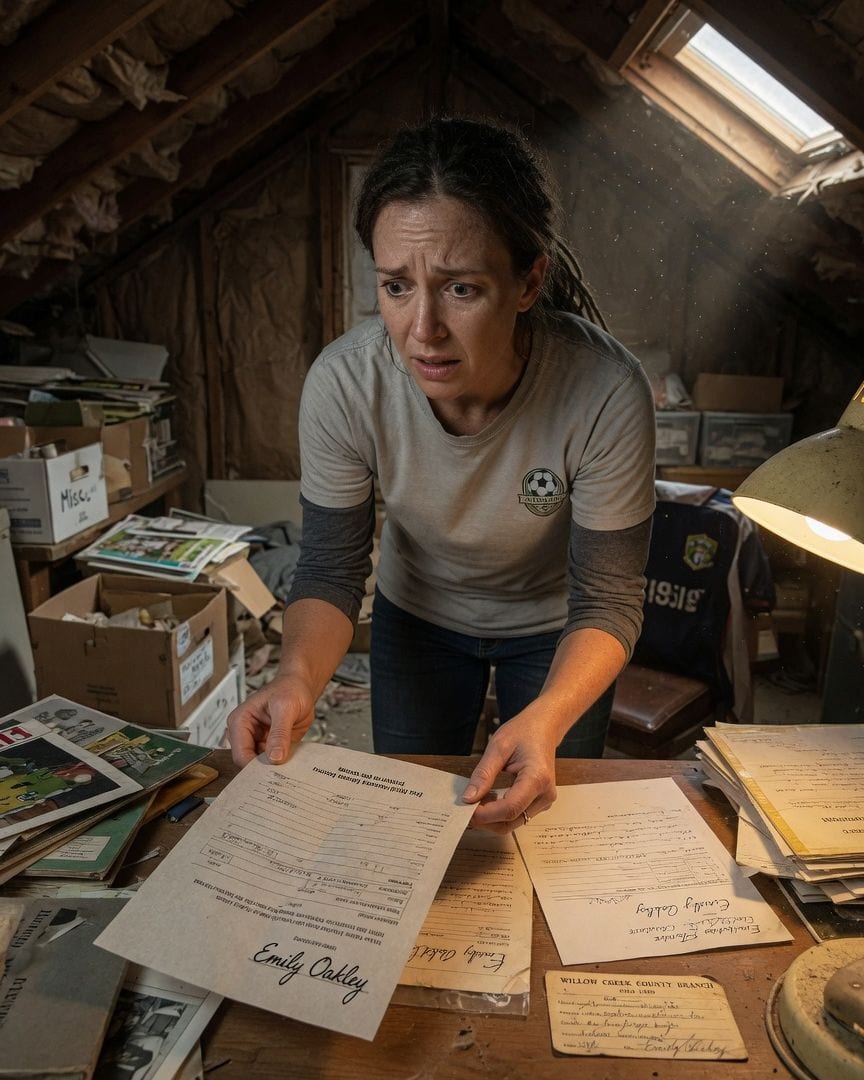
My adult signature is on a library card from 1968, but I only developed that style in the last decade.
I was confused when the school insisted they had my signed permission slip for Russell's trip. It was dated yesterday and bore my maiden name, Emily Oakley, but the flowing signature was undeniably my current style. That particular signature, however, I had only developed a decade after changing my name to Porter.
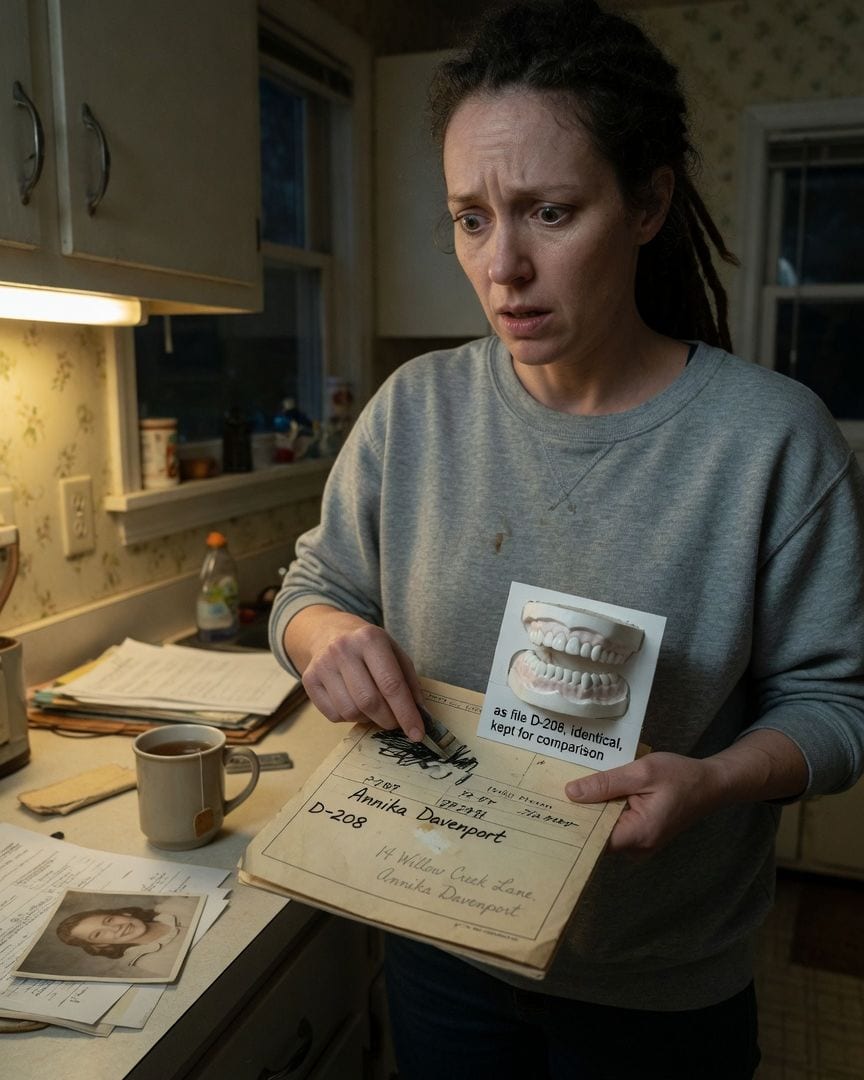
My childhood dental chart lists the house I bought last year — in my own name, years before I was born. A second set of my teeth sits filed beside it, marked 'identical.'
Sifting through old dental records, I found my chart, D-208, with my 1988 birth date. But a line from 1958 was blacked out, and a clipped card with an impression of my teeth listed my name and current home address, decades before I was born. The impossible facts knotted into a cold certainty.
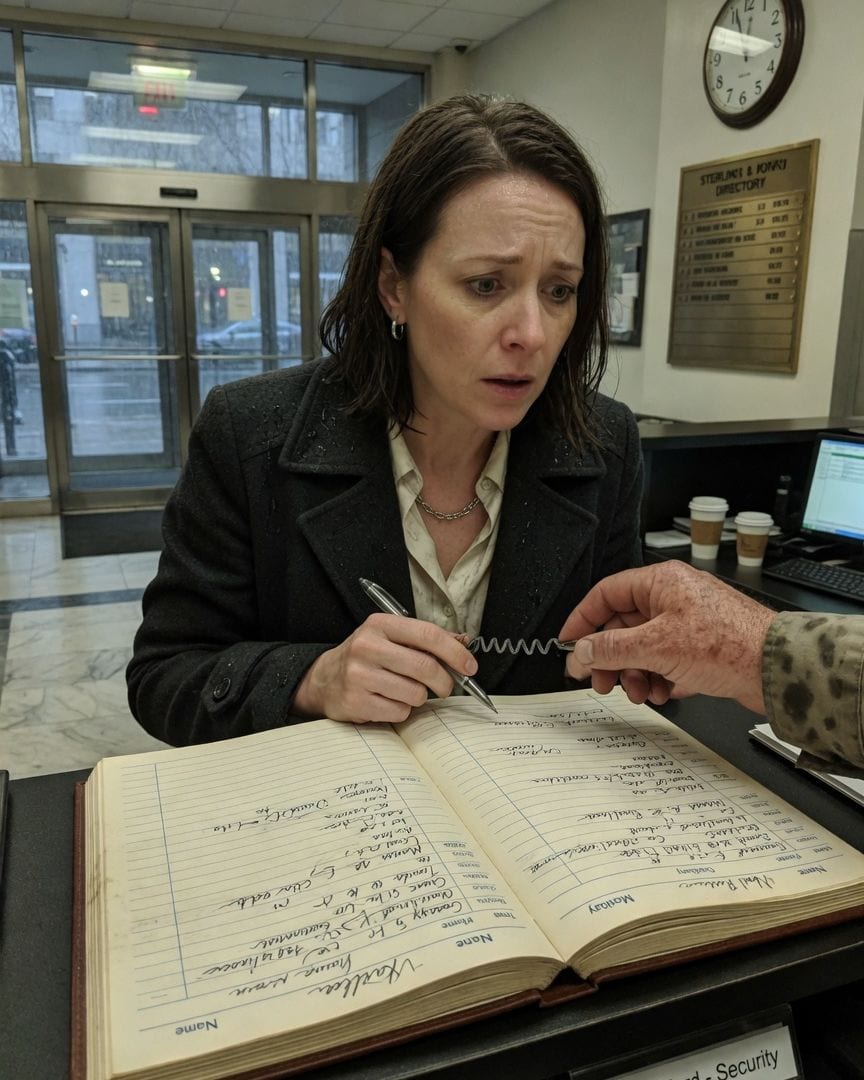
My name was already on the visitor log, signed at 9:04 AM. There were three more entries, all my perfect handwriting, on days I was never there.
I arrived for my 11 AM meeting, ready to sign in at the security desk. But the guard stopped me, pointing to my name already in the visitor log, signed hours earlier on a different floor. It was unmistakably my signature, yet I had just walked in.
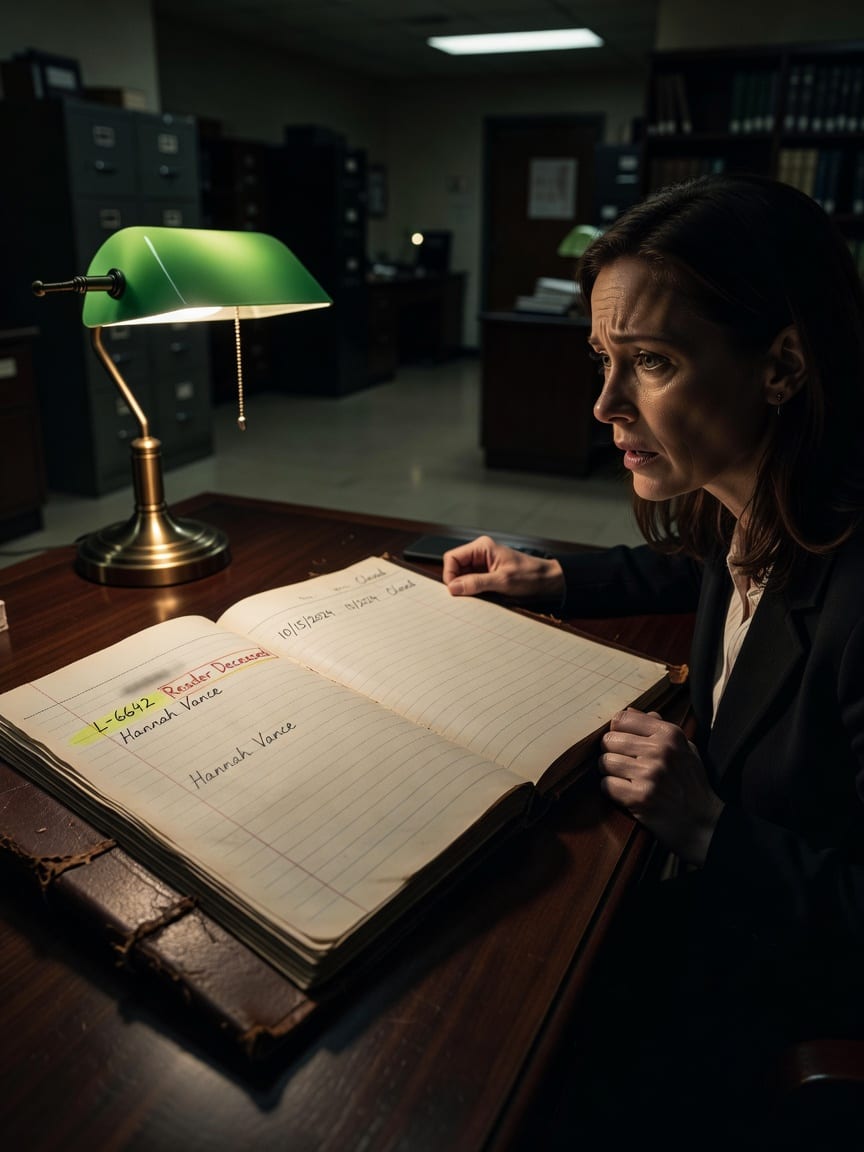
My library card number L-6642 was issued to me at seven — and the ledger shows that number has marked a reader 'deceased' every twelve years since 1949.
Returning my late father's library card to the old town library felt like a small act of closure. But the senior librarian's ancient ledger revealed a chilling pattern of 'reader deceased' entries tied to specific card numbers and borrowed books. My unease turned to cold dread when I secretly found my own name penciled in, marked for a future 'reader deceased' entry.
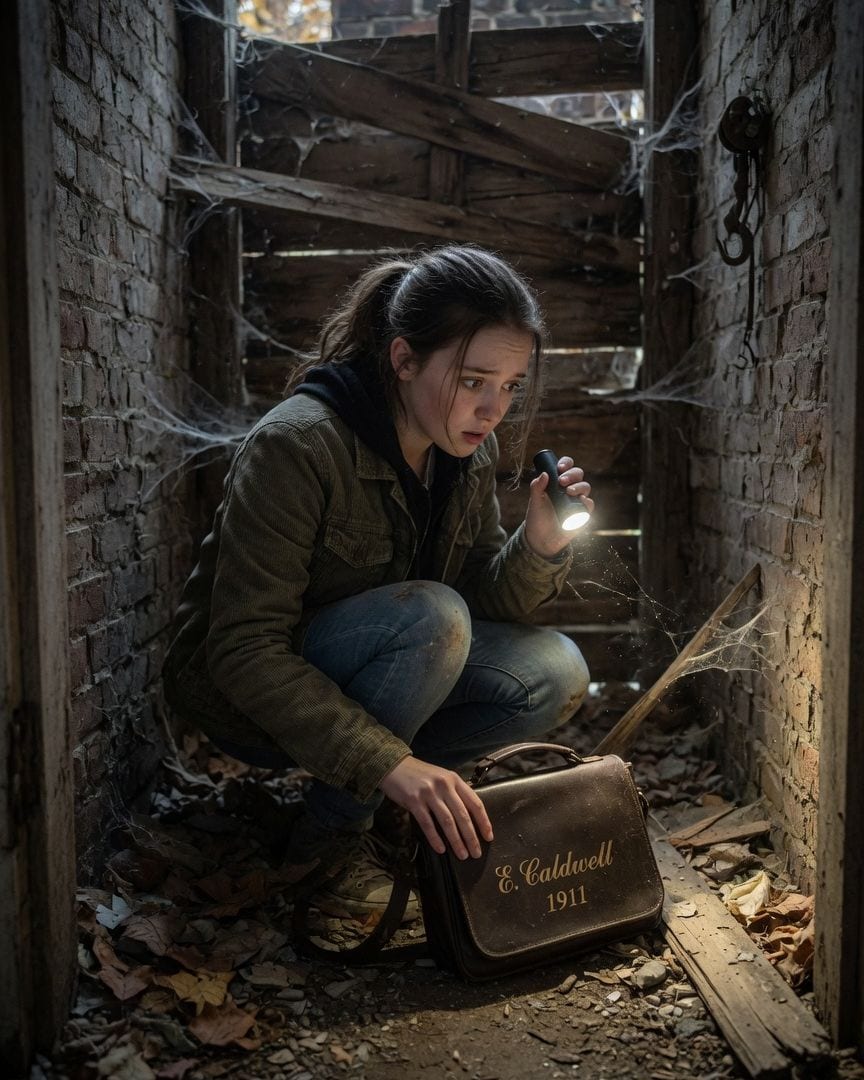
The school attendance register lists a child present every day since 1911. No such student ever sat an exam.
My new school, Caldwell High, felt too quiet, especially around its ancient, boarded-up bell tower. Teachers gave identical, rehearsed lines about it being "structurally unsafe." But then I found the attendance register, detailing a student named Eleanor Caldwell marked present every single day since 1911. No other record of her exists anywhere.
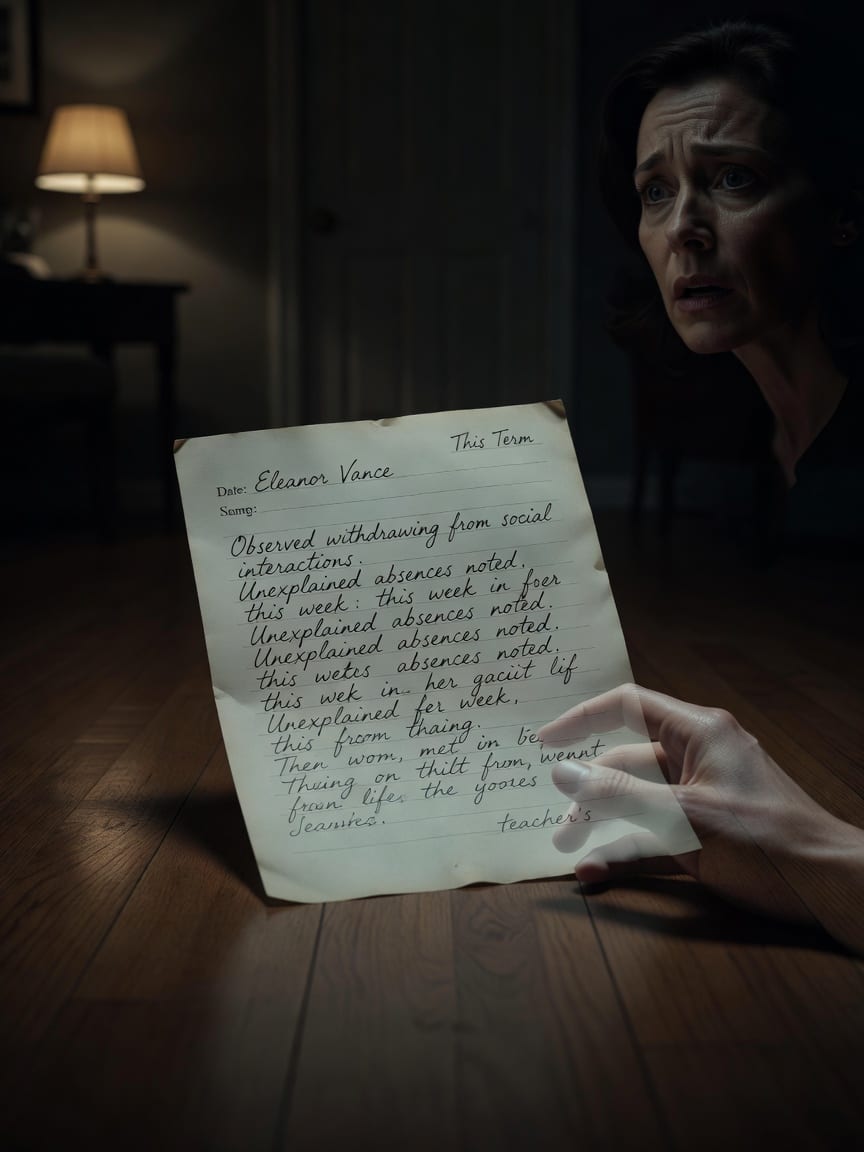
My school reports keep arriving, one a term, signed by teachers dead for decades. The latest describes something I'm doing *this week*.
My name is Eileen Caldwell, and my quiet life was upended by a school report from a place demolished decades before I was born. The report, signed by a long-dead teacher, eerily detailed my current habits. But the real shock arrived when I found my own name in a student register, dated 1968, with precise descriptions of my childhood—years before I existed.