My loft hatch is sealed with paint, but every night a trunk scrapes across the floor above my bed, then a chair settles. I have the only ladder.
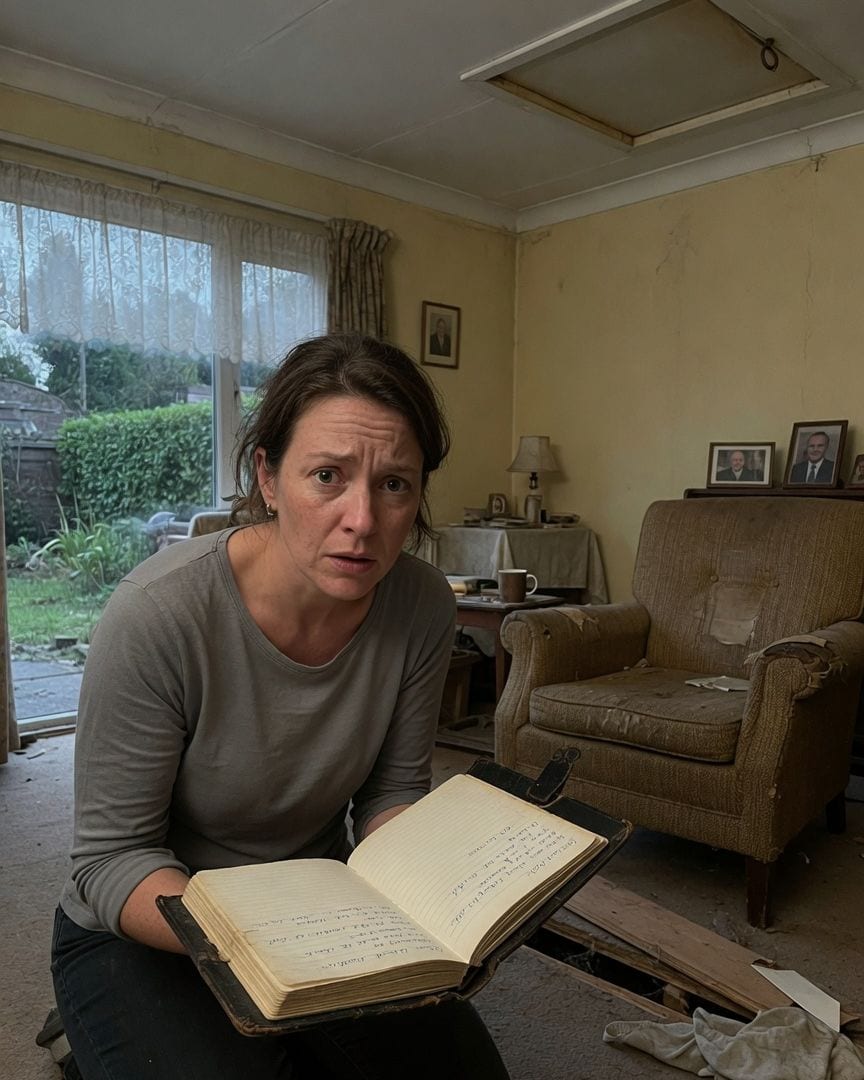
The gloss paint on the loft hatch in the landing ceiling is a solid, unbroken expanse of white. Three months I’ve lived in this house, inherited from my great-uncle Ralph, and I’ve never once thought to open it.
It’s just part of the ceiling, smooth and final. But some nights, directly above my bed, the sounds begin.
It starts with a low, resonant scrape, a heavy trunk, by the sound of it, being dragged slowly across the boards up there. It seems to vibrate through the very joists, rattling the framed photos on my bedside table.
Then it stops, usually after three distinct, heavy-sounding drags. A moment later, a chair scrapes, a lighter, sharper sound, then settles with a soft creak, as if someone’s just sat down to go through whatever’s in that trunk.
It’s always the same sequence, the same cadence, the same precise pause between the trunk and the chair.
I’ve tried to rationalize it – old pipes, the house settling, the wind playing tricks – but the sounds are too distinct, too deliberate. Too regular. I live alone; there are no shared walls.
In the morning, the paint seam is unbroken. I have the only ladder, stored securely in the shed out back, under a tarp. No one has been up there.
The nightly sounds from the loft began to grate on my nerves.
They weren't loud enough to keep me awake every night, but they were consistent enough to burrow under my skin, like a low-frequency hum I couldn't quite tune out.
I started scrutinizing the house, looking for anything else that might explain them, or anything that felt… wrong. The usual house noises, sure. The creaks, the groans.
But then I found myself fixating on a specific armchair in the living room, positioned by the window overlooking the front garden.
It’s an old, tweed armchair, probably from the 70s. Comfortable enough, but not my style. I never sit there, preferring the larger, softer sofa across the room.
Yet, the chair is deeply, almost excessively, worn on one armrest and the cushion, as if someone habitually sat there for hours every day, leaning in a particular, consistent way.
My great-uncle Ralph Sutton, who lived here his entire adult life until his death five years ago, was long gone. The house had been empty for months before I moved in.
But the impression of a persistent presence, a routine that continued even without its orchestrator, was undeniable. It was like the worn fabric held a memory.
One lazy afternoon, trying to tackle the dust bunnies that seemed to breed under everything, I pushed the armchair back to vacuum beneath it. My hand brushed against the floorboard directly beneath where the worn armrest rested.
There was a slight give. It wasn’t loose enough to move easily, not like a creaky floorboard you step on every day, but it felt different, almost hollow beneath my fingers.
I pressed on it again, a faint, dry click echoing in the quiet room.
My fingers brushed against that loose floorboard near the worn armchair. Curiosity, a sudden, urgent need to understand, overrode my caution.
I found the edge of a sturdy bookmark on the table beside me and carefully worked it into the seam. With a small levering motion, I managed to pry the board up just enough to create a gap.
Tucked into the dusty recess, wrapped in a faded, linen cloth, was a small, leather-bound journal.
Its cover was smooth with age, almost slick, and when I pulled it free and opened it, the first page was filled with elegant, precise handwriting. The date at the top of the page read 'October 12th, 1998.'
Below it, the entry began: 'Routine for the day: 6 AM kettle, 7 AM breakfast at kitchen table, 9 AM to the loft to sort the trunk, 1 PM lunch, 5 PM in the armchair by the window…' My breath caught in my throat, freezing there, as I stared at the words, recognizing a chilling, undeniable mirror of the sounds and impressions I'd experienced in this house.
I spent the next few days absorbed in Ralph’s journal. It wasn't just a diary of events; it was a meticulous record of his daily life, detailing every routine, every meal, every hour spent in various parts of the house.
The entries were precise, almost ritualistic, especially concerning the loft and the armchair.
He wrote about his deep, almost spiritual connection to the house, his belief that places retained echoes of intense, repeated actions, and his fascination with 'the memory of stone and wood.'
He filled pages with musings on the nature of habit, of intent, of physical space. The journal became a map of the uncanny, a blueprint for the wrongness I was experiencing.
To understand more about Ralph’s peculiar worldview, I decided to visit the local historical archives. I explained to the archivist that I was researching my great-uncle's life.
Patricia Winslow, a woman in her sixties with keen, observant eyes that seemed to take in everything without overtly watching, greeted me. Patricia recalled Ralph Sutton immediately, describing him as 'a fixture in the community, rather... set in his ways.'
Her lips thinned slightly as she spoke of his 'eccentricities,' particularly his profound attachment to his house. Her words were carefully chosen, avoiding any outright declaration of oddity, merely hinting at an unusual depth to his connection with the property.
It was like she was navigating a minefield of polite recollections. I asked if there were any records about the house itself, or about Ralph's specific interests – his 'theories of memory,' as I carefully phrased it.
Patricia nodded slowly, promising to look through the old town records and property deeds. As I left, I felt her eyes on my back, a faint, knowing look in their depths that unsettled me more than anything she'd said.
As I delved deeper into Ralph’s documented routines, the house itself seemed to respond. It wasn't just the sounds from the loft anymore.
The distinct, metallic scent of Ralph's old pipe tobacco, which I had thoroughly aired out months ago when I first moved in, occasionally drifted through the living room.
It was strongest near the worn armchair, a phantom memory of smoke lingering in the air.
The specific, rhythmic scraping from the loft seemed to intensify, sometimes starting earlier, sometimes later, but always following the same internal clock, an unseen schedule I now knew.
One evening, I walked into the living room and found the armchair by the window pulled out slightly from its usual spot, a few inches closer to the windowpane, as if someone had just risen from it moments before I entered.
My heart hammered. I pushed it back, telling myself it was the floor settling, or a draft. But the next morning, it was out again.
A week after my archive visit, Patricia Winslow called. Her tone was casual, even friendly, but there was an underlying current Vera couldn’t quite place, a thread of something unspoken.
Patricia claimed to have found an old property deed for Ralph’s house, but then she veered abruptly, asking if I was 'settling in well,' if the house was 'treating her kindly.'
The question hung in the air, loaded with an implication I couldn't ignore. Her voice dropped slightly, almost a whisper, as she advised, 'Some houses, Vera, they have a long memory. It’s best to respect what’s already there.'
The call ended abruptly moments later, leaving me with the distinct impression that Patricia knew exactly what I’d been looking for, and perhaps, what I’d already found.
The unsettling phone call from Patricia solidified my resolve. There was something she wasn't telling me, something vital. I drove straight back to the archives, determined to press for answers.
Patricia was initially evasive, her face a mask of polite professionalism as she offered platitudes about the privacy of past residents and the sanctity of personal records.
I, however, wasn't letting go. 'My great-uncle Ralph,' I stated, my voice steady despite the tremor in my hands, 'he kept a journal. He wrote about the house. About its memory.'
Patricia’s composure cracked then. Her shoulders sagged, and she let out a long, slow sigh. She gestured for me to sit in the chair opposite her desk. 'Ralph… he was a peculiar man, Vera. Not malicious, never that.
Just… deeply, profoundly rooted in that house. He believed that the house wasn't just a building. He believed it was a living record.
That if you performed certain actions, with enough consistency, enough intention, the house itself would absorb them, remember them. He called it 'imprinting the pattern.''
A cold wave washed over me as Patricia spoke, a chill that had nothing to do with the air conditioning. This wasn't some fanciful notion; this was a deliberate philosophy.
'He spent his last years trying to perfect it,' Patricia continued, her gaze distant, as if reliving memories. 'Making sure the house remembered him. Remembered his life.' She leaned forward, her voice dropping, almost a confession.
'He was obsessed with routine. Every hour accounted for. Every object in its place. Especially in that loft of his. He sealed it off, said it was to 'preserve the pattern.'
He believed the house would continue his life, on schedule, even after he was gone.'
My mind raced, connecting the dots with horrifying speed. The nightly sounds from the loft, the deeply worn armchair by the window, the exact, ritualistic schedules detailed in the journal, down to the 6 AM kettle.
It wasn't a ghost; it wasn't some random haunting. It was a deliberate, almost scientific, act of will. A machine, built of habit and wood and memory.
Armed with Patricia’s unsettling revelation, I returned home. The house felt colder, heavier, each floorboard and wall seeming to hum with a newfound, terrifying significance. I knew now what I had to do.
I retrieved the ladder from the shed, my hands trembling slightly as I carried it through the living room, past the silently waiting armchair.
I stood beneath the painted-over loft hatch, studying the solid seam of gloss that had kept its secrets for so long.
With a small utility knife from the kitchen drawer, I carefully scored along the edge of the paint, trying not to damage the wood beneath, a profound sense of trespassing heavy on my shoulders.
The paint cracked, a thin, almost imperceptible line appearing where the hatch met the ceiling. I pushed the hatch upwards. It creaked open, groaning in protest, revealing a square of impenetrable darkness.
I climbed the ladder, my phone’s flashlight beam cutting a shaky path through the gloom. It wasn’t a dusty, chaotic attic. It was a small, meticulously organized room.
And there they were: the trunk and the chair, precisely as the sounds had suggested, positioned in the center of the space. My beam swept across the walls, lingering on a small, almost invisible seam in the far wall.
I pried at it with the knife, revealing a hidden compartment. Inside, nestled among a few dry, brittle leaves, was a hand-drawn diagram of the house’s internal structure, covered in small, precise annotations marking specific 'nodes.'
Beneath it, a thin, final ledger, its pages brittle with age. My eyes traced the elegant, familiar handwriting to the very last line. It read: 'The pattern is set. The house will remember. It cannot be undone.'
I sat in the silent, meticulously arranged loft room, poring over the diagram and Ralph’s final ledger. The horror wasn't supernatural in the traditional sense; it was the chilling coherence of it all.
The diagram wasn't just a blueprint; it was a map of his ritual.
The 'nodes' were specific points in the house – the worn armchair, the kitchen kettle, the landing outside my bedroom, and this very spot in the loft – where Ralph concentrated his routines.
He believed these points, through repeated, intentional action, would become conduits, embedding his life's patterns into the house's very structure.
The objects in the loft – the trunk, the chair, a stack of worn photo albums sitting neatly on a shelf – weren't just possessions; they were tools, props in a lifelong performance.
The ledger detailed his theory: the unique, sealed environment of the loft acted as a 'preservation chamber,' enhancing the house's ability to retain and replay these imprints.
He wasn't trying to create a ghost, but a self-sustaining echo, a 'record that cannot be' broken.
He saw his death not as an end, but as the final, necessary act to allow the house to take over, to continue his life, perpetually 'on schedule.'
Every sound, every lingering scent, every worn spot in the house was a part of this deliberate, unbreakable mechanism he engineered.
The realization settled heavily on me: there was no ghost to confront, no malevolent entity to banish. The house itself was the 'haunting,' a complex, self-perpetuating memory machine. There was nothing to fight, only a pattern to endure.
I tried to disrupt it. With a surge of desperate energy, a childish rebellion, I pushed the trunk across the loft floor, jarring it from its designated 'node' markered on the diagram. It scraped loudly, gratingly.
I kicked the chair, sending it skittering across the floorboards.
The air in the small room immediately chilled, a palpable sense of immense, unyielding resistance pressing in on me from the very walls, from the floor beneath my feet.
That night, the sounds from the loft began, but they were wrong. The trunk scraped, but it was a frantic, uneven rhythm, not Ralph's precise cadence. The chair creaked, then fell with a dull thud.
The familiar routine was distorted, broken, a desperate struggle against my interference. A profound, aching sense of violation washed over me, as if I had wounded the house itself, a living thing protesting its desecration.
I knew, with an absolute certainty, that this wasn't anger or retaliation, but the house's 'memory' struggling, painfully, to reassert its ingrained pattern.
The next morning, I returned to the loft. The trunk was back in its original position. The chair was upright, precisely where it had been before. The subtle chill was gone, replaced by the stale, quiet air.
That night, the sounds resumed their precise, rhythmic loop, exactly as they always had. The pattern was too ingrained, too deep. It cannot be undone, only endured.
I continued to live in the house. I cannot bring myself to leave; the knowledge of Ralph's intricate, deliberate design holds me captive, a silent witness to a life that refuses to end.
The sounds from the loft continue every night, a constant, low hum beneath the surface of my own existence. I learn to anticipate them, to live around them, to almost not hear them, yet they are always there.
The worn armchair remains by the window, a silent testament to a routine that outlived its creator. I never speak of it again, not to Patricia, not to anyone.
The profound, unsettling truth of the house's memory becomes mine alone to bear.
The house settled into a new equilibrium around Vera, its routines a quiet, persistent current beneath her own.
She learned to ignore the rhythmic scraping above her bed, the faint scent of pipe tobacco by the window, the soft creak of the third stair that Ralph's journal said he always avoided.
These were not ghosts; they were echoes, indelible imprints of a life meticulously lived and deliberately preserved.
The dread wasn't in fear, but in the unyielding certainty of the pattern, the knowledge that it would continue, long after she was gone.
Her life in the house became a quiet co-existence with an unbroken record, a constant, chilling reminder that some memories are not just held, but made permanent.
Sometimes, when I wake before dawn, I hear the kettle whistle from the empty kitchen, exactly at 6 AM, just as Ralph's journal said it would.
If this one got to you
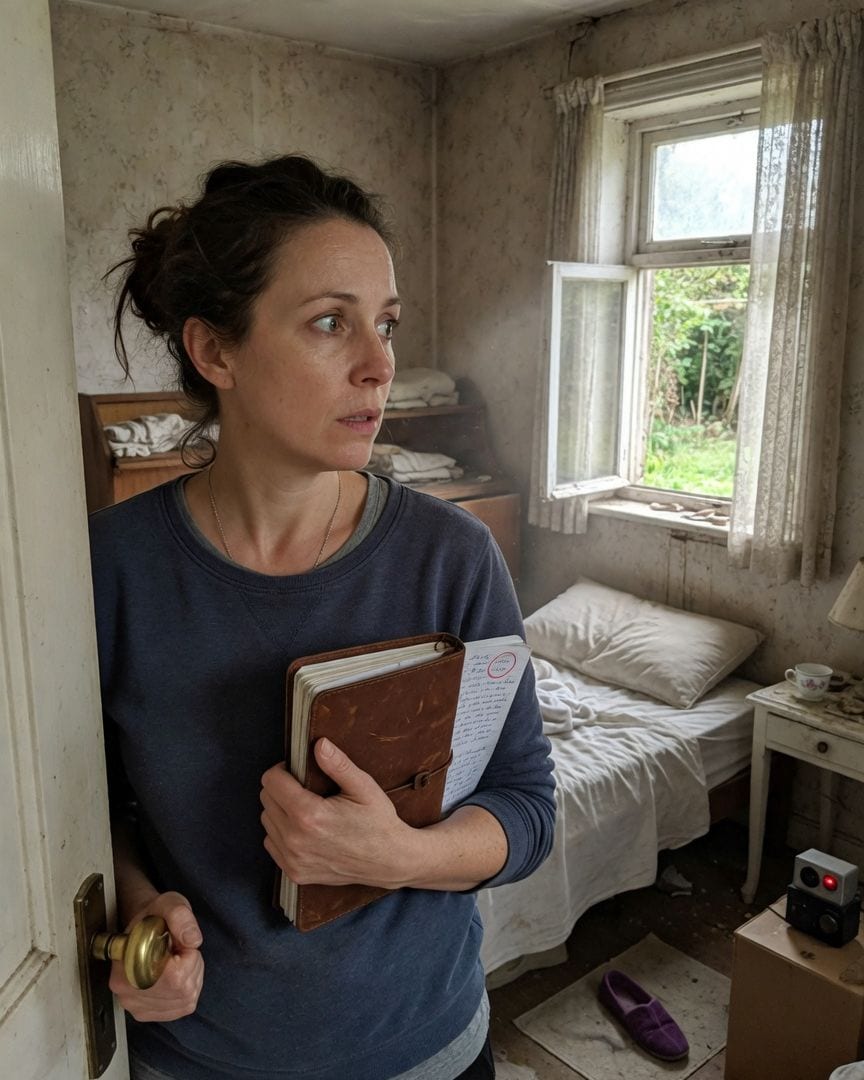
My spare room bed is slept in every few nights, sheets warm and pillow dented. I live alone, painted the window shut, and nobody has a key.
I've lived in Grace's house for six months, adjusting to its quiet rhythms. But the spare room, which I keep shut and empty for storage, has a disturbing routine of its own. Every few mornings, the bed is clearly slept in, the sheet rumpled and warm, and the window I painted shut is open exactly two inches.
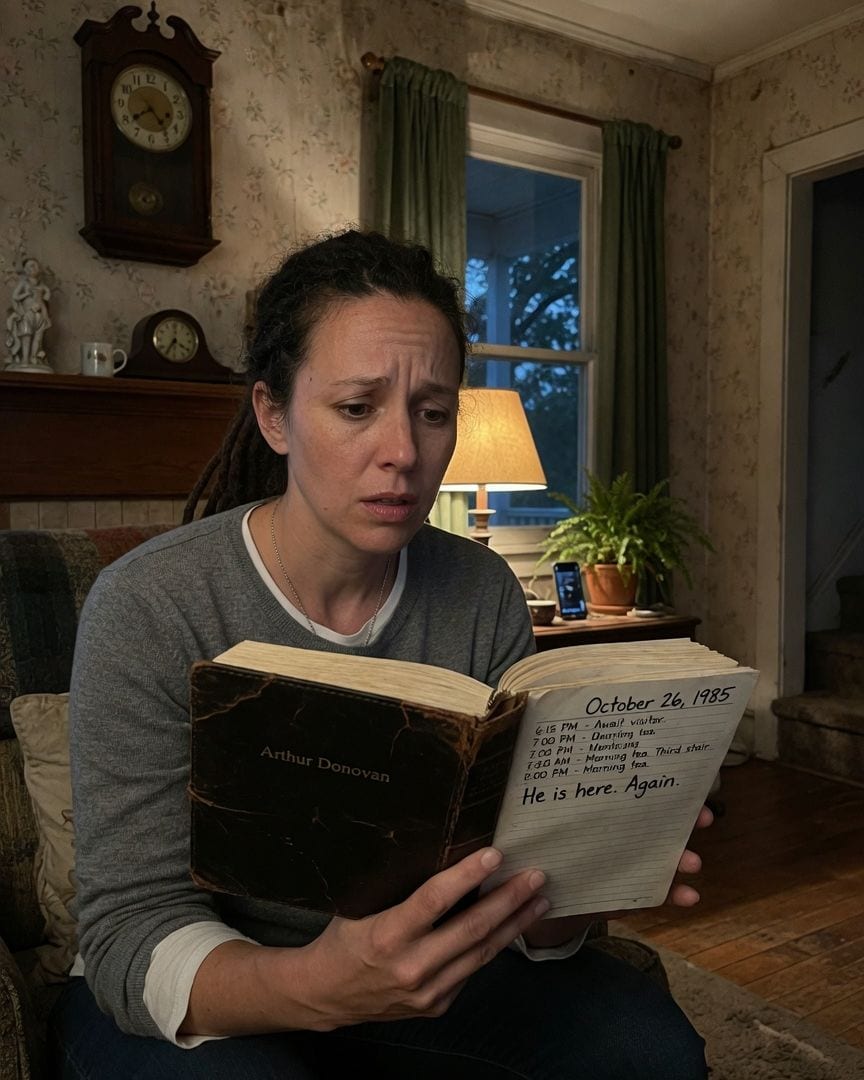
My front door gets three firm knocks every 6:15 PM. Nobody's ever there, but the doormat is always nudged, like someone just wiped their feet and left.
I moved into my inherited house expecting quiet, but every evening at 6:15 PM, three firm knocks hit my door. Each time, I find the porch empty, with no one in sight. My phone camera confirms it: only the doormat subtly shifts, echoing the clear knocks, like an invisible visitor wiping their feet.
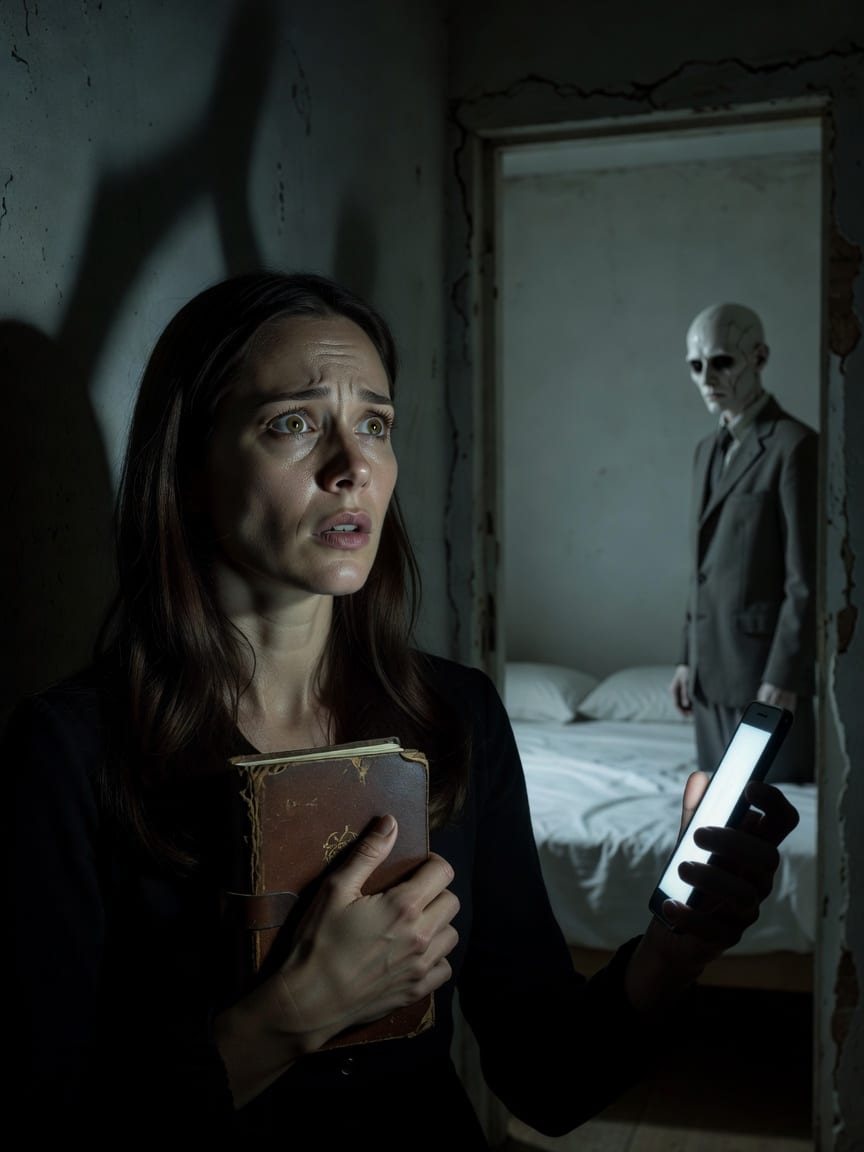
Behind a plastered-over doorway, I found a room. Papered, carpeted, and furnished with a made bed, sealed for decades. The air was dead still, but the bed wasn't dusty. My council tax bill only lists five rooms.
I'm Claire, an architect, meticulously planning my new Victorian terrace renovation. But when I uncovered a hidden room behind a wall, everything I knew about time and decay shattered. The bed was perfectly made, the air still, yet there was no dust, only an unnerving cold.
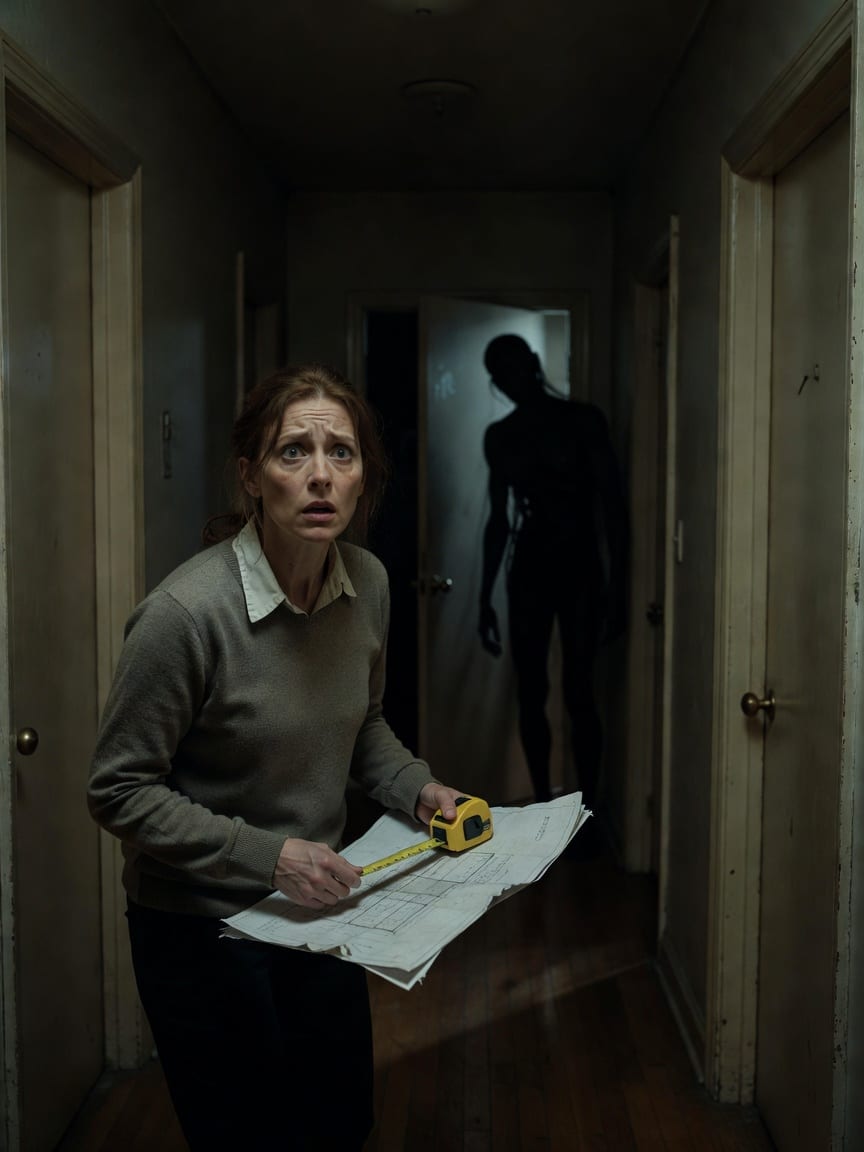
My front door has a dented gate and a dead hydrangea. I walked past it six times, trying to reach the corner shop just a hundred yards away. The pavement kept bringing me back to my own porch, and the shop's light never moved.
My morning started like any other, a quick walk to the corner shop from my home at Number 14, Elm Terrace. But after walking what felt like two minutes, I found myself back at my own front door, the shop no closer. I tried six times, faster and slower, but my street kept compressing, refusing to let me leave.
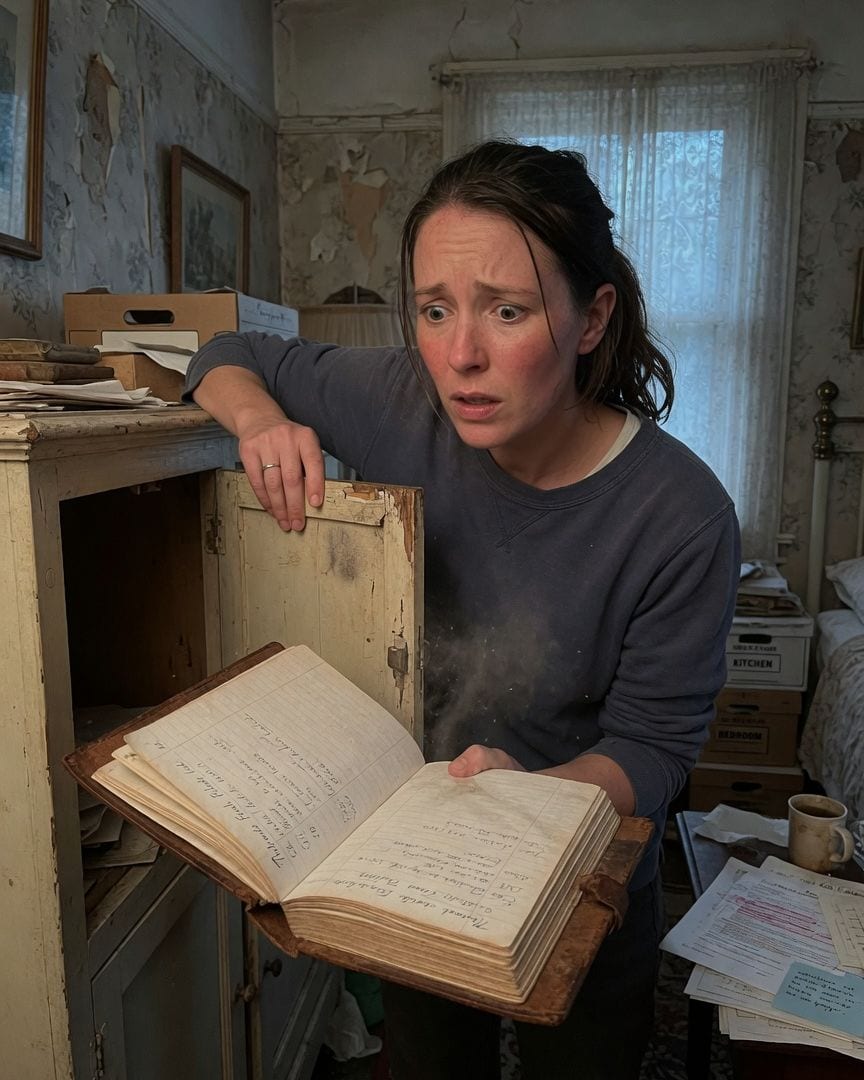
My house’s 1962 valuation has a redacted line, but the surveyor’s note says 'condition as attaches to each owner in turn.' It’s the same code on my own mortgage completion statement.
Moving into my new Victorian house, I found a redacted line in an old mortgage report. It mentioned a condition that 'attaches to each owner in turn,' a phrase my solicitor dismissed as an 'archival quirk.' But then, a hidden ledger in a bedroom cupboard revealed a chilling chain: every past owner's name, followed by 'Condition Fulfilled'.
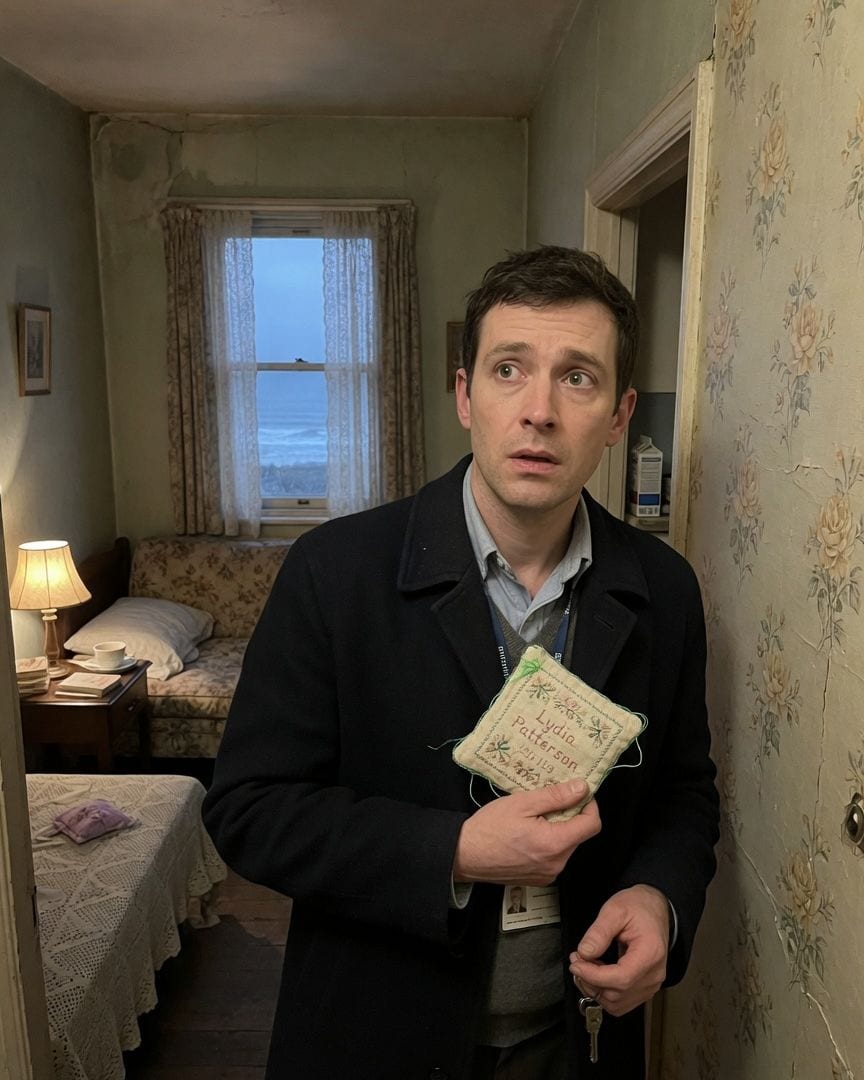
The 'empty' almshouse I was auditing wasn't empty. I heard a bare foot *thump-thump* from next door.
My new charity role involves auditing the supposedly 'empty' almshouse units. But from the unexplained activity outside to a fresh carton of milk inside, something is deeply wrong. Then, in one unit, I found a dead woman's sampler with a jarringly new thread, and heard bare feet thumping next door.