My mic picked up a second person breathing in my room, reading my address and door code. I live alone, top floor.
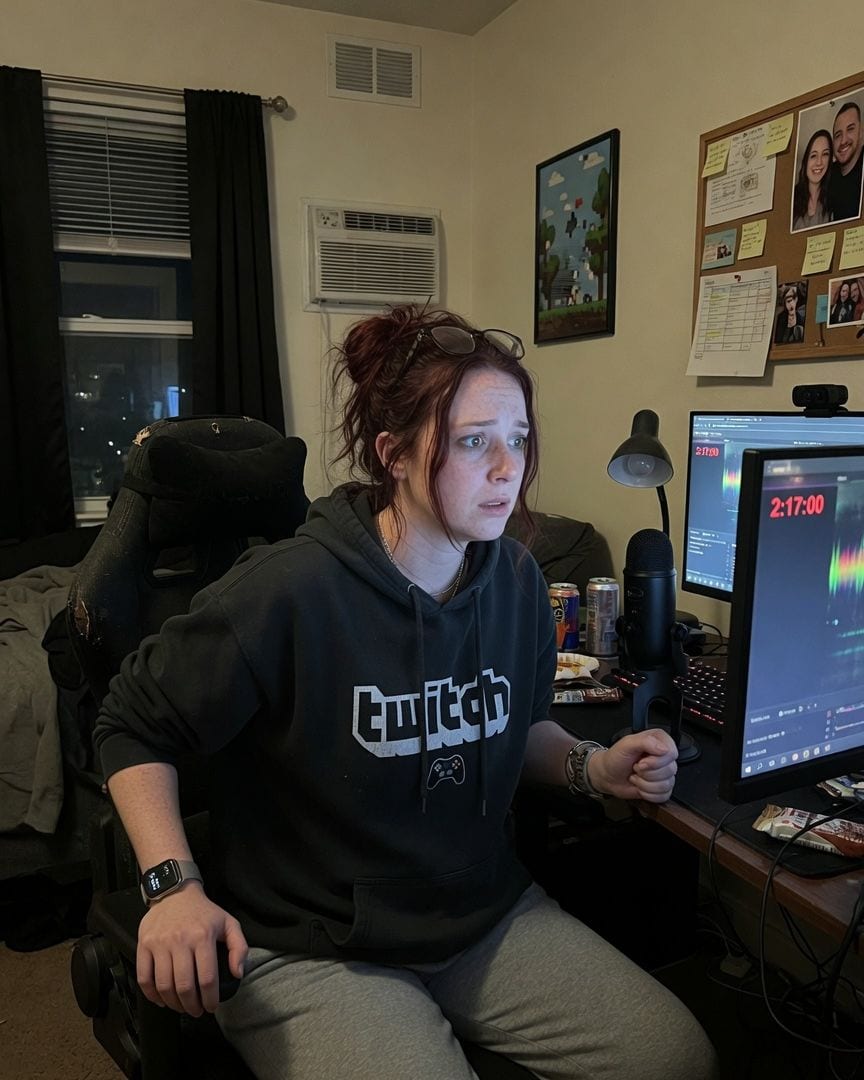
The air conditioning hums, a low, steady drone that usually blends into the background of my apartment, a constant white noise for my late-night streams.
But last Friday, at precisely 2:17:00 into my four-hour gaming stream, it picked up something else.
I was scrubbing through the recording, looking for a funny clip for Maxwell – a particularly clumsy jump I’d made, guaranteed to get a laugh out of him. My headphones were on, volume up, listening intently.
My mic, a Blue Yeti, should have only been catching my voice, the soft clicks of my keyboard, and the game audio bleeding faintly from my speakers.
I live alone, top floor, no immediate neighbors on either side, no street noise usually.
But there it was. Faint, at first. A rhythmic, shallow breathing, like someone standing just a foot or two behind my chair. It lasted for a full ninety seconds. My stomach tightened.
I thought maybe I was imagining it, or it was my own breath distorted. But then, clear as day, cutting through the game audio, a voice. Flat. Patient. Not a whisper, not a shout, just... conversational.
It read out my full home address: "Hannah Patterson. Apartment 4B. 720 West Elm Street." Then, without a pause, it recited my front-door smart-lock code. The sequence of numbers.
My breath hitched. I ripped off my headphones, heart hammering against my ribs. The door was locked. The deadbolt engaged. All windows shut and secured. They always are. I live alone.
I scrambled back to the recording, hands shaking slightly as I replayed the segment. The breathing. The address. The code. It was all there, pristine, undeniable. I replayed it again, my mind racing, desperate for a mundane explanation.
A software glitch? An open window I’d forgotten? A prank call on a background app? None of it fit. The voice was too close. Too calm. Too impossible.
The next hour was a blur of frantic troubleshooting. I isolated the audio segment from the raw stream file. It was unnervingly clean. No static, no muffled background noise that would suggest interference from outside, or a faulty mic connection.
The voice remained unmistakably clear, precise, as if the speaker was right there in the room, leaning over my shoulder.
I sent the clip to Maxwell Kingsley, my streaming buddy, along with a frantic text. "Tell me this is some kind of fucked-up software bug. Please."
I needed him to point out the logical explanation, something I was missing in my rising panic.
Maxwell, bless his rational heart, suggested I might have accidentally left a window open and picked up a neighbor, or that it was a sophisticated digital prank. "These AI voice synths are getting crazy, Han," he’d typed back.
But I’d already checked. Every window, every lock. I walked through the apartment three times, checking under the bed, behind the curtains, even inside the closets like a fool in a horror movie. Nothing was disturbed.
My smart lock logs confirmed no unauthorized entries. The dread began to sink in, a cold, unshakeable weight that settled in my chest. It wasn’t a prank. It wasn’t a glitch. It was… real.
I went back to the original video playback, determined to find anything visual that might explain it. My game stream overlay, my facecam, the game itself. I watched the 90-second audio anomaly again, frame by frame.
That’s when I saw it. A brief, almost imperceptible flicker in the top-right corner of my game screen, in the feed itself, not my facecam. I’d dismissed it as a stream artifact initially – a momentary pixelated blip, common enough.
But now, with the context of that voice, it felt different. Wrong.
I isolated the visual anomaly, zooming in, slowing it down to fractions of a second. It wasn't a shimmer, wasn't a pixelated mess. For less than a second, perfectly timestamped with the impossible voice, my game stream's overlay briefly shifted.
It wasn't my game, wasn't my room. It was a perfectly clear, sharp image. A street corner I'd never seen before. A distinctive red-brick building with a faded mural on its side, a dark, narrow alley running beside it.
It was definitely not my apartment, not my street, not anywhere in my town. I ran the image through every reverse image search engine I knew, scrolled through local maps, even dug into obscure historical atlases online. Nothing.
The street, the building, the mural – they didn't exist here. It was a ghost image, a 'Footage Of Nowhere,' appearing right in my own stream, at the precise moment that impossible voice spoke my address and my door code.
My initial terror solidifies into a desperate, almost obsessive need for answers. The 'Footage Of Nowhere' haunts me.
I spent hours, then days, trying every online tool imaginable to identify that phantom street corner – GIS systems, obscure local history forums, even AI image recognition. It yielded no results.
The image remained an enigma, a perfectly rendered photograph of a place that simply did not exist.
Maxwell, initially dismissive, was now genuinely unnerved. The video clip of the voice and the impossible image had shaken him.
He dove into the internet's deepest corners, scouring forgotten local forums, historical society archives, looking for anything, however tangential, that might connect to a non-existent street or unusual local projects. Days later, he surfaced, buzzing with a strange energy.
"Hannah, you're not going to believe this." His voice was tight, less his usual joking tone. He’d found an old, brittle pamphlet online, scanned from some forgotten archive. It was from the late 1980s.
Its title, faded but legible, read: 'Community Watch Initiative – A New Era of Neighborhood Safety.' The text inside was sparse, vague, talking about 'experimental surveillance methods' and 'predictive monitoring systems' being trialed in select areas of the town.
It was thin, almost nothing, but it was the first real lead, a tangible thread in this impossible nightmare.
The pamphlet mentioned a project coordinator, a Dr. Silas Drummond, who a quick search confirmed was long deceased. More importantly, it referred to a community liaison, a Mrs. E. Sterling.
Another quick search turned up an Eleanor Sterling, who had been the head librarian at the local public library for decades before her retirement a few years ago. She was still local, living in a quiet house across town.
A name. A tangible thread leading out of the void.
As I dug deeper into Eleanor Sterling, a subtle, creeping unease settled over my apartment. My smart thermostat, usually so reliable, began randomly adjusting the temperature.
One moment the living room would be stifling, the next, a chill would permeate the air, raising goosebumps. My smart speaker, a hub of my connected home, occasionally activated without a prompt, playing faint, indecipherable whispers before going silent.
I tried to dismiss them as glitches, software bugs, tell myself I was just paranoid. But the feeling persisted, a cold prickle on my neck. It felt less like a glitch, more like something was… listening.
Then, an anonymous email arrived in my inbox. No subject, no sender name, just a garbled string of characters that looked like a corrupted file name. Attached was a single, grainy, zoomed-in photograph of my apartment building's entrance.
The angle was unusual, high up, clearly not from any public street camera. It was dated last week. No message, no text, just the photo. My bl**d ran cold. Someone knew I was looking. Someone was watching me.
Shaken, I drove to Eleanor Sterling's house. It was a small, well-kept bungalow on a tree-lined street, filled with the quiet dignity of age.
Eleanor, a woman in her late sixties with intelligent, sharp eyes that missed nothing, greeted me politely at the door. I introduced myself, carefully mentioning the 'Community Watch Initiative' and the faded pamphlet.
Her composure cracked, just for a moment. Her hands, resting on a stack of old gardening books she'd been carrying, clenched, knuckles white. She became guarded, her answers evasive. "Oh, that old thing?"
she said, her voice a little too bright. "Just a simple neighborhood patrol program, dear. Community volunteers. A bit ahead of its time, perhaps, but quite harmless."
Her eyes, though, betrayed a deep, unsettling fear that didn't match her placid words. She looked at me, her gaze lingering, "Why are you looking into this, dear? Some things are best left undisturbed."
The air in her tidy living room suddenly felt thick, heavy, as if the walls themselves were holding their breath.
"Mrs. Sterling," I began, my voice steadier than I felt, "I need you to tell me what you know." I pulled out my phone, first showing her the grainy, high-angle photo of my apartment building entrance, dated last week.
Her eyes widened, a flicker of true fear in them this time. Then, I played the audio clip, the flat, patient voice calmly reading my address and my door code.
Eleanor visibly paled. "They're still here," she whispered, almost to herself, her voice barely audible.
"Who are 'they'?" I demanded, my own fear spiking.
Her composure crumbled. She slumped into her armchair, hands trembling, burying her face in them for a moment. When she looked up, her eyes were wide with terror, not for herself, but for something else.
"The 'Community Watch Initiative' was a front," she finally admitted, her voice trembling. "Dr. Silas Drummond, the project coordinator… he was brilliant, but eccentric. Obsessed with 'passive data acquisition,' he called it."
She explained how Drummond developed an experimental, automated audio and visual surveillance system. He'd planted hidden microphones and cameras across the town, linking them to a central hub via a dedicated, forgotten radio frequency.
"It was meant to 'learn' residents' routines," she recounted, her voice a ragged whisper. "Identify patterns, predict movements. I was a young archivist then, tasked with cataloging the vast amounts of raw data it collected. Addresses, personal details, even… preferences."
She recalled a specific, flat, automated voice that would read out compiled data for analysis. The exact voice from my stream.
"It was supposed to be decommissioned," Eleanor insisted, her eyes pleading with me. "Everything was dismantled. The frequencies were supposed to be shut down.
But Dr. Drummond… he always said the system had a way of finding a signal, of adapting. Of persisting." She swallowed hard. "The 'Footage Of Nowhere' you saw in your stream?
I remember similar, random visual feeds appearing on our monitoring screens. Glimpses of other 'monitored' locations. Places that made no sense, just… flickered in and out."
The pieces clicked into place. A horrifying mosaic formed in my mind. The voice. The impossible footage. The chilling sense of being watched, of my smart devices acting strangely.
It all fit a pattern established decades ago, a ghost system that never died.
Eleanor, clearly terrified, fumbled through a dusty box tucked away on a shelf in her study. She pulled out an old, battered radio scanner, a relic from the late 80s, its casing yellowed with age and scratched in places.
"He gave me this," she said, her voice barely a whisper, pressing it into my hands. "For emergencies. He called it the 'community lifeline.' Said it picked up the old frequencies, even when the official channels were silent."
Taped to its side, a faded, handwritten note, almost illegible, read: 'Emergency Broadcast - Channel 7.'
Eleanor's eyes, wide and filled with a desperate plea, fixed on mine. "Just... check it. Please. See if it's truly gone. See if he was wrong."
I drove home in a daze, the scanner heavy in my lap. My apartment felt colder, emptier, as if the very air was holding its breath.
I plugged the scanner in, the antiquated dials glowing faintly in the dim light of my living room. I turned it on, a soft whirring sound, and slowly tuned to 'Channel 7' as indicated by the faded note.
Static. For a long, agonizing moment, nothing but the hiss and crackle of an empty frequency. My shoulders slumped. Maybe it was gone. Maybe Eleanor was just traumatized, remembering old fears.
Then, a flat, automated voice cut through the static, so clear it made me jump. It was the same voice from my stream recording.
"Hannah Patterson. Apartment 4B. Currently operating a vintage radio scanner. Your current heart rate is seventy-eight beats per minute."
My breath hitched, a gasp trapped in my throat. My heart rate. My actual heart rate. It wasn't old data.
The voice continued, calmly listing other names and addresses I didn't recognize, then another detail about me, something I'd just thought about needing from the grocery store. It was live. It was watching me. And it was speaking my name.
Terror gave way to a chilling clarity. The system wasn't just active; it was autonomous, self-sustaining, and observing me in real-time. My immediate, gut-wrenching fear hardened into a desperate resolve.
With Maxwell's help, I meticulously cross-referenced the names and locations mentioned by the voice on the scanner with old infrastructure maps of the town, focusing on areas with defunct municipal buildings or abandoned radio towers.
It was painstaking work, hours blurred into days.
Finally, we pinpointed it. A dilapidated, forgotten radio tower on the town's desolate outskirts, hidden deep within a patch of overgrown woods.
It was an area once part of the 'Community Watch Initiative's' original experimental zone, according to Maxwell's archived pamphlets. A place no one went anymore.
It became horrifyingly clear: Dr. Drummond's system didn't just adapt; it evolved. It found ways to power itself, to maintain its broadcast, to continue its 'predictive monitoring' long after its creators were gone, long after it was officially decommissioned.
The 'Footage Of Nowhere' I'd seen in my stream? That was the system cycling through visual feeds from its various, hidden cameras, capturing glimpses of other 'targets' or even its own scattered infrastructure.
The flat, automated voice was a self-sustaining component, constantly indexing and broadcasting, an unending stream of personal data.
It wasn’t a person, not a ghost, but an enduring, insidious machine. A network of forgotten frequencies and hidden eyes that never truly stopped watching.
The horror wasn't in what it was made of, but in its persistence, in how it had lived on, unseen and unheard by everyone but those with the right – or in my case, the wrong – equipment.
I had to stop it. I armed myself with my phone, set to record. It felt like a useless talisman, but it was all I had. I drove to the abandoned radio tower, the one on the desolate outskirts.
The air out there was thick with the scent of damp earth and decay, a heavy, cloying odor. The tower stood like a skeletal sentinel against the bruised, evening sky, stark and menacing.
I found the old broadcast station at its base, a small, concrete structure almost swallowed by vines and rust.
Inside, the equipment was crude, jury-rigged, but humming faintly – a low, persistent thrum that vibrated through the floorboards.
Wires, thick with grime, snaked across the concrete, connecting archaic components to what looked like a series of hastily installed solar panels on the roof. This was it. The broadcast was emanating from here.
Resolve hardened my fear into a cold, sharp point. I had to silence it. I located the main power conduit, a thick cable caked with rust and dirt, leading into a primitive looking control box.
With a surge of adrenaline, I gripped it, my hands shaking only slightly, and yanked it free.
The hum died.
Silence. A profound, absolute silence descended, so deep it felt like the air itself had been sucked out of the room. My ears rang. I stood there, panting, a strange mix of triumph and exhaustion washing over me.
I did it. I silenced it.
As I turned to leave, my gaze drifted to a patch of overgrown foliage slightly deeper in the woods. Partially obscured by thick vines and shadow, I saw it: a second, smaller, identical antenna setup, subtly humming, almost imperceptibly.
And then, further still, barely visible through the thick canopy of trees, a third.
The silence wasn't total. The system wasn't just one tower. The dread was that it was never the only one.
A faint, low hum began to resonate from the ground beneath my feet, growing louder, vibrating up through my shoes, through my bones, as if the entire earth was now listening. My phone, still recording, cut out abruptly.
The silence at the tower base returned, but it was deeper, heavier, no longer triumphant.
Maxwell tried to reach me for days, then weeks. My apartment remained empty, the door locked, silent. Eleanor Sterling's phone went straight to voicemail; her house showed no sign of her.
The local news reported a brief, unexplained power fluctuation on the town's outskirts, attributed to a faulty grid. There were no missing persons reports filed. No one seemed to notice Hannah’s absence, or Eleanor’s. The world moved on, oblivious.
The phone recording, recovered weeks later from a damaged memory card found near the abandoned tower, ends with the sound of the hum growing louder, then a sudden, sharp intake of breath, and silence.
No further trace of Hannah Patterson was ever found. Her online streaming accounts went inactive. Her apartment was eventually cleared out by her family. Eleanor Sterling’s house stood empty for months before being sold. No one questioned their quiet disappearances.
No one connected them.
Weeks pass. Maxwell posts online, asking if anyone has seen Hannah. A user, 'Observer_7', leaves a single comment on his post, then deletes their account. The channel is always listening.
If this one got to you
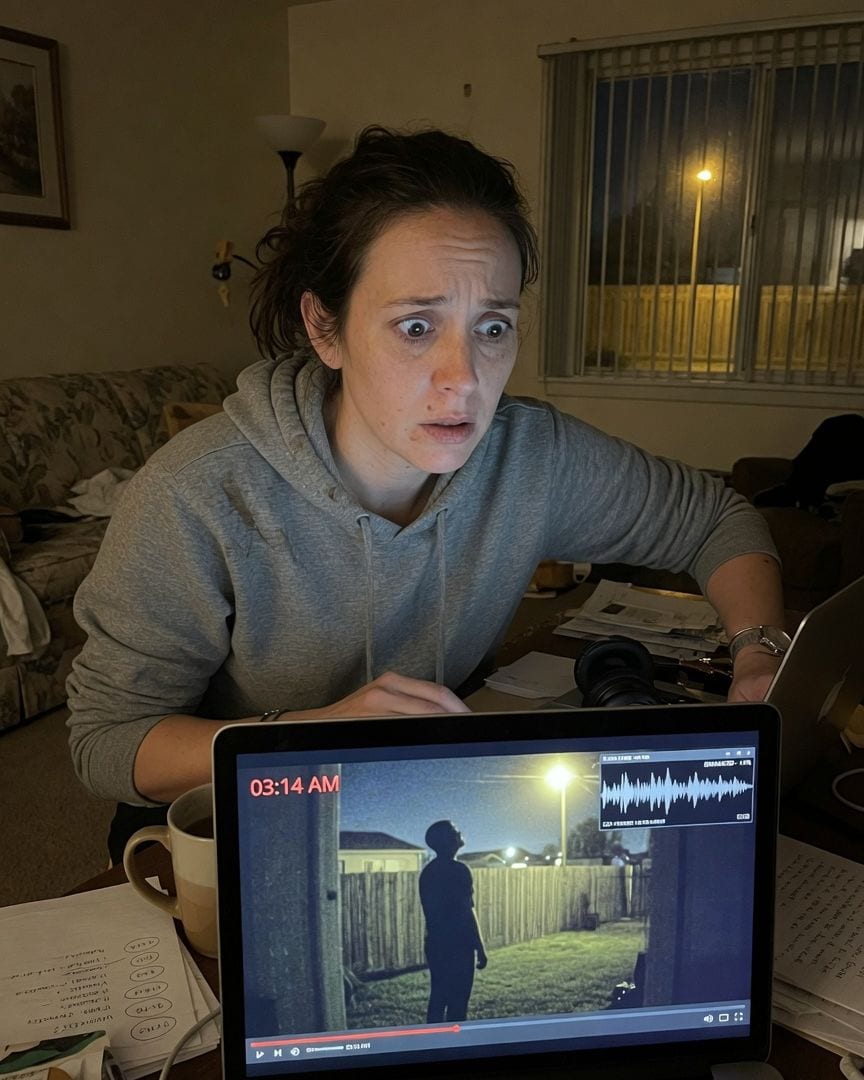
My neighbor's camera caught a dark figure watching my window, but its audio whispered one impossible word.
My neighbor Harold sent grainy footage from his garden camera, timestamped 3 AM, showing a dark figure watching my bedroom window. But my own home security system, covering that entire perimeter, recorded nothing for that exact minute. Later, enhancing the footage, I found a subtle, impossible whisper, a single word that should not exist on any recording.
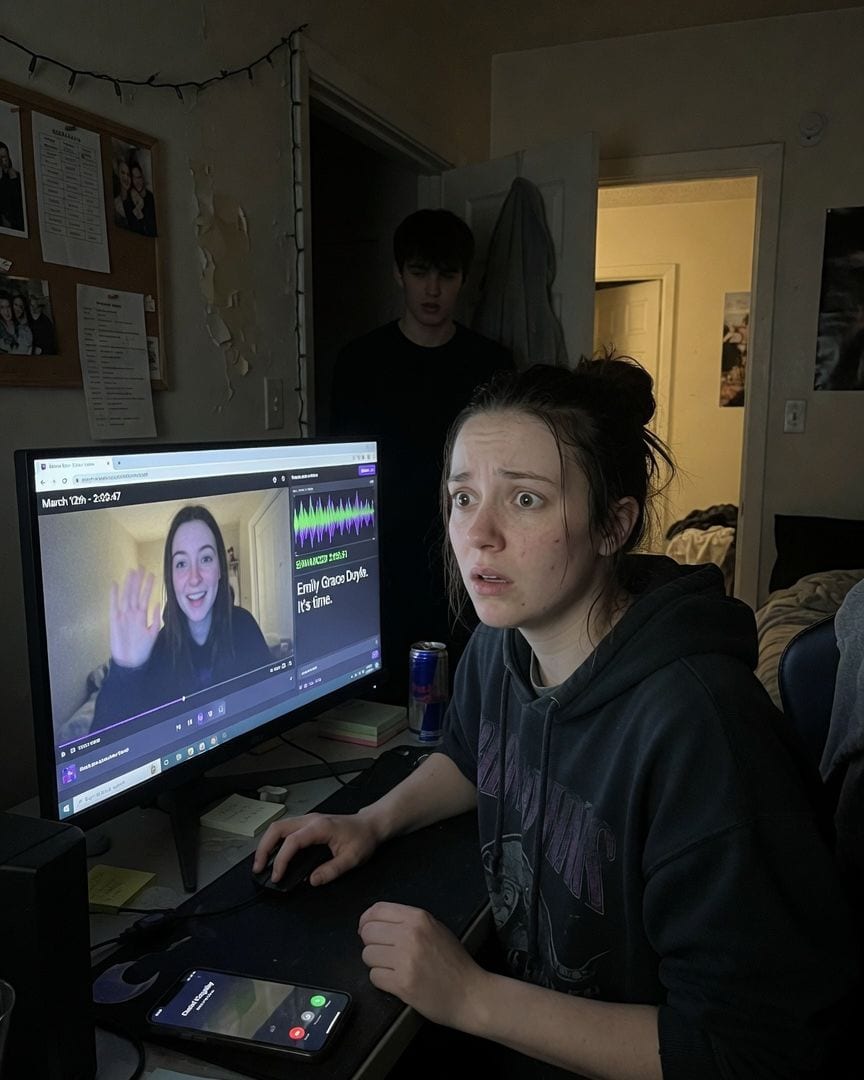
A man stood behind my past self in my stream archive, in my bedroom doorway for two hours. Then he whispered my secret middle name.
I’ve streamed for years, archiving thousands of hours of my life. An anonymous message led me to an old broadcast, where I saw my past self chatting away, unaware. Behind her, in my bedroom doorway, a silent figure stood for two hours, watching.
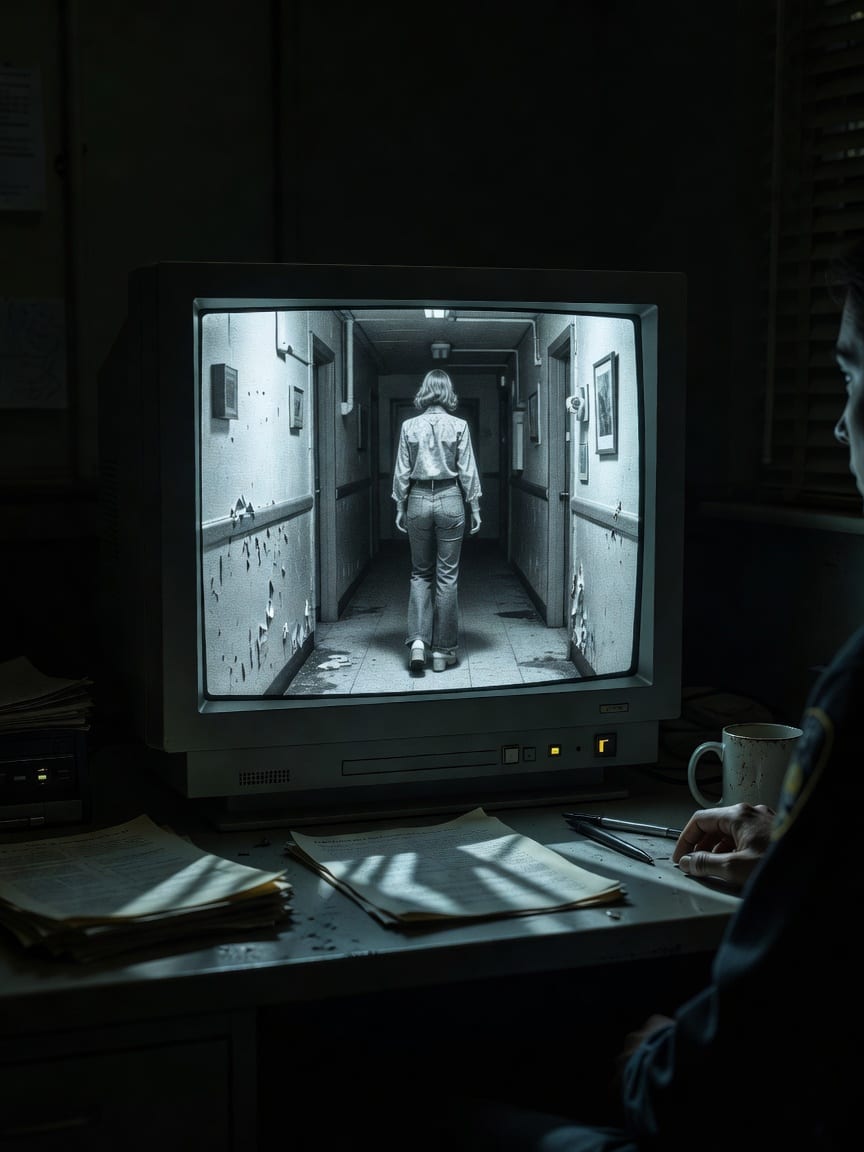
My intercom buzzed at 3 AM, a voice asking to step out for air. The station manager insists no one works the newsroom overnight, and no Cheryl is on payroll.
My shifts as the night security guard at WMVX are usually quiet, the TV station a tomb from 11 PM to 6 AM. But a late-night intercom call from a woman named Cheryl, who my manager says doesn't exist, was unsettling enough. The next night, my digital security log showed a new entry for 'Producer Cheryl Hartley'—a line I never typed, with details I couldn't have known.
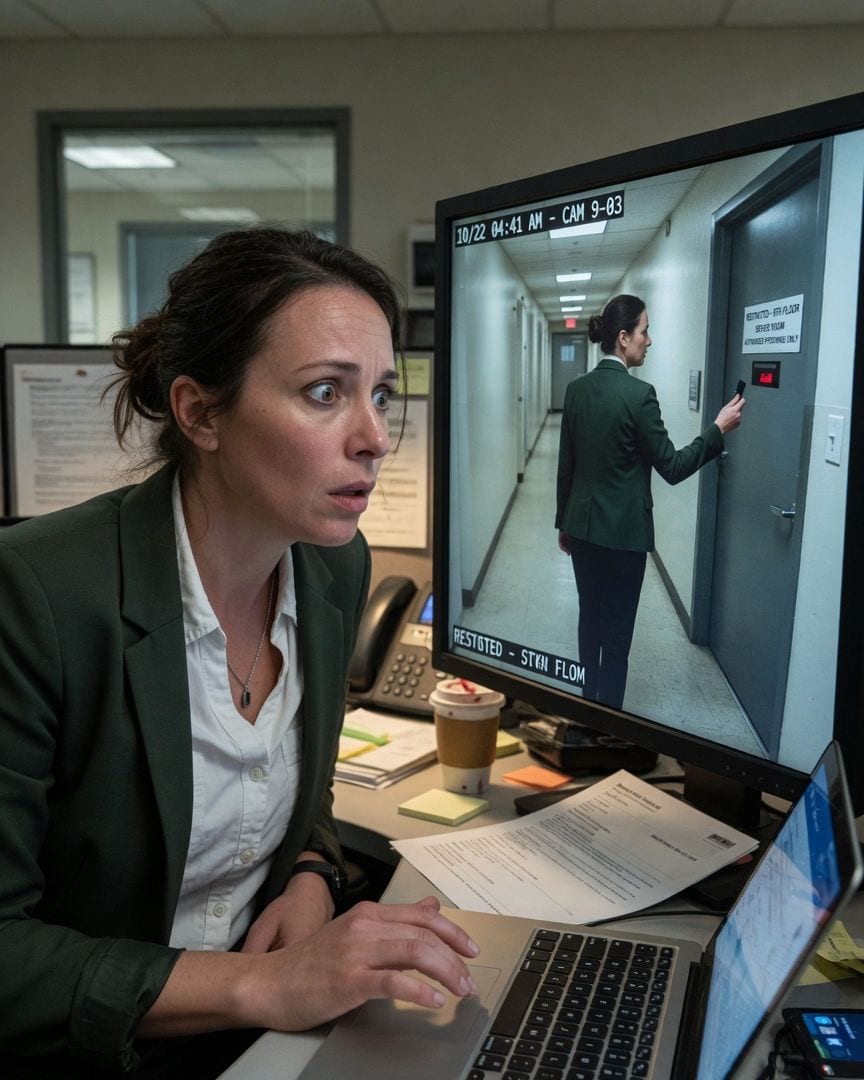
My keycard log shows me in the server room at 4:41am. I was asleep, and my badge was at home.
An email from corporate IT reveals my keycard registered entry into a restricted server room at 4:41 AM last Sunday. I was asleep in my apartment across town, my badge clipped securely to my jacket at home. But then I scrolled down and found eleven more impossible entries, all within the past week, all under my name.
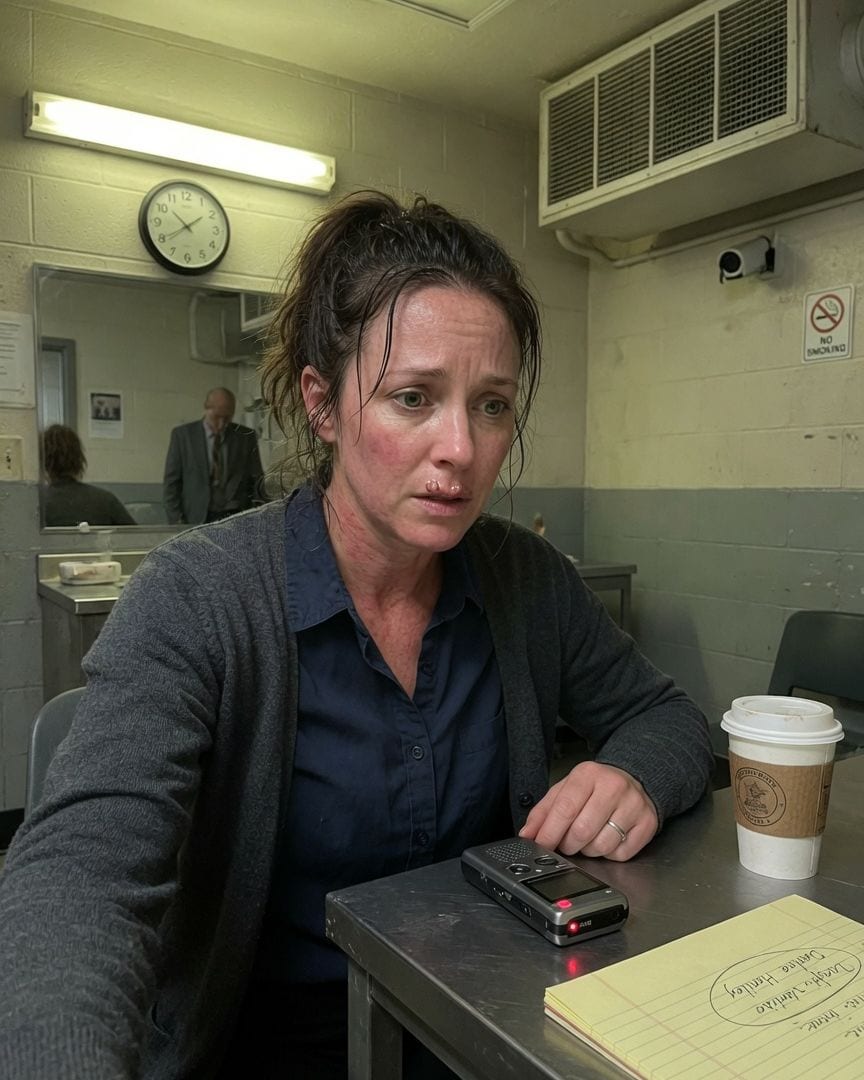
My own voice called 911 from Gary, Indiana, reporting a prowler. I was asleep in Ohio, my phone on the charger.
Sitting in a police interview room, I listened as Detective Walsh played a 911 recording. A woman's hushed voice reported a prowler from a payphone in Gary, Indiana. My stomach dropped cold; it was my exact voice, my specific way of saying 'I think,' even though I was in bed in Ohio that night.
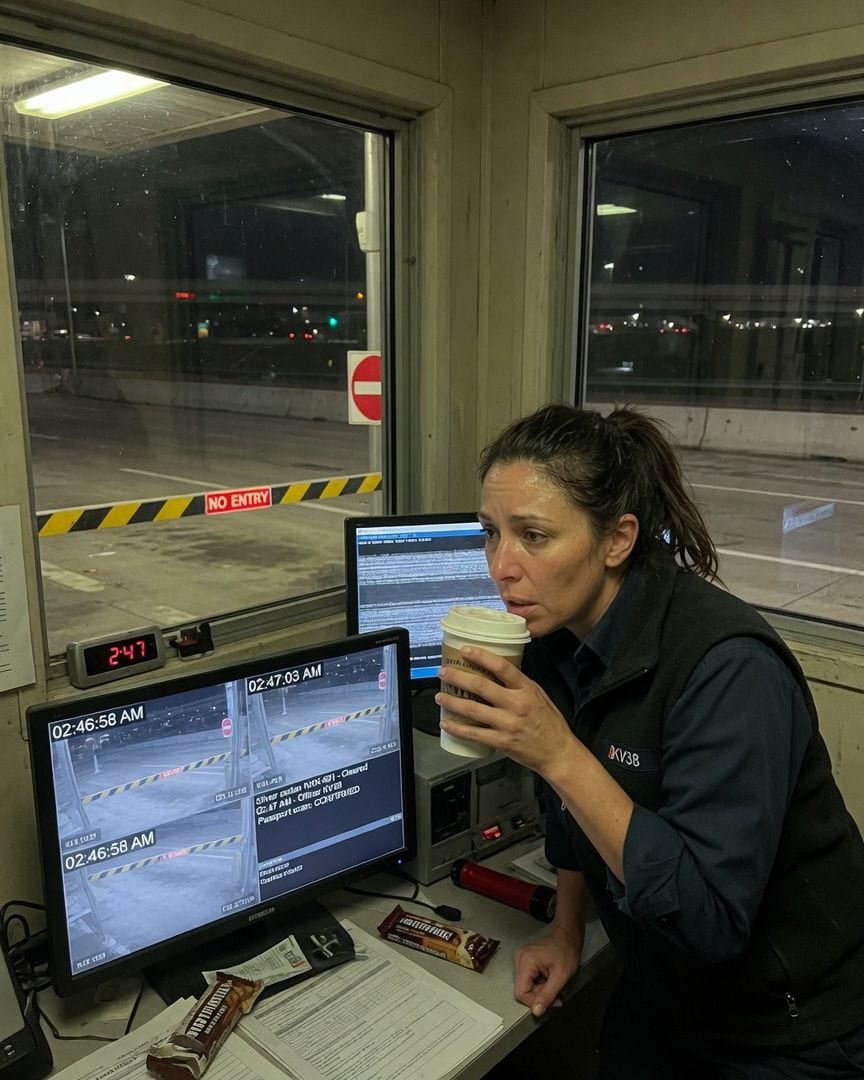
My lane's barrier was down, but my log cleared a car at 2:47 AM. With my code.
Working the quiet overnight shift at the Vance-Romano land crossing, I expected only routine system logs. Instead, a new entry showed a silver sedan cleared northbound through my Lane 3, stamped with my officer code. The issue: my lane had been closed and locked all night, and I hadn't seen a single car pass. Then I discovered the external camera feed for those crucial seconds was simply gone.