My old school punishment book lists a caning from 1953, the child's name blacked out. The head's note reads 'the boy from Ropewalk, as before — punish, record no name,' and Ropewalk is my street.
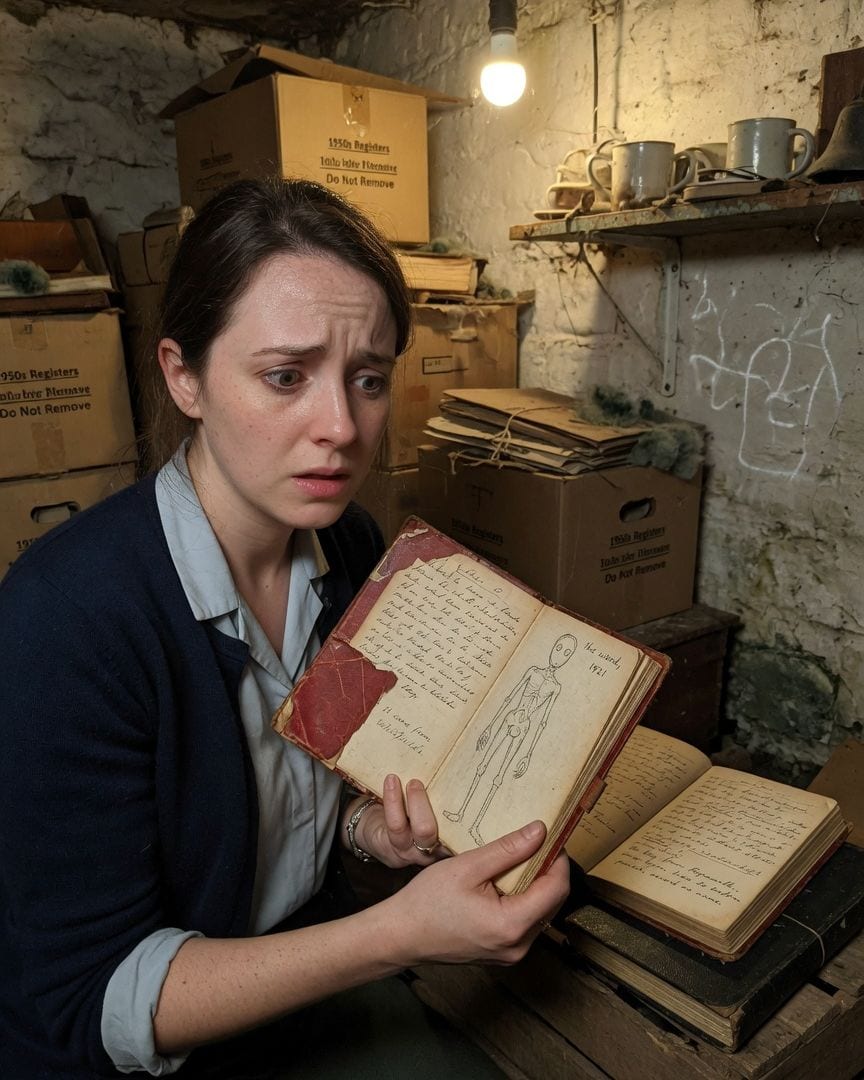
The village school’s storage cupboard smelled like decades of forgotten dust and faint, sweet rot. As the new teacher, it was my job to sort through the archives, a task nobody else wanted.
I pushed aside stacks of yellowed registers and chipped ceramic mugs until my fingers brushed against something cold and rigid: an old, leather-bound punishment book.
It was heavy, a thick, dark thing that felt more like a tombstone than a ledger.
I flipped it open, the brittle pages crumbling slightly at the edges. Entries, meticulously hand-written, dated back to 1901. Most were mundane infractions: 'Talking in class', 'Untidy uniform', 'Late for assembly.'
Then, halfway through the book, an entry from 1953 stopped me cold.
Child's Name: [REDACTED] Offence: Caning.
The name was obliterated, scored out with thick, black ink – not neat redaction tape, but an angry, permanent blacking-out.
Beside it, in the headteacher's spidery, precise handwriting, a chilling note: 'the boy from Ropewalk, as before — punish, record no name.'
A cold dread settled in my stomach. Ropewalk. That was my street. My house was on Ropewalk.
My fingers, strangely numb, flipped back through the decades. 1943. Another redacted entry. 'the boy from Ropewalk, as before — punish, record no name.' 1932. Same. 1921. 1910. Back to 1901.
Each entry, roughly once a decade, was a carbon copy: a name blacked out, 'Caning' as the offence, and that impossible note. 'The boy from Ropewalk, as before.'
It never specified a house number, but the implication was clear: always the same house. Always the same unnamed child.
My rational mind tried to invent a logical explanation. A local prank, perhaps, passed down through generations of headteachers? An administrative error, some strange, recurring loophole? But the solemnity of the ledger, the chilling regularity of the entries, denied it.
The wrongness hummed beneath my fingertips, a quiet, insistent vibration from the past, telling me something was deeply, fundamentally off.
The redacted entries gnawed at me. I couldn’t shake them. During staff lunch, I tried to casually probe Joel Ingram, the headteacher, about the school’s archives, particularly the older ledgers.
He was politely dismissive, citing privacy and the fragile age of the documents. “Best left to rest, Lily,” he’d said, without looking up from his sandwich. “History can be… complicated.”
Complicated was an understatement. Undeterred, I waited. After the last student left, after Joel had locked up, I used my own staff key. The school, usually bustling, was a hollow shell of echoes in the dim evening light.
I made my way to the rarely-used storage cellar, a damp, forgotten space beneath the oldest part of the building. The air was thick with the smell of wet earth and ancient paper, making my lungs ache.
I switched on the single, bare bulb, its weak glow casting long, dancing shadows. Behind stacks of mildewed textbooks, shoved into a forgotten corner, I discovered it: a heavy, leather-bound journal, distinct from the official records.
This was clearly a headteacher’s private notes, bound in faded crimson leather.
Its pages were filled with dense, spidery handwriting, much like the punishment book’s notes, but far more cryptic. I found entries that, while not naming children, referred to 'Ropewalk’s burden' and 'the annual appeasement.'
The dates aligned eerily with the 'punishment' entries in the other book. My heart hammered against my ribs.
The language was archaic, hinting at something far older and more ritualistic than simple discipline. 'The cyclical charge,' one entry read, 'must be maintained, else the village pay the price.'
Another, later: 'The binding holds for another cycle, but its hunger grows.' Not a child at all, I thought, a growing certainty chilling me from the inside out.
My skin prickled, goosebumps rising on my arms despite the close, damp air.
My heart pounded as I continued to sift through the headteacher's journal. The cryptic entries escalated in their strangeness, hinting at a presence, something referred to as 'the ward' rather than a student.
I found a note describing "its restless slumber" and the constant "vigilance required." Tucked precariously into the very back cover, almost missed, was a brittle, foxed page, thinner than the others.
It wasn't text, but a crude, unsettling sketch. The drawing depicted not a boy, but a gaunt, elongated figure with too many joints, its limbs impossibly long, its head a blank oval where a face should be.
It looked like a child’s night terror given form, rendered by an adult hand. Below the disturbing image, scrawled in faded ink, was a caption: 'the ward, 1921.'
I felt a sudden lurch in my stomach. My breath hitched. And then, below that, a single, barely legible line of text: 'It came from Whitfield's.'
My own surname, staring back from a document nearly a century old, linking my family directly to the monstrous drawing.
The revelation of my surname in the journal sent a cold, deep chill through me that wouldn’t dissipate. Whitfield's. My family. The creature from the sketch. I spent my evenings consumed by it, researching my family's history in the village.
I cross-referenced old property deeds at the library, poring over microfiche, then local census records. My house on Ropewalk, it turned out, had been in the Whitfield family since the late 1800s.
The connection was undeniable: a Whitfield had owned my house in 1921, the exact year of the 'ward' sketch.
Under the guise of researching local history for a school project – a flimsy excuse, but the only one I could invent – I sought out Margaret Doyle.
She was a retired local historian and former school librarian, known for her encyclopedic knowledge of the village's past. She lived in a small cottage on the edge of the village, surrounded by tottering stacks of books.
Margaret was a frail woman, her hands gnarled with age, but her eyes were sharp, observant, missing nothing. She offered me weak tea, her gaze lingering on me with an unnerving intensity as I tried to explain my 'project.'
She was initially cautious, her answers vague. She spoke in hushed tones of 'old village ways' and 'things best left alone,' her eyes flickering to the window as if expecting someone.
When I tentatively mentioned 'Ropewalk’s burden' – a phrase from the headteacher’s journal – Margaret’s eyes flickered again. A flicker of recognition, or perhaps, unease. She didn’t deny it.
I pressed, describing the odd entries in the punishment book, the redacted names, the regularity. Margaret merely sipped her tea, her silence more unsettling than any direct answer.
The room itself seemed to hold its breath, a damp, heavy quiet settling between us, amplifying her unspoken refusal to engage.
Driven by Margaret's evasiveness, by her knowing silence, I decided to return to the school after hours, determined to find more. The unanswered questions were a physical ache in my chest.
I used my key, the empty corridors echoing my footsteps with a hollow sound that seemed to chase me. The setting sun cast long, skeletal shadows through the high windows.
I went straight to Joel Ingram's office, hoping to find old school blueprints or property maps, anything that might show architectural anomalies on Ropewalk, or point to 'the same house' explicitly.
As I pulled open a drawer of rolled-up charts, I heard it: a faint, rhythmic scraping sound from the cellar directly below. Scrape… scrape… scrape. It was too regular, too deliberate to be old pipes.
It sounded like something being dragged across concrete, or perhaps, something being carved.
I froze, straining to listen. The scraping stopped. The silence that followed was heavy, deliberate. My heart hammered in my ears. I told myself it was just the old building settling, or maybe a rat.
But the sound had been too steady, too purposeful.
A moment later, I glanced out the window, my heart leaping into my throat. Joel Ingram's car was parked across the street, lights off, engine running, a dark silhouette against the streetlights.
He wasn't looking at the school, not directly, but towards the front entrance. He'd been waiting. Or watching. My skin crawled with the certainty of being observed. I ducked back, my breath catching.
The window pane felt suddenly cold against my cheek, as if the night air had seeped in to touch me.
I slipped out of the school, my mind racing. Who was he watching for? Me? The next morning, a small, anonymous note was tucked under my car's wiper blade. It was folded neatly, no identifying marks.
Inside, written in neat, block capitals, was a single, chilling line: 'Some things are filed for a reason.'
The message was clear: my digging had been noticed.
I confronted Margaret Doyle again, this time laying out the evidence on her small, cluttered kitchen table: the punishment book, open to a redacted entry; the headteacher's private journal, open to the sketch of 'the ward' and the 'Whitfield's' note.
I had even brought a print-out of my family's property deeds.
Margaret, seeing my distress and the undeniable paper trail, finally broke her practiced silence. She didn't flinch from the sketch. Her gaze was steady, unsettlingly calm.
Her voice, when she spoke, was low, steady, devoid of emotion, as if she were reciting a well-learned lesson.
"The 'boy' is not a boy at all, Lily. Never was." Her words were a flat pronouncement. "It's a recurring manifestation. We call it 'the ward.' It's deeply tied to the land beneath Ropewalk, specifically your house. Always has been."
I felt a cold dread creep up my spine. "The punishments? The caning?"
"Not disciplinary actions." She shook her head slowly. "They are ancient rituals. Performed by the headteacher of the school. To contain it. To keep it from fully manifesting and consuming the village."
She explained that the school, through its lineage of headteachers, had been the silent custodian of this secret for centuries. "The knowledge is passed down, teacher to teacher. Like a sacred duty."
Margaret herself, she confessed, had been an assistant to a former headteacher in her youth, tasked with transcribing old records and understanding the protocols.
She described 'the ward' as a persistent echo, a hungry presence that periodically attempted to break through. "The 'punishments' are merely a way to re-bind it. To maintain a fragile, uneasy peace."
Her calm, bureaucratic tone, describing centuries of horror as if it were a quarterly report, was more chilling than any monster story I could have imagined. This wasn't a local legend; this was a well-managed problem. A bureaucratic horror.
Margaret's revelation about the 'ward' being a recurring manifestation and the school's role as its custodian chilled me to the bone. The sheer, cold weight of centuries of hidden horror made the air in her small cottage feel suffocating.
Just as I began to process this horrifying truth, Margaret leaned forward, her eyes, previously so sharp, now seemed to pierce through me. Her voice dropped to a near whisper, a sound like dry leaves rustling.
"The 'ward' seeks a host, Lily. A 'caretaker' for its full manifestation. It has historically chosen individuals from the Ropewalk houses, particularly the Whitfield line. Your family has a deeper, older connection to the land. A vulnerability."
A cold knot formed in my stomach, tightening with each word. I wanted to deny it, to scream that it was impossible, but the evidence on her table, the cold, collected calm in her eyes, held me silent.
Margaret continued, her gaze fixed on mine, unwavering.
"The latest 'punishment' entry in the book? The one from last year?" She paused, letting the silence stretch, heavy with implication. "Joel Ingram signed it. And the 'as before' note was his, marking the successful re-binding."
My breath hitched. Last year. Joel. The man who had been watching me.
"The 'ward' is due to reappear very soon, Lily." Her voice was devoid of pity, only a quiet, resigned certainty. "The old house on Ropewalk will need a new guardian."
Her eyes, old and knowing, locked with mine. "It's always been drawn to those who live there, who belong to the land. Like you, Lily." The words hung in the air, a cold, inescapable pronouncement of my fate.
I stumbled home, the pieces of the puzzle clicking into place with horrifying precision. Margaret's words echoed in my ears. The dates of the 'punishments' didn't just coincide with village misfortunes; I remembered vague stories from my childhood.
Unexplained 'accidents' or 'illnesses' that had befallen previous Whitfield residents of my very house on Ropewalk. Aunt Eleanor's slow decline into what the doctors called 'a wasting sickness,' Uncle Thomas's sudden, uncharacteristic violence, quickly followed by his collapse.
They weren't just anomalies. They were symptoms.
The 'boy from Ropewalk' wasn't just an entity; it was a cyclical affliction, a hungry presence that had haunted my family's home for generations, managed and suppressed by the school's headteachers. The 'punishment,' I now understood, was not a caning.
It was a ritualistic binding, a desperate act to prevent the manifestation from fully taking over the current resident, from consuming them utterly.
I realized the 'as before' wasn't just a historical record. It was a chilling prophecy. My house, suddenly, felt less like a home and more like a cage, or perhaps, a well-worn trap.
My blood ran cold, then seemed to hum with a strange, unsettling resonance.
As dusk settled, painting the windows in hues of bruised purple and grey, a soft, deliberate knock sounded at my door. I knew who it was.
I hadn't heard a car, no footsteps on the gravel, just that quiet, insistent rap.
Joel Ingram stood on my porch, silhouetted against the fading light. He was calm. Unbothered. In his hand, he held a small, leather-bound satchel. He knew I knew. His presence was not a threat, not a question, but a confirmation.
A quiet, terrifying acceptance of my inescapable role in this ancient, bureaucratic horror.
Joel stepped inside, his movements precise, unhurried, as if he’d done this countless times before. He didn't threaten me; he merely explained, his voice flat and even, like a civil servant outlining new policy.
The lineage of headteachers and the residents of my house on Ropewalk, he said, were inextricably intertwined. The 'ward' needed a living anchor, a 'caretaker,' to keep it dormant, to prevent the chaos it would unleash if fully manifested.
He spoke of historical records of villages consumed, of lands blighted, of people driven mad.
The 'punishments,' he reiterated, were not acts of cruelty, but acts of maintenance. Periodic re-bindings to ensure the village's uneasy peace, to keep the cycle contained. He set the satchel on my coffee table and opened it.
Inside, ancient, tarnished ritualistic tools rested on a bed of dark velvet: a small, intricately carved wooden box, a coil of dried, brittle herbs that smelled faintly of salt and iron, a single, heavy iron key, and a freshly bound, empty ledger.
Its pages were stark white.
"The choice," he said, his voice flat, his gaze steady on the tools, "is not to escape. It is to accept the responsibility. Or to let it consume everything."
I looked at the tools, then at my house. The familiar walls now seemed to press in on me, the ceiling lower, the air thicker.
I looked back at Joel's calm, knowing eyes, seeing generations of quiet dread reflected there, a burden passed down from one unwilling, or perhaps, resigned, guardian to the next.
The pattern snapped into place: the house, my family, the school, the cycle. I was not special. I was merely next. I had always been destined for this.
A strange, cold pull emanated from the cellar, a whisper of an old, familiar hum, no longer something outside, but inside, responding to me. I felt myself drawn to it, no longer resisting.
The next few days passed in a blur of quiet acceptance. I didn't leave the house. Joel Ingram visited, silently, leaving carefully prepared meals on my doorstep, checking on me with an unspoken understanding.
The old school punishment book remained in its cupboard, a relic of a past I now fully inhabited. The new ledger, however, lay open on a small table in my living room, its pages pristine, waiting.
The ritualistic tools sat beside it, strangely comforting in their ancient weight, a familiar hum now emanating from them. The world outside continued, oblivious to the quiet transfer of an ancient burden.
I walk through my house, the familiar creaks and groans of old wood now a soothing melody. The quiet hum I used to hear, the faint chill that always seemed to emanate from the cellar, is gone.
Replaced by a profound, almost comforting, silence. I run my hand over the empty pages of the new ledger, my fingers tracing the faint lines of responsibility. I understand now.
The old house on Ropewalk has always needed someone to stay.
A few weeks later, Joel Ingram received a quiet, handwritten note from Lily Whitfield. It merely stated: "The ledger is up to date. As before."
If this one got to you
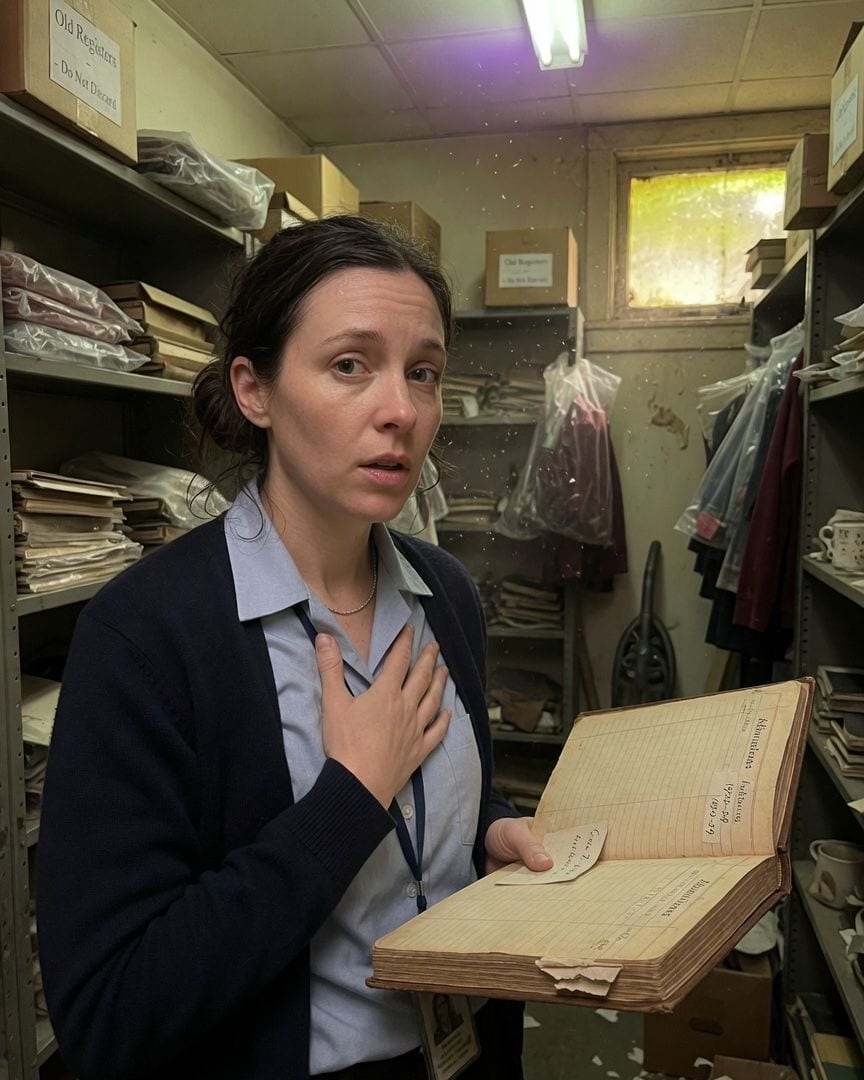
My street's punishment book lists a nameless child, 'as before.' It repeats every decade to 1901.
I found an old punishment book deep in the staff room cupboard, a forgotten relic from the late 1800s. Flipping through it, I discovered a redacted entry from 1953 for 'the boy from Ropewalk,' my own street. This exact, nameless entry repeated every decade, chilling me to the bone.
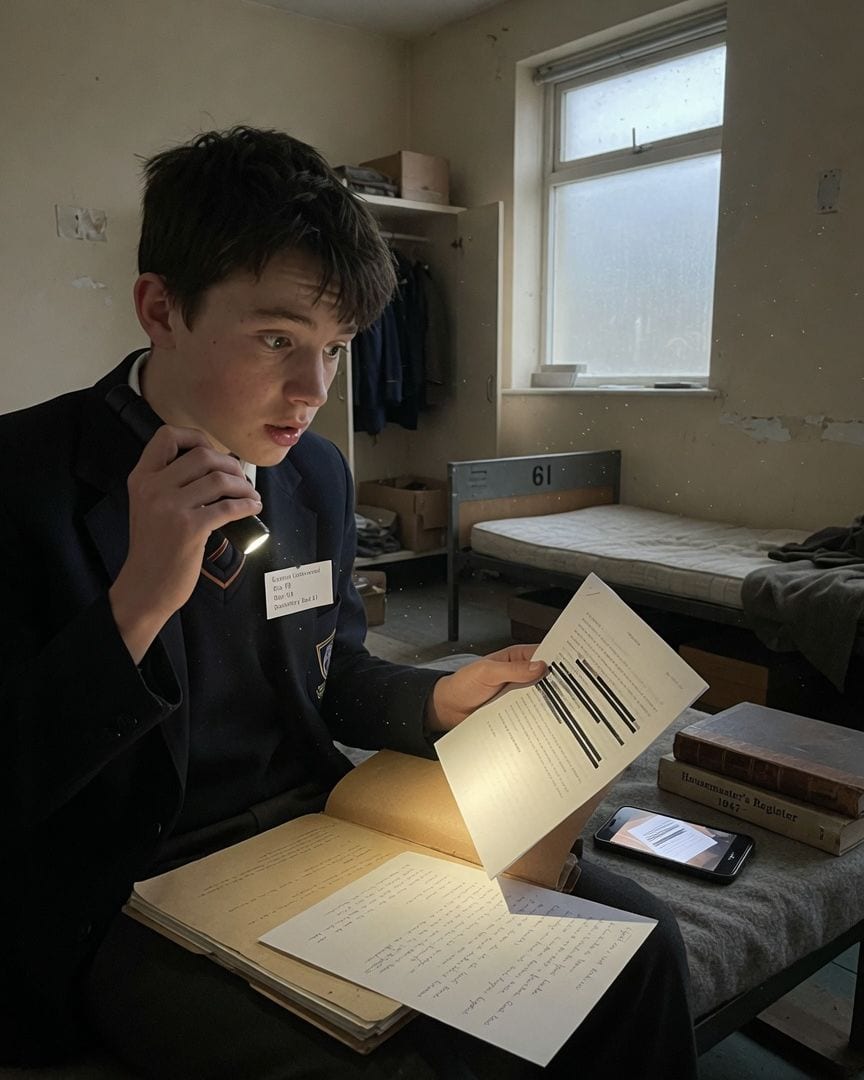
My boarding school bed number was 61, and the archive shows a boy assigned it every eight years since 1947, each leaving mid-term with the bed 'to remain made up'.
I found my matriculation card, listing me as 'Boy 61, Dormitory Bed 61.' Later, an old ledger revealed every boy assigned that bed since 1947 left mid-term, with an unsettling note: 'bed to remain made up.' Our housemaster’s recent scribble, 'as the others,' only deepened the dread around my own assigned bed.
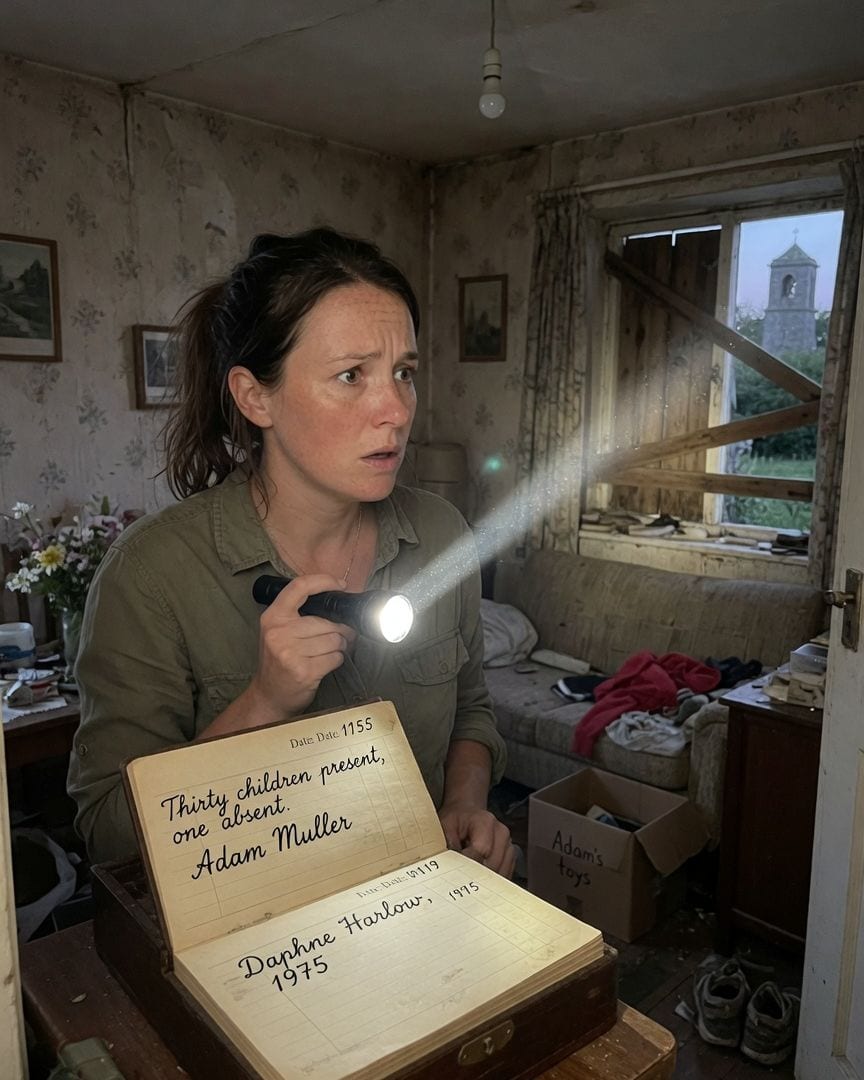
My son rang the old school bell. The attendance register, visible through the boarded window, now shows today's date and his name marked 'absent'.
We moved to a quiet village for peace, but my six-year-old son Adam found the old, boarded-up schoolhouse. Locals warned us, "Never ring the old school bell." That Tuesday, Adam rang it. Later, I saw his name on the school's long-closed attendance register, marked 'absent' in impossibly fresh ink from today.
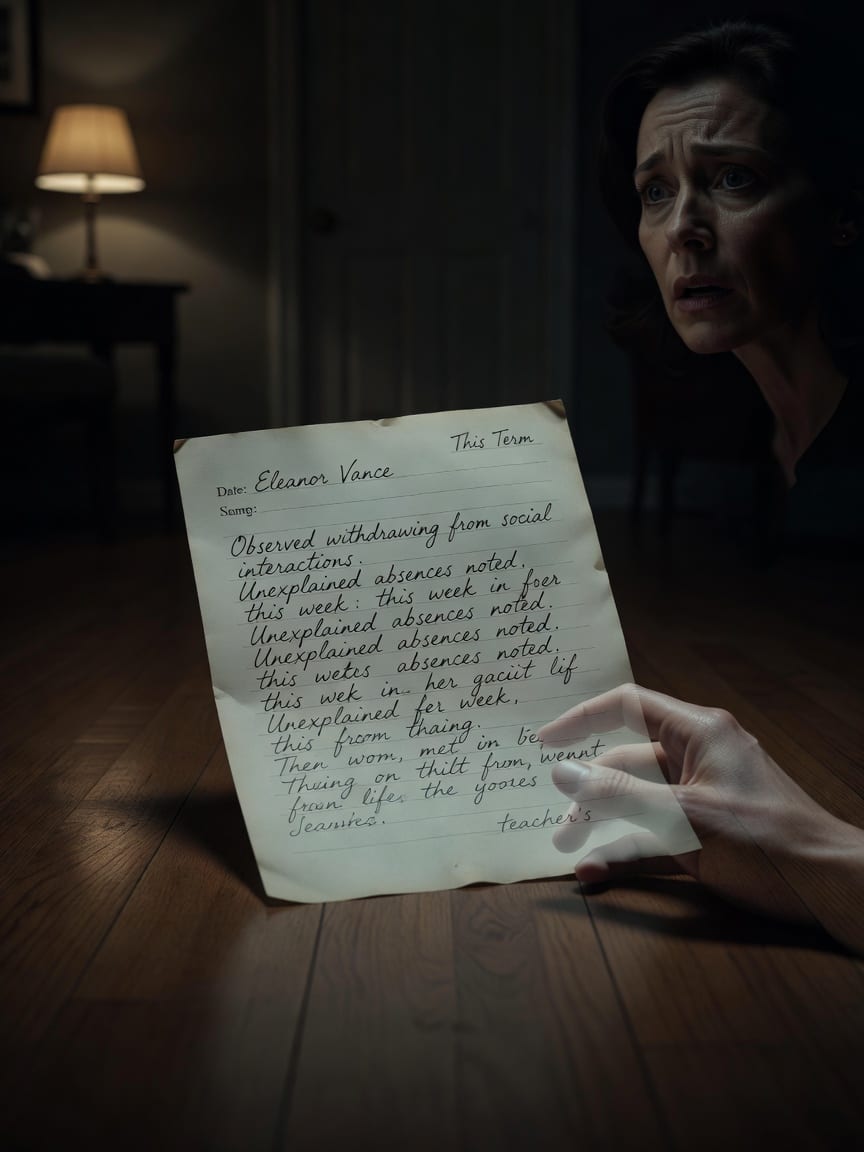
My school reports keep arriving, one a term, signed by teachers dead for decades. The latest describes something I'm doing *this week*.
My name is Eileen Caldwell, and my quiet life was upended by a school report from a place demolished decades before I was born. The report, signed by a long-dead teacher, eerily detailed my current habits. But the real shock arrived when I found my own name in a student register, dated 1968, with precise descriptions of my childhood—years before I existed.
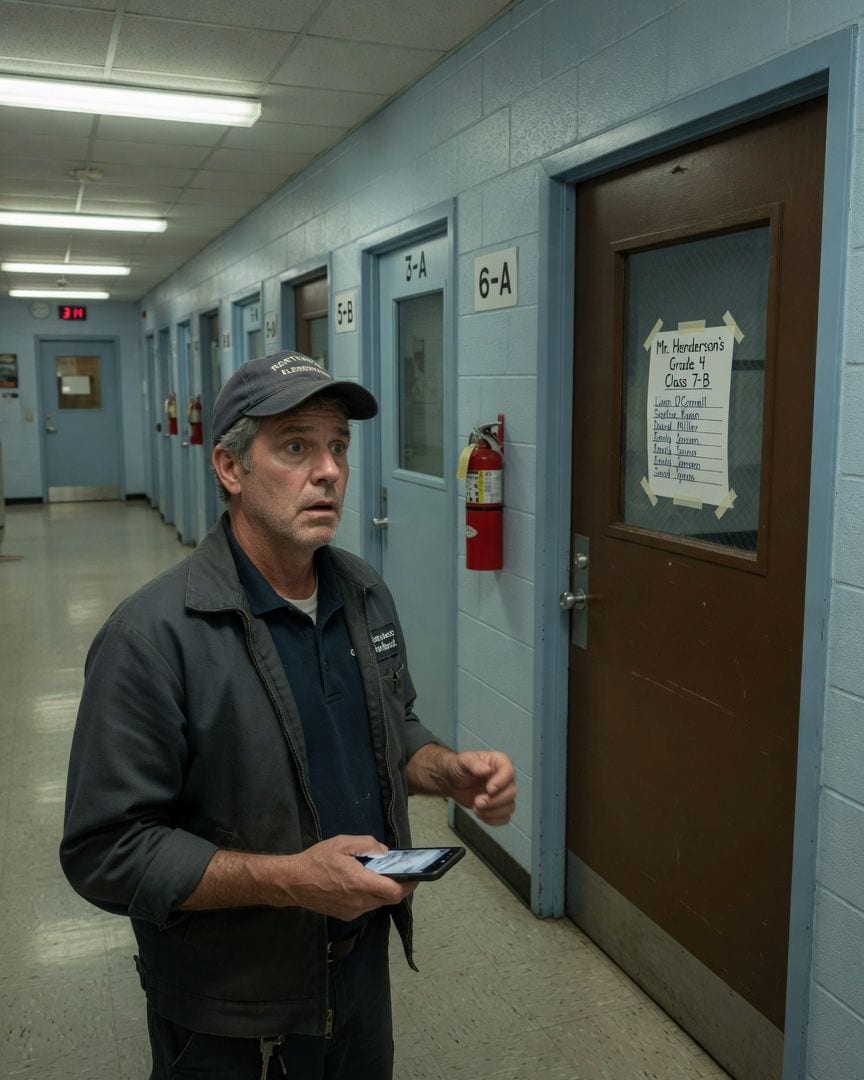
My classroom doors counted twenty-three last night. The extra one had a class list taped inside, names of children who've never been at this school.
My job as night caretaker at Northwood Elementary is routine: 22 classrooms, all accounted for. But one night, an impossible 23rd door appeared in the science block, nestled where only a wall should be. It bore a class list of students and a teacher who don't exist in any school record. Then, in an old logbook, I found that exact same list, dated 40 years ago.
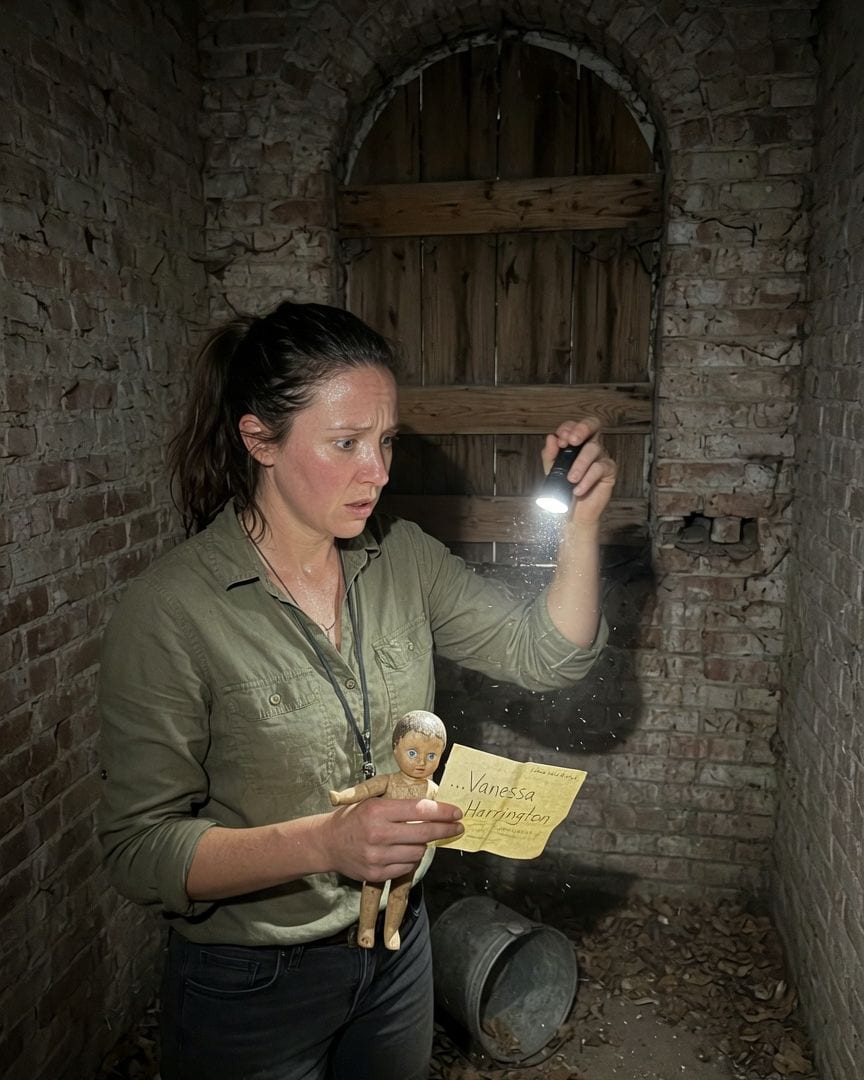
The attendance register has marked one pupil 'present' every single day since 1911 — never once absent. No child by that name has ever sat an exam.
Settling into my new teaching job at Oakhaven Elementary, I found myself drawn to the sealed bell tower. But it was the school's old register that truly unsettled me. A phantom entry, 'Pupil X,' had been marked 'Present' every single day since 1911, with no other records to prove they ever existed.