My own hand signed an evidence form from 2008. The badge number beside it wasn't issued to me until 2013. Inside the bag, the seal was never broken.
The folder for Case 08-317 was thin, too thin for a missing person case that had been active for months before being stamped 'closed.' Dean Crane.
My fingers brushed the chain-of-custody form attached to the evidence bag, a standard procedure before moving anything into the review queue. My breath caught.
Scrawled across the 'Logged In By' line, dated June 14, 2008, was my signature. Evelyn Novak. Below it, my badge number: 374. I stared at it. That was impossible. I didn't join the force until 2013, five years later.
Badge number 374 wasn't even issued until 2013, and it was mine.
I turned the bag over, examining the seal. It was pristine, unbroken, the tamper-evident strip intact and undisturbed, just as it had been logged in over a decade ago. No one had touched it.
It wasn't a loose form; it was directly attached to the sealed bag. I tried to rationalize it, to find some ordinary explanation. A clerical error? A new employee with my exact same name and badge number?
A forgery, some kind of prank by a bored archivist? But the looping 'E' and the sharp 'N' were undeniably mine. I pulled out my own ID badge, holding it next to the form.
The ink, the pressure, the distinct curl on the final 'k' – a perfect, chilling match. It was my hand, from a time before I existed here.
The signature gnawed at me. I pulled up Dean Crane's digital file, a sparse record. Missing person, no body, no leads, just a few interviews and that swift 'presumed deceased' stamp.
It bothered me, the lack of detail, the rush to close. A morbid curiosity, or perhaps a rising unease, guided my fingers to the archive search. I typed in parameters: missing persons, 2007-2009, cases closed quickly with minimal findings.
The first result was Case 07-221, Beatrice Fairfax. Another missing person. Another thin file. My heart hammered as I navigated to the evidence log. And there it was again: a chain-of-custody form, dated July 20, 2007. My identical signature.
My badge number, 374. Logging in a single, unremarkable personal item: a faded leather wallet.
This wasn't a prank. Two cases, years apart, years before I ever applied to the academy, both bearing my exact, undeniable mark.
The sheer impossibility chilled me, turning the air in the quiet archive room to something colder than the AC.
I needed an independent verification, someone who didn't know my current badge number or recent employment date.
I brought the two forms to Daniel, the department's veteran handwriting expert, under the guise of 'testing his skills' with some old archived samples.
He squinted at them, ran them through his digital analysis, then leaned back, a dry smile on his face.
'No doubt, Evelyn,' he said, tapping a pen on the desk. 'That's your hand, through and through. Distinctive loops, consistent pressure. Textbook match.
If I didn't know you just started here, I'd say you've been signing these things for a long time.'
My stomach dropped. He didn't know how right he was.
My research into the missing person cases led me down another rabbit hole: the department’s equipment logs from the late 2000s. I was looking for any common thread, any device that might link these disparate, impossible cases.
Page after page, scrolling through endless lines of serial numbers and acquisition dates, my eyes started to blur.
Then, a line jumped out at me. A line that made the hair on my arms stand on end.
'Forensic Imaging Unit 7, Model X-23, delivered to Forensics Dept. October 1, 2009.'
Beside it, on the 'Received By' line, was a signature. The same signature. My signature.
This unit, a specialized forensic camera, was still in active service. I used it just yesterday to photograph evidence from a robbery case.
I stared at the entry, the dread a cold knot in my stomach, solidifying into something heavy and real. My signature wasn't just on old case files, logging in evidence I couldn't possibly have handled.
It was confirming receipt of the very tools I would later use, years before I was even hired, before I even considered a career in law enforcement.
The forensic camera became my fixation. I signed it out and brought it back to my lab, ignoring the raised eyebrows from my colleagues. I wasn't just using it; I was interrogating it.
I meticulously reviewed its internal logs, a painstaking process of cross-referencing timestamps and image metadata, day after day.
The camera, I discovered, recorded every shot, every calibration, every power cycle. And nestled within these logs, I found more impossibilities.
I saw an image tagged 'October 1, 2009, 10:47 AM,' followed by a calibration entry dated 'May 12, 2009, 3:15 PM.' The camera was logging activity before it was officially delivered, before it even existed on paper.
It wasn't just my signature that was bleeding across time; the very fabric of the equipment was infected.
I expanded my search for missing persons, specifically those with minimal files and quick closures around 2007-2009. I wasn't looking for a pattern anymore; I was looking for the edges of a growing shadow.
I found Oliver Hayes, missing in 2009. His case file also contained a chain-of-custody form. My signature. Badge 374. Logging in a 'personal effect' dated August 2, 2009.
Dean Crane. Beatrice Fairfax. Oliver Hayes. Three missing people. Three impossible signatures. All linked to me, all before my time. The records weren't just wrong; they were building a history that wasn't mine, yet undeniably was.
My relentless digging didn’t go unnoticed. My supervisor, Isaac Norwood, a calm, meticulously organized man known for his encyclopedic knowledge of departmental history, approached my desk. He paused beside my monitor, which was displaying a spreadsheet of impossible camera logs.
'Spending a lot of time in the archives, Evelyn?' he asked, his tone even, almost friendly, but the sound felt too loud in the quiet lab. A faint, unreadable smile played on his lips.
'Just tying up some loose ends on the Crane file,' I replied, trying to sound casual, minimizing the screen with a practiced click. The fluorescent lights above us hummed, a low, unnerving drone.
Isaac nodded slowly. 'Some ends are best left loose, wouldn't you say? Archival curiosities rarely lead anywhere productive. Resources are finite.' His words were a gentle warning, yet they carried an unnerving weight, like stones dropped into a still pond.
He seemed to know exactly what I’d been looking for, what I was still looking at. The air in the lab grew noticeably colder, despite the steady hum of the equipment around us.
Later that day, reviewing the camera logs again, I found a new entry I hadn't seen before. A 'Routine Calibration Check' from 2012, signed by Isaac Norwood himself. But the timestamp beside his signature read 'November 17, 2006, 1:00 PM.'
The same impossible temporal bleed. This time, linked to Isaac. He knew. He wasn't just observing; he was part of it. The cold in the room intensified, not from the AC, but from the sudden, chilling clarity.
I gripped the printout of his impossible camera log entry, the paper crinkling in my hand, and marched into Isaac’s office. He was at his desk, sorting through old records.
The air in his office was always still, quiet, like a museum.
'What is this?' I demanded, my voice tight, but controlled. I thrust the paper at him.
Isaac didn't flinch. He took the paper, his gaze calm, almost amused. 'Ah, yes. An old friend.' He placed it carefully on his desk, then gestured to a worn, leather-bound ledger on a high shelf behind him.
'The department has… always had certain peculiarities.'
He rose, slowly, deliberately, and pulled the ledger down. Its pages were yellowed and brittle, smelling of old paper and dust. 'What you're seeing, Evelyn, is what we call 'temporal bleed.'' He opened the ledger.
It was filled with impossible entries, dates preceding events, names logging items they couldn't have. He pointed to an entry from 1985, a signature undeniably his, but dated five years before he joined the force.
'I was like you once. Confused. Outraged. Then I learned.' His voice was flat, matter-of-fact, utterly devoid of surprise or concern. 'Some people, 'sensitives' we call them, act as anchors.
Their presence, their very being, creates these ripples, these echoes in the past. Your signature, your badge number… they're just early echoes of your eventual arrival, your connection to these 'bleeding' objects.'
A cold dread solidified in my chest. It wasn't a glitch, not a prank. It was a known phenomenon, an institutional secret that hummed beneath the surface of the normal world.
The missing persons cases, my signatures, the camera's logs—it all clicked into a horrific, coherent pattern. The world wasn't wrong; the world knew it was wrong, and had been living with it, quietly, for decades.
The silence in Isaac’s office wasn’t merely quiet; it felt ancient, heavy with unacknowledged history.
Isaac flipped another page in the ancient ledger. Its binding creaked, a sound like dry bones. 'We've been studying this for decades,' he said, his voice devoid of emotion, as if discussing weather patterns. 'Understanding the patterns. Identifying the anchors.'
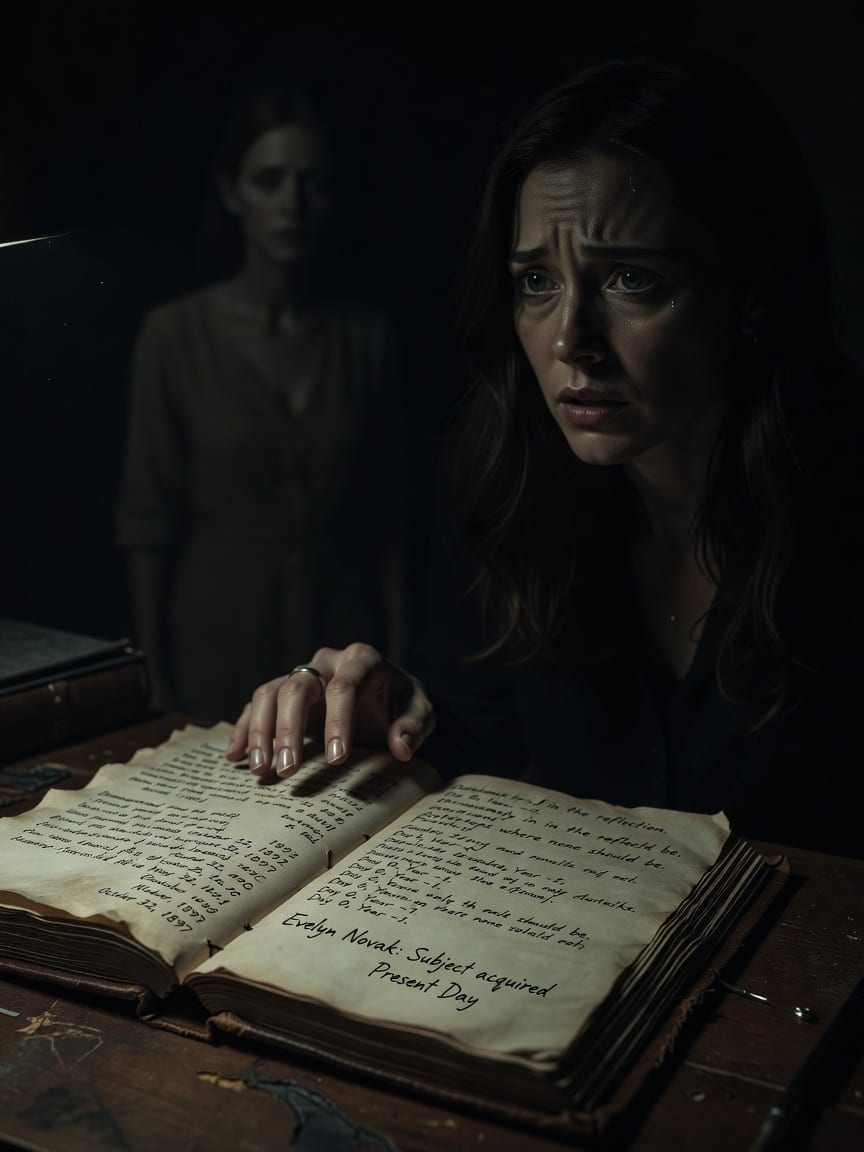
The page was titled 'Anomalous Signatures & Linked Events.' My eyes scanned the brittle lines. I saw entries for Dean Crane, Beatrice Fairfax, Oliver Hayes, each with impossible dates and a cryptic note beside their names.
'Subject acquired,' it read, next to each one.
My blood ran cold, a sudden, icy shock. 'Acquired?' I whispered, the word barely audible.
Isaac nodded, a faint, almost sympathetic smile on his face. 'When the bleed is strong enough, it doesn't just pull records. Sometimes, it pulls people. Or rather, it makes them… available.'
His finger, calloused and neat, slid down the page, past the names of the missing, past other cryptic entries I didn't recognize.
It stopped at a line near the bottom, an entry dated June 14, 2008 – the exact date of the first impossible signature I found for Dean Crane.
And next to it, in neat, archival script, I read my own name: 'Evelyn Novak: Subject acquired.' Below it, the line where I'd expected a date from the past, read simply: 'Present Day.' Isaac's calm smile never wavered.
Isaac gently closed the ledger. The sound of it shutting was like a final door closing. 'You weren't just an anchor, Evelyn. You were always a subject.'
He gestured vaguely around the office, to the walls lined with file cabinets, to the humming computer on his desk. 'This department, this building… it's a focal point. Certain pieces of equipment, like our forensic camera, act as conduits.
They don't just record the past; they can influence it, draw things into the present. The missing persons? They were caught in stronger currents, pulled into the bleed. Their disappearances were, to us, simply confirmation of a successful 'acquisition.''
He leaned forward slightly, his eyes holding mine. 'Your signatures, your badge number appearing years early—those were the earliest ripples, the system marking you, preparing the ground.'
I felt a sickening clarity, like a puzzle snapping into place with a violent, final click. The scattered dates, the impossible names, my own impossible presence in the records—it all resolved into a monstrous, coherent shape.
I wasn't just observing a phenomenon; I was always inside it, a pre-ordained piece of a larger, terrifying mechanism.
Isaac explained that the institution wasn't trying to stop the bleed; they were studying it, managing it, perhaps even subtly guiding it.
He revealed that 'acquisition' meant being drawn into a state of temporal flux, where one exists outside the normal linear timeline, a ghost in the machine, still present but fundamentally disconnected, a resource for their 'research.'
My body was here, but my existence, my self, was already stretched thin across moments I hadn't lived.
Isaac opened the ledger again, to a blank page. The fresh, empty space felt like a void waiting to be filled.
'You have a choice, Evelyn,' he said, his voice soft, almost kind, but the kindness was the most chilling part. 'You can become part of the observation team. Help us understand. Or you can become another acquisition.'
His finger hovered over a blank line under my name, dated 'Present Day.'
The air in the office grew impossibly cold, a shiver running down my spine that had nothing to do with the temperature. It was an internal cold, the chill of being stretched thin across time.
I looked at the ledger, then at the forensic camera sitting on Isaac's desk. It was the same model, maybe even the camera, that had logged events before its time, the one that had my signature on its delivery slip.
It's a conduit, he said. A focal point.
In a sudden, desperate surge of defiance, a spark of the old Evelyn, I grabbed a heavy, tarnished brass paperweight from Isaac's desk. The metal was cold and solid in my hand.
With a choked cry, I swung it, smashing it into the camera's lens and casing.
The device sparked violently, emitting a high-pitched whine that scraped against my teeth, a sound of tearing metal and failing circuitry. Then it died with a final, sickening crackle.
The room shivered around me, the cold intensifying, swirling like a physical presence, wrapping around my limbs. Isaac watched me, his expression unperturbed, a faint, almost pitying smile on his face.
'You can't break the pattern, Evelyn,' he said, his voice barely a whisper above the dying hum of the room itself. 'You were always part of it.'
The shattered forensic camera lay on Isaac's desk, a ruined hulk of metal and glass. Isaac Norwood was gone, vanished from the office. The old ledger was also gone. I was left alone in the room, the strange cold lingering.
No one else in the department seemed to notice Isaac’s absence, or the peculiar chill, or the broken camera. When I mentioned it to a colleague, they just blinked and said, "Isaac? He retired last month, didn't you hear?"
The missing persons cases of Dean Crane, Beatrice Fairfax, and Oliver Hayes remained cold, their files undisturbed in the archives, unexamined.
I continued my work, a hollow echo of my former self, the impossible records now a constant, silent hum beneath my perception, a quiet, internal dread.
Evelyn Novak still works as a forensic analyst, processing evidence, filling out forms. Her colleagues comment on her newfound 'focus,' her quiet intensity.
She spends her lunch breaks in the archives, meticulously cross-referencing old files, searching for patterns only she can see, finding more impossibilities.
Sometimes, she catches a glimpse of her reflection in the darkened screen of a monitor, a faint, unreadable smile playing on her lips, a smile that isn't quite her own.
She sometimes stares at her own hand, signing a form, wondering if the signature belongs to the Evelyn who remembers, or the Evelyn who was always there. The paper feels cold beneath her fingers.
One evening, as the office emptied, a junior analyst, Henry Fairfax, passed Evelyn's desk. 'Still at it, Evelyn?' he asked. She looked up, her eyes distant, then offered a faint, wrong little smile.
'Just making sure everything is logged correctly, Henry. Everything.'
If this one got to you
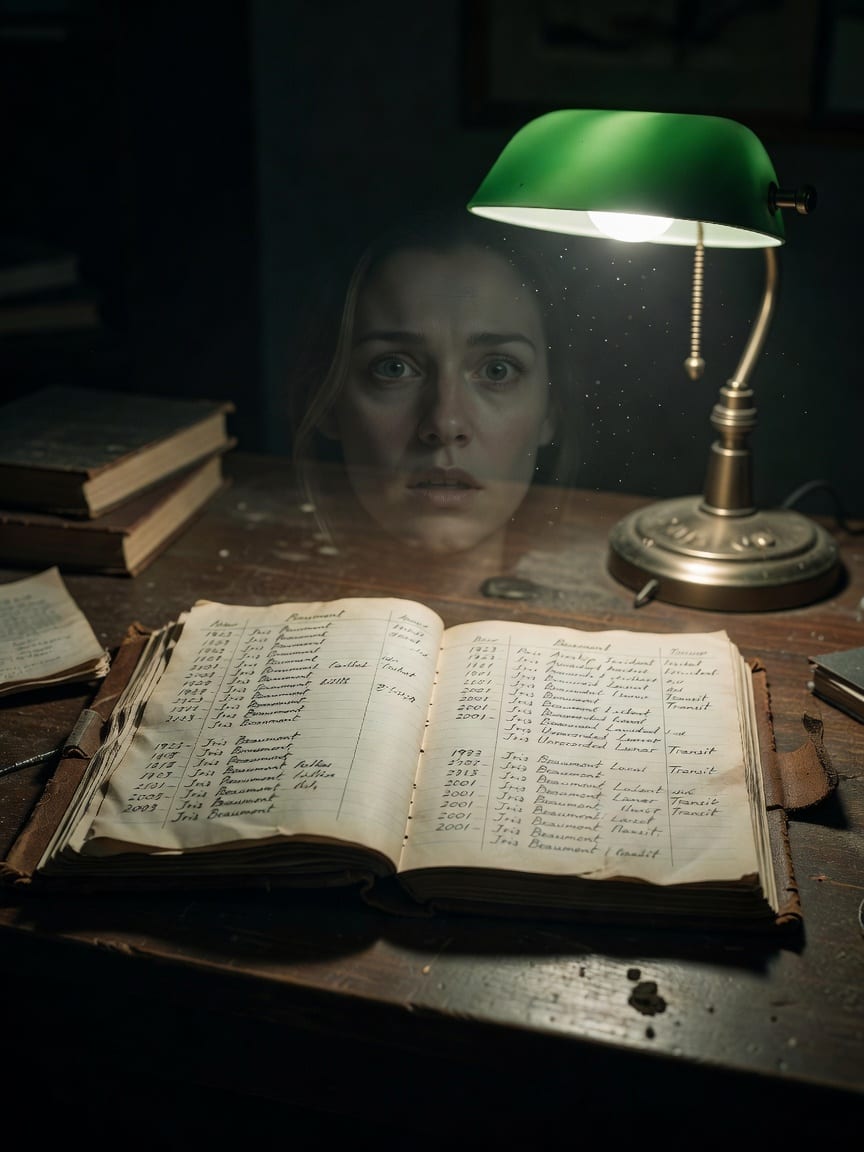
My signature's on the scaffold accident report, dated the morning it fell. I'm an accountant. I've never touched a hard hat.
I'm an accountant, a world away from hard hats and construction sites. But a foreman just showed me a safety form from a site accident, dated this morning, with my signature on it. A handwriting expert confirms it's undeniably mine, even though I've never set foot on a construction site in my life.
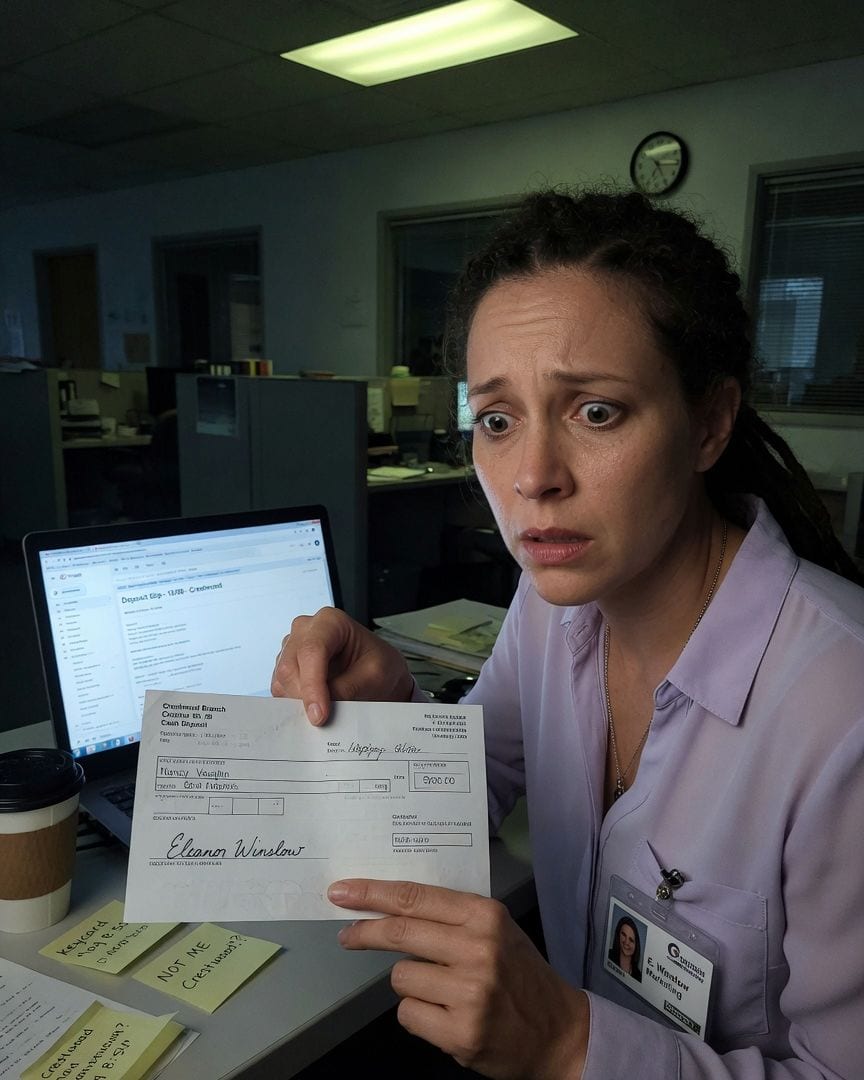
My bank statement shows a $900 cash deposit made in a town I've never set foot in, at 10:40 AM on a workday. I was at my desk, badged in. Two more landed since.
My bank statement showed a $900 cash deposit from a town I'd never visited, 150 miles away. I was at my desk, logged into work, all three times. But the scanned deposit slip arrived, clear as day, showing my own flawless signature.
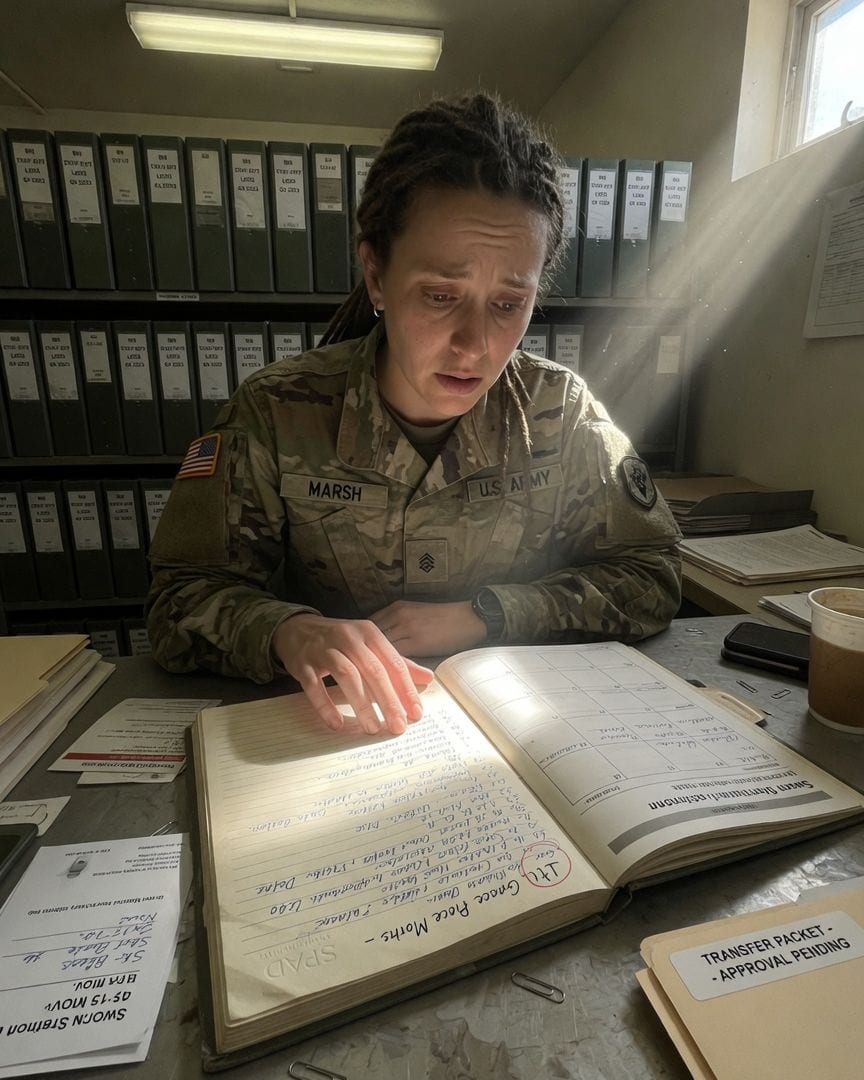
Preparing for a coveted post, a logistics officer found her own perfect signature on a duty log for a shift she swore she never worked. Then her coworker’s entry revealed his unique personal quirk.
Lieutenant Grace Marsh, a meticulous logistics officer, was deep in the archives, preparing her transfer packet for a coveted post. Her career depended on a spotless record, requiring absolute precision as she cross-referenced battalion staff-duty logs. Amidst the dusty binders and humming fluorescent lights, her gaze snagged on an entry for November 14th: her own perfect signature, logging a 24-hour shift she distinctly remembered spending hundreds of miles away in a court-martial. The impossible truth of a phantom doing her job was unsettling enough, but then she found another officer's entry, complete with his unique, personal quirk, for a day he was off-base. What was hidden in these official records?
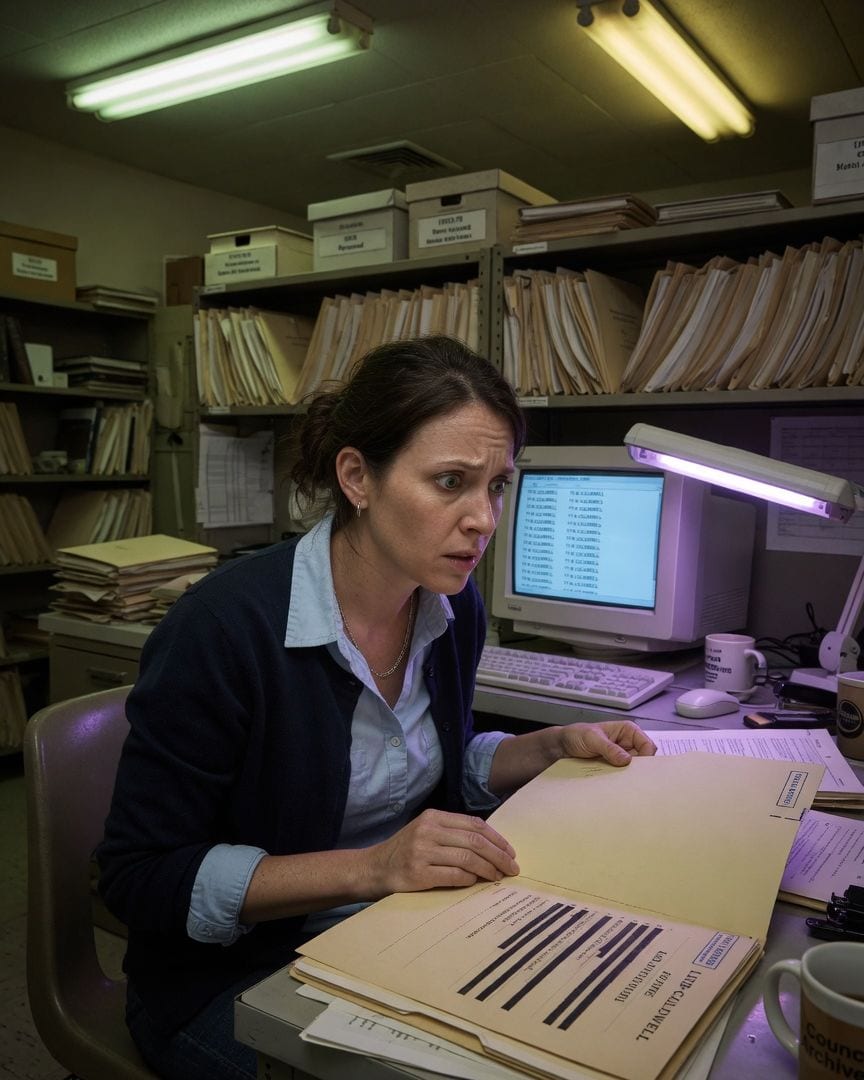
My employer's security file holds a vetting report on me dated nine years before I ever applied. It has my full name and my parents' address — with only one line, the source who referred me, blacked out.
Working a routine data audit, I pull my own security file. The issue date is nine years before I even applied for the job. Then, hidden within an old archive file, I find my current address etched under a blacked-out line.
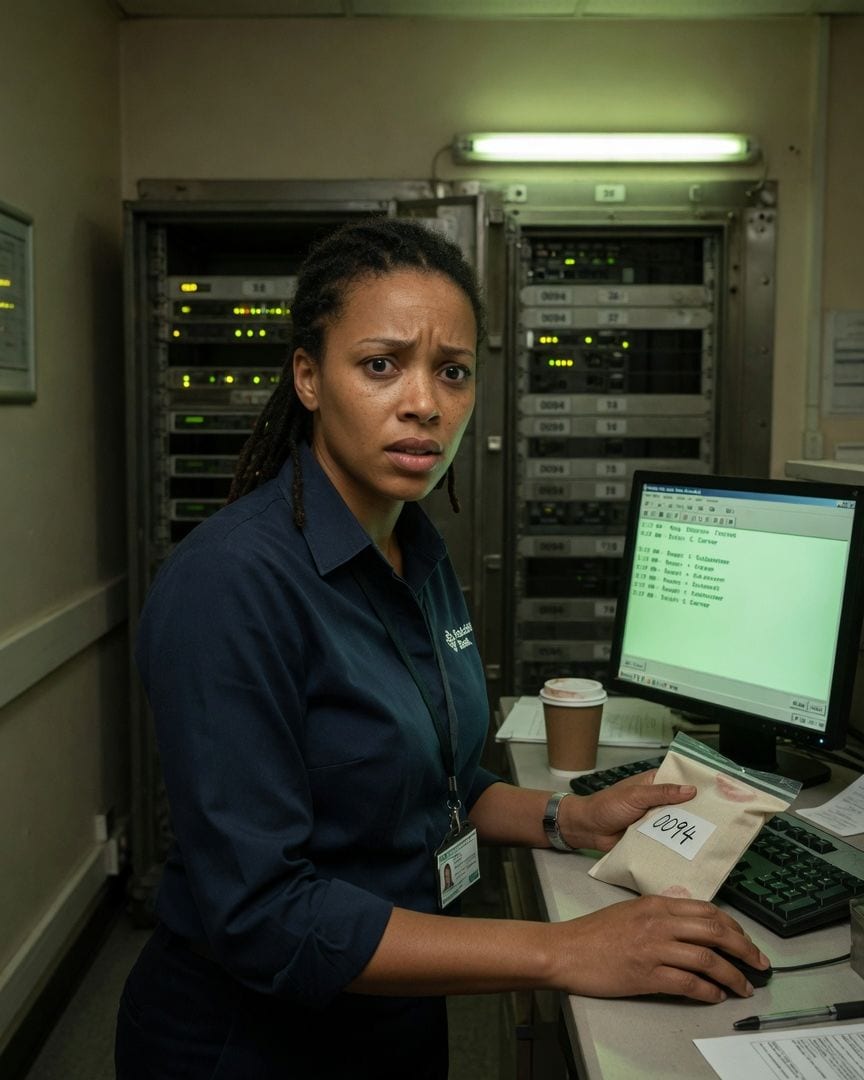
My night-deposit log shows a bag posted at 3:17 AM. My teller number, my count. Bag 0094 is still sealed in the safe, untouched.
I prided myself on precision as a night teller, logging every entry. But at 3:17 AM, a deposit appeared logged under my teller number that I never processed. Security footage then revealed a figure in my uniform, wearing my ID badge, with a blank photo slot.
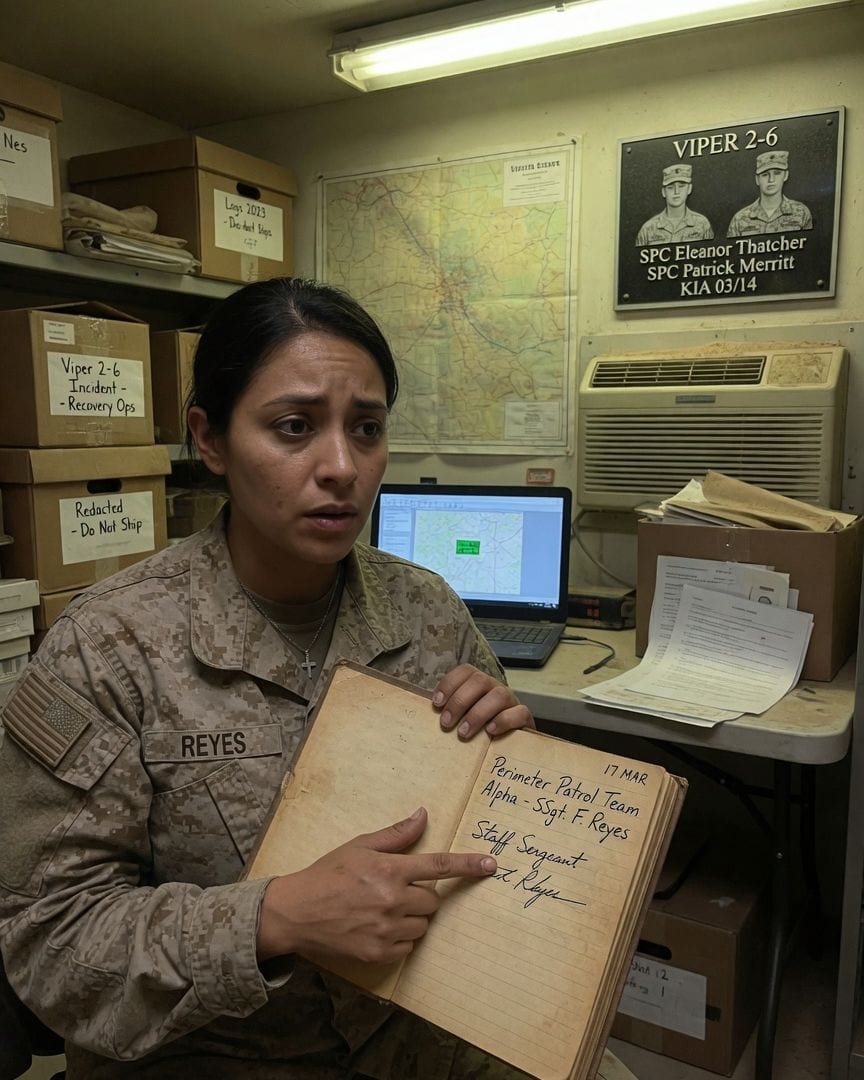
A Staff Sergeant, three weeks from transfer, finds her own signature in a logbook for a patrol she never made.
Staff Sergeant Fiona Reyes counted down her last three weeks at the high desert outpost, the fluorescent hum of the TOC a constant companion amidst the dust and old equipment. Her tired eyes scanned the digital map when an impossible icon, 'Viper 2-6' – a vehicle and crew lost last year – blinked alive, reporting its position and crawling steadily toward the base. Despite commanders dismissing it as a system ghost, Reyes meticulously searched dusty archives, finding strange log entries of phantom contacts and radio chatter, all dismissed as malfunctions. But the true chill came when she unearthed a field logbook from the recovery efforts, revealing her own undeniable signature on a perimeter patrol dated last year, a patrol she knew, with every fiber of her being, she had never made.