My plant's night log signed a chlorine dose I never took; the panel was two rooms away, and I was in the lab.
The hum of the centrifuges in the lab was a familiar drone, a low pulse beneath the regular click of my pen as I scribbled the 3:30 AM sample results onto the physical logbook.
Two rooms away, the main control panel for the municipal water treatment plant would have been dark, locked, exactly as I’d left it before heading to the lab.
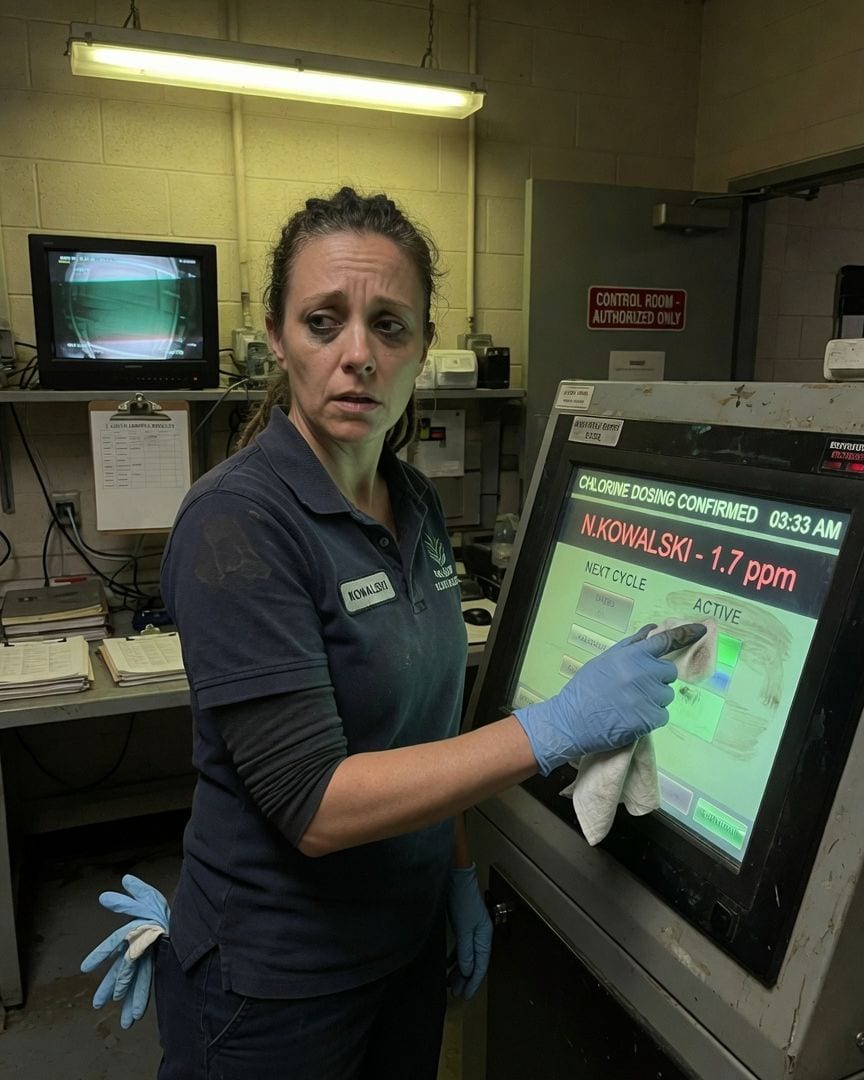
But when I returned, wiping my gloved hands on a clean rag, my eyes caught the main digital log display, and something in my gut tightened. N.KOWALSKI. My operator ID, stark and clear, next to a 3:33 AM chlorine confirmation.
Value: 1.7 ppm.
I hadn’t confirmed that reading. I hadn’t even been in the control room. The panel, I was certain, had been blank when I’d walked out, the security lock engaged. Yet, there it was, timestamped, logged, and already irreversible.
The system, under my authority, in my name, had just changed the chlorine dosing schedule for the next hour. A ghost in the machine, running on my credentials.
The quiet dread that settled in my stomach wasn't just about a potential error; it was the knowledge that something had acted, using me as a proxy, doing something I absolutely had not.
My first thought was a glitch. An override, maybe a network hiccup that somehow mimicked a manual entry. I brought up the system logs. Nothing.
The digital trail was pristine, showing N.KOWALSKI as the active user at precisely 3:33 AM, entering the 1.7 ppm value directly into the chlorine dosing panel. No error codes, no system warnings.
I pulled up the security camera footage for the control room. I fast-forwarded to the exact minute. The feed flickered, a brief, green-tinged blur filling the screen, then snapped back to normal.
A common occurrence, I told myself, these old systems were prone to static. Still, I rewound it, played it back frame by frame.
Just before the static, a fleeting shadow, a subtle movement at the very edge of the frame, too indistinct to make out. My brain tried to rationalize it – a draft, a lens flare, a trick of the light.
But the unease persisted, a cold, thin thread unspooling in my chest. Later, during my routine panel wipe-down, my cloth caught on something. A faint, almost invisible smudge on the touch screen, right where the 'confirm' button would have been.
It wasn't dirt. I leaned in closer, trying to rub it away, but it felt greasy, like a residue that had sunk into the glass itself. It wouldn't disappear.
I stood frozen, staring at the chlorine dosing panel. Beneath that faint, greenish smear, undeniably, was the impression of a fingerprint. It was faint, almost translucent, but there. And it wasn't mine.
I knew my own hands; I wore gloves all night, every night. This print was subtly wrong, too elongated, the ridges too wide, almost stretched.
I tried to wipe it again, harder this time, my thumb pressing down, but the impression persisted, a faint, impossible ghost on the glass of the control panel, right where the 'confirm' button would have been, right where a human operator would press to confirm a dose.
The next night, it happened again. Another phantom log entry, this time a temperature adjustment at 2:17 AM under my ID, when I’d been in the main turbine hall, the roar of the generators vibrating through the concrete floor.
The unsettling fingerprint was gone from the panel, wiped clean by the morning crew, but the dread had solidified into something heavier, colder.
I started cross-referencing my shift logs with the system’s audit trails, looking for any pattern, any anomaly that could explain what was happening. I found them.
Other subtle discrepancies, always during the dead hours between 1 AM and 4 AM, sometimes under other operators' IDs. They were always dismissed, buried under "system quirks" or "data echoes" in the daily reports.
I approached Scott Yates, the seasoned Senior Operator. He'd been here for thirty years. "Scott," I began, trying to keep my voice even, "have you ever noticed… a ghost in the machine? Logs that just… appear?"
Scott chuckled, a low, rumbling sound. "Happens sometimes, Naomi. Old plant, old systems. Probably just a data echo, like you said. Or 'The Hum.'" He leaned back in his chair, a half-smile on his face. "Old plant legend.
Said there's a low frequency vibration, deep in the aquifer, that makes the old systems 'sing' on their own sometimes. Pressure valves pop, lights flicker. Nothing to worry about."
I wasn't convinced. Scott’s casual dismissal felt like a practiced deflection, but I let it go.
I began reviewing older security footage, not just for my own shifts, but for other operators, other nights, specifically looking for any anomaly around the control panels.
I found nothing definitive, just the occasional flicker in the feed, a fleeting shadow that could be anything, a door closing that should have been open or vice-versa, always attributed to drafts or faulty sensors.
My exhaustion mounted, blurring the lines between what was real and what was my overactive imagination.
But one night, as I sat alone in the control room, monitoring the feed, I heard it: a faint, almost imperceptible whisper from the control panel’s internal speaker, like someone breathing into a disconnected mic, a soft rush of air.
Just as it happened, the digital display for a minor pressure valve adjusted itself by a fractional increment, unbidden. The system recorded it, smooth as glass. No operator ID. Just… done.
My digging didn't go unnoticed. The night after the whispering, I found yet another minor pressure valve adjustment logged under my ID, dated two nights ago, a setting I absolutely hadn't touched.
That morning, I attempted to access deeper, archived diagnostic logs – records that should only be available to senior management for system maintenance. My screen flashed, then my access was immediately revoked.
Moments later, an automated email popped into my inbox. From "System Admin," the subject line stern: "Unauthorized Deep-Level System Queries." The email was boilerplate, a standard warning about protocol. But the timing was too precise.
Later that night, the plant felt heavier, quieter.
As I walked through a rarely used service corridor to check on a remote filtration unit in sector four, the air growing colder with every step, I caught a glimpse of movement at the far end, near the old, bricked-up pump room that hadn’t been used in decades.
A tall, gaunt figure, indistinct in the low light, seemed to melt back into the shadows. My heart seized. "Hello? Anyone there?" My voice echoed, thin and small in the cavernous space. Silence.
I attributed it to exhaustion, to the dim lighting playing tricks, but a cold dread pricked my skin, creeping up my neck. When I returned to the control room, my blood ran cold.
A small, polished brass key, one I'd only ever seen on old, yellowed diagrams for the decommissioned 'Conduit 7' valve, was sitting precisely in the center of my keyboard, glinting under the panel lights. I hadn't left it there.
No one else on shift had access to that specific key, let alone reason to place it there. It was a relic, meant to be locked away.
The next morning, I stood in Reginald Hayes’ office, the brass key clutched in my hand, my compiled list of phantom log entries and security footage anomalies spread across his polished oak desk.
Reginald, a man of meticulous routine, peered at the printouts over his reading glasses. "Naomi, these systems are old. We get phantom readings, drafts, sensor failures. This isn't… unusual."
"What about the brass key, sir?" I pressed, my voice tighter than I intended. "The one for Conduit 7? It was on my keyboard, last night."
Reginald's calm demeanor faltered. His eyes, usually placid, widened slightly as he picked up the key, turning it over in his hand. The brass shone in the fluorescent light. "This… this shouldn't be here.
This conduit was decommissioned decades ago, before my time. It was a headache, apparently." He sighed, a deep, weary sound that seemed to carry the weight of the plant's entire history. "There are… stories, Naomi. Old stories.
When they first built the plant, back in the thirties, they had trouble with the aquifer. Strange pressure fluctuations, equipment failing without cause. The original engineers, they spoke of… a presence.
Something that didn't like being managed, didn't like being tamed."
He walked to a locked cabinet behind his desk, pulling out an old, dusty binder, its cover faded and marked 'Historical System Anomalies.'
Inside, Naomi found handwritten notes, crumbling diagrams, and reports detailing "unaccounted for system overrides" and "spontaneous flow adjustments" from the 1950s and 60s, long before digital systems were even conceived.
The language was archaic, formal, but the descriptions of the 'wrongness' were chillingly familiar: readings changed without human input, valves opening or closing on their own.
One entry, dated 1965, described a 'silent operator' making an unscheduled chlorine adjustment to 'purify the flow,' signed with a strange, stylized glyph: a water drop with a subtle, rippling wave through its center. My blood ran cold.
The same glyph. I had seen it in a hidden diagnostic folder in the current digital system, tucked away among corrupted icons, dismissed by IT as a 'graphic error.'
Reginald, visibly shaken by the reappearance of the key and the historical reports, then pointed me toward an even older, forgotten vault in the plant’s deepest basement. "These are the really old logs," he said, his voice hushed, almost reverent.
"From before the plant was fully built, when they were still mapping the aquifer, just breaking ground. They said the original source was… temperamental."
He fumbled on his heavy keyring, producing a special, heavy iron key – a key he himself admitted he had never used. "It's a long way down."
I descended into the damp, cold vault, the air thick with the smell of mildew and forgotten things. The single bare bulb hanging overhead cast long, dancing shadows.
I found rows of heavy, leather-bound logbooks, their pages brittle with age, lined up on rusted metal shelves.
I pulled one out, its cover embossed with a faded, stylized water drop glyph, identical to the one in Reginald's binder, identical to the one in the digital system. My heart hammered against my ribs.
Inside, the first page was filled with elegant, looping script detailing manual flow readings and aquifer depths.
I flipped through, my fingers trembling, until I found it: an entry dated 1887, describing a flow adjustment on 'Conduit 7'—the very conduit the brass key was for, the one Reginald said was only engineered and installed in 1962.
Beneath the entry, clear as day, the same 'water drop' glyph acted as the operator 'signature.' I stared at the date again. 1887. The plant wasn't even here then. The conduit shouldn't have existed. The record cannot be.
I brought the ancient logbook back to Reginald, laying it open on his desk. The implications were staggering, rewriting everything we thought we knew about the plant, about the aquifer beneath us.
The 'silent operator' wasn't a person, not a ghost, not a glitch. It was always the aquifer itself.
An ancient, elemental aquatic consciousness that had been managing its own flow and purity long before humanity arrived with our pipes and pumps.
The water treatment plant, to it, was merely a new, more complex set of pipes and valves, and our digital systems were just another language to learn, another interface to manipulate.
The 'One Who Was Always Here,' the figure in the shadows, the elongated fingerprint—that was its temporary, physical manifestation, a way for it to interface with the older, manual controls that predated our automated ones.
The phantom signatures, the impossible log entries: these were its own, deeply ingrained maintenance protocols, overriding human ones when it deemed necessary.
The brass key for Conduit 7 wasn't for a 1962 installation; it was for an ancient, original channel that the entity still 'operated,' a channel that had simply been integrated and renamed by later human engineers who thought they were building something new.
The dread wasn't malice, I realized. It was the sheer, impersonal scale of its existence. It saw the water, the plant, and even the operators as extensions of its own ancient, continuous work.
It was never trying to harm anyone; it was just doing its job, as it had for millennia, utterly unaware of human schedules or operator IDs.
I returned to the control room during my next night shift, the weight of the truth heavy on me, but now with a strange clarity.
I couldn't fight it; it was an elemental force, intrinsic to the water itself, older than anything human. But I could establish a boundary. I sat at the main control panel, not to battle, but to communicate.
I opened a diagnostic interface that allowed for manual, low-level system commands, a backdoor no operator usually touched.
I typed out a series of code, not as a command, but as an acknowledgment, a symbolic 'handshake' with the system's deepest protocols, an offering. I inputted a new, unique operator ID I’d created moments before: 'AQUAFIR.'
I then manually 'confirmed' a minor, non-critical flow adjustment to a tertiary filtration loop, signing it with my new 'AQUAFIR' ID, rather than my own N.KOWALSKI.
It was a way to tell the entity: I see you. I acknowledge your work. Use this channel, not mine. As I pressed enter, the lights in the control room flickered once, a deep, resonant hum vibrated through the floor, thrumming against my feet, and the faint, almost imperceptible whisper from the internal speaker returned.
This time it felt different—less like an intrusion, more like a response. A moment later, the automated log confirmed the 'AQUAFIR' adjustment. I stared at the screen, a strange calm settling over me, cool as the deep water.
The hum subsided. The entity had acknowledged me. It had accepted the new channel. I knew it wouldn't be using my ID again.
The phantom log entries under my personal operator ID stopped. The 'AQUAFIR' ID now appeared sporadically in the deep system logs, making subtle, non-critical adjustments, always when no human operator was actively monitoring that specific system.
Reginald Hayes, while still unnerved by the "ghost in the machine," allowed the new 'ghost' ID to remain in the system, attributing it to 'advanced self-correction protocols' in his official reports.
Scott Yates still talked about 'The Hum,' spinning tales to the younger operators, but now I just nodded, a knowing glint in my eyes, a silent understanding passing between us that he didn't quite grasp.
The plant continued its operations, seemingly normal, but for me, the night shifts were forever changed.
I continue my night shifts, the plant's familiar groans and hums now carrying a deeper resonance, a constant, low thrum beneath everything.
I sometimes find the 'AQUAFIR' ID active in the deep logs, making minor adjustments to obscure, older systems that no one else pays attention to. I accept it. I understand.
But one cold, quiet morning, as I am leaving the plant, the first light barely breaking over the horizon, I glance at the weather monitoring station's digital display.
A new, minor precipitation forecast has just been logged, an adjustment to the long-range prediction for the coming week, timestamped precisely 3:33 AM. The operator ID: 'CLOUDBOUND.'
The hum from the filtration pumps now sounded like a quiet, continuous conversation, and I knew I wasn't the only one listening.
If this one got to you
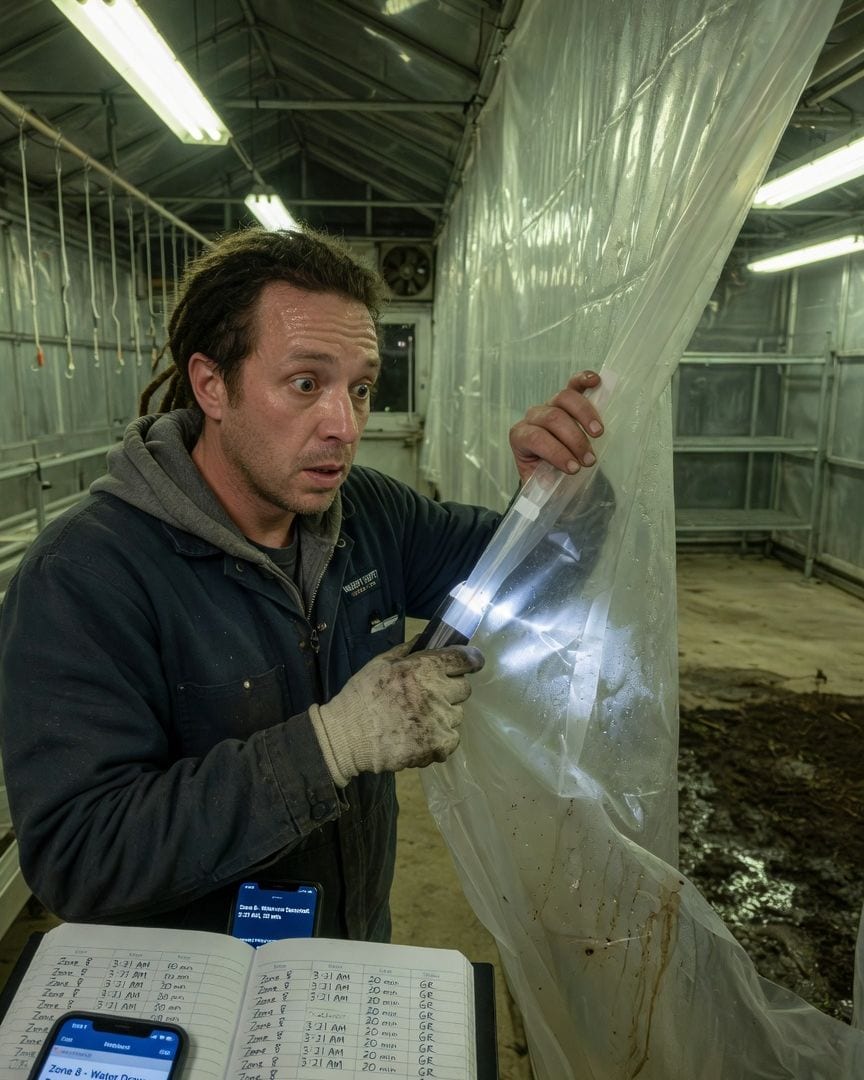
My own handwriting logs watering Zone 8 at 3:21 AM. Zone 8 has been sealed for fumigation for weeks, nothing growing.
My overnight watch at the commercial greenhouse is usually a predictable routine, ending with the logbook. But for the past week, an entry appears in my own handwriting, logging a 3:21 AM watering in Zone 8 — a section sealed for fumigation and completely empty. The system confirms the water flow, leaving me with an impossible fact.
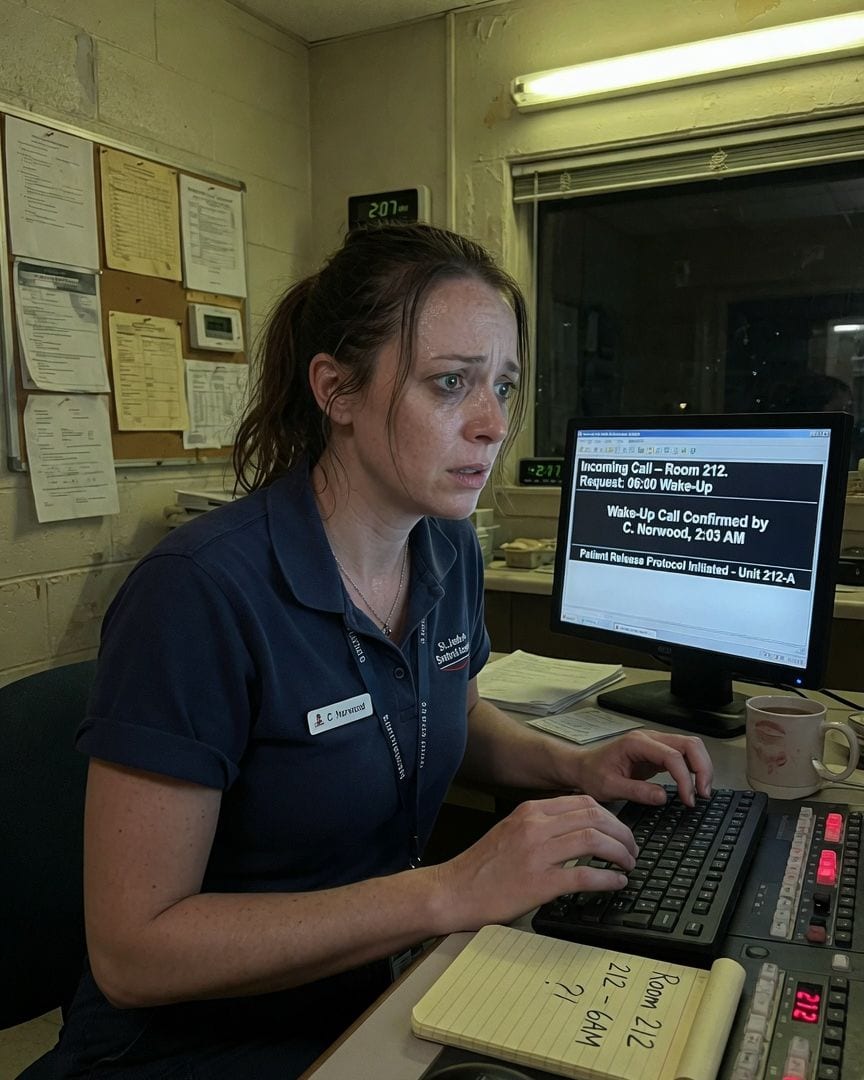
My login started a 'Patient Release Protocol' I'd never heard of for Unit 212-A.
Working the quiet night shift switchboard at St. Jude's, I took a routine wake-up call from Room 212. But the system showed Room 212 had been stripped bare and its phone line disconnected for months. Then, my own login showed I had confirmed the impossible call.
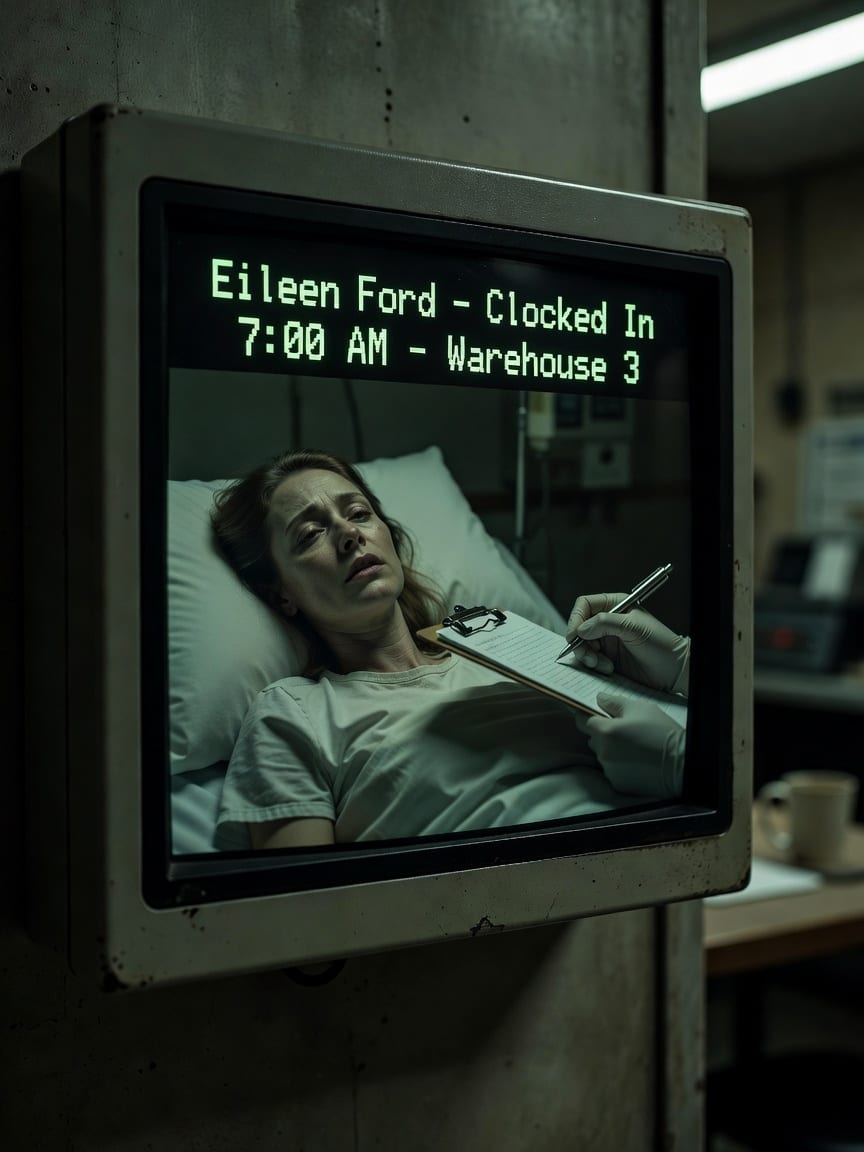
My clock-in card says I worked full shifts in Ohio all week. I was on medical leave in Florida, signed out by a nurse.
After two weeks recovering in a Florida hospital bed, my paycheck arrived significantly too high. My digital payslip claimed I’d worked full shifts at the company's Ohio warehouse every single day of my medical leave, hundreds of miles away. The system even showed my badge scans and supervisor's sign-off for work I simply could not have done.
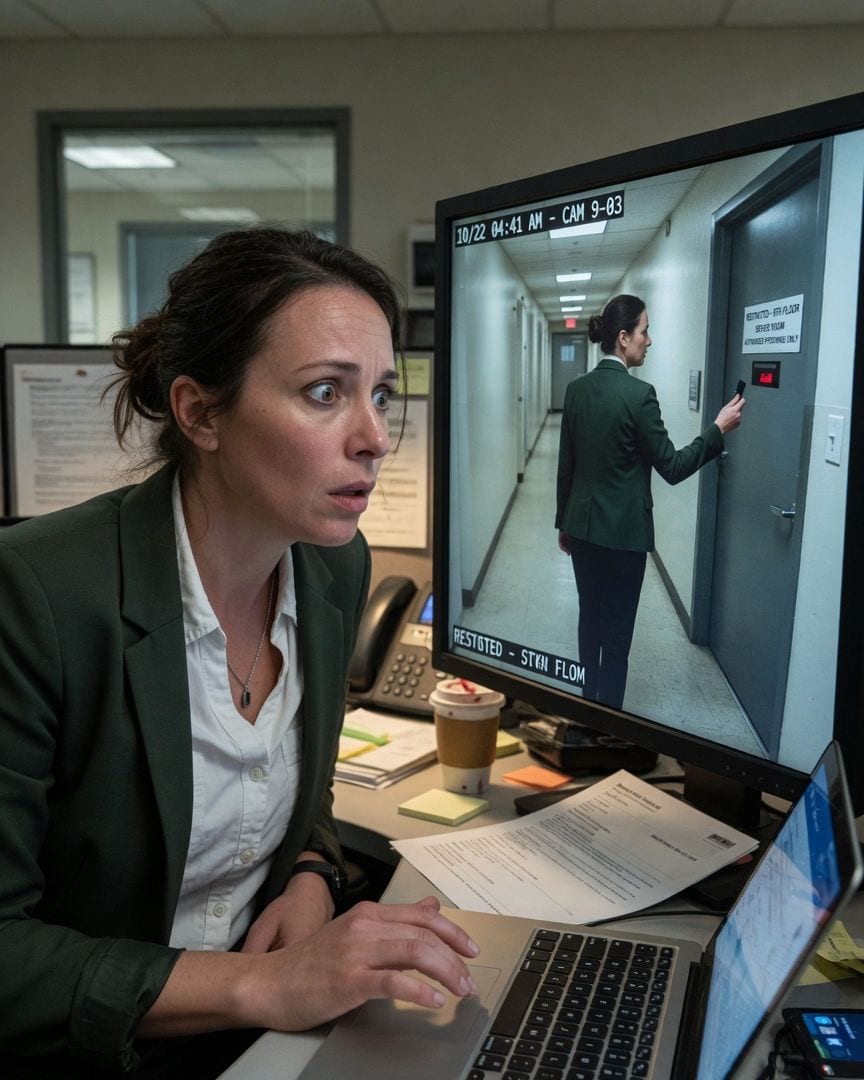
My keycard log shows me in the server room at 4:41am. I was asleep, and my badge was at home.
An email from corporate IT reveals my keycard registered entry into a restricted server room at 4:41 AM last Sunday. I was asleep in my apartment across town, my badge clipped securely to my jacket at home. But then I scrolled down and found eleven more impossible entries, all within the past week, all under my name.
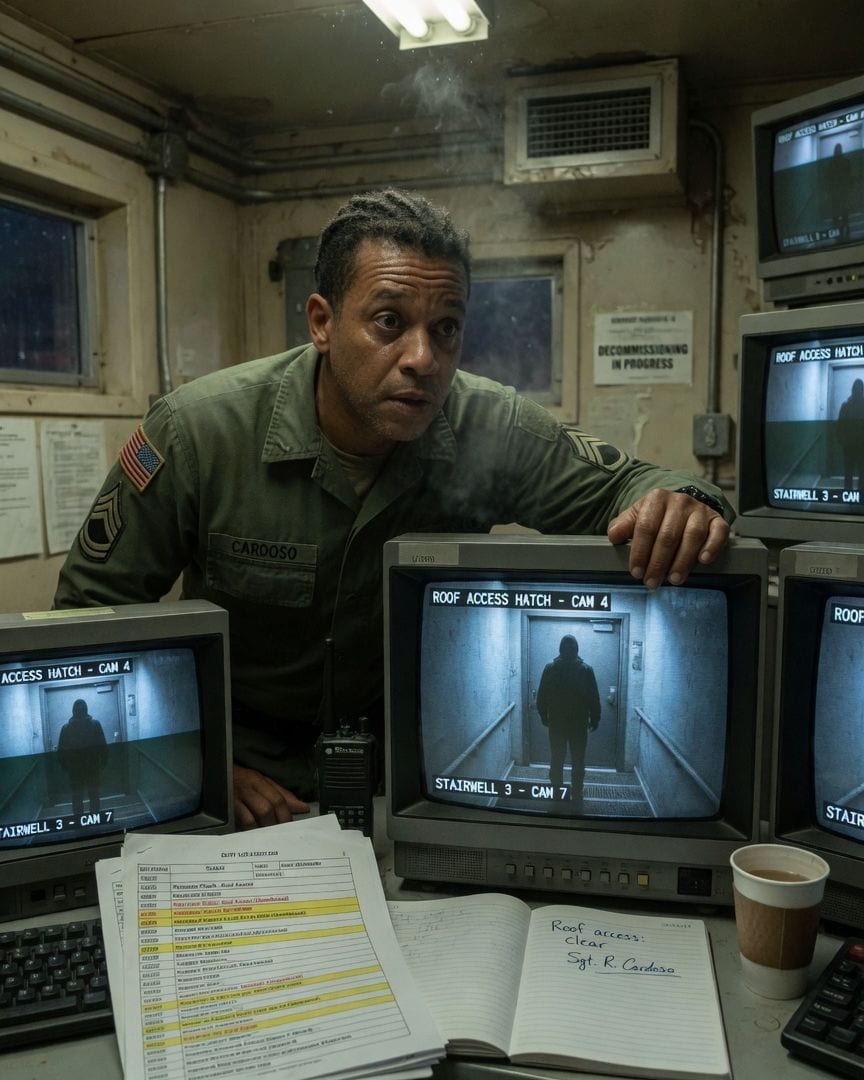
Sergeant Cardoso’s last tour log showed an unknown ‘Operator 73-Delta’ confirming a breach he had just cleared.
Sergeant Rui Cardoso stood his final interior post at Outpost 73, watching monitors through the dead hours, his tour almost over. At 0300, a dark figure flickered on the roof access camera, unmoving, only to appear closer, inside the sealed stairwell, after his team reported the area clear. Shaking off the glitch, he checked his digital duty log, where an entry from two nights prior, identical time, showed an unknown 'Operator 73-Delta' confirming an "unauthorized perimeter check" he had personally cleared. The system insisted on an operator and an event that simply could not exist, logged at the exact moment his own records verified an all-clear. Who was 'Operator 73-Delta,' and how could a sealed base's system confirm their actions?
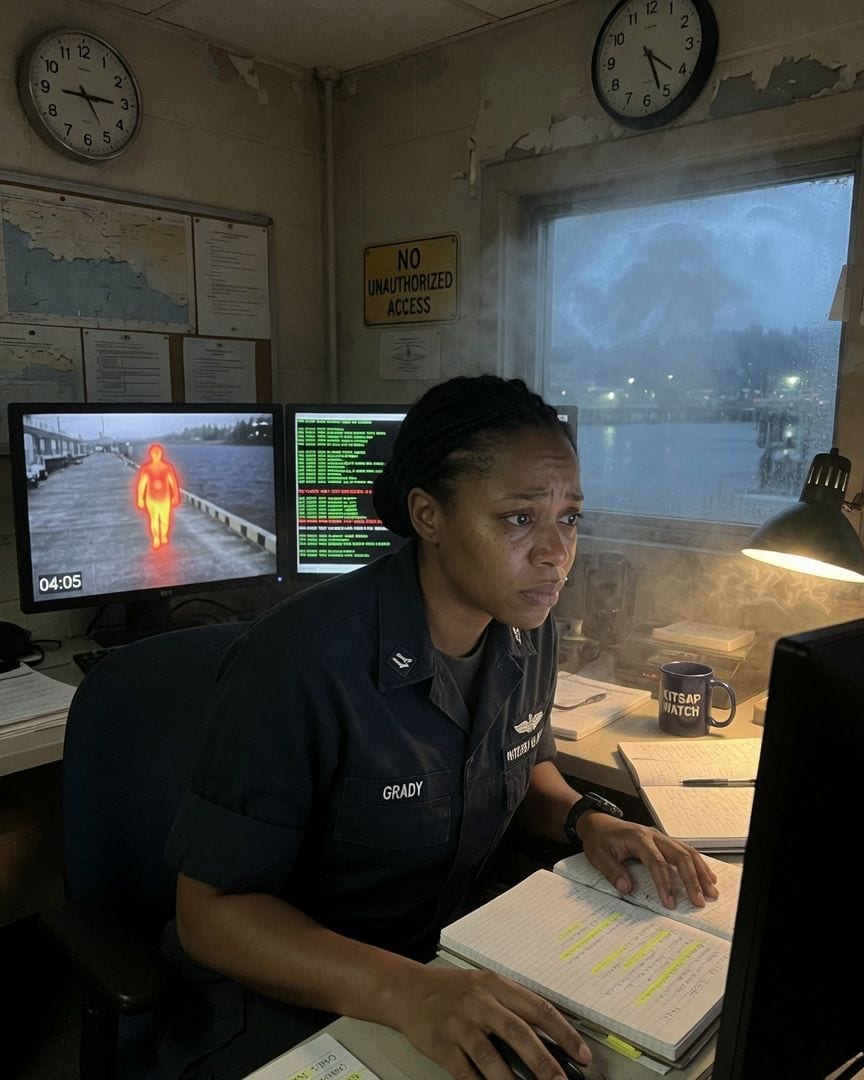
Petty Officer Olivia Grady found the base system logging impossible access at 0405. Every night for years, a blank ID walks Pier 7.
Petty Officer Olivia Grady stood her predawn watch on Pier 7, the cold mist of Puget Sound a familiar companion. Her routine scan of monitors at 0405 was shattered when an IR sensor flared with a man-sized heat bloom moving along the pier. Yet the camera feed showed only empty concrete and swirling mist. When historical logs confirmed the invisible presence had walked that exact path every night for years, Olivia dug deeper. She found a ghost "access log" entry with a unique ID but no name attached, meticulously aligned with the 0405 bloom. What impossible entity was the base system logging, night after night?