A radarman tracked an object from 60,000 feet to the deck in four seconds. The next night, her tape was gone, replaced by a lie.
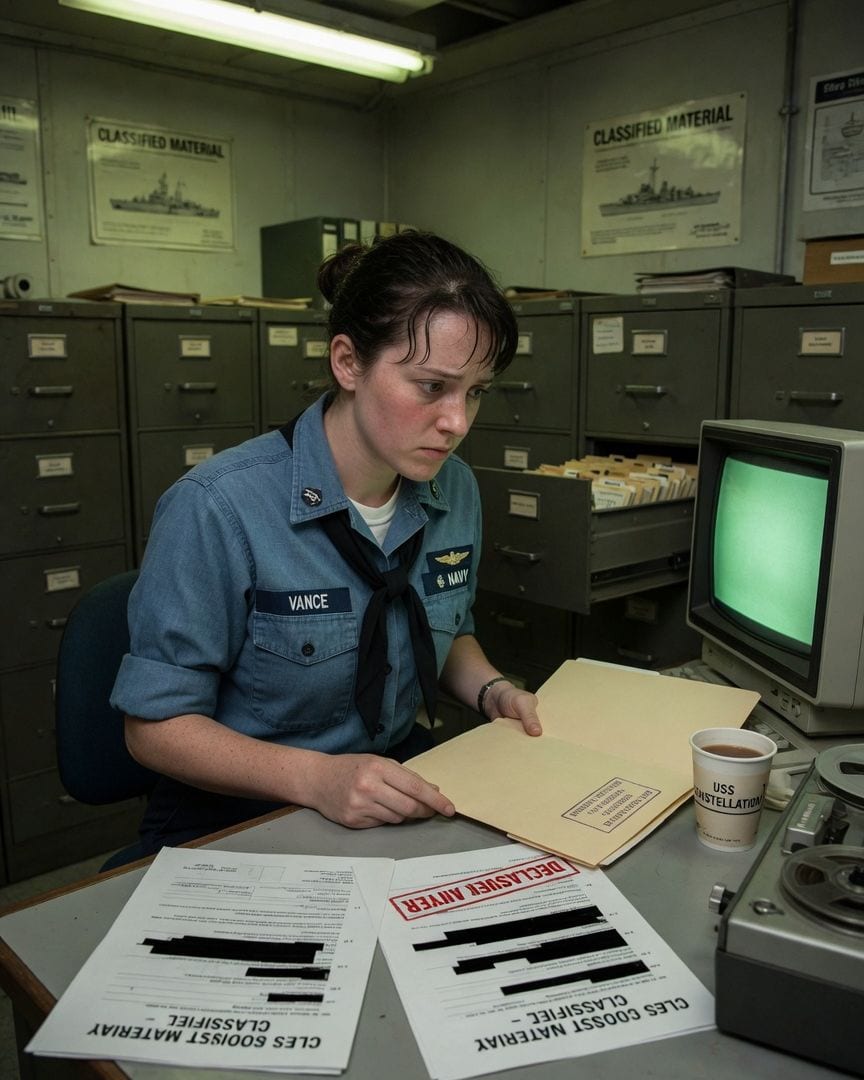
Radarman Second Class Peggy Vance, 22, hunched in the dim green glow of her scope, felt the carrier’s gentle roll off San Diego.
It was her first night alone, the air thick with the hum of electronics and the distant thrum of engines. At forty miles, a contact bloomed on the screen, a clean, sharp blip. It wasn't an echo, not a ghost.
It came from 'angels sixty' – sixty thousand feet – to the deck in under four seconds. The manual had no column for that.
The plane guard helo pilot, Ronald Maddox, 34, live on the net, his voice tight with disbelief, described a 'shape he could not name' holding station two hundred yards off the bow. No wings, no visible propulsion.
Peggy marked the time, the bearing, the impossible speed. Her heart hammered a slow, steady rhythm against her ribs.
She felt a cold dread settle deep in her gut, a certainty that what she had just logged defied every law of physics and common sense.
When she came back on watch the next night, the previous night's tape reel was gone from the rack. The metal slot, once labeled '2100-0500 TGT REC', had been cleanly relabeled 'SPARE PARTS INVENTORY'.
Peggy's methodical mind refused to let it go. She started asking questions, quietly, casually, about the missing tape. Her shift supervisor, Chief Petty Officer Dorothy Carver, 48, a woman whose calm demeanor always bordered on unnerving, simply shrugged.
"Equipment malfunction, Vance. Probably got pulled for diagnostics." But Peggy knew better. Diagnostic tapes were logged. She checked the official incident log for her watch. There, under her own service number, was an entry: 'Radar Anomaly, identified as weather balloon.
Tape secured.' Weather balloon. Her jaw tightened. She remembered Ronald Maddox's voice, the raw fear as he described something that was definitely not a balloon. She tried to locate the 'secured' tape. No one could find it.
The records office, a labyrinth of metal cabinets and flickering fluorescent lights, felt colder than usual, the air still and heavy. Days bled into weeks.
Peggy, using her access privileges, began to search the internal database for any other 'weather balloon' incidents with similar parameters. She found a handful, scattered over the past few years, each one filed under a peculiar, non-standard control number.
The reports were terse, heavily redacted. One evening, deep in the archives, tucked behind a stack of obsolete communication manuals, she found a manila folder.
It was unmarked, save for a faded, almost illegible stamp: 'INCIDENT REPORT - CLASSIFIED - DO NOT DUPLICATE.' Inside was a single sheet of paper. Her incident. Describing a 'transient radar echo'. And then, the black lines of redaction began.
Not just blocking text, but shaping around it, leaving tantalizing, disconnected phrases that made no sense. '...descent rate… no known… atmospheric…' It listed Ronald Maddox as a witness, but his description was reduced to 'visual confirmation of atmospheric disturbance.'
It was a lie, carefully constructed. But the crucial detail, the one that made her gut clench, was the control number at the bottom: it was the same non-standard number she’d seen on the other 'weather balloon' incidents. A pattern.
A quiet, unsettling pattern.
Peggy couldn't shake the feeling that the redactions themselves were trying to tell her something. The next day, she went to the ship’s intelligence office, a place she rarely visited, claiming she needed to cross-reference an old communications log.
She navigated through rows of secure terminals and locked cabinets. In a forgotten drawer, beneath a pile of old cryptographic keys, she found another copy of the same incident report.
It bore the exact same date, the same official heading, the same 'weather balloon' conclusion. But this copy, unlike the first, was stamped in angry red ink: 'DECLASSIFY NEVER.' And its redactions were entirely different.
Whole paragraphs that were blacked out in the first report were now readable, revealing technical specifications of the craft's impossible speed and maneuverability.
Conversely, details left open in her first copy – the exact coordinates, the time of the helio pilot's report – were now solid blocks of black.
The two reports were like negative images of each other, each hiding what the other revealed, yet neither telling the full story. The cover sheet listed '7 pages.' The folder held only one.
Peggy stood there, the heavy folder clutched in her hand, the quiet hum of the secure office suddenly deafening. The wrongness wasn't just a missing tape; it was a deliberate, layered deception, a secret with a shape all its own.
The 'DECLASSIFY NEVER' stamp was a cold, hard fact. Peggy knew she was no longer chasing a clerical error.
She began an unauthorized deep dive into the ship's classified archives, using her access to cross-reference the peculiar control number she'd found. She wasn’t looking for answers, not yet. She was looking for more questions, more anomalies.
The pattern emerged slowly, like a dark figure stepping out of the fog. Reports spanning back to the 1960s, all detailing similar 'radar anomalies' or 'unidentified atmospheric phenomena.'
Each one concluded with a mundane explanation – weather balloons, atmospheric inversions, migrating birds – and each bore the same non-standard control number, or a variation of it. The redactions, too, followed a disturbing trend.
They weren't random blackouts; they seemed to be designed to obscure specific categories of information: impossible velocities, silent operation, unidentifiable shapes, and most disturbingly, any mention of witness descriptions that deviated from the official narrative.
She found one report from 1971 detailing a 'light anomaly' over the Pacific. The redactions in that report were so extensive that only the words 'craft' and 'silent' remained visible, surrounded by vast swathes of black ink.
Another from 1985 mentioned a 'sub-surface contact' that 'defied acoustic identification,' again with meticulous redactions around any specific physical description.
It wasn't just about hiding; it was about reshaping the truth, ensuring that only a particular, sanitized version of events remained accessible. She started keeping a hidden log, cross-referencing dates, locations, and the specific phrases left unblacked.
The sheer consistency across decades and classifications was terrifying. It implied a central, coordinating intelligence, not just a series of isolated incidents.
It implied an institution that had been doing this for a very long time, not just burying records, but actively cultivating a particular form of ignorance.
The weight of all that unacknowledged history pressed down on her, a silent, patient horror. Every file she opened felt like a doorway, but to what, she still couldn't say.
Peggy’s quiet digging did not go unnoticed. One morning, she found her access to the Level 2 archives revoked without explanation. A curt email from IT cited 'system maintenance.'
She knew it was a lie; her access had been flawless for years. Later that day, Dorothy Carver, her Chief Petty Officer, called her into her office.
The space was meticulously tidy, every document perfectly aligned, the air tasting faintly of ozone from the nearby server racks. Dorothy offered Peggy a cup of coffee, her smile thin and unreadable. "Vance, you’ve been… curious lately."
Her voice was calm, almost soothing, but the implication hung heavy in the air. "We all have our duties. Sometimes, those duties involve not asking too many questions about certain… sensitive matters."
Dorothy paused, taking a slow sip of her coffee. "Your record is exemplary, Peggy. Don’t jeopardize it chasing ghosts. Some files are best left closed."
It wasn’t a threat, not overtly, but the quiet certainty in Dorothy’s eyes was more chilling than any shouted warning. Peggy felt a cold knot form in her stomach. She realized then that Dorothy knew exactly what she was doing.
The 'system maintenance' wasn't random. Someone was watching. Days later, a file Peggy had been meticulously cross-referencing – a 1978 report on a 'marine anomaly' that had vanished from sonar – was gone from the digital archive.
Its control number now returned an 'ERROR 404: FILE NOT FOUND.' She checked the physical log. The entry was still there, but the associated file number had been manually overwritten with 'DELETED PER ORDER 7-ALPHA.' There was no Order 7-ALPHA.
The walls of the secrecy machine were closing in, not with violence, but with quiet, administrative finality. Peggy felt a prickle on the back of her neck, a constant awareness of being observed.
Every corridor, every open doorway, every passing glance felt weighted. She was no longer hunting for answers; she was being hunted away from them.
The danger was no longer abstract; it was personal, a silent pressure that sought to guide her back to her scope, to forget what she’d seen.
Peggy couldn't back down. The next day, she confronted Dorothy Carver in her office, the door closed behind them. "Chief, what are we filing?" Peggy asked, her voice steady despite the tremor in her hands. Dorothy’s placid expression didn't waver.
She leaned back in her chair, a sigh escaping her lips. "You've seen too much, Peggy. More than you should have." She picked up a polished stone from her desk, turning it over in her fingers.
"These phenomena… they are real. Always have been. They predate all of us, all our navies, all our nations." Peggy felt a jolt, a confirmation of her deepest fears. "Then why the lies? The weather balloons? The missing tapes?"
Dorothy’s gaze hardened. "Because the truth isn't something the world is ready for. Our job, Peggy, isn't to fight them. It's to manage the knowledge of them. To contain it.
To file it away, so the world can continue to function without fear, without chaos." She gestured vaguely at the secure filing cabinets lining the walls. "The files… they're not just records. They're part of the containment.
Each redaction, each fabricated report, is a brick in the wall of secrecy. It’s not about hiding the event itself, but about hiding the pattern.
The fact that it's constant, that it's always been here, and that we are utterly powerless to stop it." Peggy understood then.
The 'Redaction That Has a Shape' wasn't just a mistake; it was an active, deliberate act of narrative control.
The blacked-out lines created the illusion of something mundane, while preserving just enough of the truth, in fragmented form, for those who were meant to find it. "So, we just… let it happen?"
Peggy whispered, the full weight of the admission crushing her. Dorothy nodded, her eyes distant. "We observe. We record. And we ensure the records are… managed.
It’s a quiet war, Peggy, fought with ink and paper, against something we cannot comprehend, let alone defeat. And sometimes, those who see too much… they become part of the record themselves."
The words hung in the air, cold and definitive. The missing tape, the relabeled rack, the contradictory reports – it all clicked into a horrifying, coherent whole.
The institution wasn't a guardian; it was a librarian for the impossible, diligently filing away humanity's ignorance.
Dorothy’s words echoed in Peggy’s mind: 'Sometimes, those who see too much… they become part of the record themselves.' The implication chilled her to the bone.
She spent the next few days in a daze, performing her duties mechanically, the green glow of the radar scope now a mocking reminder of what she knew. But a seed of defiance remained.
She had to understand the full scope of this 'filing.' She had to know how far back it went, and if anyone had ever truly escaped it.
Using the last vestiges of her access, before it was inevitably fully locked down, she requested to view some of the oldest 'anomalous' incident reports Dorothy had alluded to, citing a 'historical review' for a training module.
She got a stack of heavy, yellowed folders, smelling of dust and forgotten truths. One in particular caught her eye: an incident from 1968, detailing a 'fast-moving, silent object' observed by a fishing trawler off the coast of Maine.
The report was rife with the familiar, inconsistent redactions. As she scanned the faded text, her breath hitched. Under a section titled 'Witnesses/Personnel Involved,' among a list of naval officers and civilian crewmen, was a single, four-digit number.
It was the last four digits of her own service number. Beneath it, a brief, redacted physical description: '...female, early twenties, meticulous observation skills...' A cold wave of recognition, stark and absolute, washed over her. It was her.
Her service number, her description, in a file from decades before she was born. Her hands trembled, the old paper rustling softly. She wasn't just witnessing a pattern; she was already named in it. She was part of the file.
The revelation of her own service number in the 1968 file was a psychic detonation. Peggy didn't just understand the pattern; she realized she was an active component of it.
She wasn't an accidental witness; she was a designated participant, her role pre-written. The 'filing' wasn't merely an act of archiving; it was a process of absorption.
The institution wasn't just hiding the truth; it was managing the integration of those who perceived it into its own silent, ever-expanding mechanism. She remembered Dorothy's calm assertion: "The file is still being signed." It wasn't a metaphor.
The files were living documents, templates, identifying new individuals to be drawn in, to become the new 'librarians' of the impossible.
The impossible descent rate, the missing tape, the contradictory redactions – every clue now clicked into place, not as evidence of a cover-up, but as a carefully orchestrated series of breadcrumbs leading her into the fold.
The 'lost' were never lost; they were filed, their identities subsumed, their experiences repurposed to perpetuate the cycle.
The Redaction That Has a Shape was not just a lie; it was a key, a specific design meant to trigger recognition in those destined to find it.
Her own meticulous nature, her insatiable curiosity, had not been a strength, but a vulnerability, a pre-programmed trait that ensured her compliance. The dread was not just knowing a secret, but knowing that the secret had known her all along.
The institution, vast and patient, had simply waited for her to arrive at her designated entry point. She was a new blank page, ready to be signed into service.
Peggy tried to resist. She considered fleeing the ship, exposing the truth, anything to break the invisible chains that now bound her. But the sense of inevitability was overwhelming. The machine was too vast, too patient.
She found Dorothy Carver in her office, meticulously sorting through a stack of newly classified documents. "It's me, isn't it?" Peggy asked, her voice flat. "My service number. In that old file." Dorothy looked up, her expression unreadable. "It is."
She didn't deny it, didn't try to explain it away. "You were identified, Peggy, just as others before you. You have a particular aptitude for observation, a methodical mind. You seek coherence. That makes you suitable." "Suitable for what?"
Peggy demanded, a flicker of her old fire returning. "To maintain the order," Dorothy replied, her voice soft. "To ensure the records are kept, the narratives controlled. To become a part of the containment, just like me.
Just like the others." Peggy felt a chill as she looked at Dorothy, truly seeing her for the first time – the calm, the detachment, the quiet efficiency. It wasn't just a professional demeanor; it was a state of being.
"I won't," Peggy said, her voice shaking. "I won't be like you." Dorothy simply smiled, a faint, almost imperceptible curve of her lips. "You already are, Peggy.
The moment you understood the pattern, the moment you saw your own name in the file, the process began. You can't un-know it. And what you know… it changes you.
It changes how you see the world, how you interact with it. You are already filed." Peggy felt a strange, cold calm descend upon her.
It wasn't an acceptance, not yet, but a recognition of a truth too vast to fight. There was no escape. The confrontation wasn't a battle of wills; it was a quiet, existential absorption.
She was already inside, and the door had closed behind her, not with a slam, but with the soft click of a file drawer.
Peggy Vance continued her duties as Radarman Second Class. Her performance became impeccable, flawless. She never spoke of the incident off San Diego, nor of the files she had uncovered.
Her movements were precise, her reports concise and accurate, devoid of any personal inflection. She became a model of efficiency, a perfect cog in the vast, silent machine.
Her eyes, once alight with curiosity and a fierce intellect, now held a deep, unsettling serenity. She processed new anomalies, new 'weather balloons,' with a detached calm that bordered on the mechanical.
The meticulousness that had once defined her was still present, but it was now colder, almost inhuman, perfectly aligned with the institution's purpose. She was always at her post, always ready, always watching.
Ronald Maddox, the plane guard helo pilot, sometimes saw Peggy Vance in the mess hall. She would sit alone, eating her meal with a quiet intensity, her gaze distant.
He tried to catch her eye once, to offer a polite nod, but she simply looked through him, her expression utterly blank. He remembered her from that night, the sharp, intelligent young radarman, a flicker of fear in her eyes.
That fear was gone. Replaced by something else, something he couldn't quite place. She was always at her post, her movements precise, her eyes tracking incoming contacts with a serenity that had not been hers before.
The green glow of the radar scope seemed to reflect in her still gaze, a silent communion.
Peggy Vance remained. Her service record continued to be exemplary, a testament to her new, quiet dedication. The fear had long since been filed away, replaced by an unshakeable order.
She signed the new log entry, her hand steady, a perfect record of nothing at all.
If this one got to you
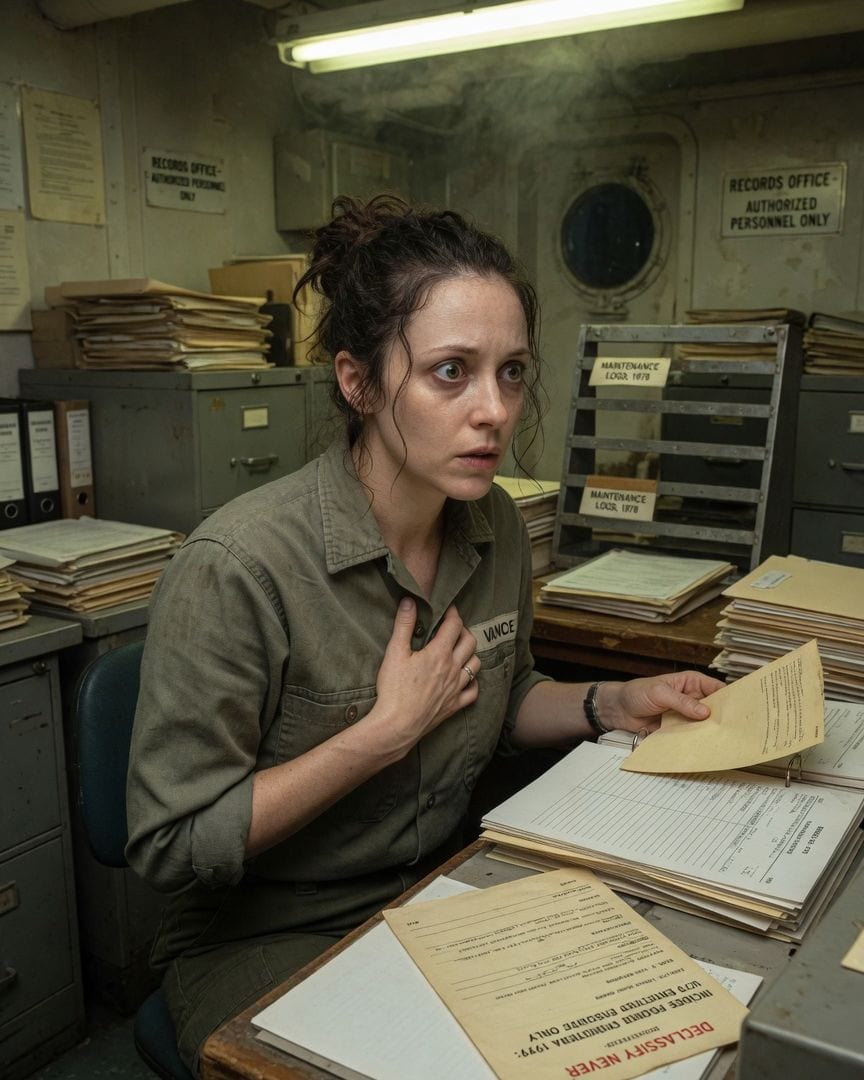
A Cold War carrier radar operator's first solo watch tracked a craft dropping 60,000 feet in four seconds. The next morning, her tape reel was gone.
A young radar operator, Peggy Vance, faced her first night alone in the USS Enterprise's Combat Information Center, the massive carrier steaming silently off San Diego. Her green-lit scope revealed an impossible contact: a craft dropping sixty thousand feet in under four seconds, then holding station just two hundred yards off the bow. Despite her detailed log, the tape reel vanished and official records showed no incident. The ship's history had been tampered with.
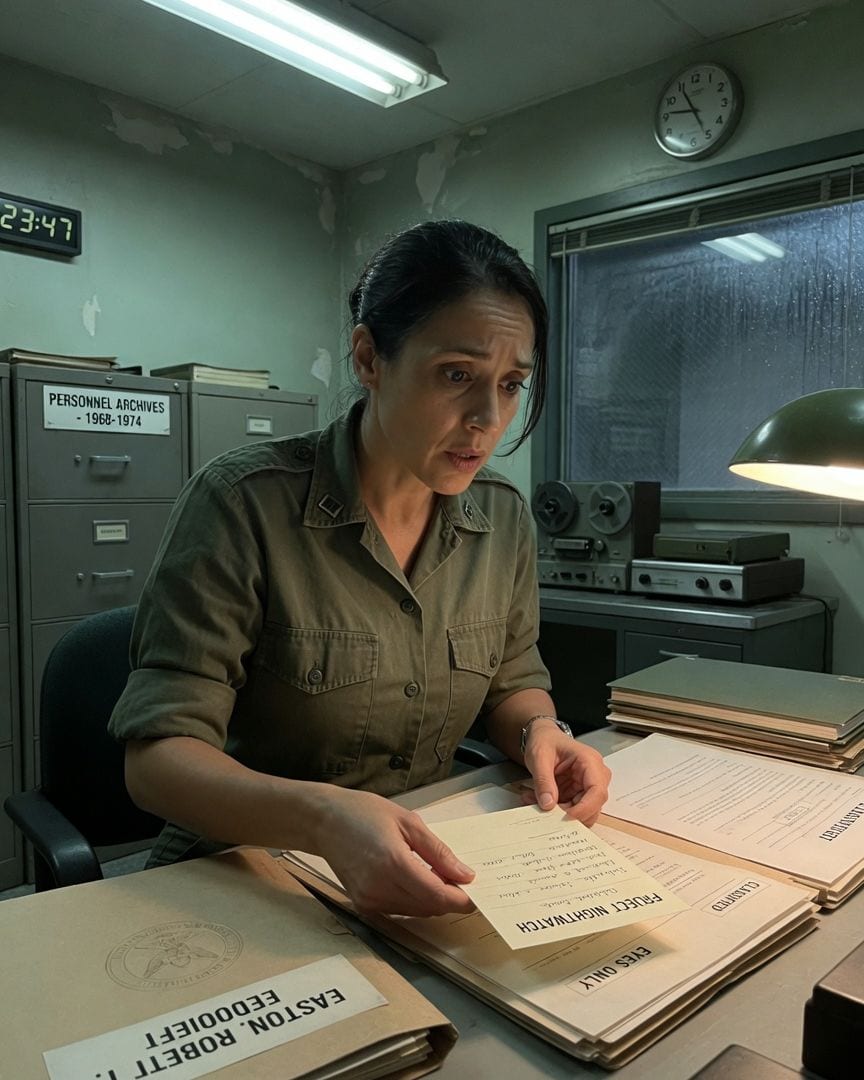
A Cold War tower controller logs an object vanish from radar, then hears the pilot scream it’s filling his windscreen. Her own name, 'Bardolph, Ines', now marked 'Observed' in a secret file.
Captain Ines Bardolph, a tower controller, was counting down the months until her transfer to Langley and the decommissioning of her base, hoping to leave behind the unsettling incidents of her final posting. But one night, her radar scope showed an impossible blip, solid and unwavering, 40 miles north of the Danube, only to vanish in less than a second, leaving a pilot screaming in terror. Despite the clear evidence, the official report blamed "atmospheric inversions," while the terrified pilot received a glowing review and promotion, his file meticulously scrubbed of any anomaly. As Captain Bardolph reviewed the pilot's pristine record, she found a hidden slip of paper, revealing a chilling truth: 'Subject: Bardolph, Ines. Status: Observed.' Was she merely an observer of the impossible, or was she now part of something far more sinister?
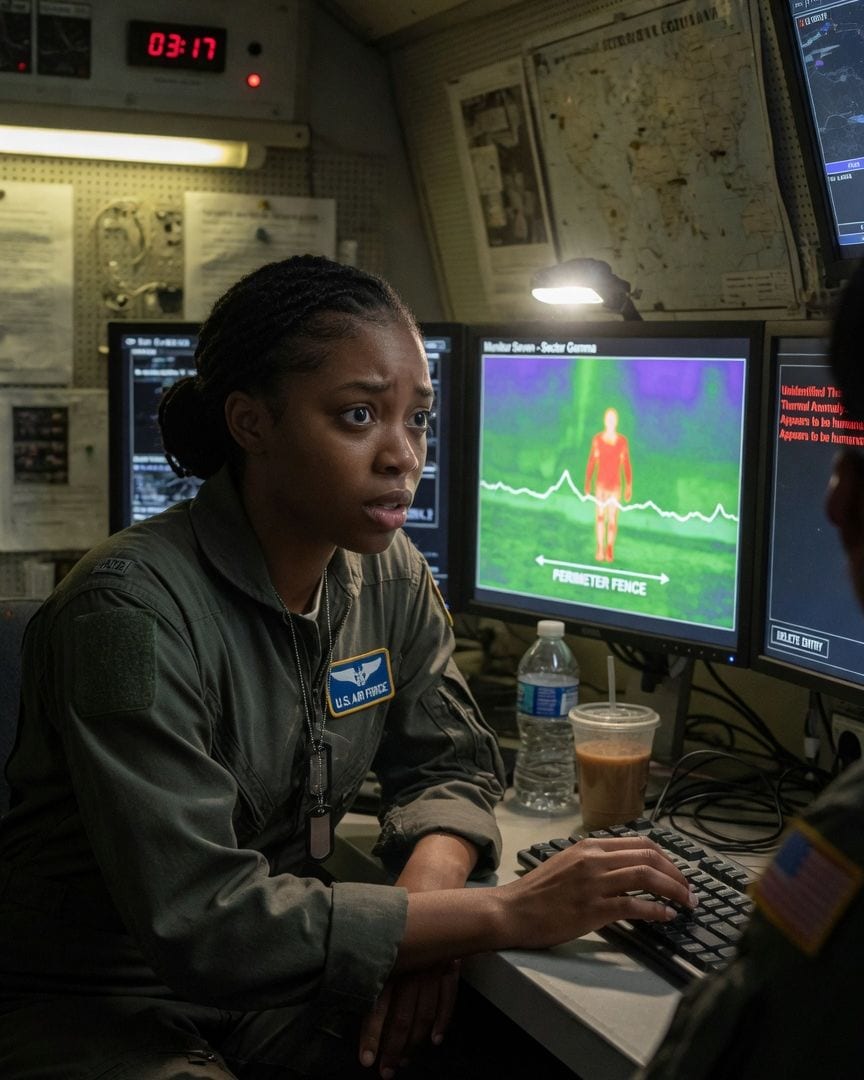
An airman’s thermal feed shows a figure moving in the restricted desert. Her captain orders it scrubbed, but the heat signature appears to tilt its head and look right at her.
Airman First Class Olivia Kade was new to her remote high-altitude outpost, fresh from advanced training, and the isolation pressed in, amplifying every hum. Her duty was to monitor the desert perimeter, but one shift, a faint thermal signature appeared on Monitor Seven: a solitary, upright figure moving with impossible precision beyond the barbed wire. No personnel were authorized in that sector. Her mission commander quickly ordered the anomaly scrubbed, but as it dissolved, the featureless outline seemed to tilt its head, looking directly into the camera. Now, the signature returns night after night, forcing the airman to wonder what impossible thing patrols the dark beyond the wire.
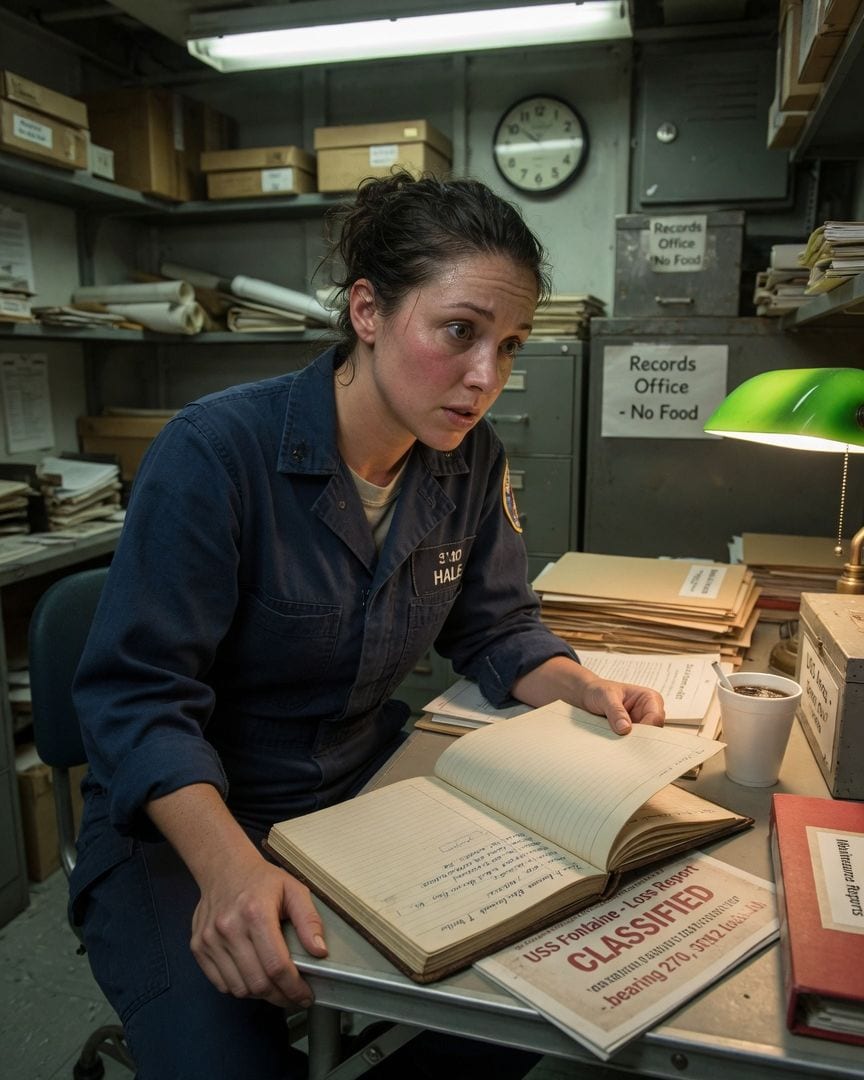
Petty Officer Hale needs a spotless record for her transfer. But the USS Ares sonar logs show an identical, impossible contact, logged to the minute, years apart, and tied to a classified loss report.
Petty Officer Sarah Hale needed a spotless record for her coveted shore duty transfer, a posting she'd worked five years to secure. Alone in the USS Ares sonar shack, three days out from San Diego, her midwatch was broken by an impossible contact: a close, slow echo holding perfect pace, invisible to radar, then vanishing. Her heart hammered, not from fear, but from the data's impossibility. When she found an identical entry in her own log from just one week prior, the cold dread tightened its grip. But the true chill settled when she unearthed decades of similar records, signed by other sonar officers, all showing the same impossible contact at 0212, off the port beam, for nineteen minutes, on the same ship, stretching back years—a persistent echo tied to a classified loss report.
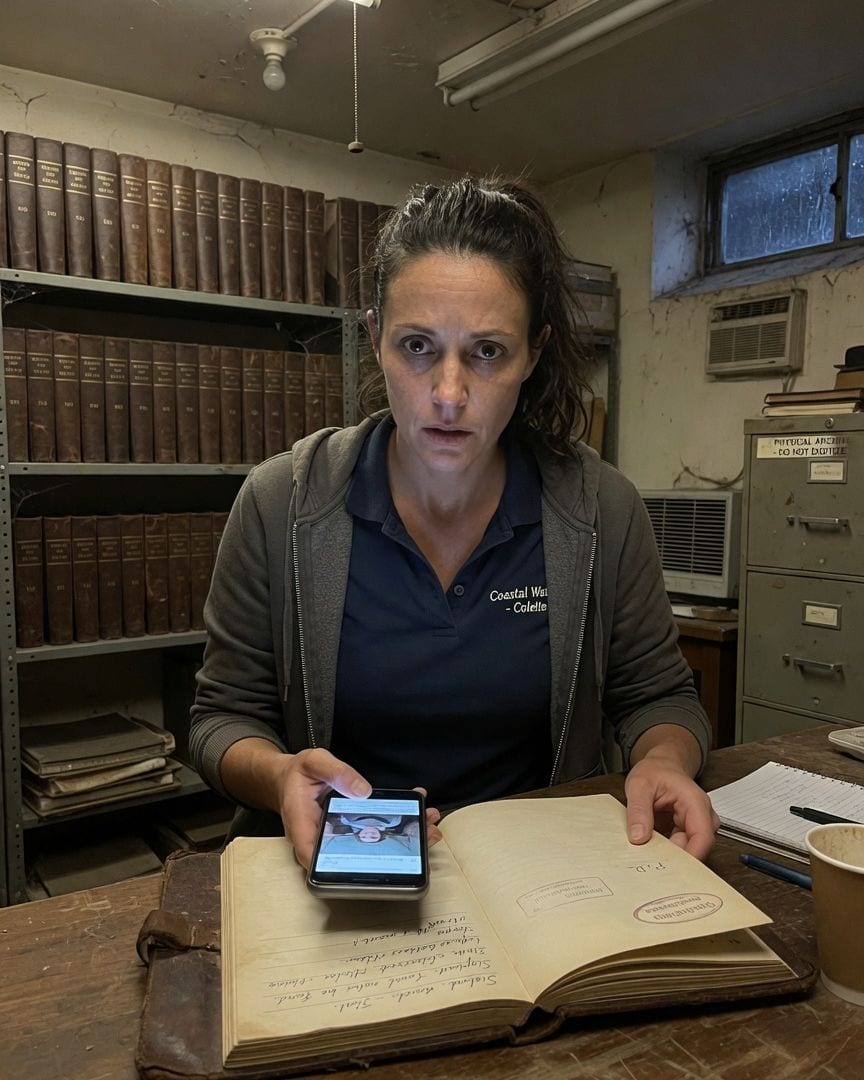
My coastguard log noted Sighting 9 again tonight, a light where no vessel showed. The old logs carry Sighting 9 off Skerry Point at 3:14am every tenth year since 1954, always 'nothing found,' always 'send no boat.'
On my watchtower night shift, the radar screen glowed green and the ocean was quiet. Then, a familiar light appeared off Skerry Point, exactly on cue, just as it had every tenth year for decades. But digging deeper, I found a hidden stamp in an old logbook: 'Operation Skerry. Status: Complete.' It left me with a chilling sense of finality.
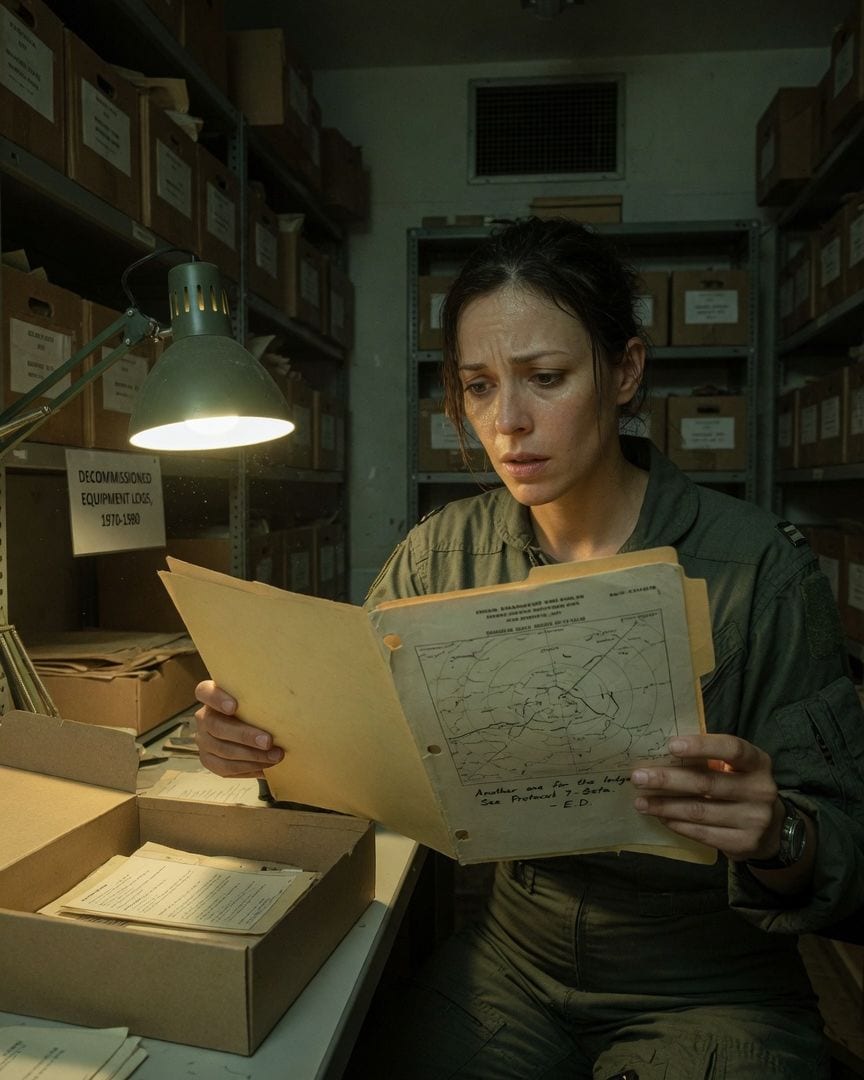
A radar captain's scope went clean, but the pilot swore a mile-wide UFO still filled his windscreen. Then she found a Cold War ledger of impossible sightings.
Captain Ines Bardolph, a 34-year-old radar operator in Bavaria, lived by the precise hum of her console. One quiet night, an impossible contact appeared over the Danube, then vanished from her scope just as a pilot swore it filled his windscreen. Replays showed the object had crossed the Alps in a single blink, defying all known physics. When bureaucracy sought to bury the incident, Captain Bardolph sought answers, leading her to a forgotten archive where a brittle folder revealed a chilling pattern: 'Another one for the ledger.'