My raffle ticket declares me winner of a 1994 fete that never even happened. It says 'collection in person, Saturday,' just like the one a man vanished after.
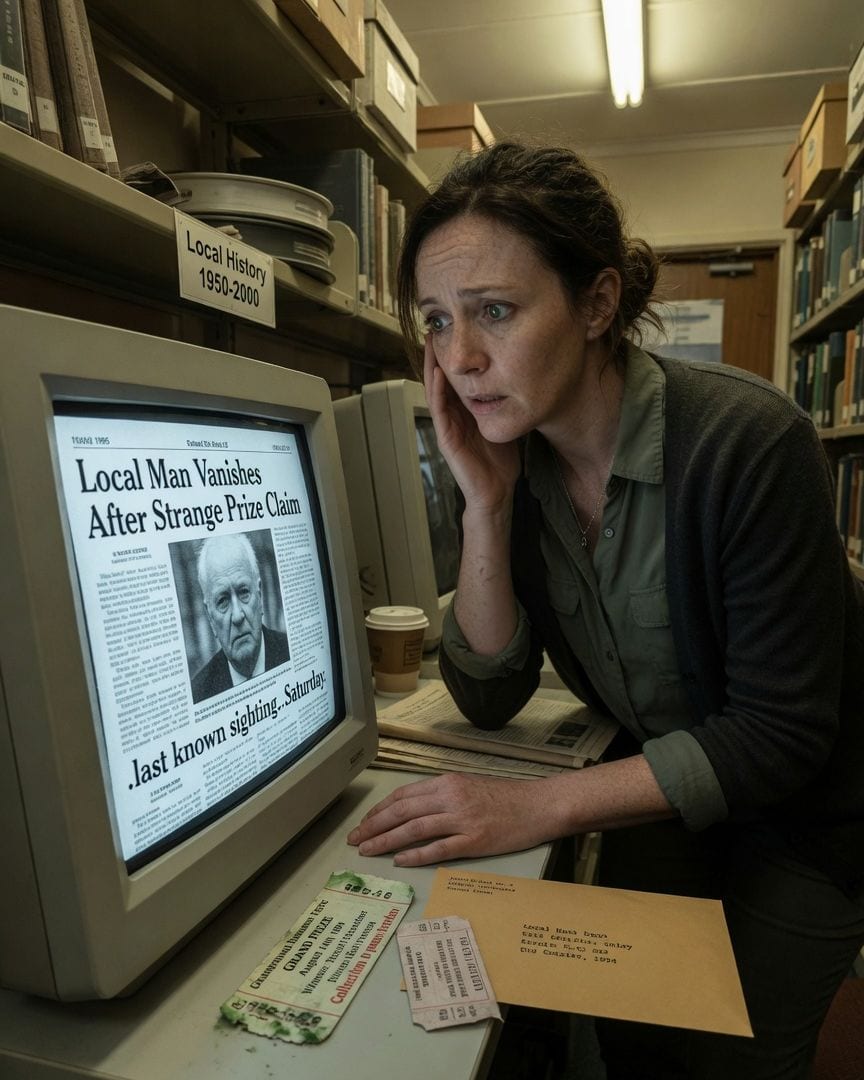
The envelope was plain brown, thick paper, no return address, just my name and address printed precisely in a surprisingly old-fashioned font.
Hazel Fletcher, 32, archivist, meticulously organised and rational, I’d initially assumed it was some kind of charity junk mail, a misprint. But inside, instead of a pamphlet, was a single, faded raffle ticket stub.
The cardstock was brittle, the ink a deep, mossy green that had softened with age. It declared me the winner of the ‘Grampound Summer Fete Grand Prize’. The date: August 14th, 1994.
Below that, in bold, hand-stamped letters: ‘Collection in person, Saturday’. And then, the wrongness truly hit me.
My name, Hazel Fletcher, printed clearly in the ‘Winner’ box, not scrawled or typed, but printed with a definitive certainty that defied the impossible date.
I stared at it, my mind scrambling for explanations. A joke? An elaborate, decades-late prank from someone with too much time on their hands? But the envelope bore my correct, current address, exactly as it appears on my utility bills.
No one I knew would bother with such an anachronistic gag. I flipped the stub over.
The other half of the ticket, the part you usually keep, was folded neatly beside it in the envelope, a perfect match for the frayed edge of the stub. It made no sense.
Grampound’s green, where the summer fete was always held, had been sold off and built over in late 1994. There hadn't been a fete there in thirty years.
The world felt suddenly off-kilter, like a single, precise detail had been nudged out of alignment, too perfectly out of place to simply be an accident.
Determined to find the prankster, or at least a logical explanation, I started with the obvious.
A quick search on my tablet confirmed it: the Grampound Summer Fete, cancelled in 1994 due to the sale of the green for a new housing development.
There was no ‘Grampound Fete Committee’ to contact, just a defunct charity trust absorbed into a larger regional fund decades ago.
I called Iris Sullivan, 30, a colleague from the archives. “You won’t believe this,” I started, trying to inject a lightness I didn't feel. I described the ticket, the date, the impossible name. Iris, ever practical, laughed.
“Maybe it’s an early birthday card from some eccentric aunt you don’t know? Or someone just found a box of old tickets and picked a name from a phone book.”
She suggested checking local historical societies for old fete programmes or records, “just in case it’s some local folklore thing you’re missing.”
So, during my lunch break, I found myself hunched over a microfiche reader at the local library, the dusty smell of old paper clinging to the air.
After sifting through blurry adverts for village bake sales and car boot fairs, I found a small advertisement for the 1994 Grampound Summer Fete, confirming its cancellation. The banner headline, ‘Fete Cancelled Due to Land Sale’, was stark and clear.
But deeper in the archives, a smaller, more unsettling article from 1995 caught my eye. The headline screamed, ‘Local Man Vanishes After Strange Prize Claim.’ My heart hammered. The grainy photograph beneath showed a stern-faced, elderly man.
Walter Porter, the caption read. The article detailed how Porter had reportedly received a ‘prize notice’ for a local event that, like my fete, hadn't actually happened.
He had apparently dismissed it as a prank, but had then gone missing days later. The details were too specific, too parallel. It wasn't just a prank; it was a pattern. The ordinary explanation was crumbling.
The article chronicled Walter Porter’s disappearance in 1995. His last known sighting, the piece stated, was on a Saturday. The same day his impossible prize was to be ‘collected.’
A cold dread settled in my stomach, turning my insides to lead. This wasn't a random prank. This was targeted. I looked down at my own raffle ticket, the bold letters declaring ‘collection in person, Saturday.’
The brittle paper felt heavy in my hand, a tangible link across decades, an invitation I hadn't asked for, to a fate I suddenly feared.
As I traced the words, a man bumped into me at the library table, startling me. He was older, perhaps late fifties, with kind, tired eyes.
“My apologies, Hazel,” he said, his voice soft, almost regretful. He didn't seem to notice the microfiche, the ticket, or my suddenly rigid posture. “I’m so sorry. For what’s to come.”
Desmond Thornton, 58, a stranger I’d never seen before, looked directly into my eyes, a profound sorrow in his gaze, then simply walked away, blending into the hushed aisles, leaving me frozen, the printed date of Walter Porter’s disappearance staring up at me.
Desmond Thornton’s apology echoed in my mind for the rest of the day, a chilling premonition that clung to me like damp air.
I tried to dismiss it as a random encounter, a confused old man, but the specific mention of my name and the chilling ‘what’s to come’ clung.
I looked up Desmond Thornton, finding an old address for him in Grampound, near the site of the former green.
The next day, feigning historical research for a collection on local agriculture, I visited the Grampound local history archives.
The archivist, a kindly, elderly woman named Mrs. Davies, remembered Walter Porter’s disappearance as a local legend, a sad story that had become one of those whispers passed down through generations. “Poor Mr. Porter,” she’d sighed, adjusting her glasses.
“A real character. Bit of an odd duck, but harmless. Just vanished, clean as a whistle.”
She mentioned a dusty, rarely accessed ‘Grampound Collection Ledger,’ a record kept by the original fete organizers, containing names and dates of prize winners from generations past.
“Mostly just flower show results and cake bakes,” she’d chuckled, “but it’s all here, somewhere.” My blood ran cold. I requested it.
The ledger was heavy, bound in dark leather that creaked as I opened it, its pages yellowed and brittle at the edges. The handwriting inside was copperplate, meticulous.
I found Walter Porter’s name, dated 1968, long before the fete was cancelled, with a cryptic note beside it: ‘Collected, Sat.’ A faint, sick feeling started in my stomach and spread.
This wasn't just about a cancelled fete; it was about a recurring pattern of ‘collections.’ The word felt like a stone in my mouth.
I frantically flipped through the ledger, my fingers trembling slightly as I scanned the faded ink, searching for my own name, bracing myself for the impossible. It wasn’t there. Not yet. But the dread intensified, a cold certainty taking root.
Someone, or something, was pre-selecting names.
I left the archives feeling exposed, the weight of the ledger's implications pressing down on me. The casual, almost bureaucratic term ‘Collected’ for a human disappearance was horrifying.
I drove straight to Grampound, to the site where the green once stood, now a small, unremarkable housing estate of pebble-dashed houses.
I parked and walked, looking for anything out of place, anything that might speak to the bizarre history I was uncovering.
A derelict old building, a former groundskeeper's shed, stood half-hidden by overgrown bushes at the edge of the estate, almost swallowed by decades of neglect. It looked untouched, forgotten. As I approached, I saw him.
Desmond Thornton, standing across the street, near a row of recycling bins, watching me. He didn’t wave, didn’t approach, just stood there, a still, silent sentinel. My heart gave a violent lurch against my ribs.
He knew I was here, knew I was digging. I hurried past the shed, feigning disinterest, but the feeling of being observed was palpable, not just from Desmond, but from the stillness of the shed itself, an antique gaze.
I pushed open the shed door. It grated on rusted hinges, stirring dust motes into a thick cloud. Inside, dust lay thick over everything, a fine, grey blanket. Cobwebs draped like old, decaying lace from the rafters.
In a forgotten corner, under a pile of rusted gardening tools and mouldering hessian sacks, I saw it: a heavy, black rotary phone, its curly cord cut cleanly at the base, disconnected for years.
It was so out of place, a relic from a different era, a ghost from a time when the green was still a green.
As I reached for it, my fingers hovering just above the dust-coated Bakelite, I heard a faint scratching sound from behind the shed wall.
It wasn't the scuttling of a rodent; it was too regular, too deliberate, like a fingernail dragging across a rough surface. I froze, my breath catching in my throat. The sound was too close. I spun around, but saw nothing.
The shed's single, grimy window was dark, reflecting only my own pale, wide-eyed face. I was being watched, not just by Desmond, but by something else, something unseen that had been waiting.
I fled the shed, the scratching sound a persistent echo in my ears, amplified by the sudden thumping of my pulse. I drove straight to Desmond Thornton's Grampound address, the small house I’d found earlier.
It was neat, almost unnervingly so, but an unsettling stillness hung about it, a quietness that felt heavy, like expectation. Desmond answered the door, his face impassive, as if he’d been expecting me.
“You know, don’t you?” I demanded, holding up my faded raffle ticket like an accusation. My voice trembled, but I pushed on. “The fete, Walter Porter, the ledger… the ‘Collected, Sat.’ entry.”
Desmond sighed, a deep, weary sound that seemed to carry the weight of years. “It’s not a fete, Hazel. Not in the way you think.” He stepped back, gesturing me inside. The house was sparsely furnished, meticulously clean, almost sterile.
“I received a similar notice, years ago,” he confessed, his gaze distant, fixed on some point in the middle distance that only he could see. “An invitation to a ‘harvest festival.’ My name, a date, a prize.”
He explained that ‘The Draw,’ as the locals vaguely called it, was a recurring event, a pattern of selection. Not evil, not good, just… a process.
“It collects,” he said, his voice flat, factual. “Takes people. Not violently. They just… cease to be here. Their place is empty. They’re drawn into something else.”
He walked over to a small, cluttered bookshelf and pulled out a faded, sepia-toned photograph. It showed him, much younger, standing with Walter Porter, both looking grim and determined. “Walter tried to fight it. Tried to warn others.
He was very vocal, for a time. But once your name is in the ledger, once the notice arrives…” Desmond trailed off, his eyes fixed on the old photo, then on me. “I was one of the fortunate ones.
I heard the call, but I wasn’t fully taken. I became… an observer. A messenger, sometimes. My apology was a duty, Hazel. I am truly sorry for what is to come for you.”
The pieces clicked into place with sickening precision: the cancelled fete, the ledger, Walter Porter’s disappearance, Desmond’s apology. It was all a single, coherent pattern, an ancient, indifferent mechanism that selected its ‘winners’ and ‘collected’ them into an unknown fate.
“How do I stop it?” I whispered, my voice barely audible, the words feeling futile even as I spoke them.
Desmond shook his head slowly, the movement full of resignation. “You can’t. Not really. But you can… disrupt the channel. Make it harder for the next one.” He explained that each ‘collection’ had a focal point, a specific conduit.
For Grampound, it was an old, disconnected rotary phone, hidden in the groundskeeper’s shed, on the very site of the old green. “It rings for the chosen,” Desmond said, his eyes now filled with a strange, sorrowful intensity.
“It speaks their name. It draws them in.”
I remembered the phone I’d seen, the faint scratching sound, Desmond watching me. I had to get back to that shed, to that phone. It was my only chance.
I thanked Desmond, my mind racing, a desperate plan forming, and hurried out.
As I drove back towards the shed, my car barely holding the speed limit, I saw a familiar car parked oddly, half-hidden by trees on the side of the road, close to the housing estate.
Desmond Thornton was in the driver’s seat, his head resting against the window, eyes closed.
He was dead.
And in his lap, a small, worn leather-bound book, open to a page with a single, neatly written entry: ‘Desmond Thornton. Collected, Sat.’
I slammed on the brakes, the car skidding to a halt, the sound a shriek against the sudden silence. The phone in the shed. It was ringing now, I knew it. It was ringing for me.
The channel that used my name was active.
I stumbled out of my car, the image of Desmond's lifeless face – so eerily peaceful, so collected – seared into my mind. The phone in the shed. It was the conduit.
I ran towards the derelict groundskeeper's shed, my lungs burning, the air thick with an almost palpable hum, a low thrumming vibration that seemed to emanate from the very earth.
The door, which I’d left ajar, was now slightly open, a dark mouth.
Inside, the dust motes danced in the single shaft of light filtering through the grimy window, and the old rotary phone, still disconnected, was ringing with a deafening, impossible sound.
It was the same low, insistent tone I’d heard on Desmond’s voice, now amplified, vibrating through the very air. I grabbed the receiver, the plastic warm beneath my fingers, impossibly warm.
Desmond’s voice, clear as if he were standing beside me, spoke: “Hazel Fletcher. Welcome to The Draw. Your collection is due.”
But it wasn't just Desmond’s voice. Other voices, faint and layered, whispered my name, echoed phrases from the old newspaper articles, from the ledger. Walter Porter’s voice, thin and reedy, distinct amongst the chorus, said, “Don’t fight it.”
There were other names, other dates, a cacophony of lost individuals, all speaking through this single device. The phone was a nexus, a channel for all those ‘collected.’
It wasn't just an entity; it was a cumulative consciousness, drawing names into itself across time. I understood now. The fete, the raffle, the apology, the ledger – all were manifestations of its reach, preparing the ground, softening the resistance.
My name wasn't just on a ticket; it was etched into a cosmic roster, called through this ancient channel.
I clutched the receiver, the chorus of voices pressing in, trying to pull me, to make me compliant. I could feel a strange tug, a disorientation, as if my very being was stretching, thinning, like smoke in a draft.
My memories, my identity, felt suddenly porous, ready to be absorbed. But I was an archivist, a person who understood patterns and systems. Desmond had said, ‘disrupt the channel.’
I looked around the shed, desperate, my eyes scanning the grimy surfaces. The phone was the key. I saw a rusted sledgehammer leaning against the far wall, heavy and forgotten.
With a surge of adrenaline, a primal rejection of this impossible fate, I dropped the receiver. The voices instantly grew louder, more insistent, a terrifying clamour that filled the shed. I grabbed the hammer.
The first blow smashed the Bakelite casing with a sickening crunch, sparks flying from twisted wires, but the ringing continued, emanating from the broken pieces, louder still, the voices now screaming my name.
The second blow shattered the internal mechanism, gears grinding, wires snapping, but the voices only grew stronger, a cacophony of names, including my own, rising in volume, trying to overwhelm me. ‘Hazel Fletcher! Collection!’
I brought the hammer down again and again, pulverizing the phone until it was nothing but shards of plastic and twisted metal, a heap of useless fragments. The ringing stopped.
The voices, too, ceased, replaced by an eerie, sudden silence that pressed down on me, heavier than the noise had been. The tugging sensation vanished.
I stood there, panting, the hammer heavy in my hands, the shed filled with the acrid smell of ozone and dust. I had stopped it. For now. For myself.
I left the shed, the shattered phone behind me, its fragments scattered like broken teeth. Desmond Thornton's body was discovered later that day, ruled a sudden, natural death.
The Grampound Collection Ledger, it was quietly reported, had disappeared from the local archives. No one knew how.
I never spoke of what happened, not to Iris, not to anyone. I went back to my life, but the world felt thinner, the veil between what was and what could be, permanently tattered.
Every ‘Saturday’ brought a faint, almost imperceptible tremor of unease. I checked my mail with a new kind of dread, scanned faces in crowds for a hint of recognition, of an apology yet to come.
I had survived, but not untouched.
I continued my work as an archivist, meticulously cataloging the past, but now with a chilling awareness of patterns unseen, of a vast, indifferent mechanism humming beneath the surface of everyday life.
I never received another raffle ticket, never heard Desmond’s voice again.
Yet, sometimes, in the quiet hum of the library, or the rustle of old paper, I thought I could almost hear it – a faint, distant ringing, like an echo from a broken phone.
And I knew, with a certainty that chilled me to the bone, that somewhere, someone else was receiving an impossible invitation. The name on the next ticket, I knew, was already decided.
If this one got to you
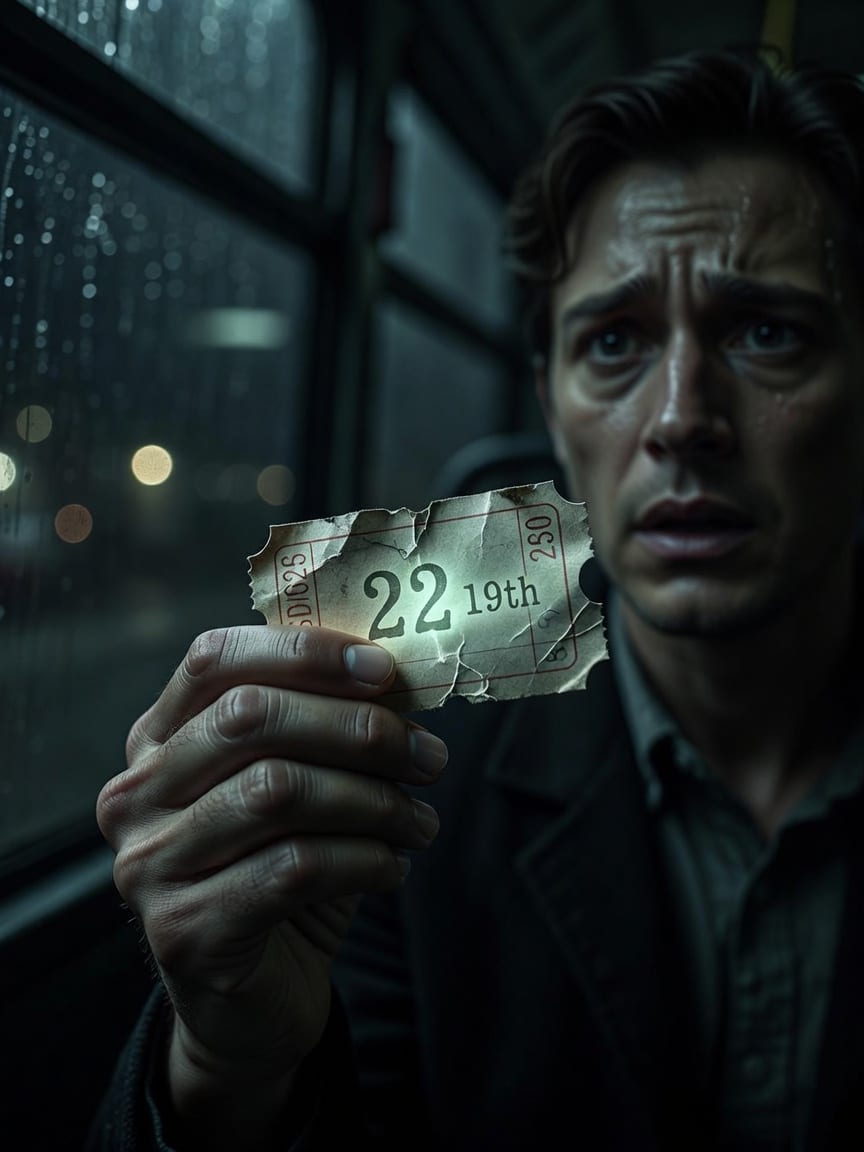
Bus driver Daniel says 'Sorry, Iris — not long now' every morning, using my name. Today he added a date: tomorrow. I've never told him my name.
Every morning, my bus driver, Daniel, knew my name despite me never telling him. Today, he added a chilling warning: "The 19th, isn't it?" when today was the 18th. Later, a blank bus ticket appeared on my doorstep, stamped with that exact impossible date.
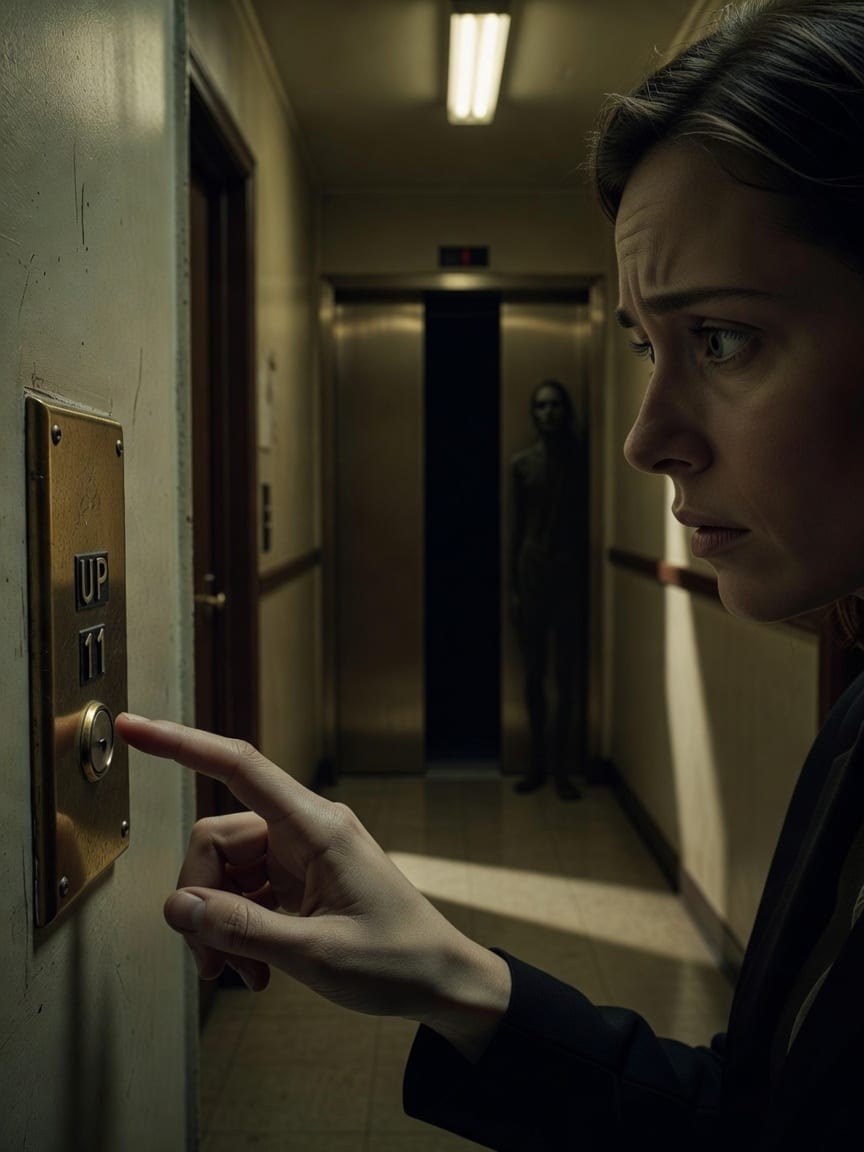
My doorman warned me not to take the tenth-floor lift on Saturday. The building's lift passed inspection last month. He seemed terrified that he'd said it.
My doorman's unsettling warning about the tenth-floor lift left me with a metallic taste of unease. I tried to rationalize it away, but then a birthday card arrived for me, five months early, from an impossible address. It was a site linked to unexplained disappearances, and a cold certainty began to settle in.
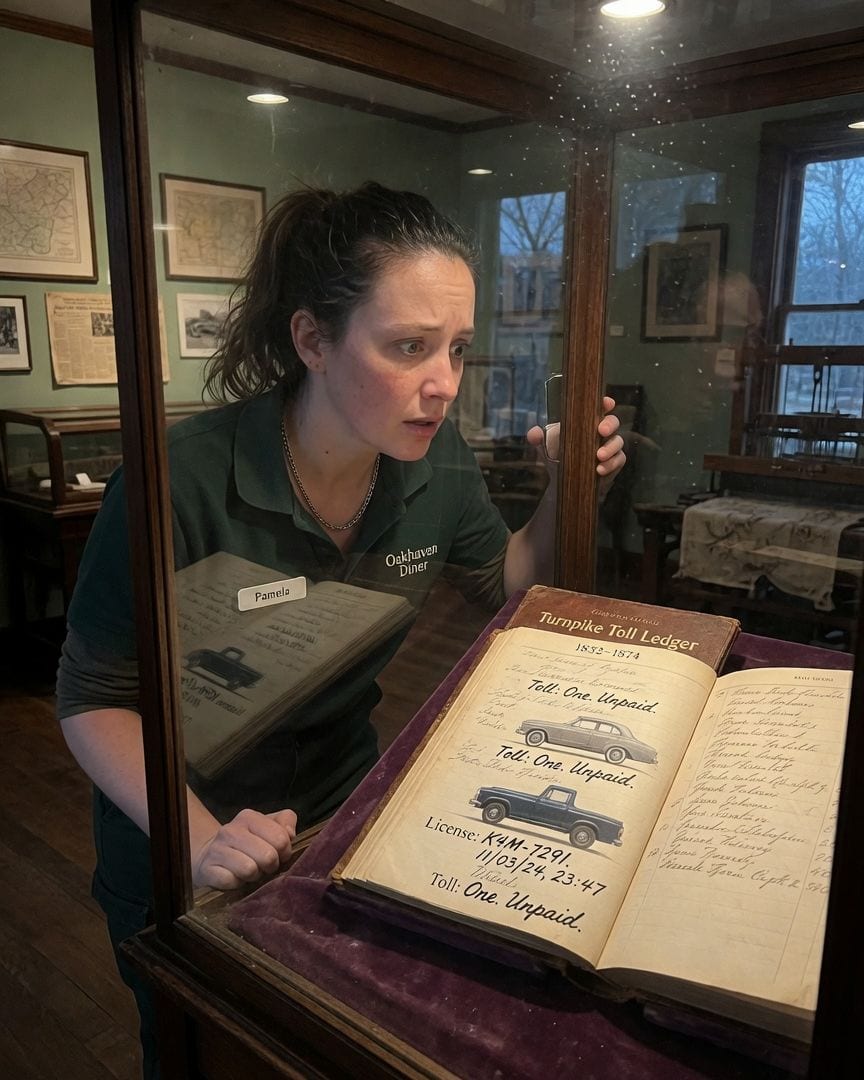
My car stalled at the old turnpike milestone, after dark. The toll ledger, closed in 1874, then listed my car, my stall time, and a toll of one, unpaid.
I had just moved to Oakhaven when my old sedan died on a dark, winding road by an infamous turnpike milestone. The next day, I found my car's exact registration and stall time written in fresh ink in a 150-year-old, locked museum ledger, marked 'Toll: One. Unpaid.' The curator dismissed it as a prank, but her white knuckles and strained voice hinted at something far more unsettling.
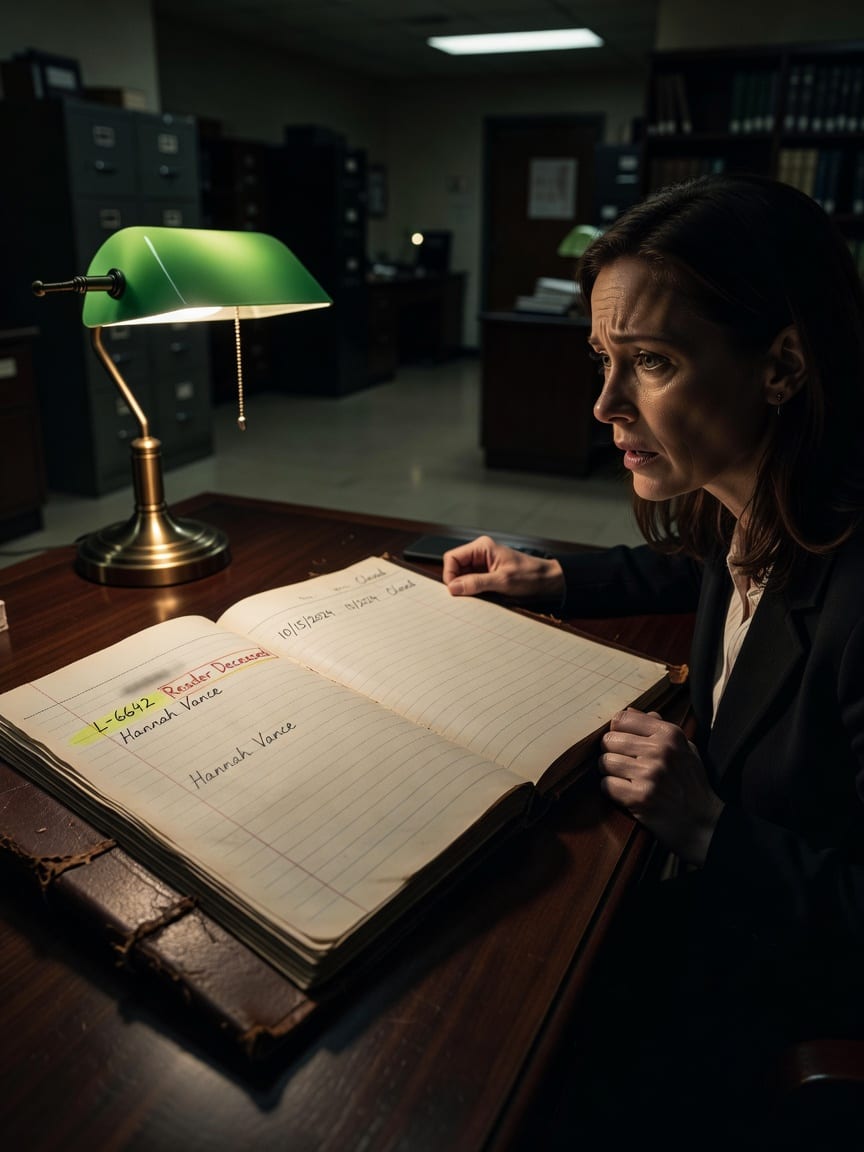
My library card number L-6642 was issued to me at seven — and the ledger shows that number has marked a reader 'deceased' every twelve years since 1949.
Returning my late father's library card to the old town library felt like a small act of closure. But the senior librarian's ancient ledger revealed a chilling pattern of 'reader deceased' entries tied to specific card numbers and borrowed books. My unease turned to cold dread when I secretly found my own name penciled in, marked for a future 'reader deceased' entry.
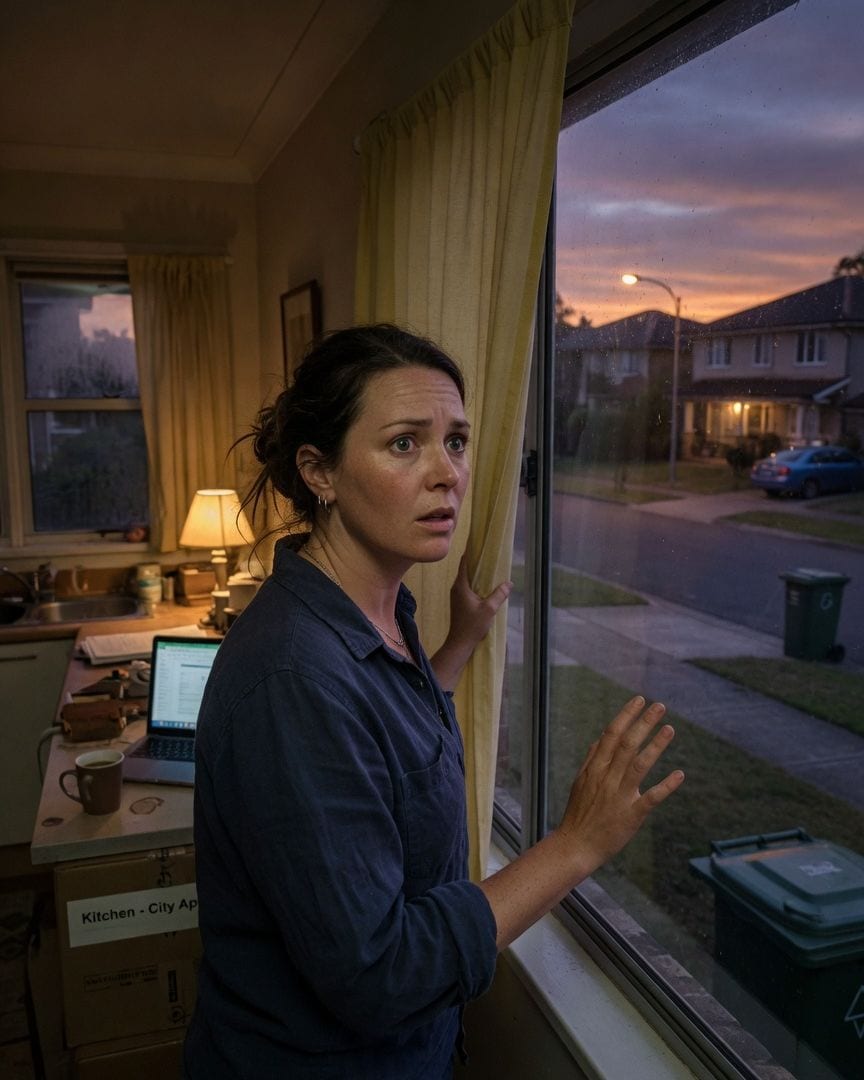
My bin was turned the wrong way Tuesday. The man three doors down hasn't been seen since, though his curtains still open.
New to Oakhaven, I dismissed the local warnings as charming quirks. But after I put my bin out first, my neighbor Joel Whitmore vanished, leaving only a cryptic 'My turn' note. The same strange symbol from his note was chalked on my bin, facing the street.
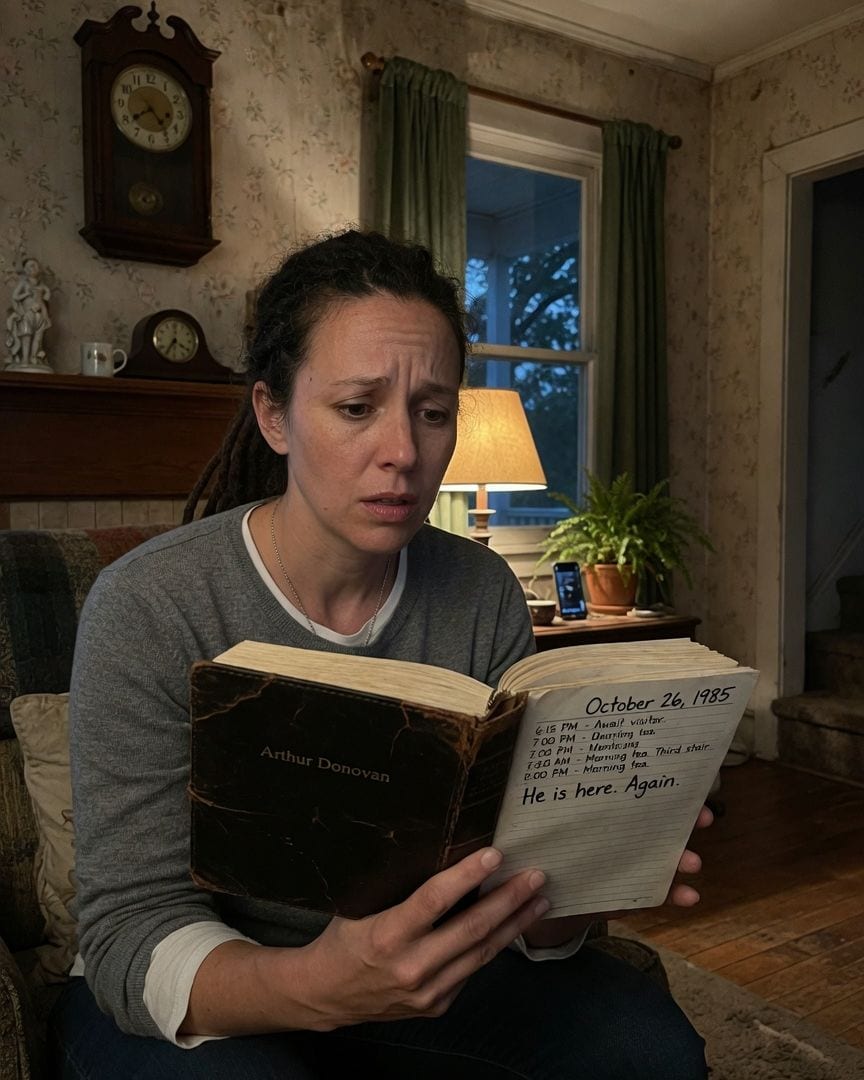
My front door gets three firm knocks every 6:15 PM. Nobody's ever there, but the doormat is always nudged, like someone just wiped their feet and left.
I moved into my inherited house expecting quiet, but every evening at 6:15 PM, three firm knocks hit my door. Each time, I find the porch empty, with no one in sight. My phone camera confirms it: only the doormat subtly shifts, echoing the clear knocks, like an invisible visitor wiping their feet.