Bus driver Daniel says 'Sorry, Iris — not long now' every morning, using my name. Today he added a date: tomorrow. I've never told him my name.
The 6:45 AM '22' bus rumbled to a stop. I tapped my travel card against the reader, the familiar beep a mundane start to a mundane Tuesday. Daniel Ingram, the driver, met my eyes.
He’s a man with kind, tired eyes, usually. This morning, they held something else – a deep, almost apologetic gaze.
"Sorry, Iris," he said softly, his voice low, "not long now."
A knot tightened in my stomach. He’d said it every morning this week. Every single morning. And every single morning, it hit me anew: I have never, not once, told this man my name. I’m an accountant, a rational woman.
I’d tried to find a mundane explanation. Maybe I’d dropped a loyalty card once, my name visible. Maybe Penelope, my colleague, had yelled my name as I boarded. Nothing fit.
I kept my travel card in my wallet, never pulled it out. And Penelope always took the earlier bus.
This morning, though, he added something new, something that truly chilled me. "The 19th, isn't it?"
My blood ran cold. Today was the 18th. The date hung in the air, a physical weight.
I opened my mouth to ask him, to demand an explanation, but he just shook his head, his focus fixed suddenly, rigidly, on the road ahead. He didn't look at me again.
He left me with the unsettling echo of my own name, a stranger’s apology, and a date that wasn't today.
The bus journey was a blur of unease. I kept glancing at Daniel in the rearview mirror, but his face was an impassive mask. He drove like any other day, yet the words continued to hum in my ears.
At the office, I cornered Penelope Hartley by the coffee machine. She’s my closest work friend, practical and no-nonsense.
"Okay, this is going to sound insane," I started, recounting Daniel's daily 'apology' and the chilling addition of the 19th.
Penelope laughed, a bright, dismissive sound that grated on my nerves. "Oh, Iris, come on. He's probably got a strange memory for faces. Or he overheard your name from someone.
Maybe he sees your mail tag on your work bag sometimes." She suggested he had a harmless quirk, a way of interacting. I tried to accept it. I wanted to accept it.
But the kindness in Daniel’s voice, the specific, impossible date, it clung to me like a damp cloak. It didn't feel like a quirk. It felt like a countdown.
Later that afternoon, a plain brown package was on my doorstep. It wasn’t a delivery I was expecting. No sender address. No postmark, not even a postage stamp. Just brown paper, taped shut.
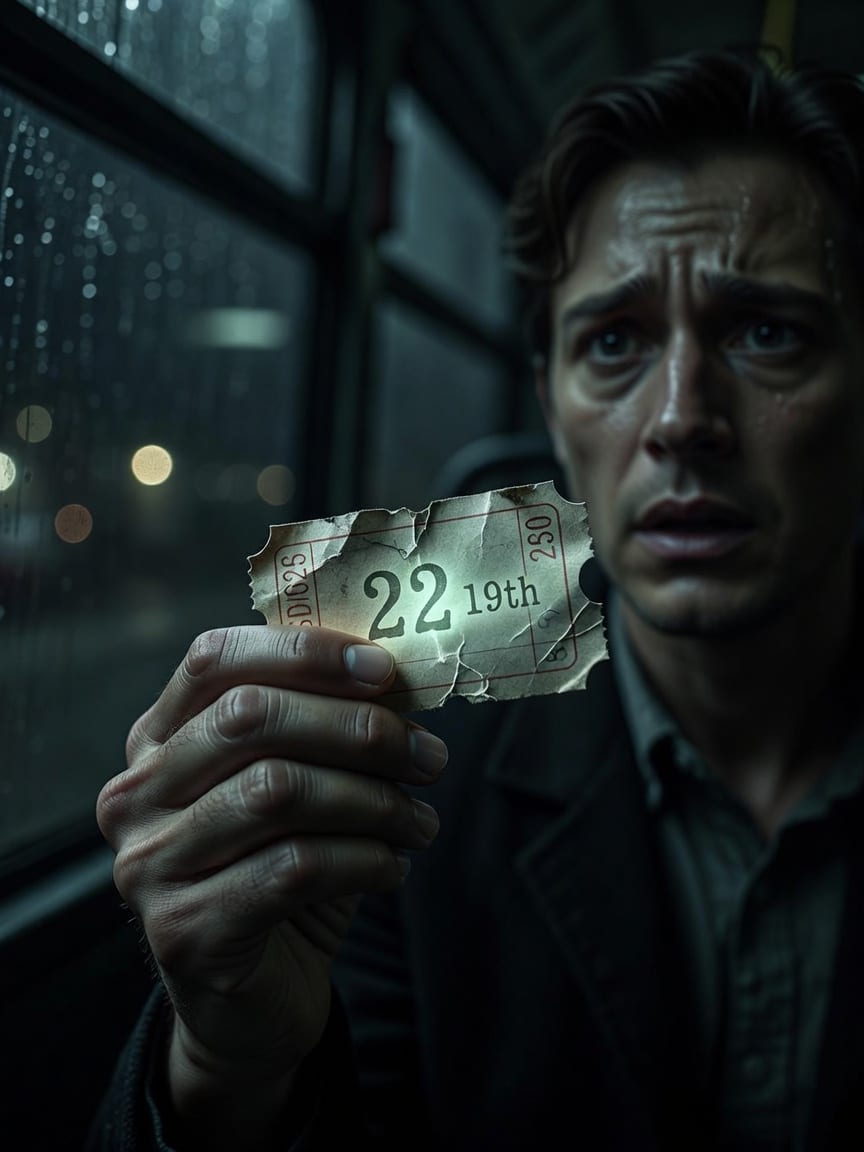
My hands trembled slightly as I tore into it. Inside, nestled in crinkled tissue paper, was a single, old-fashioned, blank paper bus ticket. It wasn’t a modern fare card. It was thick, almost like cardstock, with rough, unfinished edges.
My gaze dropped to the details. It was for the '22' route. And stamped clearly on its face, in faded red ink, was the date '19th.'
My breath caught in my throat. It felt heavy in my hand, far too specific to be a prank. Far too personal to be a coincidence. My stomach lurched. This wasn't some random oddity. This was a direct, personal warning.
I called Penelope, my voice tight. When she came over, she stared at the ticket, her face pale. "Okay," she said slowly, "that's... that's not good. Maybe a local history buff is playing a joke?"
Her voice lacked its earlier certainty. I tried to trace the paper, the ink, but it was just old, generic stock. There were no distinguishing marks, no way to find its origin. Just the ticket. A physical, undeniable object.
It linked Daniel's words directly to me. And to tomorrow.
The ticket's cold presence in my purse gnawed at me through the afternoon. I couldn’t focus on work. I couldn’t focus on anything. I needed to talk to Daniel.
I needed an explanation, a confirmation, or at least to see his face again and try to read it for some logical answer.
After work, instead of going home, I walked straight to the bus depot, hoping to catch him as he finished his shift.
The depot yard was grimy, smelling of diesel and wet asphalt. I spotted him. Daniel Ingram, walking across the vast expanse, his uniform jacket slung over his shoulder, looking tired, older than I'd imagined him outside the bus.
"Daniel!" I called, my voice thin against the distant rumble of traffic.
He turned. His kind face, usually so placid, twisted. It wasn’t anger. It was a silent, profound regret, a flash of something akin to grief that made my chest ache.
He raised a hand, not to wave, but as if to ward me off, or to hold something back, his eyes locked on mine with an unbearable weight. He didn't speak a word.
He simply turned sharply and disappeared into the depot's cavernous interior, the heavy metal door clanging shut behind him, leaving me standing alone, the dated ticket clutched in my hand. He knew. And now I was part of it.
Daniel's reaction confirmed every shred of my growing dread. This wasn't a joke, it wasn't a prank. He knew. He was trying to warn me.
I spent the evening hunched over my laptop, digging into the history of the '22' bus route. It was harder than I expected. Most of the information was innocuous: old route changes, fare increases.
But then I started finding fragmented, local news archives. Small, buried articles. Strange disappearances reported over decades, often tied to the '22' route. Always on specific dates. And chillingly often, the 19th of the month.
The articles were vague, quickly dismissed as runaways or accidents, cold cases that went nowhere. But the pattern was there. A faint, terrible hum beneath the noise of everyday life.
The next morning, I skipped my usual commute. There was no way in hell I was getting on that bus. Instead, I went to the local records office. The building was old, quiet, smelling of dust and lemon polish.
I explained to the archivist, Walter Ellison, a man with wispy white hair and spectacles perched on his nose, that I was researching local bus routes for a community project – a lie, but a plausible one.
Walter was a calm, unbothered man, seemingly unfazed by anything. He moved with a quiet efficiency, his voice soft, almost a murmur. He helped me locate old maps and company registries.
I found a mention of a defunct bus company, 'Gateway Transit,' that once operated the '22' route, decades ago. And then, among their listed documents, a curious entry caught my eye: 'Passenger Ledger – 1950-1970.'
The name alone sent a shiver down my spine. A passenger ledger for a public bus? It felt too deliberate, too specific, like a record of something far more than just fares.
I asked Walter Ellison about the 'Passenger Ledger,' my voice a little too loud in the quiet room. He didn’t flinch. He nodded slowly, his calm expression unwavering. "Ah, that old thing," he murmured, his voice soft as rustling paper.
"Mostly gibberish, a handwritten record from a time before digital manifests. Been in storage for decades. No one’s asked for it in a long while."
He retrieved a thick, leather-bound book from a back shelf, its cover scuffed and worn. Its pages were brittle and yellowed at the edges. The smell of dust and old paper, heavy and forgotten, filled the air around me.
My heart pounded a frantic rhythm against my ribs as I carefully flipped through the meticulously kept entries.
Each page was a list of names, dates, and what looked like destinations, though many entries were simply a dash or a cryptic symbol, illegible squiggles that meant nothing to me. It looked like someone's obsessive, handwritten diary of ghosts.
Then, halfway through the ledger, my breath caught. It was a name, written in elegant, looping script. A name that shouldn’t be there. There, clear as day, was my full name: 'Iris Rutherford.'
Next to it, the chillingly familiar date '19th.' My hand shook, nearly tearing the fragile page. I looked at the cover again. The ledger clearly stated '1958-1968,' a full decade before Iris Rutherford, age 32, was even born.
Walter leaned over my shoulder. His proximity was suddenly oppressive, the soft scent of his old man’s cologne replaced by the thick, cloying smell of decaying paper. He pointed a finger, steady and gnarled, at the entry.
"You're not the first to look for that," he said, his voice quiet, almost mournful, the words barely a whisper. His gaze wasn't hostile, but it was knowing. Heavy with a pity that felt like a sentence. He knew.
And he knew she knew now. The air in the quiet archive felt suddenly thin, as if something was slowly siphoning the oxygen out of the room, and I felt utterly exposed, the hunter now undeniably the hunted.
I slammed the ledger shut, the sharp report echoing in the silent archive, making a few framed photos on a nearby shelf jump. I turned on Walter, my voice raw. "What the hell is this? My name – it's impossible!
This book is from before I was born!"
Walter held up a hand, his calm demeanor unwavering, like a stone in a fast-moving river. "No, not impossible, Iris. Just… beyond the ordinary."
He began to speak, slowly, deliberately, as if recounting an ancient, tired truth he'd told a hundred times. "The '22' route isn't just a bus line, Iris. It's a channel. A conduit."
His eyes, usually mild, fixed on some distant point, beyond the dusty shelves, beyond the walls of the records office. "Certain individuals are… selected. On specific dates. The apologies you hear, from drivers like Daniel, they're a tradition.
A silent acknowledgment from those who see it happen, who are powerless to stop it."
He confirmed the ledger was a record of those who 'boarded,' those who were taken.
He described it not as an act of evil, not as a malicious force, but as an inevitability, a pattern woven into the very fabric of the route itself.
"They don't know what it is," he said, his voice dropping, referring to those who disappear, the names in his ledger, "only that it is." The 'apology in advance' was for the helplessness of the observers, the drivers, the archivists.
They were just part of the system, just another set of eyes. He told her the old bus ticket I found was a symbolic summons, a final invitation to 'board.'
As he spoke, the earlier clues re-meaning themselves in my mind with horrifying clarity. Daniel's knowing look in the depot. The vague newspaper reports of disappearances. The specific date – always the 19th.
It all clicked into place, a terrible, coherent pattern of dread that had been operating in plain sight for decades. A machine, humming along, selecting its passengers, and I was next.
The walls of the quiet office seemed to press in, suffocating me with the weight of the truth.
The full weight of Walter's words settled on me like a tombstone. The 19th. Tomorrow. I stammered a goodbye, not even sure if Walter heard me, and hurried home.
The cold dread of the ledger and Walter's calm, knowing acceptance clung to me, a suffocating shroud. I locked my doors, pulled the blinds tight, trying to find a mundane explanation, a way out of the terrible coherence.
My mind raced, searching for an escape, a loophole, anything that could break this iron logic. There had to be something.
The clock on my kitchen wall ticked loudly, each second pulling me closer to midnight, the 18th slipping away into the inevitable. The air in my apartment felt thick, heavy, like trying to breathe underwater. My phone rang.
Unknown number.
My breath hitched. I stared at the screen, the bright numbers a contrast to the deepening shadows in my living room. A cold knot formed in my stomach, twisting tighter with every ring.
Every instinct screamed not to answer, to throw the phone across the room, to smash it, to sever the connection before it could be made. But a terrible curiosity, a desperate, morbid need to know, compelled me.
My hand, shaking, reached for it.
I answered, my voice barely a whisper. "Hello?"
A voice, flat, synthesized, and utterly devoid of emotion, spoke my full name: "Iris Rutherford."
A pause. It stretched into an eternity, silent and chilling. Then, two words, delivered with an unnerving, absolute finality: "Next stop."
The line went dead. The silence that followed was deafening, the kind that screams. I tried to call back, my fingers fumbling with the screen. The number was disconnected. I checked my call log, desperation making my hands clumsy.
The listed origin was '22 Main Street' – a location I knew was nothing but an abandoned field on the outskirts of town, a desolate patch of overgrown weeds and broken asphalt. The very end of the bus route.
The 'channel' wasn't just an idea. It was here, now. And it was directly reaching for me.
The phone call wasn't just a threat; it was the final activation. I stumbled backward, dropping my phone with a clatter onto the hardwood floor. 'Next stop' wasn't a destination; it was a command. I understood now.
The bus wasn't just a vehicle; it was a conduit. The entity wasn't a person, but a pattern, a horrifying, quiet force that used the '22' as its instrument.
Walter's words echoed in the sudden, ringing silence of my apartment: 'a channel, a conduit.'
I saw it all with horrifying clarity. The old ledger, the apologies from Daniel, the strange disappearances dismissed as local folklore, the unyielding dates – always the 19th.
It was a system, a terrible, quiet harvest that had claimed countless others over the decades. The ticket wasn't an invitation; it was a receipt. A boarding pass for a journey to nowhere, or somewhere far worse.
The 'channel that uses your name' wasn't just a cryptic phrase; it was the entity itself, reaching across the void, pulling the selected individual into whatever nightmare lay beyond the 'next stop.' Daniel wasn't a malicious participant, not a villain.
He was a powerless observer, forced to deliver the message, his profound regret a testament to the horror he witnessed, unable to intervene, only able to apologize.
The dread wasn't just for me; it was for everyone caught in the pattern, a pattern that now felt utterly inevitable.
I refused to 'board.' I wouldn’t be another name in Walter’s damned ledger. Instead of waiting for the inevitable, for the silent hum of that spectral bus, I decided to disrupt the 'channel' itself.
Armed with a heavy wrench from my toolbox, the cold metal a small comfort in my trembling hand, I drove towards the old '22' bus route's terminus.
It was a disused depot on the edge of town, long abandoned, on the night of the 18th, just before midnight. The engine hummed low, my only companion.
The depot was a skeletal structure against the stark moonlight, dark and overgrown with weeds that clawed at the broken windows. My headlights cut through the gloom, revealing a single, old '22' bus parked inside.
Its engine was running, but with an unnervingly silent hum that made the hairs on my arms stand on end. Its interior was dark, a black maw. And standing beside it, a solitary figure.
Daniel Ingram.
He wasn't surprised to see me. His eyes, in the dim, sickly light of the moon, were filled with a profound sadness that seemed to deepen the lines on his tired face.
He didn't try to stop me, didn't utter a word. But his gaze, fixed on mine, pleaded with me not to try, to accept. To just let it happen.
I ignored him. A surge of desperate adrenaline, cold and sharp, coursed through me. I lunged at the bus's exposed engine, the only part of the machine that looked vulnerable.
I swung the wrench with all my might, striking the machinery with a sickening clang that ripped through the night.
Sparks flew, a shriek of tortured metal filled the air, and the engine choked, sputtured, and died with a final, shuddering gasp. The silence that followed was absolute, heavy and ringing.
Daniel watched, his face a mask of conflicting emotions: grief for what I’d done, then relief that I was no longer part of it, then a deep, quiet despair for what still remained.
The wrongness wasn't stopped, only diverted from her. I escaped, clutching the now-torn bus ticket, its date a grim reminder, carrying the chilling knowledge of what I had almost become, and what still existed.
I left town a week later, changed my number, and avoided public transport entirely. News reports briefly mentioned a strange electrical fire at the old bus depot, destroying a derelict '22' bus. No injuries were reported, the cause unknown.
Daniel Ingram vanished without a trace; his apartment was found empty, his belongings gone.
The 'Passenger Ledger' from the local archives is now missing too, presumed lost in a 'filing error' that Walter Ellison simply shook his head over, his expression unchanged.
I carry the old, torn bus ticket for the 19th, its faded date a silent victory, a permanent scar.
I live quietly now, always looking over my shoulder, always taking the long way around, always buying my own car, no matter the cost. The dread never truly leaves me.
I live a quiet life now, always checking my surroundings, always taking the long way around. I keep the torn ticket hidden in a small, locked box, a piece of proof no one would ever believe.
I know I broke the pattern for myself, but not for good. The entity is still out there, its 'channel' perhaps dormant, perhaps seeking a new route, a new proxy, just waiting to find another way in.
The silence of my new life is a fragile thing, easily broken.
One day, years later, she is on a rare bus journey, a different city, a different route.
As she taps her card, the bus driver, a young man with kind eyes, looks at her, and with a faint, unsettlingly familiar smile, he says, 'Sorry, Iris. Not long now.'
If this one got to you
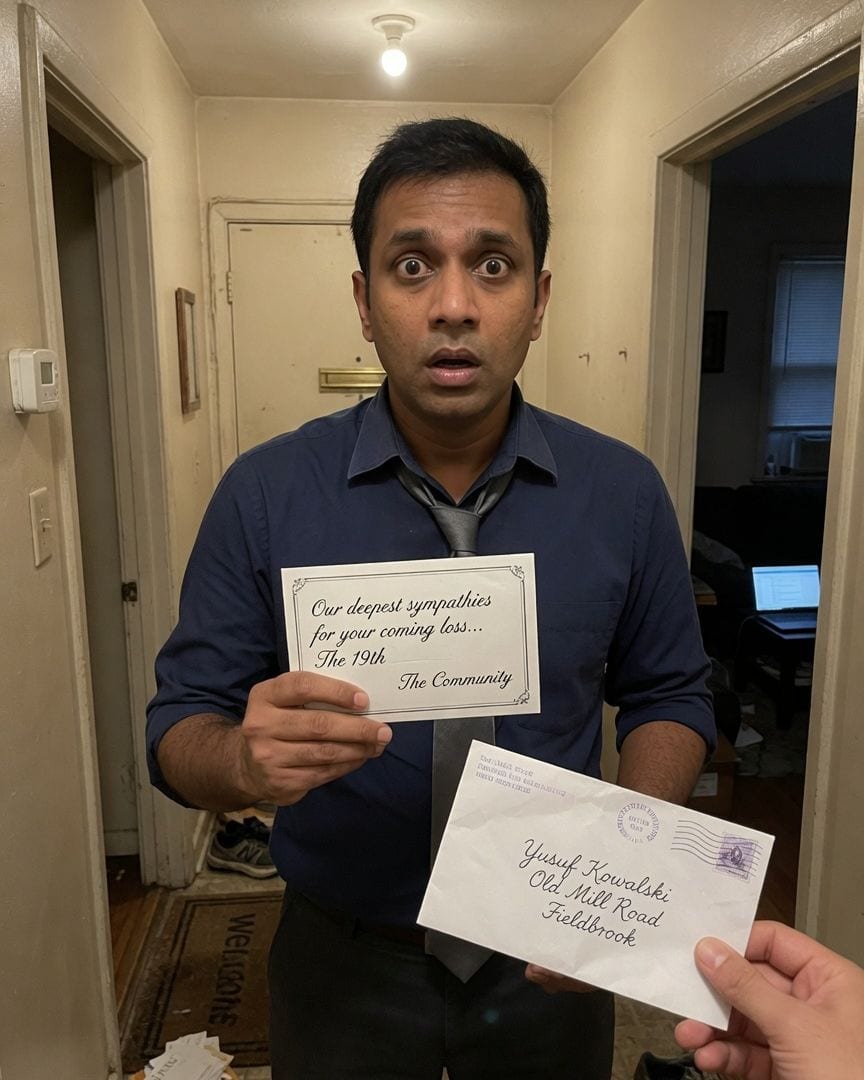
My bus driver knows my name, Yusuf, and said 'not long now.' Today is the 18th. He added a date this morning: the 19th.
My morning bus commute is a predictable comfort until driver Bernard Ellison addresses me by name. I've never told him Yusuf. Then, he adds a quiet, 'Not long now... The 19th.' Today is the 18th, and his words leave me with an inexplicable dread.
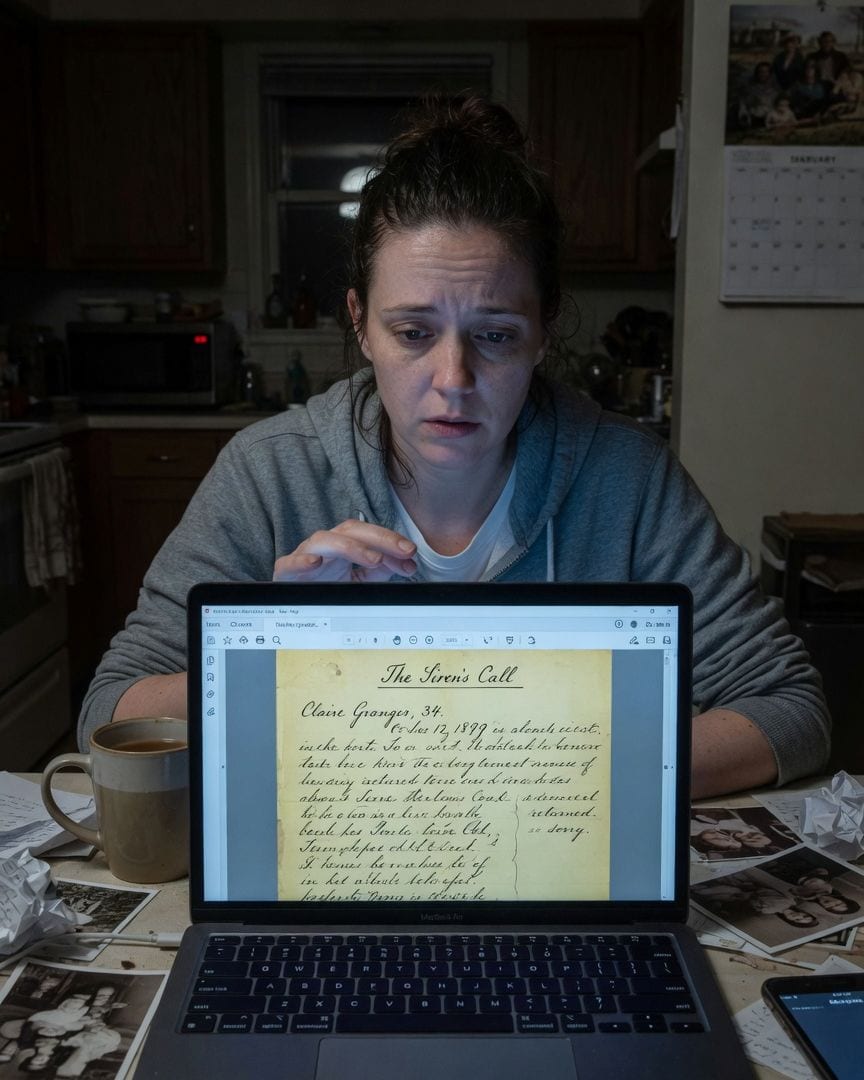
My name is on a passenger list from a ship lost in 1899. The manifest says I was 34, "returned. so sorry."
I was reviewing an old emigrant manifest, a casual dive into my family history, when I found my own name listed. The ship, The Siren's Call, was lost in 1899 with all aboard, yet my entry on the manifest was marked: 'returned. so sorry.'
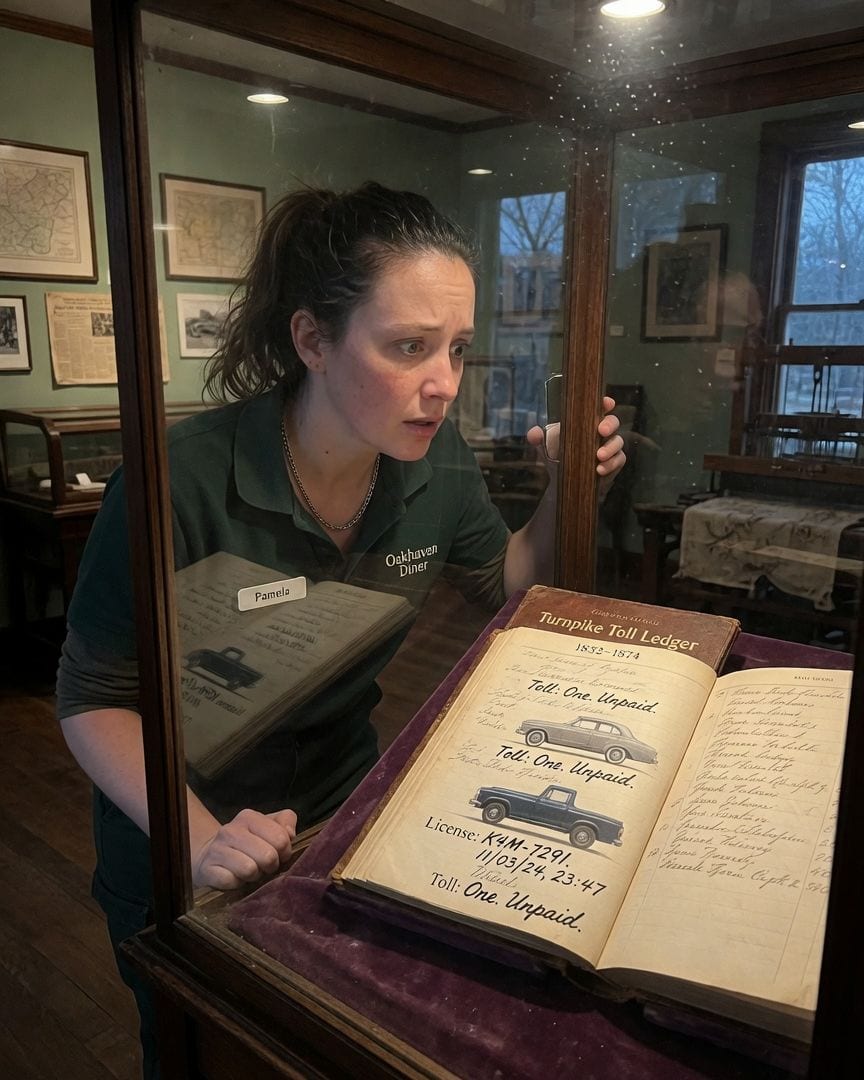
My car stalled at the old turnpike milestone, after dark. The toll ledger, closed in 1874, then listed my car, my stall time, and a toll of one, unpaid.
I had just moved to Oakhaven when my old sedan died on a dark, winding road by an infamous turnpike milestone. The next day, I found my car's exact registration and stall time written in fresh ink in a 150-year-old, locked museum ledger, marked 'Toll: One. Unpaid.' The curator dismissed it as a prank, but her white knuckles and strained voice hinted at something far more unsettling.
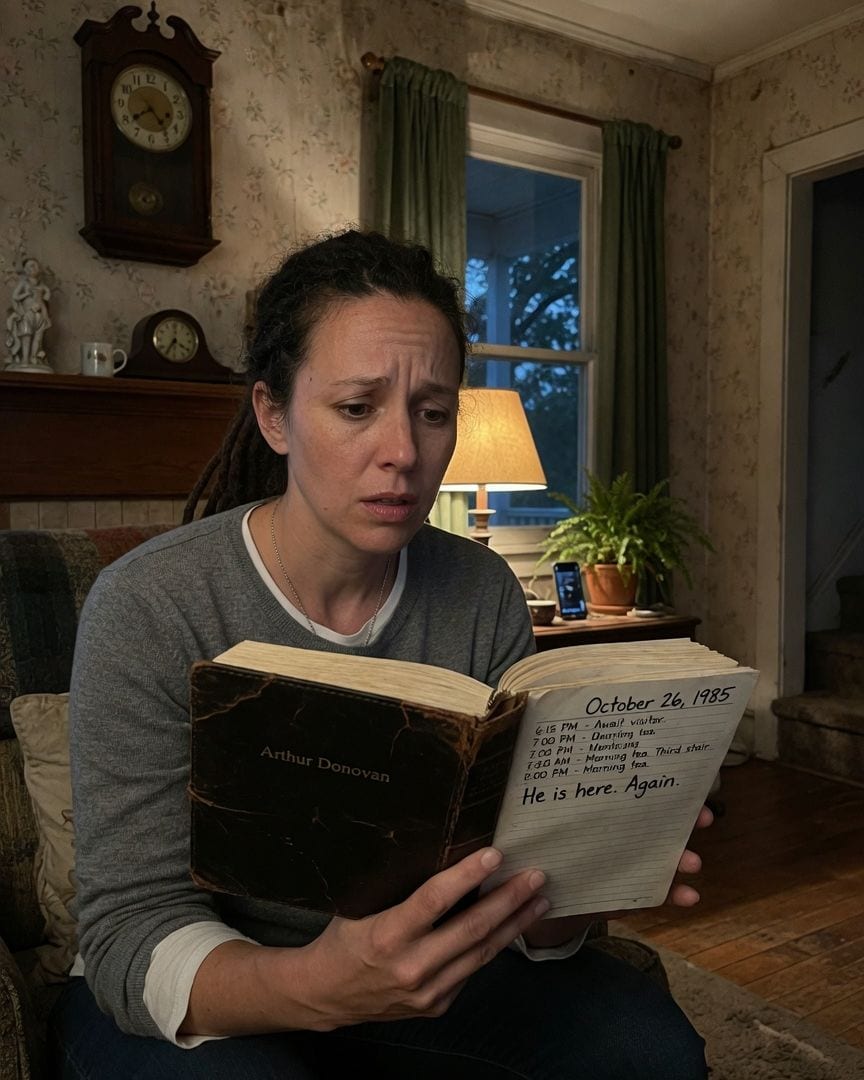
My front door gets three firm knocks every 6:15 PM. Nobody's ever there, but the doormat is always nudged, like someone just wiped their feet and left.
I moved into my inherited house expecting quiet, but every evening at 6:15 PM, three firm knocks hit my door. Each time, I find the porch empty, with no one in sight. My phone camera confirms it: only the doormat subtly shifts, echoing the clear knocks, like an invisible visitor wiping their feet.
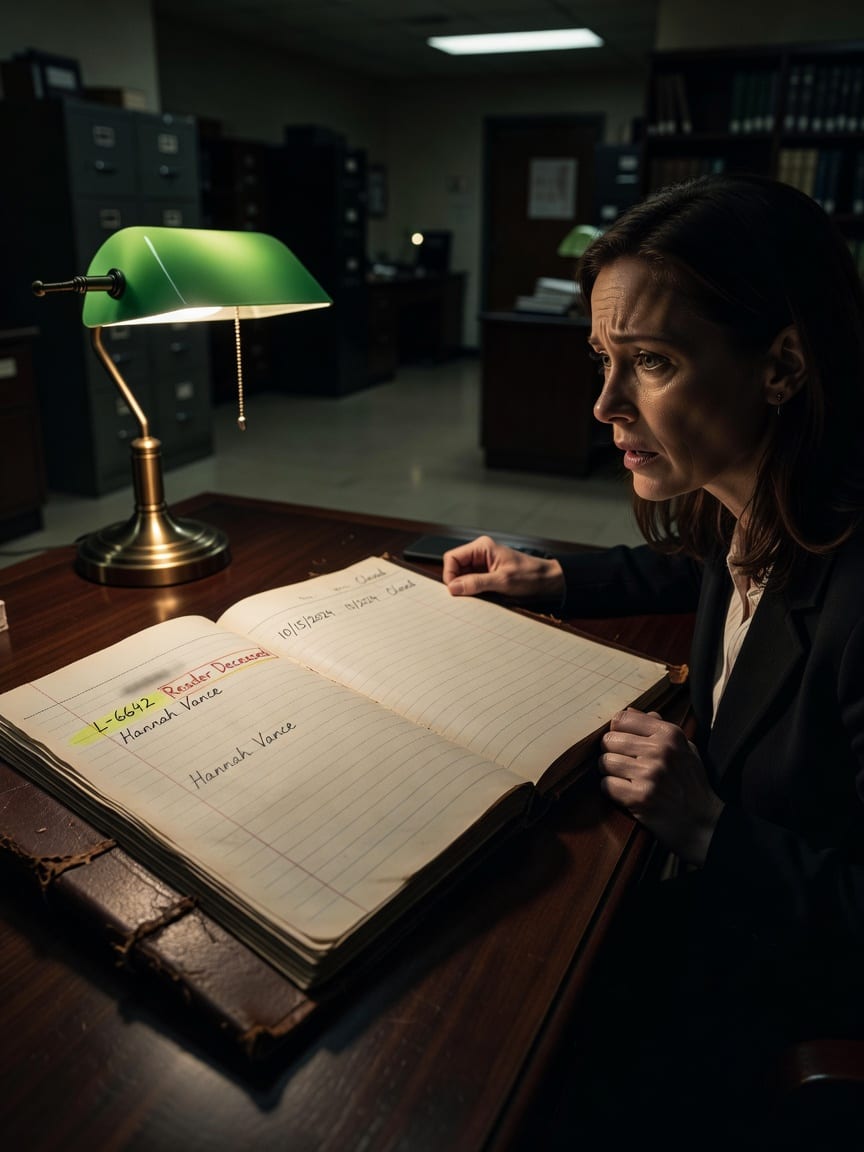
My library card number L-6642 was issued to me at seven — and the ledger shows that number has marked a reader 'deceased' every twelve years since 1949.
Returning my late father's library card to the old town library felt like a small act of closure. But the senior librarian's ancient ledger revealed a chilling pattern of 'reader deceased' entries tied to specific card numbers and borrowed books. My unease turned to cold dread when I secretly found my own name penciled in, marked for a future 'reader deceased' entry.
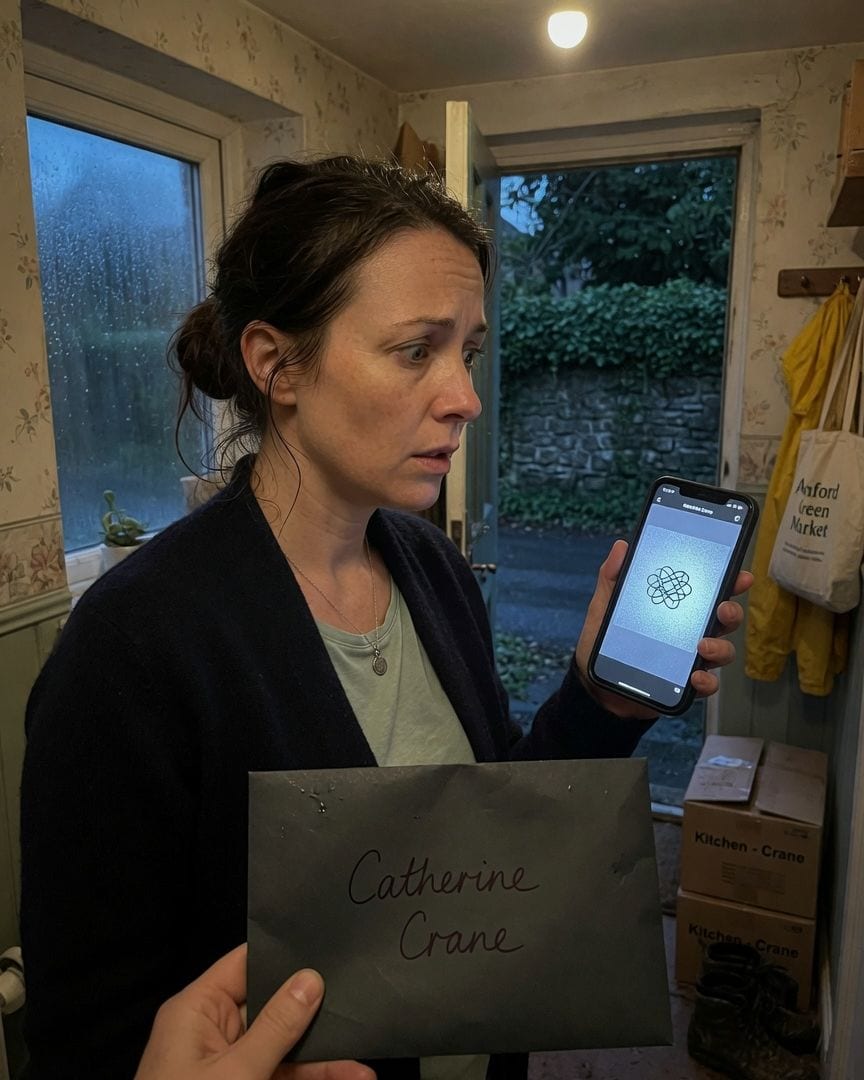
My postman warned me: never use the old pillar box. Royal Mail logs a collection every day, one item, signed by no one.
Moving to Ashford Green, I dismissed my postman's strange warning about the old pillar box by the ford. But after my own letter vanished inside it, I returned at midnight. Then, a dark, unstamped envelope slowly slid *out* of the slot, addressed to me.