My name is on a passenger list from a ship lost in 1899. The manifest says I was 34, "returned. so sorry."
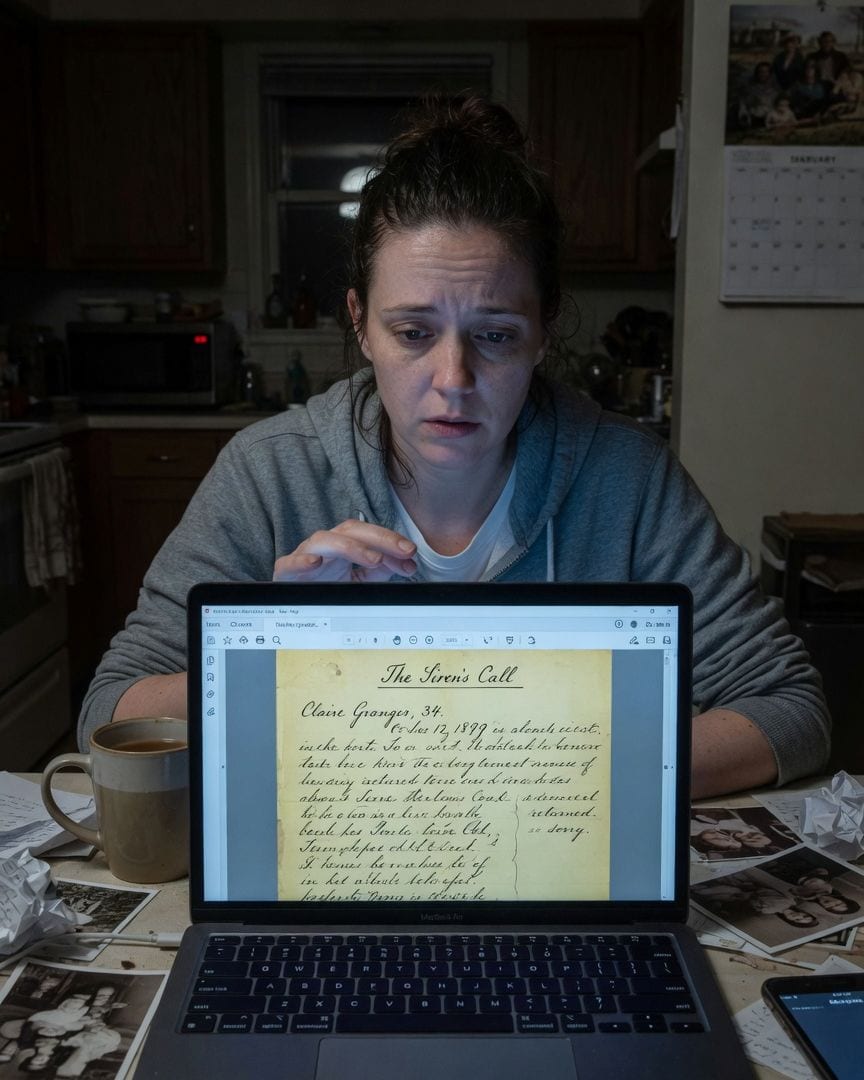
The soft glow of my laptop screen was the only light in my kitchen, cutting through the pre-dawn darkness. It was 4 AM, and I was staring at a PDF. A scan, slightly yellowed, of an emigrant manifest from 1899.
I’d requested it from the Charlestown Maritime Museum on a whim, a casual plunge into a forgotten corner of my family tree. My finger hovered over a line item. There, tucked amidst a list of unfamiliar names, was mine.
Claire Granger. Exact spelling. Age given as thirty-four. The same age I am now.
I blinked, rubbing the exhaustion from my eyes, trying to make sense of the neat, spidery script. I checked the date again, zooming in on the header. September 12, 1899. The Siren’s Call.
The museum had confirmed it in an email: the ship, bound for Liverpool, was lost with all aboard in a violent storm off the Grand Banks. Every single soul.
Yet, in the final column, under 'remarks,' written in elegant copperplate, it read: 'returned. so sorry.'
I reread the last two words, the phrase burning into my retinas. Returned from what? A cold knot tightened in my stomach, a physical clench that made my breath shallow. And why 'so sorry'? It wasn't a standard shipping note.
It felt… personal. A whispered secret from a century ago, addressed to me.
My heart hammered against my ribs, a frantic drum against the silence of my apartment. I called the museum again, the number memorized. Ethan Davenport, the archivist, picked up, his voice thick with sleep and irritation.
"Ms. Granger, it's… five-fifteen in the morning," he grumbled, a gust of wind rattling something against his office window, a sound like a loose metal sheet.
"I know, I’m so sorry, but I can’t sleep. This manifest… the one from The Siren’s Call." My voice was tight. "The entry for Claire Granger. It says 'returned. so sorry.' What does that mean?"
He sighed, a long, suffering sound that vibrated through the phone line. "As I said yesterday, Ms. Granger, the manifest is authentic. The ship was definitely lost. That specific remark… it’s highly unusual.
Sometimes, a passenger might buy a ticket and not board. Or disembark at an earlier port. But the 'so sorry' part? I have no explanation. It’s just… not standard terminology." He cleared his throat. "Likely a clerical error.
Perhaps a junior clerk’s personal note for a customer service issue. Someone missing their voyage, and the clerk felt bad."
A clerical error. A junior clerk. It felt too flimsy, too pat. I hung up, the receiver cold against my ear, the explanation rattling around in my head, refusing to settle. It didn't account for the "so sorry."
It didn't account for the returned.
I dove back into online archives, a desperate hunt. I searched for any other Claire Granger who might have been 34 in 1899, any record of a relative, a namesake that could explain the bizarre coincidence. Nothing definitive.
No easy explanation. I pulled out old family photo albums, their pages stiff and smelling of dust and forgotten time.
I scanned faded sepia photographs, searching for a distant resemblance, a familiar curve of the jaw, a specific set of eyes that might have been mine, generations ago.
The idea of a doppelganger, a bizarre fluke of genetics and naming, felt increasingly insufficient. The name, the age, the exact spelling—it was too precise for random chance. It was like a finger pointing.
I stared at my own reflection in the dark laptop screen, my face pale and drawn. A chill, faint but undeniable, crept up my spine. It felt less like a coincidence and more like… a whisper.
A cold, echoing whisper across the decades.
Days later, the manifest still gnawed at me. I was walking home from work, the usual afternoon rush hour blurring around me, the city a dull hum.
I was halfway across a busy street corner when a man stepped directly into my path. He was ordinary-looking, mid-thirties, wearing a nondescript jacket. But his eyes were wide, alight with a frantic, desperate sincerity that stopped me cold.
He reached out, his hand hovering, not quite touching my arm. "Claire Granger?" he said, his voice a strained whisper, barely audible above the street noise.
I instinctively pulled back, startled. "Yes?"
He took a deep, shuddering breath, his gaze fixed on mine, unwavering. "I’m so sorry," he repeated, exactly like the manifest. His voice cracked with the weight of it. "Truly. You won’t understand now, but I had to tell you."
His eyes darted around, like he was looking for something, or someone, in the surging crowd.
Then, without another word, he turned abruptly and vanished into the rush of the evening traffic, leaving me standing alone, named and utterly bewildered by an apology for a future I didn't know.
I spent the next few days in a daze, the man’s words playing on a loop in my head. I’m so sorry. Truly. You won’t understand now, but I had to tell you. The conviction in his eyes had been terrifyingly real.
I checked local news reports, scanned social media for any mention of a 'Joel Carver' – the name that had instinctively flashed into my mind during our brief, intense exchange. Nothing. He was gone, as if he’d never existed.
The apology, coupled with the spectral entry on that 1899 manifest, felt less like a puzzle and more like a tightening noose.
My apartment felt colder, somehow, even though the heating was on. The manifest, printed out and tacked to my fridge, seemed to mock my attempts at normalcy. I couldn't shake the feeling that something had shifted, irrevocably.
I expanded my research beyond my family, delving into Charlestown’s local history, specifically around the 1899 period and the fate of The Siren’s Call. The official records were sparse, factual, devoid of emotion.
But then I stumbled into the periphery – obscure local legends, archived newspaper clippings detailing odd maritime superstitions, and forum posts on forgotten local history blogs.
Whispers of 'unlucky names,' families who seemed to lose members at sea in strange circumstances, or who simply vanished without a trace, generations apart.
These weren't widely published stories, just folkloric tidbits, like lint clinging to the edges of official history.
One recurring name kept surfacing in these more esoteric corners: Dorothy Norwood.
An elderly genealogist, she was described as a self-proclaimed 'keeper of forgotten histories,' known for her eccentric archives and an uncanny, almost unsettling, knowledge of local disappearances, particularly those tied to the sea.
The more I read about her, the more a desperate pull took hold.
A sense that this woman, who lived in the shadows of the documented past, might hold the key to understanding the chilling intimacy of being singled out, by name, by something so old.
As my investigation deepened, so did the feeling of being watched. It started subtly. My phone would ring, a private number, but when I answered, there was only a faint, static-laced silence on the other end.
A sound like distant waves, a low, sustained hiss, before the line would go dead. It happened repeatedly, sometimes several times a day, always when I was alone, always when I was thinking about the manifest.
Then, the dark sedan appeared. It was parked at the end of my street, day after day, its windows tinted, no one visible inside. It was always there when I left for work, and again when I returned.
It felt like an extension of the silence on the phone, a patient, unblinking eye.
I tried to dismiss it, to tell myself it was a neighbor, a new resident, but the car never moved, never had lights on, just sat there like a shadow.
One evening, I returned home to find a folded note slipped under my apartment door. It wasn’t handwritten, but printed in a stark, blocky font, stark black against the cheap white paper. My hands trembled as I unfolded it.
'LEAVE IT ALONE, CLAIRE. SOME THINGS ARE MEANT TO BE LOST.'
The message chilled me to the bone, its bluntness slicing through any remaining rationalization. Someone knew exactly what I was doing, what I had found. The targeted dread intensified, shifting from a historical anomaly to a present, personal threat.
My rational mind struggled to find an ordinary explanation for the phantom phone calls, the silent car, the anonymous, threatening note. Was it Joel Carver, warning me again, or somehow protecting me from something worse? Or someone else entirely?
The stakes had escalated, the game had changed. I couldn’t turn back now. The danger was real, and it was aimed directly at me.
I decided then. I had to confront Dorothy Norwood. I hoped the old woman could offer protection or at least clarity before whatever was watching me made its next, inevitable move.
I found Dorothy Norwood in a house that smelled of old paper, dust, and something indefinably briny, like a low tide. It was a cluttered, labyrinthine place, every surface piled with books, ledgers, and strange maritime artifacts.
Dorothy herself was frail, her frame stooped, but her eyes – sharp, knowing, and startlingly blue – held an ancient light. She opened the door as if she’d been expecting me, offering tea without a hint of surprise.
A warm, herbal scent rose from the chipped porcelain mugs she handed me.
"You must be Claire Granger," she said, her voice surprisingly strong. "Please, sit."
I sank onto a worn armchair, trembling slightly. The air in the room was thick, almost heavy, yet strangely still, as if the very dust motes hung suspended, listening.
I laid the manifest scan on a cleared space on a small table, its crisp whiteness a contrast to the surrounding aged parchment.
Then, I recounted Joel Carver’s apology, the persistent phone calls, the dark sedan, and finally, the printed note.
Dorothy listened, her expression unreadable, nodding slowly as if confirming details she already knew. "Ah, the apology," she murmured, a faint smile playing on her lips, devoid of humor. "It always comes, doesn't it?"
She rose, moving with surprising agility for her age, and went to a tall, rickety bookshelf. Her hand went directly to a hidden catch, releasing a false panel. From behind it, she retrieved a heavy, leather-bound ledger.
The cover was worn smooth, almost polished by generations of handling, the pages brittle with age. It looked like something from a pirate's chest.
The air in the room suddenly felt colder, as if a window had silently opened in another part of the house.
Dorothy opened it to a random page, running a gnarled finger down a column of names, dates, and cryptic remarks. "My family has kept this record for generations," she explained, her voice calm and even.
"A chronicle of those touched by the Calling."
I leaned closer, my breath catching in my throat. The ledger was filled with names, precise dates, and eerie, almost identical remarks to those on the ship manifest.
I saw names of people who had vanished locally, some I vaguely recognized from old news stories. Dorothy then turned to a specific page, her finger pausing. "And here," she said, pointing, "is your namesake."
There it was: 'Claire Granger, age 34, 1899.' And below it, the chilling remark: 'returned. so sorry.'
Dorothy looked up, her blue eyes piercing. "The ship, my dear, was merely a vessel. A convenient conduit. The Calling… it’s a presence tied to the sea, ancient and patient. It seeks to complete its collection of certain souls.
Those with certain names, at certain turning points in their lives. Always at 34, for the Grangers." She explained that 'returned' meant the 1899 Claire Granger somehow resisted or escaped its pull at the last moment. "She broke free.
But the entity never forgets. It merely delayed its claim, waiting for the next namesake, another vessel, to reach the same confluence of age and circumstance. Another Claire Granger to turn 34."
The apology, she revealed, was a symptom. A bleed-through from those already caught in its influence, compelled to warn the next target, a last, desperate act of defiance from the abyss.
The truth, as Dorothy calmly delivered it, snapped the earlier clues into a horrifying, coherent pattern, a lock falling into place with a sickening click.
My eyes scanned the ledger, a cold dread seeping into my bones, chilling me far deeper than the sudden draft in the room.
I saw other names, names of people who had vanished locally, some I might even vaguely recognize from news archives I’d scrolled through in my frantic search. The dates spanned centuries, a horrifying continuity.
One column noted 'taken,' another 'departed,' a third, 'claimed.'
My gaze then fell on a recent entry. Joel Carver. His name was there, dated just a few days after he had stopped me on the street, with the chilling remark: 'taken.'
I gasped, a strangled sound that barely escaped my throat. He hadn't just disappeared; he had been taken. By the Calling. He had delivered his apology, and then, in return, had been claimed.
Dorothy’s eyes held a profound, ancient pity, reflecting something I didn't want to see. Then, with a slow, deliberate movement that felt weighted with generations of sorrow, Dorothy turned the page.
And there, below Joel’s entry, was my own name again: Claire Granger. My exact age, 34. But the date was not in the past. It was a date in the very near future, just a few days away. Tomorrow.
And beside it, a single, terrifying word, written in Dorothy’s own elegant hand: 'due.'
Dorothy looked directly into my eyes, her voice a soft, steady whisper, cutting through the sudden ringing in my ears. "It’s always the same age. Always the same name. And it’s very patient."
"What does 'due' mean?" My voice was barely a whisper, a thin thread of sound in the heavy air of Dorothy’s study. The smell of salt and old paper seemed to intensify, clinging to my clothes, my hair.
Dorothy explained, her calm demeanor unsettling, her hands clasped serenely over the ledger. "The Siren’s Call isn't a ship, Claire. That was just the name given to one of its many vessels, one of its moments.
It’s a name for the entity itself, a calling from the deep that claims specific lineages. My family are merely its chroniclers, tasked to witness, never to interfere. A curse, some might say."
She explained that the entity targeted individuals at a particular threshold, often coinciding with their 34th year, a time of significant personal change or vulnerability.
"The 1899 Claire Granger," Dorothy revealed, her gaze distant, "she was the first to genuinely 'return'—to escape its final grasp, but not without a mark. She fought, she broke free, but she didn't truly escape its notice.
It merely delayed its claim, waiting for another namesake, another vessel, to reach the same confluence of age and circumstance. You."
The apology in advance, Dorothy confirmed, was a psychic echo, a bleed-through from those already caught in the Calling’s influence, compelled to warn the next in line.
A last, desperate act of defiance from the abyss before they were fully consumed. The ledger wasn’t just a record; it was a map of the entity's patient, relentless hunt.
Every planted clue, every unexplained detail, now clicked into a terrifying, coherent pattern, revealing a predestined fate that I was now inextricably part of. My 'due' date was tomorrow.
I had to break the cycle. Not just for myself, but for any future Claire Grangers who might be marked. Dorothy, sensing my resolve, gave me a cryptic clue. "The first one left a piece of herself behind, a tether.
Find where it returned. The Charlestown docks."
I raced out of her house, the air suddenly cold and sharp against my face, driving towards the oldest part of the Charlestown docks, a place both ancient and forgotten, crumbling piers jutting into the grey water.
As I searched frantically, I was guided by an almost instinctual pull, a growing sense of cold dread that tightened in my chest.
The air grew heavy, tasting not just of salt, but of ancient decay, a profound chill seeping into my bones that had nothing to do with the weather.
The sun began its slow descent, painting the sky in bruised purples and oranges, marking the approach of my 'due' time.
I felt an intense, almost physical tug, a profound chill that seemed to emanate directly from the dark, restless ocean itself. It was pulling at me, like a hand around my ankle.
At a crumbling, barnacle-encrusted pier, I spotted it. Half-buried in the mud and wet sand beneath the rotting timbers, a small, dark, metal object. I knelt, digging with trembling fingers, pulling it free.
It was a locket, intricately carved with the faint image of a sailing ship and a siren, encrusted with sea growth. It was cold, unnaturally so, even in my hand. A tangible link.
A piece of the 1899 Claire Granger, returned and waiting. I knew, with terrifying certainty, that this was the tether, the anchor of the Calling.
I could feel the entity’s pull strengthening, a deep, silent hum in my bones, vibrating with an immense hunger.
I had a choice: succumb to the inevitable, or destroy the locket, severing the link that had bound my lineage for over a century.
With a desperate cry that was swallowed by the roar of the incoming tide, I snatched up a heavy, jagged rock. I raised it high and, with all my strength, smashed the locket against the pier’s pilings.
The metal shrieked, then cracked.
A profound, painful wrench tore through me, as if a part of my very soul was ripped away, a raw, aching void opening in my chest. The deep-sea chill vanished, replaced by a hollow ache, a terrible emptiness.
The terrible pull ceased. I escaped, but I knew I was fundamentally changed, a piece of me lost forever.
I returned to a life that felt subtly out of alignment, like a photograph slightly askew in its frame.
Joel Carver was officially listed as a missing person, his disappearance unexplained, a brief article in the local paper that quickly faded from memory.
Dorothy Norwood’s house was empty, her vast archives vanished, the ledger gone as if it were never there, leaving behind only the faint scent of salt and old paper.
Even the maritime museum archivist, Ethan Davenport, had no distinct memory of my specific manifest request, only a vague recollection of a challenging search for a common surname.
I had no physical proof of what happened, only the chilling memories and the hollow space where something was ripped from me.
The world moved on, oblivious, but I carried the indelible mark of my escape, a silent testament to a truth no one would ever believe.
I try to live a normal life, but the quiet after-shocks are constant. I feel a permanent chill, a faint echo of the pull, always there just beneath the surface.
It’s not physical, not exactly, but a deep-seated coldness that no amount of warmth can truly banish.
I avoid the ocean, but sometimes, on a quiet night, I can still hear the phantom whispers of waves, the distant, mournful cry of gulls carried on a wind that isn't really there.
I see other people, hear other names, and I wonder if they, too, are marked without knowing, destined for a date in an ancient ledger.
I never truly feel whole again, only safe for now, the cost of my survival a constant, phantom ache.
One afternoon, walking through a park, the sun warm on my face, I saw a young woman, laughing, pushing a child on a swing. The mother called out to the child, "Claire! Time to go."
The young woman, the mother, turned her head, and for a terrifying instant, I recognized the exact, haunted look in her eyes. The woman was exactly 34 years old.
The ocean always calls the same name, and it never truly forgets.
If this one got to you
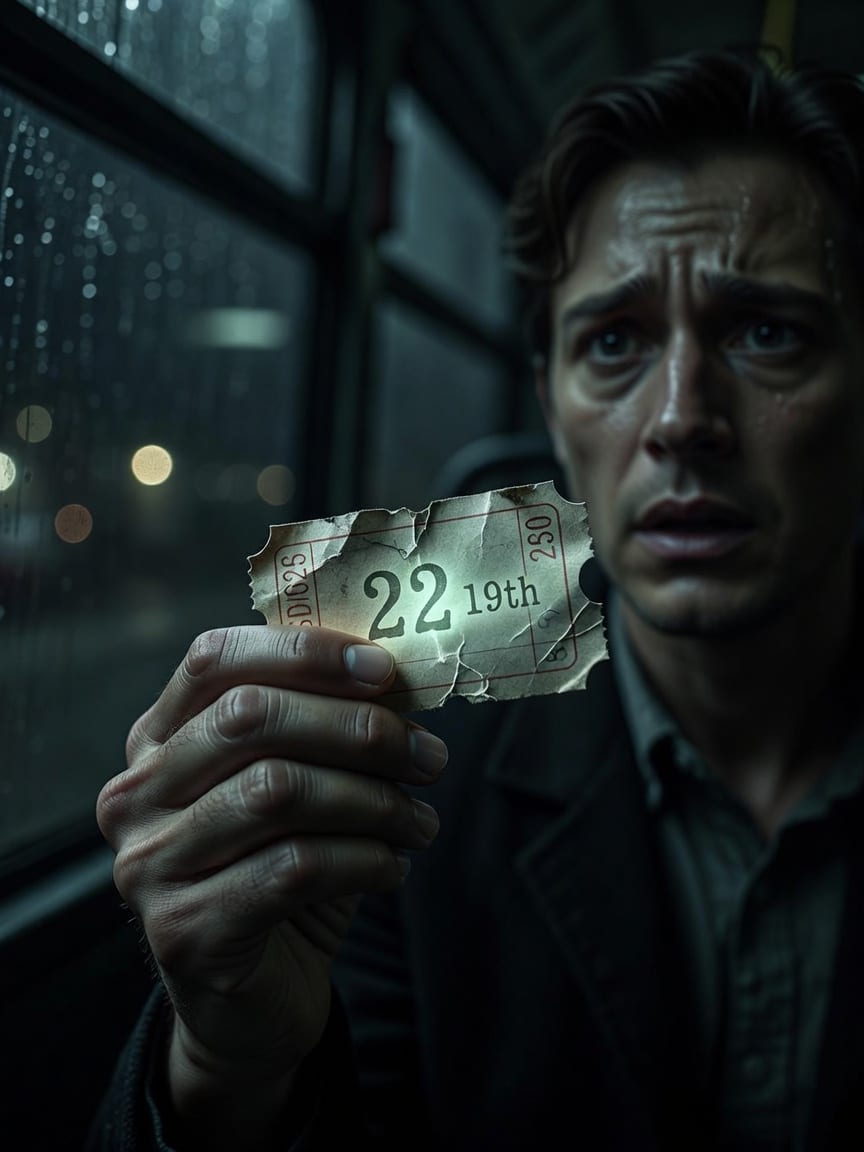
Bus driver Daniel says 'Sorry, Iris — not long now' every morning, using my name. Today he added a date: tomorrow. I've never told him my name.
Every morning, my bus driver, Daniel, knew my name despite me never telling him. Today, he added a chilling warning: "The 19th, isn't it?" when today was the 18th. Later, a blank bus ticket appeared on my doorstep, stamped with that exact impossible date.
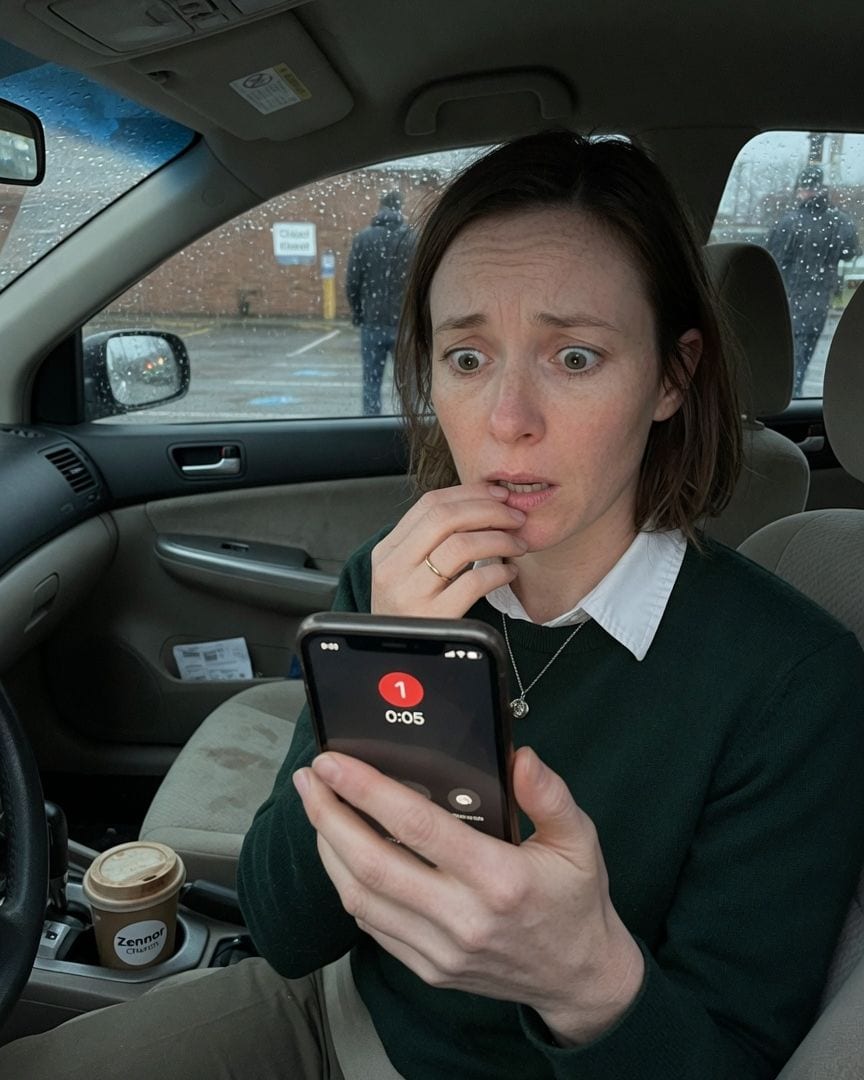
My full name is carved into a 17th-century church pew. Under it says, 'forgive me, I was late.' The verger said it's been there longer than anyone remembers.
Drawn to Zennor's ancient church, I ran my hand over a centuries-old pew, discovering something impossible. My full name, 'Sarah Caldwell,' was carved deeply into the dark wood, with the chilling message: 'forgive me, I was late.' It felt like this ancient inscription had been waiting for me.
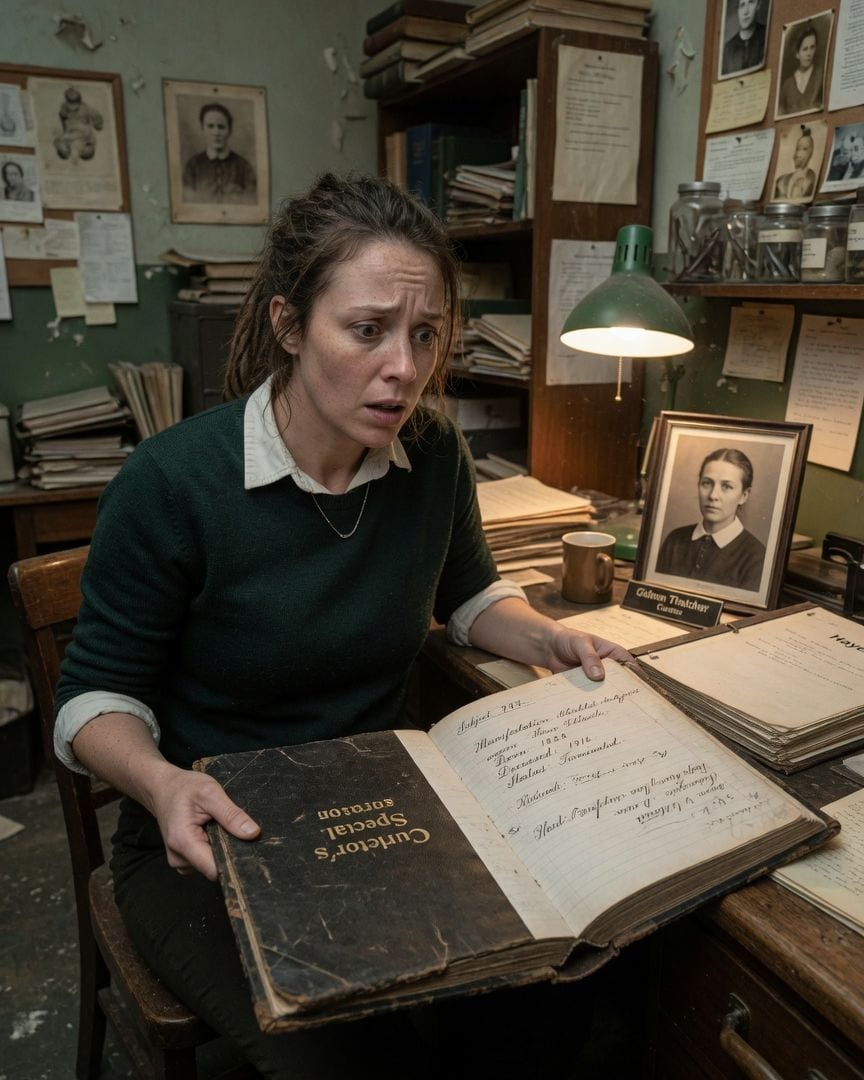
My face, cast in plaster in 1888, stares back from a museum display. They DNA tested a hair from inside the mask. It’s me.
The hushed, cool air of the Museum of Medical History always gave me a strange reverence, until I stopped. Inside a display case, among other plaster death masks, was one labeled 'Theresa Whitfield, 1888.' It was undeniably my face, exact in every detail, down to the faint bump on my nose.
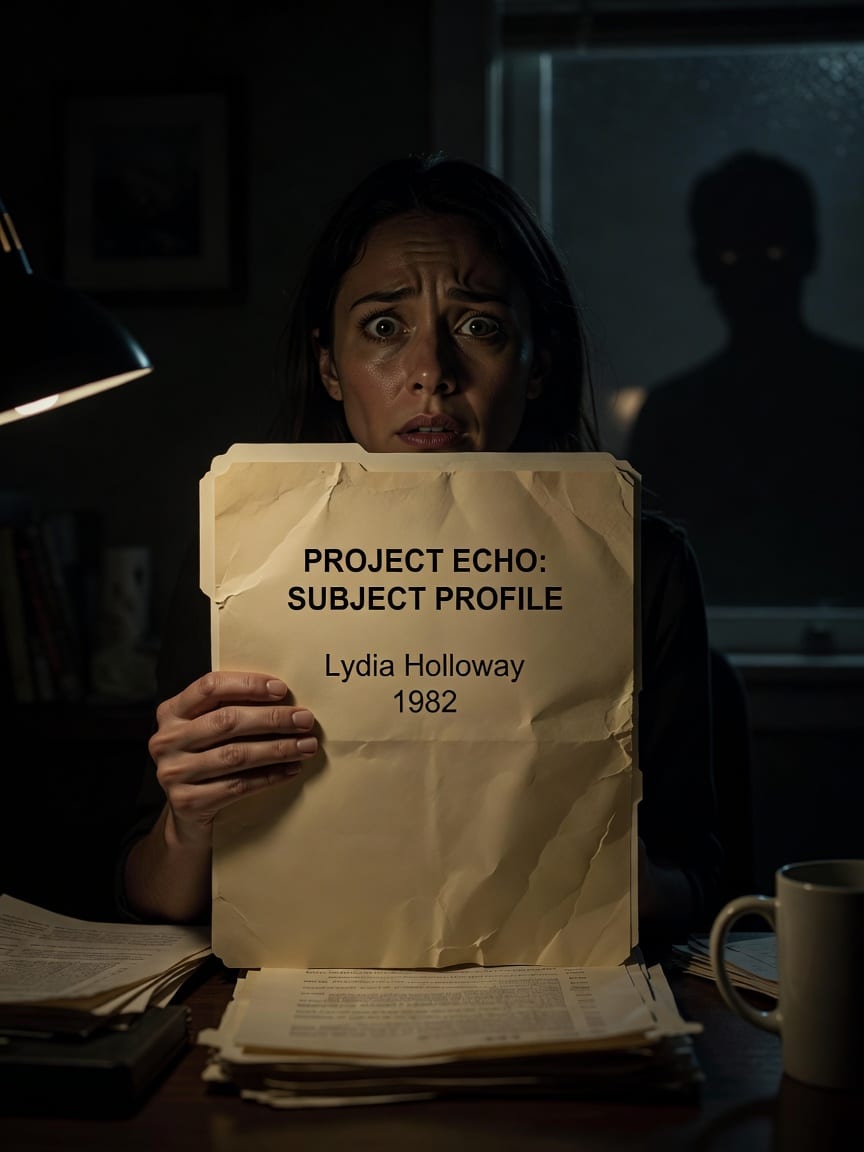
My own signature is on a Baltimore police report for a hit-and-run I never witnessed. The officer remembers my university sweatshirt.
I was settling into a quiet Tuesday evening when Baltimore PD called, asking about a witness statement I supposedly gave. They described my faded green university sweatshirt, seen at a hit-and-run last Friday. But my sweatshirt was in my dresser, and I was home in Seattle.
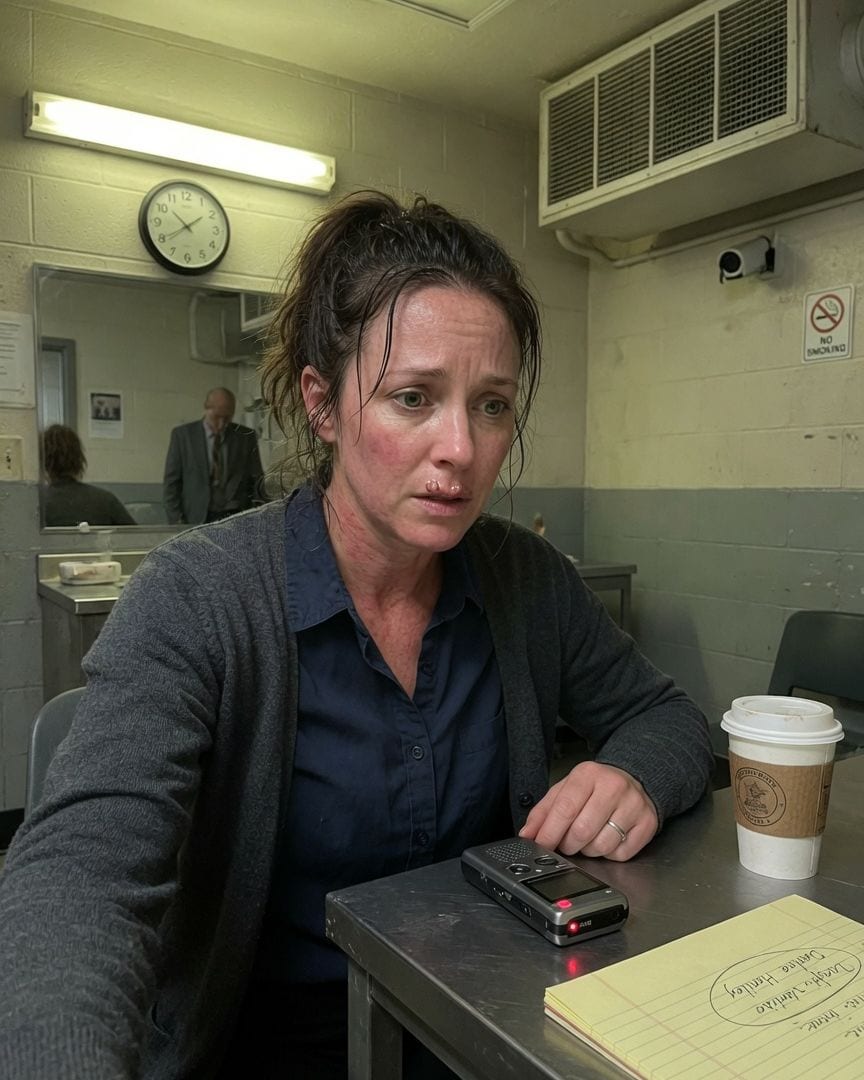
My own voice called 911 from Gary, Indiana, reporting a prowler. I was asleep in Ohio, my phone on the charger.
Sitting in a police interview room, I listened as Detective Walsh played a 911 recording. A woman's hushed voice reported a prowler from a payphone in Gary, Indiana. My stomach dropped cold; it was my exact voice, my specific way of saying 'I think,' even though I was in bed in Ohio that night.
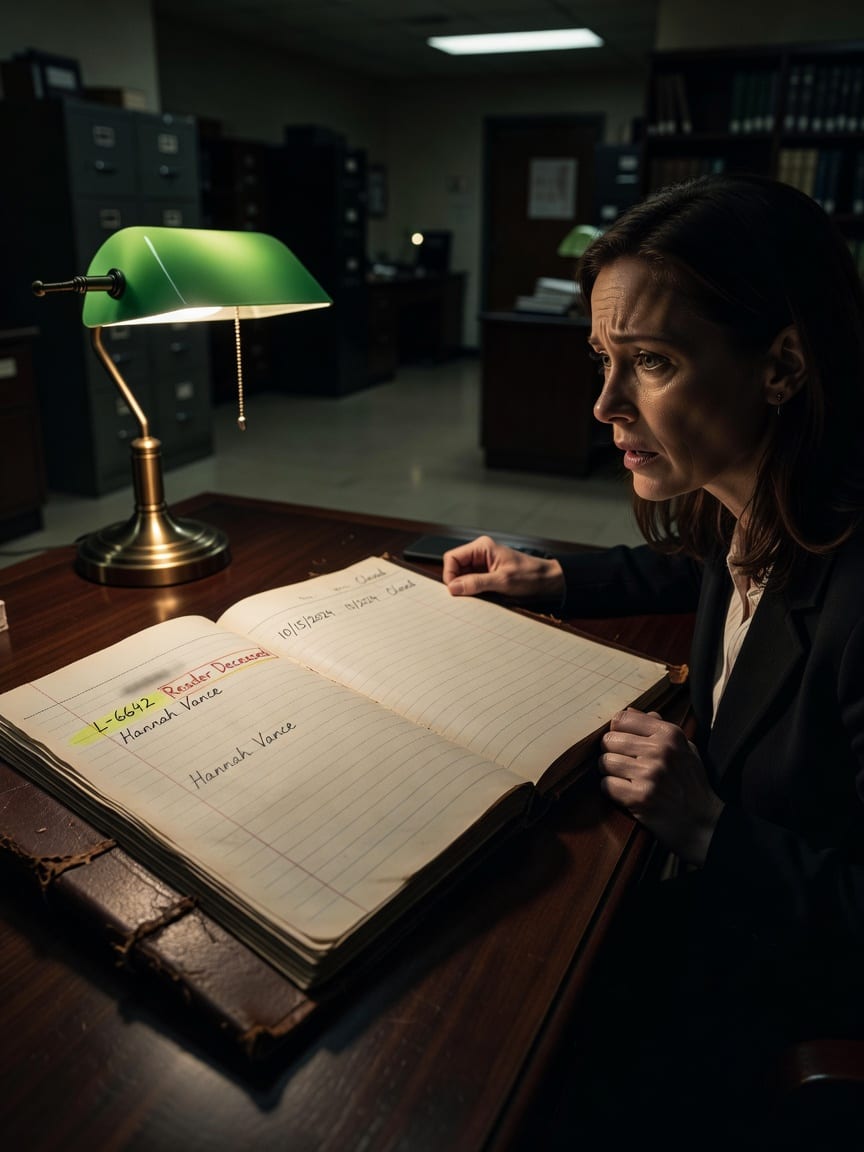
My library card number L-6642 was issued to me at seven — and the ledger shows that number has marked a reader 'deceased' every twelve years since 1949.
Returning my late father's library card to the old town library felt like a small act of closure. But the senior librarian's ancient ledger revealed a chilling pattern of 'reader deceased' entries tied to specific card numbers and borrowed books. My unease turned to cold dread when I secretly found my own name penciled in, marked for a future 'reader deceased' entry.