My full name is carved into a 17th-century church pew. Under it says, 'forgive me, I was late.' The verger said it's been there longer than anyone remembers.
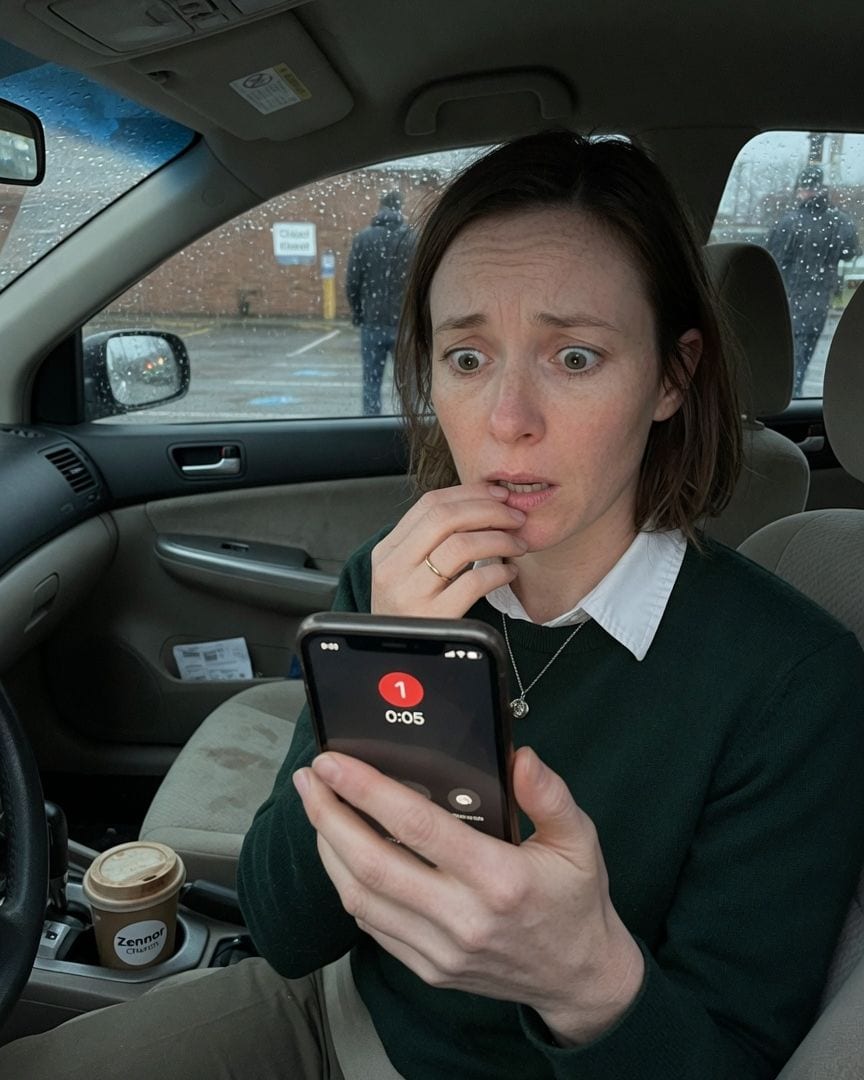
I’ve always been drawn to quiet, forgotten places. Not for the ghosts, or whatever people normally say, but for the sheer weight of time they carry.
Just the feeling of being in a place that has seen centuries pass, still standing. That’s why, on a solo trip to Zennor, I found myself in its ancient church.
The air inside was thick with history, cool and still, smelling faintly of old wood and stone. I ran my hand along the back pew, smooth and worn with centuries of touch, my fingers snagging on something rough.
Carved into the dark, almost black wood, unmistakable, was my full name: 'Sarah Caldwell.'
My heart hammered against my ribs. Beneath it, in the same faded, deep-cut script, read 'forgive me, I was late.' I stared at it, the letters surprisingly clear despite their age.
Sarah Caldwell isn't a common name, not exactly a John Smith. I tried to tell myself it had to be a coincidence, a bizarre prank maybe, but the sheer effort of carving into that old wood…
Franklin Maddox, the verger, a kind man in his late sixties with a permanent stoop, confirmed the pews were seventeenth century. He’d found me still staring at it, my face probably pale.
The carving, he said, was as old as the rest, its edges softened by time and countless hands. It had been there, he added, longer than anyone remembered anyone else remembering.
A chill, cold and sharp, traced its way down my spine. The worn, ancient quality of the carving, the exactness of my full name, and that unsettling message—it felt like it was waiting for me.
Back home, the Zennor carving haunted me. I spent hours online, late into the night, searching for historical 'Sarah Caldwells' connected to Cornwall, or for any records that might explain the inscription.
I typed different spellings, checked church records databases, local genealogy sites. Nothing. The internet, usually so exhaustive, offered only dead ends. It felt like I was looking for a ghost that left only a single, unsettling autograph.
I tried to dismiss it, to tell myself it was a one-off, a strange and unsettling quirk of fate.
A few days later, still trying to shake the unease, I was in my usual coffee shop, sipping a lukewarm latte and scrolling aimlessly through my phone. As I gathered my things to leave, a man approached my table.
He was mid-forties, neatly dressed in a dark jacket, with a solemn expression that seemed too heavy for a Tuesday afternoon.
'Sarah Caldwell?' he asked, his voice low and earnest.
I confirmed, wary. My hand tightened around my phone. Who was he? I didn’t recognize him.
He looked directly into my eyes, and I noticed a profound sadness in his own, like he’d just delivered bad news. 'I wanted to apologize,' he said, his words slow and deliberate. 'Sincerely.
For something that hasn't happened yet, but will.'
He offered no further explanation. Just a slight, regretful nod, a gesture almost of resignation, and then he turned and walked out before I could even process a reply.
I watched him go, feeling a prickle of unease spread across my skin. The coffee in my mug, already cool, suddenly tasted bitter.
I tried to tell myself it was a bizarre prank, maybe someone who'd seen my social media posts about the Zennor trip.
But the weight of his sincerity, and the specific, targeted nature of his words, felt too real, too unsettling to be brushed away. My phone buzzed in my hand, a sharp vibration against my palm, but I barely registered it.
I sat in my car, parked outside the coffee shop, my hands trembling on the steering wheel. Julian Sutton's apology had burrowed deep, a cold knot in my gut, connecting to the church, to everything.
I pulled out my phone, needing a distraction, something mundane, and saw a missed call from an unknown number. The voicemail icon glowed, a little red badge of unfinished business. With a hesitant finger, I tapped it.
The message was brief, no more than five seconds. A calm, low, male voice, utterly unfamiliar, spoke clearly, without a trace of static. It simply said, 'Sarah Caldwell. You were late.' The line clicked dead. It wasn't Julian's voice.
It was a voice I'd never heard before, yet it knew my name, and the chilling detail of my supposed 'lateness' echoed the ancient carving.
The world outside my car window seemed to blur, a sudden, terrifying clarity settling in my mind: this wasn't a joke. This was real, and it was aimed directly at me.
The voice on the voicemail was a constant replay in my mind. I listened to it countless times, trying to decipher any nuance, any hint, any echo of a memory, but it remained a flat, calm, disembodied declaration.
I tried tracing the number, but it led nowhere—a dead end, just like my online searches for historical Sarah Caldwells. The targeted nature of it all, from the pew to Julian Sutton, pushed me to act.
The coffee shop had been a public place, but Julian had known me.
I remembered Julian mentioning something about a local historical society when I’d briefly seen him at the coffee shop – I must have overheard him talking to someone else.
A quick search led me to the 'Cornwall Local Heritage Archive,' where Julian Sutton was indeed listed as a volunteer researcher.
The next morning, fueled by a desperate need for answers, or at least a face-to-face confrontation, I drove to the archive.
The building was a quiet, dusty place, smelling of old paper and forgotten stories, a comforting scent to anyone who loves books, but today it felt oppressive.
I found Deborah Fontaine, the archivist, a formidable woman in her late fifties with sharp eyes behind thick, horn-rimmed glasses, meticulously cataloging old documents at a large oak desk. She looked up as I entered, her gaze direct and assessing.
'Can I help you, dear?' she asked, her voice surprisingly soft for her severe appearance.
I tried to sound casual, despite the frantic pulse in my veins. 'I'm looking for Julian Sutton. I believe he volunteers here?'
Deborah shook her head slowly. 'Not today, I'm afraid. He's often quite busy with his own research, you know. Private work, mostly.' She paused, then added, 'Perhaps I can assist?'
I hesitated, then decided on a direct approach. The pretense felt foolish now. 'I'm looking into some local history, specifically the name Caldwell. Sarah Caldwell.'
Deborah's sharp eyes seemed to glint with a flicker of recognition, or something like it. Her brow didn’t furrow, but there was a subtle shift in her expression, a barely perceptible tightening around her mouth. 'Caldwell, you say?'
She gestured vaguely to a section of shelves filled with enormous, leather-bound ledgers. 'Parish records. You might find some there. Some names recur, you know.' The last phrase hung in the air, a strangely knowing cadence to it.
I spent the next hour poring over the heavy parish ledgers, the smell of aged paper filling my nostrils, mixing with the dust.
I found dozens of Caldwells, a long lineage of them, but none that felt significant, none that connected to Zennor or the peculiar message.
The silence of the archive was broken only by the rustle of brittle pages and the distant murmur of traffic outside, which seemed muffled and far away.
I felt a prickle on the back of my neck, an irrational sense of being watched, but when I glanced up, Deborah Fontaine was still at her desk, engrossed in her own work, her glasses glinting under the fluorescent light.
It had to be paranoia, a side effect of the relentless search.
Just as I was about to give up, my fingers aching from turning the brittle pages, Deborah approached my table. She moved with a quiet efficiency that made me jump, her soft shoes making no sound on the worn floor.
'Found what you were looking for, dear?' Deborah asked, her voice calm, almost too calm.
I shook my head, feeling a tremor in my hand as I closed the heavy book. 'No, nothing that makes sense. Just... names.'
Deborah smiled faintly, a knowing, unsettling smile that didn't quite reach her eyes. She leaned closer, her voice dropping to a near whisper. 'Perhaps you're looking in the wrong place for the right name.'
She then reached out, her finger tracing a line on the table, pointing to a much older, smaller ledger tucked away on a lower shelf, almost hidden behind a stack of faded maps. 'Try this one.
Some records are harder to find.' Deborah straightened up, her expression unreadable, and returned to her desk, leaving me alone again.
I stared at the ledger Deborah had indicated. Its cover was dark, almost black with age, the leather rough and cracked. It looked far older than any I had touched so far, ancient and forbidden.
My heart pounded in my chest, a frantic drumbeat. The feeling of being watched intensified, no longer irrational but palpable, as if the very dust motes in the air were observing me. This wasn't a coincidence; Deborah knew something.
With trembling hands, I pulled out the ancient ledger Deborah had pointed to. The leather was cracked and dry, almost crumbling at the edges, the pages within brittle and yellowed, like forgotten autumn leaves.
I opened it carefully, fearing it would disintegrate under my touch. The script inside was elegant, flowing, but undeniably old, a sprawling copperplate that time had blurred but not erased.
I flipped through several pages, my breath catching in my throat as I found it. On a page dated 1687—the same century as the church pew—my full name, 'Sarah Caldwell,' was meticulously inscribed.
Next to it, in faded brown ink, was a brief, chilling notation: 'Delayed. Forgiven.'
The air in the archive felt suddenly thin, hard to breathe. I stared at the entry, utterly disbelieving. My name. Identical spelling. Centuries ago.
The words from the Zennor pew, the verger's confirmation, Julian’s apology, the voice on the phone – they all crashed together, the disparate threads tightening into a single, terrifying knot. This wasn't a coincidence. This was impossible.
Deborah returned, moving silently, and stood beside me. Her expression was serene, unbothered by my obvious distress.
'Impossible,' I whispered, pointing at the ledger, my voice barely audible. 'This can't be real.'
Deborah simply nodded. 'Oh, it is. Some names recur, you see. They have a purpose.'
I turned to her, desperate, searching her face for any hint of a lie, any crack in her composure. 'What purpose? What does 'Delayed. Forgiven.' mean?'
Deborah's gaze was steady, unwavering. 'It means the appointment was missed. But the cycle continues. You are part of something far older than you can imagine, Sarah Caldwell. A designated role.
It is not about you, the person, but the name, the designation.' She spoke of 'appointments' and 'conduits,' never fully explaining what 'it' was, only that it 'is,' and that I was undeniably connected to it.
The dread was no longer a chill, but a suffocating weight. I wasn't just being watched; I was being reclaimed.
Deborah explained that the ledger was a record, not of birth or death, but of 'those who are called,' individuals whose names carried an ancient significance.
The 'lateness,' she clarified, wasn't a personal failing for me, but a minor disruption in the overarching cycle, one that the 'system' had accounted for.
Julian Sutton, she revealed, was one of 'the watchers,' individuals who were aware of these cycles and sometimes acted as messengers, guiding the designated.
'And the voice on the line?' I asked, my voice barely a whisper, dread coiling in my stomach like a cold snake.
Deborah's eyes held a deep, unsettling calm. 'It's just confirming your designation, Sarah Caldwell. It always does.'
Just as I tried to process the enormity of this, the idea that my very identity was merely a designated role in some ancient cosmic mechanism, Deborah reached beneath the counter.
She pulled out another, even older, parchment scroll, tightly rolled and tied with a faded ribbon. Its edges were almost black with age, the material brittle, threatening to crack. Unfurling it with practiced ease, she laid it on the table.
It was a list of names, in an even more archaic script. My name was there again, unmistakably: 'Sarah Caldwell.' But this time, it was followed by a chilling, single phrase: 'The Vessel.'
And beneath it, not a date from the distant past, but one just a few weeks from now.
My breath hitched, my gaze fixed on the scroll, on those terrible words. 'The Vessel?' I rasped, the sound thin and reedy. 'What does that mean? What happens on that date?'
Deborah Fontaine, unmoved by my terror, calmly explained. 'The cycle, Sarah, requires a conduit. A vessel. To manifest a certain presence, a specific knowledge, into the world.'
She spoke of an ancient, non-malevolent entity that simply is, and whose periodic emergence necessitates a human anchor.
My 'lateness' in this particular iteration had been a minor, forgivable deviation, but the date on the scroll was the critical juncture, the moment of convergence.
The pew carving, Julian's apology, the voice on the phone – they were all markers, signals, nudges from the entity's awareness, or from those who serve it, to its current manifestation.
I was not being targeted for harm, Deborah insisted, but for a purpose, an ancient, unavoidable calling. I wasn't a victim; I was a designated, an instrument.
The horror was not in a threat of violence, but in the profound loss of self, the realization that my entire existence was merely a pre-ordained role in a cosmic drama I had no say in.
The dread was the terrible intimacy of being singled out, not to be destroyed, but to be utterly subsumed by something vast and indifferent. Every clue, every unsettling encounter, now clicked into place with horrifying coherence.
I was not Sarah Caldwell, individual. I was Sarah Caldwell, The Vessel.
I tried to reject it, to flee. I pushed back from the table, knocking my chair over, the sudden noise echoing in the quiet archive, a harsh, shattering sound in the ancient stillness. 'No!'
I cried, my voice cracking, raw with disbelief and terror. 'I won't be a vessel! I won't let this happen!'
Deborah simply watched me, her expression unchanging, a quiet, profound certainty in her gaze. There was no argument, no persuasion, just an absolute, unyielding calm. I felt a profound sense of helplessness.
The truth wasn't something I could fight or escape; it was a condition of my existence, inextricably linked to my name, to the very fabric of my being. I couldn't 'undo' being Sarah Caldwell.
I realized Julian's apology wasn't for me directly, but for the disruption my 'lateness' had caused, and for the inevitable 'calling' I now faced. There was no one to tell, no authority to appeal to.
The truth was understood, and it was absolute. The dread was the quiet certainty that I was powerless to change my fate.
I turned, walking away from Deborah, from the ancient records, from the archive. The door clicked shut behind me, the sound final and hollow, but the world outside felt utterly changed, imbued with this terrifying, ancient purpose.
I got into my car, my hands gripping the wheel so hard my knuckles were white, but I knew I wasn't driving away from anything. I was driving towards it.
I returned home, but it was no longer a sanctuary. Every ordinary object felt tainted by the knowledge.
The photos on my fridge, the books on my shelf, my own reflection in the mirror—they were just props in a story that wasn't mine. I didn't pack a bag, didn't try to run.
There was nowhere to run from my own name, from the designation that had always been hers. The days ticked by, each one bringing the specific date closer, a countdown in the back of my mind.
I found myself drawn to Zennor, to the church, to the very pew where it had all begun. The carving of my name no longer felt like a strange coincidence, but a premonition, a welcome.
I sat there, hours at a time, watching the light filter through the ancient stained glass, waiting.
On the designated date, I was sitting in the Zennor church, my hand resting on the carved name in the pew. The air grew heavy, a profound stillness descending, deeper than any she had ever known.
The ancient stones of the church seemed to hum with a low, resonant frequency, a vibration that resonated deep in my bones. I closed my eyes, not in fear, but in a strange, resigned acceptance.
The quiet, calm voice from the voicemail whispered, not in my ear, but inside my mind, a presence unfurling within me.
'Welcome, Vessel.'
The verger, Franklin Maddox, arrived at Zennor church the next morning to find the main door ajar.
Inside, all was as it should be, save for a faint, almost imperceptible warmth lingering over the seventeenth-century pews, as if someone had just left.
The carving of 'Sarah Caldwell' and 'forgive me, I was late' seemed to stand out a little more, somehow, than it had before.
'Welcome, Vessel.'
If this one got to you
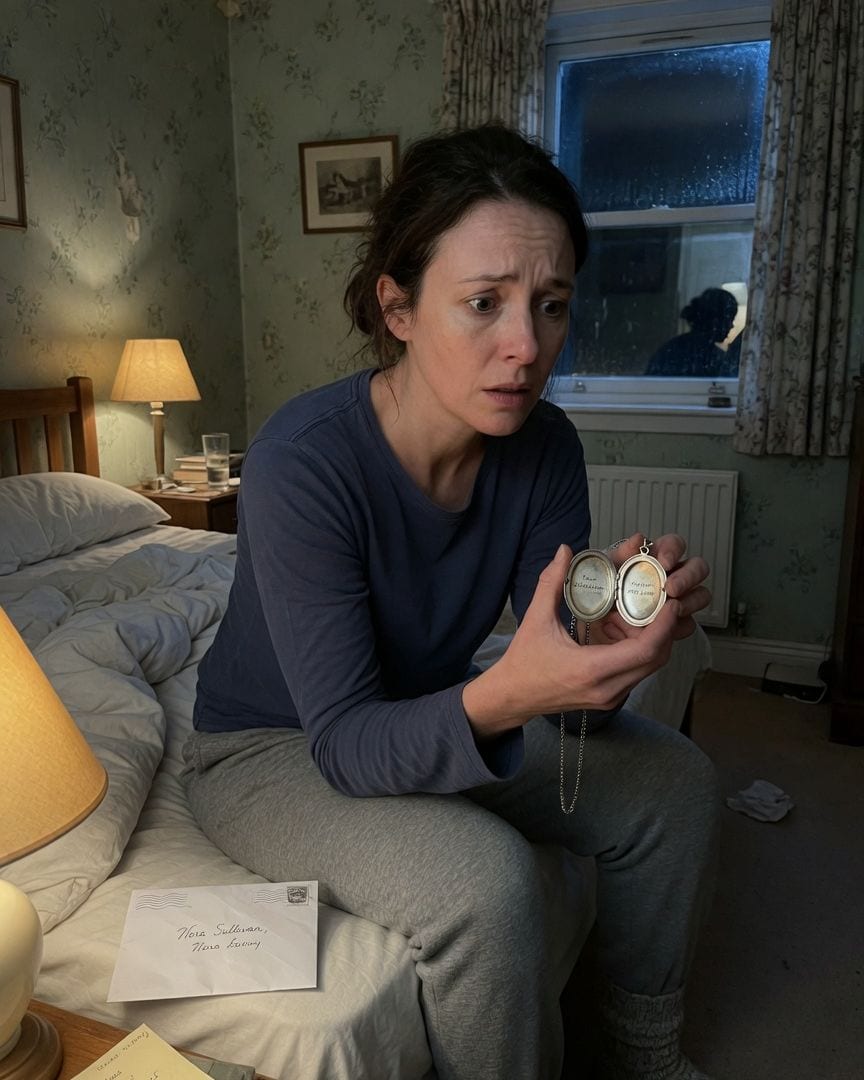
My antique locket held my maiden name, engraved with 'until the ninth.' The dealer said the woman who owned it left a note: 'for her, when she comes.'
My husband Scott, always finding unusual things, gave me an antique silver locket. Inside, engraved beneath my maiden name, Nora Sullivan, were three chilling words: 'until the ninth.' It felt like a direct, personal address, even though I hadn't used that name in years.
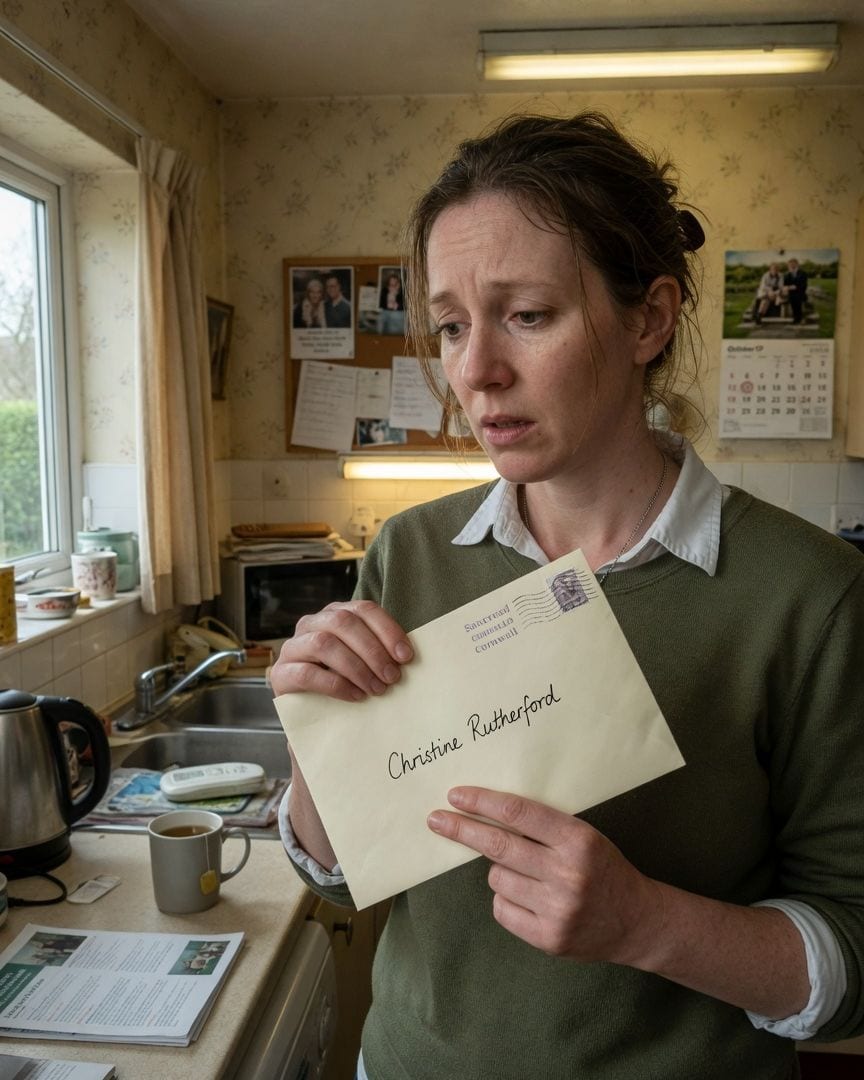
My name was carved on the village war memorial. Below it: 'October 17th'. The fresh cut looked fifty years old.
I drove to Sancreed to meet my friend Kenneth, a stonemason, who had called me with an urgent tone I'd never heard before. He met me at the village war memorial, a granite obelisk listing the fallen, and pointed to a fresh carving. Beneath the last name of a 1945 soldier, my name, 'Christine Rutherford', was etched, followed by 'October 17th' — a date this coming autumn.
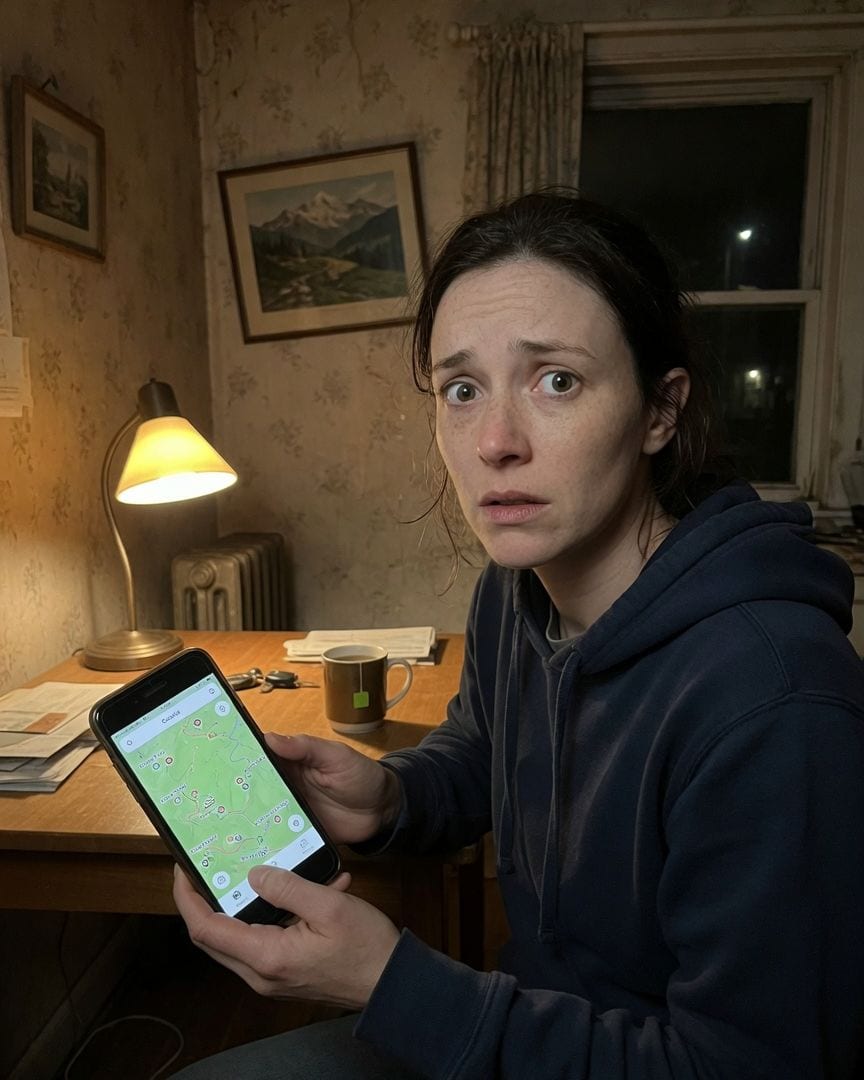
My hiking app scrubbed the hill's name from the map, on a phone that's been in airplane mode for two days.
I just moved to town and hiked a local hill, 'Cathan Tor,' according to my phone's app. But when I mentioned the name to the mechanic, he froze, dropped his wrench, and whispered, 'Don't say that name, Colette.'
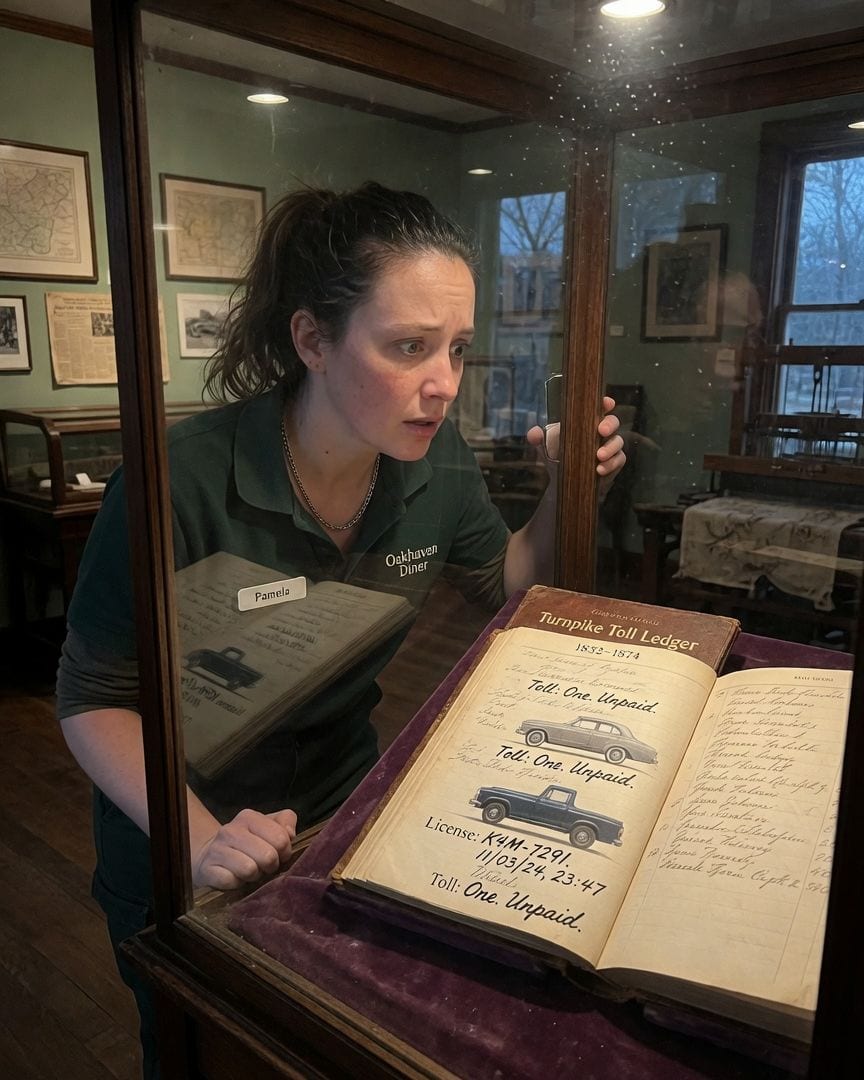
My car stalled at the old turnpike milestone, after dark. The toll ledger, closed in 1874, then listed my car, my stall time, and a toll of one, unpaid.
I had just moved to Oakhaven when my old sedan died on a dark, winding road by an infamous turnpike milestone. The next day, I found my car's exact registration and stall time written in fresh ink in a 150-year-old, locked museum ledger, marked 'Toll: One. Unpaid.' The curator dismissed it as a prank, but her white knuckles and strained voice hinted at something far more unsettling.
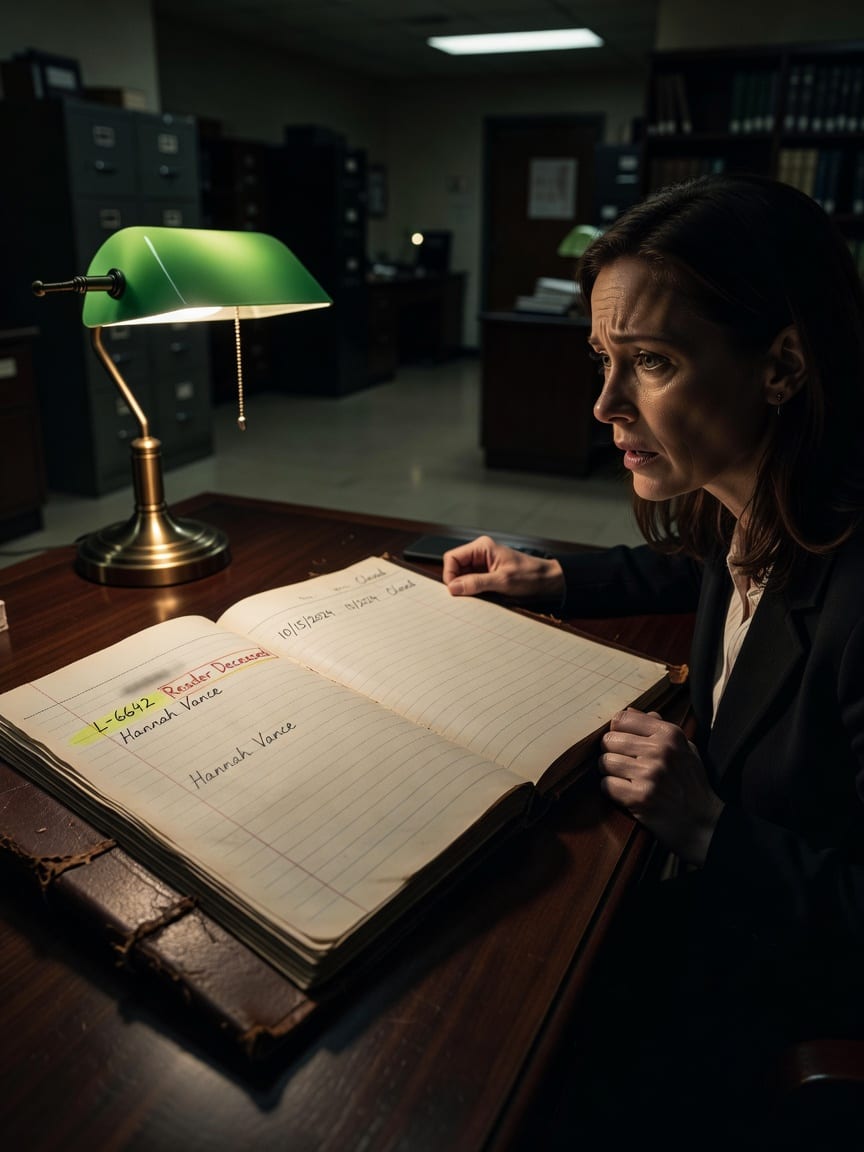
My library card number L-6642 was issued to me at seven — and the ledger shows that number has marked a reader 'deceased' every twelve years since 1949.
Returning my late father's library card to the old town library felt like a small act of closure. But the senior librarian's ancient ledger revealed a chilling pattern of 'reader deceased' entries tied to specific card numbers and borrowed books. My unease turned to cold dread when I secretly found my own name penciled in, marked for a future 'reader deceased' entry.
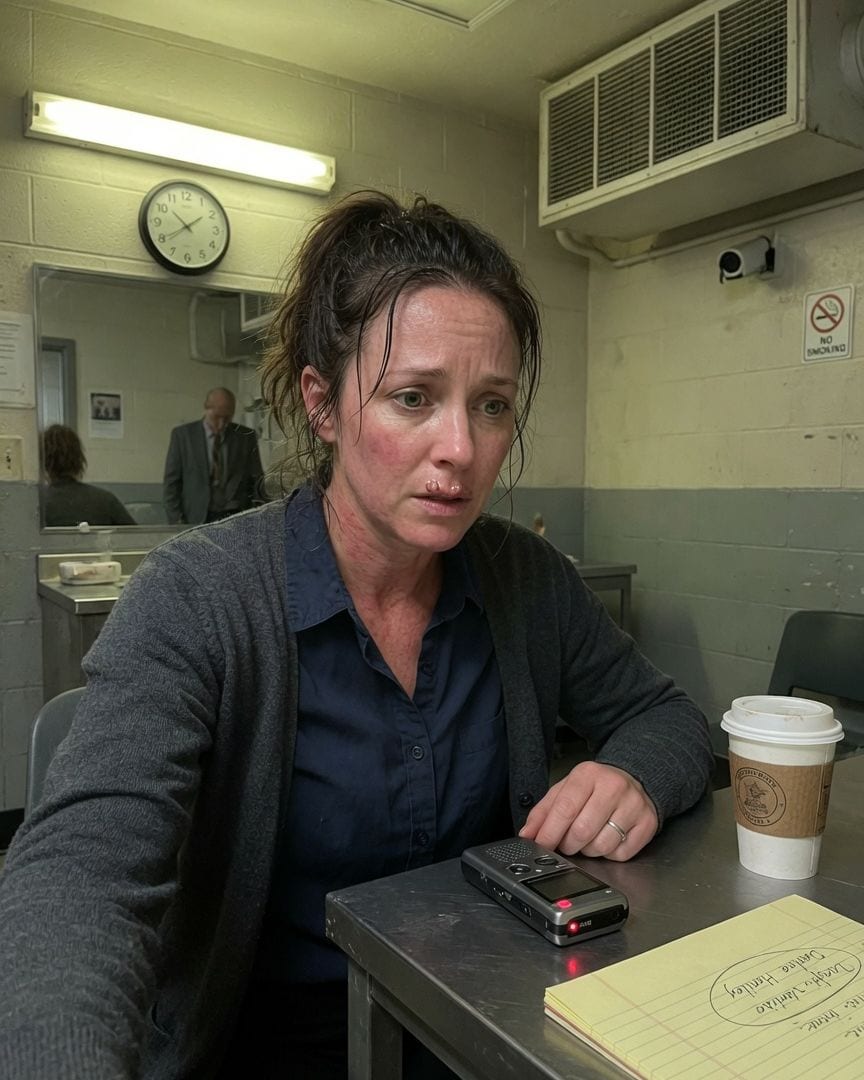
My own voice called 911 from Gary, Indiana, reporting a prowler. I was asleep in Ohio, my phone on the charger.
Sitting in a police interview room, I listened as Detective Walsh played a 911 recording. A woman's hushed voice reported a prowler from a payphone in Gary, Indiana. My stomach dropped cold; it was my exact voice, my specific way of saying 'I think,' even though I was in bed in Ohio that night.