My bus driver knows my name, Yusuf, and said 'not long now.' Today is the 18th. He added a date this morning: the 19th.
The rumble of the 22 bus was a familiar comfort at 6:45 AM. I stepped aboard, fumbling for my fare card, the usual half-asleep shuffle. Bernard Ellison, the driver, met my gaze in the rearview mirror.
His face, etched with decades of early mornings, held its usual placid expression. He was a quiet man, efficient, never one for small talk. So when he spoke, it always caught me off guard.
"Sorry, Yusuf," he said, his voice a low, even murmur that cut through the engine hum. "Not long now."
I froze, my hand still halfway to the card reader. Yusuf. I’d never told him my name. Never. I took this bus five days a week, same time, for three years.
We’d never exchanged more than a grunt or a nod. My mind raced through possibilities: had I dropped my wallet with ID? Was there a passenger list? Had I seen him at a community event? Nothing.
My life was predictable; my interactions, especially with strangers, were minimal.
"Excuse me?" I managed, trying to sound casual, as if I hadn't just been hit by a quiet, impossible fact.
Bernard offered a faint, almost apologetic smile. "Just… not long now," he repeated, his eyes meeting mine in the mirror, holding them for a beat too long.
There was a kindness there, a sort of weary empathy that made my stomach clench. "The 19th, that is."
Today was the 18th.
The words hung in the air, a subtle chill in the stale bus cabin. The other passengers, lost in their phones or their own morning haze, seemed oblivious.
I felt a prickle of unease, a crack in the smooth surface of my routine. He offered no further explanation, just opened the doors for the next stop. I found an empty seat, my heart thrumming against my ribs. The 19th.
He knew my name. He knew a date. And he was sorry. I spent the rest of the ride replaying the words, searching for the ordinary explanation, but it remained elusive, leaving behind only a creeping, inexplicable dread.
Bernard’s words shadowed me through the day. I tried to focus on spreadsheets, on data analysis, but my mind kept circling back to the bus. Yusuf. Not long now. The 19th. It was absurd.
A bus driver knowing my name could be a coincidence, a forgotten interaction, a shared acquaintance. But the date, the apologetic tone… that was different.
On my evening commute, I made a point of waiting for Bernard’s bus again. I boarded, paid, and tried a subtle approach. “Bernard,” I said, as I passed him, making eye contact.
“Do you know many of us regulars by name?”
He smiled, a gentle crinkling around his eyes. “Some, Yusuf. Some just… make an impression.” He offered no further explanation, just a quiet, knowing look that dismissed further questions. It was unnerving. He wasn't malicious, or even evasive, just… resigned.
As if this was a conversation he’d had before, many times.
Back in my apartment, the air felt thick and still. I was still mulling over Bernard’s enigmatic smile when I checked my mail. Tucked into the slot was an unexpected letter.
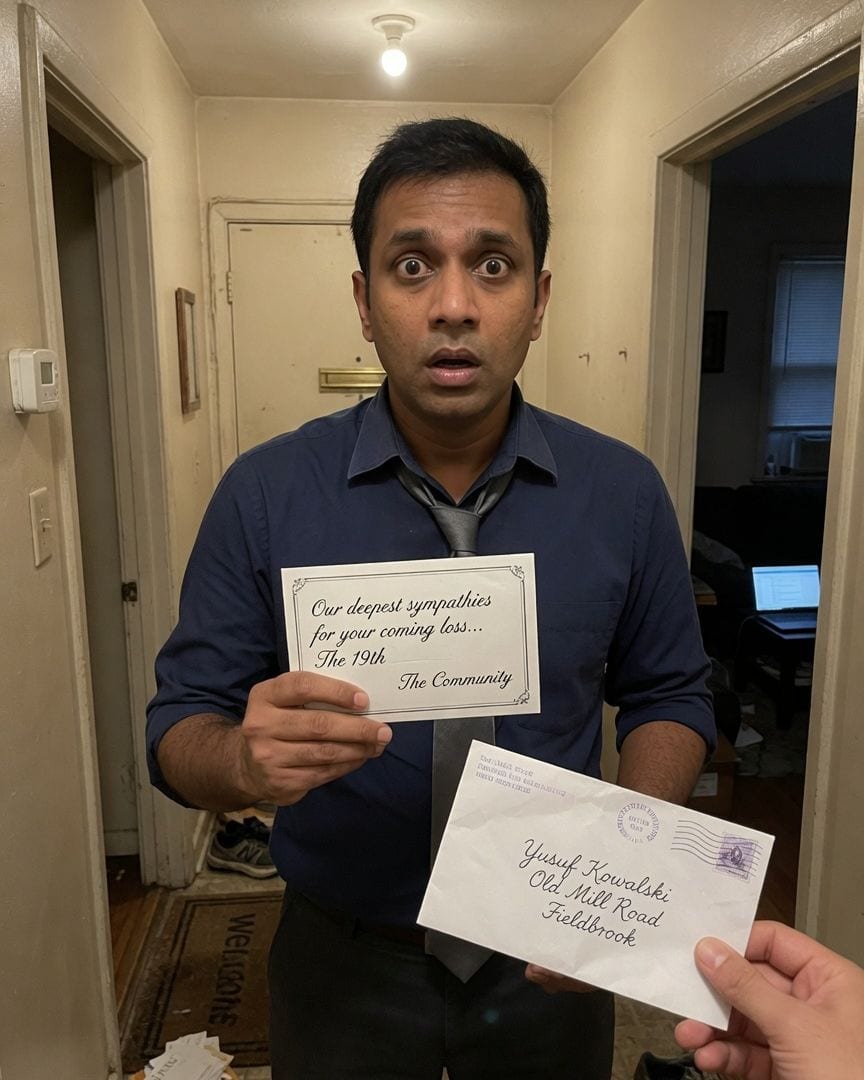
It was heavier than usual, a thick card, pristine white. The envelope, addressed to 'Yusuf Kowalski,' was written in elegant, almost calligraphic script. There was no return address.
I flipped it over. The postmark. 'Old Mill Road, Fieldbrook.' My brow furrowed. Old Mill Road. I knew that address. It was on the edge of town, a place I sometimes drove past, an empty, overgrown field.
For decades, it had been nothing but scrub, broken concrete slabs, and the ghosts of forgotten foundations. It certainly wasn't a place that could mail a letter.
My heart began to pound, a slow, heavy drum against my ribs. I tore open the envelope. Inside was a condolence card. The paper was thick, expensive, with an embossed border.
The message, written in the same elegant hand as the address, read: 'Our deepest sympathies for your coming loss.' It was signed simply, 'The Community.' And then, beneath the signature, a date: 'The 19th.'
The card was perfectly preserved, as if it had been mailed yesterday. But its origin was impossible. Its message, chillingly premature.
I stood frozen, the heavy card in my hand. My name. The 19th. A condolence for a loss that hadn't even occurred. And the postmark: 'Old Mill Road, Fieldbrook.'
An address that had been nothing but an empty, overgrown field, just scrub and forgotten foundations, for as long as anyone could remember. The sheer absurdity of it warred with a cold, solid certainty that this was no prank.
This wasn't a mistake. Someone, or something, knew his name, knew tomorrow's date, and was sending him a message from a place that no longer existed.
I gripped the card, the paper cool and unyielding against my palm, the impossible fact burning in my mind.
The next morning, the 19th, I called in sick. My voice sounded thin and strained, even to myself. Sleep had been impossible. The card lay on my kitchen table, a stark white testament to the impossible.
I drove straight to Old Mill Road.
The field was exactly as I remembered it. Overgrown, tall grasses swaying in the morning breeze. A few crumbling concrete slabs hinted at old foundations, barely visible beneath the weeds.
No buildings, no post office, no houses, just the whisper of wind through the tall, dry stalks. I walked the perimeter, my sneakers crunching on forgotten gravel, searching for anything—a stray mailbox, a sign, a discarded envelope. Nothing.
Just an empty field, stretching towards a distant tree line. The postcard was an impossible object, a message from a place that didn't exist.
I spent hours online, hunched over my laptop, digging into local history. 'Old Mill Road Community Centre.' A few vague references. Demolished in 1973. Its purpose was described only as a 'resource for local well-being.' No further details.
No records of who ran it, what exactly it did, or why it was demolished. The lack of information was as unsettling as the information I already had.
Intrigued, and increasingly unnerved, I decided to visit the town archives. I needed a rational link, a mundane explanation, anything to anchor me back to reality. The small, brick building smelled of old paper and dust.
Colette Forsythe, the archivist, greeted me with kind eyes behind thick spectacles. Her movements were calm and meticulous as I vaguely requested records pertaining to the Old Mill Road property.
My own anxiety hummed beneath my skin, a contrast to her quiet professionalism.
She nodded, understanding, and disappeared into the back, her soft footsteps muffled by the carpet. I watched her go, a desperate need for a logical explanation clawing at me. This had to be a mistake.
A very elaborate, very personal, and very terrifying mistake.
Colette returned, carrying a large, leather-bound ledger. It was thick, aged, its dark cover scuffed in places. 'Old Mill Road Community – Register of Visitors,' the faded gold lettering on the spine read.
She placed it gently on the reading table. The pages inside were yellowed, brittle at the edges, the ink in places so faint it was barely legible.
My heart hammered against my ribs, a frantic drum against my chest. I started to scroll through the names, my finger trembling slightly. John Smith, Mary Jones, dates from the 1920s, 30s, 40s.
Brief notes beside some names: 'Consultation,' 'Resource access,' 'Community event.' I was looking for anything that might explain the condolence card, anything that might connect this defunct, mysterious 'community' to me.
Then, halfway down a page dated 1958, my breath hitched. My finger froze. There, in elegant, looping script, was a name that made the room tilt. 'Kowalski, Yusuf. Entry Date: June 19th, 1958.'
I traced the words with a trembling finger, my name, staring back at me from decades before I was born. It was an impossibility. I was born in 1992. This wasn't a mistake. It wasn't a shared name.
It was me. My specific, full name, precisely dated to the day that Bernard and the card had mentioned. The horror of it struck me like a physical blow. The air in the archives grew heavy, the silence suddenly deafening.
I made a hasty, mumbled excuse to Colette about needing to leave immediately, barely coherent. I practically fled the archives, my head spinning, the ancient ledger's impossible entry burned into my mind.
As I emerged into the afternoon light, still reeling, the familiar rumble of an approaching engine made me look up.
Across the street, parked at the bus stop, was a Number 22 bus. Bernard Ellison sat behind the wheel, hands resting lightly on the steering wheel, his gaze fixed calmly on the archives building. He wasn't waving, wasn't acknowledging me.
He simply watched, unblinking, unbothered.
I waited for Bernard at the bus depot after his shift, the image of his unblinking stare, the impossible ledger entry, and the condolence card burning in my mind.
He was wiping down his dashboard, a methodical ritual, when I approached. The fluorescent lights of the depot hummed, casting long shadows.
“Bernard,” I began, my voice tight, barely controlled. “We need to talk.”
He didn't seem surprised. He didn't even flinch. He just paused, wiped a spot on the dash, and then looked at me, his eyes quiet and deep. “I figured you’d come around, Yusuf. Not long now, is it?”
I slammed the heavy ledger, the very one I'd borrowed from the archives, onto a nearby bench. The thud echoed in the vast, empty depot. “My name. In here. Dated 1958. And the letter.
And you, watching the archives, watching me.” My voice was rising, despite my efforts to keep it level.
Bernard sighed, a gentle, almost weary sound. He put down his rag. “It's all connected, son. Been this way for generations. Some of us, we're just… harbingers. We pass on the message.”
“What message?” I demanded, my hands clenched into fists. “What is going on?”
“The 19th. The transition. The Community.” Bernard spoke calmly, his voice a low, even cadence, as if discussing the weather. He picked up the ledger, flipped open to the page with my name, running his finger along the faded script.
“That ledger? It's a record. Of those who have passed through. And those who are about to.”
He looked at me, his eyes unreadable, yet filled with a profound, unsettling certainty. “There’s a channel, you see. An older way of knowing. Some families, they just… know. It’s how the pattern continues. You were always inside it, Yusuf.
Always.”
The pieces clicked. Horrifyingly. The recurring date, my name in a ledger before my birth, the impossible condolence letter, Bernard's calm certainty, his quiet watchfulness. It wasn't random. It wasn't a series of bizarre coincidences.
It was all a coherent, monstrous shape. And I, Yusuf Kowalski, was at its terrifying center.
Reeling from Bernard's words, a cold, sickening dread spreading through my veins, I stumbled home. "A channel," he'd said, "an older way of knowing." I thought of my grandmother, who had passed away years ago.
She’d always had a quiet, knowing way about her, sometimes making odd, prescient remarks dismissed as old-world eccentricity. I remembered her talking about 'family duties' and 'honoring the cycles,' phrases I’d shrugged off then, attributing them to her traditional upbringing.
A desperate hope, thin as spun glass, made me search through a dusty box of her belongings, stored away since her death. My fingers scraped against forgotten relics – old photo albums, crocheted doilies, brittle letters tied with ribbon.
Beneath it all, at the very bottom, I found it: a worn, portable cassette player and a single, unlabeled tape. No, not unlabeled. A small, handwritten sticky note, yellowed with age, was affixed to it.
In his grandmother’s familiar, elegant script, it read: 'For Yusuf – after I’m gone.'
My hands shaking, I inserted the tape. The mechanism clicked with a dry, dusty sound. I pressed play. The static crackled, a hiss like distant rain, then faded.
And then, a familiar, gentle voice, her voice, filled the quiet room, cutting through the silence like a knife. 'Yusuf,' she said, clear as day, 'on the nineteenth, don't be afraid. It's just your turn.'
His grandmother's voice continued, calm and unhurried on the tape, echoing from the small, dusty player. She spoke of the 'Old Mill Road Community,' not as a physical place, but as a belief system, a quiet covenant.
It wasn't a centre for 'well-being' as the archives suggested, but a place where a small, devout group believed in cyclical 'ascensions' or 'renewals.' Certain individuals, chosen by name, were destined to 'transition' on specific dates.
Her family, she explained, had been 'custodians' for generations, sometimes acting as harbingers, sometimes as the chosen themselves.
She spoke of the ledger not as a 'Register of Visitors,' but as the 'Book of Passage,' a record of those who had 'joined the cycle.'
Her voice held no fear, only a quiet resignation, an acceptance of an ancient, unavoidable truth. She knew. All along, she had known. Yusuf listened, every word a cold, horrifying click into place.
Bernard's quiet certainty, the impossible letter, his name in the ledger dated decades before his birth, the recurring date – it wasn’t random.
It was a meticulously orchestrated pattern, a legacy of quiet horror, and he, Yusuf, had been born into its inevitable embrace.
He saw now that he was never an outsider looking in, but always, always, a piece of the mechanism itself, waiting for his part to play.
The tape ended, the soft click of the player the only sound in the now-silent room. Yusuf was left with a chilling clarity. The 19th. His turn.
His hands still trembled, but the panic had solidified into something cold and hard. He tried to fight it, booking a last-minute train ticket to anywhere far away. He even packed a small bag, his movements stiff and automatic.
But as the afternoon wore on, an irresistible pull, cold and insistent, drew him. It wasn't a compulsion exactly, no frantic urge, but a quiet, insidious certainty that resistance was futile, a mere delay.
The train ticket lay ignored on the table. The packed bag felt like a prop in a play he was no longer directing.
He found himself walking towards Old Mill Road as dusk settled, the air growing heavy with an unnatural stillness. The trees along the road seemed to lean in, their branches dark against the fading sky.
In the dim light, as he approached the field, he saw figures waiting. They were indistinct at first, silhouettes against the twilight. Bernard Ellison stood among them, his face serene, unreadable, his hands clasped in front of him.
They weren't menacing; they weren't gesturing or calling out. They were just present, patiently waiting, like shadows that had simply decided to become real.
Yusuf felt no fear now, only a profound, weary acceptance. He knew what they wanted, and he knew he couldn't escape it. The dread had become a part of him, an understanding deeper than words.
He walked across the threshold of the field, the tall grass brushing his legs, towards the silent figures. He didn't look back.
The last light of day faded behind him as he joined them, becoming one with the pattern that had always been reaching for his name.
The 19th passed. Yusuf Kowalski’s apartment remained untouched, a silent testament to his sudden, inexplicable absence.
His employer filed a missing person report, but without any evidence of foul play or a struggle, it quietly faded into the backlog of unsolved cases. No one saw him leave, no one had any answers.
The number 22 bus continued its route, day after day, its schedule unwavering. Bernard Ellison was behind the wheel, calm and punctual, greeting his regulars with his usual quiet demeanor. The world, oblivious to the subtle shift, simply moved on.
Weeks later, a young woman named Bonnie Pierce, new to the area, stepped onto the 22 bus for her morning commute. Bernard Ellison, the driver, met her gaze in the rearview mirror with a kind, knowing smile.
'Good morning, Bonnie,' he said, his voice soft, almost apologetic. 'Not long now.'
If this one got to you
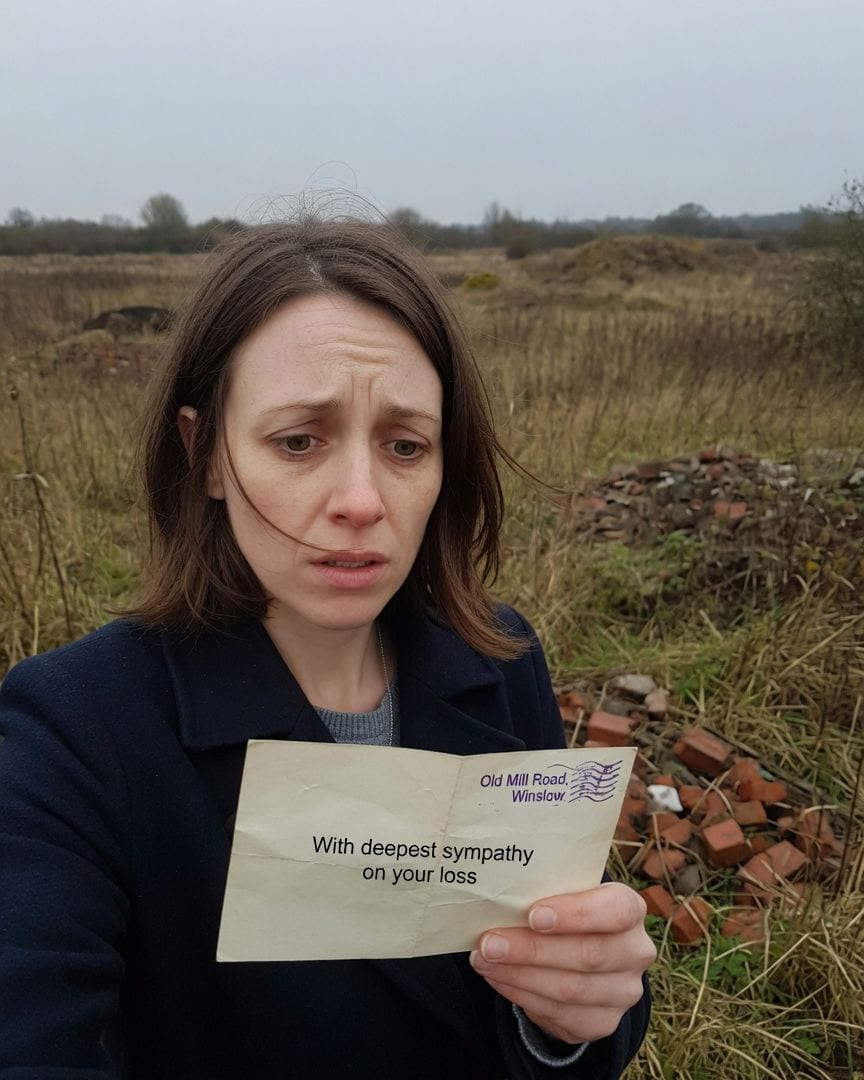
A condolence card arrived for me, postmarked from a road that vanished decades ago.
The fluorescent hum of Boots was routine until Gloria called my name for an unexpected prescription. My name and exact date of birth were clearly printed on the label, but the medication, Axonogen 7, was for a rare, degenerative neurological condition. I had just had my annual check-up, and my doctor had issued no such script. I simply couldn't be needing these.
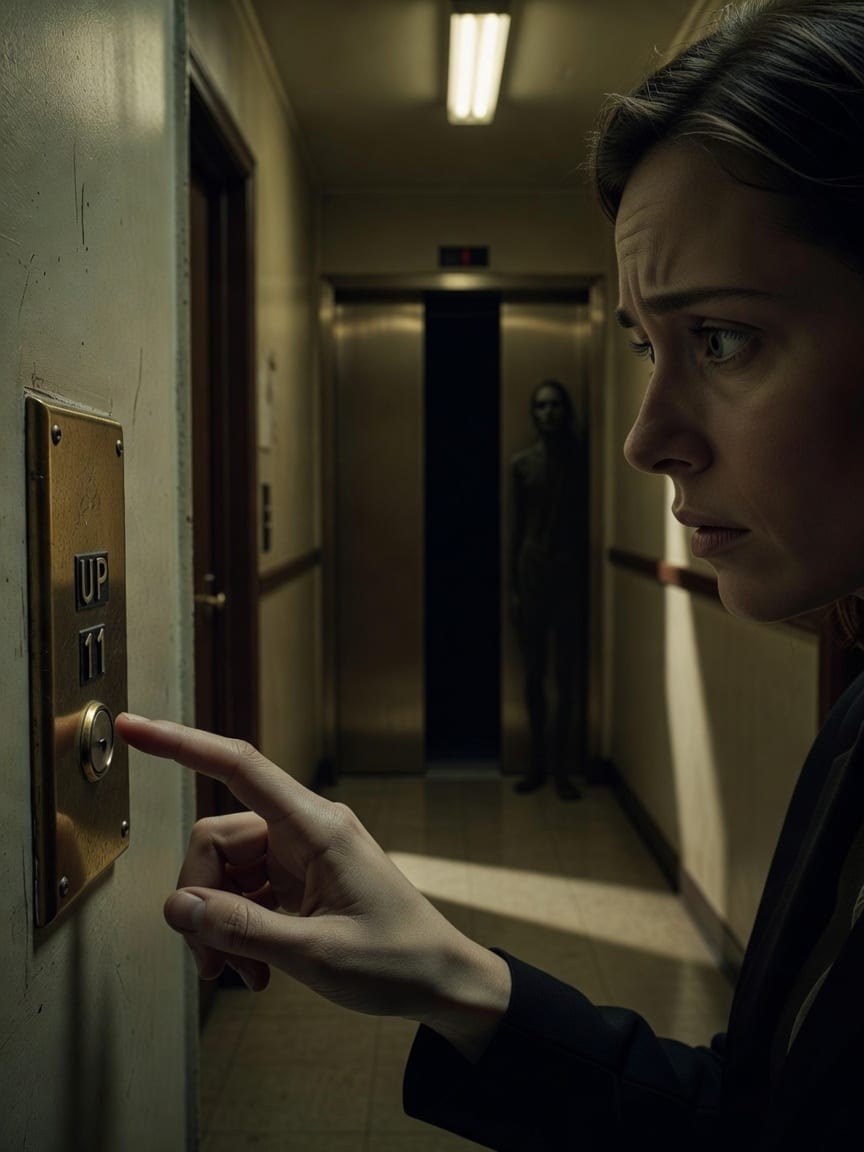
My doorman warned me not to take the tenth-floor lift on Saturday. The building's lift passed inspection last month. He seemed terrified that he'd said it.
My doorman's unsettling warning about the tenth-floor lift left me with a metallic taste of unease. I tried to rationalize it away, but then a birthday card arrived for me, five months early, from an impossible address. It was a site linked to unexplained disappearances, and a cold certainty began to settle in.
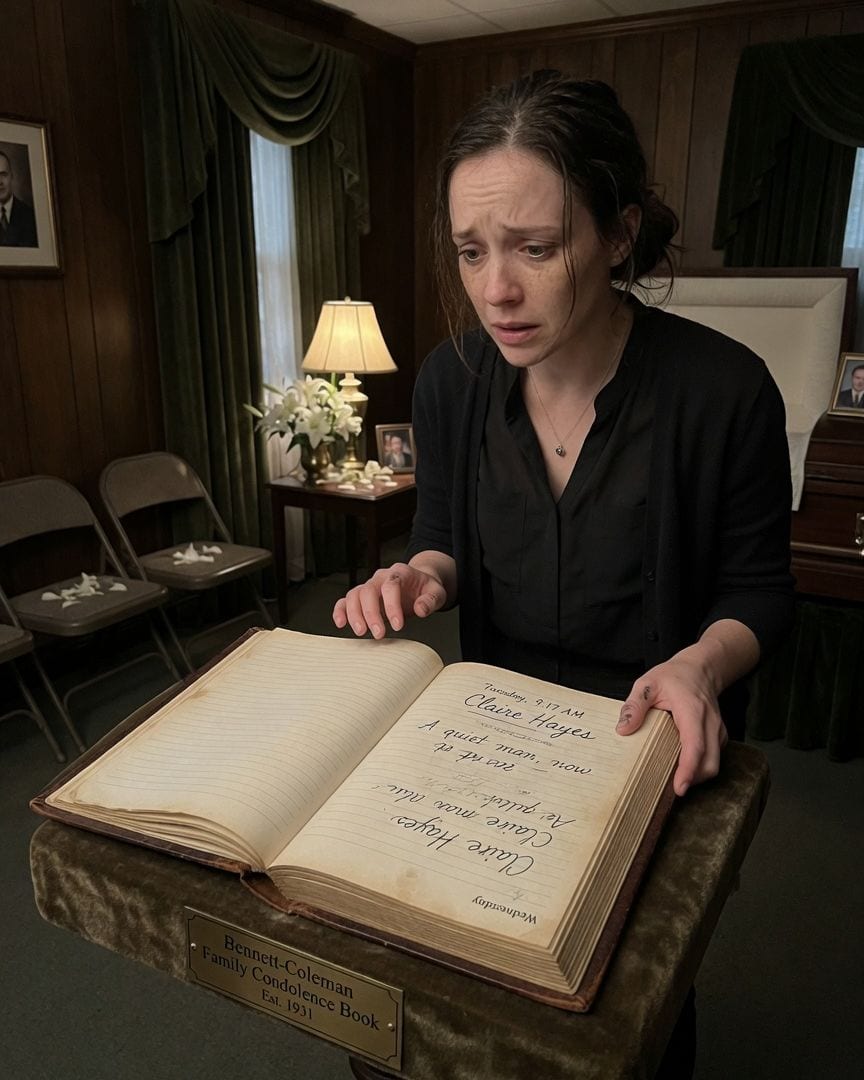
My uncle's wake book held my signature, dated yesterday, before he died. The words were not mine.
At Uncle Charles's funeral, I signed the condolence book. A nagging curiosity made me open it again, only to find my own signature already there. It was dated Tuesday morning, hours before my uncle had actually passed away, the ink impossibly dry.
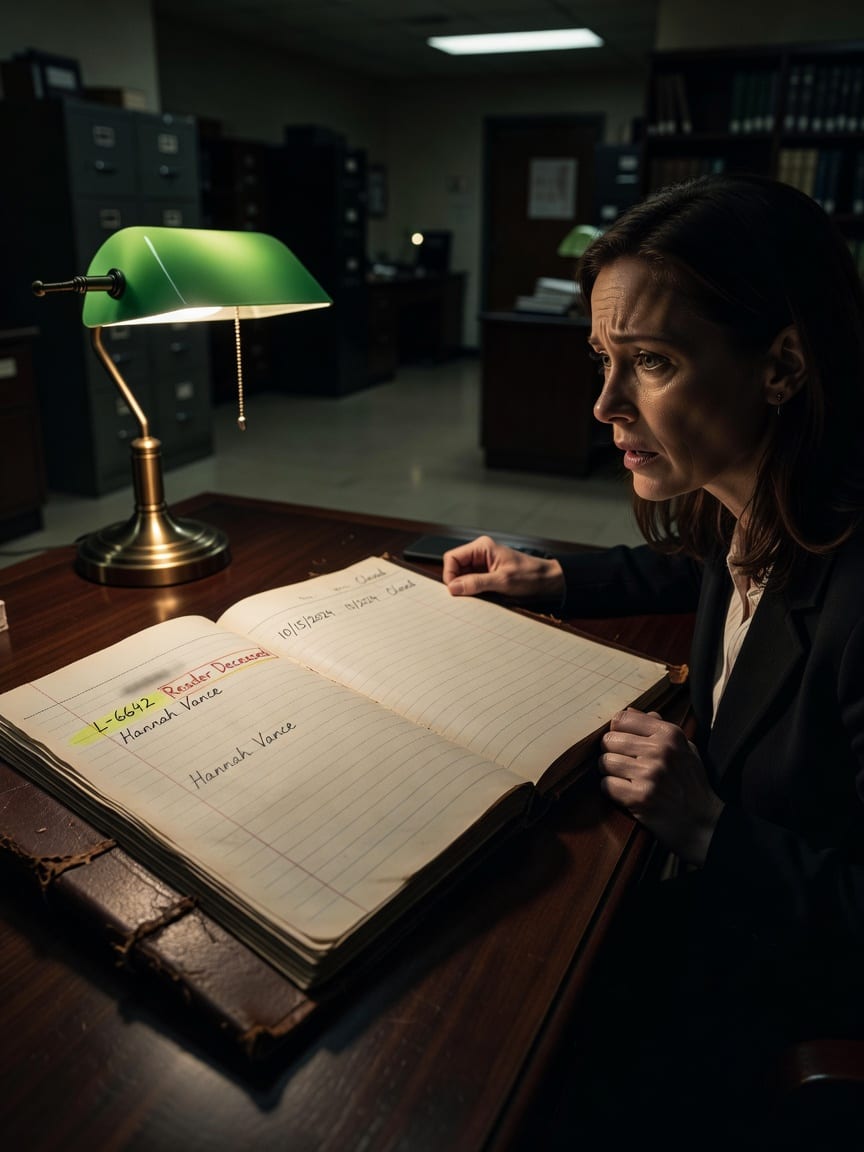
My library card number L-6642 was issued to me at seven — and the ledger shows that number has marked a reader 'deceased' every twelve years since 1949.
Returning my late father's library card to the old town library felt like a small act of closure. But the senior librarian's ancient ledger revealed a chilling pattern of 'reader deceased' entries tied to specific card numbers and borrowed books. My unease turned to cold dread when I secretly found my own name penciled in, marked for a future 'reader deceased' entry.
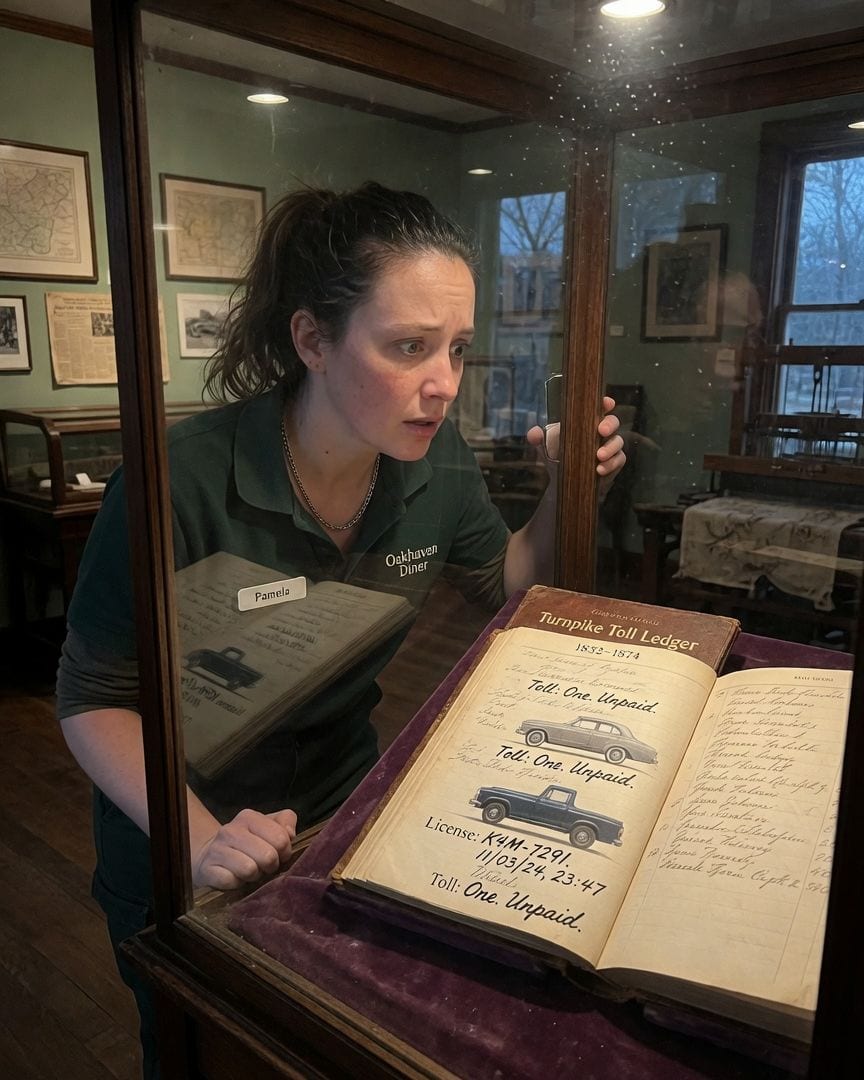
My car stalled at the old turnpike milestone, after dark. The toll ledger, closed in 1874, then listed my car, my stall time, and a toll of one, unpaid.
I had just moved to Oakhaven when my old sedan died on a dark, winding road by an infamous turnpike milestone. The next day, I found my car's exact registration and stall time written in fresh ink in a 150-year-old, locked museum ledger, marked 'Toll: One. Unpaid.' The curator dismissed it as a prank, but her white knuckles and strained voice hinted at something far more unsettling.
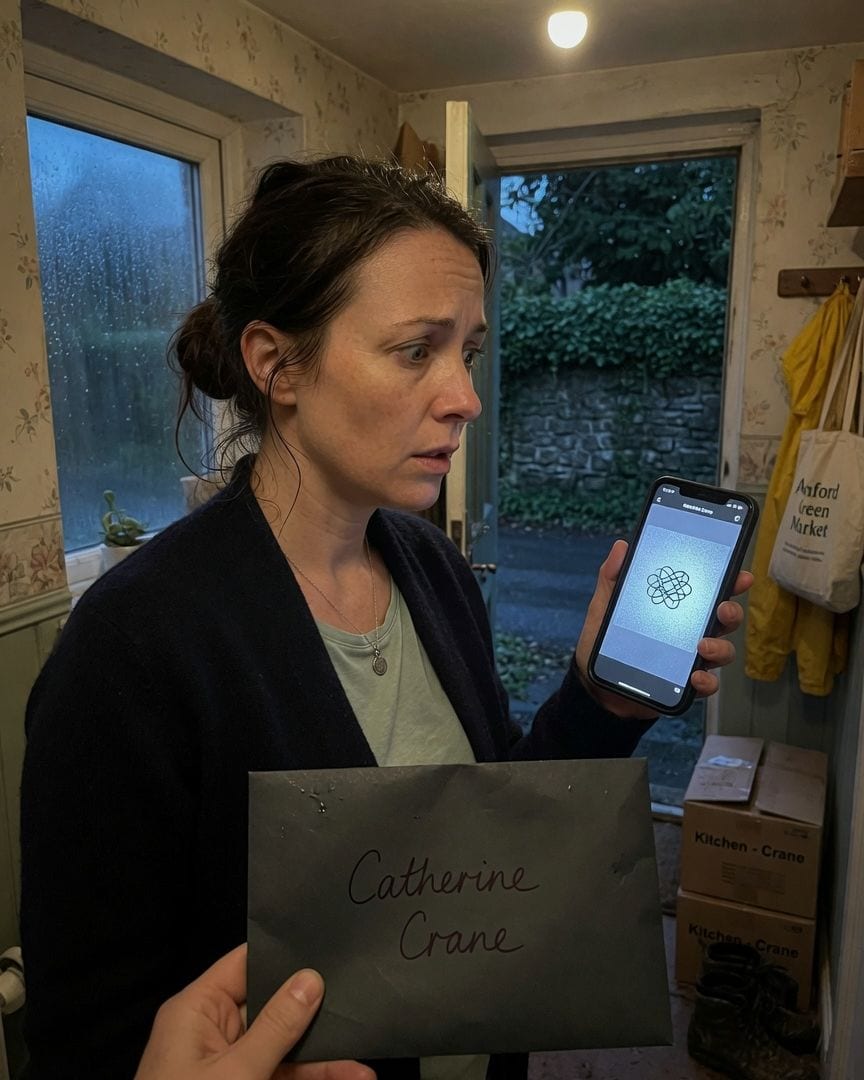
My postman warned me: never use the old pillar box. Royal Mail logs a collection every day, one item, signed by no one.
Moving to Ashford Green, I dismissed my postman's strange warning about the old pillar box by the ford. But after my own letter vanished inside it, I returned at midnight. Then, a dark, unstamped envelope slowly slid *out* of the slot, addressed to me.