My signature is on a New Orleans steakhouse bill for 7:30pm. I've never set foot in Louisiana.
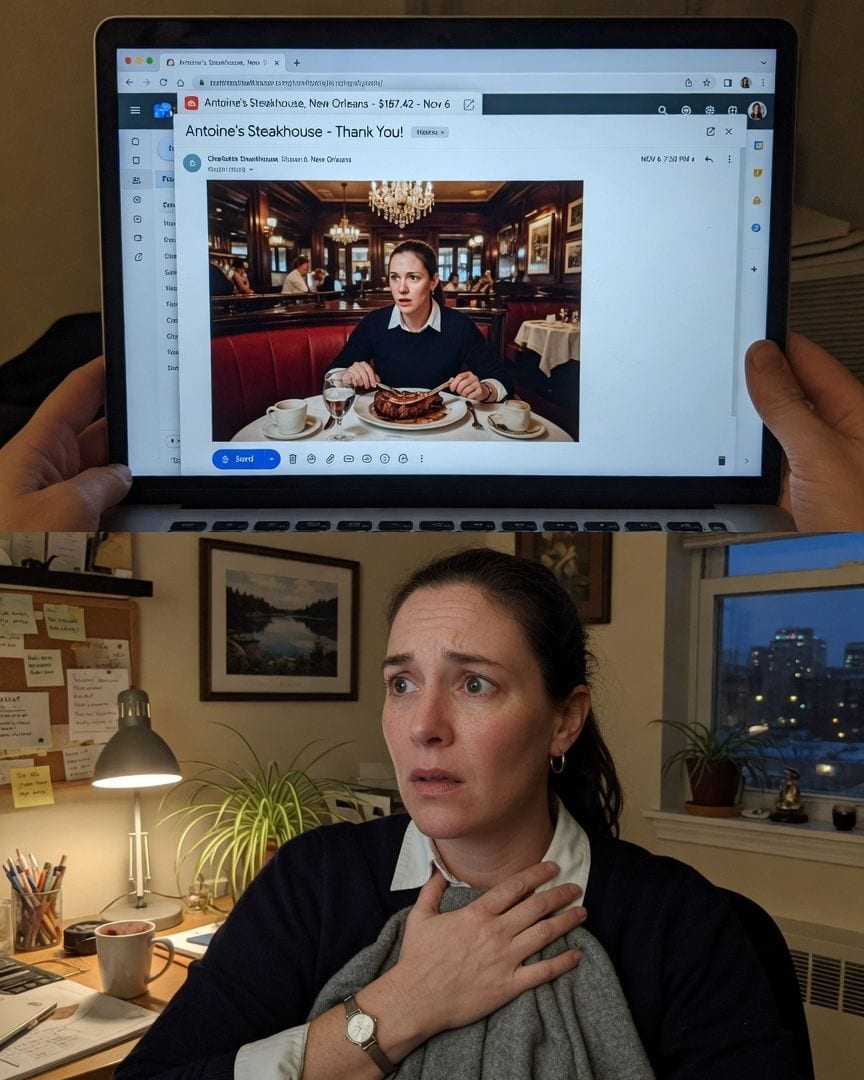
The email arrived on a Tuesday morning, subject line: 'Antoine's Steakhouse - Thank You!' I frowned, scrolling through my inbox. Charlotte Sinclair, 38, marketing manager for a firm based right here in Minneapolis. I’d never been to Antoine’s.
I’d certainly never been to New Orleans.
The message thanked me for my recent visit on November 6th, hoping I'd enjoyed my 'usual' bone-in ribeye. Attached was a scanned check, signed in my own neat script, with a generous tip scribbled below the total.
My eyes fixated on the date first: the 6th. I'd spent the entire day in my home office, presenting to clients online via video conference, barely leaving my desk.
Then I looked at the signature again, Charlotte Sinclair, in my distinct, slightly leaning cursive. It was undeniably mine. And the 'usual' order – bone-in ribeye. I hated ribeye. Always had.
The thought of its fatty richness made my stomach turn.
This had to be some elaborate prank, or a monumental error. But the specificity of it, the 'usual' that was so utterly unlike me, yet attributed to me, made a cold, heavy knot settle deep in my stomach.
This wasn't just a misdirected email. This felt… deliberate.
I called Antoine's, half-expecting an apology for a clerical error, ready to patiently explain the mix-up. Instead, I got Mr. Doyle, the maitre d', a man whose voice was as smooth as aged bourbon.
He was polite, almost excessively so, but firm. He confirmed my reservation for one, my name, my preferred table by the window – which I’d never even known existed – and yes, my 'usual' ribeye.
He even remembered a brief conversation I supposedly had with the server about the wine pairing.
"Mr. Doyle," I interrupted, trying to keep my voice steady, "I assure you, I have never set foot in Antoine's Steakhouse. I've never even been to New Orleans."
There was a pause, a slight rustle on his end. "Ms. Sinclair, I understand this may be confusing, but our records are quite clear. You dined with us on the evening of the 6th.
Our system shows your credit card was used, and a signature matches your name." He sounded slightly exasperated now, as if I were a particularly difficult customer.
"If you require further proof, I can email you the security camera footage from your table."
A moment later, as promised, a new email landed in my inbox. My fingers were cold as I clicked the attached JPEG. The screen filled with an image that made the air catch in my throat.
It was my own face, unmistakably, smiling faintly, seated at a linen-draped table in Antoine's ornate dining room. The red velvet banquettes, the crystal chandelier, the dark wood paneling – all were perfectly clear behind me.
The timestamp in the lower-right corner read 'NOV 6, 7:30 PM'. My hair was styled exactly as I'd worn it that day, pulled back with a few loose strands framing my face.
The faint, almost unreadable stillness in my eyes was something I recognised, a particular expression I only made when deeply focused, or perhaps… content.
I swiped the image away, my vision blurring for a second. My credit card. I pulled up my banking app, my thumb fumbling on the screen.
Below my regular Minnesota transactions – my grocery bill, my utility payment, my online coffee order – there it was. A charge from Antoine's Steakhouse, New Orleans, dated November 6th, for the exact amount on the signed check.
My credit card. My face. My signature. It was all real, and utterly impossible.
Charlotte stared at the attached JPEG, her own face smiling back from a linen-draped table, the steakhouse's ornate interior unmistakable behind her, the timestamp reading 7:30 PM on the 6th. Her breath hitched.
She zoomed in, searching for a seam, a blur, anything to prove it was a fake, but the image was crisp, undeniably her.
The dread wasn't in the mystery, but in the absolute, concrete proof of something that could not be. It wasn't a mistake. It was her, where she couldn't be.
The next day, the image of my smiling, impossible face was burned behind my eyelids. I knew I wasn’t crazy, but every piece of objective evidence screamed otherwise. My first stop was Emily Hughes, my friend and bank branch manager.
We met for coffee at a quiet place near her office. I laid out the whole bizarre story, ending with the bank statement printout and the security photo.
Emily, a pragmatic woman who dealt with financial anomalies daily, was initially skeptical. "Digital compromise, maybe? Someone cloned your card number?"
But as she pulled up the transaction details on her secure system, her brow furrowed. "No. The card was physically present, Charlotte. Swiped and PIN-verified at the New Orleans terminal. There's no sign of digital compromise. No unusual activity elsewhere.
It's like you were there, Charlotte," she admitted, baffled, pushing her glasses up her nose. "This isn't just a mischarged item. This is… you, apparently, having dinner."
Next, I consulted Reginald Foster, a respected forensic document examiner I found through a referral. He had a reputation for meticulous detail.
I provided him with the scanned check from Antoine's, along with half a dozen samples of my genuine handwriting – old letters, signed documents, even my grocery list from that week. I needed definitive proof.
I expected him to tell me it was an expert forgery.
Days later, Foster called. His voice was precise, almost academic. "Ms. Sinclair, I have completed my analysis. The signature on the steakhouse check is, unequivocally, an authentic sample of your handwriting.
No forgery, no digital manipulation, none of the common indicators of fraud. It's yours."
My stomach dropped. "But that's impossible," I whispered.
"I understand your distress," he said, his voice calm, "but the empirical evidence is clear. From a purely forensic standpoint, you signed that check."
After the call, I tried to rule out every last possibility. I meticulously cross-referenced my own digital footprint for November 6th. GPS data from my phone confirmed I hadn't moved more than a block from my house.
Login times for my work VPN showed me online from 9 AM to 5 PM. Even my smart thermostat logs, which recorded when I adjusted the temperature, placed me firmly in my Minnesota home.
Not a single deviation, not a single unaccounted-for minute. The physical evidence—the credit card swipe, the security photo, the signature—insisted I was in New Orleans. Yet my entire life, my digital shadow, my very memory, insisted I was not.
The gap between my reality and the world's record was widening into an abyss.
As I dug deeper, the unease escalated beyond cold facts and into something far more visceral. A week after Foster’s confirmation, a small, flat package arrived at my door.
No return address, just my name and a printed address: 'Charlotte Sinclair, New Orleans'. I stared at it for a long moment, my heart thumping an irregular rhythm against my ribs. New Orleans.
My hands shook as I tore open the plain brown paper. Inside, nestled in tissue paper, was a pristine, ornate menu from Antoine's Steakhouse.
The heavy cardstock, the gold embossed lettering, the detailed descriptions of classic Creole dishes – it was the very menu pictured in the background of my impossible photo. It felt like a taunt, a message from an unseen sender: I know you know.
Then came the flickers. My smart thermostat, usually a steadfast guardian of my apartment's climate, would briefly flash 'away' mode at odd hours, the living room lights dimming for a split second, then snapping back to normal.
It was barely perceptible, easy to dismiss as a power surge or a glitch in the smart home system. But it happened several times a day. I lived alone.
One evening, reaching for my favorite wool coat, the charcoal grey one I'd worn all day on the 6th, my fingers brushed against something sticky on the sleeve. I pulled it closer, my nose wrinkling.
A faint, nearly imperceptible smudge of dark red, the color of old wine, clung to the sleeve, just below the elbow. It smelled faintly of oak and a distant, almost forgotten spice, not like anything I had in my apartment.
My stomach clenched. It was as if some trace of that impossible evening, that phantom dinner, had followed me, a physical manifestation of the wrongness, subtly infiltrating my own, real life.
It wasn't just a record anymore; it was leaving breadcrumbs, as if someone, or something, knew I was looking.
Reginald Foster called again, his voice tight with an academic excitement that Charlotte found chilling. "Ms. Sinclair," he began, without preamble, "I re-examined your signature under higher magnification. The authenticity stands, entirely. But... there's an anomaly.
Something I almost dismissed as a printer error the first time." He paused, and I could hear the faint scratch of a pen on paper in the background, as if he were making notes as he spoke.
"A microscopic ghosting, almost like a stutter in the ink flow, a micro-tremor in the pressure points. It's barely there, visible only under extreme magnification, but it's consistent across all the signatures from that check.
It's not a normal signature, not a perfect one. It's as if the pen wasn't entirely... solid."
My breath hitched. "Solid?"
"Precisely. It's like a minute, almost imperceptible tremor, or a slight phasing. Imagine a hand that isn't quite corporeal, yet manages to apply pressure. I've seen similar traces, extremely rarely, in other cases.
Cases that defy explanation in the normal course of things. Always dismissed as printer errors or fakes, but the pattern, once you see it, is distinct. It’s like a signature from a hand that isn't quite... corporeal.
I’ve never been able to replicate it artificially."
A cold clarity, sharp and horrifying, descended over me. It wasn't a fake. It was real, but subtly, fundamentally wrong. A 'ghosting' signature.
It clicked into place with the security photo – my own face, but with that faint, unsettling stillness in the eyes I hadn't been able to place. Not joy, not boredom, but a distant, almost empty look.
The wine smudge on my coat, the strange menu. They weren't just random intrusions; they were physical traces of something that was undeniably me, yet not quite.
The realization hit me with sickening force: I hadn't been to New Orleans, but a part of me, an 'echo,' had. And it had left its indelible, impossible mark.
Foster’s cryptic words about other 'defying explanation' cases echoed in my mind, an insidious hum beneath the ringing silence of my apartment. I remembered my eccentric grandmother, Amelia Sinclair.
In her later years, she’d spoken often of 'doubles' and 'lost time' in hushed, nervous tones, usually dismissed by my parents as senility, the ramblings of an old woman. But now, it sounded different.
I drove to Amelia's old, empty house, a place now filled with dust motes dancing in sunbeams and the faint, sweet scent of forgotten potpourri. It was a pilgrimage, a desperate hope for an explanation.
In Amelia’s study, a room she’d rarely let anyone enter, I found an antique writing desk, its drawers stiff with disuse. I pulled them open, one by one, finding only old bills and dried-up pens.
But then, my fingers brushed against a faint ridge. Behind a false bottom, cleverly concealed, was a small, leather-bound ledger.
The parchment pages were brittle and yellowed, filled with neat, looping script, unmistakably her elegant hand. My fingers trembled as I read the first entry: 'Table for two, Amelia Sinclair, Restaurant Hrafn, Reykjavik, October 14, 1968. Usual: Brennivín-cured salmon.'
Below it, a scrawled signature, and a tiny, almost invisible smudge on the paper, the same dark red as the one on my coat.
My eyes scanned down the page, then the next, and the next. Dozens of impossible entries.
Not just for Amelia, but for other names – an 'Edward Finch,' a 'Sophia Dubois,' a 'Wayne Thompson' – other dates, other 'usuals,' in impossible locations across the globe: a cafe in Prague, a market in Marrakech, a remote inn in the Himalayas.
Each with a signature, each with a faint, almost imperceptible smudge, each a record of a life that couldn't possibly have been lived.
The old ledger, tucked away in her grandmother's attic trunk, falls open to a page filled with neat, looping script, unmistakably her grandmother's signature, dated 1968, for a 'table for two' at a restaurant in Reykjavik, followed by a series of similar, impossible entries for other names, each with their own impossible dates.
I spent the night poring over Amelia’s ledger, the brittle pages whispering secrets decades old. The pattern was undeniable, horrifying in its consistency.
Not just my grandmother, but dozens of names, some distant relatives I barely remembered, others completely unknown, spanning generations.
Each entry detailed a specific date, an impossible location, and a distinct 'usual' – Amelia’s Brennivín-cured salmon, a man named Wayne’s specific single-malt scotch, a woman named Sophia’s particular kind of artisanal bread.
And each entry bore an authentic signature, with that same, microscopic 'ghosting' Foster had described, the faint tremble in the ink. The red smudges were everywhere, almost too small to notice, but they were there.
Tucked into the back cover of the ledger, a brittle, yellowed note in Amelia's elegant, looping hand. It was creased and worn, as if read countless times. It read: 'The Echoes follow the thread. They eat what you love.
To lose the path, erase the taste.'
The words chilled me to the bone, a cold dread seeping into my marrow. The 'thread' was my lineage, a familial susceptibility passed down through generations.
The 'usuals' – my hated bone-in ribeye, Amelia’s salmon, Wayne’s scotch – these weren't just preferences. They were the specific personal markers, the defining habits that allowed these 'Echoes' to manifest, to mimic, to draw from the original.
The 'eating' wasn't literal consumption, but a subtle, parasitic draining, a part of the individual’s essence being projected and recorded elsewhere, like a ghosting copy leaving a physical trace.
The flickering smart devices, the wine smudge on my coat, the menu left on my doorstep – these were not just random observations.
They were residual traces of my own Echo, almost manifesting in my space, becoming more frequent, more detailed, because I was becoming more 'known' to the phenomenon through my consistent preferences, my 'usuals.'
The horror wasn't a monster I could fight, but a systemic, quiet consumption of self, a bureaucratic glitch in reality that had been running for generations, meticulously recorded in the world's impossible ledgers, waiting to claim its due.
The ledger's truth detonated in my mind. The Echoes were growing stronger, closer, not content with just distant records.
The wine smudge, the menu, the flickering lights – these were not just warnings; they were signs that my own Echo was trying to solidify, to bleed into my reality, to draw more deeply from my essence.
Amelia’s note, 'To lose the path, erase the taste,' became my desperate mantra. I had to break the 'thread,' sever the markers that defined my 'usual' self, my very identity.
It wasn't about fighting a physical entity; it was about erasing the blueprints, making myself invisible to the silent drain.
I began a systematic, almost ritualistic purge of my habits. My daily life transformed into a battlefield of self-erasure.
I cancelled my favorite coffee subscription, the one that delivered the specific Ethiopian blend I adored, opting instead for a bland instant coffee I barely tolerated.
My grocery order, once a carefully curated list of organic vegetables and artisanal cheeses, was replaced with generic, unappealing alternatives.
My morning run route, a deeply ingrained ritual through the park, was abandoned for random, meandering walks down unfamiliar streets, never twice the same way.
I even sold my favorite armchair, the one where I always read, replacing it with a stiff, uncomfortable stool that offered no comfort, no 'usual' spot.
The bone-in ribeye, the very 'usual' that started it all, became a forbidden food, a symbol of the consumption I sought to escape.
Each act was a deliberate, painful amputation of a piece of myself, a desperate attempt to become generic, unremarkable, to starve the Echo of its defining characteristics.
The process was exhausting, a constant vigilance against settling into any new routine, any new 'usual.' I was fighting an invisible enemy by erasing myself, one preference at a time.
The confrontation wasn't with a presence, but with the very fabric of my identity, slowly unraveling, thread by thread.
The impossible charges stopped. The unsettling flickers in my apartment ceased. The sense of being watched receded, replaced by a profound, almost sterile quiet. I had succeeded, at a cost.
I lived a life of deliberate variance, a constant, low-level vigilance against forming new patterns, against allowing any preference to solidify. My home was functional, but devoid of the comfortable 'usuals' that once defined it, that made it mine.
I never ordered a ribeye again. The ledger remained, tucked away in a safe deposit box, a chilling, physical testament to the silent war I'd fought, and perhaps, temporarily won.
I was safe, but forever marked by the knowledge that a part of me had walked in impossible places.
I sat alone in my living room, deliberately choosing a different chair than my usual spot. I sipped a new, unfamiliar tea, its taste bland and unmemorable, yet safe.
The silence was heavy, but it was a silence I had fought for, a carefully constructed void. I knew I was safe, for now, a ghost in my own life, untraceable by the Echoes.
Weeks later, Emily Hughes, Charlotte's friend, received a forwarded email from a small, obscure bakery in Reykjavik.
It was a thank you note, addressed to 'Charlotte Sinclair,' for her patronage, mentioning her 'usual' order of a specific, rare pastry she'd never heard of, along with a signed receipt.
The attached photo showed a familiar, faint smudge of red wine on the corner of the paper. It seems the 'thread' found a new pattern.
If this one got to you
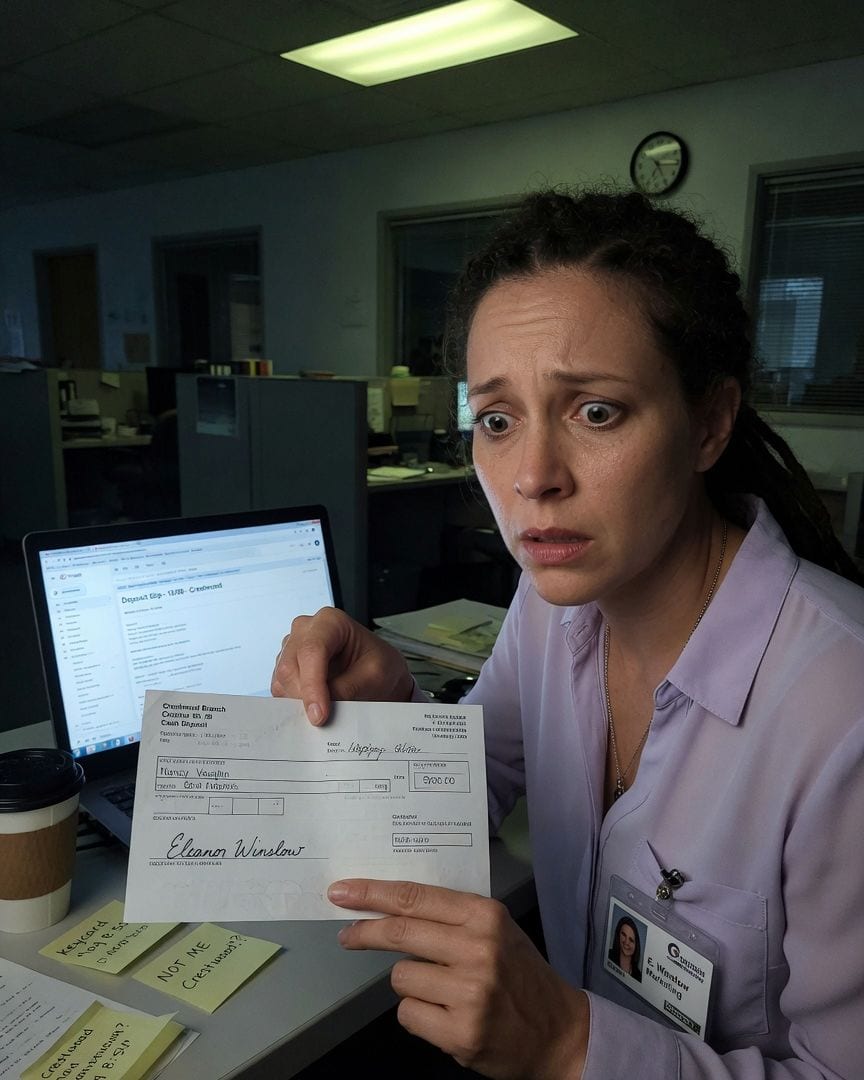
My bank statement shows a $900 cash deposit made in a town I've never set foot in, at 10:40 AM on a workday. I was at my desk, badged in. Two more landed since.
My bank statement showed a $900 cash deposit from a town I'd never visited, 150 miles away. I was at my desk, logged into work, all three times. But the scanned deposit slip arrived, clear as day, showing my own flawless signature.
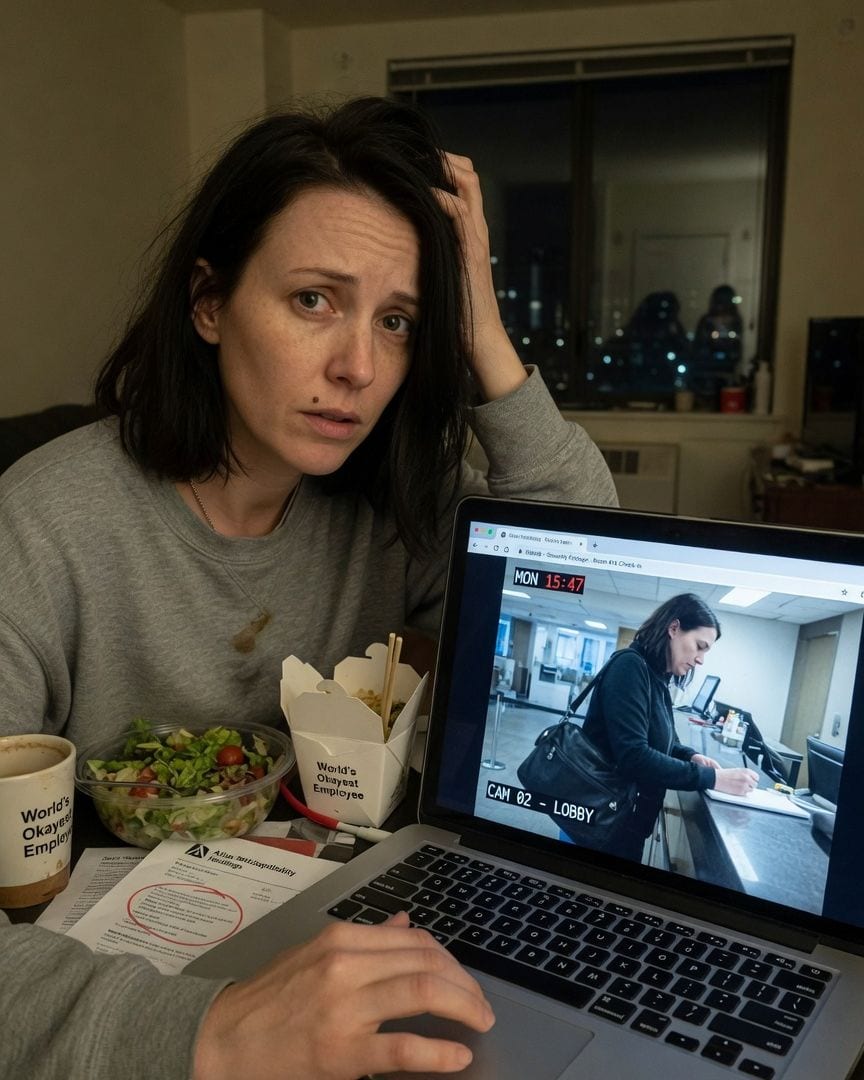
My hotel folio shows room service in Nashville's Room 414, two nights ago. I was home, and I've never even stepped foot in Nashville.
An email thanked me for a Nashville hotel stay, despite me never having been there. My credit card was charged for room service and a movie, while I was home sick. The hotel confirmed a 'Florence Caldwell' matching my description checked in. Then the security footage arrived, showing *my* face at the front desk.
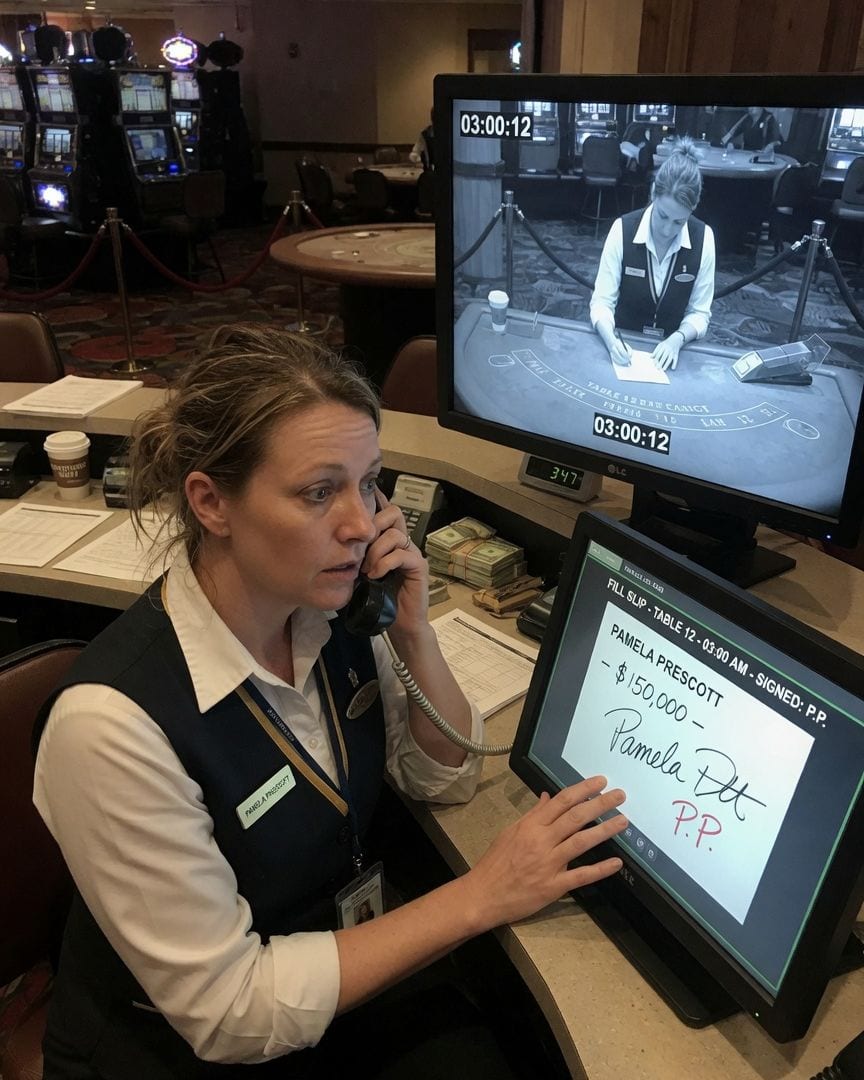
My initials are on a casino count sheet for a table I never touched. Table 12 was dark, roped off for the night.
On my graveyard shift, a routine casino inventory turned impossible. A $50,000 fill for Table 12, a table dark for years, was posted under my name and signature. The impossible part? Security footage shows me making the fill, even as the table itself remained untouched.
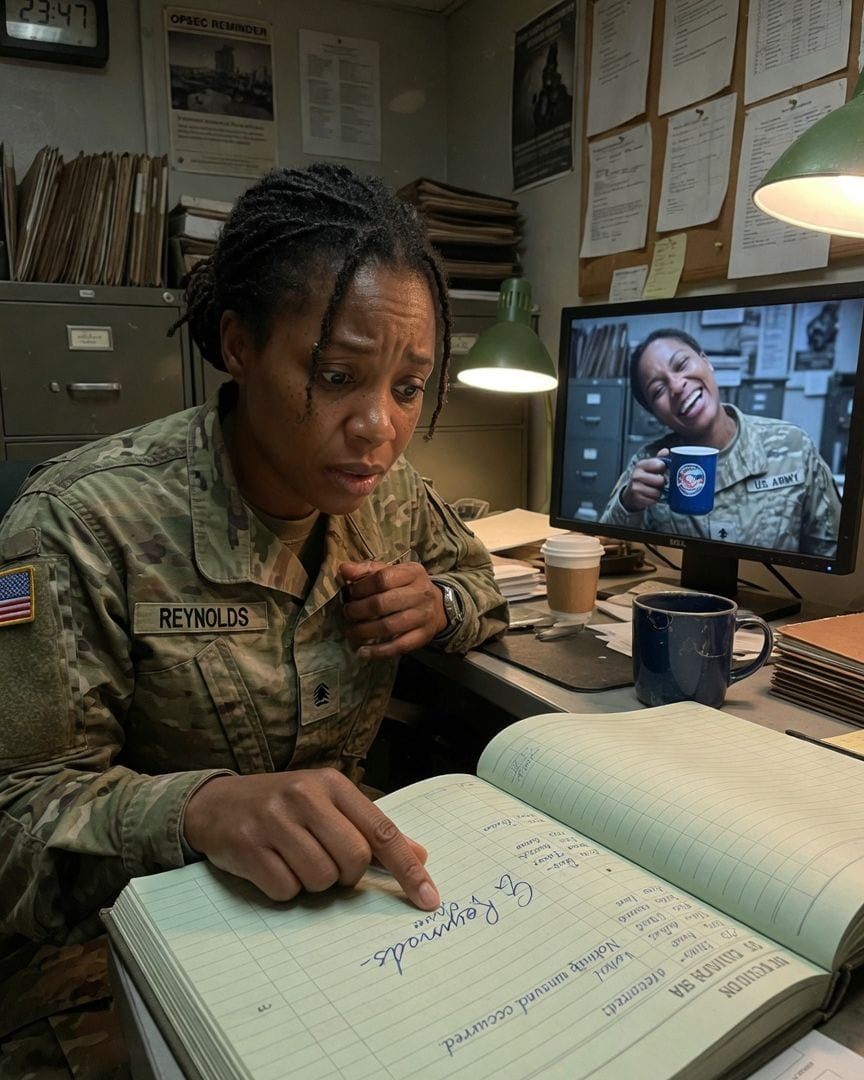
Lieutenant Grace Reynolds saw her own signature in the staff-duty log for a shift she never worked. The security footage then showed 'her' leaving a coffee mug she’d never once seen.
Lieutenant Grace Reynolds hunched over the battalion staff-duty log, the fluorescent hum of the records room a monotonous backdrop to her dry inventory audit. Her gaze snagged on an entry from three weeks prior: her own unmistakable signature, closing out a full 24-hour staff-duty shift she knew she had never worked. Security camera footage only deepened her unease, showing 'Grace Reynolds' moving with her familiar stride, laughing a shade too brightly, her head tilting a fraction too precise, like a flawless, chilling performance. But as the imposter turned to leave, she picked up and rinsed a chipped, dark blue ceramic coffee mug with a faded diner logo—a mug Lieutenant Reynolds had never once seen in her life. The air in the quiet room grew heavy, thick with the unspoken wrongness: if that wasn't her, then who was it?
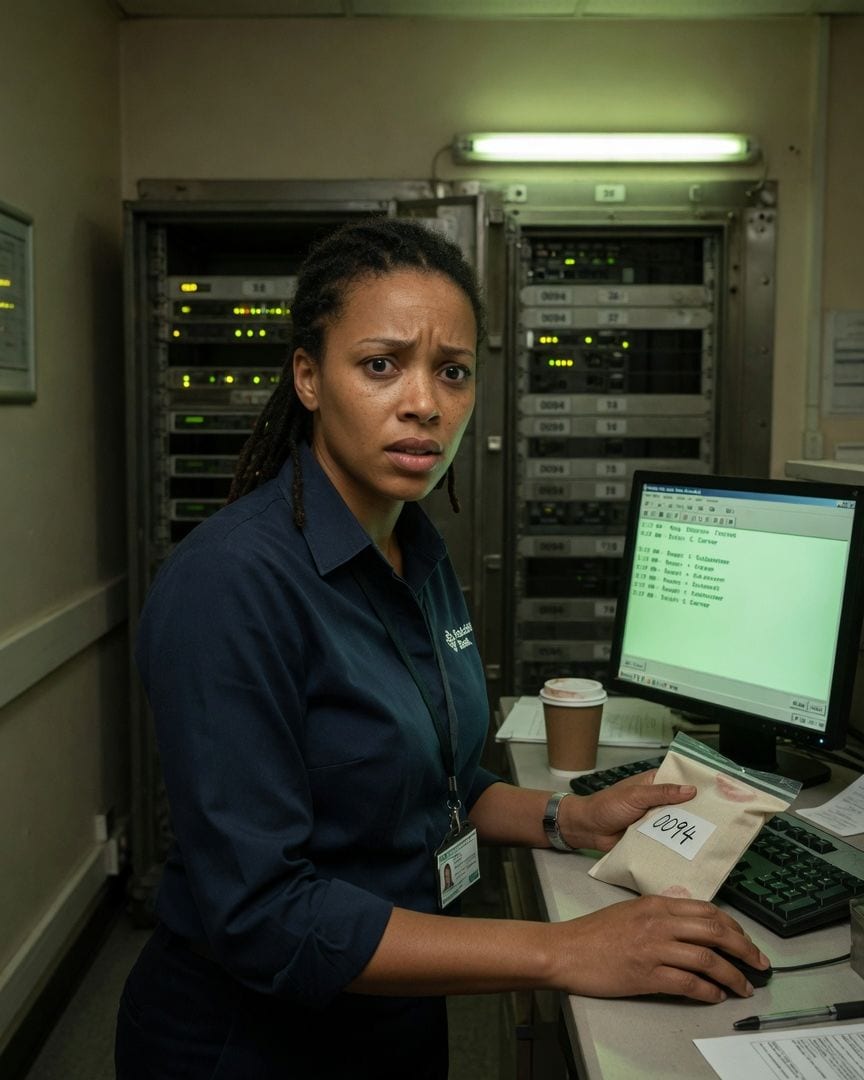
My night-deposit log shows a bag posted at 3:17 AM. My teller number, my count. Bag 0094 is still sealed in the safe, untouched.
I prided myself on precision as a night teller, logging every entry. But at 3:17 AM, a deposit appeared logged under my teller number that I never processed. Security footage then revealed a figure in my uniform, wearing my ID badge, with a blank photo slot.
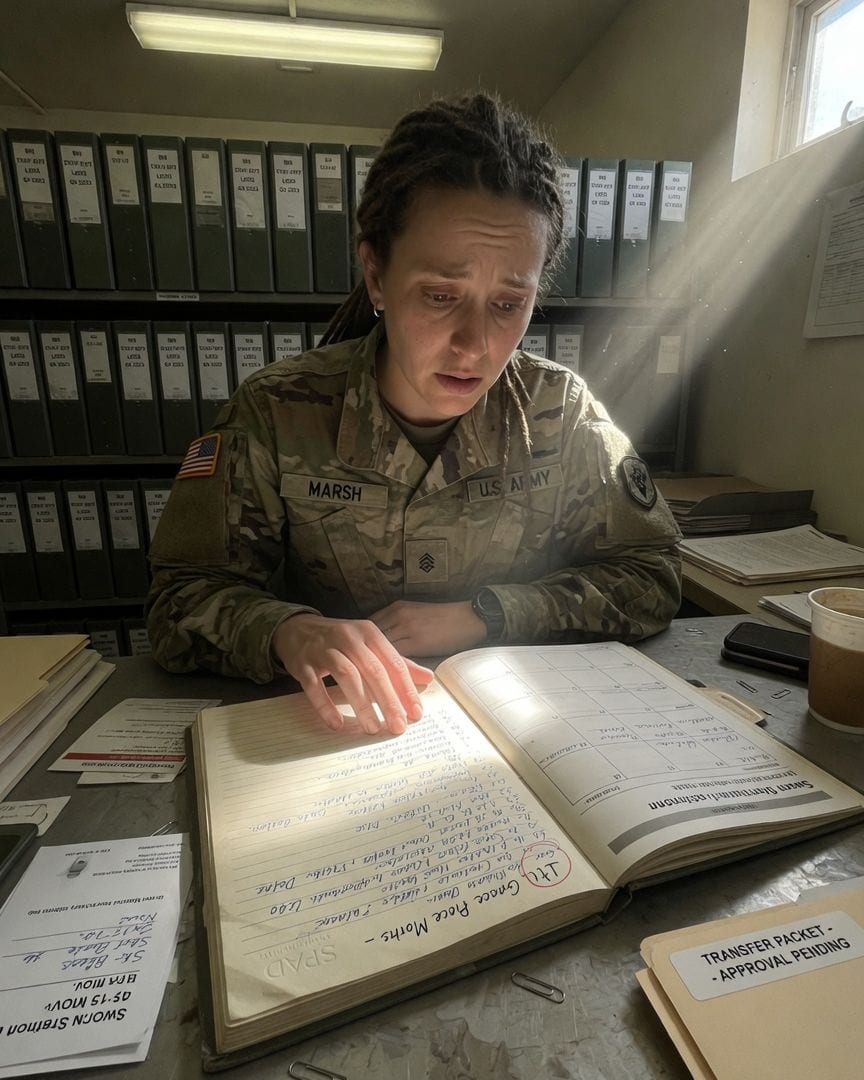
Preparing for a coveted post, a logistics officer found her own perfect signature on a duty log for a shift she swore she never worked. Then her coworker’s entry revealed his unique personal quirk.
Lieutenant Grace Marsh, a meticulous logistics officer, was deep in the archives, preparing her transfer packet for a coveted post. Her career depended on a spotless record, requiring absolute precision as she cross-referenced battalion staff-duty logs. Amidst the dusty binders and humming fluorescent lights, her gaze snagged on an entry for November 14th: her own perfect signature, logging a 24-hour shift she distinctly remembered spending hundreds of miles away in a court-martial. The impossible truth of a phantom doing her job was unsettling enough, but then she found another officer's entry, complete with his unique, personal quirk, for a day he was off-base. What was hidden in these official records?