My sleep app recorded a second voice counting in my room at 2:50 AM. I live alone.
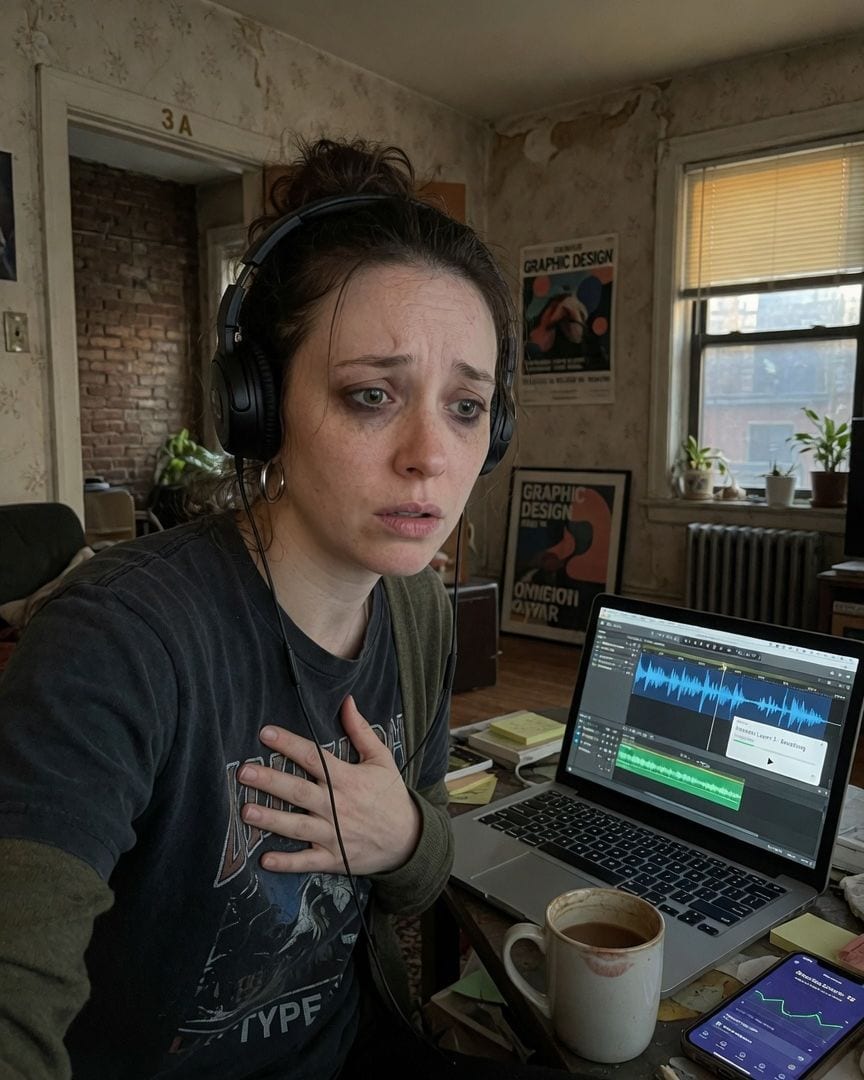
I was scrolling idly through my sleep app’s timeline, a mundane chore to check my snoring score. It was late afternoon, coffee in hand, the kind of quiet hour where I usually plan out graphic design layouts.
Last Thursday’s data unfurled, a flat line of quiet breathing until 2:50 AM. Over my own slow, steady rhythm, a second sound emerged, faint but unmistakable. A voice, low and unhurried, counting.
“One… two… three…” It was the sound of someone counting a sleeping child, soft and deliberate, just before they’re lifted. I froze, my breath catching in my throat. I lived alone.
My apartment, 3A, on the top floor of an old brick building at 247 Ashwood Ave, had been mine for three years. I rewound the clip, played it again.
“One… two… three…” The voice was right there, in my room, counting.
Rationality kicked in, cold and sharp. I spent the next day trying to debunk it.
I checked the app’s settings for false positives, reviewed my phone’s microphone access, even recorded a test night with a second device to catch ambient noise. I wanted to find the draft, the creaking pipe, the outside noise, anything. Nothing.
The counting was unique to that specific recording, isolated in a pocket of otherwise silent audio. I played the raw audio for my friend, Camille Galloway, an archivist who was usually unflappable.
We were at her kitchen table, her cat winding around our ankles, the sound of traffic a dull hum outside. Camille listened, her brow furrowed, a faint frown etching between her eyes.
“It’s… unsettling, Paige,” she admitted, then tried to find an out. Interference, she suggested, a radio bleed-through from a nearby signal, or maybe a dream caught on mic, some trick of the subconscious.
I tried to convince myself, really tried, but the sound was too crisp, too present, too there. I downloaded some basic audio editing software, the kind I’d used for cleaning up voice memos.
I isolated the frequency range of the voice, trying to clean up the hiss of the original recording. As the background static faded, stripped away layer by layer, a new, faint, rhythmic hum became audible.
It was a low, almost musical drone beneath the counting. It felt ancient, like a forgotten lullaby. It clung to the air, heavy and strange.
I worked on the audio for hours, hunched over my laptop, chasing the hum. My eyes were burning, my fingers stiff. I boosted the quietest frequencies, hoping to clarify the melody, to identify it, to place it.
Instead, a new, horrifying detail emerged. Beneath the counting, beneath the faint, ancient hum, was something else entirely. A whisper of sound, so delicate it was almost swallowed by the silence, yet undeniably there. A soft, rhythmic breathing.
The tiny, shallow breaths of a sleeping child. My hands trembled. I sat in the silent, empty room, headphones clamped to my ears, listening to the impossible, chillingly clear sound, as if the child was right there.
The child’s breathing shattered my composure. It wasn’t a glitch. It wasn’t a dream. It was real. I couldn't sleep, couldn't unhear it. The sound looped in my head, a terrifying lullaby.
I dragged Camille to the local historical society the next morning, my eyes gritty from lack of sleep. She was visibly unnerved now, her usual composure fractured, but she still tried to talk me down on the ride over.
“Paige, we need to be rational. There’s a logical explanation for everything.” I just shook my head. “Not for this,” I told her.
I marched straight to the archives desk, demanding to see old records for 247 Ashwood Ave, the address of my apartment building. Camille, bless her, helped me navigate the microfiche readers, her fingers surprisingly steady.
We found faded newspaper clippings, police reports, and even some local folklore archives. A pattern emerged, chillingly consistent. Reports of missing children from the building, particularly the top-floor units, stretching back to the 1950s. All unsolved.
Local legends whispered of ‘The Nanny,’ a figure who ‘collected’ children.
Camille tried to rationalize it as coincidence, the kind of urban legend that attaches itself to old buildings, but I fixated on one detail, repeated in multiple accounts: a recurring mention of a ‘strange humming’ or ‘lullaby’ often heard before the disappearances.
I played the cleaned audio, focusing on the hum, for Florence Muller, an elderly woman now in a care home, who used to live in the building.
I’d tracked her down through a convoluted search of property deeds and city directories. Florence, frail and sitting in a floral armchair, stiffened when she heard it, her eyes wide with a fear that seemed ancient.
“She’s counting again,” Florence whispered, her voice frail, before clamping her mouth shut, refusing to say another word. The nurses tried to soothe her, thinking she was confused, but I knew better.
Florence’s reaction chilled me to the bone. “She’s counting again.” The words echoed in my mind, a cold whisper in the back of my skull. Later that night, back in my apartment, the silence felt wrong.
It pressed in, thick and heavy, and I felt an unnerving prickle on my skin, a distinct sense of being observed. I dismissed it as nerves, a trick of the mind. I kept telling myself that.
But when I woke the next morning, something was different. On my bedside table, where only my phone had been, sat a small, antique wooden abacus. Its beads were smooth, worn, as if counted countless times.
They were a dull, aged red and yellow, polished by years of touch. My heart hammered against my ribs, a frantic drum. I had never seen it before in my life. It was simply there.
I checked my discreet security camera, a small lens pointed at my bed, which I’d set up weeks ago, just to catch my cat’s midnight antics.
The footage from 2:50 AM showed a brief flicker, a momentary distortion in the feed, a static burst that obscured the frame for a split second. No clear image of anyone.
Yet, in the morning’s first light on the recording, the abacus was undeniably there. It hadn’t been there the night before. Someone, or something, had been in my room.
Armed with the abacus and a printout of the oldest missing child report from my building, I returned to Florence. She was calmer today, but her eyes still held a haunted look.
I placed the paper and the abacus on her lap. “This is your building, Florence. 247 Ashwood Ave. This child, Martha Sinclair, went missing from 3B in 1958. Did you know her?”
Florence stared at the paper, her gaze fixed on the date. Her eyes welled up, bright with unshed tears. “Martha… my sister,” she choked out, her voice suddenly raspy, thin with old grief. “She was only three.
They said she wandered off. Said we didn’t watch her closely enough.” My throat tightened. “What about the counting, Florence? The hum? The lullaby?” I pressed, gently pushing the abacus closer. Florence’s fingers brushed the worn beads.
She nodded slowly, tears streaming down her wrinkled face, tracing paths through the age spots. “They called her ‘The Nanny.’ Not a real nanny. Oh, no. She took the ones no one wanted, the ones who wouldn’t be missed.
The children who had nowhere else to go. She always sang that lullaby, that terrible hum, and counted them. One… two… three…” Florence remembered hearing the counting from her own apartment, faint but clear, the night Martha vanished.
She described the chilling cadence, the way it seemed to draw the air out of the room, leaving a vacuum of silence in its wake. It was the exact sound I had on my sleep app.
The abacus, Florence said, was often left behind, a morbid signature. A tally mark for the missing. The pieces clicked into place with a sickening thud: the lullaby, the counting, the abacus, the child’s breathing. The disappearances.
It was all connected to ‘The Nanny’ and her apartment building. It wasn’t a legend. It was real.
The truth about ‘The Nanny’ was horrifying, a cold knot in my stomach, but I felt a deeper, more personal unease. Why was it happening now, in my apartment? Why had the abacus appeared?
Why was my sleep app recording it? I needed more. Camille, now fully invested, her archivist’s curiosity overriding her fear, pulled strings to access restricted archives from a defunct local adoption agency.
We spent hours poring over microfiche, the old machine whirring, sifting through decades of forgotten files. The air in the archive room was stale, thick with the smell of old paper and dust.
Then, Camille gasped, a sharp, sudden intake of breath that made me jump. “Paige, look at this. Oh, god, look.” She pointed a trembling finger at the glowing screen. I leaned in, my breath catching in my throat.
The record listed an infant, female, with my exact birthdate. My name: ‘Paige Sinclair.’
But beneath the name, in bold, stark lettering, was a stamp, like a brand, that screamed off the yellowed digital image: ‘MISSING - ADDRESS OF ORIGIN: 247 Ashwood Ave, Apt 3A.’ My apartment number.
And the date on the file was from decades ago, years before my adoptive parents had even met. Years before I was even born, according to my own history.
I stared at the impossible record, my own name and birthdate glaring back at me from a past that could not possibly be real.
I confronted my adoptive parents, the faded microfiche printout trembling in my hand.
We sat in their living room, sunlight streaming through the window, illuminating the dust motes dancing in the air, a contrast to the darkness of the truth I was unearthing. They looked at the document, their faces turning ashen.
They confirmed a version of the story they’d kept secret for decades. They hadn’t adopted me through an agency, not formally.
They had found me, a tiny infant, abandoned in a basket near the Ashwood Ave building, crying softly, tucked away almost out of sight.
They had feared the authorities, feared I’d be lost in the system, so they’d taken me in, raising me as their own, creating a new life for me.
They knew nothing of ‘The Nanny’ or the disappearances, only the miracle of finding a baby when they’d longed for one.
The adoption record Camille found must have been a ghost, a false entry in some ledger, a 'failed' collection, a clerical error from the entity's own terrible accounting.
I looked at my parents, their faces etched with relief that the secret was finally out, but also deep regret.
The truth detonated in my mind, a silent, internal scream: the hum, the counting, the abacus, the child’s breathing in the recording – they weren't just echoes of history. They were signals. I was meant to be taken.
I had been counted, chosen, and then, somehow, diverted, rescued by a desperate, loving couple. My return to the apartment had reopened a door, reawakening the claim. I was one of the counted, and now, the tally was being completed.
I returned to my apartment. The air was heavy, thick with an unseen presence, a coldness that seeped into my bones despite the warmth of the evening. I checked my sleep app.
A new recording for the current night was already forming, a clear, distinct waveform at 2:50 AM, precisely. This time, the hum was louder, clearer than ever, a mournful, ancient lullaby that permeated the room, vibrating in the very floorboards.
It wasn’t a sound coming from my headphones; it was in the room.
The child’s breathing was no longer faint; it was a soft, almost desperate cry, a sound of longing, right there beside me, as if a small, cold form lay nestled in the empty space on my bed.
And then, the counting began, slow and deliberate, a whisper that raised the hairs on my arms: “One… two… three…” It wasn't counting a child to be lifted. It was counting her. It was counting me.
I felt a profound coldness descend, a gentle, unseen hand brushing my hair, a phantom touch that was both terrifying and strangely familiar, like a mother’s touch that had somehow forgotten me. There was no fight in me, no scream.
Only a deep, unsettling understanding, a recognition of my true place. I was being claimed. I had always been claimed.
The dread was not in the taking, but in the recognition that this was simply my true fate, a return to where I belonged, a tally finally completed. I understood, but I could not act.
I simply closed my eyes, letting the lullaby wash over me.
Paige Sinclair’s apartment lease was terminated a week later. Her phone was disconnected. Camille tried every avenue – police reports, missing person filings, contacting her parents – but Paige had simply vanished, leaving no trace.
Florence Muller, in the care home, would often ask the nurses if ‘the counting has stopped,’ her eyes distant and knowing. No one understood her questions.
The apartment building at 247 Ashwood Ave, Apt 3A, was soon listed for rent again, its dark history quietly unmentioned.
Months later, Camille drove past the old building. A moving truck was parked outside, and a young couple, cooing over a tiny baby in a carrier, carried boxes into the entrance.
They paused, looking up at the top-floor window of Apt 3A, smiling. Camille watched them, a strange unease settling over her, a chill that had nothing to do with the crisp autumn air. She drove away, not looking back.
The hum of the old lullaby was the first thing I heard when I woke, and the last thing I heard as I drifted off, every night.
If this one got to you
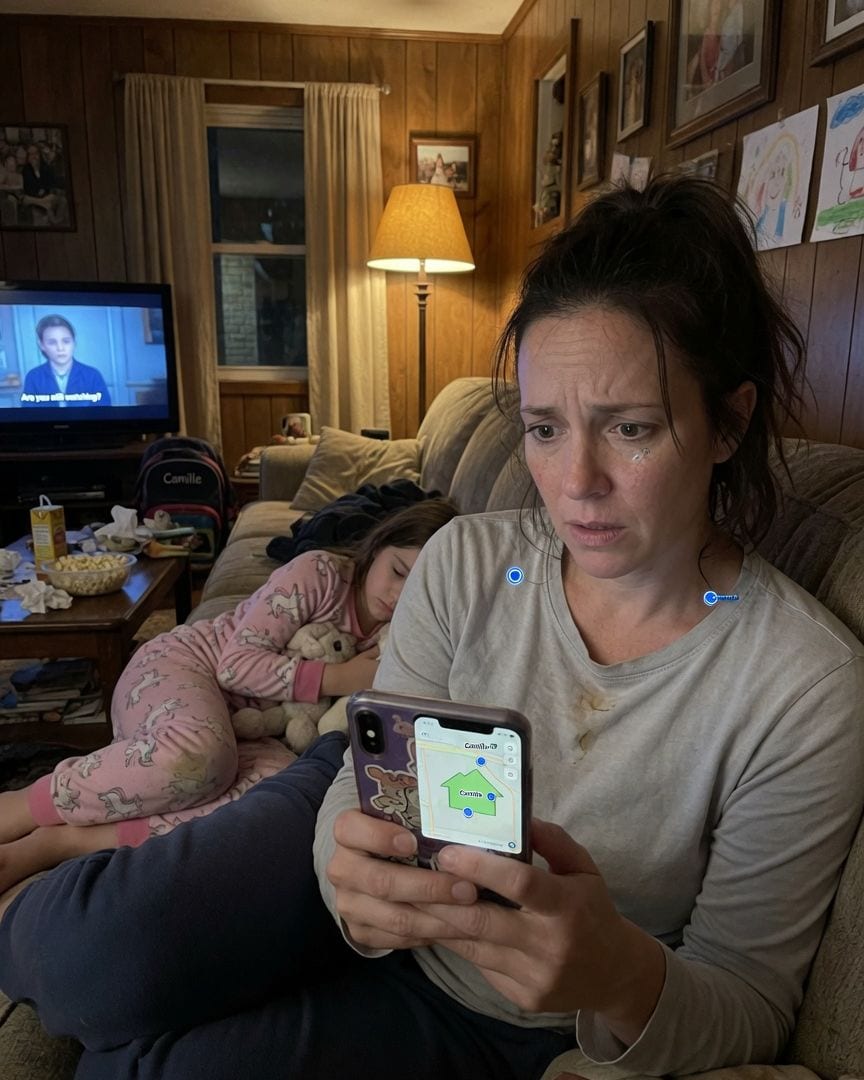
My daughter's voice memo recorded a man's voice in her bedroom. No one else was home.
Curled on the sofa, I watched my eight-year-old daughter Camille sleep, her old smartphone in my hand. I idly checked its Find My Phone app, expecting to see her blue dot inside our house. Instead, a second identical blue dot paced silently outside, tracing the perimeter of our home.
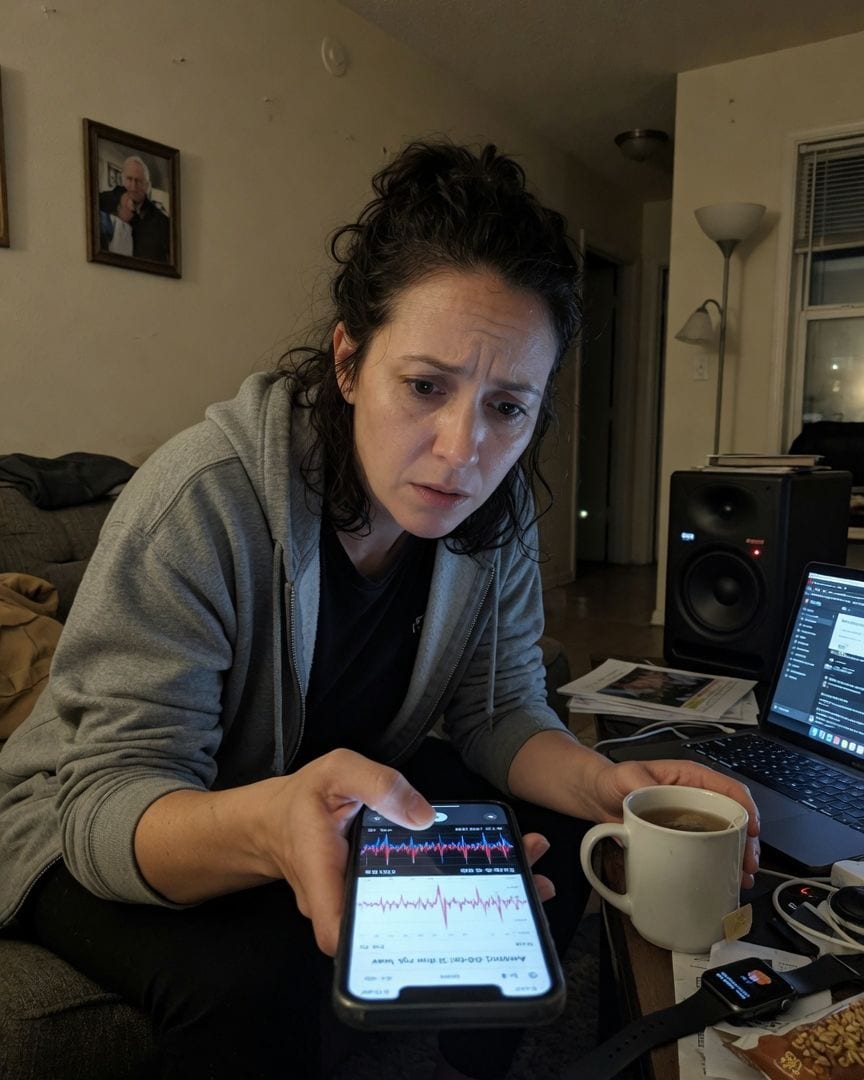
My dead father's smartwatch heart-rate graph climbs again, fast, running hard, three days after he died.
My apartment felt too quiet after my father passed away. Three days later, I found his smartwatch had recorded a violent heart-rate spike, lasting eleven minutes, at 4 AM. He was sixty, not a runner, and dead.
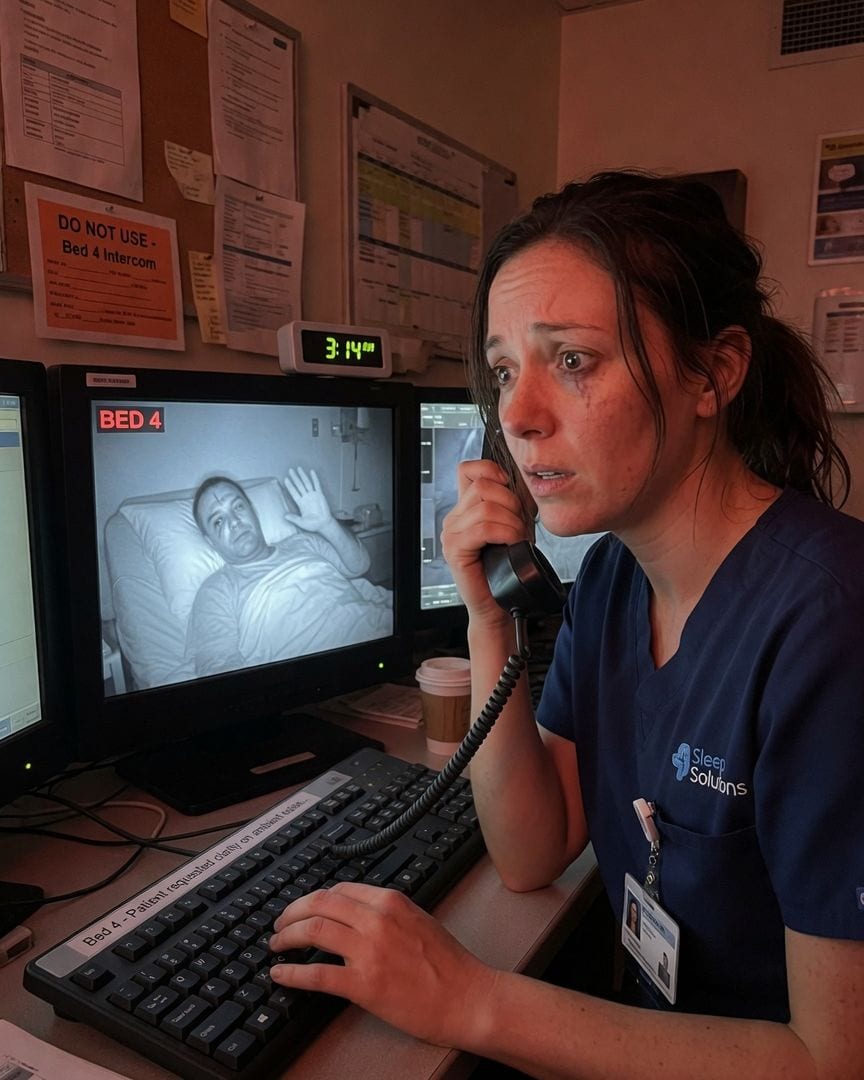
Bed 4's patient always waves at my camera, asking if I hear the humming. Bed 4 was never booked.
As an overnight nurse, my shift at Sleep Solutions is usually routine. But after interacting with a patient in Bed 4, my manager insists the room has been off-limits for deep cleaning all week with its intercom disconnected for months. Yet, I found a faint, warm indentation on the new mattress where the patient had been.
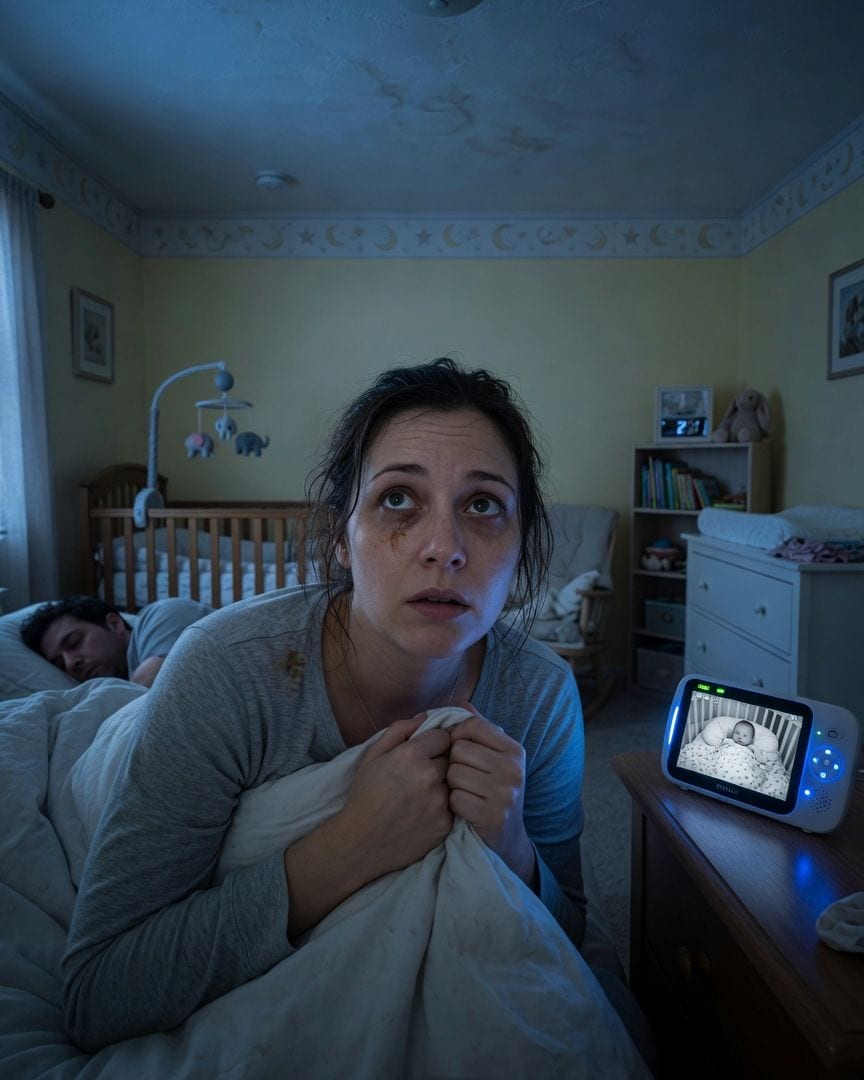
My baby monitor plays a lullaby from an empty room. But the floor holds a rocking chair's deep, decades-old track.
Every night, my baby monitor plays a lullaby and a rhythmic rocking chair creak from Emily's room. But the camera feed always shows her tucked in her crib, completely alone, in a silent, empty nursery. The sound is impossibly clear, as if the speaker were right there, even though nothing is.
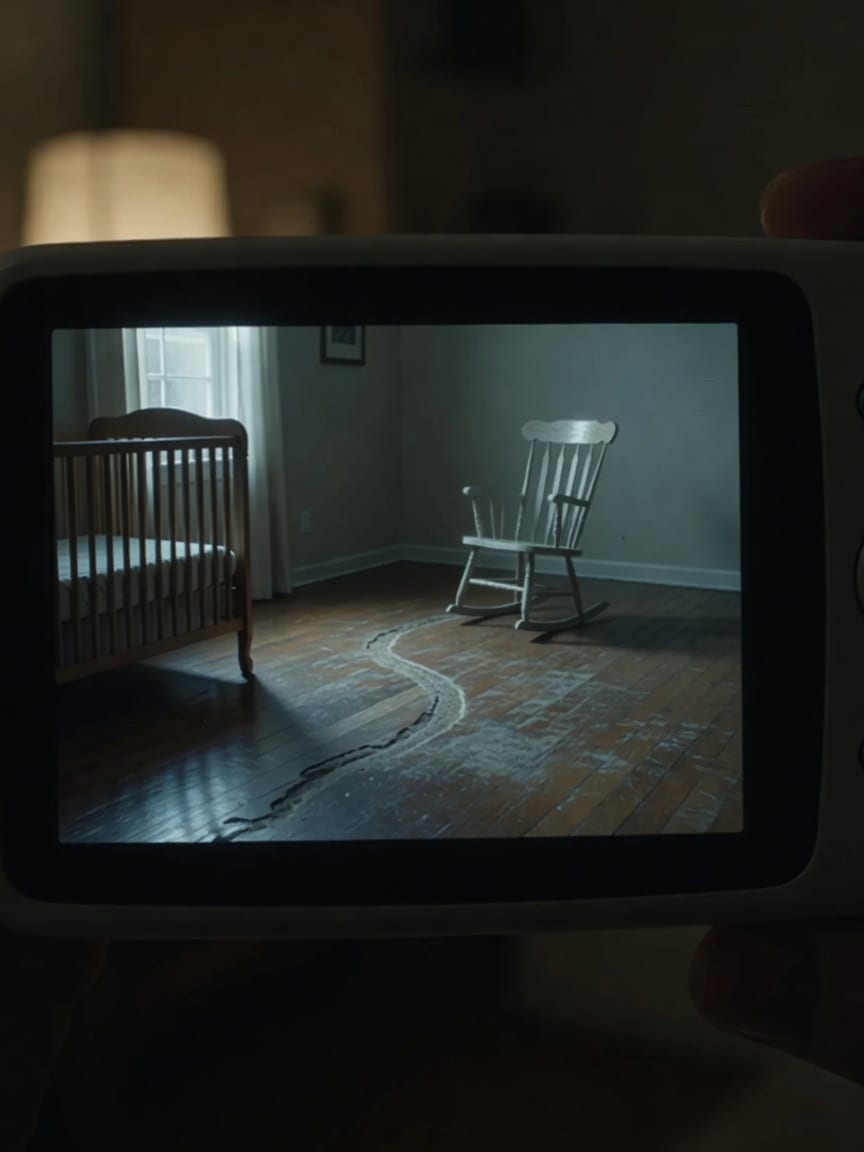
My baby monitor hums a lullaby at 2 AM. I hear a rocking chair creak. The camera shows my daughter's room empty, every night.
Every night, my baby monitor hums a gentle lullaby and a rhythmic creak, as if a rocking chair is in Lily's nursery. But the room is always empty, the monitor's camera shows nothing, and we don't even own a rocking chair. Then I found a newspaper clipping from sixty years ago, detailing a child's disappearance from our house.
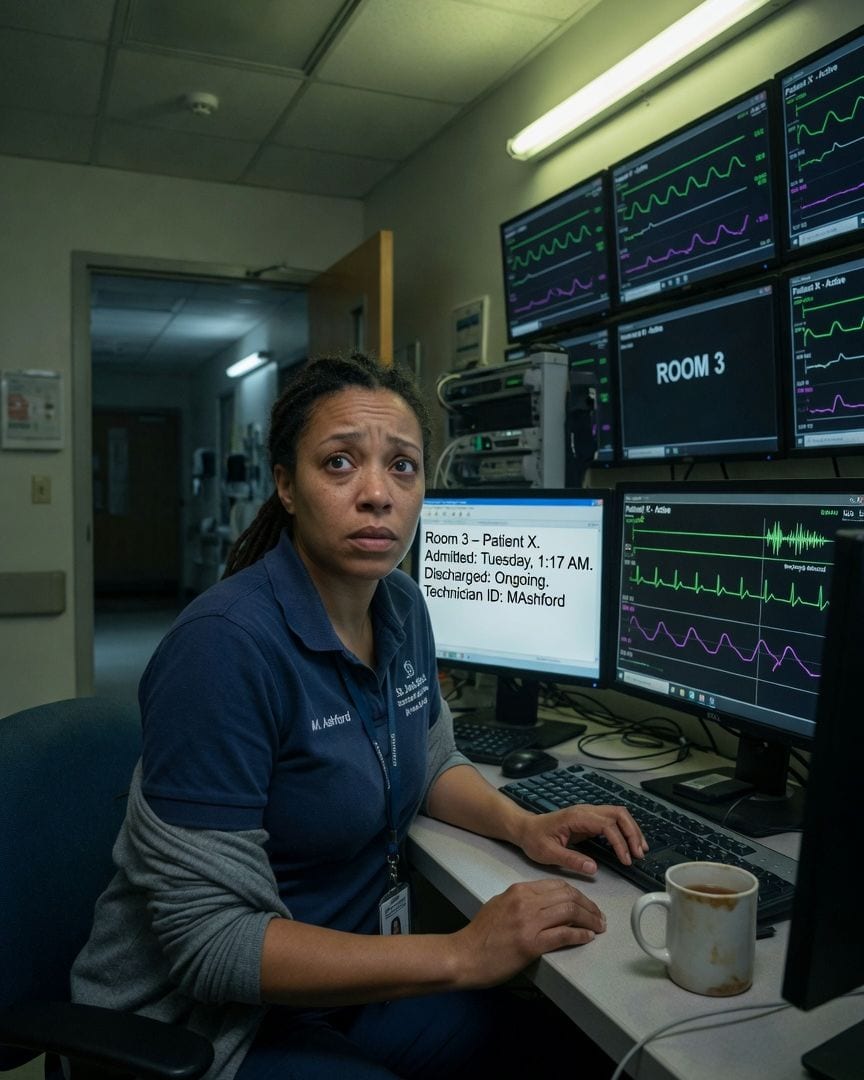
My monitor shows Room 3's patient coughing, but the room is empty and stripped bare.
Working the night shift at St. Jude's Sleep Clinic, I noticed Room 3's monitor showing a patient's vital signs and a faint cough. But Room 3 has been out of service for months, stripped bare after a leak. My system diagnostics confirmed a strong, clean signal, as if a patient were genuinely there, sensors properly attached.