My smart thermostat found a hot room between my kitchen and bathroom walls. There’s only a meter of solid wall there.
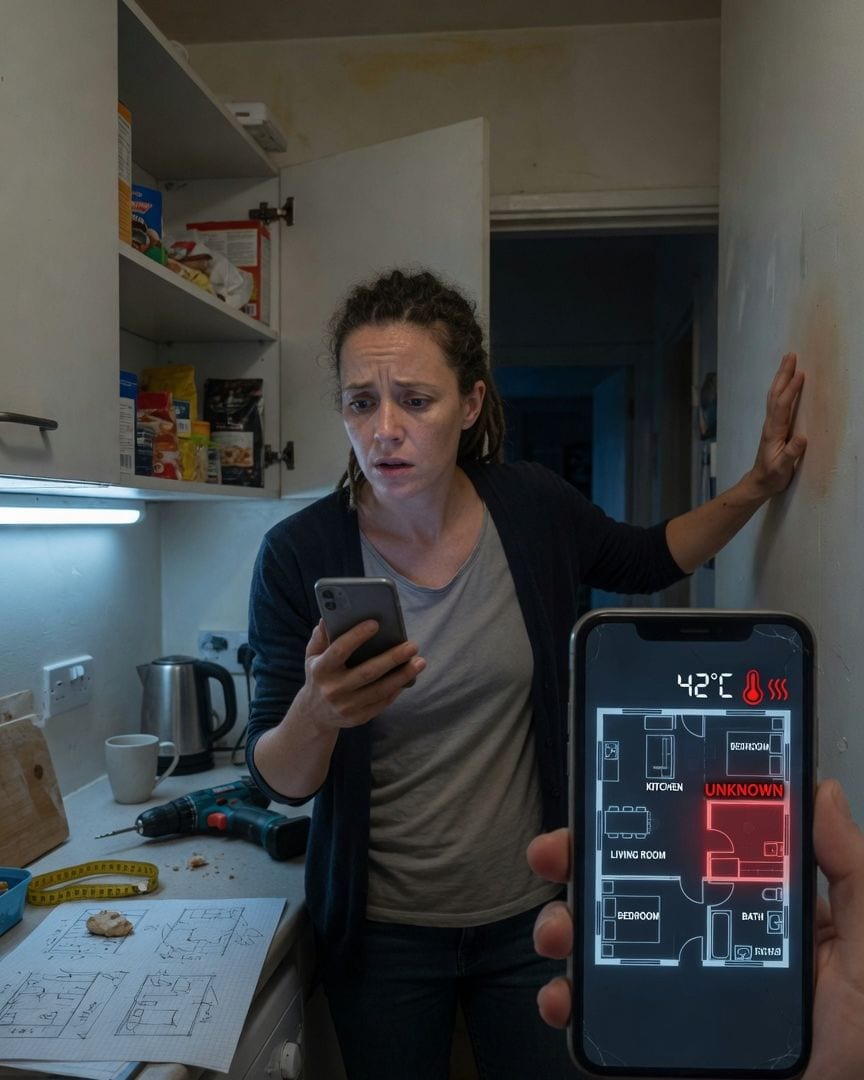
The first time I noticed it, I thought it was a joke. You know, a software glitch, something the smart home system was doing to mess with me.
I was making coffee, scrolling through the climate data on my phone, and there it was, a new room on the digital floorplan.
Tucked in that odd, tight space between my kitchen and bathroom, a space that has always been solid plaster and brick, a mere meter wide. It was labeled 'UNKNOWN', and next to it, the temperature: 42 degrees Celsius.
I remember staring at the screen, blinking, then walking over to the wall. It’s right behind the pantry in the kitchen, and a small part of the bathroom wall opposite. I pressed my palm against it.
It was distinctly hot, radiating a dry, almost artificial warmth. Not like a sun-warmed wall, but like something internal, forced. I pulled up the building's official floorplans on my tablet, the ones I got when I bought the flat. Nothing.
Just a solid dividing wall. I had even sketched out my own rough layout when I first moved in, trying to figure out where to put furniture. I checked that too. Same thing. Solid. Empty.
And yet, the thermostat diagram, blinking back at me from my phone, insisted it wasn’t. It insisted there was a room there, a hot, impossible room, just behind that thin stretch of wall.
I tried to rationalize it, of course. Maybe the sensor had gone rogue, picking up heat from a neighbor’s superheated boiler pipe, or maybe there was a freak pocket of trapped air.
I called the building manager, old Mr. Henderson, who has a knack for making you feel like a nuisance. I explained the 'UNKNOWN' room, the 42 degrees. He just chuckled, a dry, dismissive sound. "Software glitch, love.
Happens all the time with those smart gadgets. Ignore it. We’ve had no reports of fires." He hung up before I could even tell him about the heat I felt with my own hand. But I couldn't ignore it.
The idea of a phantom room, baking hot, inside my apartment, burrowed under my skin.
So, I decided to map the apartment myself. Properly. I got a measuring tape, graph paper, and a pen. I started with the kitchen, meticulously counting cabinets, pacing out the floor. Two doors. I moved to the living room.
Three windows, one door. I drew the lines, sketching out my home room by room, making sure every inch was accounted for. I counted my physical rooms: kitchen, living room, bedroom, bathroom. Four rooms. Simple.
Then I cross-referenced my new, precise diagram with the smart thermostat's digital map. The 'UNKNOWN' room persisted, a red-hot anomaly in the heart of my home, a fifth room that shouldn't exist. My sketch showed four distinct, connected spaces.
The thermostat showed five. I paced again, checked the dimensions of the 'hot zone' against my drawing. The numbers refused to add up.
There was one more 'space' on the thermostat's diagram than physically existed in my apartment, and the discrepancy was consistent every single time I checked. My home, the solid, predictable logic of it, had failed.
I stared at the hot, solid wall, no longer able to ignore the impossible. The heat was still there, a constant presence, humming faintly against my fingertips even when I couldn't hear it.
Driven by a desperate need for a concrete answer, something I could touch and verify, I retrieved my drill from the utility cupboard. I picked out a thin, general-purpose bit, meant for plaster and brick. My hands were shaking slightly.
This was absurd. I was drilling into my own wall because of a ghost room on a thermostat app.
I carefully selected a spot in the center of the persistently hot section, a little behind the pantry where it wouldn't be easily visible. I took a deep, shaky breath and pressed the trigger.
The drill bit, meant for plaster and brick, punched through with surprising ease, finding no resistance at all. Instead of plaster dust or insulation, a distinct, cold draft washed over my hand, carrying a faint, metallic smell.
From the sudden, dark void within the wall, a low, distant hum echoed.
I bought a cheap endoscope camera online, the kind that connects to your phone. The packaging promised it was for inspecting drains or car engines, not whatever the hell this was.
My hands still trembled as I fed the thin, flexible cable through the small pilot hole. On my phone screen, the camera's light flickered, illuminating a dark, empty space that stretched further than any cavity should.
Far, far beyond the confines of my building’s known structure. The 'far wall' of this void wasn’t plaster or brick; it was an indistinct, almost shimmering surface.
It seemed to recede into the darkness, covered in faint, geometric patterns that subtly shifted at the edge of perception, like something just out of focus. It was unlike any building material I'd ever seen.
It felt ancient, but also… new. Alien.
I spent hours, then days, online. My search history became a bizarre catalogue of desperation: 'impossible architecture,' 'spatial anomalies in urban planning,' 'buildings with missing rooms.'
I delved into obscure academic papers, most of which were impenetrable, and a few cryptic local history forums. There were whispered theories about ley lines, strange energy convergences, and 'places that don’t belong.'
One name kept recurring in discussions of forgotten city projects and structural oddities from the 1970s: Daniel Thornton. The original architect of my building, I learned. Rumored to be a recluse, but still alive.
As I delved deeper, my internet searches became more specific, more targeted.
I noticed odd delays in my connection, moments where pages froze, or my browser history occasionally cleared itself of my more esoteric queries, as if someone was watching, or trying to interfere.
Then, a single, anonymous email landed in my inbox. No sender, no subject line, just a chilling warning: 'Some walls are best left undisturbed. Let sleeping walls lie.' My unease ratcheted up a notch.
This wasn't a glitch, and it wasn't a prank. Someone knew. Someone was paying attention. It had to be Thornton. I finally tracked him down through property records and an old architect's guild listing.
After several attempts, voicemails, and an actual letter, I secured a hesitant meeting.
He was an elderly man, impeccably dressed in a tweed jacket, his white hair meticulously combed. His eyes, though, were what unnerved me most – unnervingly calm, almost placid, as if nothing could surprise them.
He listened to my story about the hot wall, the endoscope footage, the 'room that isn't counted,' with an almost serene patience.
He offered only vague platitudes about 'the mysteries of the earth' and 'structures that defy logic,' subtly trying to dissuade me from further investigation.
"There are things, Miss Underwood," he said, his voice a low rumble, "that are simply beyond our current understanding. Sometimes, it is best to simply accept them."
But his unbothered demeanor, his strangely serene calm, felt less like ignorance and more like a profound, weary knowledge. He didn't seem surprised. He seemed… burdened.
I pushed back against his evasions. "Mr. Thornton," I said, my voice sharper than I intended, "I saw geometric patterns through that camera. Patterns that shifted. I felt a cold draft, and there's a metallic hum.
It's an empty space, but it's not empty, not really. It’s impossible." The serene calm finally broke on his face, replaced by a flicker of grim recognition, a deep, painful memory surfacing.
He rose slowly, went to a locked cabinet in the corner of his dusty, cluttered office. He pulled out a heavy, leather-bound portfolio, its edges worn smooth by time.
Inside were heavily redacted, unofficial blueprints for my building, not the sanitized ones I’d seen. Across a section that perfectly corresponded to my kitchen/bathroom wall, a grim, looping script read: 'CONFIDENTIAL – SUB-LEVEL VOID – CONTAINMENT ZONE ALPHA.'
He admitted it then. He’d encountered the anomaly during the building's original construction in the early 70s. "It wasn't a room, Miss Underwood," he explained, his voice flat, heavy.
"It was a 'spatial knot' – a localized tear in reality that manifested as an absence, a pocket of non-space that draws energy." He’d tried to seal it, to 'contain' it, believing it was dormant, a sleeping thing.
The heat I felt, the hum I heard, the shifting geometry I saw – it was all part of its signature.
"I thought it was over," he whispered, staring at the blueprints, "I truly thought I had sealed it away for good."
Daniel Thornton's voice was low, heavy with decades of unspoken dread. He flipped to another page in his portfolio, revealing an old, faded newspaper clipping from the 1970s.
The headline was sensationalist, almost lurid: 'Mysterious Structural Failures Plague New City Developments.'
The article detailed a series of inexplicable 'collapses' and 'disappearances' in other residential buildings he had designed, all with vague mentions of 'unusual energy readings' and 'unexplained thermal anomalies' in the days leading up to the incidents.
He pointed to a detail in the article – a specific, recurring date pattern, mentioned almost as an aside in the reporting. His finger tapped a date circled in red on the clipping – a date that was tomorrow.
He looked at me, his calm composure finally cracking, and whispered, "The cycle... it's due again. And it's never just one building."
We raced back to my apartment, the urgency in Daniel’s eyes chilling me to the bone more than any temperature anomaly had. In the car, he explained the full, terrifying truth.
The 'spatial knot,' he called it, was a recurring phenomenon, not a one-off. A self-sustaining pocket dimension that periodically opened, attempting to 'right itself' by drawing ambient heat and space from its surroundings.
His original containment efforts, decades ago, merely delayed its full manifestation, redirecting its energy rather than nullifying it.
The 'record that cannot be' wasn't just the newspaper clipping; it was a series of suppressed incidents across several of his early developments, all linked by the same underlying geological anomaly.
The geometric patterns I saw were the 'seams' of the fold, the heat its growing energy signature. "It isn't a single event, Eileen," he said, his voice tight.
"It's a persistent, cyclical pattern, a slow, quiet invasion of impossible geometry that has been trying to break through for decades. And your apartment is its latest, most active breach point."
As we entered my flat, the air already felt different. Thicker. From the hot wall, the plaster began to visibly warp and ripple, like cloth under unseen pressure.
A low, continuous groan resonated through the building, a sound I could feel in my teeth. I glanced at my smart thermostat; the temperature reading for the 'UNKNOWN' room was rapidly climbing, past 50, then 60 degrees Celsius.
Daniel, having anticipated this full recurrence, didn’t hesitate. He pulled out a device from a worn canvas bag he’d brought with him – a 'spatial resonator,' he called it. A complex array of copper coils, crystalline components, and thick wires.
"I built this decades ago," he grunted, already moving, "designed to disrupt the knot's energetic signature. Force it dormant." We worked frantically, bolting the heavy resonator to the rippling wall, connecting wires to a portable power supply he’d brought.
The air grew heavy, thick with the metallic scent I’d noticed earlier, now overwhelmingly strong, tasting of ozone and something else, something cold and deep.
As Daniel activated the device, it hummed, a deep, resonant tone that vibrated through the floorboards, through the very soles of my feet.
The wall shimmered violently, like water disturbed by an unseen force, the plaster struggling to hold its form. Then, slowly, agonizingly, it began to cool. The shimmering subsided. The groaning ceased.
The smart thermostat's 'UNKNOWN' room flickered erratically, its temperature plummeting back to normal, then the room itself vanished from the digital display as if it had never existed. Daniel collapsed against the opposite wall, gasping for breath, exhausted.
The knot was sealed. For now.
The apartment was quiet. The wall cool and solid to the touch, no trace of the heat or the warping. The smart thermostat showed a normal temperature, the phantom room gone from its diagram as if it had never existed.
Daniel Thornton, having finished his decades-long penance, disappeared quietly in the night, leaving only a cryptic note on my kitchen counter: Thank you, Eileen. For helping me finish what I started. I never reported the incident. Who would believe it? A spatial knot? A pocket dimension in my wall?
They'd dismiss me as delusional, or worse. I sold my apartment within weeks, unable to live with the knowledge of what had lain just beyond the plaster, barely contained.
I moved to a different part of the city, avoiding any buildings designed by Daniel Thornton, though that proved harder than I expected. He’d built so many of them in the 70s and 80s.
I often found myself driving past them, however, seeing them with new, unnerving eyes, wondering what impossible spaces lay hidden within their walls, waiting for their cycle to come around again.
One afternoon, I stopped at a coffee shop in a bustling new development, trying to distract myself, scrolling through local news on my phone.
A small, innocuous article caught my eye: 'City Council Approves Revised Plans for Downtown Tower After Unexplained Structural Discrepancy,' with a sub-headline: 'New 'ghost' floor appears on building plans.'
I glanced up at the cafe's ceiling, then at the sleek, modern building rising around me, feeling a cold dread settle in my stomach. I remembered Daniel's last words, the grim certainty in his voice: 'It's never just one building.'
It was right above her.
If this one got to you
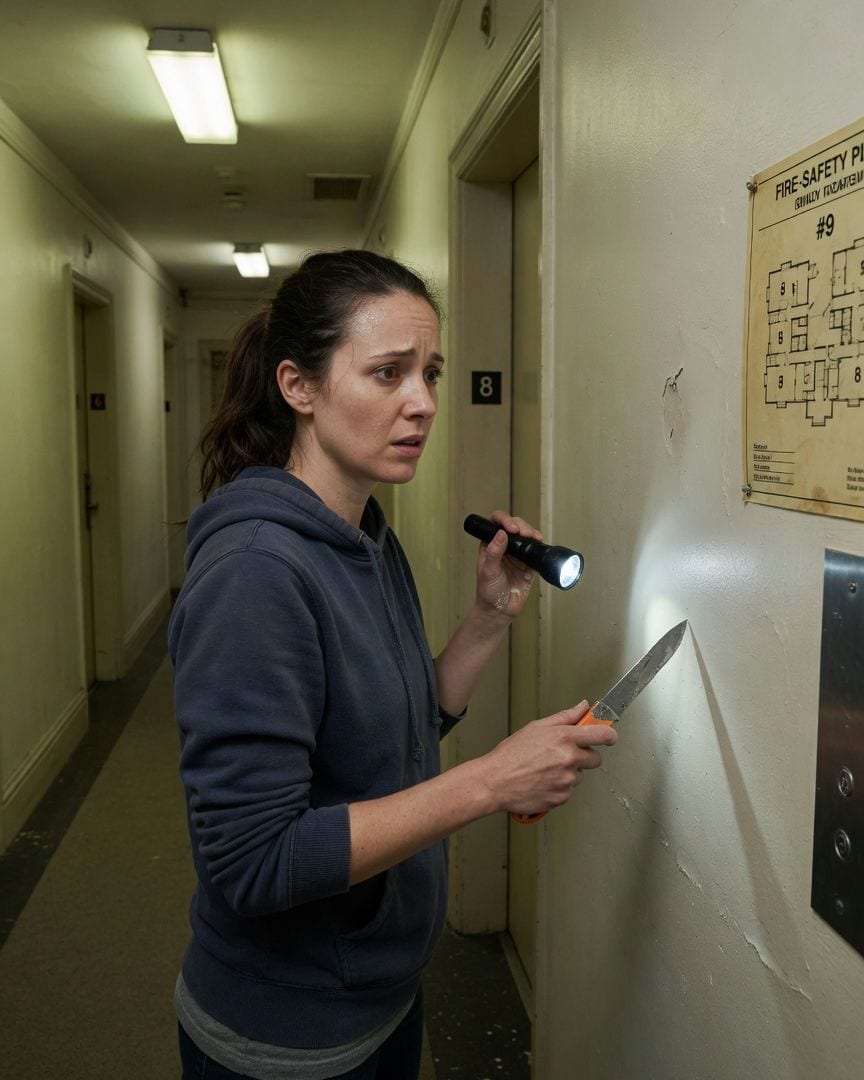
That blank wall in my hallway has a hidden metal plate. Tonight, after eleven years, it just clicked.
For eleven years, my apartment building's fire plan has shown nine apartments on my floor. But I've only ever counted eight doors, the space for the ninth a blank wall. Now, I've found a hidden metal plate behind the plaster, and from deep within, I just heard a soft *click*.
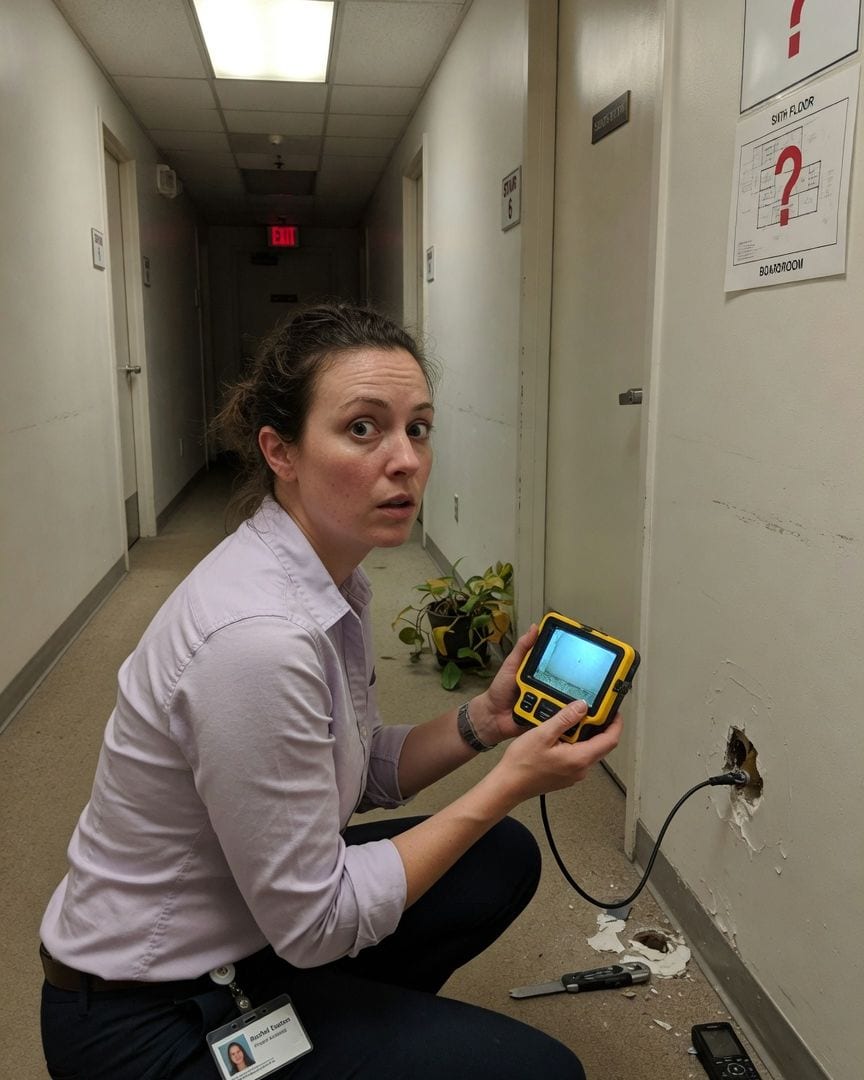
Footsteps cross our boardroom ceiling every evening at six – directly over the empty space where the office plans show a room that doesn't exist.
I'm a project architect who discovered an unlabeled room on our new office plans, a space on my floor that simply wasn't on any old blueprints. Now, every night at 6 PM, faint, rhythmic footsteps cross the boardroom ceiling, exactly where that phantom room should be. Security logs confirm no one is ever there.
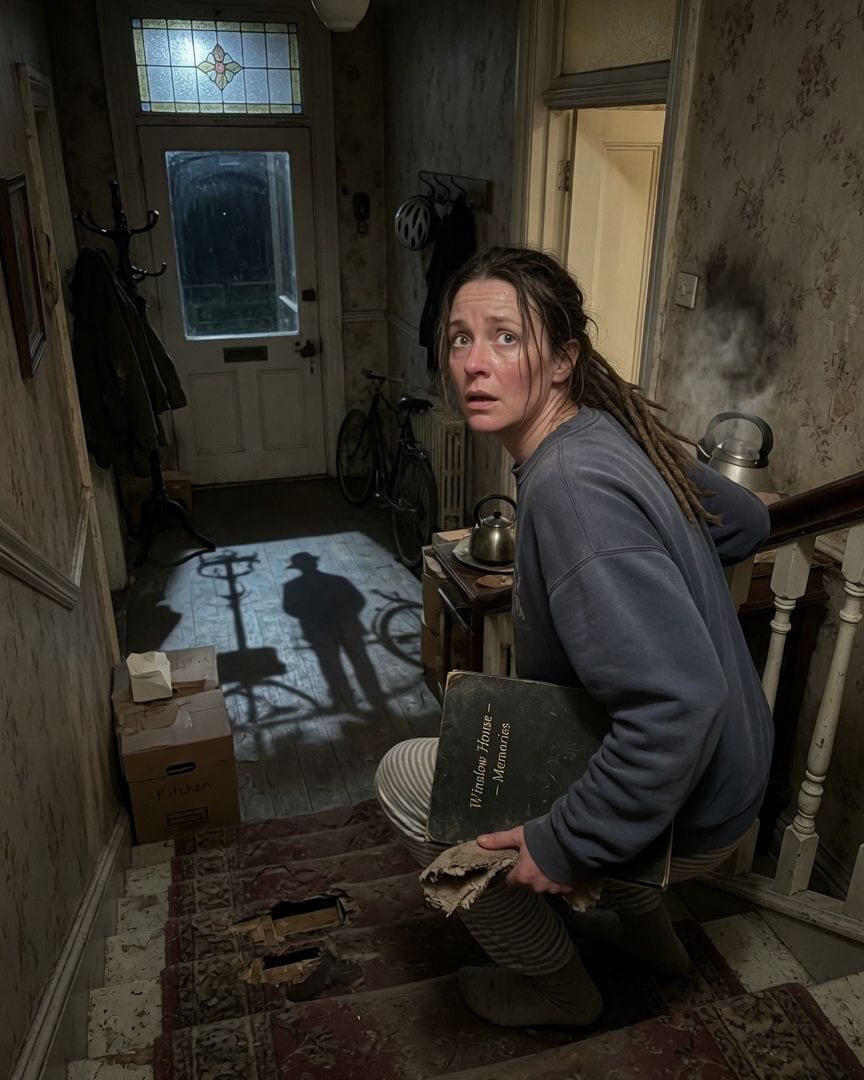
At 3am my dark porch throws grey shadows onto my hall floor — a coat-stand, a bicycle, and the outline of a man standing outside. I open the door and no one's there.
I'd just moved into Winslow House, struggling with new-house jitters and sleep. Then, at 3 AM for the second time, a stark grey light woke me, casting distorted shapes onto my hall floor. The undeniable shadow of a man stood beyond the threshold, impossibly still, even though I lived alone and the porch light was off.
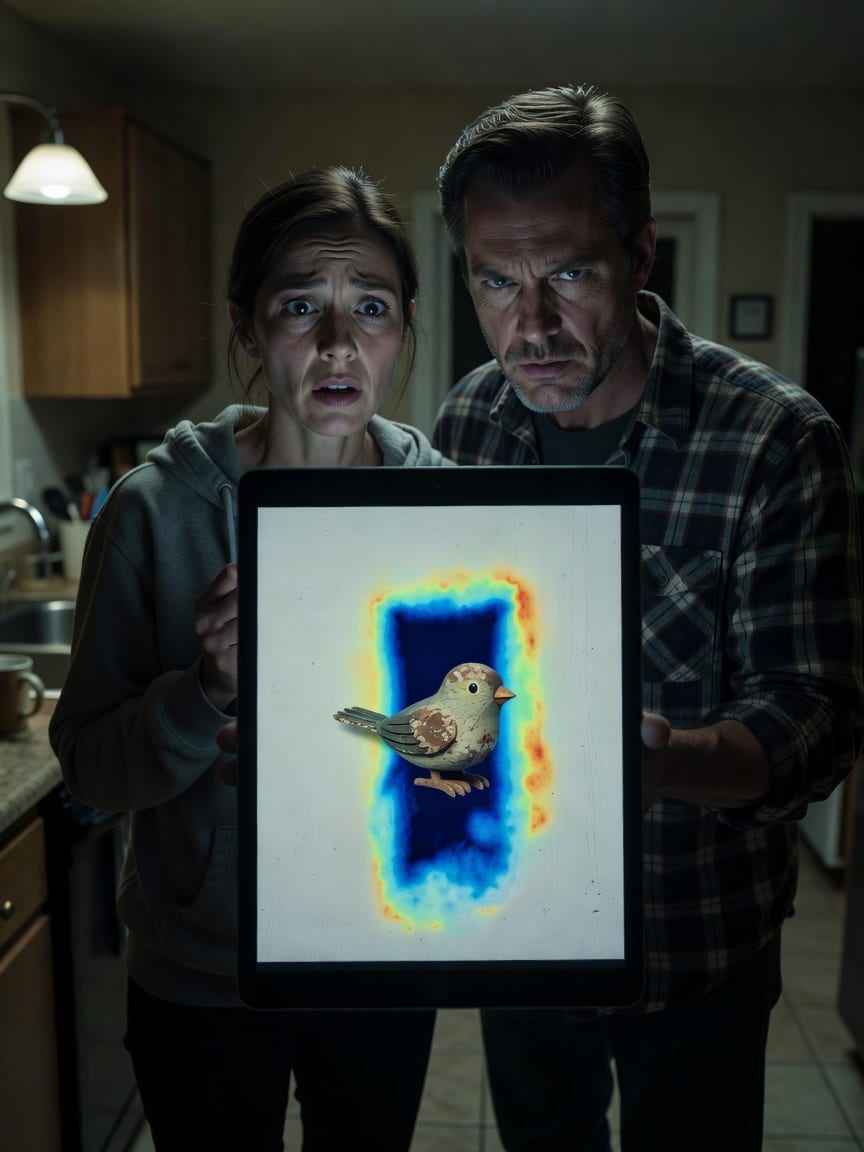
My robot vacuum spent forty minutes cleaning a room off the landing last night. Our house doesn't have that room; it was squared off, with a door.
My Whirly vacuum usually maps our three-bedroom house with predictable precision. But last night, its cleaning log displayed a perfectly squared-off room on our second floor landing, a space that doesn't exist. My house has never had that room, yet the vacuum spent forty minutes cleaning it.
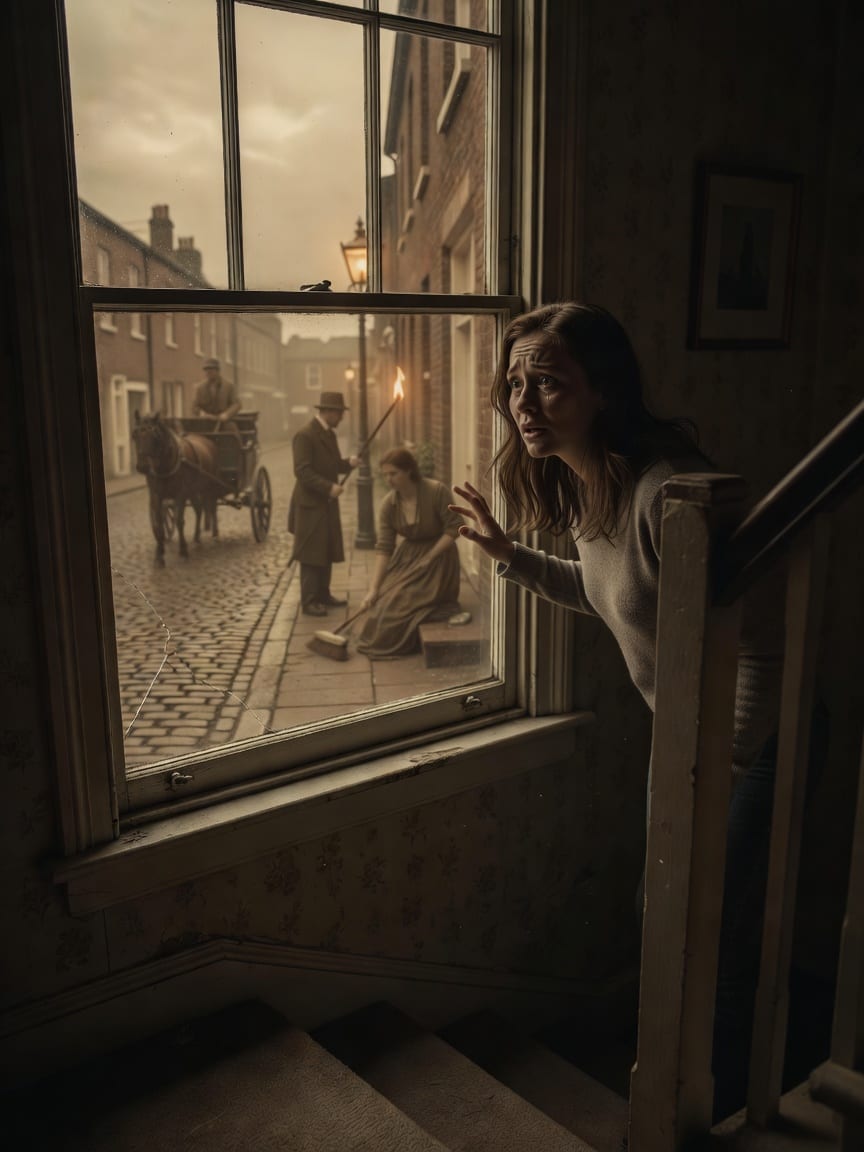
My half-landing window looked down on a cobbled street, a horse and cart. My panes, same crack. Below, only the bins.
I moved into this inherited house for a fresh start, living alone in the quiet. But the third stair on the main flight is deeply worn, a ghostly scoop hinting at decades of unseen footsteps. It feels hollow, and the wall beside it hides a faint, inexplicable seam.
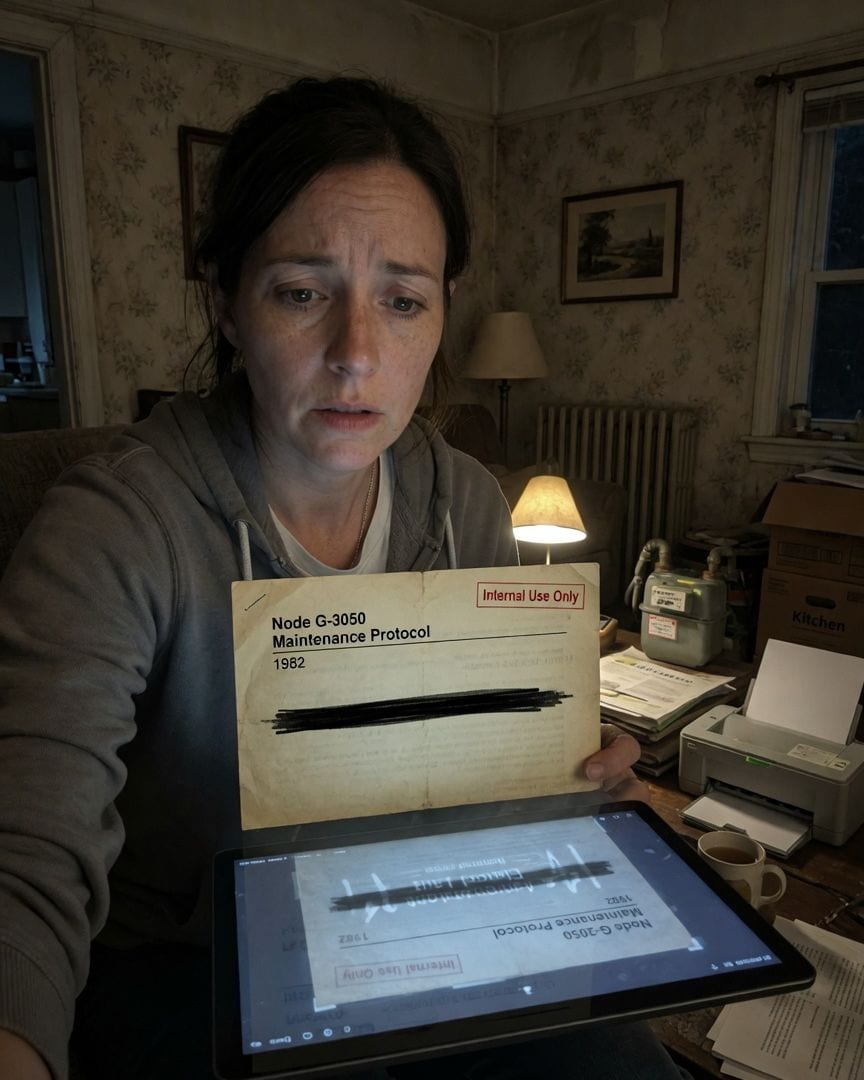
A different tenant every decade since 1949, each one gone — yet our gas meter's final reading comes back identical every time, though the house sat empty in between.
My new house at 14 Elmwood Lane was meant to be a fresh start, a normal home. But the gas bill was wrong. It showed my account, G-3050, active since 1949, with a meter reading of 3050 that had never changed, even when the house stood empty for decades.