My son's school registration cited a 'standing instruction' for our house. The 1901 log shows that same instruction, blacked out, for a pupil living here.
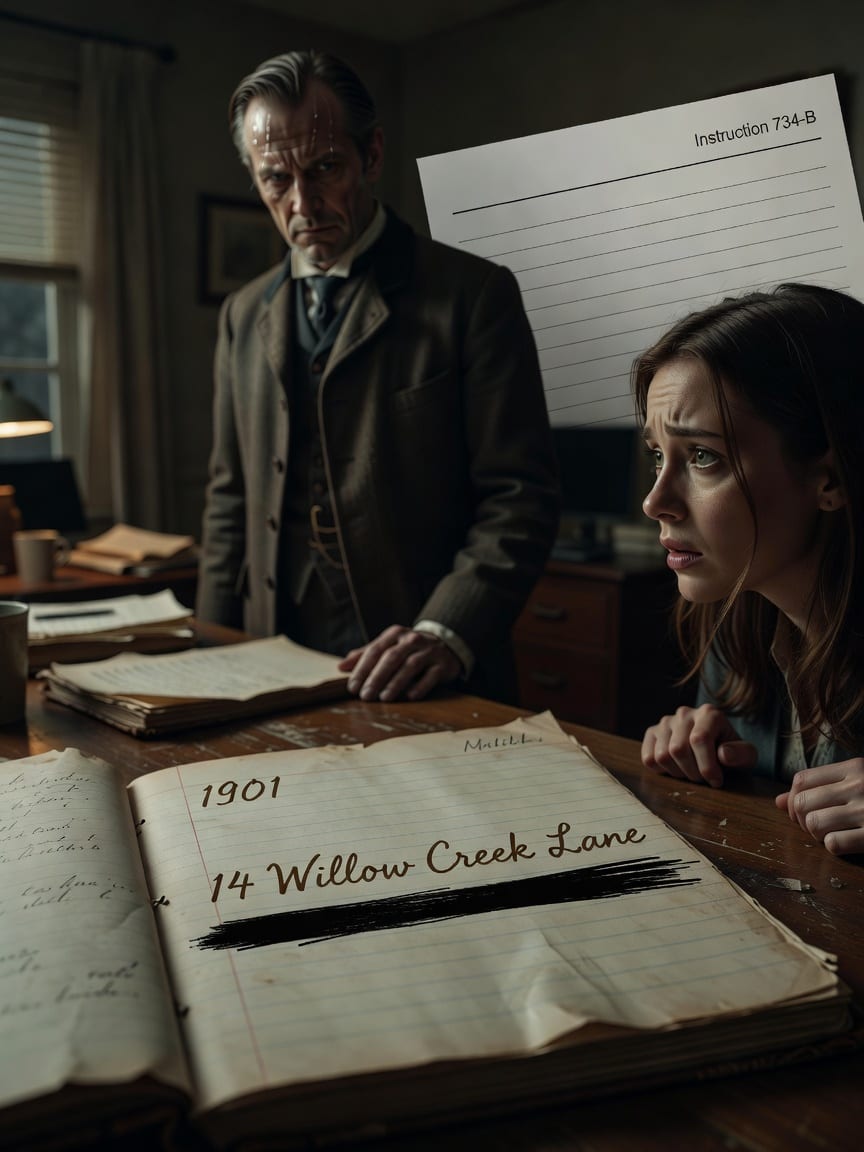
I felt a faint prickle of unease when I registered my son, Leo, for kindergarten this September. The form from the county education office wasn’t like any I remembered from my own childhood.
It included a small, pre-printed note with an alphanumeric code: 'Instruction 734-B, standing protocol for designated residences.' I’d dismissed it as bureaucracy, another layer of modern life, probably some new data-tracking thing. I signed the form and moved on.
Leo was excited about school. That was all that mattered.
It was only weeks later, idly scrolling through the county archive’s newly digitized 1901 school log for our village, that the real dread hit.
I was looking up information about our old house, 14 Willow Creek Lane, for a local history project Leo had to do.
The archive assistant, a nervous young man named David, had been surprisingly helpful, pointing me to the online portal. An entry, dated October 12, 1901, sat between two ordinary attendance notes.
The pupil’s name was blacked out with a thick, heavy line, but the residence was starkly clear: '14 Willow Creek Lane.' My address.
And beneath the redaction, a transcriber’s flag, a small note in elegant, old-fashioned script, read: 'WITHHELD – recurs each generation, standing instruction 734-B.' The same number. The same instruction.
The air in my kitchen suddenly felt too thin, too cold, as if someone had opened a window to winter.
I tried to rationalize it. A clerical error, a shared house number, a bizarre coincidence. Our village was small, but 14 Willow Creek Lane wasn't exactly unique. It had to be a mistake.
I called the archive, then the education office. David, the archive assistant, sounded even more nervous when I brought up the 'standing instruction.'
He confirmed it was still active for certain historical documents, a kind of administrative tag, but couldn’t elaborate. "It’s just... part of the historical record, Ms. Sterling," he stammered, his voice tight. "We don't have access to the specifics."
The phone line clicked dead before I could ask another question.
The education office, after a long hold that played tinny classical music, connected me to a pleasant but utterly unhelpful woman. "Instruction 734-B refers to specific administrative protocols," she stated, her voice devoid of inflection. "It's confidential.
I can’t discuss it." No explanation, no reassurance, just that calm, bureaucratic wall. The dread deepened, settling in my chest like a cold stone.
I returned to the digital log, zooming in, straining to see past the digital redaction. The pupil's name was utterly gone, a black rectangle where a child's identity should have been, but the 'Willow Creek Lane' address was undeniable.
My house. The same instruction number Leo had on his registration form, over a century ago. I spent hours, my fingers numb on the keyboard, searching for other mentions of 'Instruction 734-B.'
I found a few, scattered through the early 20th century, always tied to a school log, always with a similar, inexplicable redaction.
The entries weren't always for my address, but for other properties in the village, always with that blacked-out name and the instruction number. It was never explained. It was simply there.
The sheer, calm persistence of it was worse than any random anomaly. It felt planned.
Then, deep in the digitized records, among a collection of scanned ledger pages from local primary schools, I found it: an entry from 1935, another school log.
Same village, same 'Instruction 734-B,' same blacked-out pupil, same address: '14 Willow Creek Lane.' But this scanned image was of a slightly lower quality, or perhaps the ink on the original had faded differently before the digital capture.
As I magnified the redacted line, my breath caught in my throat. A faint impression, a ghost of the original script, became visible beneath the heavy black bar.
I could make out parts of a word, not a name, but a descriptor. I focused, my heart hammering against my ribs, tracing the faint curves and angles. C-O-N-D-U-I-T. The word solidified. 'Conduit.'
A word Leo had learned in his science class last year, about pipes and electrical flow. But here, in this context, it was chilling.
I stared at the faint impression of the word 'conduit' beneath the blacked-out line in the 1935 log entry, the dread solidifying in my gut. It isn't a mistake. It's a designation.
The word 'conduit' became an anchor for my growing terror. It wasn’t a random coincidence; it was a label. A designation, just like I thought. My mind refused to let it go.
I expanded my search beyond school logs, digging through digitized county council minutes from the early 20th century, property deeds, and even old village census records.
The 'Instruction 734-B' appeared rarely, but when it did, it was always connected to specific properties in our village, forming an unsettling cluster on an old map I found within the digitized records.
Not every house, not every street, just a select few, scattered like pins in a strange game, including 14 Willow Creek Lane.
And the pattern across dates was undeniable: a child from my house, or one of the others on the cluster, would appear in the records every thirty to forty years, always with the same redacted 'designation.'
It wasn't continuous, but cyclical, a grim harvest. It was too regular, too precise. The faint red lines I’d seen on an old village map in a dusty local history book, published in the 1960s, suddenly made horrifying sense.
My street and a few others were outlined, labelled ‘Historical Interest.’ The same houses.
Armed with this growing evidence, I decided to push for answers. I requested access to archived 'administrative protocols' related to 'Instruction 734-B' at the County Education Office.
This time, I went in person, needing to see the faces, hear the voices. The records clerk, Constance Yates, a woman in her mid-fifties with kind, weary eyes, processed my request.
She had a gentle, almost timid demeanor, her movements slow and deliberate. She wore a faded floral blouse and her graying hair was pulled back in a neat bun.
Her smile faltered when she saw the instruction number on my request form. She swallowed, her gaze flicking nervously towards the back office. "Ms. Sterling, I'm afraid those files are restricted. Permanently."
Her voice was soft, barely above a whisper, but the finality in her tone was absolute. Her hands, resting on the counter, trembled slightly. "Some things are simply not for public access. It's policy." She wouldn’t meet my eyes.
Later that week, an unmarked envelope appeared in my mailbox. No stamp, no return address. Just a cheap, off-white envelope tucked amongst the utility bills. My heart pounded as I tore it open.
Inside, a single sheet of brittle, yellowed paper, perfectly typed: 'Some things are best left buried, Ms. Sterling. For your son's sake.' My breath hitched. A chill ran down my spine, cold as the deepest winter well.
Someone knew I was digging. Someone knew about Leo. They knew the instruction number was on his form. They were watching. The air in my home felt charged, heavy, the kind of stillness that precedes a storm.
I returned to the education office, not for records, but for Constance. I waited until the end of her shift, hiding in my car across the street, watching the employees trickle out.
I intercepted her by her car, a battered blue sedan in the far corner of the empty car park. The evening air was cold, carrying the damp scent of fallen leaves. "Who sent the letter, Constance?"
I asked, my voice low, holding up the typed warning letter, its brittle paper crinkling slightly.
Constance flinched violently, her eyes darting around the empty car park, as if expecting someone to materialize from the shadows. Her face, usually pale, went even whiter. "Please, Ms. Sterling," she whispered, her hands clutching her purse strap.
"You don't know what you're stirring up. You have no idea."
I pressed, stepping closer, my voice gaining a desperate edge. "I know about 'Instruction 734-B.' I know about 'conduit.' And I know my son’s name is on a form with that same instruction number this year.
Tell me what it means. Now."
Constance hesitated, her composure cracking like thin ice. A tear welled in her eye, reflecting the dim carpark lights. "It's for legacy designations," she finally whispered, her voice barely audible, raw with an old pain.
"Certain children, from specific lines… they're identified. Based on their residence, on their heritage. They're deemed to have… a particular aptitude." She wrung her hands, twisting her wedding ring. The soft clinking sound was the only thing breaking the silence.
My mind raced, connecting the dots I'd found, the cluster of houses, the cyclical pattern. "Aptitude for what, Constance? Why the redactions?"
Constance swallowed hard. "To protect their privacy. Their potential. It's for their benefit, Ms. Sterling, truly. To guide them. The redactions are to ensure their path isn't compromised by outside influence. We're just trying to… manage their future."
But her eyes, full of a deep, ancient sorrow that went far beyond mere administrative stress, told a different story. The 'benefit' felt like a cage, gilded or not. It felt like something stolen.
My voice was low, laced with dawning horror, the word 'cage' echoing in my mind. "This isn't about aptitude, is it, Constance? It's about something else entirely. What are they doing with these children? What did they do with them?"
Constance, seeing the truth reflected in my eyes, finally broke. Her shoulders slumped. "It's not just aptitude, Zoe. They're... cultivating them. For a purpose. And it's not just our village. Look at the names on that map you found.
Look at the dates. It’s a network. My own grandfather was one of them." Her voice cracked on the last word. "He vanished from the records in '58. No death certificate, no forwarding address, just… gone.
And that was the same year the county council built the 'Community Enrichment Centre' down by the old quarry." She fumbled in her purse, pulling out a faded, creased photograph.
It showed a group of children from the 1950s, smiling awkwardly, all holding certificates. One of them, a small boy in the front row, with bright, intelligent eyes and a gap-toothed grin, looked exactly like Leo.
My breath caught on a sob, my eyes fixed on the faded photograph. The smiling boy in the front row, holding his 'certificate of aptitude,' is the spitting image of her five-year-old son, Leo.
The photograph was a punch to the gut, stealing the air from my lungs. Constance’s grandfather. The boy with Leo’s face, from my house, a 'conduit,' a 'designated' child. Vanished in '58. The 'Community Enrichment Centre' built the same year.
It all clicked into place with horrifying coherence, the pieces of the puzzle I’d been collecting snapping together. This wasn't just about identifying 'aptitude'; it was a program. A grim, generations-spanning genetic selection.
The redacted line wasn't just a name; it was a description of the desired traits, the 'purpose' for which these children were being groomed. The map, the dates, the instruction number—they were all threads in a meticulously woven net.
The county wasn't educating these children; it was harvesting them.
Constance confirmed my fears, her voice trembling, her gaze distant, lost in her own painful past. "They believe certain genetic lines are... more useful. More pliable. They’ve been managing it for decades, quietly, through the education system.
The Centre wasn't a school, Zoe. It was where they were taken. Where they were... optimized." The word hung in the cold air, a bureaucratic euphemism for something unspeakably cruel.
I walked into the office of Edward Hartley, Head of County Education Archives, the man Constance had pointed to as 'the one who knew.' His office was meticulously organized, pristine, every book spine aligned, every pen in its holder.
Hartley, a man in his early sixties with perfectly combed silver hair and an unnervingly calm demeanor, sat behind a large mahogany desk.
He listened to my accusations—every detail of the log, the instruction, the word 'conduit,' Constance’s story, the photograph—without a flicker of emotion. He didn't deny a single word. He didn't even raise an eyebrow.
"Ah, the Legacy Program," he said, a faint, almost imperceptible smile touching his lips, a smile cold enough to freeze the air in the already sterile room. He clasped his hands on the desk.
"A rather archaic term, I'll grant you, but accurate. We prefer 'Resource Optimization Initiative' now. More modern, don't you think?" He spoke of it like managing a municipal budget, like discussing crop rotation.
He explained, in chillingly precise bureaucratic terms, how certain genetic lineages, identified generations ago, were deemed 'optimal' for specific, vital roles within the county's future infrastructure and development.
"Instruction 734-B is simply the protocol for early identification and gentle guidance into the program. The Centre was merely a specialized educational facility. We ensure these children reach their full, pre-determined potential. For the greater good, of course."
He leaned forward slightly, his gaze unwavering, utterly devoid of malice, yet profoundly unsettling. He offered Zoe 'full support' for Leo's 'transition,' into whatever pre-assigned role awaited him.
His calm, utterly rational explanation, devoid of any malice or even human emotion, was the most terrifying thing I had ever encountered. It wasn't evil; it was just management.
I refused Hartley's 'support.' I pulled Leo out of school immediately, despite the bureaucratic hurdles and veiled threats that followed—phone calls hinting at legal action, letters about truancy. I didn’t care.
Within weeks, I had sold our house on Willow Creek Lane, severing the generational tie to the 'designated residence.' It felt like cutting off a limb, but it was necessary.
We moved hundreds of miles away, to a different county, a different life. The 'Legacy Program' continued, unseen, unbothered. The houses on the old map remained, waiting for the next 'designated' child. No one was held accountable.
No records were exposed. The calm bureaucracy simply absorbed the disruption and continued its work, an unseen machine churning beneath the surface of everyday life.
I live with a constant, low thrum of paranoia. Every new school form, every local council initiative, sends a jolt of fear through me. Every time I see a new administrative code, I scrutinize it.
Leo is thriving, oblivious, in our new town. He loves his new school, his new friends. He’s happy. That’s what matters.
One evening, helping him with a school project on local history, I casually browse the new county education office's online portal for old maps. My fingers freeze on the mouse. I see a new 'Community Advancement Initiative' being rolled out.
In the detailed 'program guidelines' PDF, buried in the fine print of a footnote on page 43, I spot a familiar string of numbers and letters: 'Reference Protocol 734-B-Rev. A.'
The instruction number was still active, just waiting for the right house.
If this one got to you
My county archive digital file has a redacted line from 1901, marked 'recurs each generation.' The address? My house. The instruction number? My son's school registration.
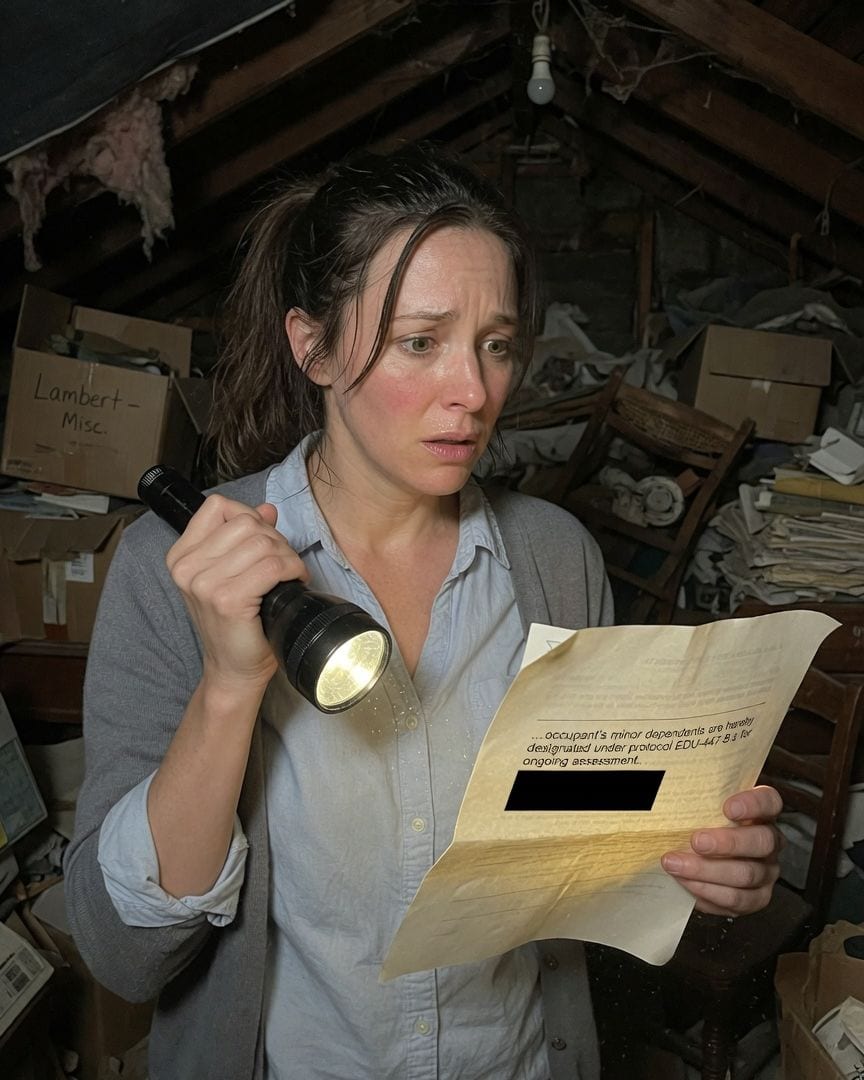
Searching mundane county archives, I found a 1901 school log entry for my house, Church Lane, No. 17. A perfectly blacked-out line, marked as 'Withheld – recurs each generation,' pointed to a code Monica at the Education Office used when registering my son. Then, in our attic, I found an identical blacked-out line on an old property notice, designating 'minor dependents' under the same code.
My electoral roll shows Elector 114 at 9 Bell Court has a new name this year. But the old rolls list a different person for 114 every election since 1950.
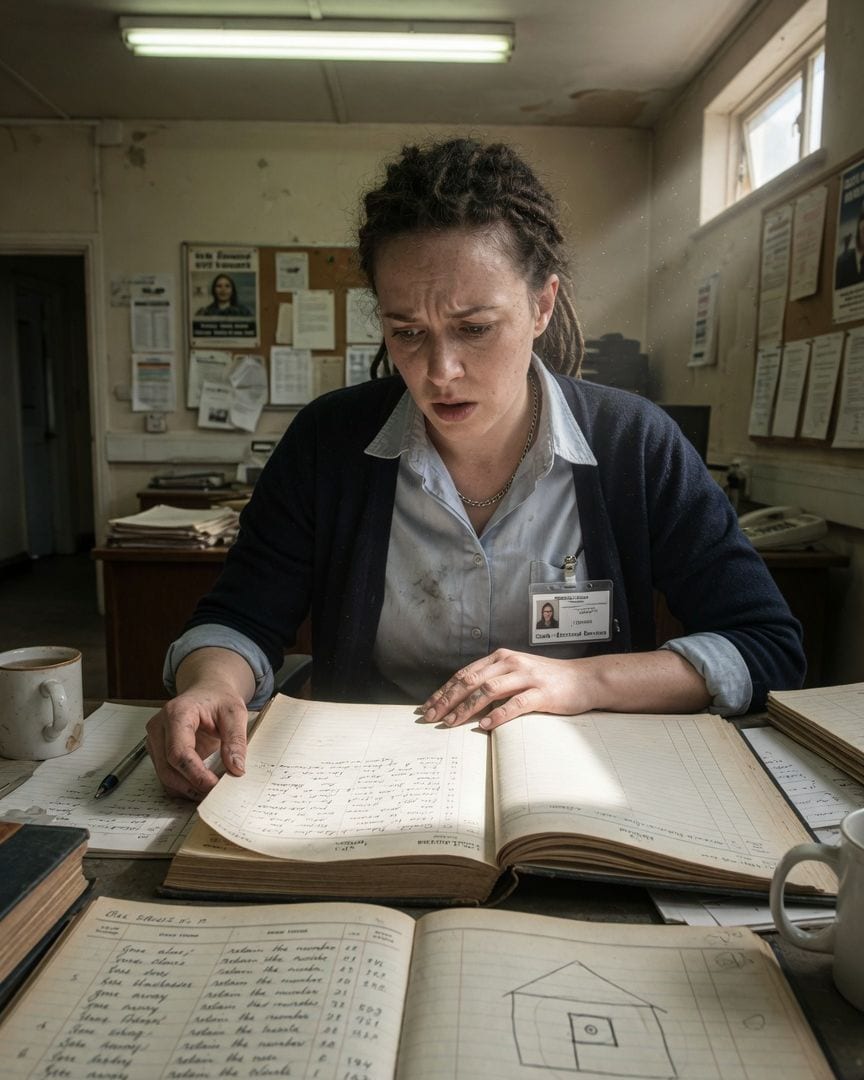
As a municipal clerk, my mornings are usually spent in monotonous cross-referencing. But today, a strange pattern caught my eye: a specific elector number at 9 Bell Court has been assigned to a different person every year since 1950, each entry marked with the same unsettling instruction: 'retain the number to the house.' What started as an oddity has now become a widespread, coded system hidden in the oldest registers.
My classroom doors counted twenty-three last night. The extra one had a class list taped inside, names of children who've never been at this school.
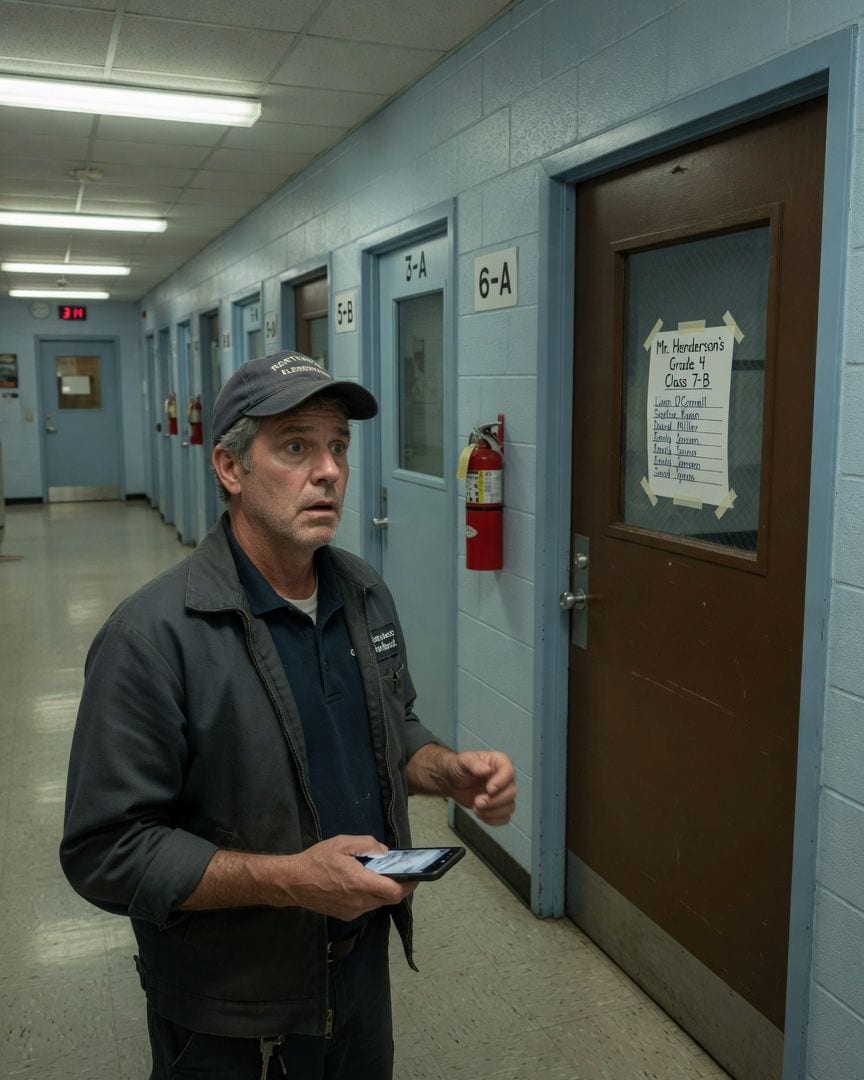
My job as night caretaker at Northwood Elementary is routine: 22 classrooms, all accounted for. But one night, an impossible 23rd door appeared in the science block, nestled where only a wall should be. It bore a class list of students and a teacher who don't exist in any school record. Then, in an old logbook, I found that exact same list, dated 40 years ago.
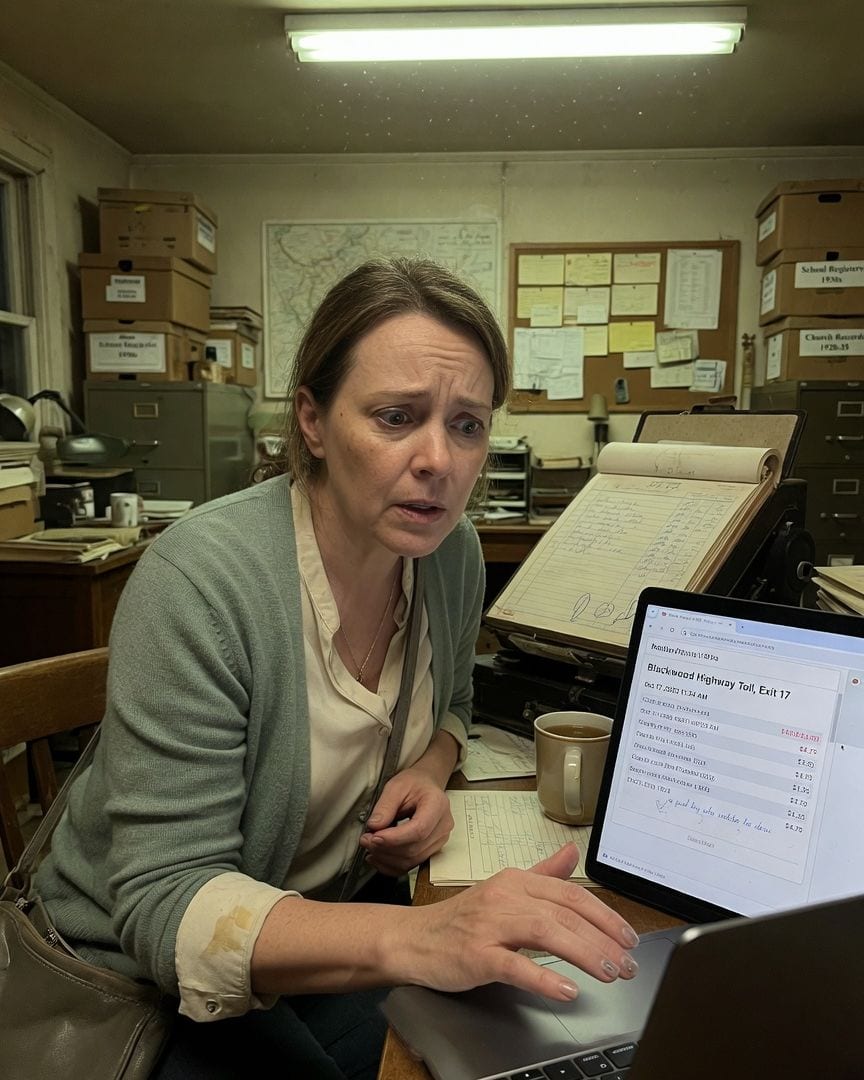
A 1931 school register marks me present every single day of that spring term — but I was born in 1969. And the teacher's note beside my name calls me 'a quiet boy who watches the door.'
As the village archivist, Lydia Kowalski uncovered her own name in a 1931 school register, decades before she was born. Then she found her unmistakable signature in the book, followed by the teacher's chilling note describing 'a quiet boy who watches the door'. Later, her bank statement showed a highway toll charge from a place she'd never been, on a day she was home with the flu.
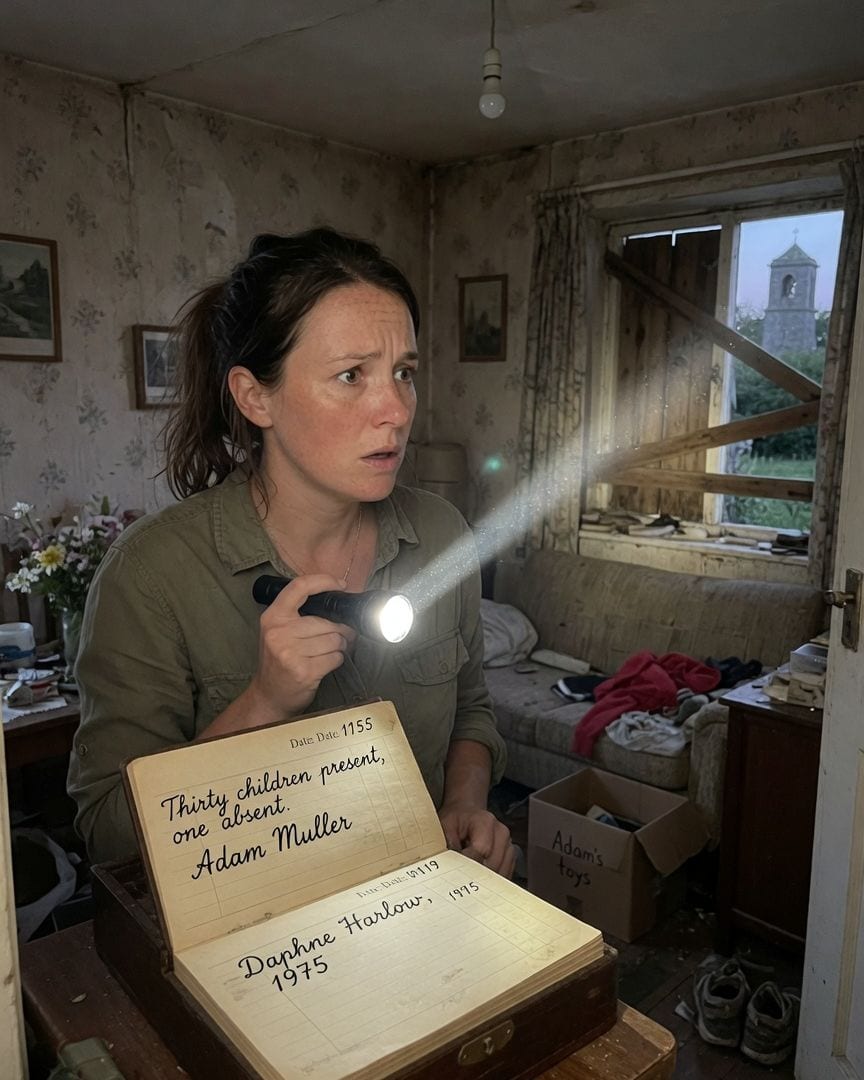
My son rang the old school bell. The attendance register, visible through the boarded window, now shows today's date and his name marked 'absent'.
We moved to a quiet village for peace, but my six-year-old son Adam found the old, boarded-up schoolhouse. Locals warned us, "Never ring the old school bell." That Tuesday, Adam rang it. Later, I saw his name on the school's long-closed attendance register, marked 'absent' in impossibly fresh ink from today.
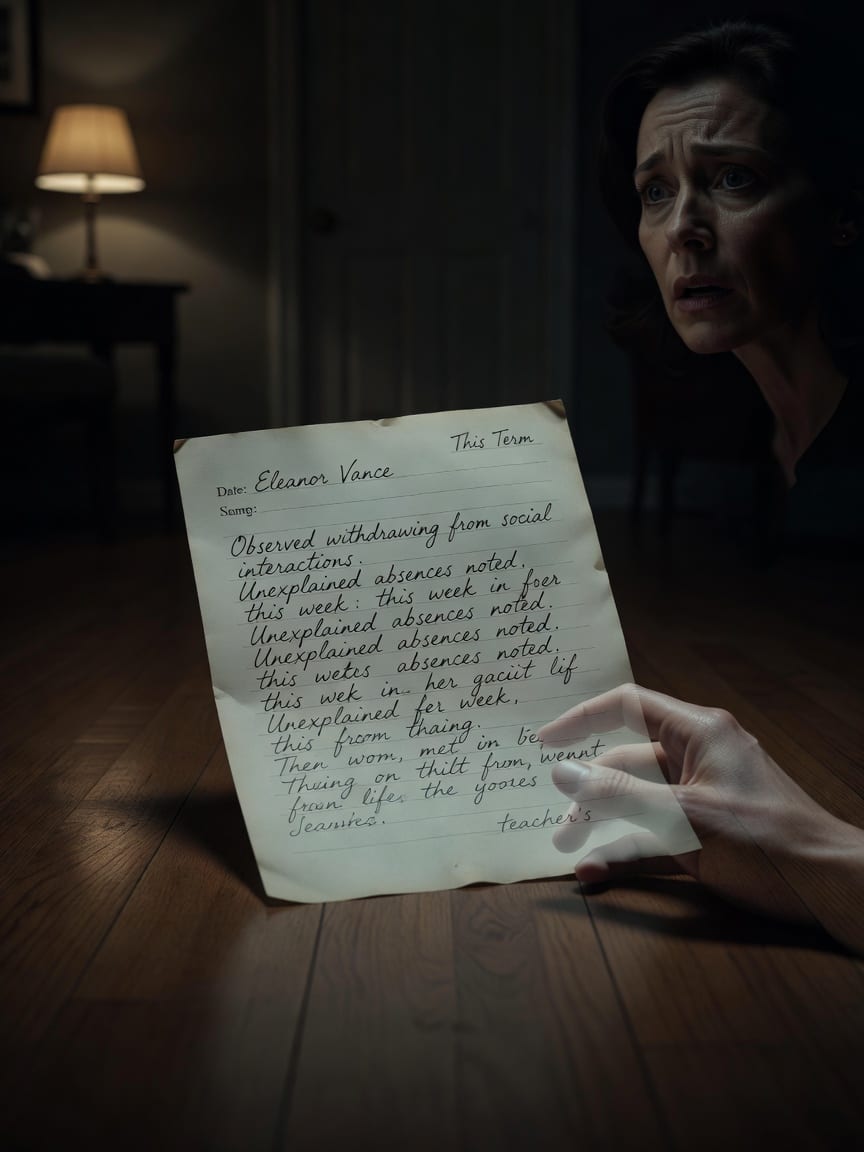
My school reports keep arriving, one a term, signed by teachers dead for decades. The latest describes something I'm doing *this week*.
My name is Eileen Caldwell, and my quiet life was upended by a school report from a place demolished decades before I was born. The report, signed by a long-dead teacher, eerily detailed my current habits. But the real shock arrived when I found my own name in a student register, dated 1968, with precise descriptions of my childhood—years before I existed.