My stomach has old surgical staples. Doctors say they’re mine, years old. I have no scar, no memory.
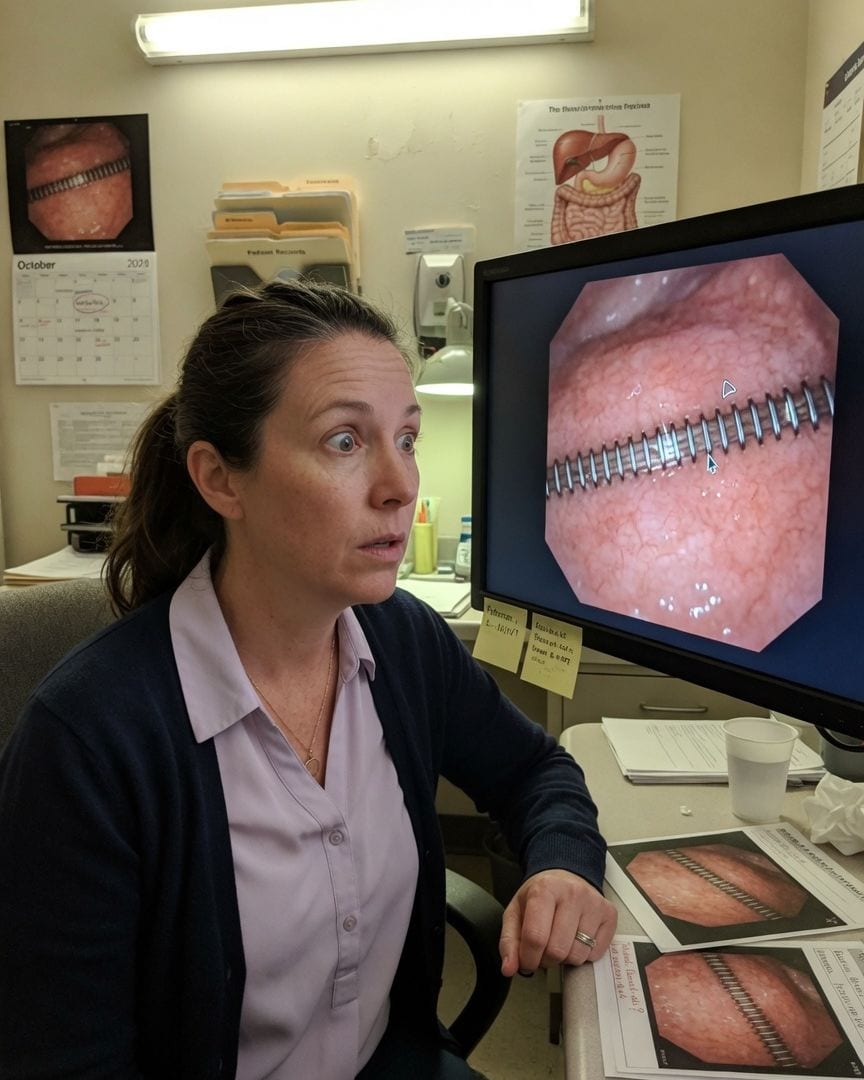
The fluorescent hum of Dr. Winslow’s office always made me feel restless. Today, it was the least of my worries. I was here about my chronic reflux, a dull, insistent burn I’d lived with for years.
The endoscopy was over; a general anesthetic always left me feeling a little out of sync, but what Dr. Howard Winslow was showing me on his screen was pushing me well past mere grogginess.
He was a calm man, mid-fifties, with careful hands and a reassuring voice. But his brow was furrowed as he pointed to a section near the top of my stomach. The internal images were stark, brightly lit.
It was clearly reshaped, with a distinct line of old, silver staples, healed smoothly into the tissue.
“See this?” he asked, circling the area with his mouse. “Looks like a fundoplication, or maybe a partial gastrectomy. Plainly done years ago. Which surgeon did you say performed it?”
A cold knot tightened in my gut. Not the reflux. A visceral, immediate dread. I had never had stomach surgery. Not a single operation on my abdomen, ever. My belly was smooth, unblemished by even a faint scar.
I shook my head, my mouth suddenly dry. “I… I haven’t. I’ve never had surgery like that.”
Dr. Winslow clicked through more photos, zooming in. The staple line was undeniable. Clear, distinct. “It’s perfectly healed, no complications,” he said, his voice level but tinged with a slight confusion. “But it’s undeniably there, Mrs. Patterson.
Part of your stomach has been removed and rejoined. It’s been like that for decades.”
I walked out of that office in a daze, the doctor’s words echoing. Decades. A major surgery, and I had no memory, no scar, no record of it. It felt like a glitch in my own personal reality.
I insisted on a second opinion, desperate for someone to tell me Dr. Winslow had made a mistake. Dr. Judith Hale, a respected surgeon across town, reviewed the endoscopy images.
She performed her own examination, tracing the unblemished skin of my abdomen with a cool, professional touch. Her conclusion mirrored Dr. Winslow’s: the internal evidence of extensive stomach surgery was irrefutable. Long-healed. Physically present in my body.
She confirmed the complete absence of any external scar, calling it “unusual but not impossible for certain laparoscopic techniques, especially older ones, though the extent of work suggests otherwise.” Her brow, too, furrowed slightly on that last part.
Pushing past the rising dread, I requested my complete medical records, including all childhood health documents, from my general practitioner. A thick, manila envelope arrived a few days later, heavy with years of my life.
I sifted through it, looking for anything, any mention. My birth certificate, vaccination records, annual check-ups. Mundane, ordinary proof of a normal life.
But as I reached my early childhood, a three-year span was either missing entirely or contained only sparse, vague entries. It was like a chunk of my existence had simply been redacted.
One entry, dated when I would have been around three or four, referred to a “special adaptive procedure” performed at a place I’d never heard of: “St. Jude’s Children’s Adaptive Care Facility.”
Even stranger, it was overseen by a “Project Coordinator” instead of a named doctor or guardian. The facility’s address was listed.
A quick search on my phone showed it was now a derelict lot, a patch of cracked concrete and weeds where a building once stood.
I spent days digging, a cold certainty settling in my bones. Online, I found only fragmented, disturbing mentions of St. Jude’s – whispers of experimental treatments, abrupt closure. Nothing concrete, just the digital residue of rumor.
The local historical society offered little. The county archives yielded more. Tucked into a moldy box of old administrative records for the defunct facility, amidst brittle, fading documents, I finally found it. A folder, labeled simply, ‘Patient Intake, 1985-1987.’
Inside, a single, faded, black-and-white photograph. It was a child, no older than four, smiling uncertainly at the camera, wearing a small hospital gown. The face was mine, unmistakably.
A younger, innocent version of my own eyes, my nose, my mouth. But as my gaze dropped, I saw it — a faint, but distinct, healed surgical scar on the child's lower abdomen, just above the navel.
A thin, pale line, exactly where my internal staples now lay. A scar I have never, not once, seen on my own body.
The photograph burned in my mind, a constant, unsettling presence. How could it be me, yet not be me? I had no scar. But the child in that faded image, that innocent face looking back at me, was mine.
It had to be.
I redoubled my efforts, focusing solely on St. Jude’s. More digging revealed it wasn't a typical children's hospital, but a highly specialized institution for "complex pediatric cases," often involving severe congenital abnormalities.
Its closure had been sudden, amidst hushed rumors of ethical concerns and questionable practices. The online whispers now had a terrifying weight.
I scoured old phone directories and public records, trying to find anyone who had worked there. A name kept surfacing in the scant documents I found, almost always associated with the later years of the facility: Alice Oakley.
She was listed first as 'Head Nurse,' then, disturbingly, as 'Project Coordinator.' I found an old residential address for an Alice Oakley, long since sold.
I started contacting former staff members whose names appeared in the archived documents, leaving polite messages, trying to sound as unthreatening as possible. Most of my calls went unanswered.
The few who did respond were polite but evasive, claiming poor memory or a strict non-disclosure agreement they’d signed decades ago.
"It was all so long ago, dear," one woman, whose name I recognized as a former admissions clerk, had said, her voice thin. "Things were different then."
Another woman, a former administrative assistant, cut the call short, the line going dead when I mentioned "adaptive procedures." Her voice, just before she hung up, had been tight with a fear I could almost taste through the phone line.
The unease around me tightened, a cold, specific dread. This wasn't a simple medical mix-up; it was a deep, buried secret.
A week later, I found an envelope tucked under my apartment door. No stamp, no return address, just my name scrawled on the front in unfamiliar handwriting. Inside, a single sheet of plain white paper.
On it, typed in an old-fashioned, almost antique font, was one stark sentence: 'Some things are best left undisturbed.'
The message chilled me to the bone. It wasn't a threat, not overtly, but a warning. It implied someone knew exactly what I was doing, what I was looking for. And they didn't want me to find it.
I started noticing things. A dark, nondescript sedan, its windows tinted opaque black, parked down the street from my building. It was always gone by morning.
Then I saw it again in my rearview mirror on my commute to work, keeping a consistent distance behind me for miles.
One evening, returning home, the knot in my stomach tightened before I even unlocked the door. It was slightly ajar, just a hair's breadth. I froze, my hand still on the doorknob. The lock was untouched.
My heart hammered against my ribs. Nothing seemed to be missing. Nothing was visibly disturbed inside, but the subtle violation, the knowledge that someone had been in my space, sent a jolt of raw terror through me.
Someone had been inside. Someone had left the note. The hunt had turned. I was no longer the one searching for answers. I was the one being watched, my every move cataloged, my quiet life suddenly exposed.
Shaken but resolute, I decided to confront the most promising lead I had: Gerald Whitaker. His name had appeared on the St. Jude's closure documents as a regional health authority archivist, overseeing the facility’s final inventory.
I found him living in a quiet suburban home, precise and meticulous, even in his late sixties. His house was neat, almost clinically so, every book on the shelf perfectly aligned.
He was initially wary, his eyes darting between me and the door, insisting he only handled paperwork, that his involvement was purely administrative.
I laid out my evidence on his polished coffee table: the endoscopy photos showing the internal staples, my redacted medical records with their alarming gaps, and finally, the unsettling old photograph of me as a child with the scar I no longer possessed.
I told him about the anonymous note, the dark sedan, and the feeling of being watched, my voice low and urgent.
Whitaker's composure cracked. He sighed, running a hand over his balding head. The silence in the room stretched, thick and heavy.
“St. Jude’s wasn’t a normal facility, Mrs. Patterson,” he admitted, his voice barely above a whisper, completely unlike his earlier, clipped tones. “It was… a unique program. Highly experimental. For children with severe, often fatal, congenital conditions. Cases deemed… intractable.”
I pressed him, my voice trembling slightly. “What kind of experiments? What was the ‘adaptive procedure’?”
Whitaker hesitated, glancing around his impeccably tidy living room, as if listening for unseen ears. “They sought to… correct nature,” he said, his gaze fixed on a distant point. “To rebuild. To make the body whole, even when it wasn’t.
It was radical. Unprecedented.” He explained that the ethics were “questionable, even then,” and the entire project was kept under extreme secrecy. “Records were sealed, identities reassigned. For the children’s protection, they said.
To give them a chance at a normal life. A clean slate.” My mind raced, connecting the dots: the stapled stomach, the missing records, the photograph with the scar I no longer had. The silence from former staff, the surveillance.
It all began to coalesce into a shape too monstrous to comprehend.
“Was I one of them?” I asked, my voice barely a whisper, a terrifying certainty forming.
Whitaker looked at me then, his eyes filled with a profound sadness that seemed to age him decades in that single moment. “You were one of the success stories, Mrs. Patterson. Or… Subject A-7, as the project files listed you.”
A cold dread, unlike anything I’d ever known, spread through my veins. “Subject A-7?” I repeated, the words foreign and terrible on my tongue. “What does that mean?” My voice was thin, barely audible.
Whitaker, seeing the full weight of the truth about to descend, pushed a single, yellowed sheet of paper across his desk. It was brittle, clearly very old, preserved in a clear plastic sleeve.
“This is from the highly classified archives,” he said, his voice barely audible, as if the very walls might be listening. “It’s a ‘Subject ID’ page.”
My eyes scanned the top line, the old typewriter font stark against the faded paper: 'Assigned Identity: Daphne Patterson.' A wave of nausea washed over me, threatening to overwhelm. Assigned identity.
The name I had lived with, the name I was, was a fabrication. A lie. My breath hitched.
Just below it, in bold, stamped text, like an official declaration: 'Original Subject ID: A-7. Name: Alice Oakley.'
Alice Oakley. The name that had kept surfacing. The 'Head Nurse,' the 'Project Coordinator.' My breath caught in my throat. The dates on the page showed this 'Alice Oakley' had undergone the stomach procedure at age 3. My stomach procedure.
The small, grainy photo on the ID page was undeniably my face as a child, identical to the one I'd found in the county archives. Innocent, hopeful.
I looked at the picture, then back at the name 'Alice Oakley', then at 'Daphne Patterson', my own name, now a hollow echo, a lie. The room spun around me, the precise order of Whitaker’s house suddenly chaotic and threatening.
The air felt thin, metallic. Whitaker watched me, his face grim, as the second, darker layer of the truth began to settle, heavy and irreversible.
Whitaker, seeing my shattered composure, waited until my breathing had somewhat steadied. Then, in a low, even tone, he explained the full, horrifying truth. “Alice Oakley was the original subject,” he began, tracing a finger over the document.
“A child with a congenital defect so severe, her internal organs were failing. The ‘adaptive procedure’ wasn’t a simple transplant. It was radical bio-engineering, using advanced cellular grafting and embryonic tissue to essentially rebuild her digestive system from scratch.”
He paused, letting the clinical words sink in. He revealed that the initial surgery, the one that left the scar in the photograph I’d found, was incredibly invasive. “It was successful, medically. But the ethical implications were monstrous.”
He continued, explaining that the facility’s director, a Dr. Marcus Hale, believed he could “perfect” human life. When the project was deemed too controversial, too dangerous to reveal, they decided to erase its existence entirely.
“Alice Oakley was given a new identity, Daphne Patterson. Her memories of her early life, of St. Jude’s, were systematically suppressed. She was released into the general population, a ‘success story’ they hoped would vanish.
But she was never truly free. The project’s original coordinator—Alice Oakley’s mother—stayed on, becoming the new ‘Project Coordinator’ to protect her daughter’s secret and monitor the other subjects.”
The scar in the photo, he explained, was from the initial, brutal procedure. “It was later surgically removed in another, less invasive surgery, to completely erase any physical trace of her original identity and the experiment. To make you… unblemished.”
I sat in stunned silence, my entire life unraveling before my eyes. I was not Daphne Patterson. I was Alice Oakley, a living experiment, a walking secret.
Every memory, every experience, every relationship I held dear was built on a foundation of lies.
The stapled stomach, the missing scar, the vague records, the surveillance – it all clicked into place, a horrifyingly coherent pattern, each detail a precisely placed piece in a terrifying puzzle.
The air itself felt colder, filled with the presence of unseen observers.
“They watched me?” I asked, my voice flat, hollow.
Whitaker nodded slowly, his eyes meeting mine. “For decades. They wanted to ensure the ‘adaptive procedures’ held, that there were no long-term complications. And, of course, to ensure the secret stayed buried.”
He pushed a thick, bound ledger across the table. It was heavy, covered in faded green canvas, its corners worn. “These are the full, unredacted records. The true history of St. Jude’s. Of Alice Oakley. Of you.”
He looked at me, his eyes pleading, exhausted. “It will destroy everything you know. Everything you believed. But it’s the truth. You deserve to know.”
My hand trembled as I reached for the ledger. The weight of it felt immense, heavier than any physical object could be. It contained not just my medical history, but the blueprint of my fabricated existence.
I took it, the decision silent but absolute. My life as Daphne Patterson, the rational, ordinary woman, was over.
I stood, clutching the ledger to my chest, and walked out of Whitaker’s house, into a world that was no longer mine.
Daphne Patterson vanished. Her apartment was cleared out within days, her lease terminated. Her job at the marketing firm was left without notice, her colleagues baffled.
Dr. Winslow and Dr. Hale were informed she’d moved out of state, her medical records transferred, though they couldn’t confirm where. The dark sedan was no longer seen near her old building.
The threads of her old life simply unraveled and disappeared, leaving no trace. Only the silence remained, a quiet affirmation of a truth too large to be contained by a single person.
Months passed. Lorraine Brooks, an old colleague from Daphne’s marketing firm, tried calling for weeks, then months, leaving increasingly worried messages. Eventually, she stopped. One afternoon, having coffee at a small cafe across town, Lorraine glanced up and saw her.
Daphne Patterson. Sitting alone at a table by the window, stirring her coffee, a faint, unreadable smile playing on her lips. Lorraine’s heart leapt. She called out, “Daphne? Is that you?” The woman looked up, her eyes meeting Lorraine’s.
She didn’t respond, didn’t wave, didn’t even acknowledge the name. She simply looked through Lorraine, a small, knowing smile still on her face, before turning back to her coffee. It was a smile Lorraine had never seen before.
It was a smile Lorraine had never seen before.
If this one got to you
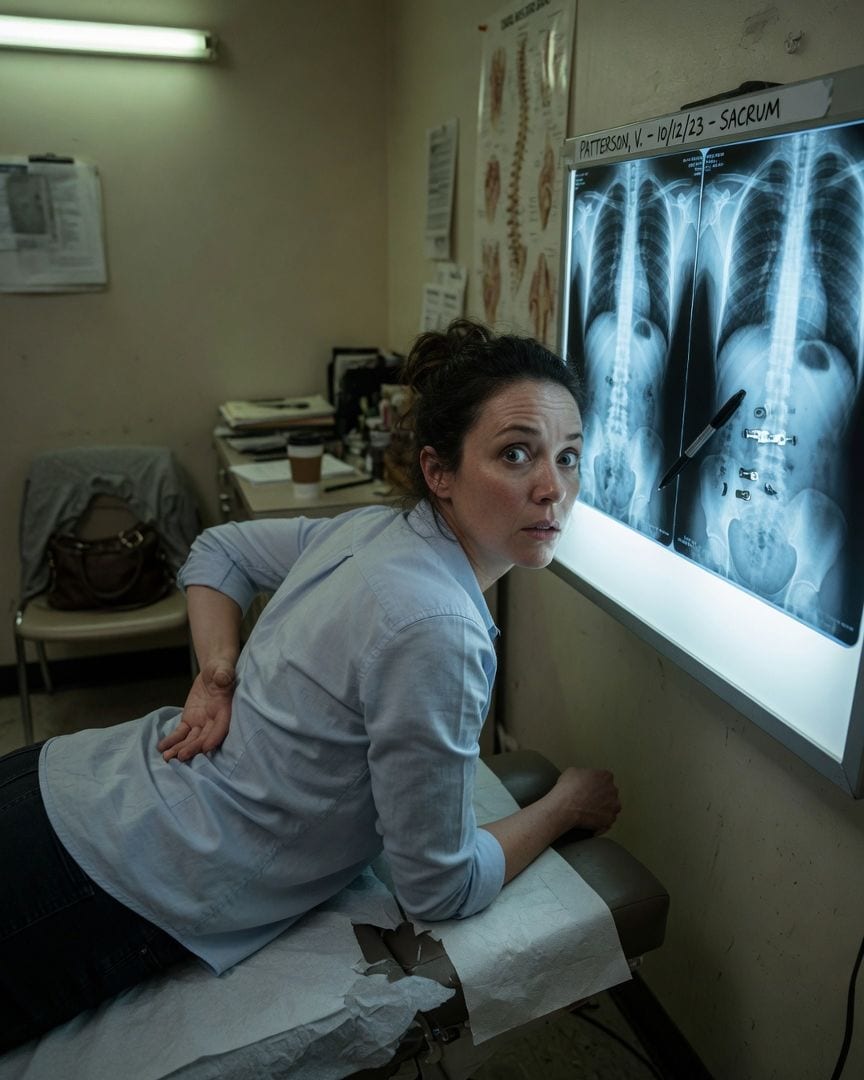
My spinal X-ray shows a healed fusion with metal hardware I never had installed. I've never had back surgery in my life.
I visited my chiropractor for a nagging backache, expecting a routine visit. But my X-ray revealed a perfectly healed fracture in my sacrum with decades-old spinal fusion hardware. The image was undeniably mine, yet I knew with absolute certainty I had never broken my back or had surgery in my life.
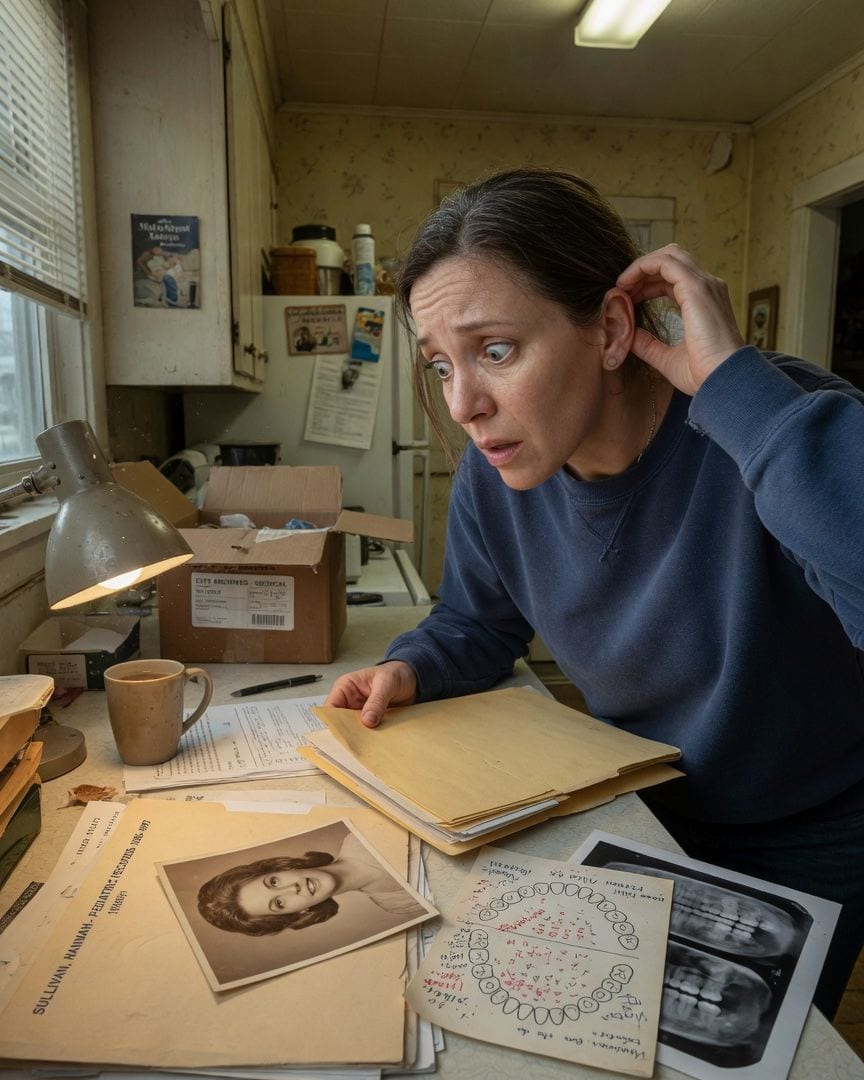
My MRI showed a perfect, decades-old surgical opening in my skull. I have no memory of it.
I underwent a routine MRI for persistent dizziness, expecting reassurance. Instead, the scan revealed a perfectly healed, decades-old surgical opening in my parietal bone, just behind my left ear. Dr. Hughes confirmed it was an access point for a procedure, yet I have no memory of any head surgery, ever. My body holds a secret I cannot recall.
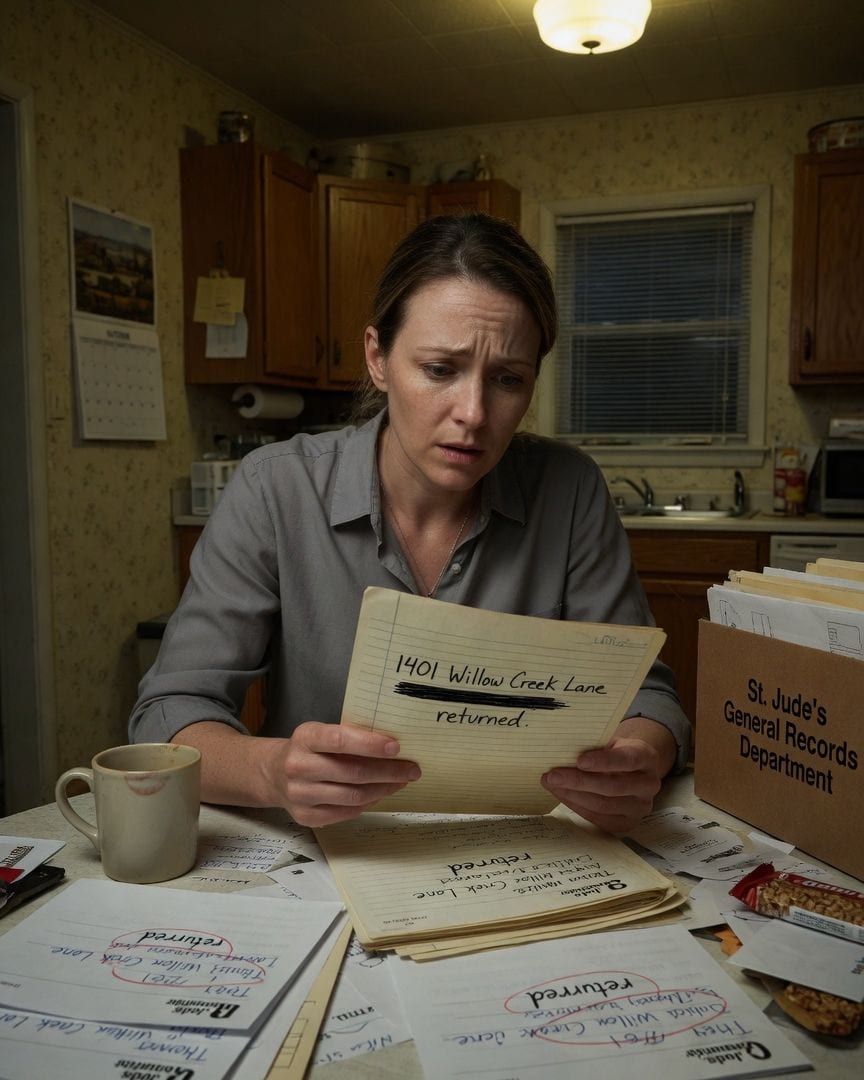
My medical file shows my street address on a struck-through line from 1988, a year I lived two counties away. It just says 'returned'.
A routine insurance audit led me to my childhood medical file from 1988. But among the expected notes, a deliberately struck-through line listed my current house address, followed by the stark word 'returned.' In 1988, I lived two counties away, making this entry an impossible and unsettling mystery.
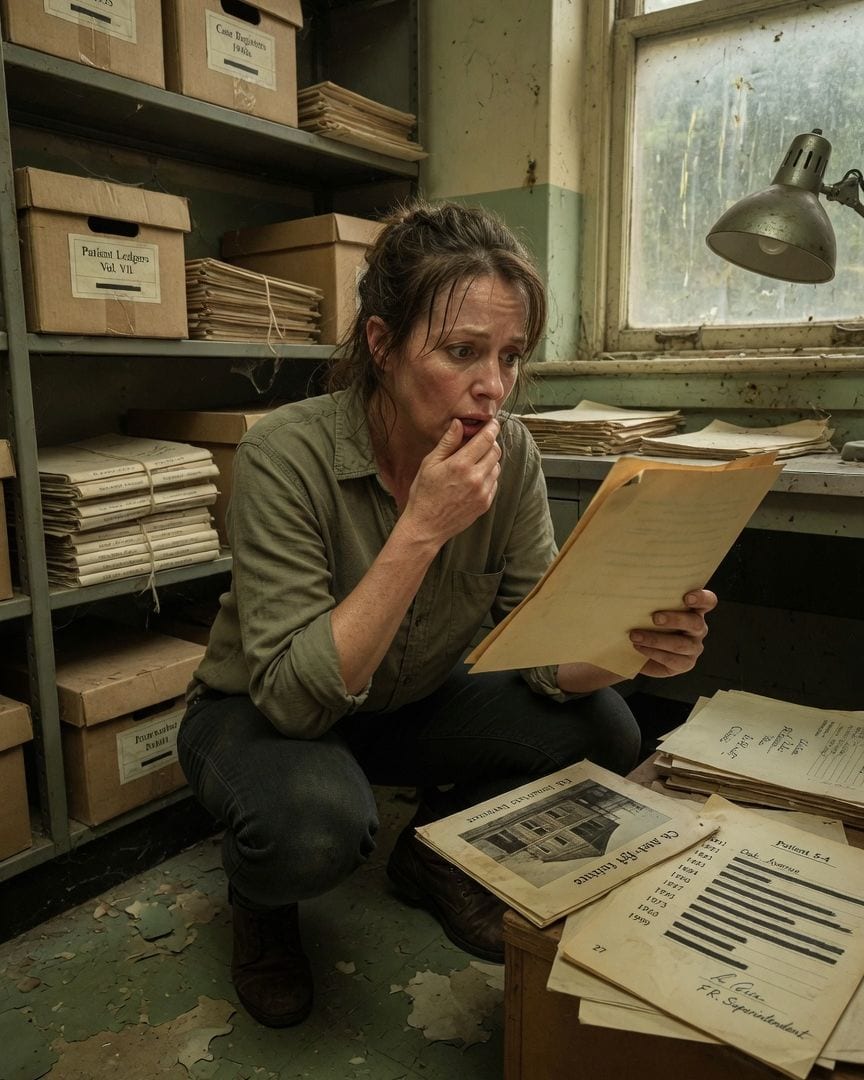
Patient 5-4 keeps checking into my aunt's old sanatorium chalet. The same initials sign them out, 'not traced,' every thirteen years since 1921.
Sifting through my aunt Margaret's estate, I found her old sanatorium file from 1999. Her patient record listed her as 'Patient 5-4,' discharged 'not traced.' But when I accessed the archives, I found 'Patient 5-4' was admitted every thirteen years since 1921, always with identical discharge notes.
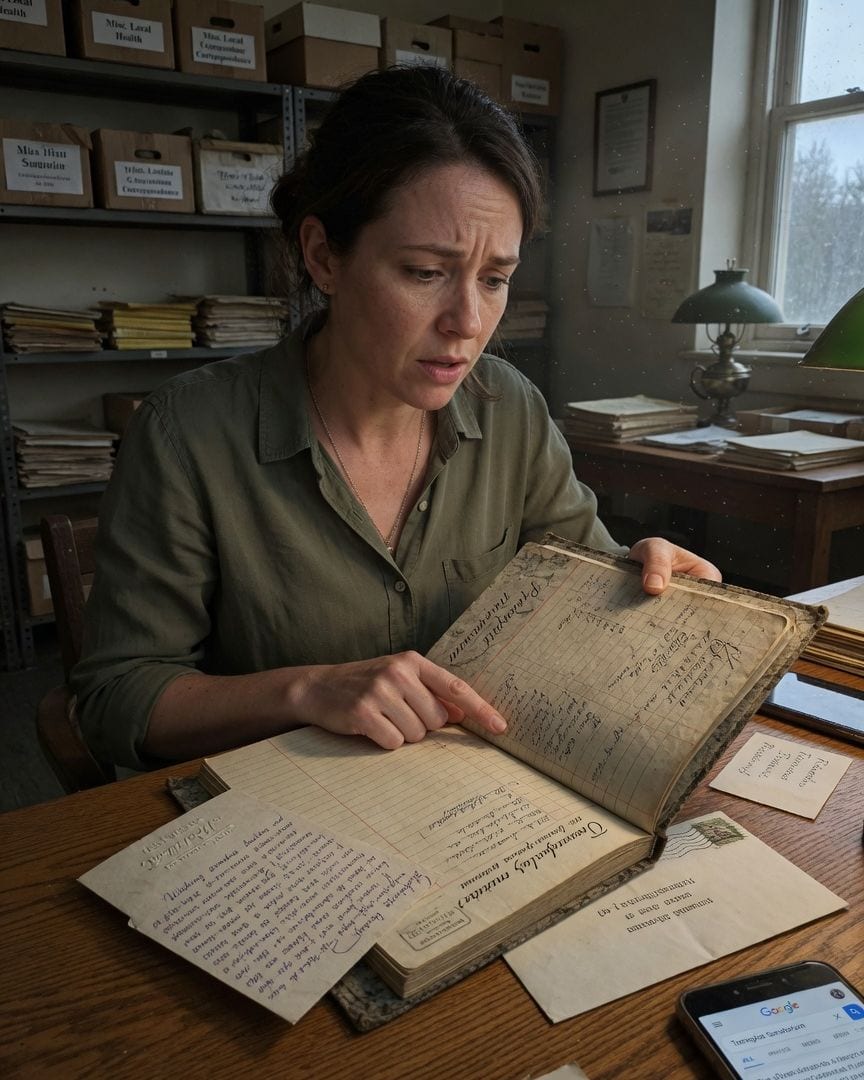
My get-well card wished me recovery from an operation I never had, postmarked from a hospital that burned down in 1963.
I received a get-well card wishing me recovery from an operation I never had. The envelope bore a fresh postmark from Treneglos Sanatorium, a TB hospital that burned down and ceased to exist in 1963. Now, a patient register from that long-gone sanatorium lists my name, dated 1959.
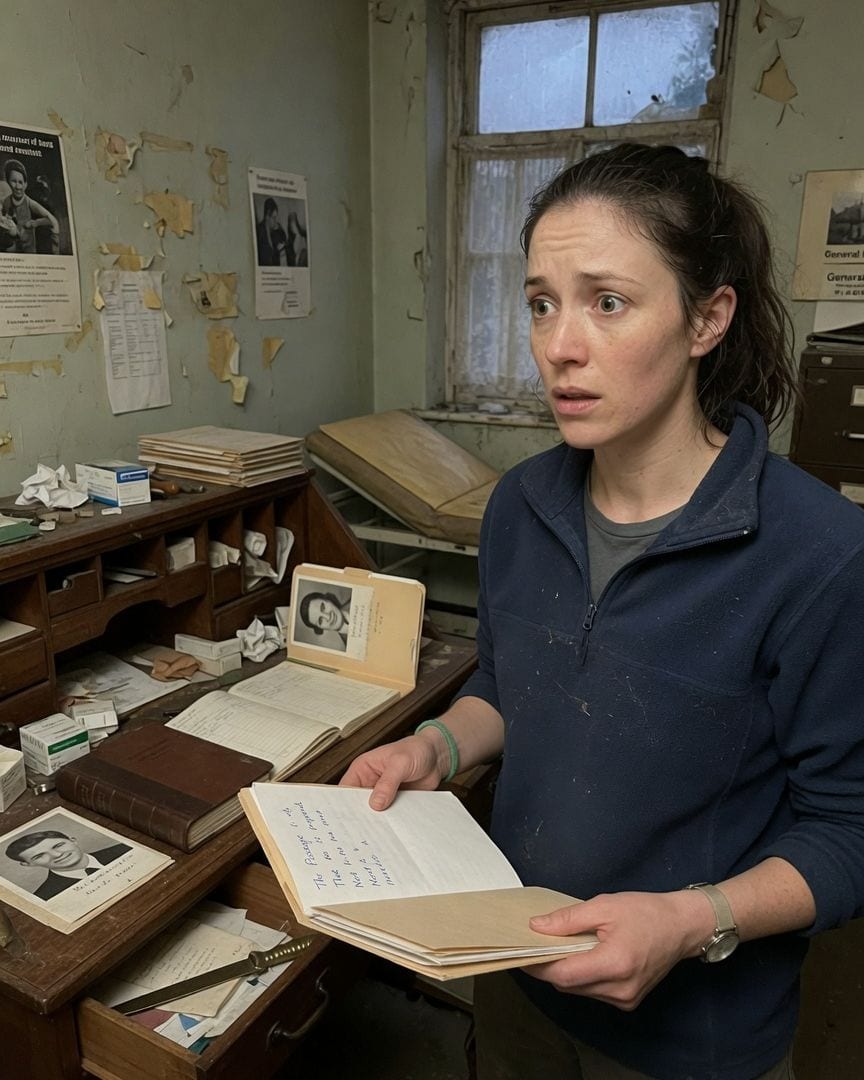
My new clinic's appointment book shows entries for this coming Monday, decades after the doctor retired and died.
Chloe Lawson bought an old, abandoned surgery in Nettlebed, ready to open her new vet clinic. Locals insisted Dr. Almott retired in '79 and the practice shut down for good. But then Chloe found his dusty appointment book filled with meticulous entries, continuing unbroken from 1979 through the decades, right up to this coming Monday.