My surveillance log shows I reviewed a casino pit that was dark and roped off all night. My handwriting. No memory.
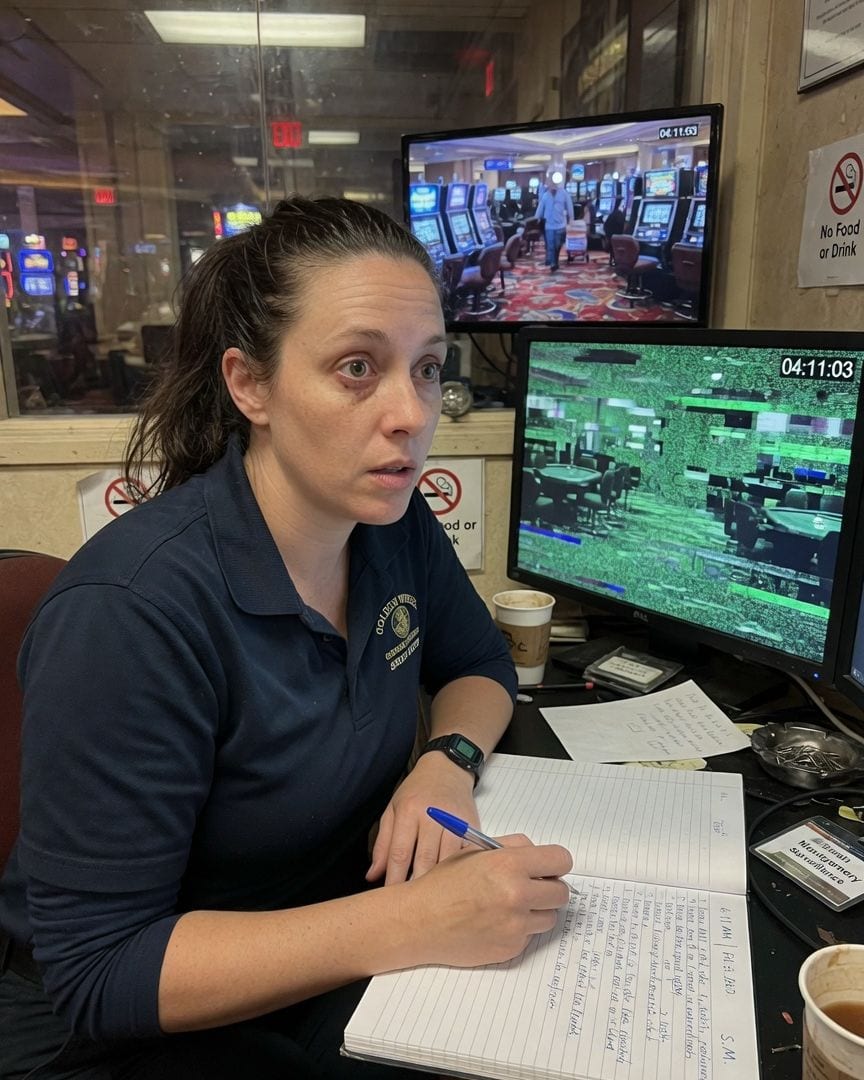
The hum of the surveillance room was a familiar drone, a low thrum that always settled into the background of my late-night shifts.
I was Sarah Montgomery, 32, a surveillance officer at the Golden Wheel Casino, and it was a Tuesday, just past 7 AM, meaning my 11 PM to 7 AM shift was over. Time to sign off the overnight logbook.
The casino was quiet outside my glass cage, the main floor lights dimmed, a few cleaners moving like ghosts between the silent rows of slot machines.
I flipped to the last page, the one with my neatly drawn lines and columns. Date, time, camera ID, action. My distinctive looping hand usually filled it without a second thought. But then I saw it.
An entry at 4:11 AM: 'Pit 3, table 7, reviewed, no action.' Followed by my initials, 'S.M.' A cold knot, tight and sharp, formed in the pit of my stomach.
Pit 3. I knew Pit 3. It was roped off, dark, no dealers, no players, chairs inverted on the felt-covered tables. It had been like that for weeks, closed for 'maintenance' that never seemed to begin.
I distinctly remembered walking past it, twice, during my rounds – once at 3 AM, and again around 5 AM – confirming its dormant, empty state. It was a dark, hushed corner of the casino that night, almost entirely forgotten.
Yet, the entry was undeniably mine. My loops, my cross on the 't', the sharp point of the 'S'.
I tried to conjure the memory of writing it, of reviewing the footage, of even glancing at Pit 3 on a monitor. Nothing. My mind was a blank.
The dread wasn’t the entry itself, but the utter, terrifying absence of memory accompanying my own undeniable action.
My first rational thought was fatigue. Maybe a momentary lapse, or a prank by Ralph Larsen, the other guard on duty. I pulled up the digital roster for my shift.
Only Ralph and I. Ralph, 40, was assigned to floor patrols, nowhere near the surveillance room or the logbook. I scanned previous entries in the physical logbook, flipping back a few days. No other anomalies.
My handwriting, for all its looping distinctiveness, was consistent throughout. I even tried to mimic the entry, scribbling 'Pit 3, table 7, reviewed, no action' on a scrap of paper, just to see if it felt alien.
It flowed naturally from my hand. It was my hand.
The only way to prove it wrong, or right, was the footage itself. With a growing sense of unease, I logged into the archive system.
My fingers felt stiff as I input the exact date and time: this morning, 4:11 AM. The system whirred, a mechanical sigh, then brought up the feed for Pit 3, Table 7.
The screen showed the familiar sight: empty tables, chairs inverted and stacked, ropes across the entrance. Just as I remembered it. Just as it should be.
I fast-forwarded the footage, my finger hovering over the playback controls, watching the timestamp count up. What would I see? Myself, reviewing a dark, empty pit, just as my logbook claimed? Or nothing, proving I'd written a phantom entry?
The tension in the quiet room was almost unbearable, the only sound the soft whirring of the system and the faint tick of the digital clock on the monitor. It clicked over: 04:11:00.
The screen, initially showing the empty pit, flickered. For a split second, the image distorted, like old analog TV static, then resolved. But it wasn't empty. A tall, indistinct figure stood between the felt-covered tables, its back to the camera.
It moved slowly, almost gliding, from one table to the next. My breath caught in my throat. This wasn't a shadow, or a trick of the light. It was solid.
The figure paused at Table 7, the exact table mentioned in my log, and slowly, deliberately, turned its head towards the camera.
Just as its face would come into view, the feed pixelated violently, freezing into a mess of green and black squares. The screen hung, unmoving, on the broken image.
I frantically rewound, played, and paused the footage, trying to catch a clearer glimpse of the figure before the pixelation. It was always the same.
A clear, stark view of its presence, the unmistakable silhouette, then the distortion precisely as it turned its head. Always as it turned. I called Ralph over, trying to keep my voice even. He squinted at the screen.
"Just a glitch, Sarah. Happens all the time with the older cameras in the low light. Probably dust." He shrugged, unconcerned, and went back to his own monitor, checking an entrance door feed. But I knew it wasn't dust.
Dust didn't turn its head. Dust didn’t warp a digital feed at the exact moment it faced the lens.
My hands trembled as I then cross-referenced my log entry with the casino’s official internal records for Pit 3, Table 7. This was the sensible next step, the logical explanation for the strange camera feed.
Perhaps Pit 3 was back in service, and someone had forgotten to update the physical 'closed for maintenance' signs.
But to my shock, the records stated, in crisp, archived text, that Pit 3, Table 7 was officially decommissioned and physically removed from the casino floor in 1987. Removed. It shouldn't exist.
There should be no cameras pointed at it, because it literally isn't there. The space where it once stood was now part of an expanded walkway, according to the original blueprints from the '80s.
Yet, the surveillance system still had a feed for it. And something, or someone, was definitely there at 4:11 AM, moving between tables that shouldn't be.
This contradiction rattled me, making me question everything I thought I knew about the casino's layout and its 50-year history.
I started digging deeper, submitting requests for historical maintenance logs and security reports, searching for any mention of the pit, or any other unusual occurrences in that specific area.
The casino hummed around me, oblivious, but I felt it now, a subtle shift in the air, a quiet wrongness permeating the familiar walls.
The next day, a summons appeared on my desk. Not an email, but a printed memo, crisp and formal: 'See Kenneth Stratton, Head of Security, at 10 AM.' My gut tightened.
Kenneth, 68, a man with a calm, almost placid demeanor, sat behind a large mahogany desk, his office quiet and orderly. A faint, almost imperceptible smile played on his lips as I entered.
"Sarah," he began, his voice a low, even rumble, "I understand you've been quite diligent with your research into Pit 3's… history."
He didn't look up from a document he was initialing, but his tone was laced with an unnerving knowingness.
He finished signing, then gestured with an open hand to a stack of old, dusty blueprints and faded internal reports piled neatly on a corner of his desk. My breath hitched.
These were the very documents I had requested from archives, documents I hadn't yet received. He knew.
"Some things," he continued, finally meeting my gaze, his eyes holding a distinct, unnerving glint, "are best left undisturbed. This place has a lot of history, Sarah, more than what’s on the official books.
You’re a sharp officer, I see that. Don’t let curiosity lead you down paths that aren't meant for you." It wasn't a threat, not overtly. It was a calm, unwavering warning, delivered without a shred of malice.
He didn't deny the anomalies I’d found. He simply acknowledged my digging, and subtly implied that he knew exactly what I’d found, and that I should stop.
The air in his office felt thick, heavy with unspoken knowledge, like a weight pressing down on me.
I felt a cold prickle of dread, realizing I was no longer just investigating; I had been noticed, and subtly, unnervingly, warned off.
I didn't back down. The fear was there, a cold worm in my stomach, but a stubborn part of me refused to let go.
"Mr. Stratton," I said, my voice steady despite the tremor I felt in my hands, "Pit 3, Table 7, was decommissioned in '87. It doesn’t exist.
Yet, the surveillance system still has a feed for it, and something was there at 4:11 AM, something I logged. And you know about it."
Kenneth's faint smile didn't waver. He leaned back in his leather chair, his gaze steady, almost serene. "Indeed, Sarah. Pit 3 has always been... active, in its own way. Not physically, no. The structures were removed.
But the camera feed, the location marker in the system, they persist. Because it persists."
He reached a hand under his desk, slowly, deliberately, and pulled out a thick, leather-bound ledger. Its cover was worn smooth, the edges soft with age, its pages yellowed and brittle.
It wasn't an official casino document; no logo, no branding, just plain, dark leather. "This," he said, placing it gently on the desk between us, pushing it slightly towards me, "is the true logbook of the night shift.
Not just for us, not just for the personnel, but for what watches us."
He opened it to a random page. My eyes scanned the faded ink. There they were. Entries, eerily similar to my own, spanning decades.
Different handwritings – looping, spidery, precise, hurried – but the same meticulous detail: date, time, 'Pit 3, Table 7, reviewed, no action.' The dread intensified, a suffocating blanket, as the truth began to click into place.
Every impossible detail I'd uncovered, every ignored warning, every contradiction, suddenly made a horrifying, coherent kind of sense. The casino’s official records were a carefully maintained lie, and this book, this unofficial, leather-bound testament, held the truth.
Kenneth slid the ledger further across the desk towards me, its old leather cover cool beneath my fingertips. Its pages were filled with spidery, faded ink, each entry a quiet testament to the impossible.
My fingers traced the lines, seeing names I vaguely recognized from dusty old personnel files – names of guards who had retired, or, more chillingly, those who had died suddenly, quietly, on the job decades ago.
They were all here, a silent fraternity of the knowing.
I stopped at an entry from 1987, the same year Pit 3 was supposedly decommissioned and removed. The handwriting was distinctive, a looping, elegant script that I recalled from a faded employee photo belonging to a guard named Albert Sullivan.
He’d had a fatal heart attack during his night shift, so the story went. Beneath the usual 'Pit 3, Table 7, reviewed, no action' entry, in the exact same distinctive hand, was a small, italicized note.
A single, chilling line: 'He watched me back.' My eyes widened, my gaze fixed on that sentence, the words burning into my mind.
The ledger wasn’t just a record of impossible sightings; it was a chronicle of a long-standing, active presence that didn't just watch, but interacted.
"We call it 'The Night Watchman,' or sometimes 'The Silent Dealer,'" Kenneth explained, his voice a low, steady drone that filled the silence of his office. He leaned forward slightly, his placid eyes holding mine.
"It’s been here longer than the casino itself, Sarah, a silent partner in the dark. It doesn't want to be seen, not truly. Not clearly. But it wants to be acknowledged. That's its currency."
He gestured to the open ledger on his desk. "This book? It’s a record of that acknowledgment. It makes us write the entries. It makes us review its pit, whether it’s physically there or not.
It uses the surveillance system as its eyes, and our hands as its scribes."
He went on, explaining that previous security chiefs, upon discovering the truth, had a choice: fight it, try to expose it, and risk untold consequences, or simply... comply.
They chose compliance, passing down the ledger and the unspoken rules from one generation to the next, a secret handed down like a dark inheritance.
"Albert Sullivan," Kenneth said, his voice dropping slightly, "tried to fight it. Tried to dismantle the cameras that fed Pit 3. Tried to erase the feeds from the archives. He broke the rules. And it watched him back."
The implication hung heavy in the air between us, a cold, crushing weight. The entity didn't kill, Kenneth implied. It didn't physically harm. But it ensured its routine. It ensured its 'shift' was logged.
Every discrepancy I'd found, every impossible detail, every pixelated frame, now coalesced into this horrifying, coherent truth: a silent, ancient entity that simply demanded its existence be recorded, and had been doing so for decades.
I pushed the ledger away from me, the old leather cover scraping softly on the polished wood, my mind reeling. "So, we just… accept it? We become its clerks?" My voice was tight, thin.
Kenneth nodded, his eyes devoid of judgment, as if this was the most natural thing in the world. "You already are, Sarah.
The moment you wrote that entry, the moment you saw it on the screen, you became part of the ledger. It doesn't ask for much, just its due. Acknowledgement. Attempting to fight it, to expose it, only invites… closer attention.
Albert Sullivan wasn't killed, Sarah. He was simply… watched. Every moment of his last shift, every corner he turned, every breath he took. Until he collapsed."
He paused, letting that sink in. "It doesn't want to harm you. It just wants you to know it's there, and to record that fact, night after night, as we all have."
The confrontation wasn't with the entity, not truly. It was with the chilling acceptance of this impossible reality, this silent, generational pact. I felt a profound hollowness settle in my chest, a cold, empty space.
There was no escape, no heroic confrontation to be had. I was already inducted.
The dread was the realization that I was now one of 'the ones who knew,' bound to a silent, impossible routine, my free will subtly subverted by something ancient and patient.
I looked at my hand, the one that had written the entry, the one that would write more, and felt a profound sense of alienation.
The choice wasn't to fight or flee, but to acknowledge or be consumed by the quiet, relentless observation.
I continued my night shifts at the casino. The casino floor, with its flashing lights and distant echoes of slot machines, felt different now.
The roped-off Pit 3 was no longer just an empty space; it was a silent, active presence. Occasionally, I would find new entries in my logbook, in my own handwriting, for 'Pit 3, Table 7, reviewed, no action.'
I never remembered writing them. I never questioned them. I simply signed my initials, 'S.M.', beneath the impossible words, a silent pact made in the dead of night.
The casino hummed on, oblivious to the quiet ritual playing out in its surveillance room. The pit was dark, as it always was, but I knew who watched the tables now.
Sarah Montgomery continued her shifts, her efficiency unwavering. Her colleagues noted a newfound quietness, a subtle shift in her gaze, as if she were always listening for something beyond the casino's usual din.
One morning, Ralph Larsen saw her signing off her logbook, a faint, almost imperceptible smile on her lips. 'Everything okay, Sarah?' he asked. She looked up, her eyes distant. 'Perfectly,' she replied, her voice soft.
The pit was dark, as it always was, but the smile on Sarah's face as she signed the 4:11 AM entry was not her own.
If this one got to you
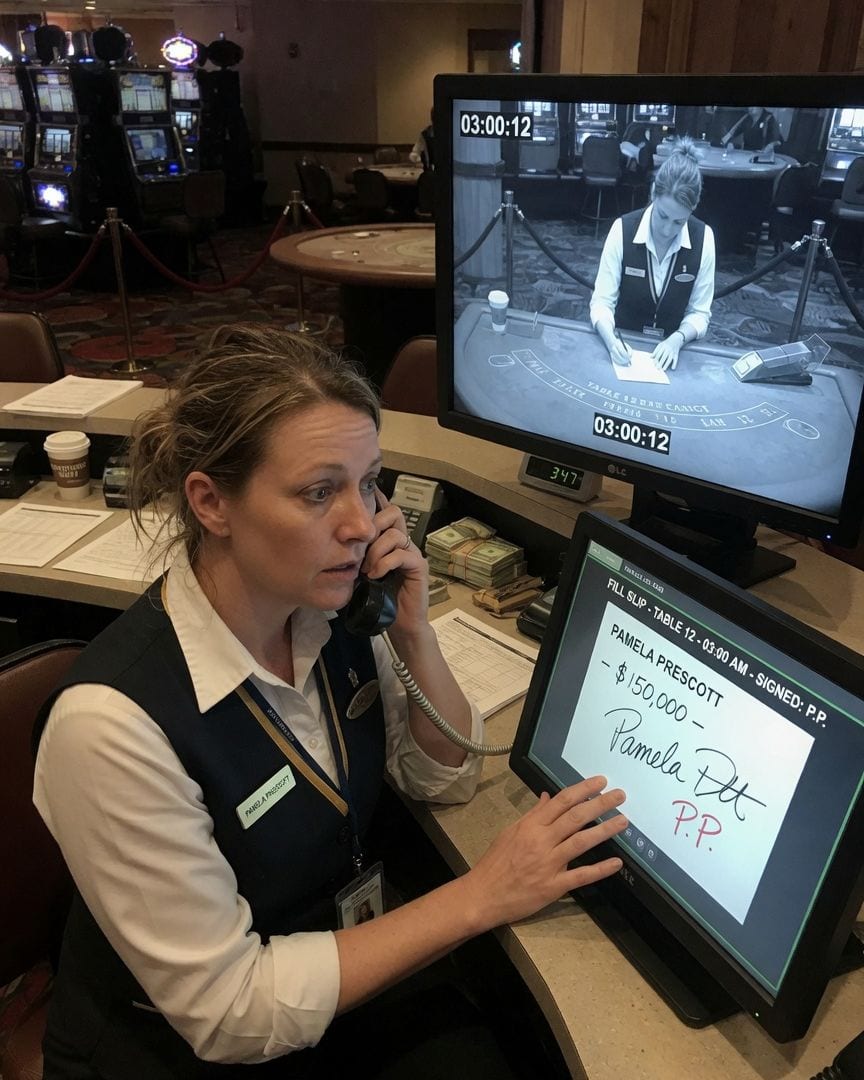
My initials are on a casino count sheet for a table I never touched. Table 12 was dark, roped off for the night.
On my graveyard shift, a routine casino inventory turned impossible. A $50,000 fill for Table 12, a table dark for years, was posted under my name and signature. The impossible part? Security footage shows me making the fill, even as the table itself remained untouched.
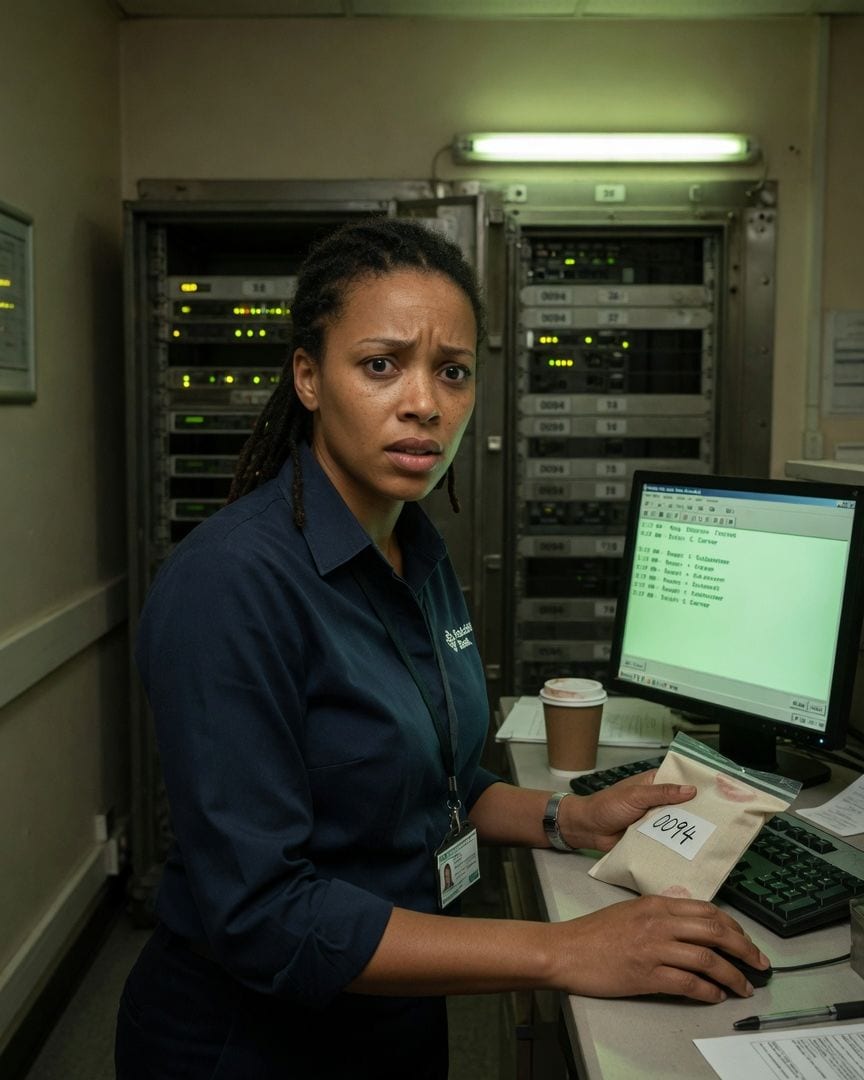
My night-deposit log shows a bag posted at 3:17 AM. My teller number, my count. Bag 0094 is still sealed in the safe, untouched.
I prided myself on precision as a night teller, logging every entry. But at 3:17 AM, a deposit appeared logged under my teller number that I never processed. Security footage then revealed a figure in my uniform, wearing my ID badge, with a blank photo slot.
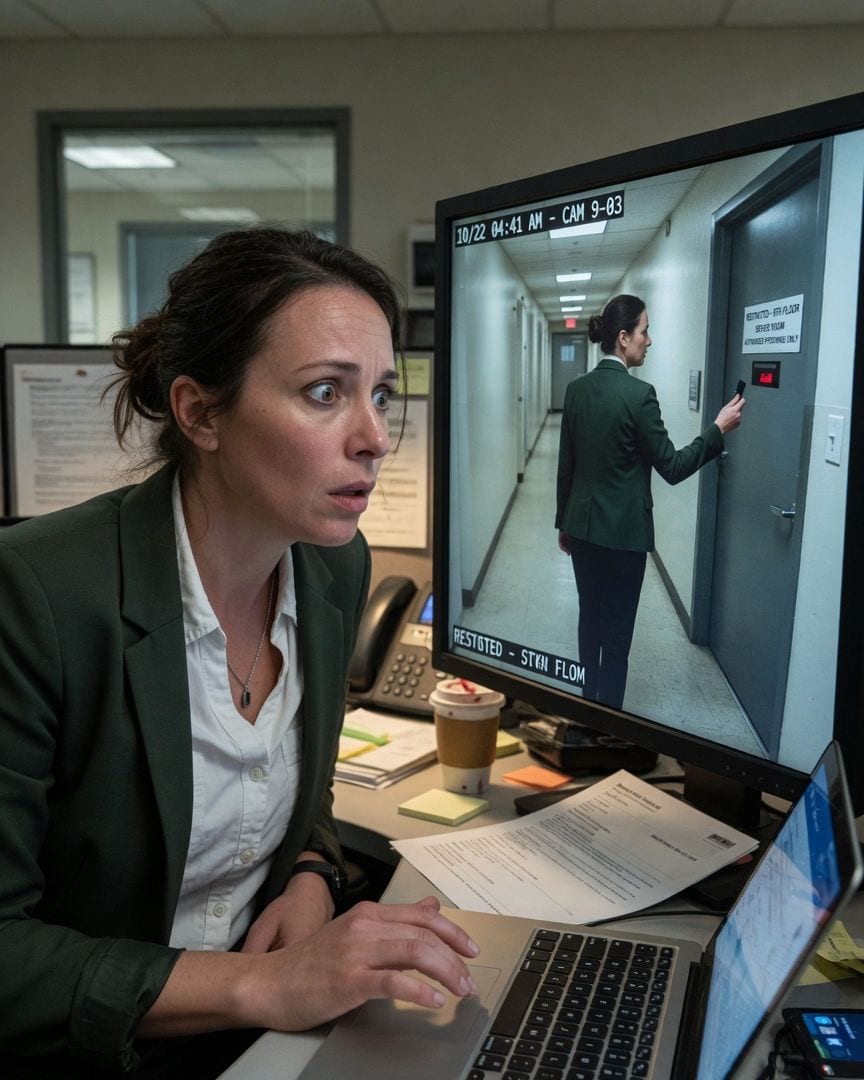
My keycard log shows me in the server room at 4:41am. I was asleep, and my badge was at home.
An email from corporate IT reveals my keycard registered entry into a restricted server room at 4:41 AM last Sunday. I was asleep in my apartment across town, my badge clipped securely to my jacket at home. But then I scrolled down and found eleven more impossible entries, all within the past week, all under my name.
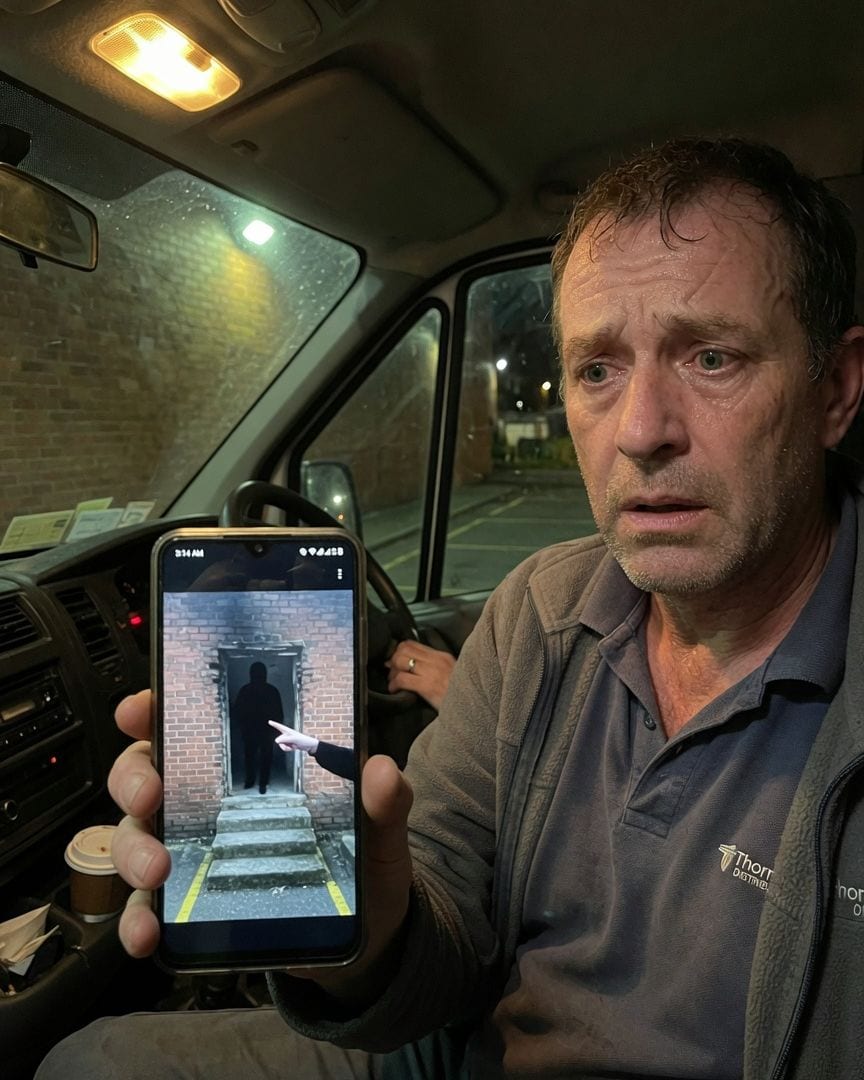
My dashcam showed a doorway in the loading bay wall. Open, with steps into the dark. I got out. Solid brick. Back in the cab, a shape stood on the steps.
It was past three in the morning, just another routine reverse into Loading Bay 7. My van's dashcam flickered on, ready to guide me back against the familiar brick wall. But that night, it showed a doorway where no door should be, open and leading down into absolute darkness.
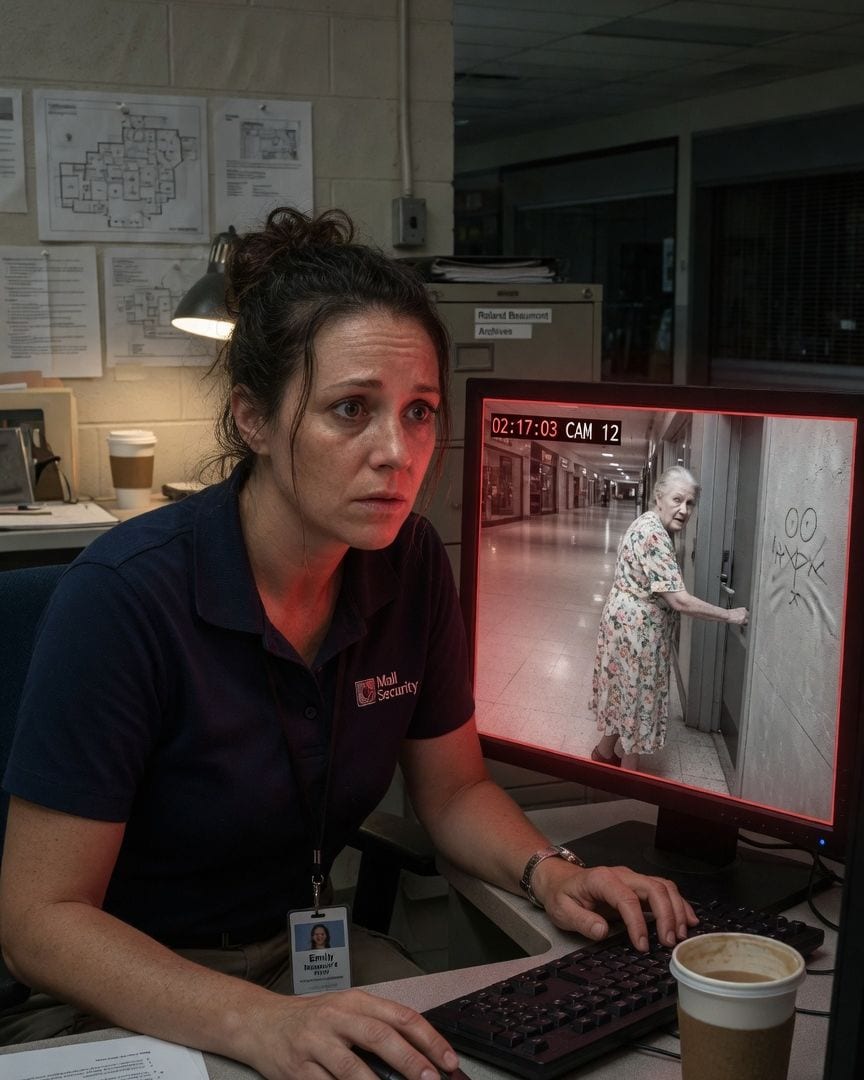
Mall security footage caught an old woman walking the concourse after closing. Every camera filmed her, but no single frame shows how she got in.
Working the overnight shift, I monitor my locked mall's security footage. It was 2:17 AM, five hours after closing, when an old woman in a floral dress simply appeared on Camera 7. She was never seen entering the frame, only *present*, walking slowly across the deserted concourse.
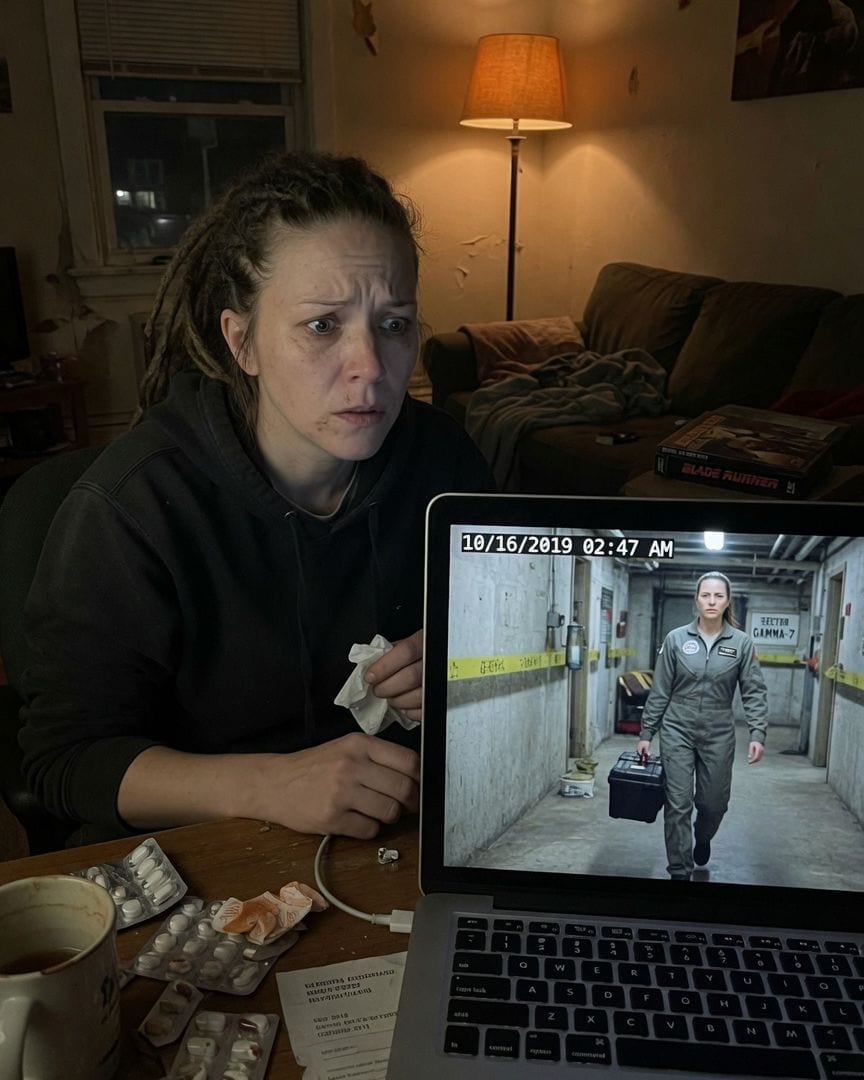
My timesheets show me working night shifts in a town I never lived in. The signatures are mine. The pay went to an account that isn't.
An old employer sent me timesheets from five years ago, detailing night shifts I supposedly worked at a depot 80 miles away. But I knew I was home recovering from surgery that entire week, nowhere near the industrial town. Then a security photo arrived, showing my face in an unfamiliar uniform, working a shift that wasn't quite me.