There’s a coal hole cover outside my house, iron, sealed with tar. One night I saw light coming up through its holes. From below the street, a shovel scraped, a man whistled. My cellar, directly beneath, is bricked off from it, dry and empty. I went down and checked. Silence. Cold.

I was locking the front door, keys jangling, the city’s late-night hum a dull thrum around me. My new house, two months in, still felt a little foreign.
That’s when I saw it: a faint, pulsing glow, like a dying ember, flickering through the perforations of the old iron coal hole cover in the pavement. It wasn't strong, barely there, but unmistakable against the dark asphalt.
My breath hitched.
I stopped, my hand still on the doorknob. The light wasn't the only thing. A rhythmic scraping sound, a dull rasp that vibrated through the pavement, echoed from directly beneath my feet. Shk-shk. Shk-shk. Then, a man started whistling.
A tuneless, repetitive melody, just a few notes over and over, completely absorbed in his task. It wasn’t a construction sound; it was too precise, too… human.
My cellar, directly below this spot, had been bricked off from the old coal chute months ago, bone dry and empty since the day I moved in. There was no way anyone was down there. No way anything was.
A prickle of unease started low in my stomach. I stood there for a full minute, listening, the whistle rising and falling. Then, just as suddenly, it stopped. The light winked out. The scraping faded. Just the city again.
I told myself it was some kind of trick, reflected headlights, a rogue piece of street art with an LED. The city makes weird noises. It had to be. I went inside, locked up, and tried to forget about it.
But an hour later, the quiet of the house was too loud. The whistle, that damn tuneless whistle, kept replaying in my head.
I grabbed a flashlight, my pulse thrumming, and forced myself down the narrow wooden steps to the cellar. The air was cold, still. The concrete floor felt solid, unyielding under my boots.
I ran my hand over the rough brick wall where the coal chute used to be, checking for cracks, for any disturbance. It was as solid as concrete, completely sealed. The cellar was empty, dry, just as it had been.
Silence. Not a whisper of sound. Just the cold, still air.
Over the next few days, the memory of that light and sound clung to me like a phantom limb. I researched old coal delivery routes, pored over local urban legends, anything to explain the impossible. Nothing fit.
I tried to convince myself I’d imagined it, but the memory was too sharp, too visceral.
One afternoon, seeking distraction, I found myself in the attic, the air thick with dust and the scent of old wood.
It was mostly empty, save for a few forgotten boxes, but as I cleared away a cobweb, I noticed something odd. A section of the outer wall, high up, where a window had clearly been bricked over from the outside.
The mortar was old, weathered, but distinctly out of place against the rough-hewn timbers.
What really caught my eye was the floorboards leading to it: a faint, worn path, like someone had paced back and forth, over and over again, for decades.
Curiosity overriding caution, I knelt down, tracing the path with my fingers. Near the bricked-up window, a particular floorboard felt loose. I pressed on it, then tried to dislodge it with my fingers, grunting as the old wood resisted.
With a groan and a faint pop, a small gap opened in the wall itself, right where the window used to be. Not a gap in the brick, but a sliver of darkness behind it, like an unsealed crevice.
I peered through, expecting to see solid brick, perhaps insulation. Instead, a shock of bright, vivid green. My breath hitched.
I was looking out into a sun-drenched, overgrown garden that wasn't mine. The house exterior was different too, painted a faded blue.
And there, his back to me, was a man in an old-fashioned brown suit, meticulously shoveling something – coal, I realized with a jolt – into a large metal bin near where my own coal hole cover would be.
He was whistling. The same damn tuneless melody. The scene was hyper-real, saturated with impossible detail, yet utterly wrong. My garden was paved. My house's exterior was grey stucco, and had no window here.
And the man, his clothes, his posture, screamed a bygone era.
My heart hammered against my ribs. I pulled back sharply, the image seared into my brain. I swallowed, forcing myself to look again.
The gap was still there, a sliver of light, but now it was just the rough, uneven texture of old brick. The vibrant garden was gone.
Confused, adrenaline still singing in my veins, I ran my hand over the floorboards where the loose one had been. My fingers brushed against something hard and leathery tucked beneath it.
I pulled it out: a small, leather-bound journal, brittle with age. Inside, the faded ink of a name: George Hughes.
Vera opened George Hughes’s journal, fingers tracing the faded cursive. Most entries were mundane, observations about the weather, gardening notes, the kind of domestic minutiae that anchors a life. Then, a series of pages, undated, but clearly describing her experience.
“The insistent scraping from the coal hole,” George had written, his handwriting becoming spidier, “the man’s tuneless whistle… it keeps me awake.”
He detailed his own frustrated attempts to find the source, to explain the impossible sounds from his sealed cellar. The desperation in his words was palpable.
I flipped towards the end, my breath catching in my throat.
The final entries shifted, detailing George’s increasing weariness, his feeling of being watched even in his own home, and an odd, growing compulsion to perform certain tasks, to keep a routine.
He spoke of pacing the attic, checking the coal hole, feeling a strange pull towards the window. And then, at the very last page, a clear, stark date: October 14, 1957. My blood ran cold.
According to every property deed, every official record I'd checked when buying the house, George Hughes had already sold the house and left town weeks earlier, in late September of that year.
The journal entry from October 14, 1957 – weeks after George Hughes supposedly left my house – gnawed at me. It felt like a physical itch, an irritant I couldn't scratch.
I spent days at the local historical society, poring over microfiche, cross-referencing property transfers, old newspaper archives, and census records.
The librarian, a stern woman with bifocals, looked at me strangely when I asked to see deeds from 1957 for my address, but she complied.
Every official document confirmed it: George Hughes sold the house in late September 1957 and moved out of the county. He was gone. Yet his journal described the coal hole sounds, the whistling man, the growing compulsion, well into mid-October.
It was impossible.
Then, tucked away in an old, bound volume of the local Gazette, I found it. A brief, obscure article from late 1957, buried on an inner page, titled: 'Peculiar Disappearance from Elm Street Residence.'
It mentioned a George Hughes, noted as having 'returned to collect some belongings' from my address, but then 'not seen or heard from since.' The article was vague, quickly forgotten, given only a paragraph or two. No follow-up, no explanation.
Just… vanished.
I returned to the attic, the journal clutched tight in my hand. The sealed-off window seemed to mock me, stubbornly displaying only brick.
I tried to replicate the conditions when I saw the 'wrong year' – the exact time of day, the angle of the light, even the faint scent of old dust that had been in the air. Nothing. It remained opaque.
But I noticed something else about the worn path on the floorboards. It didn't just lead to the window.
It seemed to trace a specific, repetitive route around the attic itself, a distinct circuit, as if someone had walked the same precise pattern, over and over, for years.
I found myself unconsciously following it, a strange sense of familiarity rising in me.
I paused, forcing myself to stop, and reread George's journal, focusing on his descriptions of feeling compelled to maintain routines, to walk certain paths within the house, almost as if he were being guided by an unseen hand.
The words chilled me to the bone.
Days later, I was in my front garden, pulling at some stubborn weeds, trying to ignore the lingering unease that hummed beneath my skin.
The sun was warm, the air sweet with cut grass, but the back of my neck still prickled. That's when my elderly neighbor, Edmund Fletcher, appeared at the fence separating our properties.
He'd always been quiet, almost eerily observant, his gaze often drifting towards my house.
"You've been spending a lot of time in the attic lately, haven't you, Miss Carver?" he asked, his voice calm, almost conversational, like he was remarking on the weather. My hands froze in the dirt.
I hadn't seen him watching, yet he knew.
"Just clearing out some old boxes," I replied, trying to sound casual, to force a lightness into my tone that I didn't feel.
Edmund nodded slowly, his gaze fixed on the upper stories of my house, not me. His eyes seemed to see through the walls, through the roof. "The attic has a way of holding onto things. Memories, mostly. Sometimes, routines."
He paused, his focus still on the house, and I felt a shiver despite the sun. Then he turned his quiet gaze to me, his eyes surprisingly sharp. "George Hughes used to spend a lot of time up there, too.
Fiddling with that old window. He said it showed him things. Things that shouldn't be."
My blood ran cold. I hadn't mentioned George Hughes to anyone, not to Edmund, not to a single soul in town. My voice was a tight whisper. "How did you know about George?"
Edmund just smiled faintly, a serene, unsettling expression that didn't reach his eyes. "Some things, Miss Carver, the house remembers. And some things, the neighbors remember even longer. He was a good man. Very methodical.
Kept to his schedule, right up until... well. Until he didn't."
He glanced pointedly at the iron coal hole cover in the pavement outside my house, then back at me, his eyes holding a depth of knowledge that made my skin crawl. "You're starting to get quite methodical yourself, aren't you?"
The next day, I marched straight to Edmund’s house, George’s journal clutched in my hand, a frantic energy thrumming through me. "You knew about George. You knew about the window. What the hell is going on in this house?"
Edmund answered the door almost immediately, as if he’d been expecting me. He invited me into his perfectly kept, sterile living room. Everything was neat, orderly, unsettlingly clean.
He moved with an unhurried, almost ritualistic grace, offering me a cup of herbal tea. "There's no need for alarm, Miss Carver," he said, his voice calm, flat. "It's simply the way of things."
He took a slow sip of his own tea, his eyes studying me over the rim of the cup.
"The house… it has a peculiar kind of memory. It doesn't just hold onto echoes; it reenacts. George Hughes was a creature of habit. Very precise.
He had a specific routine: stoking the old furnace in the cellar, tidying the coal, walking his circuit in the attic, looking out that window.
When he tried to leave, to break free from his patterns… the house didn't let him. It simply… retained him. Kept his routine going."
I slammed the journal onto his polished coffee table, making a faint thud. "But the dates! He was gone! The records prove it!"
Edmund nodded, unperturbed. "Physically, perhaps. But the house needed him to finish his work. To keep the cycle going.
The sounds you hear from the coal hole, the shovel scraping, the whistling… the glimpses through that window – that's George, still at it. The house is very particular about its routines.
It finds ways to ensure they continue, one way or another." He looked at me, his gaze piercing. "You noticed the worn path in the attic, yes? George wore that path, day in and day out, for years.
And now, you've started walking it too, haven't you? Investigating. Following the thread. Just like he did, in the beginning."
A cold dread seeped into my bones. I remembered the hours I’d spent pacing that attic, drawn to the window, the journal clutched in my hand. The floor felt unsteady beneath my feet, the sterile room suddenly spinning.
He was right. I had been following the same goddamn path.
I felt a terrifying, cold clarity settle over me. "So the house trapped George. It's making him relive his life, his routine, forever?" My voice was barely a whisper, the words tasting like ash.
Edmund shook his head slowly, a gentle, almost pitying look in his eyes. He reached out, his long, thin fingers resting briefly on my arm. The touch was unnervingly cold. "Not forever, Miss Carver. Not George, specifically.
The house keeps the pattern. George was merely the last one to fulfill it. Before him, it was old Mr. Kowalski, back in the 1890s. And before him, a Miss Sylvia Winslow, in the 1820s.
The house needs its routines, its specific energies, for a time. Then, when it’s… sated, or when the old pattern begins to fray, it finds a new occupant. Someone who fits.
Someone who will pick up the thread, unknowingly at first, and then, inevitably, become the next George. The next Mr. Kowalski. The next Miss Winslow."
Edmund leaned forward slightly, his voice a soft, almost hypnotic murmur. "It's always been like this. Every so many decades, someone new moves in, someone like you, and the cycle begins again.
The house remembers, and it waits for the right person to remember with it. And now, Vera," his eyes drifted toward me, their depths unsettling, "it seems… it has chosen you."
Edmund smiled faintly, a calm, knowing expression that chilled me to the bone. "The house remembers," he said, his eyes drifting toward her, "and soon, you will too. You're already starting to fit, Vera. Just like George before you.
And the one before him."
The full horror of Edmund’s words settled over me, heavy and suffocating. I saw the pattern now, the terrifying, meticulous coherence of it all. My blood ran cold, then seemed to freeze solid in my veins.
"So the house isn't just haunted," I whispered, the words catching in my throat. "It's… feeding?"
Edmund nodded, his face impassive. "In a way. It's a place that accumulates. Not just dust, but presence. It needs to be lived in, deeply, by certain kinds of people. Methodical people.
People who will establish and maintain the specific routines it craves. The shoveling, the attic walks, the quiet observation." He paused, his gaze seeming to bore into me. "These aren't just memories; they're vital functions for the house.
And when an occupant begins to falter, or tries to leave, the house simply… absorbs them. Their essence, their routine, becomes part of its fabric. The 'Door Onto The Wrong Year' isn't a glimpse into the past, Vera.
It’s a blueprint. A template. It shows the house’s current occupant what it needs them to become, by showing them who they were in a previous cycle. You’re not just seeing George Hughes.
You’re seeing the future of your own past, already laid out for you. The journal entries, dated beyond George’s physical presence, were his own struggle as the house began to merge him into the pattern.
He was writing his own disappearance, his own transformation into a lingering routine." Every strange detail, every sound, every subtle compulsion I had felt, clicked into place with chilling precision. My entire life here felt like a pre-written script.
A desperate, furious energy coursed through me. I sprang to my feet, nearly knocking over my teacup. "No. I won't let it. I'm leaving. I'll burn the house down!"
The words were a frantic cry, an attempt to assert control over the terrifying inevitability Edmund was laying out.
Edmund remained seated, utterly calm, unmoving, a statue of serene acceptance. "You can try, Miss Carver. But the house is… persuasive. And it's already deep inside you. You feel the pull, don't you?
The urge to check the coal hole, to walk that worn path in the attic, to sit in certain chairs at certain times? To write things down, perhaps? George felt it too. He tried to leave. He failed.
The house simply drew him back, piece by piece, until he was exactly where it needed him to be."
A tremor of that awful truth resonated deep in my own bones. The subtle compulsions I'd dismissed as habit, as curiosity, as simple routine. The way I sometimes found myself unconsciously whistling that same tuneless melody.
The way I'd just reached for a pen and paper. I backed away, my gaze darting frantically to the door. "I won't become him! I won't!"
Edmund simply watched me, a faint, sad smile playing on his lips, an expression devoid of malice, only resignation. "You already are, in parts. And the house will simply take the rest. It's not a malevolent force, Vera.
It's simply… hungry. And it remembers. And it keeps its memories very, very close."
I turned, fumbling for the doorknob, a frantic urgency flooding my limbs. I had to get out. I had to break the cycle.
My hand closed on the cold metal, but as I twisted, I felt a strange inertia, a heavy, familiar weight settling over me, not from outside, but from within. A deep, pervasive tiredness. The whistle.
I heard, faintly, the rhythmic scraping of a shovel from somewhere far below, then, closer, softer, the faint, tuneless whistle. It was my whistle.
The house stood, silent and still on the street, its windows dark. Edmund Fletcher continued his quiet life next door, occasionally observing the property. The 'For Sale' sign never went up again.
The garden remained meticulously tended, and the coal hole cover outside remained sealed, save for the occasional, fleeting flicker of light seen by no one. Vera Carver was never officially reported missing. Her bank accounts remained untouched.
Her social media profiles simply went dormant. The house, in its own way, had merely closed a circuit.
The shovel scraped, rhythmic and steady, from somewhere below the street. Vera, now in the attic, her movements slow and deliberate, paused her circuit. She looked at the sealed-off window, her eyes vacant but fixed.
She knew the garden beyond it. She knew the man. She knew the routine. She just had to make sure it was perfect. The house remembered. And now, so did she.
She continued her slow, measured pace around the worn path on the floorboards, humming a tuneless, repetitive melody.
Months later, a young couple, house-hunting, paused outside the old property. "It's been empty for ages," the woman said, looking at the dark windows. Her partner shrugged. "Looks well-maintained, though. Someone must be looking after it."
As they turned to walk away, a faint, tuneless whistle drifted from the street, seeming to emanate from beneath the pavement. "Did you hear that?" the woman asked. Her partner shook his head. "Just the wind."
But as they rounded the corner, a single light flickered on in the attic window, then off again. The house remembered. And it was waiting for someone new to remember with it.
If this one got to you
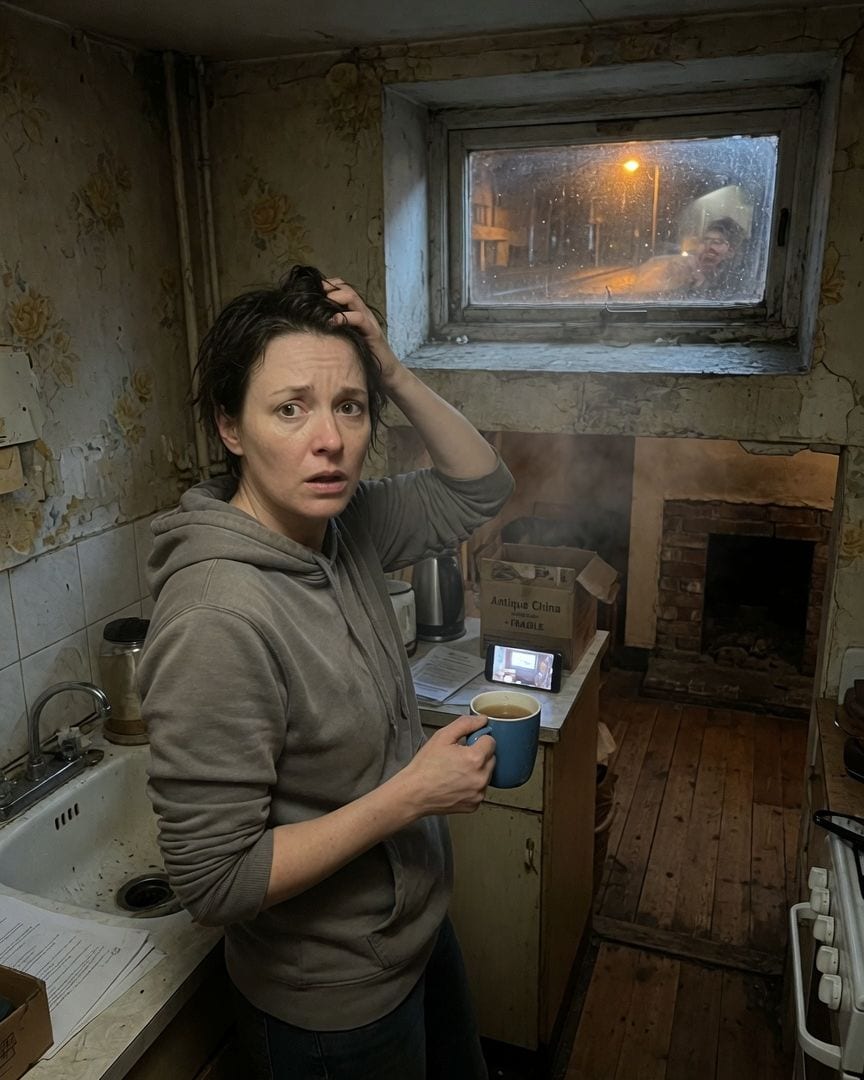
My basement window shows a gaslit kitchen moving at midnight, hams hung from the ceiling. My own kitchen is dark.
Settling into my new basement flat, I was making tea late one night when I glanced out my kitchen window. Instead of the concrete well, I saw a gaslit kitchen with an enormous cast-iron range, a young scullery girl, and cured hams hanging from the rafters. The vision was too sharp, too real, and the smell of coal smoke lingered long after it vanished.
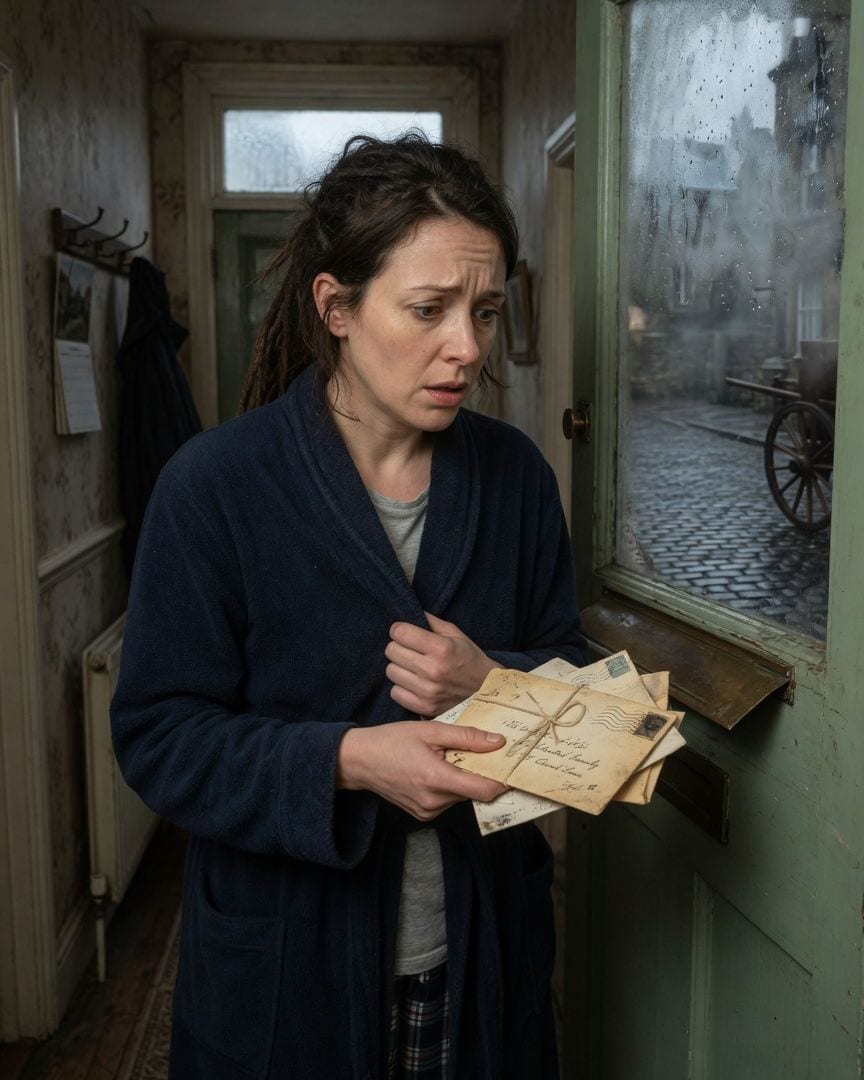
Seventy years ago, a hidden journal recorded my door opening to the wrong street and receiving Lockwood post.
I'd only recently moved into my inherited house, a quiet place on the edge of town. One grey morning, a distinct clatter from the front door's post flap caught my attention. Reaching down, I expected my gravel path, but instead, the flap showed a dark, cobbled street that wasn't mine. A bundle of warm, old letters, addressed to 'The Lockwood Family,' slid through, before the vision flickered and was gone.
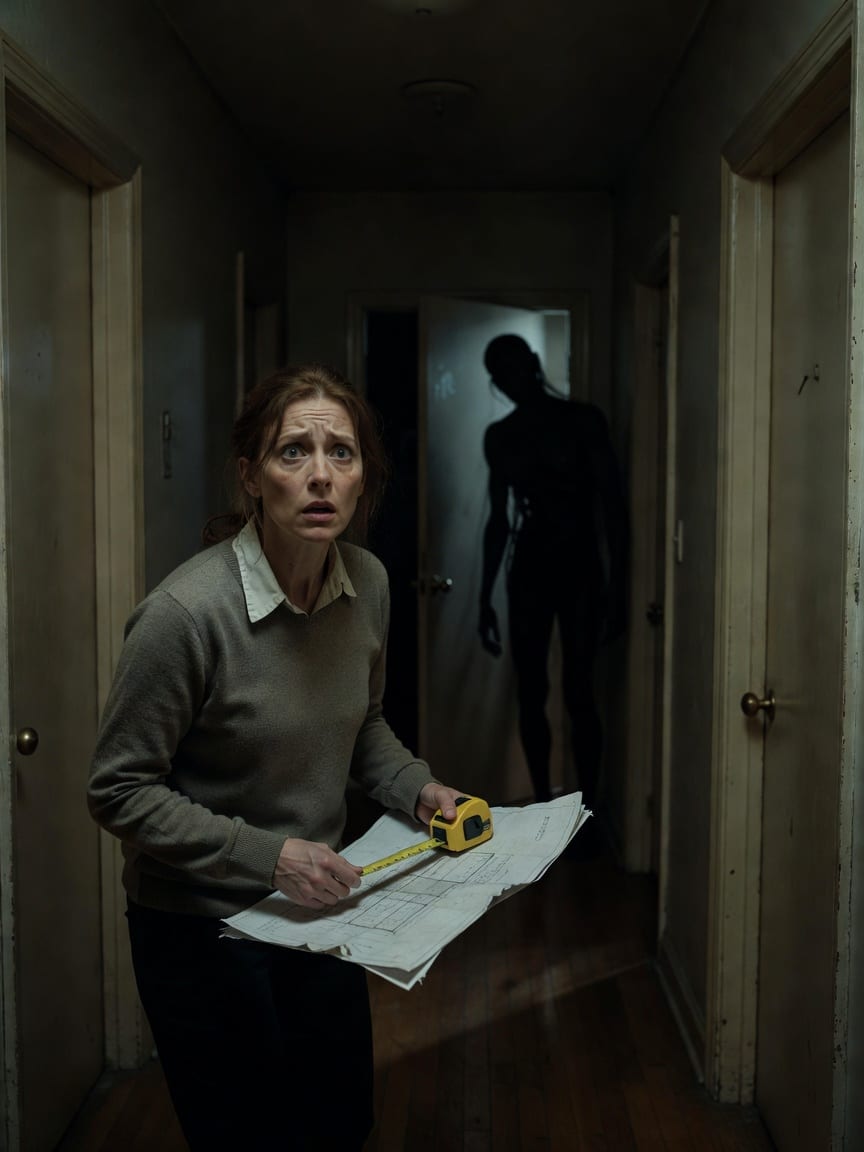
My front door has a dented gate and a dead hydrangea. I walked past it six times, trying to reach the corner shop just a hundred yards away. The pavement kept bringing me back to my own porch, and the shop's light never moved.
My morning started like any other, a quick walk to the corner shop from my home at Number 14, Elm Terrace. But after walking what felt like two minutes, I found myself back at my own front door, the shop no closer. I tried six times, faster and slower, but my street kept compressing, refusing to let me leave.
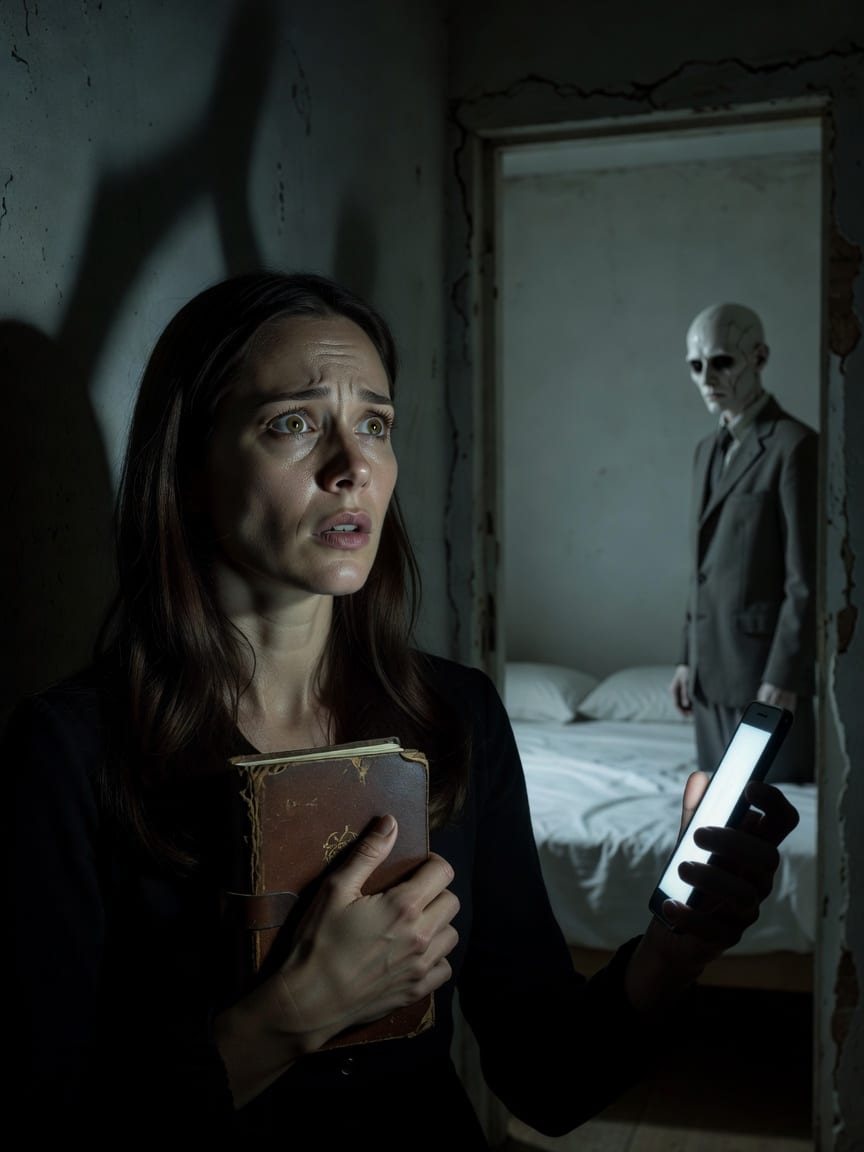
Behind a plastered-over doorway, I found a room. Papered, carpeted, and furnished with a made bed, sealed for decades. The air was dead still, but the bed wasn't dusty. My council tax bill only lists five rooms.
I'm Claire, an architect, meticulously planning my new Victorian terrace renovation. But when I uncovered a hidden room behind a wall, everything I knew about time and decay shattered. The bed was perfectly made, the air still, yet there was no dust, only an unnerving cold.
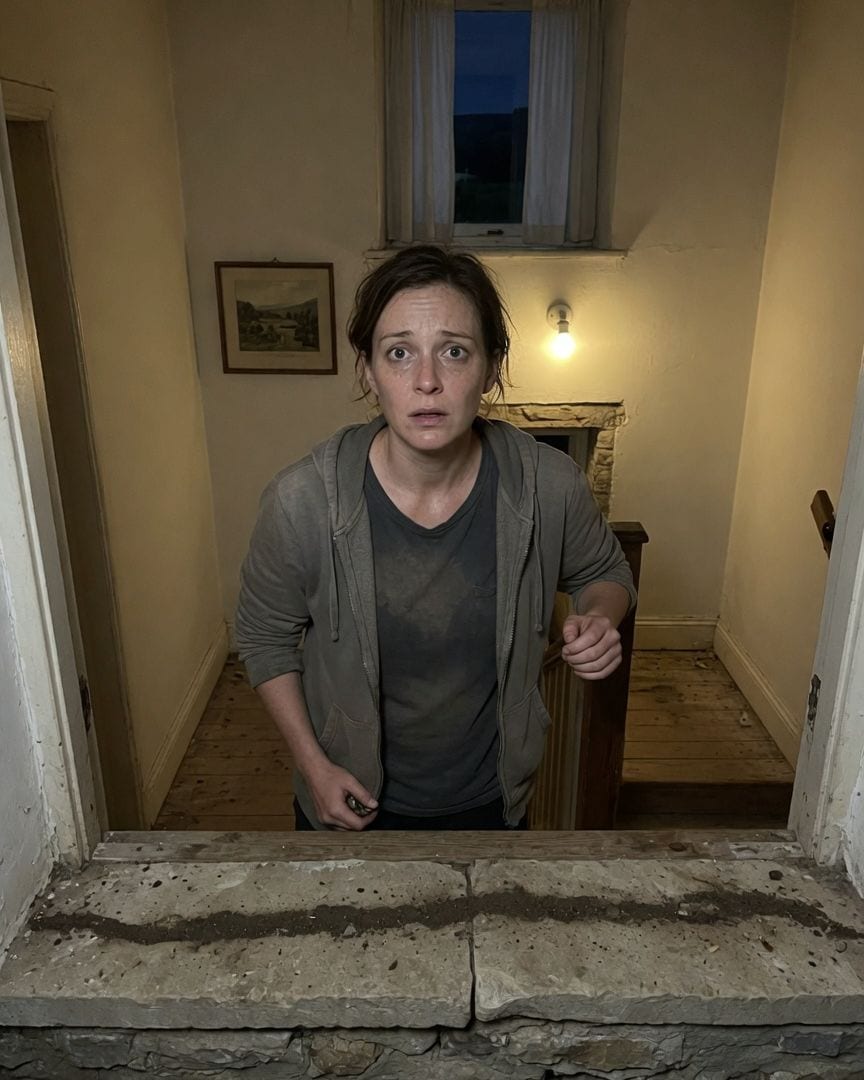
Water moved under my house at 3am, leaving a six-inch silt line. The river's two miles off.
New to my inherited valley house, I was just exhausted. Then, at 3 AM, a powerful current rushed *under* my house, vibrating through the floorboards. By morning, a precise six-inch tideline of dark silt marked my foundation, but no flood had occurred, and my pipes were dry.
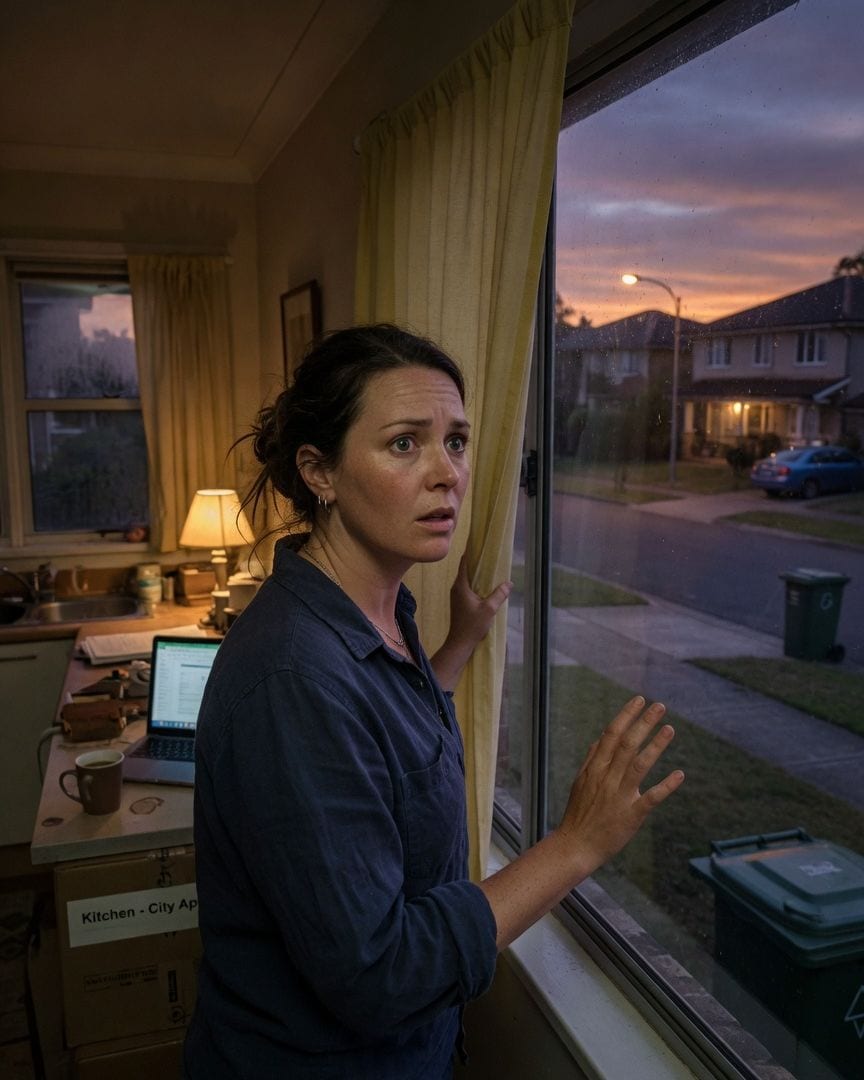
My bin was turned the wrong way Tuesday. The man three doors down hasn't been seen since, though his curtains still open.
New to Oakhaven, I dismissed the local warnings as charming quirks. But after I put my bin out first, my neighbor Joel Whitmore vanished, leaving only a cryptic 'My turn' note. The same strange symbol from his note was chalked on my bin, facing the street.