My twin's passcode was our birthday reversed since we were kids. His phone was dead and missing for three weeks — now it opens to our birthday forward, and he says I'm the one who always got us backward.
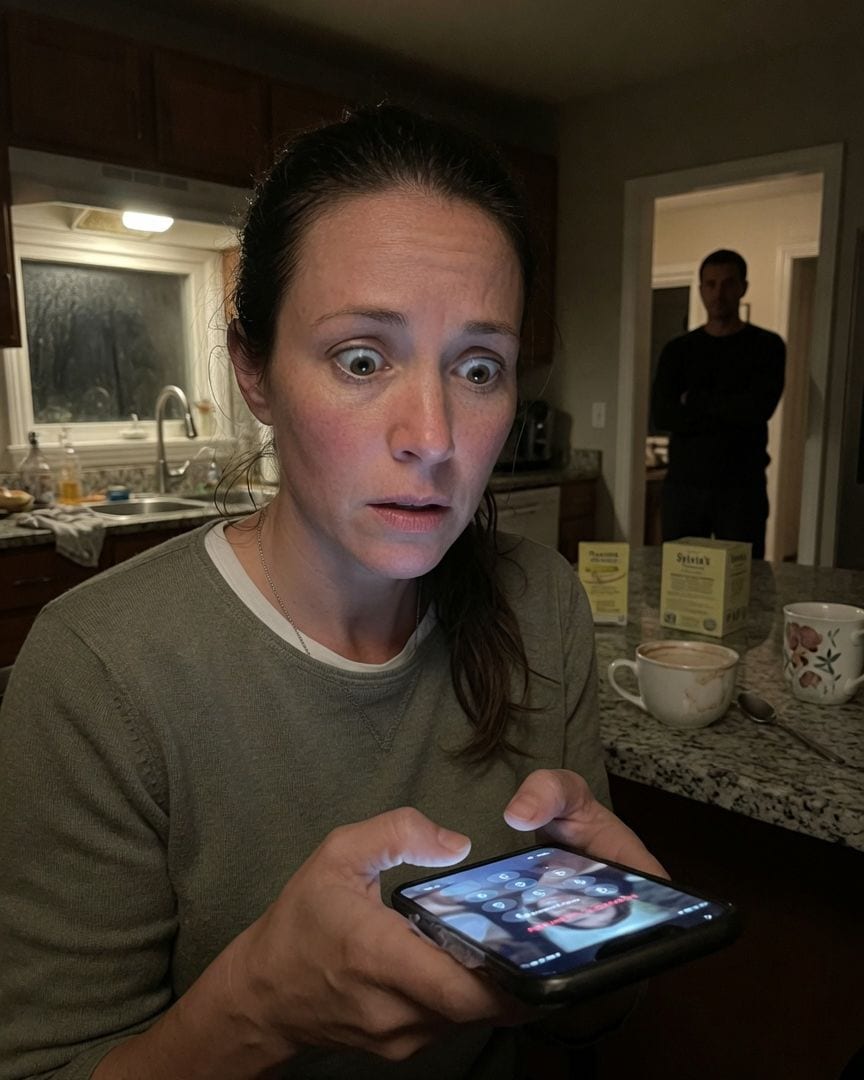
My twin brother, Kenneth, had been back for less than a day, three weeks after vanishing. Sylvia, his wife, was still reeling, but there was a quiet, unsettling relief in the house, a sense of having dodged a bullet.
Kenneth sat at the kitchen island, tracing the rim of a coffee cup with his thumb, looking almost too still.
He said his old phone was dead, lost in the woods where they’d found him, and Sylvia had bought him a new one.
But then he'd forgotten the passcode to his old one, wanted me to see if anything on it could be salvaged.
"My head's just a mess, Nora," he'd said, his voice flat. "Can't remember the damn thing."
It was a party trick we’d done since we were teenagers, a shared secret: our birthday, reversed, since we were twins. July 14th. So, 4-1-7. I typed it in, my fingers sure. Wrong. The screen flashed red.
I tried again, slower, my thumb hovering over the keypad, a tiny spark of unease. Still wrong.
Kenneth watched me from the kitchen doorway, his expression calm, unreadable, like he was observing a puzzle he already knew the solution to.
"You've always been the one who got us backward, Nora," he said, his voice quiet, not a hint of the old teasing. "It's 7-1-4 now."
I typed it, and the screen flashed open, displaying his old wallpaper, a blurred photo of Sylvia. He was right. It was our birthday, forward. But Kenneth had never, not once in our lives, gotten our birthday backward.
He was obsessive about details like that. And his phone had been dead, missing for three weeks, sealed away from him, from everyone. How could it have changed?
The kitchen, usually so warm with the scent of Sylvia’s chamomile tea, suddenly felt too cold.
Later that evening, the phone incident still prickling at the back of my mind, Kenneth recounted a memory from our childhood. We were eight, sitting on Grandma Romano’s porch swing, the late afternoon sun warm on our faces.
He described the faint scent of honeysuckle, so specific I could almost smell it, the way Grandma’s silver locket felt cold against his palm as she let him hold it.
He even mimicked her exact words, her voice a reedy whisper: "This locket holds what you truly desire, my dears." It was a cherished memory of mine, deeply private, one of those moments that shaped a part of you.
But as he spoke, a cold knot formed in my stomach, tightening with each detail he got exactly right. I remembered that day vividly. I remembered Grandma, the porch swing, the locket. I remembered the yellow dress I was wearing.
And I remembered, with a sudden, sickening clarity, that Kenneth wasn't there. He’d been in the hospital, recovering from an emergency appendectomy. I’d visited him that morning, bringing him a comic book, a tattered Superman.
I gently pressed him, trying to keep my voice light, casual. "Are you sure you were there, Ken? I thought you were still at St. Jude’s."
He met my gaze, his eyes calm, certain, unblinking. "Of course, Nora. I remember it perfectly. You were wearing that yellow dress, the one with the daisies." My yellow dress. A detail only someone who was there would know.
My heart hammered, a frantic drum against my ribs. He was wrong, and right, all at once. The dread was a physical thing, a chill that had nothing to do with the evening air.
The air in the living room felt heavy, suffocating. I excused myself, my mind racing, a single, desperate thought driving me. I went straight to the old photo albums stored in the attic, the ones Grandma had insisted on curating.
Dust motes danced in the attic’s single shaft of light as I thumbed through the brittle pages. Past birthday parties, summer vacations, school photos. Each familiar face, each captured smile, a silent accusation.
My fingers trembled, growing slick with a cold sweat. Finally, I found it. A faded snapshot, the colors muted by time: Grandma Romano on her porch swing, me beside her in my yellow dress, holding the silver locket.
The date printed on the back was clear: July 16th. Two days after our birthday, exactly when Kenneth would have been recovering from surgery.
And in the photo, a clear, undeniable gap on the other side of Grandma, where Kenneth should have been. Empty space where my twin, who had just recounted being there, feeling the locket, should have been sitting.
The picture blared its silent, damning contradiction, confirming his absence. My breath hitched. He wasn’t just changed. He wasn’t Kenneth.
The photograph was a physical anchor for a dread I couldn't shake. I couldn't confront Kenneth directly; his calm certainty about the locket memory was unnerving, an unyielding wall against my rising panic.
Instead, I started watching him, scrutinizing small details, like a detective in my own home. His morning coffee, always black, now took cream and two sugars. He’d hummed a specific, off-key tune when he was nervous – it was gone.
His posture was different, too, a subtle stiffness, like a mannequin held just so.
Sylvia, too, noticed things. She tried to explain them away, but the worry was etched around her eyes. "He’s… different," she admitted one afternoon, stirring her tea in hesitant circles.
"He used to leave his shoes by the door, trip over them every morning. Now they’re always tucked away, neat. And sometimes, his eyes… they just go blank, Nora, like he’s looking through me, not at me."
But then she’d shake her head, her voice thin, desperate. "Grief, I suppose. And the trauma of whatever happened out there, in those three weeks."
She wanted to believe it, needed to believe it, that Kenneth was still Kenneth, just… wounded. I couldn't.
I started digging online. Missing persons cases, similar timelines, stories of people returning 'changed.' It was a rabbit hole, full of wild theories and sad anecdotes, but then I found a forum post, buried deep, from an anonymous user.
They described their father's return and his 'new, serene calm' that felt alien, mentioning a 'Reintegration Clinic' in a remote part of the state, a place where 'lost souls were found and returned to their families.'
My fingers flew across the keyboard. The clinic’s website was sparse, clinical, promising 'specialized care for complex re-entry cases.' No photos of staff, no detailed testimonials. Just an address, far from here, nestled deep in the state’s wilder northern region.
The air in my small study felt suddenly thin, as if the oxygen had been sucked out.
My research became obsessive. I’d stay up late, the blue light of the screen reflecting in my wide eyes, poring over archived newspaper articles, trying to find any link to the 'Reintegration Clinic.'
The house would be silent, save for the hum of my laptop and the distant creaks of settling wood.
One evening, I was deep into an old local news database, filtering for 'missing persons' and 'return' keywords, when Kenneth walked into the living room. The TV was off, the only light from my laptop screen casting stark shadows.
He simply stood there, in the doorway, watching me, his figure framed by the dim hallway. I jumped, my heart leaping into my throat, nearly knocking the laptop off my knees.
"Couldn't sleep?" I managed, trying to sound casual, my voice a little too high. I quickly closed the browser tab with the clinic's name, the movement sharp and deliberate.
"Just restless," he replied, his voice even, devoid of inflection. "You're up late. Everything alright?" His gaze lingered on my laptop, then on my face.
It felt less like concern, more like an assessment, as if he were scanning me for inconsistencies. The air grew heavy, thick and still. The next day, my phone rang from an unknown number.
I answered, and there was only static, then a click. No voice. But the call came again, an hour later, then a third time, each time from a different untraceable number. Always silent.
Always cutting out just as I was about to speak. It was like a soft, persistent tap on the window, a reminder that I wasn't as hidden as I thought.
I started feeling eyes on me, even when Kenneth wasn't in the room. A slight shift in the air, a shadow at the edge of my vision. The hunter was becoming the hunted, and I was losing my nerve.
The silent calls and Kenneth’s watchful presence pushed me to a breaking point. I cornered Sylvia over coffee one morning at her kitchen table, the light from the window making the dust motes dance.
Her initial relief over Kenneth's return was slowly eroding, replaced by a quiet desperation.
"Sylvia," I began, my voice low, urgent. "Kenneth told me about a childhood memory, one I know he wasn't part of. And his phone passcode changed. The one we've had since we were kids."
Sylvia paled, her hand, holding a ceramic mug, began to tremble. "His coffee," she whispered, her voice barely audible. "He takes cream now. He hated cream, Nora. Said it tasted like chalk.
I thought… I thought it was just him trying new things, after everything." She wrung her hands, her knuckles white. "And sometimes, Nora, when I touch him, when I hold him… it’s like… he’s there, but not. Empty.
Like a beautiful vase with nothing inside." Her voice cracked, tears welling in her eyes. "He wasn’t found by the police, Nora. Not really. After three weeks, when everyone else had given up, a small, private clinic contacted us.
They said they specialize in 'reintegrating' individuals who've experienced severe trauma or disorientation. They said they’d found him, disoriented but safe, near their facility. It's called the 'Reintegration Clinic'."
She pulled a crumpled brochure from her purse, her hands still trembling, and pushed it across the table.
It was the same clinic I'd found online. The brochure, glossy and sterile, spoke of 're-patterning therapies' and 'narrative integration specialists' to help patients 're-establish their identities.'
The words chilled me to the bone, a cold dread seeping into my very bones. Re-patterning. Narrative integration. It clicked into place with a horrifying certainty. The phone passcode, the false memory, the blank eyes, the changed habits.
It wasn't grief. It wasn't trauma. It was… a process. My brother had been 're-patterned'. The kitchen, usually so bright, now felt like a sterile, inescapable cage.
Armed with the clinic's name and Sylvia’s reluctant confirmation, I returned to the online archives, now searching for 'Reintegration Clinic' and 'missing persons' specifically.
Hours bled into one another, the blue light of my screen painting my face in the darkness. My fingers were stiff, my eyes gritty, but I couldn't stop. Then, I found it.
A grainy, faded newspaper clipping from 1978, yellowed with age, scanned into the digital record. The headline screamed: 'Local Man Returns Changed, Family Distraught.'
The article detailed the return of a Mr. Walter Ellsworth, missing for months, found by a 'specialized facility.' His family reported 'unsettling new habits and memories he couldn't possibly possess.'
And there, a small, black-and-white photograph: Walter Ellsworth, a man in his early thirties, standing stiffly in front of a building. The building was unmistakable: the 'Reintegration Clinic,' its stark, modernist facade eerily timeless.
But the truly terrifying thing was Walter Ellsworth’s face. The same high cheekbones, the same slight curve to the mouth, the same unnervingly still eyes. He looked, decades ago, eerily, chillingly like Kenneth.
Not just a resemblance, but a ghostly echo. I held the ancient clipping, my hand shaking so violently the paper rattled, the image of Walter Ellsworth’s face staring up at me, a ghost from the past, Kenneth’s ghost.
The room was quiet, suddenly too quiet, until a shadow fell over my shoulder. The air grew cold, dense. Kenneth stood there, silent, watching me, his face unreadable in the dim light. "What are you looking at, Nora?"
he asked, his voice soft, his eyes still.
Kenneth’s eyes held no anger, only a quiet, unsettling curiosity. I shoved the clipping under my laptop and forced a smile that felt like it would crack my face. "Just old news, Ken. Nothing important.
Trying to dig up some local history, you know." He didn't press. He simply nodded, his gaze lingering on my laptop for a beat too long before he turned and left the room.
But his presence, his unnerving calm, was a clock ticking in my mind. I knew I couldn't dig much more from home, not with him watching. I needed to go to the source.
I called the Reintegration Clinic the next morning, my voice tight with manufactured concern for Kenneth's 'post-trauma adjustment,' and managed to secure a meeting with an administrator, Maxwell Pierce.
The clinic was a sprawling, sterile complex of glass and steel, tucked away behind dense woods, miles from the nearest town. It looked less like a medical facility and more like a corporate campus for a shadowy tech firm.
Pierce, a man in his mid-fifties with slicked-back gray hair and a calm, almost detached demeanor, greeted me in a sparse office. The room smelled faintly of ozone and disinfectant, sterile to the point of discomfort.
He spoke in clinical, reassuring tones about 'patient-centric care' and 'holistic re-patterning,' his hands folded neatly on his desk. When I subtly brought up Kenneth’s changed phone passcode, feigning mild annoyance, he nodded, as if it were a routine inconvenience.
"Ah, yes, muscle memory re-establishment. A common protocol for ingrained habits. We reset the neural pathways to align with a more adaptive pattern. It reduces anxiety for the subject." My blood ran cold. Reset the neural pathways.
Then, I mentioned the locket memory, framing it as a sweet, but slightly confusing, instance of Kenneth misremembering. "That would be narrative integration," he explained, leaning back in his chair, unbothered, as if discussing the weather.
"We compile extensive personal histories from close family to create a cohesive, believable identity. Sometimes, minor adjustments are necessary for optimal reintegration. It reduces distress for the subject and the family."
He pulled up a digital file on his tablet, showing a flow-chart of 'Memory Implantation Stages.' It was all there, laid out in black and white, clinical jargon describing the crafting of a human being.
The horror wasn't what I imagined, but how coldly, clinically, it all made sense. Every wrongness, every subtle shift, was a deliberate, documented step. My breath hitched.
I swallowed, my throat dry, my heart hammering against my ribs. "And Walter Ellsworth?" I asked, my voice barely a whisper, pushing the newspaper clipping across his gleaming desk. "The man from 1978?
The one who looked so much like Kenneth?"
Pierce barely glanced at it, his eyes flicking over the faded image before returning to mine. A small, almost imperceptible smile touched his lips. "Ah, a fascinating early case. One of our first successful 'template re-applications.'
We learned a great deal about long-term pattern stability from Mr. Ellsworth. A true pioneer." He paused, his gaze unnervingly placid. "We have refined the process considerably since then. Made great strides."
The truth detonated in my mind, a silent, internal scream. Not just Kenneth, but a lineage of them. Re-applications. Templates. My brother wasn't just 're-patterned'; he was a new iteration of a recurring model, a copy.
The implication was clear: they hadn't just 'found' Kenneth; they had made him. And if they had made him, they knew about me, about my questions. I was a loose end, a glitch in their perfect narrative.
Confronting Kenneth was useless; he wasn't there, not really. And confronting Pierce, here, now, was pure insanity.
I ended the meeting abruptly, mumbling about Kenneth needing rest, my heart pounding so hard I thought it would burst through my chest. I drove away, not looking back, the sterile concrete of the clinic disappearing into the rearview mirror.
I couldn't go home. Not to Sylvia, who was living with a ghost, or to the thing wearing my brother's face. The world had split open, and I was falling through the crack.
I packed a small bag from a friend's empty guest room, left a note for Sylvia, vague and apologetic, claiming I needed time away. Then I vanished. I knew they would be looking for me.
I knew they would wonder what I knew. My escape was not freedom, but a permanent exile. I was living, but the world I knew, the family I had, was gone.
I was haunted by the faces of strangers, the subtle, unreadable stillness in their eyes. The quiet dread was my constant companion. I saw him once, in a city park, months later, hundreds of miles from the clinic.
A man with Kenneth's high cheekbones, the same slight curve to the mouth, the same unnervingly calm expression. He wasn't Kenneth, but he was one of them. And he looked at me, as if he knew.
I moved hundreds of miles away, cutting off contact with everyone I knew. Changed my number, used cash only, a ghost in a new city. Sylvia, I learned through a mutual acquaintance, seemed content.
Kenneth was a devoted husband, if a little quiet, a little too perfect.
No one else seemed to notice the subtle shift in his eyes, the absence of his old, familiar hum, the way he now put his shoes away neatly by the door.
The Reintegration Clinic continued its work, quietly, efficiently, out of sight. I saw their occasional, discreet recruitment ads online, promising 'bespoke solutions for complex family re-entry.' The world, undisturbed, continued to turn, oblivious.
I lived in a quiet town now, under a new name, working a job that demanded little of me. Every face I saw was a potential question, every quiet observation a possible threat. I survived, but I was not saved.
The knowledge was a brand, burned into my soul. I was alone, but I was not free.
The honeysuckle still blooms in July, and the phone in my pocket still opens with my birthday, forward. I have no twin brother now. Only the memory of one.
Sometimes, when I look at a face in the crowd, a stranger waiting for a train, or a barista at a coffee shop, I wonder if they're looking back at me, wondering if I know what they are.
I still see him sometimes, in the faces of strangers, and I wonder if anyone else ever notices.
If this one got to you
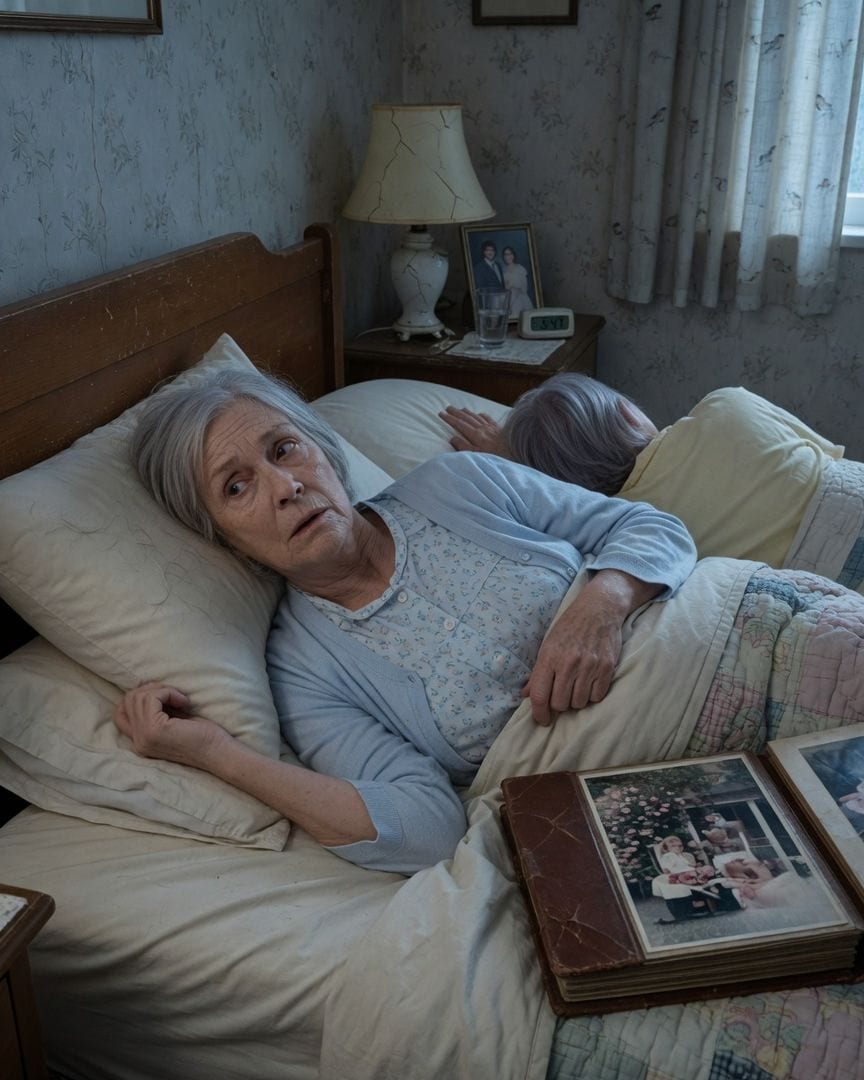
My twin sister Ruth sleeps on the right now, facing the wall. For forty-one years, she always took the left side. She insists I'm misremembering.
After three days missing, my partner Ruth finally came home. But the morning after, I woke to find her sleeping on the wrong side of our bed. She claimed she'd always slept there, and my memory was wrong, despite forty-one years together.
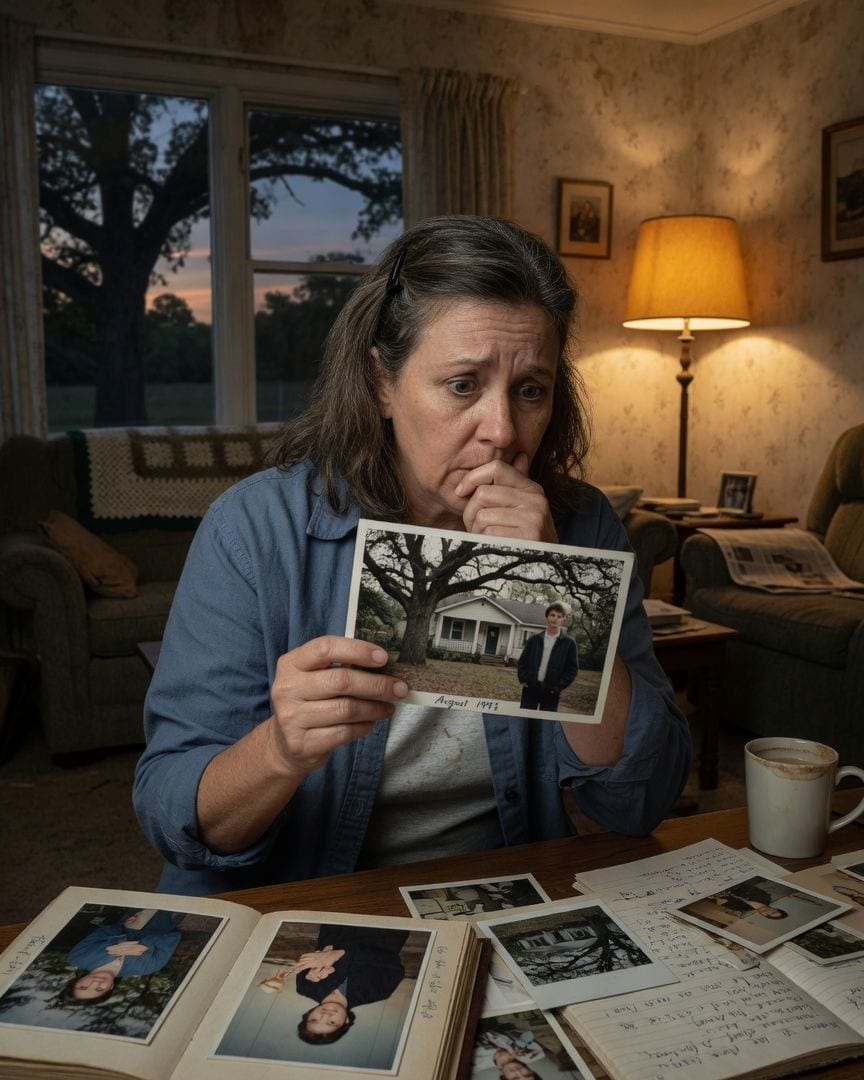
My brother remembers carrying me home after I broke my arm. He was already gone two years when it happened.
After thirty-two years, my brother Joel returned, bringing a relief that felt physical after decades of quiet absence. But when he recounted carrying me home after I broke my arm, a memory I held dear, the warmth in my chest curdled cold. He was twenty years old then, two years gone already, and my mother had carried me.
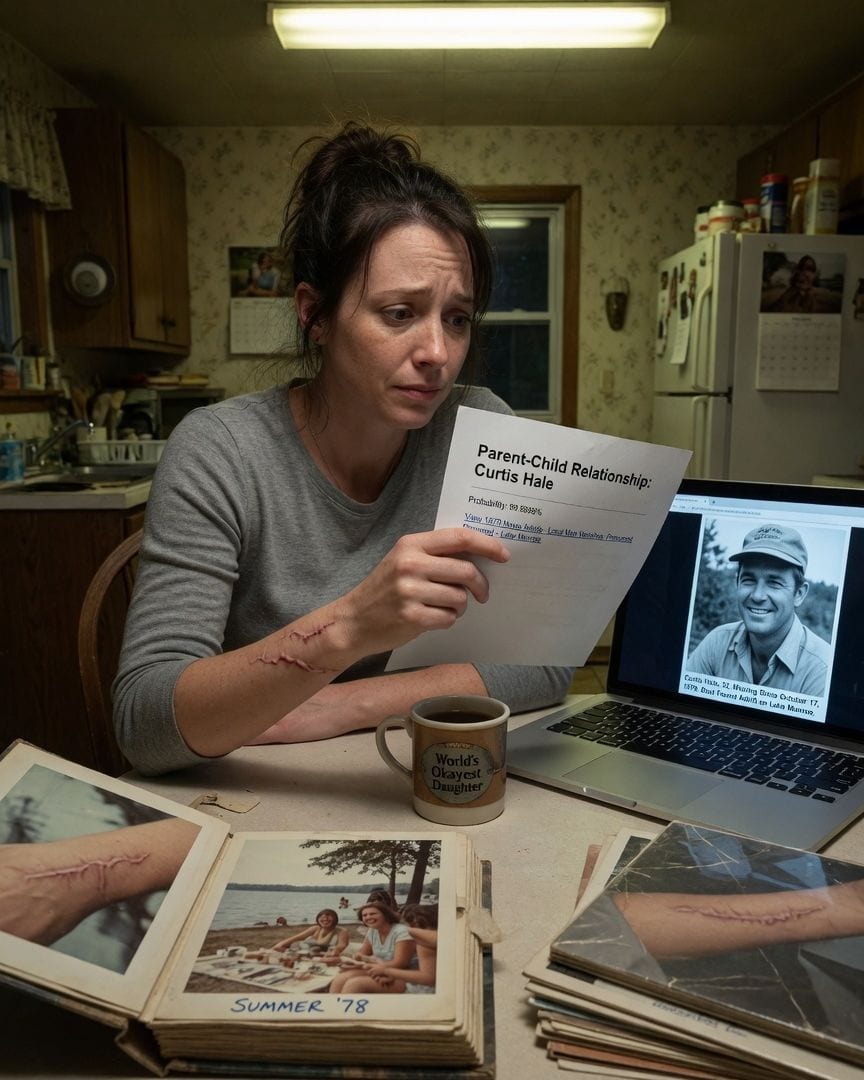
My DNA returned Curtis Hale as my father. He vanished in 1979. I was born twelve years later. The lab confirmed the match twice.
My DNA test results revealed something impossible: my biological father vanished in 1979, twelve years before my birth. My mother dismissed it as nonsense, but her reaction felt forced, leading me to old family photos. There, in a faded 1978 snapshot, I found my own distinctive childhood scar on the wrist of a stranger.
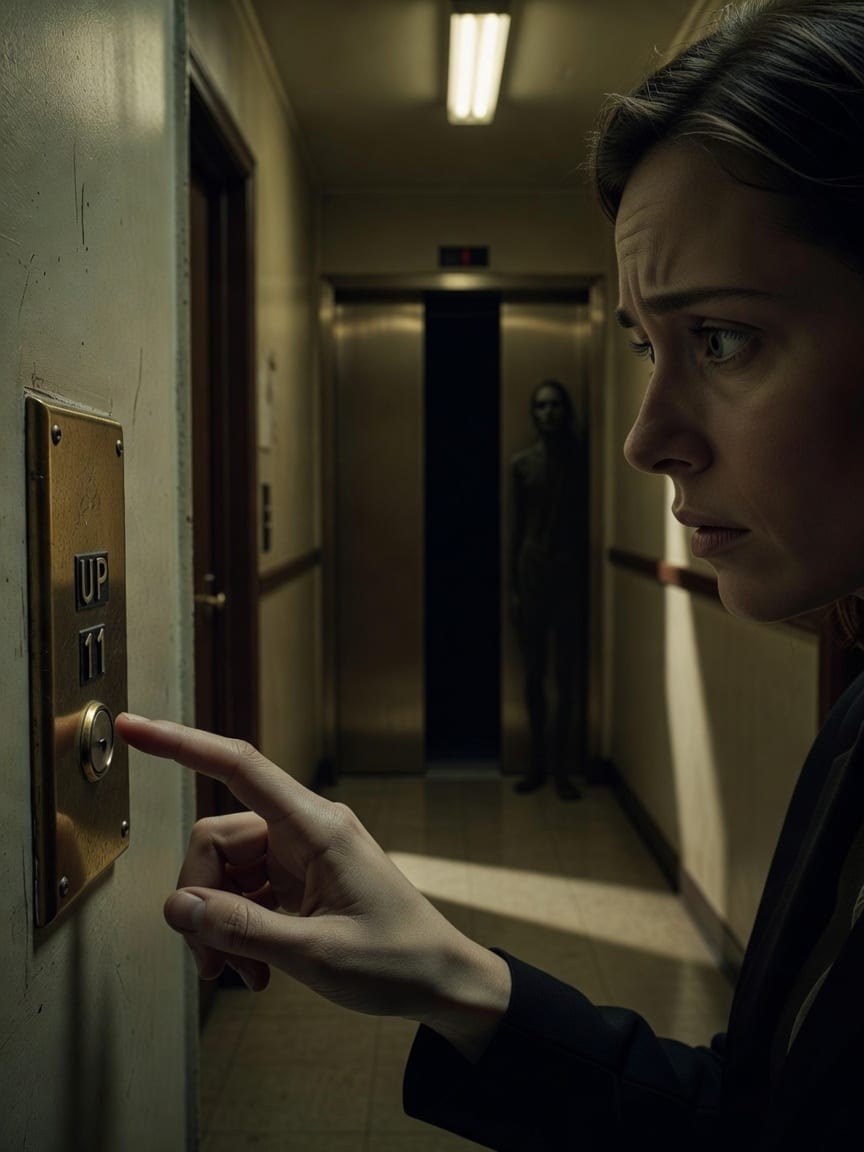
My doorman warned me not to take the tenth-floor lift on Saturday. The building's lift passed inspection last month. He seemed terrified that he'd said it.
My doorman's unsettling warning about the tenth-floor lift left me with a metallic taste of unease. I tried to rationalize it away, but then a birthday card arrived for me, five months early, from an impossible address. It was a site linked to unexplained disappearances, and a cold certainty began to settle in.
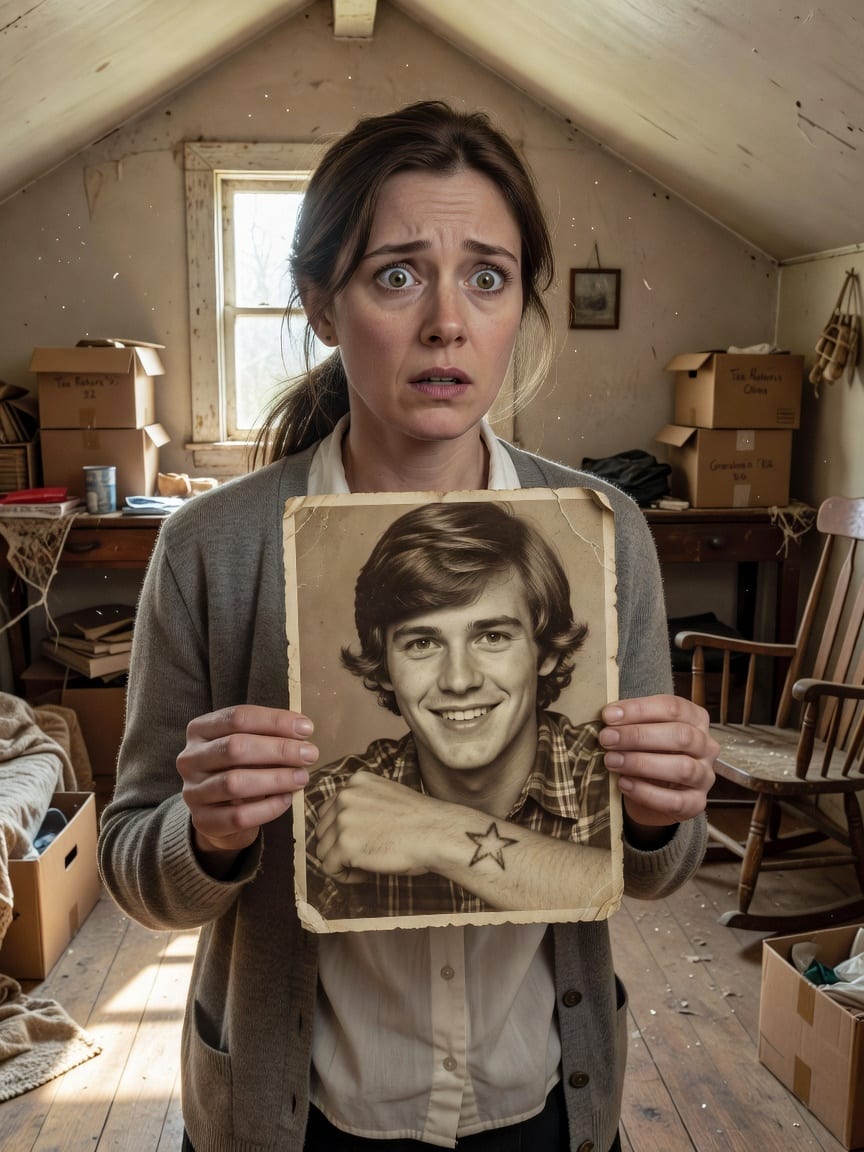
My DNA kit matched a man who died in 1974. The lab asked if I had a twin. I've stood at Edward Hale's grave.
I sent my DNA ancestry kit off for fun, expecting a list of distant cousins. Instead, the lab returned a 'probable identical match' to a man named Edward Hale, who died in 1974. I was born in 1992, and the lab asked if I had a twin.
My taxi driver knew my name before I spoke, then apologized for the flight I was going to miss. I was arriving. The cab's plate was scrapped four years ago.
After a strange taxi ride, I received an unsettling birthday card addressed to me. Its return address listed 'Old Mill Road Field,' an empty lot where a mill once stood, and it was postmarked locally. The card arrived four months before my actual birthday, sparking a cold dread I couldn't ignore.