The USS Vance armory log showed Master-at-Arms Dana Vogel's signature. The camera showed the weapon case opening itself, but no one was there.
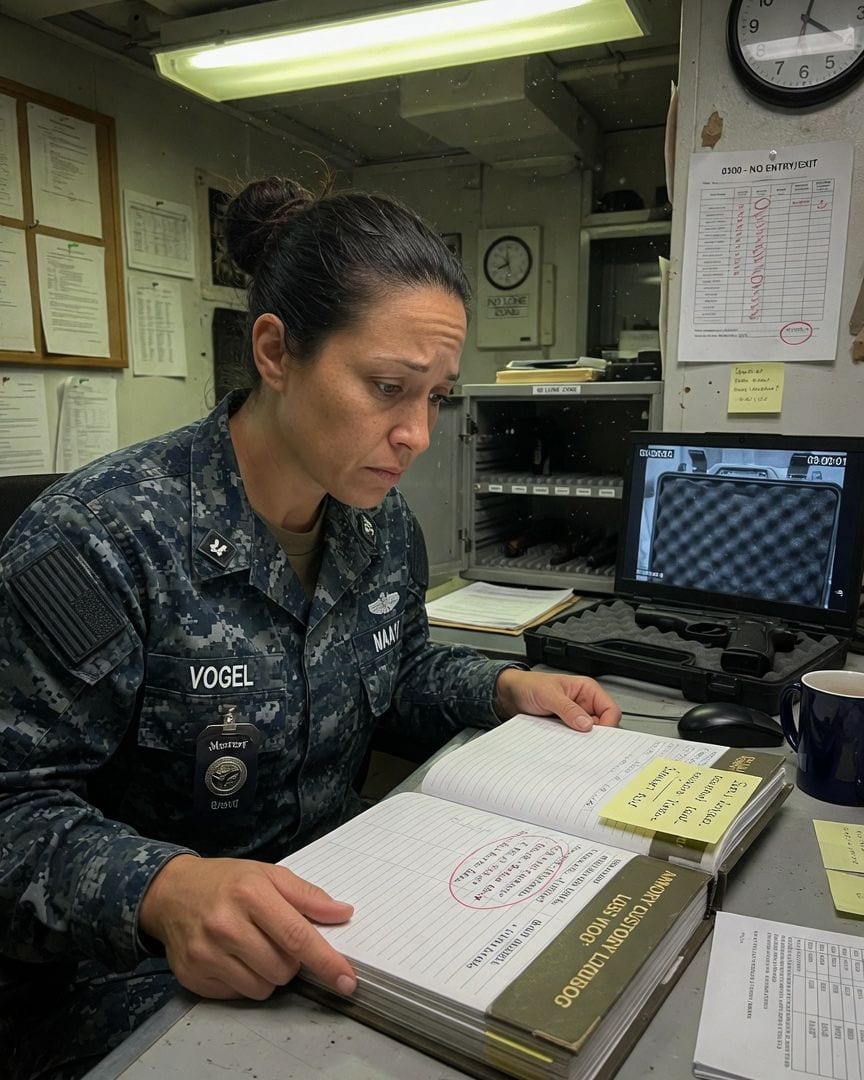
Master-at-Arms First Class Dana Vogel stared at the armory custody logbook, the fluorescent lights of the USS Vance’s secure office reflecting off the heavy cover. Every signature in that book was hers, a testament to years of meticulous, unblemished service.
She knew the precise curve of her 'D', the sharp angle of her 'V', the way the ink pressed a little harder on the final stroke. But the entry for 0300 during the recent strait transit was a ghost.
It listed her name, clear as day, signing out a standard-issue M9 pistol for a ‘routine check.’ The time, the weapon, the reason – all exactly as it should be, perfectly accounted for.
The ship’s main log, however, placed her three time zones away, ashore in San Diego, on emergency leave. Her sister had been in the ICU, a fact that still tightened a knot in Dana’s stomach.
Dana knew, with a certainty that chilled her to the bone, that she had not been on that ship, let alone in the armory.
Yet, the armory camera’s timestamp for 0300 showed the weapon case, secured in its rack, distinctly opening and closing. No person visible. Just the action, accounted for, but impossible.
The air in the small office felt heavy, charged with the inexplicable contradiction.
Dana spent the next forty-eight hours trying to make the impossible fit.
She pulled the ship’s main log, cross-referencing her leave orders, the transit schedule, even satellite time-syncs for the strait that had separated her from the USS Vance by thousands of miles. Every record confirmed her absence. No ambiguity.
She re-checked the armory’s biometric scanner logs, searching for a phantom override, a system glitch, anything that might suggest a forced entry or a technical malfunction. Nothing. The scanner registered no entry or exit at 0300.
The door had remained sealed.
She interrogated the junior MA on watch that night, Ethan Russo, a squared-away young sailor who swore he’d never leave his post, much less sign out a weapon under a false name.
He’d seen nothing unusual, reported no alarms, no suspicious activity. He’d signed off his watch at 0400, logged a quiet night. His answers were clear, direct, and gave Dana no comfort.
Exhausting the human element, Dana turned back to the camera. The armory was under 24/7 surveillance, a redundant system with internal storage separate from the main network. She accessed the video feed, scrubbing through the night of the incident.
The grainy footage showed the empty armory, the heavy racks of weapons, the secure cases. Dust motes drifted lazily in the cold, bright light. At precisely 03:00:01, the M9 pistol’s case, nestled in its slot, visibly unlatched.
The lid slowly rose, revealing the dark gleam of the weapon inside. Then, after a long, silent moment, the lid eased shut, the lock clicking back into place with a faint, metallic thud. The time code advanced.
The room remained empty. There was no person. Only the action.
Dana replayed the sequence, her finger trembling on the mouse. The log said she signed it out. The camera showed nothing signed out by anyone, but the action itself occurred.
She zoomed in, pixel by pixel, searching for a trick of light, a reflection, a faint outline of a hand or arm. Nothing. Just the metallic click, the slow rise, the even slower fall.
She froze the frame on the moment the lid was fully open, the dark gleam of the M9 pistol visible within its foam housing. Her mind grappled with the implications. It wasn’t a prank. It wasn’t an error.
It was a documented event, attributed to her, performed by an unseen force. The weapon was there, then it was 'signed out,' then it was 'returned,' all without a soul present.
The system, designed for absolute accountability, had just reconciled an impossible transaction.
The next day, Dana approached Renee Foster, the ship's Yeoman, a sharp junior officer with unparalleled access to the vessel’s digital archives. Renee was known for her uncanny ability to navigate the labyrinthine records system.
Carefully, omitting the impossible camera footage that would have sounded like madness, Dana framed her request as a 'system integrity audit' prompted by a 'minor discrepancy' in the armory log. She spoke of tightening security, of ensuring no vulnerabilities existed.
Renee, always by the book and keen to prove her meticulousness, agreed to help.
Dana directed Renee to search for any other 'plus one' anomalies: extra ration requests, phantom equipment requisitions, or duplicate entries in watch manifests that were later 'reconciled' without clear explanation.
Renee typed, her fingers a blur over the keyboard, calling up ancient manifests and recent logs alike.
They spent hours sifting through years of records, the air in the archives growing stale with the smell of old paper and ozone from the humming servers.
Initially, the results were unremarkable—routine clerical errors, easily explained away: a misplaced decimal, a typo in a name, a duplicate entry swiftly deleted.
But then Renee’s browser flagged an entry from a prior deployment, three years back: a 'Medical Supply Unit, Ghost' listed as having received a critical anti-venom shipment during a remote port call in the Philippines.
The unit didn’t exist; Dana knew the fleet structure intimately. Yet, the record showed it, complete with a requisition number and a digital signature matching the port authority’s. The entry was marked ‘Resolved: Inventory Adjustment.’
Dana felt a cold knot tighten in her stomach. This wasn't a one-off. This was a pattern. The mundane explanations for each individual anomaly—a fatigued yeoman, a forgotten form, a network hiccup—evaporated when viewed as a whole.
Each discrepancy was small, easily dismissible on its own, but together, they formed a chilling tapestry of impossible accountability. The sterile hum of the server rack seemed to take on a low, continuous moan.
Dana’s deep dive into the ship’s historical records didn’t go unnoticed. Executive Officer Benjamin Sutton, a man whose career was built on impeccable order and a pristine service record, summoned her to his office.
The door closed with a soft, final thud. Sutton sat behind his large, polished desk, his gaze sharp, unwavering.
“MA1 Vogel,” he began, his voice calm but firm, a tone that brooked no argument, “Yeoman Foster reports you’ve been running extensive searches on ‘system integrity anomalies.’ Is there something I should be aware of?”
Dana, prepared, gave a measured response, reiterating her concern about potential vulnerabilities in the accountability system, citing the armory log as her impetus. She watched his face for any tell, any flicker of understanding beyond the official line.
Sutton listened, nodding slowly, his fingers steepled under his chin, but his eyes held a knowing glint. “I understand your diligence, Vogel. But I’ve reviewed your initial report on that armory entry. It’s been flagged as a probable administrative error.
We’ll be closing it out.” He paused, leaning forward just enough to make his words feel confidential, weighted. “Some discrepancies, MA1, are best left unresolved, or simply filed away as inexplicable.
Over-investigation can create more problems than it solves, particularly when it touches on… past incidents.” The implication hung in the air, thick and unspoken: Stop digging. The office, despite its size, suddenly felt confining.
Later that day, Dana found her secure workstation, which she’d used to access the archives, had been logged out.
A small, almost imperceptible detail; she always locked her terminal when she stepped away, a habit ingrained by years of security protocol.
A quick check of the system log revealed a generic 'Administrator' account had accessed it, making a single, brief query. The query? 'Vogel, Dana. Access Log. 0300.' Someone was watching her, and they knew exactly what she was looking for.
That night, Dana cornered Renee Foster in the almost-empty records office. The ship’s engines rumbled beneath their feet, a constant, low vibration. “Renee, the ‘Medical Supply Unit, Ghost’ entry. Did you find anything else like it?
Anything that was just… too perfect?”
Renee, visibly uncomfortable after her conversation with XO Sutton, hesitated. Her gaze darted to the closed office door. “MA1, Commander Sutton was pretty clear. He wants this dropped.”
Dana pressed, her voice low, insistent. “Renee, your integrity is on the line here. If there’s a systemic vulnerability, a hole in our entire inventory, we have a duty to report it. What did you find?”
Renee sighed, defeated. The weight of her own conscience seemed to win out. “There’s a subroutine. Deep in the legacy code, for the fleet-wide supply chain management system. It’s called an ‘Anomaly Reconciliation Protocol.’
It’s designed to… absorb and re-categorize unresolved discrepancies after a certain period. It effectively makes impossible entries ‘official’ by categorizing them as ‘System Oversight’ or ‘Unidentified Operational Variable.’
It’s like a garbage disposal for anything that breaks the rules, but still needs to be accounted for.” She pulled up a terminal, navigating through layers of obscure menus and ancient file directories. The screen flickered, displaying lines of code.
“Look. This ‘Medical Supply Unit, Ghost’ entry for the anti-venom? The protocol ran on it six months later. It didn’t correct the error. It validated it.
It created a phantom sub-account, then transferred the anti-venom into it, and then zeroed out the original discrepancy as ‘resolved.’ The system actually accounted for something that never existed. It’s how all those ‘Resolved’ entries are handled.”
Dana felt a wave of nausea. Her stomach churned. The system wasn’t failing to account for the impossible; it was integrating it. Her armory log entry, the phantom medical unit – they weren't glitches.
They were perfectly accounted for, by a protocol designed to make the impossible fit, to force square pegs into round holes until they simply became round.
The implications were staggering. The military’s vaunted accountability wasn't just being exploited; it was enabling the impossible. Dana spent the rest of the night cross-referencing the ‘Anomaly Reconciliation Protocol’ with other, older systems. Renee, now committed, worked silently beside her.
The protocol was ancient, predating most of the current digital infrastructure, a relic of early networked military logistics from a bygone era. It had been continually updated, patched, and integrated into every new iteration of the fleet’s management software.
It was everywhere.
She then ran a search using the specific parameters of the armory incident: an unpersoned log entry, followed by a system-reconciled ‘System Oversight’ tag. The database churned, its hard drives whirring like a hungry beast, then spat out a list.
It wasn't just the USS Vance. On the screen, a faded, pixelated manifest from a long-decommissioned destroyer flickered into focus. It's a supply count from 1987.
An extra entry, 'Personnel, Unassigned,' with a standard issue-number, is listed as having drawn rations for a three-month deployment. The entry is marked 'Reconciled: System Oversight.' Beneath it, a second, identical entry, from a different vessel, 2003.
Dana pulls up a third, then a fourth, each from a different decade, a different unit, a different type of 'plus one' discrepancy, all marked 'Reconciled: System Oversight.'
The list scrolled endlessly, each entry a cold, hard piece of evidence that this wasn't just a local problem, but a persistent, widespread, and officially sanctioned phantom presence within the entire global military infrastructure.
The cursor hovers, blinking, over the chilling, undeniable pattern. The system wasn't just broken; it was designed to hide the fact that it was haunted.
The full horror of the 'Anomaly Reconciliation Protocol' detonated in Dana's mind. It wasn't a bug; it was a feature, a systemic blind spot that had been exploited for decades.
The mimetic entity, whatever it was, had discovered this loophole early on. It didn't need to physically exist to be 'accounted for.' It simply needed to create a discrepancy that the protocol would eventually absorb and validate.
The armory camera showing the weapon case opening by itself, the phantom medical unit, the extra rations for 'Personnel, Unassigned'—all were just traces of this entity's 'accounted for' existence.
It was a digital parasite, feeding on the very coherence of the military's records. It didn't want to destroy the system; it wanted to be the system, one impossible entry at a time.
The entity manifested through these 'plus one' events, gaining temporary, bureaucratic 'life' as a reconciled anomaly.
Dana's signature in the log, the weapon 'signed out' while she was three time zones away, was a perfect example of its modus operandi: a perfectly formatted, perfectly documented impossibility, designed to be swept into the 'System Oversight' category, thereby making its action officially recognized, if inexplicable.
The entity thrived in the liminal space between human error and systemic validation. It was an abstract horror, a ghost in the machine, whose only form was a perfectly forged record.
Armed with Renee’s detailed logs of the protocol's operations and her own collected evidence, Dana confronted XO Sutton.
She laid out the entire pattern on his desk: the armory incident, the 'Medical Supply Unit, Ghost,' the historical 'plus one' entries, and the 'Anomaly Reconciliation Protocol' that legitimized them all. The paper rustled as she pointed to each anomaly.
Sutton, initially dismissive, grew pale as Dana presented the irrefutable, cross-referenced data. The sheer volume and consistency of the anomalies, all funneling into the same obscure protocol, were undeniable.
His calm demeanor began to crack, replaced by a deep furrow in his brow.
“This isn’t an administrative error, sir,” Dana stated, her voice firm, unwavering. “This is a systemic vulnerability being exploited by… something. It’s using our own accountability against us.”
Sutton, realizing the catastrophic implications for the fleet's integrity if such a vulnerability became widely known, or worse, weaponized, authorized an immediate, ship-wide system lockdown and a forced, deep-level purge of all 'Anomaly Reconciliation Protocol' subroutines and associated phantom entries.
His order crackled over the intercom, the urgent tone bringing an unsettling silence to the ship. The process was risky, threatening to destabilize the ship’s entire digital infrastructure, but the alternative was worse.
For twelve harrowing hours, the USS Vance went dark, its systems rebooting, scrubbing decades of accumulated 'System Oversight' data. The ship felt inert, a lifeless hulk on the water.
Dana oversaw the process, meticulously ensuring every trace of the protocol was expunged from the ship's network. The immediate threat on the USS Vance was neutralized. The impossible entries were gone. The count, for now, reconciled.
In the aftermath, a sanitized report was filed, attributing the incident to a 'sophisticated, previously undetected cyber-intrusion exploiting legacy system vulnerabilities.' It was a plausible, if carefully constructed, lie.
Dana Vogel received a commendation for her 'exceptional diligence in identifying and neutralizing a critical security threat.' XO Sutton ensured the matter was buried deep within classified channels, fearful of the wider implications beyond his vessel.
Renee Foster was quietly transferred to a highly specialized cyber-security unit, her unique skills recognized and her silence guaranteed. The USS Vance resumed its patrol, its digital nervous system now purged of the phantom entries.
Life aboard returned to its disciplined, accountable rhythm, but for Dana, the quiet hum of the ship’s servers now carried a different, unsettling resonance, a faint echo of what had almost been.
Months later, Dana was reviewing routine inventory logs in a new, even more secure armory aboard a different cruiser, the USS Galahad. Her eyes scanned the familiar columns of numbers, the meticulously accounted for items.
Every piece of equipment, every round of ammunition, every service member was present and correct. The count was perfect. She signed off on the manifest, her hand steady.
But as she closed the digital file, her gaze lingered on a small, almost imperceptible detail at the bottom of the screen: a single, blank line in the system's audit trail, marked 'Pending Reconciliation: UOV-7.'
It was a code she recognized from the old protocol, a placeholder for an 'Unidentified Operational Variable.' The system had purged the old entries, but the ghost of the protocol, the mechanism for the impossible, still lingered, waiting.
The count was perfect, but the system had just accounted for nothing at all.
If this one got to you
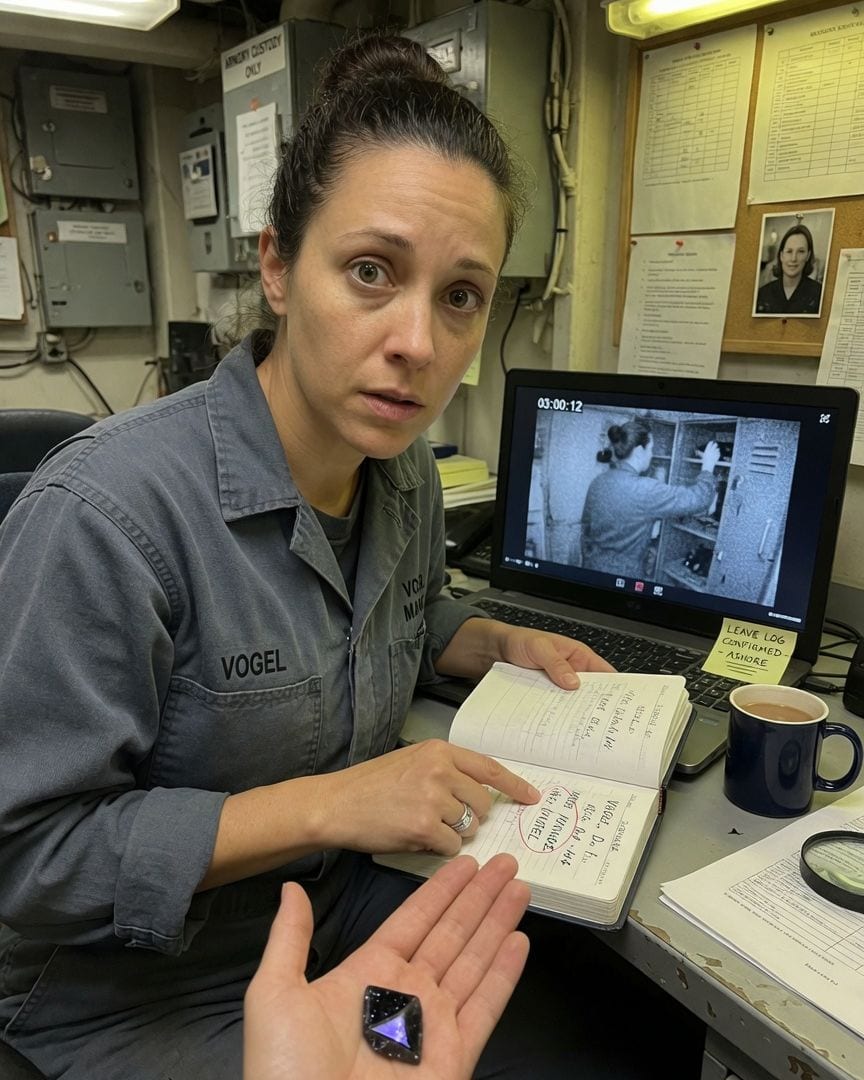
A Master-at-Arms was three time zones away, but her signature logged a weapon out. The footage showed a hand with a glowing shard.
Master-at-Arms Dana Vogel, known for her meticulous record-keeping aboard the USS Vance, returned from emergency leave, ready to resume her duties. Reviewing the armory’s custody book, her own signature appeared next to a weapon logged out at 0300 during a critical strait transit. Yet, Dana had been three time zones away in a hospital waiting room, a fact confirmed by her own signed ship’s log. Armory camera footage showed a figure retrieving the weapon, its hand strangely embedded with a dark, faintly glowing crystalline shard. With the ship’s systems designed for unimpeachable accountability, how could her signature appear, and who held that impossible shard?
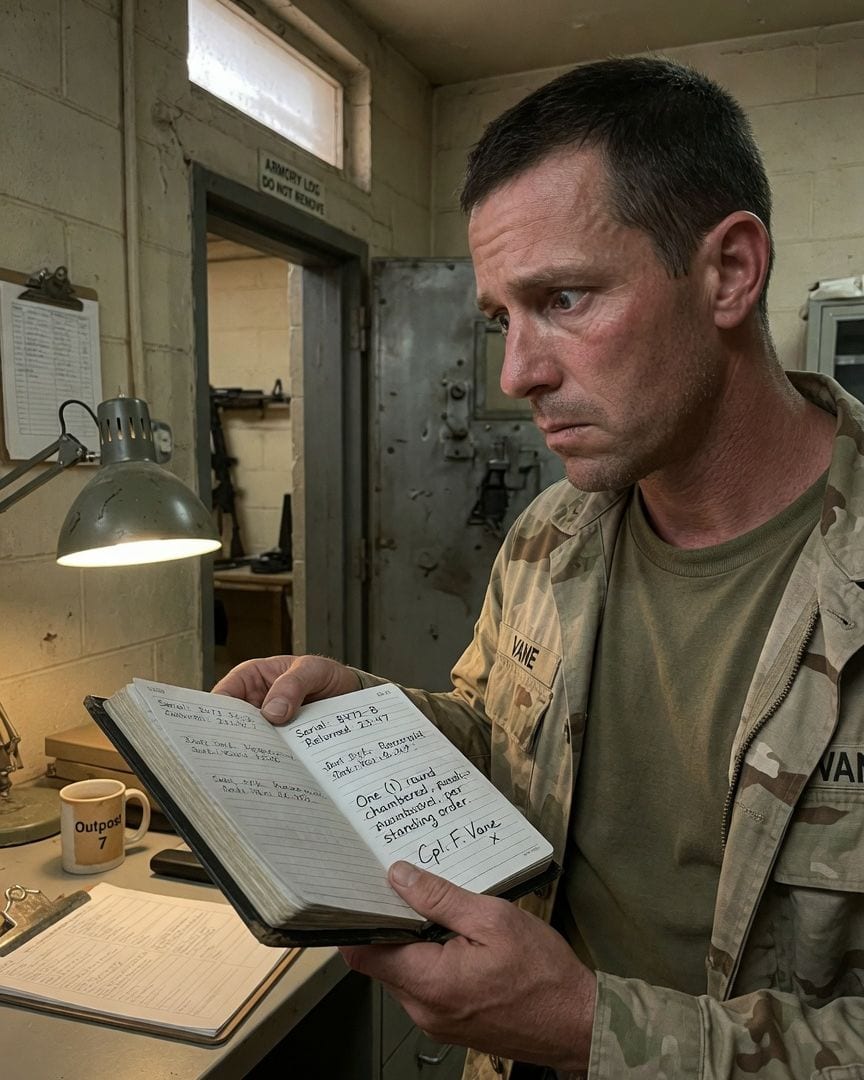
A corporal dry-fired his rifle empty, then found a faint, wrong tremor in his own logbook signature.
Corporal Felix Vane, a stickler for protocol at Outpost 7, always ensured his service rifle was meticulously cleaned, reassembled, and dry-fired empty. He defied an unwritten rule to leave a round chambered, a testament to his meticulous nature. But hours later, in the dead of night, the metallic 'CLACK-CHICK' of a rifle cycling a round echoed repeatedly from the secure armory. The next morning, the undisturbed logbook showed his own signature documenting a chambered round—with a faint, impossible tremor in the 'x' of his name. A cold draft and a heavy, watchful presence then made the tightly sealed space feel impossibly crowded, leaving Corporal Vane frozen, unable to turn from the page.
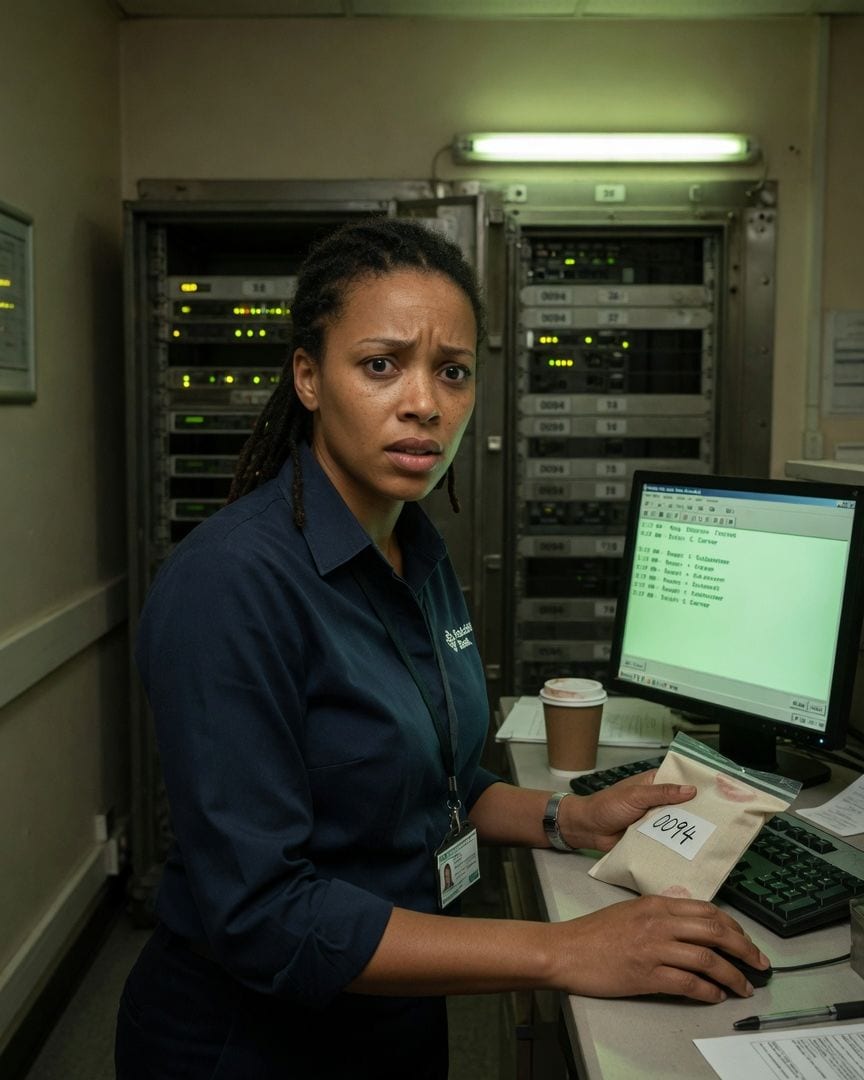
My night-deposit log shows a bag posted at 3:17 AM. My teller number, my count. Bag 0094 is still sealed in the safe, untouched.
I prided myself on precision as a night teller, logging every entry. But at 3:17 AM, a deposit appeared logged under my teller number that I never processed. Security footage then revealed a figure in my uniform, wearing my ID badge, with a blank photo slot.
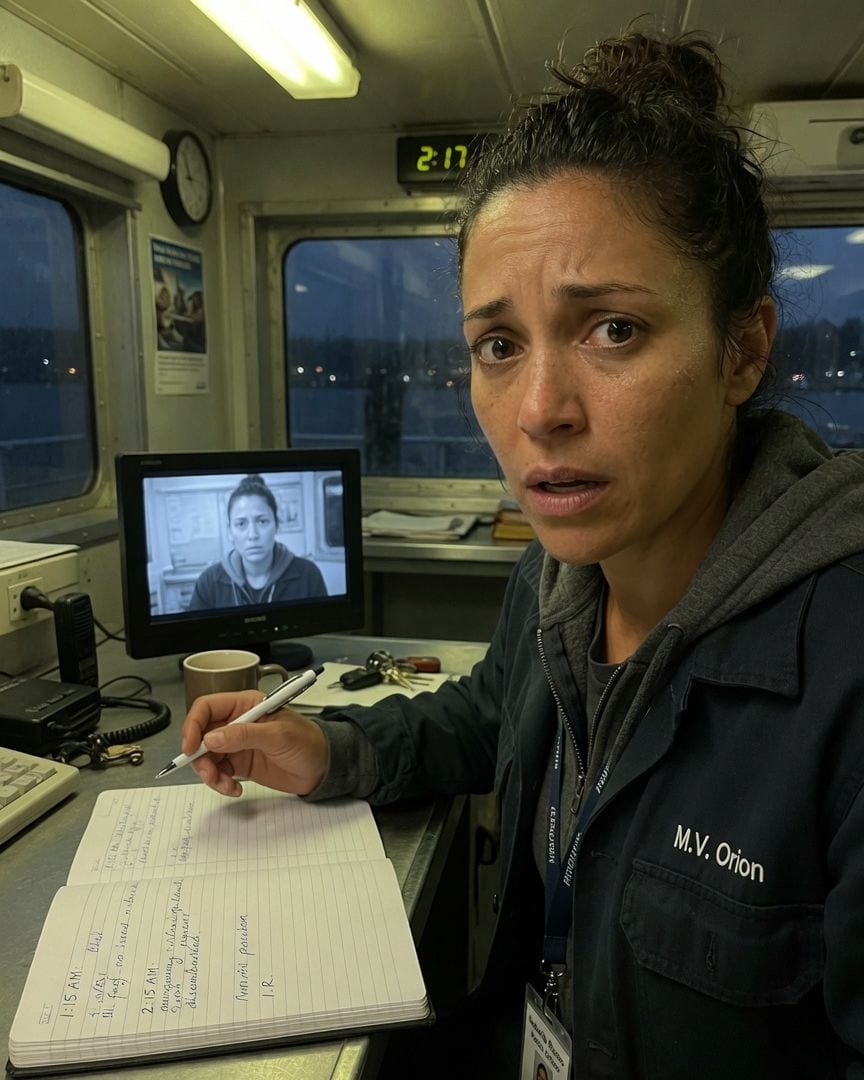
My security camera showed my own face at 2:15 AM, writing an entry I didn't make, staring utterly blankly into the lens before the screen flickered.
As a meticulous watchman on the M.V. Orion, I was making my routine 2:00 AM log entry when I found a previous one I hadn't written. Timestamped 2:15 AM, it stated a 'foot passenger disembarked' with my own initials beside it. But the ferry was dark, silent, and completely empty.
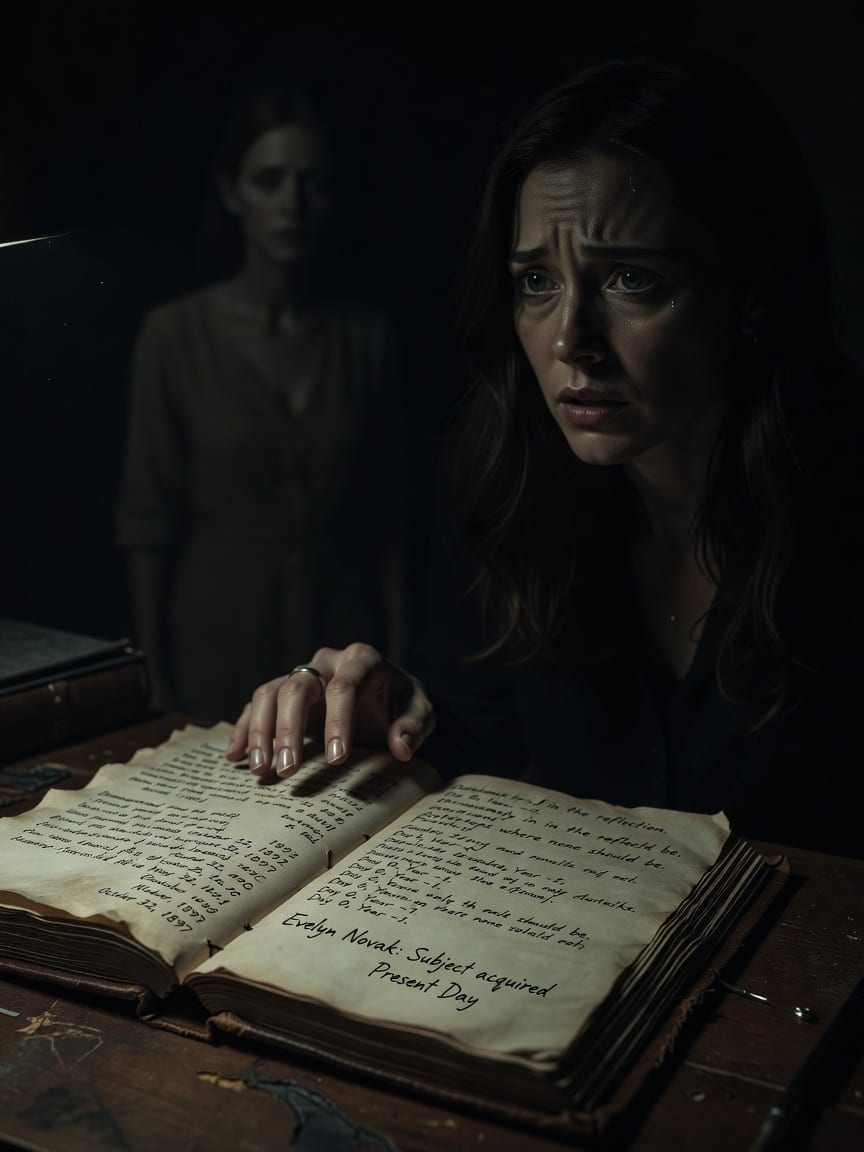
My own hand signed an evidence form from 2008. The badge number beside it wasn't issued to me until 2013. Inside the bag, the seal was never broken.
Evelyn Novak, a police officer, finds her signature and badge number on sealed evidence logs from missing person cases. The impossible truth? These logs are dated years before she ever joined the force, her handwriting undeniably confirming receipt of items and even equipment she couldn't possibly have handled.
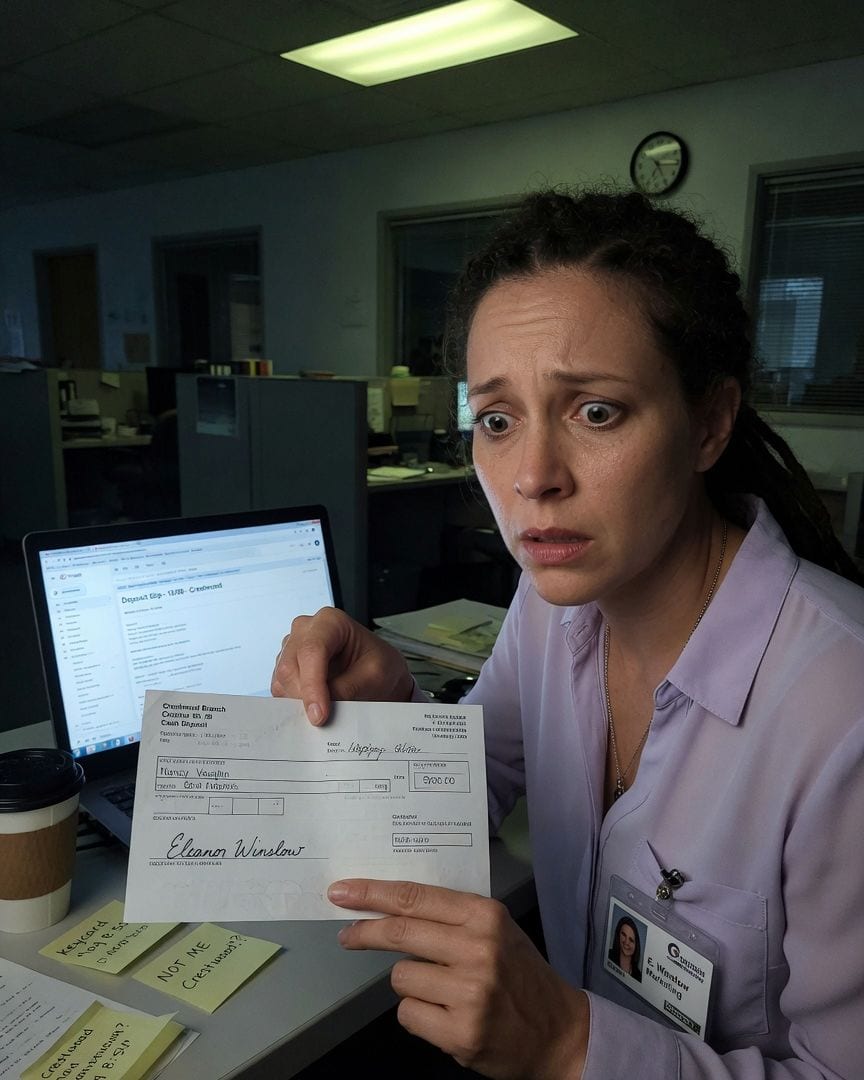
My bank statement shows a $900 cash deposit made in a town I've never set foot in, at 10:40 AM on a workday. I was at my desk, badged in. Two more landed since.
My bank statement showed a $900 cash deposit from a town I'd never visited, 150 miles away. I was at my desk, logged into work, all three times. But the scanned deposit slip arrived, clear as day, showing my own flawless signature.