My walk is identical to a man who vanished in 1994, years before I was born. The security cameras matched us side-by-side.
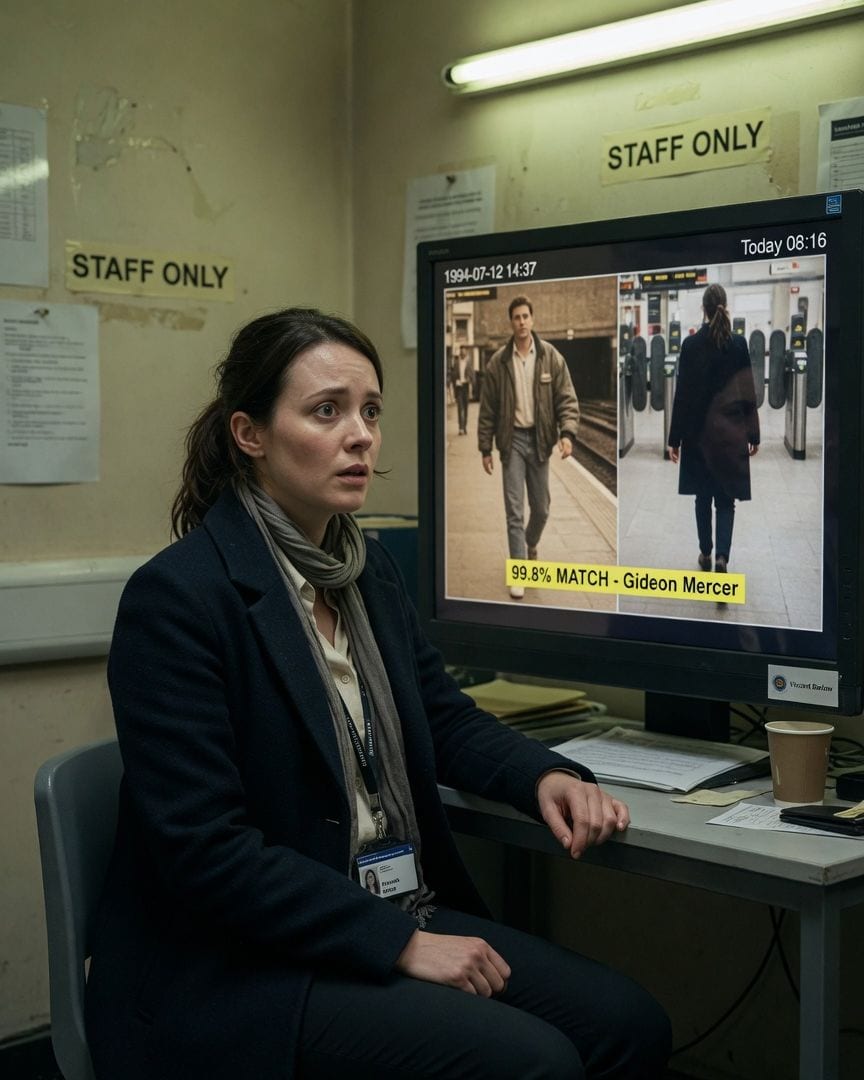
It started, as these things always do, with something utterly mundane. I was just trying to catch the 8:17 to Cambridge from King’s Cross, already a minute behind schedule, when a hand touched my arm.
“Ms. Brooks? Hannah Brooks?”
It was a security officer, Vincent Barlow, mid-forties, a calm, almost weary expression. He had that air of someone who’d seen everything but rarely understood any of it.
He led me to a small, windowless office tucked away behind a staff-only door, the fluorescent hum a dull throb against my skull. He gestured to a chair opposite a large monitor.
“We’ve just installed a new gait recognition system,” he explained, his voice flat. “Still in beta, mostly for high-risk profiles. But it flagged you.”
My stomach tightened. “Flagged me for what?”
He didn’t answer directly. Instead, he pulled up two video clips on the screen. Side-by-side. On the left, a grainy, sepia-toned recording. A man, dressed in what looked like late 80s or early 90s clothing, walking along a platform.
On the right, me. This morning. Heading for the ticket barrier.
I watched, baffled. Then, a cold knot formed in my gut. The man’s walk—the way his left shoulder dipped imperceptibly with each step, the slight drag of his right heel, the almost rhythmic, fluid sway of his hips.
It was… identical. Not similar, not a coincidence. It was my walk. The same distinctive cadence I’d seen a thousand times in shop window reflections.
Barlow pointed with a pen. “The system identified a 99.8% match. This gentleman,” he said, nodding to the left screen, “is Gideon Mercer. Reported missing in 1994. Vanished off a ferry, presumed dead.”
I stared at the timestamp on Mercer’s clip: 1994. I was born in 1991. I would have been three years old, maybe four, when that man was walking.
A deep, unsettling chill spread through me, like a slow drip of ice water. Barlow took a photo of my ID, then assured me, “It’s just routine, Ms. Brooks. Don’t worry. Someone will be in touch.”
The call came two days later, not from the police, but from a polite, almost eerily calm agency that identified itself only as ‘Government Services, Bureau of Public Safety.’
The woman on the line, Ms. Davies, had a voice like polished glass. She explained that due to the ‘unprecedented gait match,’ they needed to rule out any “anomalies.” A full medical check-up, she insisted, would be entirely confidential.
I was unnerved, but also desperate for a mundane explanation. A glitch. A system error. Some logical reason that didn’t involve me sharing a ghost’s footprint. I agreed.
The check-up was thorough, almost invasively so. During the bone density scan, a Dr. Mercer—no relation, I was told with a thin smile—insisted on an X-ray of my left leg. “Precautionary measure,” he’d said, “given the gait anomaly.
Sometimes, subtle physiological differences can influence kinetic patterns.” It felt like a thinly veiled excuse, but I complied. What else could I do?
The air in the hospital room felt heavy, the constant beeping of a distant machine a low, insistent hum.
Hours later, the radiologist called me back. His voice was laced with a professional bewilderment I hadn’t expected. “Ms. Brooks, we found something… unusual on your left tibia X-ray. A perfectly healed fracture.
It’s old, decades old by the look of it. Diagonal line, very clean break. Are you absolutely certain you’ve never sustained such an injury?”
I racked my brain. My entire medical history was spotless. I’d never broken a bone in my life, not even a finger. I hadn’t even sprained that ankle. “No,” I said, my voice thin. “Never. I’d remember something like that.”
He sighed, a rustle of papers in the background. “Well, it’s clearly there. Been mended for a very long time. It’s… remarkable you don’t recall it.”
The chill returned, colder this time, a slow, creeping dread that settled deep in my bones.
I sat in a sterile office, the kind of room designed to be forgotten, the air conditioning whirring softly. On a lightbox, my X-ray image glowed with an eerie clarity.
The diagonal line of a perfectly healed fracture sliced across my left tibia, an unmistakable scar in bone. It was there, solid and undeniable, an injury I’d never sustained.
Vincent Barlow, the security officer from King’s Cross, sat across from me. His face, usually weary, was now etched with a grim, almost pitying expression. He slid a tablet across the desk. On its screen, an old, faded document appeared.
The title, stark and official, read: 'Gideon Mercer - Medical History (1990).'
My eyes, almost involuntarily, darted to a handwritten entry under 'Injuries.' There it was, clear as day: 'Left tibia fracture, sustained in fall, full recovery.' The date on Mercer’s file was 1990. Four years before I was even born.
Barlow didn't need to say anything. He just gestured between the two images: my X-ray, Gideon Mercer’s medical record. The same bone. The same break. The same exact location.
The quiet hum of the room seemed to press in on me, the silence itself a confirmation of the impossible.
The agency, now identifying itself explicitly as a division of ‘Historical Inquiries,’ became more direct. They requested a DNA sample, citing "protocol for any potential link to a missing person investigation."
I agreed, still grasping at straws for a mundane explanation. A mix-up. Contamination. Anything but what my gut was screaming.
I spent the next few days in a blur of research, trying to find anything concrete about Gideon Mercer. Sparse details emerged: a quiet man, an amateur sailor, fond of the sea.
He’d vanished without a trace from a ferry crossing in the Irish Sea, leaving behind a few personal effects and a baffling mystery.
I stumbled upon an old, defunct online forum dedicated to unsolved disappearances, and one comment, posted years ago, mentioned Mercer had a distinctive way of tying knots. A specific, almost archaic method that a fellow sailor had apparently found remarkable.
Days later, I was standing by my living room window, idly fiddling with a loose cord on the blinds. My mind was miles away, still replaying the X-ray, the forum post. Without conscious thought, my fingers moved.
They twisted, looped, tightened, and there it was: a perfect, intricate knot. The exact one described in the forum. A skill I had no memory of learning, a knot I’d never consciously attempted to tie in my life.
The cords felt natural in my hands, the motion utterly familiar. The unease deepened, congealing into a cold, solid dread. My own hands. Doing something that wasn’t mine.
The agency called again. Another 'routine' biometric scan, they said, for an 'updated passport application.' The request felt like a deliberate lie, a clumsy attempt at misdirection. I felt a chill, a shiver running down my spine.
The pieces were starting to fit, but into a puzzle I never wanted to solve.
I started noticing things. Small, unsettling details. A dark sedan, parked a few streets away, not quite in sight of my building, but always there when I left in the mornings, and again when I returned.
It wasn't always the same car, but the pattern was undeniable. A flicker of movement at the edge of my vision in public places – a figure too still, a gaze held too long.
I’d turn, and they’d be gone, or absorbed into the crowd. I told myself it was paranoia, an overactive imagination, but the feeling persisted.
The city, usually a comforting cacophony, began to feel like a surveillance grid, every window a potential eye.
One evening, I returned home to find a small, unmarked envelope tucked under my door. No stamp, no address, just a crisp white rectangle. My hands trembled slightly as I opened it. Inside, a single, faded black-and-white photograph.
It was of the ferry Gideon Mercer had disappeared from. A passenger deck, windswept and empty, the railing stark against the churning water. No note, no message. Just the unsettling image, a physical manifestation of the gaze I’d felt.
The next day, my phone rang. An unknown number. I almost didn’t answer. “Ms. Brooks?” A calm, elderly woman’s voice. Precise, almost clinical. “You’re looking for answers. Some things are best left undisturbed.”
The line clicked dead before I could even draw breath. I stood there, receiver still at my ear, the dial tone a sharp buzz in the quiet apartment. A genuine, profound chill crept down my spine, tightening around my chest.
They weren’t just watching me. They knew exactly what I was uncovering.
I couldn’t stand it anymore. I demanded a meeting with ‘Historical Inquiries.’ They arranged it in a nondescript government building, the kind with beige walls and hushed corridors.
I was met by a Dr. Sterling, a stern, uncommunicative man who had the demeanor of a stone statue. And then, to my surprise, the calm, elderly woman from the phone call walked in. Dr. Audrey Ingram, Sterling introduced her.
Her eyes were sharp, knowing, almost pitying.
“Let’s stop pretending,” I said, my voice shaking slightly, but with a resolve that surprised even myself. “The DNA request. The fracture. The gait. The knot-tying. What is going on?”
Dr. Sterling merely stared, his face unreadable. But Dr. Ingram’s gaze remained steady, unnervingly so. “Some phenomena, Ms. Brooks,” she began, her voice soft but clear, “defy conventional explanation. For decades, we’ve been… studying a unique form of bio-resonance.
A transfer of specific physical imprints across time, across individuals.”
My breath hitched. “Are you saying I’m… him? Reincarnated?” The word felt absurd, pulled from a bad movie.
Dr. Ingram shook her head, a faint, almost imperceptible smile playing on her lips. “Not spiritually, no. But your body, Ms. Brooks, appears to be an echo. A physical manifestation of Gideon Mercer’s physiological signature.
His gait, his old injury, certain… muscle memories. Even, it seems, his genetic code.”
The pieces, disparate and terrifying, clicked into place with sickening precision. The X-ray, the impossible gait, the knot I hadn't learned. It all fit. My world tilted.
The fear wasn't just a chill now; it was a physical weight in my chest. “And the DNA?” I asked, my voice barely a whisper, dreading the answer, already knowing it.
Dr. Ingram inclined her head slightly. “The DNA confirms it. A perfect match. An impossible match, by all current understanding.” The room seemed to grow colder, the silence echoing her words.
Dr. Ingram continued, her gaze unwavering, almost serene. “Gideon Mercer was not merely ‘missing.’ He was… the first confirmed, spontaneous subject. We believed it was an isolated incident. A fluke. But your case, Ms. Brooks, proves otherwise.”
She gestured to a thick, leather-bound ledger resting on the corner of the table. Its cover was worn smooth, its pages heavy. “You’re not the only one. We’ve identified others over the decades. Faint echoes, mostly. But increasingly, stronger ones.”
Dr. Sterling cleared his throat, his posture stiff. “Ms. Brooks, we need your full cooperation. To understand this. To prevent… further occurrences.”
My eyes, drawn by an irresistible force, fell on the open ledger. On one page, beneath a faded photograph of a young woman with kind, haunted eyes, a name was written in careful script: ‘Florence Blackwood, born 1972, disappeared 1999.’
And beneath that, a single line: ‘Identical gait, unexplained scar on left forearm, recurring dream of a distant bell.’
A wave of cold, absolute horror washed over me, deeper and more profound than anything I’d felt before. Florence Blackwood’s scar.
It was in the exact same place as a faint, almost invisible mark on my own left arm, a thin, pale line I’d always assumed was a childhood scratch, forgotten and meaningless.
And the dream… the recurring, unsettling dream of being underwater, hearing a distant, mournful bell. It wasn’t just mine. It was hers too.
I pushed back from the table, the chair scraping loudly against the floor. “Florence Blackwood? Another one? And you knew?” My voice was raw, laced with disbelief and a building terror.
Dr. Ingram sighed, a weary sound. “We were studying a highly localized bio-energetic anomaly near the ferry crossing. Gideon Mercer was exposed. His physical pattern, his very essence, became imprinted. Like a template.
And sometimes, decades later, a new life… resonates with that template.” She spoke like a botanist describing a rare flower, utterly detached.
Dr. Sterling interjected, his tone sharp. “We need to understand the mechanism. To control it. You, Ms. Brooks, are the strongest echo we’ve ever observed.”
In that moment, a chilling clarity dawned. They didn't want to help me. They wanted to study me. To contain me. Florence Blackwood didn't just 'disappear' in 1999. She was contained.
The recurring dream, the scar, the gait, the fracture, the DNA – it was all Gideon Mercer. But it was also Florence Blackwood. And now, terrifyingly, it was Hannah Brooks. I wasn’t just an echo of one man.
I was a confluence of many. The 'anomaly' wasn’t a single event; it was a pattern of re-imprinting, a terrifying, accumulating echo, each life adding another layer to the composite.
“You’re not studying an anomaly,” I said, my voice gaining strength, my decision made. “You’re tracking victims.”
Dr. Sterling moved, not subtly, to block the door. “We can help you, Ms. Brooks. Protect you.” His words were a lie, hollow and cold.
I shook my head. “You’ll dissect me.” I remembered Mercer’s forum post, his sailing hobby, his uncanny ability to navigate by the stars even on cloudy nights.
A faint, almost forgotten instinct stirred within me, a sense of direction that wasn't quite mine, a certainty of 'right' and 'wrong' ways.
As Dr. Sterling lunged, a desperate, animal instinct kicked in. I ducked beneath his outstretched arm, my hand shooting out to grab the heavy, leather-bound ledger from the table. It was solid, weighty, an anchor of impossible truth.
Without thinking, I swung it, smashing its corner into the glass panel of a nearby fire alarm. The piercing shriek filled the room, a jarring, urgent scream that instantly shattered the oppressive quiet.
Alarms blared, red lights flashed, and the sterile beige walls seemed to vibrate.
In the ensuing chaos, with Sterling momentarily stunned and Dr. Ingram watching, a strange, knowing look on her face, making no move to stop me, I sprinted for the emergency exit.
I burst out into the city streets, clutching the ledger to my chest, its weight a promise and a burden. I knew they would come for me.
I could feel it, a distinct, almost subconscious pull of a direction, a ‘right way’ to go that wasn't my own, an innate compass guiding me away from the hunt.
It was Gideon’s, or Florence’s, or someone else’s, leading me into the bewildering labyrinth of the city.
I live on the move now, under assumed names, always looking over my shoulder. Every shadow could be them, every quiet car a watchful eye. I keep the ledger hidden, its pages filled with names, dates, and matching 'anomalies.'
Each entry is a quiet testament to the impossible, a record of lives overwritten or echoed, a horrifying family album. I can’t trust doctors, government agencies, or even my own reflection sometimes.
The recurring dream of the distant bell underwater still comes, but now, sometimes, I see new faces in the dark currents, fleeting, indistinct, joining the silent chorus. I know I carry more than just Gideon Mercer. I carry them all.
Sometimes, when I’m alone, I catch myself walking, the familiar, distinct sway of my hips and the unique cadence of my steps. The walk of a man who vanished decades ago, now undeniably my own.
I feel a distant echo of his frustration, his longing for the sea, and a sudden, sharp ache for places I’ve never seen. I know I’m not just Hannah Brooks anymore.
I’m a vessel, a living archive of the lost, an impossible echo. And the ledger is my burden, a truth no one would ever believe.
I continue to move, guided by instincts that aren’t quite my own, always towards water, always away from the quiet, persistent watchers. The bell rings, far off, calling her deeper. I know it’s a shared memory now, a collective dread.
And sometimes, when she looks at her own hands, they feel like someone else’s.
If this one got to you
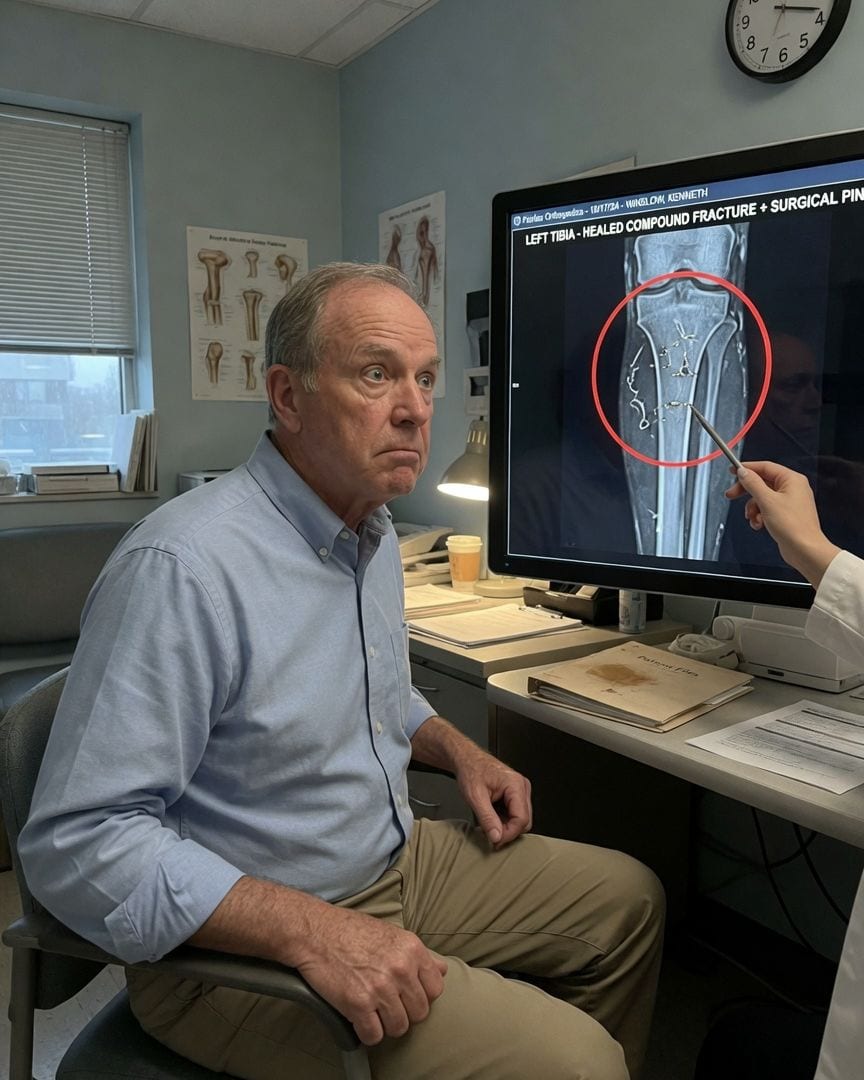
My MRI shows a severe, decades-old fracture in my left tibia with surgical pins. I have no memory of it.
I went to the gym to try their new palm scanner, expecting a quick registration. Instead, the machine insisted my living hand matched an existing profile. The screen flashed the name 'MULLER, GIDEON' with a D.O.D. of 2004 and a photo of a man I'd never seen. My own palm print was linked to a ghost.
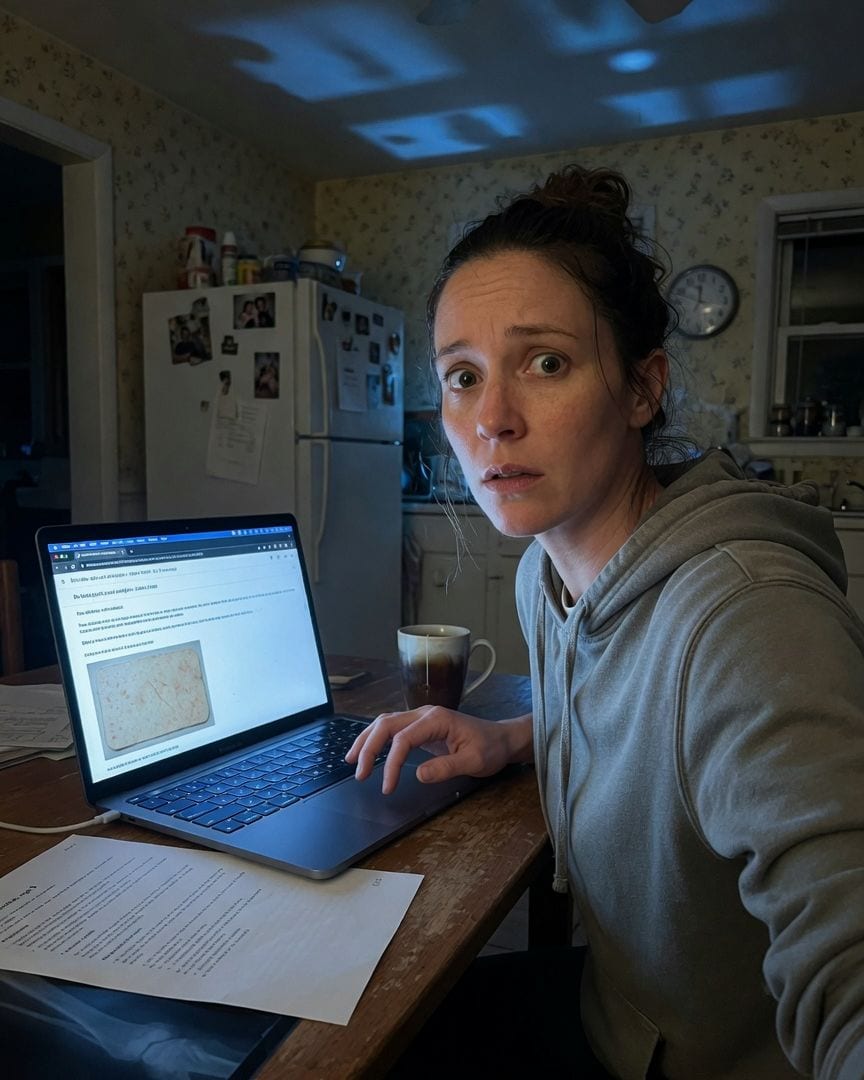
The blood on my own newborn heel-prick card — the one my mother saved in a drawer for thirty years — doesn't match the DNA in my mouth today. The lab ran it three times: two different people.
I sent my newborn heel-prick card to a genealogy lab, expecting to confirm my family tree. Instead, the lab tech called with an impossible truth: the blood from my infancy did not match my adult DNA. My own record insisted I wasn't quite myself.
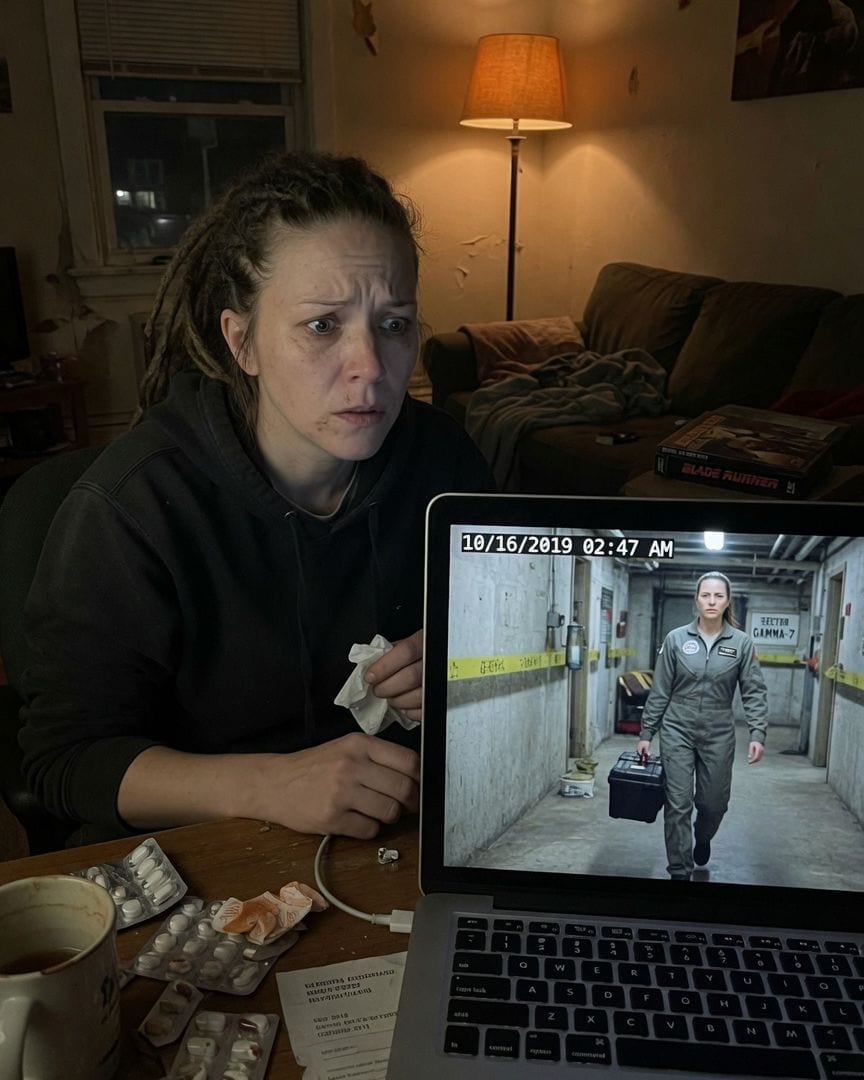
My timesheets show me working night shifts in a town I never lived in. The signatures are mine. The pay went to an account that isn't.
An old employer sent me timesheets from five years ago, detailing night shifts I supposedly worked at a depot 80 miles away. But I knew I was home recovering from surgery that entire week, nowhere near the industrial town. Then a security photo arrived, showing my face in an unfamiliar uniform, working a shift that wasn't quite me.
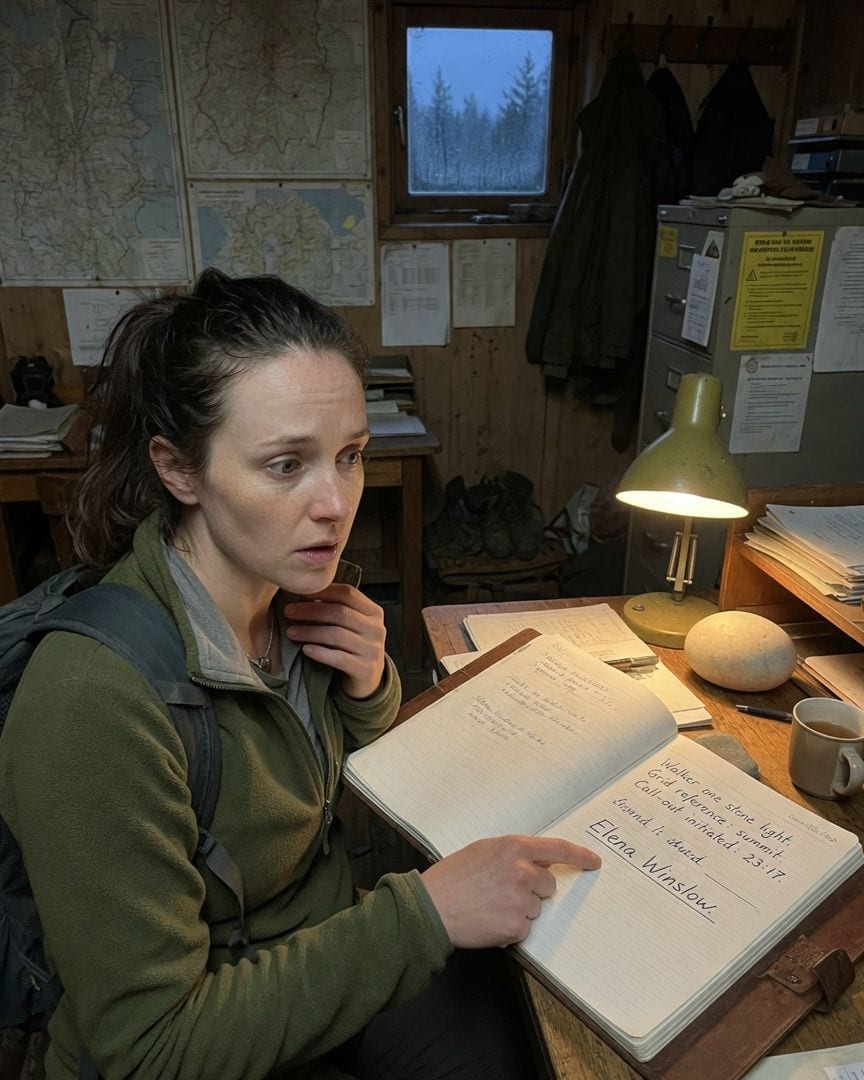
My pocketed mountain stone meant a rescue logbook recorded a call-out that night for me — a shout that never went out.
After an exhilarating climb on Cadair, I took a small, smooth white stone from the summit cairn, despite a warden's warning. Back at the station, a logbook entry shocked me: my name, dated last night, for a rescue call with an impossible detail: 'Walker one stone light'.
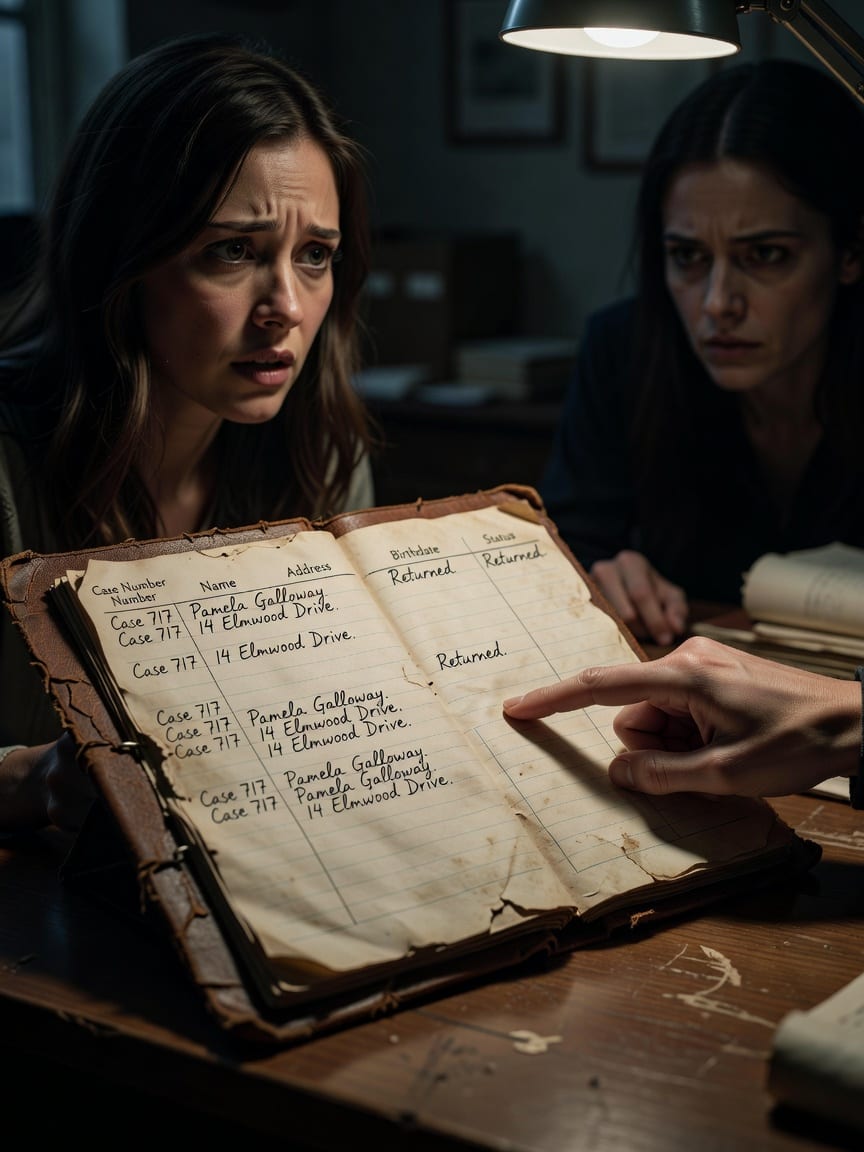
My hospital file has a blacked-out line from 1988. It names my street address, decades before I lived here. Then: 'returned'.
I finally got my medical file, hoping to clear up a ridiculous bill. Inside, I found an entry from 1988: my current home address, scrawled on a partial intake form and marked 'returned.' I was six then, living fifty miles away.
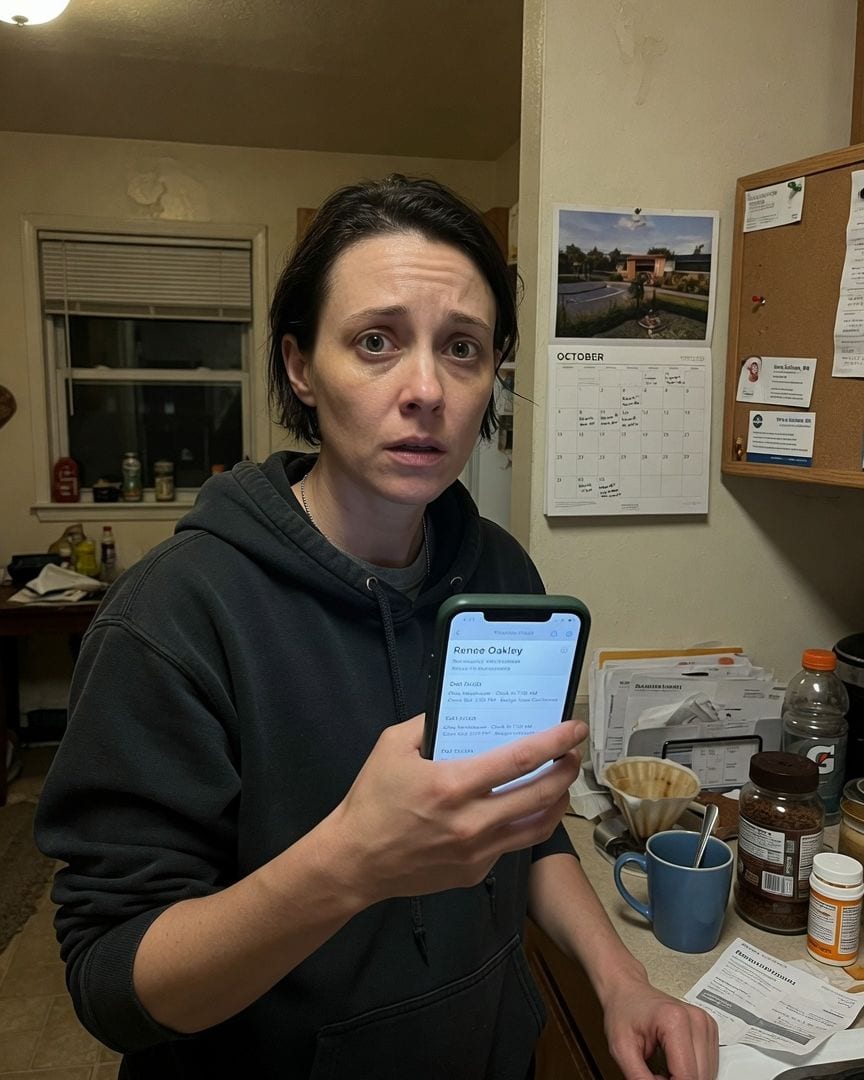
My company clock-in system says I worked full shifts in Ohio all last week. I was on medical leave in Florida, under a nurse's care.
Back home from medical leave, my payroll deposit was unexpectedly high. I checked my timesheet, only to find it logged me working full 40-hour shifts at the Ohio warehouse. But I was hundreds of miles away in Florida, confined to a sickbed under a nurse's care. Then my manager called: security footage confirmed I entered the warehouse.