My wardrobe opened onto a made bed and a window full of orchard. It smelled of apples. I shut it and opened it again on my own coats. The wardrobe is eleven inches deep.
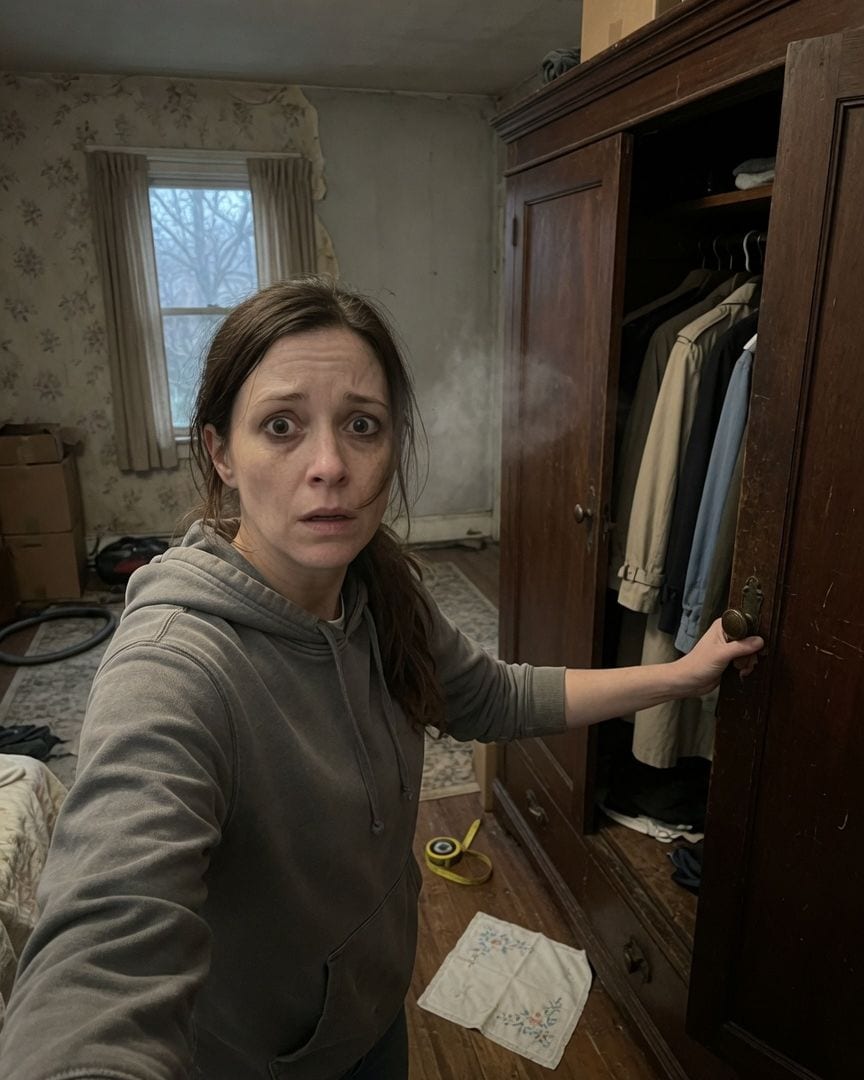
The house was old, built in the early 1900s, inherited from my great-aunt. I’d spent weeks clearing out years of accumulated dust and quiet, forgotten things. My bedroom, in particular, had this huge, built-in wardrobe, heavy dark wood, surprisingly shallow.
Or so I thought.
It was a grey Tuesday afternoon, and I was finally tackling my own clothes, figuring out where to put what. I pulled open the heavy wardrobe door. Instead of the usual jumble of my hanging shirts and jackets, I froze.
The air hit me first – cold, sharp, carrying an overwhelming scent of ripe apples. And it was no longer a wardrobe. It was a room.
A small, spartan room, lit by a window that looked out onto a dense, sun-dappled apple orchard. The trees were heavy with fruit, leaves vibrant green, not the muted grey of autumn outside my actual house.
There was a narrow, made bed with a patchwork quilt, and a simple wooden washstand with a pitcher and basin, and draped over its side, a small, hand-embroidered cloth.
Everything was still, quiet, like a photograph brought to life, but utterly alien. My breath hitched.
I slammed the wardrobe door shut, the sound echoing too loudly in the sudden, silent bedroom. My heart hammered. What the hell? I stood there, eyes wide, staring at the solid, familiar wood. A hallucination. Exhaustion.
I counted to three, forcing myself to be calm. This was an old house. Old houses had quirks.
I opened it again. My coats. My boring, modern coats, hanging neatly on their hangers. The air was normal, no cold, no apples. Just the faint, musty scent of cedar.
I reached in, pulled out a tape measure from my jeans pocket, and stretched it across the interior. Eleven inches. Exactly eleven inches deep. I measured it again. Same.
There was no way a room, a bed, a washstand, an entire orchard could have been behind that. No possible way.
But the memory of the cold air, the sharp sweetness of those apples, the startling vividness of that sunlit orchard – it pressed against my mind, a detail that refused to be dismissed.
I tried to shake it off for the rest of the day. A trick of the light. A moment of zoning out. Maybe I was more tired than I thought, moving all those boxes.
But the image of that impossible room, the cold air, the sharp, sweet smell of ripe apples, kept resurfacing. It was too specific, too sensory to be easily dismissed.
Over the next few days, other small things started to happen, things that individually meant nothing, but together, began to pick at the edges of my sanity.
One morning, making coffee, I caught a distinct, warm smell of cooked apples in the kitchen. Not fresh apples, but like someone had just finished baking a pie. I stopped, sniffed. Nothing.
Then, a faint wisp of it again, by the stove. I hadn't bought any apples, much less cooked them. I checked the fridge, the counters, then threw open the windows, convinced there was something rotting.
The smell dissipated, or perhaps I just got used to it, but it was too real, too specific.
Later that week, while vacuuming the hallway, I noticed a subtle, worn path in the faded runner carpet.
It wasn't visible unless the light hit it just right, but it was undeniably there, a faint depression in the pile, leading from the living room, past my bedroom, and right to the solid plaster wall at the end of the hall.
There was no door there. Never had been. I even pushed on the wall, ran my hand over it. Solid. But someone, or something, had walked that path countless times.
It was like a ghost of a routine, etched into the very fabric of the house.
I tried to scrub the phantom apple smell away again, opened more windows, but it was just a fleeting impression now, a whisper of something that wasn't mine.
The house felt subtly different, as if a quiet routine was running just out of sight, barely audible beneath my own life. It was just a house. It had to be.
Determined to prove to myself that the wardrobe incident was a hallucination, a trick of a tired mind, I approached the heavy wood again. I had my phone camera ready.
I took a deep breath, and slowly, cautiously, pulled the door open. My coats were there. I zoomed in with the camera, took a picture of my beige trench, my blue jacket. Normal.
I closed it, waited a full minute, then yanked it open quickly, hoping to catch the 'other room' off guard. Still my coats. I sighed, a wave of relief washing over me, tinged with a strange disappointment. I knew it.
Just a mental blip. I turned away, ready to put my phone down, to finally let it go.
Then I saw it.
On my modern hardwood floor, just a few inches from the wardrobe, lay a small, delicate handkerchief. It was linen, cream-colored, with a faded floral pattern stitched into one corner – tiny blue and pink forget-me-nots.
It was old-fashioned, distinctly not mine. I bent down, my fingers trembling slightly as I picked it up. The fabric felt cool, soft, utterly real.
And I knew, with a sickening certainty, that it was the same handkerchief I had seen draped over the washstand in the impossible room, just days ago. Its physical presence in my modern bedroom was undeniable, a solid, impossible proof.
The handkerchief was a punch to the gut. No trick of light, no hallucination. This was real. This was physical. It sat on my palm, soft and impossible, and my rational mind splintered.
I spent the next few days in a fog, clutching it sometimes, other times leaving it on my nightstand, a constant, unsettling presence. I needed answers.
I started at the local historical society, a quiet, dusty building downtown. The librarian, a kindly woman named Mrs. Henderson with spectacles perched on her nose, was used to new homeowners digging into their property's past.
I combed through property deeds, old census records. My house, she confirmed, was built in 1908. It sat on what was once a sprawling plot, mostly given over to agriculture.
And yes, a significant apple orchard had indeed stood behind it, stretching down towards the creek, until it was eventually torn down in the late 1960s to make way for the development that eventually surrounded it.
I found records of previous owners. My great-aunt had bought it in the 70s. Before that, a family named Miller. And before them, Abigail Sinclair. She had lived in the house from the late 1930s through the mid-1950s.
The name resonated. Abigail. The impossible room felt like a woman's room.
I asked Mrs. Henderson if there were any old photographs of the house from Abigail’s time. She rummaged through a box of brittle, sepia-toned prints. We found a few.
One showed the house from the front, a modest two-story, with the apple orchard clearly visible in the background, heavy with fruit. It looked exactly like the orchard I'd glimpsed through the wardrobe window.
But no interior shots that revealed the bedroom, or the wardrobe, or anything that would confirm the handkerchief's pattern. Mrs. Henderson paused, tracing a finger over Abigail Sinclair's name in a ledger. "Abigail," she mused, "she just left one day.
Vanished, really. No forwarding address. House sat empty for a good two years before the Millers bought it. Odd business." My stomach tightened. "Just left?" I asked. Mrs. Henderson just shrugged, a ripple in her calm.
"People do that sometimes, I suppose. Not that common in a small town, though." A growing unease settled in my chest. The house's history wasn't just old; it felt...incomplete.
As I delved deeper into the records, I started noticing an elderly man in the garden of the house next door. Conrad Galloway. He was often out there, tending a riot of roses, his movements slow and deliberate.
But sometimes, I’d catch his gaze drifting towards my house, lingering a little too long, a little too thoughtfully. I told myself he was just being a typical nosy neighbor, curious about the new resident.
One afternoon, as I was getting into my car, carrying a stack of books from the historical society, Conrad approached. He walked slowly but with purpose, a faint scent of garden soil and something herbaceous clinging to him.
He stopped by my driveway, his hands clasped behind his back.
"Vivian Walsh, isn't it?" he said, his voice surprisingly clear for an older man, almost detached. "Conrad Galloway. Been a neighbor here for going on fifty years."
"Nice to meet you, Mr. Galloway," I managed, suddenly feeling exposed.
"You've been asking about the house, haven't you?" he continued, his eyes, a startling pale blue, fixed on mine. "About Abigail."
My breath caught. "How did you know?" My voice was barely a whisper.
He smiled faintly, a slow, knowing expression that sent a chill down my spine. "This house… it has a way of holding onto things. And people. Sometimes, you just have to listen."
He paused, his gaze sweeping over my porch, the front window, before returning to me. "But I’d advise you not to dig too deep into old memories, Vivian. Not unless you're prepared for what you might find."
His calm demeanor was far more chilling than any overt threat. It wasn’t a warning borne of malice, but of deep, quiet knowledge. He knew what I was looking for, and more importantly, he seemed to know why.
The sudden realization that my investigation had not been private, that someone had been watching, and perhaps understood the impossible, made the hairs on my arms stand up.
I felt a cold dread take root, a certainty that this wasn't just about history anymore.
I stood there, the books heavy in my arms, heart thumping. "What do you mean, 'listen'?" I asked, my voice thin. "And what do you know about Abigail?"
Conrad’s expression didn't change. He simply held out his hand. "May I?" he asked, indicating the handkerchief clutched in my other hand. I hadn't even realized I was still holding it.
I hesitated for a moment, then passed it to him.
He took the small square of linen, turning it over in his fingers, his touch surprisingly gentle. "Abigail's," he stated, without an ounce of surprise. "She embroidered all her linens. Her mother taught her. A very neat hand."
He looked up, his pale eyes meeting mine, and I saw a deep, unsettling understanding in them. "This house, Vivian, it isn't just old. It's a memory palace. Some places… they don't just retain echoes. They actively manifest them."
I felt a cold shiver run through me, despite the warmth of the afternoon sun. "A memory palace?"
"Time isn't linear here," he continued, his voice calm, like he was discussing the weather. "Abigail Sinclair, she was a quiet woman. Kept a very strict routine. The house began to… loop fragments of her life. Her routines.
The smells she made. The paths she walked."
He gestured vaguely towards my bedroom window. "That wardrobe of yours. It’s a focal point. A weak spot. A door onto the wrong year, you might say. To her specific bedroom.
Her life, playing out, just out of sync with yours." He handed the handkerchief back to me. "The smell of apples, for example. Abigail loved apples. She had the orchard, of course. Baked with them constantly. And herbal tea.
Every afternoon, three o’clock. Those faint smells you've noticed? Those are Abigail's routine smells, her daily rituals bleeding into the present."
It clicked. The orchard, the cooked apples, the worn path in the hallway leading to nowhere, the handkerchief – it all fit. The disparate wrongnesses, the things I’d dismissed as imagination, suddenly cohered into a terrifying, undeniable pattern.
My rational mind, finally overwhelmed, surrendered to the impossible. The dread deepened, morphing from vague unease into a cold, personal fear. "She didn't leave her life here, Vivian," he said, his voice soft. "Her life is still here.
The house just keeps playing it."
"But...what happened to her?" I asked, the words barely a whisper. The air felt heavy, suddenly cold, as if the house itself was listening, breathing around us.
Conrad sighed, a long, slow sound. He turned and walked towards his house. I watched him, my heart pounding, then realized he expected me to follow. I did.
He opened his front door, a screen door that creaked just like my own, and went inside, returning moments later with a small, leather-bound journal. Its pages were yellowed with age, the cover worn smooth with handling.
"This was Abigail's," he said, handing it to me. "Her sister gave it to my mother after… after she was gone. Said it was all she had left."
I took the journal, my fingers brushing the cool, soft leather. It felt ancient. He opened it to a specific page, a place already marked. The writing was a delicate, looping script, faded but still legible.
I read the entry, dated sometime in the mid-1950s:
*I feel… a blurring. The wardrobe opened again tonight. The orchard was darker this time. I walked in, I think. Heard the faint sound of my mother humming a lullaby, though she is long gone.
It’s harder and harder to tell my own thoughts from the house’s memories. Objects move. Voices whisper from rooms no one occupies. I find myself doing things… preparing tea at three o’clock, though I have no guest.
The house is remembering me, not just my routines, but me. And I don't know if I can ever leave.*
I looked up, my gaze meeting Conrad's. His face was unreadable. "Abigail didn't just experience it, Vivian," he said, his voice quiet, unburdened by emotion. "She just... became part of the house.
Just like the house is starting to remember you." He looked at me, a faint, knowing smile on his lips, and I felt a cold certainty settle in my bones: the door isn't just to the past; it's a trap.
Conrad’s words, Abigail’s journal – they were a heavy weight in my mind. We sat on his porch, the journal still in my lap, and he explained the full, terrifying truth.
The house wasn't just old; it was built on what he called an "ancient temporal nexus," a kind of natural fold in time that amplified and retained the routines and emotional imprints of its inhabitants.
Especially, he clarified, those who lived solitary, repetitive lives, like Abigail.
The wardrobe, he said, wasn't just a random door. It was a weak point, a bleed-through where Abigail's past reality could manifest.
The house wasn't merely replaying her life; it was attempting to complete it, to bring her back into a coherent whole within its own temporal loop. Abigail, in her isolation, had succumbed.
Her consciousness, her very self, had slowly dissolved into the house's memory, becoming 'the source shown only in traces.' The smells, the path, the room – these were not just echoes, but manifestations of her continued existence within the house.
"And now," he finished, his voice gentle but firm, "it's doing the same to you. Drawn to your own nascent routines, the subtle shifts in your presence. That handkerchief wasn't an accident.
It was the house reaching out, weaving you into Abigail’s fabric, trying to make you part of its ongoing, impossible memory."
Every detail I'd experienced, every inexplicable chill, every ghostly scent, every impossible sight, was the house’s attempt to absorb me, to make me a part of its eternal, replaying past.
The horror wasn’t that something was trying to hurt me, but that it was trying to unmake me, to erase my present and fold me into someone else's past.
I was horrified, but Conrad remained calm, almost resigned. "You can't stop it, Vivian," he stated, looking out over his rose garden. "The house simply is. It’s a force of nature, in its own way.
You can only choose to stay or to leave."
He explained that the house's 'memory' wasn't malicious, not intentionally evil. It was simply a phenomenon, a pattern, a hungry collector of lives.
Staying, he said, meant a slow, insidious dissolution of my own reality into Abigail's, eventually becoming another trace, another scent, another forgotten routine playing on an endless loop.
Leaving meant abandoning the house, selling it, walking away – and carrying the terrible knowledge of what it was, what it had done, what it would do.
I looked down at Abigail's journal in my hands, then at my own house next door, bathed in the late afternoon sun, looking so utterly normal. But I knew what lurked within its quiet walls. I could not stay.
I could not become another ghost in a house that remembered.
My hands shook as I packed. I took only essentials, cramming clothes into a duffel bag, grabbing my laptop, my phone, some basic toiletries. I left everything else.
The furniture, the boxes I hadn't even unpacked, the memories of my great-aunt – I left them all.
With every item I picked up, I was acutely aware of the quiet hum of the house around me, the faint, sweet smell of apples now permeating every room, no longer fleeting, but a constant, cloying presence.
It felt like a warm, inescapable embrace. As I reached my bedroom door, duffel bag slung over my shoulder, I glanced at the wardrobe. Its dark wood stood solid and unassuming, a silent, patient sentinel.
I knew what lay beyond it, what waited to claim me, to weave me into its timeless tapestry. I took a deep, shuddering breath, my decision firm, the weight of the house's memory pressing down on me, heavy and inescapable.
I had to leave.
I left the house that day, never looking back. I drove away, my rearview mirror showing a normal, unassuming house on a quiet street, and a small, elderly man tending his roses.
I sold it quickly, through an agent in another town, citing only 'personal reasons' for the rapid departure. I didn't disclose anything about the wardrobe, the apples, or the lingering presence of Abigail.
It felt like betraying a secret, even as I was fleeing for my life.
The new owners, a young couple with two small children, moved in a few months later. I occasionally drove past, a cold knot in my chest, seeing their lights on, their children’s toys in the yard, the garden freshly tended.
I wondered if they'd found the wardrobe yet, if they'd smelled the apples. I wondered if they’d start hearing things. Or feeling things.
The memory of the house, of Abigail, of Conrad's calm explanation, is a permanent scar on my psyche.
I live elsewhere now, in a modern, sterile apartment downtown. The walls are thin, and the neighbors' lives bleed through: snippets of conversation, the thud of music, the distant cries of a baby.
But at least here, the echoes are human, and the only history is mine. I still check the back of my closets. Every single time. You never know what a house might be quietly holding onto, waiting to remember.
And I know, now, that some memories aren't just in your head.
If this one got to you
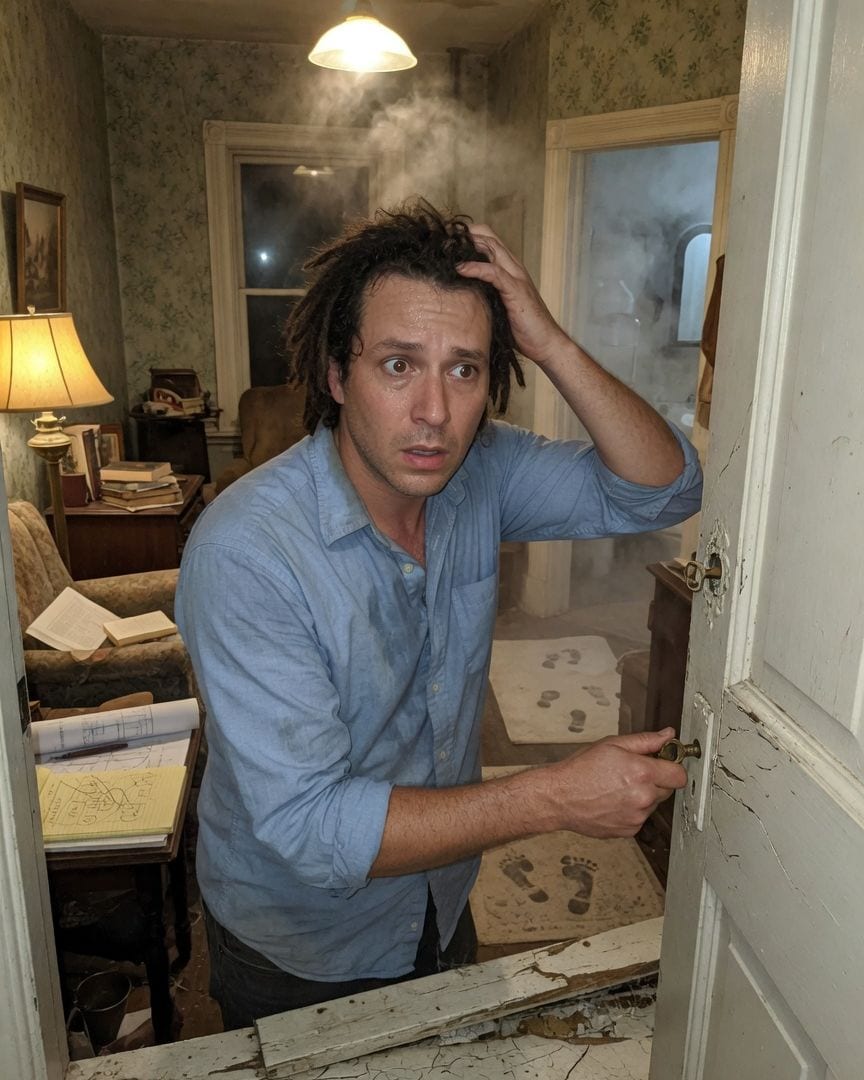
The bath filled itself at 9:30 PM. My main house water was off. Wet footprints led from the tub to a locked airing cupboard.
As an architect, I pride myself on logic. Moving into my inherited Victorian house was supposed to be a quiet fresh start, but on the third night, I heard the impossible. Even after I shut off the main water to the entire house, my clawfoot bath upstairs ran full, warm, and steaming at 9:30 PM.
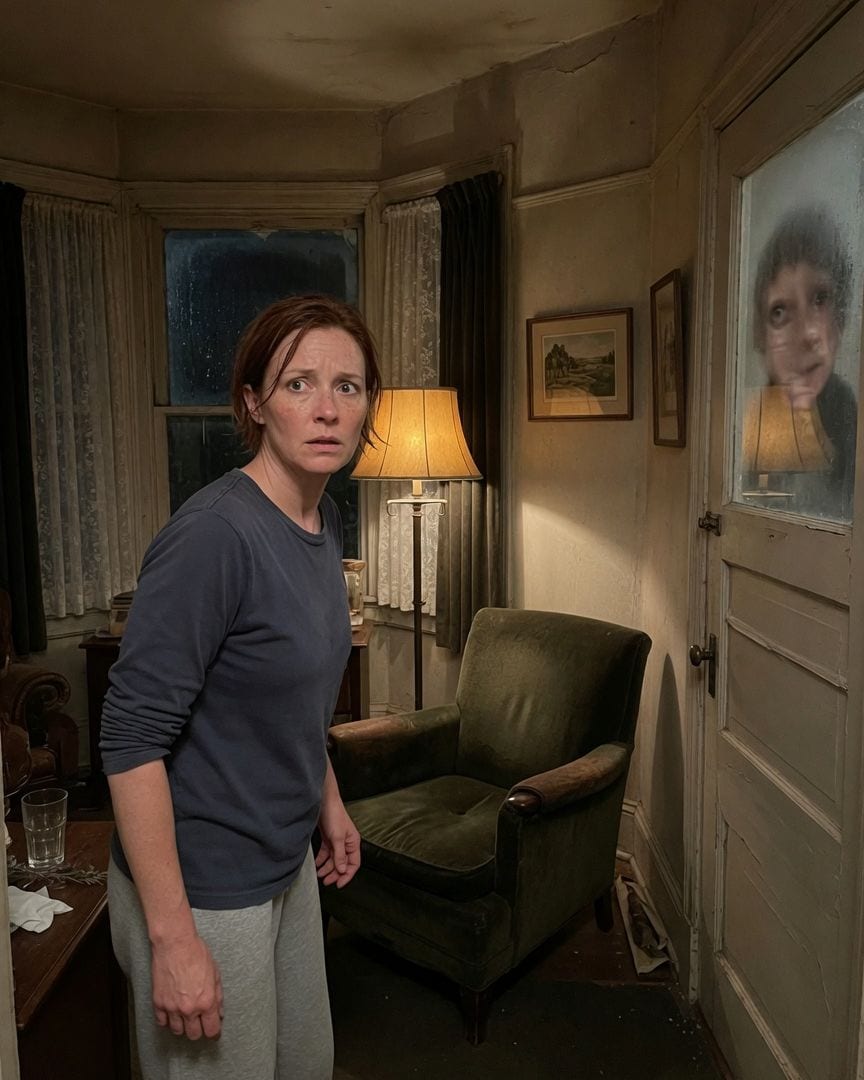
The armchair by the bay window was warm last Tuesday at 9pm. I’ve never sat in it, and the cushion was still settling from a weight that wasn't mine.
I bought this old house for quiet, and most days it's exactly what I needed. But there’s an antique armchair in the living room, deep green velvet, with a permanent hollow from years of use. I’ve never sat in it, yet last Tuesday, I found it radiating a distinct warmth, the cushion slowly settling as if someone had just left.
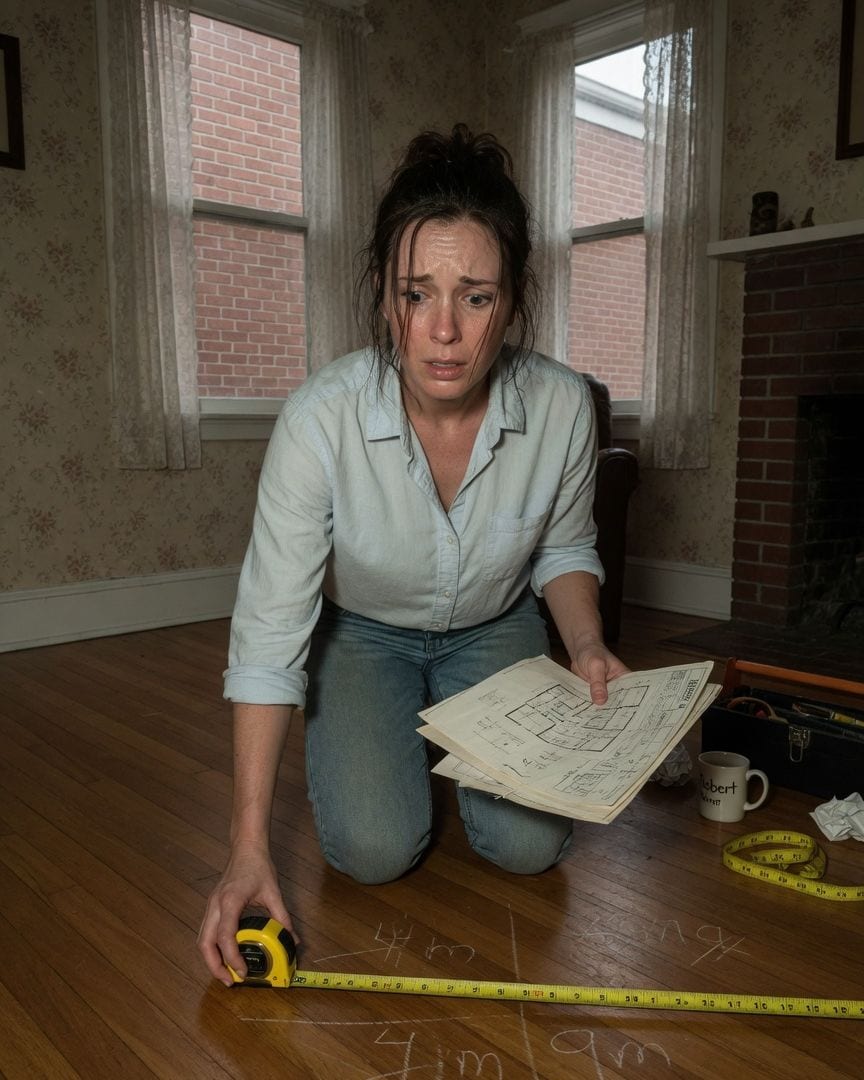
Our living room measures four by five metres. But the outside wall is nine metres long. A metre of house, gone, and I can't find it.
After moving into our charming 1920s house, I was meticulously measuring the living room when the dimensions refused to add up. My calculations of the interior space led me to discover a narrow, unpainted fifth door in the hallway, tucked almost out of sight. It wasn't on any original plans, and it opened to absolute, impenetrable darkness.
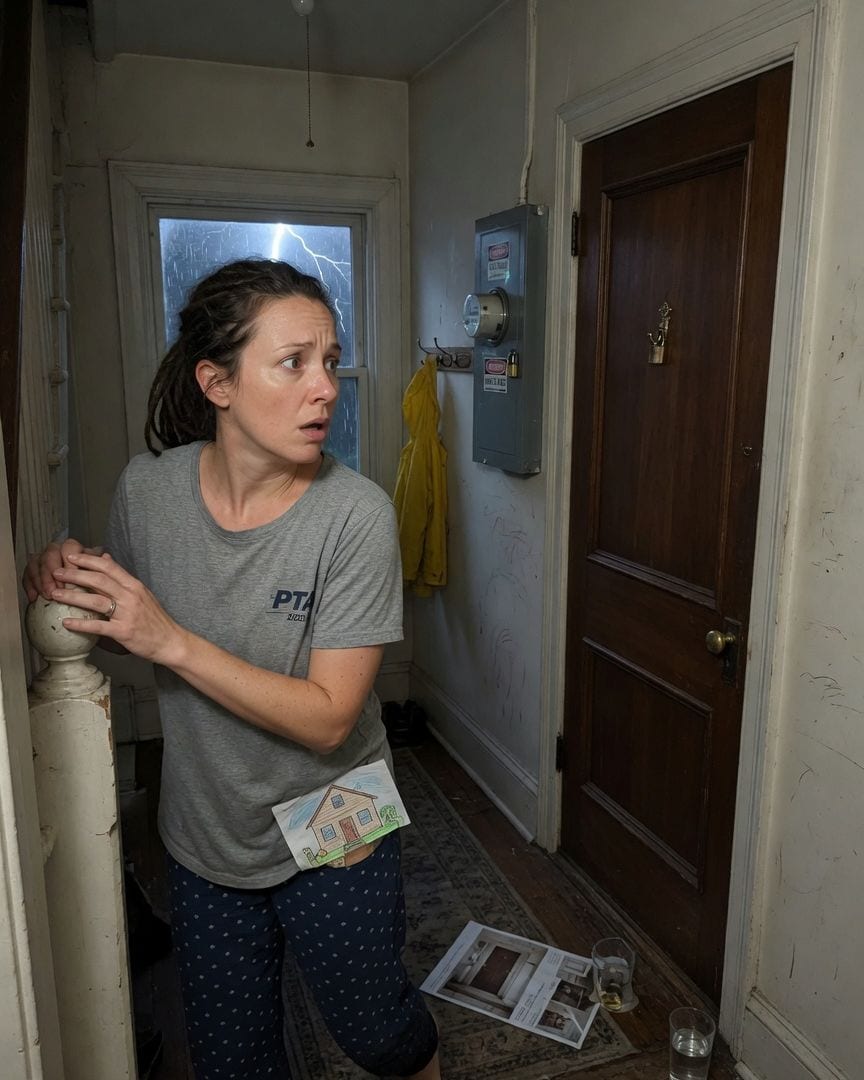
My son drew a door under our stairs. Tonight, I touched its cold brass handle.
My son Oliver drew our house with a small, panelled door under the main staircase, a detail I quickly dismissed because only a solid wall stood there. But an old real estate listing photograph revealed the exact door, perfectly placed, where no door could possibly exist.
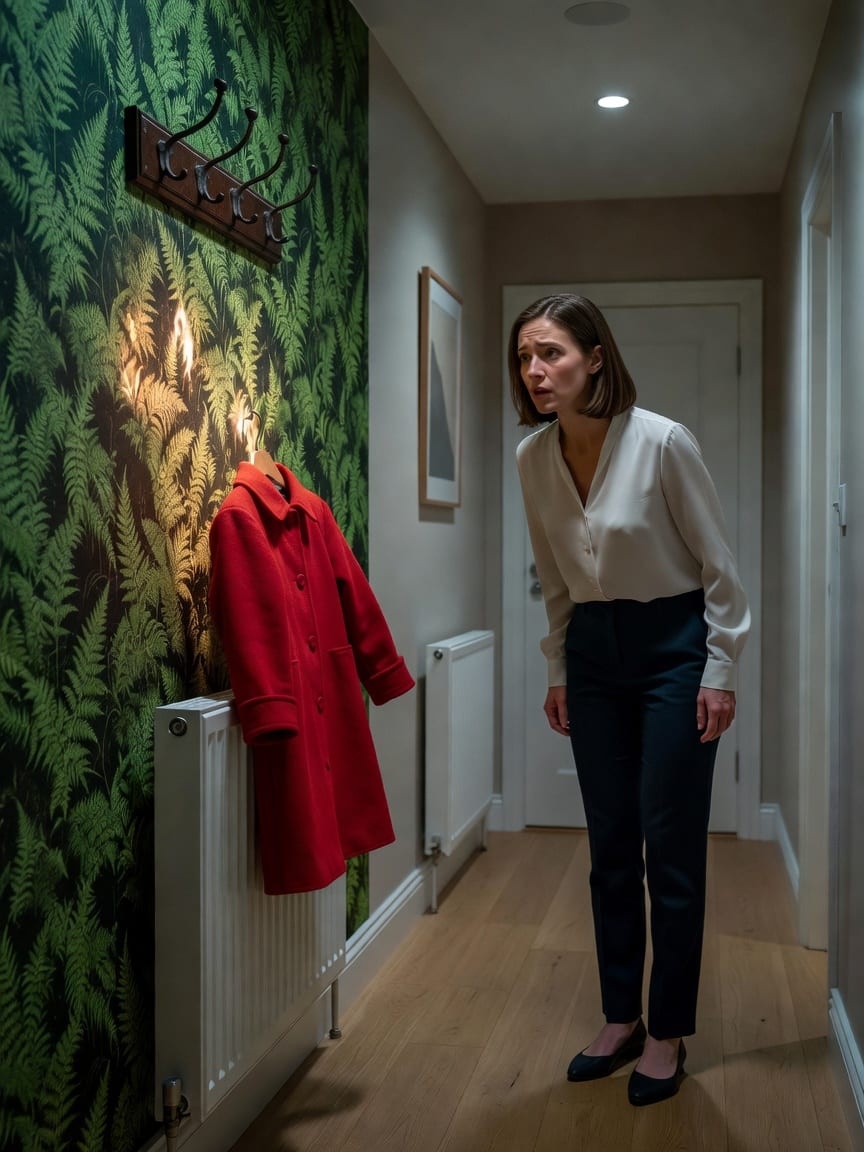
My hall wallpaper turned to dense green fern, gaslight-dim and warm to the touch. A child's red coat hung where my radiator is.
A year into my inherited house, I knew its quiet halls. But one morning, when I finally pried open a hidden, ancient locket, a faint, almost musical giggle drifted from the empty hall.
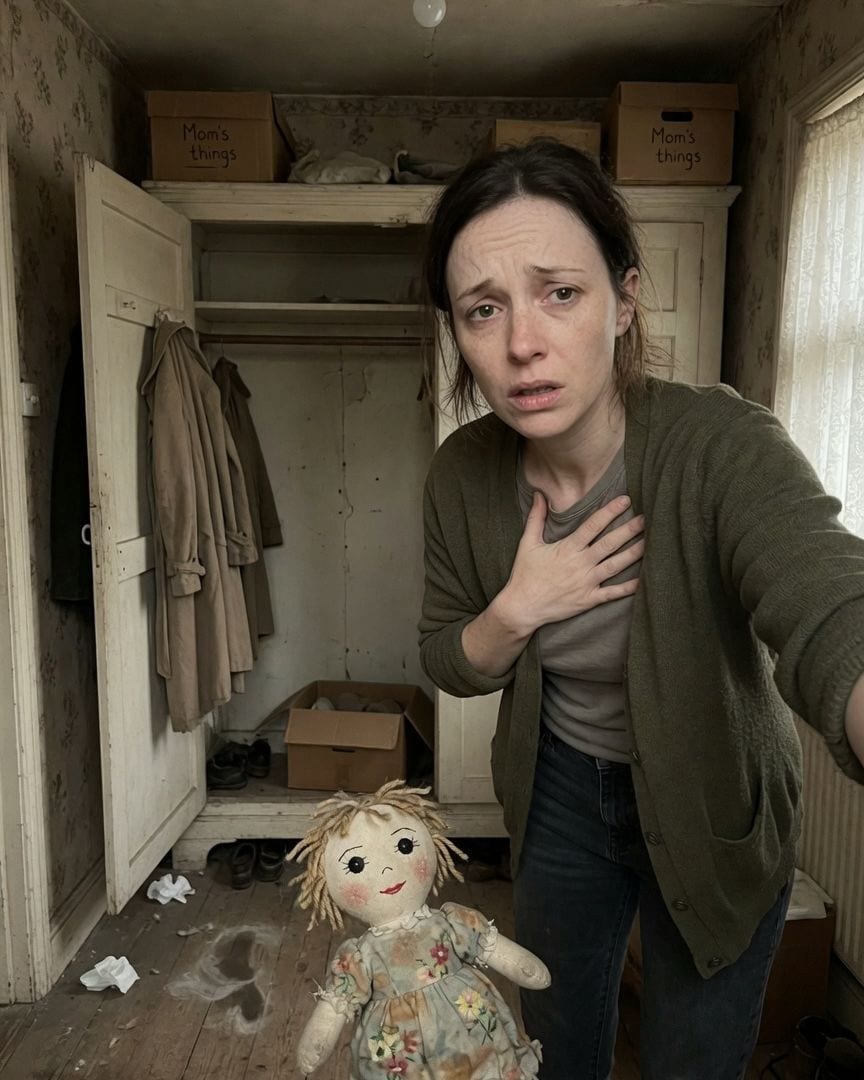
My shallow wardrobe opened into a child's bedroom. I'd knocked on its solid back wall for years. Now the doll from that room is on my floor.
My new house has a box room with a shallow wardrobe, barely a foot deep. But one day, reaching inside, the back wall vanished, opening into a child's bedroom with a cot and a burning nightlight. I slammed the door shut, only for it to be a normal closet again, leaving me with a cold, heavy stone of contradiction.