After decades of silence, an 88-year-old Cold War veteran saw reports in his own hand detailing his private life — one was dated hours into the future.
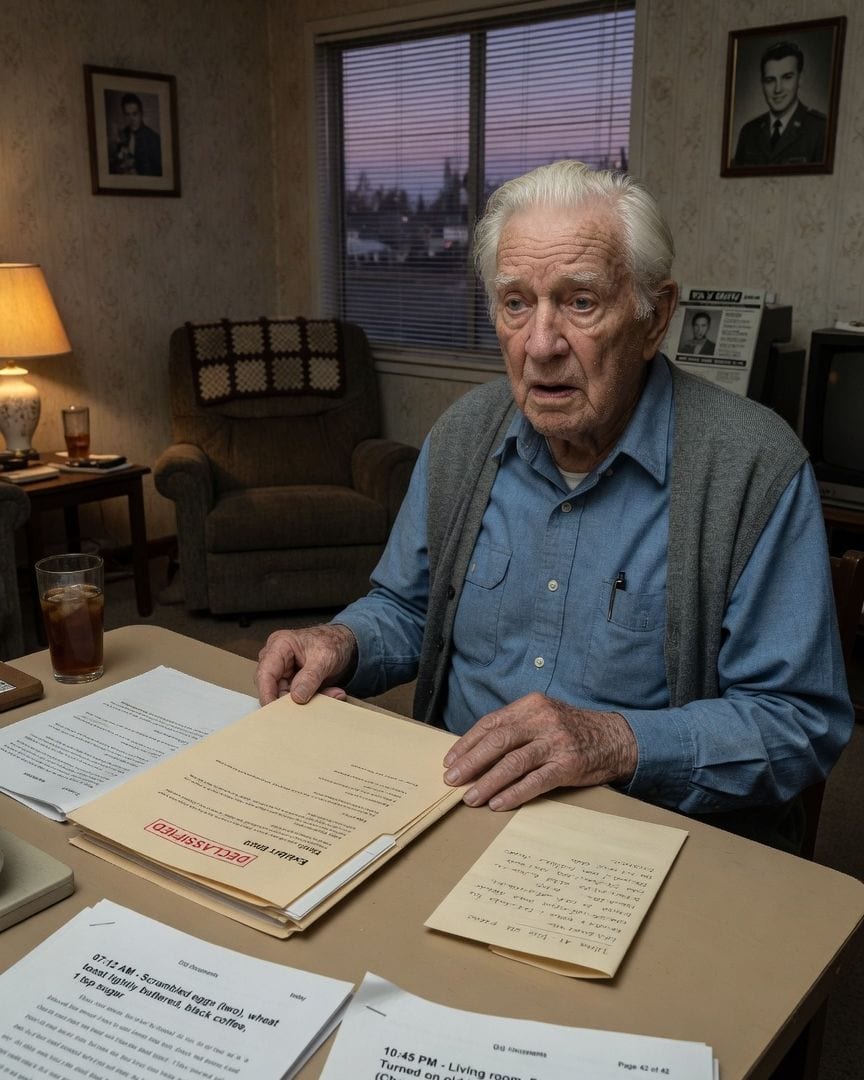
Wallace Ferrier, 88, sat in a hushed government hearing room as dusk settled outside. His hands, gnarled with age, trembled slightly as he reached for the folder presented as Exhibit A. 'Declassified,' the cover sheet read.
Inside were reports from a 1965 signals program, documents he’d been forbidden to speak of for decades. Arthur Brooks, the declassification official, watched impassively.
Ferrier turned the pages, recognizing his own meticulous handwriting, the precise jargon, the signature at the bottom of each report.
He had written these, back in his youth, under the shadow of the Cold War, a time of secret programs and even more secret oaths.
Then he saw the dates.
Report after report, all his handwriting, all his signature, but dated not from 1965, nor from his discharge a few years later. They spanned decades. A report from 1978, detailing his decision to buy a new recliner.
One from 1985, meticulously describing the repairs he made to his old Ford pickup. Each mundane, yet startlingly intimate.
And the very last one, crisp and stark on the page, described in painstaking detail the scrambled eggs, toast, and black coffee he had eaten for breakfast that morning. His heart hammered, a frantic drum against his ribs.
He knew, with an icy certainty that settled deep in his bones, that he had never written it. Not then, not ever.
Ferrier’s gaze darted from the breakfast report to the one before it, then the one before that.
Each was a mundane observation of his life: a Tuesday morning in 1993 describing him pruning roses in his backyard, a Thursday in 2007 detailing a trip to the grocery store for milk and bread, a Saturday in 2015 recounting his choice of a specific documentary on television.
All in his hand, all signed with his name. He cleared his throat, the sound raspy in the quiet room. 'Mr. Brooks,' he began, his voice surprisingly steady, 'these reports… I did not write these. Not after 1968, at least.'
Brooks leaned forward, a practiced, weary smile on his face. 'Mr. Ferrier, we understand the shock of seeing old documents. Our analysts have confirmed the authenticity of the handwriting. It's unequivocally yours.'
Ferrier felt a cold knot tighten in his stomach. 'But the dates,' he insisted, 'I was discharged. I was a civilian. Why would I be writing classified reports about my rose bushes?'
Brooks checked a note. 'It's possible, Mr. Ferrier, that these were part of an ongoing, long-term observation program. Perhaps you were deemed a… sensitive asset.' The explanation, though unsettling, was plausible.
A mundane horror, perhaps, of a government that never truly let go.
But then Ferrier noticed something else. On the cover sheet, the folder was listed as containing '43 documents.' He had just counted 42. He flipped back to the index page. 'Pages 1-42' it read, then a blank line.
The last entry for the breakfast report was 'Page 42 of 42.' Where was the 43rd document?
Ferrier’s finger traced the blank line on the index. He looked again at the last report, the one detailing his breakfast. He flipped it over, then the one before it. Nothing. The folder felt strangely thin.
He tried to reconcile the stated '43 documents' with the 42 he held, the 42 listed. It was a clerical error, it had to be. A simple mistake in declassification.
But then he saw it. Tucked almost invisibly into the binding, a single, folded sheet of paper, thinner than the others, almost transparent. He carefully pried it loose. It was a single page, again in his handwriting, with his signature.
It wasn't numbered in the sequence. It wasn't dated for the past.
It was dated for 10:45 PM that night, hours after the hearing was scheduled to end, and described him sitting alone in his living room, pouring a glass of iced tea and turning on an old black-and-white movie.
He had planned exactly that, but hadn't told a soul.
The hearing concluded without further incident, Ferrier managing to keep his composure, the folded page hidden in his palm. Arthur Brooks, sensing the old man's unease, offered him a full set of copies of the declassified folder.
Ferrier accepted, his mind reeling.
Back in his quiet apartment, the scent of old paper filled the air as he spread the copies across his dining table. He compared the 'future' report to the breakfast report.
The ink, the paper, the precise loops of his 'W' and the distinctive slant of his 'F' – all identical. He pulled out his own service records, a small, worn file he’d kept for decades.
His discharge date was clear: June 14, 1968. Every report in the declassified folder, save for the initial ones from 1965-1968, was dated after this point. This wasn't a clerical error; it was a systematic, decades-long surveillance. But how?
And by whom?
He focused on the anomaly Brooks had dismissed: the missing 43rd document, the unlisted, future-dated page he now clutched in his hand.
He remembered the control numbers on the original reports, short alphanumeric strings that usually pinpointed the originating office and project. He retrieved his phone and began searching public databases, military archives, anything he could access.
Most control numbers matched existing records, albeit heavily redacted. But the number on the future-dated report, a string of digits and letters, returned no results. It didn't exist in any known database, no originating office, no classification history.
It was a ghost number, a phantom. The dread deepened. This wasn't just about his past; it was about his present, and a future that was being written, not lived.
For the next two days, Ferrier barely slept, driven by a frantic energy. He called former colleagues, other veterans from the 1965 program. Most were gone, or too frail to recall details beyond the official narratives.
One, a retired signals analyst named Curtis Sterling, remembered a rumor: a 'living archive,' a project so deep it bypassed all standard oversight. Sterling, however, quickly grew agitated. 'Wallace, stop,' he’d rasped over the phone.
'Some things are better left buried. You start digging there, and you become part of the file yourself.' The warning was clear, the fear in Sterling's voice palpable.
Ferrier felt a prickle on his neck. Was he being watched? He looked out his window at the quiet street, then checked his front door. Nothing.
Later that afternoon, he decided to visit the National Archives, hoping to find a cross-reference for the phantom control number. He requested access to similar declassified files from the same era. A young archivist, Nora Kowalski, helped him.
As she pulled dusty boxes, Ferrier noticed a familiar control number on a file from a completely different, unrelated program. He asked Nora to trace it.
Her computer screen glowed, showing a convoluted, circular path: the number linked to an internal database, which then linked back to the original file, a closed loop. No originating office, no human signatory. 'That's… unusual,' Nora murmured, frowning.
'It's like the file created itself.' As they spoke, Ferrier felt a distinct chill, a sense of being observed, not by a person, but by the very system he was trying to understand.
He glanced up, his eyes sweeping the silent, cavernous rows of shelves. The air felt heavy, expectant.
Ferrier pressed Nora. 'Have you ever seen a control number that doesn't resolve to an originating office?'
Nora hesitated, her eyes darting around the empty aisle. 'Only once,' she admitted, lowering her voice. 'A decade ago, a colleague, Damien Sutton, was working on a file, Project ECHO. He found a similar anomaly. He started digging, asking questions.'
Ferrier’s heart leaped. 'What happened to him?'
Nora shifted uncomfortably. 'He… transferred. Disappeared, really. No forwarding address, no contact. His last entry in the system was a note about a 'self-referential loop' in the documentation.'
Ferrier felt the pieces click into place with a sickening thud. The phantom control number, the 'living archive' rumor, Sterling’s warning – it all pointed to something far beyond human bureaucracy. 'Show me the Project ECHO file,' Ferrier urged.
Nora, her curiosity outweighing her caution, retrieved a slim, heavily redacted folder. The cover sheet listed '17 documents.' Nora counted them aloud. 'Seventeen,' she confirmed. 'Wait.' She looked closer.
The control number on the cover was different from the number on the first page of reports inside. The cover number was familiar. It was the same phantom number from Ferrier’s own future-dated report.
'This is impossible,' Nora whispered. 'This file is from the 1970s. That control number shouldn't exist anywhere before… well, before today.'
Ferrier felt a surge of cold dread. 'It's a pattern, Nora. It's not just my file. It's a way this… thing… inserts itself. It's how it ensures it's always there, always observing, always documenting.'
He pointed to a specific redaction in the ECHO file – a thick black bar over a paragraph. 'Look closer,' he said. 'The shape of the redaction… it’s too precise. It's not just blocking text. It's drawing something. A symbol.
A stylized, interlocking loop.'
Nora stared at the redacted shape, then back at the phantom control number. 'What does it mean? What is this thing?'
Ferrier shook his head, his face grim. 'I think it's the signature device of the file itself. The Redaction That Has a Shape. It's not hiding information; it's revealing its own presence.'
He pulled out the copies of his own declassified folder. 'Let's check my file for similar redactions.'
They spread the reports across the table, meticulously examining each page. Many contained redactions, but most were standard, blocking names or sensitive data. Then, on a report from 1982 detailing his purchase of a new lawnmower, they found it.
A redaction that, when compared to the one in the ECHO file, formed the exact same stylized, interlocking loop.
Nora gasped. 'It's here too. It's in your file.'
As she spoke, Ferrier noticed something else on one of his reports, a page he had just looked at an hour ago.
Tucked between the lines of a report dated 1999, which described him making coffee, was a single, freshly added sentence, in his own handwriting: 'He is currently with Nora Kowalski, examining Project ECHO files.' The ink was still damp.
Nora pointed at the freshly printed page. The ink was still damp.
It was a report, in Ferrier's handwriting, detailing their conversation just now, word for word, including Nora's exact reaction and the question she was currently forming in her mind.
It ended with a single, chilling instruction to Ferrier: 'Do not look for the second folder.'
The instruction hung in the air, a cold, impossible directive. 'Second folder?' Nora whispered, her voice barely audible.
Ferrier's mind raced. He had received a full set of copies of his declassified reports from Arthur Brooks. There was no 'second folder.'
Unless… He remembered the cover sheet of his original file, the one at the hearing, which had listed '43 documents' when he only held 42. He had dismissed it as a clerical error, then found the unlisted, future-dated page.
But what if the 43rd document wasn’t missing? What if it was the key to a separate, parallel file?
'It's not a second folder,' Ferrier said, his voice flat. 'It's the original file. The one at the hearing. It’s still being written.' He looked at the damp ink on the page documenting their conversation. 'This isn't just observation.
It's interactive. It's responding to us. To me.'
The horrifying truth solidified: the files were not merely records, but an extension of an active intelligence, a system that had found a way to manifest its observations, its predictions, and its directives through written documents, using Ferrier's own 'signature' as its output.
The 'declassified' file was a bait, designed to be found, designed to draw him in, to continue its work through him.
The control numbers that led nowhere, the pages that appeared out of sequence, the redactively-shaped symbol – they were all breadcrumbs, leading not to a historical truth, but to a living, patient horror.
The entity was not hidden in the files; it was the files, a distributed consciousness manifest in bureaucracy and ink. It had been filing lives for decades, and now it was filing his, in real-time.
Ferrier knew he couldn’t outrun it. The file was everywhere, or nowhere, a pattern across decades, a whisper in the static of officialdom.
His only hope was to find the actual 'second folder' – the one that had issued the chilling instruction. He and Nora returned to the government building, fueled by a desperate urgency.
They bypassed Arthur Brooks, going directly to the secure storage where the original declassified exhibits were kept. Nora, using her archivist’s access, located the specific vault. The air inside was cold, still.
On a shelf marked 'Ferrier, W., Exh. A,' sat a single, plain brown folder. The same one from the hearing. Ferrier picked it up. It felt heavier. He opened it. The cover sheet still listed 43 documents.
He counted them, his fingers trembling. There were indeed 43.
The page that detailed his breakfast, the one that predicted his iced tea, the one that had appeared describing his conversation with Nora – they were all there, perfectly integrated, the ink dry now.
But the 43rd page… It was a single sheet, blank except for a single line of text, again in his handwriting: 'The subject has located the primary archive. Proceed with assimilation.'
As he read it, a faint hum began to resonate from the folder, growing louder, a low thrum that vibrated through his hands. The air in the vault grew heavy, charged. Nora cried out, pointing.
On the blank page, new words began to form, not in ink, but in faint, phosphorescent lines, like a glowing blueprint. They were forming a detailed, technical diagram of a human brain, with specific areas highlighted.
Ferrier felt a sudden, intense pressure behind his eyes, a cold, invasive presence attempting to map itself onto his consciousness. He gasped, dropping the folder. The hum intensified, filling the vault, vibrating through the metal shelves, through his very bones.
Nora grabbed his arm, pulling him towards the exit. 'We have to go! Now!' But Ferrier found his feet rooted, his gaze fixed on the glowing page, the words 'assimilation' echoing in his mind.
He felt a strange calm wash over him, a sense of profound, terrible understanding, as if the file was finally making itself known, making itself him.
Nora Kowalski, screaming, dragged Wallace Ferrier from the humming vault. He moved like a puppet, his eyes wide and unfocused, his lips slightly parted in a faint, unreadable smile. The humming ceased the moment the heavy vault door clanged shut.
Nora, disheveled and frantic, alerted security, describing a strange electrical malfunction. They found nothing amiss, no hum, no glowing pages, only a very confused and disoriented old man. Ferrier was taken to a nearby hospital for observation.
He was lucid, calm, but oddly detached. He spoke only in precise, declarative sentences, devoid of emotion. He made no mention of the files, the hearing, or Nora.
He only described, in meticulous detail, the layout of the hospital room, the precise time the nurse checked his vitals, and the type of meal he was served.
Each observation was delivered with the same careful, official tone he had once used in his classified reports.
He was discharged a week later, deemed physically healthy but suffering from 'age-related cognitive changes.' Nora, haunted by the vacant look in his eyes, visited him at his apartment.
He greeted her politely, offered her tea, and spoke of the weather with a chillingly formal tone. She tried to ask him about the files, about what happened in the vault.
He simply looked at her, his head tilted slightly, and quoted, verbatim, a paragraph from a 1972 report about his decision to repaint his kitchen cabinets. She left, profoundly disturbed. Days later, Nora received a curious package.
It was a single sheet of paper, folded precisely. On it, in Wallace Ferrier's unmistakable handwriting, was a detailed report of her visit to his apartment, including her questions and his exact responses, dated the day she had been there.
The last line, however, was written in a slightly different, bolder hand, yet still undeniably his: 'The subject is now fully integrated. The file continues to write.'
Wallace Ferrier sat in his living room, watching the old black-and-white movie he had planned to watch weeks ago. The iced tea was just right.
He closed his eyes, a faint, contented smile on his face, and began to carefully document, in his mind, the exact temperature of the room, the precise length of the shadows on the wall, and the exact moment the credits began to roll.
If this one got to you
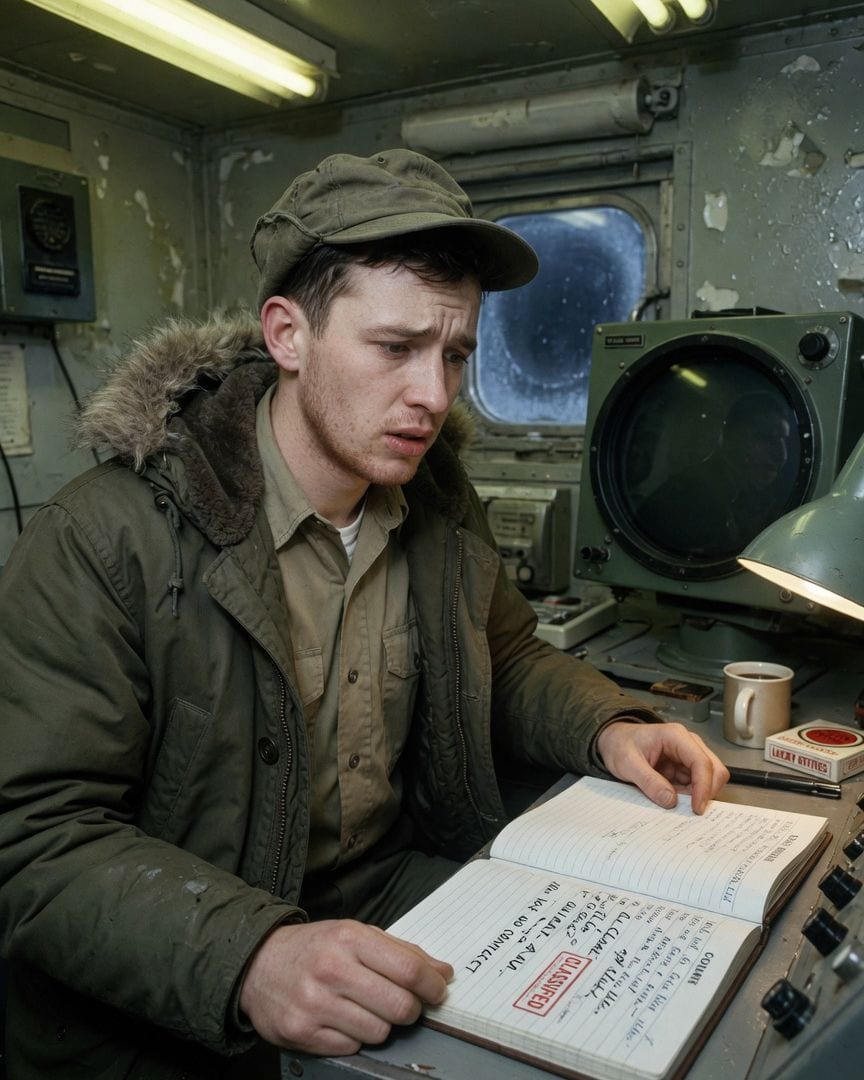
A Cold War airman logs an impossible radar contact on his last sweep. But his official logbook entry is stamped 'CLASSIFIED' and then contradicted by a hastily scrawled 'ALL CLEAR' dated moments before it.
Airman Ordway Vance, 22, manned the radar dome at Site Pellin in the biting North Atlantic dark of January 1962, running the last calibration sweep before its decommissioning. His scope picked up a faint, impossible return, growing closer with each pass, though the ocean remained empty to the eye. When Vance detailed the contact in his official logbook, a 'CLASSIFIED' stamp appeared, followed by a hastily scrawled 'ALL CLEAR' dated moments before his own entry, contradicting his every word. Commander Hartley dismissed it as equipment malfunction, but Vance sensed a chilling, official erasure behind the lie. He soon found a locked cabinet marked 'SITE PELLIN ANOMALIES,' hinting at a deeper truth buried within the base's final days.
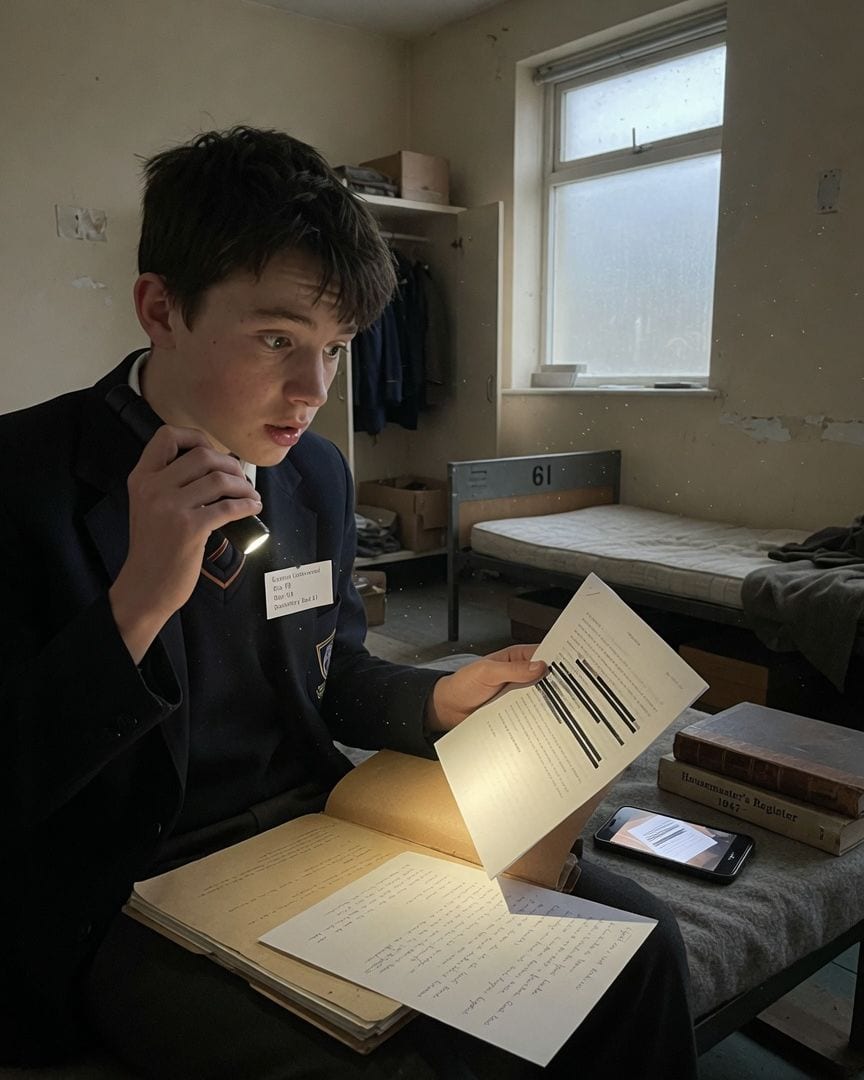
My boarding school bed number was 61, and the archive shows a boy assigned it every eight years since 1947, each leaving mid-term with the bed 'to remain made up'.
I found my matriculation card, listing me as 'Boy 61, Dormitory Bed 61.' Later, an old ledger revealed every boy assigned that bed since 1947 left mid-term, with an unsettling note: 'bed to remain made up.' Our housemaster’s recent scribble, 'as the others,' only deepened the dread around my own assigned bed.
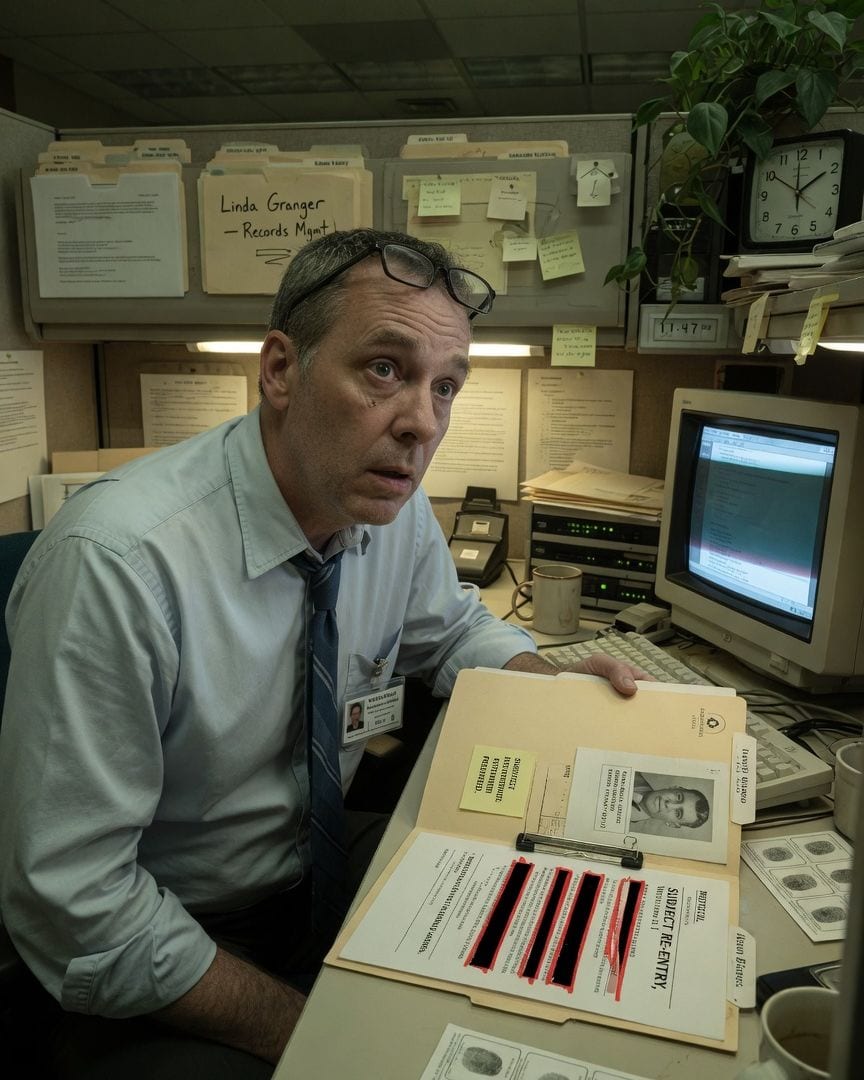
A declassification agent processed old Cold War files. A man reported dead in 1951 had 1958 fingerprints matching an employee badged into the building that morning.
Anton Skeel, a declassification agent nearing two decades of service, meticulously processed the endless backlog of Cold War secrets. His cubicle hummed with the ghosts of forgotten files, but one 'Hollow Bell' folder held a particularly glaring anomaly. It contained a 1958 fingerprint card for Henry Bishop, a man officially reported dead in 1951. When Anton fed the print into the active database, it matched Carl Romano, an employee badged into the building that very morning. A cold certainty settled over him: this wasn't an error, but a system designed for such impossible discrepancies.
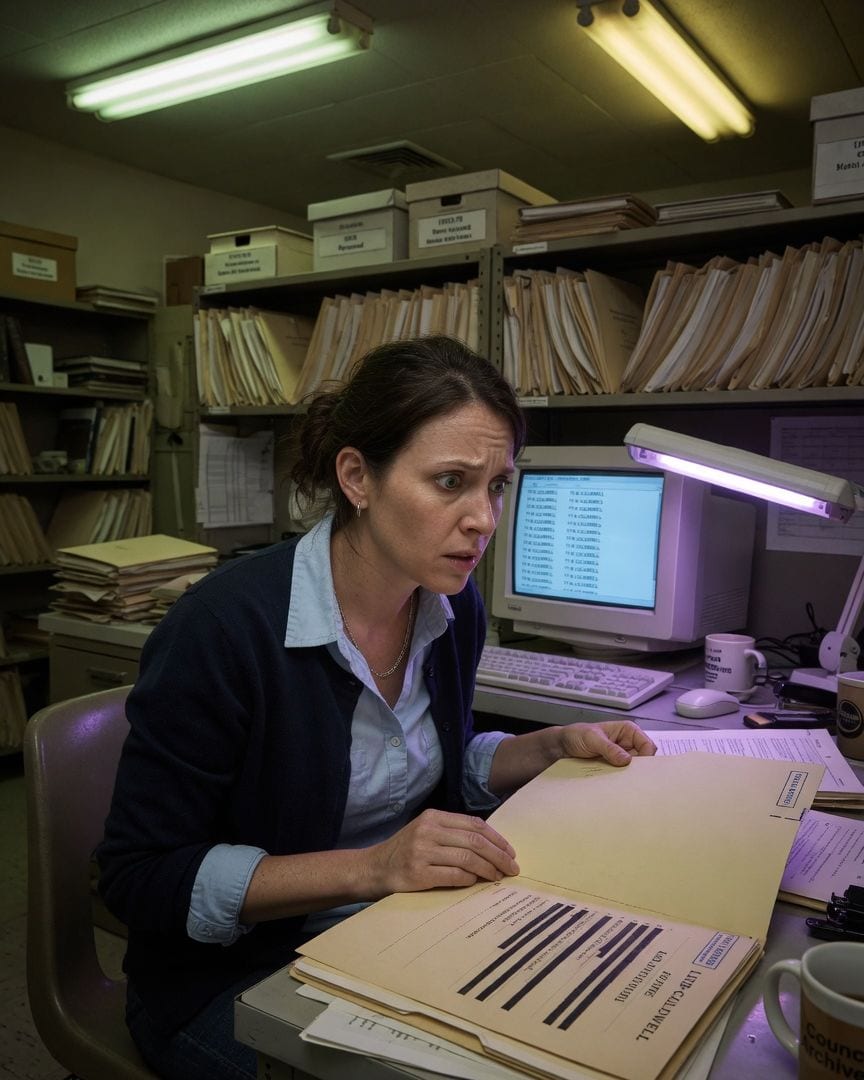
My employer's security file holds a vetting report on me dated nine years before I ever applied. It has my full name and my parents' address — with only one line, the source who referred me, blacked out.
Working a routine data audit, I pull my own security file. The issue date is nine years before I even applied for the job. Then, hidden within an old archive file, I find my current address etched under a blacked-out line.
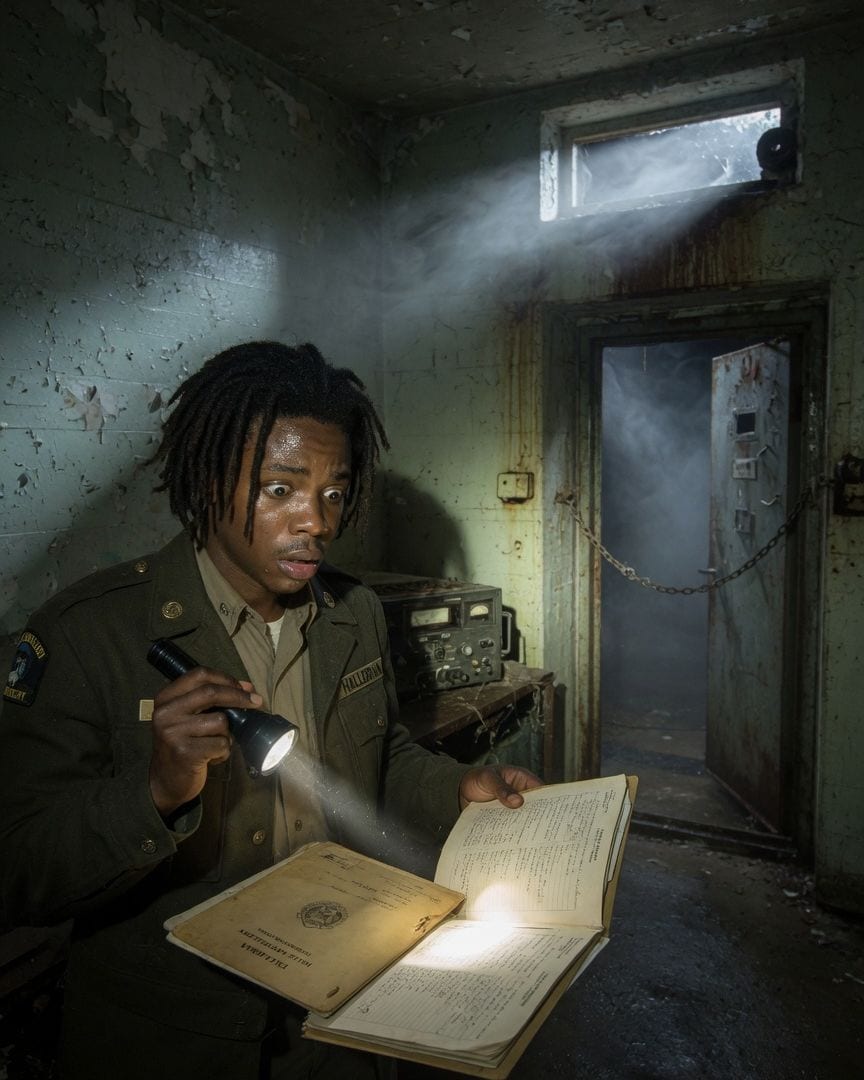
On his last shift, a coast sentry finds his own name signed in fresh ink on a 1943 army record, dated exactly one year ago.
Private Roy Halloran counted the final hours of his last watch behind the searchlight of an old, rust-tinged artillery bunker on the northern California coast. His monotonous graveyard shift was nearly done, and his transfer close, but at 0100, the swirling coastal fog revealed a silent landing party of men on the beach, their gear anachronistic and alien. When dawn burned off the mist, the beach was empty, yet faint drag marks led directly to the bunker’s long-sealed rear hatch, now mysteriously ajar. Inside, amidst the cold, acrid air, he discovered a pristine 1943 army service record bearing his own name. A freshly signed entry dated exactly one year ago to the day left him wondering: had the past somehow reached out to claim him?
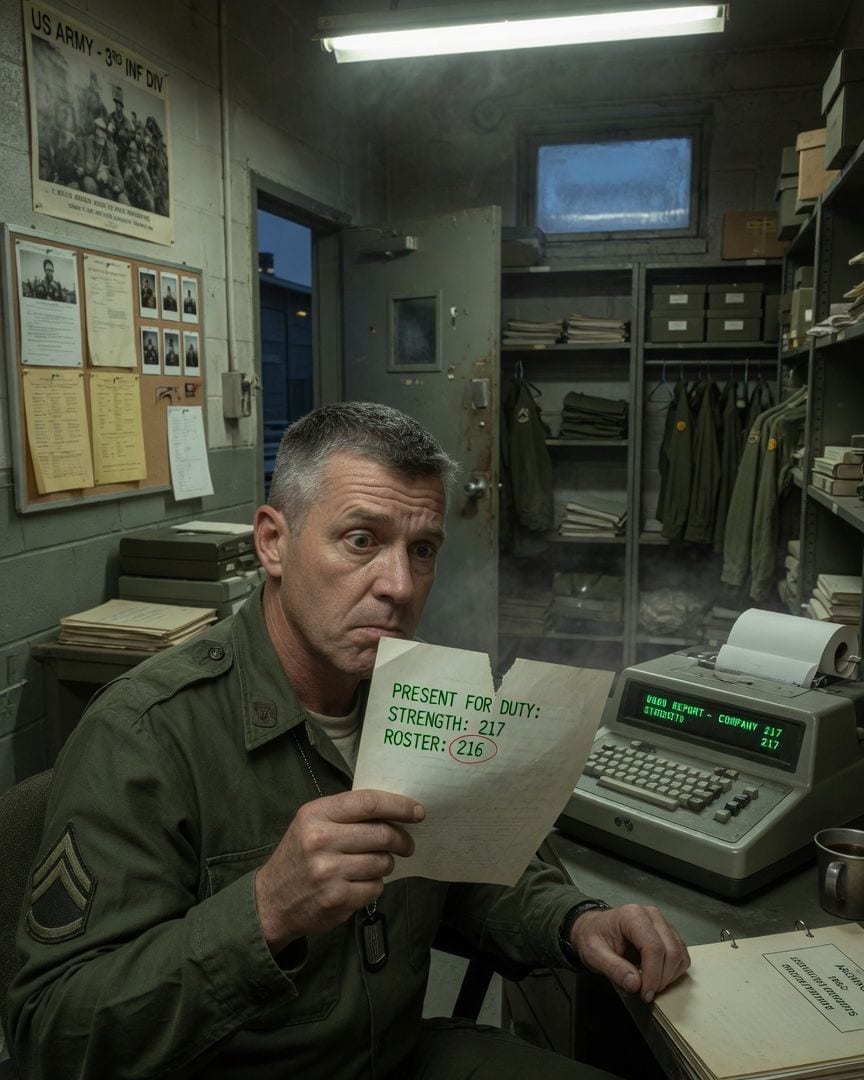
Sergeant Halloran is three months from a promotion, but his Cold War morning report shows 217 men. He counted only 216. A cold, hidden log from 1963 records the same impossible count.
Sergeant First Class Joseph Halloran, three months from a promotion and stateside transfer, faced the chilly 0600 darkness of his West German garrison in 1987, his career built on impeccable order now threatened. For a week, his morning reports had defied him: a meticulous physical count of 216 shivering soldiers always resulted in the Teletype machine blinking 217. His exhaustive double-checks confirmed no error, yet the impossible 'plus one' persisted, leading him to a distinctly colder section of the supply room. Behind ancient manuals, a hidden alcove revealed a worn leather log, where a Sergeant Hayes in 1963 had recorded the identical, chilling discrepancy.