My airport people-mover left Terminal 2 and opened its doors at Terminal 2 again. The overhead display counted zero stations passed. The same cleaner mopped the same patch.
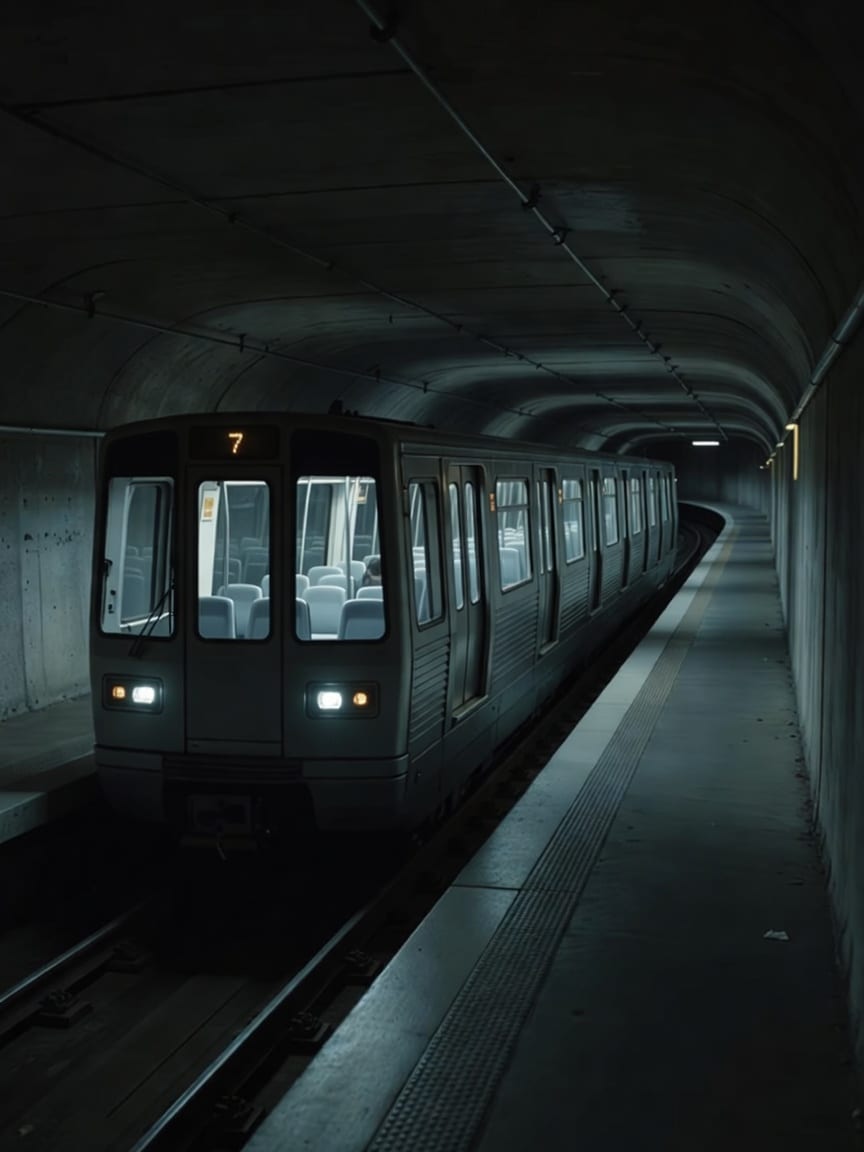
The hum of the people-mover was a drone I knew better than my own breathing. Unit 7, just like any other Friday. It was 6:42 AM, still dark out, and the usual early morning quiet settled over the tracks.
My shift had started at 6:30, and this was my first run – Terminal 2 to Terminal 3. Two minutes, then the doors hiss open, and the few commuters shuffle out.
I watched the tunnel ahead, the fluorescent lights blurring into a streak.
Two minutes passed. The internal timer on my console clicked from 0:00 to 2:00. The doors of Unit 7 slid open with a soft sigh.
And there it was. Terminal 2. The same stark white tiles, the same row of empty plastic seats against the wall. The giant 'Welcome to Terminal 2' sign above the concourse.
Marco, the night cleaner, was there, just like he had been two minutes ago, pushing his mop over the exact same patch of tile near the emergency exit.
The air still carried the faint, sweet-chemical scent of his industrial floor cleaner.
My eyes snapped to the overhead display: 'Stations Passed: 0.'
It was impossible. I checked my internal clock, the train’s diagnostics screen. Every sensor in Unit 7 insisted we had moved, traveled the full distance, exactly two minutes at the correct speed.
But my eyes, my ears, the physical reality of the platform outside – they screamed that we hadn't. We were back where we started. Not just a different Terminal 2, but the Terminal 2.
The same Marco, same wet patch, same everything. My gut clenched.
I ran the loop again.
Unit 7 pulled away from Terminal 2, slid into the tunnel. The two minutes crawled by. The doors opened. Terminal 2. Marco looked up, a confused smile on his face, and gave a little wave. My stomach turned over.
A third time. The same. Marco’s wave was less confused now, more like 'here you are again.' Damn it. This was real.
Back in the control hub, I pulled Unit 7’s diagnostic logs. They showed a perfect two-minute run, speed consistent, distance covered exactly as programmed for a T2-T3 transit. No errors, no deviations. It was infuriating.
I called Gerald Hale, my maintenance supervisor. Gerald was a man who lived and died by hard data, by what the machines told him.
"It says it went, Gerald. But it didn't," I explained, trying to keep my voice even. "The display says zero stations. And the platform… it's physically T2. The same cleaner, the same spilled coffee stain near the bin.
I even checked the security camera feeds for the platform."
Gerald was quiet for a moment. "A sensor glitch, maybe, Cecilia. A display malfunction. The GPS could be out of sync, or a localized signal jammer affecting the overhead readouts."
"But the platform, Gerald," I insisted. "It’s physically T2. The same cleaner, the same spilled coffee stain near the bin. I waved at Marco on the third pass. He waved back. You can't fake that."
He was intrigued by my calm certainty, I could tell. Gerald, for all his data, knew I wasn't prone to dramatics. "Alright, alright. That is… unusual. I'll check the external cameras. See where Unit 7 actually went, or didn't go."
While I waited for his call, a cold dread settling over me, I walked through Unit 7, doing a routine check. Just a habit. Tucked between the seat cushion and the backrest, half-hidden, my fingers brushed against something.
I pulled it out.
It was a crumpled piece of paper, thin and brittle with age. An old-style boarding pass, not the e-tickets everyone used now. The kind they printed on thermal paper twenty years ago.
My eyes scanned the details, the faded ink barely legible: 'Flight 807 to Denver, Gate 14, Terminal 4.' Then the date: 'Tuesday, 7:15 AM.'
Flight 807 hadn't flown from this airport in years. Gate 14 at Terminal 4 was decommissioned a decade ago, turned into a storage room. And today was Friday.
My shift started at 6:30 AM, an hour after this ticket’s supposed departure.
The boarding pass felt impossibly real in my hand, the paper rough and faded, like something pulled from a forgotten pocket. It wasn't just old; it was wrong. Wrong in so many ways it made my stomach clench.
The details were too specific, too contradictory to be a forgotten relic someone left behind.
Flight 807, a gate that no longer existed, a day and time that didn't align with my own experience, all found on a train that had just completed an impossible journey.
I pulled out the crumpled boarding pass, my fingers tracing the faded ink of the impossible flight number and gate. It's not just her train that's wrong; something far older, far deeper, is at play here.
Gerald called back an hour later, his voice tight. "Cecilia, you're not going to believe this."
He'd checked the external camera feeds for Unit 7’s supposed journey to Terminal 3. The camera on the platform at Terminal 2 showed Unit 7 departing, moving out of frame. The camera at Terminal 3 showed Unit 7 never arriving.
And the camera at Terminal 2, looking at the arrival bay, showed Unit 7 pulling in exactly two minutes later.
"It's like it vanished into the tunnel and reappeared at the starting line," Gerald said, bewildered. "The external cameras confirm you never left T2. But the internal logs are ironclad.
They show it covered the distance, exactly two minutes, exactly the right speed. How the hell can a train be in two places at once, or nowhere at all?"
I explained about the boarding pass. The flight, the gate, the impossible date. Gerald, a man of logic and concrete facts, dismissed it as a prank. "Someone’s messing with you, Cecilia. An old prop.
Kids these days find weird ways to entertain themselves."
But I knew better. I felt a cold certainty, a dread that had nothing to do with pranksters. "Can you check for any other anomalies, Gerald? Anything similar, even minor, in the past? Not just Unit 7, but any people-mover.
Any transit variance at all."
Gerald, though still skeptical, agreed to dig into the system’s deep archives, searching for 'transit variances' or 'spatial irregularities' in the people-mover system. He mentioned it would take time, requiring access codes he rarely used for such an 'obscure' request.
I spent the next few days monitoring Unit 7, but the loop didn't repeat. It was back to normal, running its route perfectly.
The anomaly had vanished as inexplicably as it appeared, leaving me with a chilling sense of having glimpsed a crack in reality. The normal world had reasserted itself, but the memory of the impossible loop, and the impossible ticket, festered.
A week passed. I was back on a different unit, trying to put the incident behind me, trying to tell myself it was just a fluke, a massive, unexplainable systems error. But the unease lingered.
Then, a strange email appeared in my inbox. The sender was 'Admin_Support,' but the address itself was a garbled string of random characters, unidentifiable. The subject line read: 'Regarding Unit 7: Acknowledge and Proceed.'
The body contained only a single, cryptic sentence: 'Discrepancies noted. Further inquiry unnecessary. Maintain operational integrity.'
It wasn't a threat, not with those polite, corporate words. But it felt like a warning. Someone knew she was looking. Someone knew Gerald was looking. I forwarded it to Gerald immediately.
His reply came swiftly: 'I got one too. Slightly different wording, but same message. And get this – I just had a call from Director Easton’s office, asking about 'unauthorized access to historical maintenance logs.'
They didn't mention specifics, but I know what they meant. Someone is definitely watching us, Cecilia. I think we just kicked a hornet's nest."
The air in the control room suddenly felt heavy, charged with unseen eyes. The fluorescent lights hummed with a new, oppressive weight. The airport, a place I considered mundane and predictable, was now a labyrinth with hidden watchers.
Gerald suggested we tread carefully, but his curiosity, and mine, was now fully piqued. The message felt less like an order and more like confirmation that we were onto something significant, something that someone very powerful wanted to keep buried.
Gerald, emboldened by the 'warning,' found a back door into a restricted archive. He called me late that night, his voice strained, almost a whisper. "I found something, Cecilia. Not just a few incidents. A pattern. A whole series."
He described finding historical incident reports, coded with phrases like 'transit variance' and 'spatial integrity breach.' They detailed people-mover loops just like mine, impossible corridor layouts where walls shifted, even entire sections of the airport appearing to compress or expand.
"But the dates, Cecilia," Gerald emphasized, the strain clear in his voice. "They’re not random. They’re cyclical. Every 10-15 years, almost to the month. The earliest one I found was from 1953. Then 1968, 1980, 1992, 2005. And now.
Our incident, last week, fits perfectly."
I felt a chill deeper than any I'd experienced. "The last one was 12 years ago," I murmured, doing the math, my fingers drumming against the cold metal of my console. "Just before the airport expansion in 2005."
Gerald continued, his voice dropping further. "And each of these reports is marked 'Project Janus Oversight.' Many of them are followed by internal memos about 'staff reassignments' or 'unexplained departures' shortly after the incidents. Not just people-mover operators, Cecilia.
Maintenance, security, even a few flight attendants. Like they just... vanished. Poof."
The ghost boarding pass flashed in my mind. Flight 807. A flight that didn’t exist, from a gate that was decommissioned, dated before my shift.
Not a prank, but a fragment from a past cycle, a piece of something that had been lost, or taken. The pieces were starting to fit, forming a terrifying mosaic of recurring wrongness, not just a single glitch.
The email warning, the Director's call – it wasn't about a minor system breach; it was about keeping a decades-old, deadly secret buried.
I sat in stunned silence, the phone cold against my ear. The implications were staggering. Not just a glitch, not just a strange occurrence, but a recurring event, a predictable horror. An institution, my employer, knew about it.
Had known for decades. And people had disappeared.
"Gerald," I finally managed, my throat tight. "What are these 'unexplained departures'?"
Gerald’s breath hitched. "I don't know for sure, Cecilia. But the language… it's too precise. It’s not 'resigned' or 'terminated.' It's always 'unexplained departure' or 'transfer anomaly.' And the dates line up perfectly with the Janus events."
He paused, then his voice dropped to a near whisper. "I found one more thing. A redacted memo from 2005, right after the last cycle.
It mentions 'containment protocols' and 'risk mitigation for personnel working in Zone Delta, Terminal 2 sub-levels.' That's where Unit 7 operates, Cecilia. That's where you operate." Gerald stares at the list of dates, his face pale.
'Cecilia,' he whispers, pointing to a column of cryptic codes. 'These aren't just glitches. This is... a schedule. It's happened before. And every time, people disappeared.'
The next morning, my stomach a knot of dread, Gerald and I arranged a discreet meeting with Frances Caldwell, the retired head of airport archives.
Gerald remembered her as meticulous and quiet, a woman who knew where every dusty file lay. We met in a coffee shop far from the airport, a place with clatter and conversation that might mask our own.
Frances, a woman with silver hair pulled back in a neat bun, listened calmly as I recounted the people-mover incident and Gerald presented his findings on the 'Janus Event' cycles. She didn't interrupt, her gaze steady, unreadable.
When we finished, she simply nodded.
"Project Janus," she said, her voice soft, unbothered, as if discussing the weather. "It's been going on since the airport opened. My father worked in planning, he knew. I inherited his files, unofficial ones. The anomaly is real.
A localized spatial distortion beneath Terminal 2, specifically the sub-level tunnels and tracks. It cycles every 10 to 15 years, for a few days, sometimes a week. It warps space, makes routes loop, distances impossible.
Your people-mover incident was a minor manifestation. The airport knows. They've known for generations."
She pulled a worn, leather-bound ledger from her bag, placing it carefully on the table between us. It was thick, its pages yellowed. "These are the real records. The 'unaccounted for' ledgers. Staff, passengers, all linked to Janus Event dates.
They don't just loop, Cecilia. Sometimes, they take you somewhere else entirely. Or nowhere at all."
She opened it to a page from 1992, showing names, faded photos, and a chillingly brief note: 'Last seen in Terminal 2 sub-level during Janus Event 5. Status: Unaccounted.' My breath caught.
Frances explained how the airport had managed the phenomenon for decades: by downplaying incidents, reassigning staff who reported anomalies, and creating the 'unexplained departure' protocols for those who vanished. "They can't stop it," Frances stated, her voice still unnervingly level.
"They can only manage the fallout. Contain the information. Keep the airport running, keep the public calm."
She showed us entries from the 2005 event, including notes about a maintenance worker who vanished from a sub-level corridor, his wrench left behind, neatly cataloged.
"They built around it, tried to isolate it, but it's part of the land now."
The boarding pass I found, Frances explained, was likely an echo, a fragment from a person caught in a previous cycle, briefly manifesting in our current reality. "These echoes... they can be unsettling, but they're harmless. Remnants.
The real danger is being in the wrong place when the geometry shifts completely."
I felt a profound, cold dread. The airport wasn't just a building; it was a living, breathing paradox, with a predictable appetite. Gerald looked at me, his face pale, then back at the ledger. "So, what do we do?"
Frances closed the ledger with a soft thud. "You know now. That's the most important thing. You understand. The airport will continue its protocols. It has to.
You can try to expose it, but it's a deep secret, woven into the fabric of this place. And who would believe you without these records, which are officially 'lost'?"
She reached into her bag again and handed me a flash drive. "Copies of everything. My father's notes. The true logs." I clutched the drive, the weight of the truth settling heavily upon me.
I was now one of the few who truly knew, burdened by a knowledge that offered no escape, only a deeper, more unsettling understanding of the world I inhabited.
I continued my work at the airport, operating the people-movers, but everything had changed. The familiar tunnels, the mundane platforms, now hummed with a silent, terrifying potential.
Every bump, every slight hesitation in the car’s motion, sent a jolt of ice through me. I meticulously noted my shifts, the units I operated, the exact times, creating my own unofficial log, a habit born of silent dread.
Gerald, too, remained, his initial skepticism replaced by a grim acceptance. He occasionally exchanged knowing glances with me across the control room, a shared secret now binding us, a silent acknowledgment of the monster beneath our feet.
Frances Caldwell disappeared from our lives as quietly as she'd entered, having passed on her burden, content that someone else knew.
The airport continued its operations, oblivious to the quiet horror beneath its polished facade, or rather, perfectly aware and perfectly silent.
I still run Unit 7 sometimes, the same unit that started it all. I watch the overhead display, count the stations, feel the subtle hum of the tracks beneath me, a tremor that I now interpret differently.
I know the anomaly is still there, dormant, waiting for its next cycle. I know I might be on Unit 7, or in Terminal 2, when the geometry shifts again, when the numbers refuse to add up for real.
I carry the knowledge, a cold, heavy weight, every day. Sometimes, when Unit 7 pulls into Terminal 2, and the doors hiss open, I catch a glimpse of Marco, the cleaner, mopping his usual patch.
He looks up and smiles, a normal, everyday smile. But I know. I watch the empty tunnel ahead, waiting for the next time the numbers refuse to add up.
If this one got to you
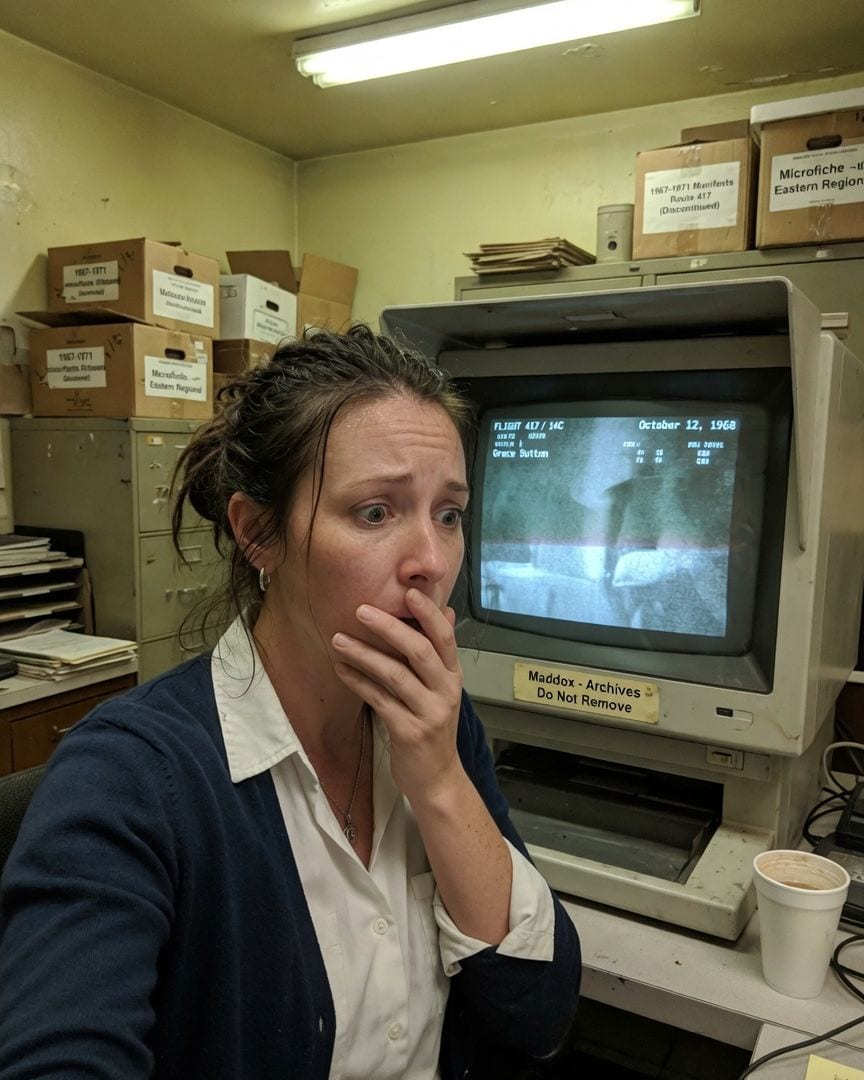
A woman I'd never met leaned across the aisle, said 'I'm sorry, Grace,' and warned me about the landing. We landed fine — but the airline says seat 14C flew empty.
My routine flight home took an unsettling turn when a woman in seat 14C spoke to me. She knew my name, warning me about the landing, then simply vanished from her seat after we touched down. Airline records confirmed seat 14C was unoccupied, as if she was never there.
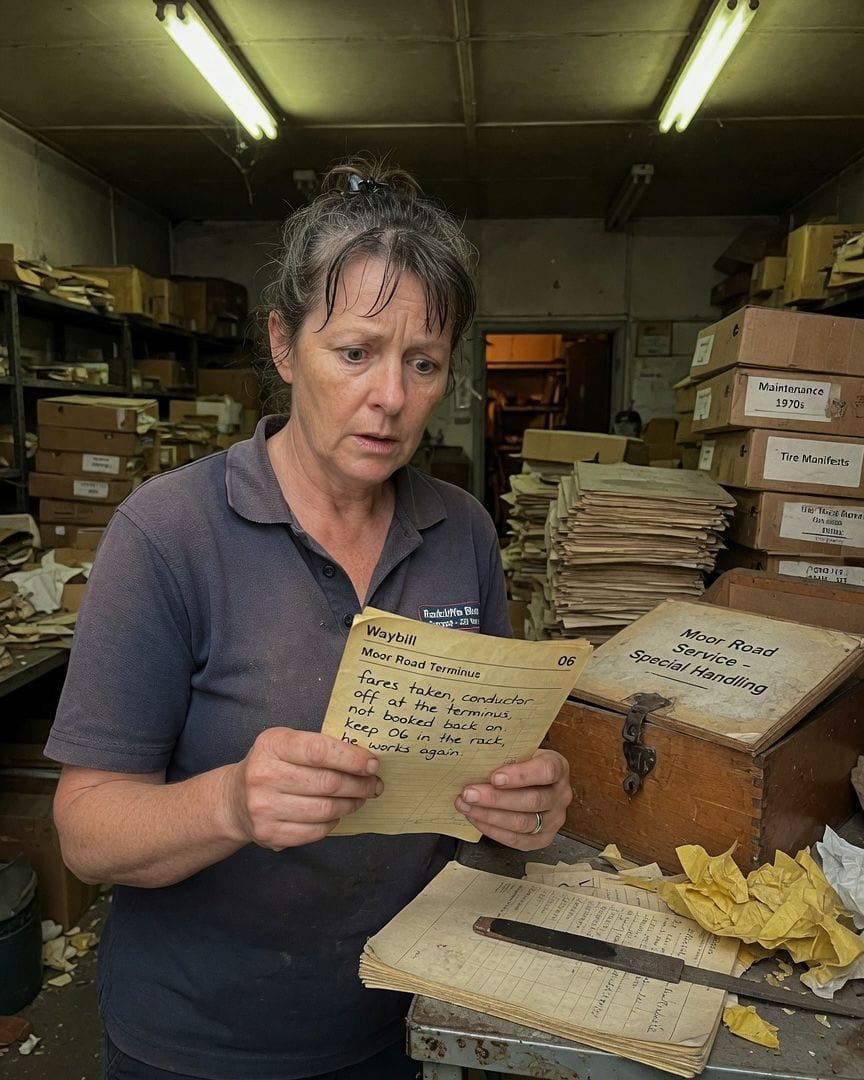
Our depot's Waybill 06 filed a moor road service we stopped running years ago. Every eight years since 1956, it closes: 'keep 06 in the rack, he works again.'
Sorting waybills in the depot, I stumbled across a form for the Moor Road Terminus. That route was decommissioned decades ago, but this waybill had a chilling handwritten instruction: 'keep 06 in the rack, he works again.'
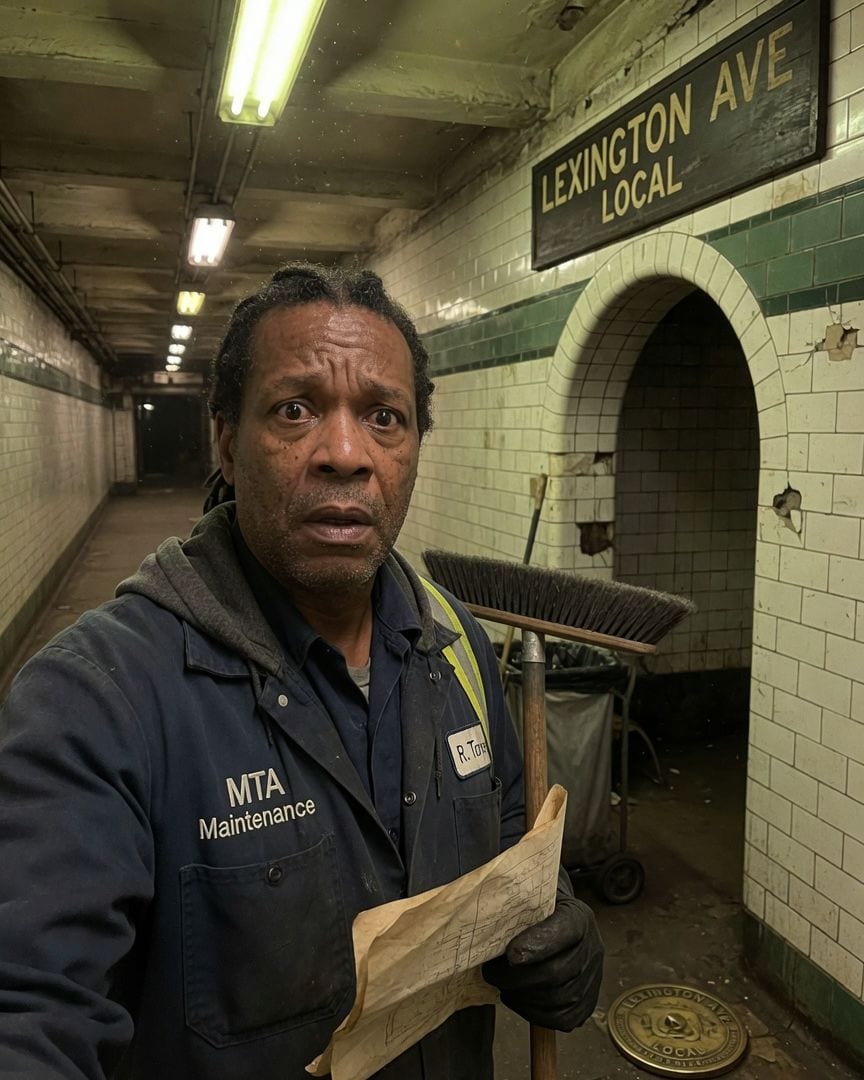
A decommissioned subway line now calls 'All aboard!' from a dark platform that shouldn't exist.
For ten years, my job as a cleaner in the Lexington Avenue Local transfer point was a precise routine. But one night, the solid wall I swept past every shift simply vanished, replaced by a dark, perfectly tiled opening. Now, from that impossible space, a train from a line decommissioned seventy years ago calls 'All aboard!'
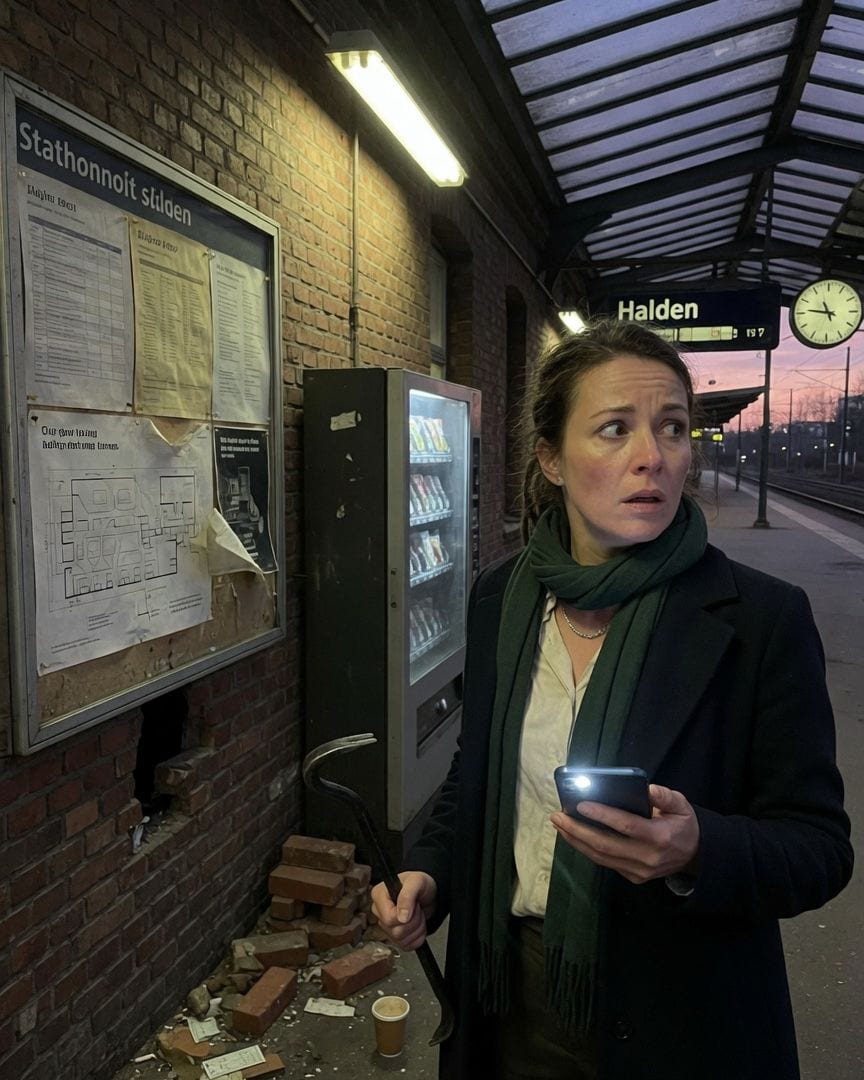
My train ticket took me from Halden to Marsh Cross, but the doors opened back on the Halden platform. The same guard checked the same clock. The fare was taken. Marsh Cross was never announced.
My usual forty-minute train journey to Marsh Cross was supposed to be uneventful, like dozens before it. But when the doors hissed open, I was back at Halden platform, my ticket stamped 'used' and forty minutes gone. The guard and station clock were exactly as I’d left them, as if I’d never departed at all.
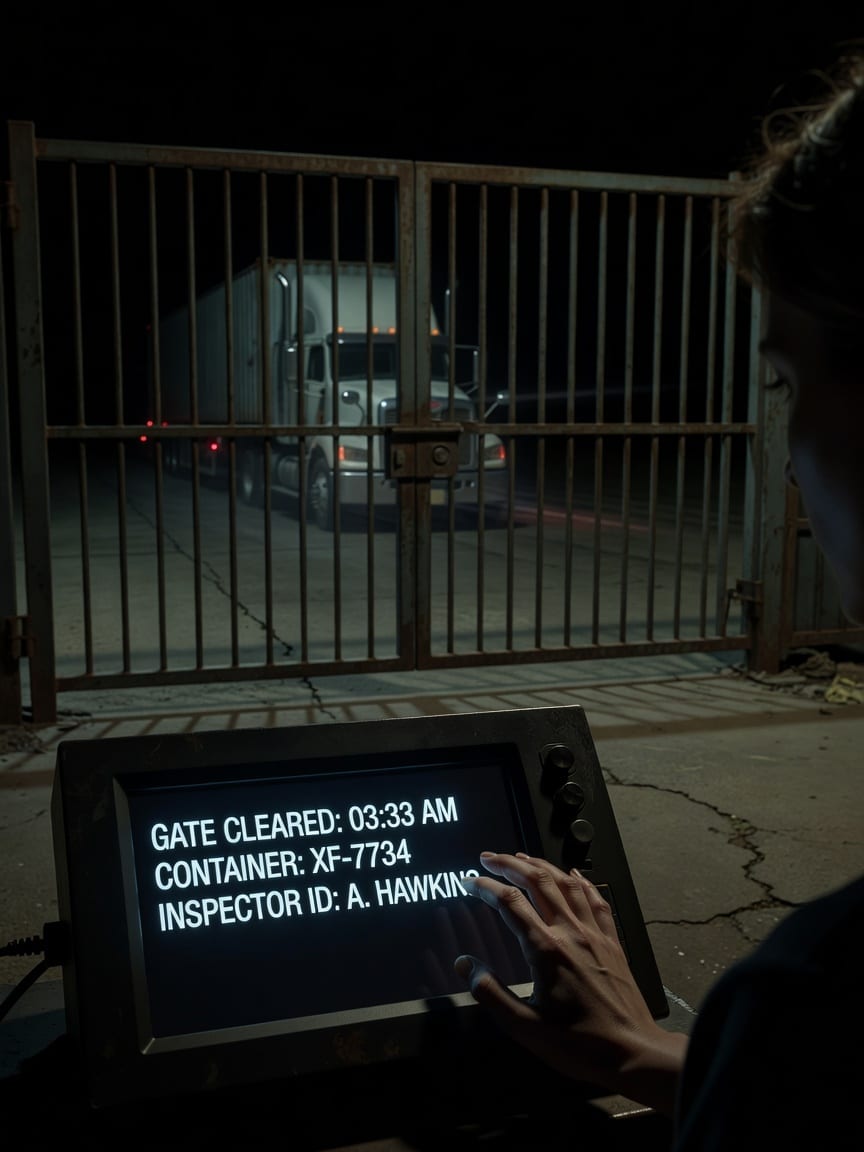
My gate log shows a container left at 3:33 AM, stamped with my ID. The yard was closed, the gate down, and I was asleep.
Audrey Hawkins' inspection log shows a container cleared at 3:33 AM, an impossible time when the gate was locked and no one was working. Her supervisor dismisses it as a glitch, but Audrey can't shake the specific details. Digging into old archives, she finds a handwritten ledger entry from 1974 for the exact same container, signed by a man who died half a century ago.
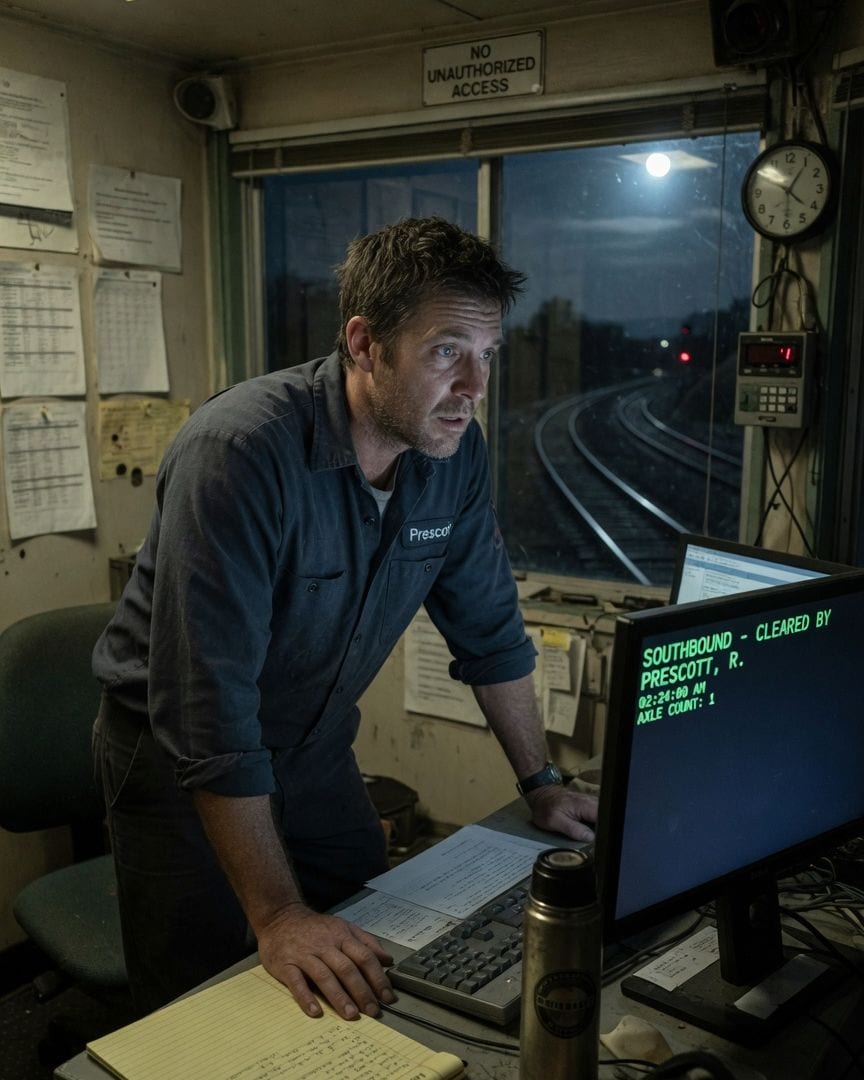
My signal box log shows I cleared a southbound train at 2:24 AM. No train was booked, but the wheel counter ticked over once.
My night shift in the signal box is usually quiet, just the hum of the panel and distant trains. But at 2:24 AM, a log entry for a southbound train appeared on screen, cleared by my name, even though I hadn't touched a thing. A cold prickle ran up my neck when the wheel counter ticked once, confirming an impossible passage on the empty tracks.