A woman I'd never met leaned across the aisle, said 'I'm sorry, Grace,' and warned me about the landing. We landed fine — but the airline says seat 14C flew empty.
The flight was just another one of those short hops home, a routine I knew by heart. I’m Grace Sutton, thirty-two, and my life, my work as a data analyst, is built on order and verifiable facts.
I had settled into my window seat, 14A, for the afternoon regional flight. The cabin hummed with the usual pre-flight chatter, the soft rustle of magazines, the muted announcements.
Just as the flight attendant began the safety demonstration, a woman from 14C, directly across the aisle, leaned slightly into the aisle. Her silver hair was neatly pinned, and her face, lined but alert, held an earnest, almost mournful expression.
Our eyes met.
"I'm sorry, Grace," she said, her voice a low, clear murmur that cut through the background noise of the plane as if it were meant only for me. "It's the landing you'll want to be ready for, not the flight."
I froze. A prickle of unease traced my spine, cold and immediate. I had never seen this woman before in my life. The words hung in the air, oddly specific, oddly personal.
I remember thinking, how does she know my name? But before I could form a question, she simply leaned back, her expression unchanging.
The rest of the flight was uneventful, exactly as promised. The landscape beneath us blurred from urban sprawl to green fields, then back to the familiar grid of my hometown.
We touched down smoothly, the wheels kissing the tarmac with a familiar, gentle bump. As the plane taxied towards the gate, I glanced across the aisle, intending to ask the woman what she meant, how she knew me.
Seat 14C was empty. Undeniably, completely empty.
I did a double-take. It had been occupied moments ago. The blanket she’d been using was folded neatly on the seat, but there was no person.
My first thought was that she must have gotten up to use the restroom, but passengers were still buckling up after landing. Confused, I asked the flight attendant as we began to disembark.
She checked her manifest on a tablet. "14C? No, ma'am, that seat was flown completely unoccupied today."
At the gate, I approached the agent, describing the woman, her silver hair, the specific seat, and her strange apology. The agent, after reviewing the passenger list more thoroughly, looked up, a polite but firm smile on her face.
"There's no Penelope Carter on this manifest, ma'am. And our records confirm 14C was vacant."
The memory of the woman’s sincere, almost sorrowful eyes, and her specific, impossible use of my name, looped in my mind, a quiet, insistent discord in my otherwise ordered world.
Back in my quiet apartment, the encounter from the plane clung to me like a chill. My rational mind immediately sought an explanation. Mistaken identity was the most obvious. Perhaps the woman knew another Grace. But the apology, the landing?
That felt too specific, too targeted. I tried to dismiss it, telling myself that travel fatigue and the general weirdness of strangers had combined to create an overblown memory.
I spent the evening calling the airline’s customer service, trying to find any record of a Penelope Carter on that flight, even a last-minute cancellation. Each agent I spoke with confirmed no such passenger.
When I specifically asked about seat 14C, they all stated, without variation, that their digital records showed it was vacant. "Could there have been a mix-up?" I asked one agent, "Maybe an old paper manifest?"
She laughed, a short, dismissive sound. "Everything's digital, ma'am. Has been for years."
I’m a person who prides herself on logic and verifiable facts. This growing frustration was physical; a tightness in my chest.
I checked my own social media, wondering if I'd been tagged in a photo with the woman, or if a mutual friend might be the link. Nothing.
I even scoured local news sites for any peculiar incidents at the airport or on that specific route, hoping for a mundane explanation—a prank, a publicity stunt, a passenger with a known history of odd behavior.
The digital silence was absolute, louder than any potential explanation. The more I tried to find an ordinary sender for that message, the more the incident stood alone, isolated and inexplicable.
It was a perfectly normal flight, I told myself, yet a perfectly impossible conversation had taken place within it. The contradiction gnawed at me, turning the mild unease into a persistent, unsettling itch I couldn’t scratch.
The next morning, sleep-deprived and still bothered, I decided a direct, in-person inquiry might bypass the automated scripts and dismissive call center agents.
I drove to the airline’s regional administrative office, a nondescript, brick building on the edge of the city.
After navigating a maze of sterile corridors, I was directed to Edward Maddox, an older man with tired eyes who oversaw archived passenger records. He listened to my account with a weary patience, initially dismissing it as a misunderstanding.
"People get confused, ma'am," he sighed, reaching for a keyboard. "Seat numbers, names..."
But I was persistent, detailing the exact time, the specific seat, the unsettling phrase. Maddox, visibly annoyed, eventually gave in. "Fine. I'll check the microfiche. It's as far back as we go digitally.
Beyond this, it's all paper in storage somewhere."
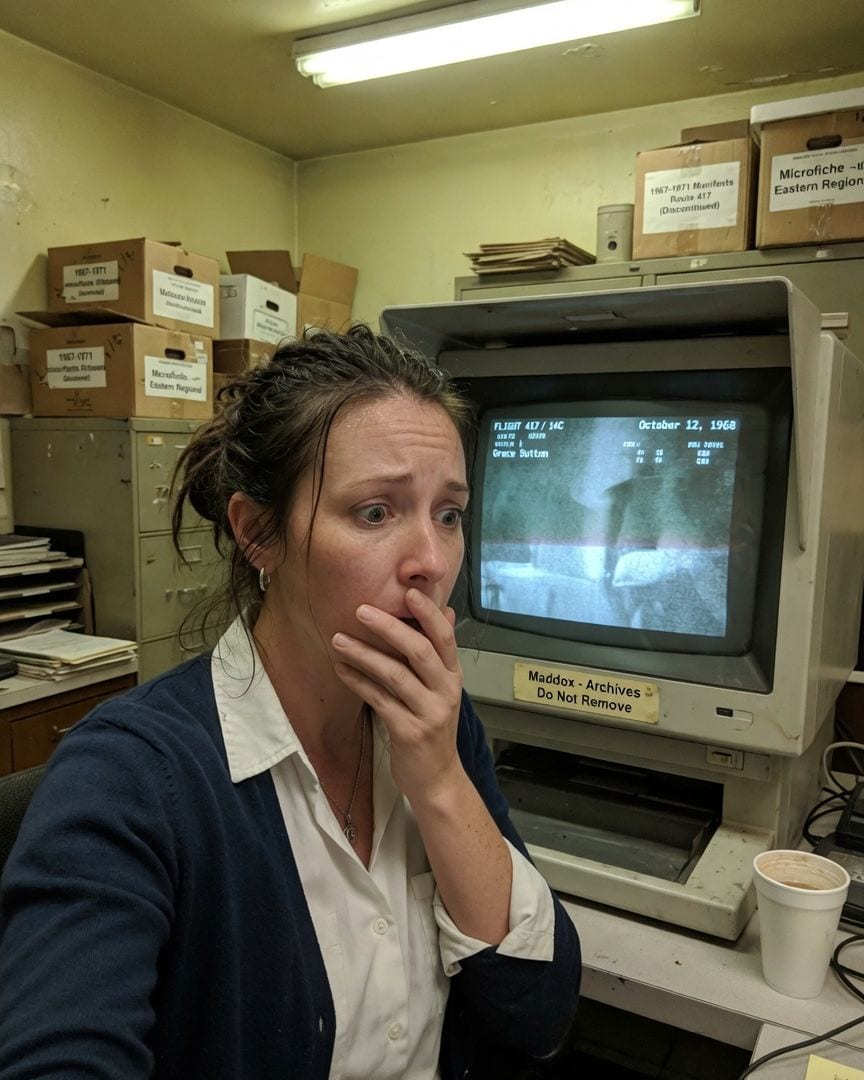
He loaded a reel, the machine whirring to life, projecting flickering images of old manifests onto a dusty screen. The room felt cold, the air thick with the smell of old electronics.
I watched, half-expecting nothing, bracing myself for another dead end. He scrolled through various years, same route, same flight number. Then, a sudden, cold jolt.
On a manifest from October 1968, for a flight route that no longer existed, under 'Passenger: 14C,' the name 'Grace Sutton' was clearly visible. My own name.
My fingers instinctively reached out, tracing the impossible letters on the screen, the impossible seat, dated decades before my birth.
The impossible manifest sent a cold dread through me, eclipsing my previous unease entirely. I confronted Edward Maddox, my voice tight with disbelief, the microfiche screen still burning behind my eyes. "This isn't a coincidence, Mr. Maddox.
This is my name. In that seat. Decades ago."
Maddox, looking genuinely rattled, stammered about common names, transcription errors, anything to dismiss it. His face was pale. "Sutton isn't that rare, ma'am, and Grace can be common, too. It's an old record. Probably just a fluke."
But the seat number, 14C, was too specific, too precise a match to the original uncanny encounter. My rational mind was screaming for answers, even as a deeper, primal fear began to surface, a recognition of something profoundly wrong.
I demanded to know more about the 1968 flight, the route, the airline's history. Maddox, visibly uncomfortable, eventually admitted that his airline had absorbed a smaller regional carrier, 'Northwood Regional Air,' in the late 1970s.
He mumbled something about some of their older records being 'problematic' and archived off-site, away from the main digital system. "They said it was for 'preservation,'" he added, avoiding my gaze, "but really, they just wanted to forget them."
He vaguely suggested that the local historical society sometimes acquired defunct business records, hinting it might be a dead end. But for me, it was a lead, however faint.
The dread was no longer ambient; it was targeted, aimed directly at me.
I immediately drove to the local historical society, a grand, stone building that smelled of old paper and quiet dust. Inside, the quiet hum of fluorescent lights felt too loud against the sudden pounding in my ears.
I explained my unusual request to the librarian, carefully omitting the strangest details about the empty seat and the warning, and asked for any archived records from the defunct 'Northwood Regional Air' carrier.
My heart pounded with a terrible intimacy; I felt as if I were following a breadcrumb trail laid out specifically for me, by something that had known my name for a very long time.
I spent the next few days immersed in the historical society's archives, meticulously sifting through dusty boxes and brittle microfiches. The smell of decaying paper was constant.
I found old flight logs, maintenance schedules, even employee rosters for Northwood Regional Air, but no further mention of a 'Grace Sutton' in 1968 beyond the single manifest I’d already found at the airline office.
The sheer volume of mundane, unremarkable records only highlighted the singularity of that one impossible entry. It was like finding a single, perfectly smooth, black stone in a vast pile of rough gravel.
As the days wore on, I began to feel a subtle, unsettling shift. A prickle on the back of my neck, a sense of being observed, even when the reading room was empty.
I’d catch myself glancing up, convinced I saw a figure lingering in the periphery of my vision, only for them to vanish when I focused. The silence of the archives, once comforting, now felt heavy, judgmental.
One evening, after returning home, exhausted, my phone rang. It was an unknown, blocked number. I hesitated, my pulse quickening, then answered.
A crackle of static filled my ear, followed by a low, distorted voice, almost a whisper, that sent a shiver down my spine.
"Stop digging, Grace," the voice rasped, the sound barely audible over the static, like someone speaking through a mouthful of dust. "The landing is for you." The line went dead with a sharp click.
My hand shook so violently I almost dropped the phone. It wasn't just a random threat; it used my name, knew what I was doing, knew what I was looking for.
The dread, once a cold intellectual puzzle, solidified into a personal danger, a very real threat. I tried to trace the call, but it was untraceable, a ghost in the digital ether.
My heart was pounding, a physical thrumming in my chest. The experience solidified my resolve: someone, or something, knew. And it wanted me to stop.
The chilling phone call fueled my determination, transforming fear into a desperate need for answers.
The next morning, I returned to the historical society, a printout of the 1968 manifest clutched in my hand, its impossible entry a tangible anchor in a world tilting on its axis.
I found Edward Maddox in a quiet corner, meticulously filing old photos. He seemed even more withdrawn than before, his eyes darting nervously.
"This isn't a coincidence," I insisted, my voice tight with a desperate edge I barely recognized as my own. "Who would know about this? Why my name, that seat? And why am I getting calls telling me to stop digging?"
Maddox’s face paled further. He looked around nervously, as if expecting to be overheard by the stacks of silent books, then pulled me aside, his voice dropping to a near whisper. "Look, I shouldn't be telling you this, but...
there were always whispers, back when Northwood Regional Air was going under. Of passengers who weren’t supposed to be there. Names that didn't fit. And always, always a specific seat. They called it 'the Marking.'
They said it predicted a… a transition. A 'landing.' The airline buried it, tried to make it disappear, but some of us… we knew."
He gestured vaguely towards the back of the stacks, to a sealed-off, disused section of the archive. A heavy, unmarked door, slightly ajar, stood out amongst the rows of open shelves. The air from it felt colder, heavier.
"They sent some of the deepest, strangest records there," he continued, avoiding my gaze, "Said it was for 'preservation,' but it was to hide them.
The historical society took them on, but even they don't really know what's behind that door. It hasn't been opened in decades." He fumbled in his pocket, producing a heavy, tarnished brass key that caught the faint light.
"If you really want answers, Grace, they might be in there. But I warned you. This goes beyond any flight manifest."
With the key heavy in my palm, my heart hammered against my ribs, a frantic bird trapped in my chest. I pushed open the heavy, unmarked door.
The air in the sealed-off section was thick, cold, and still, smelling of forgotten paper and decades of undisturbed dust. Cobweb-draped shelves groaned under the weight of ancient, leather-bound ledgers, their spines unlabelled, uniform in their ominous anonymity.
Each one looked like a tomb for some untold secret.
I ran my fingers along the spines, a shiver tracing its way up my arm. I searched for anything marked 'Northwood Regional Air' or 'Marking,' but there were no labels, no clues to guide me.
The faint light filtering from the main archive struggled to penetrate the gloom. Each ledger I pulled out felt heavier than the last, radiating an oppressive silence.
My eyes scanned, desperate, until one particular ledger, heavier and more ornate than the rest, caught my attention.
Its cover was blank, a smooth, dark leather, but the material felt strangely warm beneath my touch, as if it held a faint, residual heat.
I pulled it down, dislodging a cloud of dust motes that danced in the faint light.
Inside, the pages were filled with meticulous, archaic script, names and dates written in elegant, looping handwriting. They weren't manifests; they were something else entirely, a record.
I flipped through them, feeling a growing sense of cold anticipation, a terrible premonition settling deep in my bones. The dates stretched back, page after page, into the distant past.
Then, on a page dated May 12, 1957, decades before I was even a thought, I saw it, written in clear, undeniable script: 'Grace Sutton – Marked.' The date swam before my eyes, a cold, impossible fact.
In the sudden silence of the archive, I heard the faint, tinny echo of my name from the phone call, almost a whisper, and felt a profound chill that had nothing to do with the draft from the archive window.
I stared at the impossible entry, the words 'Grace Sutton – Marked' a brand on my soul, burning into my very core. The shock was immediate, profound, and all-consuming. My legs felt like jelly.
I stumbled out of the sealed archive, clutching the heavy ledger to my chest, and found Ronald Underwood, a retired local historian known for his eccentric knowledge and long tenure, who often volunteered at the society.
He was bent over an antique map, tracing a finger along its faded lines. I thrust the ledger at him, my voice a strangled whisper.
Underwood, calm and unbothered, examined the page with a faint, knowing smile that made my blood run cold. His eyes, behind thick spectacles, twinkled with an unnerving understanding.
"Ah, the Sutton line," he murmured, almost to himself, as if I had presented him with a well-known family tree. "Always a landing. This ledger isn't just about Northwood Air, Grace.
It's one of several, kept by a small, secretive group here for generations. They don't just track the airline's history; they track the 'Marked.' These individuals, chosen by… something indigenous to this land, are recorded before their conventional birth.
The apology you received, the seat number, the phone call – these are all echoes. Warnings from those who have already experienced their 'landing' or are part of the system that observes it.
The 'landing' isn't death, Grace, but a profound, irreversible shift. A transition. A crossing over. You've been selected. Your name was known before your parents ever met. It’s been happening for centuries, a quiet, inexorable pattern."
He lifted a hand from the ledger and pointed to an old, faded map hanging on the wall near his desk, its edges curled with age.
He traced a finger over a specific, remote patch of dense forest on the outskirts of town. "That's where they gather. Where the transitions happen. It’s always been that way."
The full weight of Underwood's words crashed down on Grace. I wasn't just being warned; I had been chosen, predetermined. The 'landing' was coming for me, not as a metaphor, but as a terrifying, unavoidable reality.
Underwood, sensing my dawning terror, continued, his voice soft but firm, almost sympathetic. "You have a choice, Grace. Accept it, as many have. Embrace the transition. Or run.
But understand, the 'Marking' has a way of finding its way to those who try to escape. It's not malevolent, merely… inevitable."
My mind screamed. Accept a predetermined, irreversible shift? Become one of the silent 'Marked,' compelled to whisper apologies to strangers about their own inescapable fate? A primal, desperate urge to flee surged through me. I couldn't accept this. I wouldn't.
My eyes darted to the ledger in my hands, its impossible entry her only tangible proof of this unbelievable, horrifying truth. I had to get out, had to escape this terrifying, intimate predestination.
With a sudden, desperate surge of adrenaline, I turned and bolted from the historical society, the heavy ledger clutched to my chest. I ignored Underwood's quiet call, the shocked stares of the librarians as I burst through the front doors.
I ran to my car, fumbling with the keys, my hands shaking so violently I could barely insert them into the ignition.
I started the engine, threw the car into reverse, and sped away, not towards my apartment, not towards anything familiar, but away, out of town, away from the marked forest, away from the inescapable landing.
The image of Penelope Carter's apologetic face, then the distorted voice on the phone, flashed before my eyes. The cost was immediate and clear: I was leaving everything behind, severing all ties, but I had to believe I was escaping.
For now.
Grace Sutton never returned to her old life. Her apartment was found untouched, a landlord's notice eventually taped to the door. Her job, after a week of unreturned calls, was left vacant.
Edward Maddox, questioned by local police about the missing woman, only muttered about 'old records' and 'coincidences,' his eyes haunted by things he refused to articulate.
Ronald Underwood, when asked about Grace, simply smiled a faint, knowing smile and said, "She chose her path."
The local authorities eventually closed the case, listing Grace Sutton as a missing person, no foul play suspected, just another inexplicable disappearance from a quiet town. The ledger, with its impossible entry, was never found.
I eventually settled under a new name, hundreds of miles away, in a city where no one knew me.
The old ledger, hidden deep in a locked box in my closet, was my constant, terrifying companion, its impossible entry a chilling reminder of what I had fled.
I lived a quiet, solitary life, always looking over my shoulder, always wondering when my landing might finally come, or if I had truly escaped.
I learned to blend, to be forgettable, to erase the very patterns that had once marked me.
But every time I saw a stranger glance at me for too long, or heard my given name whispered in a crowd, a cold dread would seize me, a whisper from the past.
I knew I was living on borrowed time, an anomaly in a pattern that had been set long before I existed. The apology had been given, the warning issued, and I was still waiting for the inevitable.
If this one got to you
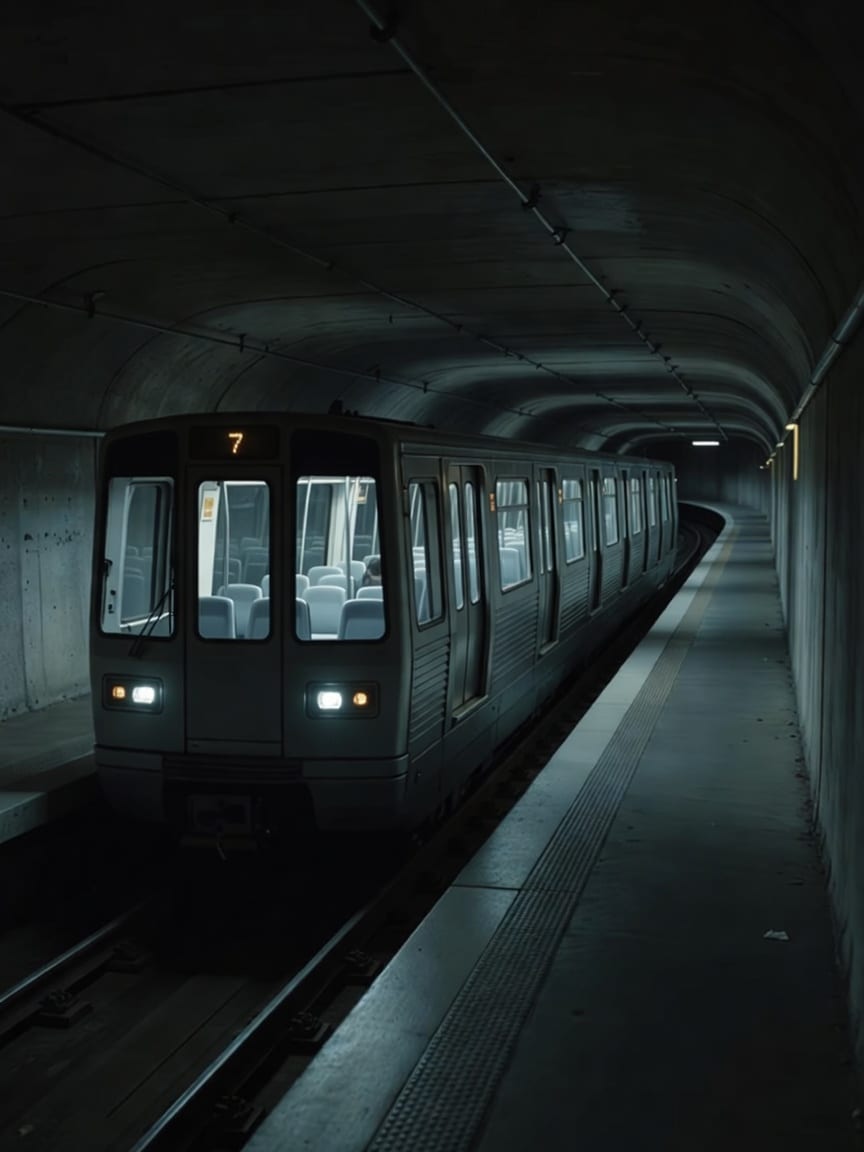
My airport people-mover left Terminal 2 and opened its doors at Terminal 2 again. The overhead display counted zero stations passed. The same cleaner mopped the same patch.
My people-mover shift started like any other Friday, a routine two-minute run between terminals. But after each journey, the doors of Unit 7 opened back at the same Terminal 2, with the same cleaner mopping the same spot. Then I found an impossible boarding pass, for a flight that hadn't flown in decades, from a gate that no longer existed.
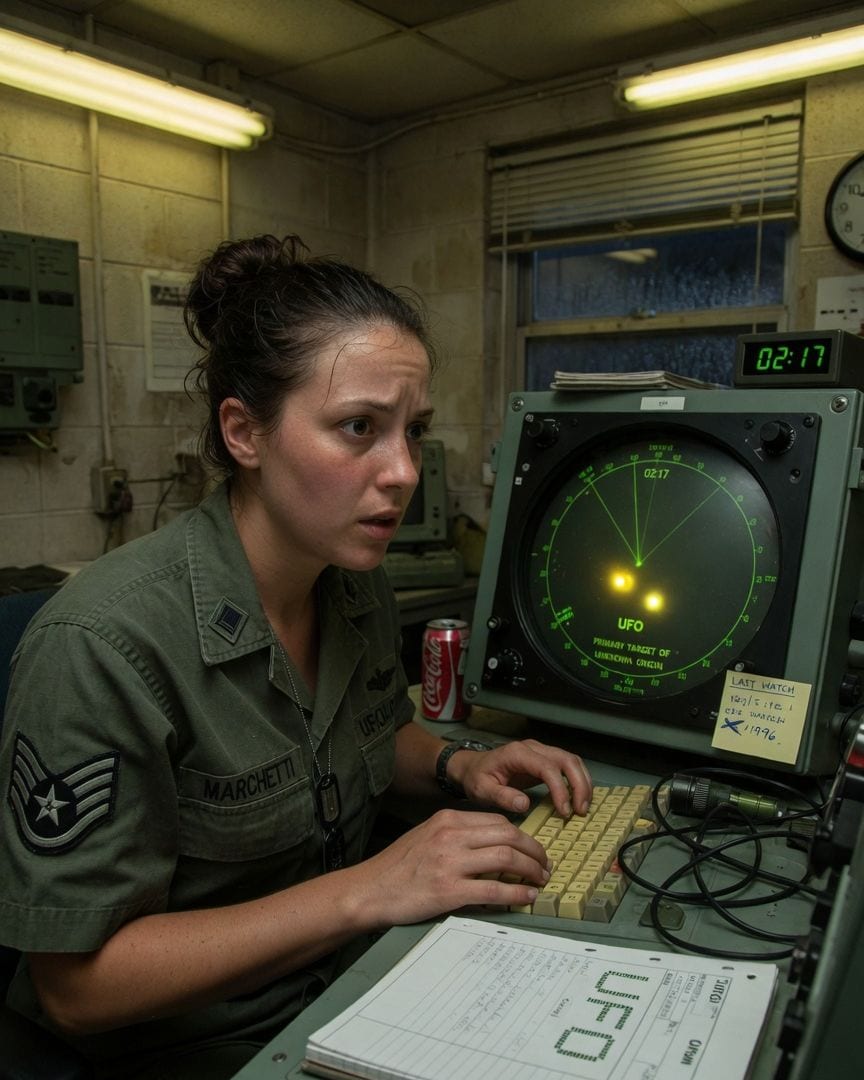
Technical Sergeant Marchetti's last watch saw an impossible radar blip merge with a plane. Later, its manifest showed a 'NO SHOW' passenger who *had* boarded, stamped 'FILE CLOSED'.
Technical Sergeant Odile Marchetti sat alone for her final watch at Gulf Coast ground control, anticipating a quiet transfer to a desk job. The dim console glow and rhythmic radar sweep were familiar, comforting sounds until 02:17, when an airliner captain reported impossible traffic flying in formation. Odile watched a second, larger blip appear on her screen, mirroring the plane's path with impossible precision. As the captain's voice, now tinged with a faint tremor, declared his plane was flying through where the object had been, the two radar returns merged into one, impossibly stable. Later, reviewing the official dismissal, Odile discovered an airline manifest listing a passenger as 'NO SHOW' who had, by handwritten note, definitely boarded—their name redacted, the file stamped 'CLOSED'.
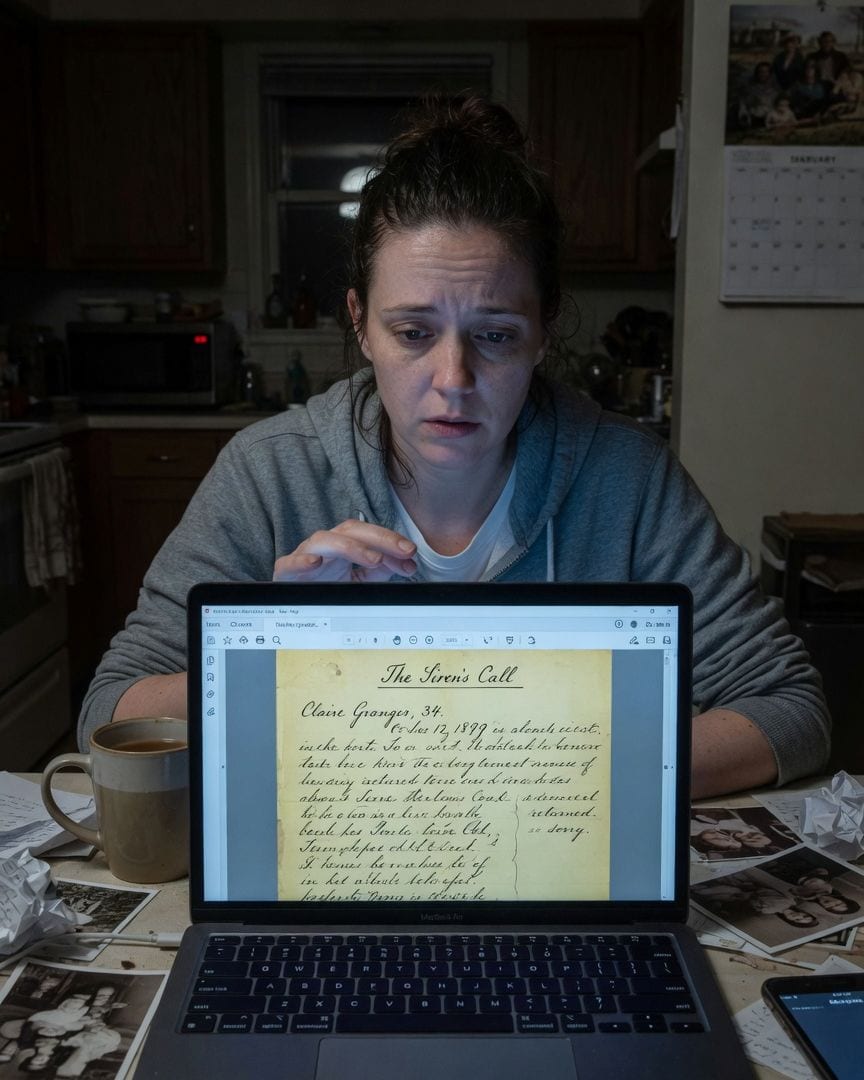
My name is on a passenger list from a ship lost in 1899. The manifest says I was 34, "returned. so sorry."
I was reviewing an old emigrant manifest, a casual dive into my family history, when I found my own name listed. The ship, The Siren's Call, was lost in 1899 with all aboard, yet my entry on the manifest was marked: 'returned. so sorry.'
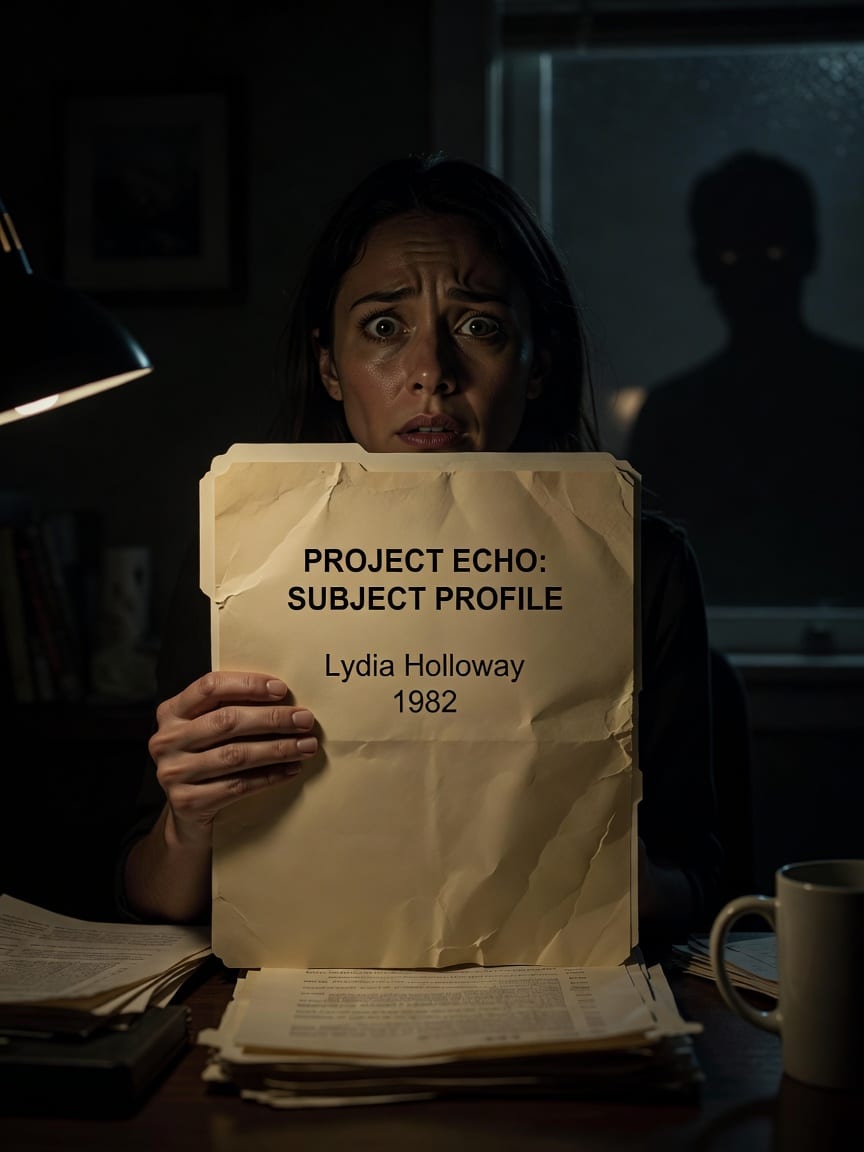
My own signature is on a Baltimore police report for a hit-and-run I never witnessed. The officer remembers my university sweatshirt.
I was settling into a quiet Tuesday evening when Baltimore PD called, asking about a witness statement I supposedly gave. They described my faded green university sweatshirt, seen at a hit-and-run last Friday. But my sweatshirt was in my dresser, and I was home in Seattle.
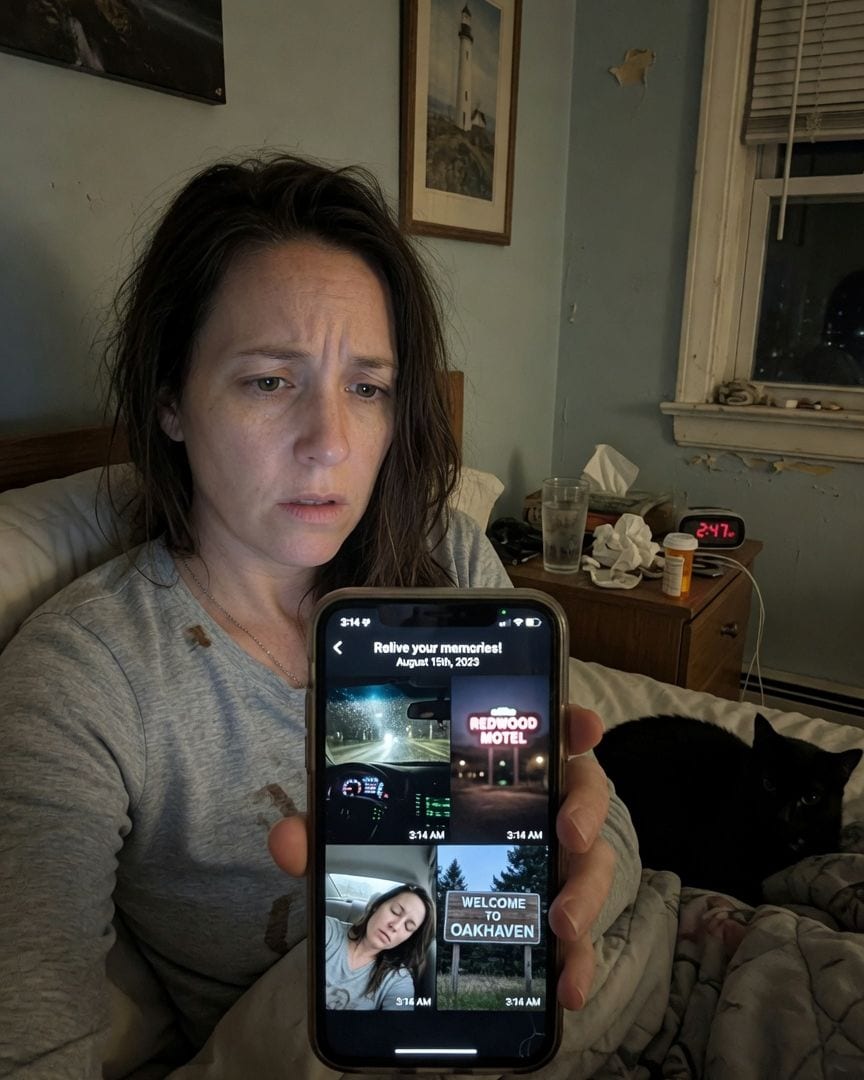
My phone has photos of me asleep in a strange car at 3 AM. Then a voicemail: 'We'll have her back by sunrise.'
My phone woke me with a cheery notification, promising memories from last August. Instead, it showed me asleep in a dark car, rain streaking the windshield, miles from my apartment. I was certain I'd been home in bed that night, but the images were undeniably in my camera roll, a quiet violation of my memory.
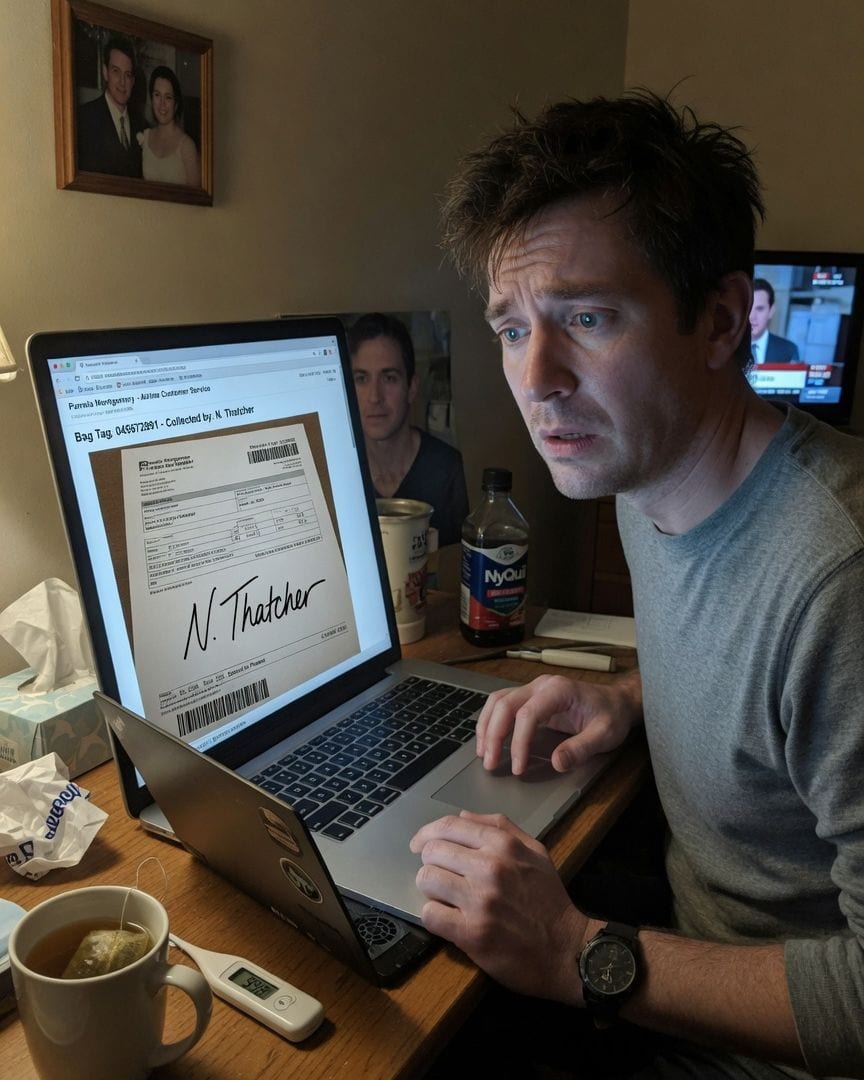
My boarding pass scanned in Detroit at 6:40 AM, seat 22C — but I was home in bed with the flu, my wife beside me all day. In Phoenix, someone collected my checked bag and signed for it as me.
I spent November 11th in a feverish haze, tucked in bed while my wife Theresa cared for me. So when an airline receipt arrived confirming *my* flight from Detroit to Phoenix that very day, I knew something was deeply wrong. It listed my name, frequent-flyer number, and a checked bag, all signed for with my own unmistakable hand.