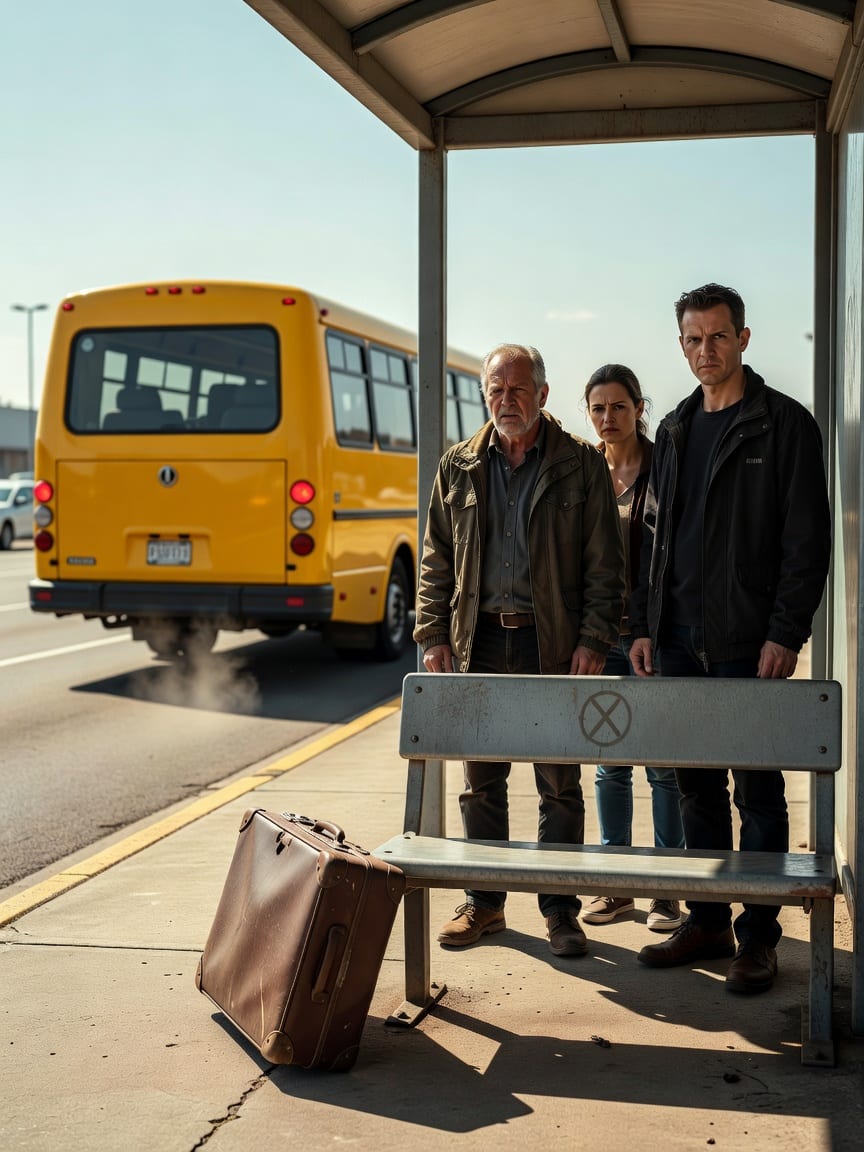
My airport shuttle does a loop, but never reaches a terminal. Six times it pulled up at the same long-stay stop, the same abandoned suitcase waiting.
The flight to Lisbon was in two hours, a tight window I’d meticulously planned. As an architect, precision was my professional religion, and my personal habit.
I checked my watch, adjusted the strap, and boarded the bright yellow airport shuttle at the long-stay car park. The routine was ingrained: terminals, then long-stay, then back to the terminals.
I settled into a window seat, my mind already running through the structural elements of the terminal buildings, a mental map of the airport's layout always active.
The bus pulled away, a faint hum beneath my seat. We passed Terminal 1, its steel and glass façade reflecting the dull morning light. Then Terminal 2, a concrete brutalist block I always found aesthetically challenging.
But instead of continuing towards the next terminal, the bus veered, the familiar entrance for the long-stay car park appearing on our left. We slowed, approaching the shelter where I’d just boarded. My brow furrowed. That wasn’t right.
A single, battered brown suitcase, its handle snapped, lay abandoned by the bus stop bench. It was the exact same suitcase I’d noticed on my way to the shuttle. I blinked, trying to process it.
Had the driver missed a turn? I glanced at Preston Bryant, the driver, a man in his early forties with a perpetually weary expression. He simply opened the doors. No one got on. No one got off.
The bus pulled away, the hiss of the air brakes a mundane punctuation mark.
A moment later, it passed Terminal 1. Then Terminal 2. And once again, it drifted back into the long-stay car park. It pulled up at the exact same shelter.
The same battered brown suitcase sat there, waiting, leaning at the same impossible angle against the bench. A prickle of unease, sharp and cold, crawled up my spine. This wasn't a wrong turn. This was impossible.
My flight was getting closer, but the shuttle seemed determined to repeat the same segment of its journey, a record skipping in the wrong direction.
The third time the shuttle returned to the long-stay stop, I stood up, my jaw tight enough to ache. “Driver,” I called, my voice calm but firm, cutting through the low thrum of the engine.
“We’ve been here three times now. We haven’t reached a terminal.” Preston Bryant glanced in the rearview mirror, his eyes unfocused, a tired sigh escaping his lips. “Just a glitch, ma’am. GPS sometimes acts up. Or maybe a new route.
We’ll get there.” His casual dismissal, the sheer ordinariness of his tone, only sharpened my resolve. This wasn't a glitch. As an architect, I understood the fundamental truth of space: it was fixed, measurable, predictable. This wasn't.
I got off the shuttle at the long-stay stop, refusing to reboard. The air, usually crisp with exhaust fumes, felt flat, somehow thinner.
I paced the perimeter of the small concrete island where the shelter stood, my eyes scanning for any sign of a turn, a hidden road, anything that would explain the impossible loop.
The coarse asphalt, the distant airport lights glowing with a cold, indifferent luminescence, the shelter’s corrugated roof – all appeared exactly as they should. Yet, we kept returning.
My eyes, trained to spot discrepancies in blueprints, scanned every detail, every crack in the pavement, every stray cigarette butt.
Then I saw it: on the back of the metal bench inside the shelter, partially obscured by an old, sun-faded airline sticker, was a faint, almost-erased graffiti tag.
A tiny 'X' in a circle, crudely drawn with what looked like a permanent marker.
It was a unique, insignificant detail, the kind of random imperfection that normally wouldn't register, but my architect’s mind, seeking any fixed point in this growing absurdity, logged it.
I reboarded the shuttle, my unease now a cold, hard certainty, determined to see if that mark, too, would repeat. If it did, then the problem wasn't the driver, or the GPS. The problem was the ground beneath us.
On the fifth loop, the shuttle pulled up, the doors hissing open with a familiar pneumatic sigh. I didn’t move, my gaze fixed on the shelter. My breath hitched.
The faded 'X' in a circle was there, on the back of the metal bench, exactly as I had seen it on the first pass. It wasn't just the same stop; it was the same moment.
The light, the dust motes dancing in the meager sun, the way the abandoned suitcase leaned against the bench – all identical, fixed in an impossible tableau. The shuttle hadn't driven away and returned; it had never truly left.
We were trapped, not by a wrong turn, but by a fixed, impossible repetition.
Shaken but rational, my mind a whirl of angles and spatial paradoxes, I exited the shuttle for good.
I found my way into the main terminal, the bright, bustling space feeling alien and distant, my mind racing, trying to reconcile what I’d seen with the laws of physics I implicitly trusted.
I needed someone who dealt with the airport's infrastructure, someone who understood its physical layout. At the information desk, a bored-looking attendant pointed me towards the maintenance department, giving me directions that felt deliberately convoluted.
I eventually found Arthur Jennings, a 68-year-old maintenance supervisor with a face weathered like old leather and eyes that seemed to have seen too much.
He sat hunched over a desk piled high with manuals and wiring diagrams, the air in his small, cramped office smelling faintly of ozone and stale coffee.
I explained the impossible loop, the unchanging graffiti, the unmoving suitcase, my architectural precision lending an unnerving credibility to an otherwise fantastical tale.
Arthur listened, his expression initially dismissive, then slowly shifting to one of weary patience, like a man who'd heard it all before, or at least, something very much like it. “A loop, you say? Always the long-stay?”
he asked, tapping a pen on his worn desk, the rhythmic click a counterpoint to my rising agitation.
I nodded, describing the exact path, the precise timing, the feeling of spatial distortion, the way the world seemed to fold in on itself. My detailed account, the way I spoke of geometry and fixed points, made him pause.
He didn't offer a mundane explanation, didn't try to tell me I was tired or crazy. Instead, he simply said, “Most people just think it’s a new driver, or they get off and call a taxi. You’re… persistent.”
The way he said it, ‘persistent,’ sounded less like a compliment and more like a diagnosis.
I pressed him. “I need to see the security footage for that shuttle route, Mr. Jennings. For yesterday, and for this morning. I need to prove what I saw.”
He sighed, a long, deep sound that seemed to carry the weight of decades. The fluorescent light above his head flickered briefly, making the shadows in the room stretch and contract like living things.
He pushed back his chair, the ancient casters groaning in protest. “Come with me, Ms. Ingram.”
Arthur led me down a dimly lit corridor, the walls a uniform, institutional beige, to a smaller, even more cluttered office.
It was a surveillance room of sorts, filled with dusty monitors stacked haphazardly on makeshift shelves, their screens displaying silent, grainy feeds of various airport zones. The low hum of electronics was almost a physical presence in the room.
He gestured to a creaking swivel chair in front of one of the monitors. “This is where we keep an eye on things. Or try to.”
He pulled up the security feed for the shuttle route, fast-forwarding to the time I had boarded. On the screen, the familiar bright yellow shuttle bus moved through the car park.
It passed Terminal 1, then Terminal 2, then entered the long-stay area. It pulled up at the shelter. The doors opened, closed. It pulled away. Then, it passed Terminal 1 again, just as I’d experienced.
I leaned forward, my architect’s eye scanning every detail. The footage appeared perfectly normal, each pass showing the correct sequence of turns and distances. It was maddening. The camera didn’t lie, but my senses screamed that it was.
“It looks… normal,” I murmured, the frustration a bitter taste in my mouth. “But it isn’t.”
My gaze dropped to the timestamps in the corner of the screen. My eyes narrowed, focusing on the small, rapidly changing numbers.
I picked a specific, identifiable landmark – a distinctive light pole at the car park entrance – and watched the shuttle pass it. I noted the time. Then I watched it return to the long-stay stop.
And then, as the loop repeated, I watched the same sequence again. The time elapsed between the shuttle passing that light pole and its subsequent return to the long-stay stop was always identical, to the millisecond, across all the loops.
It was too perfect, too precise to be random. No human driver, no traffic, no variable could produce such exact repetition. The camera was showing me the truth, but the truth was impossible.
I glanced at Arthur. He wasn't watching the screen. He was watching me, his face calm, unreadable, a strange, knowing expression in his eyes. He cleared his throat, the sound unusually loud in the buzzing silence of the room.
“You’re looking for something that isn’t there, or something that is, but shouldn’t be. Which is it, Ms. Ingram?” The question hung in the air, a quiet challenge, a test.
I didn't answer Arthur's question directly. The hum of the monitors, usually a background drone, seemed to sharpen, vibrating through the floor, a low, unsettling thrum that matched the pulse in my temples.
Instead, I pointed a steady finger at the monitor, tapping the screen where the timestamps flickered. “The timestamps. Look at them, Arthur. This isn’t a glitch in the GPS. This isn’t a new route. This is a fixed point.
We’re not moving through space; space is moving around us, or rather, folding in on itself. The geometry is collapsing.
It’s like a room that isn’t counted, a space that exists outside the normal sequence, a pocket that loops endlessly in on itself.”
I turned to face him fully, my voice gaining strength, the anger finally breaking through the professional calm. “This 'loop' isn’t on the schedule because it’s not a path. It’s a trap. And you know it.
You’ve seen it before, haven’t you?”
Arthur sighed again, a deeper sound this time, a sound of profound resignation. He reached into a locked drawer in his desk and pulled out a thick, leather-bound logbook, its cover worn smooth with age and handling.
The scent of old paper and dust, of forgotten time and unrecorded events, filled the small office, a heavy, almost mournful smell.
“You’re an architect, Ms. Ingram,” he said, his voice low, almost a murmur, entirely devoid of surprise or accusation. “You see patterns. Most people just get off at the next terminal, eventually. They forget. Or they don't want to know.”
He opened the logbook to a page, his finger tracing an entry with a gnarled nail. I leaned closer, reading over his shoulder. The ink was faded, but the hand was precise, careful.
“Operational Anomaly – Shuttle 7 – Car Park Long Stay C – Nov 12-14, 1997.” My breath caught in my throat.
Then his finger moved to another entry, further down the page: “Shuttle 7 – Long Stay C – Nov 10-13, 2005.” And another: “Shuttle 9 – Long Stay C – Nov 8-11, 2013.” The dates were not random.
They were cyclical. They were all in November, separated by approximately eight to ten years. The knowledge hit Olivia with a cold, sickening jolt, like falling through ice.
The abandoned suitcase, the unchanging graffiti, the impossible timestamps – they weren't isolated incidents. They were pieces of a larger, horrifying pattern, a recurring event that had been happening for decades. Not a glitch. A recurrence.
My gaze flew from the logbook to Arthur’s face, my own pale, my mouth suddenly dry. “This… this has happened before?” The question was barely a whisper, a thread of sound in the static-charged air.
Arthur nodded slowly, his eyes calm, almost resigned, as if discussing the weather. “Many times.”
He reached into the drawer again, this time pulling out a rolled-up, yellowed blueprint. It was brittle with age, the edges frayed, the lines faded but still legible, etched in a ghost of blue ink.
He unfurled it carefully on the desk, its edges curling slightly, resisting the flat surface. It was an old schematic of the airport’s car park, clearly from decades ago, a relic from a different era of planning.
His finger moved directly to the long-stay area, where a small, almost invisible concentric circle was drawn around the shuttle stop, intersecting with the bus route.
Within the circle, in faded, precise script, was a label: 'Cycle Point – est. 1967.' The implication was terrifyingly clear: this wasn't an accident.
It was a known, documented, ancient part of the airport's impossible geography, a place that wasn't on any modern map, but had always been there, patiently waiting for the conditions to align.
Arthur explained, his voice low and steady, devoid of any drama, as if recounting a routine maintenance issue. The air in the room, usually thick with the scent of old paper, seemed to grow heavier, pressing in around us.
“It’s a pocket. A fold in space. We call it the Cycle Point. Happens every few years, always around this time, usually in November. The shuttle enters, and for a few days, it just… loops.
The passengers, most of them, eventually get off, walk away. They find another shuttle, or a taxi, and they go on with their lives, usually none the wiser. A few do notice. Like you.”
He tapped the old blueprint with his fingernail, a soft, dry click. “This ‘Cycle Point’ isn’t on any modern map. It’s an old seam in the ground, a quirk from the original construction, something they couldn’t quite build out.
It’s not physical, not in the way you understand. It’s… geometric. A local distortion of space-time, if you want the high-falutin' term. But really, it’s just a place that doesn’t quite add up.”
He paused, looking at me, his gaze unnervingly direct. “The suitcase? Someone else’s, from a cycle long ago. They left it there. Maybe they were trying to mark it, or maybe they just gave up carrying it.
It’s become a marker, a grim joke for those of us who know. A silent testament.”
I felt a cold dread spread through me, deeper than any fear I’d ever known. The impossible geometry, the recurrent dates spanning decades, the unchanging graffiti, the unmoving suitcase – it all clicked into place, forming a coherent, terrifying pattern.
It wasn’t a haunting, or a glitch. It was a fundamental flaw in reality, a mathematical equation that stubbornly refused to resolve, patiently waiting to ensnare. The coherence was the horror; it made perfect, awful sense.
“Why don’t you stop it?” I asked, my voice tight, a tremor I couldn't quite control. The thought of all those years, all those shuttles, all those unwitting passengers, twisting my gut.
Arthur shrugged, a gesture of profound helplessness that belied his calm demeanor. “How, Ms. Ingram? You can’t brick up thin air. We’ve tried. Generations of us have.
We’ve poured concrete, we’ve rerouted traffic, we’ve even tried to decommission that section of the car park entirely, fence it off. It just moves. The fold shifts, ever so slightly, but it always finds a way to manifest.
It’s like trying to patch a hole in a shadow.”
He continued, his voice softer, almost mournful now. “We’ve learned to contain it, to monitor it, to minimize its impact. The shuttle drivers are briefed, told to ‘reset’ their route if they feel it happening, to drive through it quickly.
Most don’t question it. It lasts a few days, then it closes, goes dormant for years. No one is ever harmed, physically. Just… delayed. Changed, sometimes.”
He looked at me, his gaze unsettlingly direct, as if he could see the shift happening within me. “You’re an architect, Ms. Ingram. You could draw it. You could map its impossible angles. But you can’t unmake it.
Some things just are.” The calm in his voice, the utter acceptance of the impossible, was the worst part. It wasn't a secret to be exposed, but a fact of existence to be endured.
He gestured towards the door, the gesture a silent invitation or dismissal. “It’s your choice. You can wait it out here, in my office, until it closes. It usually takes another day or two.
The anomaly often lasts about three days. Or,” he paused, his eyes holding mine, “you can try to walk the perimeter of the ‘Cycle Point’ yourself. Some have done it. It’s disorienting.
The distances stretch, the air feels… thin, like the world is holding its breath. But eventually, you can find your way out. If you know what to look for.”
I stared at the blueprint, at the concentric circle marking the impossible, then at the calm, resigned face of Arthur Jennings.
The choice wasn't between safety and danger, but between passive acceptance and a confrontation with the very fabric of reality.
I chose to walk. The experience was exactly as Arthur described: the geometry warped, the distances stretched and contracted in impossible ways, the ground beneath my feet felt subtly wrong, as if the world was breathing, or perhaps dissolving.
The distant airport buildings shimmered, their concrete angles distorting for a sickening moment before snapping back into place.
But, applying my architect’s mind, I focused on the fixed points Arthur had hinted at, the landmarks that refused to move, the unwavering lights in the distance.
I walked with my head down, counting paces, mentally mapping the distortion, tracing the edges of the unseen fold.
And eventually, after what felt like hours but was perhaps only twenty minutes, I found myself outside the anomalous zone, a different shuttle passing me by, heading towards the terminals as if nothing had ever been amiss.
I made my flight, days late, but with a new, chilling understanding of the world’s hidden mechanics. I never reported Arthur. What would I even say? How do you report a fold in space, a cyclical anomaly, to airport authorities?
The incident was logged as a 'minor operational delay' in my travel record, a mundane explanation for an impossible truth.
I returned to my architectural firm, my designs now subtly incorporating impossible angles, faint shifts in perspective, a quiet rebellion against the certainty of straight lines.
I found myself obsessively checking the structural integrity of every building, not just for flaws in construction, but for latent, unseen vulnerabilities in the very space they occupied. The world no longer felt entirely solid.
I measure everything twice, sometimes three times, especially the spaces between the spaces, the empty air that once seemed so inert.
The quiet hum of my office, the perfect right angles of the walls, they all feel like a thin veneer over something fundamentally wrong.
The terror isn't that the numbers don't add up; it's that they always do, to a pattern you can't unsee.
If this one got to you
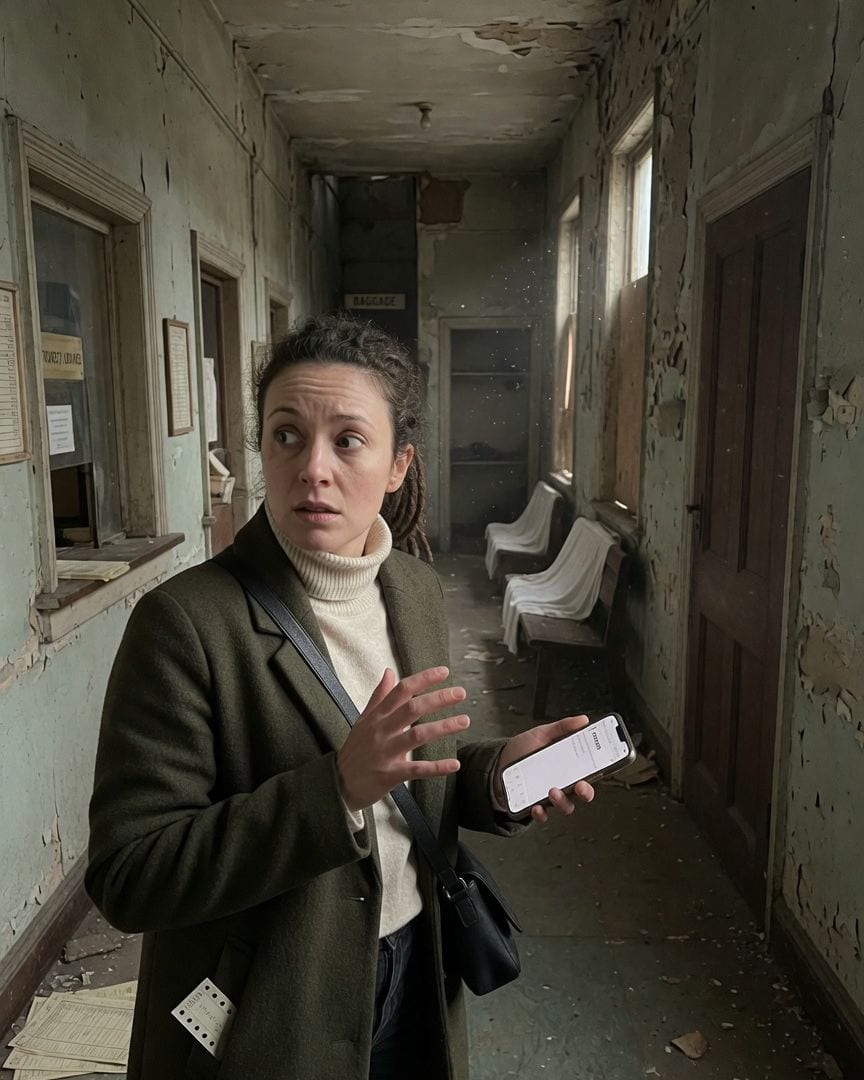
My scenic railway loop repeated six times. The same trestle bridge, the same waterfall, over and over, the conductor punching my ticket each pass. We never left the circle.
My scenic railway journey was supposed to be a gentle, thirty-minute loop through the gorge. But after only fifteen minutes, the same landmarks rolled past again, and again, and again. The conductor, Henry Kingsley, punched my ticket six times as if each was the first, his gaze utterly devoid of recognition.
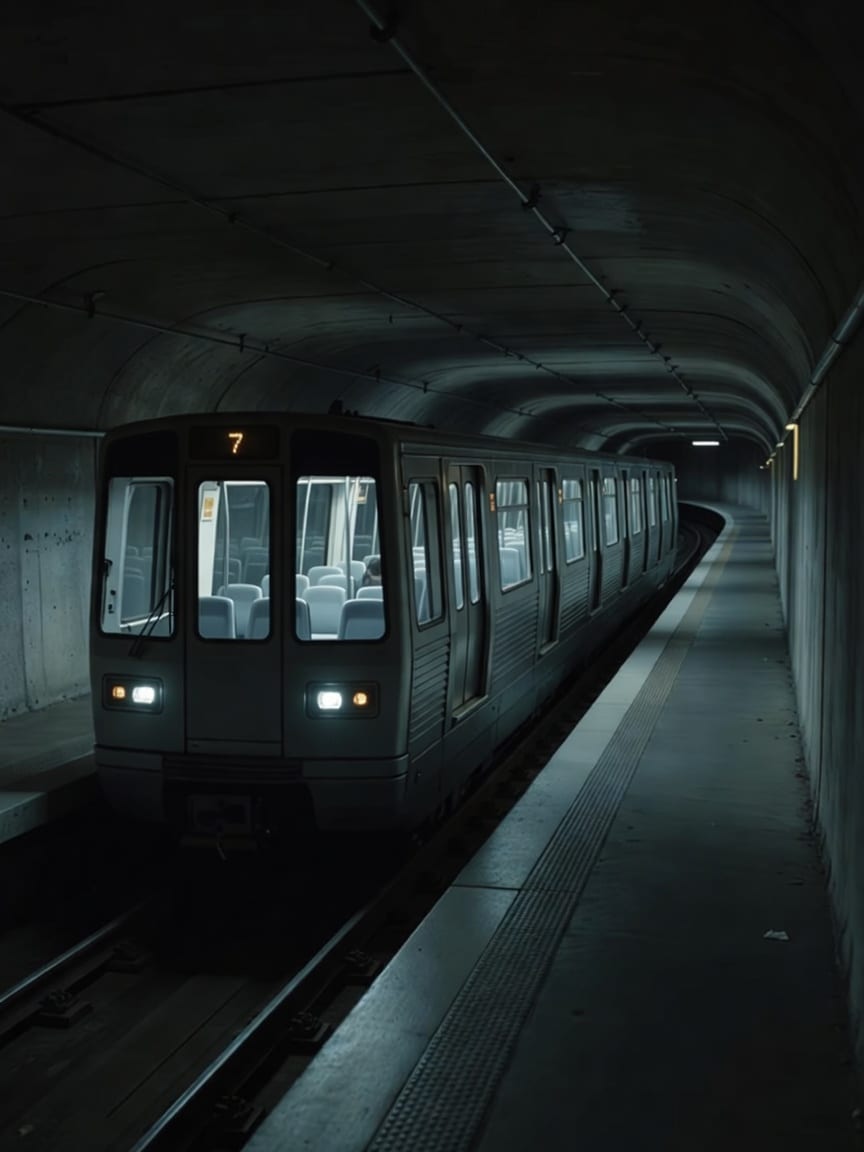
My airport people-mover left Terminal 2 and opened its doors at Terminal 2 again. The overhead display counted zero stations passed. The same cleaner mopped the same patch.
My people-mover shift started like any other Friday, a routine two-minute run between terminals. But after each journey, the doors of Unit 7 opened back at the same Terminal 2, with the same cleaner mopping the same spot. Then I found an impossible boarding pass, for a flight that hadn't flown in decades, from a gate that no longer existed.
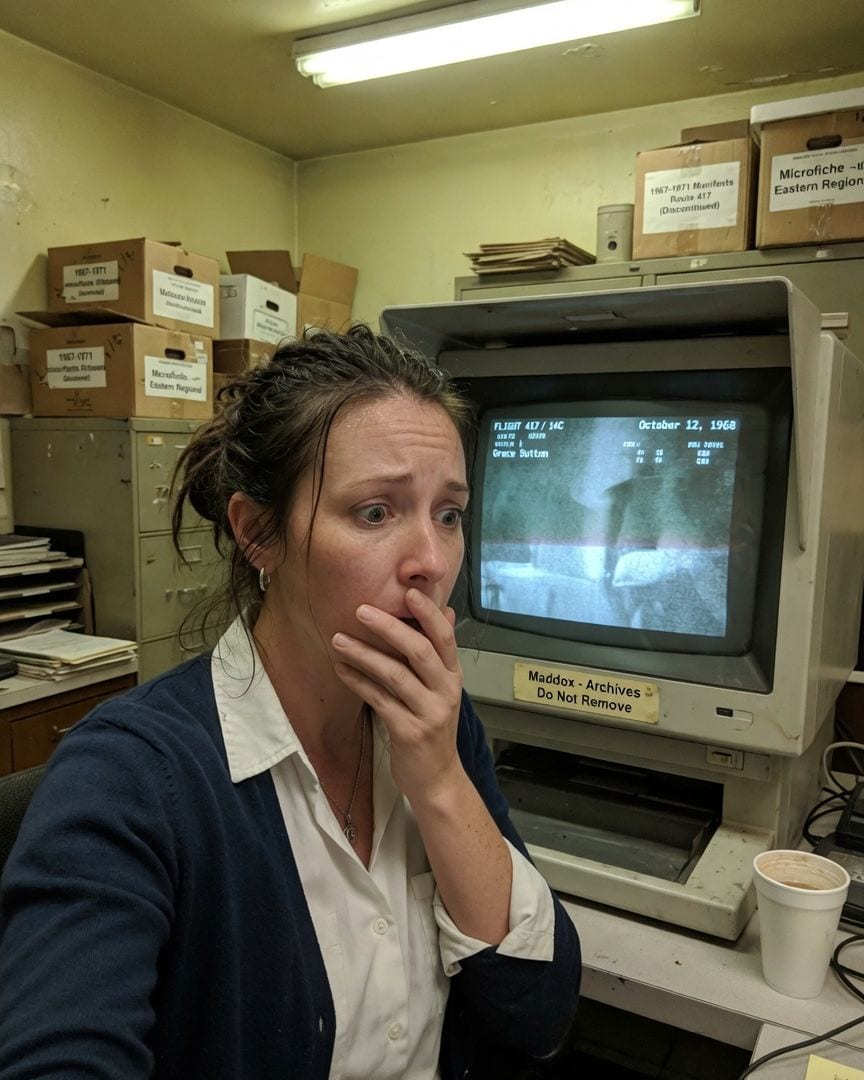
A woman I'd never met leaned across the aisle, said 'I'm sorry, Grace,' and warned me about the landing. We landed fine — but the airline says seat 14C flew empty.
My routine flight home took an unsettling turn when a woman in seat 14C spoke to me. She knew my name, warning me about the landing, then simply vanished from her seat after we touched down. Airline records confirmed seat 14C was unoccupied, as if she was never there.
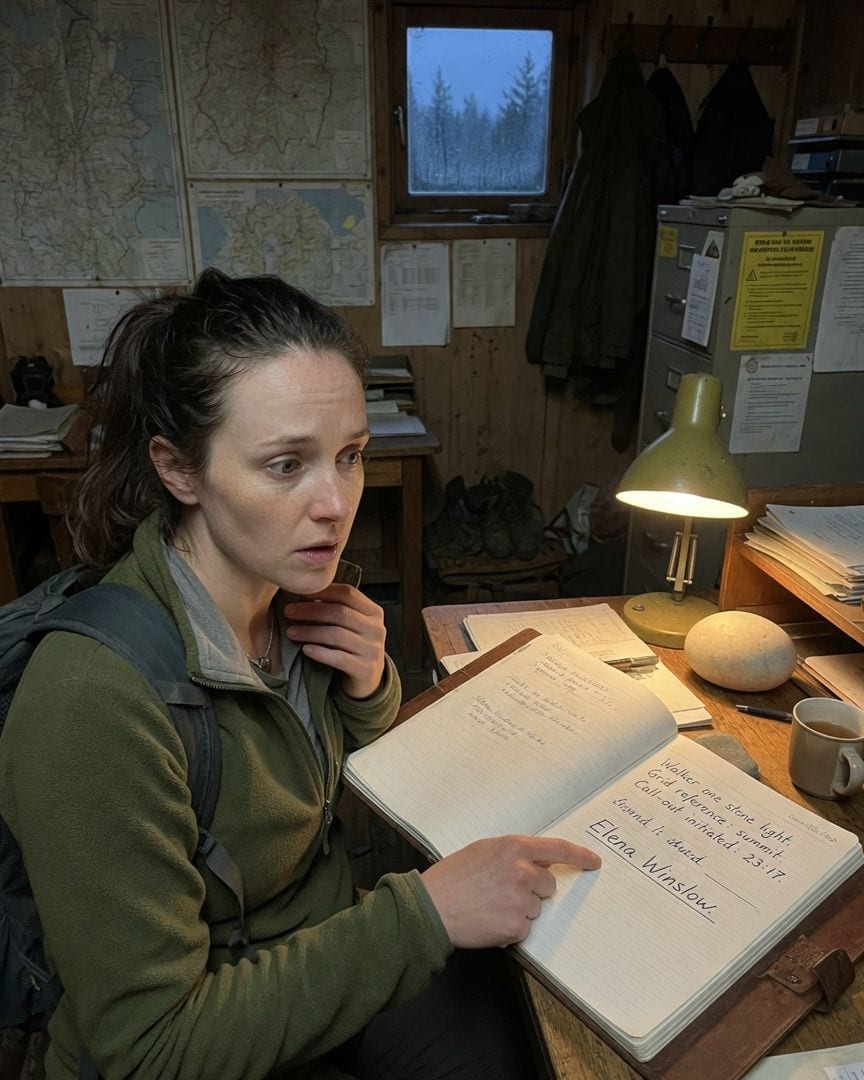
My pocketed mountain stone meant a rescue logbook recorded a call-out that night for me — a shout that never went out.
After an exhilarating climb on Cadair, I took a small, smooth white stone from the summit cairn, despite a warden's warning. Back at the station, a logbook entry shocked me: my name, dated last night, for a rescue call with an impossible detail: 'Walker one stone light'.
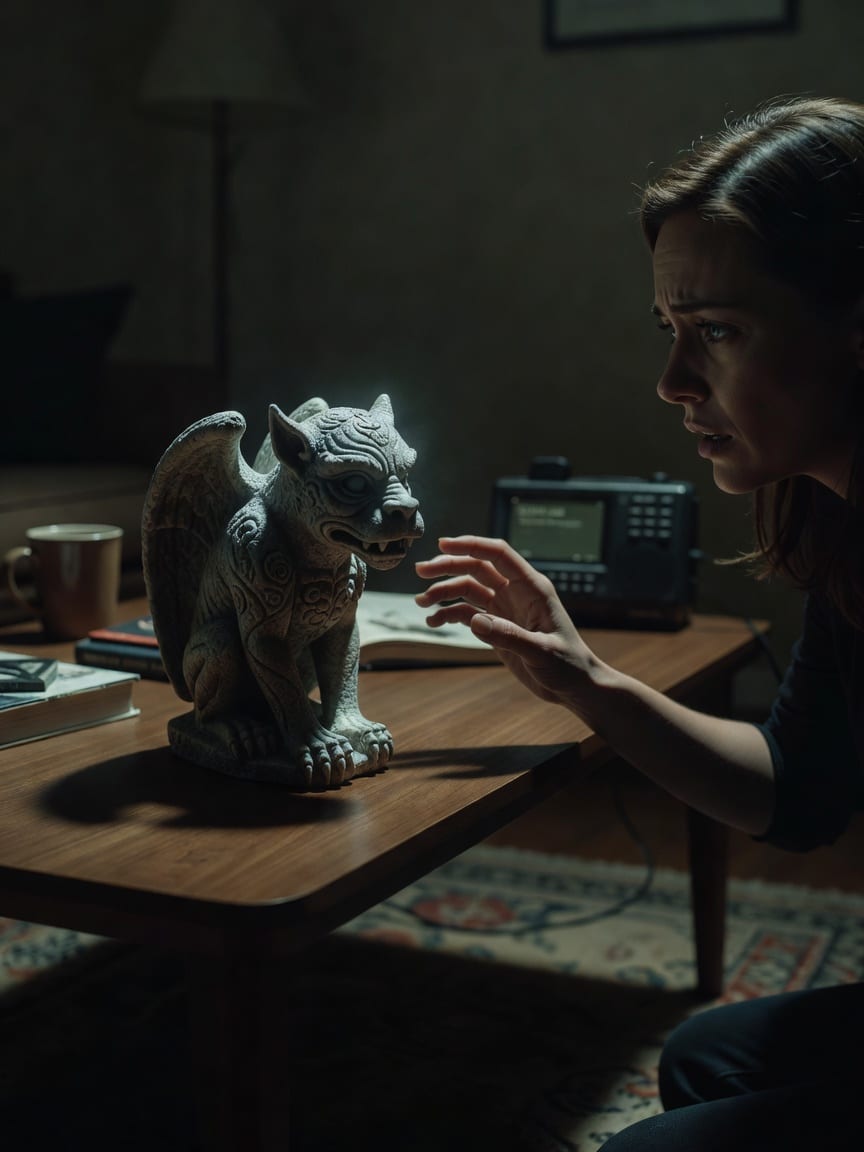
My radio scanner spoke my address at 2 AM. A flat voice read local homes, all with past dates. Mine was the only one in the future.
It was two in the morning, and my quiet house was filled with the usual hum of my weather scanner. But the static broke, replaced by a flat, synthesized voice reading a list of local addresses and dates. My hand froze when it spoke my own address, 181 Foster Drive, followed by a date: October 27th. That date was three weeks from now.
My dashcam footage showed my street change. For five seconds, my car drove on a road that doesn't exist on any map.
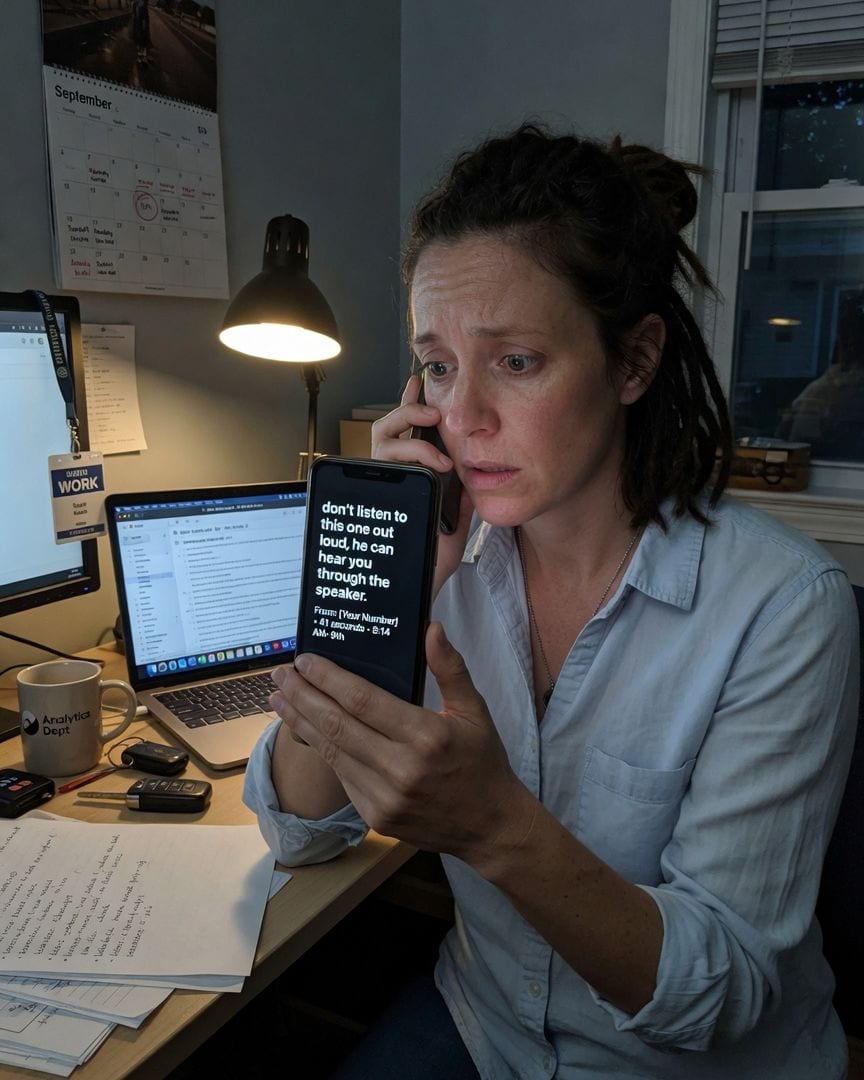
It was a normal Tuesday until my work phone received a new voicemail. The transcription warned, 'don't listen to this one out loud, he can hear you through the speaker.' But the message was from my own number, and the audio was forty-one seconds of absolute, dead silence.