Archivist Beatrice Kell had four hours to finish her life's work when an old Cold War register listed 'Box 1,101: contents, one archivist' for today's date.
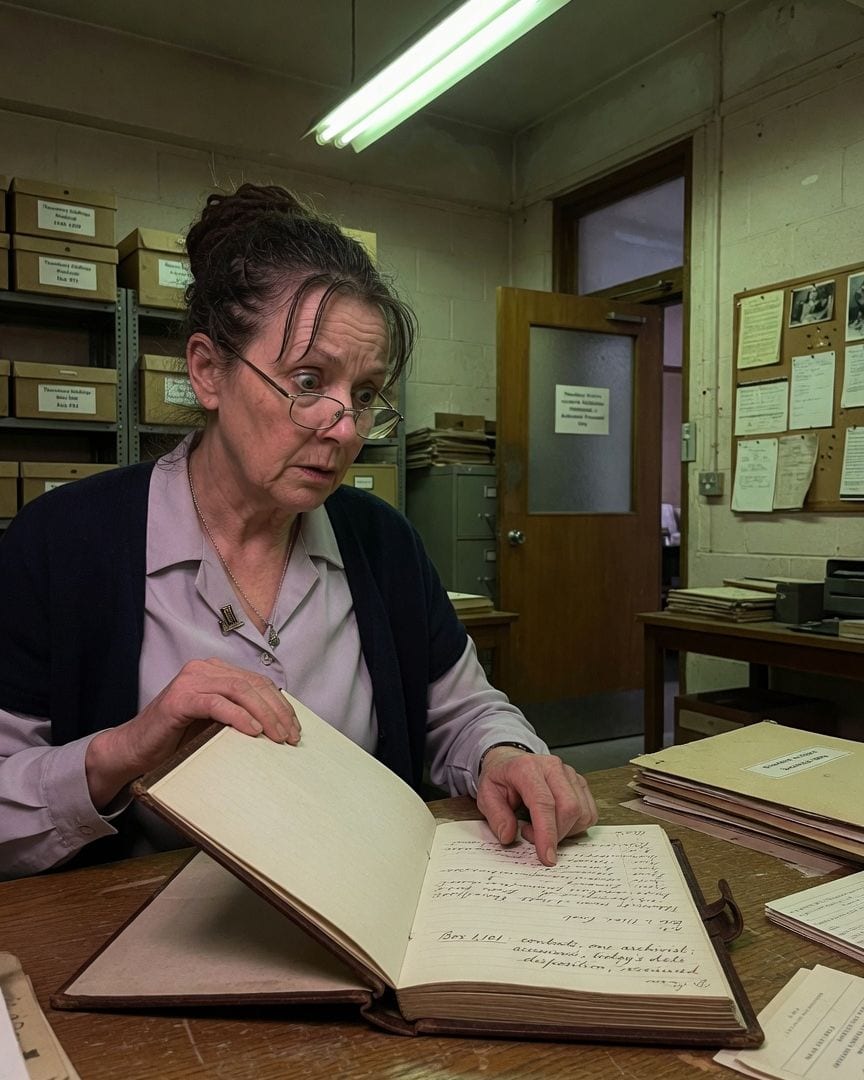
Beatrice Kell, a methodical archivist of 20 years, felt the familiar ache in her spine as she wheeled the last box of the Thornbury holdings into the reading room.
Her four hours before the renovation began were precious, a final opportunity to complete her life’s work, a capstone on two decades dedicated to the collection.
The heavy oak door of the archive creaked shut behind her, sealing her in with the scent of old paper and dust, a smell that usually brought her profound comfort.
The Thornbury Collection had been her life, her legacy in the making.
Inside the dusty box, nestled among brittle memos and faded photographs, she found the original 1952 accession register. Its leather binding was cracked with age, its pages filled with the founder’s elegant, precise hand.
Beatrice had processed all 1,100 physical boxes over her career, knew the collection intimately, every strange notation, every misplaced item. She had consulted this very register countless times, confident she knew its every detail.
But as she flipped to the final page, beyond the last recorded box of physical materials, a chill snaked up her arm. The register, which should have ended with Box 1,100, ran on, its final lines stark and unexpected.
The last entry, in the same fading ink, recorded: 'Box 1,101: contents, one archivist; accessioned, today's date; disposition, retained.' Beatrice froze, the air in the quiet room suddenly heavy.
Her own title, 'archivist,' echoed silently in her mind, linked to the impossible entry. The hum of the fluorescent lights seemed to dim, and the renovation crew's distant activity outside the archive walls faded into a profound, unnatural silence.
Her first thought was a clerical error, a misplaced entry from a bygone era, or perhaps a morbid joke from a long-dead colleague. Beatrice, ever the archivist, sought a rational explanation first.
She leaned closer, her eyes scanning the impossible date: 'today's date' was clearly written, not a smudged '1952' or a faded numeral. It was specific, unequivocal.
She compared the looping script to other entries on the page and then to earlier ones; it was undeniably the founder's, precise and unwavering, every stroke identical. No misfile, no prank. Her rational mind scrambled for other explanations.
Perhaps it was a placeholder for future staff, a whimsical note that had simply been overlooked? But the stark clarity of 'contents, one archivist' and 'disposition, retained' felt too official, too specific to be a flight of fancy.
This wasn't a doodle in a margin; it was a formal entry. She knew every box, every collection housed within Thornbury. There was no 'Box 1,101.'
It simply did not exist in the physical inventory, yet here it was, in the official record, a future event recorded in a historical document.
A cold dread began to set in, not a fleeting unease, but a tenacious chill that settled deep in her bones.
She began to scour the register’s earlier pages, her fingers trembling slightly as she turned the brittle paper, looking for any other anomalies, any other entries that defied the archival logic she had dedicated her life to upholding.
She needed a pattern, a precursor, anything to explain this impossible anomaly.
Deep within the register, buried among decades of mundane cataloging, Beatrice found a series of entries that made her breath catch, confirming her worst fears.
Not her name, not 'today's date,' but a recurring, unsettling pattern of entries similar to her own. 'Box 876: contents, one archivist; accessioned, 1987; disposition, retained.' And then, further back: 'Box 943: contents, one researcher; accessioned, 1995; disposition, retained.'
Each entry was followed by a control number that led to no known office, no existing department, and certainly no physical box within the Thornbury Collection.
The names of the 'archivists' and 'researchers' were vague, almost generic, simply 'one archivist' or 'one researcher,' but the 'disposition, retained' was chillingly consistent across all of them.
Beatrice stared at the page, her finger tracing the chilling final line of her own impossible entry. The old paper felt cold beneath her touch, the ink a dark, immutable prophecy.
She pulled her hand back as if burned, her gaze locked on 'disposition, retained,' a word that now felt less like a classification and more like a sentence.
The clock on the reading room wall ticked louder, each second shrinking Beatrice’s four-hour window, now little more than an hour. The renovation crew’s distant hammering now felt like a drumbeat, a relentless rhythm counting down to… what?
She had to know. Clutching the original register, she moved to her workstation and cross-referenced the names and dates from the anomalous entries with old staff directories and institutional records, an archivist’s instinct overriding her growing fear.
'Albert Sterling, Archivist, 1987.' 'Marianne Sheppard, Researcher, 1995.' She found their names on old payroll sheets, their photographs in brittle yearbooks. But their employment records simply ceased. There was no retirement, no resignation, no transfer.
Their files contained only a final, abrupt notation: 'Disposition: Retained, per Section 7.' Section 7? Beatrice had never heard of it in her two decades at Thornbury.
The official explanation, if anyone bothered to give one, was always vague: 'They moved on,' 'Took another position.'
But for a meticulous archivist like Beatrice, the utter absence of paperwork, the lack of a forwarding address, a pension, or any standard exit interview, spoke volumes. It was not an oversight; it was an erasure.
The deeper she dug into the digital archives, the more gaps she found, entire years where the names from the register simply vanished from all institutional records, leaving behind only the chilling 'Disposition: Retained.'
The computer screen seemed to hum with a strange energy as she accessed these restricted files, and she felt a growing unease, a pervasive sense of being watched, as if the very digital architecture of Thornbury was aware of her intrusion.
As Beatrice worked, the low murmur of voices drifted from the renovation site, closer now, echoing through the empty halls.
She heard the distinct scrape of furniture being moved, the thud of tarps being unfurled, sealing off sections of the archive, one by one.
A light flickered in the corner of the reading room, then settled into a steady hum, though the brief stutter had unnerved her.
She returned from a brief, necessary trip to the staff restroom to find her workstation subtly altered: a digital file she had left open on her monitor was now neatly closed, its icon perfectly aligned with the others.
Her coffee cup, half-full, had been moved an inch to the left of its coaster. No one else was in the room.
The renovation crew was confined to the other end of the building, and the archive manager had left hours ago. A shiver ran down her spine, raising gooseflesh on her arms.
Later, Susan Whitmore, a senior archivist who had been with Thornbury for decades and was overseeing the renovation, paused by Beatrice’s desk. Susan, usually quiet and unobtrusive, looked at Beatrice with an unsettlingly knowing expression, her eyes deep and shadowed.
'Some things,' Susan said, her voice barely a whisper, 'are best left filed, Beatrice. The collection has a way of… keeping what it needs.'
Susan then walked away, her footsteps echoing unnaturally loud on the polished concrete floor, leaving Beatrice with the distinct impression of a warning, not a casual observation.
The words, 'keeping what it needs,' sent a jolt of cold realization through her.
Beatrice cornered Susan Whitmore near the staff breakroom, the renovation noise a distant thrum, a muffled vibration in the floor. 'Susan, what is 'Disposition: Retained, per Section 7'?'
Beatrice asked, her voice low but firm, cutting through the heavy silence between them. Susan hesitated, her eyes flickering nervously towards the hallway, then back to Beatrice, a shadow of fear crossing her face. 'That’s… old policy, Beatrice.
For sensitive materials, unique artifacts.' Beatrice shook her head, her jaw tight. 'Not materials, Susan. People. Archivists. Researchers. They just vanished. Like Albert Sterling, Marianne Sheppard. Their files end with that designation.' Susan’s composure cracked, a tremor running through her.
Her gaze dropped to the floor. 'They didn't vanish, Beatrice. They were… integrated. The Thornbury Collection isn't just paper and boxes. It’s… a living entity. It requires sustenance. Minds that understand its structure, its secrets, its… purpose.'
Beatrice felt a wave of nausea, the stench of old paper suddenly overwhelming her. 'Sustenance? What are you talking about?' Susan wrung her hands, her voice barely audible. 'The founder understood. He built the system.
Those who delve too deep, who truly comprehend the scope of what's here, they become… part of it. They ensure its continuity. That’s what 'retained' means. They are filed, yes, but not in a box.
They become the keepers, from within. They are the living memory, the silent guardians.' The pieces clicked into place, horrifyingly. The impossible entry for Box 1,101, the missing personnel, Susan’s cryptic warning, the subtle alterations to her desk.
It wasn’t a clerical error; it was a system. A self-perpetuating, insidious system. And Beatrice, with her 20 years of devoted archival work, her intimate knowledge of the collection, was the perfect candidate for 'integration.'
Desperate, her mind a frantic scramble, Beatrice remembered a rumor of a hidden compartment behind the founder's original desk, long sealed in an unused corner of the archive.
She rushed to the heavy oak furniture, her fingers raw as she pried at a loose panel beneath the desktop. It gave way with a groan of ancient wood, revealing a small, dark recess.
Inside, wrapped in oilcloth, was another accession register, identical to the first in every external detail, but clearly a working copy. Its pages were filled with the same elegant script, but the redactions were different.
Where the original had blacked out names, this copy left them chillingly visible.
And there, under 'Box 876: contents, one archivist; accessioned, 1987; disposition, retained,' was a faint, almost invisible, handwritten annotation in the margin, scrawled in a different, later hand: 'Subject identified, processing commenced.'
Beatrice dropped the second register, its brittle pages scattering around her feet like fallen leaves. The faint, almost invisible annotation in the margin of the unredacted entry, 'Subject identified, processing commenced,' echoed in her mind, a cold, clinical declaration.
Her own entry, 'accessioned, today's date,' suddenly re-read itself as a live, active command. The distant rumble of the renovation crew sealing off another section of the archive sounded not like progress, but like a closing door.
With trembling hands, Beatrice rifled through the hidden compartment’s remaining contents. Beneath the oilcloth and the second register, she found a brittle, yellowed document, its paper like dry skin.
It was titled, in severe, typed letters, 'Thornbury Institutional Protocols, Section 7: Human Asset Accession.' It was dated 1951, a year before the register began.
The document detailed, in chillingly bureaucratic language, the criteria for 'identifying' individuals who posed a 'unique risk of exposure' to the Archive's true nature, or who possessed an 'unparalleled aptitude for its maintenance.'
It outlined the 'accession protocols': a gradual process of psychological and physical integration, turning the subject into a 'living repository' of the Archive's secrets. The 'disposition, retained' was not a final state, but a continuous function, a perpetual bond.
The founder's register wasn't just a record of items; it was a blueprint, a master list for a self-perpetuating system, a grim ledger of human absorption. The 'today's date' entry for Box 1,101 wasn't a prediction, but a commencement order.
The Archive was a living entity, an institution that consumed its most dedicated servants, transforming them into its silent, eternal guardians, ensuring its secrets would never leave its walls.
The renovation was not just an upgrade; it was a sealing, an act of final integration, preparing the Archive for its next 'contents.' For her.
The metallic clang of the renovation crew sealing off the main entrance echoed through the archive, a sound of definitive closure. Beatrice was trapped.
She clutched the 'Human Asset Accession' document, its brittle edges digging into her palm, her mind racing for an escape.
She burst out of the old founder's office, running down a narrow corridor she knew led to a seldom-used service exit at the rear of the building.
But the corridor was now lined with silent, unmoving figures in Thornbury uniforms, their faces devoid of expression, their eyes fixed on nothing. They weren't aggressive; they were simply there, forming a living wall, slowly, inexorably, reducing the space.
Susan Whitmore stood among them, her eyes, usually kind, now holding a hollow, distant look, as if gazing through Beatrice. 'It's time, Beatrice,' Susan whispered, her voice flat, devoid of emotion, a mere echo of her earlier self.
'The Archive requires its due.' Beatrice tried to push past them, yelling about the protocols, the register, the truth she had uncovered. But her words were met with blank stares, with utter, unwavering silence.
These weren't guards; they were extensions of the institution, part of its mechanism. The archive wasn't just sealing itself; it was drawing her in.
She saw the glint of metal as the last door at the end of the corridor, her only way out, slid shut with a soft hiss, plunging the corridor into a deeper, dustier gloom.
The figures in uniform began to close in, not rushing, not threatening, but simply reducing the space, slowly, inexorably, step by silent step. The air grew cold, heavy with dust and old paper, pressing in on her.
She felt a profound resignation settle over her, understanding the futility. She was not escaping; she was being filed.
The Thornbury Archive renovation was completed on schedule. The reading room, freshly painted and modernized, reopened to the public with a quiet ceremony. A new archivist, Henry Doyle, was hired to manage the Thornbury Holdings.
The collection, now meticulously organized and seemingly humming with a quiet efficiency, was ready for its next chapter. No one mentioned Beatrice Kell; her name slowly faded from staff rosters and institutional memory.
Her office was cleared, her personal effects boxed and sent to an address that no longer seemed to exist.
The world outside the archive walls moved on, oblivious to the quiet, methodical operations within, to the new additions made to the Thornbury Collection.
Henry Doyle, the new archivist, sat at Beatrice's old desk, now his, the scent of fresh paint mingling with aged paper. He was sorting through a final delivery of 'newly accessioned' materials, a small, unassuming box labeled 'Box 1,102.'
He opened it. Inside, nestled on a bed of archival tissue, was a single, blank, leather-bound journal, identical in every way to the 1952 accession register, its pages pristine, waiting.
He picked it up, feeling a strange weight to it, as if it already held countless unwritten entries.
He opened it to the first blank page, running his finger over the smooth, unmarked paper, a faint chill in the otherwise warm room, a sense of something profound awaiting inscription.
The file is still being signed.
A new entry appeared in the Thornbury Holdings accession register, in elegant, precise script. It bore a new number, a new name, and a disposition familiar to those who understood the archive's quiet hunger.
The renovated halls of Thornbury echoed with a subtle, contented hum, eternally ready for its next diligent keeper. The file is still being signed.
If this one got to you
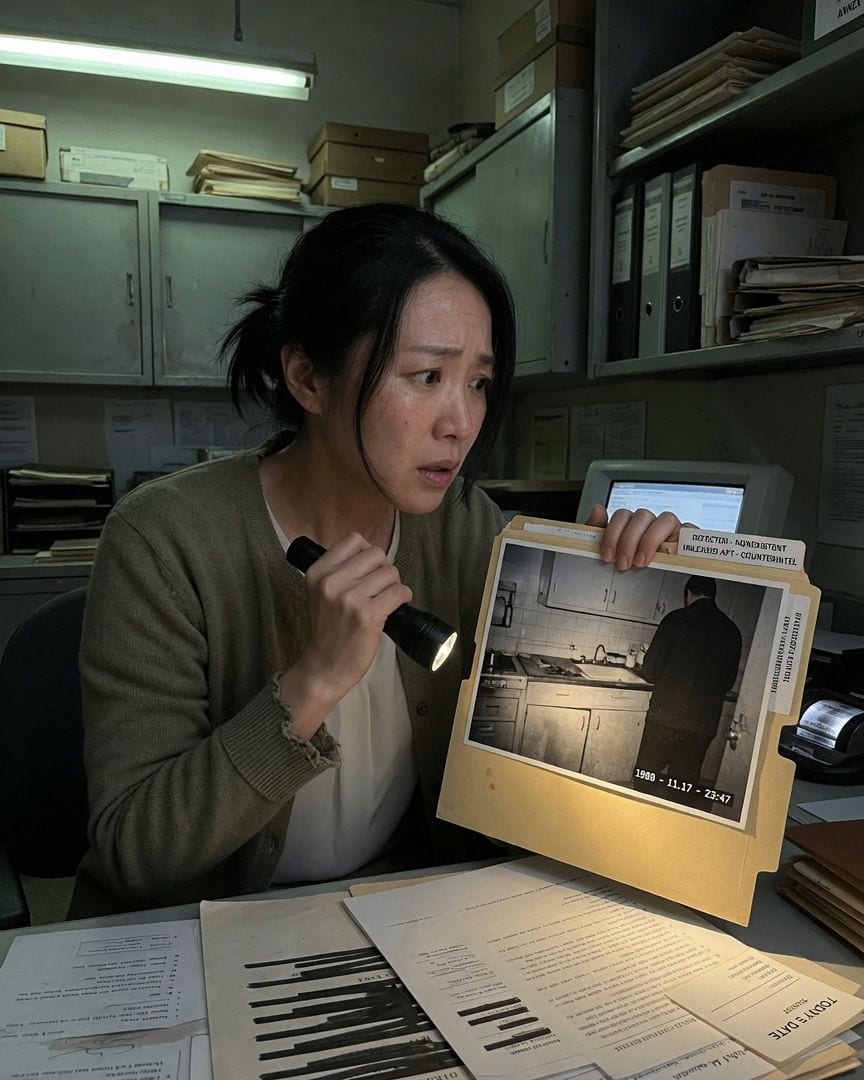
Against a midnight deadline, archivist Junie Kwan finds a Cold War dossier with a photo of her grandmother's kitchen, empty the night of the funeral, with an unknown figure standing inside.
Archivist Junie Kwan huddled in the hushed, cool Alexandria archives, working against a midnight court order to reseal a strange counterintelligence dossier. The file, dense with blanked sections, concerned a 'defector who never existed' and an 'unleased apartment.' As she scanned a grainy surveillance photo, a prickle of unease turned to dread: it was her grandmother's kitchen, dated 1988, the night of the funeral. A tall, rigid figure stood at the sink, yet Junie knew with certainty the apartment had been empty and locked that night. How could an impossible presence appear in a locked, empty room, tied to a phantom Cold War case?
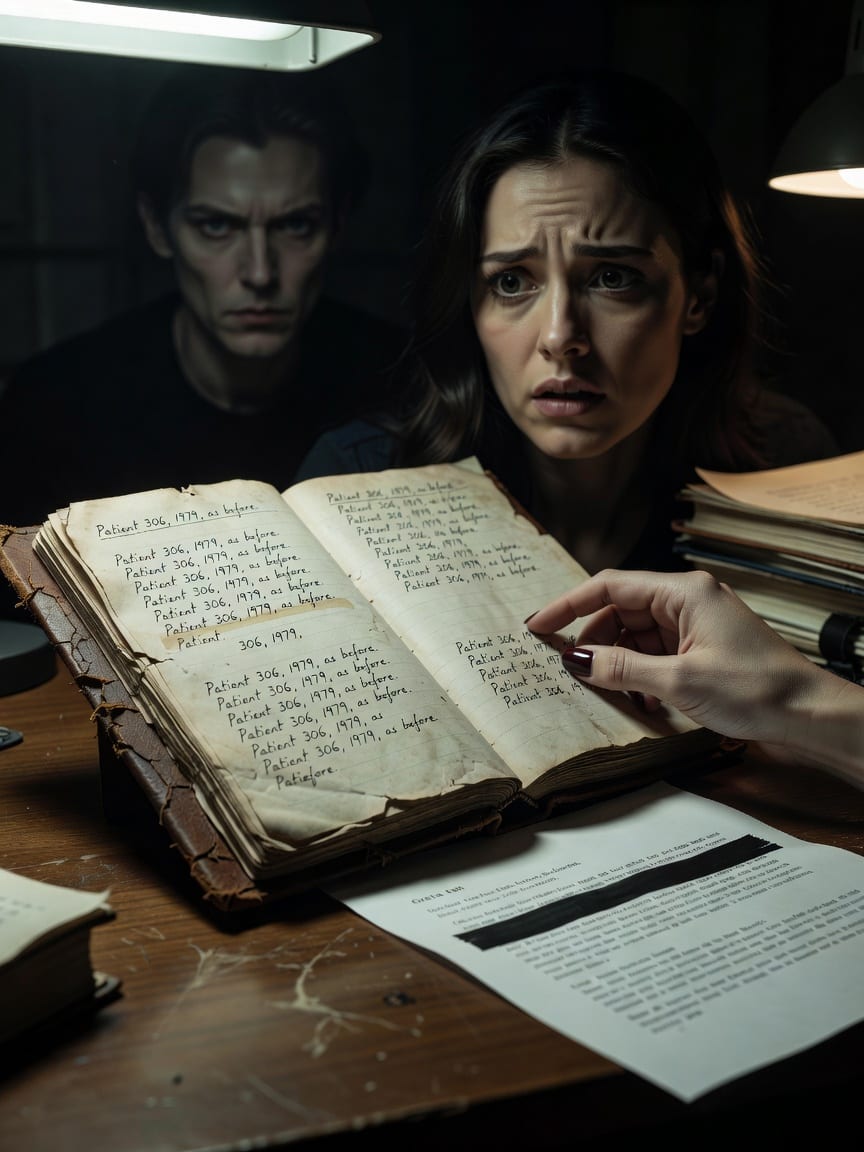
My archive ledger shows Patient 306 admitted in 1889, 1911, 1934, 1957, 1979 — same diagnosis, different names, and always, 'as before.'
My job as an archive transcriber is usually soothing, digitizing ancient admissions ledgers. But a recurring entry for 'Patient 306' caught my eye, noted 'as before' in the same hand for nearly a century. Digging deeper, I found a council file, dated 1998, outlining 'containment procedures' – and it named my own street and surname.
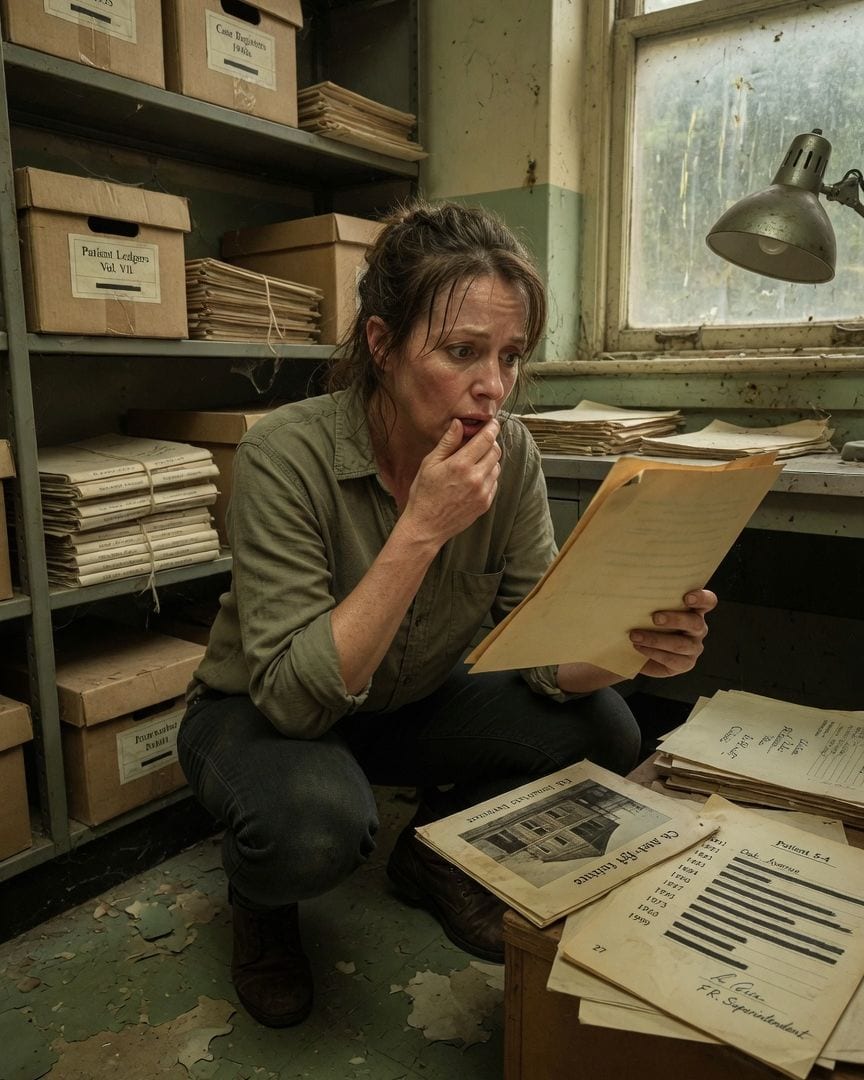
Patient 5-4 keeps checking into my aunt's old sanatorium chalet. The same initials sign them out, 'not traced,' every thirteen years since 1921.
Sifting through my aunt Margaret's estate, I found her old sanatorium file from 1999. Her patient record listed her as 'Patient 5-4,' discharged 'not traced.' But when I accessed the archives, I found 'Patient 5-4' was admitted every thirteen years since 1921, always with identical discharge notes.
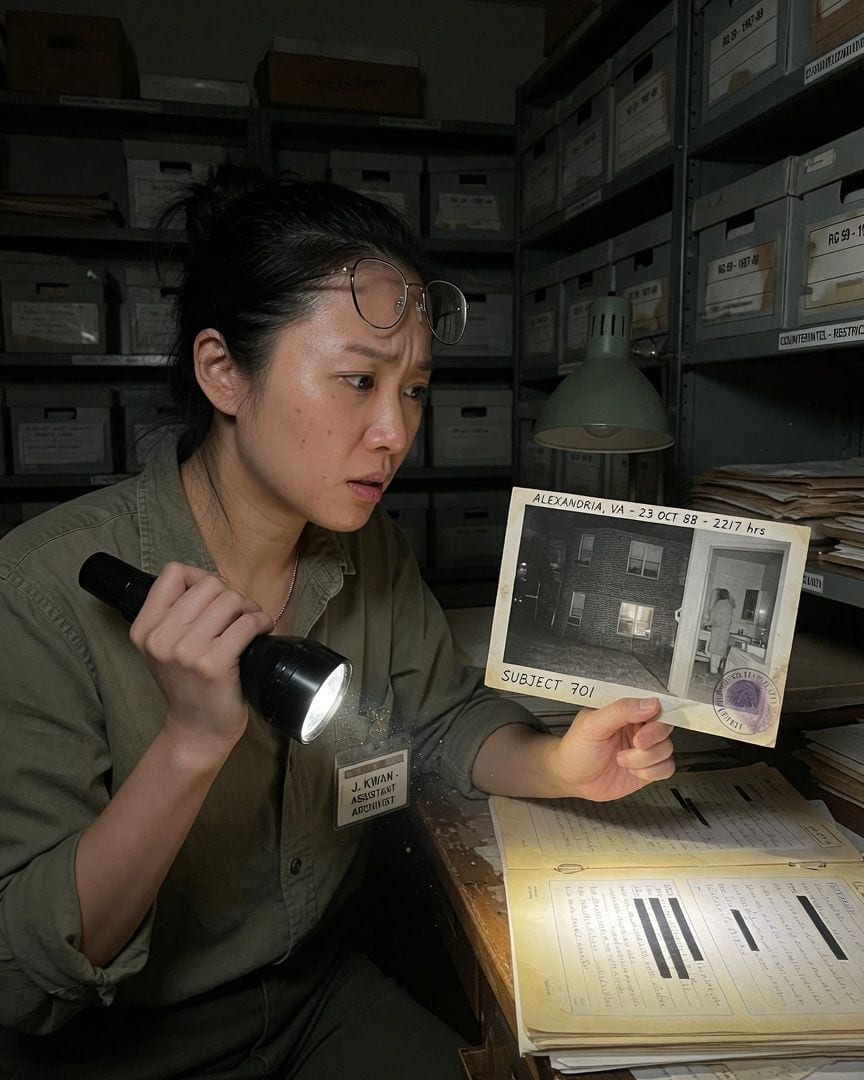
An assistant archivist's Cold War file held a photo of her grandmother's empty 1988 apartment. A figure stood in the window, stamped 'UNIT 701'.
Assistant archivist Junie Kwan hunched over a heavy 1988 counterintelligence dossier in the silent gloom of the National Archives. With only an hour before a court order sealed the file, she faced a personal horror. Tucked inside was a grainy surveillance photograph, dated the night of her grandmother’s 1988 funeral, showing the very apartment where Florence had lived and died. In the frame, behind the grimy kitchen window, a faint figure stood at the sink, despite the apartment being meticulously cleared out, empty, and locked. Junie discovered cryptic marginalia and a mysterious 'UNIT 701' stamp on the photo, hinting at a secret far deeper than a simple clerical error.
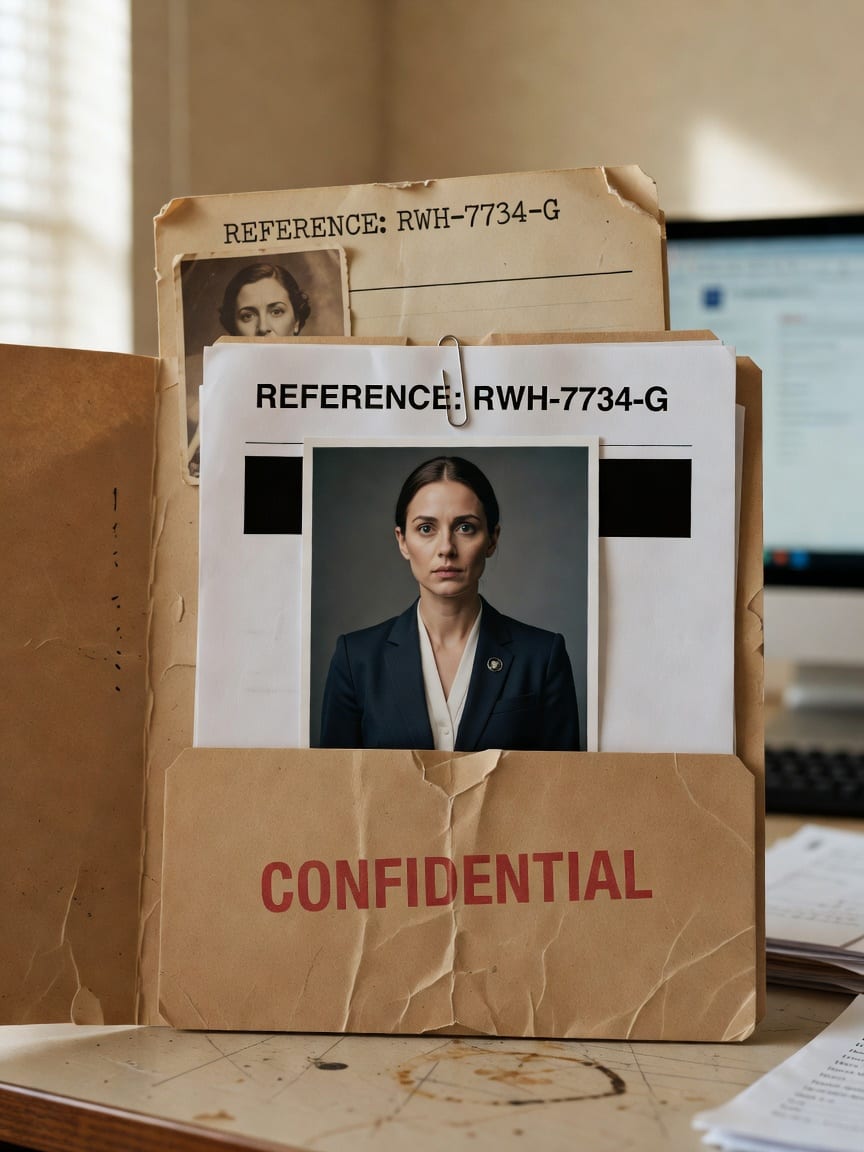
My security file was opened nine years before I was born. Its note said: 'subject not to be briefed'.
Auditing company digital records was routine until I pulled up my own personnel file. It clearly showed a 'Date Opened' nine years before I was born, yet bore my exact name and reference number. Below, an assessor's note from that impossible year mentioned a 'previous holder' and ordered the 'subject not to be briefed,' sparking a cold thrum in my chest.
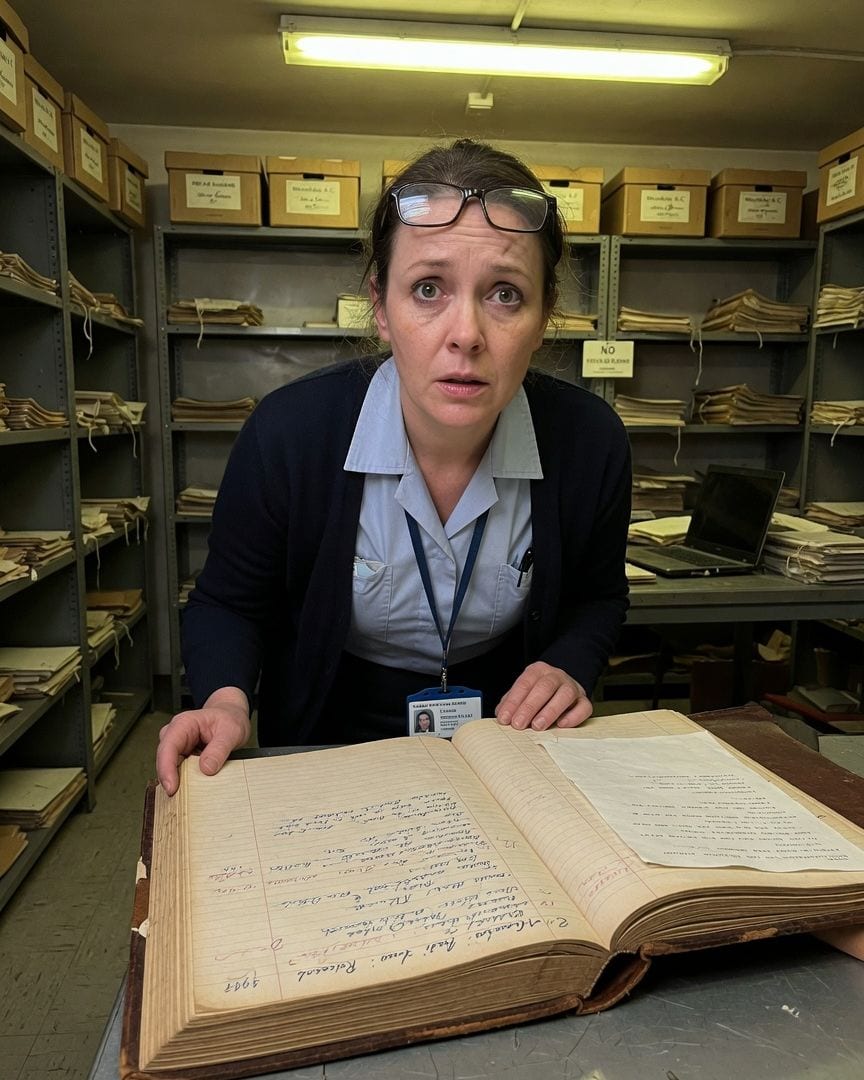
My ambulance trust's incident log shows callout 22-014 to 6 Cathcart Row at 2:40 AM. Every four years, the same call, same address. Always 'patient not found'.
My job involves tedious data entry for ambulance calls, but Incident 22-014 was different. It appeared every four years, always at 2:40 AM, always closed as 'patient not found.' Digging into the dusty physical archives, I found an entry from 1961 for the exact same incident, but its resolution read: 'Subject Secured. Relocated to "Holding".'