My bank statement shows a bakery in France, €4.80. My passport's never been stamped. I was in my kitchen making toast when it posted. Now three more charges from that same town.
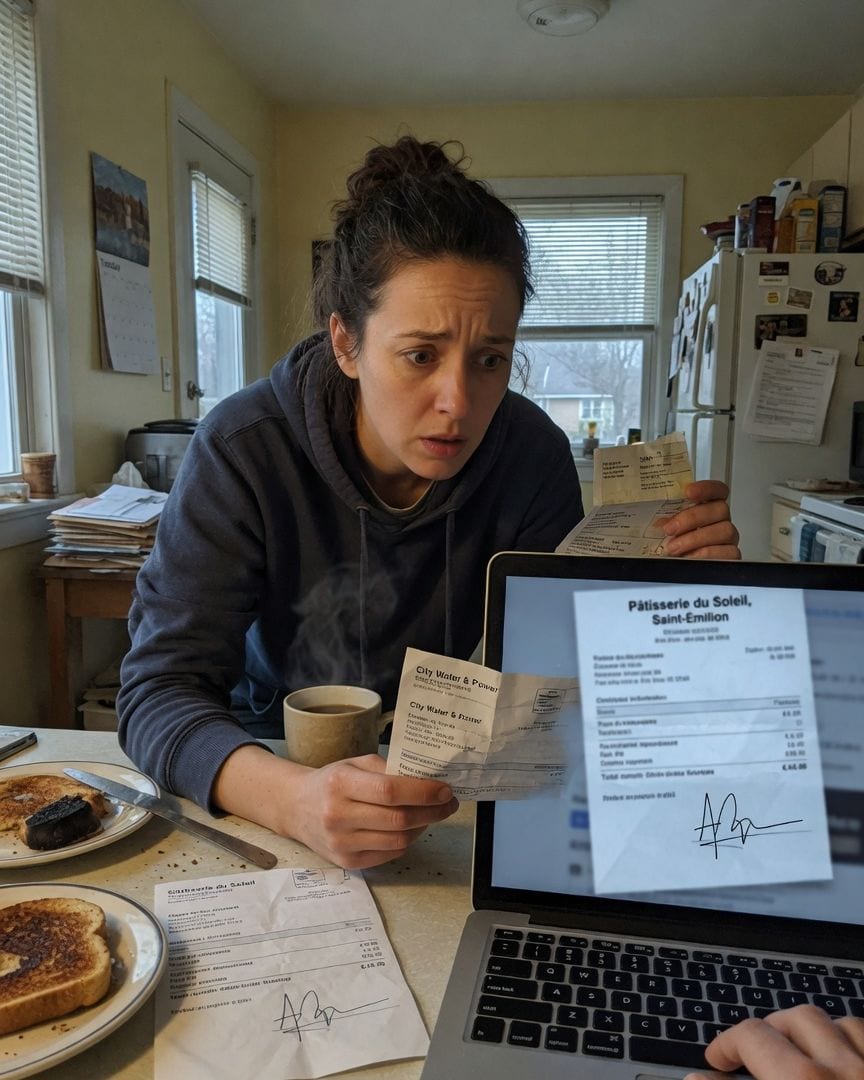
The steam from my coffee curled lazily into the morning light as I scrolled through my bank statement on my laptop. It was Tuesday, 8:45 AM, and my usual ritual. Most of the entries were familiar, dull.
Then a line item, bold and incongruous, snagged my eye. PATISSERIE DU SOLEIL, FRANCE, €4.80. I blinked, rubbed my eyes, and reread it. France. Saint-Émilion. My passport was in the top drawer of my dresser, tucked neatly beneath a pile of old scarves.
It had never been stamped. Not once. I hadn't left the country, not ever. A cold knot formed low in my stomach. The transaction posted at 8:22 AM.
I remembered that moment precisely because I'd just burnt the corner of my toast, and the smoke alarm had let out a brief, irritating chirp. I was in my kitchen, making toast. I clicked back to recent activity.
My breath caught. Three more small charges from ‘Pâtisserie du Soleil’ had appeared since Friday, each for a similar, impossible amount: €3.20, €6.50, €5.10.
Each posted while I was demonstrably elsewhere – at my desk, in the grocery store, asleep in my bed. My heart began to pound a slow, heavy rhythm against my ribs. It wasn’t a glitch.
It was too specific, too persistent.
I called my bank immediately, expecting the usual customer service run-around, but hoping for a quick resolution. Carl Yates, a customer service manager, listened patiently as I explained the situation, his voice calm, almost soothing, through the phone.
He pulled up my account. "Yes, Ms. Sheppard, I see those. Four transactions from Pâtisserie du Soleil. They appear legitimate on our end. Cleared through our systems with no flags." I could hear the faint clack of his keyboard. "Legitimate?"
I pressed, my voice tighter than I intended. "Mr. Yates, I have never been to France. My passport is unstamped. I was making toast when the first one posted." He paused. "I understand your concern.
The amounts are small, which sometimes makes them less likely to be flagged as unusual activity. I can, however, send you the digital receipts for your records, if that would help." His composure was unnerving. He just sounded so... unbothered.
I agreed, feeling a prickle of unease. He promised they’d be in my inbox within the hour. Thirty minutes later, an email popped up from 'BankSecure'. I clicked it open, a pit forming in my stomach.
There were the four receipts, each a blurry scan of a small, handwritten signature at the bottom of a contactless payment slip. The first one, for a croissant and coffee, stared back at me.
I zoomed in, my screen filling with the looping 'A' and the sharp 'S'. The signature was simple, everyday, yet an electric current seemed to run up my neck. It looked familiar. Too familiar.
My rational mind tried to dismiss it, suggesting it was a common script, a coincidence. But the unease persisted, a faint, undeniable echo of recognition.
I sat there, laptop screen glaring in the dim afternoon light, the digital receipt suspended before me. My hands, suddenly cold, fumbled in my desk drawer until I found an old utility bill.
I pulled it out, flattened the crinkled paper, and held it next to the screen. My gaze darted between the two signatures.
The looping 'A' in 'Audrey', the precise angle of the crossbar on the 'T', the unique flourish on the 'S' in 'Sheppard' that curled just so, a faint upward tick. The way the 'A' connected to the 'S'.
It was identical. Not similar, not a good forgery, not even a near-perfect copy. It was unmistakably mine. As if I had been standing in that French bakery, in Saint-Émilion, signing for a simple €4.80 transaction, just yesterday.
My hand, holding the utility bill, trembled slightly. I held both documents, one real, one impossible, the paper feeling suddenly heavy, cold.
My world tilted. I immediately sent the scanned receipt image, along with half a dozen samples of my own handwriting—old letters, signed invoices, even a grocery list—to Genevieve Hayes.
I’d found her online, a retired forensic handwriting expert with a meticulous blog about ink and pressure points. Genevieve, intrigued by the sheer oddity of the request, agreed to look at it, charging a hefty fee, but I didn't care.
The suspense was a physical ache. Days later, her call came. Her voice, usually crisp and professional, was hushed, almost reverent. "Ms. Sheppard, this is... extraordinary. The consistency of the stroke, the pressure points, the subtle tremors.
Even the unconscious lift of the pen at specific points. If this were a forgery, it would be the most perfect I've ever seen. But it's not. It's unequivocally yours."
The phone felt like a block of ice against my ear. It was my signature. My mind reeled. I researched 'Pâtisserie du Soleil', finding a small, charming bakery in a real town called Saint-Émilion, rural France.
I found photos, reviews, even a quaint website showing their croissants. It was real. Too real.
I bought a travel guide for the Bordeaux region, poring over maps, trying desperately to find a rational link, a forgotten trip, a memory lapse. But there was nothing. My passport lay unstamped. I had never left.
Then, a few days later, another notification from my bank. A fifth charge. A small souvenir shop, also in Saint-Émilion. Posted a day after the bakery transaction.
I decided to contact the bakery directly. It was a long shot, but I needed answers. After several attempts across different time zones, I finally reached Renee Maddox, the proprietor.
Her voice was pleasant, professional, with a soft French accent that seemed to mock my growing dread. I tried to sound casual, explaining I was checking unusual charges on my statement.
Renee confirmed the transactions, describing the contactless terminal, the small amounts. "Yes, madame, we have many small sales. Croissants, coffees. Very normal." When I pressed about the signature, a beat of silence stretched between us. "Ah, yes.
For certain transactions, especially those... validated through specific channels, a signature is sometimes requested. It's standard procedure for our system." Her tone was unbothered, almost rehearsed, as if she'd said it a hundred times before.
A chill snaked its way down my spine. "What channels?" I asked, my voice barely a whisper. Renee deflected smoothly, suggesting a technical glitch on my bank's side, a problem with my card provider, anything but her own "system."
Later that week, as I was deep into my research, tracing flight paths I hadn’t taken and hotel rooms I’d never booked, my home internet connection briefly flickered offline. The monitor screen blinked, then reconnected.
When I refreshed my browser, my history for 'Pâtisserie du Soleil' and 'forensic handwriting' was gone.
The quiet hum of my laptop seemed to shift, and I felt it then: a cold, unseen hand was reaching for me, closer than I could comprehend.
Unnerved by the internet incident, by the growing phantom evidence, I called Renee back. This time, I skipped the pretense. "My signature appeared on your receipt. My handwriting expert confirmed it. I was never there, Renee. Who signed it?"
Her calm facade cracked, just slightly. A sharper edge entered her voice. "Look, Ms. Sheppard, these things happen. Our system sometimes receives... pre-validated entries. It's not uncommon." Pre-validated. The words hung in the air, heavy and strange. "Pre-validated by whom?
How?" I pushed, my voice rising. Renee sighed, a soft, almost weary sound that seemed too gentle for the unsettling nature of our conversation. "There are... protocols. For certain smaller transactions, especially those that need to be... grounded.
An identity, a trace, is sometimes borrowed. It's all very discreet. You wouldn't even notice. We simply process the validated record." My mind raced, connecting the dots I hadn't wanted to see.
The impossible bank charges, Genevieve Hayes's unwavering certainty, the inexplicably erased browsing history – it all snapped into sickening, impossible focus. I wasn't a victim of some ordinary fraud. I was a resource. "Borrowed? My identity? For what purpose?"
I demanded. Renee's voice dropped, almost a whisper, as if she were letting me in on a secret, one she didn't want to tell but couldn't help. "To make things fit. To ensure the ledger balances.
It's a small service, really. No harm done." The room around me felt suddenly cavernous, the silence pressing in.
Fueled by a cold fury that pushed past fear, I used every ounce of my project management skills, every shred of logical thought, to analyze Renee's vague, chilling statements: 'pre-validated entries,' 'grounding transactions,' 'making things fit.'
I remembered Carl Yates mentioning that the bakery's point-of-sale system might be running on an older, less secure platform. It was a long shot, a desperate one.
I began to try remotely accessing the bakery's public network, probing for common vulnerabilities, using open-source tools I barely understood. Hours blurred into a singular, intense focus.
My fingers flew across the keyboard, the screen glowing an eerie blue in the darkened room. Then, late into the night, I found it: a hidden folder, disguised as a 'seasonal inventory log' within their archived records.
My heart hammered against my ribs, a frantic bird. Inside, an encrypted file. I tried a few obvious passwords – 'admin', 'soleil', the bakery's street address. The third one, 'croissant2024', clicked. The file opened, revealing a vast, unsettling spreadsheet.
Column A: 'Proxy ID'. Column B: 'Transaction Date'. Column C: 'Location'. Column D: 'Validated By'.
My own name, 'Audrey Sheppard', filled dozens of cells under 'Validated By', each entry tied to a different impossible transaction, different dates, different small purchases I’d never made.
But then, below my entries, another name appeared: 'Marcus Harrington', followed by identical small charges, then 'Eleanor Coleman', and more. The list was endless, stretching into the thousands, a silent roll call of phantoms.
I spent the rest of the night sifting through the ledger, the blue glow of the screen illuminating the horrified, disbelieving expression on my face. It wasn't just my name, Audrey Sheppard.
It was Marcus Harrington, Eleanor Coleman, Theodore Winslow—dozens, hundreds of ordinary people, their identities scattered across thousands of small, seemingly insignificant transactions in various small towns across Europe: a coffee in Italy, a bookstore purchase in Germany, a parking fee in rural Spain.
The 'Proxy ID' column contained a numeric code, consistent for each individual. I traced my own 'Proxy ID' back, cross-referencing it with the dates. And then it clicked. A memory surfaced, a flicker of an afternoon five years ago.
I remembered signing up for a new, experimental digital ID card, a pilot program at a local government office. It was pitched as a convenience, a cutting-edge way to verify identity.
It required a full biometric scan, including a digital signature capture. My heart felt like a lead weight. That was it. That was my 'registration'. They hadn't stolen my identity; they had borrowed it.
Piece by piece, an echo of my presence, a digital ghost signing receipts for phantom transactions across a continent. Renee wasn't just a bakery owner; she was an unwitting cog, or perhaps a knowing one, in a vast, silent machine.
Her bakery was just a front, one of many, where the 'records' of these proxy identities were maintained, ensuring the phantom transactions were "grounded." The horror wasn't in some grand conspiracy, but in the sheer, mundane bureaucracy of it all.
It was an invisible infrastructure, a shadow economy running on the faint biometric data of ordinary citizens.
I knew I couldn't confront Renee or the bank. This wasn't a crime they'd recognize, not in the traditional sense. It was a system, too subtle, too insidious to prove, too ingrained in the quiet hum of commerce.
The evidence would be dismissed as a glitch, a misinterpretation, the ravings of a paranoid woman. But I had the proof. I downloaded the entire 'VALIDATION_LOG_2024' spreadsheet, encrypting it with a password only I knew.
I backed it up to three different cloud drives and, as a final, desperate act, saved it to a physical USB stick. As the last file transferred, my internet connection abruptly severed.
The screen flickered black, then showed the 'No Internet' icon. My breath caught in my throat. They knew. A cold sweat broke out on my forehead.
I ripped the USB from my laptop, grabbed my keys and wallet, and fled my apartment, not even bothering to lock the door.
I spent the next few days in a cheap motel an hour away, buying a burner phone, paying with cash, constantly checking my bank accounts, my online presence, for any sign of change, any retaliatory action.
Nothing changed, yet everything had. The phantom transactions continued, an occasional €2.50 from a coffee stand in Milan, a €7.00 for a magazine in Berlin. A persistent hum in the background of my digital life.
I had the proof, but what good was it? Who would believe me? The system was too vast, too quiet, too ordinary to be seen, let alone challenged.
I was free, in a physical sense, but the cost was a permanent, gnawing paranoia, the knowledge that a part of me was still out there, signing for croissants in France, for things I never bought.
I eventually returned to my apartment, but it never felt the same. The air seemed colder, thinner, the silence heavier.
I installed new security cameras, changed all my passwords, scrubbed my digital footprint where I could, but it felt like rearranging deck chairs on a sinking ship. I never spoke of the ledger or the proxy system to anyone.
How could I? The bank statements still arrived, an occasional, impossible charge for a coffee in Italy, a small purchase in Germany. I developed a ritual: checking my accounts daily, a quiet vigilance, a constant reminder.
I carried the USB stick with the validation log everywhere, a physical anchor to my unbelievable truth.
Sometimes, late at night, I would stare at my own hand, at the familiar lines and creases, and wonder which part of her was truly her own, and which part was just an echo, signing for things she never bought, in places she'd never been.
The world continued, oblivious, and Audrey Sheppard remained a small, quiet part of its invisible, impossible machinery. She knew the truth, and that was her burden now.
She knew that somewhere, an unread ledger hummed with her name, validating a life that wasn't hers.
If this one got to you
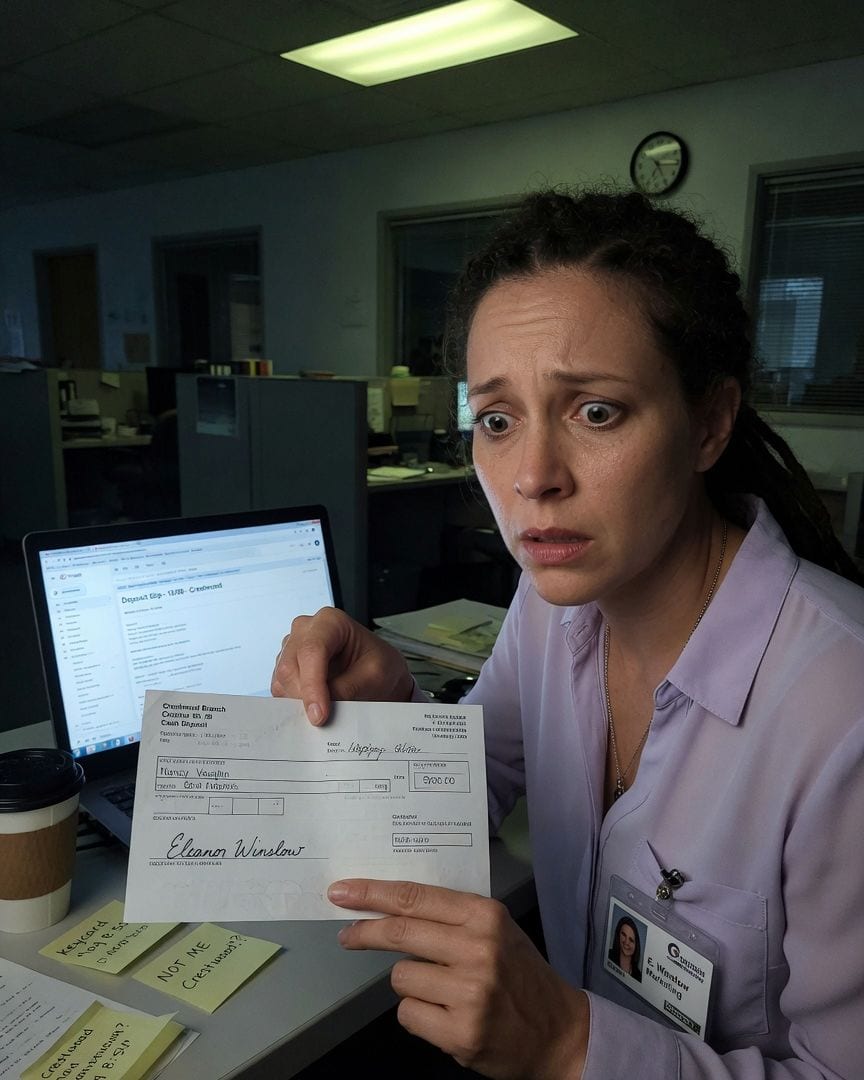
My bank statement shows a $900 cash deposit made in a town I've never set foot in, at 10:40 AM on a workday. I was at my desk, badged in. Two more landed since.
My bank statement showed a $900 cash deposit from a town I'd never visited, 150 miles away. I was at my desk, logged into work, all three times. But the scanned deposit slip arrived, clear as day, showing my own flawless signature.
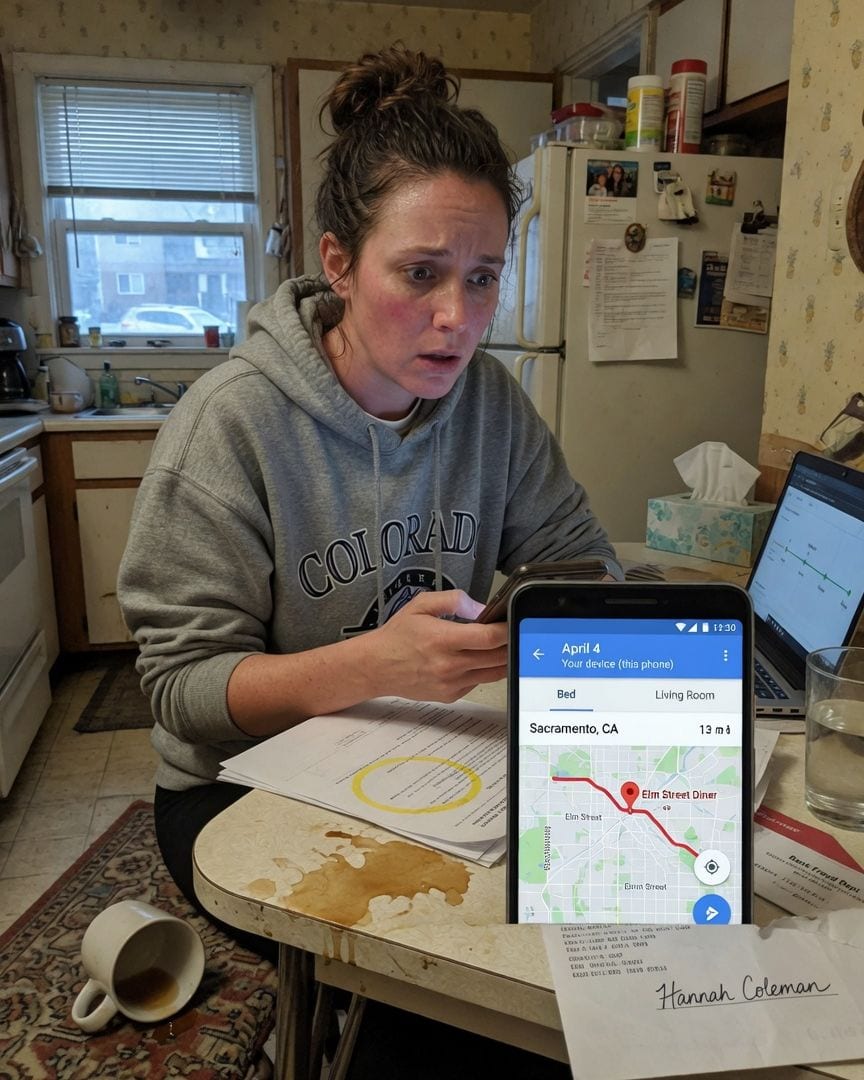
My phone's GPS places me in Sacramento every fourth of the month, driving a street I've never seen. I'm always home in Denver.
My Google Location History showed a phantom trip to Sacramento on a day I was home sick in Denver. I dismissed it as a glitch, until a bank statement revealed a charge from that diner. When the receipt arrived, it bore my exact signature for a coffee I never ordered.
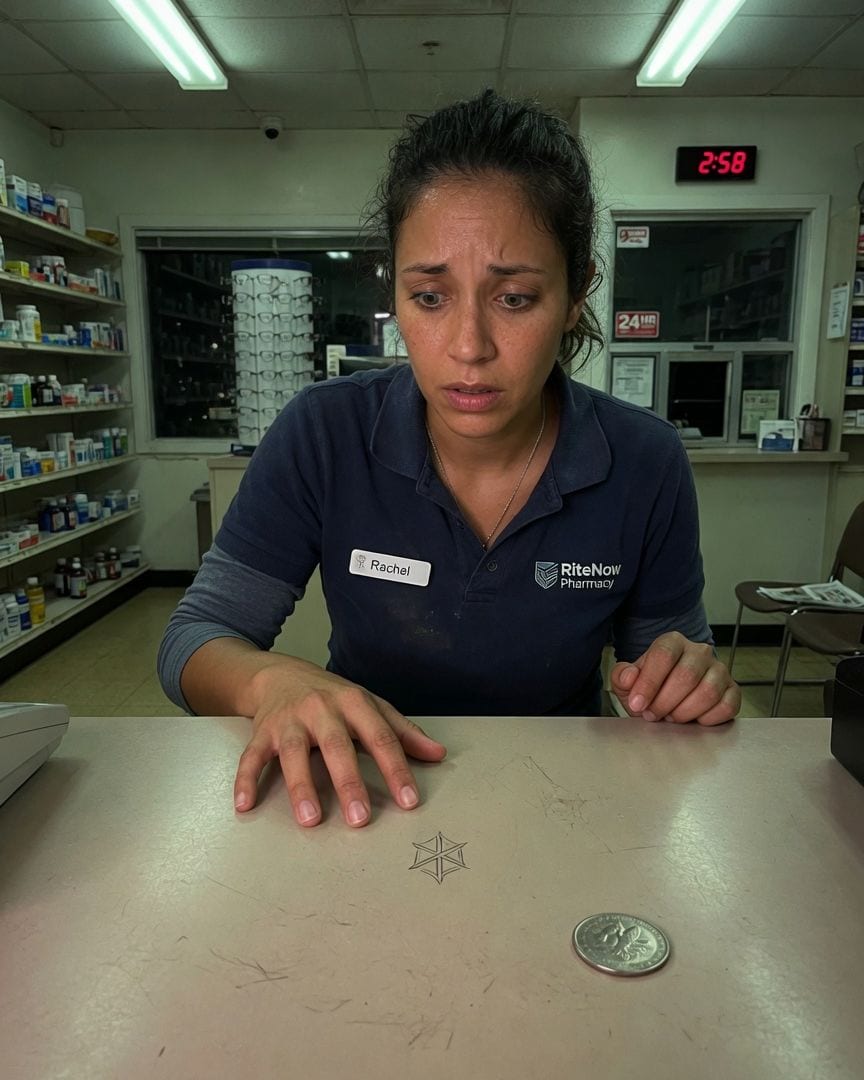
My pharmacy camera shows me talking to no one, handing a prescription across the counter to empty air.
Every night, my 24-hour pharmacy routine was anchored by Mr. Vale's predictable 3 AM visit for his heart prescription. But during a routine audit, I found no record of his visits, and security footage revealed me serving an utterly empty counter. Then, on the video, a tarnished silver coin appeared on the polished counter, left behind by a hand that wasn't there.
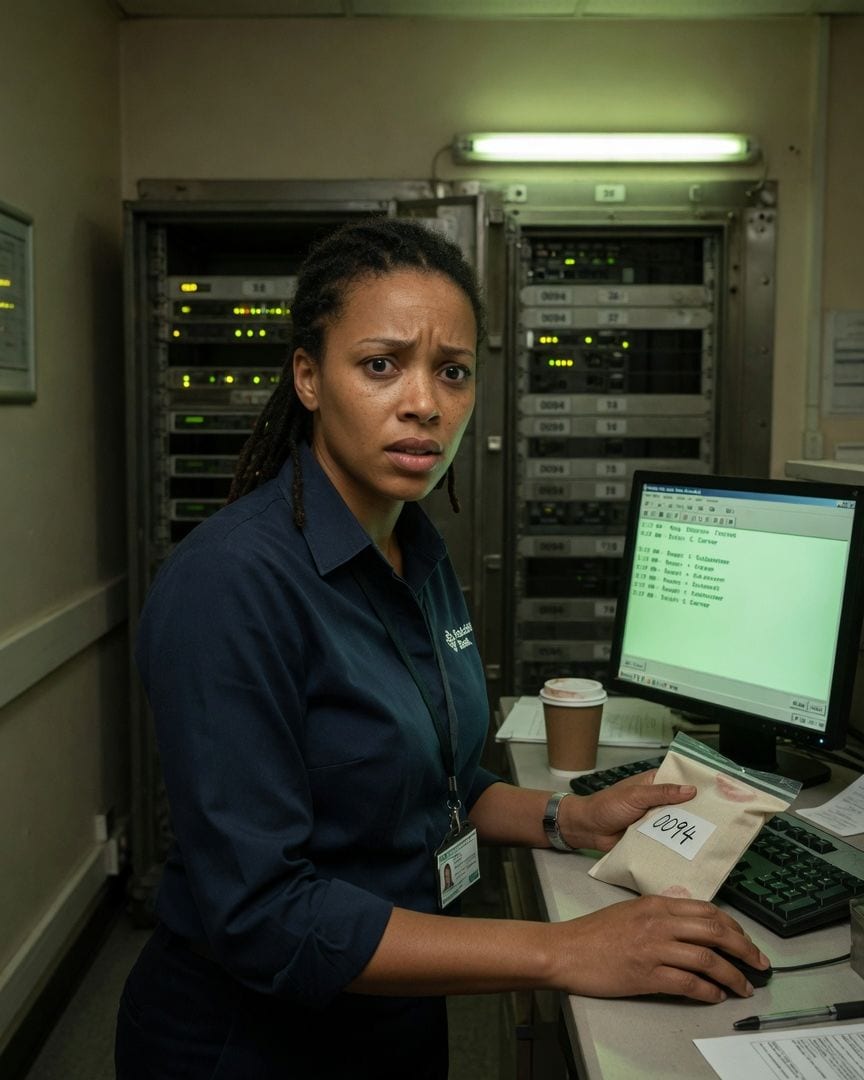
My night-deposit log shows a bag posted at 3:17 AM. My teller number, my count. Bag 0094 is still sealed in the safe, untouched.
I prided myself on precision as a night teller, logging every entry. But at 3:17 AM, a deposit appeared logged under my teller number that I never processed. Security footage then revealed a figure in my uniform, wearing my ID badge, with a blank photo slot.
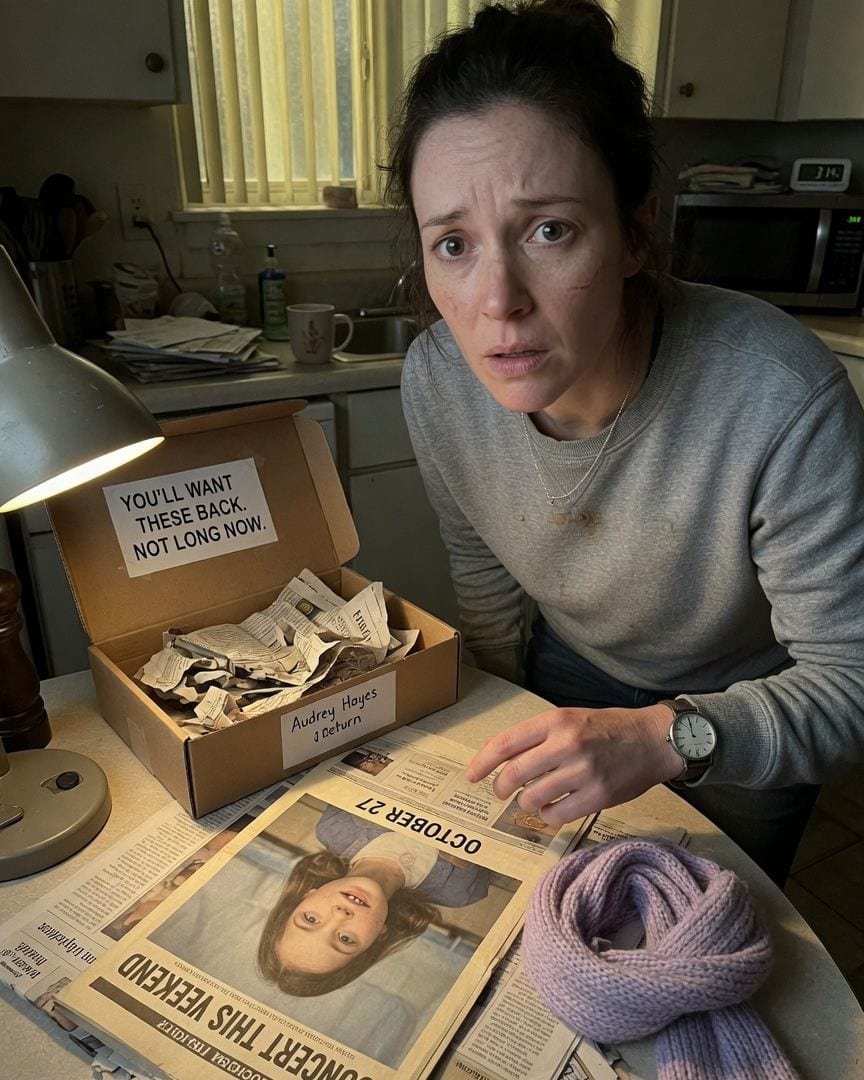
A box turned up with my name and no sender. Inside was a watch I lost years ago, still ticking and set right — wrapped in newspaper dated two weeks from now.
A plain brown box appeared on my step, containing my long-lost personal items. Among them, my grandmother's ticking watch and a newspaper dated two weeks in the future. But a historical ledger then revealed my name and these exact items, listed in 1965.
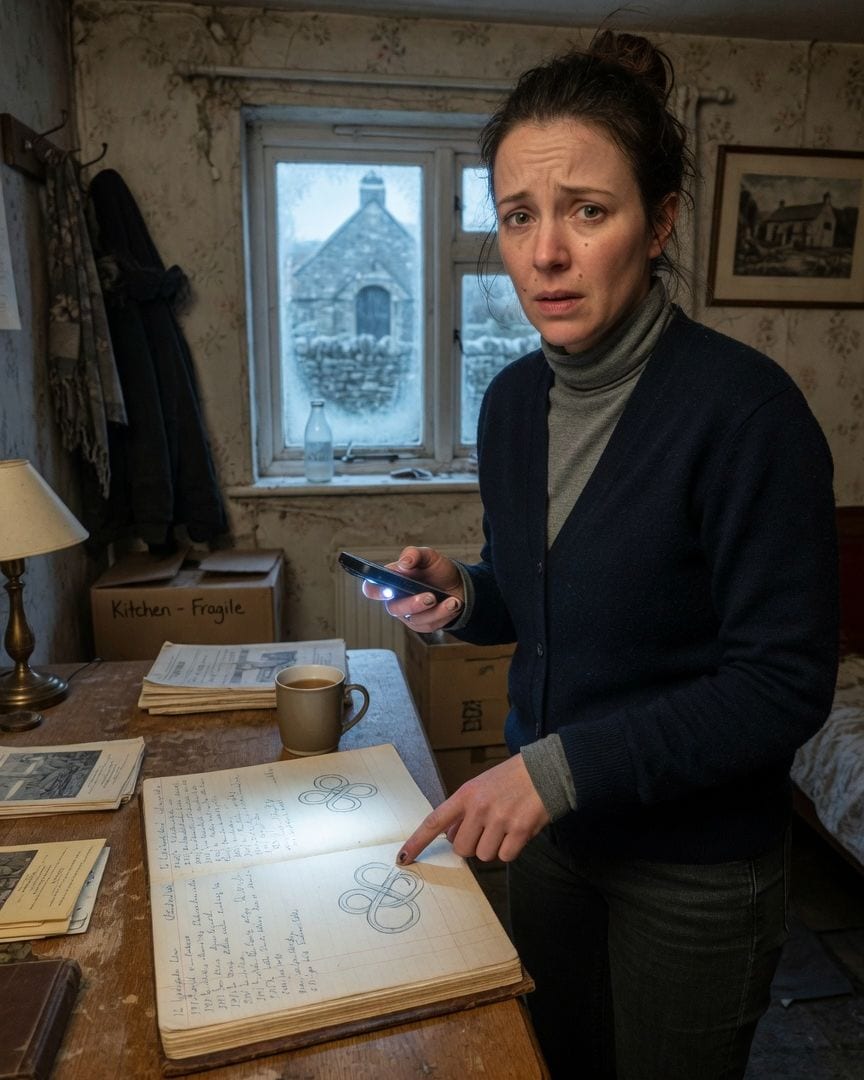
Milk appears daily by my lychgate. The dairy closed in '79. My address is handwritten into their old delivery book, starting the day we moved in.
Moving to Blackwood Creek, I loved the quaint charm, especially the unexpected morning milk delivery to my lychgate. But when I mentioned it to Eleanor at the village shop, her smile froze. She told me Willow Creek Dairy closed decades ago, in '79.