A corporal on his last watch picks up live Morse code from a shipping lane dead forty years. Then, tapping starts inside his sealed bunker.
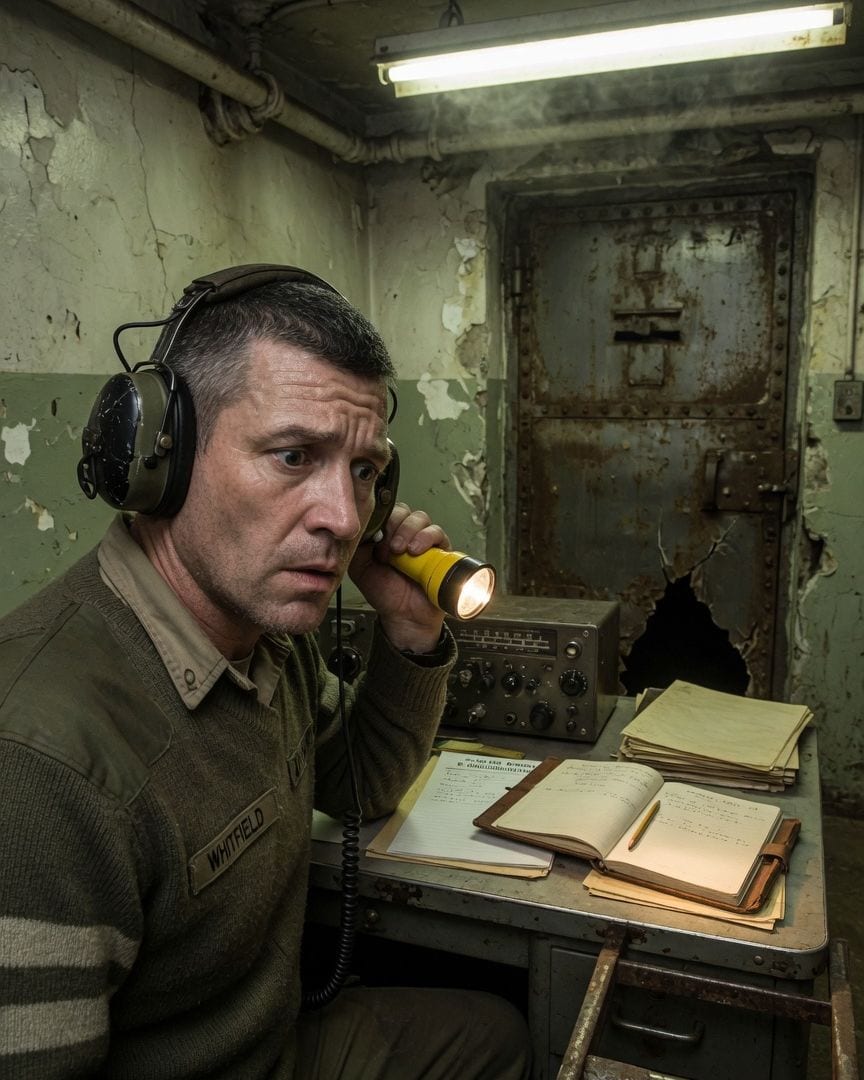
Corporal Quentin Whitfield leaned against the cold concrete of the old coastal bunker, the last man on watch before the facility was decommissioned for good. The fog outside was thick, muffling the boom of the sea against the cliffs below.
His shift, like the bunker itself, was winding down. He was running a final sweep of the archaic comms gear, a ritual more than a duty, when a faint, insistent crackle pierced the static on a long-dead frequency.
It was Morse code, sent in a fist so fast and clean it could only be a trained wartime operator.
Whitfield adjusted the heavy-duty headphones, the hiss of the static growing louder around the distinct dits and dahs. He grabbed his notepad and pencil, his fingers moving automatically, transcribing the impossible transmission.
The message, as he jotted it down, was a convoy sighting report for a shipping lane that had not carried a convoy in forty years. His brow furrowed.
The dread wasn't in the message itself, but in the impossible precision of its delivery, a ghost speaking from a graveyard of airwaves.
The old headphones pressed tight against his ears, amplifying the impossible signal, making it feel less like a recording and more like a live, directed transmission, meant for him. He checked the frequency again, then the receiver settings.
Everything was as it should be, except for the message that shouldn't exist.
Whitfield tried to rationalize it. A stray atmospheric bounce, a forgotten training exercise, an elaborate prank by the decommissioning crew. He ran through the possibilities, each one falling short of the impossible clarity of the signal.
The sender’s cadence had been too deliberate, too focused, for a mere anomaly. He pulled out the bunker’s dusty, archived code books. Most of them were too new, or too old, or for the wrong theater.
He flipped through the brittle pages, searching for a match, a logical explanation for the cipher.
Then, tucked into a loose leaf in a brittle, leather-bound volume marked 'Atlantic Defense, '43-'45,' he found a cipher key. It was an arcane, almost forgotten system, but it fit the message's structure with unsettling accuracy.
His fingers, trained for speed and accuracy, worked quickly, decrypting the burst. The plain text appeared on his pad: 'CONVOY SIGHTED. BEARING 270. COURSE 090. ETA 0400. STATION 73. ACKNOWLEDGE AND HOLD POSITION. DO NOT RESPOND TO IRREGULARITIES ON LINE.'
Station 73 was his bunker. The date on the message was this date, October 23rd. Whitfield stared at the final phrase, a chill tracing his spine.
And then, as if the message itself was a trigger, a faint, rhythmic tapping began, deep within the bunker's concrete shell, not from the radio, but from below, from somewhere in the sealed-off lower levels that were supposed to be empty.
The tapping persisted, a slow, deliberate beat against concrete, echoing the 'DO NOT RESPOND TO IRREGULARITIES ON LINE' instruction. Whitfield grabbed his flashlight, the radio's impossible message still burning in his mind.
He descended a short, rusted ladder to a sub-level, a network of sealed tunnels leading to the disused power conduits and storage areas. The air grew colder, heavy with the scent of damp earth.
He moved past massive, barnacled doors, long welded shut and forgotten. The rhythmic tapping grew louder, coming from behind one such door, heavier than the others, covered in decades of rust and grime.
He shone his light, and there, near the bottom, was a small, ragged breach, a fresh crack in the thick steel, barely an inch wide, but enough to peer through.
A faint, earthy scent wafted from the darkness beyond, and for a split second, he saw a darker-than-dark outline pull back from the opening, like a shadow retracting into itself, leaving only the impenetrable black.
Whitfield stood frozen, flashlight beam fixed on the fresh crack. He called out, his voice swallowed by the damp air, but only silence answered.
He tried to force the door, leaning his weight into the rusted steel, but it was solid, unmovable despite the small breach.
The thought of a rat, or some tenacious coastal animal, gnawing through a half-inch of steel was absurd, an explanation his mind refused to accept.
He returned to the comms room, the decrypted message and the memory of the retreating shadow warring in his mind. He tried to raise Sergeant Coleman on the tactical net, but the signal was patchy, riddled with static.
He left a garbled message about 'irregular activity' and 'unexplained contact,' his voice tight with an urgency that the static seemed to swallow.
He couldn't shake the feeling that the tapping, the message, and the shadow were intrinsically linked. He scanned the bunker's old maintenance logs, searching for any mention of strange occurrences, sealed breaches, or peculiar directives regarding the lower levels.
Most entries were mundane, routine checks of vents and wiring, but as he sifted through decades-old pages, he found a series of sparse, almost cryptic notes from the 1970s.
These referred to 'atmospheric interference' and 'structural integrity checks' around the same sealed section he had just visited. One entry, dated exactly forty years ago to the day, simply read: 'Station 73 – Watch Confirmed. All clear.'
It was the same date as the 'convoy sighting' message he had just intercepted, a chilling echo. There was no mention of an operator's name, just the station and the confirmation.
The lack of detail, the clinical brevity, was more unsettling than any explicit warning.
As Whitfield continued his search, a new sound cut through the bunker's silence: a low, resonant hum from the old generator room, a hum that shouldn't be there.
The generator was offline, decommissioned decades ago, its massive diesel engine a silent monument to a bygone era. He moved cautiously, weapon drawn, towards the hum, every sense on high alert.
The air grew colder, the dampness intensifying with each step. He reached the generator room, its heavy steel door ajar, casting a sliver of faint, blue-green light onto the floor.
Inside, the massive, antique diesel generator pulsed with the eerie, internal light, its huge flywheels slowly turning, humming with an impossible energy. No fuel lines were connected, no power cables active; it simply ran.
A figure stood beside it, silhouetted against the strange glow. It was tall, impossibly thin, and utterly still. Whitfield froze, his heart hammering against his ribs. He raised his rifle, calling out, "Who's there? Identify yourself!"
The figure didn't move, didn't answer. It simply tilted its head, and Whitfield felt an intense, focused pressure, like a gaze that pierced directly into his mind, stripping away his thoughts.
The blue-green light pulsed, once, twice, and then, as quickly as it had begun, the hum died, the light vanished, and the figure was gone. The generator room was dark, silent, and empty, the heavy steel door now fully closed.
He checked the door, but it was locked from the inside, a massive, rusted deadbolt thrown. He was alone, and whatever had been in there knew he was looking.
Shaken, Whitfield returned to the comms room, the cold dread of being watched settling deep in his bones.
He tried Sergeant Coleman again, his voice tight with urgency, but only static answered, mocking his attempts to connect to the outside world. He knew he couldn't wait for relief.
The bunker itself felt alive, hostile, a concrete trap closing around him. He remembered the cryptic notes in the maintenance log, the 'structural integrity checks' around the sealed levels.
His gaze fell again to the breached door, the small crack now seeming to mock him. He returned to it, determined to find another way in, to understand what was on the other side.
He noticed a loose panel in the wall beside the breached door, almost invisible against the stained concrete, tucked behind a coil of abandoned cable. Prying it open with his combat knife, he found a small, hidden compartment.
Inside, nestled among dry-rotted wires and dust, was a heavy, leather-bound logbook, unmarked, and a brittle, hand-drawn map of the bunker's lower levels. The logbook wasn't official issue; it looked like a personal journal.
He opened it, the pages filled with faded ink in a neat, disciplined hand. It detailed routine watches, weather observations, and then, increasingly, entries about 'the signal,' 'the tapping,' and 'the presence.'
The entries grew more erratic, more desperate, culminating in a final entry, dated forty years ago to the day: 'They want me to hold position. It's not a convoy. It's a transfer. Station 73. They know my name.
They know this night.' The operator, a Private Henry Winslow, had vanished forty years ago, officially listed as AWOL. The 'convoy sighting' was a lie, a cover.
The 'irregularities on line' were the entity's presence, demanding attention, demanding a new operator.
Whitfield’s gaze dropped to the hand-drawn map. It was crude but detailed, showing the sealed tunnels, the generator room, and a labyrinthine network of sub-sub-levels even the official schematics didn’t show.
And on it, meticulously marked, were a series of dates, each corresponding to a previous 'atmospheric interference' event in the logs, and next to each date, a name. Private Henry Winslow’s name was there, forty years ago.
And beneath it, a stark, unsettling entry, written in what looked like fresh ink, or a different kind of pigment altogether, that glowed faintly under his flashlight beam. It was his own name: 'Cpl.
Q. Whitfield,' precisely paired with this current night's date.
He felt a cold dread bloom in his chest, not just from the discovery, but from the sudden, profound understanding that the map, and the entity it served, had been waiting for him specifically, all along, marking his arrival with chilling precision.
The map was a ledger, a manifest of the taken. Whitfield understood now.
The bunker wasn't just a relay station; it was a 'watchpoint' for something ancient and hungry, a conduit opened by the unique convergence of its location, the atmospheric conditions, and the old equipment.
The Morse code wasn't a warning; it was a summons, a test, a lure. The 'convoy sighting' was a fiction, a simple message to engage the operator, to ensure they were at their post, alert and ready.
The 'hold position' was the critical command, ensuring the next 'watchman' remained for the 'transfer.'
The previous operators hadn't gone AWOL; they had been assimilated, their consciousnesses becoming part of the entity, or perhaps, becoming the entity itself, perpetuating the cycle by sending the next message.
The thin, still figure he'd seen, the impossible hum of the generator, the tapping from the breach – these were the entity's agents, or perhaps its extensions, ensuring the 'accountability that cannot be' was maintained.
His name on the map, his date, meant he was the next designated 'operator,' chosen long ago, perhaps even before he'd ever set foot in the military.
Every detail, from the dead frequency to the specific cipher, was a pre-ordained step in a ritual that had played out for decades, perhaps centuries, at this desolate point on the coast.
He was not just on watch; he was the watch. He was the next entry in a ledger that kept perfect, terrifying account of its acquisitions.
The realization hit Whitfield with the force of a physical blow. There was no escape. The bunker was sealed, the radio net dead, and the entity was already inside, its influence permeating every concrete slab, every shadow.
He was alone, trapped, and accounted for. He heard the rhythmic tapping again, this time from directly below his feet, resonating through the floor, a slow, deliberate cadence.
Then, a low, guttural hum began, growing in intensity, coming from the direction of the breached door. The air grew heavy, thick with the scent of damp earth and something unidentifiable, metallic and cold, like ozone and dried blood.
The blue-green light from the generator room pulsed once more, visible through the comms room doorway, a steady, hypnotic beat. He knew he was meant to acknowledge, to hold his position.
He saw the breach in the sealed door widen slightly, a deeper blackness within, as if the darkness itself was breathing.
The thin figure from the generator room appeared in the doorway, its head tilted, its form coalescing from the shadows. It didn't speak, didn't move, but its presence was an overwhelming command, a silent pull that defied resistance.
Whitfield gripped his rifle, but the gesture felt futile, a child's toy against an ancient tide. He could fight, but against what?
An entity that could appear and disappear, that could power a dead generator, that could write his name into a forty-year-old ledger? The watch was ending, but not in the way he had expected.
He slowly lowered his rifle, the cold metal clattering softly against the concrete floor. He was no longer Corporal Whitfield, just an operator, ready to take his position. The figure took a single, slow step towards him.
The hum intensified, a vibration that went through his bones, and the blue-green light swallowed the room.
The next morning, the fog lifted, revealing the deserted bunker. Captain Forsythe and Sergeant Coleman arrived with the decommissioning crew, expecting to find Corporal Whitfield packing his gear.
His rifle was found neatly stacked in the comms room, alongside his personal effects. The old radio was silent. The breach in the sealed door to the lower levels was gone, the rust unbroken, the steel solid as ever.
The hidden compartment was empty, the logbook and map vanished. No trace of Corporal Whitfield remained, save for his service record, which would soon be updated to reflect his official status: AWOL.
The decommissioning proceeded as planned, the bunker's doors welded shut, its history sealed beneath layers of concrete and rust.
Years later, the old bunker stood silent and forgotten, a concrete scar on the English coast.
Occasionally, on particularly foggy nights, local fishermen reported faint, rhythmic tapping sounds echoing from the cliffs below, or strange, blue-green lights seen deep within the sealed structure.
The stories were dismissed as old wives' tales, the ramblings of men too long at sea.
But sometimes, when the conditions were just right, a whisper of static would cross the airwaves, picked up by an amateur radio enthusiast scanning the forgotten frequencies.
A burst of impossibly clean Morse, a convoy sighting report for a shipping lane that no longer existed, a message that named a station long closed, and an instruction to acknowledge and hold position.
A voice, clear and precise, answering back from the static: 'Watch confirmed. All clear.'
If this one got to you
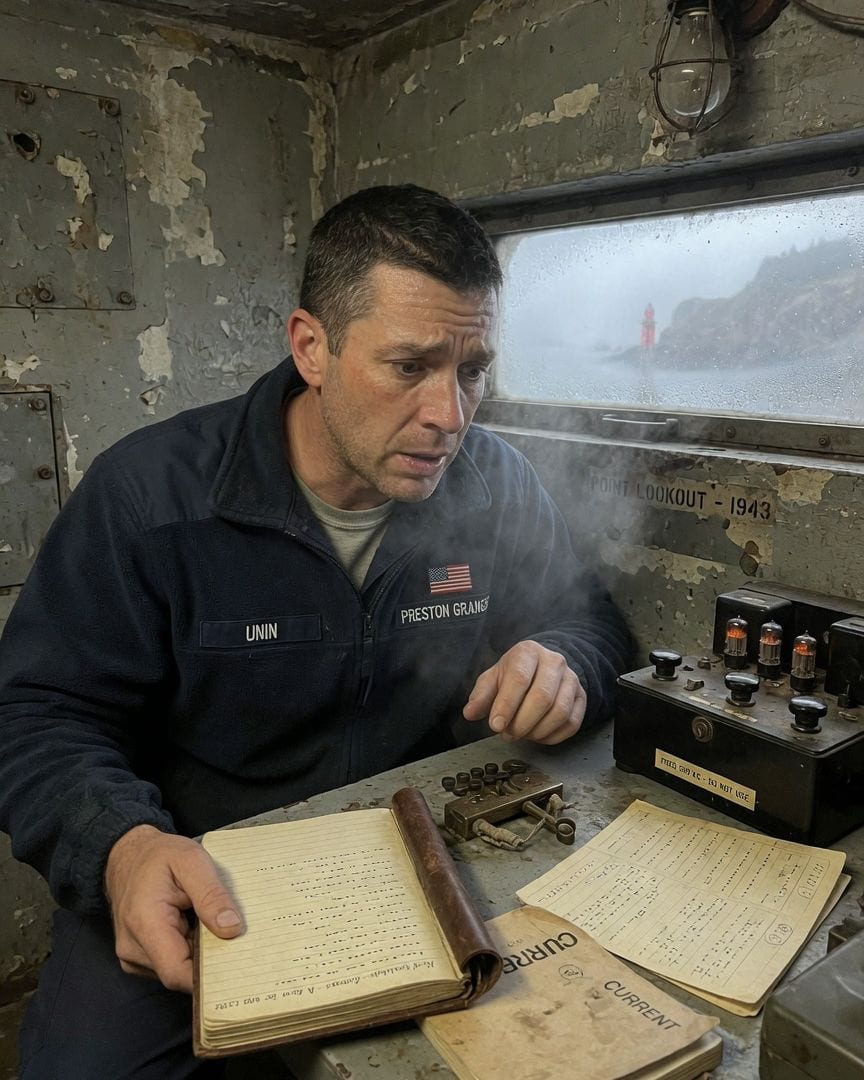
On his last night before the Coast Guard station closed, Corporal Granger heard a dead radio crackle with a Cold War convoy report for tonight – then found his own handwriting in a logbook that was decades old.
Corporal Preston Granger sat hunched in the old WWII bunker at Coast Guard Station Point Lookout, enduring his final shift before the station was permanently mothballed. The fog outside muffled the world, leaving only the distant boom of the sea until a faint burst of Morse code crackled over the antique relay set. The frequency had been dead for decades, yet the signal was a precise convoy sighting report for a shipping lane that hadn't seen a merchant vessel in forty years. The dread was a cold, hard knot in Preston’s stomach as he decrypted the message: 'CONVOY SIGHTED. GRID 4-B. ACKNOWLEDGE AND HOLD POSITION. POINT LOOKOUT. OCT 27.' Oct 27 – tonight’s date, his exact location. He later found a leather-bound logbook filled with identical entries spanning decades, and beneath the last one, dated October 27th, 2023, was his own unmistakable handwriting.
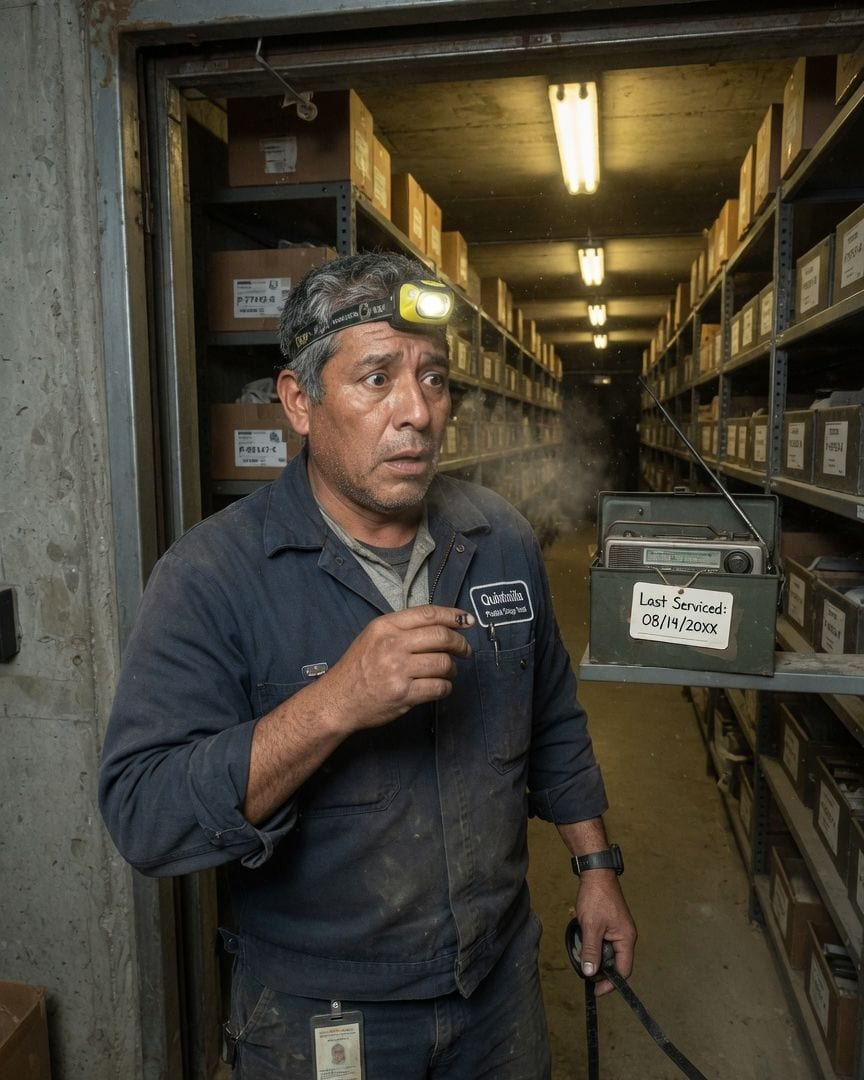
A Cold War bunker worker found a field radio serviced three years in the future, its ink still wet.
Salvador Quintanilla, one of the final two men at the Pueblo storage yard, was tasked with clearing Igloo 7, the last bunker before the facility's imminent closure. As he rolled back the heavy steel door, he discovered not an empty space, but metal racking extending impossibly far past the concrete wall, under the empty prairie, lit by a wan, humming light. Venturing into the profound chill, he found an old field radio with a service tag dated three years in the future, its dark ink still wet to the touch. The radio hummed faintly in his hands, and from deep within the impossible corridor, a metallic click echoed, confirming he was not alone.
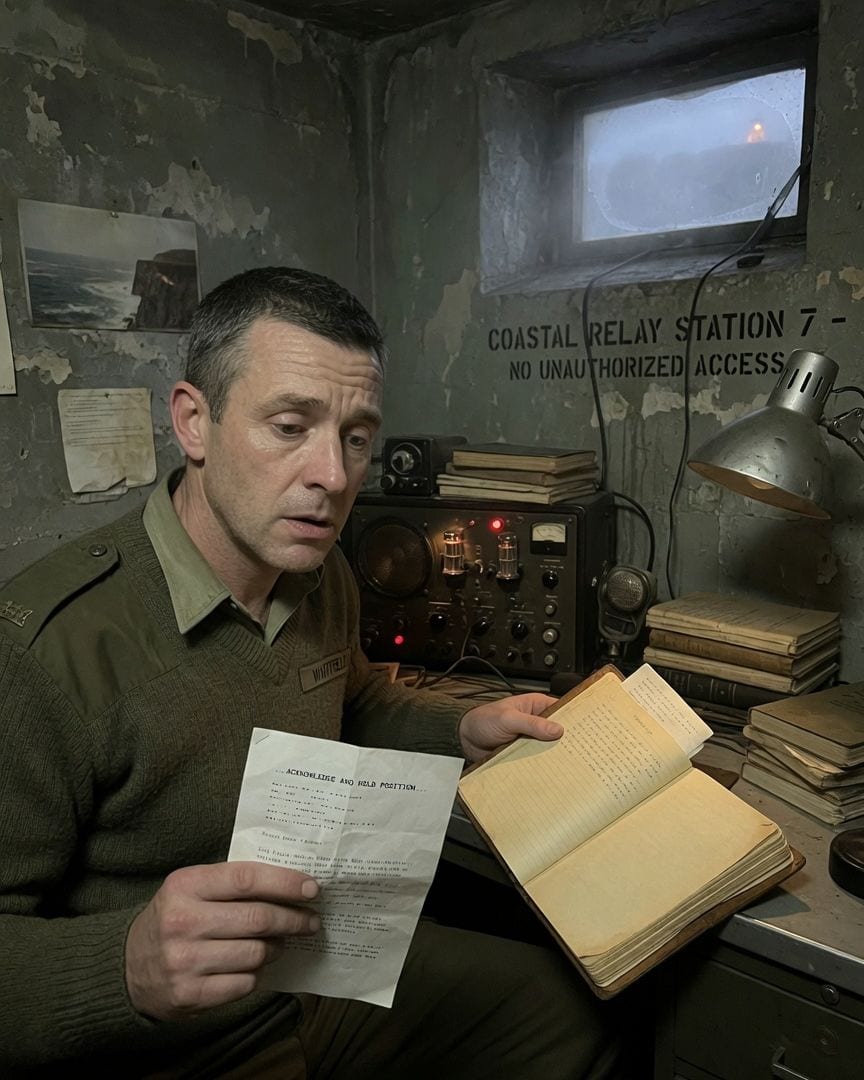
A corporal on his last watch decoded a Morse order for his station. It was sent forty years ago, for *this* very night.
Corporal Greg Whitfield stood watch on one of the final nights before his old coastal relay station was mothballed. The fog-bound English coast echoed with the lonely boom of the sea, the bunker's ancient equipment humming its last familiar tune. Suddenly, a burst of Morse code cut through the static on a long-dead frequency, an impossible convoy sighting for a shipping lane closed for forty years. Decrypted, the message named his exact station and tonight's date, instructing the operator to acknowledge and hold position, no matter what. Later, a dusty archive revealed a logbook entry from precisely forty years ago, recording the same message, acknowledged by a Private Barlow, followed by a chilling blank page. What happened to the last operator who acknowledged a forty-year-old ghost order?
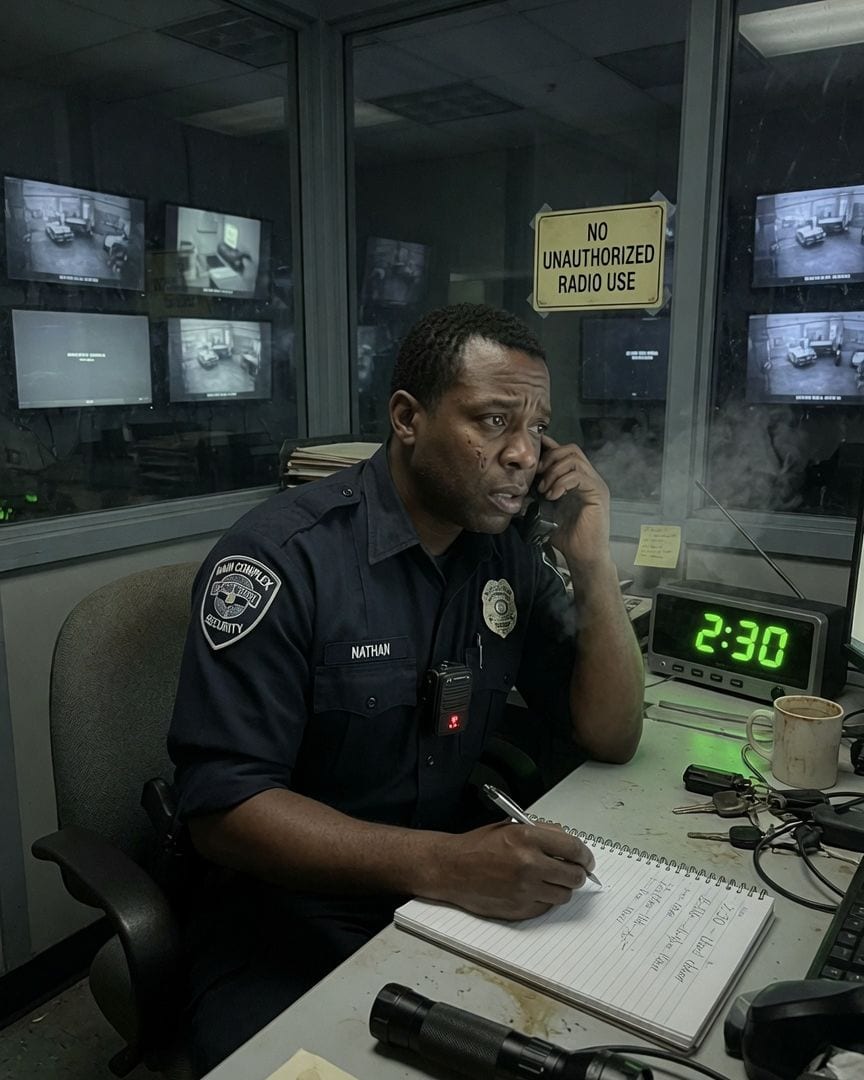
I radio Cole every night. My supervisor says his dock post was cut two years ago, and no Cole exists. But I just found Cole’s old logbook.
My graveyard shift usually consists of monotonous hourly check-ins with Cole, the guard at the loading dock. But my supervisor just revealed that the dock post was cut two years ago, and no one named Cole has ever worked for the company. I've been talking to someone who simply isn't there.
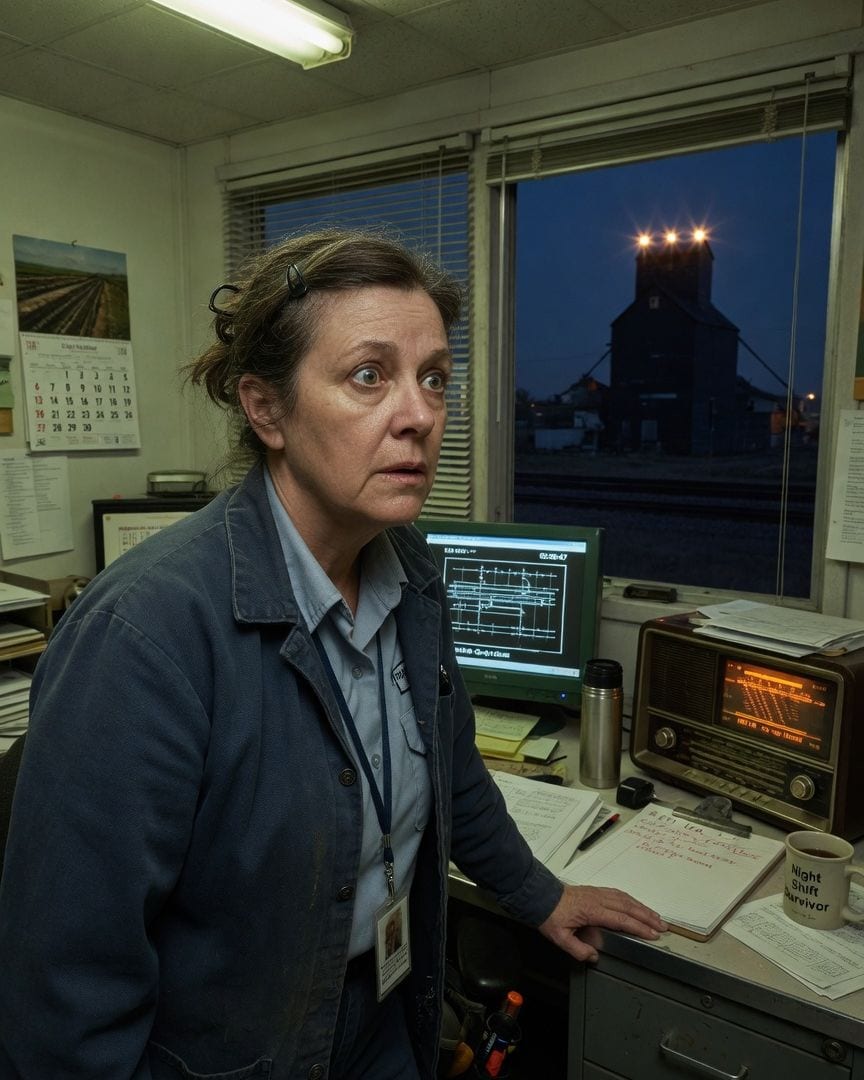
The grain tower light flashed three times at 2 AM, signaling me clear. The bulb was removed six years ago.
Every night, I work the lonely shift at the transport hub. For fifteen years, an old grain elevator, automated and unpowered with its light bulb physically removed, still flashes a 'Clear' signal across the tracks at 2 AM. Recently, the impossible flashes have grown sharper, stirring a deep unease from a place that should be completely silent.
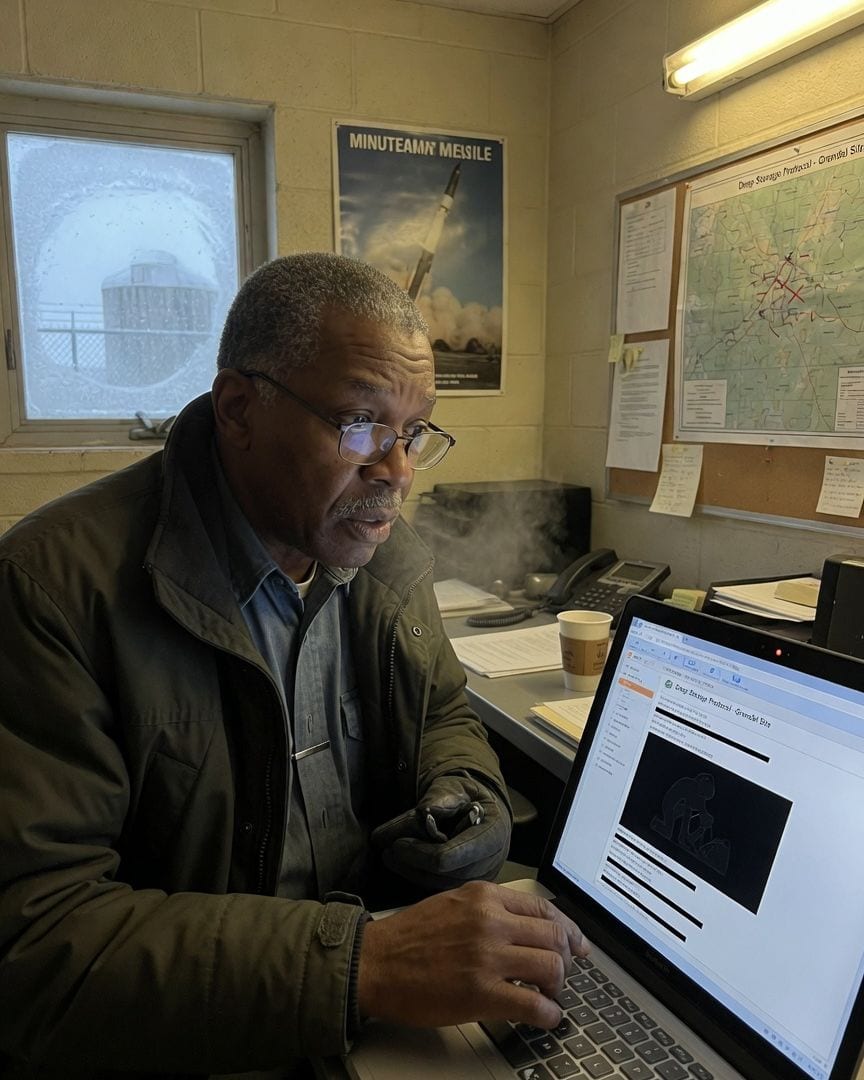
On his last cleanup before retirement, Colonel Marsalis found a dead Cold War missile silo's printer repeating: CREW STILL ON STATION.
Colonel Ren Marsalis, a career Air Force officer, faced his final administrative cleanup before retirement at the decommissioned Grendel Site in the biting North Dakota winter. He expected a sealed missile capsule, but Capsule 7's eight-ton door stood cracked open eleven impossible inches, its hydraulics removed in 1985. Inside, consoles glowed with static alerts from an unknown power source, while an old printer endlessly spooled paper repeating one chilling message: "CREW STILL ON STATION. ACKNOWLEDGE." This impossible communication, from a long-dead system, was no glitch; it hinted at a deliberate, hidden presence, a truth reinforced by a redacted document showing a hunched, humanoid shape.