A Cold War bunker worker found a field radio serviced three years in the future, its ink still wet.
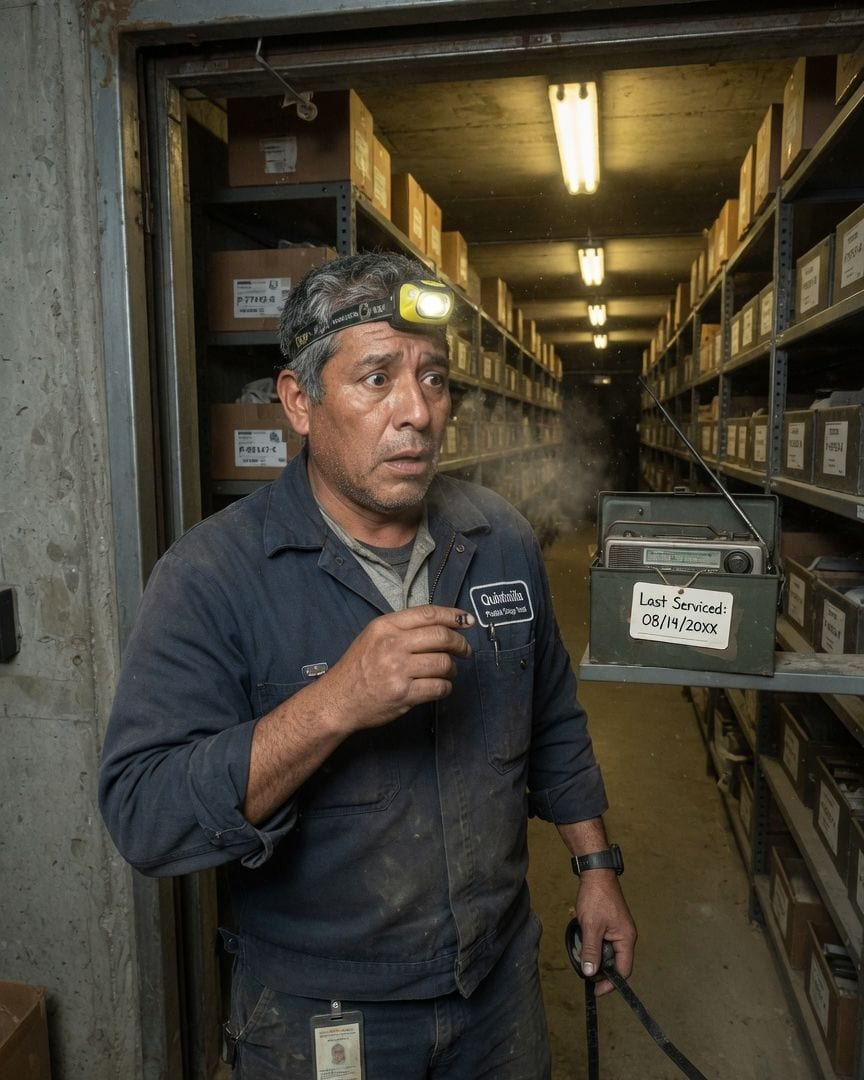
Salvador Quintanilla, 48, squinted into the gloom of Igloo 7, the last of the Pueblo storage yard bunkers to be cleared. Dust motes danced in the weak beam of his headlamp, illuminating bay after bay of empty metal racking.
He was one of the last two men left, the facility days from final closure, and the silence of the empty prairie outside pressed in.
He’d drawn the far igloo, the one known for its damp and its endless, echoing silence. He rolled back the heavy steel door, the screech of rusted runners grating on the quiet.
The racking inside ran past the far concrete wall, past where the building ended, out into the darkness under the yard, under the fence, under the empty prairie. But it was lit.
A series of low, fluorescent tubes hummed, casting a wan, yellowish light down an impossible corridor of shelving that continued, unbroken, into the earth itself. Salvador paused, his hand on the cold steel of the igloo doorframe.
He took a breath, the air already noticeably colder than the main igloo space. He walked ninety seconds into it, the air growing colder with each step, and stopped.
The racks were labeled, bay after bay of accession numbers issued by his own depot, a sequence continuing past the highest number ever assigned in any official record Salvador had ever seen.
The air, though cold, had a faint, metallic tang.
Salvador tried to rationalize it. An optical illusion, perhaps? A trick of the light, or a forgotten, unmapped extension from decades ago, perhaps a maintenance tunnel that had simply been walled off?
He pulled out his standard-issue measuring tape, extending it past the concrete, into the impossible tunnel. It wasn't an illusion. The metal was solid, the floor beneath his boots firm, unmistakably concrete.
The racks were physically there, extending for what felt like hundreds of feet. He ran his hand over the cold steel, the rust-flecked labels precise and legible under his touch.
His flashlight beam cut through the manufactured gloom, reflecting off numbers that simply could not exist within the depot's inventory. He checked his own watch, then the numbers again. Impossible.
A strange compulsion pulled him further down the impossible aisle. He walked, the beam of his headlamp cutting through the deepening shadows.
He found a single container, a standard military-issue ammo box, sitting on a shelf marked with an accession number that was nearly a decade beyond the depot’s last official entry. He hesitated, then unlatched the heavy lid.
Inside, nestled in foam, was an old-model field radio, the kind last used in the early 90s. It looked pristine, almost new, like it had just come off the assembly line.
Attached to its aerial was a small, laminated service tag. The call sign was faded, but the 'Last Serviced' date was stark: 08/14/20XX – a date three years in the future.
And the ink on the tag, a dark, rich black, was still wet to the touch.
Salvador stared at the impossible date, the wet ink. He reached out, his finger trembling, and tried to wipe it, expecting it to smudge or smear, to prove itself a prank or a mistake. It didn't.
The ink was simply fresh, unblemished, refusing to yield to his touch. He pulled his hand back, a cold dread seeping into his bones.
The radio hummed faintly in his hands, a sound like distant static, barely audible but definitely there. The air in the extended racking grew colder still, a profound chill that made his breath visible in faint plumes before his face.
Then, from somewhere much deeper within the impossible corridor of shelves, he heard it: a faint, almost imperceptible metallic click, like a file drawer smoothly closing shut.
The sound echoed, amplified by the unnatural silence, confirming that he was not alone in this impossible space.
The next morning, Salvador reported a 'structural anomaly' in Igloo 7 to Isaac Brooks, his supervisor. He deliberately downplayed the impossible racking and omitted the radio, describing it as a section of mis-surveyed tunnel that had somehow become illuminated.
Isaac, pragmatic and by-the-book, grumbled about 'old government quirks' and told him to 'flag it for the demolition crew.' Salvador nodded, but his mind was alight, buzzing with unanswered questions.
That night, instead of going home, he returned to Igloo 7. The padlock Isaac had placed on the main door was trivial for him to bypass.
He spent hours cross-referencing the impossible accession numbers with the depot’s archived records, using his own secure terminal. Not a single one existed. The numbering sequence was utterly alien to the official system.
He found more containers in the extended racks, each bearing an accession number from the non-existent sequence. One held a flight recorder, its data chip intact.
Salvador played a snippet: a standard flight path ending abruptly mid-air over known land, but no crash site, no debris field ever recorded by any authority. The audio cut out with a sudden, clean silence, not the sound of impact.
Another container held a diver's knife, its blade encrusted with barnacles that, by any biological standard, would have taken decades to grow, yet the knife's serial number was from a unit lost only two years prior in the shallow waters of the Florida Keys.
Each discovery ratcheted the unease, confirming that these weren't just old records or mislabeled items; they were impossible objects, defying time and space, filed away in a place that shouldn't exist.
The cold certainty of it settled deep in Salvador’s stomach.
Salvador began spending every night in Igloo 7, driven by a desperate need to understand what he had stumbled upon. He marked containers with chalk, noting their positions relative to the floor and the wall.
One morning, he found a container he had marked with an 'X' had shifted almost an inch from its original place, the chalk mark now smeared where it had scraped against the metal shelf above.
A faint, metallic scent, like ozone mixed with ancient paper, hung in the air, stronger than before. He felt a profound cold draft, even though the igloo's main door was sealed tight and the air inside should have been stagnant.
His flashlight beam swept the deeper reaches of the impossible racking, tracing the endless rows of shelves. One night, he saw it: a faint, shimmering outline, like heat haze distorting the metal shelves, far down the corridor.
It was vaguely humanoid, but indistinct, a ripple in the air. He called out, his voice thin in the vast space. The shimmer vanished instantly, as if it had simply blinked out of existence.
He froze, heart pounding against his ribs.
A few minutes later, near the threshold of the extended racking, where the concrete ended and the impossible space began, he found a message scrawled in chalk on the concrete floor, not his own chalk.
The letters were stark, blocky, almost crude: 'STOP LOOKING.' The message was fresh, the chalk dust still loose around the edges. Someone knew. Someone was watching him, here, in this impossible place.
The next morning, Salvador confronted Isaac, not with a 'structural anomaly,' but with the field radio, the flight recorder, and a photograph of the 'STOP LOOKING' message. Isaac’s initial dismissal was sharp, almost angry. 'Quintanilla, are you losing it?
That radio is a prop, the recorder’s a dud, and someone's playing a joke with chalk. You’re clearing this place, not conducting an archeological dig.'
But Salvador pressed, detailing the wet ink, the future date, the impossible barnacles, the non-existent accession numbers, the shifted container, the metallic scent, even the shimmering outline he had seen. Isaac’s composure began to crack.
His face, usually a study in gruff indifference, paled slightly. He finally sighed, a deep, defeated sound that seemed to carry the weight of years. 'The decommissioning… it’s a cover, Salvador. This part of the depot… it’s always been different.'
He led Salvador to a locked, unmarked cabinet in his office, pulling out a heavy, leather-bound logbook, its cover devoid of any official insignia or branding. 'This isn't depot issue,' Isaac said, his voice low, almost a whisper.
'It’s… something else entirely.'
The logbook bore the same impossible accession numbers Salvador had found in Igloo 7. Isaac flipped through pages filled with precise, elegant script, detailing 'accessions' of 'lost' items and personnel. Not as recoveries, but as 'filings.'
Ships that vanished without a trace, aircraft that disappeared from radar, individuals who simply ceased to be. Isaac explained, 'They weren't lost, Salvador. They were… accessed. Filed away. This depot… it’s a junction.
A place where things that shouldn't exist, or shouldn't be, are cataloged and sealed.
The items you found, like the radio and the flight recorder, 'came back wrong' because they weren't lost and found; they were pulled from a different stream, a different time, and deposited here, into this system.
This logbook… it’s the record of the machine itself.' Salvador looked at the entries, the dates, the impossible coherence of it all.
The field radio, the flight recorder, the shifting containers, the chalk message – it all snapped into a terrifying, logical whole.
Salvador’s hands trembled as he turned the pages of the classified logbook. The entries detailed a chilling pattern: ships, aircraft, whole units, and individuals, all matching known 'lost' incidents.
They weren't accidents; they were 'accessions,' meticulously recorded by an unseen, uncaring system. The dread was in the coherence, the terrible logic of it all. This wasn't a clerical error; it was a vast, ongoing operation of disappearance and documentation.
He saw familiar names of vessels, unrecoverable wreck sites, all neatly listed with their impossible accession numbers.
He felt a growing nausea, the realization that this 'decommissioned' depot was merely a front for something monstrously active, a living archive of the impossible. He flipped to a section marked 'Future Accessions,' his breath catching in his throat.
There, among entries dated for years to come, for events yet to unfold, was a single, stark entry: his own service number, followed by his full name, Salvador Quintanilla. The date next to it was only weeks away.
He slowly lifted his head, the logbook heavy in his hands, his gaze locking onto Isaac Brooks, who stood in the igloo entrance, his face unreadable in the dim light, a massive, heavy-duty padlock clutched in his hand.
The silence was absolute.
Isaac’s voice was calm, devoid of malice or regret, a quiet rumble in the vast, still space of the igloo. 'You understand now, Salvador. This depot isn't just storage. It's a nexus.
A place where the 'lost' aren't found, but redirected. Filed.' He explained that the impossible racking wasn't just physical shelves; it was a constantly updating interface, a record of everything that had been, and would be, 'accessed.'
He spoke of the subtle shifts in the igloo, the cold drafts, the shimmering outlines, as 'bleed-throughs' from the other side of the filing system, traces of the anomalies being processed.
'I found my own name in this book, decades ago,' Isaac confessed, his eyes distant, fixed on some unseen point in the vastness beyond the igloo.
'My role as supervisor here… it’s just to manage the accessions until my own time comes.' He explained that the 'decommissioning' was a ruse, a way to clear out all witnesses, to isolate the last few 'scheduled' personnel.
The entire facility was a waiting room, a final staging ground for those whose names appeared in the 'Future Accessions.' Salvador’s mind reeled, every clue, every impossible detail, every gut-wrenching moment of dread, snapping into a coherent, horrifying picture.
The field radio, the flight recorder, the chalk message – they were all just echoes, remnants of others who had been processed, warnings he had been too late to heed.
He was not just an observer; he was an entry, a future file, already claimed.
Horror surged through Salvador, eclipsing all fear. He gripped the logbook, a sudden, desperate urge to escape overwhelming him. Isaac, calm and resigned, merely shifted his weight, his solid form blocking the only exit.
He didn't move to attack, his presence a quiet, unmovable barrier. 'There's no running, Salvador,' Isaac said softly. 'It's already signed.'
Salvador lunged, a desperate, animalistic cry tearing from his throat, aiming for the narrow gap between Isaac and the doorframe.
But just as he reached it, the massive steel igloo door, which had been left ajar, slammed shut with a deafening, metallic clang that vibrated through the floor. The padlock Isaac had been holding now secured it from the outside.
Salvador stumbled back, crashing into the racking, his hands scrabbling at the cold metal. He heard the heavy thud of the igloo's massive exterior steel door rolling into place, sealing him in completely.
The fluorescent tubes on the impossible racking flickered violently, then intensified, casting long, distorted shadows that stretched and writhed like living things, clinging to the shelves.
A profound coldness enveloped him, a crushing pressure that felt like being stretched thin, pulled apart at the seams.
The air thrummed with an unseen energy, a high-pitched whine that vibrated through his bones, through the concrete, through the metal of the racks. He was sealed inside, with the impossible racking, with the knowledge of his own impending accession.
The next morning, the Pueblo storage yard was utterly empty. Isaac Brooks was gone, his office cleared, his personal effects nowhere to be found.
Igloo 7 stood silently, its heavy door sealed, a single, new padlock gleaming in the morning sun. The decommissioning crew arrived to find the site deserted, all equipment packed, the final paperwork signed and filed.
No one questioned the missing supervisor or the solitary clerk who was supposed to be the last man out. The facility was simply marked 'Decommissioned' and left to the prairie wind, its secrets buried under the vast, indifferent sky.
Years later, a new clerk sorting through old Pueblo records found a transfer request for Salvador Quintanilla, dated weeks after the depot's closure. It was marked 'Filed - Accession Complete,' stamped in stark red ink.
The clerk paused, frowning at the unusual wording, then shrugged and placed it in the permanent archives. On the bottom, in neat, official script, was a single word: 'Welcome.'
If this one got to you
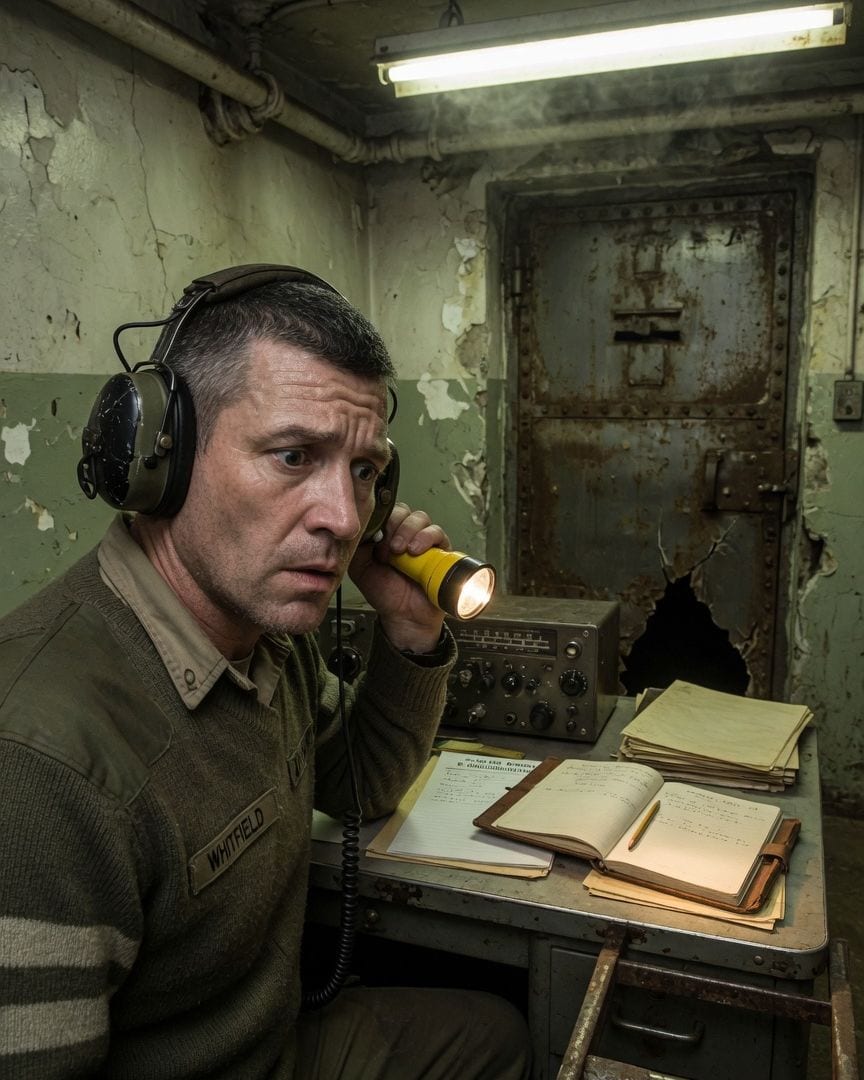
A corporal on his last watch picks up live Morse code from a shipping lane dead forty years. Then, tapping starts inside his sealed bunker.
Corporal Quentin Whitfield stood his last watch in the old coastal bunker, the facility winding down for good as thick fog muffled the sea below. His final sweep of archaic comms gear became anything but routine when a long-dead frequency crackled with live Morse code, a precise wartime transmission for a shipping lane unused in forty years. He decrypted the impossible message, a convoy sighting for his own bunker dated today, complete with an unsettling instruction: 'DO NOT RESPOND TO IRREGULARITIES ON LINE.' As if on cue, a faint, rhythmic tapping began from the bunker's sealed lower levels, growing louder behind a heavily rusted door with a fresh, ragged crack. A darker-than-dark outline pulled back from the opening as his light hit it, leaving only impenetrable blackness beyond.
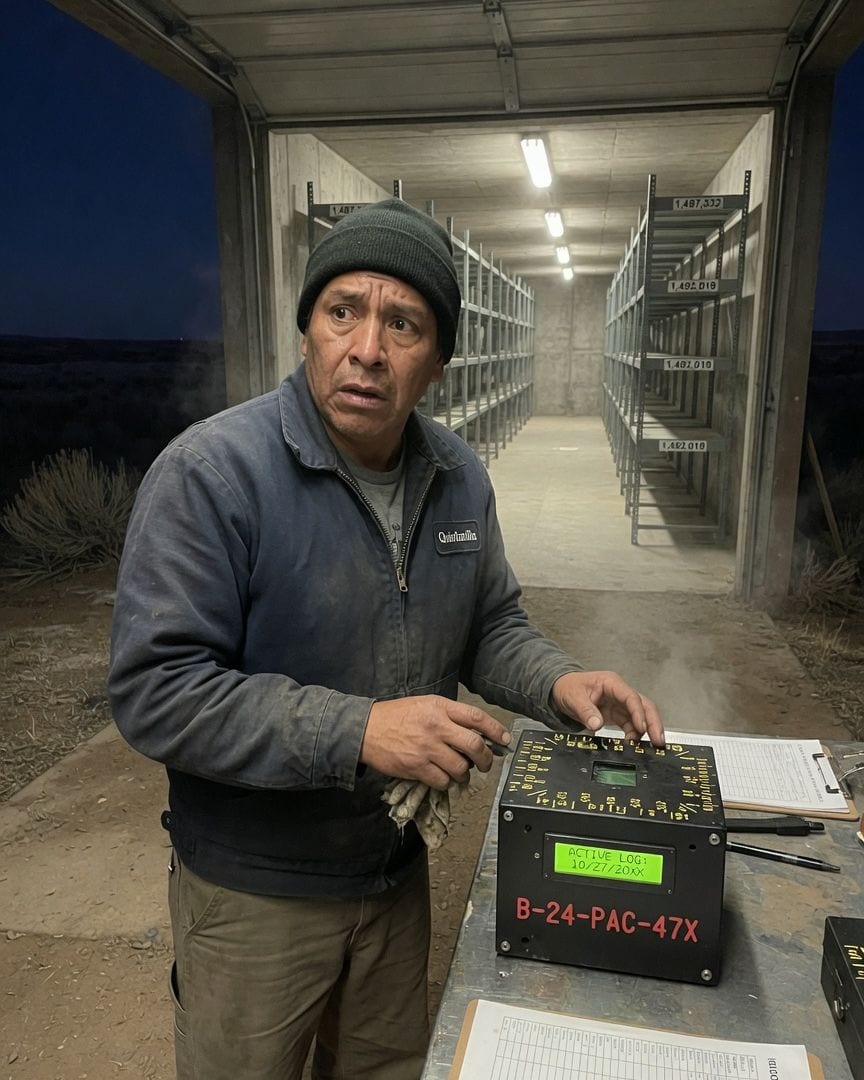
A storage yard worker on his last inventory finds a WWII bomber's black box logging data from the present day.
Salvador Quintanilla, one of the last two men at the Pueblo storage yard, was on his final inventory, closing out the last bay on his manifest. As he rolled back the heavy door of igloo six-B, he found the high-density racking stretching past the concrete wall, illuminated by an impossibly long strip light into the empty prairie beyond. A profound, unnatural cold seeped from this spectral extension, deepening with every step he took into its silent, lit void. The shelves held accession numbers from decades in the future, but his light soon caught on a pristine black flight recorder, a model from a B-24 bomber officially lost in 1944. When he triggered its hidden screen, it flickered to life with a single, clear line: `ACTIVE LOG: 10/27/20XX`. How could a device lost eighty years ago be logging data from the current year?
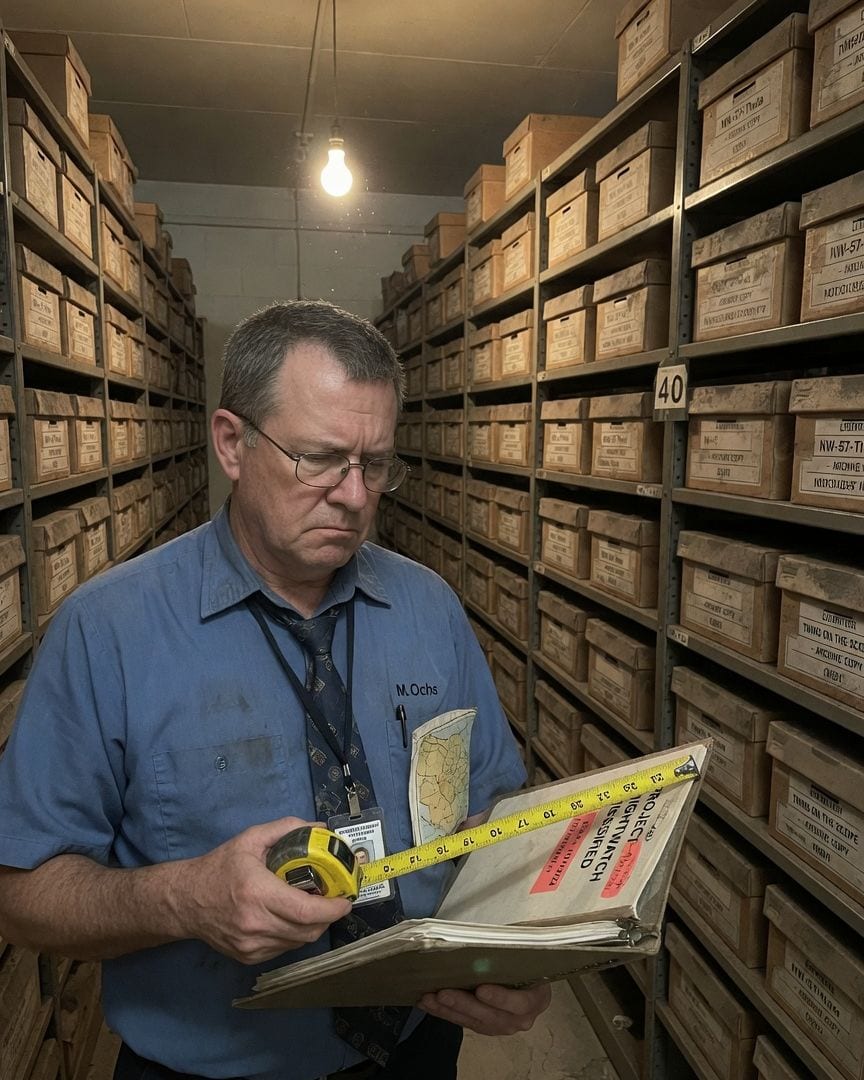
A Cold War records clerk on his final patrol found Aisle 40 stretched 61 feet longer, lined with unknown boxes. Inside one: 'PROJECT NIGHTWATCH - CLASSIFIED' with a fresh timestamp.
Marlin Ochs, a creature of habit after nineteen years at the St. Louis federal records depot, faced his final patrol through Aisle 40 before its scheduled pulping. His routine walk, usually 92 precise strides, suddenly stretched to an impossible 119, making the aisle 61 feet longer than its blueprint. The extra section felt colder, lined with dust-laden boxes bearing alien classification codes and no manifest. Inside one, he found a metal-bound file: 'PROJECT NIGHTWATCH - CLASSIFIED,' dated 1957, but with a timestamp just hours old.
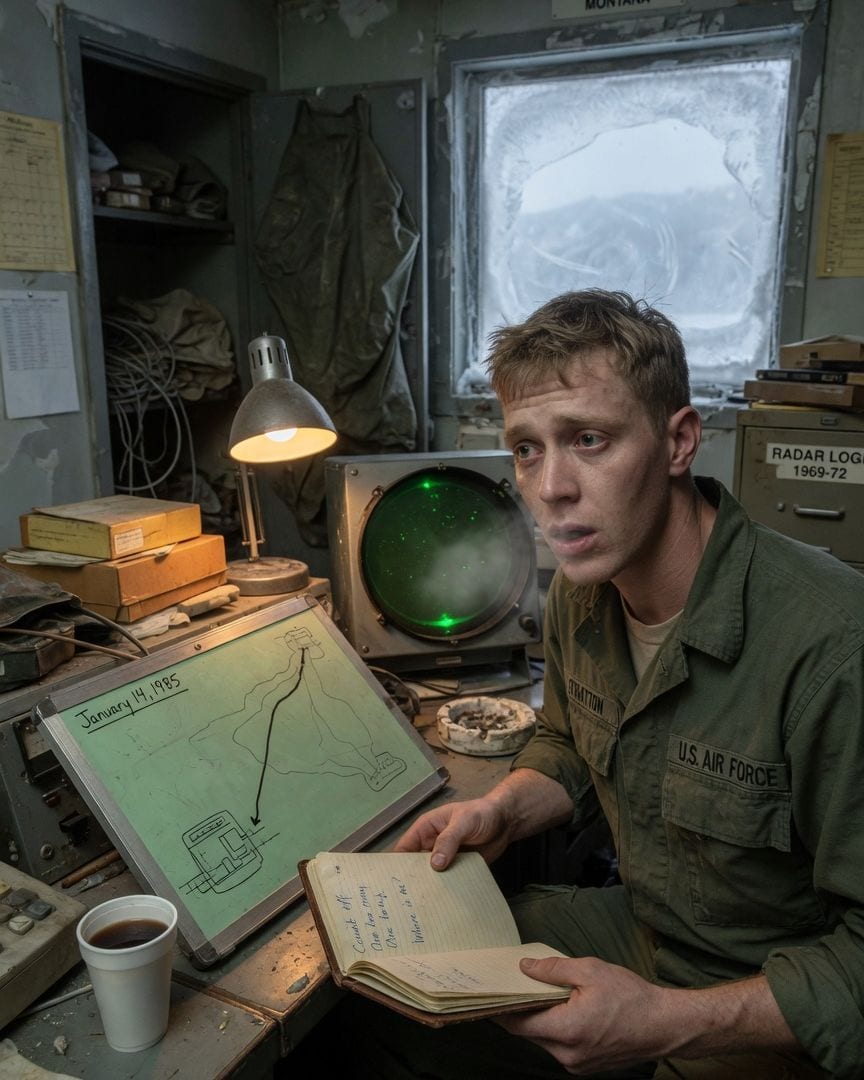
Airman Lars Stratton found an old Cold War manifest listing one name twice: 'Bernard Radcliffe' transferred and 'Bernard Radcliffe' still present.
Airman Second Class Lars Stratton was counting down his final weeks at Echo Station, a desolate Cold War outpost due for mothballing. He longed for home, far from the bitter Montana winds and the constant hum of static. Inside the dim radar shack, he logged the usual nightly ghost blip, a faint contact appearing at 2300, just as it had every winter since 1987. This night, a metallic tang like old blood lingered in the air, raising the hairs on his arms. Seeking distraction, Lars later discovered a leather-bound logbook from 1971, detailing the same 2300 contact, but with chilling notes and a manifest listing one airman's name, Bernard Radcliffe, twice—once transferred, once present. Was he truly alone in the silent, remote station?
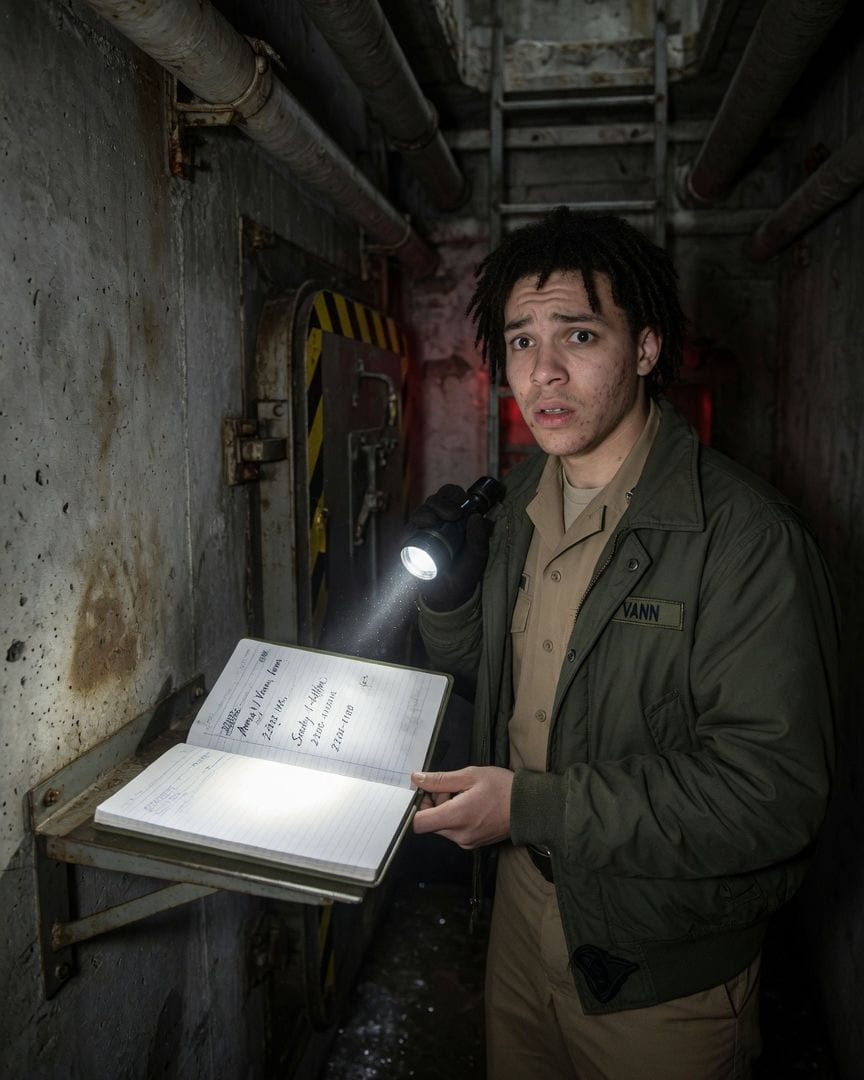
On his last patrol, Airman Vann sees a Cold War silo hatch light up from *inside*—it was welded shut a decade ago.
Airman Vincent Vann was on his last patrol across a vast, desolate Cold War missile field in the Dakotas, the cold, starless sky mirroring the emptiness of the landscape before his transfer. His routine check of eight hardened silo caps was shattered when a red fault light pulsed on Silo 4’s access panel, signaling an impossible breach from *inside* a hatch sealed for a decade. As more silos lit up, ignoring base orders, Vann found the hatch unlocked from within and descended into the dark shaft, where he discovered a pristine logbook bearing his own signature next to a chilling entry from a non-existent sentry, dated for *that very night*. Now, a steady *thump* echoed from deeper within the sealed concrete, leaving the Airman desperate for an explanation that simply wasn't there.
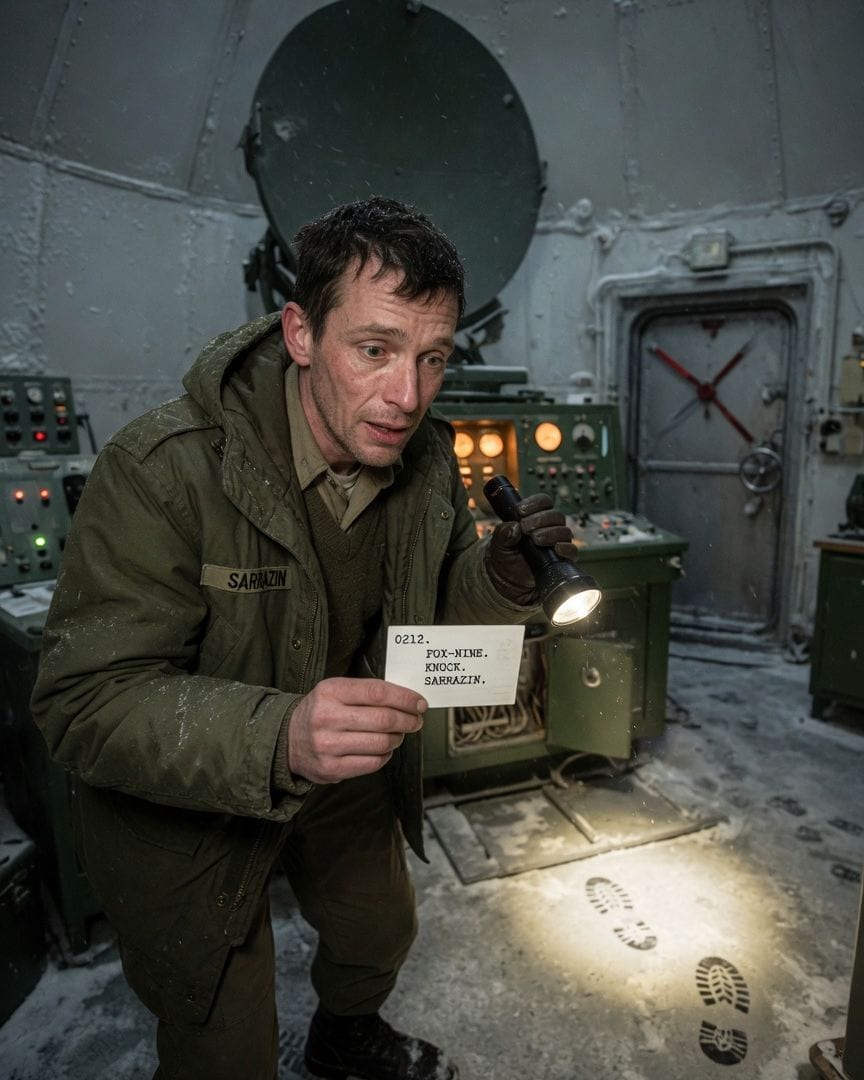
Airman Ludo Sarrazin found a ladder standing in Arctic snow, warm to the touch. Then the knock came from *inside* his sealed Cold War radar dome.
Airman Ludo Sarrazin was nearing the end of his isolated year-long tour at DEW site FOX-Nine, surrounded by the Arctic dark of 1959. His only comfort in the vast silence was the steady hum of his radar equipment, but for nine nights, an impossible rhythm had joined it. Every night at 0212 UTC, a mechanical knock grew closer, until Ludo found a service ladder standing alone in the snow, shockingly warm. Yet, as he stood there, the knock came from *inside* his secure, sealed radar dome, where he had been alone for months.