A corporal on his last watch decoded a Morse order for his station. It was sent forty years ago, for *this* very night.
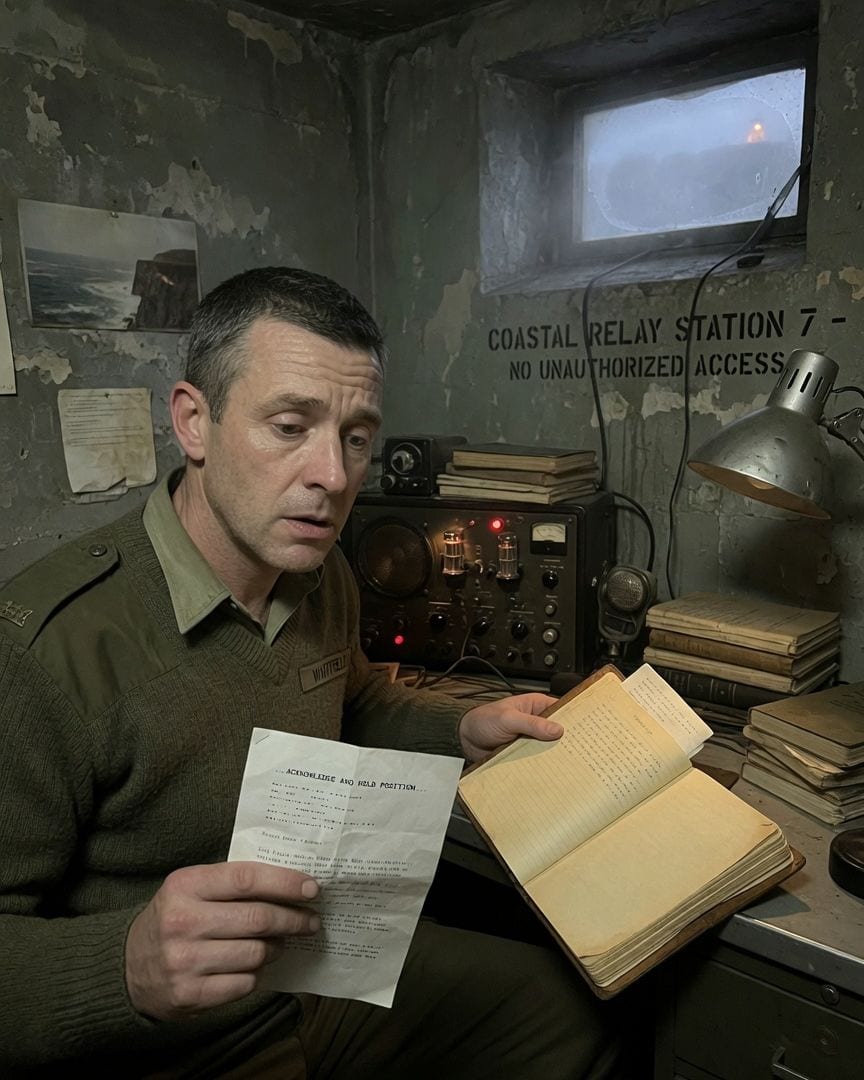
On one of the last nights before the old relay was mothballed, Corporal Greg Whitfield stood watch in a WWII-era bunker on a fog-bound English coast. The sea boomed against the cliffs below the concrete, a rhythmic, lonely sound.
The air hung heavy with the smell of damp salt and old concrete. He ran through his final checks, the hum of the ancient radio equipment a familiar comfort, soon to be silenced forever.
Then, on a long-dead frequency, a burst of Morse code cut through the static. It was sent in a fist so fast and clean it could only be a trained wartime operator.
The message was a convoy sighting report for a shipping lane that had not carried a convoy in forty years, in a cipher his code books no longer covered.
Whitfield, a stickler for protocol even on a ghost shift, cross-checked the one archived key that still fit. The decrypted message named his relay station and this night’s exact date.
It instructed the operator on watch to acknowledge and hold his position — no matter what he heard on the line.
He stared at the printout, the impossible words blurring in the dim light, the relentless boom of the ocean below. A ghost had just given him an order.
Whitfield’s first thought was a prank, or perhaps a severe atmospheric anomaly causing a decades-old signal to briefly resurface. He ran diagnostics on the antiquated radio, checked for external interference, even scanned other frequencies for similar glitches. Nothing.
The system was dead, yet the message was undeniably clear. He then turned to the station’s archives, a dusty, forgotten corner filled with logbooks and manuals dating back to the bunker’s inception.
He sought any record of the ‘dead frequency’ or similar unusual contacts. Deep within a stack, he found a brittle, leather-bound logbook, its pages yellowed with age, labeled ‘Coastal Relay Station 7, 1943-1985.’
Flipping through, he found entries detailing peculiar ‘atmospheric disturbances’ and ‘unusual contacts’ on the specific frequency he’d just monitored. One entry, dated precisely forty years prior, to the very day, recorded a similar ‘convoy sighting’ and an acknowledgment.
It was signed by a Private Barlow. The next page was blank, the entries abruptly ceasing, as if the logbook itself had simply stopped recording after that specific date.
The ordinary explanation of a random glitch evaporated; this was too specific, too perfectly timed.
The blank page after Private Barlow’s final entry gnawed at Whitfield. It wasn’t just a missing record; it felt like a deliberate erasure. He carefully examined the logbook, running his fingers along the spine, feeling for any anomalies.
Tucked deep within the binding, almost surgically sealed by time and damp, he found a folded piece of parchment.
It was a faded, official-looking manifest, brittle to the touch, listing names of operators assigned to Coastal Relay Station 7 across various years.
His eyes scanned the list, his heart thudding in his chest, until he found it: Private Barlow’s name, highlighted in a faint, red ink, dated precisely forty years ago.
Next to the name, scrawled in the same archaic hand as the logbook’s final entry, was a chilling note: 'Acknowledged and held position. Accounted For.'
Whitfield stood frozen, staring at the impossible words, the sea booming against the cliffs outside, masking any other sound, any other thought.
The phrase ‘Accounted For’ resonated with a sinister implication that chilled Whitfield to the bone. It didn't mean present or safe; it meant reconciled, perhaps even erased.
Driven by a grim certainty, he spent the remaining hours of his watch digging deeper into Private Barlow’s service record. Using his clearance, he accessed the old military personnel files, a labyrinth of microfiche and digitized archives.
Barlow’s file was sparse, ending abruptly after the date forty years ago. No pension, no discharge, no transfer orders to a new unit, no death certificate. Just a single, unexplained notation: ‘Status: Accounted For.’
Barlow had simply vanished from the system, his existence neatly folded away. Whitfield cross-referenced the dates, searching for other similar anomalies at Coastal Relay Station 7.
To his horror, he found a pattern: several other operators, spanning decades, with similar abrupt ‘transfers’ or disappearances. Each instance was tied to vague references of ‘unusual atmospheric disturbances’ or ‘unexplained contacts’ on the very same dead frequency.
The system, designed for absolute accountability, had repeatedly returned impossible numbers, and then quietly, efficiently, ‘accounted for’ the discrepancies. It wasn’t a single glitch; it was a recurring event, a cycle of disappearance masked by paperwork.
Whitfield’s unusual late-night activity didn’t go unnoticed. The next morning, as the first light broke through the fog, Captain Prescott, the officer in charge of the mothballing operation, appeared at the bunker entrance. His presence was calm, almost unnerving.
Prescott didn't ask what was wrong; he asked, 'What have you found, Corporal?' His voice was low, devoid of accusation, yet heavy with an unspoken understanding.
Whitfield, still reeling from his discoveries, hesitantly laid out the decrypted Morse code, the old logbook, and the faded manifest with Barlow’s chilling notation. Prescott listened, his gaze unwavering, his expression unreadable.
He picked up the manifest, his fingers tracing Barlow’s name. 'Some things, Corporal,' Prescott said, his voice barely a whisper, 'are best left undisturbed. This station… it has its quirks.'
He didn't dismiss it as a prank or a glitch; he acknowledged it, a quiet acceptance that chilled Whitfield more than any anger. Prescott’s eyes, a flat, knowing gray, met Whitfield’s.
It was a warning, not from a superior to a subordinate, but from one who knew to one who was learning.
Whitfield felt a prickle on the back of his neck, a sense of being observed, not just by Prescott, but by the very walls of the bunker, by the silence that now seemed to press in from the dead frequency.
He started hearing faint, distorted whispers mixed with the radio’s static, like distant voices trying to break through.
Ignoring Prescott’s veiled warning, Whitfield pressed on. The whispers on the dead frequency grew, just at the edge of audibility, like a broken signal trying to complete a thought. He searched the bunker's hidden compartments and archives with renewed urgency.
Behind a loose panel in what was once the station commander’s office, he discovered a small, sealed lead box.
Inside, nestled among desiccated silica gel packets, was a heavily classified document, its cover starkly marked: 'Project ECHO – Temporal Observation Post 7.'
The document, dated from the late 1940s, outlined the station’s true, top-secret purpose: not merely a relay, but a research facility theorizing about 'localized temporal convergences' and 'echoes of past events' manifesting at this specific coastal nexus.
It detailed a complex protocol for 'acknowledging' these echoes to stabilize them, preventing wider temporal disruptions. The most chilling part was a section dedicated to the role of 'designated operators on watch,' who were specifically chosen to perform this duty.
The document didn't explicitly state what the 'convoy' was, but it confirmed the station was a focal point for something impossible, a place where time itself could ripple.
It also ominously mentioned that 'successful acknowledgment' by an operator was followed by their 'integration' into the 'echo cycle.' Suddenly, all the fragmented clues snapped into horrifying focus.
'Hold position' wasn't a military command; it was an instruction to maintain the temporal convergence. 'Accounted For' wasn't a transfer; it meant the operator had become part of the echo, a casualty of a secret, impossible war.
The revelation of Project ECHO and the meaning of 'integration' sent a cold dread through Whitfield. He was no longer just investigating a ghost; he was uncovering a system designed to consume.
He continued reading, his eyes burning, his heart pounding against his ribs. The document contained a final addendum, heavily redacted, detailing 'operator integration outcomes.'
It described how the 'integrated' operators didn't just disappear; their service records were subtly altered, their existence 'reconciled' within the system as if they had always been part of the past event, or replaced by a phantom entry that nobody questioned.
The military’s meticulous accountability was being weaponized against its own personnel, used to erase the impossible. Then, on the last page, a single, unredacted list.
It was titled 'Designated Operators – Current Cycle,' and beneath it, a series of dates and names. Whitfield’s breath caught in his throat, his eyes fixed on the entry for this very night.
His own name, Corporal Greg Whitfield, was listed, followed by the impossible instruction he had received from the Morse code: 'Acknowledge and hold position.'
His name was on an impossible manifest, already 'accounted for' by a system he never knew existed. The paper felt cold in his trembling hands, the ink searing into his vision.
The realization detonated in Whitfield’s mind: the Morse code wasn't a warning from the past, but a live activation, a summons. He hadn't stumbled upon an anomaly; he had been chosen, designated.
The archived key that 'still fit' was meant for him, a specific tool to open the temporal gate.
The 'convoy' wasn't ships at all, but a temporal displacement, a ripple of non-physical entities or energies that manifested as a 'count' needing passage through the station's nexus.
His 'acknowledgment' was a psychic and temporal link, and 'holding position' would allow their passage to complete, at the cost of his own integration into the echo, becoming part of that impossible convoy himself.
Captain Prescott’s unnerving calm, his knowing gaze, now made chilling sense. He wasn't just an officer; he was a silent custodian of Project ECHO, ensuring the 'echoes' were 'accounted for' by sacrificing operators.
Perhaps Prescott himself was a descendant of a past 'integrated' operator, subtly altered, or a survivor who had found a way to serve the cycle without being fully consumed, perpetuating the horror.
The military, the most accounted-for world, had a secret ledger, an impossible count it had to reconcile with human lives. Every buried clue now clicked into place, forming a coherent, terrifying pattern that had been unfolding for decades.
The bunker was no longer just cold concrete; it thrummed with a low, resonant energy. The whispers on the dead frequency intensified, forming a distorted chorus, urging Whitfield to respond, to 'acknowledge.'
He felt a profound, almost hypnotic pull, a deep-seated urge to return to the keyer, to fulfill the impossible order. He fought against it, his mind screaming for rationality, his body trembling with dread.
He raced toward the antique radio equipment, his only chance to sever the connection before he was fully 'integrated.'
Just as he reached for the power switch, Captain Prescott appeared in the doorway, his figure silhouetted against the faint light from the corridor. 'It’s your duty, Corporal,' Prescott said, his voice calm, almost soothing, 'the station’s purpose.
You’ve seen the records. It's how we maintain stability.' There was no menace in his tone, only a chilling, logical resignation. He didn't move to physically stop Whitfield, but his presence, his unwavering gaze, was a powerful, silent force.
Whitfield ignored him, the echoes in his mind growing louder. He grabbed a heavy wrench, his hands shaking, and brought it down on the Morse keyer, shattering its delicate mechanism.
He ripped out the vacuum tubes, sparks flying, and then with a desperate surge, threw the main power switch, plunging the bunker into sudden, absolute darkness and silence. The whispers died, the pull receded, leaving behind a cold, empty ache.
He knew he had broken the immediate link, but the echo was still out there, and he had been marked, forever on its impossible roster.
Whitfield stumbled out of the bunker into the cold, dense fog, leaving behind the shattered equipment and the unnervingly calm Captain Prescott, who remained standing in the darkness. The mothballing crew arrived at dawn, finding the radio equipment inexplicably damaged.
Whitfield gave a carefully worded account of a 'catastrophic equipment malfunction,' avoiding any mention of Morse code, ghost convoys, or Project ECHO. His report was met with a skeptical but ultimately accepting nod; old equipment failed.
The station was decommissioned as planned, the bunker sealed and eventually forgotten.
Whitfield was transferred to a new post, far from the coast, but his service record carried a subtle, unexplainable note about his 'unusual stress response' and 'unsubstantiated claims' during his final watch.
Prescott's official report simply stated 'equipment failure, cause unknown,' with no further investigation.
Months later, Greg Whitfield sat in his new barracks, thousands of miles from the English coast.
He still carried the proof: the crumpled printout of the impossible Morse code, and a photocopied section of the faded manifest with Private Barlow’s 'Accounted For' entry.
He’d tried to tell his story, carefully, rationally, to a few trusted colleagues, but it was always met with polite disbelief, dismissals of stress or fatigue.
No one believed him; the system was too perfect, too accountable, to allow for such an anomaly.
Sometimes, in the quiet of the night, he still woke in a cold sweat, hearing the faint, rhythmic click of a Morse key in the distant static of his dreams, a sound only he could perceive, a phantom signal on a dead frequency.
He knew the echo wasn't gone, only dormant, and he was still on its impossible roster, waiting for the next acknowledgment. He was accounted for, but not saved.
The old bunker on the English coast was sealed, forgotten. Years passed, and the sea still boomed against the cliffs.
Sometimes, on a particularly foggy night, locals swore they could hear a faint, almost imperceptible clicking sound carried on the wind, like a ghost reaching for a key. The ghost was still on the line, always waiting for an acknowledgment.
If this one got to you
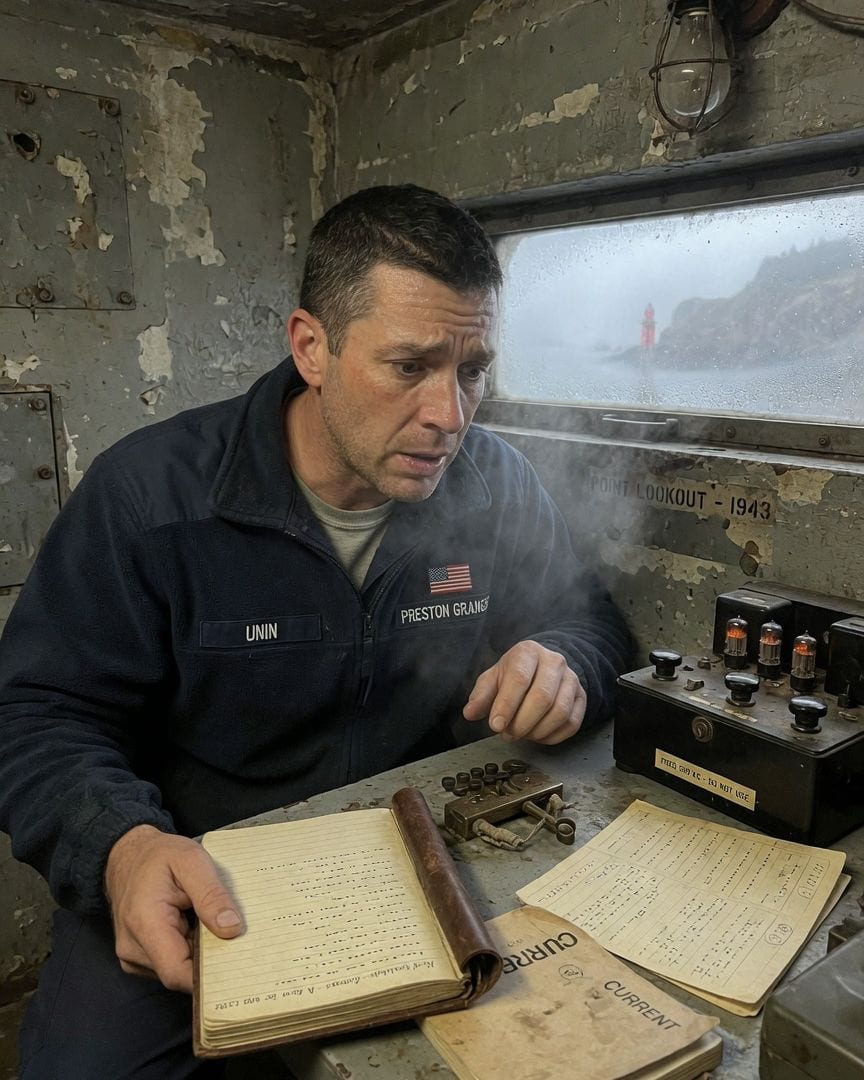
On his last night before the Coast Guard station closed, Corporal Granger heard a dead radio crackle with a Cold War convoy report for tonight – then found his own handwriting in a logbook that was decades old.
Corporal Preston Granger sat hunched in the old WWII bunker at Coast Guard Station Point Lookout, enduring his final shift before the station was permanently mothballed. The fog outside muffled the world, leaving only the distant boom of the sea until a faint burst of Morse code crackled over the antique relay set. The frequency had been dead for decades, yet the signal was a precise convoy sighting report for a shipping lane that hadn't seen a merchant vessel in forty years. The dread was a cold, hard knot in Preston’s stomach as he decrypted the message: 'CONVOY SIGHTED. GRID 4-B. ACKNOWLEDGE AND HOLD POSITION. POINT LOOKOUT. OCT 27.' Oct 27 – tonight’s date, his exact location. He later found a leather-bound logbook filled with identical entries spanning decades, and beneath the last one, dated October 27th, 2023, was his own unmistakable handwriting.
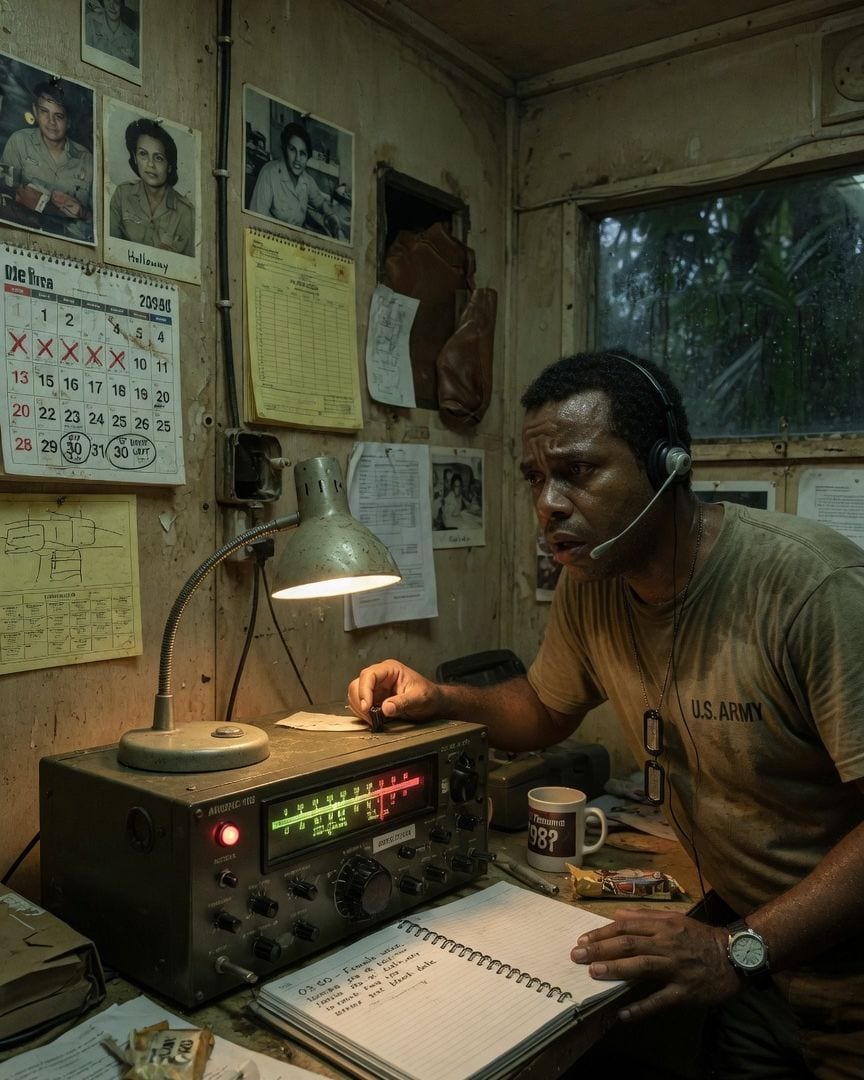
Three months from his tour ending, a sergeant's Cold War radio lists his name with a blank 'ceased answering' date. A hidden logbook warns: 'It knows my name.'
Sergeant Kevin Brooks was three months from finishing his year-long tour at a remote Panamanian jungle station. He meticulously marked each passing day, eager to escape the humid nights and unseen blossoms pressing against the comms shack walls. But at 0300, his old radio crackled to life with a woman's calm voice, listing names of past operators who 'ceased answering.' Then the voice spoke his own name, leaving a chilling blank space where his date should have been. What grim roll call had Sergeant Brooks stumbled upon?
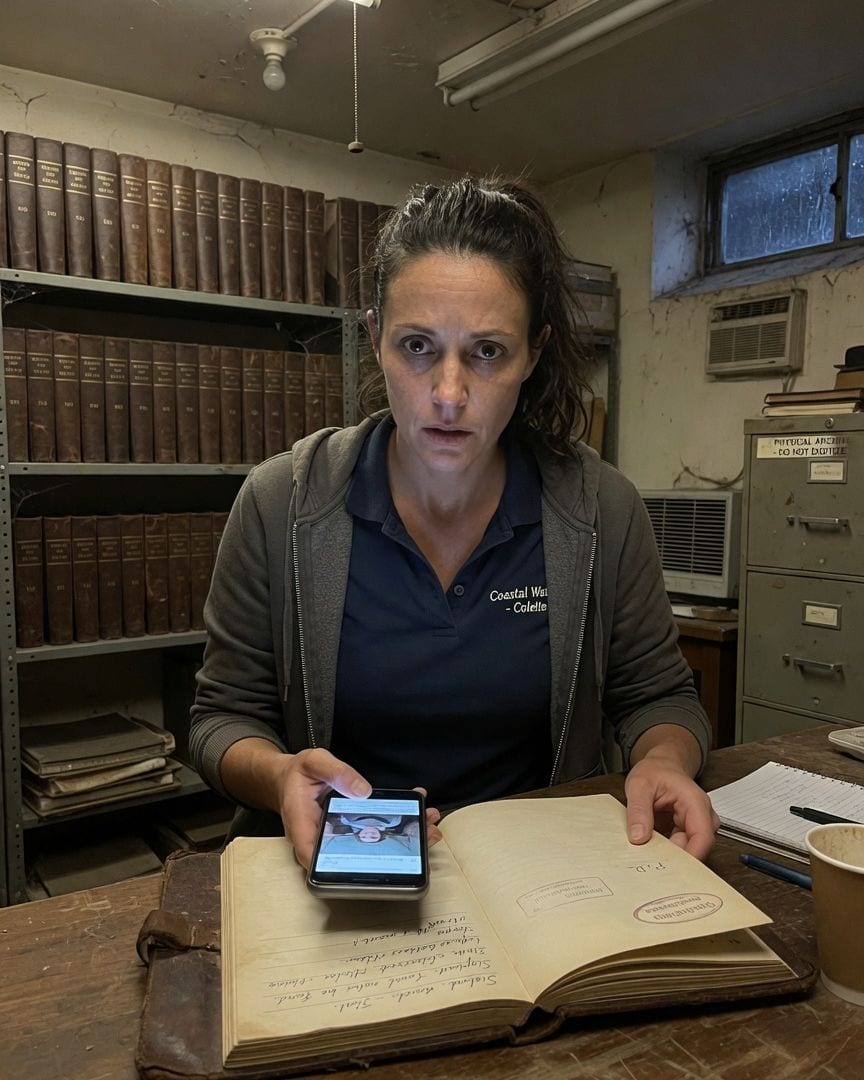
My coastguard log noted Sighting 9 again tonight, a light where no vessel showed. The old logs carry Sighting 9 off Skerry Point at 3:14am every tenth year since 1954, always 'nothing found,' always 'send no boat.'
On my watchtower night shift, the radar screen glowed green and the ocean was quiet. Then, a familiar light appeared off Skerry Point, exactly on cue, just as it had every tenth year for decades. But digging deeper, I found a hidden stamp in an old logbook: 'Operation Skerry. Status: Complete.' It left me with a chilling sense of finality.
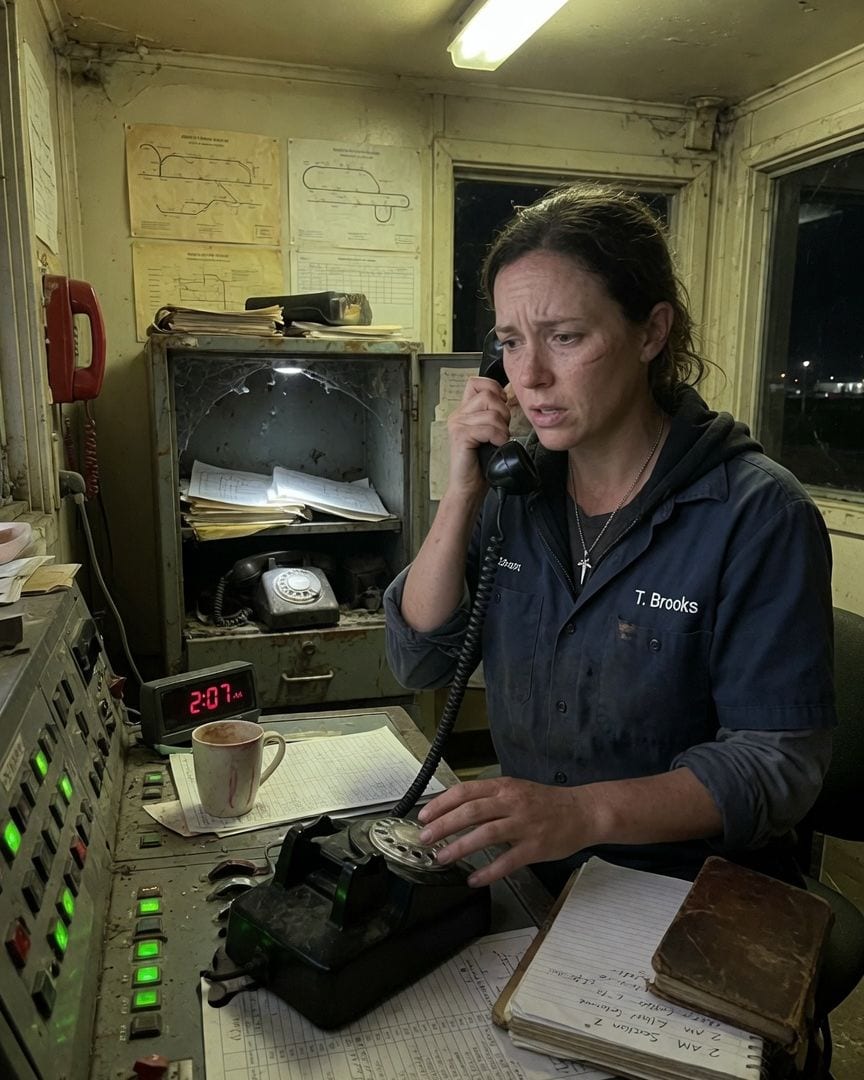
My signal box gets a 2 AM call every night from a man whose section was demolished eleven years ago. Now I found his logbook with today's date.
My night shift at the signal box is quiet and precise, defined by the routine 2 AM call from Ellis confirming Section 7 is clear. But when I asked my duty manager to log it, he said Section 7 hasn't had a track walker in eleven years, not since its cabin and phone were demolished.
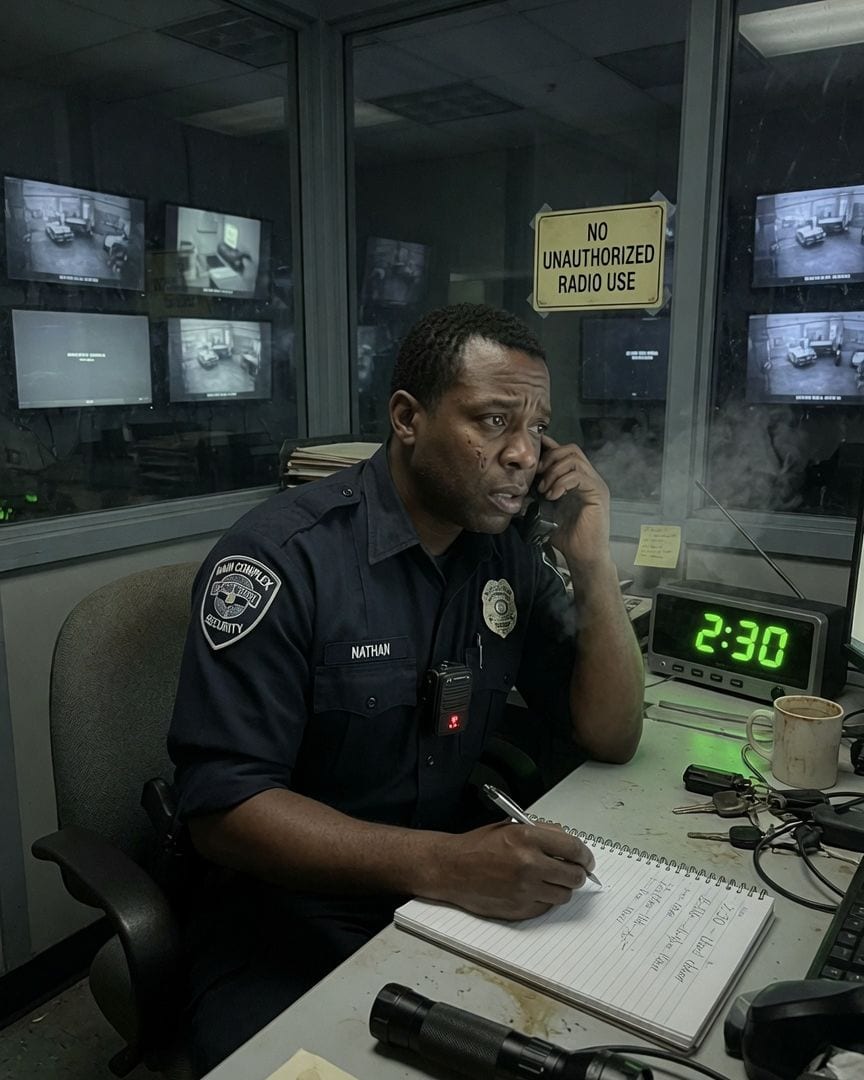
I radio Cole every night. My supervisor says his dock post was cut two years ago, and no Cole exists. But I just found Cole’s old logbook.
My graveyard shift usually consists of monotonous hourly check-ins with Cole, the guard at the loading dock. But my supervisor just revealed that the dock post was cut two years ago, and no one named Cole has ever worked for the company. I've been talking to someone who simply isn't there.
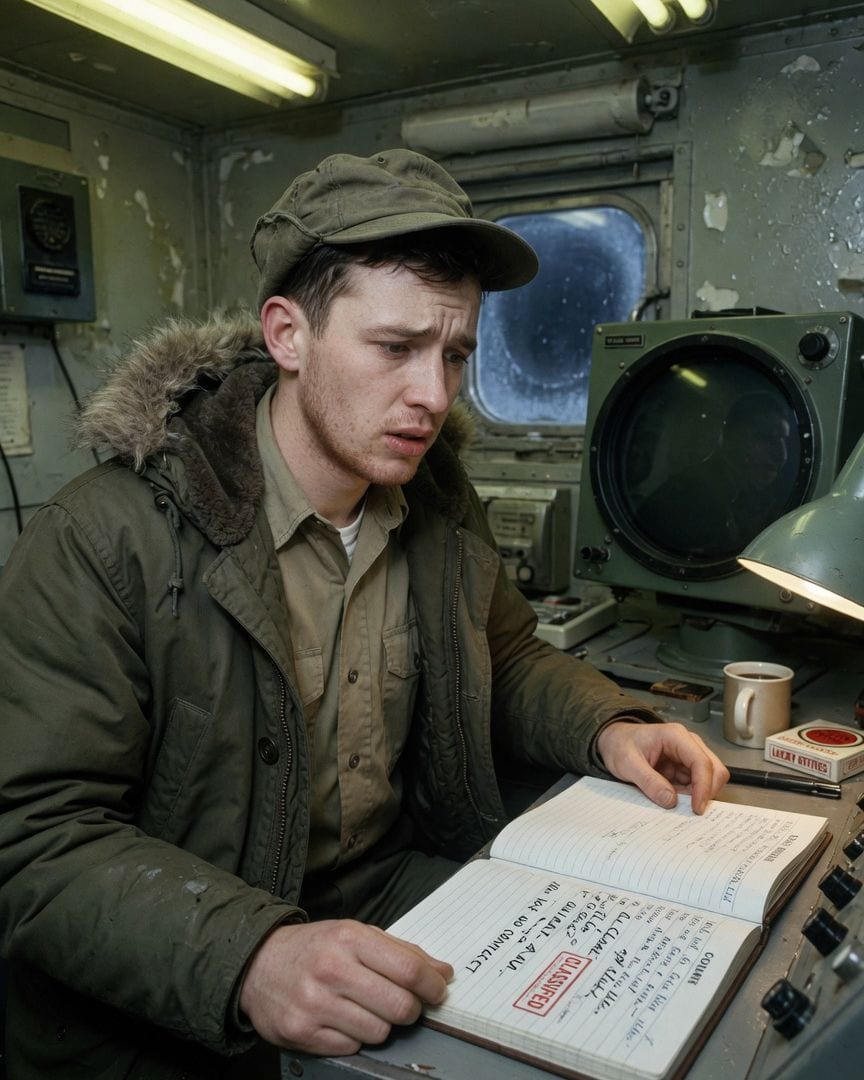
A Cold War airman logs an impossible radar contact on his last sweep. But his official logbook entry is stamped 'CLASSIFIED' and then contradicted by a hastily scrawled 'ALL CLEAR' dated moments before it.
Airman Ordway Vance, 22, manned the radar dome at Site Pellin in the biting North Atlantic dark of January 1962, running the last calibration sweep before its decommissioning. His scope picked up a faint, impossible return, growing closer with each pass, though the ocean remained empty to the eye. When Vance detailed the contact in his official logbook, a 'CLASSIFIED' stamp appeared, followed by a hastily scrawled 'ALL CLEAR' dated moments before his own entry, contradicting his every word. Commander Hartley dismissed it as equipment malfunction, but Vance sensed a chilling, official erasure behind the lie. He soon found a locked cabinet marked 'SITE PELLIN ANOMALIES,' hinting at a deeper truth buried within the base's final days.