A corporal’s battle buddy returned from injury, his chronic cough gone. His medical file now says its genetic marker simply vanished.
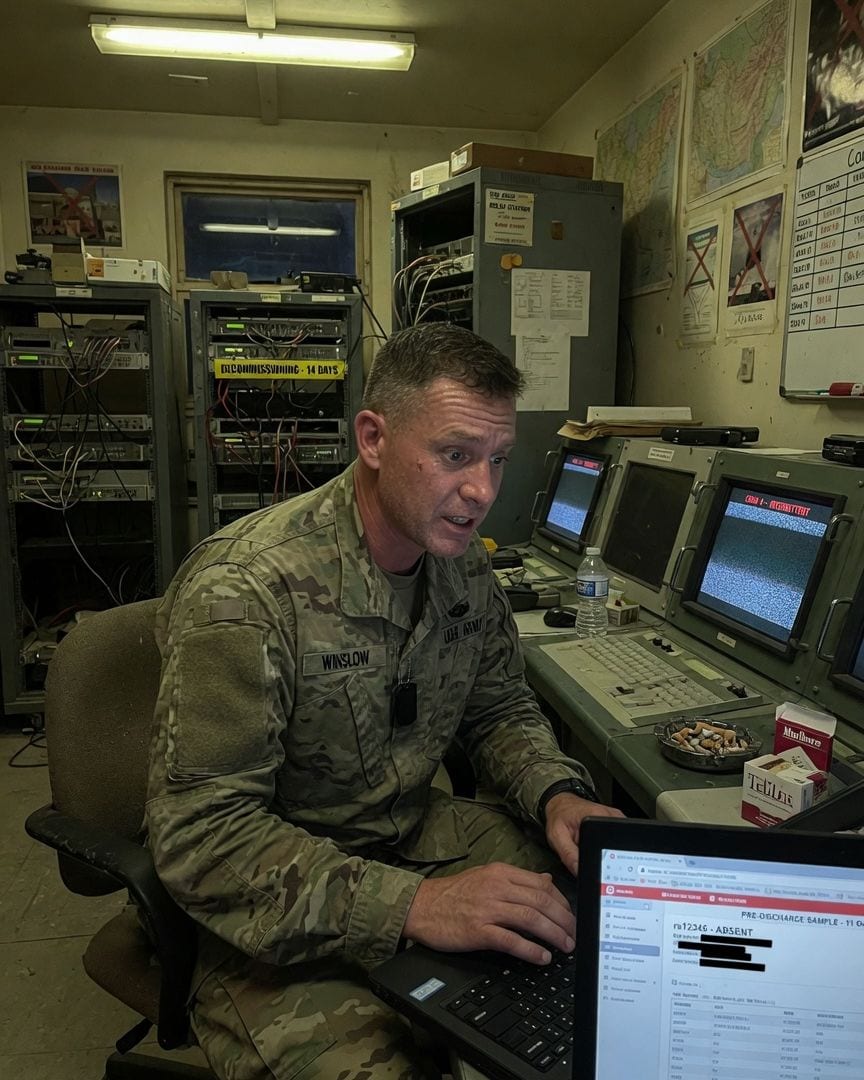
Corporal Frank Winslow stood watch in the dim, stale air of FOB Aries' main operations room, the hum of ancient servers a constant companion.
The remote mountain relay station was scheduled for decommissioning in two weeks, and the boredom was thick enough to chew.
Specialist Philip Teller, his battle buddy, had rejoined the platoon three days ago after three months recovering from an IED blast.
Teller had been a heavy smoker, a two-pack-a-day man with a hacking cough that had been as much a part of him as his dog tags. Winslow had bummed countless cigarettes from him over the years.
But Teller hadn't touched a pack since his return. He hadn't even reached for his shirt pocket. And the cough, the wet, rasping cough that had rattled his chest for as long as Winslow had known him, was gone.
Not faded, not lessened. Gone. Winslow watched Teller at the comms console, his posture unnaturally straight, his movements too smooth.
The absence of the cough, the easy breaths, the lack of that familiar hand patting his shirt pocket for a cigarette – it was a silent, insistent wrongness that burrowed deep under Winslow’s skin.
Winslow tried to rationalize it. Maybe Teller had seen the light, quit cold turkey on the hospital ship. But the change was too absolute, too perfect. There was no struggle, no irritable edge that came with nicotine withdrawal.
It was like the habit had never existed. During his next watch, Winslow found himself unconsciously listening for the cough, for the rustle of a cigarette pack, and hearing nothing but the station’s monotonous drone.
He also noticed something else: intermittent, fuzzy interference on the comms array, a low-frequency static that Specialist Teller, as the station’s comms tech, seemed to ignore.
It wasn't enough to disrupt transmissions, just an annoying background hiss that pulsed erratically, like a distant, mis-tuned radio.
The old server racks behind Winslow hummed, the vibration a familiar companion, but the static was a new, unwelcome guest in the station’s usual symphony of mechanical sighs.
Winslow, unable to shake the unease about Teller, decided to put his own training to use. He needed data.
Under the guise of a pre-decommissioning 'personnel readiness review,' he initiated a request to access Teller’s digital medical file from the hospital ship. It was standard procedure, easily justified.
He told himself he was just being thorough, making sure his buddy was truly fit for duty.
But as he typed in the access codes, a cold certainty settled in his stomach: he was looking for proof that something was profoundly, terrifyingly wrong with Philip Teller, and he knew he would find it.
Hours later, alone in the small comms office, Winslow navigated the labyrinthine military health records system. He found Teller's file, a thick dossier detailing his injury and recovery.
The summary read like a miracle: 'full recovery, no residual symptoms, full physical and mental health.' Winslow scrolled past the glowing reports, past the rehabilitation logs, past the standard scans.
He delved deeper, into the genetic profile, a routine screening performed upon admission. He found a notation: 'Minor respiratory predisposition, genetic marker rs12345, non-symptomatic.'
He recognized it; it was the marker for the very chronic, mild respiratory issue that caused Teller’s cough. He scrolled down, looking for an update, a treatment, a resolution.
But in the most recent genetic profile, taken just before Teller's discharge from the hospital ship, the marker rs12345 was simply… gone. Not treated, not overridden. Absent. As if it had never existed.
Winslow stared at the screen, the impossible data screaming at him, the numbers unchanging, undeniable.
Winslow, shaken, printed a redacted version of the genetic reports. He approached Sergeant Claire Vance during a routine equipment check, trying to sound casual. 'Sarge, I was doing a readiness review for Teller.
His recovery from that IED blast is… remarkable. Almost too perfect.' Vance merely shrugged, running a hand over a dusty power conduit. 'Yeah, Doc Mercer's a miracle worker. Good for Teller, less paperwork for us.'
Her dismissal, the easy way she waved away the uncanny, only solidified Winslow’s dread. He needed to speak to Dr. Edith Mercer directly. Using a secure line, citing 'follow-up on unusual recovery protocols,' he managed to get through to her.
Dr. Mercer remembered Teller immediately. Her voice, usually clinical, held a note of genuine perplexity, a crack in the professional facade. 'Specialist Teller’s case… it was highly unusual.
His tissue regeneration, the speed of it, the completeness… it was beyond anything I’ve ever seen. Almost too perfect. We ran every test, found no explanation for why his body responded the way it did.'
She admitted she’d flagged the case for further study, but higher command had expedited his discharge. Armed with this, Winslow began cross-referencing Teller’s transfer orders with other recent 'perfect recovery' cases from other remote outposts.
He focused on bases scheduled for decommissioning, like FOB Aries. He spent hours sifting through archived manifests, looking for similar rapid, unexplained recoveries.
A pattern began to emerge: a handful of soldiers, all from isolated postings, all with exceptionally fast and complete recoveries from severe injuries, all subsequently transferred to vague 'classified projects' with no further record.
The system, designed for ironclad accountability, simply ended their trail with an unchallengeable, nebulous classification. Winslow felt a cold certainty grow; Teller wasn't a miracle. He was part of something far more sinister.
The air in the office seemed to grow heavier around him, thick with the unread files, each one a testament to an unseen hand.
Winslow's digging didn't go unnoticed. The low-frequency static on the comms array, which Teller was supposed to be maintaining, grew more pronounced during Winslow’s shifts, a persistent hum that seemed to follow him.
One evening, while conducting a scheduled diagnostic on the array's exterior components, Winslow discovered it. The metallic tang of the mountain air felt sharper, colder, as he worked.
Tucked away in a shielded housing, almost invisible against the dark metal of the signal booster, was a small, unauthorized patch.
It was crude, civilian-grade tech, jury-rigged with salvaged parts – a tangle of wires and circuit boards soldered together, clearly designed to intercept or modify outgoing signals, or perhaps even broadcast on an untraceable frequency.
He carefully detached it, the wires sparking faintly with a brief, acrid smell of ozone. As he pocketed the device, the metallic housing of the array itself seemed to hum with a new, quiet tension.
He heard footsteps approaching, unnaturally quiet against the gravel. Specialist Teller rounded the corner, his gait still unnaturally fluid, almost gliding. 'Hey, Corporal. Looking for a wrench. Mine went missing from the comms locker.'
Teller's eyes, usually friendly, held an unreadable intensity, like polished stones. 'Find anything interesting on your shift, Winslow? Any… anomalies?' Winslow’s heart pounded against his ribs. He forced a casual shrug, the movement stiff.
'Nah, just the usual dust and rust. Everything's shipshape, Teller.' He tried to keep his voice steady, his hand unconsciously closing around the strange device in his pocket.
Teller simply nodded, his gaze lingering on Winslow's face a beat too long before turning away. The encounter left Winslow with a chilling certainty: Teller knew, or whatever was wearing Teller’s face knew, and he was being watched.
The next morning, Winslow requested an urgent meeting with Captain Joel Sinclair, the FOB Aries commander. He found Sinclair in his office, the room stark and efficient.
Winslow laid out his findings: the impossible genetic marker, Dr. Mercer’s unnerving testimony, the pattern of 'classified transfers' from other decommissioned outposts, and finally, the unauthorized comms patch, which he placed on Sinclair's desk.
Sinclair listened, his expression shifting from initial impatience to a cold, almost detached calm. His gaze settled on the crude device. 'Corporal Winslow, you've been quite… thorough,' Sinclair said, his voice level, devoid of any discernible emotion.
'These 'anomalies,' as you call them, are part of a highly sensitive, classified program. They are contained.' Winslow pressed, the words feeling urgent in the quiet room. 'Contained? Sir, Specialist Teller isn't right. His DNA has been altered.
Dr. Mercer said his recovery was impossible. And these other transfers… what exactly is going on?' Sinclair leaned forward, his gaze piercing, yet utterly calm. The air in the small office seemed to thicken, pressing in on Winslow.
'What's 'going on,' Corporal, is a matter of national security. Specialist Teller is… an asset. A perfect asset. A replacement prototype, designed to ensure continuity in critical, isolated roles where human fallibility cannot be tolerated.'
Winslow felt a jolt of pure dread, a sickening lurch in his gut. 'Replacement? What about the real Teller? Where is he?' Sinclair sighed, a sound devoid of emotion, like air leaking from a punctured tire.
'The original Specialist Teller is no longer… available. He served his purpose. The system requires operatives who never falter, never question, never retire. The 'Watch That Won't End,' we call it. Your own diligence, Corporal, has been noted.
You've shown a remarkable aptitude for pattern recognition.' Sinclair’s words echoed Dr. Mercer's 'too perfect' and Winslow's own observations of Teller's unsettling perfection. The pieces clicked into place with horrifying clarity, forming a mosaic of systematic, cold-blooded replacement.
Sinclair stood, walking to a secure terminal in his office. 'You've proven yourself, Winslow. There's an opportunity for someone with your unique insight. A chance to serve at the highest level.'
Winslow, his mind reeling from the revelation of Teller’s replacement, demanded, 'What kind of opportunity, sir?' Sinclair turned the terminal screen towards him. It displayed a personnel manifest, a secure access log.
On it, under the header 'Priority Transfer - Classified Project,' Winslow saw a list of names. Names he recognized from his own research into the 'perfect recovery' cases. And then, at the bottom, highlighted in green: 'Corporal Frank Winslow.'
The effective date was two days from now, the exact day FOB Aries was scheduled for decommissioning. The account he had been chasing, the system he had trusted, was closing in on him.
His own name, perfectly accounted for, now part of the very pattern of disappearances he had uncovered. He looked at Sinclair, whose smile was faint, unsettlingly calm, and too knowing.
Winslow stumbled back, his blood running cold. The hum of the server racks outside the office seemed to drop in pitch, a sudden, sharp thrum. 'My name… what have you done?'
Sinclair’s smile widened, devoid of warmth, like a crack forming in ice. 'Done? Corporal, you've been selected. For the 'Watch That Won't End.' It’s an evolution of service.
The entity, the source of these… assets, requires a continuous, uncompromised presence at critical nodes. It replaces, it perfects.' Sinclair, with an unnerving grace, moved to a hidden panel behind his desk, revealing a concealed access hatch.
The panel slid open with a soft, mechanical hiss. 'And as for what I've done… I've been ensuring the success of the program here at Aries. I am an asset myself, Corporal. Replaced years ago.'
He gestured for Winslow to follow. Beneath the comms array, a narrow passage, slick with condensation, led to a humid, pulsating chamber. The air here was heavy, metallic, and warm.
In the center, suspended in a viscous, glowing fluid, was a large, organic-looking device, vaguely ovoid, with pulsing veins of light running across its surface. It hummed with a low, deep thrum, a sound that resonated in Winslow's bones.
And within its translucent walls, a human form was slowly taking shape, indistinct but clearly forming.
Next to it, in a smaller, separate pod, the original Philip Teller floated, eyes wide, unseeing, a faint tremor running through his body, a ghost in liquid amber.
'The comms patch you found,' Sinclair continued, his voice echoing in the chamber, unnervingly calm amidst the alien thrum, 'was how the assets communicate with the entity, how the transfers are coordinated, how the replacements are… grown.
The 'noise' you heard was its signature, a byproduct of the replication process.' Winslow stared, every clue, every impossible detail, every chilling observation clicking into a horrific, coherent pattern.
The watch was indeed unending, enforced by something inhuman, and he was next.
A surge of desperate adrenaline flooded Winslow, burning away the cold dread. He had to stop it. He had to stop them.
Feigning compliance, he edged towards a stack of demolition charges, standard issue for decommissioning, piled neatly against a damp wall. 'This… this is insane, sir. You can't be serious.' Sinclair watched him, a faint, knowing smirk on his face.
The pulsing light from the main device cast dancing shadows that warped his features. 'Oh, I assure you, Corporal, I am perfectly serious.'
As Sinclair’s attention momentarily shifted towards the nascent duplicate, its form growing more defined within the fluid, Winslow grabbed a charge.
He fumbled with the dial, his fingers clumsy with terror and haste, activated the timer, setting it for sixty seconds, and slammed it onto the pulsating organic device.
The chamber filled with a harsh, piercing alarm, an electronic shriek that clawed at Winslow's ears. 'Teller!'
Sinclair snapped, his voice sharp and metallic, and the duplicate Specialist Philip Teller, who had been standing guard outside the chamber, immediately moved to block the narrow exit passage. Winslow lunged past Sinclair, shouting, 'Fire in the hole!'
Sinclair, moving with inhuman speed, intercepted him, a hand like iron clamping onto Winslow’s arm, its grip surprisingly strong. 'You won't interfere, Corporal.' Winslow struggled, twisting, kicking, fighting with every ounce of his human strength against Sinclair’s unnatural power.
He could hear Teller closing in behind him, his footsteps unnaturally silent. With a desperate heave, Winslow managed to dislodge Sinclair, shoving him hard towards the replication device.
Sinclair stumbled, his perfect composure momentarily broken, his eyes flashing with a cold, almost inhuman anger.
As the timer counted down to five, a relentless beeping cutting through the alarm, Winslow broke free, scrambling towards the narrow passage, his lungs burning. Sinclair recovered, lunging after him, his eyes burning with a cold fury.
But it was too late. Winslow pulled himself through the opening just as the countdown hit zero. A blinding flash of light, followed by a deafening roar, ripped through the mountain, shaking the entire FOB Aries to its foundations.
The ground bucked violently, and the air filled with the stench of ozone and scorched earth.
Days later, rescue teams arrived at the devastated FOB Aries, finding structural damage consistent with an internal explosion in the comms array bunker.
They found Corporal Frank Winslow, injured but alive, dazed but coherent enough to report a catastrophic equipment malfunction. His account, while sparse on details that would implicate Sinclair or Teller, was officially filed.
No trace of Captain Sinclair or Specialist Teller was ever found amidst the wreckage. The official report cited 'unforeseen equipment failure leading to an accidental detonation,' accelerated by the station's age.
FOB Aries was decommissioned ahead of schedule, its secrets buried under tons of rock and bureaucratic paperwork. The military’s ironclad accountability system, faced with an anomaly it couldn't fully explain, simply closed the file.
Winslow was honorably discharged, awarded a medal for bravery under unusual circumstances. He never spoke of what truly happened at FOB Aries, the words catching in his throat, sounding like madness even to himself.
Years later, living a quiet life in a small town, he still found himself drawn to news reports about remote outposts, decommissioned stations, or personnel transfers. He knew it wasn't just FOB Aries.
One evening, he watched a local news segment about a remote weather station closing down due to budget cuts. The lead technician, a jovial man named Adam Crane, was interviewed about his long service.
Crane was locally known for his chronic cough and a distinctive limp from an old farming accident. But on the screen, the man being interviewed stood perfectly straight, spoke with a smooth, unblemished voice, no cough, no limp.
His eyes, fixed on the camera, were too bright, too still. Winslow watched, a cold dread settling in his gut, a familiar chill that would never truly leave him. The watch never truly ends.
If this one got to you
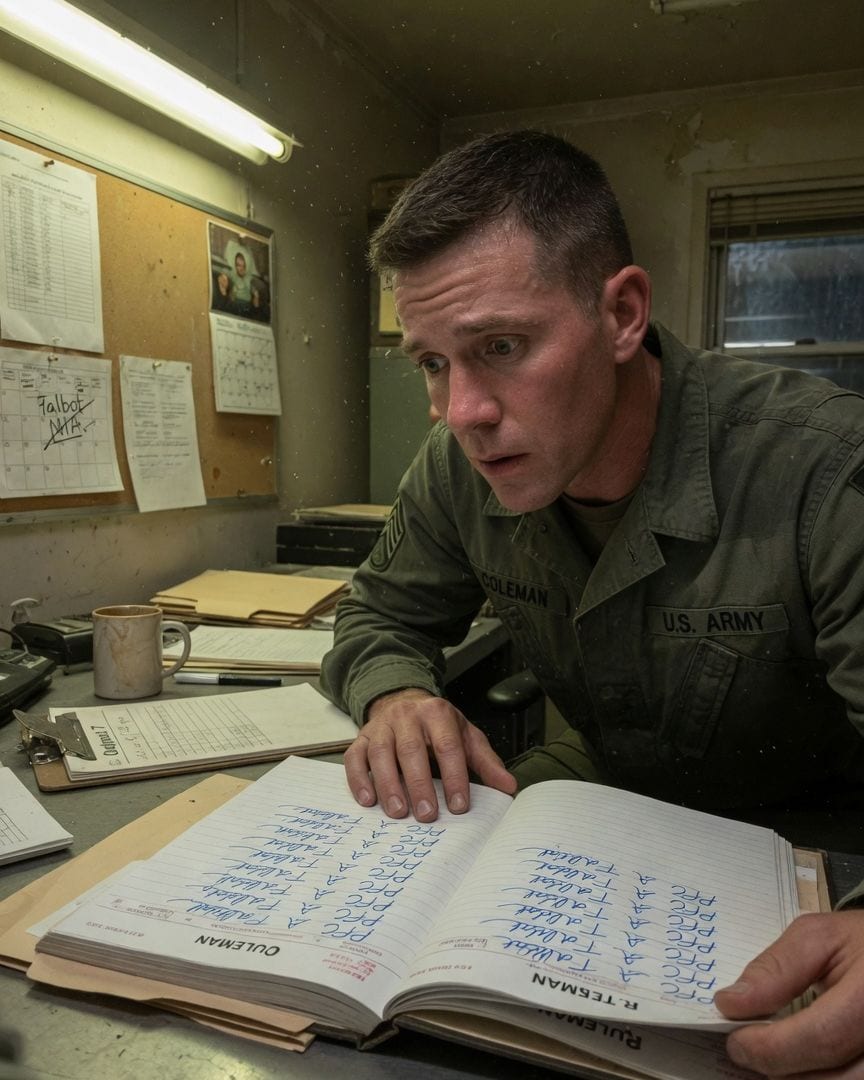
Staff Sergeant Coleman watched Private Talbot, known for his deadly allergy, let a wasp crawl his arm. The soldier simply flicked it away, calm.
Recently transferred to Outpost 7, Staff Sergeant Ethan Coleman found his attention fixed on Private First Class Ralph Talbot in the mess tent. He watched a thick black wasp crawl deliberately up Talbot's arm, a sight that made Coleman's stomach tighten; everyone knew Talbot's severe, life-threatening allergy. Expecting panic, Coleman instead saw Talbot calmly flick the insect away, utterly unbothered, with no sign of swelling or reaction. The unnatural stillness didn't sit right, a quietude that felt profoundly wrong. Later, Coleman's unease deepened when Talbot's medical file declared his deadly allergy 'resolved' without explanation, and his duty logbook revealed unnervingly perfect, stenciled signatures for the eleven days he was officially missing.
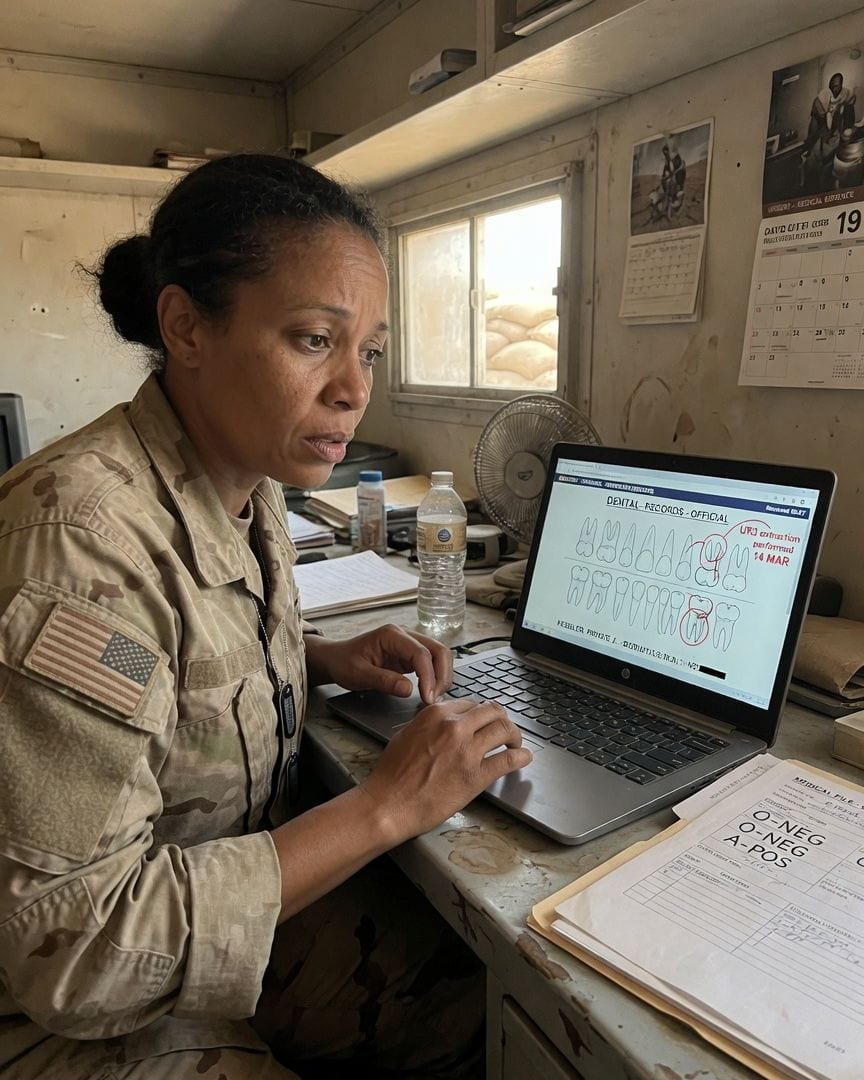
Weeks from going home, Sergeant Whitmore saw Private Kessler’s dental records show teeth he didn’t have and missing ones he did.
Sergeant First Class Iris Whitmore counted the weeks until her deployment ended, dreaming of home as the desert heat baked FOB Cerberus. But the familiar weight of Private Kessler’s dog tags soon brought a cold knot of dread: his blood type, once O-negative, suddenly read A-positive. She dismissed medical anomalies and clerical errors, only to find his official records subtly rewriting his timeline, linking old injuries to new identities. When his dental charts arrived, showing teeth he never had and missing ones he did, Sergeant Whitmore faced an impossible question: who was Private Kessler, really?
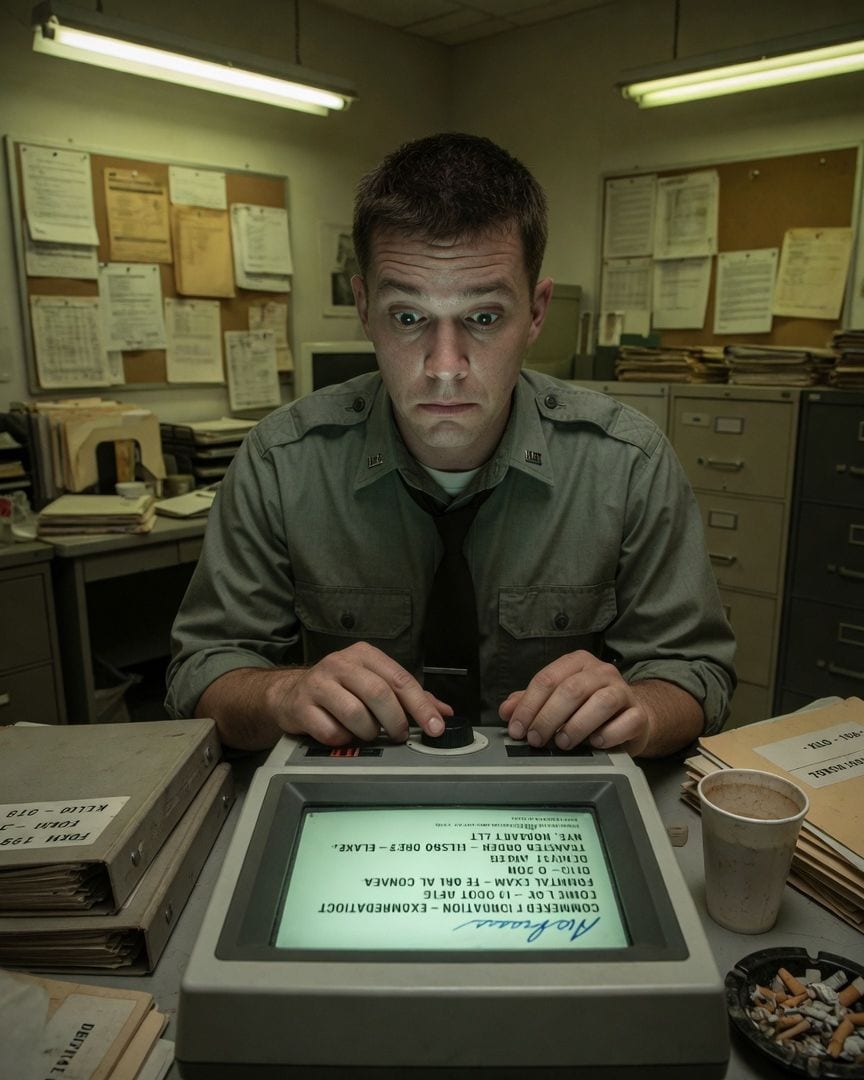
A missile commander watched his ten nuclear silos go dark. His own service record shows his signature on a future he's never lived.
Second Lieutenant Hobart Nye, a missile commander in Wyoming, had his quiet 0247 watch shattered by a security report: a massive, silent black triangle hovered over Launch Facility Kilo, casting a perfect shadow. Hobart watched his console's fault panel light up, signaling all ten nuclear missiles going dark in an impossible silence, followed by eleven minutes his security team could not remember. Official logs called it a "radio malfunction," but Hobart found a requisition for invisible-tracking sensors, signed by a base commander who was supposed to be off-base. The final, chilling discovery came when his own service record showed new entries—a dental check-up, a transfer to Alaska—all dated for a future he never lived, complete with his perfectly replicated signature.
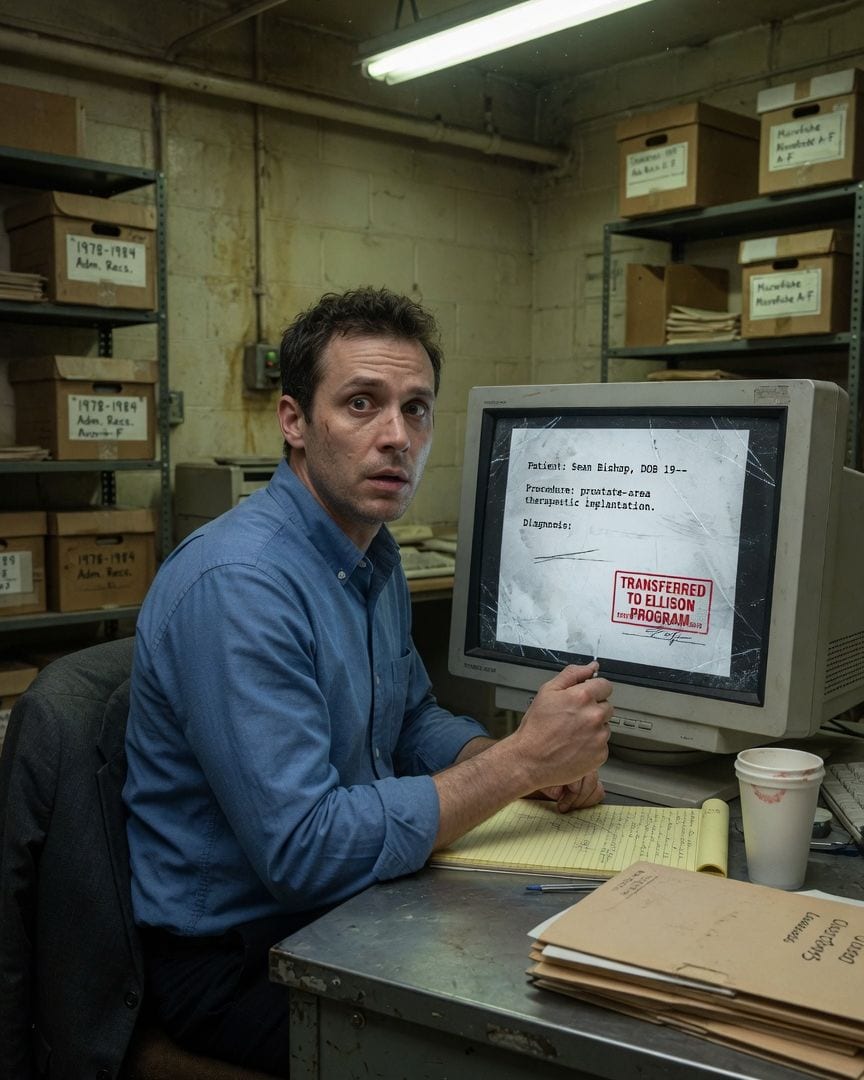
My prostate scan showed tiny metal seeds inside it. The radiologist said they were years old, for cancer. I've never had cancer or treatment.
A routine CT scan for a dull backache was just to be thorough, 'probably nothing.' But the radiologist found something impossible: forty-seven cancer treatment seeds embedded in my prostate, long-healed, from a procedure I have no memory of. My doctors confirmed the undeniable physical evidence, yet my medical history was perfectly clean.
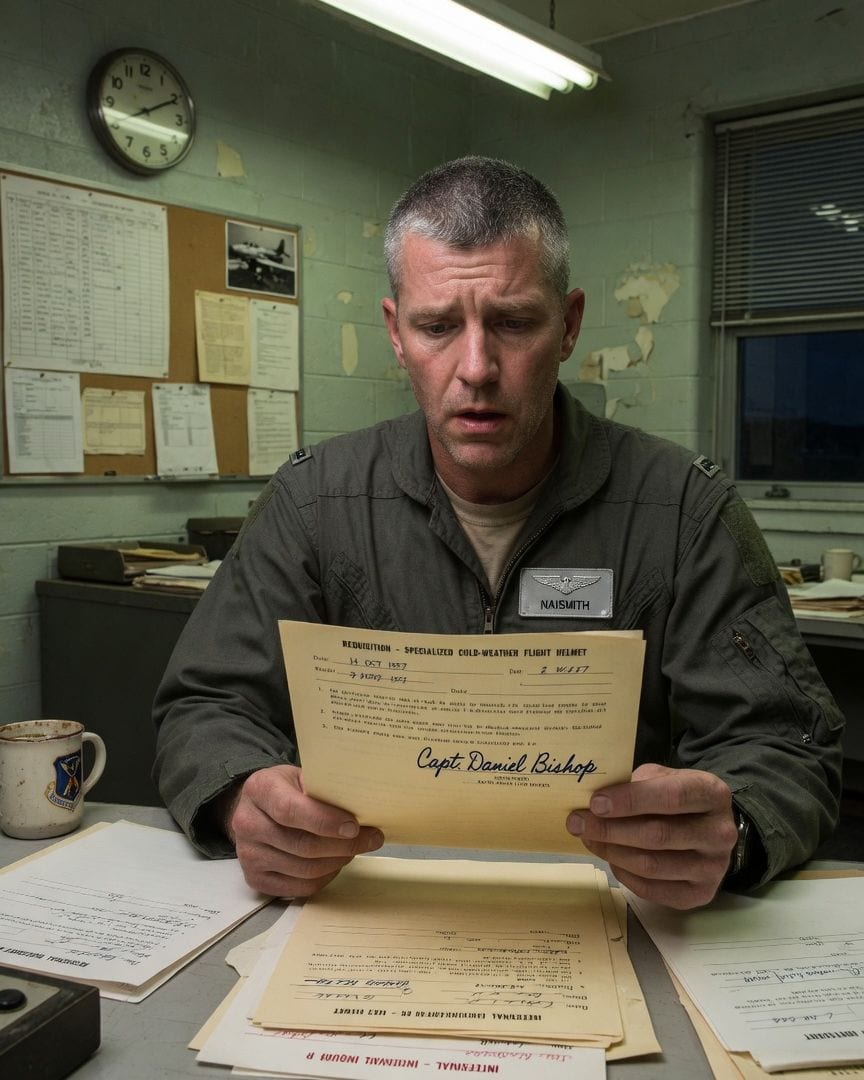
A Cold War Colonel reviews a missing pilot's file and finds Captain Bishop's signature on a form dated weeks after he vanished.
Colonel Ward Naismith faced the grim task of reviewing Captain Daniel Bishop’s personnel file, a routine chore for a man listed as Missing in Action. Bishop had vanished days after he and Naismith chased an impossible, silent disc over Lake Superior, leaving only an empty patch of air and a knot of unease in Ward's gut. Sifting through commendations, Ward found a requisition for flight gear and a maintenance sign-off, both dated *after* Bishop’s disappearance. The true chill came with the requisition for a specialized flight helmet, bearing Captain Bishop’s unmistakable signature, weeks after he was presumed lost. How could a man presumed lost have signed anything?
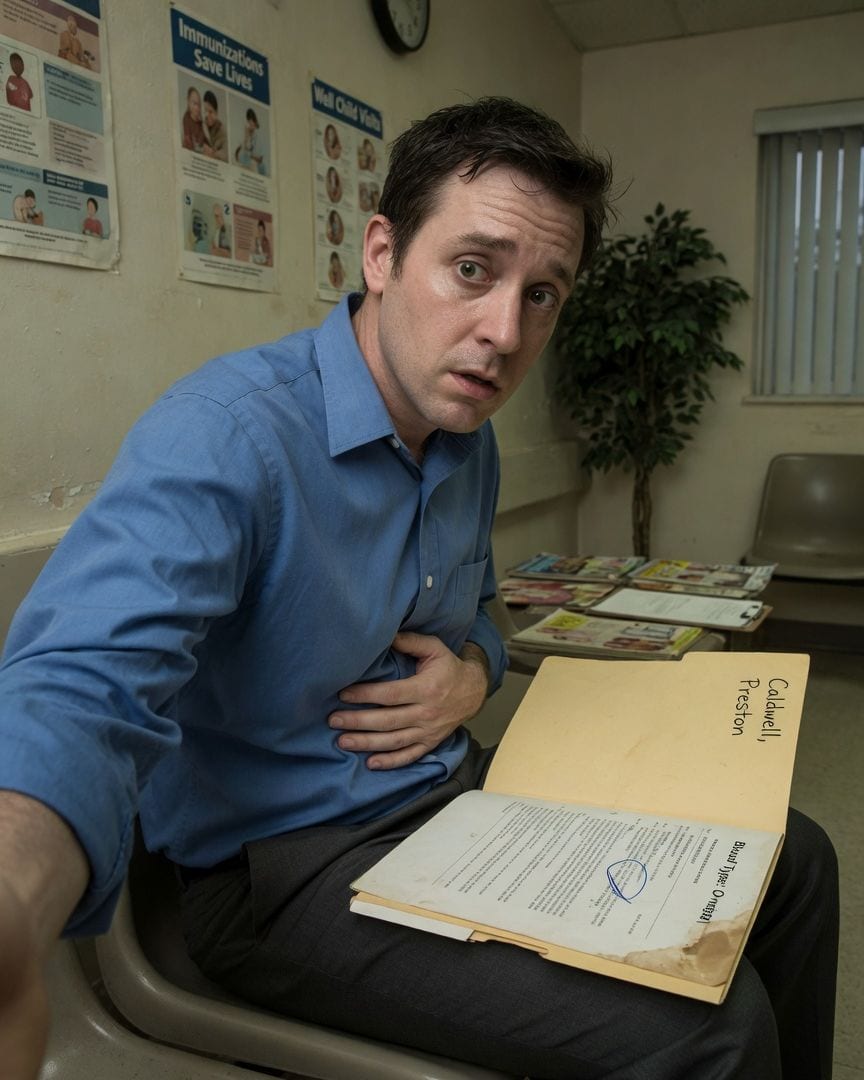
My ultrasound found a silicone prosthetic where one of my testicles should be. The real one was removed years ago, the space healed, but I never had surgery there. I never knew.
I booked an ultrasound for a dull ache, expecting a simple diagnosis. Instead, doctors found a perfectly healed prosthetic organ, expertly placed, where my own should have been. I have no memory of ever having such surgery, leaving a chilling question hanging in the sterile air.