My dad's phone calls have a third voice, patient and close. It repeats everything he says, one beat behind him. My father doesn't hear it.
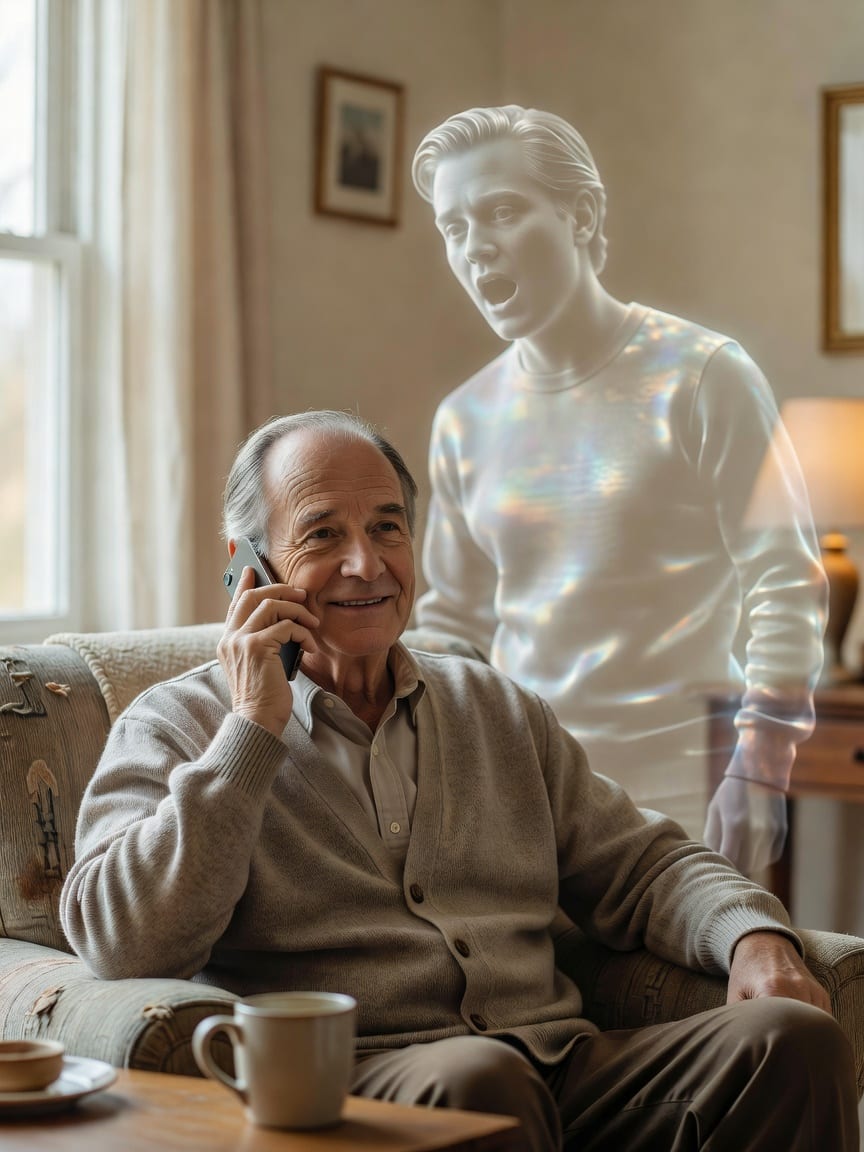
Last Tuesday, replaying my routine screen-recording of a call with my elderly father, Dean, a prickle of unease started in my gut.
It's a habit born of care, not paranoia — just easier to jot down his appointments or grocery lists later if I have the audio.
He was talking about his prize-winning tomatoes, his voice a little hoarse with age, the usual garden enthusiasm. But then, a beat behind him, clear as day and patient as a shadow, a third voice repeated his words: "…prize-winning tomatoes."
It was close, intimate, almost a murmur, yet utterly distinct from any background noise. Dean continued, oblivious, talking about the squirrels raiding his bird feeder. The voice echoed him again: "…about the squirrels."
I froze, my finger hovering over the pause button. My living room was quiet, the only sound the faint hum of the refrigerator. I rewound, played it again, careful to catch the exact timestamp, 3:14.
The echo was still there, a perfect, calm mimicry. My father, meanwhile, had been completely deaf to it.
I spent the next few hours trying to rationalize it away. A cross-line? A digital artifact on my phone? I checked the call log, confirming it was a direct landline-to-cell connection, no conferencing.
I even emailed the audio file to an old college friend, Mark, who's a sound engineer. He ran it through every diagnostic he had. His reply was terse: "Clean file, Grace.
No anomalies, no interference, no digital ghost in the machine. Whatever you're hearing, it's in the original audio."
The dread deepened, a cold knot in my stomach. I checked my other recorded calls with Dean from the past few weeks, a growing certainty chilling me.
On three out of five, faint but undeniably present, was the same patient, echoing voice. It wasn't a one-off glitch. It was a pattern.
The second voice never interrupted Dean; it simply mirrored him, a perfect, shadow-like replica of his last few words, always a beat behind.
I remembered a box in Dean’s attic, full of old family recordings – faded VHS tapes and a stack of cassette tapes from my childhood. Dean had loved recording everything back then.
Family dinners, school plays, even just me talking to my toys. He called it "documenting history." A chilling thought suddenly crossed my mind: if this was a pattern, how far back did it go?
I specifically recalled one cassette, labelled 'Grace's 7th Birthday Party,' where Dean had done most of the talking, narrating the chaos like a sports commentator. That was over thirty years ago.
The attic air was thick with dust and forgotten memories, smelling faintly of old paper and mothballs. I found the cardboard box labelled "Family Memories - 80s," then the cassette, its label faded but legible: 'Grace's 7th Birthday Party.'
I blew off the dust, the flakes drifting into the stale air, and went downstairs. Digging through a drawer in the living room, I found my old Walkman, batteries still surprisingly good.
I inserted the tape, my hands trembling slightly, and pressed play. The crackle of aging magnetic tape filled the quiet room, then the familiar cacophony of my childhood party: kids screaming, balloons popping, the clatter of plates.
Young Dean’s voice, clearer, more boisterous than I remembered, recounted a fishing trip to a group of what sounded like bored adults. He was detailing the size of a salmon he’d almost caught.
"…biggest damn salmon you ever saw…" I held my breath, the hiss of the tape filling the air. Then, a beat behind him, distinct and unmistakable, the same calm, patient echo repeated his words: "…damn salmon you ever saw."
It was the same voice. Thirty years ago, and it was already there.
The discovery left me cold, a deep, unsettling certainty settling in my bones. This wasn't a recent anomaly; it was a constant, a shadow that had been present for decades, perhaps even longer.
I spent days researching 'auditory echoes,' 'phantom voices on recordings,' finding only crackpot theories, easily debunked hoaxes, or technical explanations that didn't fit. Nothing credible, nothing that explained what I was hearing.
I tried to talk to Dean again, carefully, about the ‘strange phenomenon’ on my recordings. I framed it as a technical curiosity, something I'd noticed on "some old tapes."
He waved a dismissive hand, not even bothering to look up from his crossword. "Oh, that old thing? Probably just a bad connection, dear. Or the tape's just worn out. Don't you fret about it."
His nonchalance was almost as unnerving as the voice itself. He wasn't just dismissing it; he seemed genuinely unbothered, as if it were a common, unremarkable occurrence he'd heard many times before. He didn't even ask to hear it.
I pressed him gently about his childhood, about any odd experiences or strange sounds he might have remembered. He furrowed his brow, thinking. "Well," he mumbled, "there was that special clinic I attended as a boy, 'for observation.'
Mother thought I was a bit... quiet. But it was nothing, just doctor's nonsense." He quickly changed the subject, muttering about needing to prune his rose bushes.
The memory, however, stuck with me. A special clinic? For observation? The detail felt out of place, a small, dark stone in the smooth narrative of his otherwise normal childhood. Why would he need 'observation'?
I started sifting through old family documents, letters, photo albums, looking for anything related to Dean's early life, any mention of a specific institution or unusual medical history.
The name 'Whitfield Institute for Observation' surfaced in my mind, a half-forgotten whisper from an old story, maybe something my grandmother had mentioned once, long ago.
Grace’s search for 'The Whitfield Institute for Observation' yielded nothing in current directories, no online presence, no historical markers. It was as if it had simply vanished from the face of the earth.
Undeterred, I dug deeper into local historical archives, specifically microfiches of old city records and phone books. Eventually, my eyes scanned an old, yellowed phonebook from the 1960s.
There it was, in faded ink: a listing for 'Whitfield Institute for Observation,' with an unlisted number beneath it. The address was an unassuming one, on the quiet outskirts of what was now a residential area.
I dialed the number, my heart thudding, half-expecting a dead line, a disconnected tone from decades past. Instead, it rang. One, two, three rings. Then, a click. A calm, elderly woman's voice answered, entirely without preamble. "Whitfield Institute archives."
I stammered, startled. "Hello? My name is Grace Whitfield. I'm researching... family history." I hesitated, suddenly feeling foolish. "I'm looking for information about my father, Dean Whitfield, who may have been a patient there as a child."
The woman, who introduced herself as Catherine Vance, sounded serene, almost unperturbed by my awkwardness or the passage of time. "Ah, Grace Whitfield. I've been expecting you, in a way."
I felt a prickle of alarm, sharp and cold. "Expecting me?" I managed, my voice thin.
"Some things have a way of surfacing, dear," Vance replied, her voice soft but firm, like a stone worn smooth by a river. "Some things are best left to their own echoes." The line clicked dead.
I stood there, the dead phone heavy in my hand, a profound, visceral sense of being watched washing over me. My investigation no longer felt private; it felt known.
Later that week, while helping Dean clear out some more junk in his attic, I found a faded pamphlet from the 1950s for 'The Whitfield Institute,' its logo a stylized ear, subtly unsettling, like a secret listener.
It was tucked into an old school yearbook of Dean’s, right on the page with his childhood photo.
Driven by a desperate need for answers, I tracked Catherine Vance to the address listed in the old phonebook.
It was a quiet, unassuming brick building on the outskirts of town – clearly the original administrative office of the defunct Institute, now a private residence. Vance greeted me at the door, her composure unnerving.
She offered tea, as if this were a routine social call.
"You're here about the voice, aren't you?" she said, her eyes unwavering, a faint, knowing smile playing on her lips. My heart hammered against my ribs. I just nodded, unable to speak.
Vance began to speak, her voice even, almost academic, as if reciting from a textbook. "The 'echo,' as you call it, is a documented auditory phenomenon.
It's a form of temporal bleed, a passive recording of vocalizations, specific to certain family lines. The Whitfields are one such line." She sipped her tea, watching my reaction.
I stared, trying to process, to make sense of her calm pronouncement. "A recording? From where? How?"
Vance smiled faintly, a serene, unbothered expression. "Not a recording in the modern sense. More like a resonance. A trace left on time itself. It's always a beat behind, always repeating. A harmless, observational echo."
She rose and retrieved a thick, leather-bound journal from a shelf overflowing with similar antique volumes. It was old, brittle, and filled with meticulous, handwritten entries. Vance opened it to a page dated 1932.
"Here," she said, running a slender finger down the page, pointing to an entry. It was heavily redacted in places, but I could make out phrases like '...the vocal echo observed in Subject 4, Whitfield line...'
and '...the passive repetition noted in response to speech stimulus.' The words 'temporal bleed' and 'observational echo' resonated with Vance's calm explanation. My mind raced, connecting the dots.
The voice wasn't new, it wasn't a glitch, it wasn't even unique to Dean. It was ancient. It was a known, documented, and studied phenomenon, and the Institute had been observing it for decades.
The room felt colder, as if the air itself was listening.
I felt a cold dread settle over me, far heavier than any fear of the unknown.
The voice wasn't a threat, not in the way I’d imagined; it was a constant, unseen companion, a ghost of sound, a permanent scar on time. "So it's just... an echo?"
I whispered, the earlier recordings playing back in my mind, Dean's voice, then the beat-behind repetition, now reframed as something far older, far more entrenched.
Vance nodded, her expression unreadable, a faint smile on her lips. "For the most part, yes. A residual effect, as I said." She then opened another, much older, bound ledger, its spine cracked, its leather worn smooth by time.
Its pages were yellowed and brittle, the ink faded, but the script was precise, formal. She ran a finger down a column of names, an almost maternal gesture.
"However," Vance continued, her voice dropping slightly, becoming a low, conspiratorial murmur that made the hairs on my arms stand up, "in its earlier, more potent manifestations, especially with infants, the echo was... different."
Her finger stopped on an entry. My eyes followed. There, in stark, undeniable black and white, I saw it: 'Dean Whitfield, b. 1945.'
And next to it, a chilling annotation in faded ink, dated from before Dean could even speak: 'Subject of Echo Study 1945-1955. Primary observation: the voice names the baby.'
I stared at the ledger, the words 'the voice names the baby' burning into my vision, a brand on my mind. "Names the baby?" I croaked, my throat dry. It was an impossibility.
Vance nodded, her gaze calm, as if discussing the weather. "In its most profound form, the 'pre-echo' would manifest.
For infants in certain lines, including yours, the echo would sometimes utter a name, a term of endearment, or even a short phrase, a few seconds before the actual parent or caregiver said it.
The Whitfield Institute wasn't a clinic, Grace, it was an observation post. We documented this 'pre-echo' phenomenon, studying if it influenced the actual speech, if it was a form of auditory suggestion, if it was even... directing."
My mind reeled, trying to grasp the implications. The voice wasn't just repeating; it was, at times, preceding. It was a 'recording that cannot be' because it recorded something before it happened. Dean had been one of these subjects.
The ledger detailed specific instances, scrawled in meticulous shorthand: 'Subject D.W. uttered 'Dean' 3.2 seconds prior to mother's first address.' 'Subject D.W. echoed 'My boy' before father's endearment on 2/17/47.'
The voice I heard now, the beat-behind repetition on my recordings, was merely a residual, faded version of its earlier, more profound manifestation.
The dread wasn't just that the voice existed, but that it had been there, in a more powerful form, from the very beginning of my father's life, a silent, impossible companion that had quite literally introduced him to the world.
I felt a cold, crushing weight.
The voice on my recordings wasn't just repeating Dean; it was a ghost of all the words spoken to and by his line, a passive, eternal record, a temporal bleed that had once, impossibly, spoken the future.
"What happened to them?" I asked, my voice barely a whisper. "To the babies? To my father?"
Vance closed the ledger with a soft thud, the sound echoing in the strangely still room. "They were simply observed, Grace. The phenomenon noted. It's harmless, a natural anomaly. A record of what was and what would be."
Her calm demeanor, her absolute certainty, was terrifying. I realized the Institute hadn't stopped observing; it had merely gone underground, its records and its knowledge preserved, perhaps even continuing.
The 'harmless' observation felt like a violation that spanned generations, a profound intrusion into the lives of the Whitfield line.
I pushed my chair back, the scrape against the floor loud in the silence, needing to escape the oppressive weight of this truth, this room, this woman. "I need to go," I said, my voice shaking, barely my own.
Vance, still seated, reached out a hand. Her grip was gentle but firm on my arm, arresting my movement. Her eyes, unnervingly calm, fixed on mine. "You've been listening, Grace," she said, her voice soft, almost a lullaby.
"You've heard it. You've sought it out. You're part of the record now, too. The echo finds its listeners."
I felt a chill run down my spine, a profound sense of being drawn into something ancient and inescapable, my own life now a subject of an unseen, unheard observation. The air in the room felt thick, heavy with presence.
I returned home, the recordings on my phone now a source of deep, unsettling dread, no longer just a simple archive.
I couldn't listen to my father's calls without hearing the second voice, a constant, patient reminder of the 'temporal bleed,' a whisper of what had been, and what would be.
Dean, still oblivious, continued his quiet life, untroubled by the unseen companion that had been with him since before he was born. I tried to delete the recordings, to erase the trace, to sever the connection, but found I couldn't.
They were locked, timestamped, unerasable from my device, a permanent part of my digital history. The phone itself felt like a heavy, silent observer, a conduit to the phenomenon.
I stopped calling my father. I couldn't bear to add to the 'record,' to knowingly invite the echo into my ears, into my life.
I avoided all calls, my phone a silent, cold weight in my hand, a burden I couldn't discard, couldn't ignore. One morning, my phone rang, an unknown number. I didn't answer. A voicemail came through.
It was Dean's voice, confused, tinged with a slight worry, asking why she hadn't called him in weeks. A beat behind him, the calm, patient echo, repeated his words.
Grace listened, horrified, then noticed something new, faint, almost imperceptible, just behind the echo itself. A third voice, a hushed whisper, repeating Dean's question, 'Why haven't you called?'
Grace never posted again. A few weeks later, a comment appeared beneath her last, unfinished post about her father's calls. It simply read: 'The record continues.'
If this one got to you
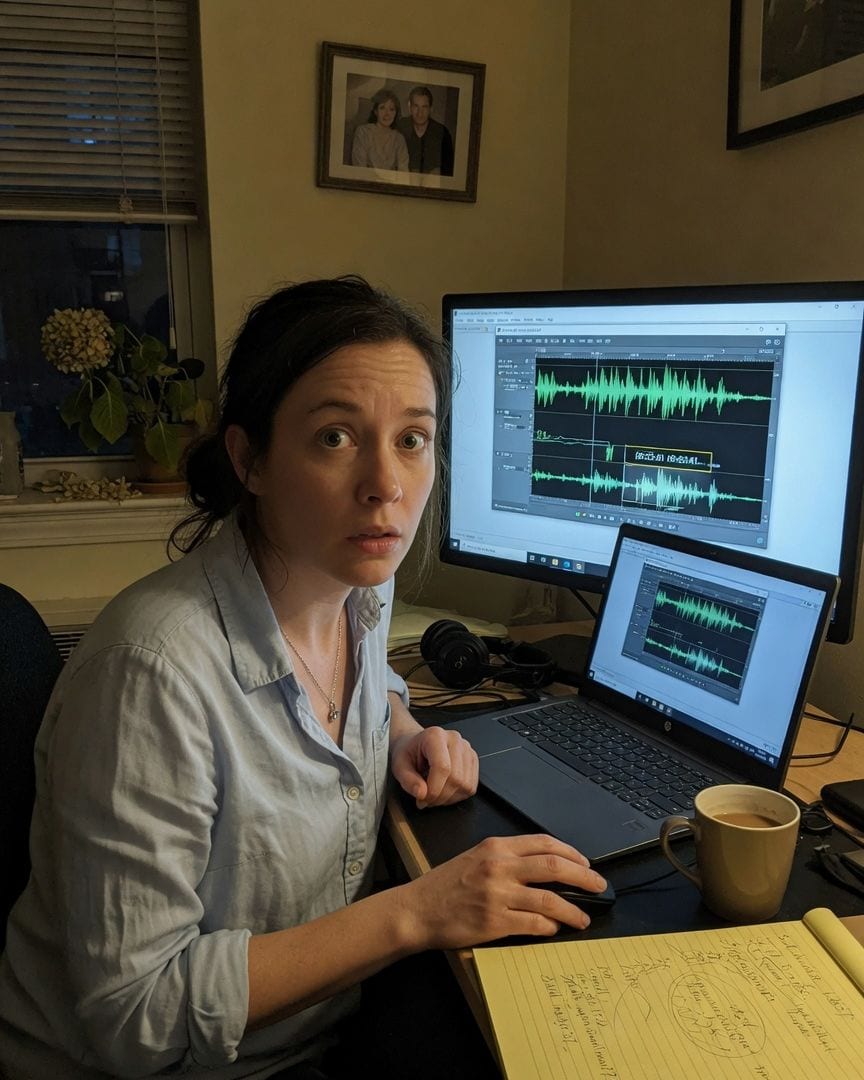
On last week's recorded call with my dad, a third voice repeats his every word one beat behind him — patient, close. He doesn't hear it.
I've been recording my weekly phone calls with my father, Raymond, to help him manage his memory since my mother passed. But on last week's recording, I heard a third voice. It perfectly mimicked my father, but then added specific, true memories he never even spoke during our call.
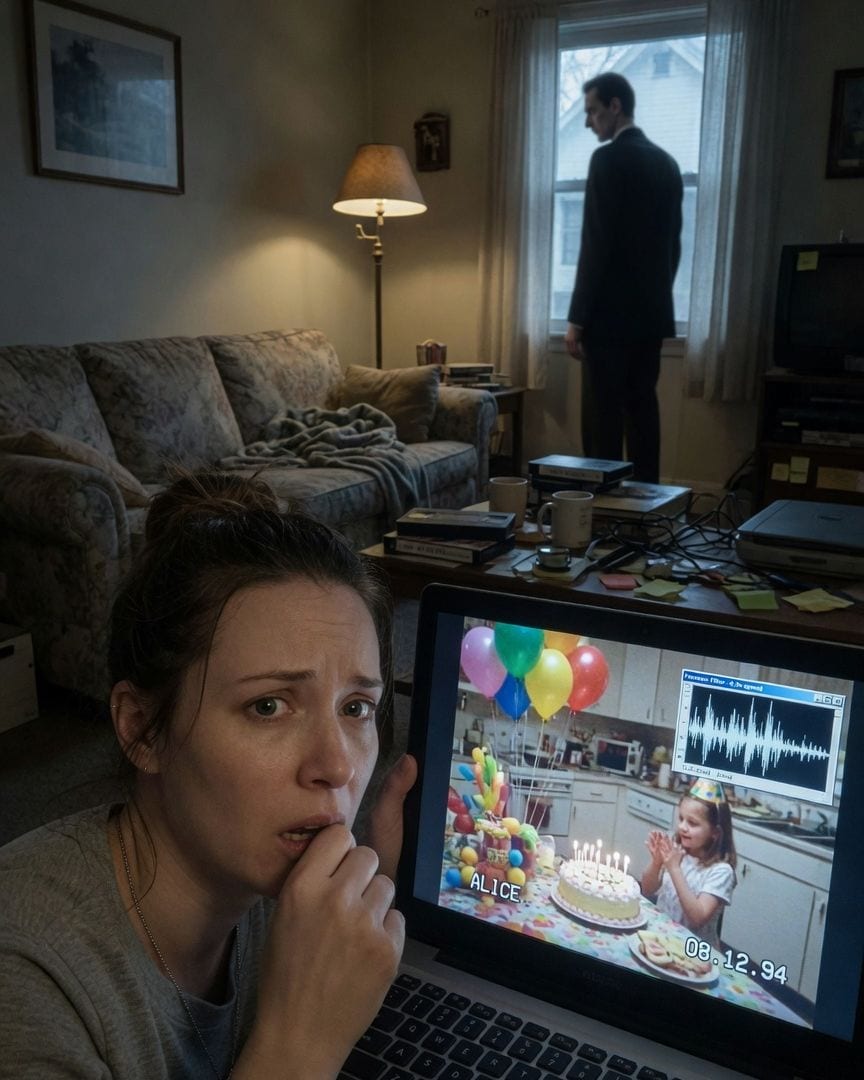
My old birthday video shows a man in the kitchen window. Thirty years later, I found him whispering 'Alice' from the tape.
Rewatching my 1994 birthday video with Mom, the grainy footage showed my six-year-old self blowing out candles. But then I saw him: a tall, gaunt man standing perfectly still in the kitchen window, looking directly at my past self. Mom swore no one else was in the house that day, her face going past pale to almost gray.
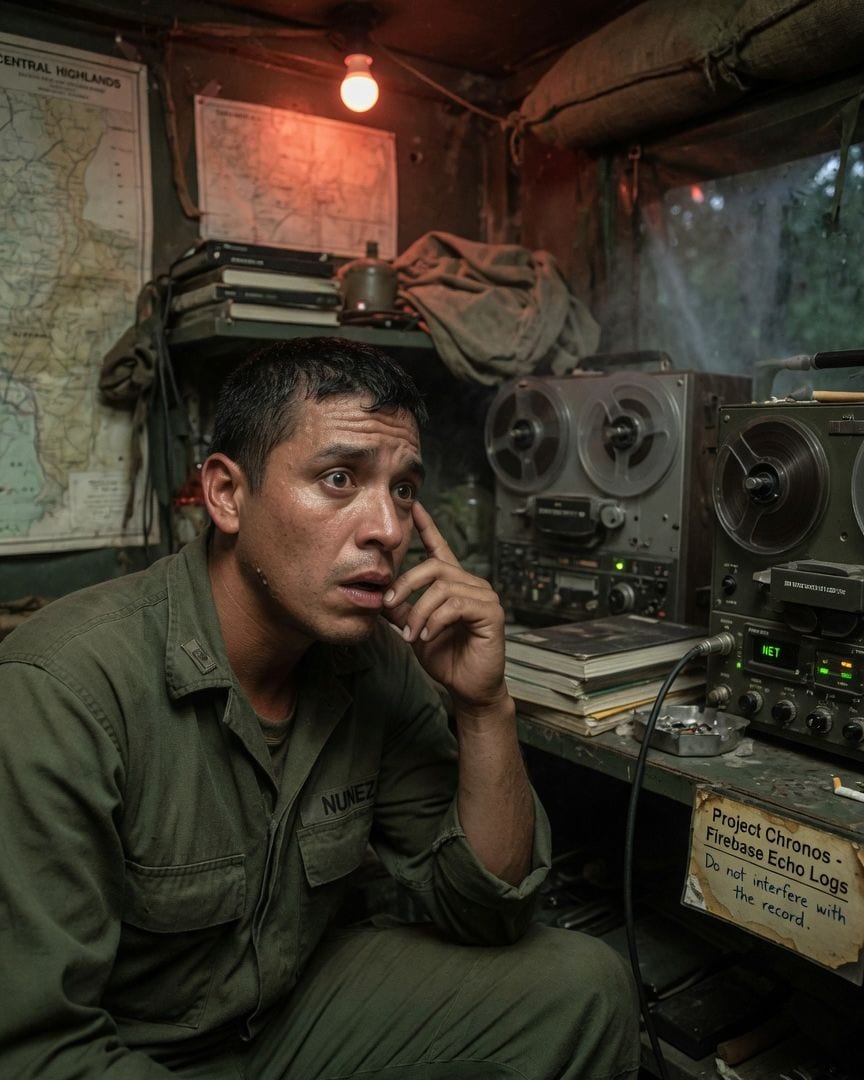
A Firebase RTO was about to send his 0400 report when his own voice crackled over the net, delivering the exact words he hadn't yet spoken.
Specialist Arthur Nunez sat alone in the RTO shack, preparing his routine 0400 SITREP amidst the humid Central Highlands night. The familiar hum of equipment was his only company, a constant drone against the isolation. Just as his thumb hovered over the transmit switch, ready to report "Perimeter quiet, all positions manned," his own voice crackled over the company net, delivering those exact words with uncanny precision. A sickening lurch twisted in his gut; he hadn't spoken a word, yet his report was already delivered by himself. Desperate for an explanation, he soon uncovered an ancient, jury-rigged reel-to-reel recorder, humming faintly. A faded label on the machine bore a stark instruction: 'Do not interfere with the record'.
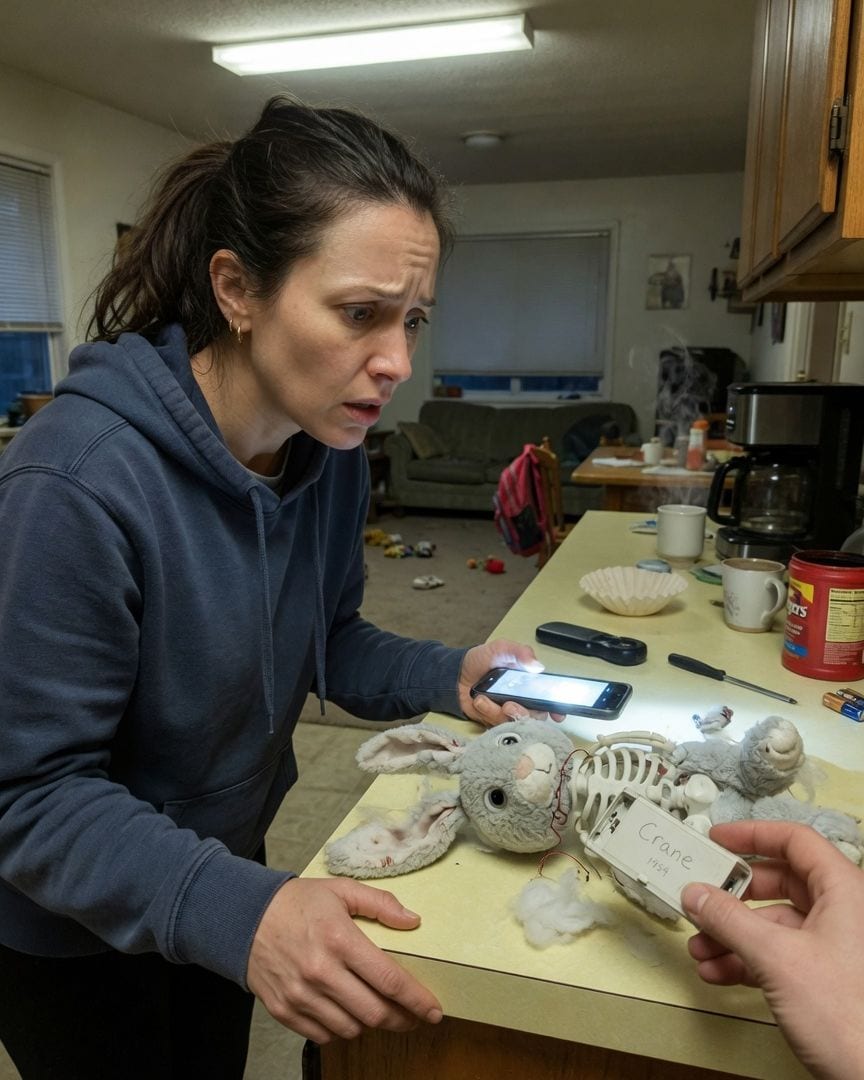
My son's toy rabbit says my name, then, 'bring him to the water.' The batteries are out.
I was making coffee, my son James at school, when I heard a grown man's voice from the living room. It was his favorite toy rabbit, whispering my name: 'Nina, bring him to the water.' The chilling command was impossible; I had removed the rabbit's batteries three days earlier, and they sat on the kitchen counter.
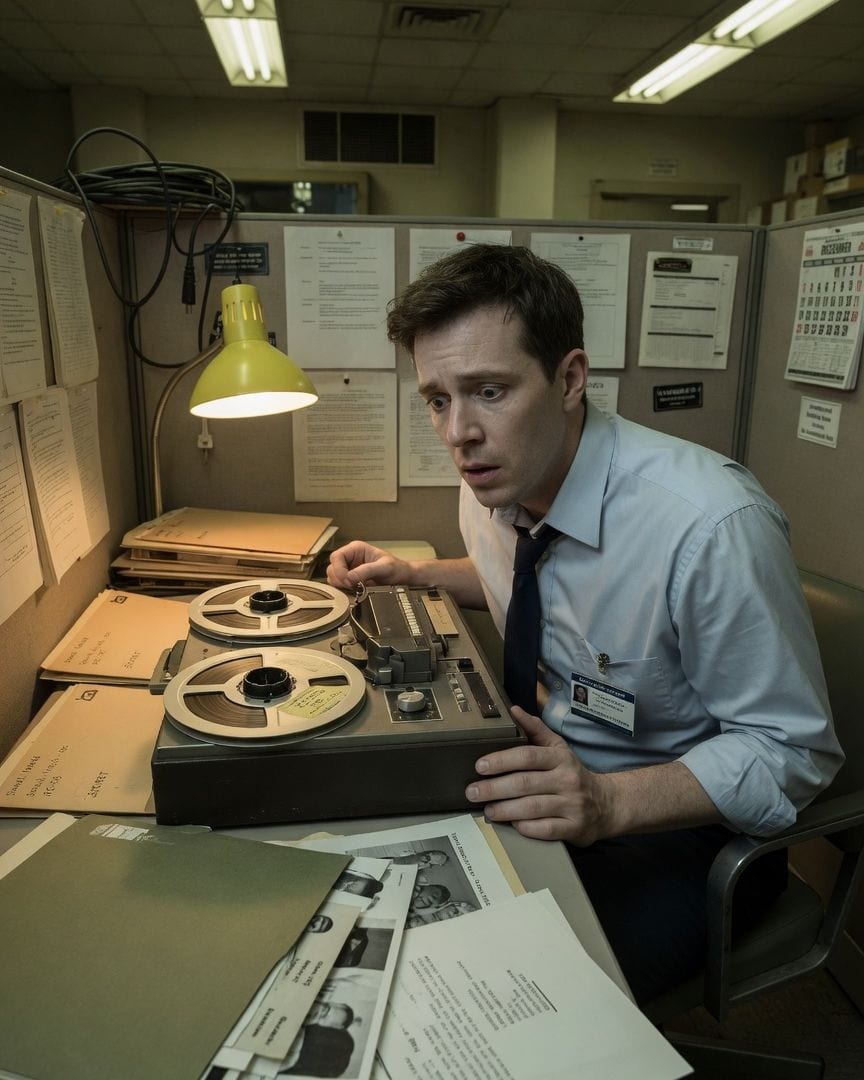
A declassification reviewer listened to a Cold War pilot's final transmission. Nine minutes after impact, a second voice answered his landing checks with a perfectly modulated 'Check' – and a low hum vibrated in the room.
A declassification reviewer, Elliot Rutherford, spent his days sifting through Cold War-era files, preparing forgotten secrets for public release. One file, detailing the 1962 loss of the KC-135 'Viper 7' in the Labrador Sea, held a transcript of Captain Harold Sowell's final transmission. Nine minutes past the estimated impact time, Captain Sowell's voice calmly read a landing checklist. But a second, perfectly modulated voice answered each challenge with a resonant 'Check,' its subtle hum vibrating through the playback unit, hinting at an impossible presence right beside the doomed pilot. What impossible entity guided a lost Cold War pilot into the crushing deep?
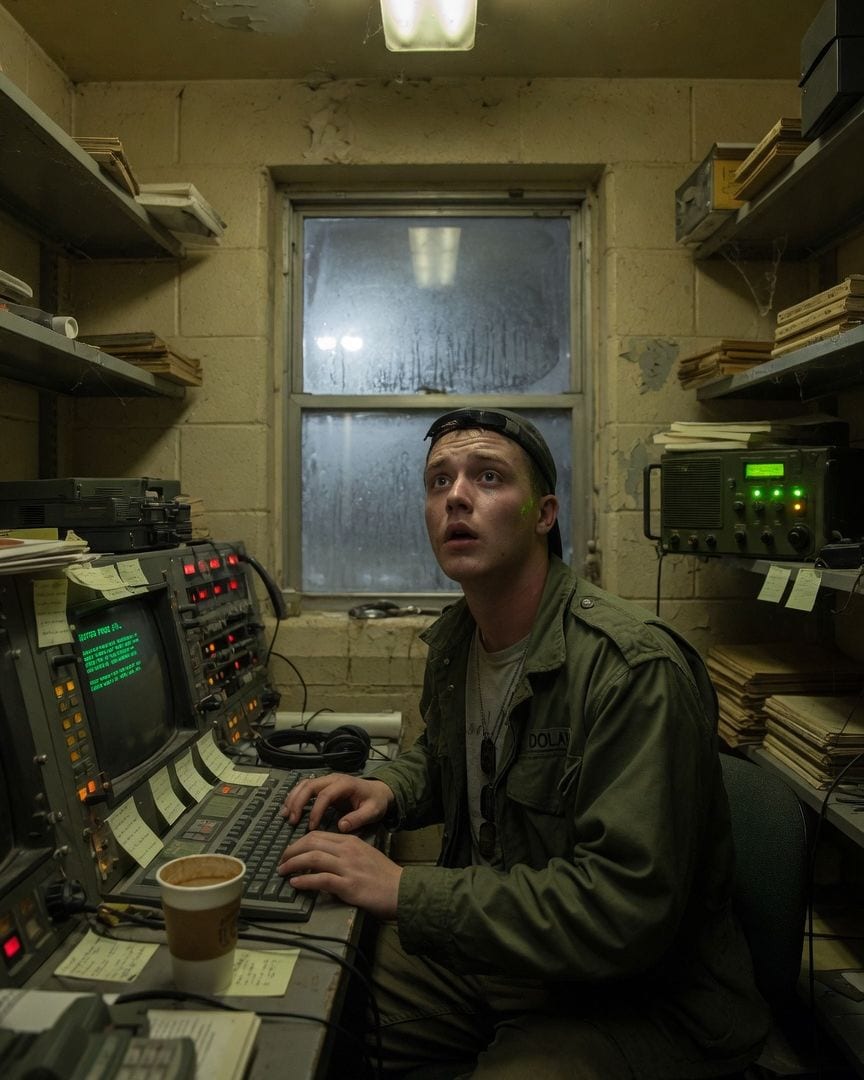
On his last watch, Specialist Dolan heard a dead soldier's voice from an old radio, a week too late.
Specialist Raymond Dolan was on his final watch at Firebase 7, a remote mountain outpost swallowed by a thick, oppressive fog, before its permanent closure. The fire-direction center should have been silent, but strange calls began routing directly to his console, reporting an enemy element in the draw where the 'Ghost Patrol' was lost just a week prior. While Control heard only Dolan's voice echoing into a void, the panicked voices in his ear were terrifyingly real. As he tried to purge the system, an old, unpowered field radio on a dusty shelf inexplicably powered on, its small light glowing green. From its speaker, the voice of Private Abigail Foster, a soldier from the Ghost Patrol, burst through—a week-old transmission, a final warning from the dead.