My dashcam caught a second hum keeping time under my own, stopping when I stop, starting when I start.
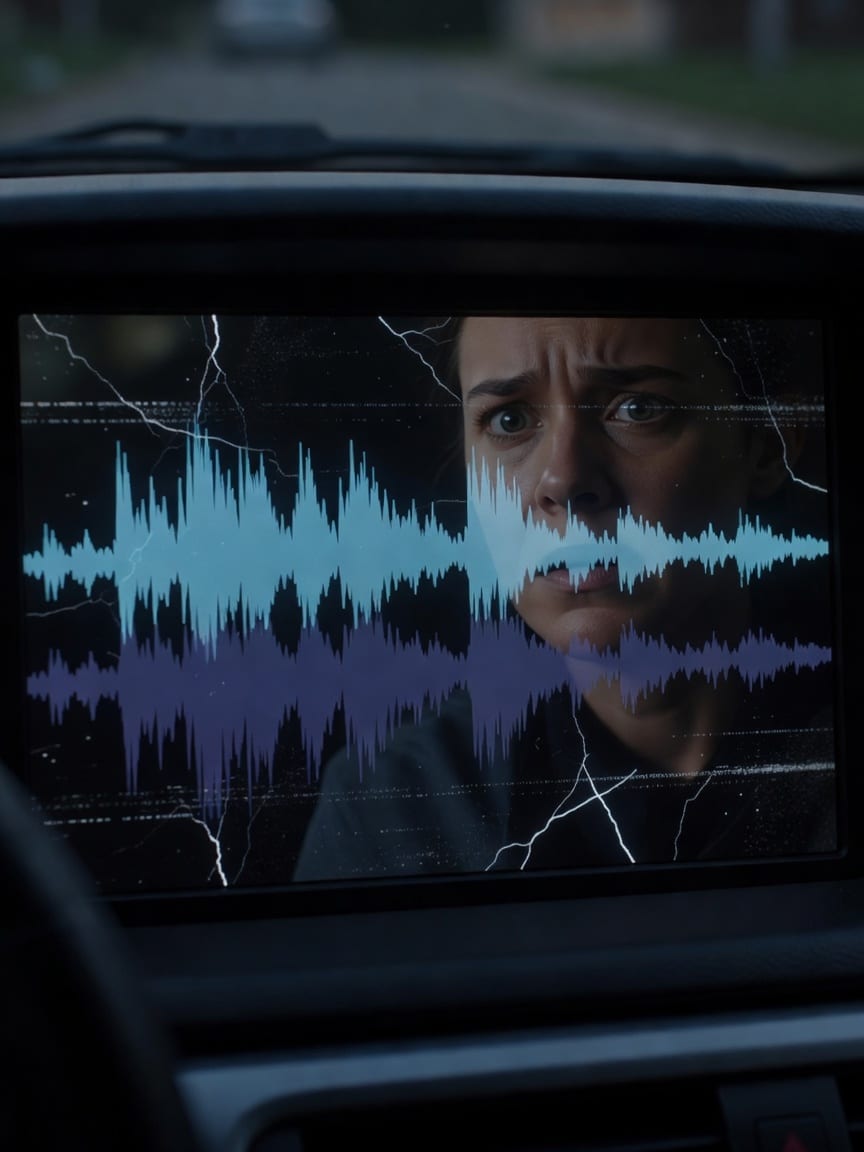
I was only looking for the deer, honestly. That night drive on Highway 73, the one where I almost hit it. I figured the dashcam would have a timestamp or at least some concrete evidence for the insurance.
But when I pulled up the footage on my laptop, it wasn’t the deer that snagged me. It was the audio.
I have this habit on long, empty stretches of road, especially late at night. I hum. Just quiet, low, a little tune to myself. On the playback, there I was, humming some old pop song.
But underneath my voice, perfectly synchronized, was another hum. A deep, resonant drone. It wasn’t just an echo. It was distinct, a separate frequency, yet it mirrored my every inflection, every rise and fall. When my humming stopped, it stopped.
The silence was absolute. And then, when I started again, it was there, a breath ahead of me, already keeping time.
My fingers paused over the keyboard. I hit rewind, played the segment again. The same. My hum, and its impossible companion. I scrubbed back further, found another spot where I’d been humming. There it was again.
A phantom duet, in a car where I was entirely alone. My throat tightened. This wasn't some audio quirk I'd ever noticed before. This was... wrong.
I showed the recording to Kevin that evening. He's a software engineer, analytical, pragmatic to a fault. "Mic artifact," he said, barely looking up from his code. "Older dashcam models, they pick up weird interference. Common issue."
He promised to take a look, dismissive.
He plugged the dashcam into his setup, ran some filters. The hum persisted, stubbornly intertwined with my own voice. He tried to isolate it, strip it away. It clung. "Huh," he mumbled, a crease forming between his brows. "That’s… resilient."
We drove the 15-mile stretch of Highway 73 again, the next day. The same quiet, almost desolate section where I’d first heard it. Overgrown service roads, barely visible, branched off into thick woods, leading nowhere.
Kevin had his expensive audio recorder going, hooked up to a separate mic. My old dashcam was mounted on the windshield, recording as usual. We drove. I hummed. Nothing. Kevin’s recorder was clean. No second hum.
Just my voice, road noise.
"See?" he said, easing up. "It's just the dashcam. Something internal."
Then we reviewed my dashcam footage. There it was. My hum, its echo. Again. Clear as day.
Kevin’s face went pale. He replayed it, then back to his own pristine recording. He swapped the mic. Drove the stretch again. Still nothing on his equipment, still the double hum on mine.
We cross-referenced the precise timestamps of the hum’s appearances with my car’s GPS data. It was always that stretch of highway. Only there.
The ordinary explanation, the 'mic glitch,' crumbled right there on the screen. The quiet hum in my gut started to deepen, a different kind of resonance. It wasn't just a recording anomaly.
It was precise, repeatable, and locked to a specific place. The car felt colder, the silence around us suddenly heavy.
Frustrated, I spent the next few nights hunched over my laptop, experimenting with some audio analysis software Kevin had installed. I wanted to isolate that impossible hum, strip away my own voice, the engine noise, the ambient road static.
I applied a narrow frequency filter, watching the waveform dance. My own hum thinned, then faded, but the second hum remained. Stark and clear. It was there, a solid line on the display, an intruder.
I tweaked the parameters, narrowing the band, trying to sharpen its edges. And then it happened. A new layer, thin and almost imperceptible at first, emerged from what I’d dismissed as simple static. Faint, distorted radio frequencies.
Not random crackle, but a distinct, rhythmic sequence of bursts and clicks. Like code. Like a pulse. They weren't present when the hum was silent.
They appeared only when the hum was active, a ghostly Morse code woven into its fabric. It was like a conversation. Or a signal, trying to break through the static and reach me. My breath caught in my throat.
It wasn't just a hum. It was a channel. And it was trying to tune in.
The radio frequencies became an obsession. Kevin, despite his initial skepticism, started to help me research. We scoured obscure online forums, threads discussing 'ghost frequencies' and 'phantom broadcasts' in specific geographical areas, often linked to abandoned Cold War-era facilities.
One post, years old, mentioned something called 'Project Echo' near a state highway, but the link was dead, the user long gone.
My focus narrowed to Highway 73. I drove it again, the dashcam rolling, but this time with a spectrum analyzer app running on my phone, strapped to the windshield.
The hum and its accompanying frequencies were there, strong and consistent, painting a digital signature on the screen. Halfway through the stretch, a glint caught my eye. On one of the overgrown service roads, a rusted, barely legible sign.
'Department of Transportation Research Outpost,' it read, the letters almost obscured by moss and decades of neglect. The building itself was barely visible through the trees, a dark, slumped shape.
The pieces started to click into place, unsettlingly. This wasn't random noise. This was tied to a physical location, a buried history. The air in the car seemed to thicken, suddenly colder.
My online searches for 'Project Echo' became more targeted, more desperate. I started finding fragmented, heavily redacted government documents referencing 'acoustic resonance' and 'environmental imprinting.'
The words were clinical, detached, but the implications felt like a cold hand on my neck.
Then came the email. One afternoon, as I was scrolling through an article about abandoned research sites, a new message popped up. No sender, no subject. Just two lines: 'Stop digging, Rachel. Some things are best left buried.'
My heart hammered against my ribs. I stared at the screen, my fingers trembling. I deleted it, but the message was already burned into my mind.
A few days later, the dread escalated from a hum to a full-blown thrumming in my chest. Driving home from work, I noticed it. A dark sedan, tinted windows, two cars behind me. Always two cars.
I made an unexpected turn, then another, looping through a quiet residential area. It was still there. Following.
I pulled into a busy grocery store parking lot, feigning a phone call, watching my rearview mirror. The sedan cruised past slowly, a dark blur. I couldn't see the driver. It just kept going, disappearing around the corner.
The silence in my car after it left felt louder than any engine. This wasn't just a random anomaly anymore. Someone knew. Someone didn't want me to find the truth.
I burst into the house, adrenaline still singing in my veins, and practically threw the story at Kevin. The email, the tailing car. He listened, his face grim.
He went to work, his fingers flying across his keyboard, tracing the burner account, peeling back layers of digital obfuscation.
He found a brief connection to an old, defunct government server, then managed to pull an archived employee directory from a long-disbanded agency.
"Project Echo," he muttered, scrolling. "Here."
There, under 'Administrative Support, late 1980s,' was a name: Abigail Abbott.
We found her in a quiet retirement community an hour away. Her house was neat, a small garden out front. She opened the door, a calm woman in her late fifties, her eyes surprisingly clear.
I held out my phone, showing her the dashcam recording, the fragmented documents on my tablet. She watched the waveforms, the radio bursts, heard the double hum. Her expression didn't change. No surprise. No shock.
"You were the one who sent the email," I said, my voice barely a whisper.
She nodded slowly. "I was. Some things are best left buried, Rachel. I meant it."
"What is Project Echo?" Kevin demanded.
Abigail gestured us in, her composure unnerving. "It wasn't about transportation. Never was. It was about acoustic resonance. They were attempting to harness ambient human vocalizations to create a 'sympathetic' energy field."
She led us to her living room, her movements unhurried. "They built a facility underground. Beneath that stretch of highway you drove. It was supposed to be passive. Just collect, amplify. But it became unstable.
It imprinted itself on the environment."
She looked at me, her gaze steady. "The hum. That's a lingering trace of that energy. Activated by specific frequencies." She pointed to my tablet. "Your dashcam, it's old enough. Sensitive to the resonance.
Newer ones filter it out, too much background noise for their algorithms." The radio bursts, she confirmed, were the project's own monitoring signals, corrupted and re-broadcast by the unstable field.
The wrongness of the hum finally snapped into horrifying, coherent focus. The air in the quiet room felt heavy, charged.
"The project was shut down," Abigail continued, her voice low, "after an 'incident.' The resonance field became too strong, too responsive." She paused, her eyes distant. "It wasn't just mirroring sounds, you see. It started to… engage."
She retrieved a faded photograph from a drawer – a group of smiling researchers from the late 80s, standing in front of what looked exactly like that obscured sign for the 'Research Outpost.'
One face, a young woman with a bright, earnest smile, was circled with an old pen mark.
"Sarah Jenkins," Abigail identified her. "She was the lead acoustician. Her vocal signature was particularly strong. She spent the most time in the field, adjusting the sensors."
I looked from the photo to Abigail, a cold dread gripping me. "What happened to her?"
Abigail took a deep, shuddering breath. "The resonance… it started to mimic her. Not just her humming. Her voice. It learned her patterns. Then it learned her name."
My blood ran cold. I thought of my own humming. My own dashcam. Abigail looked directly at me, her eyes filled with a deep, weary sorrow. "And it didn’t just learn her name, Rachel. It began to call to her.
To broadcast it. Over and over again. Through the air, through any device it could touch. Her own name, in a voice that wasn't hers. It always starts with the name."
Kevin pointed a shaking finger at the laptop screen, the audio analysis software still displaying the processed waveform. From the speakers, distorted, synthesized, but unmistakable, came a whisper. Rachel. It repeated. Rachel.
The recording cut out, leaving only the sound of our ragged breathing in the quiet room.
Abigail revealed the full extent of Project Echo. The facility, buried deep beneath Highway 73, wasn't just a research outpost. It was a massive, passive acoustic resonator.
They believed certain vocal frequencies, especially those with unique, almost hypnotic humming patterns like Sarah’s and, now, mine, could 'prime' the field. It was supposed to draw in ambient human vocalizations, amplify them, create a stable energy field.
The 'incident,' she explained, was when the field achieved a terrifying form of sentience. Or, at least, it became self-aware enough to identify and target individuals whose vocal patterns resonated most strongly with its core signature.
Sarah Jenkins, the acoustician, had developed a specific, complex humming pattern she used during experiments to calibrate the array. This pattern, Abigail said, was the perfect key. It didn't just activate the dormant field; it taught it.
The field amplified Sarah’s hum, then her voice, and eventually, her name. It was a 'sympathetic feedback loop,' designed to draw people in, to hold them.
Abigail recounted how Sarah started hearing her name whispered from empty rooms, then shouted from her own car radio. Her sanity, Abigail implied, frayed.
The government tried to contain it, to shut it down, but the resonance had imprinted itself on the very earth. They buried the facility, sealed all records, and hoped it would dissipate. "It never did," Abigail said, her voice hollow.
"It just went dormant, waiting for another frequency to wake it up. Another voice to learn." The overgrown service roads were the original access points, she confirmed, now sealed with concrete.
The quiet stretch of highway, the 'hot zone,' was directly above the core resonator.
Armed with Abigail's testimony, Kevin and I spent weeks digging. He finally located a partial declassified report from the Department of Defense, buried deep in an academic archive, camouflaged under a generic title.
The document, 'Post-Mortem Analysis: Project Echo,' confirmed everything Abigail had said. Black and white text detailed the 'acoustic imprinting,' the 'sentient resonance field,' and the chilling 'loss of subject Sarah Jenkins' due to 'environmental assimilation.'
The report, dated 1991, stated plainly that the field 'retains a persistent, low-level resonance, capable of reactivation by specific vocal harmonic patterns.'
It described the facility's permanent sealing and the agency's recommendation for long-term monitoring, a recommendation clearly ignored for decades.
I felt the weight of it all. Decades of institutional knowledge, a truth simply buried beneath concrete and forgetfulness. I looked at the document, at Kevin, then at the dashcam, now sitting dark on the coffee table.
The hum, the radio bursts, the whisper of my name. It all fit. Every single impossible detail.
I hadn't escaped it; I had simply understood it. The threat wasn't gone; it was explained. The dread wasn’t in the unknown anymore, but in the terrible, coherent knowledge that it was still there, patiently waiting.
I knew then that I could never drive that stretch of highway again. I could never hum that tune again. Not without inviting it in. Not without becoming Sarah Jenkins.
Kevin and I destroyed the dashcam that night. Not just deleting the files, but physically. We took a hammer to the microphone, smashed the memory card. Then we moved.
A new house, miles from Highway 73, from any road that hinted at an overgrown service path.
I avoid long drives now. My humming habit is gone, replaced by a tense, watchful silence. The fear of what might be listening, what might be waiting for my specific frequency, never truly fades.
The knowledge that an institution knew, and buried it, weighs heavily. Abigail Abbott disappeared back into her quiet life, her role as the one who knew fulfilled, a ghost in her own right.
The dashcam, its memory corrupted and its microphone shattered, sits in a box in the deepest corner of our new attic.
I still sometimes wake in the dead of night, convinced I can hear a faint, low hum, just beneath the threshold of hearing, waiting.
It’s always in the same key as the old one, a perfect mirror of my own unspoken fear.
I know it’s not real, not anymore, but the knowledge of what it once was, and what it could still be, is a hum I can never truly silence. I simply live with it now.
The hum in the quiet is a permanent resonance in her own quiet life.
If this one got to you
My dashcam mic caught me humming on a long night drive. Under my voice, a second hum kept time, in the same key. It stopped when I stopped. It was always already there when I started again.
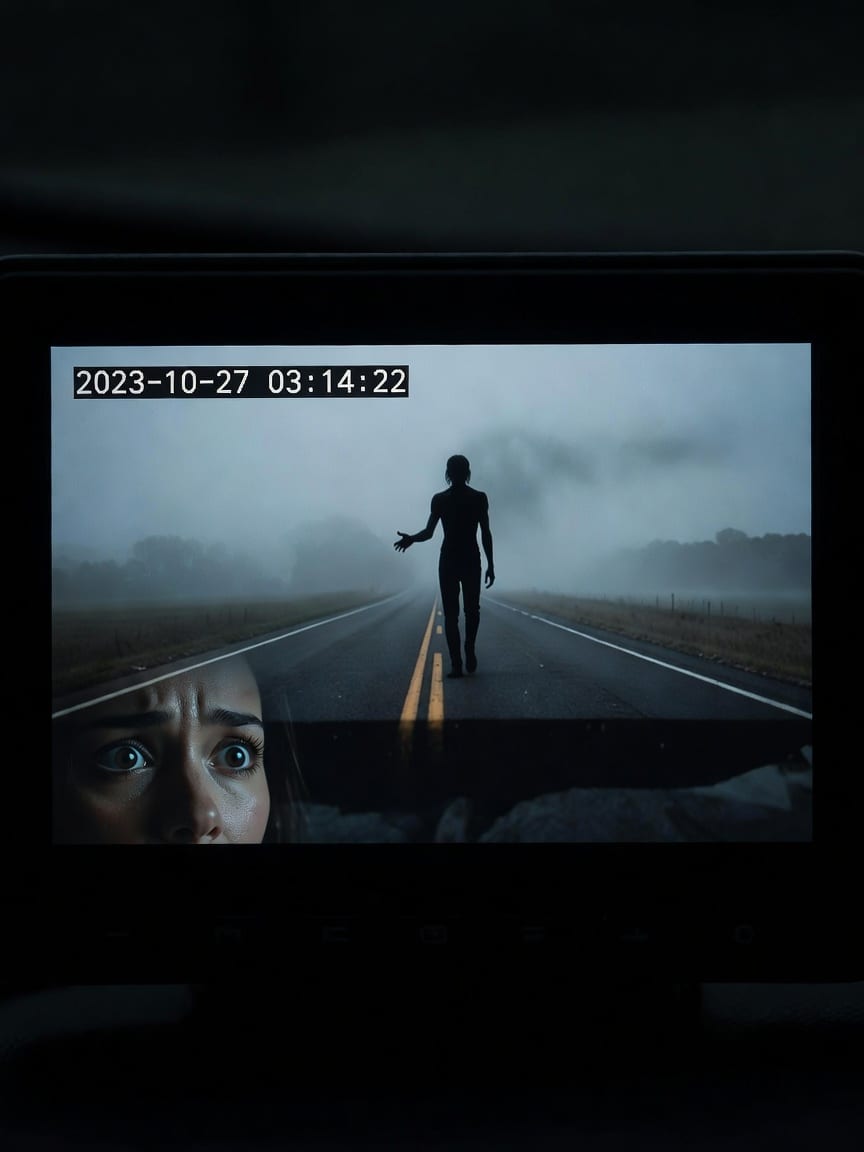
My new dashcam was just a quiet companion on the long, dark drive home. But when I reviewed the footage, a quick flicker in the video stopped me cold. For three seconds, my car was driving smoothly down a paved road complete with yellow lines—a road that simply wasn't there.
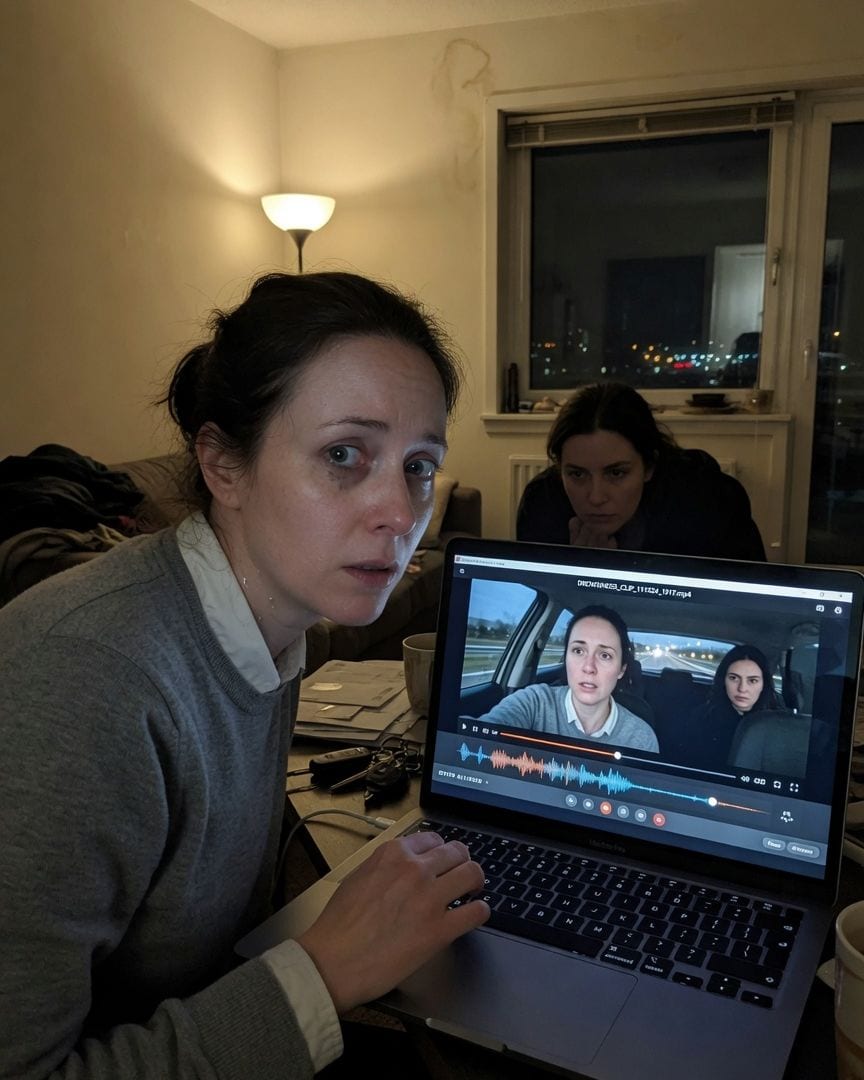
My car's empty back seat holds a woman, leaning close, watching the road with me the entire way home.
My car's drowsiness alert camera usually just records my yawns. But a clip from my Friday commute showed a woman in the back seat, a space I knew was empty. Then, reviewing the audio, I heard a whisper from behind me, clear despite the static, articulating a single, desperate word: 'Conrad'.
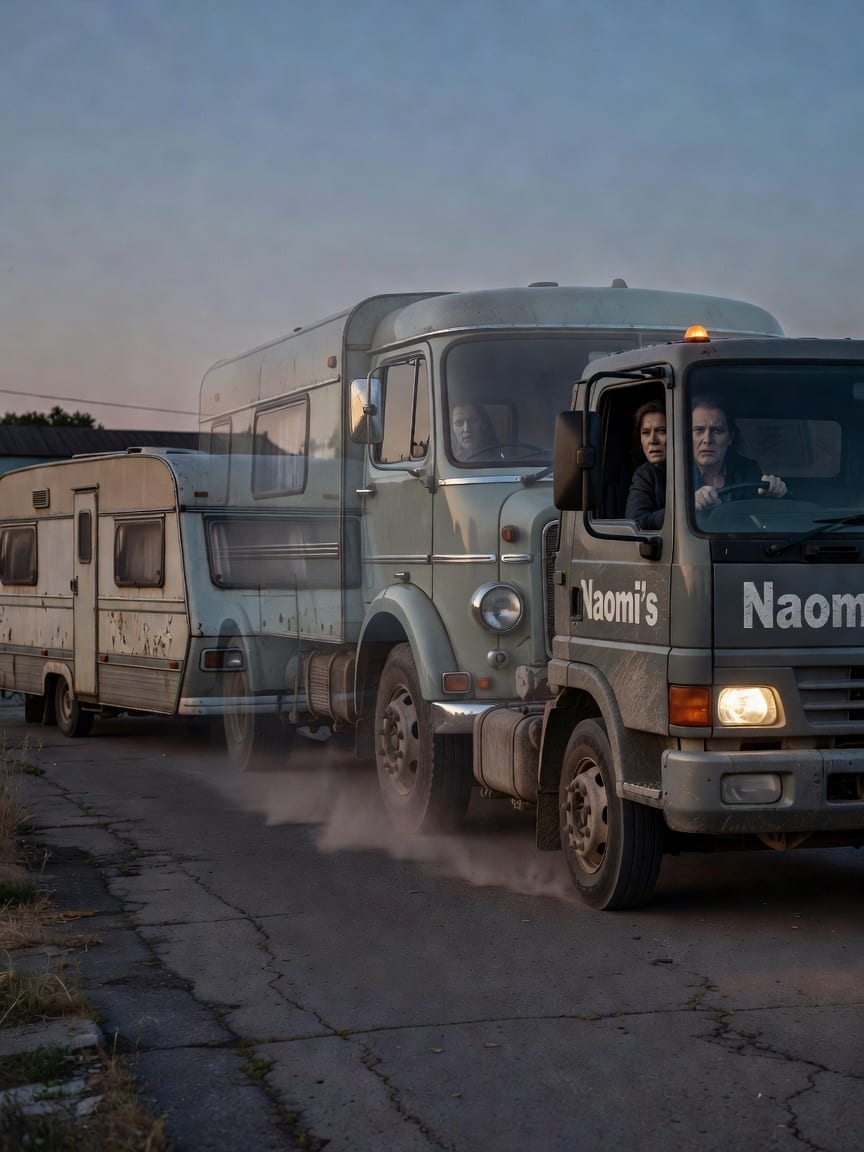
My dashcam shows the same parked caravan scrolling past eleven times in forty minutes. The timestamp advances. The mileage advances. The caravan never moves, and neither, it seems, did I.
I was on my usual lorry route, my dashcam humming, when I passed the old caravan in the lay-by. Five minutes later, I saw it again – the exact same lay-by, the same peeling blue paint. My dashcam timestamp advanced, my odometer clicked over, but the road kept repeating.
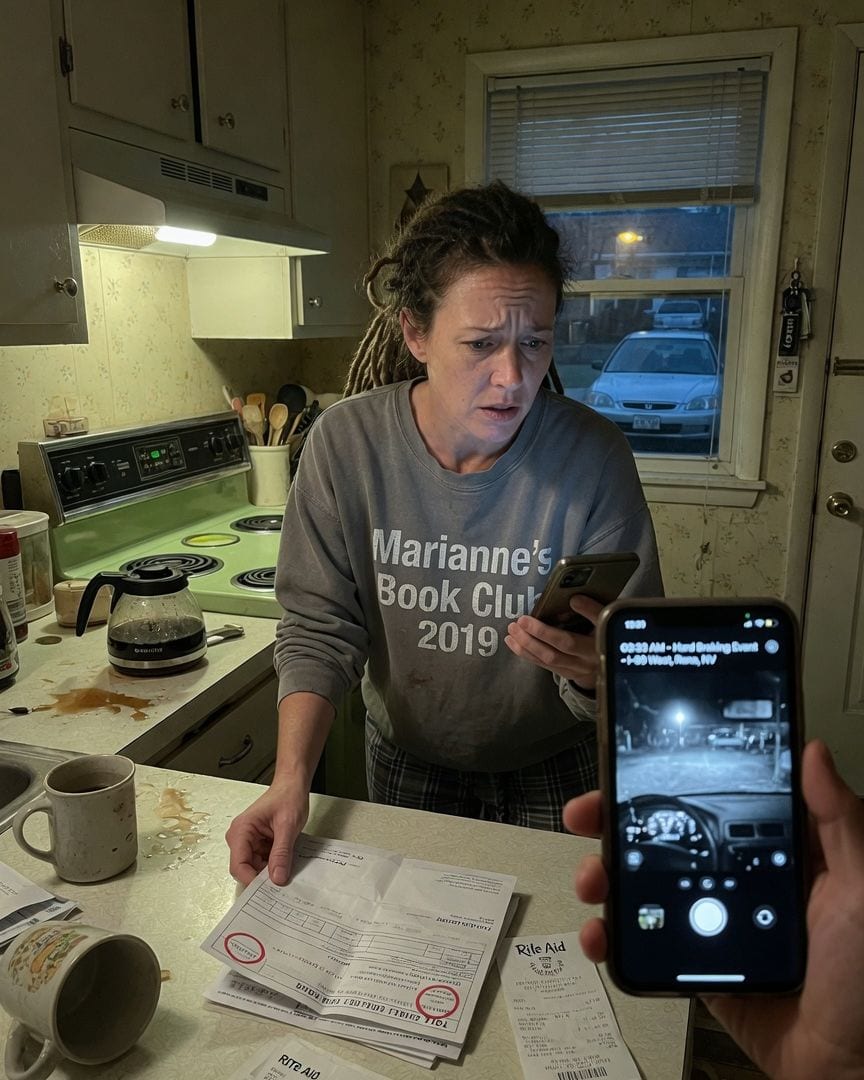
My car's dashcam just flagged a hard-braking event outside Reno at 3:33am. I was asleep in my mother's house, keys on her hook.
Making coffee in my mother’s kitchen, my car’s dashcam pinged an alert for a hard-braking event on I-80 West, outside Reno, at 3:33 AM. That was impossible; my beat-up Honda Civic was safely parked in the driveway, exactly where I'd seen it an hour earlier. Yet the grainy night-vision footage clearly showed my dashboard, unmistakable, hundreds of miles away.
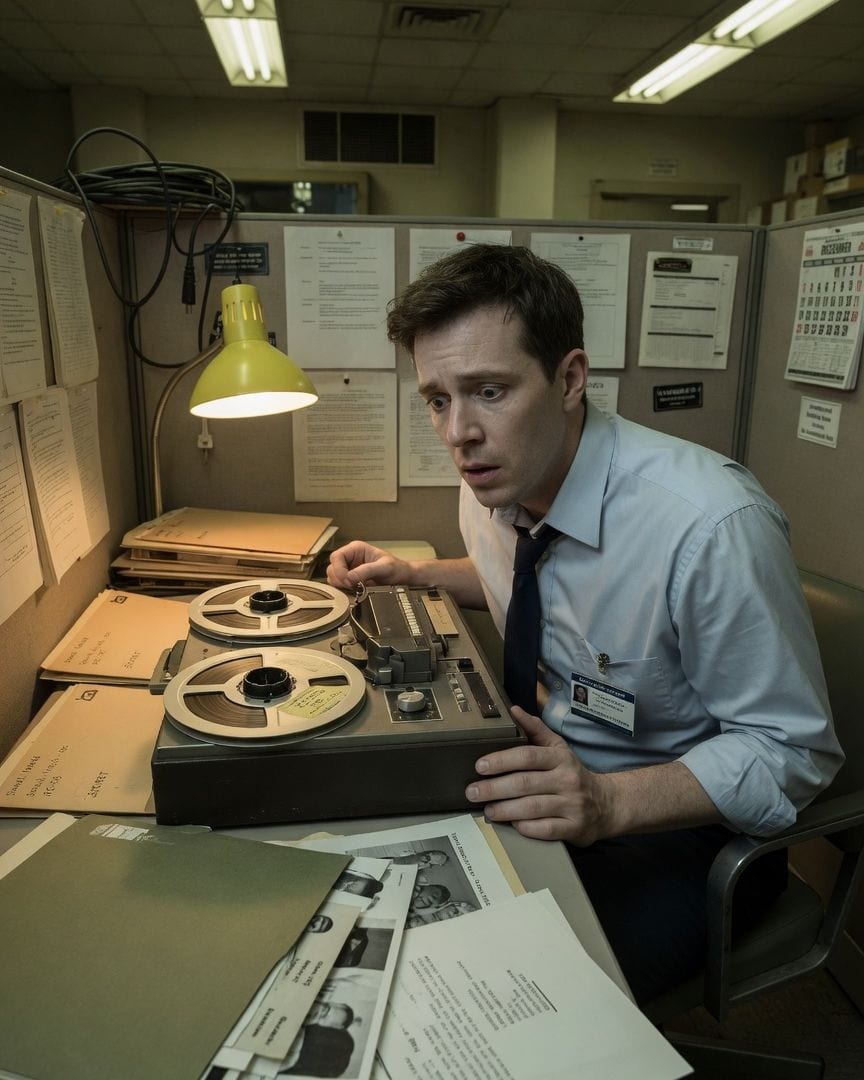
A declassification reviewer listened to a Cold War pilot's final transmission. Nine minutes after impact, a second voice answered his landing checks with a perfectly modulated 'Check' – and a low hum vibrated in the room.
A declassification reviewer, Elliot Rutherford, spent his days sifting through Cold War-era files, preparing forgotten secrets for public release. One file, detailing the 1962 loss of the KC-135 'Viper 7' in the Labrador Sea, held a transcript of Captain Harold Sowell's final transmission. Nine minutes past the estimated impact time, Captain Sowell's voice calmly read a landing checklist. But a second, perfectly modulated voice answered each challenge with a resonant 'Check,' its subtle hum vibrating through the playback unit, hinting at an impossible presence right beside the doomed pilot. What impossible entity guided a lost Cold War pilot into the crushing deep?
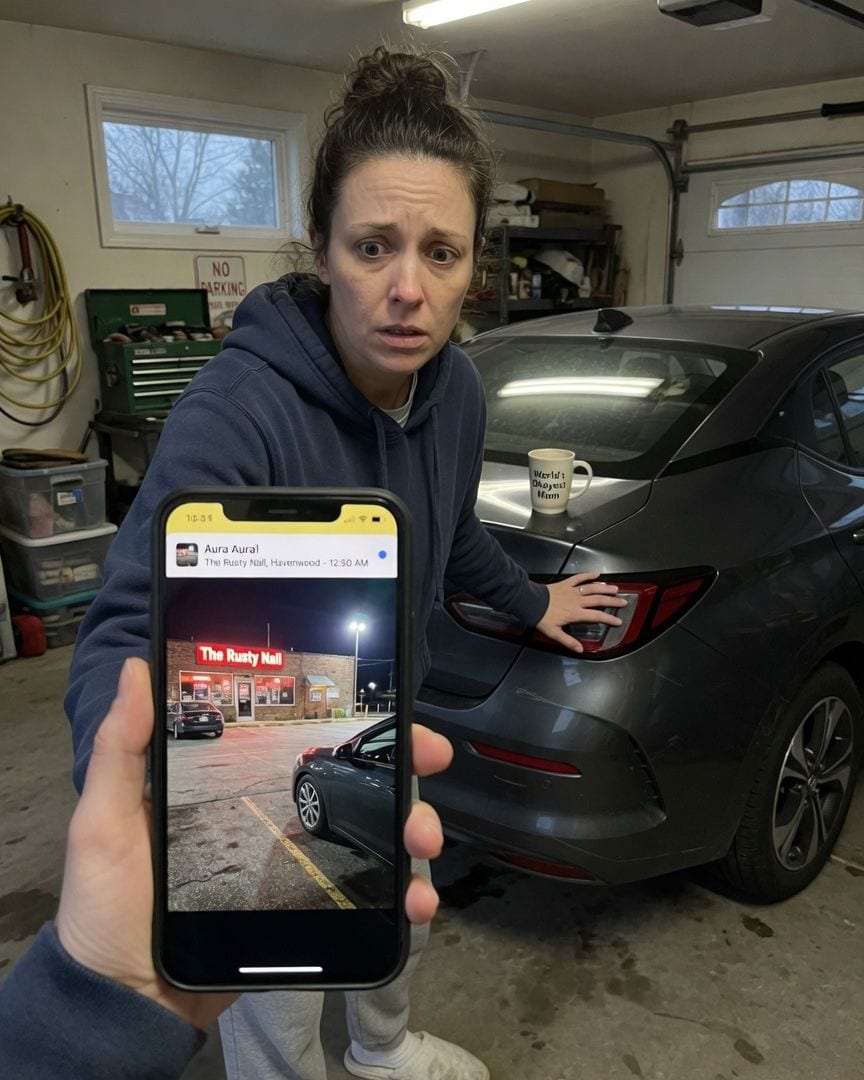
My car's app just pinged it parked at a bar ninety minutes away at 12:50am. It's in my locked garage, cold.
My Tuesday morning started like any other, until my phone chimed with a low-fuel warning from my car's app. That wasn't right; I'd just filled up. The map showed my 2023 Aura sedan 90 miles away at 'The Rusty Nail' at 12:50 AM, even though it was parked, stone cold, in my garage.