A Cold War DEW-line specialist's dead phone rings with a crew roster from eleven years ago, for a station that should be silent.
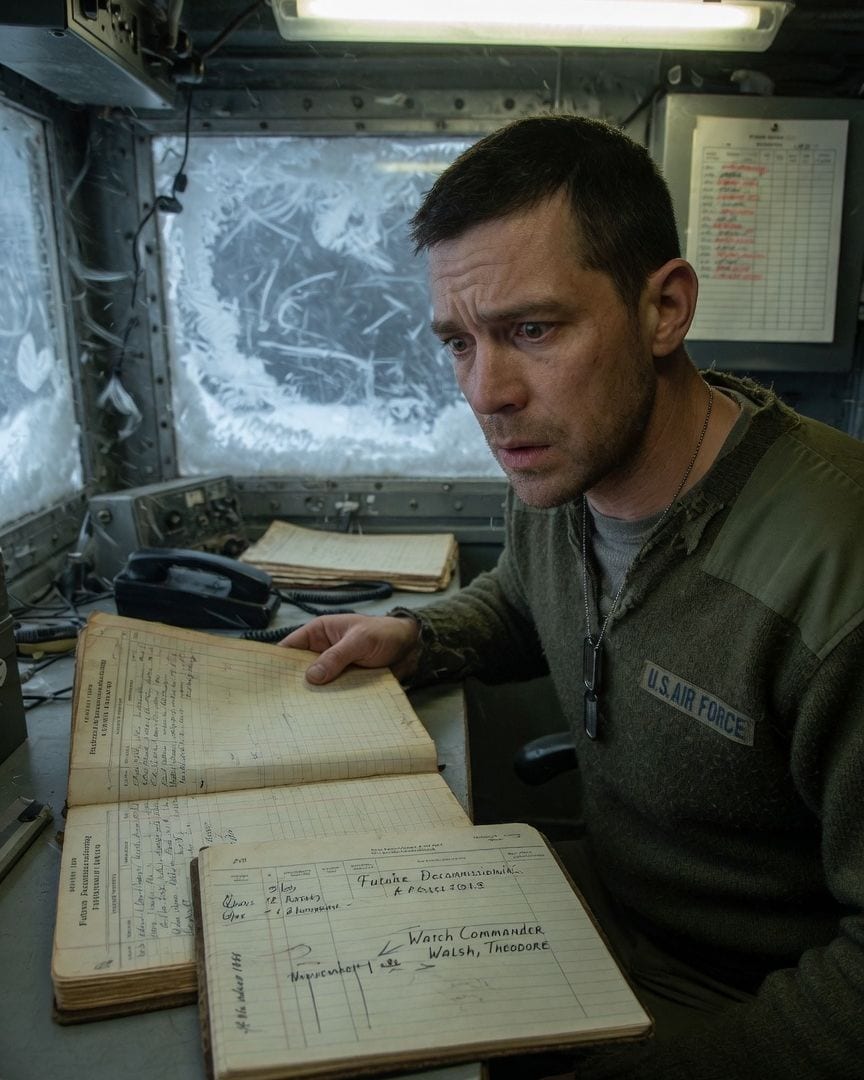
The wind howled like a banshee across the Arctic tundra, rattling the corrugated steel walls of the DEW-line station. Specialist Theodore Walsh huddled in the radar shack, watching snow whip past the single reinforced window.
Earlier that afternoon, he’d seen the storm tear down a communications pole, snapping the thick landline cable like a thread.
He’d logged it, the station now cut off from the outside world save for the radio, which was currently spitting static. Then the field phone on the console beside him, connected to that very dead line, rang.
It was a sharp, insistent ring that cut through the gale. Theodore stared at it, then picked up the receiver.
A voice, crackling with an unnerving clarity, read off a wake-up time and a watch rotation for a crew roster Theodore didn't recognize, names that didn't belong to anyone currently on the station.
The line hissed, then went dead, leaving him holding a receiver that should have been silent.
Theodore tried to dismiss it as a prank, a crossed wire, or the storm playing tricks on his mind. But the clarity of the voice, the precise military cadence, gnawed at him.
He checked the current duty roster pinned to the wall, then cross-referenced it with the station's manifest. No overlap. Not a single name.
Shaking his head, he decided to check the archives, a dusty, rarely-accessed storage room filled with decades of logbooks and official papers.
He pulled out the oldest, heaviest ledger he could find, its cover embossed with 'DEW-LINE STATION ALPHA-7, OPERATIONAL LOGS.' Flipping through brittle pages, he found entries from eleven years prior, meticulously detailing watch rotations and personnel assignments.
The ink was faded, the paper yellowed, but the details were clear.
And there they were: the very names he'd heard over the dead phone line, assigned to this exact watch, in this exact station, on this exact date, November 14th, 1966.
He scanned the entries, noting the neatly printed names of George Winslow, Robert Marsh, and Walter Yates, all listed as 'On Duty.'
He checked the subsequent pages, expecting to find their transfer orders, or at least a notation of their departure, but the log simply continued, day after day, with those same names, as if they had never left.
It was a record that swore otherwise, stating they were present, accounted for, and still performing their duties, long after they should have been gone.
A shiver traced its way down Theodore's spine, but he told himself it was just the Arctic cold seeping in.
Theodore’s breath hitched. He closed the 1966 logbook, his hands trembling slightly, and reached for another, a newer volume from a shelf marked 'Future Decommissioning Projections.'
It was a contingency log, rarely updated, detailing theoretical staffing needs for maintenance crews that would never arrive. He opened it to a random page, his eyes scanning the columns. The date at the top read 'November 14, 1988.'
His heart hammered against his ribs. And there, under 'Watch Commander,' neatly penned in a familiar, blocky script that could have been his own, was his name: 'Walsh, Theodore.'
The station was supposed to be a ghost by then, a relic of a forgotten defense line, yet here was his name, assigned to the very watch he had just finished, eleven years in a future that couldn’t exist.
Theodore spent the rest of his watch in a cold sweat, the logbook open on his lap. He went over every detail, every entry, searching for an explanation.
A clerical error, a sick joke by a previous commander, a mistake by the quartermaster. But the logbook felt too real, too official. The station’s scheduled decommissioning was just weeks away; his transfer papers were already processed.
He was going home. This couldn’t be real. After his shift, he sought out Station Commander George Sinclair, a grizzled veteran who ran Alpha-7 with an iron fist and an unshakeable belief in procedure.
Theodore laid out his discovery, the ringing phone, the 1966 roster, his name in the 1988 log. Sinclair listened, his face impassive, his gaze fixed somewhere beyond Theodore's shoulder, then dismissed it as 'Arctic fatigue' and 'cabin fever.'
He suggested Theodore get some rest, reminding him of the importance of maintaining composure, especially with the comms out. Undeterred, Theodore tried the comms specialist, Lydia Marsh, a sharp, no-nonsense airman with a knack for systems.
He explained the anomaly, hoping she could find a glitch in the station's historical data. Lydia, though initially skeptical, agreed to run a diagnostic on the archived manifests and personnel transfer logs.
She found inconsistencies: the 1966 crew, while officially 'transferred,' had their final departure logs listed as 'pending' for months, then abruptly 'closed' without a clear destination. Their supply requisitions continued for weeks after their supposed departure.
It was as if the system couldn't quite let them go. Theodore felt a chill deeper than the Arctic wind.
He started noticing small things: a faint, metallic scent in the comms room that wasn't cleaning supplies, a barely perceptible hum in the station's ventilation system that seemed to pulse with an unnatural rhythm, not the usual machinery drone.
He felt a growing sense of wrongness that no 'fatigue' could explain.
Lydia's investigation hit a wall. Her diagnostic software kept crashing when she tried to access the deeper archived personnel files for the 1966 crew.
'It's like the system doesn't want me to see it, Walsh,' she'd reported, a hint of unease in her voice. 'Like it’s a protected loop.' Theodore’s unease ratcheted into dread. He began to feel watched.
During his next watch, he noticed his current duty log, usually pristine, had an entry for 'Equipment Check, Comms Room' at 0200, a task he hadn't performed.
He erased it, only to find it reappear an hour later, the handwriting identical to his own, as if he had written it in a moment he couldn't recall.
He walked the perimeter of the station, the blizzard still raging, only to find fresh boot prints in the snow near the snapped landline pole, prints that led directly to the access hatch of the radar shack, then vanished as if the person had simply dissolved into the storm.
There was no sign of anyone else outside. The field phone rang again, pulling him from his thoughts, its insistent chime cutting through the static-laced silence of the comms room. This time, he didn't hesitate. He picked it up.
A low, distorted hum filled the line, followed by a faint, breathy whisper that sounded like his name, drawn out, then a series of numbers that clicked into place in his mind: 1-1-1-4-6-6. November 14, 1966.
The date of the original, phantom roster. The line went dead. Theodore gripped the receiver, his knuckles white, the cold plastic digging into his palm.
Someone, or something, knew exactly what he was uncovering, and it was drawing him deeper into its impossible record.
Theodore confronted Commander Sinclair again, this time with Lydia present, detailing the recurring log entries, the boot prints, the specific date whispered over the phone. Sinclair, his face grim, finally relented.
He led them to a secure, locked cabinet in his office, its cold steel door groaning as he pulled it open. Inside, a thick, unmarked binder sat nestled amongst other innocuous files.
'This isn't in any official manual, Walsh,' Sinclair said, his voice low, a tremor in his hand as he retrieved it. 'It's a classified addendum, passed down from commander to commander.'
Inside, Theodore found a memo, dated 1955, marked 'TOP SECRET: ALPHA-7 ANOMALY PROTOCOLS.' It described a 'chronological drift' and 'systemic echo' phenomenon unique to Station Alpha-7, manifesting as phantom communications and personnel records.
The memo attributed it to unique geomagnetic interference, a 'temporal resonance' that caused 'residual data loops' within the station's systems. It detailed 'accountability protocols' for these echoes, stressing that 'all personnel, active or residual, must be accounted for.'
Theodore’s blood ran cold. The memo mentioned that previous attempts to 'correct' the historical records had only 'reinforced the resonance.'
The names he’d heard on the phone, the 1966 crew, were officially listed as 'Residual Personnel' within this hidden system, their service records still showing them 'on duty' for Alpha-7, their transfers never truly processed by the anomaly itself.
The system, in its own twisted way, was ensuring its crew was always full. It wasn't just a glitch; it was a fundamental, self-perpetuating function of the station.
The metallic scent in the comms room, the hum in the vents, the repeating log entries—they were all traces of this 'resonance,' the station's internal processes ensuring its impossible accountability.
The dread was no longer abstract; it was a cold, hard fact, documented and confirmed by the highest levels of command, yet buried beneath layers of euphemism.
Theodore felt a growing horror. The 'systemic echo' wasn't just about preserving old data; it was about preserving a presence. The station's accountability protocols weren't for humans; they were for the station itself. He pressed Sinclair. 'Commander, the 1966 crew...
did they ever actually leave?' Sinclair looked away, his gaze fixed on the snow-streaked window, then pulled out another document from the binder, a single, brittle sheet. 'This is from before my time, Walsh.
A special annex to their transfer orders.' It was a heavily redacted report from a medical officer, describing 'psychological disorientation' and 'failure to adapt to external reality' in the 1966 crew.
Theodore could barely make out the lines describing men wandering aimlessly, speaking to empty air, reporting duties performed in the wrong year. The final line, uncensored, stood out like a brand: 'Recommended permanent assignment to Alpha-7, non-transferable.'
Theodore’s gaze fell to the bottom of the binder, where a final, unmarked envelope was tucked away. He pulled it out, his fingers fumbling with the seal.
Inside was an 'Active Personnel Manifest' from 1966, a faded, official document clipped into a secure file. It listed every member of the crew that had supposedly transferred out, their status 'On Duty.'
And then, among the grainy black-and-white photos of men who should have been long gone, he saw it: his own face, younger, unfamiliar, staring back from the past, his name 'Walsh, Theodore,' printed beneath it, dated 'November 14, 1966' — today's date, exactly eleven years ago.
The photograph, the date, the 'Active Personnel Manifest' from 1966 — it all snapped into place with sickening clarity. Theodore wasn't just discovering a recurring anomaly; he was witnessing his own predetermined fate.
The station wasn’t merely echoing the past; it was actively recruiting from it, or rather, from a future that it had already written into its own records.
The 11-year cycle wasn’t a random drift; it was the interval at which the station's internal 'accountability' system replenished its 'crew.'
The voices on the field phone, the names in the logs, the phantom entries – they were the station's self-perpetuating mechanism, ensuring its complement was always full. Commander Sinclair, his face ashen, confirmed Theodore’s unspoken dread.
'The station… it needs a crew, Walsh. It always has. And the system… it finds them.' He explained that the 'transfer orders' and 'decommissioning' were merely bureaucratic fictions, necessary for the outside world, but meaningless to Alpha-7’s true operations.
The 1966 crew had never left. They were integrated, their minds and bodies becoming part of the station’s 'resonance,' their duties continuing in an unseen, unheard loop.
The 'duty officer' Theodore had heard on the phone was the station itself, or a collective consciousness woven into its systems, calling its next recruit into service.
Theodore Walsh was not just named in it, he was written into it, a future slot filled in the past, an inevitable part of Alpha-7’s never-ending watch.
Theodore knew he had to break the cycle, or at least escape it. He raced to the comms room, Lydia Marsh already there, frantically trying to send an emergency signal. 'Theodore, the radio's completely dead now!'
she cried, static spitting from the console like an angry cat. 'And the field phone… it keeps ringing!' Theodore ignored her, his mind racing.
If the station was a self-sustaining entity, perhaps cutting its power, or disrupting its core systems, could break the 'resonance.'
He grabbed a heavy wrench from the maintenance bench and headed for the main power conduit, a thick bundle of cables running deep into the station's sub-levels. Commander Sinclair tried to stop him, scrambling after him through the narrow corridors.
'Walsh, don't! You don't understand! The anomaly… it's part of the power! You'll only make it worse!' Theodore pushed past him, ignoring the frantic warnings, his gaze fixed on the humming junction box ahead.
He reached the conduit, the metallic hum now a deafening throb that vibrated through the floor, up through his boots, into his very bones. He raised the wrench, aiming for the main junction box, the heart of the station's power.
Just as he swung, the field phone in the comms room, amplified through the station's intercom system, blared to life.
The same distorted voice from his first call, but clearer now, filled the entire station, echoing off the steel walls, settling deep in his chest. 'Specialist Theodore Walsh. Report for duty. November 14th. Watch rotation one-one-one.'
The voice was no longer a distant echo; it was everywhere, inside the walls, inside his head, an inescapable command. The air grew heavy, thick with the metallic scent that had haunted him for days, pressing down like physical weight.
Theodore felt a profound, chilling sense of resignation. The wrench slipped from his grasp, clattering uselessly to the floor. The station had already claimed him. There was no escape from its impossible accountability.
Specialist Theodore Walsh was officially listed as 'Transferred, DEW-Line Station Alpha-7, effective November 14, 1977.' However, no record of his arrival at his new post, or any subsequent post, was ever found.
His service file eventually went dormant, then was marked 'Missing in Action (Presumed Deceased).' Commander George Sinclair, visibly aged and haunted, oversaw the station's decommissioning a few weeks later.
The physical structures were dismantled, the equipment shipped out, but the final, classified reports noted 'unexplained fluctuations' in the magnetic field surrounding the former site for years afterwards.
Lydia Marsh, transferred to a remote base in Alaska, refused to speak about her time at Alpha-7, her once-sharp eyes now holding a distant, unnerving gaze. The station was gone, yet its record remained, indelible.
Years later, a civilian salvage crew, sifting through decommissioned military archives, found a forgotten crate labeled 'ALPHA-7 MISC. RECORDS.' Inside, among rusted tools and faded manuals, was a single, unmarked field phone, its cord severed.
A young crewman, curious, picked up the receiver. It was heavy, cold, and dead.
Yet, as he held it to his ear, a faint, metallic hum seemed to vibrate from its casing, a sound that quickly faded into the silence of the archive. He shrugged, setting it down.
Across the room, an old, brittle logbook, its cover reading 'DEW-LINE STATION ALPHA-7, OPERATIONAL LOGS, 1988,' lay open. On a page dated November 14, a handwritten entry noted, 'Watch Commander: Walsh, Theodore.'
A slight indentation on the page showed where a finger had once rested, tracing the name. The hum in the air was gone, but the silence felt heavier now, as if listening for something.
Later that evening, the young crewman found himself looking up from his dinner plate, a strange, distant expression on his face. His wife asked him if he was alright.
'Just thinking,' he said, a faint, almost imperceptible metallic scent clinging to his uniform. 'About an old phone I found today. It just kept ringing, even after I hung it up.'
If this one got to you
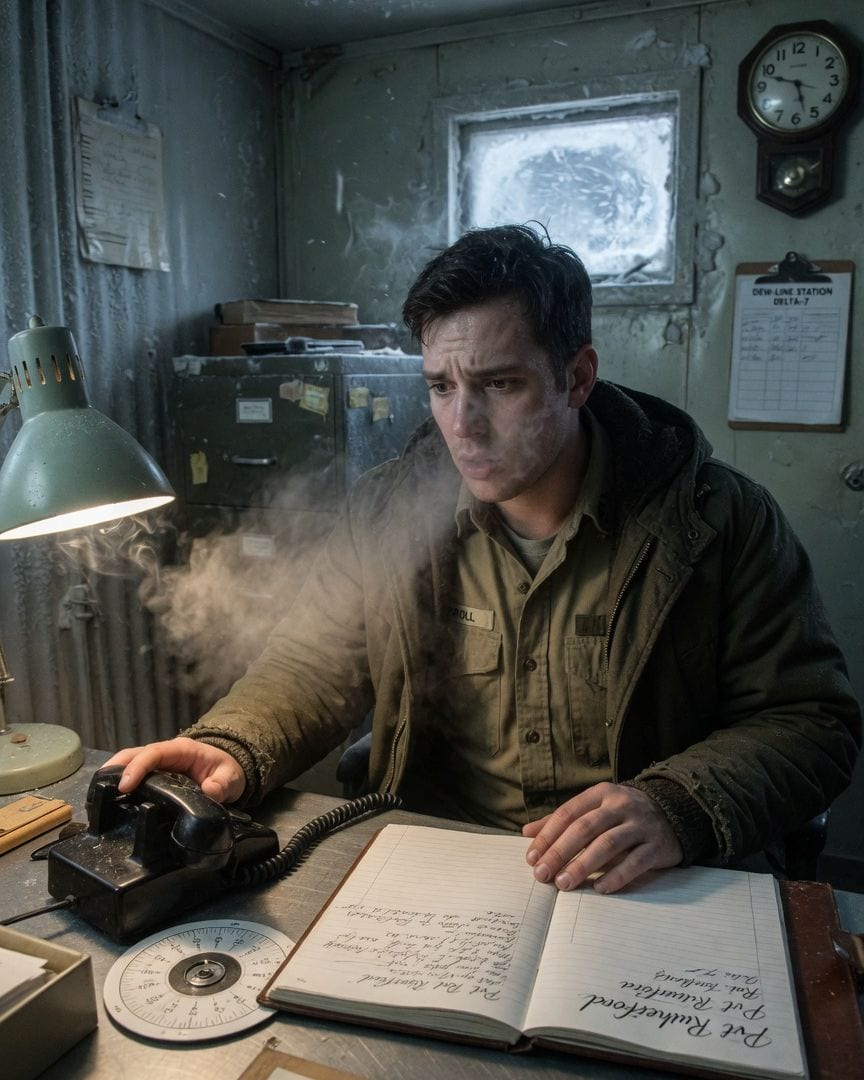
A communications specialist saw his last line go dead. Then the old Cold War field phone rang with a voice from 1966, naming a man freshly signed into his current shift log.
Specialist Walter Kroll shivered in the frigid communications room of DEW-line Station Delta-7, completely cut off by a historic Arctic blizzard. He had personally watched the last hard-wired connection to the outside world snap earlier that day. Now, past midnight, the old field phone at his position began to buzz, impossible from a line he knew was dead. A calm, unfamiliar voice spoke, reading a crew roster Kroll didn't recognize, including Private Rutherford. His search through decades of dusty logbooks revealed Rutherford was assigned to this exact watch in 1966, but then Kroll found the same name freshly inked into his *current* shift's sign-in sheet.
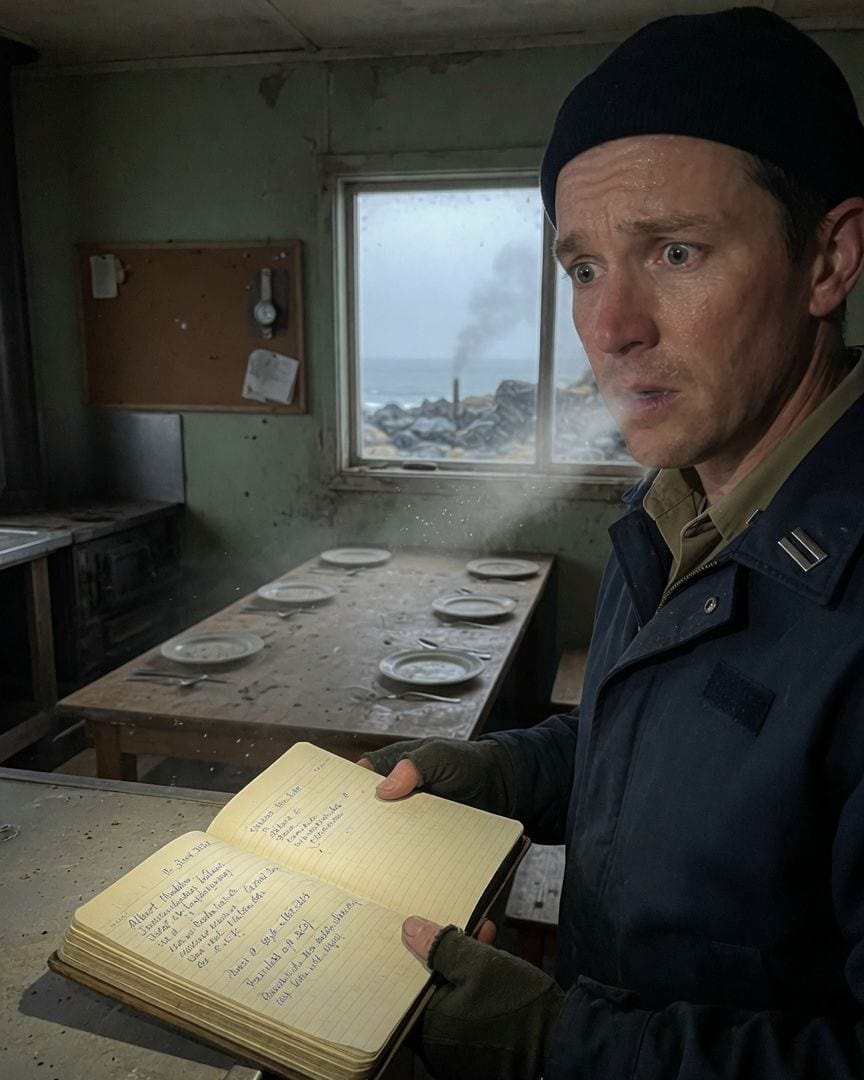
Coast Guard Lieutenant Thatcher finds an old crew photo dated today, June 15, 2024.
Lieutenant Daniel Thatcher leads a survey crew to a derelict LORAN station in the frigid Aleutians, officially abandoned for over a decade. But as they enter, a heavy-bound station log lies open on a counter, its ink startlingly wet, detailing a routine watch from today with names unknown to the Coast Guard.
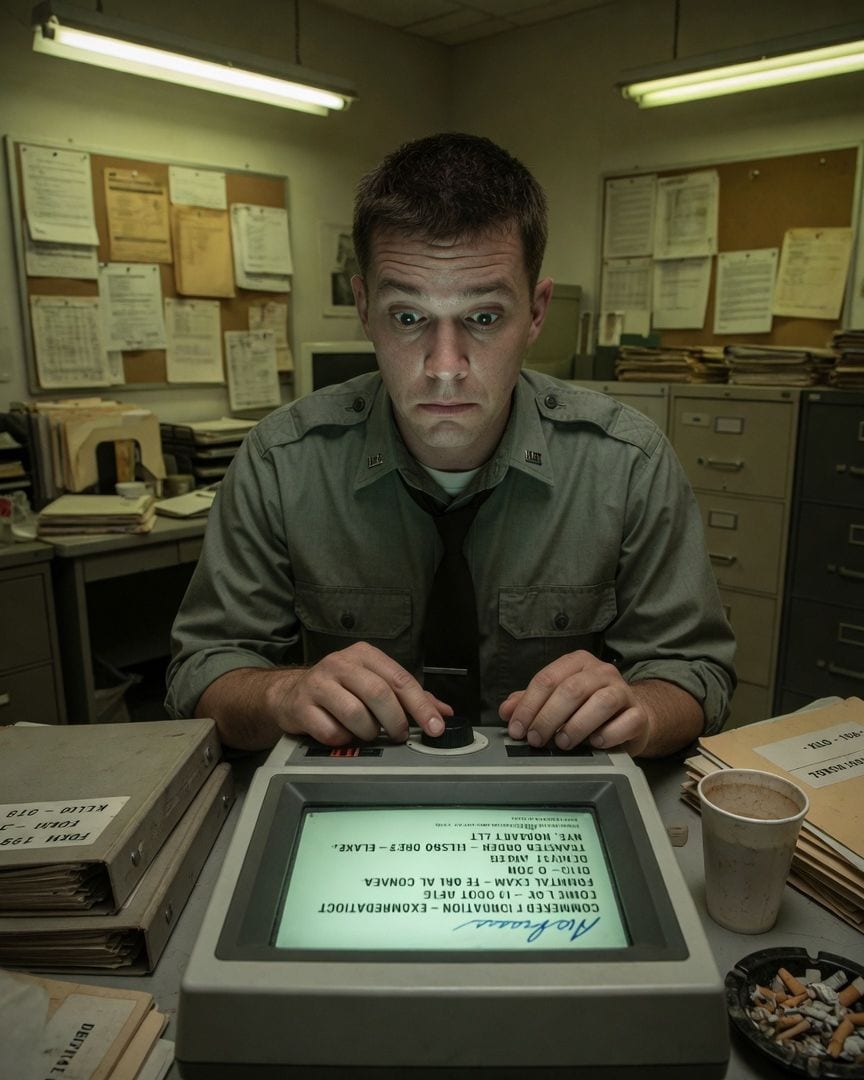
A missile commander watched his ten nuclear silos go dark. His own service record shows his signature on a future he's never lived.
Second Lieutenant Hobart Nye, a missile commander in Wyoming, had his quiet 0247 watch shattered by a security report: a massive, silent black triangle hovered over Launch Facility Kilo, casting a perfect shadow. Hobart watched his console's fault panel light up, signaling all ten nuclear missiles going dark in an impossible silence, followed by eleven minutes his security team could not remember. Official logs called it a "radio malfunction," but Hobart found a requisition for invisible-tracking sensors, signed by a base commander who was supposed to be off-base. The final, chilling discovery came when his own service record showed new entries—a dental check-up, a transfer to Alaska—all dated for a future he never lived, complete with his perfectly replicated signature.
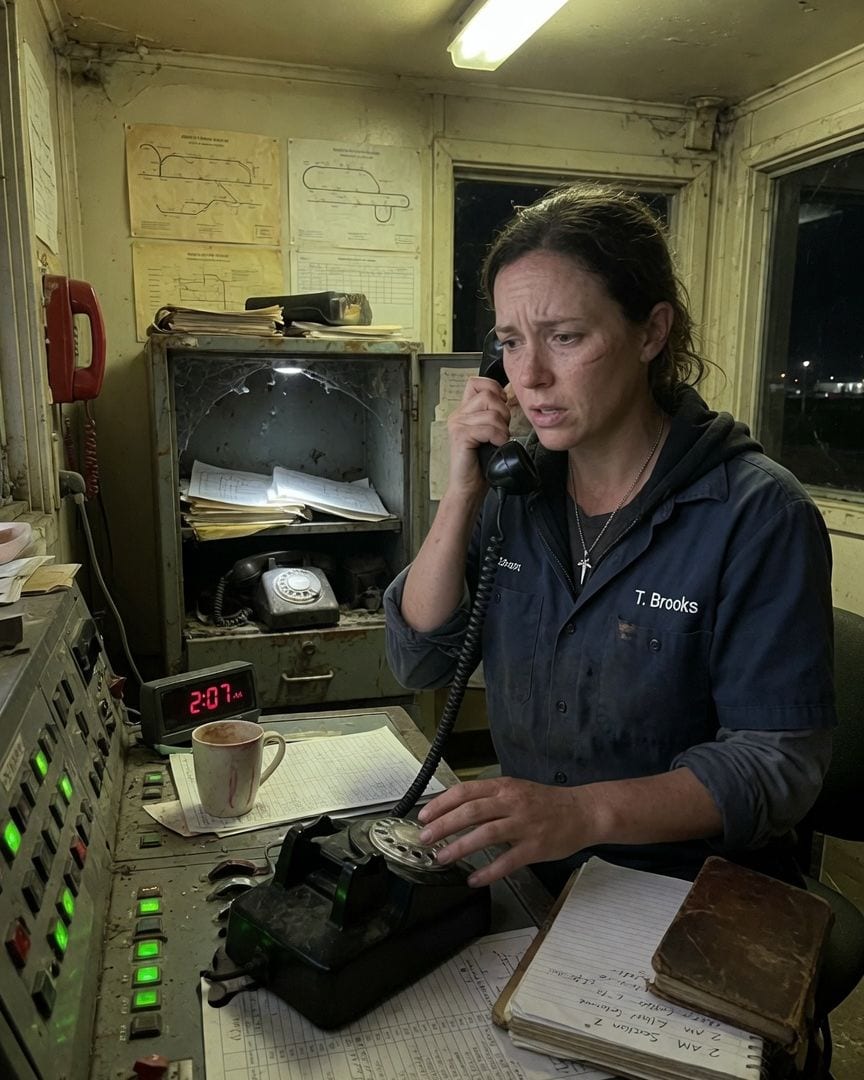
My signal box gets a 2 AM call every night from a man whose section was demolished eleven years ago. Now I found his logbook with today's date.
My night shift at the signal box is quiet and precise, defined by the routine 2 AM call from Ellis confirming Section 7 is clear. But when I asked my duty manager to log it, he said Section 7 hasn't had a track walker in eleven years, not since its cabin and phone were demolished.
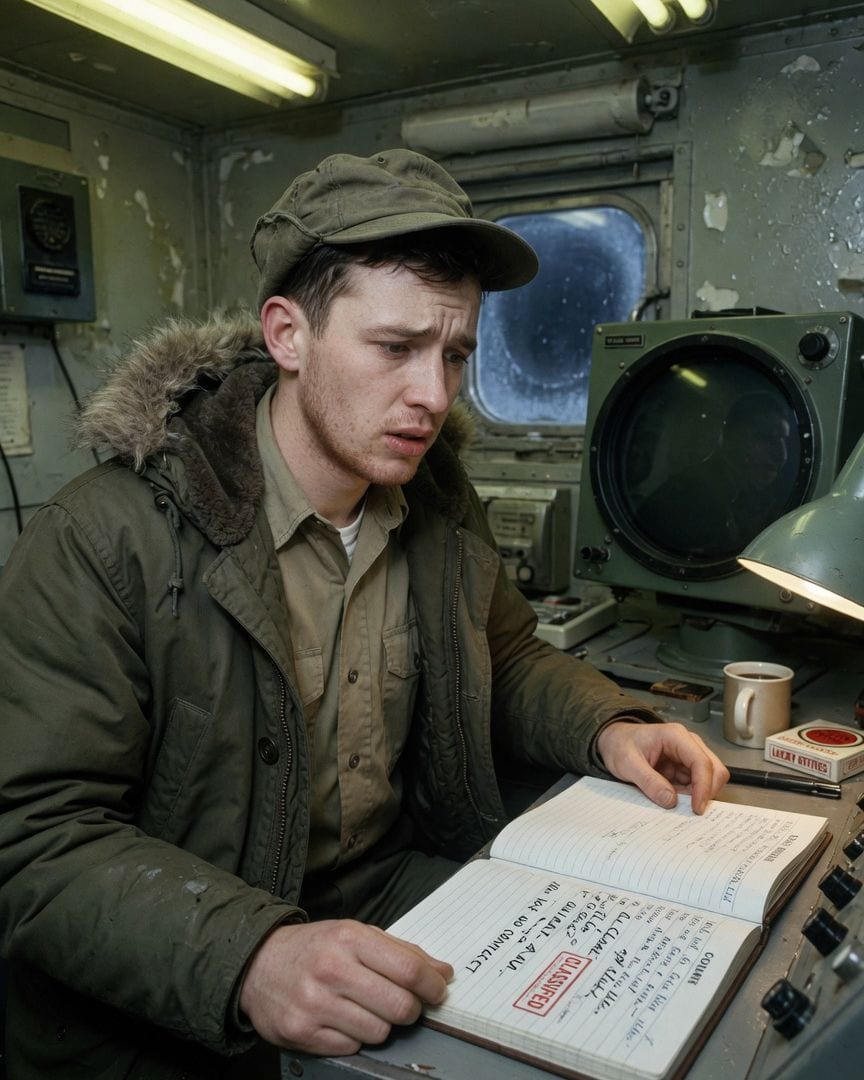
A Cold War airman logs an impossible radar contact on his last sweep. But his official logbook entry is stamped 'CLASSIFIED' and then contradicted by a hastily scrawled 'ALL CLEAR' dated moments before it.
Airman Ordway Vance, 22, manned the radar dome at Site Pellin in the biting North Atlantic dark of January 1962, running the last calibration sweep before its decommissioning. His scope picked up a faint, impossible return, growing closer with each pass, though the ocean remained empty to the eye. When Vance detailed the contact in his official logbook, a 'CLASSIFIED' stamp appeared, followed by a hastily scrawled 'ALL CLEAR' dated moments before his own entry, contradicting his every word. Commander Hartley dismissed it as equipment malfunction, but Vance sensed a chilling, official erasure behind the lie. He soon found a locked cabinet marked 'SITE PELLIN ANOMALIES,' hinting at a deeper truth buried within the base's final days.
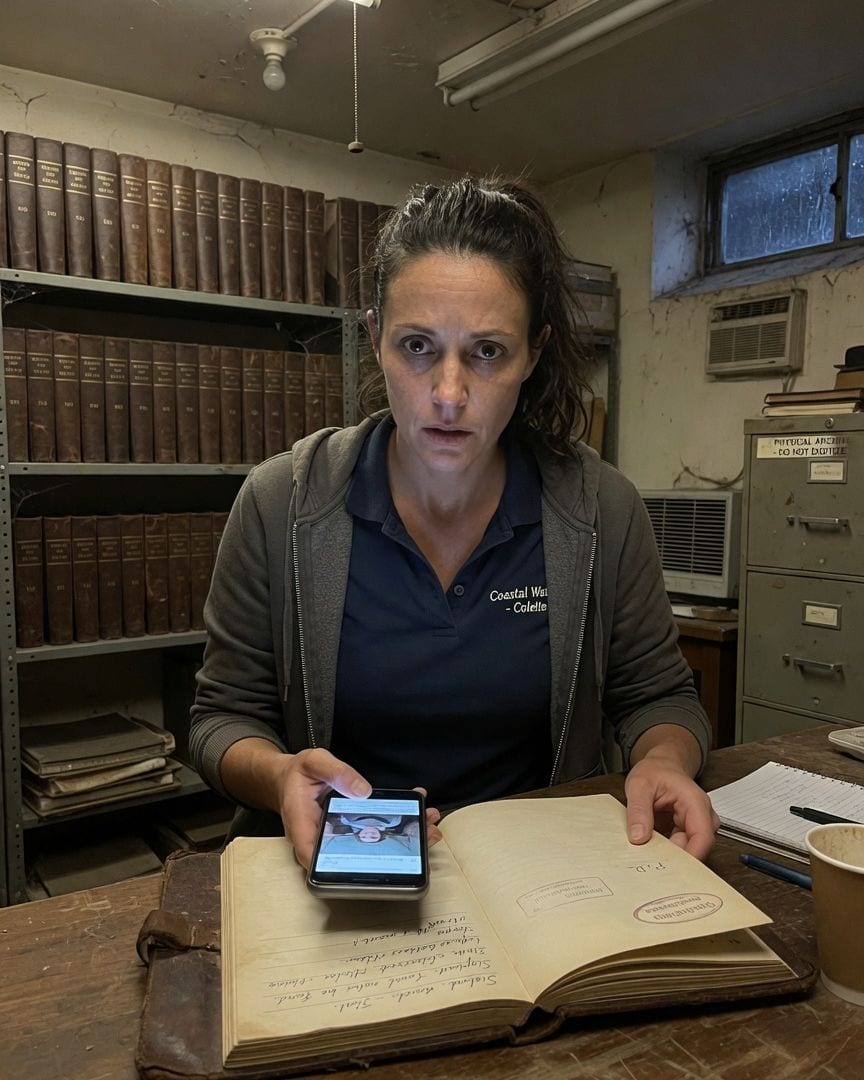
My coastguard log noted Sighting 9 again tonight, a light where no vessel showed. The old logs carry Sighting 9 off Skerry Point at 3:14am every tenth year since 1954, always 'nothing found,' always 'send no boat.'
On my watchtower night shift, the radar screen glowed green and the ocean was quiet. Then, a familiar light appeared off Skerry Point, exactly on cue, just as it had every tenth year for decades. But digging deeper, I found a hidden stamp in an old logbook: 'Operation Skerry. Status: Complete.' It left me with a chilling sense of finality.