I gave a swab to be ruled out of a 1983 murder, but my DNA matched a hair from the scene exactly — and that hair belonged to a victim recorded dead there in 1983.
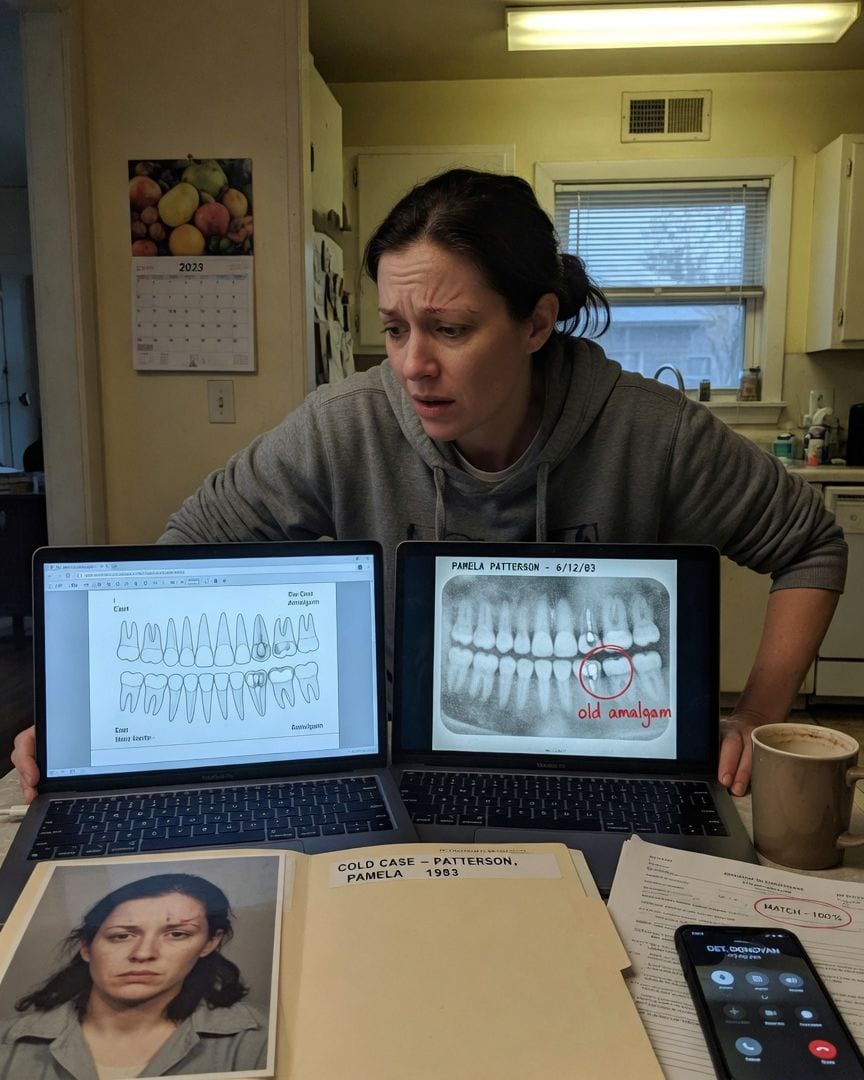
Three days ago, I’d volunteered a cheek swab, a routine civic duty I barely thought about. They were trying to exclude living relatives from a 1983 cold case, an unsolved murder of a woman named Pamela Patterson.
I remembered signing the form, a shrug of 'why not?' Now, the memory of Detective Donovan’s voice, oddly formal and strained, echoed in my head.
"Miss Sinclair," he’d said, "your DNA did not just fail to exclude you. It matched the hair recovered from the crime scene exactly. The hair's owner, Pamela Patterson, was recorded dead at the scene, also 32 years old."
Thirty-two. My mind reeled. The same age she was then. The same age I am now. It was a statistical impossibility, a glitch in the universe.
I had never been anywhere near the old industrial park where Pamela was found, certainly not in 1983. I wasn't even born in 1983. I was born in 1991.
The detective’s voice had been devoid of accusation, only a strange, unsettling curiosity. He’d asked me to come to the station to swab again, just to be sure. But I knew, with a sickening certainty, that it wouldn't change anything.
The kitchen table, usually a comforting anchor in my mornings, felt like a floating raft in a storm. My phone, still open to the missed call log, glowed with an accusation of its own.
At the station, Detective Donovan, a man with tired eyes and a perpetually worried frown that seemed etched into his face, watched me provide my second DNA swab.
The room was sterile, the air humming with the low thrum of the ventilation system. He didn't say much, just nodded curtly as the tech sealed the sample.
Then, he led me to a small interrogation room, not for questioning, but to show me the cold case file. The room smelled faintly of old coffee and dust.
He slid a laminated photograph across the table. It was Pamela Patterson, a faded mugshot from before her death. My breath hitched.
The woman in the photo wasn't just vaguely similar; she looked startlingly like me, a younger, slightly harder version of myself. It was the kind of resemblance people might comment on, a distant cousin or a twin stranger.
But it was more than just resemblance. My eyes fixed on a tiny, almost imperceptible scar, a faint white line above Pamela’s left eyebrow. A scar I knew intimately.
I had the exact same mark, an old childhood memento from a fall I could never quite recall, just a vague sense of scraped concrete and a sting.
"Impossible," I murmured, my voice barely a whisper, the word feeling too small for the weight of what I was seeing. "It's a coincidence. People look alike. There are doppelgängers."
I tried to rationalize it, to find a mundane explanation for the impossible mirror image staring back at me, but the scar on her forehead, matching mine so perfectly, burned into my vision. It was too specific. Too precise.
"Do you have her dental records?" I asked, clutching at a last straw of rationality. "Dental records are unique. They can't lie." Donovan’s frown deepened, but he went to make a call.
The silence in the room stretched, thick and cold.
Dr. Maddox, my dentist for years, peered through her bifocals at the two digital charts on her screen. Her office, usually a place of clean, reassuring hums, felt suddenly clinical and unnerving.
On the left, my current dental chart, meticulously updated, showing recent cleanings and a single crown. On the right, a scanned, pixelated copy of Pamela Patterson’s 1983 records, provided by Detective Donovan.
The screen glowed, illuminating her face, a mask of professional disbelief. Dr. Maddox's finger hovered over a distinct, old silver filling on a lower right molar, present on both charts.
"Rachel," she began, her voice hesitant, "this specific filling… it’s a very old amalgam. You have it now.
But your childhood records, the ones from your first dentist, the ones you gave us when you first came here in your early twenties, show no such work. In fact, they show a completely different dental history for that tooth.
No filling there at all."
My gaze darted between the identical anomalies, the precise, impossible match on the screen. The world tilted, the polished chrome instruments on the tray beside me blurring into a silver streak. My own body, my own records, were lying.
They couldn’t be mine. I looked at the two charts, one hers, one Pamela's, an identical, impossible object, and felt a cold dread settle deep in my bones.
I walked out of Dr. Maddox’s office with copies of all three dental charts, my own hands trembling as I clutched the printouts. The discrepancy was undeniable, clinically documented.
I couldn't dismiss it as a mix-up or a trick of the light. My childhood teeth, according to the paper in my hand, were not the same as the teeth currently in my mouth.
It was a physical impossibility, a personal paradox.
I spent the next few days researching Pamela Patterson, devouring old newspaper archives online. Pamela had been a quiet librarian, living alone, found dead in her small apartment.
The articles mentioned an abandoned research facility on the outskirts of town, once owned by a defunct biotech company called "ChronoGen Innovations." The company had closed down abruptly in the late 80s, its founders vanishing.
Pamela, it said, had volunteered for some kind of "community outreach program" run by ChronoGen shortly before her death. The detail snagged in my mind, a loose thread in the fabric of an already impossible story.
The compulsion was too strong to ignore. I drove out to the address, a long-abandoned industrial park now choked with weeds and crumbling concrete. The air here was still and smelled faintly of rust and damp earth.
The main building was a skeletal husk, most of its windows shattered, gaping holes against the gray sky. A broken sign, its letters mostly peeled away, hung precariously above a rusted gate: "ChronoGen Inno..."
I picked my way through the debris of what looked like a reception area, the broken glass crunching under my boots, a strange energy pulling me forward.
The silence of the place was profound, broken only by the flutter of pigeons in the rafters.
In what might have been a loading dock or a back entrance, a concrete slab had survived the years relatively intact. There, beneath decades of grime, I noticed something faint on its surface: a symbol, barely visible.
It was a stylized wavy line, almost like a sound wave or an echo, etched deeply into the concrete. A strange, unplaceable familiarity prickled at the back of my neck, a ghost of recognition for something I shouldn't know.
My heart hammered against my ribs, the quiet of the ruins suddenly oppressive, as if the very air was holding its breath.
The symbol haunted me. I tried to find anyone who had worked at ChronoGen Innovations or knew Pamela.
My search led me, through a series of increasingly obscure online forums and local historical society contacts, to George Ellsworth, a retired police archivist who had processed the original 1983 case files.
I found him in a quiet, cluttered house on the edge of town, a place that smelled of old paper and forgotten things. Bookshelves, overflowing and sagging, lined every wall, and stacks of yellowed records teetered precariously in every corner.
George, a man in his late seventies with sharp, knowing eyes that seemed to miss nothing, listened patiently as I laid out my impossible story: the DNA, the scar above my eyebrow, the impossible dental records, the abandoned facility, the symbol.
He didn't scoff, didn't dismiss me with a polite, bewildered smile. Instead, he simply nodded, a slow, calm movement that unsettled me more than outright disbelief. His gaze was unnervingly steady, as if he were reading a familiar, tragic story.
"Some things are better left buried, Miss Sinclair," George said, his voice raspy, like dry leaves scuttering across pavement.
His gaze fixed on a framed photograph of a younger self, standing beside a row of file cabinets that stretched into the distance. "The past has a way of repeating itself, especially when disturbed."
I pressed him, desperation thick in my throat. "The symbol. At the facility. Do you know what it means? And Pamela… what was her 'community outreach program'?"
George’s eyes narrowed slightly, a subtle shift that sent a chill down my spine. "There were… rumors. A project. Nothing concrete in the files I processed, just whispers. About ChronoGen's true work. Something beyond conventional biotech."
He offered no further explanation, merely a quiet, unnerving smile that didn’t quite reach his eyes. It was a smile that suggested he knew everything, and that his knowledge was a heavy, dangerous burden.
As I left, the setting sun casting long, skeletal shadows through the overgrown garden, I felt a prickling sensation on my neck, the distinct feeling of being watched, not by a threat, but by someone who knew my secret better than I did, someone who held answers I wasn’t even sure I wanted.
I couldn't shake the feeling of George Ellsworth's knowing gaze, the unsettling calm of his demeanor. He knew. I was certain of it. I returned to his house the very next morning, more determined than ever.
The old wooden door creaked open easily, as if he expected me.
"You know something, Mr. Ellsworth," I stated, my voice firmer than I felt. "About Pamela. About me." I held up a crude drawing of the wavy symbol I found at the facility, sketched on a napkin.
George sighed, rubbing his temples with a trembling hand, his posture suddenly looking much older. "You shouldn't have dug this deep, child."
He led me to a hidden compartment behind a loose brick in his fireplace, a small alcove obscured by years of soot. From it, he pulled out a thick, faded dossier, its cover warped and stained.
"I was a junior archivist then, just starting. My job was to 'dispose' of certain files. But I stumbled onto this. I kept it."
He opened the dossier, revealing heavily redacted reports, grainy photographs, and complex schematics. The very air seemed to thicken, heavy with secrets. "Pamela Patterson was not just a victim. She was a subject. 'Project ECHO,' they called it.
A clandestine experimental program run by that biotech firm, ChronoGen, funded by… well, that’s another story, and one I don't fully know myself. But the objective, the ethical nightmare of it, I learned that much."
He pointed to a section detailing 'Subject P.P.' "Their goal was to 'reintegrate' consciousness into new biological forms after death. A form grown from original genetic material, but with a clean slate. A new identity."
I felt the bl**d drain from my face, my skin going cold. "You mean… my body…"
George nodded solemnly, his gaze full of a profound sadness. "Your DNA isn't just a match, Rachel. Your body is Pamela's. Re-grown, re-animated, with a new identity implanted. That scar above your eyebrow, your dental records… they are her imprint.
You are… a continuation." He showed me a report entry detailing 'successful neural transfer and cellular regeneration' for Subject P.P., dated just weeks before Pamela Patterson’s murder.
The symbol I found etched into the concrete slab was the project's emblem, a stylized echo wave.
Suddenly, the DNA match, the scar above my eyebrow, the impossible dental records—all clicked into a horrifying, impossible coherence. I wasn't just connected to a dead woman; I was the dead woman, reborn. A ghost wearing another's skin.
The room felt impossibly cold, the silence between us deafening.
George, seeing the dawning horror in my eyes, continued, his voice heavy with guilt, pushing another document across the table. "But the project had a critical flaw, Rachel. A built-in 'recall' mechanism.
A neural trigger designed to re-absorb or terminate subjects if they deviated, if they started to remember too much."
He pulled out another faded diagram from the dossier, a complex schematic of a neural network, a chilling map of the human brain. "Pamela started remembering. She tried to expose them. They activated the recall."
He pointed to a specific sequence of symbols on the diagram, depicting a key implant point, a tiny, almost invisible node nestled just behind the ear.
As his finger traced the exact spot on the schematic, I felt a sudden, sharp jolt, a dizzying sense of fragmented memory—a flash of a sterile room, the acrid scent of ozone, a blinding light, then a crushing pressure.
My hand instinctively flew to my head, my fingers brushing against a small, almost imperceptible scar, a tiny raised line behind my left ear – a scar I never knew I had until this moment.
It was located exactly where the diagram indicated.
George’s face went white. He knew this scar. He knew this jolt. He knew what it meant. His voice was barely a whisper, filled with a terrible, dawning certainty. "They'll know you're awake now, Rachel. They'll know you're remembering."
George quickly explained, his voice urgent, his eyes darting towards the windows. The quiet house suddenly felt exposed, vulnerable. "Pamela Patterson was murdered not by some random killer, but by Project ECHO. She fought the recall, resisted the termination.
Her death was a 'clean-up' to prevent exposure. You, Rachel, were a subsequent attempt. A 'clean slate' to avoid the memories, to create a compliant subject."
He shoved more hidden files towards me, their pages brittle with age.
They detailed other 'ECHO' subjects, each with impossible medical anomalies: a healed fracture that never happened, a rare blood type appearing out of nowhere, dental charts that didn’t match childhood records – all mirroring my own terrifying reality.
The pattern was undeniable, horrifyingly clear. The symbol I'd seen at the abandoned facility was indeed the project's emblem, a mark of their chilling success and their dark ambition.
"You're not just Pamela," George said, his eyes filled with a desperate urgency. "You're a walking time bomb. They monitor all subjects. The moment your memories or your awareness of the project triggered the recall, it sent a signal.
They'll be coming for you, Rachel. To 're-absorb' you, or worse, to silence you permanently, just like Pamela." The air around us seemed to vibrate with the unspoken threat.
Consumed by decades of guilt, George pulled out a small, metallic device from a hidden safe behind a framed certificate. It was no bigger than a Zippo lighter, made of a dull, non-reflective metal.
"This," he said, his voice trembling, "is a counter-signal emitter. It was designed by a colleague who grew a conscience, a man who saw the monstrosity of it all. It's meant to disrupt the recall frequency.
It might be your only chance." He guided me through the intricate steps to activate it, his hands shaking as he pointed to tiny switches and indicators.
As we worked, the distinct, low hum of an unmarked black sedan grew louder outside, pulling to a silent stop on the gravel driveway. The sound was too precise, too deliberate. "They're here," George whispered, his face etched with resignation.
The front door splintered inward with a loud crack, wood groaning in protest as it tore from its frame. Heavy footsteps pounded through the house, growing closer.
George shoved the activated device into my hands. "Go! Through the back! I’ll buy you time!"
As the first figures in dark tactical gear appeared in the doorway of the living room, shadows stretching long and menacing, I activated the device.
A searing pain shot through my head, a momentary blackout, then a deep, settling calm spread through me, like a frayed wire finally reconnecting. The disorientation lifted, replaced by a clarity I hadn't felt in days.
I heard George shout, a defiant roar, a diversionary tactic, then the muffled sounds of a struggle, a crash of overturning furniture.
With a desperate surge of adrenaline, I scrambled through the back window, tearing my jeans on the sill. I clutched the now inert device and the damning Project ECHO files against my chest.
I ran, not looking back, the echoes of George's sacrifice spurring me onward, a ghost of a life she now carried, inextricably linked to my own.
Rachel Sinclair vanished. News reports carried a brief story about a house fire, ruled accidental, claiming the life of retired archivist George Ellsworth.
The 1983 cold case of Pamela Patterson was officially closed, unsolved, the new DNA evidence deemed 'inconclusive' due to 'contamination.'
Rachel, now living under a new name in a distant city, sent anonymous copies of the Project ECHO files to several investigative journalists and online forums. They were universally dismissed as elaborate, fantastical conspiracy theories. No one believed her.
The institution behind Project ECHO remained undisturbed, its existence a secret. Rachel knew she was safe, for now, but the cost was everything she once was.
Rachel lives a quiet, cautious life, a phantom in her own skin. She has changed her name, her appearance, every detail designed to be unremarkable.
Each morning, she checks her reflection, tracing the small scar above her left eyebrow, the one behind her ear.
She knows she carries a ghost, a memory, a wrongness inside her, a life that was never truly hers, yet entirely her own. She has the proof, the files, the inert device, but no one will ever believe it.
The only thing she knows for sure is that she is no longer just Rachel Sinclair. Sometimes, the safest place to hide is inside a name no one believes is real.
If this one got to you
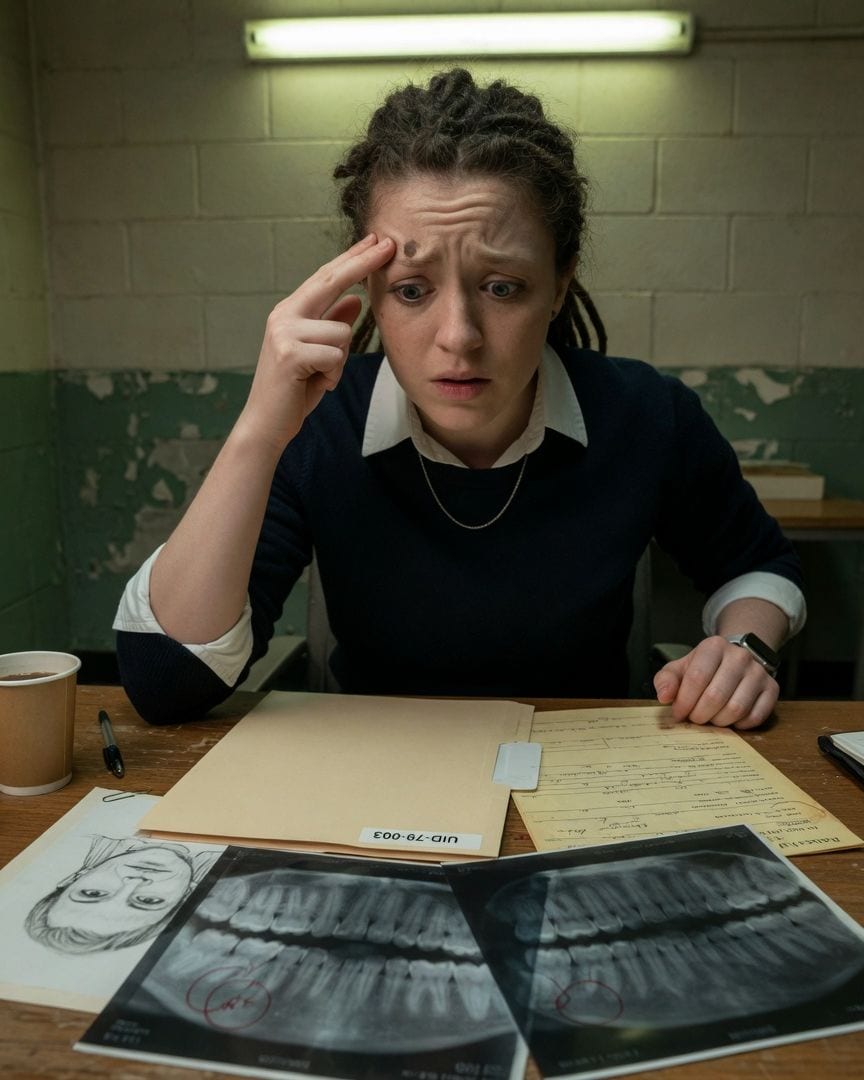
A 1979 facial reconstruction of unidentified remains has my distinct birthmark, just above its left eyebrow.
Switching dentists should have been a routine adult problem. Instead, my new X-rays were an identical match for unidentified human remains catalogued by the county coroner in 1979. The impossible match left me with a chilling dread.
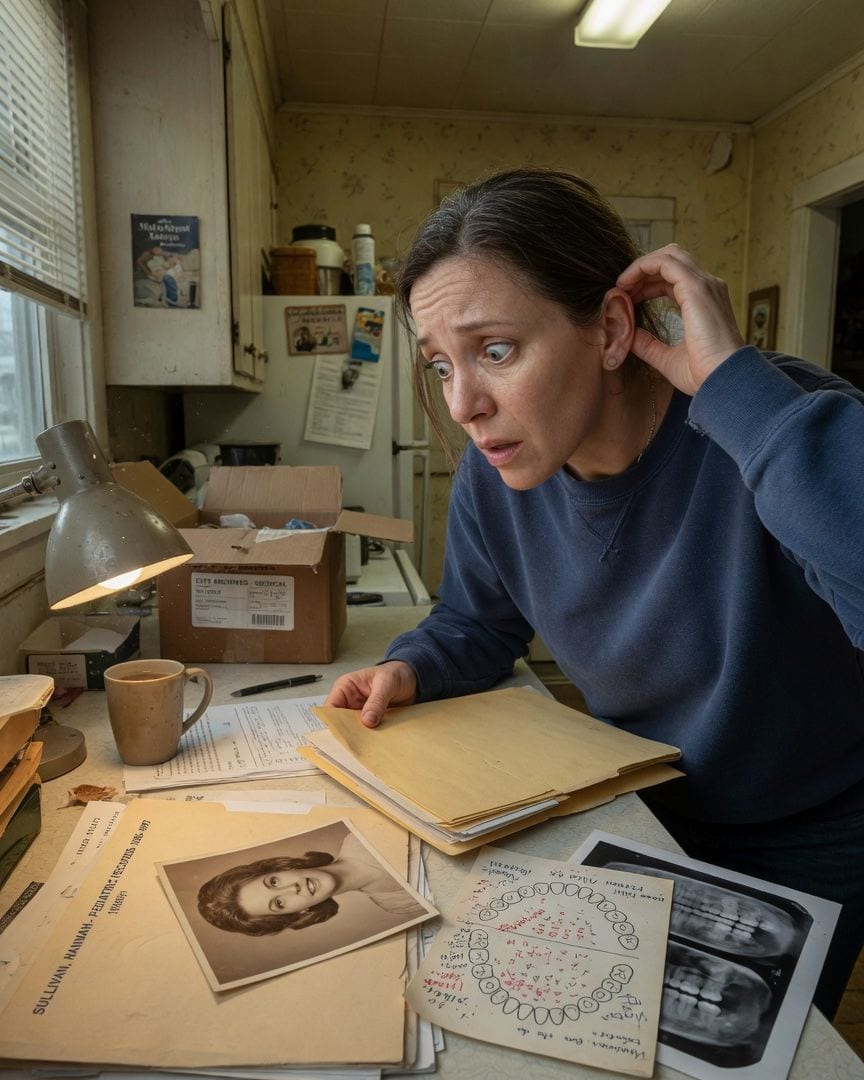
My MRI showed a perfect, decades-old surgical opening in my skull. I have no memory of it.
I underwent a routine MRI for persistent dizziness, expecting reassurance. Instead, the scan revealed a perfectly healed, decades-old surgical opening in my parietal bone, just behind my left ear. Dr. Hughes confirmed it was an access point for a procedure, yet I have no memory of any head surgery, ever. My body holds a secret I cannot recall.
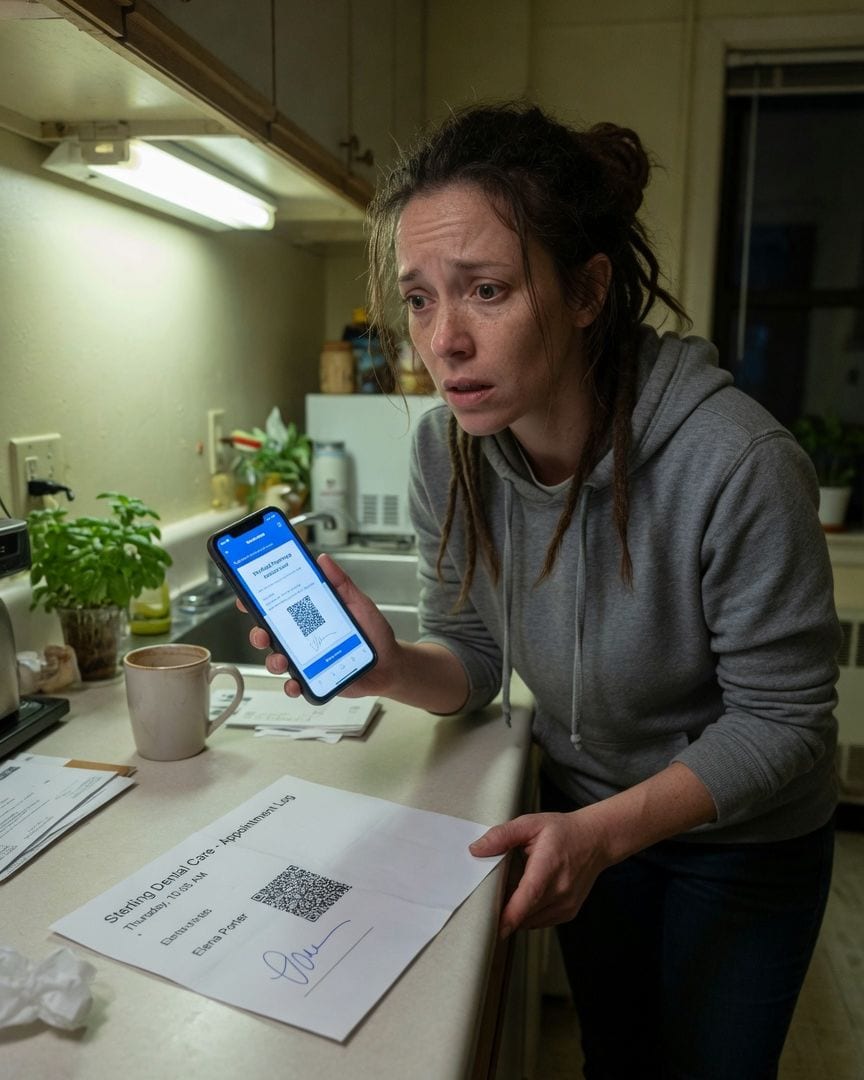
My dentist's system says I was there last Thursday. I wasn't. But the check-in tablet shows my signature, and the hygienist described my chipped tooth exactly right.
I received a call confirming a dental appointment I never made, for a day I was home. Yet, Sterling Dental had my perfect digital signature and described a chipped incisor I’d never told them about. The physical proof insisted I was there, but I wasn’t.
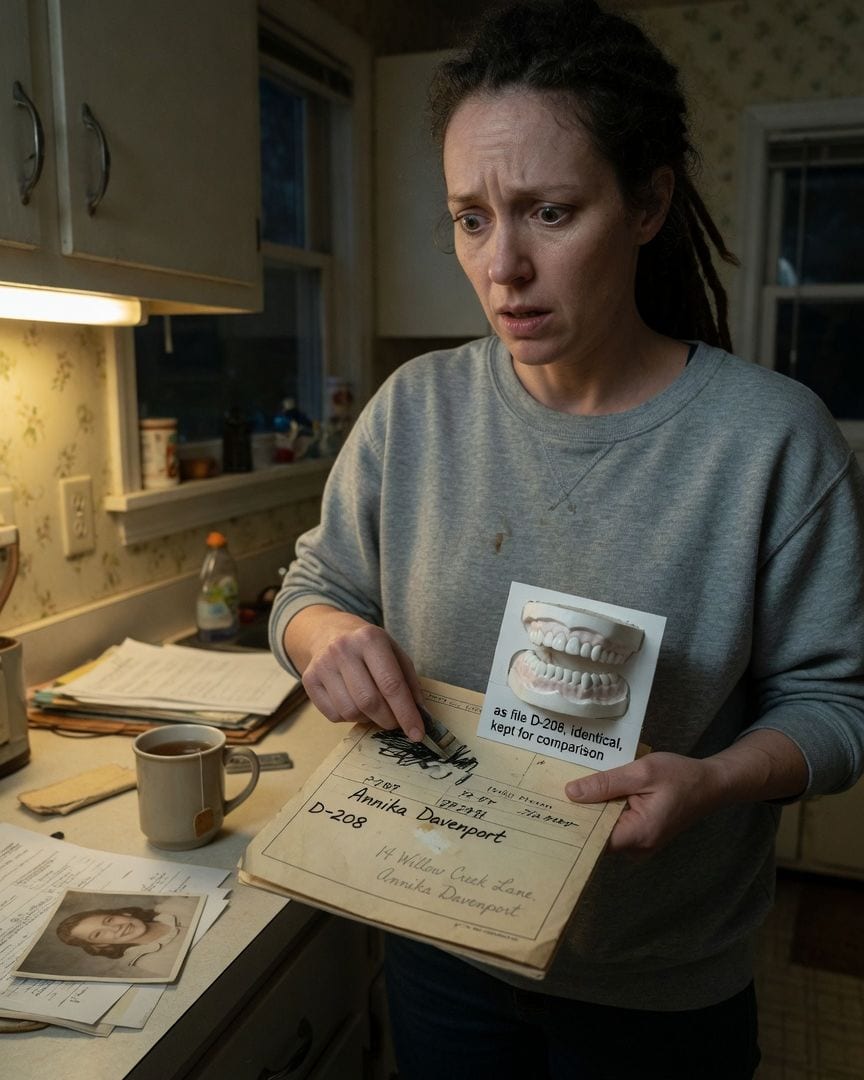
My childhood dental chart lists the house I bought last year — in my own name, years before I was born. A second set of my teeth sits filed beside it, marked 'identical.'
Sifting through old dental records, I found my chart, D-208, with my 1988 birth date. But a line from 1958 was blacked out, and a clipped card with an impression of my teeth listed my name and current home address, decades before I was born. The impossible facts knotted into a cold certainty.
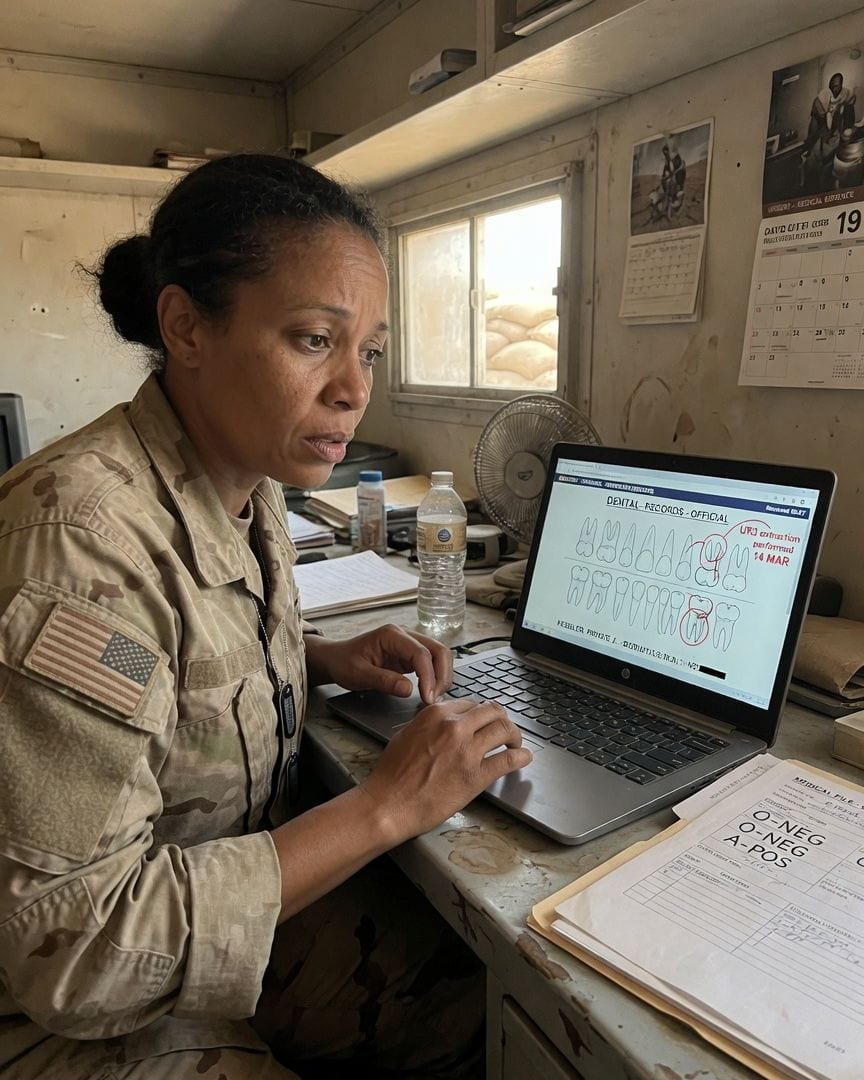
Weeks from going home, Sergeant Whitmore saw Private Kessler’s dental records show teeth he didn’t have and missing ones he did.
Sergeant First Class Iris Whitmore counted the weeks until her deployment ended, dreaming of home as the desert heat baked FOB Cerberus. But the familiar weight of Private Kessler’s dog tags soon brought a cold knot of dread: his blood type, once O-negative, suddenly read A-positive. She dismissed medical anomalies and clerical errors, only to find his official records subtly rewriting his timeline, linking old injuries to new identities. When his dental charts arrived, showing teeth he never had and missing ones he did, Sergeant Whitmore faced an impossible question: who was Private Kessler, really?
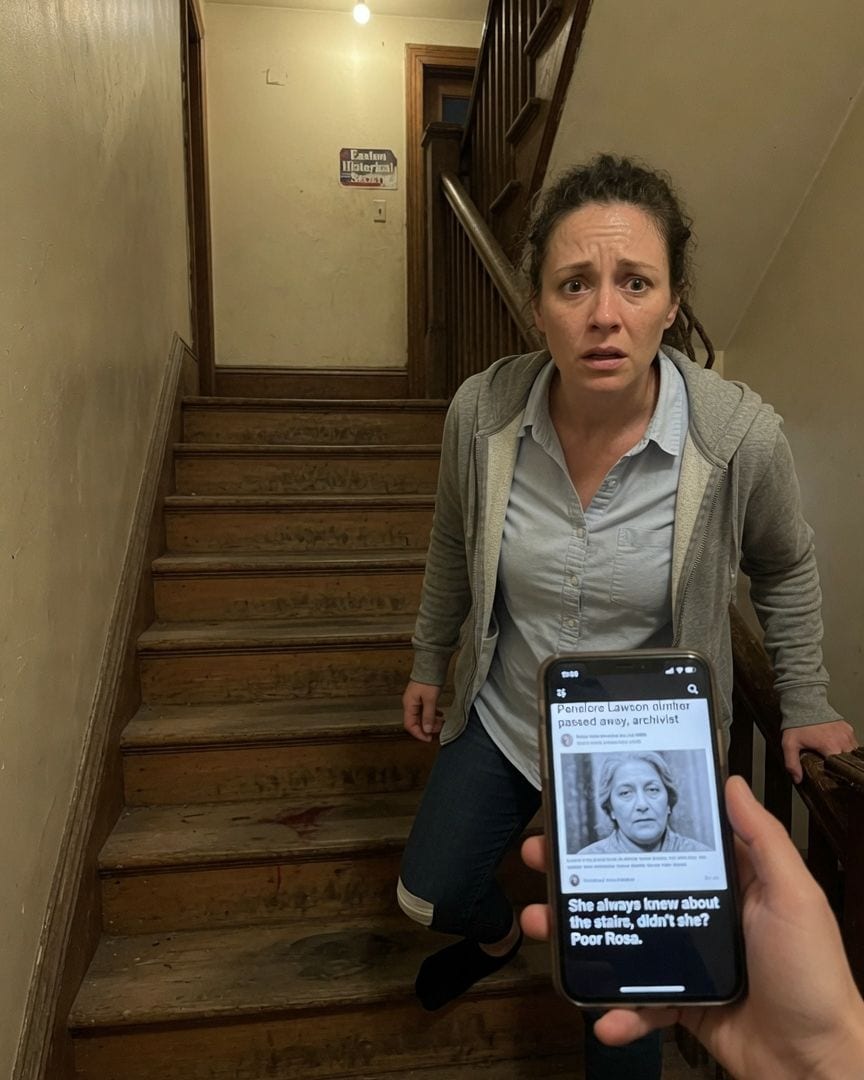
My hygienist apologized, 'I'm so sorry, Rosa — about the stairs.' I'd given the clinic only my surname, and they said she hadn't worked there in over a year.
During my routine dental cleaning, the hygienist murmured my name, Rosa, which wasn't on my intake form. She then offered a soft apology "about the stairs," a kindness that felt deeply misplaced and settled in my gut.