My first life insurance policy, LP-3317, has been written eleven times since 1959. Every file closed, 'claim not required.'
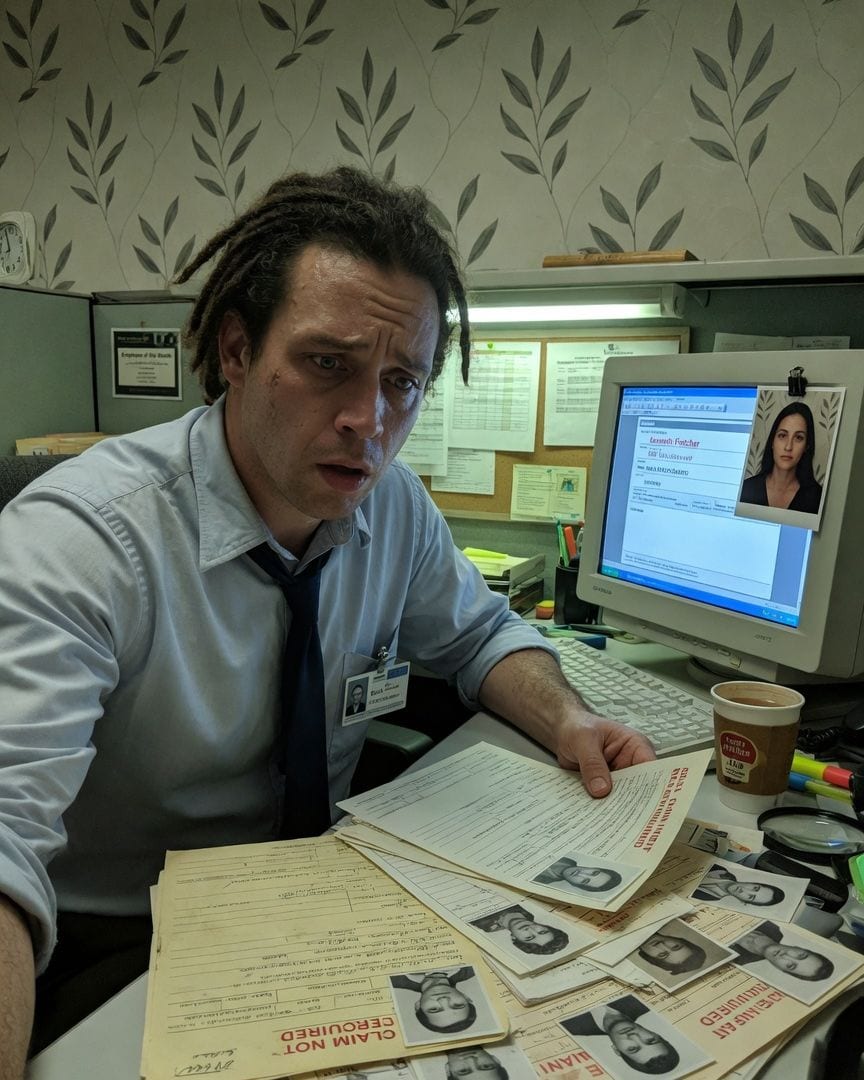
The notification hit my inbox at 8:17 AM. ‘Urgent – Policy Flagged.’ Not a good start to Monday. My first policy of the year, an LP-3317, for a young guy named Kenneth Fletcher, had been flagged by underwriting.
I walked over to Monica Patterson’s desk, her glass partition making her look almost enshrined in the cool, corporate light.
Monica, my underwriting manager, was 45, all sharp angles and efficiency, but today there was a faint tightness around her mouth.
"Paul. LP-3317," she said, without preamble, her eyes fixed on her screen. "It's been reissued. Eleven times since '59."
I frowned. "Reissued? You mean the policy number? Like a template error?" I tried to laugh it off, but the sound felt hollow. Our system usually assigned unique identifiers.
Monica didn't smile. "Not a template, Paul. It's the designation. LP-3317. Each policy, same number. Each one for a different individual. Each one active for exactly forty months." She paused, pushing her glasses up her nose.
"And each one closed with the same stamp: 'claim not required.'"
'Claim not required.' I’d never seen it before. It wasn't 'claim paid,' or 'policy cancelled,' or 'lapsed.' It was… clinical. Definitive. I tried to make sense of it. "So, they just... stopped paying? And we didn't pursue it?"
"No, Paul. They paid, every month, for forty months. Then the file closed. No claim filed. No death benefit required." Her gaze was steady, unsettlingly calm. "It’s been happening for decades. Every single one."
The sheer bureaucratic efficiency of the wrongness sat cold in my gut. It wasn’t a glitch; it was a pattern. A meticulous, unbroken, utterly inexplicable pattern.
"I'll need all those historical LP-3317 files," I said, the words feeling heavier than they should.
I started with Lars Hartley, 1959. The paper was yellowed, the ink slightly faded, but perfectly legible. His application was neat: age 29, single, a machinist in a factory, living in upstate New York.
A black and white photo, small and formal, was stapled to the corner. Then the next, George Winslow, 1963. Different face, different address in Ohio, different occupation—an accountant.
But the same LP-3317 policy number, the same precise 40-month payment history, and that unsettling 'claim not required' stamp, its dark red ink still vibrant on the aged paper.
I spread the eleven files across my desk, creating a timeline. Lars Hartley, George Winslow, a woman named Eleanor Vance in '68, Kenneth Fletcher from last month.
Each one a complete life, briefly glimpsed through the mundane details of a life insurance application. Different names, different cities, different decades, but the LP-3317 policy number was the constant.
I moved methodically, almost obsessively, through each file, checking the dates, the addresses, the occupations. The 40-month period was exact, always.
The 'claim not required' stamp was always there, a precise, chilling punctuation mark at the end of each documented life.
As I sifted through, comparing the details, a subtle, visual anomaly began to surface. It was almost imperceptible at first, like a trick of the light in my tired eyes. I picked up Lars Hartley’s photo again.
Behind him, a pale wall, slightly out of focus. On it, a faint, blurred pattern of dark, stylized leaves. I picked up George Winslow's. Same pale wall. Same faint, blurred pattern of dark, stylized leaves. My breath hitched.
I went through all eleven, systematically. Kenneth Fletcher’s photo, the one from last month, clearly showed it too. The lighting varied, the quality of the photography improved over the decades, but the background was identical.
It was too specific to be a coincidence, yet too generic to be easily identifiable—not a typical studio backdrop, not a wallpaper pattern I recognized from any home or office. It was unique.
I tried searching online for common photography studios from those eras, looking for shared backdrops, but nothing matched. This pattern was utterly unique, and utterly impossible.
I sat at my desk, the air thick and cold around me, even though the office thermostat was set to 72. All eleven policy files were splayed open, the applications like open books, the small photos staring up at me.
Each face was different, each life distinct, a scattered mosaic of Americana spanning sixty years. But behind every single one, the faint, blurred pattern of dark, stylized leaves on a pale wall was undeniably identical.
It wasn’t a trick of the light. It wasn’t a coincidence. It was the same, specific place.
My monitor hummed, a low, mechanical growl. I scrolled down the screen, a new LP-3317 file already in process. It was for a woman in Sacramento, California, five hundred miles away.
I clicked on her application to view the attached photo. Behind her, out of focus, just as it had been for Lars Hartley in 1959, was the same impossible, stylized leaf pattern on a pale wall.
The leaf pattern gnawed at me. Driven by that unsettling detail, I began cross-referencing everything. LP-3317 policyholders, their employment histories, their last known addresses.
I spent days hunched over the older digital records, then painstakingly going through physical files when the digital trail ran cold. A name started to appear with unnerving regularity: 'Aeternum Holdings.'
Aeternum Holdings. It wasn't a direct employer for all of them, not explicitly.
For Lars Hartley in '59, Aeternum was listed as an "investment partner" in the factory where he worked, a quiet acquisition that happened just three months before his LP-3317 policy hit its 40-month mark.
For Eleanor Vance in '68, her small, local real estate firm was absorbed by a larger conglomerate, which, in turn, listed Aeternum Holdings as its primary shareholder. Always, always, just before the forty-month period ended.
I dug deeper into Aeternum Holdings. It was a ghost. Founded in 1959—the same year as the first LP-3317 policy, a detail that made my stomach clench.
No clear public-facing business, no discernible products, no website that did anything more than list a P.O. box in Delaware and a generic 'global asset management' mission statement.
Its corporate structure was a labyrinth of shell companies, holding companies, subsidiaries, all obscuring any true ownership. It was designed to be untraceable.
I started charting the exact dates of the 'claim not required' closures against the policyholders' connections to Aeternum, creating a meticulous timeline. It was a spiderweb, intricate and deliberate.
I knew, with a certainty that chilled me, that this wasn’t just a coincidence. This was a design.
My increasingly focused inquiries into Aeternum Holdings and those old LP-3317 files did not go unnoticed.
The low hum of the office always seemed to change pitch when I was poring over those documents, the light from my monitor casting long, shifting shadows. One afternoon, Monica Patterson approached my desk.
Her usual efficiency was there, but it was overlaid with an expression I hadn't seen before—strained, almost... haunted.
"Paul," she said, her voice softer than usual, leaning in slightly. "You're spending a lot of time on those old files."
"It's a pattern, Monica. That LP-3317 number. The 'claim not required' stamp. And those photos."
She looked away, picking at a stray thread on her sleeve. "Some files are best left closed, Paul." It wasn't a suggestion. It was a warning, delivered with an undertone of weary resignation.
She walked away before I could ask what she meant, leaving a lingering chill in the air around my desk.
Later that week, I found it. A cryptic, unsigned note slipped under my office door, tucked halfway under the mat so only a corner showed. I picked it up.
It was typed on slightly yellowed paper, using an old, uneven font, like from a manual typewriter. The words were stark: 'Some files are best left closed. 40 months comes for us all.'
A chill, colder than anything I’d felt before, ran down my spine. Someone knew exactly what I was looking for. Someone knew the specific detail—the 40 months—that defined this creeping dread. They were watching.
And now, the danger wasn't just in the files, a dusty archive of forgotten lives. It was personal. It was here, in my office, under my door.
I knew I needed to find someone who had been here, really here, when this all started. Someone who might have seen things before the system became so smooth, so seamless.
I found Eileen Ellsworth listed in the company's long-service records. Seventy-two years old, retired for a decade, but she'd started in the archives in the early 1960s.
I tracked her down to a small house in the suburbs. She was frail but sharp, her eyes bright behind thick glasses.
I brought a laptop, showing her scanned images of the LP-3317 files, the 'claim not required' stamp, and the identical background pattern in the photos.
Eileen's eyes widened, a flicker of something I couldn't quite place—recognition? Fear?—crossing her face. "That stamp," she whispered, her voice reedy. "That's... that's an old internal code. Used only for 'special cases.' The 'Aeternum cases.'"
"Aeternum cases?" I pressed, my heart thumping.
She nodded, slowly. "Yes. The company had a 'protocol' for these files. Very quiet. Mrs. Jenkins in accounting handled them before me. Said they were 'complicated.'" She wrung her hands. "Never asked too many questions. Didn't want to."
I felt a surge of adrenaline. "Do you remember anything else? Any old records? Anything about this protocol?"
Hesitantly, she got up, moving with surprising agility for her age. "There was an old ledger. Behind the microfiche, I think. Nobody ever looked at it."
She led me back to our company's archives, to a forgotten, dust-covered section no one had touched in years. Behind rows of obsolete microfiche, exactly as she described, was a heavy, leather-bound ledger.
The cover was blank, but the paper inside was thick, high-quality, dating back to 1959.
My fingers trembled as I opened it. It was no ordinary ledger. It meticulously detailed the 'LP-3317 protocol.' My eyes raced across the elegant, handwritten entries. Lars Hartley, 1959. George Winslow, 1963. Eleanor Vance, 1968. Kenneth Fletcher, 2023.
Every single LP-3317 policy. And beside each entry, two critical dates. The 'claim not required' closure date. And then, terrifyingly, the hiring date of the next LP-3317 policyholder at Aeternum Holdings.
My breath caught in my throat. It wasn't a glitch. It wasn't random. It was a perfectly executed, continuous cycle. A human conveyor belt. The ledger didn't call it that, of course. It called it 'Integration Protocol.'
The words swam before my eyes, cold and absolute.
Eileen's finger, thin and trembling, pointed to a recent entry in the hidden ledger, smudged slightly with my own desperate sweat. "They're still doing it," she whispered, her voice barely audible. "Look at this one. Just three months out."
I leaned closer, my vision blurring, then snapping into sharp focus. A new LP-3317 policy. Set to activate soon. The applicant's name: P. Whytfield.
My own name. Paul Whitfield. Subtly altered, almost dismissible as a typo. But it wasn't. The dread washed over me, cold and absolute, far worse than any fear of death.
It wasn't just about the others, the faceless names in the ledger. It was about me. I was a part of it. I stared at the pre-filled LP-3317 application on the screen, a chilling ghost of my own future.
My own name, 'P. Whytfield,' subtly misspelled. The start date, three months out. And the signature line, already a faint, unfamiliar scrawl.
Eileen, now openly terrified for me, her hands shaking, flipped to a section of the ledger titled 'Integration Protocol: Purpose and Procedure.' The elegant script laid it out with chilling clarity. Individuals targeted by Aeternum Holdings were quietly recruited.
Their old lives, the ledger stated, were systematically erased. Their identities replaced.
The 40-month period wasn't a payment cycle; it was a "gestation period." A time for "relocation and repurposing" within Aeternum's vast, unknown operations. The 'claim not required' stamp meant no death benefit because the original 'self' simply ceased to exist.
They weren't dying; they were being absorbed. Repurposed.
And the photos. The faint, stylized leaf pattern in the background. Eileen pointed to an entry: 'Intake Room: Subject documentation standard.' It was from Aeternum's primary processing facility, the place where new recruits were 'documented' before their integration.
Every single detail I had found, every unsettling anomaly, snapped into place with horrifying coherence.
The ledger entry for 'P. Whytfield' was stark confirmation. Paul Whitfield was the next in the cycle. Already marked. My future silently predetermined by a system in place since 1959.
The horror wasn't in some monstrous, singular act, but in the relentless, indifferent machinery of it all. It had always been there, humming in the background, harvesting lives with quiet bureaucratic efficiency. And now it was my turn.
Desperate, I tried to expose Aeternum. I called the police, my voice trembling as I recounted the ledger's details, the impossible photos, the cyclical disappearances.
My calls were met with polite dismissals, then increasingly unexplained silences, until the line simply rang unanswered. I tried to warn Monica, catching her near the breakroom.
She looked at me with a chillingly blank expression, devoid of any past warmth. "Some files are best left closed, Paul," she repeated, her voice flat, emotionless.
I realized then that the institution wasn't just vast; it was deeply embedded, its tendrils reaching everywhere, even into the people I knew. There was no escape.
I fled back to my apartment. Grabbed a small bag, shoving in essentials. My passport, a wad of cash, a change of clothes. The light was fading outside, casting long, bruised shadows.
As I reached the front door, my hand on the cold metal knob, a sleek, unmarked car pulled up outside my building. Black, tinted windows. Two impeccably dressed individuals emerged, carrying identical, slim briefcases.
They walked calmly towards my door, no urgency in their movements, only a quiet, methodical purpose. They didn't look up, didn't seem to notice me, yet their trajectory was unwavering.
I froze, my hand still on the knob. I heard the soft, distinct click of the lock on my apartment door. Not from my side. From the outside. A finality. A quiet, precise mechanical sound.
I stood there, utterly defeated, watching the door, knowing they were already inside, on the other side of that impossible lock.
Paul Whitfield’s apartment was found empty a week later. No signs of struggle, no forced entry. His work computer was wiped clean.
His colleagues assumed he just quit, moved on without a word, a common enough occurrence in their transient industry. Monica Patterson handled his caseload with quiet efficiency, as if nothing had happened.
The LP-3317 file for 'P. Whytfield' was processed without a hitch, the 40-month countdown to 'claim not required' having begun. His desk was cleared, his nameplate removed. The system continued, a silent, efficient hum. It always had.
She smiled faintly, a small, wrong little smile.
If this one got to you
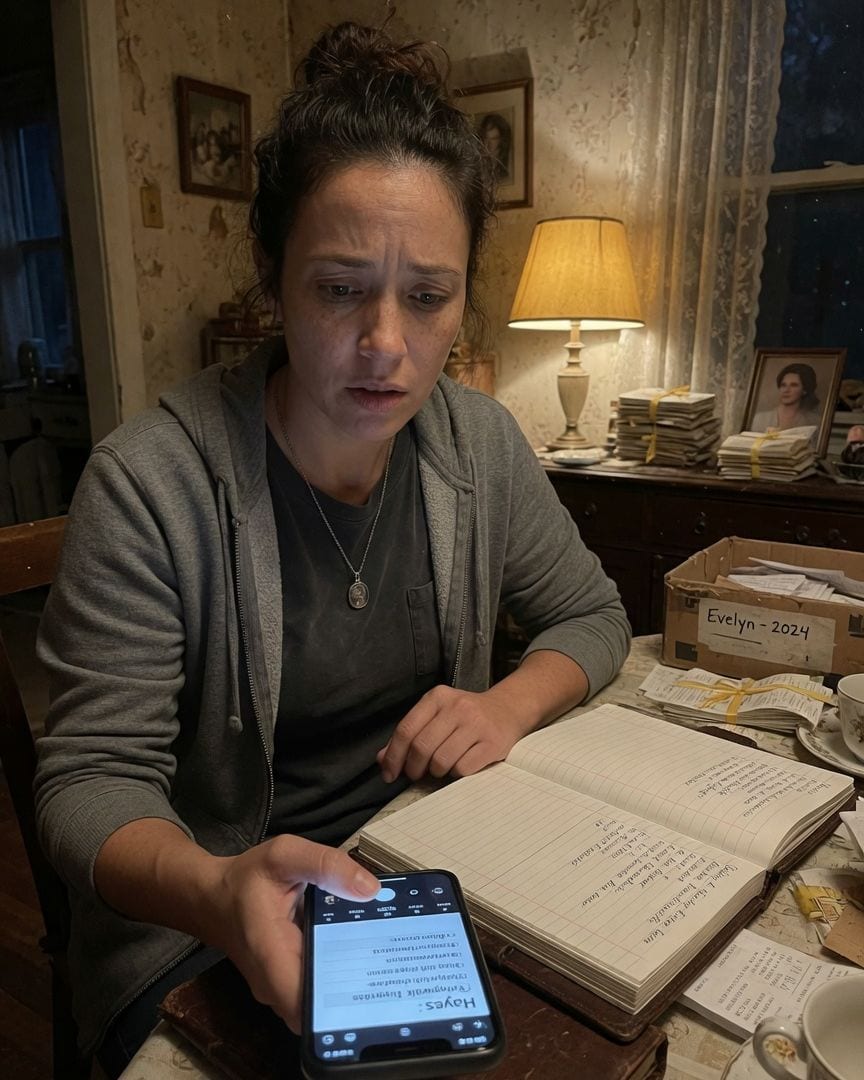
My mother's burial policy paid out on a death every ten years since 1919 — for a different family, in our exact same house on Ropewalk.
Sorting through my deceased mother's old papers, I found a strange ledger detailing a 'death payout' at our house every decade since 1919. But then, a heavily redacted document from 1979 surfaced with my own surname on a transfer form, years before I was even born.
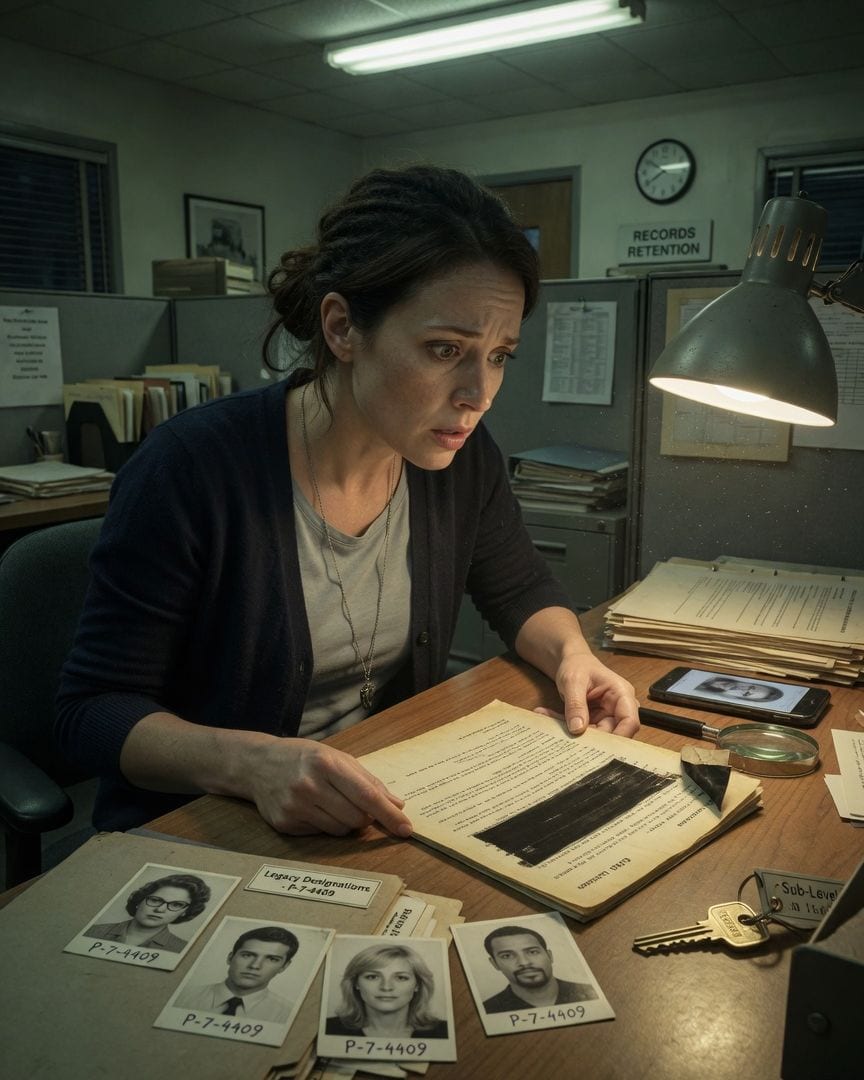
My passport file has four strangers' faces in it. They all share my number, issued since 1966, and none were ever surrendered.
I went to renew my passport, expecting a routine process. Instead, the clerk found four prior applications under my number, each with a different name and face, all 'issued and not surrendered.' Digging deeper, I uncovered a redacted memo that linked one of these mysterious designations to my own childhood street and my mother’s maiden name, years before I was even born.
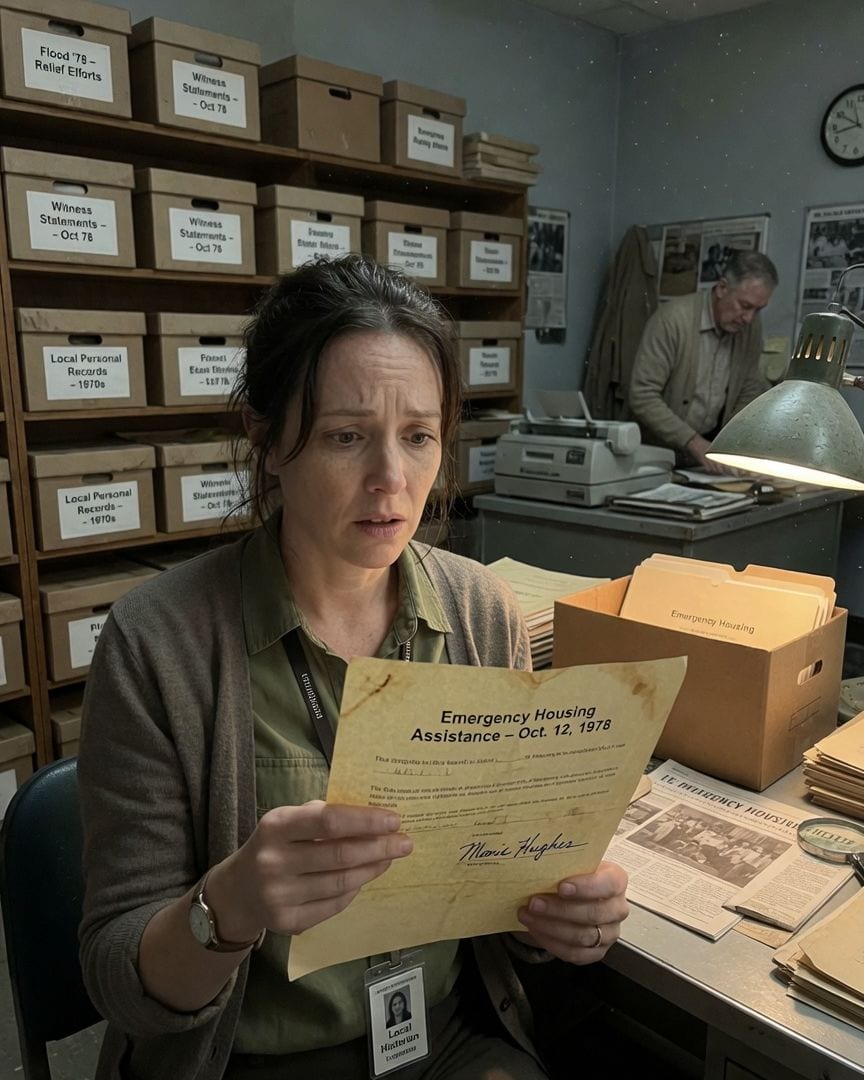
My face, with my mole, in a 1978 flood photo. I was born seven years later.
As a local historian, I was deep in the dusty town archives, researching the devastating 1978 Ohio River Valley flood. My fingers brushed a black-and-white photo, and my breath caught. Staring back from the 1978 scene was a woman with my distinct face, my mole, and my crooked front tooth, seven years before I was born.
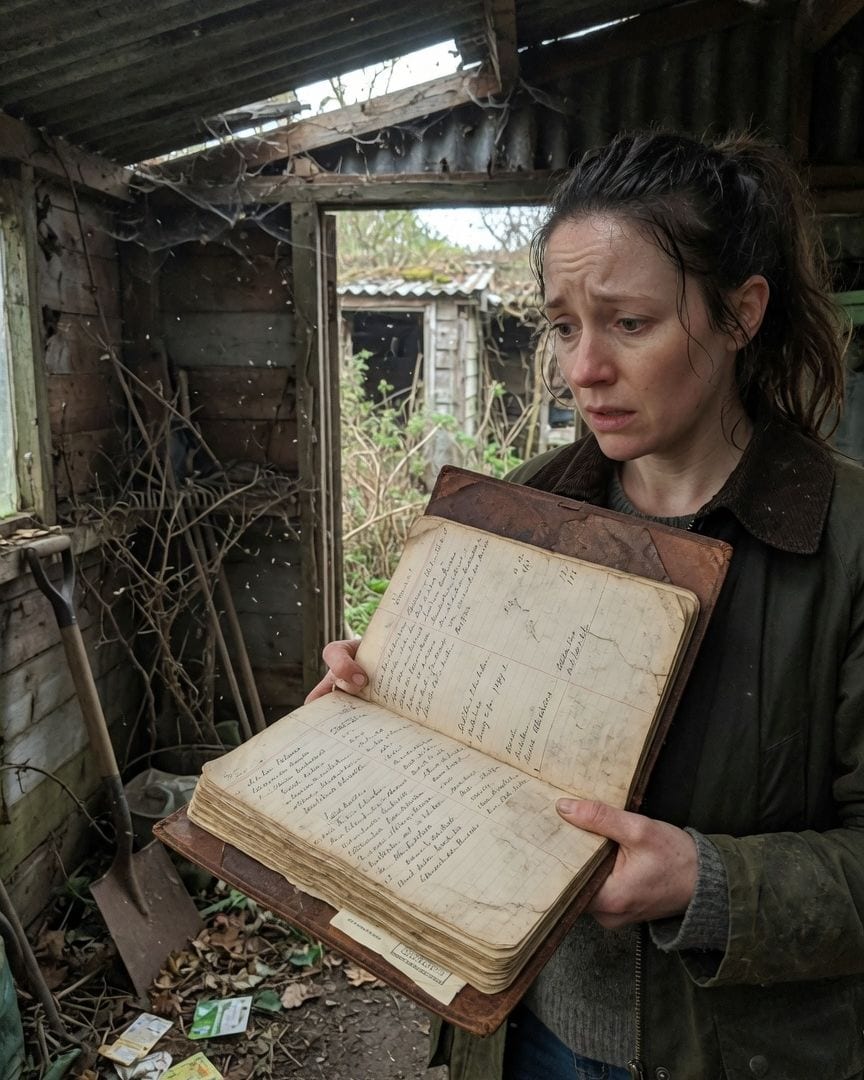
My mailbox holds my own obituary, updated weekly. The postmark reads Cold Ashby allotments, where there's only a standpipe and sheds.
Every Wednesday, a crisp white envelope arrives, containing my own obituary. It's mailed from the desolate Cold Ashby Allotments, a place with no post office, and each week a new, accurate detail of my life is added, leaving only the death date chillingly blank.
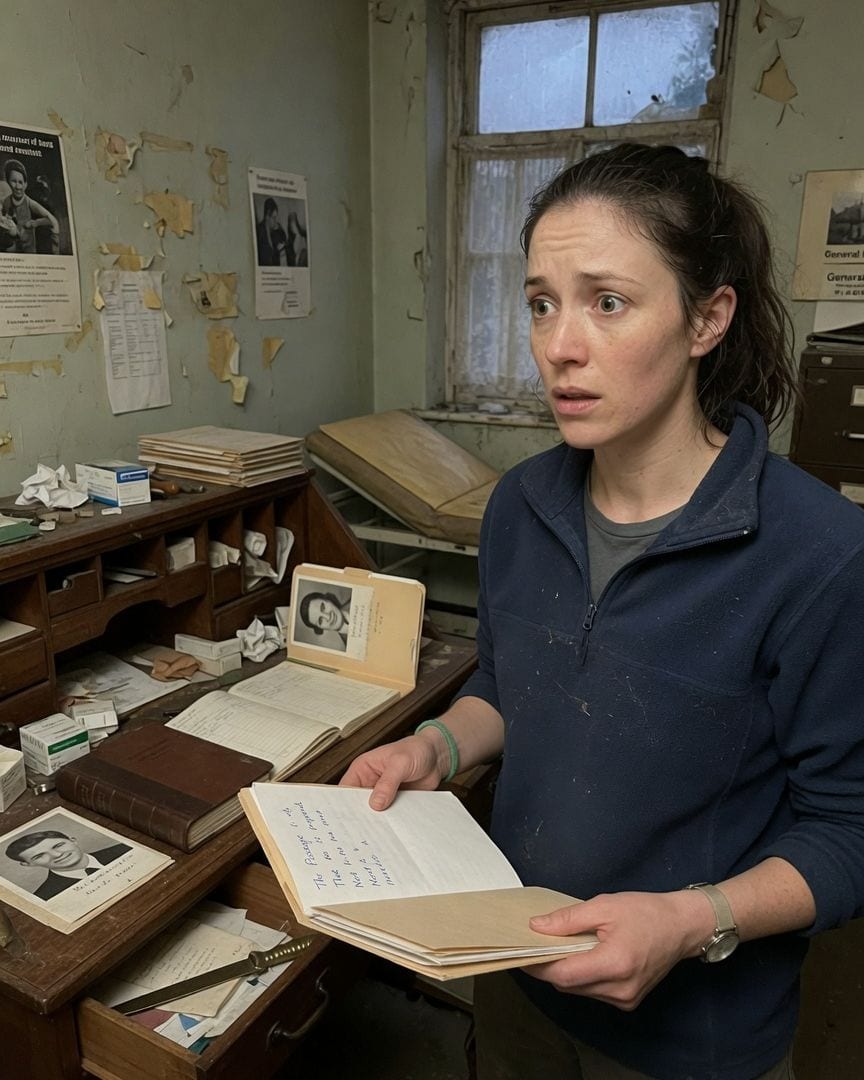
My new clinic's appointment book shows entries for this coming Monday, decades after the doctor retired and died.
Chloe Lawson bought an old, abandoned surgery in Nettlebed, ready to open her new vet clinic. Locals insisted Dr. Almott retired in '79 and the practice shut down for good. But then Chloe found his dusty appointment book filled with meticulous entries, continuing unbroken from 1979 through the decades, right up to this coming Monday.
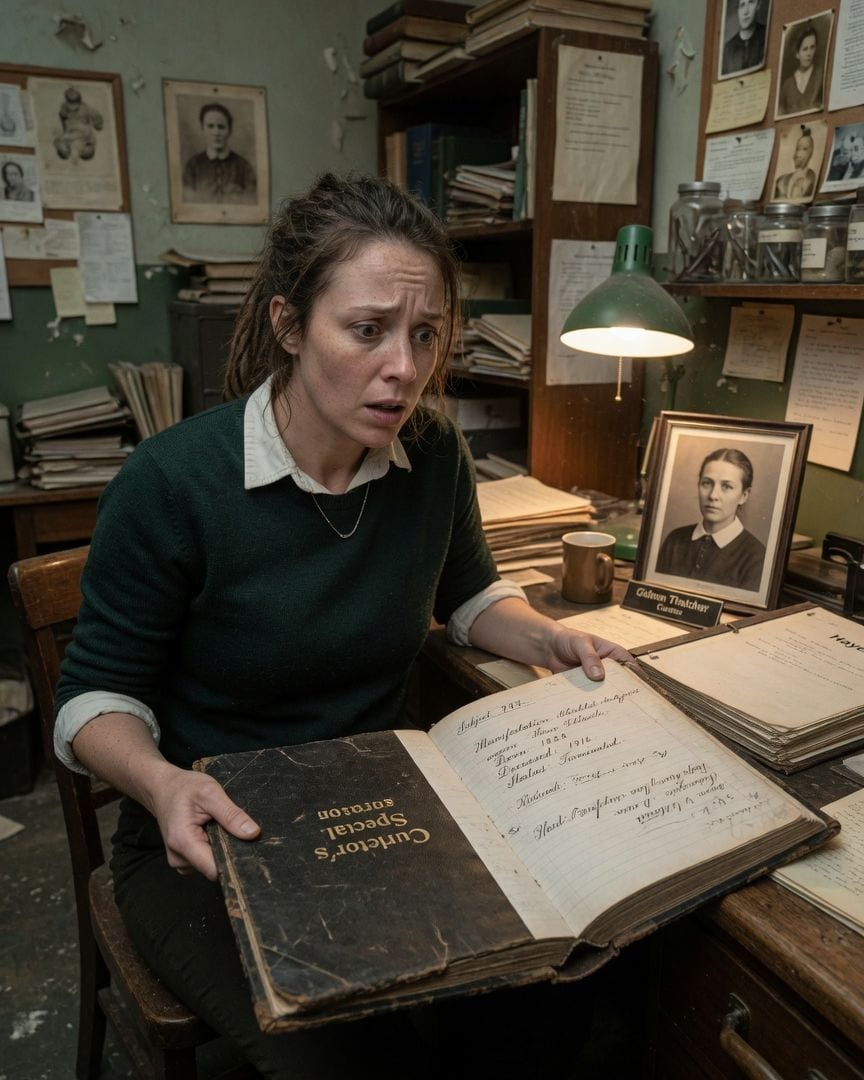
My face, cast in plaster in 1888, stares back from a museum display. They DNA tested a hair from inside the mask. It’s me.
The hushed, cool air of the Museum of Medical History always gave me a strange reverence, until I stopped. Inside a display case, among other plaster death masks, was one labeled 'Theresa Whitfield, 1888.' It was undeniably my face, exact in every detail, down to the faint bump on my nose.