My mother's burial policy paid out on a death every ten years since 1919 — for a different family, in our exact same house on Ropewalk.
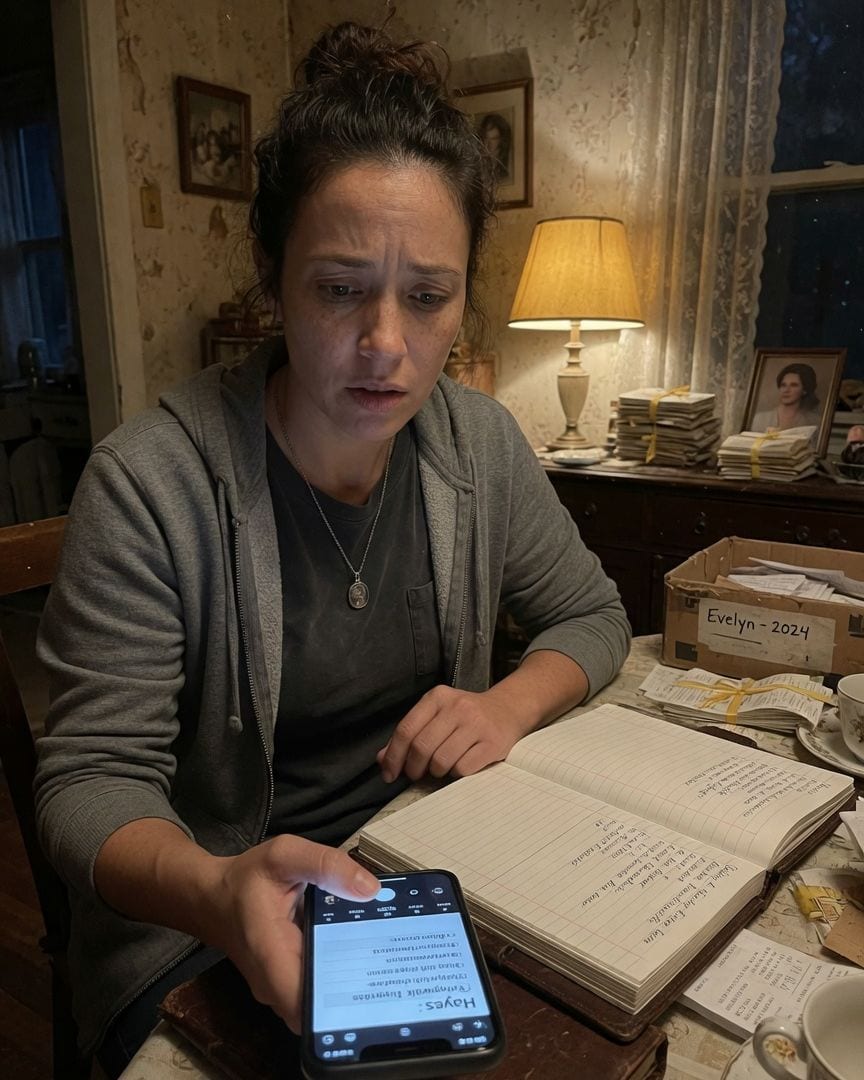
The dry, papery dust clung to my fingers as I sorted through my recently deceased mother, Evelyn’s, old papers. It was a chore, a necessary sifting through a life that had ended too soon at seventy, but mostly just mundane.
Receipts, tax forms, old letters tied with faded ribbon. Standard stuff. Then, tucked into a box of ancient utility bills, I found it: a small, leather-bound collecting book.
It looked like something from another century, its cover embossed with 'Penny Burial & Community Aid Society.' Evelyn had paid into it for decades, a quaint tradition from her youth, I always assumed.
I flipped it open, the brittle pages crackling. My gaze snagged on 'Policy 90.' The ledger was meticulously kept, neat copperplate script detailing payments and payouts, dating back to 1919.
My mother’s name, Evelyn Hayes, was there, marked as the current policyholder, her last payment noted just weeks before she passed. But the detail that made me pause, then squint, then lean closer, wasn't her entry.
It was the pattern woven through the preceding century. Every tenth year, without fail, since 1919, a payout was recorded for a 'death.' Not always the same family name. Often, a completely different one.
And the address listed for each of these seemingly disparate deaths? '90 Ropewalk'—our own three-room house, generation after generation, always in the exact same format.
Next to each payout, a chillingly bland note: 'Claim settled in full, box balanced.' And then, immediately beneath it, for the very next week: 'Policy continues, premiums resume.'
It felt like reading a shopping list, except the items were human lives and my childhood home. The repetition, the cold, administrative tone, the utterly illogical continuity across unrelated families, settled a quiet dread in my stomach.
The quiet dread of that ledger gnawed at me. I couldn't shake the image of our house, a silent witness to a century of these 'payouts,' these strange, decade-long cycles.
The thought that my mother had been part of this, that she’d paid into it for so long, felt like a betrayal. I needed a rational explanation, something solid to counter the unsettling pattern in that old book.
I found the Penny Burial & Community Aid Society’s office downtown, tucked away on a side street. It was a cramped, dusty space smelling of old paper and lukewarm tea, exactly as I’d imagined.
Sylvia Muller, a woman in her late sixties with neatly coiffed grey hair and an unruffled demeanor, sat behind a chipped wooden desk piled high with files. She seemed to embody the very essence of quiet, efficient bureaucracy.
"Policy 90, you say, dear?" she asked, her voice soft but clear, her eyes sharp behind wire-rimmed glasses. She looked up my mother’s name in a card catalogue that seemed to predate the internet by at least fifty years.
With surprising efficiency, Sylvia located the physical file for Policy 90. It was thick, stuffed with brittle documents, all meticulously filed, each page crackling as she handled it. It felt like holding a piece of history, albeit a strange one.
My fingers brushed against a document dated 1979, roughly four years before I was born. It was labeled, simply, 'transfer of residence form.' Most of it was clean, a standard-looking change of address, perhaps.
But a single, crucial line in the middle was heavily redacted with thick black ink. It was so thorough, so dark, it looked like a black hole on the page.
"Standard procedure for sensitive family matters, dear," Sylvia said, her voice calm, almost placid, as I peered at the blacked-out section. She gestured vaguely towards a shelf of similar-looking files. "Some families prefer discretion, you understand."
The explanation sounded reasonable, logical even. But the deliberate, heavy black mark felt like more than just discretion. It felt like a deliberate erasure, a secret deliberately kept. A cold knot tightened in my gut.
Back in the quiet of my mother's house, the image of that redacted line burned in my mind. Sylvia Muller’s placid smile, her casual explanation – none of it sat right. I couldn’t let it go.
I took a high-resolution photograph of the redacted line with my phone, angling the light just so, trying to minimize reflections.
Using a photo editing app, I painstakingly tried to enhance the smudged text, adjusting contrast, brightness, sharpening the edges, hoping for a flicker of clarity. The black ink, though thick and heavy, wasn't perfectly opaque.
Slowly, agonizingly, faint grey outlines began to surface beneath the darkness, like submerged stones appearing in receding water.
First, a partial word resolved: 'transfer of…' My breath hitched. Then, another fragment, indistinct but suggestive: 'resident…' My heart began to thump against my ribs, a dull drumbeat in the quiet room.
More words emerged, fragmented but unmistakably legible: '…Ropewalk…' and then, stark and clear, impossible to deny: '…Hayes…'
My own surname, staring back at me from a document dated 1979, years before I was even a thought.
My family's name, linked to the house on Ropewalk, in a policy I barely understood, on a document Sylvia Muller had called 'standard procedure.'
The phone felt suddenly heavy, cold in my hand, a lead weight connecting me to something I didn't want to know.
The name 'Hayes' on that old document was a hook, pulling me deeper into a history I never knew existed.
The rational part of me tried to find a mundane explanation – a distant relative, a common name – but the specific link to 90 Ropewalk, the very house I grew up in, wouldn't let me.
I spent days at the local library, the fluorescent lights humming over rows of old microfiche. My eyes ached as I scrolled through grainy images of old census records, cross-referencing them with property deeds for 90 Ropewalk.
The pattern was stark, impossible to ignore, and horrifying in its precision.
Families with names like O’Malley, then Peterson, then Chen, would appear in the census, live in the house for about a decade, then vanish from all records – no forwarding address, no death certificates, just gone.
Then, a new, unrelated family would appear in the very next census, always around the years the 'payouts' were recorded in the burial book.
There were gaps, missing names, and inconsistencies that no 'sensitive family matters' or 'preferred discretion' could explain. The official records simply stopped, then resumed with new occupants.
It was as if the residents of 90 Ropewalk were simply erased, then replaced.
I returned to the Penny Burial Society, my resolve hardened. "I need to see the unredacted version of that 'transfer' document," I stated, my voice steadier than I felt.
Sylvia Muller’s placid demeanor hardened, subtly. The smile thinned, her eyes losing their soft focus.
"Those records are held in the Town Hall archives, Miss Hayes, for long-term storage," she said, her voice still calm, but with an edge of finality. It was a polite dismissal, but unmistakable.
"And any further inquiries would need to go through our legal counsel. It’s all quite standard procedure."
I tried the Town Hall, but the archivist, a stern man named Felix Winslow, insisted such specific documents required a formal request, then a waiting period, then a review by a committee. He was polite, even solicitous, but utterly unhelpful.
Each step felt like a deliberate obstruction, designed to make me give up. The unease sharpened into a certainty: someone didn't want me to find out more.
The air in the archives felt heavier, almost viscous, with every document I was denied.
The stalling tactics made me feel exposed, like a spotlight had been turned on my investigation. I started noticing things that, individually, were easy to dismiss, but together, formed a chilling pattern.
A dark blue sedan, nondescript, with tinted windows, started appearing two streets over from my house on Ropewalk. It would be there for hours at a time, sometimes with someone inside, sometimes empty.
I dismissed it at first, a delivery driver, a repairman on a long lunch. But it became a recurring presence, always there when I left, sometimes when I returned.
At the Town Hall archives, where I now spent my evenings sifting through less sensitive but still relevant public records – old town council minutes, property tax ledgers, anything that might shed light on 90 Ropewalk – I kept seeing Felix Winslow.
He was always in the same section, ostensibly organizing files, his back often to me.
But I’d catch him in the reflection of a glass cabinet, his gaze drifting towards me, lingering a moment too long before he’d smoothly return to his work.
The feeling of being watched was palpable, a prickle on my neck that refused to go away. The quiet rustle of old paper in the archives, once soothing, now felt like hushed whispers.
Then, one morning, I found a plain, typewritten envelope in my mailbox. No stamp, no return address, just my name, Rosemary Hayes, meticulously typed. Inside was a single, stark sentence: 'Some things are best left buried, Miss Hayes.
For your own good.' The words were clipped, impersonal, yet they held a chilling weight. It wasn't a threat of violence, but a quiet, certain warning. They knew what I was doing. They knew where I lived.
The hunter had become the hunted. The dread became a cold, living thing in my chest.
Shaken by the note, I knew I couldn't continue alone. The warnings, the stonewalling, the feeling of being watched – it was too much for one person.
I sought out Dean Novak, a local historian I’d encountered briefly at the Town Hall. He was known for his eccentric but thorough research into local oddities, and I remembered him having a kind, if slightly disheveled, air.
I laid out my evidence on a cluttered table in his small, book-lined study: the ledger, the redacted line (and my phone photo of it), the vanishing families from the census records, the anonymous warning note.
Dean, a man in his mid-fifties with a perpetually rumpled tweed jacket, listened intently. His initial skepticism, a professional historian’s default, slowly gave way to a fascinated unease. He ran a hand through his thinning grey hair, his brow furrowed.
"The Perpetual Lease," he murmured, almost to himself, his voice raspy from disuse. "Old wives' tales, I always thought. Folkloric explanations for odd property transfers."
He explained old, half-forgotten local legends about certain properties, and even families, being subject to a 'perpetual lease' that ensured their continuous habitation, sometimes through unusual means.
He had brushed them off as quaint folklore, but my evidence resonated, fitting into patterns he’d seen but never connected.
"The Penny Burial Society," he mused, tapping a finger on the old ledger. "It wasn't always just a burial club. Its original charter, from the late 1800s, linked it to something much larger, older. Something called the 'Civic Renewal Trust'."
The words hung in the air, heavy with unspoken history.
Dean, emboldened by my discoveries and his own rekindled curiosity, used his historian's credentials to gain access to a restricted section of the Town Hall archives.
Felix Winslow, surprisingly, did not appear to object, merely observing us from his usual perch, his face unreadable.
We descended into a lower level, a vault of centuries-old documents, the air thick with the scent of aged paper and something else, something mineral and cold.
Deep within, behind a heavy, rusting door, Dean found a series of property deeds with similar 'transfer' clauses, all linked to the 'Civic Renewal Trust.' He pulled out a faded memo from 1969, detailing 'Policy 90’s next scheduled renewal.'
The pieces clicked into place with horrifying precision. The 'burial' was a euphemism, the 'payout' a transfer of something far more unsettling than mere money.
The dread deepened with every page Dean uncovered. His face, usually animated, was now grim, etched with growing horror. He continued to search, driven by a desperate need to understand the full scope of it.
He found a master ledger, not for individual 'policies' like my mother's, but for properties. It was bound in dark, unmarked leather, thicker than any book I’d ever seen.
He traced '90 Ropewalk' with a trembling finger and then saw identical entries for dozens of other addresses across the old town – not just Ropewalk, but Willow Lane, Elm Street, Chapel Row.
Each entry had a name, a date of 'activation,' and then, chillingly, 'Designated Successor: [Redacted].' The sheer scale of it was staggering.
This wasn't just about my mother's house, or a local oddity; it was woven into the very fabric of the town, an unseen system quietly humming beneath the surface.
Dean flipped to the very last page, his fingers trembling, hoping to find a pattern, a logical end, anything to break the horrifying coherence.
And there it was, an entry for '14 Willow Lane' – my own current address, the house I had purchased only five years ago, the house I called home, the house I had sought refuge in after my mother's death.
And next to it, in neat, precise script: 'Pending Policy Activation: Subject Rosemary Hayes.'
Dean looked up, his face ashen, his eyes wide with a terror that mirrored my own. The fluorescent lights of the archive room flickered once, casting dancing shadows. Standing silently in the archive doorway, a figure had appeared.
Sylvia Muller, the placid clerk from the Penny Burial Society, stood there, a calm, knowing expression on her face, her eyes fixed on us.
Sylvia Muller stepped fully into the archive room, her movements unhurried, her expression utterly devoid of malice or surprise.
She wasn't an antagonist, not in the way I understood the word, but merely an administrator, a functionary of a vast, unseen system.
"Such diligent research, Miss Hayes," she said, her voice soft, almost approving, as if complimenting a student. "But quite unnecessary. It's all on file." She gestured with an open hand to the master ledger spread before us.
She explained, without a hint of defensiveness or shame, the true purpose of the Civic Renewal Trust.
"We maintain the balance," she stated, as if discussing the weather or a municipal budget. "The vitality of the town, the prosperity of its residents. It requires… renewal."
She spoke with the detached clarity of someone explaining a simple, incontrovertible fact. The 'policies,' she clarified, were never for burial in the traditional sense, but for the 'renewal' of the houses, and by extension, the families within them.
The 'payouts' were not deaths, but rather 'reassignments.' The identities, the memories, the very lives of the residents were subtly shifted, or replaced by a new 'resident' for the next cycle.
It was all managed through precise bureaucratic channels, quietly, efficiently, for centuries.
"Your mother was a fine resident, Miss Hayes," Sylvia concluded, her gaze sweeping over the master ledger before landing on me. "And you, a most suitable successor for Policy 14. Willow Lane, I believe?"
The horror wasn't in a monstrous revelation, but in the calm, mundane coherence of it all. It was simply how things were done, managed by quiet, unextraordinary people like Sylvia.
The silence in the archive room felt vast, swallowing our gasps.
I forced myself to breathe, to remain rational, though my blood felt cold in my veins. "I refuse," I stated, my voice trembling but firm, a defiant tremor against the crushing weight of her words.
"I will not be part of this."
Sylvia merely offered a faint, almost pitying smile. "There is no refusal, Miss Hayes. Only a new activation. The system is quite robust." She began to elaborate on the 'benefits' of activation, her voice a calm drone.
But Dean Novak, while Sylvia was calmly explaining the 'procedure,' had been quietly working. His hand, shaking slightly, was tucked into his tweed jacket pocket. His phone, I realized, vibrated silently.
He had called a contact at the local newspaper, leaking the documents, the ledgers, and the chilling story of the Civic Renewal Trust.
Just as Sylvia began to explain the "smooth transition of assets and continuity of civic duties," the heavy oak doors of the archive room burst open. Two journalists, cameras flashing, strode in, followed by a bewildered Town Hall security guard.
The sudden influx of noise and light shattered the archive's eerie calm.
"Is this the Civic Renewal Trust?" one of them shouted, aiming a camera directly at Sylvia, its flash blinding for a moment.
Sylvia merely sighed, a look of mild annoyance replacing her placid smile. "Such a fuss," she murmured, closing the master ledger with a soft thud that echoed through the sudden silence.
She cast one last, knowing look at me, a deep, unsettling gaze that felt like a brand, then calmly, unhurriedly, walked past the bewildered journalists and out of the room. The immediate, personal threat of 'activation' was averted, for now.
The harsh light of public scrutiny had been shone on the Trust, but the dread of its quiet, pervasive power remained, a cold residue in the air.
The 'Civic Renewal Trust' became a local scandal, a sensation that briefly gripped the town. Its records were seized, its offices closed, and the Penny Burial & Community Aid Society was quickly shuttered.
Sylvia Muller and Felix Winslow vanished without a trace, their quiet efficiency making their disappearance all the more unnerving.
The local paper ran a sensational series of articles, framing it as an elaborate, centuries-old property scam, a bizarre historical oddity with a strange bureaucratic twist.
The full, unsettling truth – the 'reassignments,' the 'renewal' of identities, the quiet, almost mundane shift of lives – was too abstract, too unsettling for most to fully grasp, or perhaps to believe.
They preferred the simpler narrative of greed and deception.
I tried to sell my house on Willow Lane, my current home, the one marked for 'Pending Policy Activation.' I listed it, lowered the price, but despite a hot market, no buyers materialized. Every open house was eerily empty.
The knowledge I carried was a heavy, invisible shroud. The system had been exposed, but not truly stopped, merely disrupted.
I sit now in my mother's house on Ropewalk, surrounded by unpacked boxes, the scent of dust and old paper clinging to everything.
I had hoped to make it my own, to reclaim it from its unsettling past, to make it just a home.
But now, every creak of the floorboards, every shadow in the corner, feels imbued with the weight of the history I uncovered. It's not a home; it's a policy number.
I check my mail, a habit born of my investigation, born of my lingering paranoia. Amidst the usual bills and junk mail, a small, official-looking envelope, crisp and clean. It’s addressed to 'The Resident, 14 Willow Lane.'
Inside, a new 'policy document,' bearing a fresh, unused number. A new beginning, for someone.
The 'For Sale' sign outside 14 Willow Lane remained for weeks, then months, slowly fading in the sun. One afternoon, a new, identical sign appeared beside it, for 90 Ropewalk. Both were marked, in neat, bold script, 'Policy Continues.'
If this one got to you
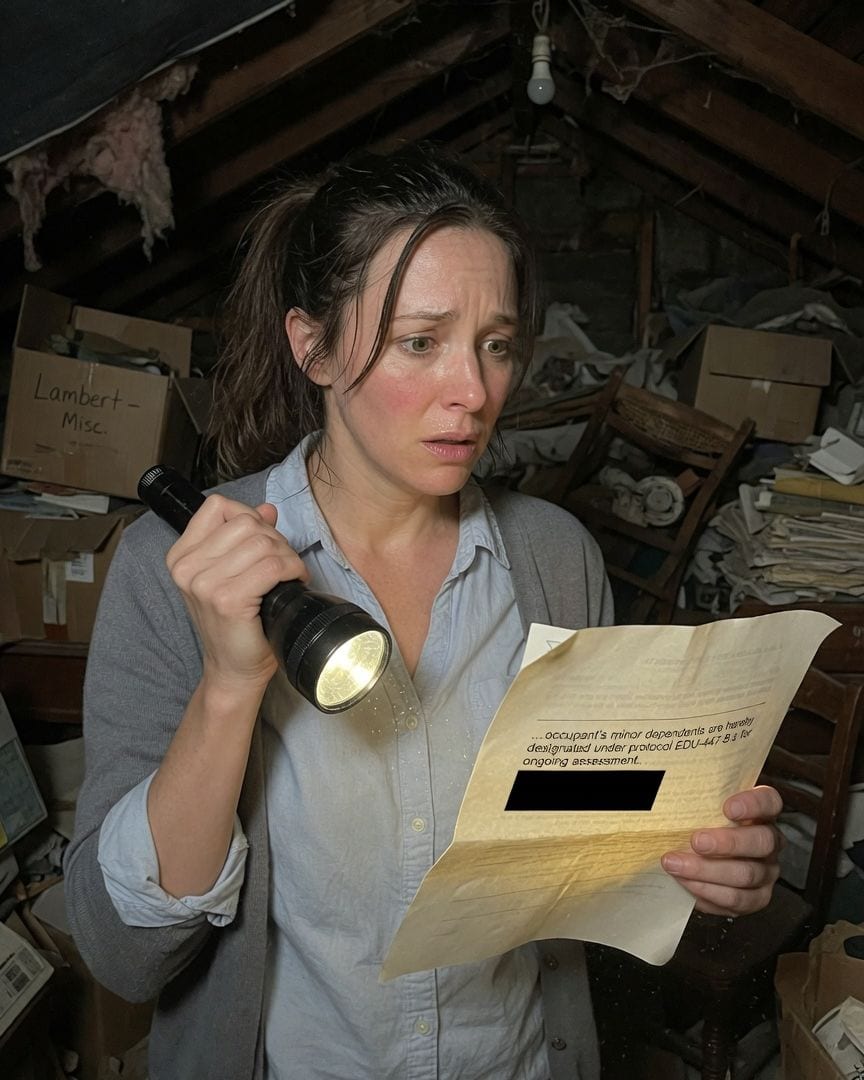
My county archive digital file has a redacted line from 1901, marked 'recurs each generation.' The address? My house. The instruction number? My son's school registration.
Searching mundane county archives, I found a 1901 school log entry for my house, Church Lane, No. 17. A perfectly blacked-out line, marked as 'Withheld – recurs each generation,' pointed to a code Monica at the Education Office used when registering my son. Then, in our attic, I found an identical blacked-out line on an old property notice, designating 'minor dependents' under the same code.
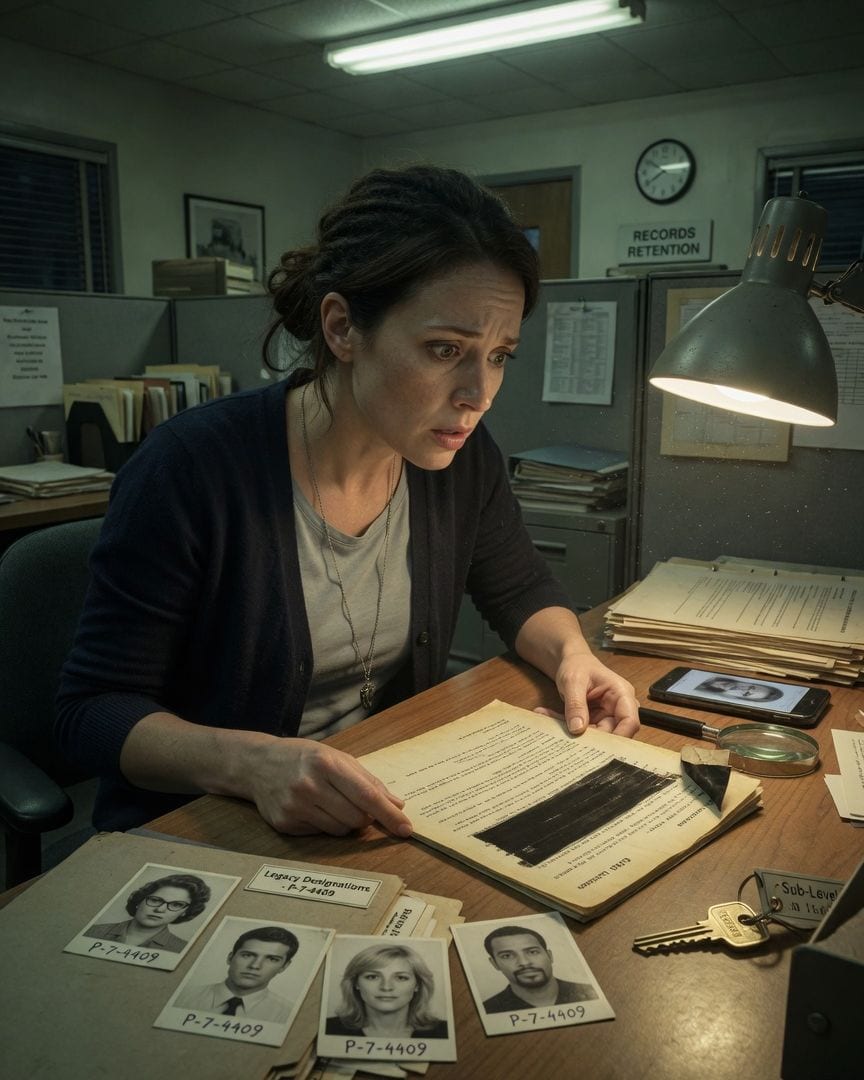
My passport file has four strangers' faces in it. They all share my number, issued since 1966, and none were ever surrendered.
I went to renew my passport, expecting a routine process. Instead, the clerk found four prior applications under my number, each with a different name and face, all 'issued and not surrendered.' Digging deeper, I uncovered a redacted memo that linked one of these mysterious designations to my own childhood street and my mother’s maiden name, years before I was even born.
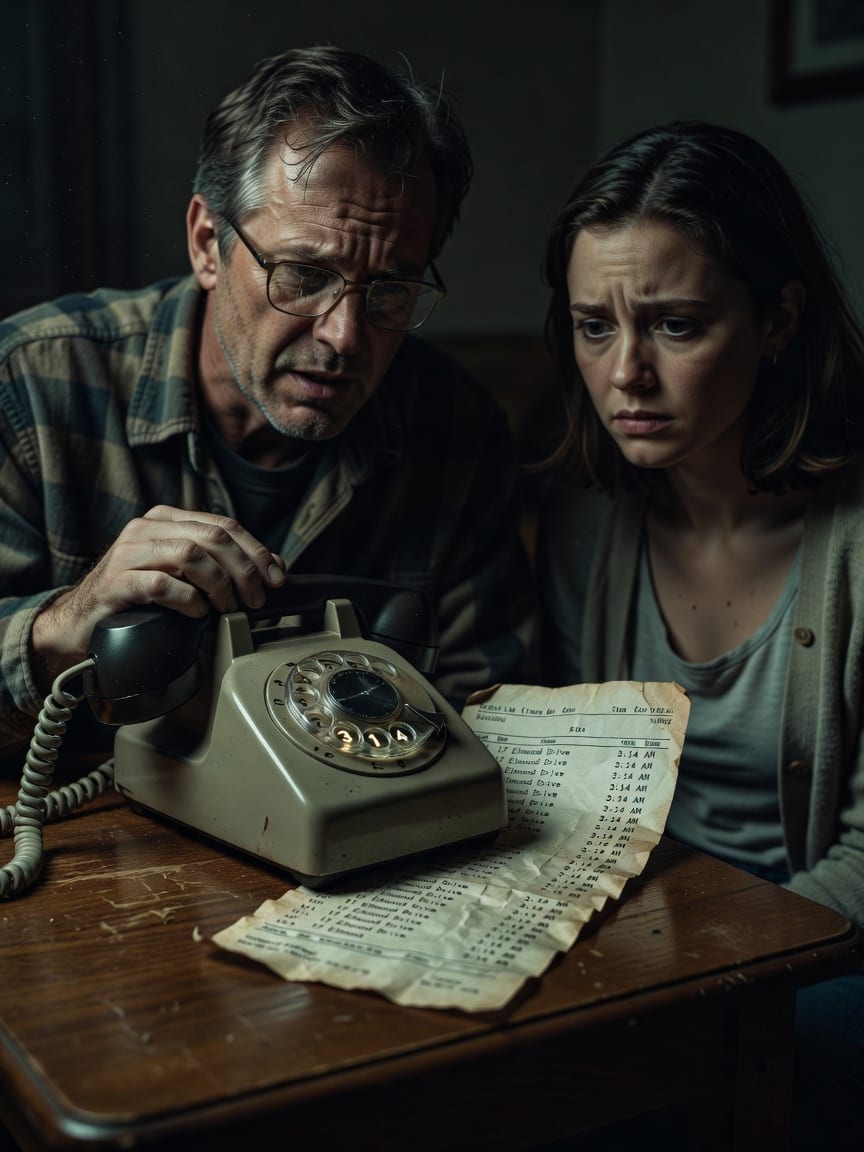
My phone bill itemised forty calls from my number to a house demolished in 1990. Each call at 3:14 AM, lasting eleven minutes. The bill arrived postmarked from a flattened building.
I expected the usual mobile bill, but my landline statement listed forty calls from my number to '17 Elmwood Drive.' That address was for a house torn down in 1990, a vacant lot I remembered from childhood. The phone company insisted the calls were legitimate, leaving me profoundly unsettled by the impossible charges.
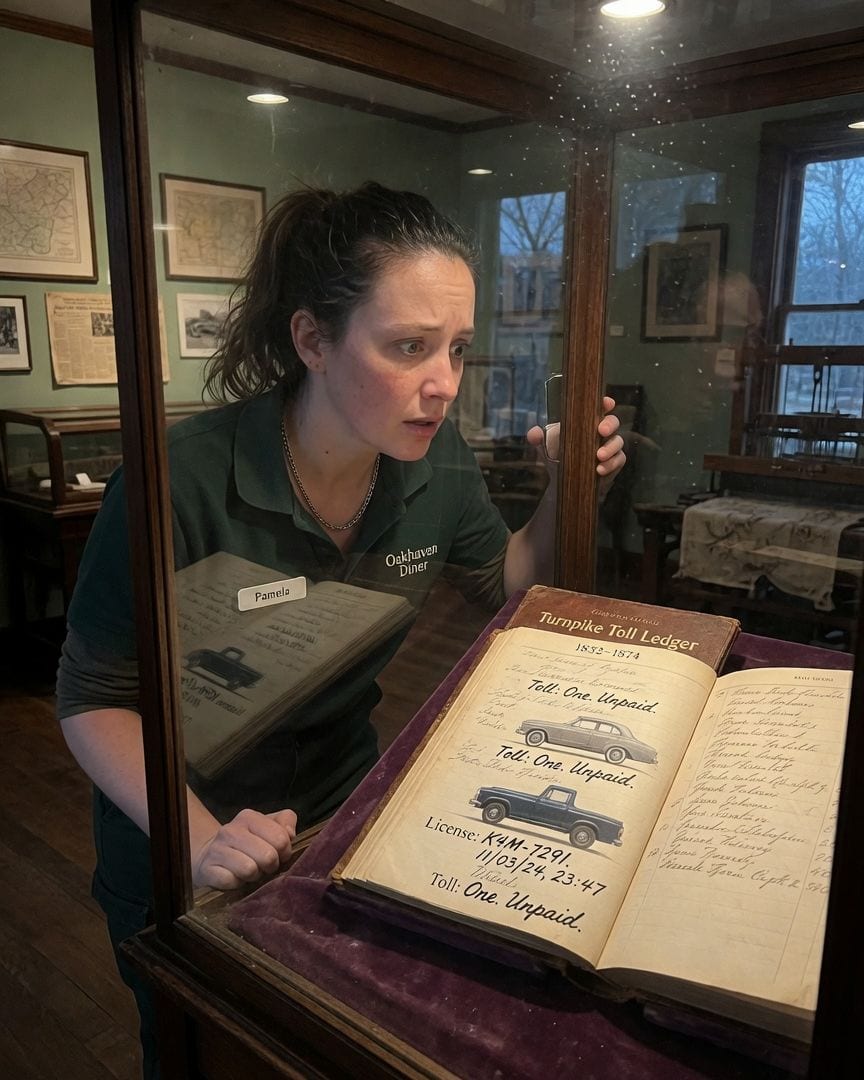
My car stalled at the old turnpike milestone, after dark. The toll ledger, closed in 1874, then listed my car, my stall time, and a toll of one, unpaid.
I had just moved to Oakhaven when my old sedan died on a dark, winding road by an infamous turnpike milestone. The next day, I found my car's exact registration and stall time written in fresh ink in a 150-year-old, locked museum ledger, marked 'Toll: One. Unpaid.' The curator dismissed it as a prank, but her white knuckles and strained voice hinted at something far more unsettling.
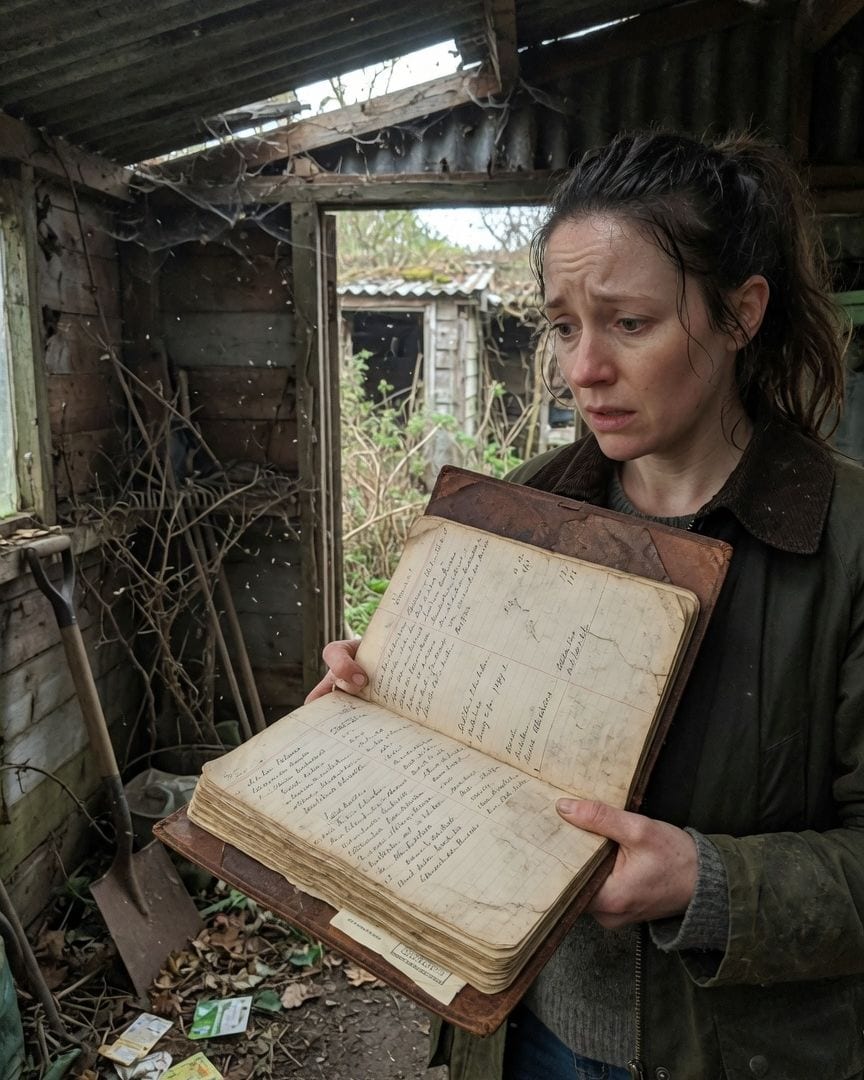
My mailbox holds my own obituary, updated weekly. The postmark reads Cold Ashby allotments, where there's only a standpipe and sheds.
Every Wednesday, a crisp white envelope arrives, containing my own obituary. It's mailed from the desolate Cold Ashby Allotments, a place with no post office, and each week a new, accurate detail of my life is added, leaving only the death date chillingly blank.
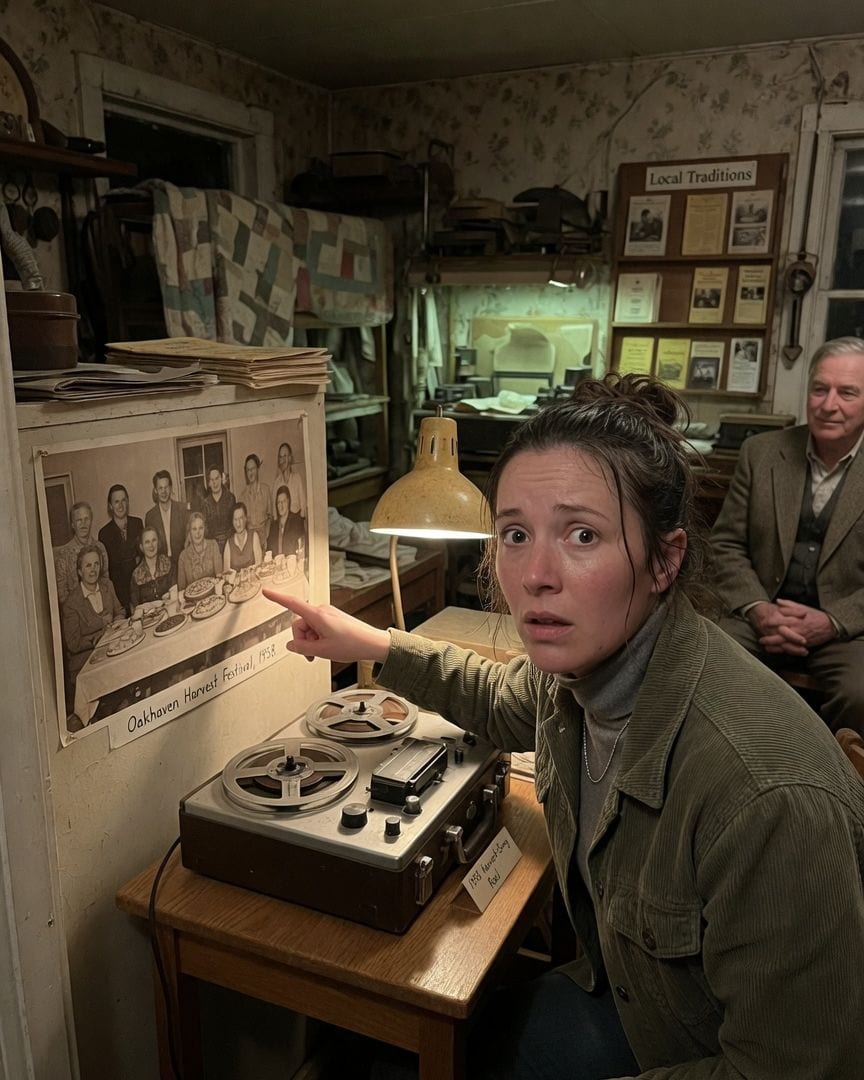
The folk museum's harvest tape counts one more singer than the photograph shows. The curator turned the recorder off before playing it.
I found a quiet escape at Oakhaven's dusty Folk Museum, where the curator played a rare 1958 harvest song. But as a cheerful tune filled the room, a low voice began to count. The tape tallied thirteen, yet the old photograph beside it showed only twelve smiling villagers.